80 Flowers That Start With E: Names, Pictures & Growing Tips
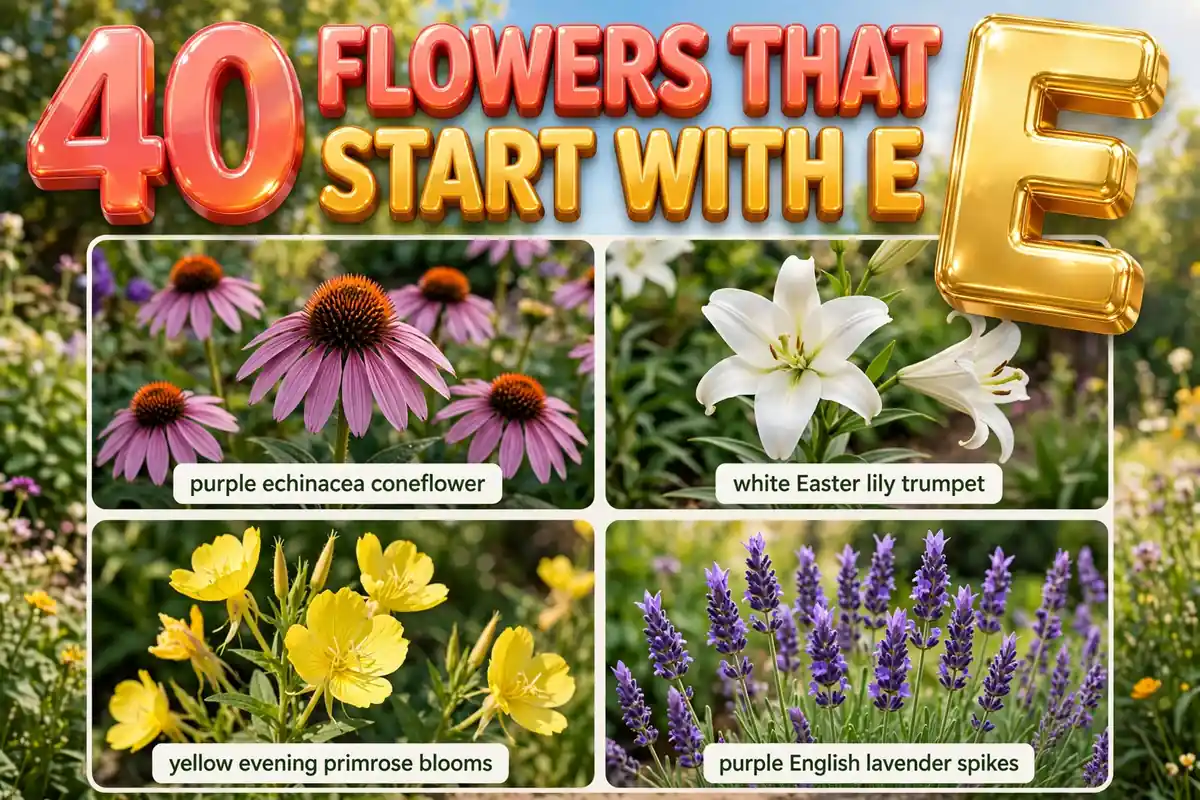
Looking for flower names that start with E? You have come to the right place. The letter E delivers some of the most useful and beautiful blooms in American gardens, from the pollinator-magnet cones of echinacea to the fragrant spikes of English lavender and the pure white trumpets of Easter lilies. Whether you are planning a sunny perennial border, hunting for a flower with evening fragrance, or helping a child with an alphabet garden project, this guide covers 80 real flowers that start with E, each with a photo-worthy description and practical growing advice.
Every entry below includes the flower’s scientific name, bloom season, sun needs, and USDA hardiness zone, so you can tell at a glance which E-flowers will thrive in your yard. You will also find a quick comparison table, beginner-friendly growing tips, and answers to the most common questions gardeners ask about flowers beginning with E. Let’s dig in.
Quick Answer
Yes — this page lists 80 flowers that start with E, from echinacea and English lavender to Easter lily and evening primrose. Use the at-a-glance table to filter by your USDA zone, sun and bloom season before you buy.
Table of Contents
- E-Flowers at a Glance
- 80 Flowers That Start With E: The Complete List
- E flowers by colour
- Best E flowers by season
- Indoor and container-friendly E flowers
- Beginner-friendly E flowers
- Rare and unusual E flowers
- E flowers with full guides
- Growing Tips for E-Flowers
- Which E-Flowers Will You Grow?
- Frequently Asked Questions
- References
E-Flowers at a Glance
Use this table to compare all 80 flowers that start with E side by side, from botanical names to native regions.
| # | Name | Scientific name | Bloom | Sun | Zone | Best for |
|---|---|---|---|---|---|---|
| 1 | English Lavender | Lavandula angustifolia | Summer | Full sun | 5–9 | Fragrant borders, pollinators, drying |
| 2 | Echinacea | Echinacea purpurea | Summer to fall | Full sun | 3–9 | Pollinator gardens, beginner perennials |
| 3 | Easter Lily | Lilium longiflorum | Spring (potted); early summer (garden) | Full sun to part shade | 7–10; potted elsewhere | Holiday displays, fragrant gardens |
| 4 | Evening Primrose | Oenothera biennis | Summer | Full sun to part shade | 4–9 | Evening gardens, wildflower meadows |
| 5 | Eustoma | Eustoma grandiflorum | Summer to fall | Full sun | 9–11; annual elsewhere | Cut flowers, bouquets |
| 6 | Winter Heath | Erica carnea | Late winter to spring | Full sun to part shade | 5–8 | Winter color, rock gardens |
| 7 | Edelweiss | Leontopodium alpinum | Summer | Full sun | 4–7 | Rock gardens, alpine troughs |
| 8 | English Bluebell | Hyacinthoides non-scripta | Spring | Part shade | 4–9 | Woodland gardens, naturalizing |
| 9 | Joe Pye Weed | Eutrochium purpureum | Late summer to fall | Full sun to part shade | 4–9 | Back borders, butterfly gardens |
| 10 | Elderberry Blossom | Sambucus nigra | Early summer | Full sun to part shade | 5–8 | Edible landscaping, wildlife shrubs |
| 11 | English Daisy | Bellis perennis | Spring to early summer | Full sun to part shade | 4–8 | Edging, spring containers |
| 12 | Epimedium | Epimedium grandiflorum | Spring | Part to full shade | 5–9 | Dry shade, groundcover |
| 13 | Fleabane Daisy | Erigeron speciosus | Summer to fall | Full sun | 5–8 | Native gardens, cottage borders |
| 14 | Sea Holly | Eryngium planum | Summer | Full sun | 5–9 | Dried arrangements, coastal gardens |
| 15 | California Poppy | Eschscholzia californica | Spring to summer | Full sun | Grown as annual; perennial 8–10 | Wildflower meadows, easy color |
| 16 | Evening Stock | Matthiola longipetala | Summer | Full sun to part shade | Grown as annual | Night fragrance, patios |
| 17 | Strawflower | Xerochrysum bracteatum | Summer to fall | Full sun | 9–11; annual elsewhere | Dried flowers, cutting gardens |
| 18 | English Primrose | Primula vulgaris | Early spring | Part shade | 4–8 | Woodland edges, spring containers |
| 19 | Euryops Daisy | Euryops pectinatus | Fall to spring (mild climates) | Full sun | 9–11 | Warm-climate borders, containers |
| 20 | Foxtail Lily | Eremurus robustus | Early summer | Full sun | 5–8 | Statement plantings, back borders |
| 21 | Chilean Glory Flower | Eccremocarpus scaber | Summer to fall | Full sun | 8–10; annual elsewhere | Trellises, quick vertical color |
| 22 | Empress Tree Blossom | Paulownia tomentosa | Spring | Full sun | 5–9 | Fast shade, spring spectacle |
| 23 | White Snakeroot | Ageratina altissima | Late summer to fall | Part shade to full shade | 3–8 | Shade gardens, late-season nectar |
| 24 | Eastern Redbud Blossom | Cercis canadensis | Early spring | Full sun to part shade | 4–9 | Spring flowering trees, native gardens |
| 25 | Eglantine | Rosa rubiginosa | Early summer | Full sun | 4–9 | Fragrant hedges, heritage gardens |
| 26 | Elephant’s Ears | Bergenia cordifolia | Spring | Part shade | 3–8 | Tough groundcover, winter foliage |
| 27 | Globe Thistle | Echinops ritro | Summer | Full sun | 3–9 | Pollinators, dried arrangements |
| 28 | Evening Campion | Silene latifolia | Summer | Full sun to part shade | 4–8 | Moon gardens, night fragrance |
| 29 | Everlasting Pea | Lathyrus latifolius | Summer | Full sun | 4–8 | Cottage fences, low-maintenance vines |
| 30 | Egyptian Starflower | Pentas lanceolata | Summer to fall | Full sun to part shade | 10–11; annual elsewhere | Butterfly gardens, containers |
| 31 | Echeveria | Echeveria elegans | Spring to summer | Full sun to bright indirect | 9–11; houseplant elsewhere | Succulent gardens, windowsills |
| 32 | Easter Cactus | Hatiora × graeseri | Spring | Bright indirect light | Houseplant (10–11 outdoors) | Indoor spring color, hanging baskets |
| 33 | English Wallflower | Erysimum cheiri | Spring | Full sun | 7–10; biennial elsewhere | Spring fragrance, cottage borders |
| 34 | English Iris | Iris latifolia | Early summer | Full sun | 5–9 | Cut flowers, perennial borders |
| 35 | Blue Mistflower | Conoclinium coelestinum | Late summer to fall | Full sun to part shade | 5–10 | Fall color, monarch waystations |
| 36 | Trout Lily | Erythronium americanum | Early spring | Part to full shade | 3–8 | Woodland gardens, spring ephemerals |
| 37 | Winter Aconite | Eranthis hyemalis | Late winter | Part shade | 4–9 | Earliest spring color, naturalizing |
| 38 | Trailing Arbutus | Epigaea repens | Early spring | Part shade | 3–7 | Native woodland gardens, fragrance |
| 39 | Early Crocus | Crocus tommasinianus | Late winter to early spring | Full sun to part shade | 3–8 | Lawns, earliest bulbs |
| 40 | Common Boneset | Eupatorium perfoliatum | Late summer to fall | Full sun to part shade | 3–8 | Rain gardens, native pollinator plantings |
| 41 | Paperbush | Edgeworthia chrysantha | Late winter to early spring | Full sun to part shade | 7–9 | Winter fragrance, woodland edges |
| 42 | Pineapple Lily | Eucomis comosa | Summer | Full sun | 7–10 | Containers, tropical borders |
| 43 | Flame Violet | Episcia cupreata | Year-round indoors | Bright indirect light | Houseplant (10–11 outdoors) | Indoor color, hanging baskets |
| 44 | Redvein Enkianthus | Enkianthus campanulatus | Late spring | Full sun to part shade | 4–7 | Woodland edges, fall color |
| 45 | Escallonia | Escallonia rubra | Summer to fall | Full sun | 8–10 | Hedges, coastal gardens |
| 46 | Storksbill | Erodium reichardii | Spring to fall | Full sun to part shade | 6–9 | Rock gardens, edging |
| 47 | Brittlebush | Encelia farinosa | Spring | Full sun | 9–11 | Xeriscapes, desert gardens |
| 48 | Sulfur Buckwheat | Eriogonum umbellatum | Summer | Full sun | 4–8 | Native gardens, pollinators |
| 49 | Crag Lily | Echeandia flavescens | Summer | Full sun to part shade | 8–11 | Rock gardens, collectors |
| 50 | Eulalia Grass | Miscanthus sinensis ‘Gracillimus’ | Late summer to fall | Full sun | 5–9 | Ornamental grasses, fall plumes |
| 51 | Burning Bush | Euonymus alatus | Spring (inconspicuous) | Full sun to part shade | 4–8 | Fall color — plant with caution (invasive in many states) |
| 52 | Autumn Olive | Elaeagnus umbellata | Spring (fragrant) | Full sun to part shade | 4–8 | Wildlife berries — plant with caution (invasive in many states) |
| 53 | Silver Dollar Gum | Eucalyptus cinerea | Spring | Full sun | 9–11 | Foliage gardens, floristry |
| 54 | Crown of Thorns | Euphorbia milii | Year-round in warm climates | Full sun | 9–11; houseplant elsewhere | Containers, drought-tolerant color |
| 55 | English Hawthorn | Crataegus monogyna | Late spring | Full sun to part shade | 4–8 | Hedging, wildlife gardens |
| 56 | Easter Daisy | Townsendia hookeri | Spring | Full sun | 4-8 | Rock gardens, alpine troughs |
| 57 | Eastern Red Columbine | Aquilegia canadensis | Spring | Part shade | 3-8 | Woodland edges, hummingbird gardens |
| 58 | Eastern Prickly Pear | Opuntia humifusa | Early summer | Full sun | 4-9 | Dry beds, rock gardens |
| 59 | Elecampane | Inula helenium | Summer | Full sun | 3-8 | Back of border, herb gardens |
| 60 | Elfin Herb | Cuphea hyssopifolia | Spring to fall | Full sun to part shade | 9-11; annual elsewhere | Edging, containers |
| 61 | Emerald Vine | Strongylodon macrobotrys | Spring | Part shade | 10-12; greenhouse elsewhere | Pergolas in tropics, conservatories |
| 62 | Emperor’s Candlesticks | Senna alata | Fall to winter | Full sun | 9-11; annual elsewhere | Tropical borders, butterfly gardens |
| 63 | Enchanter’s Nightshade | Circaea lutetiana | Summer | Part shade to shade | 4-8 | Woodland ground cover |
| 64 | Engelmann Daisy | Engelmannia peristenia | Spring to fall | Full sun | 5-10 | Prairies, dry meadows |
| 65 | English Marigold | Calendula officinalis | Spring to fall | Full sun | Annual | Bedding, edging, cut flowers |
| 66 | English Stonecrop | Sedum anglicum | Summer | Full sun | 5-9 | Rock gardens, green roofs, walls |
| 67 | Darley Dale Heath | Erica × darleyensis | Winter to spring | Full sun | 6-8 | Winter borders, banks |
| 68 | Seaside Daisy | Erigeron glaucus | Spring to fall | Full sun | 4-8 | Coastal beds, rock gardens |
| 69 | Alpine Sea Holly | Eryngium alpinum | Summer | Full sun | 4-8 | Borders, cut and dried flowers |
| 70 | Coral Bean | Erythrina herbacea | Spring | Full sun | 8-11 | Wildlife borders (seeds poisonous) |
| 71 | Dog’s-Tooth Violet | Erythronium dens-canis | Spring | Part shade | 3-8 | Woodland drifts, rock gardens |
| 72 | Evergreen Candytuft | Iberis sempervirens | Spring | Full sun | 3-8 | Edging, walls, rock gardens |
| 73 | Exacum | Exacum affine | Summer | Part shade | Houseplant; annual | Pots, bright rooms |
| 74 | Eyebright | Euphrasia officinalis | Summer | Full sun | Annual | Meadow plantings |
| 75 | Spotted Emu Bush | Eremophila maculata | Spring | Full sun | 9-11 | Dry borders, Australian native gardens |
| 76 | Torch Ginger | Etlingera elatior | Summer | Part shade | 10-12 | Tropical borders, cut flowers |
| 77 | Tower of Jewels | Echium wildpretii | Late spring (biennial) | Full sun | 9-10 | Statement plant, dry gardens |
| 78 | Cushion Spurge | Euphorbia polychroma | Spring | Full sun | 4-8 | Border fronts, rock gardens |
| 79 | Hedgehog Cactus | Echinocereus triglochidiatus | Spring | Full sun | 5-10 | Rock gardens, pots |
| 80 | Blue Daze | Evolvulus glomeratus | Spring to fall | Full sun | Annual; perennial 9-11 | Baskets, edging, containers |
80 Flowers That Start With E: The Complete List
Here they are — 80 beautiful, real flowers beginning with E, each with growing notes so you can pick the right ones for your garden.
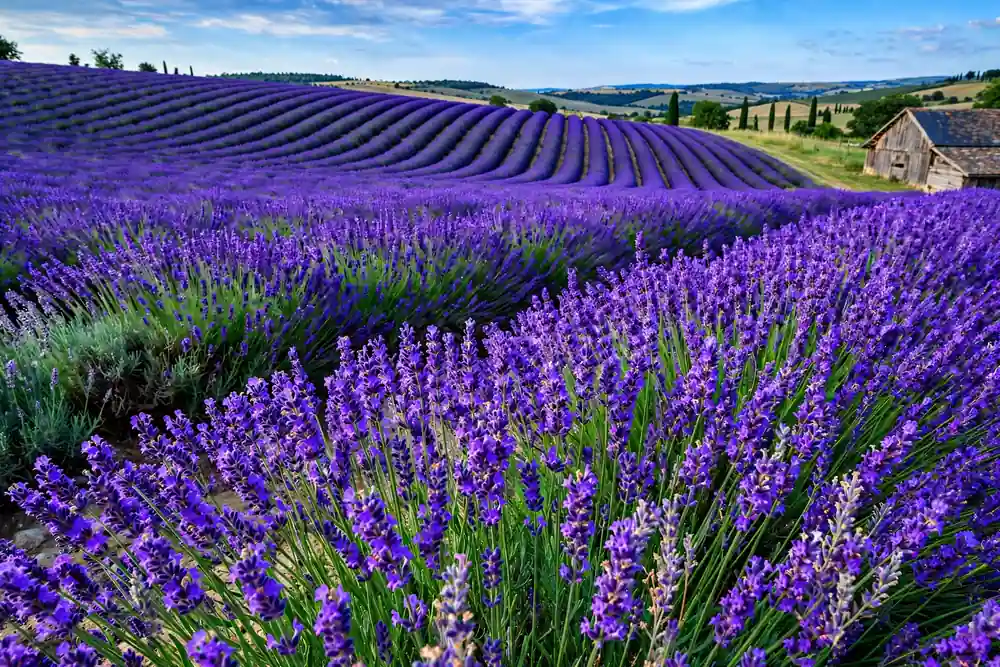
1. English Lavender (Lavandula angustifolia)
English lavender is the classic fragrant herb of cottage gardens, sending up dense purple spikes over silvery evergreen foliage in summer. Bees and butterflies adore it, and dried bundles scent closets for months. It demands sharp drainage and full sun — soggy winter soil kills more lavender than cold does. Plant ‘Hidcote’ for compact hedges or ‘Munstead’ for colder zones, and shear spent blooms to encourage a second flush.
Bloom: Summer | Sun: Full sun | Zone: 5–9 | Best for: Fragrant borders, pollinators, drying
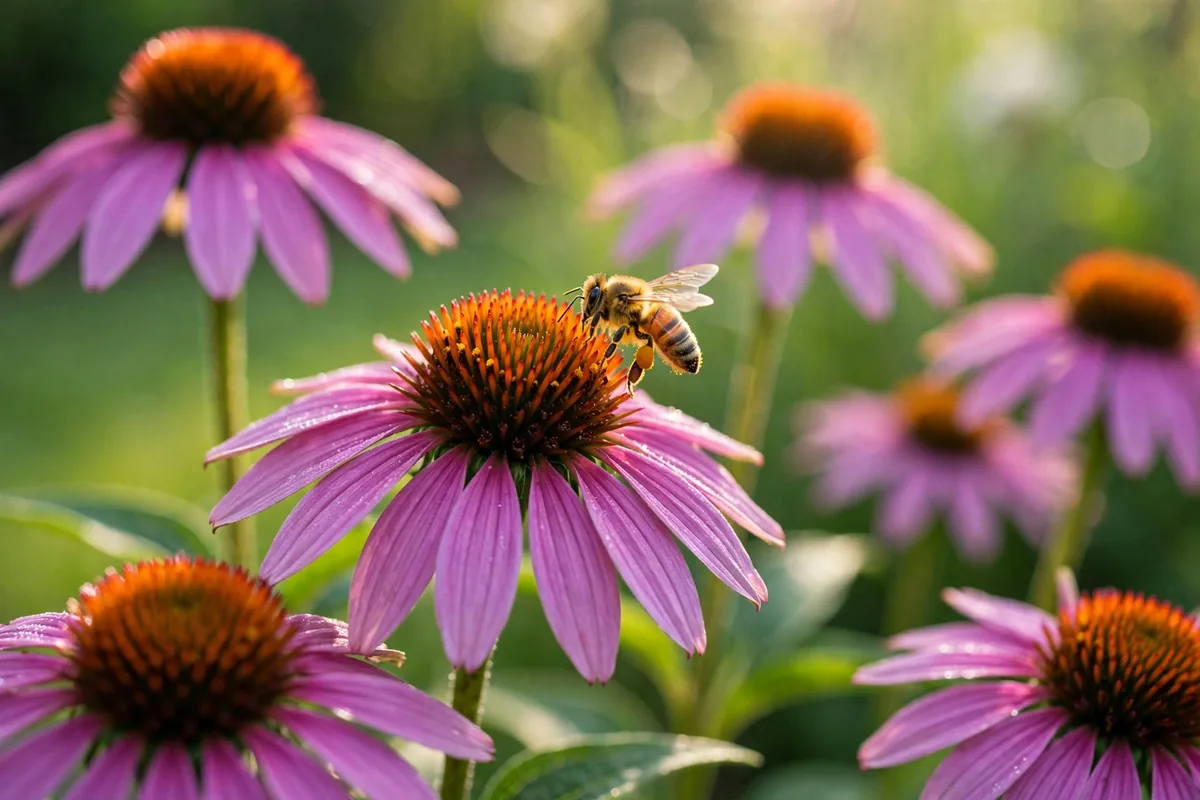
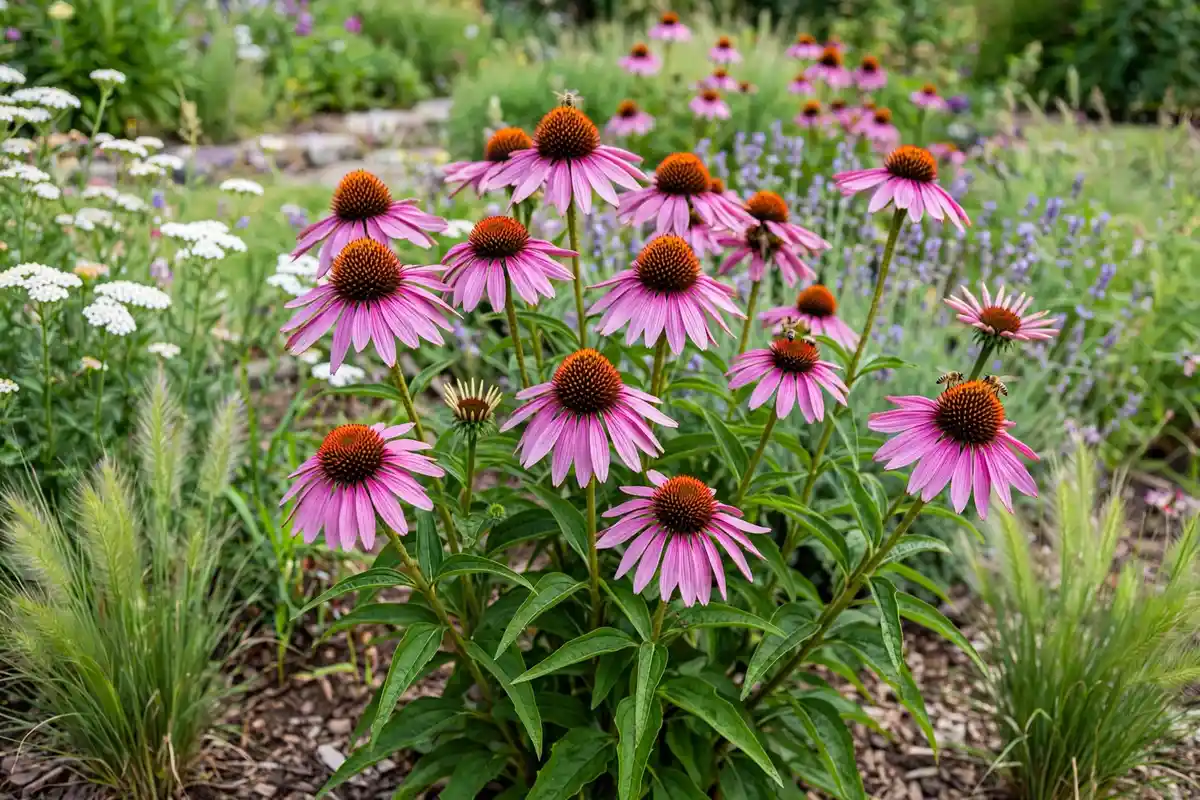
2. Echinacea (Echinacea purpurea)
Purple coneflower is a workhorse of the American perennial border, with daisy-like blooms and spiky orange cones on sturdy 2- to 3-foot stems. It shrugs off heat, drought, and poor soil while feeding bees, butterflies, and goldfinches that feast on the seeds. Deadhead for rebloom or leave the cones standing for winter interest and birds. Modern hybrids add white, orange, and double-flowered forms.
Bloom: Summer to fall | Sun: Full sun | Zone: 3–9 | Best for: Pollinator gardens, beginner perennials
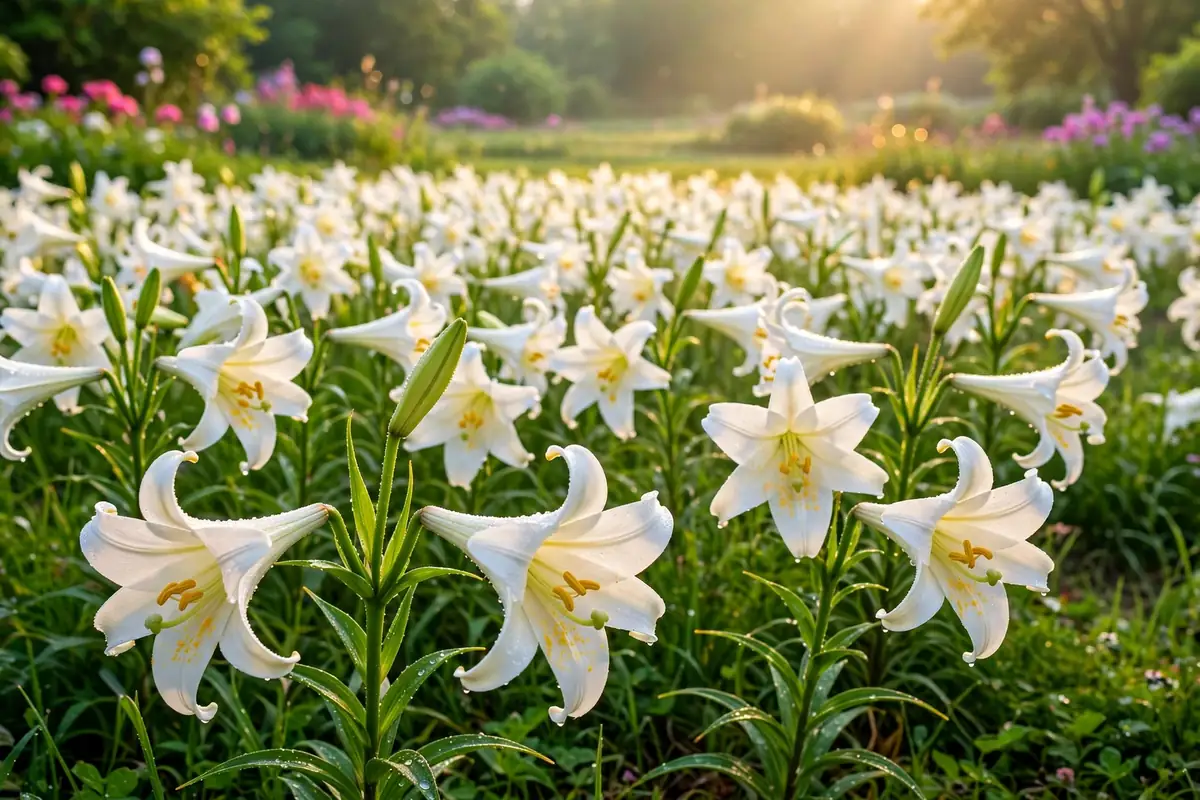
3. Easter Lily (Lilium longiflorum)
The Easter lily’s pure white trumpet, often 6 inches long and sweetly fragrant, is the signature flower of spring celebrations. Most gardeners buy it as a potted holiday plant, but the bulbs can go outdoors in zones 7–10, where they bloom in early summer. Give it rich, well-drained soil and morning sun. Note: all true lilies are highly toxic to cats, so keep indoor plants out of their reach.
Bloom: Spring (potted); early summer (garden) | Sun: Full sun to part shade | Zone: 7–10; potted elsewhere | Best for: Holiday displays, fragrant gardens
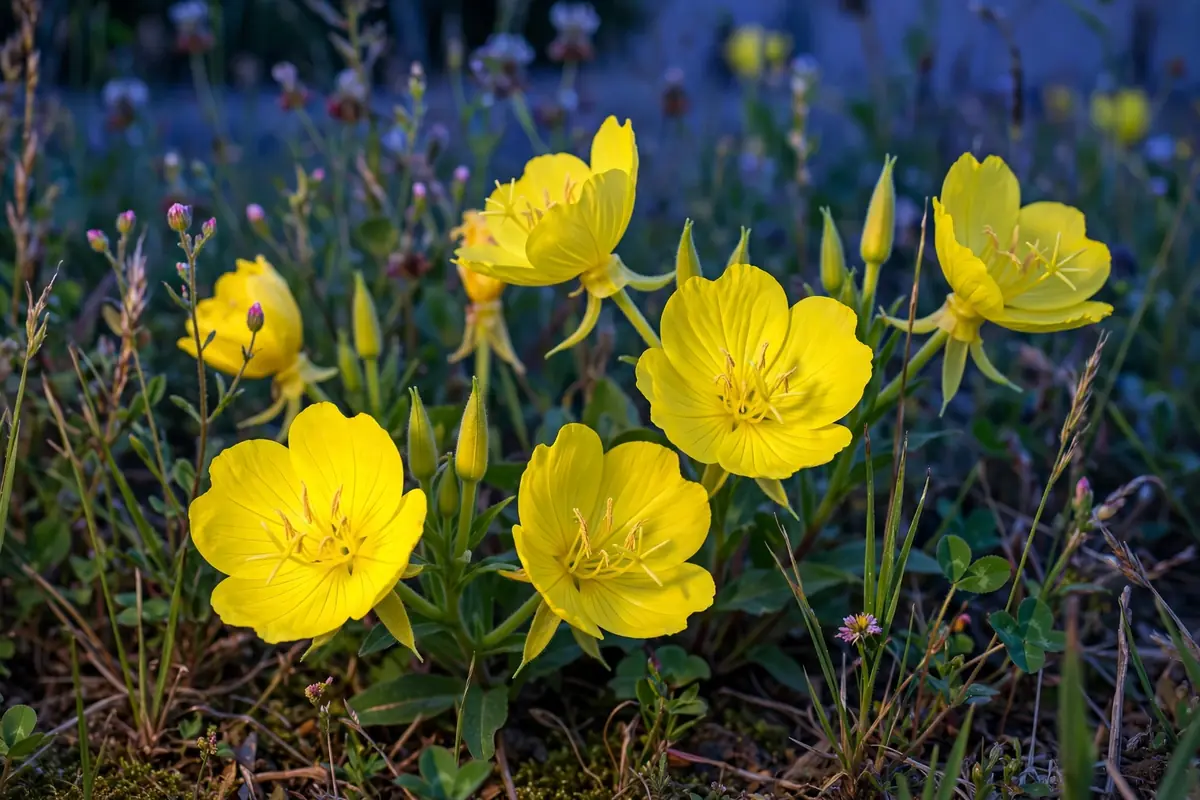
4. Evening Primrose (Oenothera biennis)
Evening primrose puts on a nightly show: its lemon-yellow cups open at dusk and glow against the evening garden, perfuming the air with a light, sweet scent. This tough biennial self-sows freely, so one planting returns for years. It tolerates poor, sandy soil and drought, making it ideal for wildflower meadows and cottage borders. The flowers also attract night-flying moths and hummingbirds at dusk.
Bloom: Summer | Sun: Full sun to part shade | Zone: 4–9 | Best for: Evening gardens, wildflower meadows
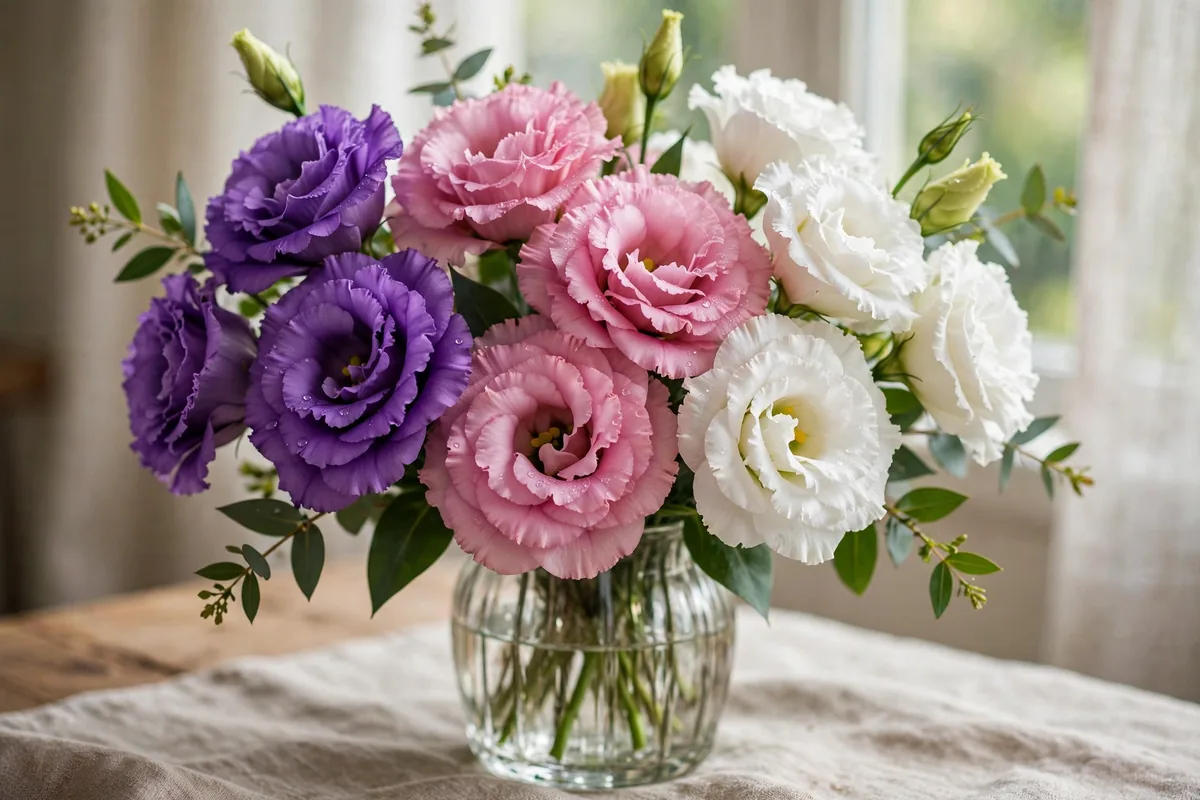
5. Eustoma (Eustoma grandiflorum)
Better known as lisianthus, eustoma produces rose-like, ruffled blooms in purple, pink, white, and bicolors on 2- to 3-foot stems. Florists prize it for a vase life of up to three weeks — among the longest of any cut flower. Slow from seed, so buy transplants for full sun, rich soil, and steady moisture. In zones 9–11 it behaves as a short-lived perennial; elsewhere grow it as an annual.
Bloom: Summer to fall | Sun: Full sun | Zone: 9–11; annual elsewhere | Best for: Cut flowers, bouquets
6. Winter Heath (Erica carnea)
Winter heath is one of the few shrubs that bloom through winter, covering low evergreen mounds with tiny pink, white, or red bells from January to April. It thrives in poor, acidic soil and full sun, making it perfect for rock gardens and edging paths. Unlike its fussier cousins, Erica carnea tolerates alkaline soil better than most heaths. Shear lightly after flowering to keep plants dense and floriferous.
Bloom: Late winter to spring | Sun: Full sun to part shade | Zone: 5–8 | Best for: Winter color, rock gardens
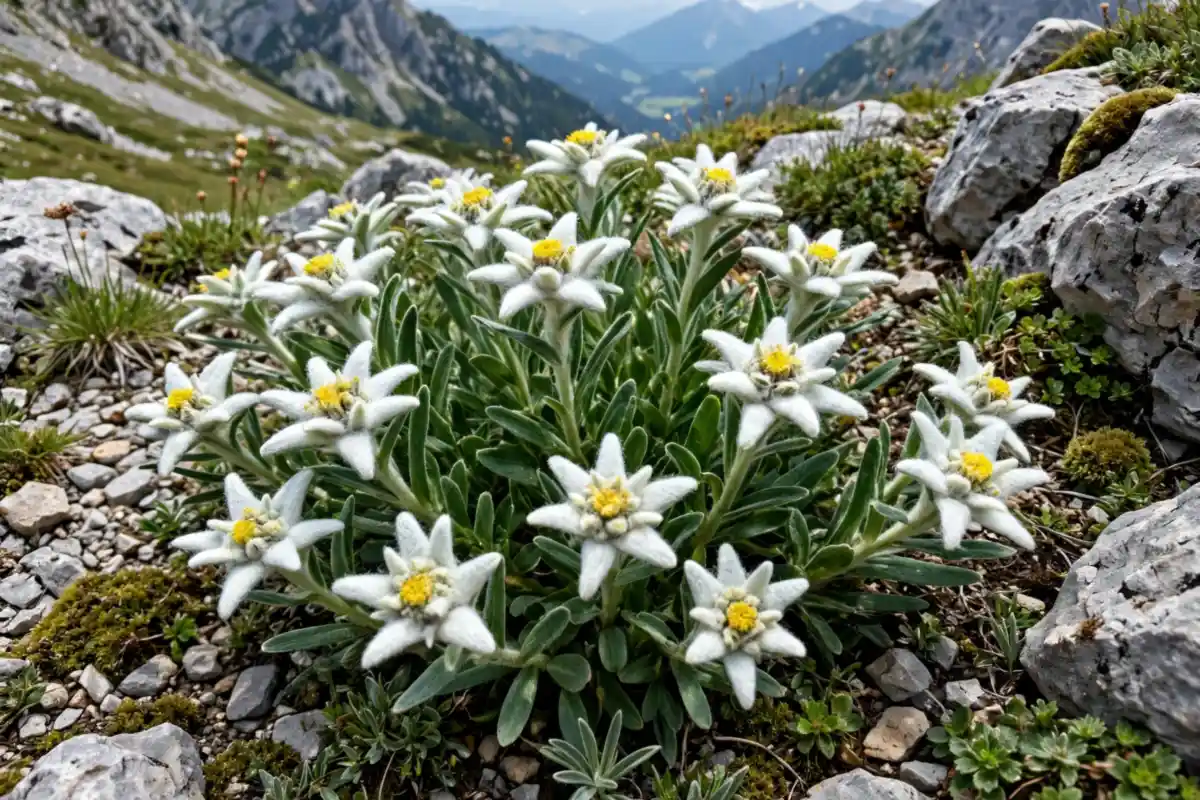
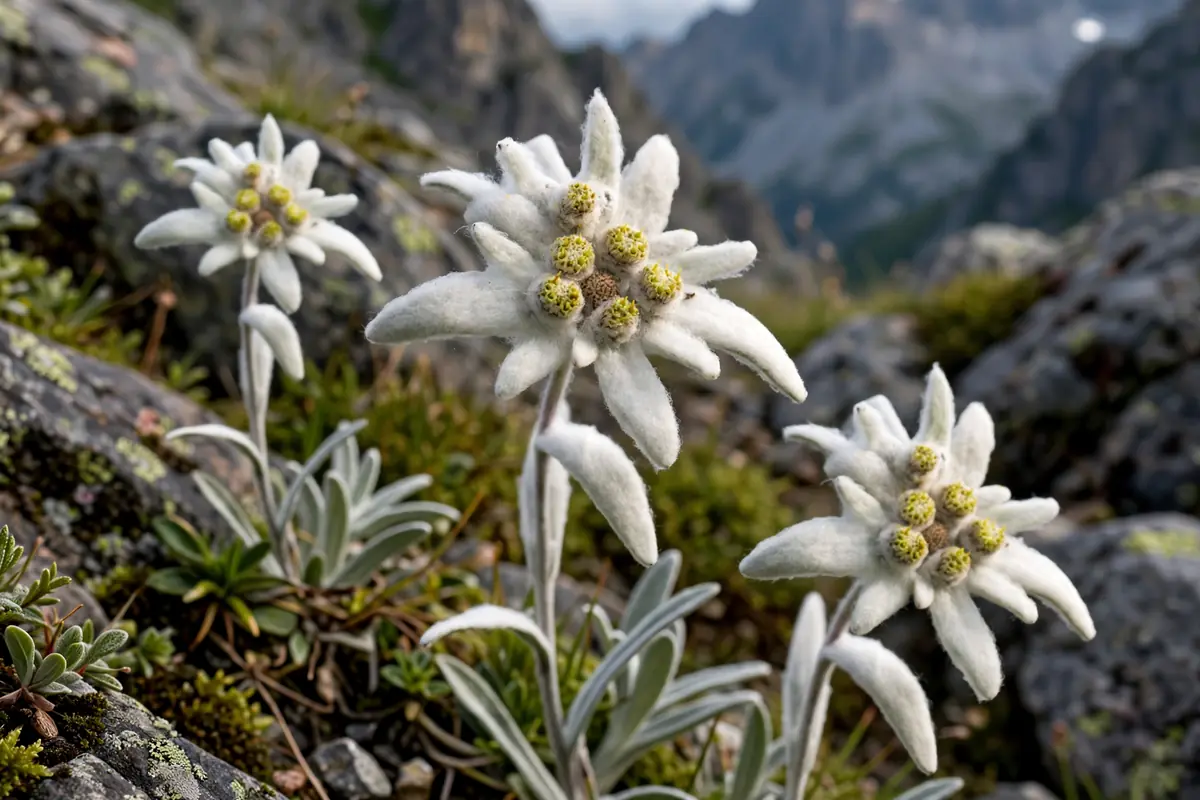
7. Edelweiss (Leontopodium alpinum)
Edelweiss is the legendary flower of the Alps — fuzzy white star-shaped blooms with silvery woolly leaves that shrug off harsh mountain weather. In the garden it needs lean, gritty, well-drained soil and full sun — rich soil and overwatering are its enemies. Grow it in rock gardens or alpine troughs where its compact 6- to 12-inch form shines. Hardy to zone 4, it is easy once drainage is right.
Bloom: Summer | Sun: Full sun | Zone: 4–7 | Best for: Rock gardens, alpine troughs
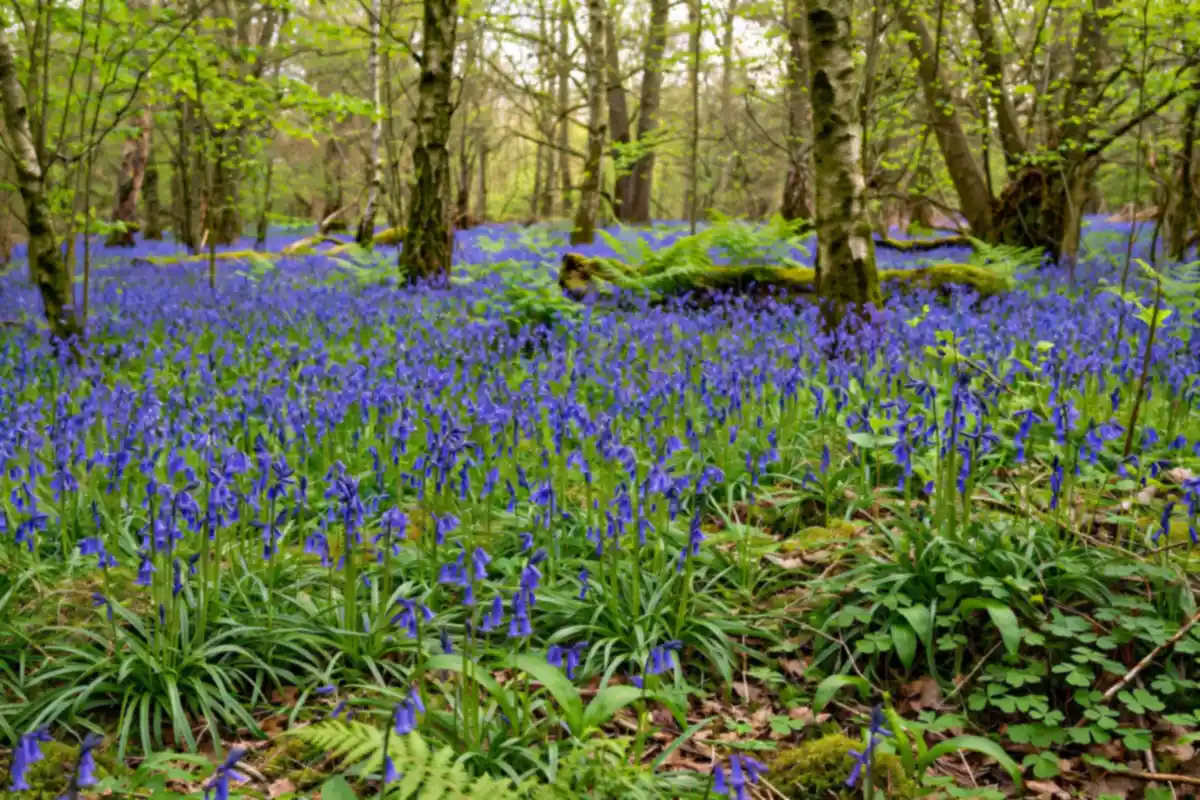
8. English Bluebell (Hyacinthoides non-scripta)
Nothing says spring woodland like a carpet of nodding English bluebells, their violet-blue bells arching gracefully over glossy strap leaves with a sweet, hyacinth-like scent. Plant bulbs in fall under deciduous trees where they get spring sun and summer shade. They naturalize beautifully and return for decades — but buy from reputable growers, as wild collection is restricted in Britain. Let foliage die back naturally to feed next year’s blooms.
Bloom: Spring | Sun: Part shade | Zone: 4–9 | Best for: Woodland gardens, naturalizing
9. Joe Pye Weed (Eutrochium purpureum)
Despite its weedy name, Joe Pye weed is a stately native perennial, topping 5 to 7 feet with huge domes of mauve-pink flowers in late summer. Butterflies — especially swallowtails — swarm it, and it tolerates the moist soils that defeat fussier perennials. Give it room at the back of the border and cut stems to the ground in late fall. ‘Gateway’ is a compact 5-foot cultivar for smaller gardens.
Bloom: Late summer to fall | Sun: Full sun to part shade | Zone: 4–9 | Best for: Back borders, butterfly gardens
10. Elderberry Blossom (Sambucus nigra)
Before the berries come the blossoms: elderberry shrubs erupt in early summer with flat, lacy clusters of tiny creamy-white, sweetly scented flowers. The blooms make classic elderflower cordial and champagne, and pollinators love them. This fast-growing deciduous shrub reaches 10 to 20 feet and fruits best with a second variety nearby for cross-pollination. Prune hard in late winter to keep it productive and manageable.
Bloom: Early summer | Sun: Full sun to part shade | Zone: 5–8 | Best for: Edible landscaping, wildlife shrubs
11. English Daisy (Bellis perennis)
The humble English daisy carpets lawns and cottage borders with cheerful white, pink, or red pompon blooms in spring. Modern cultivars like ‘Tasso’ offer fully double flowers on compact 4- to 6-inch plants that thrive in cool weather. It prefers moist, fertile soil and fades in summer heat — in warm regions, treat it as a fall-planted annual. Deadhead spent blooms to keep the flowers coming through the cool season.
Bloom: Spring to early summer | Sun: Full sun to part shade | Zone: 4–8 | Best for: Edging, spring containers
12. Epimedium (Epimedium grandiflorum)
Epimedium, sometimes called barrenwort or bishop’s hat, is the answer to dry shade under trees, where its delicate spider-like spring flowers dance above heart-shaped leaves. It spreads slowly into a weed-proof groundcover and tolerates the root competition that defeats most perennials. Cut the old foliage to the ground in late winter so the new flowers show clearly. Once established, it needs almost no care.
Bloom: Spring | Sun: Part to full shade | Zone: 5–9 | Best for: Dry shade, groundcover
13. Fleabane Daisy (Erigeron speciosus)
Showy fleabane looks like a refined wild aster, with 2-inch lavender-blue daisies — each with up to 100 narrow petals — blooming for weeks in summer. It is a tough western native that handles poor soil, drought, and neglect while feeding native bees. Cut plants back by half after the first flush for a second round of blooms. It self-sows gently, filling gaps in sunny borders without becoming a nuisance.
Bloom: Summer to fall | Sun: Full sun | Zone: 5–8 | Best for: Native gardens, cottage borders
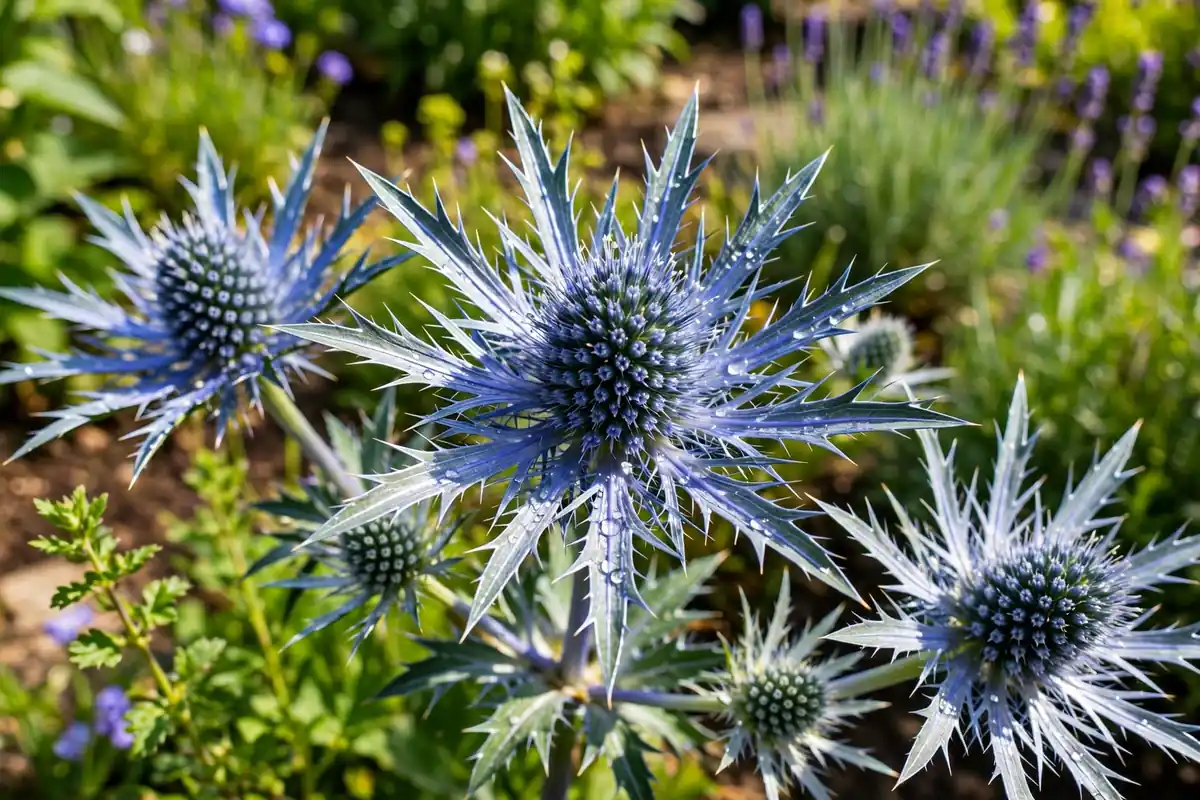
14. Sea Holly (Eryngium planum)
Sea holly brings architecture to the summer border with spiky, metallic steel-blue flower heads ringed by silver bracts. It loves poor, sandy soil and full sun — the leaner the conditions, the better the color. Bees adore it, and the dried heads are superb in winter arrangements. Choose a permanent spot at planting time; like many taprooted perennials, sea holly resents being moved once established.
Bloom: Summer | Sun: Full sun | Zone: 5–9 | Best for: Dried arrangements, coastal gardens
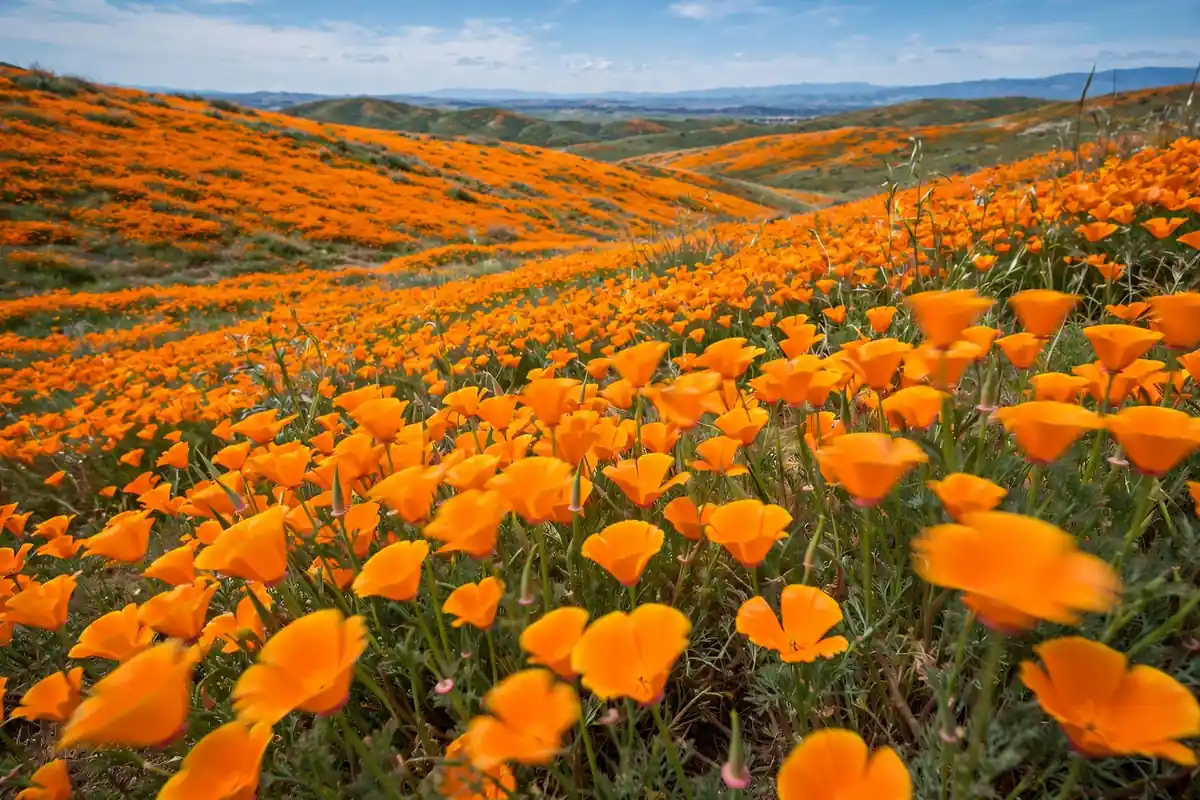
15. California Poppy (Eschscholzia californica)
California’s state flower turns spring hillsides gold with silky orange cups that open in sunshine and close at night. It is one of the easiest wildflowers to grow — scatter seeds in fall or early spring on bare, sunny soil and let nature take over. Plants reseed freely, returning year after year. Deadhead to extend bloom, or let pods form for next year’s show. No fertilizer and little water needed.
Bloom: Spring to summer | Sun: Full sun | Zone: Grown as annual; perennial 8–10 | Best for: Wildflower meadows, easy color
16. Evening Stock (Matthiola longipetala)
Evening stock, or night-scented stock, is grown for one reason: its intoxicating perfume. The small pale-lilac flowers look unremarkable by day, but at dusk they release a sweet, spicy fragrance that carries across the whole garden. Sow seeds directly where you want them in spring — near patios, bedroom windows, or evening seating areas. It blooms in about 8 weeks and self-sows for encore performances.
Bloom: Summer | Sun: Full sun to part shade | Zone: Grown as annual | Best for: Night fragrance, patios
17. Strawflower (Xerochrysum bracteatum)
Strawflower (Xerochrysum bracteatum) — see the full growing guide in entry 54 on our flowers that start with S page.
18. English Primrose (Primula vulgaris)
The English primrose is spring’s gentle opener, with clusters of pale-yellow, sweetly scented flowers nestled in rosettes of crinkled green leaves. It thrives in the cool, moist, partly shaded spots where many flowers struggle — under deciduous shrubs or along stream banks. Plant it where you will see it up close, such as path edges. Divide clumps every few years after flowering to keep plants vigorous.
Bloom: Early spring | Sun: Part shade | Zone: 4–8 | Best for: Woodland edges, spring containers
19. Euryops Daisy (Euryops pectinatus)
Euryops daisy is a South African evergreen shrub that pumps out cheerful yellow daisies almost year-round in frost-free climates. Its finely divided gray-green foliage looks good even when flowers pause. In zones 9–11 it forms a rounded 3- to 5-foot shrub for sunny borders and foundation plantings; in colder areas, grow it in pots and overwinter indoors. Shear lightly after heavy bloom cycles to keep it tidy.
Bloom: Fall to spring (mild climates) | Sun: Full sun | Zone: 9–11 | Best for: Warm-climate borders, containers
20. Foxtail Lily (Eremurus robustus)
Foxtail lily is pure garden drama: a 6- to 8-foot spike packed with hundreds of small pink or white starry flowers, rising from a crown of strappy leaves in early summer. The brittle, octopus-like roots must be planted shallowly in autumn in deeply worked, well-drained soil. Once settled, it dislikes disturbance. Pair it with lower perennials that hide its fading foliage after bloom.
Bloom: Early summer | Sun: Full sun | Zone: 5–8 | Best for: Statement plantings, back borders
21. Chilean Glory Flower (Eccremocarpus scaber)
Chilean glory flower is a fast, flamboyant vine that races up trellises and obelisks, dangling tubular orange-red blooms all summer. From seed sown indoors in spring, it can climb 10 feet in a single season, flowering the first year. In zones 8–10 it survives winter as a perennial; elsewhere, treat it as an annual or lift the tuberous roots for winter storage. Give it something sturdy to climb.
Bloom: Summer to fall | Sun: Full sun | Zone: 8–10; annual elsewhere | Best for: Trellises, quick vertical color
22. Empress Tree Blossom (Paulownia tomentosa)
Before its huge leaves unfurl, the empress tree covers its branches in upright clusters of fragrant lavender-purple, foxglove-like blossoms — one of spring’s most spectacular tree displays. It grows astonishingly fast, often 10 feet a year when young. Note: it self-seeds aggressively and is invasive in parts of the eastern US — check local guidance before planting.
Bloom: Spring | Sun: Full sun | Zone: 5–9 | Best for: Fast shade, spring spectacle
23. White Snakeroot (Ageratina altissima)
White snakeroot lights up shady corners in late summer with fluffy clusters of bright white flowers on 3- to 5-foot stems. It is one of the few perennials that blooms generously in shade, and butterflies flock to it. It self-sows readily — deadhead if you want to limit its spread. Important: all parts are toxic if eaten, so site it away from vegetable gardens and grazing animals.
Bloom: Late summer to fall | Sun: Part shade to full shade | Zone: 3–8 | Best for: Shade gardens, late-season nectar
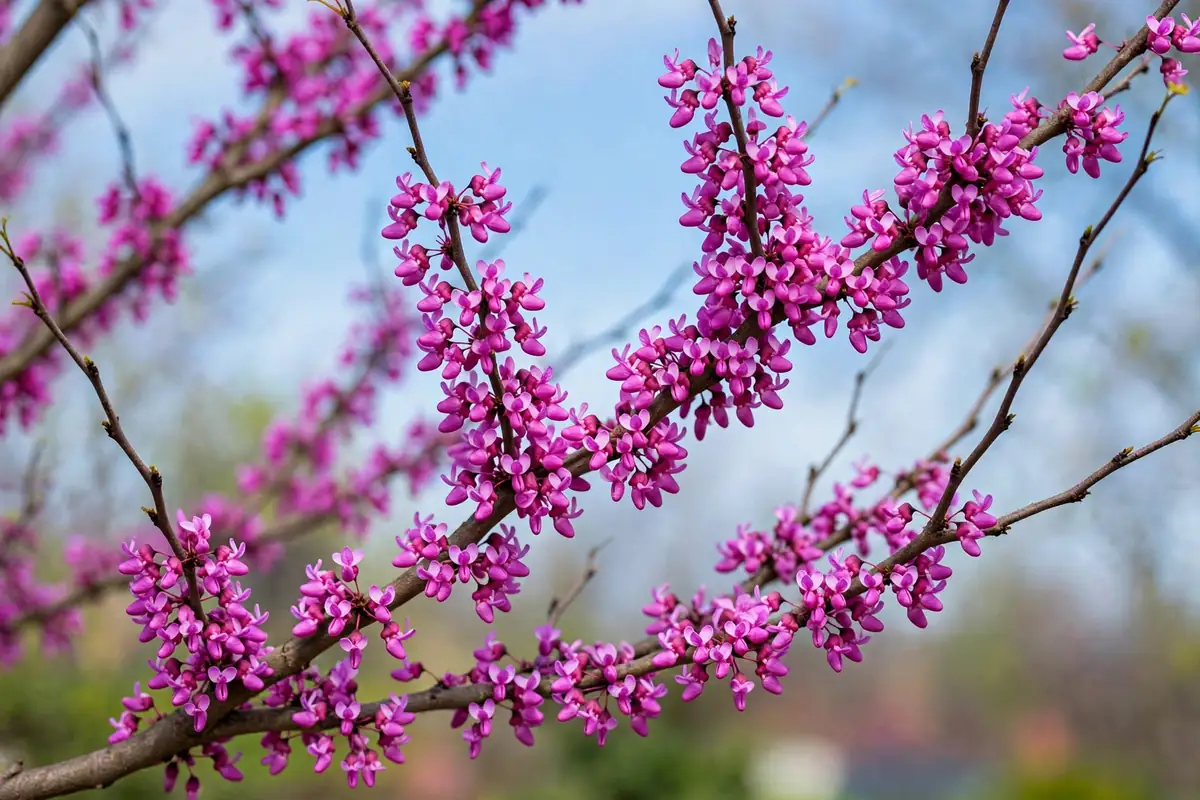
24. Eastern Redbud Blossom (Cercis canadensis)
Eastern redbud announces spring with magenta-pink, pea-like blossoms that burst directly from bare branches and even the trunk — a phenomenon called cauliflory. The heart-shaped leaves that follow turn golden in fall. This native small tree reaches 20 to 30 feet and thrives in a wide range of soils. Plant it where you can admire the spring show up close, and enjoy the edible blossoms in salads.
Bloom: Early spring | Sun: Full sun to part shade | Zone: 4–9 | Best for: Spring flowering trees, native gardens
25. Eglantine (Rosa rubiginosa)
Eglantine, or sweetbriar rose, is a heritage shrub rose with single pink blossoms and apple-scented foliage — rub the leaves on a warm day and the whole bush smells like a cider orchard. In fall it produces abundant orange-red hips prized for tea and wildlife. This tough, disease-resistant rose grows 6 to 10 feet tall and makes a superb informal hedge. Prune lightly after flowering to shape it.
Bloom: Early summer | Sun: Full sun | Zone: 4–9 | Best for: Fragrant hedges, heritage gardens
26. Elephant’s Ears (Bergenia cordifolia)
Bergenia earns its common name from big, leathery, rounded leaves that stay evergreen through winter, often turning bronze-red in the cold. In spring, clusters of magenta-pink bell flowers rise on stout stems. It is nearly indestructible in part shade with average soil, shrugging off neglect that kills fussier perennials. Divide congested clumps every 4 to 5 years in spring to rejuvenate them.
Bloom: Spring | Sun: Part shade | Zone: 3–8 | Best for: Tough groundcover, winter foliage
27. Globe Thistle (Echinops ritro)
Globe thistle tops 3- to 4-foot silver stems with perfectly round, steely-blue flower heads that look like botanical sculptures. Bees and butterflies mob the blooms, and goldfinches strip the seed heads in fall. It demands full sun and lean, well-drained soil — rich, wet ground makes it floppy. Leave the dried globes standing for winter structure or cut them for striking dried arrangements.
Bloom: Summer | Sun: Full sun | Zone: 3–9 | Best for: Pollinators, dried arrangements
28. Evening Campion (Silene latifolia)
Evening campion, also called white campion, opens its white, deeply notched flowers at dusk and perfumes the night air to attract moths. This easy biennial or short-lived perennial self-sows in sunny to partly shaded spots with well-drained soil. Plant it near evening gathering spots alongside evening primrose and night-scented stock for a moon garden that comes alive after dark.
Bloom: Summer | Sun: Full sun to part shade | Zone: 4–8 | Best for: Moon gardens, night fragrance
29. Everlasting Pea (Lathyrus latifolius)
Everlasting pea is the perennial cousin of the sweet pea, climbing 6 to 9 feet with clusters of pink, white, or red pea-flowers all summer. Unlike annual sweet peas it has no scent, but it returns reliably for years with zero fuss. Give it a trellis or let it scramble through shrubs. Warning: the seeds are toxic if eaten, so this is a look-but-don’t-taste plant despite the family resemblance.
Bloom: Summer | Sun: Full sun | Zone: 4–9 | Best for: Cottage fences, low-maintenance vines
30. Egyptian Starflower (Pentas lanceolata)
Pentas produces dense clusters of star-shaped flowers in red, pink, white, and lavender from summer until frost, and it is one of the very best butterfly plants for hot climates. In zones 10–11 it grows as a 3-foot perennial shrub; elsewhere, plant it as a summer annual in beds and containers. Deadhead regularly and feed monthly for the heaviest bloom. Hummingbirds visit the tubular flowers daily.
Bloom: Summer to fall | Sun: Full sun to part shade | Zone: 10–11; annual elsewhere | Best for: Butterfly gardens, containers
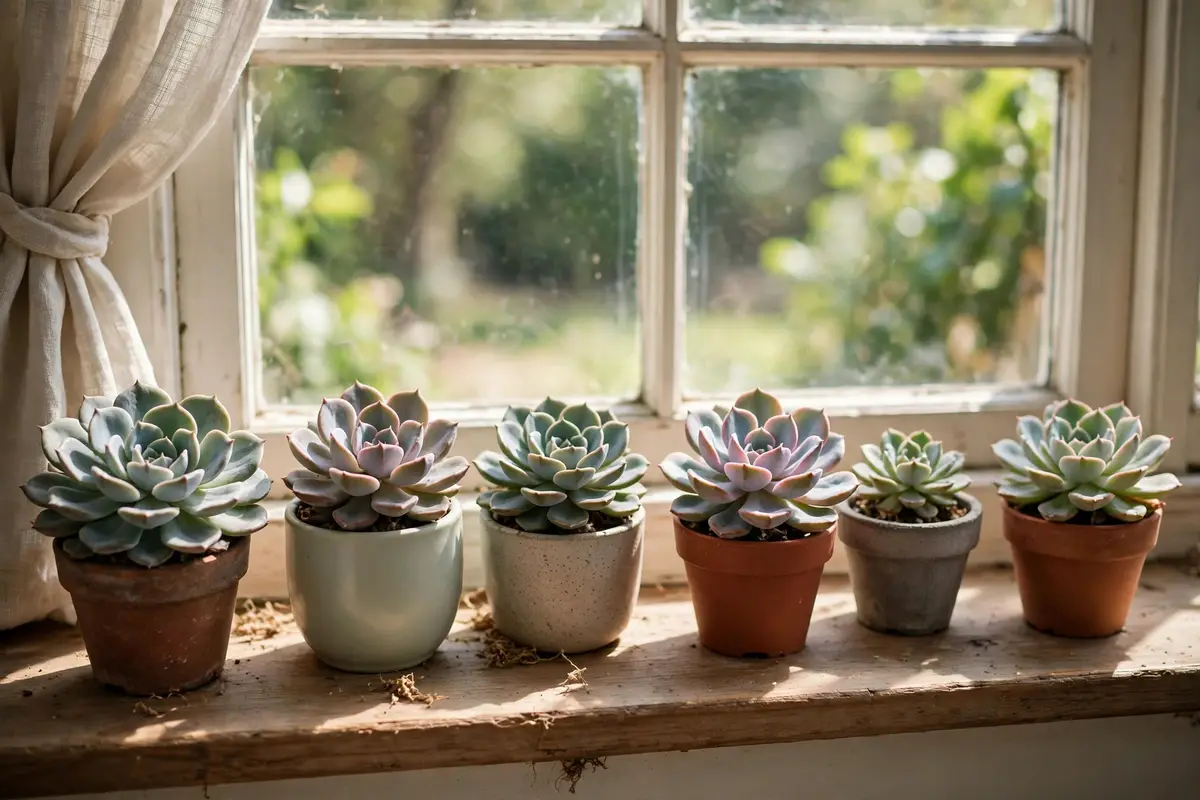
31. Echeveria (Echeveria elegans)
Echeveria is grown for its perfect rosettes of powdery blue-green leaves, but mature plants also send up arching stalks of pink-orange, bell-shaped flowers in spring. It needs gritty, fast-draining cactus soil and bright light — indoors, a sunny windowsill; outdoors in zones 9–11, a rock garden or container. Water deeply but infrequently, letting soil dry completely between waterings. Overwatering is the number one killer.
Bloom: Spring to summer | Sun: Full sun to bright indirect | Zone: 9–11; houseplant elsewhere | Best for: Succulent gardens, windowsills
32. Easter Cactus (Hatiora × graeseri)
Easter cactus bursts into bloom each spring with starry red, pink, white, or orange flowers at the tips of its segmented, arching stems. Unlike desert cacti, it comes from Brazilian forests and likes bright indirect light, regular watering, and humidity. To set buds, give it 12 to 14 hours of uninterrupted darkness nightly for about a month in late winter. It thrives for decades with minimal care.
Bloom: Spring | Sun: Bright indirect light | Zone: Houseplant (10–11 outdoors) | Best for: Indoor spring color, hanging baskets
33. English Wallflower (Erysimum cheiri)
English wallflower perfumes the spring garden with clusters of velvety flowers in yellow, orange, red, and bronze, each with a sweet, clove-like scent. Sow seeds in summer for blooms next spring, or buy bedding plants in fall in mild climates. It loves full sun and well-drained, even chalky, soil. In cold zones, grow it as a biennial; where winters are mild (zones 7–10), it behaves as a short-lived perennial.
Bloom: Spring | Sun: Full sun | Zone: 7–10; biennial elsewhere | Best for: Spring fragrance, cottage borders
34. English Iris (Iris latifolia)
English iris sends up elegant, slender-stemmed flowers in blue, purple, and white in early summer, each bloom like a butterfly poised above narrow grass-like foliage. Plant the bulbs 4 inches deep in fall in full sun with well-drained soil, and they will return reliably for years. It pairs beautifully with roses and peonies. Unlike bearded irises, it prefers soil that stays lightly moist through spring.
Bloom: Early summer | Sun: Full sun | Zone: 5–9 | Best for: Cut flowers, perennial borders
35. Blue Mistflower (Conoclinium coelestinum)
Blue mistflower, also sold as hardy ageratum, covers itself in fluffy blue-violet flower clusters from late summer into fall — a rare true-blue for the autumn garden. It spreads by rhizomes to form generous colonies, excellent for naturalizing in moist meadows and rain gardens. Butterflies, especially monarchs fueling up for migration, rely on its late nectar. Cut it back hard in early summer for bushier plants and more blooms.
Bloom: Late summer to fall | Sun: Full sun to part shade | Zone: 5–10 | Best for: Fall color, monarch waystations
36. Trout Lily (Erythronium americanum)
Trout lily is a spring ephemeral of eastern woodlands, with nodding yellow flowers and mottled leaves that look like a brook trout’s flank. The foliage appears in early spring and vanishes by summer as the plant goes dormant — a completely normal cycle. Plant bulbs in fall in rich, humusy shade and never disturb them; colonies take years to build but then persist for decades.
Bloom: Early spring | Sun: Part to full shade | Zone: 3–8 | Best for: Woodland gardens, spring ephemerals
37. Winter Aconite (Eranthis hyemalis)
Winter aconite is often the very first flower of the year, pushing golden buttercup-like blooms through late-winter snow above a ruff of green leaves. Plant the small tubers in fall, 2 to 3 inches deep, in humus-rich soil under deciduous trees. It naturalizes into glowing drifts that return for decades. Toxic if eaten, like all buttercup relatives — admire the early color and let the bees have the nectar.
Bloom: Late winter | Sun: Part shade | Zone: 4–9 | Best for: Earliest spring color, naturalizing
38. Trailing Arbutus (Epigaea repens)
Trailing arbutus, the mayflower of Pilgrim fame, creeps along woodland floors with leathery evergreen leaves and clusters of waxy pink-white flowers with an exquisite spicy-sweet scent. It is famously fussy about transplanting — buy nursery-grown plants, never wild-dug — and demands acidic, humusy, well-drained soil in part shade. Once settled, leave it alone and it will slowly form fragrant evergreen mats.
Bloom: Early spring | Sun: Part shade | Zone: 3–7 | Best for: Native woodland gardens, fragrance
39. Early Crocus (Crocus tommasinianus)
Early crocus, often called tommies, opens slender lilac-purple goblets in late winter, sometimes while snow still patches the ground. It naturalizes better than most crocuses, multiplying into drifts that squirrels tend to leave alone. Plant corms 3 inches deep in fall in lawns, under shrubs, or along paths — anywhere with winter sun. Let the grass grow until the foliage yellows so the corms recharge.
Bloom: Late winter to early spring | Sun: Full sun to part shade | Zone: 3–8 | Best for: Lawns, earliest bulbs
40. Common Boneset (Eupatorium perfoliatum)
Common boneset is a sturdy native perennial with an unusual signature: its wrinkled leaves join around the stem, which appears to pierce straight through them. In late summer, flat-topped clusters of small white flowers attract butterflies, bees, and beneficial wasps. It thrives in moist to wet soils where many perennials sulk, making it ideal for rain gardens and pond edges. Cut back in late fall after seeds feed the birds.
Bloom: Late summer to fall | Sun: Full sun to part shade | Zone: 3–8 | Best for: Rain gardens, native pollinator plantings
41. Paperbush (Edgeworthia chrysantha)
- Bloom: Late winter to early spring | Sun: Full sun to part shade | Zone: 7–9 | Best for: Winter fragrance, woodland edges
Paperbush is one of the sweetest surprises of late winter — clusters of creamy-yellow, intensely fragrant tubular flowers open on bare stems before the leaves emerge. This slow-growing deciduous shrub from China and the Himalayas prefers rich, moist, well-drained soil in light shade. It rarely needs pruning and rewards patience with decades of winter perfume.
42. Pineapple Lily (Eucomis comosa)
- Bloom: Summer | Sun: Full sun | Zone: 7–10 | Best for: Containers, tropical borders
Pineapple lily earns its name from the tuft of leafy bracts crowning each flower spike like a tiny pineapple. Greenish-white, star-shaped blooms on 2-foot stems make it a conversation piece in summer containers and tropical borders. It is easy from bulbs planted in spring in gritty, well-drained soil; lift in cold zones.
43. Flame Violet (Episcia cupreata)
- Bloom: Year-round indoors | Sun: Bright indirect light | Zone: Houseplant (10–11 outdoors) | Best for: Indoor color, hanging baskets
Flame violet is grown as much for its patterned foliage as for its fiery orange-red tubular flowers. This tropical trailing plant loves warmth, humidity, and bright indirect light — cold drafts make it sulk. Keep the soil lightly moist and it can bloom almost continuously indoors.
44. Redvein Enkianthus (Enkianthus campanulatus)
- Bloom: Late spring | Sun: Full sun to part shade | Zone: 4–7 | Best for: Woodland edges, fall color
Redvein enkianthus is a refined woodland shrub with dangling clusters of creamy, red-veined bell flowers in late spring and brilliant red-orange fall foliage. It wants the same acidic soil and part shade as rhododendrons, making it a natural companion planting. Slow-growing but extremely long-lived once established.
45. Escallonia (Escallonia rubra)
- Bloom: Summer to fall | Sun: Full sun | Zone: 8–10 | Best for: Hedges, coastal gardens
Escallonia is a glossy evergreen shrub that pumps out clusters of rosy-red tubular flowers from summer into fall. It shrugs off coastal wind and salt spray, making it a favorite hedging plant in seaside gardens. Shear after flowering to keep it dense and encourage rebloom.
46. Storksbill (Erodium reichardii)
- Bloom: Spring to fall | Sun: Full sun to part shade | Zone: 6–9 | Best for: Rock gardens, edging
Storksbill forms a tidy evergreen mat of tiny rounded leaves dotted with delicate pink-veined white flowers for months on end. It is perfect for rock gardens, path edges, and alpine troughs where it never oversteps its bounds. Needs sharp drainage — wet winter soil is its main enemy.
47. Brittlebush (Encelia farinosa)
- Bloom: Spring | Sun: Full sun | Zone: 9–11 | Best for: Xeriscapes, desert gardens
Brittlebush is a silvery desert shrub that erupts in a cloud of golden-yellow daisies each spring. It thrives on heat, poor soil, and almost no water — classic xeriscape material for the Southwest. Give it excellent drainage and full blazing sun, and leave it alone.
48. Sulfur Buckwheat (Eriogonum umbellatum)
- Bloom: Summer | Sun: Full sun | Zone: 4–8 | Best for: Native gardens, pollinators
Sulfur buckwheat is a low, mounding western native with flat clusters of bright sulfur-yellow flowers that age to orange and red. It is a powerhouse pollinator plant for dry, lean soils where little else thrives. Plant it in fall or early spring in gravelly, well-drained soil and avoid overwatering.
49. Crag Lily (Echeandia flavescens)
- Bloom: Summer | Sun: Full sun to part shade | Zone: 8–11 | Best for: Rock gardens, collectors
Crag lily is a little-known tuberous plant with grassy foliage and airy panicles of golden-yellow, star-shaped blooms. Native to rocky slopes of the Southwest and Mexico, it wants sharp drainage and a dry winter rest. A gem for rock garden collectors seeking the unusual.
50. Eulalia Grass (Miscanthus sinensis ‘Gracillimus’)
- Bloom: Late summer to fall | Sun: Full sun | Zone: 5–9 | Best for: Ornamental grasses, fall plumes
- Note: Self-seeds aggressively in some regions — choose sterile cultivars or deadhead before seed set where it is a concern.
Eulalia grass, better known as maiden grass, forms graceful arching clumps of narrow silver-midribbed foliage topped by feathery copper plumes in fall. It is one of the most beautiful ornamental grasses for structure and winter interest. Cut the whole clump back in late winter before new growth starts.
51. Burning Bush (Euonymus alatus)
- Bloom: Spring (inconspicuous) | Sun: Full sun to part shade | Zone: 4–8 | Best for: Fall color — plant with caution (invasive in many states)
- Note: Invasive in many US states — check local guidance before planting; native alternatives like highbush blueberry or Virginia sweetspire give the same fall fire without the ecological cost.
Burning bush is famous for its blazing crimson fall foliage, but its tiny greenish spring flowers are forgettable. It escapes into natural areas in many states, where it displaces native plants and is hard to eradicate once established. If you love the look, the native alternatives above deliver brilliant red fall color responsibly.
52. Autumn Olive (Elaeagnus umbellata)
- Bloom: Spring (fragrant) | Sun: Full sun to part shade | Zone: 4–8 | Best for: Wildlife berries — plant with caution (invasive in many states)
- Note: Invasive in many US states — check local guidance before planting; native alternatives like serviceberry or American elderberry offer berries for wildlife without the invasion risk.
Autumn olive produces intensely fragrant creamy-yellow spring flowers followed by silvery-red berries that birds adore — which is exactly the problem, since birds spread its seed far and wide. Once established it forms impenetrable thickets and is notoriously hard to remove. Plant it only where local guidance allows, or choose a native berry shrub instead.
53. Silver Dollar Gum (Eucalyptus cinerea)
- Bloom: Spring | Sun: Full sun | Zone: 9–11 | Best for: Foliage gardens, floristry
Silver dollar gum is grown for its round, silvery-blue juvenile leaves beloved by florists, but mature trees also produce clusters of creamy-white flowers. It is fast-growing and aromatic, best suited to warm, frost-free regions. Give it room — eucalyptus can become very large, very quickly.
54. Crown of Thorns (Euphorbia milii)
- Bloom: Year-round in warm climates | Sun: Full sun | Zone: 9–11; houseplant elsewhere | Best for: Containers, drought-tolerant color
- Note: Shares the Euphorbia genus with Cushion Spurge on the live Flowers C page and Poinsettia on the live Flowers P page — same genus, different species. All euphorbias have milky sap that irritates skin and eyes — handle with gloves.
Crown of thorns is a spiny succulent shrub with cheerful red, pink, or yellow bracts that can bloom almost year-round in warm conditions. As a houseplant it wants the sunniest window and sparse watering, thriving on the neglect that kills fussier indoor plants.
55. English Hawthorn (Crataegus monogyna)
- Bloom: Late spring | Sun: Full sun to part shade | Zone: 4–8 | Best for: Hedging, wildlife gardens
English hawthorn is the classic hedgerow tree of the English countryside, smothered in fragrant white blossoms in late spring. Its red haws feed birds through fall and winter, and the thorny branches make superb wildlife shelter. It tolerates a wide range of soils and is very hardy — a workhorse for rural and wildlife-friendly gardens.
56. Easter Daisy (Townsendia hookeri)
A tiny alpine daisy that hugs the ground in rock gardens; sow fresh seed in fall, as it hates root disturbance.
Bloom: Spring | Sun: Full sun | Zone: 4-8 | Best for: Rock gardens, alpine troughs
57. Eastern Red Columbine (Aquilegia canadensis)
Red-and-yellow spurred bells that hummingbirds find irresistible; it self-seeds gently in light shade.
Bloom: Spring | Sun: Part shade | Zone: 3-8 | Best for: Woodland edges, hummingbird gardens
58. Eastern Prickly Pear (Opuntia humifusa)
A cactus hardy enough for northern winters; the satiny yellow flowers open in early summer — handle pads with tongs.
Bloom: Early summer | Sun: Full sun | Zone: 4-9 | Best for: Dry beds, rock gardens
59. Elecampane (Inula helenium)
A giant old herb-garden plant with shaggy yellow daisies on stems taller than a person.
Bloom: Summer | Sun: Full sun | Zone: 3-8 | Best for: Back of border, herb gardens
60. Elfin Herb (Cuphea hyssopifolia)
A neat little shrublet dusted with tiny purple or white stars for months; a favourite for bonsai-style pots.
Bloom: Spring to fall | Sun: Full sun to part shade | Zone: 9-11; annual elsewhere | Best for: Edging, containers
61. Emerald Vine (Strongylodon macrobotrys)
The famous jade vine: claw-shaped turquoise flowers hang in long chains under a strong pergola in the tropics.
Bloom: Spring | Sun: Part shade | Zone: 10-12; greenhouse elsewhere | Best for: Pergolas in tropics, conservatories
62. Emperor’s Candlesticks (Senna alata)
Upright golden ‘candles’ open from the base up in fall; a host plant for sulphur butterflies.
Bloom: Fall to winter | Sun: Full sun | Zone: 9-11; annual elsewhere | Best for: Tropical borders, butterfly gardens
63. Enchanter’s Nightshade (Circaea lutetiana)
A quiet woodland spreader with tiny white two-petalled flowers; not a true nightshade and not showy, but tough in deep shade.
Bloom: Summer | Sun: Part shade to shade | Zone: 4-8 | Best for: Woodland ground cover
64. Engelmann Daisy (Engelmannia peristenia)
A prairie daisy that opens fresh yellow blooms every evening through the heat; deep-rooted and drought-proof.
Bloom: Spring to fall | Sun: Full sun | Zone: 5-10 | Best for: Prairies, dry meadows
65. English Marigold (Calendula officinalis)
The cottage-garden marigold (a calendula, not a tagetes): edible petals, easy seed, and colour from spring to frost.
Bloom: Spring to fall | Sun: Full sun | Zone: Annual | Best for: Bedding, edging, cut flowers
66. English Stonecrop (Sedum anglicum)
A mat of tiny fleshy leaves and starry white-pink flowers that grows in a crack of soil on walls and roofs.
Bloom: Summer | Sun: Full sun | Zone: 5-9 | Best for: Rock gardens, green roofs, walls
67. Darley Dale Heath (Erica × darleyensis)
The hardiest winter heath: pink or white bells from midwinter into spring on a tidy evergreen mound.
Bloom: Winter to spring | Sun: Full sun | Zone: 6-8 | Best for: Winter borders, banks
68. Seaside Daisy (Erigeron glaucus)
A coastal fleabane bred for gardens, flowering for months and shrugging off salt wind.
Bloom: Spring to fall | Sun: Full sun | Zone: 4-8 | Best for: Coastal beds, rock gardens
69. Alpine Sea Holly (Eryngium alpinum)
The showiest sea holly, with lacy steel-blue ruffs around each cone; superb fresh or dried.
Bloom: Summer | Sun: Full sun | Zone: 4-8 | Best for: Borders, cut and dried flowers
70. Coral Bean (Erythrina herbacea)
Scarlet tubular flowers on bare stems in spring, made for hummingbirds; the shiny red seeds are poisonous.
Bloom: Spring | Sun: Full sun | Zone: 8-11 | Best for: Wildlife borders (seeds poisonous)
71. Dog’s-Tooth Violet (Erythronium dens-canis)
Europe’s erythronium: a single nodding pink-violet flower over mottled leaves in early spring.
Bloom: Spring | Sun: Part shade | Zone: 3-8 | Best for: Woodland drifts, rock gardens
72. Evergreen Candytuft (Iberis sempervirens)
Sheets of pure white over evergreen cushions every spring; shear lightly after flowering to keep it dense.
Bloom: Spring | Sun: Full sun | Zone: 3-8 | Best for: Edging, walls, rock gardens
73. Exacum (Exacum affine)
A compact pot plant covered in violet, yellow-eyed flowers; keep it cool and evenly moist and it blooms for months.
Bloom: Summer | Sun: Part shade | Zone: Houseplant; annual | Best for: Pots, bright rooms
74. Eyebright (Euphrasia officinalis)
A tiny semi-parasitic meadow flower with white, purple-veined faces; sow it into grass, as it feeds partly from grass roots.
Bloom: Summer | Sun: Full sun | Zone: Annual | Best for: Meadow plantings
75. Spotted Emu Bush (Eremophila maculata)
An Australian desert shrub with spotted, tubular flowers in red, pink or yellow; it demands sharp drainage.
Bloom: Spring | Sun: Full sun | Zone: 9-11 | Best for: Dry borders, Australian native gardens
76. Torch Ginger (Etlingera elatior)
Waxy red or pink ‘torches’ rise straight from the rhizome on tall stalks; a spectacular cut flower in the tropics.
Bloom: Summer | Sun: Part shade | Zone: 10-12 | Best for: Tropical borders, cut flowers
77. Tower of Jewels (Echium wildpretii)
In its second year this Canary Islands biennial throws up a tower of red flowers taller than a person, humming with bees.
Bloom: Late spring (biennial) | Sun: Full sun | Zone: 9-10 | Best for: Statement plant, dry gardens
78. Cushion Spurge (Euphorbia polychroma)
A perfect spring dome of chartreuse bracts; wear gloves when dividing it, as the milky sap can irritate skin.
Bloom: Spring | Sun: Full sun | Zone: 4-8 | Best for: Border fronts, rock gardens
79. Hedgehog Cactus (Echinocereus triglochidiatus)
The claret-cup cactus: waxy red-orange cups in spring on a clustering barrel that shrugs off hard frosts.
Bloom: Spring | Sun: Full sun | Zone: 5-10 | Best for: Rock gardens, pots
80. Blue Daze (Evolvulus glomeratus)
True-blue morning-glory relatives that open fresh flowers daily over silvery trailing stems; a basket essential in hot climates.
Bloom: Spring to fall | Sun: Full sun | Zone: Annual; perennial 9-11 | Best for: Baskets, edging, containers
E flowers by colour
Planning a colour scheme? Here are the 80 E flowers above, grouped by their main flower colour, using the colours named in the FAQ below. Several appear in more than one group — eustoma, echinacea and English daisy come in many colours — so check the numbered entry for the exact cultivar.
| Colour | E flowers to try |
|---|---|
| Purple and blue | English Lavender, Echinacea, Empress Tree Blossom, Early Crocus, English Iris, Sea Holly, Globe Thistle, Blue Mistflower, Winter Heath |
| Pink and red | Eustoma, Escallonia, Easter Cactus, Elephant’s Ears, Eglantine, Eastern Redbud, English Daisy, Storksbill |
| White | Easter Lily, Elderberry Blossom, White Snakeroot, Evening Campion, Edelweiss, Egyptian Starflower, Common Boneset, English Daisy (white forms) |
| Yellow and orange | Evening Primrose, California Poppy, Euryops Daisy, Trout Lily, Winter Aconite, English Wallflower, Brittlebush, Sulfur Buckwheat, Crag Lily |
Best E flowers by season
An E border can flower in every season — even winter, which is this letter’s secret strength. Pick two or three per season and the letter never goes quiet.
Spring: English Bluebell, English Primrose, Trout Lily, Eastern Redbud, Empress Tree Blossom, English Wallflower, Easter Cactus, Elephant’s Ears, English Daisy and Epimedium lead the season, with California Poppy opening as it warms. Summer: the big show — English Lavender, Echinacea, Evening Primrose, Eustoma, Sea Holly, Globe Thistle, Foxtail Lily, Strawflower and Fleabane Daisy. Fall: Joe Pye Weed, Blue Mistflower, White Snakeroot and Common Boneset carry the season, joined by Eulalia Grass plumes and Eustoma and Strawflower still flowering. Winter: E is the winter letter — Winter Heath, Winter Aconite, Paperbush and Early Crocus all open in late winter, Euryops Daisy flowers fall to spring in mild climates, and Flame Violet blooms indoors all year.
Indoor and container-friendly E flowers
No garden required: several E flowers are made for pots. The houseplants are Echeveria (succulent rosettes for a sunny sill), Easter Cactus (spring colour in bright indirect light), Flame Violet (year-round indoor blooms for hanging baskets) and Crown of Thorns (drought-tolerant colour, houseplant outside zones 9–11). In outdoor containers, the table’s own picks include English Daisy and English Primrose for spring pots, plus Euryops Daisy, Egyptian Starflower and the tropical-looking Pineapple Lily.
Beginner-friendly E flowers
New to gardening? Start with the page’s own easiest picks, named in the FAQ: California Poppy, Echinacea, Evening Primrose, Strawflower and English Daisy — they germinate or transplant easily, bloom for months and forgive missed waterings. For perennials, the FAQ adds Blue Mistflower, Globe Thistle and Elephant’s Ears. Give them sun and good drainage for fast rewards, and add English Lavender when you want fragrance with the flowers.
Rare and unusual E flowers
Beyond the classics, the E list hides some genuine curiosities. Edelweiss is the alpine icon — felted white stars for rock gardens and troughs in zones 4–7. Pineapple Lily tops its flower spike with a tuft like a pineapple, Paperbush perfumes the late-winter garden before its leaves open, and Chilean Glory Flower gives quick vertical colour on a trellis. Empress Tree is a spring spectacle and one of the fastest shade trees you can plant. Two to plant with caution, as the table warns: Burning Bush and Autumn Olive are both invasive in many states — check local guidance before planting either.
E flowers with full guides on HomeYorva
Several flowers in this list have their own complete growing and care guides elsewhere on HomeYorva. If one of these is your flower, start there:
- Coneflower guide — echinacea growing and care (entry 2)
- Lisianthus Flower guide — eustoma, the three-week cut flower (entry 5)
- California State Flower — the California Poppy story and growing tips (entry 15)
- Crocus Flower guide — bulbs and early displays, including Early Crocus (entry 39)
- Primrose Flower guide — primroses including English Primrose (entry 18)
- Fragrant Flowers guide — English Lavender, Evening Stock and Paperbush are the scented E flowers
- Red Flowers · Blue Flowers · White Flowers · Purple Perennial Flowers — colour guides for planning an E border by colour
Browse the rest of the letter: Flowers That Start With C · Flowers That Start With P · Flowers That Start With D · Flowers That Start With M · Flowers That Start With K · Flowers That Start With L · Flowers That Start With I · Flowers That Start With A · or see all 26 letters in the Flower Names A–Z hub. There is also a companion Plants That Start With E page.
Growing Tips for E-Flowers
With 80 different E-flowers on this list, a few universal rules will set you up for success no matter which ones you choose.
Match the plant to your zone first. Check the hardiness zones in the tables above before you buy. Tropical E-flowers like Egyptian starflower, euryops daisy, and echeveria cannot survive a freezing winter outdoors — grow them in pots you can move inside, or treat them as annuals. Cold-hardy natives like echinacea, Joe Pye weed, and boneset sail through zone 3 winters.
Give sun-lovers real sun. Lavender, California poppy, strawflower, sea holly, and globe thistle all want 6+ hours of direct sun to bloom well. Shade is not the enemy of every E-flower, though — epimedium, trout lily, English bluebell, and white snakeroot actually prefer it. Watch your garden for a day and map the sunny and shady pockets before planting.
Drainage beats fertilizer. More E-flowers die from soggy roots than from hunger. Edelweiss, lavender, foxtail lily, and echeveria demand sharp drainage — mix grit or perlite into heavy clay and never let pots sit in saucers of water. When planting bulbs and corms like early crocus and English iris, plant at the recommended depth and water in well.
Lean into self-sowers. Evening primrose, California poppy, evening stock, and blue mistflower reseed themselves generously. Let a few seed heads mature and you will get free plants next year — just deadhead the rest if you want to keep them in bounds. For cut-flower types like eustoma and strawflower, regular harvesting actually encourages more blooms.
Feed the pollinators in every season. Plan for continuous bloom: winter aconite and early crocus for the first bees, bluebell and redbud in spring, echinacea in summer, and Joe Pye weed, blue mistflower, and boneset for fall migrants.
Additional growing tips for the new entries
- Check invasiveness before you plant. Burning bush and autumn olive are invasive in many US states — verify local guidance and consider the native alternatives named in their entries. Empress tree blossom (live entry 22) has the same caution on the live page.
- Houseplant rules apply to the tropical newcomers. Flame violet and crown of thorns want bright indoor light, warmth, and careful watering in cold zones — treat them like the Easter cactus and echeveria already on this page.
- Drainage matters most for the rock-garden set. Storksbill, crag lily, sulfur buckwheat and brittlebush all demand sharp drainage; mix grit into heavy soil and never let winter wet sit around their crowns.
Explore More Flowers
- Flowers That Start With B
- Flowers That Start With C
- Flowers That Start With D
- Flowers That Start With F
- Flowers That Start With G
- Flowers That Start With H
- Flowers That Start With I
- Flowers That Start With J
- Flowers That Start With K
- Flowers That Start With L
- Flowers That Start With M
- Flowers That Start With N
- Flowers That Start With O
- Flowers That Start With P
- Flowers That Start With R
- Flowers That Start With S
- Flowers That Start With T
- Flowers That Start With V
- Flowers That Start With W
- Flowers That Start With Z
- Plants That Start With T
Which E-Flowers Will You Grow?
From the late-winter gold of winter aconite to the fall blue of mistflower, flowers that start with E cover every season, every sun level, and every USDA zone from 3 to 11. Start with easy winners matched to your conditions — perhaps echinacea and California poppy for a sunny border, epimedium and trout lily for shade, or an Easter cactus for the windowsill. Pick three or four favorites from this list, give them the right spot, and you will be amazed how quickly the letter E fills your garden with color.
Frequently Asked Questions
What flower starts with E?
Dozens of garden favorites start with E, including echinacea, English lavender, Easter lily, evening primrose, eustoma (lisianthus), edelweiss, English bluebell, sea holly, California poppy and strawflower. This guide covers 80 entries in total, each with its scientific name, bloom season, sun needs and hardiness zone.
What are some common flower names that start with E for a garden?
For an easy-care garden, start with California poppy, echinacea, evening primrose, strawflower and English daisy. They are widely available, adapt to many US climates and bloom reliably. Add English lavender for fragrance, and echinacea or blue mistflower for pollinators.
What yellow flowers start with E?
Yellow E-flowers include evening primrose, California poppy, euryops daisy, trout lily, winter aconite, English wallflower, brittlebush, sulfur buckwheat and crag lily. The new entries add brittlebush, sulfur buckwheat and crag lily to that palette.
What purple flowers start with E?
Top purple choices are English lavender, echinacea (in purple and magenta shades), empress tree blossom, early crocus, eustoma in purple varieties and English iris. For blue-purple tones, try sea holly, globe thistle and blue mistflower. Winter heath adds pinkish-purple blooms in late winter when little else flowers.
What white flowers start with E?
White E-flowers include Easter lily, elderberry blossom, white snakeroot, evening campion, English daisy’s white forms, edelweiss, Egyptian starflower and common boneset. Empress tree blossom and early crocus add pale tones to the spring garden.
Which perennial flowers start with E?
Reliable perennials include echinacea, English lavender, Joe Pye weed, sea holly, globe thistle, blue mistflower, epimedium, English primrose, everlasting pea and elephant’s ears. Most return bigger each year with minimal care.
What flowers that start with E bloom in spring?
Spring bloomers include English bluebell, English primrose, trout lily, winter aconite, early crocus, trailing arbutus, Eastern redbud blossom, empress tree blossom, English wallflower, Easter cactus, elephant’s ears and paperbush. Plant a mix of bulbs (crocus, bluebell), perennials (primrose, wallflower), and the redbud tree for continuous spring color.
Which flowers starting with E are best for beginners?
California poppy, echinacea, evening primrose, strawflower and English daisy are nearly foolproof — they germinate or transplant easily, bloom for months and forgive missed waterings. For perennials, try blue mistflower, globe thistle or elephant’s ears. Give them sun and good drainage for fast rewards.
What flowers that begin with E grow well in shade?
Shade-tolerant E-flowers include epimedium (the champion of dry shade), trout lily, English bluebell, white snakeroot, trailing arbutus, winter aconite and early crocus (which blooms before trees leaf out). English primrose and elephant’s ears also prefer part shade. For bright indoor spots, Easter cactus and echeveria thrive in indirect light, and flame violet blooms indoors.
Are there fragrant flowers that start with E?
Yes! English lavender is famously fragrant, and evening stock releases an intoxicating perfume after dusk. Evening primrose, English wallflower and trailing arbutus are all sweetly scented, while elderberry blossom and empress tree flowers carry a lovely spring fragrance. Paperbush adds intense winter perfume to the list, and for indoor scent, Easter lilies fill a room.
What flowers that start with E make good cut flowers?
Eustoma (lisianthus) is the star, lasting up to three weeks in a vase. Also excellent: English lavender (fresh or dried), strawflower (fresh or dried), sea holly, globe thistle, echinacea and
English iris. Cut stems early in the morning, strip lower leaves, and condition them in cool water for the longest vase life.
Which E-flowers attract butterflies and bees?
Echinacea, Joe Pye weed, blue mistflower, common boneset, Egyptian starflower and English lavender are pollinator magnets. Evening primrose and evening campion attract night-flying moths, while globe thistle, sea holly and sulfur buckwheat draw bees by the dozen. Planting several together creates a nectar buffet from spring through fall.

One Comment