
Blue Flowers: 20 Beautiful Blue Blooms, Names, Meanings and Growing Tips
Blue is the colour gardeners chase the most. It is calm, cool, and surprisingly hard to find. Most flower colours are easy for plants to make. True blue is not.
This guide shows you 20 real blue flowers you can grow. You will get names, seasons, and simple tips for each one. You will also learn why blue is so rare, and how to turn a pink hydrangea blue.
Quick Answer
Blue flowers are among the rarest blooms in nature — only about 1 in 10 flowering plants makes them. The best-known blue flowers are hydrangea, delphinium, cornflower, forget-me-not, iris, and the Himalayan blue poppy. Blue flowers stand for trust, loyalty, peace, and calm.
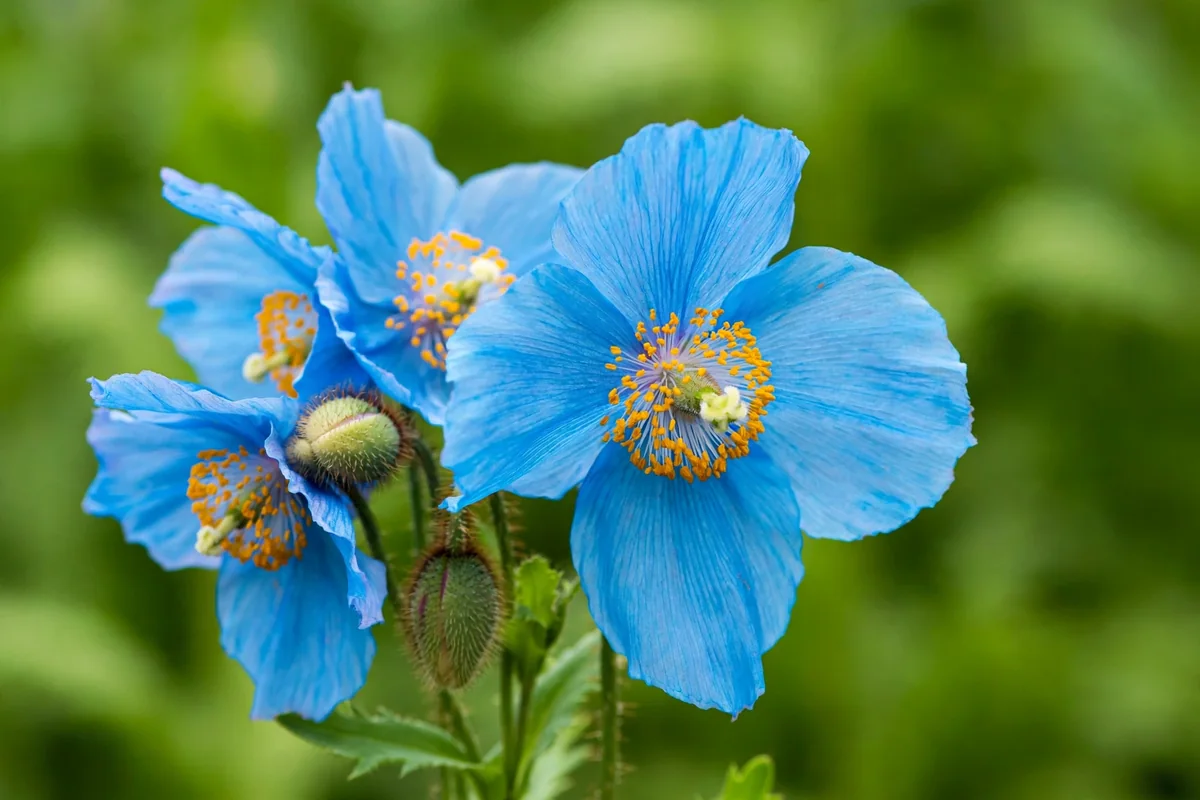
Table of Contents
- Why Blue Flowers Are So Rare
- 20 Beautiful Blue Flowers
- What Blue Flowers Mean
- How to Grow Blue Flowers
- Frequently Asked Questions
Why Blue Flowers Are So Rare
Flower colour comes from pigments. Red, pink, and yellow pigments are common and simple to make, which is why red flowers fill garden centres. Blue needs a special pigment family called anthocyanins, mainly one form named delphinidin. Most plants simply cannot make it.
That is why only about 1 in 10 flowering plants blooms blue. Many flowers sold as “blue” are really violet or purple up close. A pure, sky-true blue is a small prize — and it often looks even bluer in soft evening light.
20 Beautiful Blue Flowers
Here are 20 blue flowers worth growing, from easy seeds for beginners to one famous challenge for experts.
1. Hydrangea
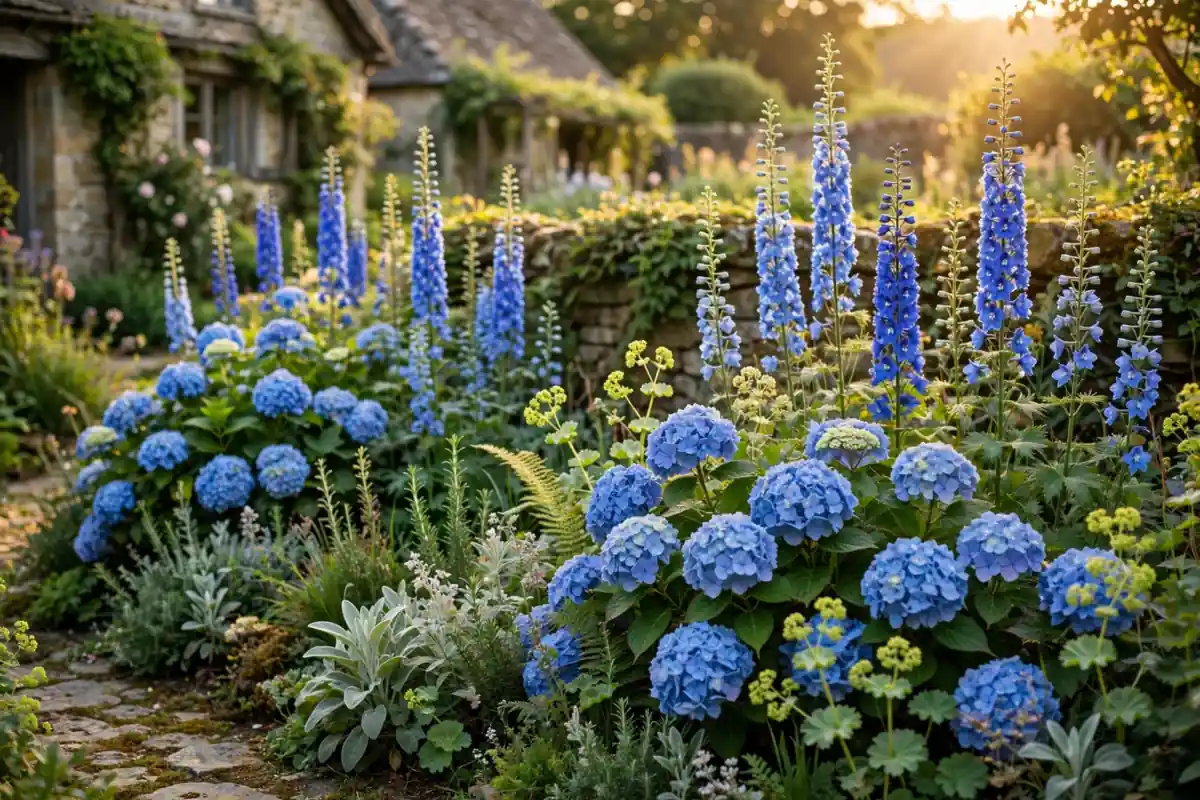
The most famous blue flower of all. Big round heads cover the bush in summer. Strangely, the same plant can bloom pink — the colour depends on your soil, as the hydrangea page on Wikipedia explains. Acidic soil gives you blue.
2. Delphinium
Tall spikes packed with blue blooms rise at the back of a border in early summer. Few plants give this much height and colour. Stake the stems on windy sites, and cut spent spikes for a second, smaller show.
3. Cornflower (Bachelor’s Button)
One of the easiest blue flowers to grow. Sow the seed where it will flower and it blooms in weeks. The petals are a clear, true blue, and they are edible too — scatter a few over salads for colour.
4. Forget-Me-Not
Tiny sky-blue flowers with yellow eyes carpet the ground in spring. It loves cool, damp corners and light shade. Let it self-seed once and it returns every year. Its name says it all: it is the flower of memory and true love.
5. Blue Iris
Elegant blooms open in late spring above sword-shaped leaves. Bearded irises give the richest blues, some edged with violet. Plant rhizomes shallow, tops baking in the sun, and they reward you for years.
6. Gentian
Gentians carry one of the deepest, purest blues in the plant world. The trumpet flowers suit rock gardens and cool, moist spots. Spring and autumn kinds exist, so planning gives you that blue twice a year.
7. Himalayan Blue Poppy
The holy grail of blue flowers. Its silky petals are a glowing sky blue that looks almost unreal. Be warned: it is famously hard to grow, and it only thrives in cool, moist shade. Read our full poppy flower guide before you try it.
8. Morning Glory
A fast climber for fences and arches. Fresh sky-blue trumpets open every morning through summer and close by afternoon. Sow seed in spring, give it something to twine up, and it covers a bare fence in one season.
9. Salvia
Salvias send up long blue spikes from summer into autumn. Bees and butterflies visit them all day. Once the roots settle, the plants shrug off dry spells. Cut the spent spikes and fresh ones keep coming.
10. Plumbago
Soft clusters of pale sky-blue flowers cover this relaxed, sprawling shrub for months. It loves warmth and sun. In cold areas, grow it in a big pot and move it under cover for winter.
11. Agapanthus
Round heads of blue trumpets stand on tall, bare stems in mid-summer. Agapanthus looks striking in pots and sunny borders. It flowers best with slightly crowded roots, so do not rush to repot it.
12. Grape Hyacinth (Muscari)
A tiny spring bulb with a big effect. Short spikes of grape-like blue beads open in early spring, long before most flowers. Plant bulbs in autumn in groups of twenty or more; they spread gently and return yearly.
13. English Bluebell
The flower of spring woodlands. Arching stems carry hanging blue bells with a sweet scent, and they carpet shady ground in blue. Wild bluebells are protected in Britain, so buy bulbs from a supplier, never dig them wild.
14. Lobelia
A small plant with an intense, electric blue. Trailing kinds pour over baskets and window boxes all summer. Buy young plugs in spring, keep the soil moist, and it flowers non-stop.
15. Baby Blue Eyes (Nemophila)
A low, spreading annual from California. Each small flower is sky blue with a clean white centre, like a tiny open eye. Sow it along path edges or under taller plants in spring for a soft blue carpet.
16. Borage
Star-shaped blue flowers nod over hairy leaves from summer on. Bees love borage more than almost any other flower. The blooms taste faintly of cucumber and can garnish drinks. It self-seeds freely, so one sowing can last for years.
17. Love-in-a-Mist (Nigella)
Blue flowers float in a mist of fine, feathery leaves. After the petals fall, striped seed pods keep the show going. It is a true beginner’s flower: scatter seed in spring, thin once, and enjoy.
18. Balloon Flower
The buds swell like little blue balloons, then pop open into stars. This tough perennial lives for years with almost no care. Give it a sunny spot and do not move it — the deep roots dislike disturbance.
19. Clematis
A climbing vine with large blue and violet-blue stars through summer. Clematis likes its head in the sun and its roots in cool shade. Mulch the base well, and it climbs happily for years.
20. Periwinkle (Vinca)
A groundcover that flowers where little else will. Flat blue stars open in spring over glossy evergreen leaves, even in dry shade under trees. One honest warning: it spreads with energy, so give it a corner it can own.
Want to keep browsing the B shelf? Our list of flowers that start with B is full of blue names, from balloon flower to borage.
What Blue Flowers Mean
Blue flowers stand for trust, loyalty, peace, and calm. A blue bouquet says “you can rely on me” without a single word. That is why blue suits sympathy flowers and friends who need cheering up.
Blue also plays a famous wedding role. The old rhyme asks the bride to carry “something blue” for faithfulness and lasting love. Pair blue blooms with soft white flowers and the effect is cool, clean, and timeless.
One honest note: there is no natural blue rose. The “blue roses” in shops are white roses dyed blue. People still love them as a symbol of mystery and the impossible — just know nature never made one.
How to Grow Blue Flowers
Most blue flowers are easy once you match the plant to the spot. Sun lovers like cornflower, salvia, and balloon flower want six hours of light or more. Shade lovers like forget-me-not, bluebell, and periwinkle are perfect under trees. Mix in a few fragrant flowers and your blue border will smell as good as it looks.
The famous trick is the hydrangea. Its colour follows your soil. Acidic soil (below pH 5.5) gives blue flowers. Alkaline soil gives pink. To turn a pink hydrangea blue, work garden sulfur or aluminium sulfate into the soil, following the label dose, and be patient — the change shows in the next season’s blooms. Gardeners in r/gardening on Reddit share their before-and-after photos every summer.
New to blue? Start with the easy three. Cornflower and borage grow from cheap seed sown straight in the ground. Lobelia comes as ready young plugs. All three flower in their first season, so you get real blue fast.
Frequently Asked Questions
What is the rarest flower colour?
True blue is one of the rarest colours in the flower world. Only about 1 in 10 flowering plants can make blue blooms, because blue needs a special pigment most plants lack. Black is rarer still — most “black” flowers are really very dark purple.
Which blue flower is easiest to grow?
Cornflower is the easiest. Sow the seed where you want it to flower in spring, and blue blooms follow in weeks. Borage and love-in-a-mist are nearly as simple, and all three often seed themselves for next year.
How do I make my hydrangeas blue?
Make the soil acidic. Work garden sulfur or aluminium sulfate into the soil around the plant, at the dose on the label. Blue flowers need a soil pH below about 5.5. The colour change appears in the next round of blooms, not overnight.
Are there natural blue roses?
No. Roses cannot make the blue pigment, so a natural blue rose does not exist. Blue roses in shops are white roses dyed blue, or pale roses tinted by breeders toward violet. They are sold as symbols of mystery and reaching for the impossible.
What do blue flowers symbolise?
Blue flowers symbolise trust, loyalty, peace, and calm. They are classic sympathy flowers and a kind choice for weddings, where “something blue” stands for faithfulness. For more views, see questions about blue flowers on Quora.

8 Comments