
California State Flower: The California Poppy, Superblooms and Growing Guide
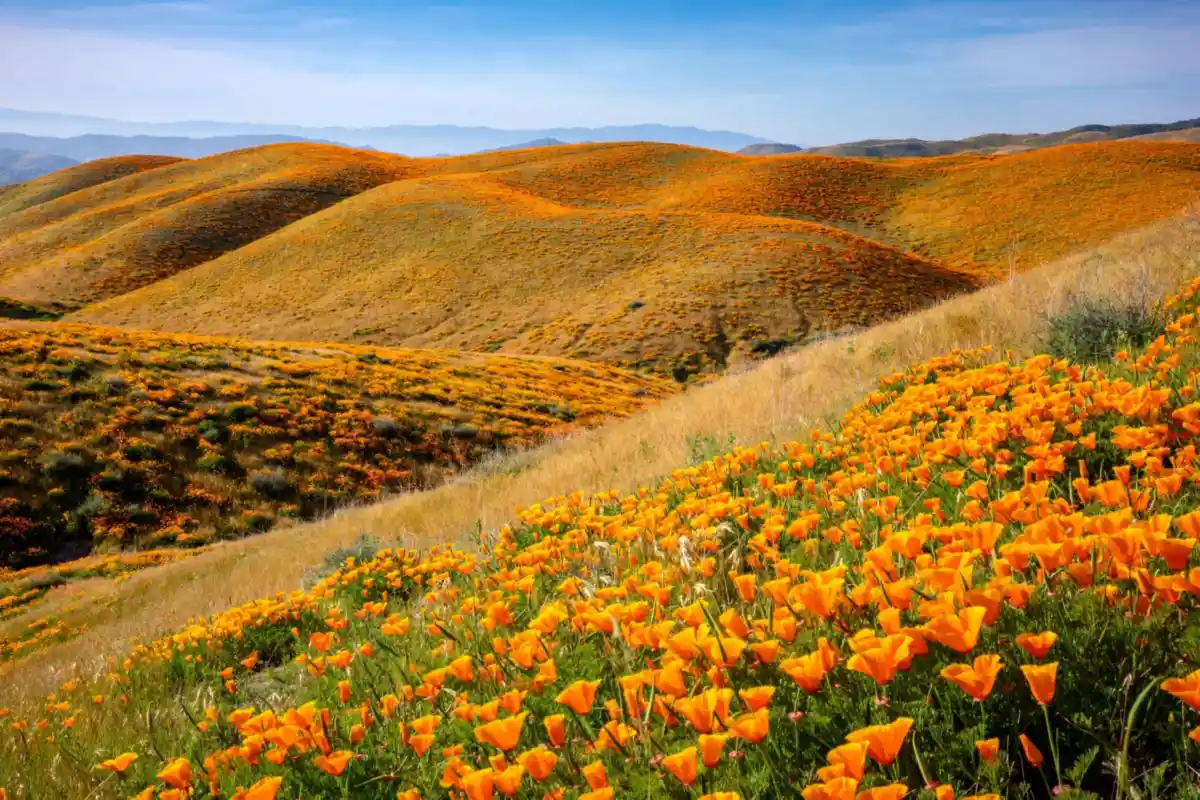
Some state flowers were chosen from a greenhouse catalogue. California’s was chosen from its own hillsides — the flower that turned whole valleys gold every spring long before there was a state to name it for. The California poppy is one of the best-loved wildflowers on Earth: a silk-petalled cup of orange-gold that closes at night like it’s sleeping, carpets the Antelope Valley so thick the colour shows from aircraft, and stars in the “superblooms” that stop traffic. Sailors once navigated by it — the golden hills were visible far out at sea.
This guide covers the California state flower and how it earned the title in 1903, what it means, the superbloom phenomenon and where to see it, six more California flowers worth knowing, and how to grow the poppy yourself — it is one of the easiest wildflowers in the world, if you follow its two simple rules. For the complete poppy family story, see our poppy flower guide.
Quick Answer
The California state flower is the California poppy, Eschscholzia californica, adopted on 2 March 1903. It is a silky orange-gold wildflower native to California and the Pacific coast, flowering from late winter through spring (with superblooms after wet winters), hardy as a short-lived perennial in zones 8 to 10 and grown as an annual elsewhere. California Poppy Day is 6 April. The flowers close at night and in cloudy weather, and the plant thrives on poor, dry, well-drained soil in full sun — sow it where it is to grow, because it hates being transplanted.
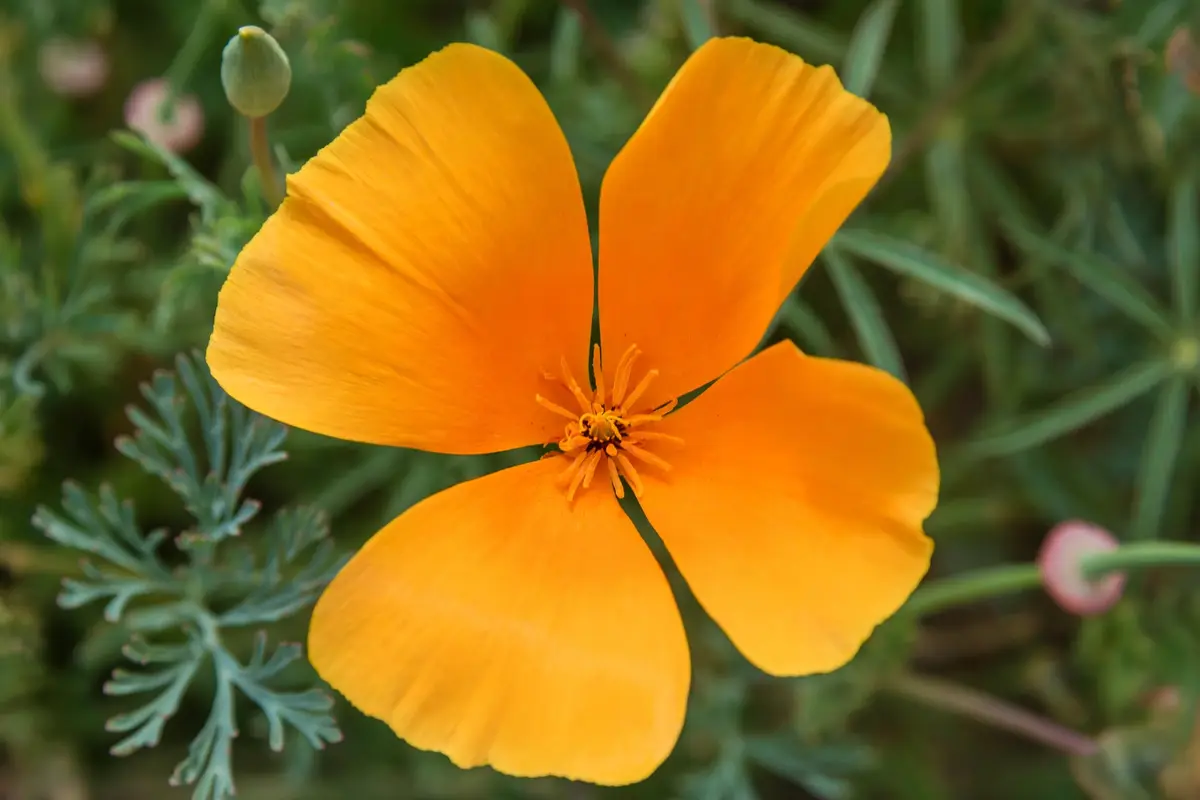
Table of Contents
- What Is the California State Flower?
- The Story: How the Poppy Became California’s Flower
- California Poppy Meaning and Symbolism
- Superblooms: Where and When to See Them
- 6 More California Flowers Worth Knowing
- How to Grow California Poppies
- Common Mistakes When Growing California Poppies
- Frequently Asked Questions
What Is the California State Flower?
The California poppy is a plant of open, sunny, well-drained ground — grasslands, hillsides, roadsides, desert edges — from Oregon down into Baja California, and so abundant in its namesake state that it became less a flower than a season. The bloom is a cup of four silky petals, usually a saturated orange-gold (wild forms run cream, yellow and occasionally pink), held over ferny blue-green foliage; each flower lasts a few days, closing every night and on grey days, and a healthy plant makes hundreds. The genus name honours Johann Friedrich von Eschscholtz, the naturalist on the Russian expedition that collected it near San Francisco in 1816; the Spanish called it copa de oro, the cup of gold. You can read more on the Eschscholzia californica page on Wikipedia.
California State Flower Quick Facts
- State flower: California poppy, Eschscholzia californica — family Papaveraceae, the poppy family.
- Adopted: 2 March 1903, as the state’s official flower and floral emblem.
- California Poppy Day: 6 April, an official observance since 2010.
- Native range: California and the Pacific slope, Oregon to Baja California.
- Bloom season: February to May in the wild (peak March–April); garden plants flower longer.
- Hardiness: short-lived perennial zones 8 to 10; a self-sowing annual everywhere else.
- Habit: 12 to 18 inches tall, ferny blue-green leaves, deep taproot; closes at night and in cloud.
- Good to know: the state flower of the Golden State is itself golden — and it is not an opium poppy; it contains different, much milder alkaloids and is not a drug plant.
The Story: How the Poppy Became California’s Flower
The poppy’s fame predates the state. Early Spanish sailors, seeing hillsides burnished gold in spring, called this coast the land of fire; the Russian expedition of 1816 carried specimens home and gave the plant its scientific name. By the late 1800s, as states across America adopted official flowers, California’s garden clubs and native-plant advocates had an obvious candidate — and an instructive rival. The mariposa lily had its champions, but in 1903 the legislature settled it: the California poppy, the flower no other state could claim as completely, became the official floral emblem on 2 March 1903. A later generation added the finishing touch — 6 April is now California Poppy Day — and the state built the flower a worthy throne: the Antelope Valley California Poppy Reserve, 1,700 acres of Mojave-edge grassland set aside so the bloom would always have a home ground.
California Poppy Meaning and Symbolism
The California poppy means golden dreams and restful sleep, in nearly equal measure. It is the floral emblem of the Golden State — gold for the hills it colours, the Gold Rush it preceded, and the promise California has always sold — and at the same time a poppy, carrying the family’s old associations of sleep and peace: its petals literally fold each night. In California itself it also stands for the wild state underneath the built one: the superbloom crowds are not really there for a flower, they are there for proof that the hills still do this by themselves. As the state series continues, compare it with the Hawaiian flower — another state that chose a native over an import.
Superblooms: Where and When to See Them
In an ordinary spring the poppies are a colour; in a wet-winter spring they are an event. A superbloom happens when autumn and winter rains arrive in the right rhythm — soaking, spread out, followed by warm sun and few hot winds — waking seed banks that have waited years in dry soil. The Antelope Valley reserve is the famous stage, but the cast performs statewide: Carrizo Plain, the hills around Lake Elsinore (whose 2019 bloom drew such crowds the town briefly closed access), Anza-Borrego’s desert edges, and roadside cuts from the Bay Area to San Diego. Rules of the spectacle: go midweek, stay on trails (crushed soil kills next year’s seeds), take photographs and nothing else. The bloom is the seed bank spending itself; walking on it spends it faster.
6 More California Flowers Worth Knowing
The state flower leads a deep bench. The table separates them; the profiles follow. For thousands more flower names, see our flower names A to Z guide.
| Flower | Colour | Season | Character | Best use |
|---|---|---|---|---|
| Matilija poppy | White with gold centre | Late spring–summer | The “fried egg flower” | Big dry slopes |
| California lilac (ceanothus) | Blue | Spring | Evergreen shrub clouds | Hedges, hillsides |
| Arroyo lupine | Blue-purple spikes | Spring | Superbloom partner | Meadows, wild gardens |
| Baby blue eyes | Sky blue, white centre | Spring | The meadow charmer | Edges, pots, drifts |
| California fuchsia | Scarlet trumpets | Late summer–autumn | Hummingbird magnet | Dry banks, late colour |
| California poppy (colours) | Cream, pink, red, gold | Spring–summer | The bred colour range | Borders, seed mixes |
1. Matilija Poppy — the Fried Egg Flower
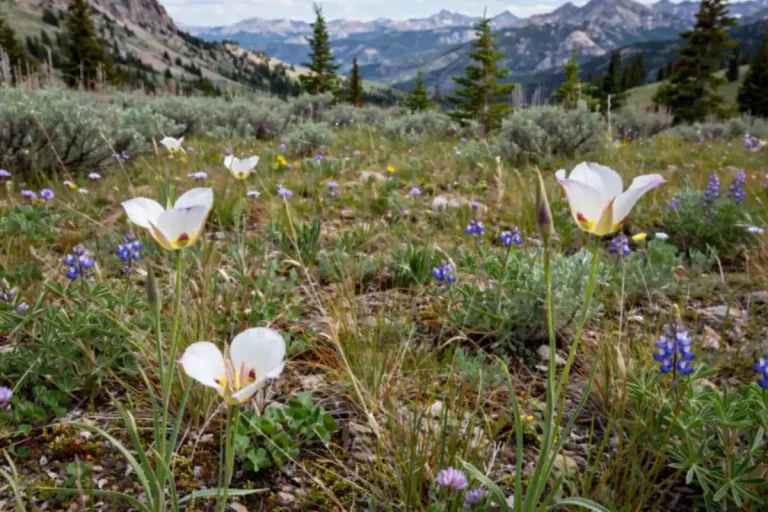
California’s other poppy, and the giant of the family: Romneya coulteri throws 6-foot stems topped with huge white crinkled blooms around a golden yolk of stamens — a fried egg you can see across a canyon. It is a magnificent, thuggish plant for big dry spaces, spreading by rhizomes once its taproot settles; give it room or give it a miss.
2. California Lilac — the Blue Hillsides
Ceanothus is the evergreen shrub that paints whole chaparral hillsides blue in spring — hundreds of species and cultivars, from groundcovers to small trees, all drought-tough, all loved by bees. If the poppy is California’s gold, ceanothus is its blue, and the two together are the state’s spring flag.
3. Arroyo Lupine — the Spikes Between the Poppies
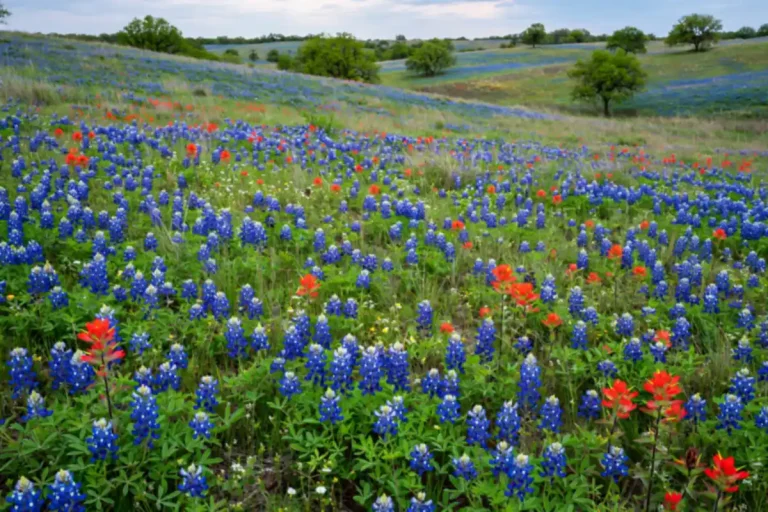
Look at any superbloom photograph: between the orange sheets stand blue-purple spires — lupines, the poppy’s classic partner. Arroyo lupine is an easy annual from seed, a nitrogen-fixer that feeds the soil it grows in, and the fastest way to make a poppy planting look like a wild hillside instead of a flower bed.
4. Baby Blue Eyes — the Meadow Charmer
Nemophila menziesii makes cups of clear sky-blue with white centres, low and spreading, in the spring meadows — one of the easiest wildflowers in the world from seed, and the softener for every edge the poppies leave sharp. In Japan it headlines whole festival fields; it started here.
5. California Fuchsia — the Late Shift
When the spring cast has finished, Epilobium canum opens scarlet trumpets on silvery sprawls and feeds hummingbirds through the hottest, driest months into autumn. It is the toughest plant on this list — roadside-dry, neglect-proof — and the one that proves California colour is not only a spring event.
6. California Poppy in Colour — the Bred Range
Wild poppies are gold; gardeners have bred the species into cream, ivory, pink, rose and near-red forms (the ‘Mission Bells’ and ‘Thai Silk’ mixes), plus doubles with frilled petals. Purists keep the gold; everyone else enjoys the box of crayons. All of them share the wild plant’s ease — sow, thin, ignore, glow.
How to Grow California Poppies
Two rules decide everything: sow it in place, and leave it hungry. Gardeners on r/gardening on Reddit pass the pair on as the poppy’s whole contract: “direct-sow, poor soil, full sun — then do nothing beautifully.”
Sowing and Position
Scatter seed where the plants are to flower — autumn in California and mild-winter regions (for the earliest, strongest spring bloom), early spring elsewhere — on raked, poor-to-average soil in full sun; press in, water once, and let the rains do the rest. The seedlings grow a deep taproot fast, which is why transplants fail: the root is the plant’s anchor and reservoir, and breaking it breaks the bargain. Thin to about 6 inches apart if the crowd is thick; in rich soil, skip feeding entirely — luxury makes leaves, poverty makes flowers.
Care and Self-Sowing
Established plants want almost nothing: no feed, little water beyond rain (in gardens, a deep drink every few weeks in summer drought), and deadheading only if you want to stop the self-sowing. Most gardeners want the opposite — the long, slender pods split and scatter seed for next year’s free display, and a poppy patch, once established, is effectively permanent. In zones 8 to 10 the roots themselves often live through winter for a second year of flowers.
Common Mistakes When Growing California Poppies
Mistake one is transplanting: seedlings raised in pots and moved almost always sulk or die — sow in place, always. Mistake two is kindness: rich soil, fertilizer and regular water produce lush foliage and a handful of flowers on floppy stems — this plant flowers in self-defence against hardship. Mistake three is shade: in anything less than full sun the cups stay shut (they close in dull weather even in the wild) and the plants lean and fade.
Mistake four is sowing at the wrong season for your climate — spring-sown in hot-summer areas, they rush and finish small; autumn sowing where winters allow is the professional’s timing. Mistake five is tidiness: cutting the pods off every plant ends the self-sown succession that makes the patch immortal. And mistake six is expecting summer-long bloom in heat: wild poppies finish by early summer and sleep through the drought as seed — plan lupine and California fuchsia to take the stage after them.
Frequently Asked Questions
What is the California state flower?
The California poppy, Eschscholzia californica — adopted as the official state flower and floral emblem on 2 March 1903, with California Poppy Day celebrated on 6 April. It is the golden-orange wildflower of the state’s hillsides and superblooms. If your question is not answered here, the questions about the California state flower on Quora cover most of the rest.
Is it illegal to pick California poppies?
The blanket claim is a myth, but the practical answer is mostly yes where it matters: there is no law against picking a poppy on your own land, but removing or cutting plants on state land, in parks and reserves, and along highway rights-of-way is illegal — and in the reserves the rule protects the superbloom itself. Admire, photograph, and leave them standing.
When do California poppies bloom?
In the wild from late winter into spring — roughly February to May, peaking March and April, with superblooms following wet winters. Garden plants, watered lightly, can flower into early summer, and the flowers open on sunny days and close at night and in cloud.
Are California poppies perennials?
Short-lived perennials in mild climates (zones 8 to 10), where roots survive winter; annuals elsewhere. Either way they self-sow so reliably that a planting persists year after year as if perennial — the patch is permanent even when the individual plants are not.
Do California poppies need a lot of water?
No — they are drought plants. In the wild they run on winter rain and finish before summer drought; in gardens, water seedlings until established, then water rarely and deeply. More poppies are killed by rich, wet kindness than by neglect.
Can I grow California poppies outside California?
Yes — they are grown worldwide as an easy annual wherever summers are sunny and soil drains well; they are naturalized in places as far apart as Chile, South Africa and Australia. Sow in place in autumn (mild winters) or early spring, in your poorest, sunniest soil, and expect the gold.
One Comment