
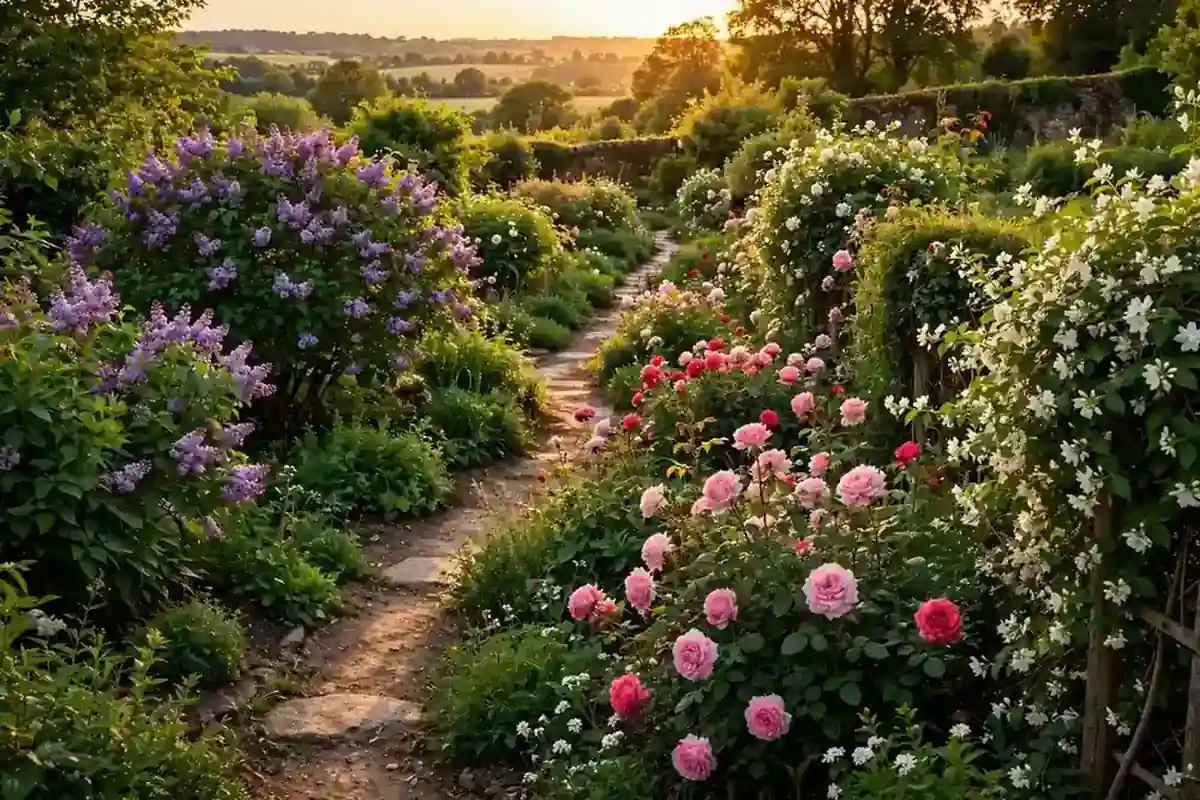
Most Fragrant Flowers: 25 Sweet-Smelling Blooms for Your Garden
Ask a gardener to name their favourite flower and they will describe how it looks. Ask them which flower they remember from a childhood garden, a grandmother’s yard or a holiday evening, and they will almost always describe a smell. Scent is the sense wired straight to memory, and it is the one quality plant catalogues are worst at describing — “fragrant” on a label can mean anything from a faint whiff at noon to a perfume that fills a street at dusk.
So this guide does the job properly. The 25 flowers below are ranked and rated by real scent strength, with the strongest performers first, honest notes on when each scent peaks (several of the best are evening-only), and placement advice that treats fragrance as something you design with: beside paths, under bedroom windows, around seating, and in pots you brush past. If you browse by letter too, scented stars run right through the flowers that start with F, from freesia to foxglove-scented lookalikes.
Quick Answer
The most fragrant flowers in the world are tuberose, jasmine, gardenia, Oriental lily ‘Casa Blanca’ and hyacinth — all rated “very strong” below. For a fragrant shrub, plant lilac, daphne or Korean spice viburnum. For evening scent, night-scented stock, moonflower and flowering tobacco release their perfume after dark. For pots and indoors, freesia and hyacinth are the strongest reliable choices. Every entry gives a scent-strength rating, the time of day the scent peaks, USDA zones and exactly where to plant it so you actually smell it.
Table of Contents
- The 25 Most Fragrant Flowers at a Glance
- The Heavyweights: Strongest Fragrance of All
- Fragrant Roses and Peonies
- Fragrant Spring Shrubs and Trees
- Evening-Scented Flowers
- Fragrant Climbers
- Gentle, Shade and Indoor-Friendly Fragrance
- How Flower Fragrance Works (and How to Place It)
- A Fragrant Garden in Every Season
- How to Choose Fragrant Flowers
- Common Mistakes With Fragrant Flowers
- Frequently Asked Questions
- References
The 25 Most Fragrant Flowers at a Glance
Ratings are based on how far the scent carries in still air outdoors: Very strong scents a whole patio or room; Strong is obvious within several feet; Moderate rewards you at arm’s length; Mild is for noses close to the flower. Warm, humid, still evenings amplify every rating by roughly one level.
| Flower | Botanical Name | Fragrance Strength | USDA Zones | Height | Bloom Time |
|---|---|---|---|---|---|
| Tuberose | Agave amica (syn. Polianthes tuberosa) | Very strong (evening) | 8–10 | 2–3 ft | Late summer |
| Common Jasmine | Jasminum officinale | Very strong | 7–10 | 15–30 ft vine | Summer |
| Gardenia | Gardenia jasminoides | Very strong | 8–11 | 3–6 ft | Summer |
| Oriental Lily ‘Casa Blanca’ | Lilium ‘Casa Blanca’ | Very strong | 4–9 | 3–4 ft | Mid–late summer |
| Hyacinth ‘Carnegie’ | Hyacinthus orientalis ‘Carnegie’ | Very strong | 4–8 | 8–12 in | Spring |
| Garden Rose ‘Mister Lincoln’ | Rosa ‘Mister Lincoln’ | Strong | 5–9 | 4–6 ft | Late spring–fall |
| Peony ‘Sarah Bernhardt’ | Paeonia lactiflora ‘Sarah Bernhardt’ | Moderate–strong | 3–8 | 2–3 ft | Late spring |
| Lilac | Syringa vulgaris | Strong | 3–7 | 8–15 ft | Spring |
| Winter Daphne | Daphne odora | Strong | 7–9 | 3–4 ft | Late winter |
| Korean Spice Viburnum | Viburnum carlesii | Strong | 4–7 | 4–6 ft | Spring |
| Mock Orange | Philadelphus coronarius | Strong | 4–8 | 8–10 ft | Late spring |
| Southern Magnolia | Magnolia grandiflora | Moderate–strong | 7–9 | 40–80 ft tree | Summer |
| Night-Scented Stock | Matthiola longipetala | Strong (evening only) | Annual | 12–18 in | Summer evenings |
| Moonflower | Ipomoea alba | Strong (evening only) | Annual (9–11) | 10–15 ft vine | Summer nights |
| Flowering Tobacco | Nicotiana alata | Moderate–strong (evening) | Annual | 3–5 ft | Summer |
| Heliotrope | Heliotropium arborescens | Moderate | Annual (10–11) | 12–18 in | Summer |
| Honeysuckle | Lonicera periclymenum | Strong | 5–9 | 15–20 ft vine | Summer |
| Wisteria | Wisteria floribunda | Moderate–strong | 5–9 | 20–30 ft vine | Spring |
| Sweet Pea ‘Spencer Mix’ | Lathyrus odoratus | Moderate–strong | Annual | 5–6 ft vine | Spring–summer |
| Freesia | Freesia × hybrida | Strong | 9–10 (pots elsewhere) | 12–18 in | Spring |
| Lily of the Valley | Convallaria majalis | Strong | 3–8 | 6–12 in | Late spring |
| Lavender ‘Hidcote’ | Lavandula angustifolia ‘Hidcote’ | Moderate | 5–9 | 18–24 in | Summer |
| Pinks ‘Mrs Sinkins’ | Dianthus ‘Mrs Sinkins’ | Moderate (clove) | 5–9 | 10–12 in | Summer |
| Sweet Violet | Viola odorata | Moderate | 5–9 | 4–6 in | Late winter–spring |
| Sweet Alyssum | Lobularia maritima | Mild (honey) | Annual | 4–8 in | Spring–fall |
The Heavyweights: Strongest Fragrance of All
If you only plant five scented flowers in your life, plant these. Each one can perfume an entire patio, and each is the benchmark against which everything else in this list is measured.
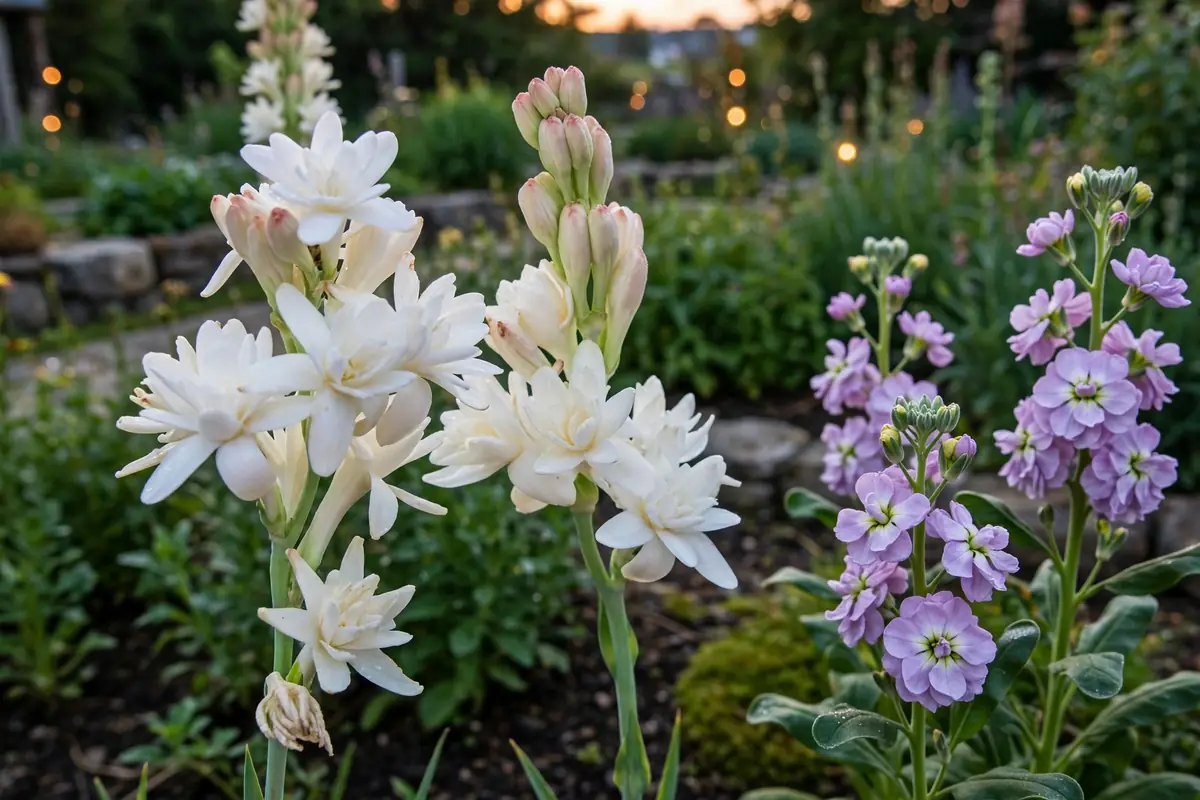
1. Tuberose (Agave amica)
Fragrance: very strong, peaks in the evening · Zones 8–10 · late summer. Waxy white spikes with a rich, creamy, almost narcotic perfume — tuberose is the flower perfumers use when they want “white floral” at full power, and a single stem in a vase scents a whole house. Grow the rhizomes in pots in cold zones, starting them indoors in spring and moving them out after the last frost; they need heat and a long season, flowering from late summer. Honest note: below zone 8 you must lift and store the rhizomes dry over winter, and in short-season climates some years they simply refuse to flower — buy them as a bonus, not a guarantee.
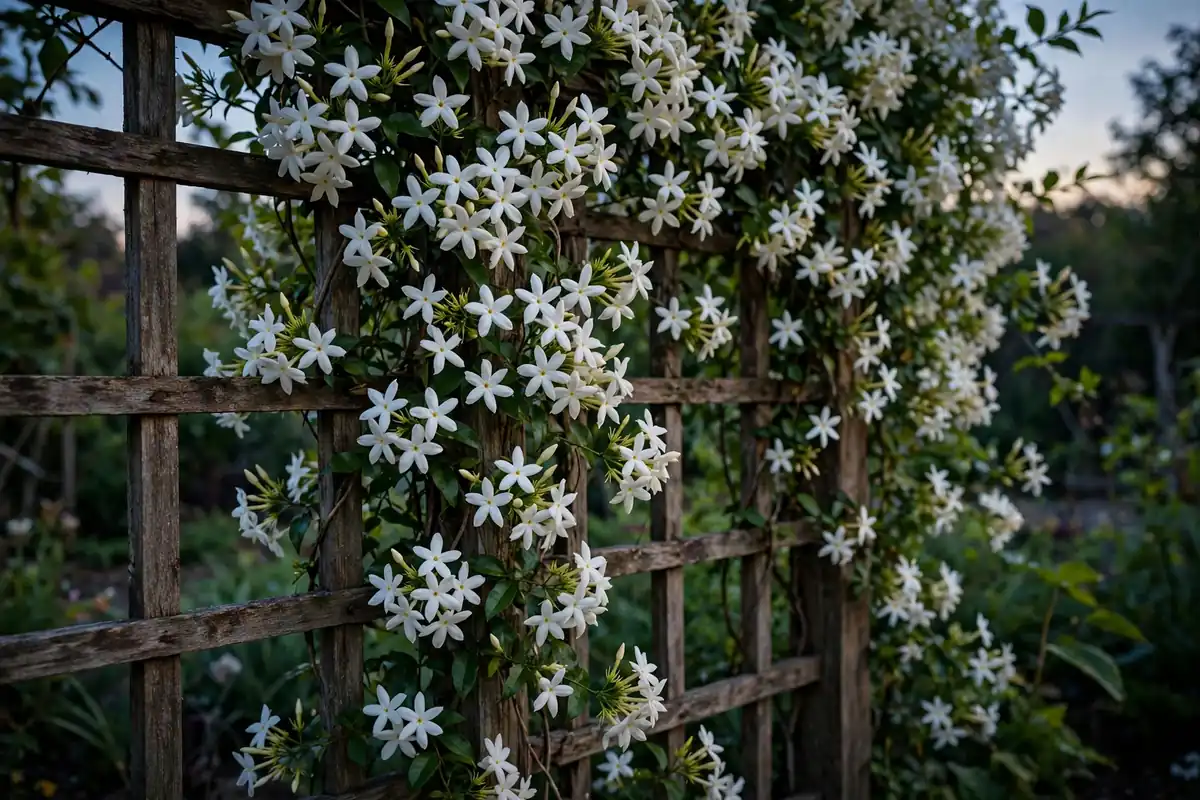
2. Common Jasmine (Jasminum officinale)
Fragrance: very strong, sweetest on warm evenings · Zones 7–10 · summer. A twining vine smothered in small white stars whose scent pours out on still summer nights — plant it under a bedroom window and on warm nights you will understand why it has been cultivated for centuries. It climbs 15–30 feet given wires or a trellis, so it is a serious commitment of wall space. Honest note: it is vigorous to the point of pushiness, swamping slow neighbours; prune after flowering to keep it in bounds. In zones below 7, grow the plant in a big pot and overwinter it in a bright, cool room — it will still flower the following summer.
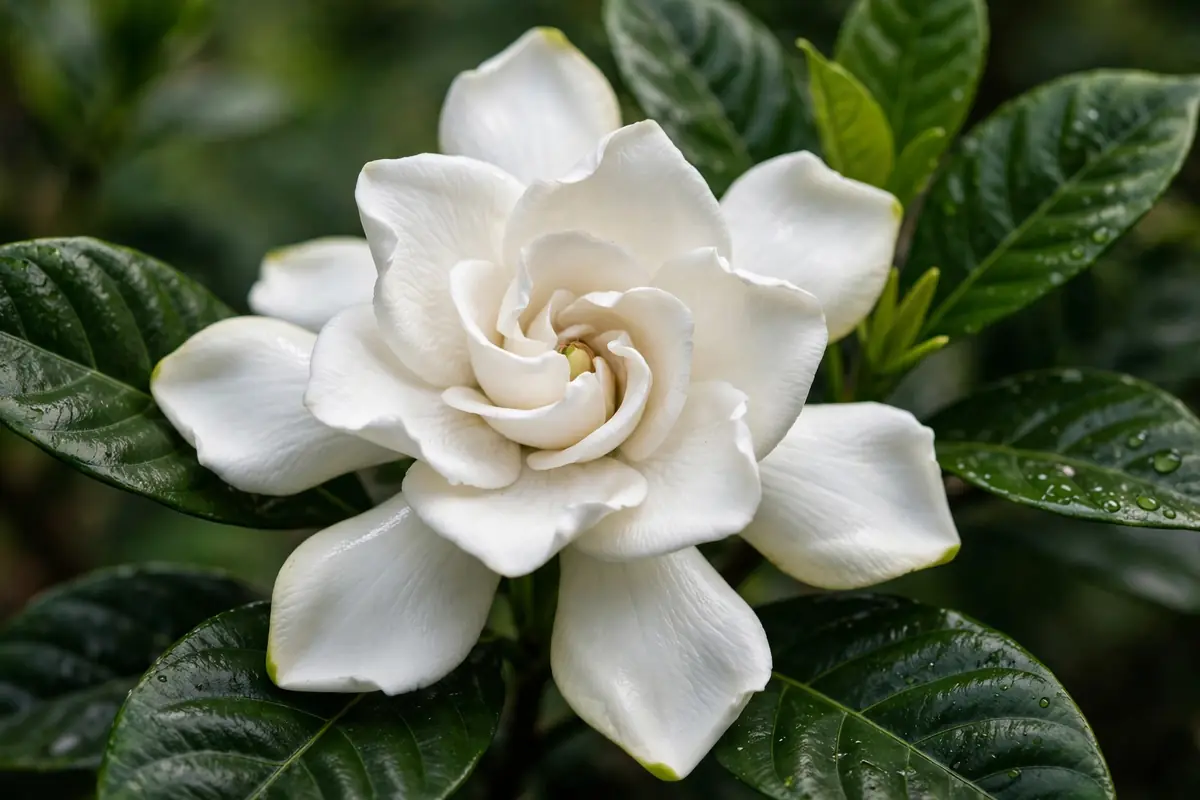
3. Gardenia (Gardenia jasminoides)
Fragrance: very strong, rich and creamy · Zones 8–11 · summer. Many perfumers rate gardenia the finest flower scent of all — deep, warm and complex in a way jasmine is not. The plant, though, is famously particular: acidic soil, constant moisture, high humidity and no cold draughts, in exchange for waxy white blooms over glossy evergreen leaves. Honest note: yellowing leaves and dropping buds are almost always soil pH or watering swings, not disease. Grow it in a pot of ericaceous compost if your soil is alkaline, and both problems mostly disappear.
4. Oriental Lily ‘Casa Blanca’ (Lilium ‘Casa Blanca’)
Fragrance: very strong, spicy-sweet · Zones 4–9 · mid to late summer. Enormous white bowls with a perfume so powerful that two stems will scent a garden room and one stem will scent a vase from across the house. Unlike the other heavyweights, Casa Blanca is fully hardy in cold zones — plant the bulbs 6 inches deep in sharply drained soil, heads in sun, roots shaded, and stake the stems in exposed gardens. Honest note: indoors, the scent tips from glorious to overwhelming in small rooms, and the pollen stains permanently — snip the anthers when you cut stems. It is also, like all true lilies, highly toxic to cats.
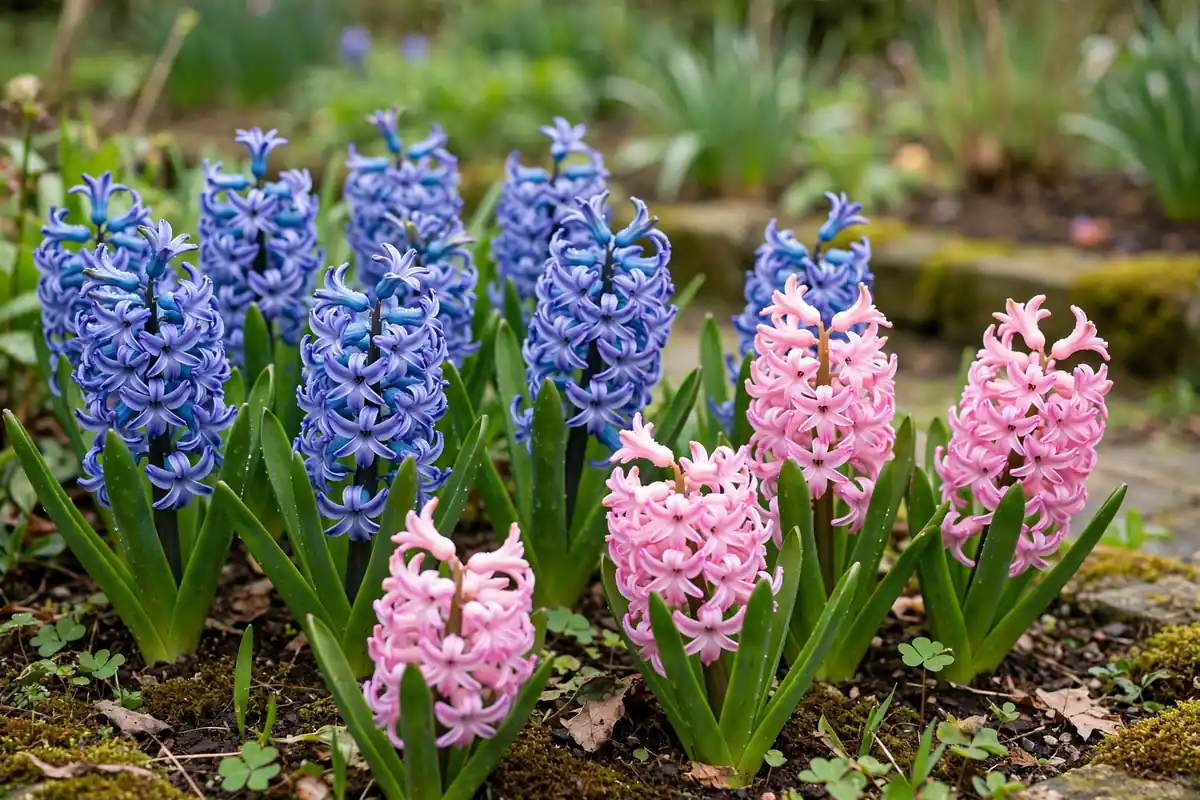
5. Hyacinth ‘Carnegie’ (Hyacinthus orientalis ‘Carnegie’)
Fragrance: very strong, sweet and powdery · Zones 4–8 · spring. The strongest scent available in early spring, from dense spikes you can smell before you see them. A drift of thirty bulbs near a path is a genuine event in March. Carnegie is the clean white form, equally good forced in pots indoors, where five bulbs perfume a room. Honest note: garden hyacinths loosen and shrink after the first year — for bedding, treat them as one-season bulbs; in informal borders, let them settle into smaller, looser spikes that still smell just as strong. Wet winter soil is the main killer, so plant in your best-drained spot.
Fragrant Roses and Peonies
Here is an uncomfortable truth the rose industry built itself on: many modern roses have almost no scent, because breeders selected for flower shape, colour and vase life, and the fragrance genes were collateral damage. The varieties below are the exceptions — start with our full guide to rose types and names if you want to compare classes, then choose from the scented names here.
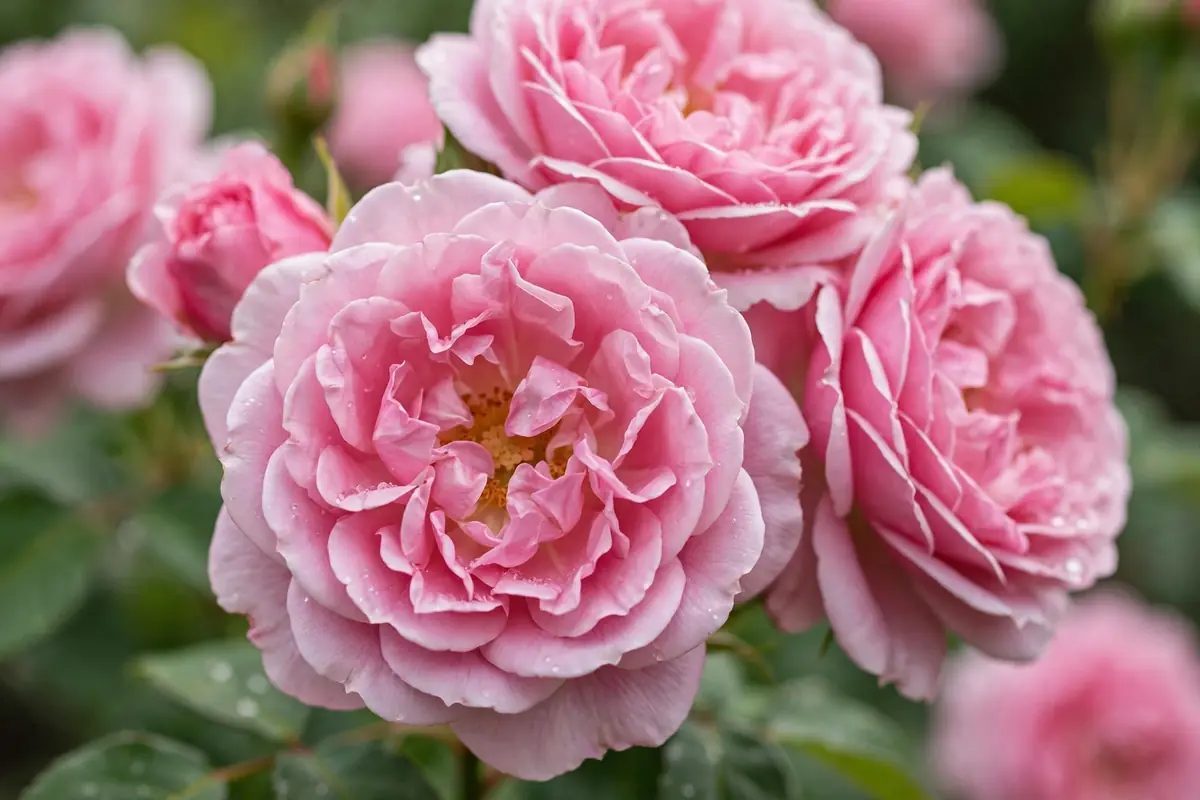
6. Garden Rose ‘Mister Lincoln’ (Rosa ‘Mister Lincoln’)
Fragrance: strong, classic damask · Zones 5–9 · late spring to fall. A tall hybrid tea with velvet-red blooms and the deep, old-fashioned rose perfume that most people mean by “rose scent” — it routinely wins fragrance awards decades after its 1964 introduction. For white gardens, ‘Pascali’ and the shrub rose ‘Iceberg’ carry lighter versions of the same perfume. Honest note: Mister Lincoln grows tall and somewhat bare-legged; underplant it with lavender or hardy geraniums, keep air moving to limit black spot, and accept that the strongest-scented hybrid teas are rarely the healthiest plants in the rose bed — scent and disease resistance still trade off against each other.
7. Peony ‘Sarah Bernhardt’ (Paeonia lactiflora ‘Sarah Bernhardt’)
Fragrance: moderate to strong, sweet and rosy · Zones 3–8 · late spring. Huge apple-blossom-pink doubles with a scent like rosewater. Not all peonies are fragrant — many modern singles have almost none — so buy named varieties known for perfume: Sarah Bernhardt, ‘Duchesse de Nemours’ (white) and ‘Festiva Maxima’ are the safe trio. Plant crowns no more than 2 inches deep; deep planting is the classic reason peonies bloom blind. Honest note: the season is glorious but short, about two weeks per variety, and heavy rain flattens the big heads — ring supports in spring are not optional.
Fragrant Spring Shrubs and Trees
Shrubs give you fragrance at nose height with almost no annual effort, and spring shrubs in particular perfume the whole garden on the first warm days of the year. Plant them beside entrances and windows, never marooned in the middle of a lawn where the scent disperses before anyone passes.
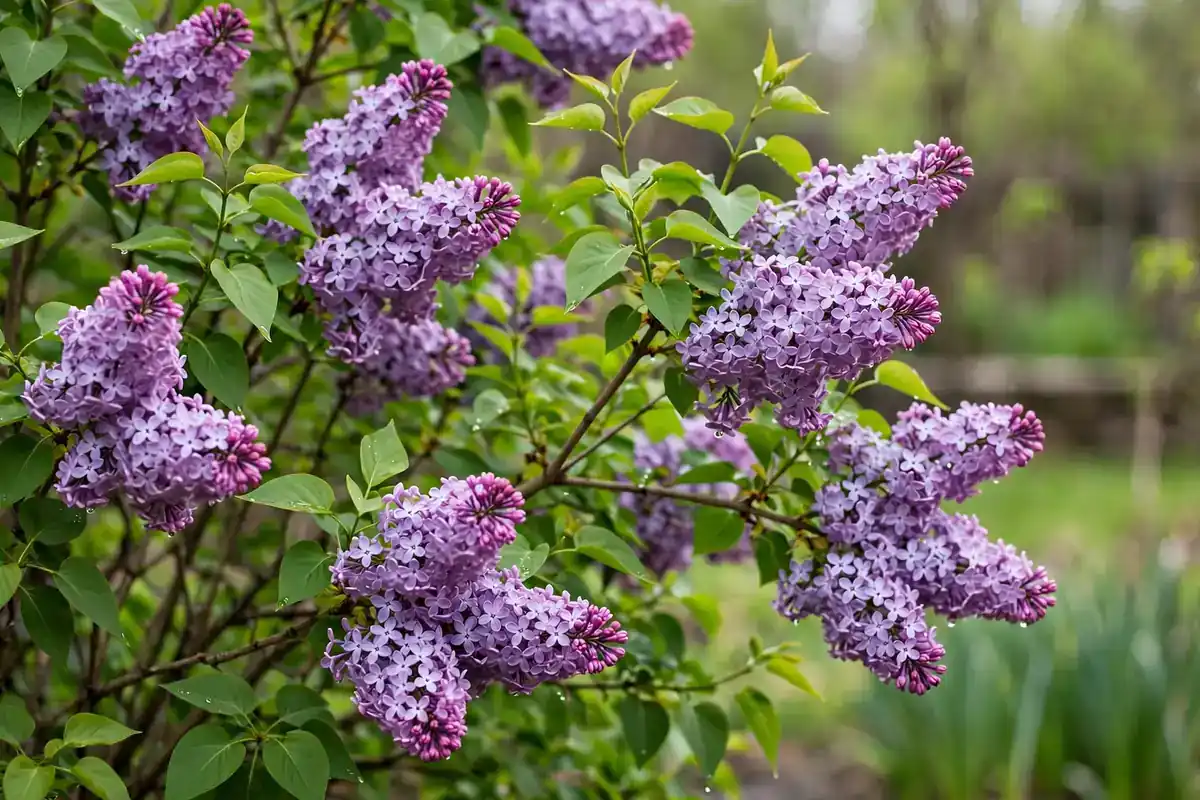
8. Lilac (Syringa vulgaris)
Fragrance: strong, sweet and unmistakable · Zones 3–7 · spring. Two weeks of the most evocative perfume in temperate gardens, from big trusses of purple, pink or white flowers. Lilacs need cold winters to bloom well — in mild zones choose low-chill Descanso hybrids — plus full sun and alkaline-to-neutral soil. Prune immediately after flowering, because next year’s buds form on this year’s growth; the classic mistake is pruning in winter and cutting off the entire display. Honest note: powdery mildew on the leaves by August is nearly universal and largely cosmetic. It looks tired, but it rarely harms the plant.
9. Winter Daphne (Daphne odora)
Fragrance: strong, spicy-sweet, carries surprising distances · Zones 7–9 · late winter. Small pink-white flower clusters on an evergreen shrub, with a scent so penetrating that visitors ask about it from the far end of the garden — in February, when nothing else is performing. Daphne demands perfect drainage and a sheltered spot, and it has one famous quirk: apparently healthy plants occasionally die suddenly, for reasons even experts argue about. Honest note: plant it small, disturb the roots as little as possible, and enjoy it as a glorious medium-term shrub rather than a lifetime investment. All parts are toxic.
10. Korean Spice Viburnum (Viburnum carlesii)
Fragrance: strong, warm clove-and-vanilla spice · Zones 4–7 · spring. Pink buds opening to white, waxy flower balls with a scent regularly rated the best of any hardy shrub — spicy, rich, and noticeable from ten feet away on a calm day. It is a compact, slow grower (4–6 feet), ideal near a front door, and far hardier than daphne, making it the better choice in cold zones. Honest note: it needs a second, different viburnum nearby for good berry set, but for fragrance alone one plant is plenty — scent is produced whether or not berries follow.
11. Mock Orange (Philadelphus coronarius)
Fragrance: strong, orange-blossom sweet · Zones 4–8 · late spring. An old cottage-garden shrub smothered in white cups that smell of oranges and jasmine combined. The straight species grows 8–10 feet and is best at the back of a border; compact, strongly scented modern forms like ‘Belle Etoile’ suit smaller gardens. Prune straight after flowering, thinning out a third of the oldest stems. Honest note: read labels carefully, because some newer mock oranges were bred for flower size and are nearly scentless — the perfume is the entire point of this shrub, so buy in flower and sniff before you pay.
12. Southern Magnolia (Magnolia grandiflora)
Fragrance: moderate to strong, lemony and rich · Zones 7–9 · summer. Dinner-plate white flowers with a lemon-cream perfume, opening through summer on a majestic evergreen tree. A single bloom in a floating bowl of water scents a room more elegantly than any diffuser. Honest note: this is a 40–80 foot tree that drops thick leaves and cones year-round — plant it only where it has true room, or choose the compact ‘Little Gem’, which flowers young at a fraction of the size and keeps the same lemony scent.
Evening-Scented Flowers
Some flowers keep their perfume locked up all day and release it at dusk, timed for night-flying moths. If you garden after work, sit outside in the evening, or want scent on a balcony at night, this is your section — and it pairs naturally with the pale blooms in our white flowers guide, since the evening performers are almost all white or cream (colours moths can see in the dark).
13. Night-Scented Stock (Matthiola longipetala)
Fragrance: strong after dark, clove-sweet · Annual · summer evenings. By day, a scruffy little plant with lilac flowers you would walk past. By night, one of the most powerful perfumes in the garden, drifting from window boxes and path edges on warm air. Sow small pinches of seed every few weeks from spring onward, directly where it will flower, under windows and beside doors. Honest note: it looks genuinely untidy in daylight — tuck it behind neater plants, grow it for the night shift only, and never judge it at noon.
14. Moonflower (Ipomoea alba)
Fragrance: strong after dark, sweet · Annual vine · summer nights. Huge white trumpets that unfurl at dusk in minutes and pour out perfume for the moths. Nick and soak the hard seeds overnight, plant after the last frost against a fence or trellis, and the vine will race to 10–15 feet in a warm summer. Honest note: it is a heat-lover that stalls in cool weather; in short-season zones start it indoors and plant out only when nights stay above 50°F, or the whole performance slips too late to enjoy.
15. Flowering Tobacco (Nicotiana alata)
Fragrance: moderate to strong in the evening, jasmine-like · Annual · summer. Tall stems of white, starry trumpets that stay half-closed and sulky on bright days, then open and scent the air at dusk. The tall species type (3–5 feet) is far more fragrant than the dwarf bedding hybrids, which were bred for daytime looks and lost the perfume — check the packet for “alata” and “evening scent” before buying. Honest note: it self-seeds happily; leave a few seedlings each year and you will never need to buy seed again.
16. Heliotrope (Heliotropium arborescens)
Fragrance: moderate, warm cherry-pie and almond · Annual (perennial zones 10–11) · summer. Victorian gardeners called it cherry-pie plant, and the scent really does suggest warm cherries, almonds and vanilla. Deep purple or white flower heads over dark foliage make it a superb pot plant for a sunny patio table, where its perfume sits exactly at nose height. Honest note: it wilts the moment its roots dry out, so in containers it needs daily watering in hot weather — group pots and mulch the surface to make the job easier.
Fragrant Climbers
Climbers put fragrance at head height along fences, arches and pergolas — exactly where people walk and sit. One mature honeysuckle over a garden gate does more for a garden’s atmosphere than a dozen scented plants in beds.
17. Honeysuckle (Lonicera periclymenum)
Fragrance: strong, honeyed, strongest at dusk · Zones 5–9 · summer. The woodbine of hedgerows, with creamy trumpets blushing pink, loved by moths and hummingbirds alike. ‘Serotina’ flowers late and long; ‘Graham Thomas’ is a heavy-flowering pale form. Honeysuckle climbs by twining, so give it wires, a trellis or a host tree, and plant its roots in shade with its head in sun, copying the woodland edge it evolved on. Honest note: indoors-grown plants from the shop are often the less fragrant Japanese types — check the botanical name for periclymenum if wild honeysuckle perfume is what you want.
18. Wisteria (Wisteria floribunda)
Fragrance: moderate to strong, sweet and musky · Zones 5–9 · spring. Hanging chains of lilac flowers with a grape-sweet scent that drifts across a spring garden on still mornings. Japanese wisteria (floribunda) is generally the most fragrant, with the longest flower chains. Honest note, and it is the biggest one in this guide: wisteria is a decades-long, building-sized commitment that needs a rigorous twice-yearly pruning routine, and seed-grown plants can take 10–15 years to flower. Buy a grafted, named plant already in bloom if you possibly can — it proves the plant is mature and the colour matches the label.
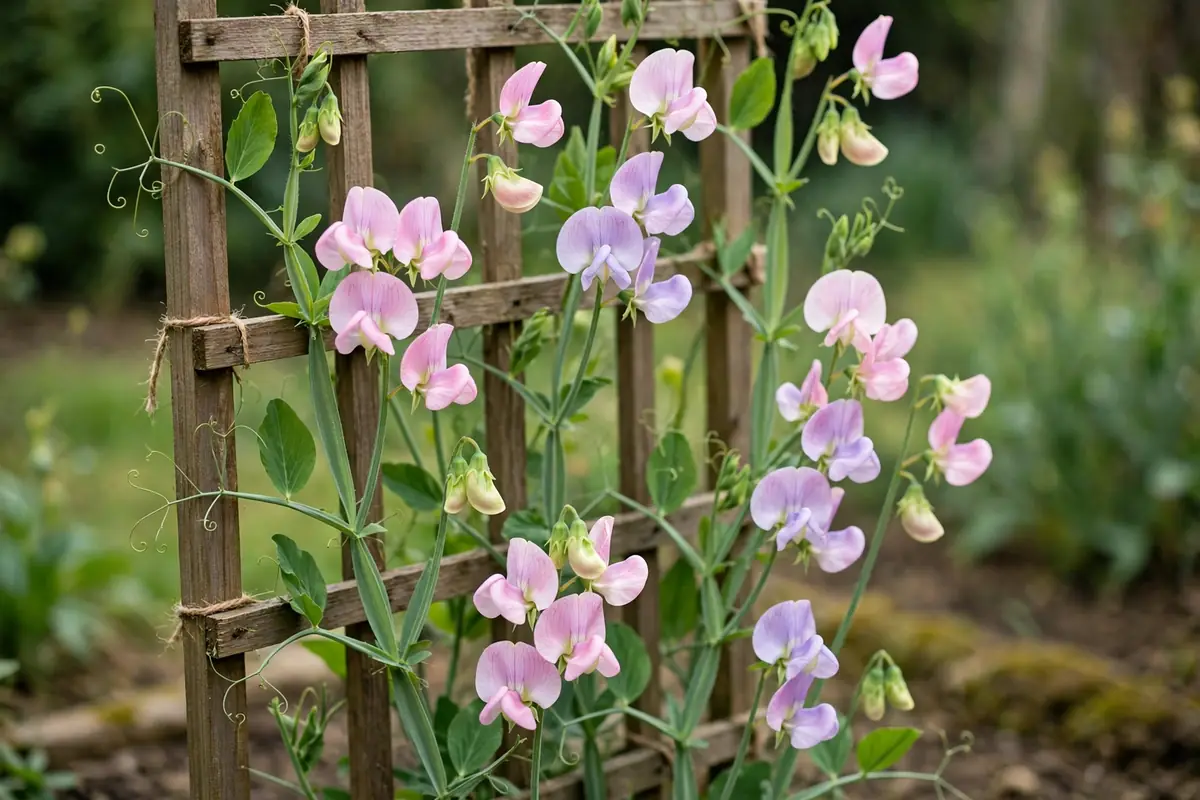
19. Sweet Pea (Lathyrus odoratus, Spencer types)
Fragrance: moderate to strong, honeyed and floral · Annual · spring to summer. The cottage-garden annual whose scent breeders nearly lost — old varieties and Spencer types kept it, many modern “landscape” mixes did not. For guaranteed perfume choose named scented varieties and cut flowers daily; the more you pick, the more come, and a small vase scents a kitchen. They are cool-season plants that fade in hot weather, so sow early. Side by side with the purple varieties in our purple annual flowers guide, white and lilac sweet peas make the prettiest — and sweetest — cutting patch of early summer.
Gentle, Shade and Indoor-Friendly Fragrance
Not every fragrant flower needs full sun or a big garden. These five include the best choices for shade, small spaces, and pots you can bring indoors — where even a moderate scent becomes powerful in an enclosed room. Several also anchor the cool end of the planting schemes in our purple perennial flowers guide, since so many classic scented plants flower in lilac and violet shades.
20. Freesia (Freesia × hybrida)
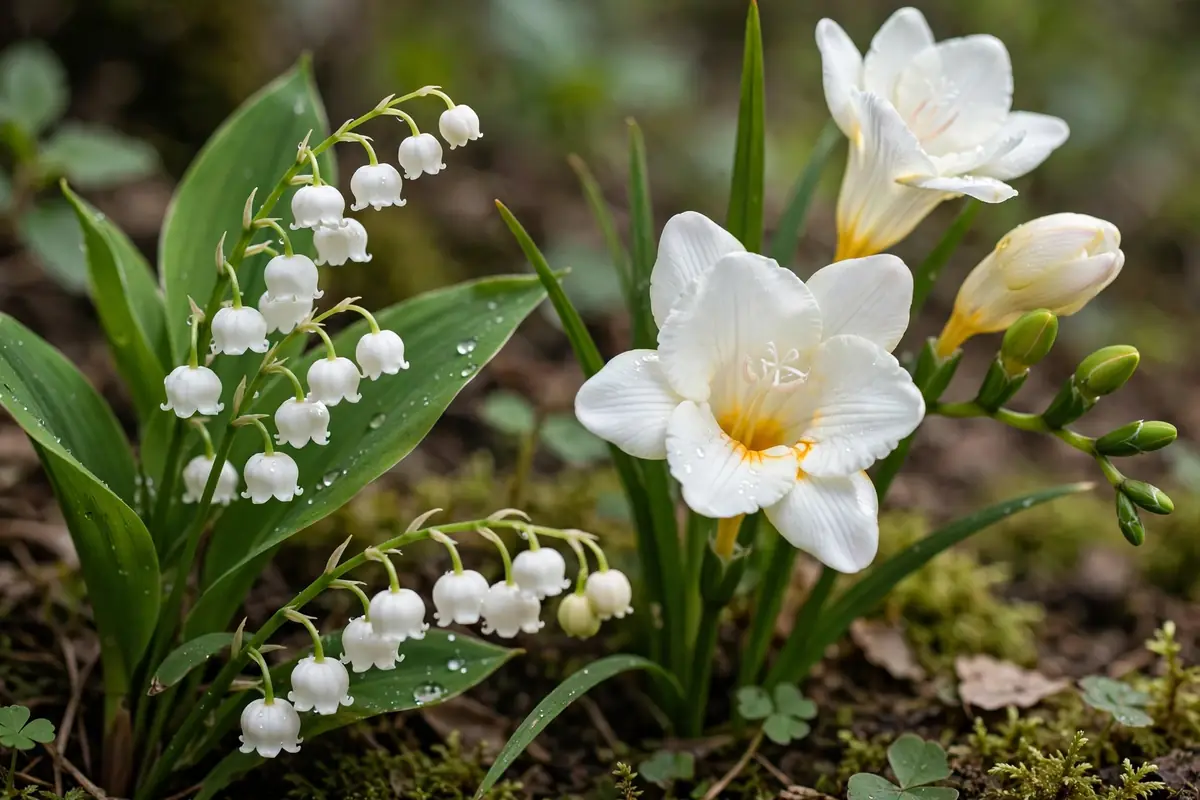
Fragrance: strong, fresh and peppery-sweet · Zones 9–10, or pots · spring. The florist’s favourite scented flower, with arching stems of funnel blooms in almost every colour. Outdoors it is only hardy in frost-free zones, but as a pot plant it is superb anywhere: plant corms in fall in a cool, bright room or greenhouse and you will have scented flowers in late winter, when fragrance is scarcest. Honest note: freesias need cool nights to set buds properly — a hot windowsill gives leaves, not flowers. A bright porch or cool spare room is the winning spot.
21. Lily of the Valley (Convallaria majalis)
Fragrance: strong, clean and green · Zones 3–8 · late spring. Tiny bells with a perfume out of all proportion to their size, thriving in the dry shade under trees where most scented plants refuse to grow. A small bunch in a jam jar scents a bathroom or desk for days. Honest note, repeated because it matters: it spreads vigorously by rhizomes and all parts are toxic — plant it in a contained corner or large pot, never in a small border, and keep berries away from children and pets.
22. Lavender ‘Hidcote’ (Lavandula angustifolia ‘Hidcote’)
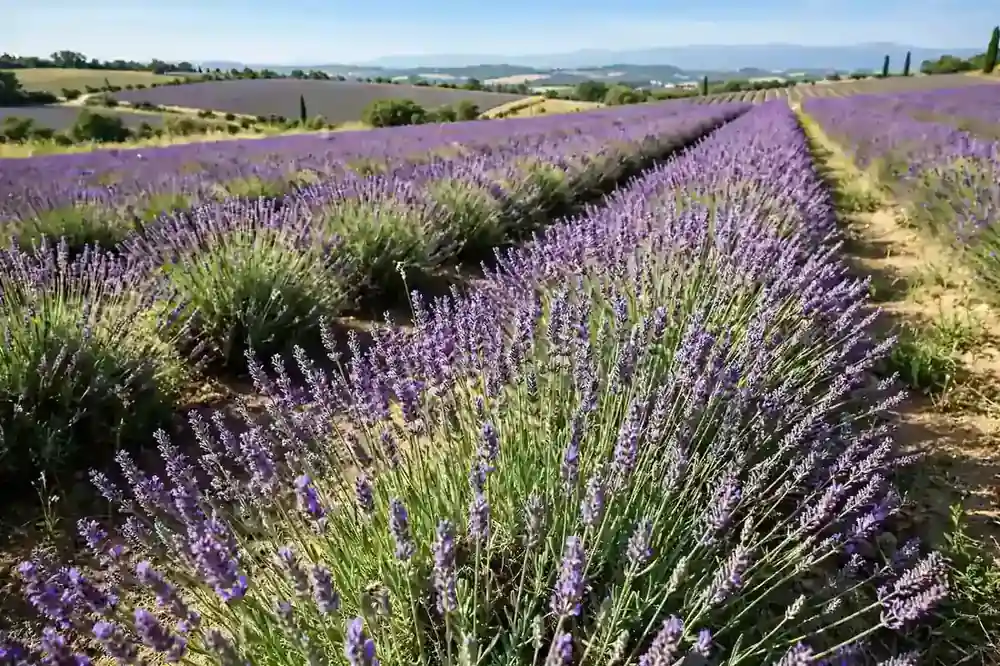
Fragrance: moderate, resinous and calming · Zones 5–9 · summer. Lavender scents its foliage as much as its flowers, so it works hardest planted beside a path where legs brush it and release the oils. ‘Hidcote’ is compact and deep purple; for a full perfume-first planting, lavender also headlines the toughest plants in our full-sun perennials guide. It demands sharp drainage and sun — wet winter soil, not cold, is what kills it. Honest note: shear plants after flowering and again lightly in spring, but never cut into bare old wood, which rarely resprouts.
23. Pinks (Dianthus ‘Mrs Sinkins’)
Fragrance: moderate, warm cloves · Zones 5–9 · summer. Old-fashioned pinks carry the true clove perfume that modern carnations mostly lost. ‘Mrs Sinkins’ is a fringed white Victorian variety with scent to spare; ‘Doris’ is the pink equivalent. They flower at the front of sunny borders and in pots, and repeat if you deadhead. Honest note: they are short-lived (three to five good years) but root from cuttings so easily that gardeners keep a line going for decades — take non-flowering shoots in summer and pot them in gritty compost.
24. Sweet Violet (Viola odorata)
Fragrance: moderate, sweet and powdery — with a famous trick · Zones 5–9 · late winter to spring. Violets contain ionones, compounds that temporarily dull your sense of smell, so the scent seems to vanish and return — the flower has not changed, your nose has. Small purple or white flowers hide under heart-shaped leaves in shade and woodland edges; forage a few for salads or crystallising, where the perfume survives. Honest note: many garden-centre “violets” are scentless violas or pansies — buy Viola odorata by its botanical name, in flower, and sniff the actual plant.
25. Sweet Alyssum (Lobularia maritima)
Fragrance: mild, warm honey · Annual · spring to fall. The gentlest scent on this list, and the longest-working: low mounds of tiny white or lilac flowers that smell of honey on warm days and keep going, with one mid-season haircut, until hard frost. It is the perfect fragrant edging for paths and pots of taller scented plants — the honey base note under everything else. Honest note: on hot afternoons the scent strengthens noticeably, so judge it then rather than on a cold morning; and let a few plants self-seed, because volunteers often outperform anything you sow deliberately.
How Flower Fragrance Works (and How to Place It)
Flower scent is advertising aimed at pollinators, which is why timing and colour follow the audience: day-flying bees get bright colours and daytime scents, while moths get white, night-opening flowers with heavy evening perfume. A plant produces scent molecules most freely in warm, humid, still air, and warmth matters twice — heat makes flowers release more perfume and makes air hold it instead of dispersing it. Wind is the enemy: a scented plant in an exposed, breezy spot pours its perfume into the next county. So place fragrance like you would place a speaker. Put it in sheltered corners, sunken areas and walled spaces where air pools. Put it at nose height or where you brush past — beside gates, along paths, under windows, around benches and doors. Grow the tender heavyweights (gardenia, jasmine, tuberose) in pots you can move to wherever you actually sit in the evening. And cluster: three lilac-family shrubs in one sheltered corner make a scent event, while the same plants scattered around a windy lawn make three faint disappointments. The cultural and design guidance from organisations like the Royal Horticultural Society consistently makes the same point — scent is a placement decision as much as a plant choice.
A Fragrant Garden in Every Season
With deliberate choices you can have scent outdoors in every month that your climate allows anyone outside. Late winter: daphne and sweet violet, with witch hazel as an honorary mention just outside this list of 25. Spring: hyacinth, lilac, viburnum, wisteria, lily of the valley and freesia layer over each other — this is the easiest season to make overwhelmingly fragrant. Early summer: roses, peonies, mock orange, sweet peas and honeysuckle take over, and cold-climate gardeners can extend the spring show using the varieties in our winter flowers guide as a planning companion. High summer: jasmine, gardenia, lilies, lavender and the whole evening crew — stock, moonflower, nicotiana — own the warm nights, with red and white evening plantings borrowing drama from our companion guide to red flowers, whose roses include several strongly scented varieties. Fall: tuberose peaks, lavender gives a second light flush after shearing, and sweet alyssum keeps its honey scent running until frost. Plan it as a relay, and no month is scentless.
How to Choose Fragrant Flowers
Decide when you will be there to smell it. Evening gardeners should weight the evening section heavily; a night-scented stock is wasted on a garden nobody visits after six. Match strength to space. On a small balcony, one Casa Blanca lily or a pot of freesia is plenty — a gardenia, a jasmine and tuberose together in a tiny enclosed yard can genuinely be too much. In a large open garden, reverse the logic and plant the strongest shrubs in threes. Buy scented plants in flower and sniff them. Fragrance varies enormously between varieties with identical labels — scentless lilacs, roses and mock oranges are sold every day. Your nose is the only specification that matters, a check the Missouri Botanical Garden Plant Finder can support with variety notes before you visit the nursery. Check the hardiness honestly. Half the heavyweights are tender; in cold zones either accept pot culture and winter storage, or build your scheme on the hardy strong-performers: hyacinth, lilac, viburnum, Casa Blanca lily, lily of the valley and Mister Lincoln.
Common Mistakes With Fragrant Flowers
Trusting the word “fragrant” on a label. It has no legal standard behind it. Always check the variety name against a rated list like this one, and sniff in person when you can. Planting scent in the wind. Exposed corners and hilltops strip perfume away; shelter is half the recipe, fences and hedges are fragrance infrastructure. Expecting modern bedding versions to perform. Dwarf nicotiana, compact sweet peas and many modern roses lost their scent in breeding for looks — buy the tall, old-fashioned types for perfume. Pruning at the wrong time. Lilac, mock orange and wisteria flower on wood made the previous season; winter pruning removes the entire scented display. Prune spring shrubs immediately after flowering. Judging scent at the wrong hour. Evening flowers smell of nothing at noon and everything at nine — assess a plant at the time of day it is built for before declaring it a dud.
Frequently Asked Questions
What is the most fragrant flower in the world?
Tuberose is the most common answer from perfumers, with jasmine and gardenia close behind — all three are rated “very strong” in this guide. Among hardy garden plants, hyacinth in spring and Oriental lily ‘Casa Blanca’ in summer carry the furthest outdoors.
Which fragrant flowers bloom in the evening?
Night-scented stock, moonflower, flowering tobacco (Nicotiana alata), tuberose and jasmine all release most of their scent after dusk, timed for moth pollinators. Plant them near seating, paths and open windows to enjoy the effect.
What are the best fragrant flowers for indoors or pots?
Freesia and forced hyacinths are the strongest reliable indoor performers. Gardenia and jasmine thrive as pot plants where you can control soil and winter protection, and a single cut stem of Casa Blanca lily or tuberose will scent a room — though keep lilies away from cats, as they are highly toxic to them.
Why has my rose (or lilac) got no scent?
Usually the variety: many modern roses and some lilac cultivars were bred for form, not fragrance. Scent also weakens in cold, dry or windy weather and in flowers cut long before they open. Check the variety name first — if it is not a known scented cultivar, no feeding regime will fix it.
Which fragrant flowers are safe in a shade garden?
Lily of the valley, sweet violet, daphne (dappled shade) and mock orange in light shade all perform well without full sun. Most evening-scented annuals and the big sun shrubs, however, need sun to build the sugars their perfume is made from.
References
Fragrance, hardiness and cultural details cross-checked against the Missouri Botanical Garden Plant Finder and Royal Horticultural Society plant profiles.
2 Comments