40 Flowers That Start With D: Names, Pictures & Growing Tips
40 Flowers That Start With D: Names, Pictures & Growing Tips
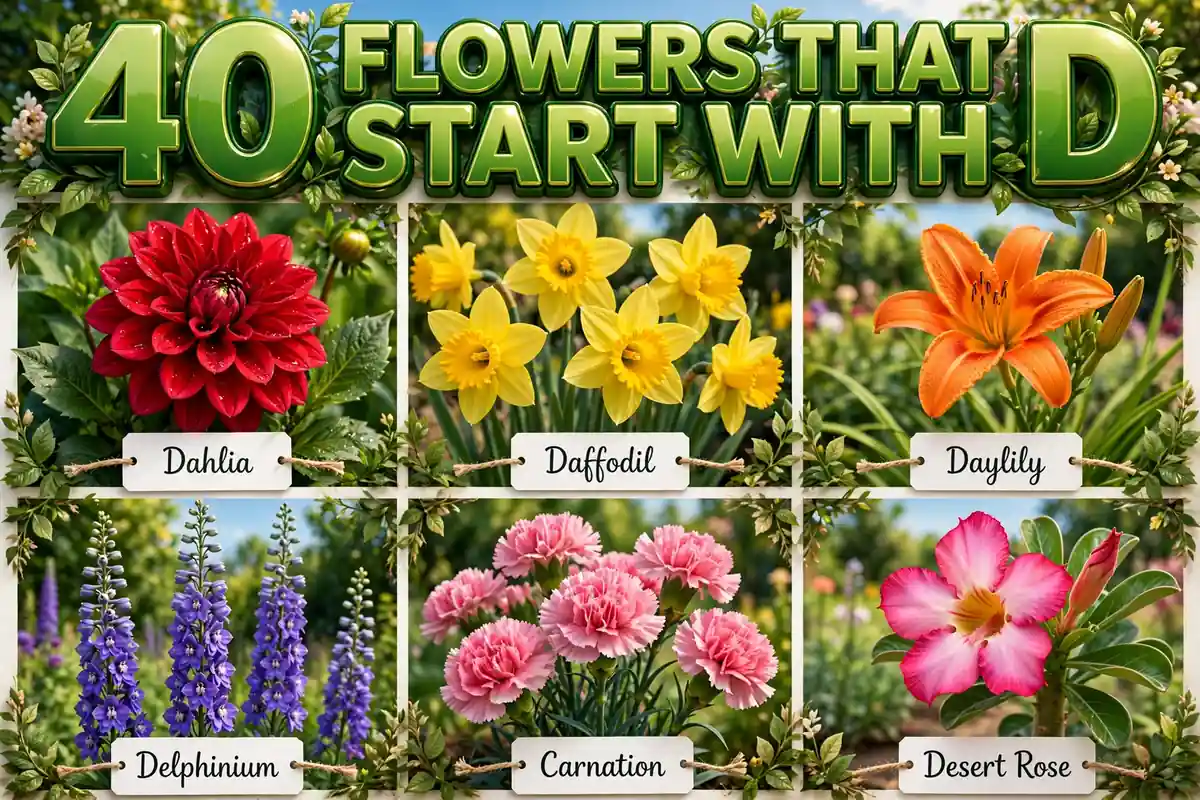
Searching for flower names that start with D? You have landed in the right spot. Flowers beginning with D include some of the most dramatic and dependable blooms in American gardens — from the dinner-plate dahlias of late summer and the trumpeting daffodils of spring to the towering blue spires of delphinium and the easygoing charm of daylilies. Whether you are designing a new border, picking bouquet flowers, or helping a young gardener with an alphabet planting project, this guide covers 40 real flowers that start with D, each with a vivid description and down-to-earth growing advice.
Every entry below lists the flower’s scientific name, bloom season, sun needs, and USDA hardiness zone, so you can spot at a glance which D-flowers suit your yard. You will also find two handy comparison tables, practical growing tips, and answers to the questions gardeners ask most about flowers starting with D. Let’s get growing.
Quick Answer
Popular flowers that start with D include Dahlia, Daylily, Daffodil, Delphinium, Carnation (Dianthus), Dendrobium Orchid, Desert Rose, Flowering Dogwood, Dutch Iris, and Winter Daphne. They span spring bulbs, summer perennials, native wildflowers, and tropical houseplants across USDA zones 3–12, so there is a D-flower for nearly every US garden.
Table of Contents
D-Flowers at a Glance
Use this table to compare all 40 flowers that start with D side by side, from botanical names to native regions.
| Flower name | Scientific name | Type | Color | Native region |
|---|---|---|---|---|
| Dahlia | Dahlia hybrids | Tender tuberous perennial | Red, pink, orange, yellow, purple, white | Mexico, Central America |
| Daylily | Hemerocallis hybrids | Herbaceous perennial | Nearly every color | Asia (hybrid origin) |
| Daffodil | Narcissus spp. | Spring bulb | Yellow, white, orange, pink | Europe, North Africa |
| Delphinium | Delphinium elatum | Herbaceous perennial | Blue, purple, pink, white | Europe, Asia (hybrid origin) |
| English Daisy | Bellis perennis | Short-lived perennial | White, pink, red | Europe |
| Carnation | Dianthus caryophyllus | Herbaceous perennial | Pink, red, white, yellow | Mediterranean |
| Dendrobium Orchid | Dendrobium spp. | Tropical epiphyte | White, pink, purple, yellow | Asia, Australia |
| Dutchman’s Breeches | Dicentra cucullaria | Woodland perennial | White | Eastern North America |
| Dutch Iris | Iris × hollandica | Bulb | Blue, purple, yellow, white | Hybrid (Netherlands) |
| Desert Rose | Adenium obesum | Succulent shrub | Pink, red, white | Africa, Arabia |
| Flowering Dogwood | Cornus florida | Deciduous tree | White, pink | Eastern North America |
| Winter Daphne | Daphne odora | Evergreen shrub | Pink and white | China, Japan |
| Datura | Datura wrightii | Tender perennial | White | Southwestern North America |
| Sweet William | Dianthus barbatus | Biennial/short-lived perennial | Red, pink, white, bicolor | Southern Europe |
| Dwarf Iris | Iris reticulata | Bulb | Blue, purple, yellow | Turkey, Caucasus |
| Drumstick Allium | Allium sphaerocephalon | Bulb | Burgundy-red | Europe, North Africa, West Asia |
| Dahlberg Daisy | Thymophylla tenuiloba | Annual | Golden yellow | Texas, Mexico |
| Desert Marigold | Baileya multiradiata | Short-lived perennial | Yellow | Southwestern US, Mexico |
| Desert Bluebell | Phacelia campanularia | Annual | Cobalt blue | California deserts |
| Desert Willow | Chilopsis linearis | Small deciduous tree | Pink, lavender, white | Southwestern US, Mexico |
| Desert Paintbrush | Castilleja chromosa | Herbaceous perennial | Orange-red bracts | Western North America |
| Dogtooth Violet | Erythronium dens-canis | Bulbous perennial | Pink, purple, white | Europe |
| Shooting Star | Dodecatheon meadia | Herbaceous perennial | White, pink | Eastern and central North America |
| Dotted Blazing Star | Liatris punctata | Herbaceous perennial | Purple-pink | Central North America |
| Drummond’s Phlox | Phlox drummondii | Annual | Red, pink, white, purple | Texas |
| Downy Phlox | Phlox pilosa | Herbaceous perennial | Pink, lavender | Central and eastern North America |
| Dwarf Crested Iris | Iris cristata | Rhizomatous perennial | Blue-violet | Eastern North America |
| Dwarf Larkspur | Delphinium tricorne | Herbaceous perennial | Blue, purple, white | Eastern North America |
| Dame’s Rocket | Hesperis matronalis | Biennial | Purple, pink, white | Eurasia |
| Dragon Arum | Dracunculus vulgaris | Tuberous perennial | Maroon-black spathe | Mediterranean |
| Dutchman’s Pipe | Aristolochia macrophylla | Deciduous vine | Brown and yellow | Eastern North America |
| Dutch Hyacinth | Hyacinthus orientalis | Bulb | Pink, blue, purple, white, yellow | Turkey, Middle East |
| Dutch Crocus | Crocus vernus | Cormous perennial | Purple, white, striped | Southern Europe |
| Hardy Ice Plant | Delosperma cooperi | Succulent groundcover | Magenta-pink | South Africa |
| Maiden Pink | Dianthus deltoides | Evergreen perennial | Pink, red, white | Europe, Asia |
| Slender Deutzia | Deutzia gracilis | Deciduous shrub | White | Japan |
| Bush Honeysuckle | Diervilla lonicera | Deciduous shrub | Yellow aging to orange-red | Eastern North America |
| Doublefile Viburnum | Viburnum plicatum f. tomentosum | Deciduous shrub | White | China, Japan |
| Dwarf Fothergilla | Fothergilla gardenii | Deciduous shrub | White | Southeastern US |
| Tree Dahlia | Dahlia imperialis | Tender tuberous perennial | Lavender-pink | Mexico, Central America |
Bloom Season, Sun Needs & Hardiness Zones
Planning your garden calendar? This second table shows when each D-flower blooms, how much sun it wants, and the USDA zones where it grows outdoors year-round.
| Flower name | Bloom season | Sun needs | Hardiness zone |
|---|---|---|---|
| Dahlia | Summer to fall | Full sun | 8–11; lift tubers elsewhere |
| Daylily | Summer | Full sun to part shade | 3–9 |
| Daffodil | Spring | Full sun to part shade | 3–9 |
| Delphinium | Early summer | Full sun | 3–7 |
| English Daisy | Spring | Full sun to part shade | 4–8; annual in heat |
| Carnation | Summer | Full sun | 6–9; annual elsewhere |
| Dendrobium Orchid | Late winter to spring | Bright indirect light | Houseplant (10–12 outdoors) |
| Dutchman’s Breeches | Early spring | Part to full shade | 3–7 |
| Dutch Iris | Late spring | Full sun | 6–9 |
| Desert Rose | Summer | Full sun | 10–12; houseplant elsewhere |
| Flowering Dogwood | Spring | Part shade | 5–9 |
| Winter Daphne | Late winter to early spring | Part shade | 7–9 |
| Datura | Summer to fall | Full sun | 9–11; annual elsewhere |
| Sweet William | Late spring to early summer | Full sun | 3–9 |
| Dwarf Iris | Early spring | Full sun | 5–9 |
| Drumstick Allium | Early summer | Full sun | 4–8 |
| Dahlberg Daisy | Summer to frost | Full sun | Grown as annual |
| Desert Marigold | Spring to fall | Full sun | 7–10 |
| Desert Bluebell | Spring | Full sun | Grown as annual |
| Desert Willow | Summer | Full sun | 7–11 |
| Desert Paintbrush | Spring to early summer | Full sun | 4–8 |
| Dogtooth Violet | Spring | Part shade | 3–8 |
| Shooting Star | Spring | Part shade | 4–8 |
| Dotted Blazing Star | Late summer | Full sun | 3–9 |
| Drummond’s Phlox | Spring to summer | Full sun | Grown as annual |
| Downy Phlox | Late spring | Full sun to part shade | 4–8 |
| Dwarf Crested Iris | Spring | Part shade | 3–9 |
| Dwarf Larkspur | Spring | Part shade | 4–8 |
| Dame’s Rocket | Spring | Full sun to part shade | 3–8 |
| Dragon Arum | Late spring | Part shade | 7–9 |
| Dutchman’s Pipe | Late spring | Part shade | 4–8 |
| Dutch Hyacinth | Spring | Full sun to part shade | 4–8 |
| Dutch Crocus | Early spring | Full sun to part shade | 3–8 |
| Hardy Ice Plant | Summer | Full sun | 5–9 |
| Maiden Pink | Late spring to early summer | Full sun | 3–9 |
| Slender Deutzia | Spring | Full sun to part shade | 5–8 |
| Bush Honeysuckle | Early summer | Full sun to part shade | 3–7 |
| Doublefile Viburnum | Spring | Part shade | 5–8 |
| Dwarf Fothergilla | Spring | Full sun to part shade | 5–8 |
| Tree Dahlia | Late fall | Full sun | 9–11 |
40 Flowers That Start With D: The Complete List
Here they are — 40 beautiful, real flowers beginning with D, each with growing notes so you can pick the right ones for your garden.
1. Dahlia (Dahlia hybrids)
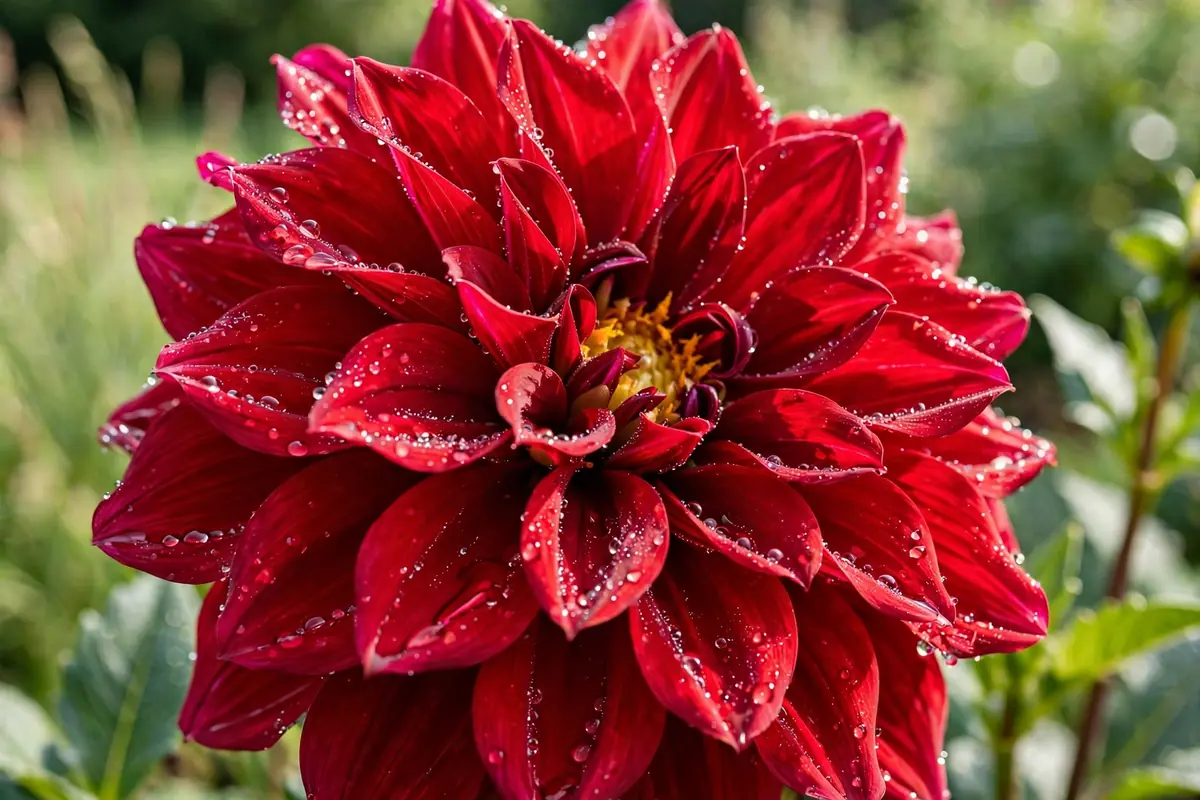
Dahlia is the undisputed star of the late-summer garden, with dinner-plate blooms up to 10 inches wide in every color except true blue. From pompons and cactus types to waterlily forms, there is a dahlia for every taste. Plant tubers after the last frost in full sun and rich soil, stake tall varieties, and deadhead often. In zones 8–11 tubers can stay in the ground; elsewhere lift and store them frost-free.
Bloom: Summer to fall | Sun: Full sun | Zone: 8–11; lift tubers elsewhere | Best for: Cut flowers, late-summer color
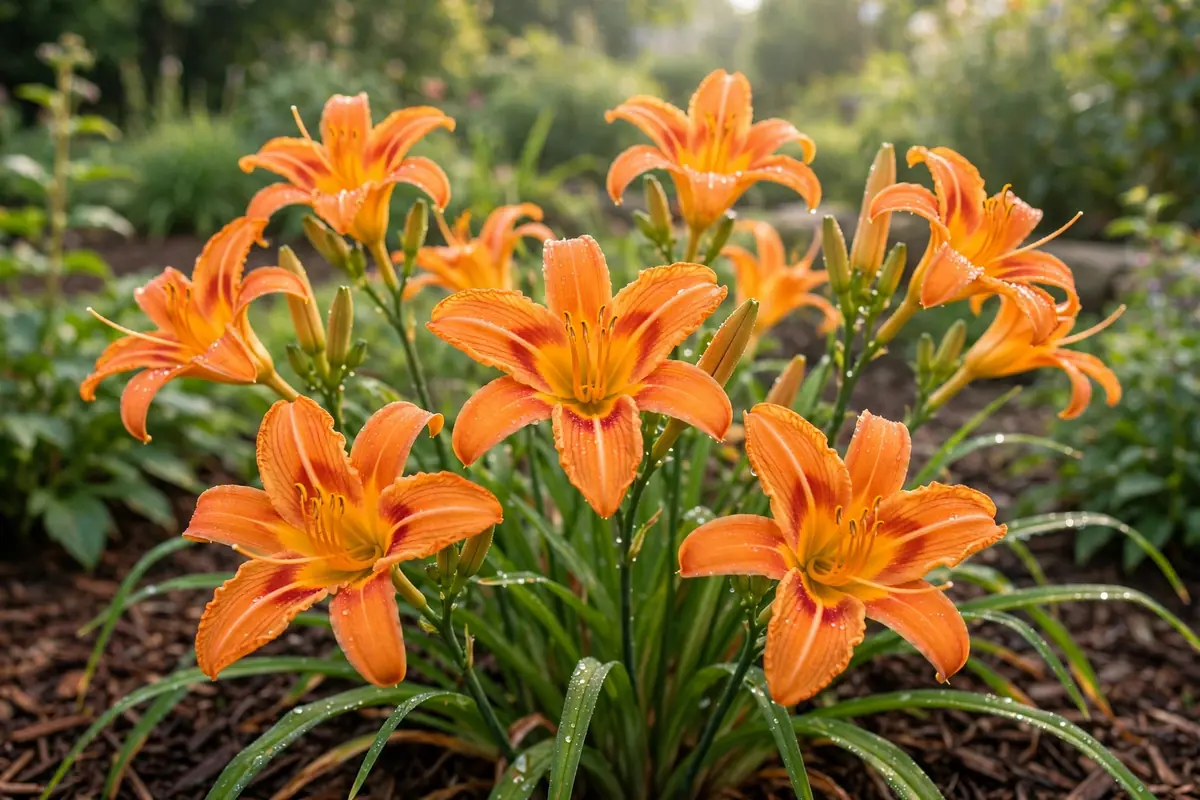
2. Daylily (Hemerocallis hybrids)
Daylilies are the workhorses of the perennial border — each trumpet-shaped bloom lasts just one day, but a mature clump produces hundreds of buds over 4–6 weeks. Modern reblooming varieties stretch the show even longer. They tolerate drought, poor soil, and neglect, and come in nearly every color. Divide crowded clumps in early spring or fall to keep them blooming their best.
Bloom: Summer | Sun: Full sun to part shade | Zone: 3–9 | Best for: Low-maintenance borders, mass plantings
3. Daffodil (Narcissus spp.)
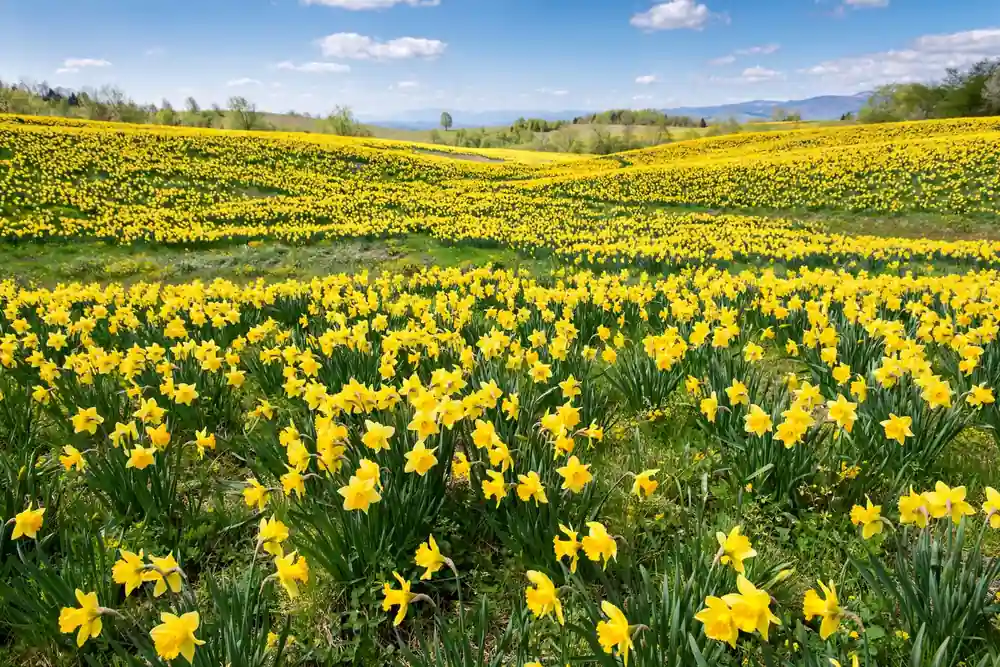
Daffodils are spring’s most reliable cheerleaders, returning year after year with trumpet-shaped yellow, white, or bicolored blooms. Plant bulbs in fall, 6 inches deep, in sun or part shade — they naturalize beautifully under deciduous trees. Deer and rodents leave them alone thanks to toxic bulbs. Let the foliage die back naturally for six weeks after blooming; it feeds next year’s flowers.
Bloom: Spring | Sun: Full sun to part shade | Zone: 3–9 | Best for: Naturalizing, spring lawns, deer-resistant beds
4. Delphinium (Delphinium elatum)
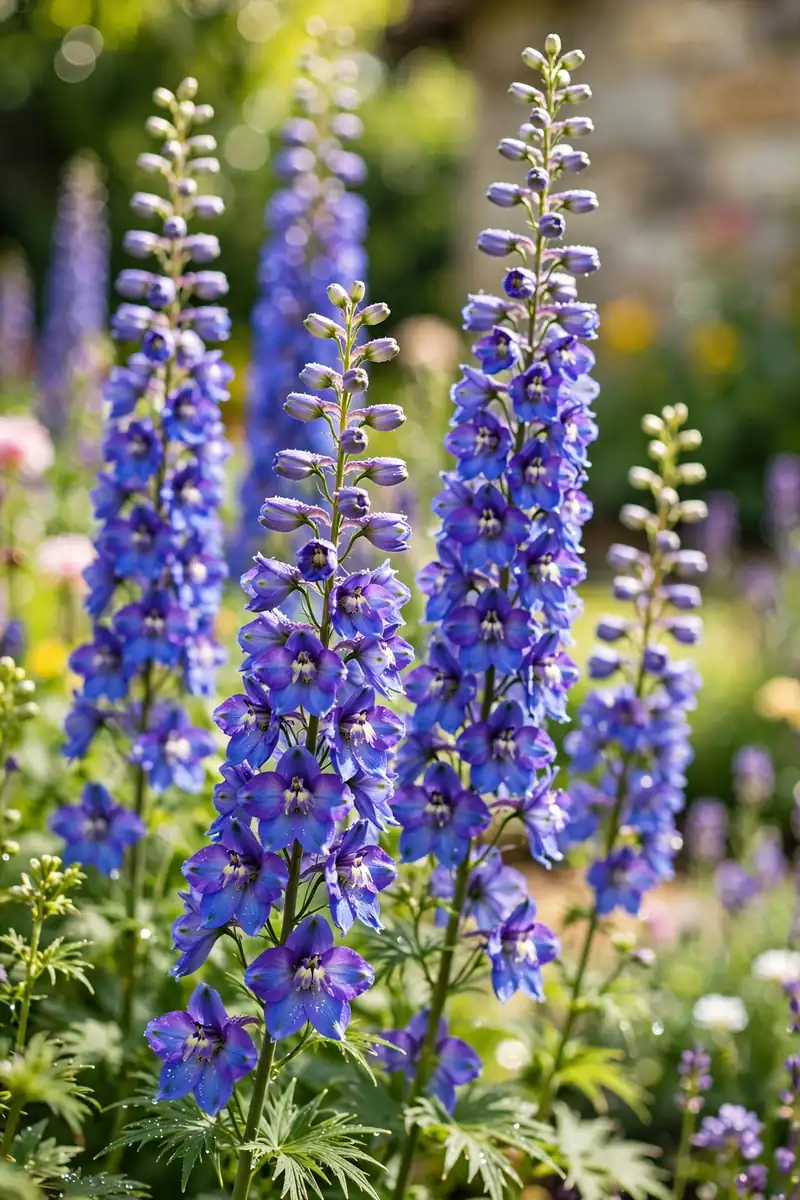
Delphiniums bring vertical drama to the early-summer border with 5- to 6-foot spires of blue, purple, pink, or white florets. They demand rich, well-drained soil, full sun, and consistent moisture — and dislike hot, humid summers. Stake tall spikes against wind, and cut spent flower stalks to the ground for a possible second bloom in fall. All parts are toxic, so keep away from curious pets.
Bloom: Early summer | Sun: Full sun | Zone: 3–7 | Best for: Cottage gardens, vertical accents
5. English Daisy (Bellis perennis)
The English daisy is a charming low-growing perennial with cheerful button-like blooms in white, pink, or red on 4- to 6-inch stems. It flowers heaviest in cool spring weather and often rests during summer heat. Use it for edging, rock gardens, and containers. In mild climates it self-sows gently; in hot regions it is usually grown as a cool-season annual.
Bloom: Spring | Sun: Full sun to part shade | Zone: 4–8; annual in heat | Best for: Edging, rock gardens, spring containers
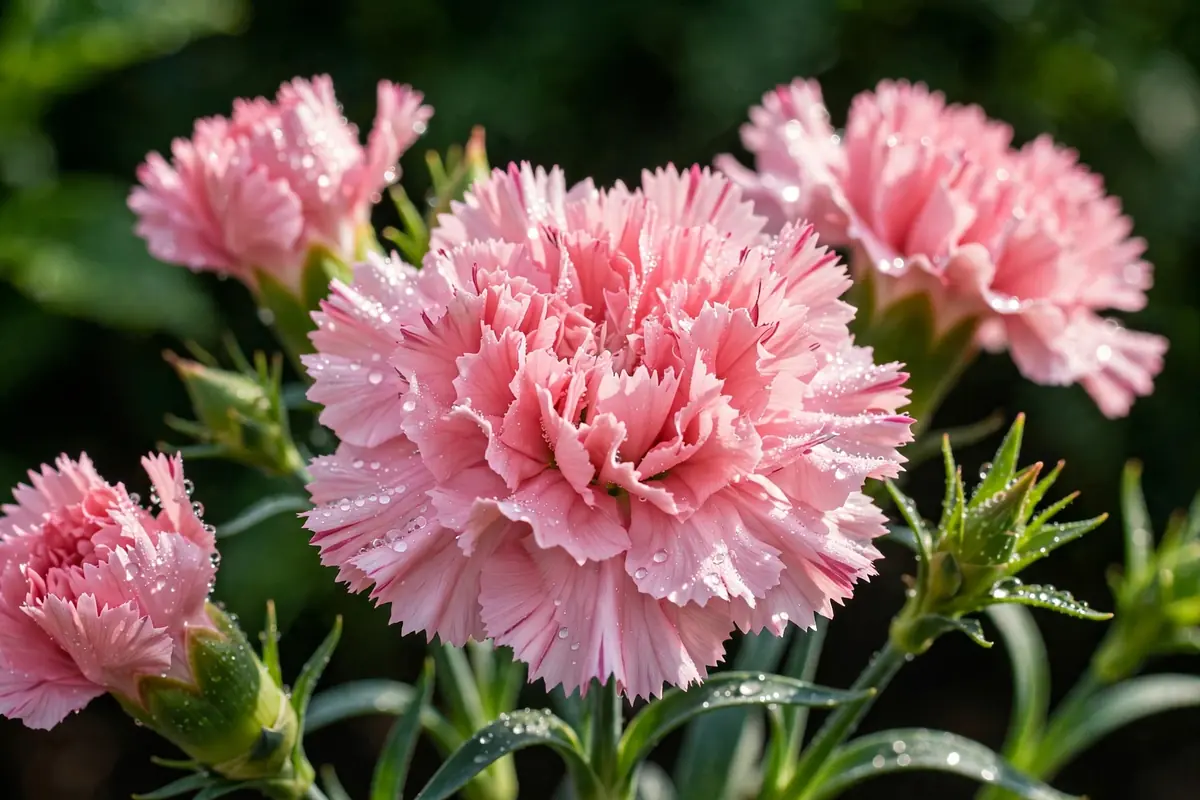
6. Carnation (Dianthus caryophyllus)
Carnations are the classic florist flower — ruffled, long-lasting, and sweetly clove-scented in pink, red, white, yellow, and bicolors. In the garden they prefer full sun, alkaline soil, and excellent drainage. Modern border carnations are hardier and bushier than the old greenhouse types. Deadhead spent blooms to keep flowers coming, and avoid wet winter soil, which they hate.
Bloom: Summer | Sun: Full sun | Zone: 6–9; annual elsewhere | Best for: Cut flowers, fragrant borders
7. Dendrobium Orchid (Dendrobium spp.)
Dendrobium orchids are among the easiest orchids to grow at home, producing arching sprays of white, pink, purple, or yellow blooms in late winter and spring. Give them bright indirect light and a coarse bark mix, and let them dry slightly between waterings. Many types need a cool, dry rest in fall to trigger flowering. Blooms can last two months on the plant.
Bloom: Late winter to spring | Sun: Bright indirect light | Zone: Houseplant (10–12 outdoors) | Best for: Indoor orchid collections, gifts
8. Dutchman’s Breeches (Dicentra cucullaria)
Dutchman’s breeches is a delightful woodland wildflower whose white, pantaloon-shaped blooms dangle from arching stems in early spring. A close cousin of bleeding heart, it thrives in rich, moist shade and goes dormant by midsummer — plant it among ferns and hostas that fill the gap. It naturalizes into charming colonies in zones 3–7.
Bloom: Early spring | Sun: Part to full shade | Zone: 3–7 | Best for: Woodland gardens, native shade
9. Dutch Iris (Iris × hollandica)
Dutch iris delivers elegant, orchid-like blooms in blue, purple, yellow, and white on 18- to 24-inch stems in late spring. Unlike bearded iris, it grows from a bulb planted in fall. It loves full sun and well-drained soil and makes a superb cut flower. In zones below 6, treat the bulbs as annuals or lift them for winter storage.
Bloom: Late spring | Sun: Full sun | Zone: 6–9 | Best for: Cut flowers, spring borders
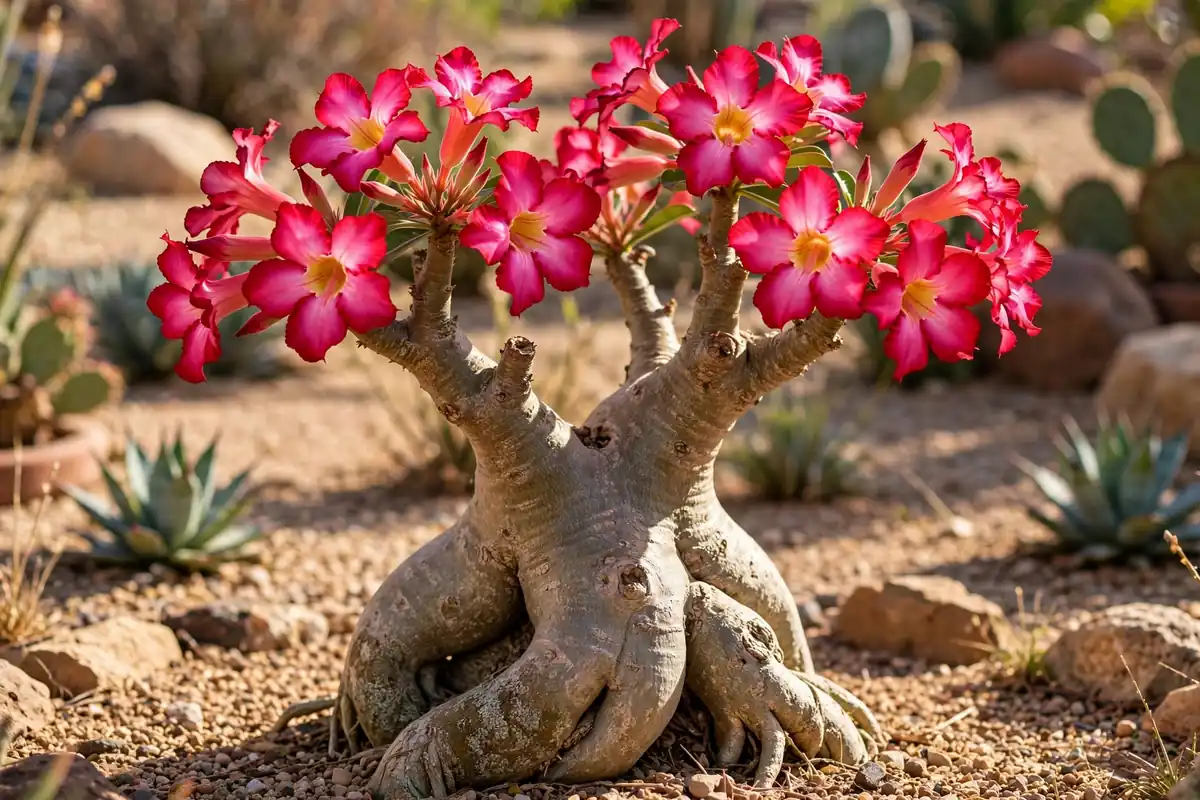
10. Desert Rose (Adenium obesum)
The desert rose looks like a bonsai sculpted by nature — a swollen, water-storing trunk topped with clusters of pink, red, or white trumpet flowers in summer. This succulent from Africa and Arabia wants blazing sun, sharp drainage, and very little water. Grow it in pots in most of the US and bring it indoors before frost; it drops its leaves in winter and rebounds in spring.
Bloom: Summer | Sun: Full sun | Zone: 10–12; houseplant elsewhere | Best for: Succulent collections, patio pots
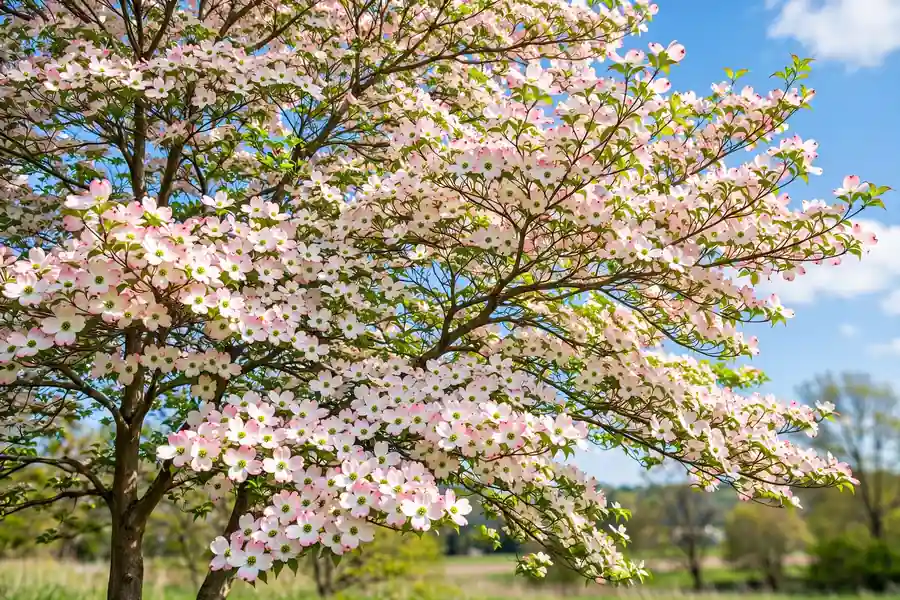
11. Flowering Dogwood (Cornus florida)
Flowering dogwood is the signature spring tree of eastern America, covering its branches in white or pink bracts each April. The showy “petals” are actually modified leaves surrounding tiny true flowers. It prefers part shade, acidic soil, and consistent moisture. Red berries feed birds in fall while the foliage turns crimson. Give it room — mature trees reach 20–30 feet wide and tall.
Bloom: Spring | Sun: Part shade | Zone: 5–9 | Best for: Spring landscape impact, wildlife trees
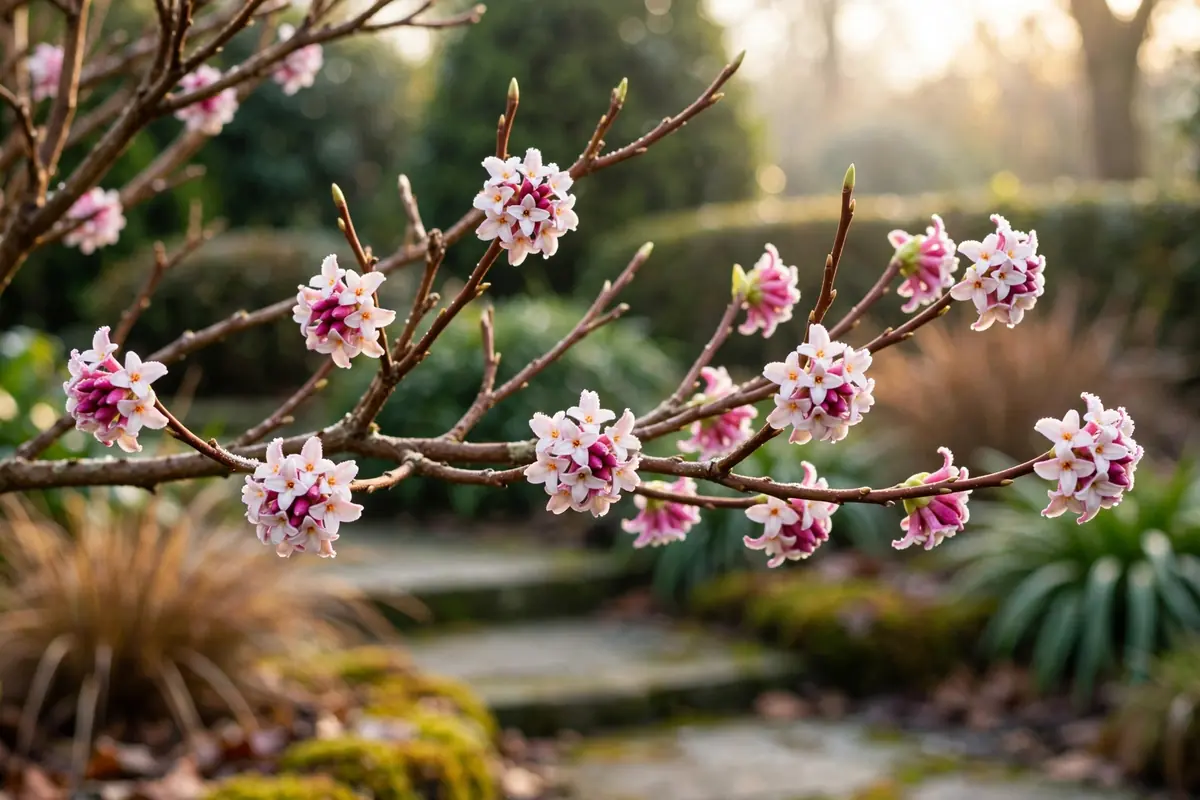
12. Winter Daphne (Daphne odora)
Winter daphne is worth growing for fragrance alone — clusters of pink-and-white starry flowers perfume the entire late-winter garden with an intoxicating citrus-jasmine scent. This evergreen shrub dislikes being moved or pruned, so choose its spot carefully: part shade, humus-rich soil, and sharp drainage. It resents wet feet and transplanting, so plant high and leave it be.
Bloom: Late winter to early spring | Sun: Part shade | Zone: 7–9 | Best for: Fragrance gardens, winter interest
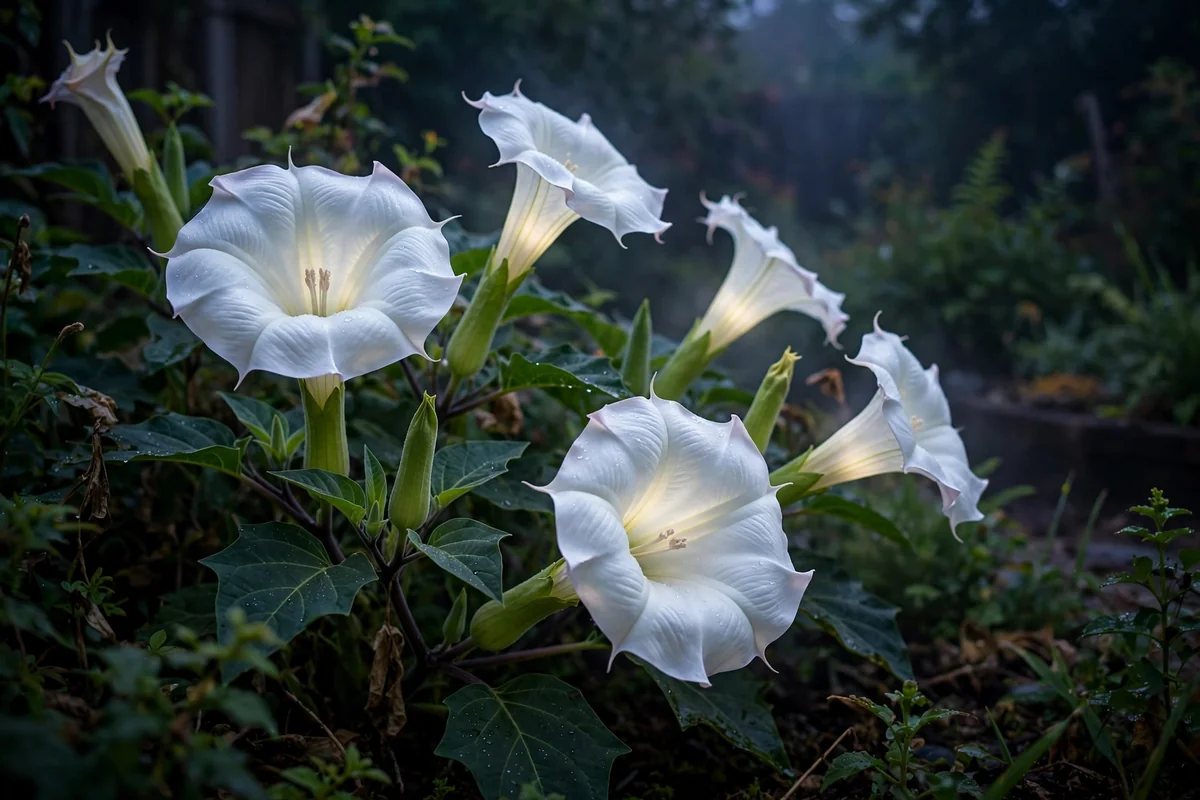
13. Datura (Datura wrightii)
Datura, or sacred datura, unfurls huge white trumpet flowers up to 8 inches long that open in the evening with a sweet perfume — a night-blooming showstopper for moon gardens. It thrives in heat and poor soil with minimal care. A serious caution: all parts are highly toxic if ingested. Grow it where children and pets cannot reach, and admire its dramatic blooms from a safe distance.
Bloom: Summer to fall | Sun: Full sun | Zone: 9–11; annual elsewhere | Best for: Moon gardens, dramatic focal points (with caution)
14. Sweet William (Dianthus barbatus)
Sweet William packs old-fashioned charm into dense, flat-topped clusters of red, pink, white, or bicolored blooms with a sweet clove scent. Usually grown as a biennial, it blooms in its second spring after a summer sowing. Deadhead spent clusters to encourage rebloom, and give it full sun with good drainage. It self-sows gently for years of cottage-garden color.
Bloom: Late spring to early summer | Sun: Full sun | Zone: 3–9 | Best for: Cottage gardens, fragrant borders
15. Dwarf Iris (Iris reticulata)
Dwarf iris is one of the first flowers of spring, pushing vivid blue, purple, or yellow blooms through melting snow on 4- to 6-inch stems. Plant the small bulbs in fall in sunny, well-drained spots — rock gardens, pathway edges, and the front of borders. They multiply slowly into jewel-like drifts and need a dry summer rest to bloom again reliably.
Bloom: Early spring | Sun: Full sun | Zone: 5–9 | Best for: Rock gardens, early spring color
16. Drumstick Allium (Allium sphaerocephalon)
Drumstick allium adds quirky charm to the early-summer garden with egg-sized burgundy-red flower heads on wiry 2- to 3-foot stems. The dense oval blooms look like little drumsticks bobbing above the border. Plant bulbs in fall in full sun and average soil. Like all alliums, deer avoid it, and the dried heads add interest to arrangements.
Bloom: Early summer | Sun: Full sun | Zone: 4–8 | Best for: Whimsical accents, deer-resistant beds
17. Dahlberg Daisy (Thymophylla tenuiloba)
Dahlberg daisy is a heat-loving Texas native that smothers itself in tiny golden-yellow daisy flowers from summer to frost. The ferny, citrus-scented foliage forms neat mounds just 8–12 inches tall. It thrives in blazing sun and poor, dry soil where fussier annuals fail — perfect for edging, containers, and hot sidewalk strips.
Bloom: Summer to frost | Sun: Full sun | Zone: Grown as annual | Best for: Hot dry spots, edging
18. Desert Marigold (Baileya multiradiata)
Desert marigold is a tough Southwestern native with silvery-gray foliage and cheerful yellow daisy blooms from spring through fall. It shrugs off drought, heat, and poor soil, asking only for full sun and sharp drainage. This short-lived perennial often self-sows, keeping colonies going for years. A natural for xeriscape gardens and dry, sunny slopes.
Bloom: Spring to fall | Sun: Full sun | Zone: 7–10 | Best for: Xeriscaping, native desert gardens
19. Desert Bluebell (Phacelia campanularia)
Desert bluebell produces some of the truest blue flowers in the plant kingdom — vivid cobalt bells on 9- to 12-inch plants. This California desert annual is easy from seed: sow in fall or early spring in full sun and poor, well-drained soil. It blooms in spring and pairs beautifully with desert marigold and poppies in wildflower meadows.
Bloom: Spring | Sun: Full sun | Zone: Grown as annual | Best for: Wildflower meadows, true-blue color
20. Desert Willow (Chilopsis linearis)
Despite its name, desert willow is no willow — it is a small flowering tree with narrow leaves and showy pink, lavender, or white trumpet blooms all summer. Hummingbirds flock to it. Extremely drought-tolerant once established, it suits zones 7–11 in full sun. Prune in late winter to shape, and expect fast growth in heat.
Bloom: Summer | Sun: Full sun | Zone: 7–11 | Best for: Hummingbird gardens, drought-tolerant trees
21. Desert Paintbrush (Castilleja chromosa)
Desert paintbrush lights up Western spring landscapes with brilliant orange-red bracts that look like dipped paintbrushes. This native perennial is hemiparasitic — its roots tap neighboring plants for nutrients — so it establishes best sown among native grasses. Give it full sun and lean, well-drained soil, and never fertilize it.
Bloom: Spring to early summer | Sun: Full sun | Zone: 4–8 | Best for: Native wildflower gardens, Western landscapes
22. Dogtooth Violet (Erythronium dens-canis)
Dogtooth violet is a spring ephemeral with nodding, lily-like blooms in pink, purple, or white above mottled, trout-patterned leaves. It carpets deciduous woodlands, blooming before the tree canopy leafs out, then goes dormant by summer. Plant the small bulbs in fall in humus-rich, well-drained shade and let colonies establish undisturbed.
Bloom: Spring | Sun: Part shade | Zone: 3–8 | Best for: Woodland floors, naturalizing in shade
23. Shooting Star (Dodecatheon meadia)
Shooting star is a native wildflower with extraordinary blooms — white to pink petals swept backward like tiny rockets trailing from a golden cone, on 1- to 2-foot stems in spring. It loves moist, humus-rich soil in part shade and goes dormant after setting seed. A jewel for native shade gardens and stream banks.
Bloom: Spring | Sun: Part shade | Zone: 4–8 | Best for: Native shade gardens, stream banks
24. Dotted Blazing Star (Liatris punctata)
Dotted blazing star is a prairie tough-guy with spikes of purple-pink flowers that bloom from the top down — the reverse of most spiky flowers. Growing 1–2 feet tall from deep corms, it laughs at drought and poor soil. Butterflies and bees mob the late-summer blooms. Give it full sun and leave the seed heads for goldfinches.
Bloom: Late summer | Sun: Full sun | Zone: 3–9 | Best for: Prairie gardens, pollinators
25. Drummond’s Phlox (Phlox drummondii)
Drummond’s phlox, a Texas native annual, covers itself in clusters of red, pink, white, or purple blooms with contrasting eyes from spring into summer. It is easy from seed sown directly in the garden and deadheads itself to some degree. Give it full sun and average soil; in hot climates, afternoon shade extends the show.
Bloom: Spring to summer | Sun: Full sun | Zone: Grown as annual | Best for: Easy annual color, wildflower mixes
26. Downy Phlox (Phlox pilosa)
Downy phlox is a refined native perennial with soft pink to lavender flower clusters in late spring on 1- to 2-foot stems. Its slightly fuzzy foliage gives it the “downy” name. Unlike garden phlox, it resists mildew and tolerates drought. Plant in full sun to part shade in zones 4–8 for a low-maintenance native border.
Bloom: Late spring | Sun: Full sun to part shade | Zone: 4–8 | Best for: Native borders, low-maintenance perennials
27. Dwarf Crested Iris (Iris cristata)
Dwarf crested iris forms spreading mats of blue-violet blooms with white-and-gold crests in spring, just 6–9 inches tall. This native woodland iris thrives in part shade and humus-rich soil, slowly colonizing shady slopes and stream banks. It is deer-resistant and nearly carefree once established — a perfect groundcover for native shade gardens.
Bloom: Spring | Sun: Part shade | Zone: 3–9 | Best for: Shade groundcover, native woodland edges
28. Dwarf Larkspur (Delphinium tricorne)
Dwarf larkspur is the delphinium’s charming woodland cousin — 1- to 2-foot spires of blue, purple, or white blooms in spring rather than summer. Native to eastern woodlands, it prefers part shade and rich, moist soil. Like its taller relatives, all parts are toxic. Let it self-sow for natural drifts in shade gardens.
Bloom: Spring | Sun: Part shade | Zone: 4–8 | Best for: Woodland gardens, spring shade color
29. Dame’s Rocket (Hesperis matronalis)
Dame’s rocket fills the spring garden with clouds of fragrant purple, pink, or white four-petaled flowers on 2- to 3-foot stems. The sweet evening scent is its greatest asset. Usually grown as a biennial, it self-sows freely — sometimes too freely, so deadhead if you want to contain it. It naturalizes beautifully in cottage and wildflower gardens.
Bloom: Spring | Sun: Full sun to part shade | Zone: 3–8 | Best for: Fragrant spring displays, cottage gardens
30. Dragon Arum (Dracunculus vulgaris)
Dragon arum is not for the faint of heart — a 2- to 3-foot maroon-black spathe unfurls around a dark spadix in late spring, smelling of rotting meat to attract pollinating flies. The stench lasts only a day or two, leaving behind striking tropical foliage. Plant the tuber in part shade in zones 7–9 and give this conversation piece plenty of room.
Bloom: Late spring | Sun: Part shade | Zone: 7–9 | Best for: Exotic focal points, adventurous gardeners
31. Dutchman’s Pipe (Aristolochia macrophylla)
Dutchman’s pipe is a vigorous native vine whose curious pipe-shaped brown-and-yellow flowers hide beneath huge heart-shaped leaves. It can climb 20–30 feet, quickly covering arbors and fences in part shade. It is also the essential host plant for pipevine swallowtail caterpillars — a must for butterfly gardeners in the eastern US.
Bloom: Late spring | Sun: Part shade | Zone: 4–8 | Best for: Covering arbors, butterfly host plant
32. Dutch Hyacinth (Hyacinthus orientalis)
Dutch hyacinths are spring’s perfume powerhouses — dense spikes of pink, blue, purple, white, or yellow florets with an unforgettable sweet scent. Plant bulbs in fall, 6 inches deep, in sun or part shade. They bloom best their first spring; many gardeners replant yearly for maximum impact. Combine with daffodils for a classic spring display.
Bloom: Spring | Sun: Full sun to part shade | Zone: 4–8 | Best for: Fragrant spring beds, forcing indoors
33. Dutch Crocus (Crocus vernus)
Dutch crocus announces spring with large purple, white, or striped goblets on 4- to 5-inch stems, often blooming through late snow. Plant corms in fall in drifts under trees or in lawns — the foliage ripens before the first mowing. Chipmunks love the corms, so plant generously. They naturalize readily in zones 3–8.
Bloom: Early spring | Sun: Full sun to part shade | Zone: 3–8 | Best for: Naturalizing in lawns, earliest color
34. Hardy Ice Plant (Delosperma cooperi)
Hardy ice plant is a succulent groundcover that erupts in neon magenta-pink daisy flowers all summer. The fleshy evergreen foliage sparkles with tiny glistening dots — hence the “ice plant” name. It demands full sun and extremely sharp drainage; wet winter soil kills it faster than cold. Perfect for rock gardens, slopes, and hot hellstrips in zones 5–9.
Bloom: Summer | Sun: Full sun | Zone: 5–9 | Best for: Rock gardens, hot dry slopes
35. Maiden Pink (Dianthus deltoides)
Maiden pink is a mat-forming dianthus with masses of small, fringed pink, red, or white flowers in late spring and early summer. Just 6–12 inches tall, it is ideal for rock gardens, edging, and spilling over walls. Give it full sun and lean, well-drained soil — it dislikes rich, soggy ground. Shear after blooming for a tidy mat.
Bloom: Late spring to early summer | Sun: Full sun | Zone: 3–9 | Best for: Rock gardens, edging, cascading walls
36. Slender Deutzia (Deutzia gracilis)
Slender deutzia is a graceful 2- to 3-foot deciduous shrub smothered in arching sprays of white bell flowers each spring. It is one of the most reliable small flowering shrubs for zones 5–8, tolerating sun or part shade. Prune right after flowering since it blooms on old wood. Dwarf cultivars like ‘Nikko’ fit the smallest gardens.
Bloom: Spring | Sun: Full sun to part shade | Zone: 5–8 | Best for: Small shrubs, spring foundation plantings
37. Bush Honeysuckle (Diervilla lonicera)
Bush honeysuckle is a tough native shrub with clusters of small yellow trumpet flowers in early summer that age to orange-red. Unlike invasive Asian honeysuckles, this well-behaved species suckers politely into tidy mounds. It tolerates dry shade, poor soil, and neglect — a problem-solver for difficult spots — and its foliage turns red in fall.
Bloom: Early summer | Sun: Full sun to part shade | Zone: 3–7 | Best for: Difficult sites, native shrubs
38. Doublefile Viburnum (Viburnum plicatum f. tomentosum)
Doublefile viburnum is a show-stopping spring shrub with horizontal branches lined in double rows of white lacecap flowers — like snow layered on every limb. Red berries follow in fall along with burgundy foliage. Give it part shade and moist, well-drained soil in zones 5–8. ‘Shasta’ and ‘Mariesii’ are superb cultivars.
Bloom: Spring | Sun: Part shade | Zone: 5–8 | Best for: Specimen shrubs, layered landscapes
39. Dwarf Fothergilla (Fothergilla gardenii)
Dwarf fothergilla is a compact native shrub prized for bottlebrush-like white flower clusters with a honey scent in spring — before its blue-green leaves emerge. Fall brings spectacular orange-red foliage. It needs acidic soil and sun to part shade in zones 5–8. Slow-growing but long-lived, it is a four-season gem for small gardens.
Bloom: Spring | Sun: Full sun to part shade | Zone: 5–8 | Best for: Four-season interest, native shrubs
40. Tree Dahlia (Dahlia imperialis)
Tree dahlia is the giant of the dahlia world — bamboo-like canes rocket 10–20 feet tall, topped in late fall with nodding lavender-pink blooms. It needs a long, frost-free season, suiting zones 9–11, and full sun. Cut canes to the ground after frost; they resprout from the base each spring. A jaw-dropping back-of-border specimen.
Bloom: Late fall | Sun: Full sun | Zone: 9–11 | Best for: Dramatic height, frost-free gardens
Growing Tips for D-Flowers
With 40 different D-flowers on this list, a few universal rules will set you up for success no matter which ones you choose.
Match the plant to your zone first. Check the hardiness zones in the tables above before you buy. Tropical D-flowers like dendrobium orchid, desert rose, and tree dahlia cannot survive freezing winters outdoors — grow them in pots you can move inside, or treat them as annuals. Hardy natives like dotted blazing star, downy phlox, and dwarf crested iris sail through cold winters with no help.
Get bulbs and tubers in at the right time. Spring bloomers — daffodil, Dutch hyacinth, Dutch crocus, dwarf iris, and drumstick allium — go in the ground in fall, while summer performers like dahlia tubers and dragon arum wait until after the last frost. All of them demand good drainage; in heavy clay, plant bulbs on a bed of coarse sand or in raised beds.
Lean on natives for easy wins. Desert marigold, desert bluebell, shooting star, and bush honeysuckle evolved in American soils and shrug off local pests, drought, and weather swings. They need less water, less fertilizer, and less fuss than exotic showboats — and they feed native bees, butterflies, and birds.
Deadhead the heavy bloomers. Snipping spent flowers off dahlias, daylilies, sweet William, and carnations redirects energy into new buds instead of seeds, stretching the show by weeks or months. Leave seed heads standing on dotted blazing star and drumstick allium if you want winter structure or self-sown seedlings.
Respect the toxic ones. Several beautiful D-flowers demand caution: datura, delphinium, dwarf larkspur, and daffodil bulbs are all toxic if eaten, and dragon arum’s sap can irritate skin. Plant them away from vegetable beds, play areas, and curious pets — and always wear gloves when dividing or handling them.
Explore More Flowers
Which D-Flowers Will You Grow?
From the spring trumpets of daffodils to the fall fireworks of dahlias, flowers that start with D span every season, every sun level, and USDA zones 3 through 12. Start with easy winners matched to your conditions — perhaps daylilies and dotted blazing star for a sunny border, Dutchman’s breeches and dwarf crested iris for shade, or a dendrobium orchid for the windowsill. Pick three or four favorites from this list, give them the right spot, and the letter D will fill your garden with color from snowmelt to frost.
Frequently Asked Questions
What flowers start with D?
Dozens of garden favorites begin with D, including dahlia, daylily, daffodil, delphinium, carnation (Dianthus), dendrobium orchid, desert rose, flowering dogwood, Dutch iris, Dutch hyacinth, drumstick allium, and winter daphne. This guide covers 40 of them with growing details for each.
What are some common flower names that start with D for a garden?
For an easy-care garden, start with daylily, daffodil, Dahlberg daisy, drumstick allium, and Drummond’s phlox — all widely available at nurseries and forgiving of beginner mistakes. Add delphinium or dahlia for bigger summer drama, and winter daphne for fragrance.
What purple flowers start with D?
Top purple choices among flowers that start with D include delphinium, Dutch iris, Dutch crocus, Dutch hyacinth, dotted blazing star, dwarf crested iris, dwarf iris, dame’s rocket, and dogtooth violet. For deep, moody color, look for near-black dragon arum spathes and burgundy drumstick allium heads.
What yellow flowers start with D?
Beautiful yellow D-flowers include daffodil, Dahlberg daisy, desert marigold, desert willow (yellow forms), bush honeysuckle, Dutch iris (yellow varieties), and dwarf iris. Desert marigold and Dahlberg daisy are especially good for hot, dry spots where other yellow flowers fade.
What white flowers start with D?
White flowers that start with D include flowering dogwood, winter daphne, doublefile viburnum, slender deutzia, dwarf fothergilla, datura, Dutchman’s breeches, and white forms of daffodil, Dutch hyacinth, Dutch iris, carnation, and shooting star. A white D-flower border glows beautifully at dusk.
Which perennial flowers start with D?
Reliable perennial flowers that start with D include daylily, delphinium, drumstick allium, dotted blazing star, downy phlox, dwarf crested iris, dwarf larkspur, Dutchman’s breeches, shooting star, dogtooth violet, maiden pink, and hardy ice plant. Most return bigger and better each year with minimal care.
What flowers that start with D bloom in spring?
Spring bloomers include daffodil, Dutch hyacinth, Dutch crocus, dwarf iris, Dutchman’s breeches, flowering dogwood, winter daphne, slender deutzia, doublefile viburnum, dwarf fothergilla, shooting star, dogtooth violet, dame’s rocket, desert bluebell, and desert paintbrush. Plant a mix for continuous spring color.
Which flowers beginning with D are best for beginners?
Daylily, daffodil, Dahlberg daisy, Drummond’s phlox, and desert marigold are nearly foolproof — they establish easily, bloom for months, and forgive missed waterings. For perennials, try dotted blazing star, downy phlox, or maiden pink, all of which thrive on neglect once settled.
What flowers that start with the letter D grow well in shade?
Shade-tolerant D-flowers include Dutchman’s breeches, dwarf crested iris, dwarf larkspur, shooting star, dogtooth violet, flowering dogwood, doublefile viburnum, and dragon arum. Dendrobium orchid and desert rose thrive as indoor plants in bright indirect light.
Are there fragrant flowers that start with D?
Yes! Winter daphne is intensely fragrant in late winter, Dutch hyacinth perfumes the spring garden, and datura releases a sweet evening scent. Carnation and sweet William carry a spicy clove fragrance, desert bluebell smells faintly sweet, and dwarf fothergilla offers a light honey scent.
What flowers that start with D make good cut flowers?
Dahlia is the queen of the cutting garden, with stems lasting up to a week in a vase. Also excellent: delphinium, Dutch iris, carnation, sweet William, drumstick allium, and daffodil. Cut stems early in the morning and condition them in cool water for the longest vase life.
Which D-flowers attract butterflies and bees?
Dotted blazing star, desert willow, Dutchman’s pipe (host plant for pipevine swallowtails), Dahlberg daisy, desert marigold, downy phlox, and Drummond’s phlox are pollinator magnets. Planting several together creates a buffet that supports butterflies and bees from spring through fall.