
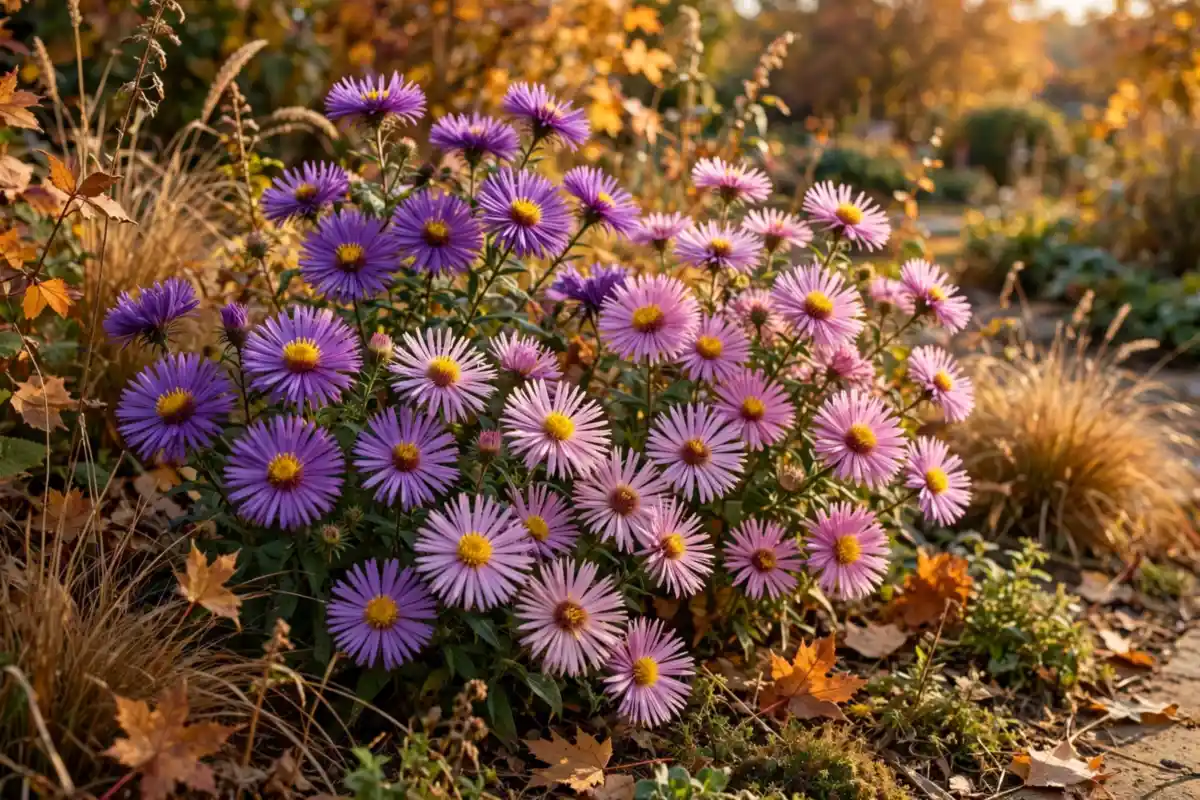
Aster Flower: Types, Meaning, Symbolism and How to Grow Asters
An aster does not shout for attention in spring, when the garden is full of tulips and daffodils. It waits. Then, in late summer, just as most flowers are fading, it opens hundreds of small, star-shaped blooms in purple, pink, blue and white, and suddenly the whole border is alive again. The name says it plainly — aster is the Greek word for star — and a clump of asters in full flower really does look like a patch of fallen stars, each one with a bright yellow centre.
The aster flower is also the birth flower for September, a flower of love, wisdom, faith and patience, and one of the easiest perennials a gardener can grow: plant it in sun, give it room and air, and it comes back bigger every autumn for years. This guide covers the main types of aster flower, what each colour means, and how to grow them — including the one habit that catches new gardeners out, the way tall asters flop if they are never pinched back in early summer.
Quick Answer
An aster flower is a star-shaped, daisy-like bloom in the daisy family Asteraceae. The garden kinds are mostly North American perennials, now placed in the genus Symphyotrichum, plus the annual China aster, Callistephus chinensis. Asters flower in late summer and autumn, usually from August into October, in purple, pink, blue, white and red, with a yellow centre. Plant them in full sun and well-drained soil, in USDA zones 3 to 8 depending on the type, and they return every year. The aster is the September birth flower, shared with the morning glory. Garden asters are generally listed as non-toxic to dogs, cats and horses — the ASPCA lists the China aster as non-toxic — though eating any plant can still upset a pet’s stomach.
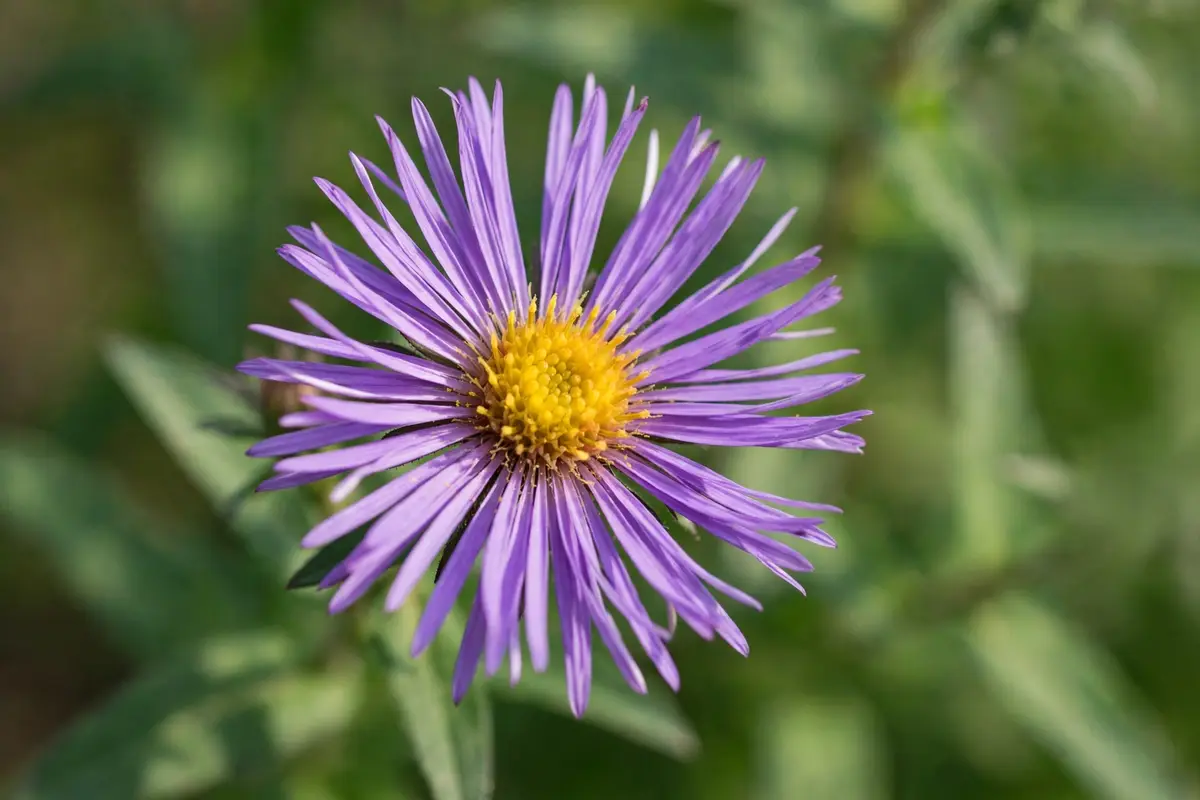
Table of Contents
- What Is an Aster Flower?
- Types of Aster and 6 Popular Varieties
- Aster Flower Meaning and Symbolism
- What Each Aster Colour Means
- How to Grow Asters
- Common Mistakes When Growing Asters
- Asters in Gardens, Cut Flowers and Bouquets
- Frequently Asked Questions
What Is an Aster Flower?
An aster belongs to the daisy family, Asteraceae, one of the largest plant families in the world, which it shares with the daisy, the sunflower, the chrysanthemum and the dahlia. The flower itself is a composite: what looks like one flower is really dozens of tiny florets packed together — the flat ray petals around the edge and the small disc florets in the yellow centre. Bees and butterflies work the centre for nectar, which is one reason asters matter so much in autumn, when little else is flowering. You can read more on the Aster genus page on Wikipedia.
The name aster has a complicated history, and it is worth knowing before you buy a plant. Botanists once put hundreds of species in the genus Aster, but DNA work in the 1990s moved most of the North American species into other genera, above all Symphyotrichum, which now holds more than a hundred species. The true genus Aster is now restricted to about 180 species native to Europe and Asia, such as the Italian aster, Aster amellus, and the alpine aster, Aster alpinus. Garden centres still sell them all as asters, and gardeners still call them asters, so this guide uses the familiar name and gives the current botanical name for each type.
The flower most people picture is a late-season perennial: a bushy plant, one to six feet tall depending on the type, covered from late summer into autumn with masses of small, daisy-like flowers, each one an inch or two across. The best-known kinds are the New England aster and the New York aster, the classic Michaelmas daisy of English gardens, named because it flowers around Michaelmas, the feast of St Michael on September 29. Around them sits a long list of wild cousins — the heath aster, the calico aster, the sky blue aster and the blue wood aster — and the China aster, an annual from China and Japan that is not a true aster at all, but is grown in gardens everywhere for its big, showy flowers.
Types of Aster and 6 Popular Varieties
Most garden asters are one of a few well-tried kinds, plus a handful of named cultivars bred for a compact habit or a stronger colour. The table below gives a quick way to tell them apart, and the profiles that follow explain where each one grows best. For the full list of flower names, see our flower names A to Z guide.
| Variety | Botanical name | Height | Best spot | Flower colour |
|---|---|---|---|---|
| New England aster | Symphyotrichum novae-angliae | 3–6 ft | Back of border, wildflower meadows | Purple, pink, rose |
| New York aster / Michaelmas daisy | Symphyotrichum novi-belgii | 1–4 ft | Mixed borders, cottage gardens | Lavender, blue, white, pink |
| China aster | Callistephus chinensis | 6–36 in | Beds, pots, cutting gardens | Almost every colour |
| Alpine aster | Aster alpinus | 6–12 in | Rock gardens, front of border | Purple, blue, white, pink |
| ‘Purple Dome’ New England aster | Symphyotrichum novae-angliae ‘Purple Dome’ | 18–24 in | Front of border, containers | Deep purple |
| ‘Alma Pötschke’ New England aster | Symphyotrichum novae-angliae ‘Alma Pötschke’ | 3–4 ft | Back of border, cutting beds | Hot pink |
1. New England Aster (Symphyotrichum novae-angliae)
The New England aster is the big, bold one of the family, and the one most often seen in wildflower meadows across eastern North America. It grows 3 to 6 feet tall, with hairy stems and masses of purple, pink or rose flowers, each about an inch and a half across, from August into October. It is a tough, long-lived perennial, hardy in zones 4 to 8, and it is one of the best late-season plants for pollinators — monarch butterflies fuel up on it before their autumn migration, and bees work it until the first frost. Give it the back of a sunny border, where its height can rise above lower plants, and pinch it back once in early summer so it branches and stays upright instead of flopping.
2. New York Aster / Michaelmas Daisy (Symphyotrichum novi-belgii)
The New York aster is the classic Michaelmas daisy, the plant English cottage gardens have grown for generations because it flowers around Michaelmas, on September 29. It grows 1 to 4 feet tall, with smooth stems and masses of smaller flowers in lavender, blue, white and pink, with yellow centres, from September into November in mild areas. It is hardy in zones 4 to 8 and suits a mixed border better than the taller New England kind, because it stays shorter and bushier. Most of the named Michaelmas daisies sold in garden centres — the dwarf kinds, the doubles, the deep blues — are cultivars of this species, bred for a neater habit and a longer display.
3. China Aster (Callistephus chinensis)
The China aster is the odd one out: an annual, not a perennial, and not a true aster at all, though it has been grown as one for centuries. It comes from China and Japan, grows 6 to 36 inches tall depending on the variety, and flowers from summer into autumn in almost every colour — white, pink, red, purple, blue and yellow — with single, double and pompom flower forms. Because it is an annual, it is grown fresh from seed each spring, and it is the aster most often sold by florists and grown in cutting gardens, since the long, straight stems and big flowers last well in a vase. The ASPCA lists the China aster as non-toxic to dogs, cats and horses, which makes it a safe choice for a garden where pets roam.
4. Alpine Aster (Aster alpinus)
The alpine aster is the small, early one of the family, and the easiest to place in a small garden. It grows only 6 to 12 inches tall, forming a low mound of green leaves, and it flowers in late spring and early summer — months before the tall asters — with single, daisy-like flowers in purple, blue, white or pink, each about 2 inches across. It is a true Aster, native to the mountains of Europe and Asia, and it is hardy in zones 5 to 7. Plant it at the front of a border, in a rock garden, or in a trough or pot, where its low habit can be seen properly, and give it the same full sun and sharp drainage the tall kinds want.
5. ‘Purple Dome’ New England Aster
‘Purple Dome’ is the New England aster for gardeners who love the colour but not the height. It grows only 18 to 24 inches tall, forming a neat, dome-shaped mound — the shape that gave it its name — and in September and October it is covered in deep purple flowers with golden centres. It is hardy in zones 4 to 8, needs no staking, and it suits the front of a border, the edge of a path, or a large container, where the tall New England kinds would look out of place. Plant it in groups of three or five for a solid block of purple in autumn, when most of the border has gone over.
6. ‘Alma Pötschke’ New England Aster
‘Alma Pötschke’ is one of the most loved New England aster cultivars, and it shows why the species is so popular. It grows 3 to 4 feet tall, with strong, upright stems carrying masses of hot pink, almost cerise flowers with yellow centres, from September into October. The colour is stronger and clearer than the wild purple, and it holds well in sun without fading. Grow it at the back of a sunny border, pinch it back once in early summer to keep it bushy, and cut a few stems for the vase — it is one of the best pink asters for cutting, and the flowers last a week or more in water.
Aster Flower Meaning and Symbolism
No flower is named more plainly for what it looks like than the aster. The Greek word aster means star, and the flower’s shape — a ring of narrow petals around a bright centre — really does look like a small star. In Greek legend, the aster was born from the tears of the goddess Astraea, who wept as she looked down on a world without stars, and where her tears fell, asters grew. It is a story rather than history, but it is the reason the aster has been linked ever since with the heavens, with hope, and with love that endures.
In the modern language of flowers, the aster stands for love, patience, wisdom and faith, with elegance and daintiness added in many lists. The patience comes from the timing: the aster waits until late summer to flower, when other flowers have finished, and its message is that good things are worth waiting for. In Chinese tradition it stands for fidelity, devotion and wisdom, and in China it is known as a symbol of good luck and fortune. The aster is also the September birth flower, shared with the morning glory, and it is the flower given for a 20th wedding anniversary. Given to someone born in September, or to a friend who has waited patiently for something, it says something no early flower says as clearly: I have not forgotten you.
The Victorian language of flowers gave the aster a quieter, sadder meaning as well. Kate Greenaway’s Language of Flowers of 1884 lists the China aster as “variety” and “afterthought”, and the Michaelmas daisy as “afterthought” and “farewell” — the flower for something remembered after it has passed, or for a goodbye said gently. That is the other side of the aster’s late season: it flowers as the year turns, and it has always been a flower for endings as well as for beginnings. A bunch of asters at a farewell, or on a grave in autumn, carries that meaning without needing any words at all.
What Each Aster Colour Means
Purple is the colour most people think of first, and it carries the aster’s deepest meaning: wisdom, royalty, dignity and admiration. Purple asters are the ones given to someone you respect, and they are the colour most often chosen for a September birthday. Pink asters mean love, affection and innocence — the sort you give a close friend, a sister or a sweetheart — and they look best in mixed autumn borders, where their warm colour softens the golds and russets around them.
White asters mean purity, innocence and sympathy, and they are the colour most often chosen for memorials and quiet corners, and in Christian tradition they are linked with the Virgin Mary. Blue asters mean trust, faithfulness and loyalty, and they are the colour to give a friend whose word you trust. Red asters mean unwavering devotion and intense love, and they are the strongest, most passionate colour in the family. A mixed planting of several colours reads as a whole message — love, wisdom, faith and patience together — and it is the easiest way to grow them, since mixed seed and mixed plants are cheaper than separate colours. If you want more ideas for cool-coloured garden flowers, see our blue flowers guide, and if you are choosing by birth month, the aster is one of the two flowers in our September birth flower guide.
How to Grow Asters
Asters are easy plants if you plant them in the right place and give them sun and air. The whole method fits in a few steps, and the perennials will handle the rest themselves for years. Gardeners on r/gardening on Reddit often recommend them as one of the simplest autumn flowers, and that reputation is earned — as long as you remember to pinch them back and to leave room between the plants.
When to Plant
Plant perennial asters in spring or early autumn, so the roots have time to settle before the plant has to flower or face winter. Spring planting is safest in cold climates, while autumn planting works well in mild areas, where the soil is still warm. China asters, being annuals, are sown indoors in late winter or early spring, about six to eight weeks before the last frost, and planted out after the frost has passed. Potted asters bought in flower in autumn can go straight into the ground, but water them well for the first few weeks, since a plant in full flower is thirsty.
Planting Depth and Spacing
Plant perennial asters at the same depth they were growing in the pot, and space them 12 to 18 inches apart for the smaller kinds and 2 to 3 feet apart for the tall New England kinds. The spacing matters more than it looks: asters packed tightly together get powdery mildew, the white coating on the leaves that is the commonest aster problem, while plants with air moving around them stay healthy. In heavy clay soil, plant on a slight mound and mix in compost and grit so water drains away from the crown, because asters sitting in wet soil will rot before they flower.
Light and Soil
Give asters full sun — at least six hours a day — and soil that drains freely and is rich in compost or well-rotted manure. They will take light shade, but they grow taller and weaker there and flower less, so a sunny, open spot is worth finding. The soil should be slightly acidic to neutral, roughly pH 6.0 to 7.0, and a mulch of compost in spring helps on both counts: it feeds the plants and keeps the soil moist. The alpine aster is the exception on soil: it wants the sharp drainage of a rock garden, and it sulks in rich, wet ground.
Watering and Feeding
Water during dry spells, especially while the flower buds are forming in late summer, and keep the soil evenly moist rather than soaking it and then letting it dry out. Water at the base of the plant, not over the leaves, since wet leaves invite powdery mildew. Feed lightly: a handful of balanced fertiliser or a liquid feed in spring is enough. Too much nitrogen produces soft, leafy plants with few flowers, and it makes the tall kinds more likely to flop. Good air circulation helps too: do not crowd them, and thin out weak shoots in spring so the leaves dry after rain.
Pinching and Staking
This is the step that decides whether a tall aster looks splendid or ends up lying on the ground. Pinch the growing tips back by a third in late spring or early summer, when the plant is about 12 inches high, and again in early July if it is still growing fast. Pinching makes the plant branch, so it grows bushy instead of tall and leggy, and it produces far more flowers. Stop pinching by mid-July, or you will cut off the flower buds. The tall New England kinds may still need a stake or a ring of string around the clump, put in place before the plant is in full flower. The dwarf kinds, like ‘Purple Dome’, need no staking at all.
After Flowering and Dividing
After flowering, leave the stems standing through winter if you can: they shelter insects, and the seed heads feed birds. Cut the whole plant back to the ground in late winter or early spring, before the new shoots appear. Every two to three years, in spring, dig up the clump and divide it, keeping only the young, vigorous shoots from the outside of the clump and throwing away the old, woody centre. Replant the divisions 18 inches apart in fresh, compost-rich soil. Divided asters flower far better than old, crowded clumps, and dividing is also the easiest way to get new plants for free.
Common Mistakes When Growing Asters
The first mistake is planting asters too close together. A border packed with asters looks full in spring, but by late summer the leaves are coated in powdery mildew and the plants are struggling for air. Space them properly and thin them in spring. The second mistake is never pinching the tall kinds back. An unpinched New England aster grows six feet tall, flowers only at the top, and flops at the first rain, so pinch once in early summer and stake if needed.
The third mistake is watering over the leaves, especially in the evening. Wet leaves that stay damp overnight are an open invitation to mildew, so water at the base and water in the morning. The fourth mistake is letting the soil dry out in late summer, just when the buds are forming. A thirsty aster drops its buds and flowers poorly, so water in dry spells. The fifth mistake is leaving the same clump in the same spot for years without dividing it. The centre dies out, the flowering shrinks to a thin ring, and the plant looks tired — divide it every two or three years. Finally, do not plant asters in deep shade: they will grow tall and weak, flower little, and get mildew, so find them a sunny spot.
Asters in Gardens, Cut Flowers and Bouquets
In the garden, asters are at their best at the back or middle of a sunny border, where their autumn colour can rise above the fading summer flowers, or in a wildflower meadow, where the New England aster belongs among grasses and goldenrod. Plant them in groups of three or more of one colour for a strong block of colour, rather than dotting single plants around the garden, where they look lost. They also suit a sunny wall or fence, which shelters them from wind, and they pair well with other autumn flowers — the fall flowers guide, for example, covers the other plants that flower alongside asters in autumn. And if you are choosing flowers by letter for an autumn display, you will find the aster in our flowers that start with A guide.
As a cut flower, the aster is one of the longest-lasting and most useful stems a gardener can grow. Cut the stems in the morning, when about half the flowers on a stem are open, and stand them in deep water straight away. Remove the bottom leaves, recut the stem under water, and change the water every two days; the flowers will last a week to ten days in a vase. In bouquets, asters are used as a filler and a mass flower, with roses, lilies or dahlias as the round flowers around them, and the China aster, with its big, double flowers, is grown specially for the florist trade. For a September birthday bouquet, a bunch of purple asters with white China asters is the classic choice — the birth flower, in the birth month, in the colours that mean wisdom and purity.
Frequently Asked Questions
Are asters perennial?
Most garden asters are perennial and return every year, including the New England aster, the New York aster and the alpine aster, which are hardy in zones 3 to 8 depending on the type. The China aster is the exception: it is an annual, grown fresh from seed each spring, and it dies with the first frost. Even the perennials benefit from being divided every two to three years, since old clumps flower less well than young divisions.
When do asters bloom?
Most asters bloom in late summer and autumn, usually from August into October, with the New York aster flowering into November in mild areas. The alpine aster is the exception: it flowers in late spring and early summer. Deadheading the spent flowers can stretch the display by a few weeks, but the main flush is always in autumn, which is why the aster is the September birth flower.
Are asters toxic to dogs and cats?
Garden asters are generally listed as non-toxic to pets. The ASPCA lists the China aster (Callistephus chinensis) as non-toxic to dogs, cats and horses, and garden asters are listed the same way in the Old Farmer’s Almanac growing guide. That said, eating any plant can cause mild stomach upset in a pet, so it is still best to keep pets from chewing the plants, and to call a vet if a pet seems unwell after eating one.
Is aster the September birth flower?
Yes. The aster is the traditional September birth flower, shared with the morning glory. It was chosen for the month because it flowers in early autumn and because its meanings — love, wisdom, faith and patience — suit the season. It is also the flower for a 20th wedding anniversary, and the Michaelmas daisy, the New York aster, is named for Michaelmas on September 29.
Why do my asters get powdery mildew?
Almost always because the plants are too close together, the leaves stay wet, or the air cannot move around them. Space asters 12 to 18 inches apart, water at the base in the morning rather than over the leaves, and thin out weak shoots in spring so air can circulate. Plants in full sun with good airflow rarely get mildew, while plants in shade and crowded beds almost always do — and you can read more in the questions about the aster flower on Quora.
Do asters need full sun?
Yes, for the best flowering. Asters need at least six hours of direct sun a day, and they flower most heavily in full sun with well-drained soil. They will survive in light shade, but they grow taller and weaker there, flower less, and are far more likely to get powdery mildew. The alpine aster is the only kind that tolerates a little shade happily, and even it flowers best in sun.


One Comment