
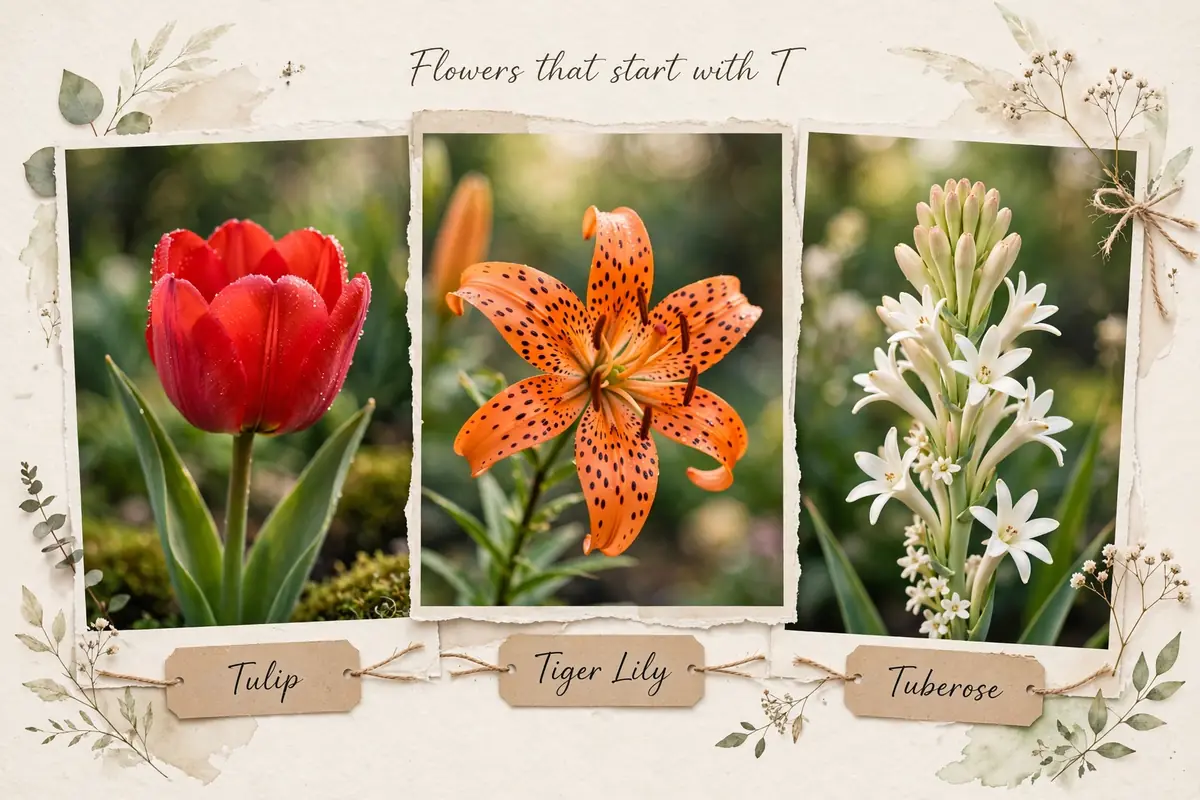
40 Flowers That Start With T: Names, Pictures & Growing Tips
Searching for flower names that start with T? You have landed in the right spot. Flowers beginning with T include some of the most treasured blooms in American gardens — from the tulips that define spring and the towering tiger lilies of midsummer to the fragrant tuberose of late summer and the torch-like spikes of Kniphofia. Whether you are planning a new border, choosing cut flowers, or working on an alphabet garden project, this guide covers 40 real flowers that start with T, each with a vivid description and practical growing advice.
Every entry below lists the flower’s scientific name, bloom season, sun needs, and USDA hardiness zone, so you can spot at a glance which T-flowers suit your yard. You will also find two handy comparison tables, practical growing tips, and answers to the questions gardeners ask most about flowers starting with T. Let’s get growing.
Quick Answer
Popular flowers that start with T include Tulip, Tiger Lily, Tuberose, Torch Lily, Tickseed (Coreopsis), Transvaal Daisy, Texas Bluebonnet, Tree Peony, Tall Garden Phlox, and Trumpet Creeper. They span spring bulbs, summer perennials, native wildflowers, and tender tropicals across USDA zones 2–12, so there is a T-flower for nearly every US garden.
Table of Contents
T-Flowers at a Glance
Use this table to compare all 40 flowers that start with T side by side, from botanical names to native regions.
| Flower name | Scientific name | Type | Color | Native region |
|---|---|---|---|---|
| Tulip | Tulipa spp. | Spring bulb | Red, pink, yellow, orange, purple, white | Central Asia, Turkey |
| Tiger Lily | Lilium lancifolium | Bulbous perennial | Orange with dark spots | East Asia |
| Tuberose | Polianthes tuberosa | Tender bulbous perennial | White | Mexico |
| Torch Lily | Kniphofia uvaria | Herbaceous perennial | Orange-red and yellow | South Africa |
| Tickseed | Coreopsis spp. | Herbaceous perennial | Yellow, pink, red | North America |
| Transvaal Daisy | Gerbera jamesonii | Tender perennial | Red, pink, orange, yellow, white | South Africa |
| Black-Eyed Susan Vine | Thunbergia alata | Tender vine | Orange, yellow, white with dark eye | East Africa |
| Wishbone Flower | Torenia fournieri | Annual | Purple, blue, pink, yellow | Indochina |
| Mexican Sunflower | Tithonia rotundifolia | Annual | Orange-red, yellow | Mexico, Central America |
| Globeflower | Trollius europaeus | Herbaceous perennial | Yellow | Europe, Western Asia |
| Trillium | Trillium grandiflorum | Woodland perennial | White aging to pink | Eastern North America |
| Foamflower | Tiarella cordifolia | Woodland perennial | White, pink | Eastern North America |
| Twinflower | Linnaea borealis | Evergreen groundcover | Pink | Northern forests, circumboreal |
| Teasel | Dipsacus fullonum | Biennial | Lavender-purple | Europe, Asia |
| Tatarian Aster | Aster tataricus | Herbaceous perennial | Lavender-blue, purple | East Asia |
| Turkish Speedwell | Veronica liwanensis | Evergreen groundcover | Cobalt blue | Turkey |
| Threadleaf Coreopsis | Coreopsis verticillata | Herbaceous perennial | Yellow | Eastern North America |
| Texas Bluebonnet | Lupinus texensis | Annual wildflower | Blue with white tip | Texas |
| Toad Lily | Tricyrtis hirta | Woodland perennial | White with purple spots | Japan |
| Tree Peony | Paeonia suffruticosa | Deciduous shrub | Pink, red, white, yellow | China |
| Tuberous Begonia | Begonia × tuberhybrida | Tender tuberous perennial | Red, pink, orange, yellow, white | Hybrid (South American parentage) |
| Trailing Lantana | Lantana montevidensis | Tender trailing perennial | Purple, lavender, white | South America |
| Princess Flower | Tibouchina urvilleana | Tender evergreen shrub | Royal purple | Brazil |
| Tamarisk | Tamarix ramosissima | Deciduous shrub or small tree | Pink | Europe, Asia |
| Tansy | Tanacetum vulgare | Herbaceous perennial | Yellow buttons | Europe, Asia |
| Turtlehead | Chelone lyonii | Herbaceous perennial | Pink, rose | Southeastern US |
| Tall Garden Phlox | Phlox paniculata | Herbaceous perennial | Pink, purple, white, red | Eastern North America |
| Tall Verbena | Verbena bonariensis | Tender perennial | Purple-violet | South America |
| Tassel Flower | Amaranthus caudatus | Annual | Crimson-red | Andes, South America |
| Trumpet Creeper | Campsis radicans | Deciduous vine | Orange-red | Southeastern US |
| Trumpet Honeysuckle | Lonicera sempervirens | Semi-evergreen vine | Coral-red, yellow | Eastern North America |
| Texas Star | Lindheimera texana | Annual wildflower | Yellow | Texas, Oklahoma |
| Tidy Tips | Layia platyglossa | Annual wildflower | Yellow with white tips | California |
| Thistle | Cirsium spp. | Biennial or perennial | Purple, pink | North America, Eurasia |
| Tea Rose | Rosa × odorata | Deciduous rose shrub | Pink, white, yellow | Hybrid (Chinese ancestry) |
| Trumpet Vine | Campsis spp. | Deciduous vine | Orange, red, yellow | Americas, East Asia |
| Turkish Cap | Malvaviscus arboreus | Tender shrub | Red | Mexico, Central America |
| Thrift | Armeria maritima | Evergreen perennial | Pink, white, rose | Coastal Europe, North America |
| Tuberose ‘Pearl’ | Polianthes tuberosa ‘The Pearl’ | Tender bulbous perennial | White, double | Cultivar (Mexican origin) |
| Tulip ‘Apeldoorn’ | Tulipa ‘Apeldoorn’ | Spring bulb (Darwin hybrid) | Red with yellow base | Cultivar (Netherlands) |
Bloom Season, Sun Needs & Hardiness Zones
Planning your garden calendar? This second table shows when each T-flower blooms, how much sun it wants, and the USDA zones where it grows outdoors year-round.
| Flower name | Bloom season | Sun needs | Hardiness zone |
|---|---|---|---|
| Tulip | Spring | Full sun | 3–8 |
| Tiger Lily | Midsummer | Full sun to part shade | 4–9 |
| Tuberose | Late summer to fall | Full sun | 8–11; lift bulbs elsewhere |
| Torch Lily | Summer to fall | Full sun | 6–9 |
| Tickseed | Summer | Full sun | 4–9 |
| Transvaal Daisy | Spring to fall | Full sun | 8–11; annual elsewhere |
| Black-Eyed Susan Vine | Summer to frost | Full sun | 9–11; annual elsewhere |
| Wishbone Flower | Summer to frost | Part shade | Annual |
| Mexican Sunflower | Summer to frost | Full sun | Annual |
| Globeflower | Late spring | Full sun to part shade | 3–7 |
| Trillium | Spring | Part to full shade | 4–8 |
| Foamflower | Spring | Part to full shade | 3–8 |
| Twinflower | Early summer | Part shade | 2–6 |
| Teasel | Midsummer | Full sun | 3–8 |
| Tatarian Aster | Fall | Full sun | 3–9 |
| Turkish Speedwell | Late spring | Full sun to part shade | 5–8 |
| Threadleaf Coreopsis | Summer | Full sun | 3–9 |
| Texas Bluebonnet | Spring | Full sun | Annual; reseeds |
| Toad Lily | Late summer to fall | Part to full shade | 4–9 |
| Tree Peony | Late spring | Full sun to part shade | 4–8 |
| Tuberous Begonia | Summer to frost | Part shade | 9–11; lift tubers elsewhere |
| Trailing Lantana | Summer to frost | Full sun | 9–11; annual elsewhere |
| Princess Flower | Summer to fall | Full sun to part shade | 9–11 |
| Tamarisk | Summer | Full sun | 2–8 |
| Tansy | Midsummer | Full sun | 3–8 |
| Turtlehead | Late summer to fall | Part shade | 3–8 |
| Tall Garden Phlox | Summer | Full sun | 4–8 |
| Tall Verbena | Summer to frost | Full sun | 7–11; annual elsewhere |
| Tassel Flower | Summer to frost | Full sun | Annual |
| Trumpet Creeper | Summer | Full sun | 4–9 |
| Trumpet Honeysuckle | Late spring to fall | Full sun to part shade | 4–9 |
| Texas Star | Spring | Full sun | Annual; reseeds |
| Tidy Tips | Spring | Full sun | Annual |
| Thistle | Summer | Full sun | 3–9 |
| Tea Rose | Summer to fall (repeat) | Full sun | 6–10 |
| Trumpet Vine | Summer | Full sun | 5–9 |
| Turkish Cap | Summer to fall | Full sun to part shade | 8–11 |
| Thrift | Late spring to early summer | Full sun | 4–8 |
| Tuberose ‘Pearl’ | Late summer to fall | Full sun | 8–11; lift bulbs elsewhere |
| Tulip ‘Apeldoorn’ | Mid-spring | Full sun | 3–8 |
40 Flowers That Start With T: The Complete List
Here they are — 40 beautiful, real flowers beginning with T, each with growing notes so you can pick the right ones for your garden.
1. Tulip (Tulipa spp.)
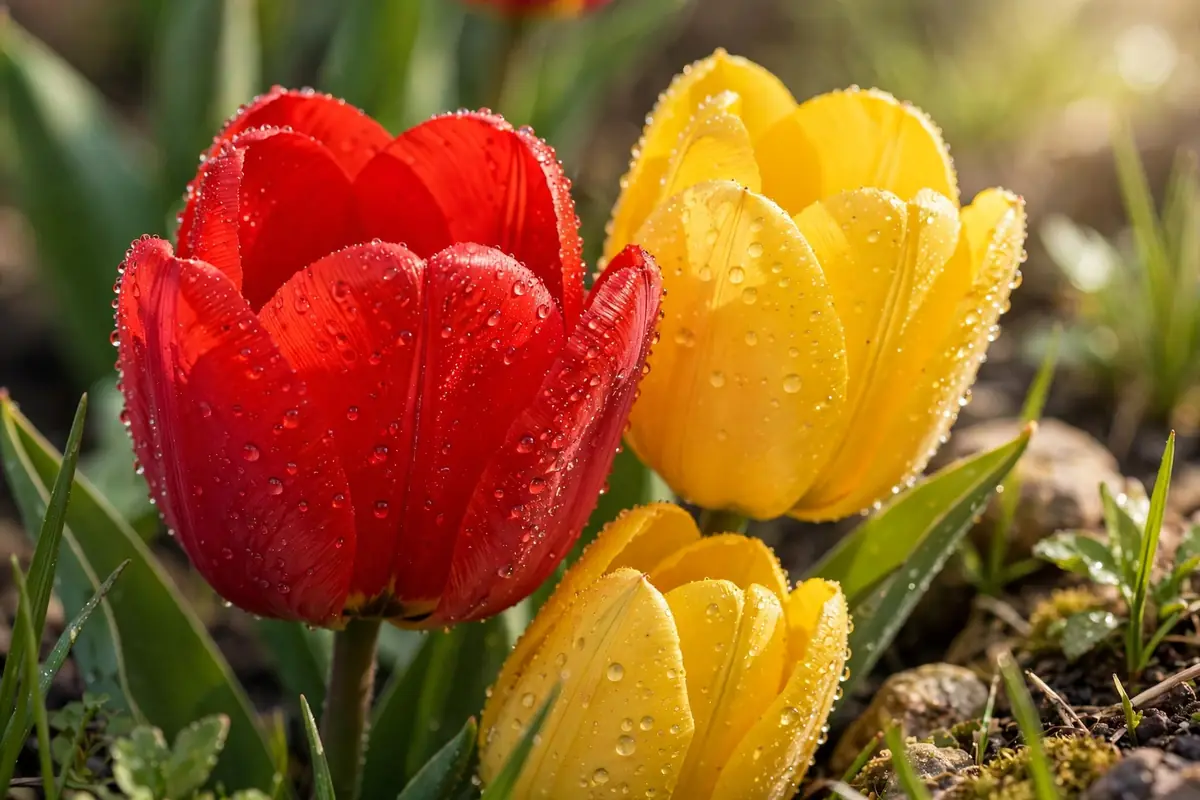
Tulips are the undisputed heralds of spring, with cup-shaped blooms in virtually every color imaginable across thousands of cultivars — from single earlies and Darwin hybrids to fringed, parrot, and lily-flowered forms. Plant bulbs in fall, 6 inches deep, in full sun and well-drained soil. Most hybrid tulips bloom best their first year; species tulips and Darwin hybrids like ‘Apeldoorn’ are the most reliable repeaters. Deer find them delicious, so protect plantings if deer visit your yard.
Bloom: Spring | Sun: Full sun | Zone: 3–8 | Best for: Spring borders, cutting, naturalizing
2. Tiger Lily (Lilium lancifolium)
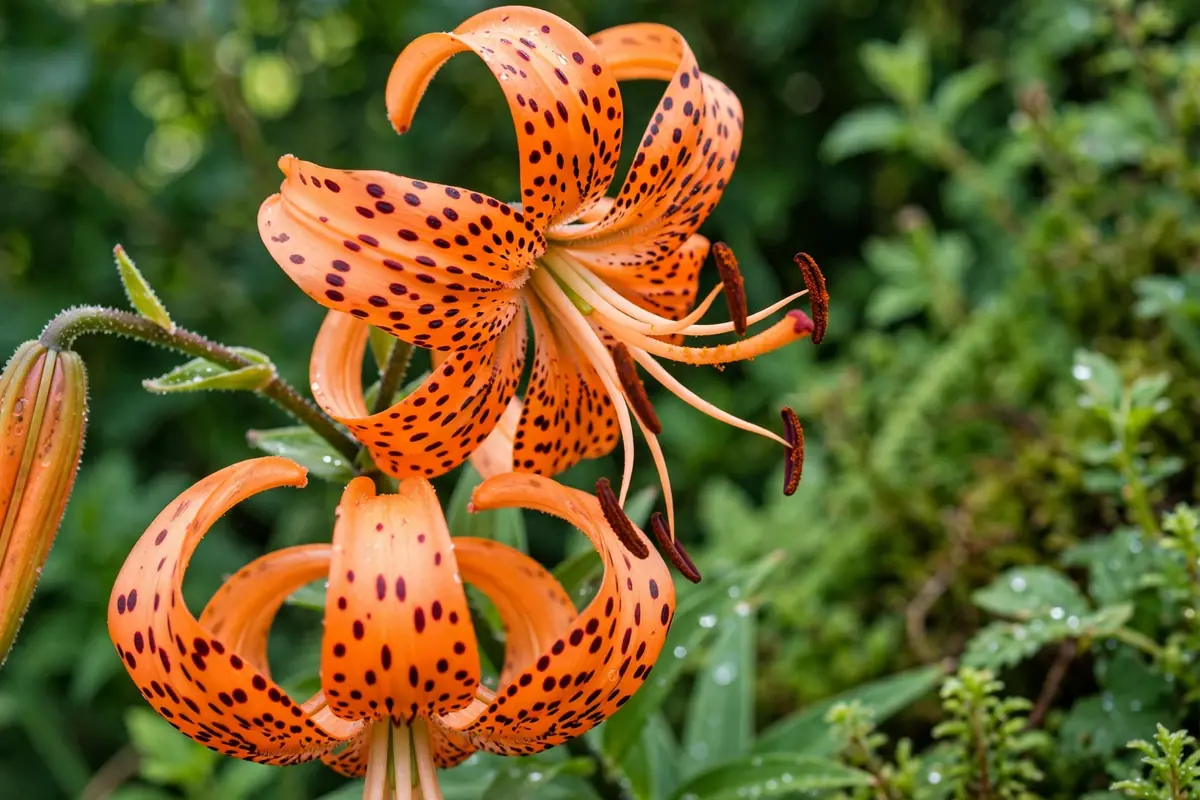
Tiger lily is midsummer drama incarnate — 3- to 4-foot stems topped with recurved orange blooms splashed with dark maroon spots, like a sunset you can plant. It multiplies freely from bulbils that form in the leaf axils, eventually creating impressive colonies. Give it full sun to part shade and average, well-drained soil. Note: it can carry lily mosaic virus without symptoms, so plant it away from prized hybrid lilies, and keep all lilies away from cats — they are highly toxic to them.
Bloom: Midsummer | Sun: Full sun to part shade | Zone: 4–9 | Best for: Bold summer color, cottage gardens
3. Tuberose (Polianthes tuberosa)
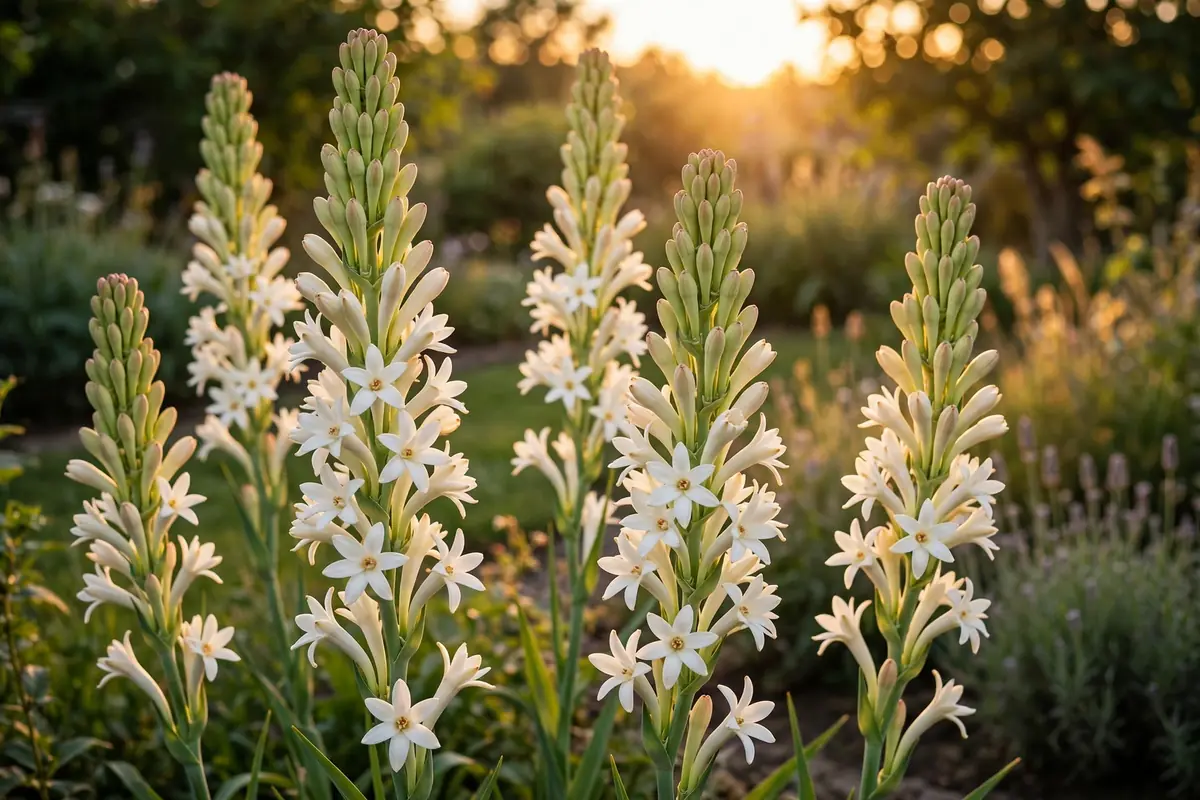
Tuberose is grown as much for perfume as for looks — its tall spikes of waxy white flowers release one of the most intoxicating fragrances in the plant world, strongest in the evening. Native to Mexico, it is a staple of perfumery and wedding bouquets. Plant bulbs in spring after the soil warms, in full sun and rich, well-drained soil. In zones below 8, lift the bulbs in fall and store them dry and frost-free over winter.
Bloom: Late summer to fall | Sun: Full sun | Zone: 8–11; lift bulbs elsewhere | Best for: Fragrance gardens, evening patios, cut flowers
4. Torch Lily (Kniphofia uvaria)
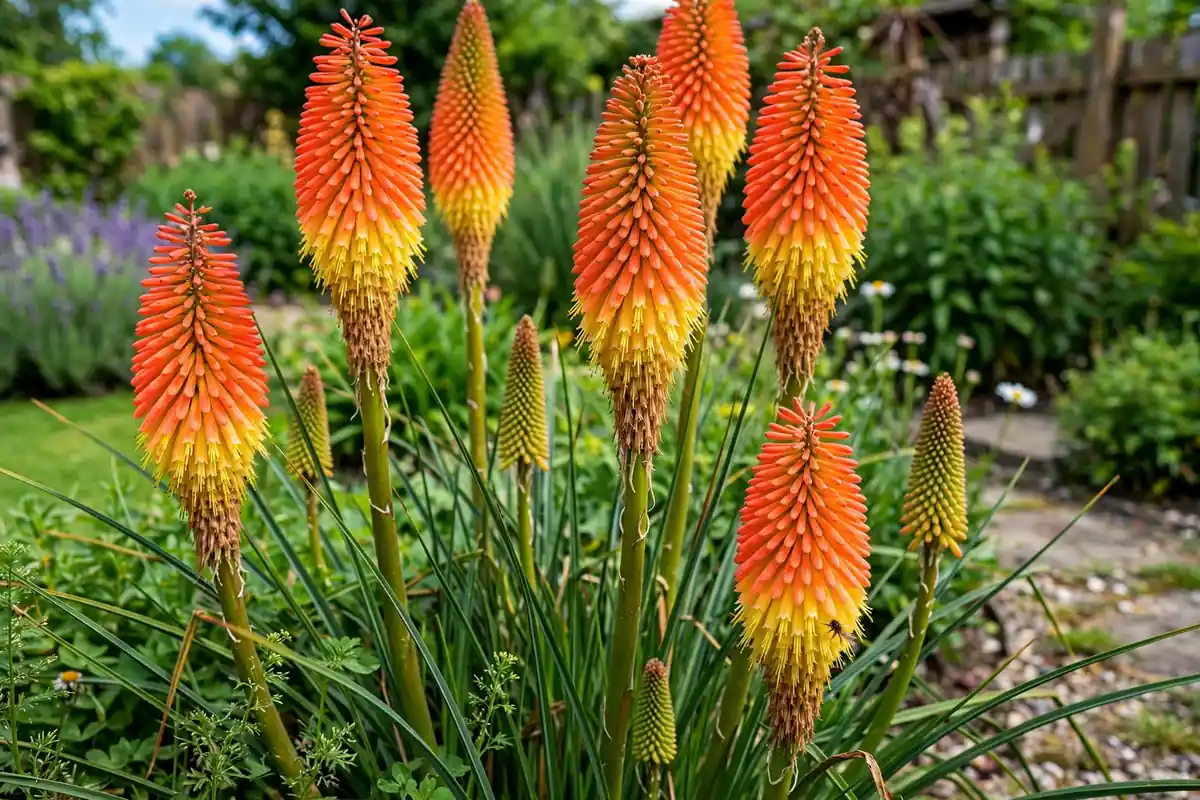
Torch lily, also called red hot poker, sends up 3- to 4-foot poker spikes of tubular flowers that open yellow at the bottom and flame orange-red at the top — a built-in gradient. Grass-like evergreen foliage looks good even out of bloom. It wants full sun, well-drained soil, and good drainage in winter; wet crowns rot. Leave the foliage over winter for protection and tidy it in spring. Newer compact cultivars fit smaller gardens.
Bloom: Summer to fall | Sun: Full sun | Zone: 6–9 | Best for: Architectural accents, hot-colored borders
5. Tickseed (Coreopsis spp.)
Tickseed is one of America’s most generous native wildflowers — clouds of sunny yellow daisies on wiry stems from early summer into fall, beloved by butterflies and goldfinches. Lanceleaf and large-flowered tickseed are the garden workhorses, thriving in full sun and poor soil where fussy plants fail. Deadhead for continuous bloom, and let some seed heads stand for birds. Modern pink and red cultivars like ‘Mercury Rising’ add new colors to the palette.
Bloom: Summer | Sun: Full sun | Zone: 4–9 | Best for: Native gardens, pollinators, low-maintenance color
6. Transvaal Daisy (Gerbera jamesonii)
Transvaal daisy is the florist’s gerbera daisy — bold, 4- to 5-inch blooms in saturated reds, pinks, oranges, and yellows on 18-inch stems. In the garden it is a tender perennial for zones 8–11, grown as an annual or container plant elsewhere. It demands full sun, excellent drainage, and careful watering — keep water off the crown to prevent rot. For longest bloom, deadhead spent flowers promptly and feed lightly.
Bloom: Spring to fall | Sun: Full sun | Zone: 8–11; annual elsewhere | Best for: Cut flowers, bold container color
7. Black-Eyed Susan Vine (Thunbergia alata)
Despite the name, this cheerful climber is no relation to the coneflower — it is a fast-growing African vine with 1- to 2-inch orange, yellow, or white blooms, each with a distinctive dark chocolate “eye.” It scrambles 6–8 feet up trellises, fences, and hanging baskets in a single season from seed. Give it full sun and regular water. In frost-free zones it can become aggressive, so check local invasiveness before planting in the ground.
Bloom: Summer to frost | Sun: Full sun | Zone: 9–11; annual elsewhere | Best for: Trellises, hanging baskets, quick screens
8. Wishbone Flower (Torenia fournieri)
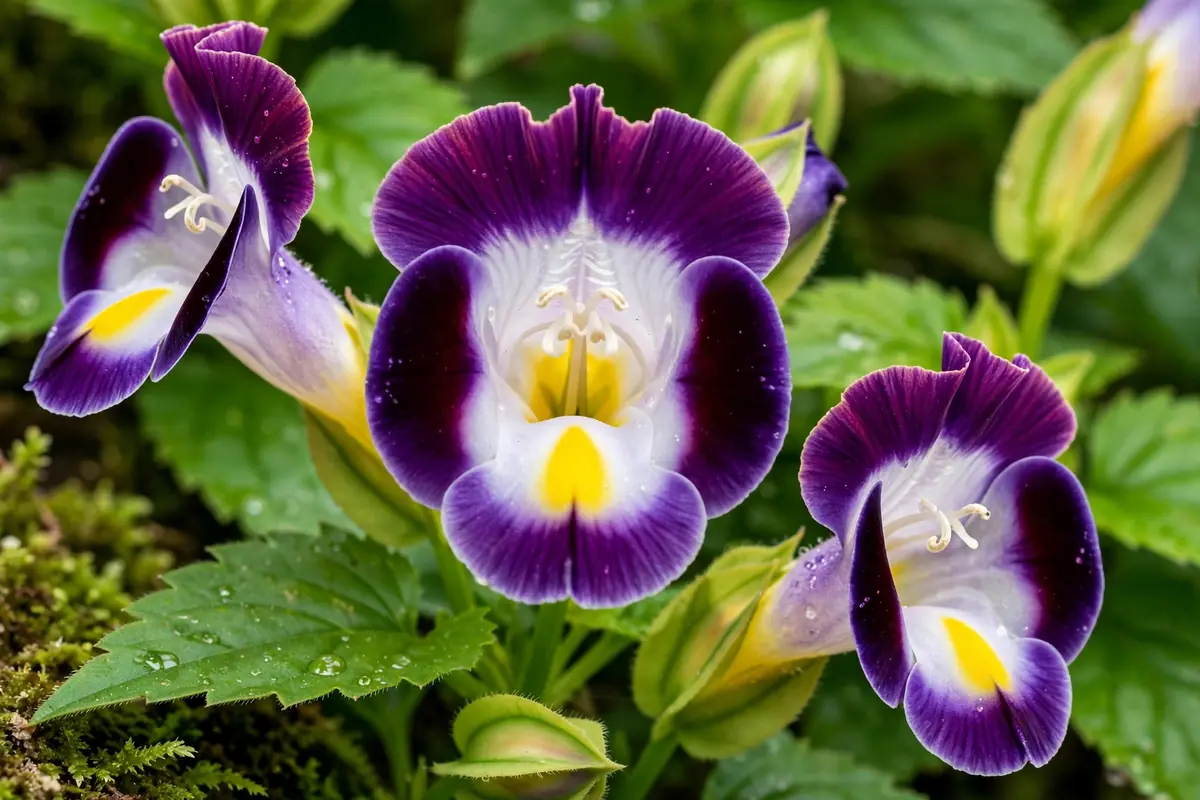
Wishbone flower is a shade gardener’s secret weapon — one of the few annuals that blooms prolifically in part shade, producing trumpet-shaped purple, blue, or pink blooms with yellow throats all summer. Look closely inside each flower for the wishbone-shaped stamens that give it its name. It loves heat, humidity, and consistently moist soil. Use it for edging, containers, and the front of shady borders where impatiens once ruled.
Bloom: Summer to frost | Sun: Part shade | Zone: Annual | Best for: Shade containers, edging, heat-proof color
9. Mexican Sunflower (Tithonia rotundifolia)
Mexican sunflower is a 4- to 6-foot annual powerhouse with velvety orange-red, 3-inch daisies that butterflies find irresistible — monarchs in particular flock to it. It thrives in poor soil and punishing heat, asking only for full sun. Direct-sow after the last frost; it resents transplanting. Stake in windy spots, and deadhead or let it self-sow for next year. ‘Torch’ is the classic tall variety; ‘Fiesta del Sol’ stays a compact 3 feet.
Bloom: Summer to frost | Sun: Full sun | Zone: Annual | Best for: Butterfly gardens, back-of-border drama
10. Globeflower (Trollius europaeus)
Globeflower is a European native with perfectly round, butter-yellow blooms that look like little lanterns on 2-foot stems in late spring. It is made for moist spots — stream banks, rain gardens, and the damp end of a border — where it sulks nowhere else. Give it full sun to part shade and soil that never fully dries. Divide established clumps in fall, and never let transplants dry out in their first season.
Bloom: Late spring | Sun: Full sun to part shade | Zone: 3–7 | Best for: Moist gardens, stream banks, unique shapes
11. Trillium (Trillium grandiflorum)
Great white trillium is the crown jewel of eastern woodlands — a single white, three-petaled bloom (aging to soft pink) held above a whorl of three leaves each spring. Everything about it comes in threes. It needs rich, humusy soil in part to full shade and must never be picked — removing the leaves starves the rhizome. Plants are slow from seed, so buy nursery-propagated stock and let colonies establish undisturbed for years of spring magic.
Bloom: Spring | Sun: Part to full shade | Zone: 4–8 | Best for: Woodland gardens, native shade
12. Foamflower (Tiarella cordifolia)
Foamflower earns its name in spring when airy spikes of tiny white or pink starry blooms rise like sea foam above heart-shaped, often burgundy-marked leaves. This eastern native thrives in the same moist shade as trillium and wild ginger. It spreads gently by runners into weed-suppressing colonies. Give it humus-rich soil and consistent moisture; modern hybrids with Heuchera (×Heucherella) offer bolder foliage but the species is hardier.
Bloom: Spring | Sun: Part to full shade | Zone: 3–8 | Best for: Shade groundcover, woodland edges
13. Twinflower (Linnaea borealis)
Twinflower is a delicate evergreen groundcover of northern forests, named for its paired, nodding pink bell flowers on Y-shaped stems in early summer — and for Carl Linnaeus, whose favorite flower it was. It forms fragrant, moss-like mats in cool, acidic, humus-rich shade. This is a plant for northern gardeners (zones 2–6); it sulks in heat. Never let it dry out, and plant it where you can appreciate its tiny, sweet-scented blooms up close.
Bloom: Early summer | Sun: Part shade | Zone: 2–6 | Best for: Northern shade gardens, botanical curiosities
14. Teasel (Dipsacus fullonum)
Teasel is grown for its architecture as much as its flowers — 4- to 6-foot spiny stems topped with egg-shaped heads ringed in lavender-purple florets in midsummer, maturing into sculptural brown cones beloved by goldfinches. This biennial self-sows freely where happy. Give it full sun and average soil; it tolerates drought once established. Leave the dried heads standing through winter for birds and striking frost-covered silhouettes.
Bloom: Midsummer | Sun: Full sun | Zone: 3–8 | Best for: Wildlife gardens, dried arrangements, winter structure
15. Tatarian Aster (Aster tataricus)
Tatarian aster is the giant of the aster world — 5- to 7-foot stems crowned with clouds of small lavender-blue daisies in fall, after most perennials have quit. It is a back-of-the-border essential for late-season color, and butterflies mob it. Give it full sun and room to spread; it can be assertive in rich soil. Cut back by half in early summer to keep plants stockier, and divide every few years to maintain vigor.
Bloom: Fall | Sun: Full sun | Zone: 3–9 | Best for: Fall color, late pollinators, tall backdrops
16. Turkish Speedwell (Veronica liwanensis)
Turkish speedwell is a tough evergreen groundcover that carpets itself in intense cobalt-blue flowers in late spring. Just 1–2 inches tall, it shrugs off foot traffic, drought, and poor soil once established — a superb lawn substitute for sunny spots and a perfect spiller between stepping stones. It wants full sun to part shade and sharp drainage; wet winter soil is its main enemy. Shear lightly after bloom to keep it dense.
Bloom: Late spring | Sun: Full sun to part shade | Zone: 5–8 | Best for: Groundcover, rock gardens, between pavers
17. Threadleaf Coreopsis (Coreopsis verticillata)
Threadleaf coreopsis pairs the sunny yellow daisies of its genus with clouds of fine, needle-like foliage that looks soft as fennel fronds. Cultivars like ‘Moonbeam’ (pale yellow) and ‘Zagreb’ (golden) bloom for months if deadheaded. It is more refined and longer-lived than many coreopsis, thriving in full sun and lean soil. Divide every 2–3 years in spring to keep clumps vigorous and floriferous.
Bloom: Summer | Sun: Full sun | Zone: 3–9 | Best for: Fine-textured borders, long summer color
18. Texas Bluebonnet (Lupinus texensis)
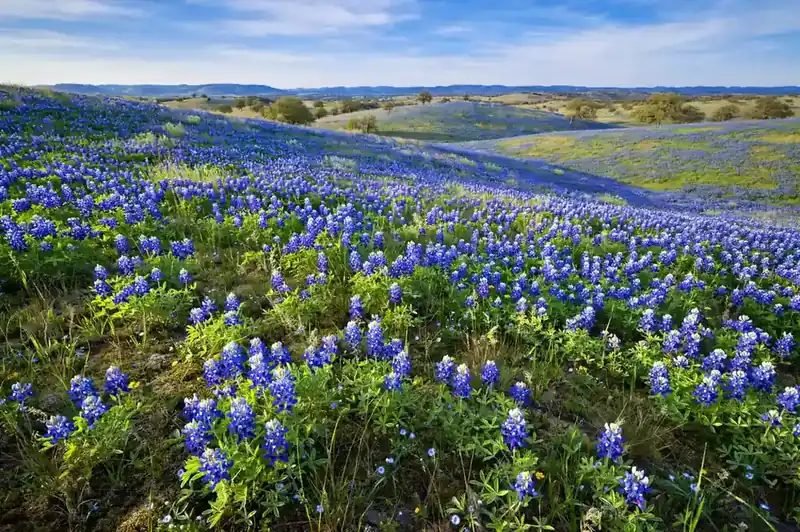
Texas bluebonnet is the state flower of Texas and the star of its legendary spring wildflower displays — dense spikes of blue pea-flowers tipped in white (with pink and white forms also available). Sow seed in fall in full sun and poor, undisturbed soil; bluebonnets need winter cold to germinate and bloom. They fix their own nitrogen, so never fertilize. Let seed pods ripen and scatter for next year’s show.
Bloom: Spring | Sun: Full sun | Zone: Annual; reseeds | Best for: Wildflower meadows, Texas natives, spring spectacle
19. Toad Lily (Tricyrtis hirta)
Toad lily is the orchid of the shade garden — exotic-looking white flowers heavily spotted with purple bloom in late summer and fall, exactly when shady borders need them most. This Japanese native wants part to full shade and consistently moist, humus-rich soil. Slugs can be an issue; protect young plants. Once established, it forms graceful arching clumps 2–3 feet tall that return reliably every year.
Bloom: Late summer to fall | Sun: Part to full shade | Zone: 4–9 | Best for: Late shade color, exotic woodland accents
20. Tree Peony (Paeonia suffruticosa)
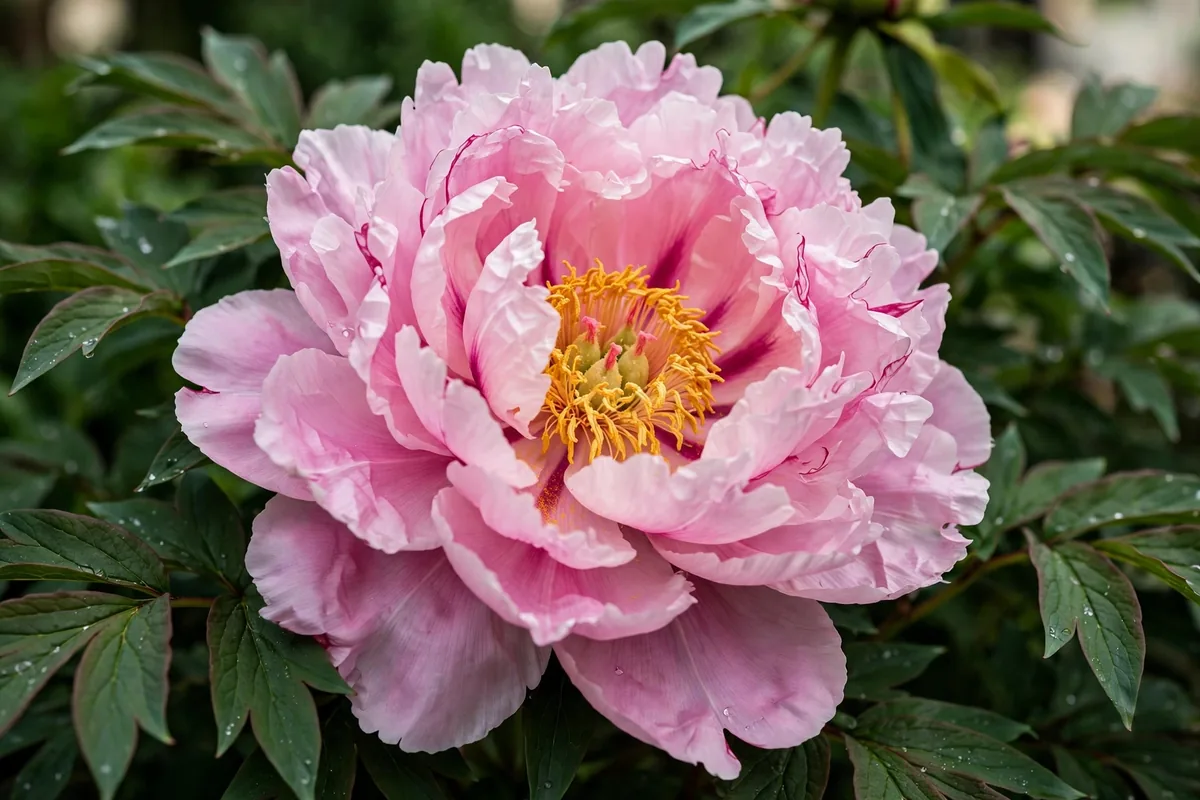
Tree peonies are the aristocrats of the spring garden — woody shrubs bearing dinner-plate blooms up to 10 inches wide in pink, red, white, and yellow, some with intoxicating fragrance. Unlike herbaceous peonies, the stems persist year-round. Plant grafted specimens deep (graft union 4–6 inches below soil) in fall, in sun to part shade. They are slow to establish but live for generations — a true heirloom plant.
Bloom: Late spring | Sun: Full sun to part shade | Zone: 4–8 | Best for: Specimen shrubs, heirloom gardens, huge spring blooms
21. Tuberous Begonia (Begonia × tuberhybrida)
Tuberous begonias produce some of the showiest shade blooms on earth — huge, camellia-like flowers in glowing reds, pinks, oranges, yellows, and whites on plants that thrive where sun-lovers fail. They grow from tubers started indoors in late winter and set out after frost in part shade and rich, well-drained soil. Keep them evenly moist and feed regularly. Lift tubers in fall and store dry and frost-free for next year.
Bloom: Summer to frost | Sun: Part shade | Zone: 9–11; lift tubers elsewhere | Best for: Shade containers, hanging baskets
22. Trailing Lantana (Lantana montevidensis)
Trailing lantana is a heat-proof spiller with clusters of small lavender-purple (or white) verbena-like flowers that bloom nonstop from summer to frost. Butterflies adore it, and it cascades beautifully from containers, walls, and hanging baskets. It wants full sun and sharp drainage — it sulks in soggy soil. Hardy only in zones 9–11, it is grown as an annual elsewhere; in frost-free areas, prune hard in spring to keep it tidy.
Bloom: Summer to frost | Sun: Full sun | Zone: 9–11; annual elsewhere | Best for: Hanging baskets, spilling over walls, hot spots
23. Princess Flower (Tibouchina urvilleana)
Princess flower flaunts enormous royal-purple blooms — 3–5 inches across — against velvety dark-green leaves from summer into fall. Few shrubs deliver such saturated color. It needs full sun to part shade, acidic soil, and frost-free winters (zones 9–11); elsewhere grow it in a large pot and overwinter indoors. Prune after flowering to shape, and feed regularly during the growing season for the biggest flower show.
Bloom: Summer to fall | Sun: Full sun to part shade | Zone: 9–11 | Best for: Tropical color, large containers, purple lovers
24. Tamarisk (Tamarix ramosissima)
Tamarisk is a feathery deciduous shrub or small tree that veils itself in clouds of tiny pink flowers in summer, with fine, juniper-like foliage that turns golden in fall. It is extraordinarily tough — tolerating drought, salt, alkaline soil, and wind — which is why it is planted (and sometimes invasive) across the arid West. Check local regulations before planting; where appropriate, it makes a fast, graceful screen. Prune in late winter to control size.
Bloom: Summer | Sun: Full sun | Zone: 2–8 | Best for: Tough sites, seaside gardens, fast screens
25. Tansy (Tanacetum vulgare)
Tansy is an old-fashioned herb with flat-topped clusters of golden-yellow button flowers and ferny, aromatic foliage that repels some garden insects — a traditional companion plant. It is extremely hardy and spreads vigorously by rhizomes, so give it room or contain it. Cut it back after bloom to prevent rampant self-seeding. Note: it is toxic if ingested in quantity, so keep it out of the herb garden’s edible section.
Bloom: Midsummer | Sun: Full sun | Zone: 3–8 | Best for: Cottage gardens, companion planting, dried flowers
26. Turtlehead (Chelone lyonii)
Turtlehead is named for its charming hooded pink blooms, which genuinely resemble tiny turtle heads lined up along 2- to 3-foot stems in late summer and fall. This southeastern native loves moist to wet soil — stream banks, rain gardens, and boggy spots where little else thrives. It is also a host plant for the Baltimore checkerspot butterfly. Give it part shade and never let it dry out.
Bloom: Late summer to fall | Sun: Part shade | Zone: 3–8 | Best for: Rain gardens, wet shade, late color
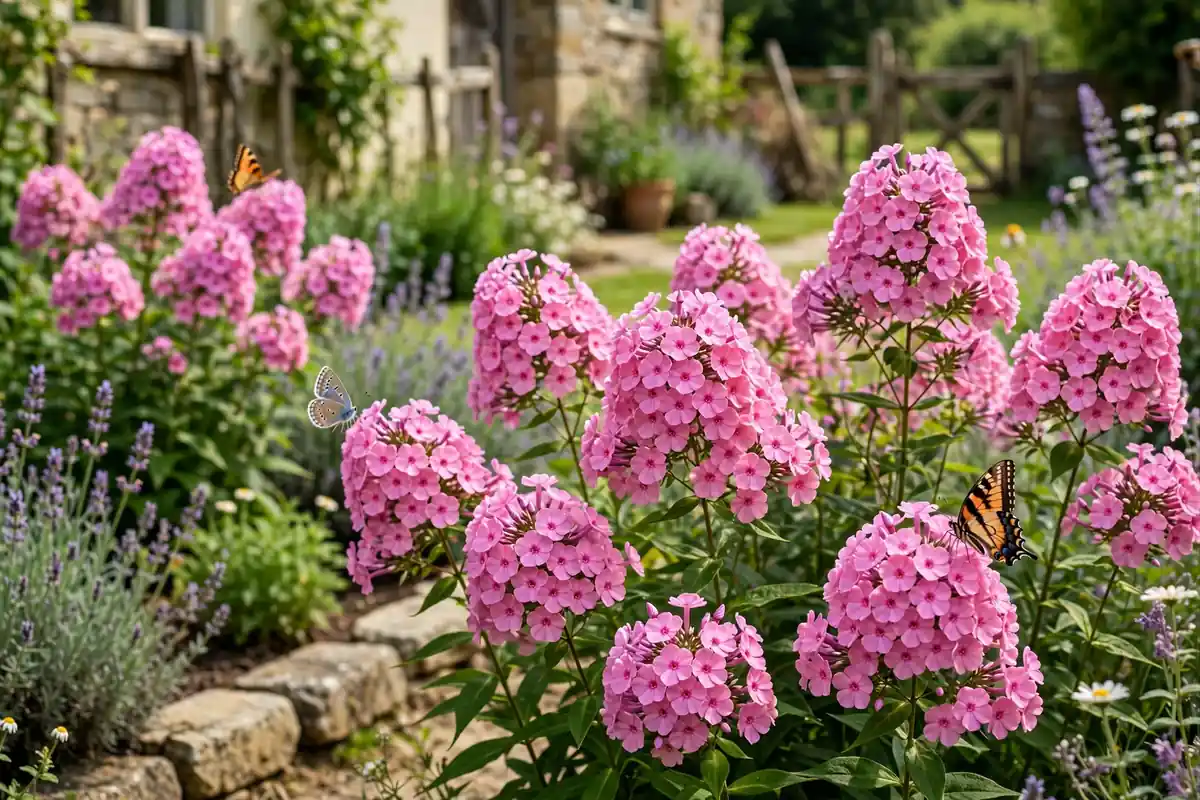
27. Tall Garden Phlox (Phlox paniculata)
Tall garden phlox is the backbone of the midsummer border — big, fragrant domes of pink, purple, white, or red florets on 2- to 4-foot stems. Choose mildew-resistant varieties like ‘David’ (white) or ‘Jeana’ (pink) to avoid the powdery mildew that plagues older types. Give it full sun, rich soil, good air circulation, and consistent moisture. Deadhead to extend bloom and divide every 3–4 years.
Bloom: Summer | Sun: Full sun | Zone: 4–8 | Best for: Fragrant borders, cottage gardens, cut flowers
28. Tall Verbena (Verbena bonariensis)
Tall verbena is a see-through plant in the best sense — 4- to 6-foot wiry stems topped with clusters of tiny purple-violet flowers float above the border without blocking the view. Butterflies and bees mob it from summer to frost. It self-sows politely in most gardens. Give it full sun and average soil; it tolerates drought. In cold zones, treat as an annual or mulch crowns heavily.
Bloom: Summer to frost | Sun: Full sun | Zone: 7–11; annual elsewhere | Best for: Pollinators, airy middle-border layering
29. Tassel Flower (Amaranthus caudatus)
Tassel flower, better known as love-lies-bleeding, drapes itself in 1- to 2-foot-long crimson ropes of tiny flowers from summer to frost — one of the most dramatic annuals you can grow. It is easy from seed sown after frost in full sun and average soil, thriving in heat. The cascading form is unbeatable in tall containers. Leave some seed heads for self-sowing; birds enjoy the seeds too.
Bloom: Summer to frost | Sun: Full sun | Zone: Annual | Best for: Dramatic containers, hot borders, dried flowers
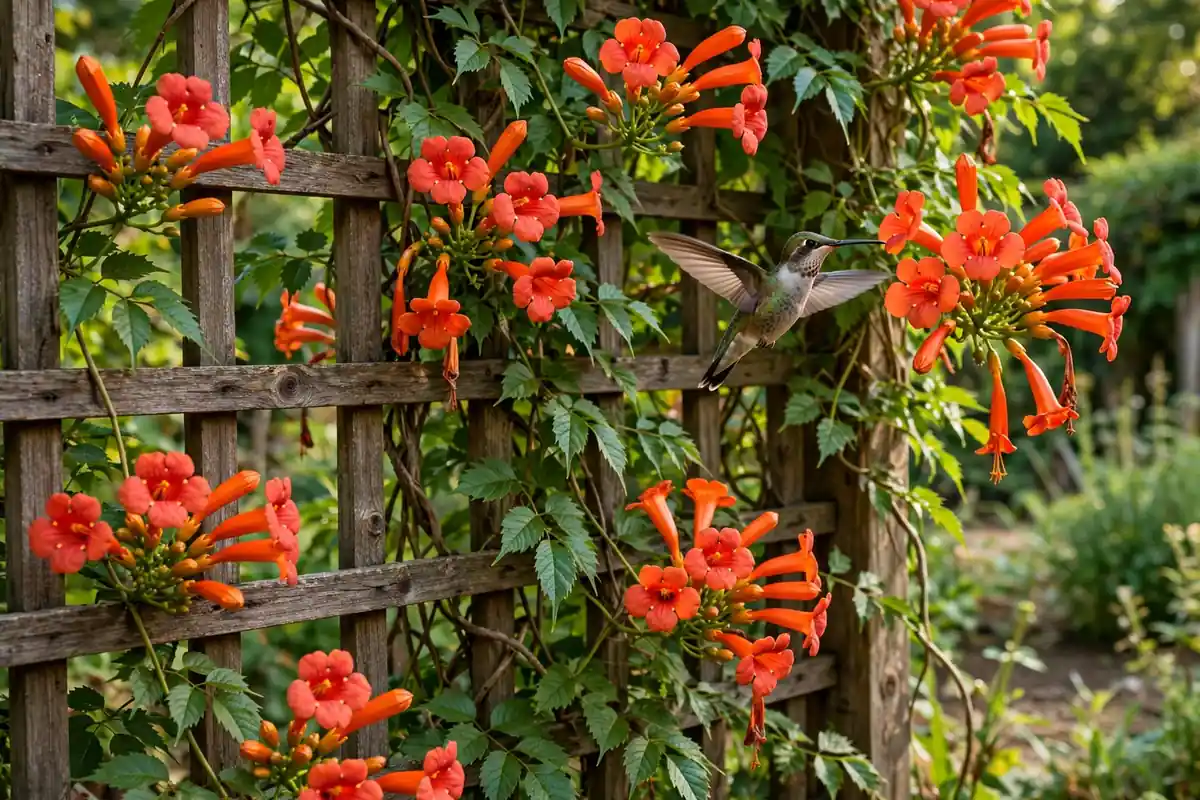
30. Trumpet Creeper (Campsis radicans)
Trumpet creeper is a vigorous native vine with clusters of 3-inch orange-red trumpet flowers that hummingbirds cannot resist, blooming all summer. It climbs 30–40 feet by aerial rootlets and suckers freely — plant it only where you can manage its enthusiasm, on a sturdy arbor or fence away from foundations. Full sun gives the heaviest bloom. Prune hard in late winter; it flowers on new wood.
Bloom: Summer | Sun: Full sun | Zone: 4–9 | Best for: Hummingbird gardens, covering large structures
31. Trumpet Honeysuckle (Lonicera sempervirens)
Trumpet honeysuckle is the well-behaved native alternative to invasive Japanese honeysuckle — twining stems with whorls of coral-red trumpet flowers tipped in yellow, blooming from late spring into fall. Hummingbirds are its primary pollinators, and songbirds eat the red berries. Give it full sun to part shade and something sturdy to climb; it reaches 10–20 feet. Unlike its Asian cousins, it will not swallow your garden.
Bloom: Late spring to fall | Sun: Full sun to part shade | Zone: 4–9 | Best for: Native vines, hummingbirds, mailboxes and trellises
32. Texas Star (Lindheimera texana)
Texas star is a cheerful native annual daisy with bright yellow, star-shaped blooms on 1- to 2-foot stems in spring, often carpeting roadsides alongside bluebonnets. It is easy from seed sown in fall in full sun and lean soil — rich soil makes it floppy. Let it self-sow for yearly displays. A lovely, low-effort addition to wildflower meadows and cottage gardens in the South-Central US.
Bloom: Spring | Sun: Full sun | Zone: Annual; reseeds | Best for: Wildflower meadows, Texas natives
33. Tidy Tips (Layia platyglossa)
Tidy tips is a California native wildflower with sunny yellow daisies neatly tipped in white — like each petal was dipped in cream. Growing 6–18 inches tall, it is a staple of spring wildflower mixes and meadows. Sow seed in fall in full sun and poor, well-drained soil; it needs no water beyond winter rains. Let it set seed for next year’s display, and pair with California poppies for a classic golden-state show.
Bloom: Spring | Sun: Full sun | Zone: Annual | Best for: Wildflower meadows, California natives, low-water gardens
34. Thistle (Cirsium spp.)
Thistles deserve a second look — the spiny armor hides spectacular purple-pink flower heads that are magnets for butterflies, bees, and goldfinches. Native species like field thistle and wavyleaf thistle are valuable wildlife plants for prairie and meadow gardens. Grow them in full sun and lean soil; deadhead before seed sets if you want to limit spread. Wear gloves — the spines mean business.
Bloom: Summer | Sun: Full sun | Zone: 3–9 | Best for: Wildlife gardens, prairie plantings, goldfinches
35. Tea Rose (Rosa × odorata)
Tea roses are the ancestors of the modern hybrid tea — elegant, high-centered blooms in pink, white, and yellow with the delicate “tea” fragrance that gave them their name. They repeat-bloom from summer to fall in warm climates (zones 6–10). Give them full sun, rich soil, good air circulation, and regular feeding. Prune in late winter and deadhead spent blooms to keep the flowers coming.
Bloom: Summer to fall (repeat) | Sun: Full sun | Zone: 6–10 | Best for: Fragrant rose gardens, cut flowers
36. Trumpet Vine (Campsis spp.)
The trumpet vine genus includes the native American Campsis radicans and the showier Chinese Campsis grandiflora, with larger, deeper-colored trumpets in orange, red, and yellow. Both are vigorous deciduous climbers for big structures, blooming on new wood in summer. Grandiflora types are slightly less hardy (zone 5–9) and less aggressive. Give any campsis full sun, sturdy support, and a hard late-winter pruning.
Bloom: Summer | Sun: Full sun | Zone: 5–9 | Best for: Large arbors, hummingbird vines, bold summer color
37. Turkish Cap (Malvaviscus arboreus)
Turkish cap is a heat-loving shrub with nodding red flowers that never fully open — the petals stay wrapped like a tiny turban (or fez), giving it its name. Hummingbirds probe the blooms from summer to fall, and the small red fruits that follow feed birds. It thrives in full sun to part shade in zones 8–11 and tolerates drought once established. Cut back in late winter to rejuvenate.
Bloom: Summer to fall | Sun: Full sun to part shade | Zone: 8–11 | Best for: Hummingbird gardens, Southern shrubs, wildlife
38. Thrift (Armeria maritima)
Thrift is a tough little evergreen perennial that forms grassy tufts topped with globe-shaped pink, rose, or white flower heads in late spring — a natural for rock gardens, seaside plantings, and the front of borders. True to its coastal origins, it tolerates salt spray, wind, and poor soil. Give it full sun and excellent drainage; it rots in soggy ground. Deadhead to encourage a second flush of bloom.
Bloom: Late spring to early summer | Sun: Full sun | Zone: 4–8 | Best for: Rock gardens, coastal gardens, edging
39. Tuberose ‘Pearl’ (Polianthes tuberosa ‘The Pearl’)
‘The Pearl’ is the classic double-flowered tuberose — each stem carries creamy white, rose-like double blooms with an even more intense version of the species’ legendary evening fragrance. It is the variety most often grown for cut flowers and leis. Culture is the same as the species: plant after the soil warms in full sun, keep evenly moist, and lift bulbs before frost in zones below 8. Stake tall stems in windy sites.
Bloom: Late summer to fall | Sun: Full sun | Zone: 8–11; lift bulbs elsewhere | Best for: Cut flowers, fragrance, evening gardens
40. Tulip ‘Apeldoorn’ (Tulipa ‘Apeldoorn’)
‘Apeldoorn’ is the gold standard of Darwin hybrid tulips — brilliant red blooms with a yellow base on strong 22-inch stems, plus the best perennial reliability of any hybrid tulip class. Plant bulbs 6 inches deep in fall in full sun; unlike fussy exhibition tulips, Apeldoorn returns for years with minimal fuss. It pairs beautifully with yellow daffodils and blue grape hyacinths. ‘Apeldoorn’s Elite’ offers a red-and-yellow edged sport.
Bloom: Mid-spring | Sun: Full sun | Zone: 3–8 | Best for: Reliable perennial tulips, mass plantings, cutting
Growing Tips for T-Flowers
Match the bulb to the zone. Tulips and ‘Apeldoorn’ need winter chill (zones 3–8) and rot in warm winters, while tuberose, tuberous begonias, and transvaal daisies need warmth — lift tender bulbs and tubers before frost in cold zones and store them dry.
Give vigorous vines their space. Trumpet creeper, trumpet honeysuckle, and black-eyed Susan vine are all enthusiastic climbers. Put campsis on a sturdy, freestanding structure — never against the house — and prune hard in late winter since it blooms on new wood.
Feed the shade stars. Trillium, foamflower, twinflower, and toad lily all want humus-rich, consistently moist soil in shade. Top-dress with leaf compost each fall rather than chemical fertilizer; these woodlanders evolved in leaf litter.
Deadhead for months of color. Tickseed, threadleaf coreopsis, tall garden phlox, tall verbena, and transvaal daisy all rebloom far longer when spent flowers are removed. Leave teasel and thistle heads standing, though — goldfinches depend on the seeds.
Go native where you can. Texas bluebonnet, Texas star, tidy tips, threadleaf coreopsis, tickseed, and trumpet honeysuckle are North American natives adapted to local conditions — they need less water, less fertilizer, and feed far more pollinators than exotic lookalikes.
Which T-Flowers Will You Grow?
From the spring trumpets of tulips and the bluebonnet seas of Texas to the tiger lilies of midsummer and the fragrant tuberose of fall evenings, flowers that start with T span every season, every sun level, and USDA zones 2 through 11. Start with easy winners matched to your conditions — perhaps threadleaf coreopsis and tall verbena for a sunny border, foamflower and toad lily for shade, or a wishbone flower for a shady pot. Pick three or four favorites from this list, give them the right spot, and the letter T will fill your garden with color from snowmelt to frost.
Frequently Asked Questions
What flowers start with T?
Dozens of garden favorites begin with T, including tulip, tiger lily, tuberose, torch lily, tickseed (coreopsis), transvaal daisy, Texas bluebonnet, tree peony, tall garden phlox, trumpet creeper, toad lily, and trillium. This guide covers 40 of them with growing details for each.
What are the easiest flowers that start with T for beginners?
Tickseed, threadleaf coreopsis, tall verbena, Mexican sunflower, and tassel flower are nearly foolproof — they establish easily, bloom for months, and forgive missed waterings. Tulips are the easiest spring bulbs, and wishbone flower is the simplest annual for shady spots.
What purple flowers start with T?
Top purple choices include tall verbena, princess flower, tatarian aster, trailing lantana, wishbone flower (purple forms), teasel, thistle, and tall garden phlox (purple varieties). For the deepest purple of all, the royal-violet blooms of princess flower are unmatched.
What yellow flowers start with T?
Beautiful yellow T-flowers include tickseed, threadleaf coreopsis, globeflower, Texas star, tidy tips, Mexican sunflower (yellow forms), and tansy. Threadleaf coreopsis and tickseed are the longest-blooming of the bunch.
What white flowers start with T?
White flowers that start with T include tuberose, tuberose ‘Pearl’, trillium, foamflower, tidy tips (white-tipped), and white forms of tulip, tall garden phlox, and thrift. A moon garden of tuberose, foamflower, and white tulips glows beautifully at dusk.
Which flowers that start with T attract hummingbirds?
Trumpet creeper, trumpet honeysuckle, trumpet vine, Turkish cap, Mexican sunflower, and tall verbena are hummingbird magnets. Trumpet-shaped red and orange blooms are evolutionarily designed for hummingbird pollination — planting several together creates a reliable hummer buffet.
One Comment