40 Flowers That Start With P: Names, Pictures & Growing Tips
40 Flowers That Start With P: Names, Pictures & Growing Tips
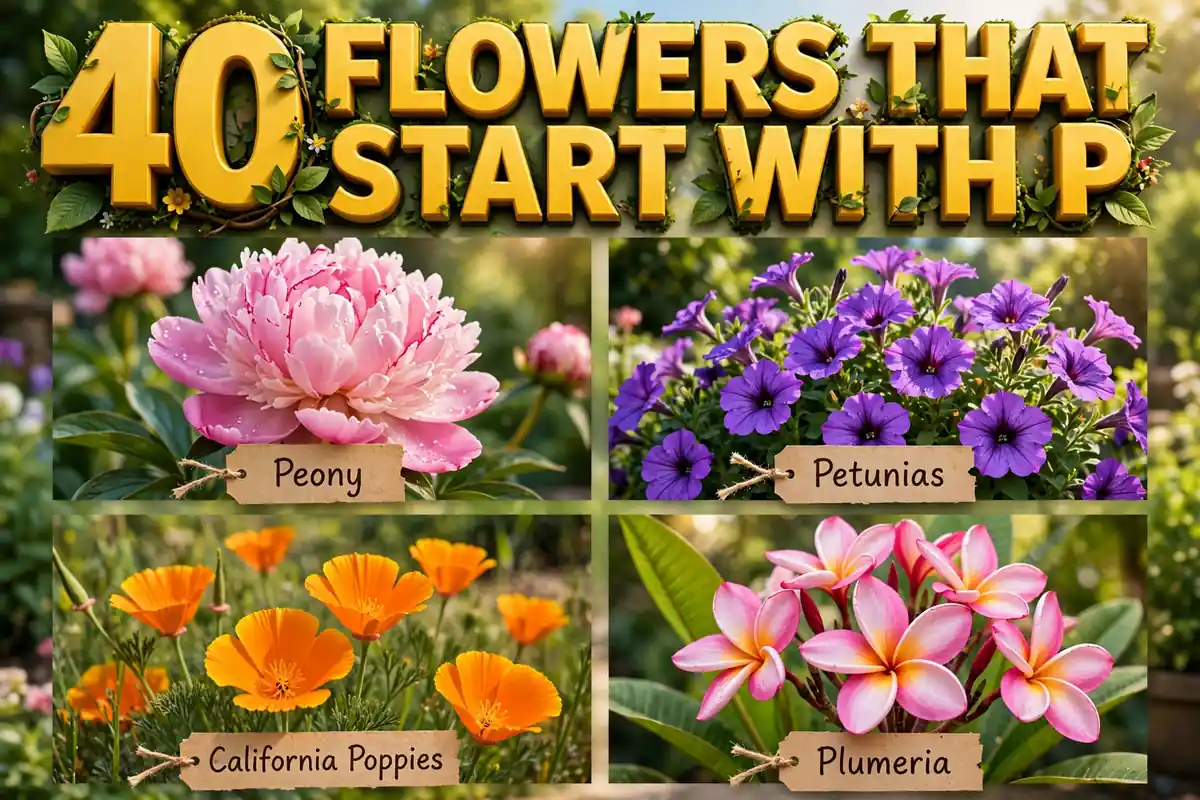
Looking for flower names that start with P? You have come to the right place. The letter P is packed with garden stars — from the lush, ruffled blooms of peonies to the heat-proof carpets of petunias, the cheerful faces of pansies, and the fragrant bells of primroses. Whether you are planting a pollinator border, filling containers with instant color, or helping a child with an alphabet garden project, this guide covers 40 real flowers that start with P, each with a photo-worthy description and practical growing advice.
Every entry below includes the flower’s scientific name, bloom season, sun needs, and USDA hardiness zone, so you can tell at a glance which P-flowers will thrive in your yard. You will also find two quick comparison tables, beginner-friendly growing tips, and answers to the most common questions gardeners ask about flowers beginning with P — including the prettiest pink, purple, and white P-flowers and which ones come back year after year. Let’s dig in.
Quick Answer
Popular flowers that start with P include Peony, Petunia, Pansy, Primrose, Phlox, Poppy, Plumeria, Pentas, Poinsettia, and Purple Coneflower. They range from cool-season annuals and hardy perennials to tropical shrubs and indoor houseplants, covering USDA zones 3–12, so there is a P-flower for nearly every US garden.
Table of Contents

P-Flowers at a Glance
Use this table to compare all 40 flowers that start with P side by side, from botanical names to native regions.
| Flower name | Scientific name | Type | Color | Native region |
|---|---|---|---|---|
| Peony | Paeonia lactiflora | Herbaceous perennial | Pink, white, red, coral | East Asia |
| Garden Phlox | Phlox paniculata | Herbaceous perennial | Pink, purple, white, red | Eastern North America |
| Petunia | Petunia × hybrida | Annual | Purple, pink, white, red, yellow | South America (hybrid origin) |
| Pansy | Viola × wittrockiana | Cool-season annual | Purple, yellow, white, blue, orange | Europe (hybrid origin) |
| Primrose | Primula vulgaris | Herbaceous perennial | Yellow, pink, white, purple | Europe, Western Asia |
| Oriental Poppy | Papaver orientale | Herbaceous perennial | Orange-red, pink, white | Western Asia |
| California Poppy | Eschscholzia californica | Annual (short-lived perennial) | Orange, yellow | Western North America |
| Plumeria (Frangipani) | Plumeria rubra | Tropical shrub/small tree | Pink, white, yellow, red | Mexico, Central America |
| Moss Rose | Portulaca grandiflora | Succulent annual | Pink, red, orange, yellow, white | South America |
| Poinsettia | Euphorbia pulcherrima | Tender shrub | Red, white, pink (bracts) | Mexico |
| Purple Coneflower | Echinacea purpurea | Herbaceous perennial | Purple-pink, white | Central and Eastern North America |
| Penstemon (Beardtongue) | Penstemon spp. | Herbaceous perennial | Purple, pink, red, blue, white | North America |
| Pincushion Flower | Scabiosa columbaria | Herbaceous perennial | Blue, purple, pink, white | Europe, Asia, Africa |
| Peace Lily | Spathiphyllum wallisii | Tropical houseplant | White | Colombia, Venezuela |
| King Protea | Protea cynaroides | Evergreen shrub | Pink, red, white, cream | South Africa |
| Pasque Flower | Pulsatilla vulgaris | Herbaceous perennial | Purple, white, red | Europe |
| Persian Buttercup | Ranunculus asiaticus | Tuberous perennial | Red, pink, orange, yellow, white | Eastern Mediterranean |
| Garden Pinks | Dianthus plumarius | Herbaceous perennial | Pink, white, red | Central and Eastern Europe |
| Madagascar Periwinkle | Catharanthus roseus | Tender perennial (grown as annual) | Pink, white, red, purple | Madagascar |
| Passionflower | Passiflora incarnata | Perennial vine | Purple and white | Southeastern North America |
| Pear Blossom | Pyrus communis | Deciduous tree | White | Europe, Western Asia |
| Prickly Pear | Opuntia humifusa | Cactus | Yellow, orange-red | Eastern North America |
| Prairie Coneflower | Ratibida pinnata | Herbaceous perennial | Yellow | Central North America |
| Parrot’s Beak | Lotus berthelotii | Tender perennial | Red-orange | Canary Islands |
| Pearly Everlasting | Anaphalis margaritacea | Herbaceous perennial | White | North America, Asia |
| Cape Plumbago | Plumbago auriculata | Tender shrub | Blue, white | South Africa |
| Pentas (Egyptian Starcluster) | Pentas lanceolata | Tender perennial | Red, pink, purple, white | East Africa, Arabia |
| Pot Marigold | Calendula officinalis | Annual | Orange, yellow | Southern Europe (garden origin) |
| Pink Jasmine | Jasminum polyanthum | Evergreen vine | Pink buds, white flowers | China |
| Polyantha Rose | Rosa (Polyantha Group) | Deciduous shrub | Pink, red, white, orange | Hybrid origin |
| Tree Peony | Paeonia suffruticosa | Woody shrub | Pink, white, red, purple | China |
| Persian Violet | Exacum affine | Tender perennial/houseplant | Purple-blue, white | Socotra (Yemen) |
| Pride of Madeira | Echium candicans | Evergreen shrub | Blue-purple | Madeira |
| Prairie Blazing Star | Liatris pycnostachya | Herbaceous perennial | Purple-pink | Central North America |
| Pussy Willow | Salix discolor | Deciduous shrub | Silvery-gray catkins | North America |
| Prairie Smoke | Geum triflorum | Herbaceous perennial | Pink to smoky-rose | North America |
| Pickerelweed | Pontederia cordata | Aquatic perennial | Blue-violet | Eastern North America |
| Evening Primrose | Oenothera biennis | Biennial | Yellow | North America |
| Princess Flower | Tibouchina urvilleana | Tropical shrub | Purple | Brazil |
| Paper Daisy | Xerochrysum bracteatum | Annual/tender perennial | Yellow, orange, pink, white | Australia |
Bloom Season, Sun Needs & Hardiness Zones
Planning your garden calendar? This second table shows when each P-flower blooms, how much sun it wants, and the USDA zones where it grows outdoors year-round.
| Flower name | Bloom season | Sun needs | Hardiness zone |
|---|---|---|---|
| Peony | Late spring to early summer | Full sun | 3–8 |
| Garden Phlox | Summer | Full sun to part shade | 4–8 |
| Petunia | Summer to fall | Full sun | Grown as annual |
| Pansy | Spring and fall (cool seasons) | Full sun to part shade | Grown as cool-season annual |
| Primrose | Spring | Part shade | 4–8 |
| Oriental Poppy | Late spring to early summer | Full sun | 3–7 |
| California Poppy | Spring to summer | Full sun | 6–10; self-sows freely |
| Plumeria (Frangipani) | Summer to fall | Full sun | 10–12; container elsewhere |
| Moss Rose | Summer to fall | Full sun | Grown as annual |
| Poinsettia | Winter (colorful bracts) | Bright indirect light | 9–11; houseplant elsewhere |
| Purple Coneflower | Summer | Full sun | 3–8 |
| Penstemon (Beardtongue) | Late spring to summer | Full sun | 3–9 (varies by species) |
| Pincushion Flower | Summer to fall | Full sun | 3–7 |
| Peace Lily | Year-round indoors | Bright indirect light | Houseplant (11–12 outdoors) |
| King Protea | Spring to summer | Full sun | 9–11 |
| Pasque Flower | Early spring | Full sun | 4–8 |
| Persian Buttercup | Spring | Full sun | 8–10; annual elsewhere |
| Garden Pinks | Late spring to early summer | Full sun | 3–9 |
| Madagascar Periwinkle | Summer to fall | Full sun | 9–11; annual elsewhere |
| Passionflower | Summer to fall | Full sun | 6–9 |
| Pear Blossom | Spring | Full sun | 4–8 |
| Prickly Pear | Early summer | Full sun | 4–9 |
| Prairie Coneflower | Summer | Full sun | 3–8 |
| Parrot’s Beak | Spring to summer | Full sun | 9–11; annual elsewhere |
| Pearly Everlasting | Summer to fall | Full sun to part shade | 3–8 |
| Cape Plumbago | Summer to fall | Full sun | 8–11 |
| Pentas (Egyptian Starcluster) | Summer to fall | Full sun | 9–11; annual elsewhere |
| Pot Marigold | Spring to fall | Full sun to part shade | Grown as annual |
| Pink Jasmine | Late winter to spring | Full sun to part shade | 8–11 |
| Polyantha Rose | Summer to fall | Full sun | 5–9 |
| Tree Peony | Spring | Full sun to part shade | 4–8 |
| Persian Violet | Summer to fall | Bright indirect light | 9–11; houseplant elsewhere |
| Pride of Madeira | Spring to early summer | Full sun | 9–11 |
| Prairie Blazing Star | Summer | Full sun | 3–8 |
| Pussy Willow | Late winter to early spring | Full sun to part shade | 4–8 |
| Prairie Smoke | Spring | Full sun | 3–7 |
| Pickerelweed | Summer to fall | Full sun | 3–10 |
| Evening Primrose | Summer | Full sun | 4–9 |
| Princess Flower | Summer to fall | Full sun to part shade | 9–11 |
| Paper Daisy | Summer to fall | Full sun | 9–11; annual elsewhere |
40 Flowers That Start With P: The Complete List
Here they are — 40 beautiful, real flowers beginning with P, each with growing notes so you can pick the right ones for your garden.
1. Peony (Paeonia lactiflora)
Few flowers say “garden luxury” like a peony. Huge, ruffled blooms in pink, white, red, and coral open in late spring on sturdy 2- to 3-foot stems, and a well-planted peony can live 50 years or more. Peonies demand full sun and resent being moved — plant the eyes no more than 2 inches deep or they will refuse to bloom. Stake heavy double varieties before the buds open.
Bloom: Late spring to early summer | Sun: Full sun | Zone: 3–8 | Best for: Long-lived borders, cut flowers
2. Garden Phlox (Phlox paniculata)
Garden phlox fills the summer border with big, fragrant clusters of pink, purple, white, or red flowers on 2- to 4-foot stems. This eastern North American native loves full sun and rich, moist soil. Good air circulation and resistant varieties like ‘Jeana’ help prevent the powdery mildew phlox is famous for. Deadhead spent clusters to stretch the show into fall.
Bloom: Summer | Sun: Full sun to part shade | Zone: 4–8 | Best for: Fragrant summer borders, cottage gardens
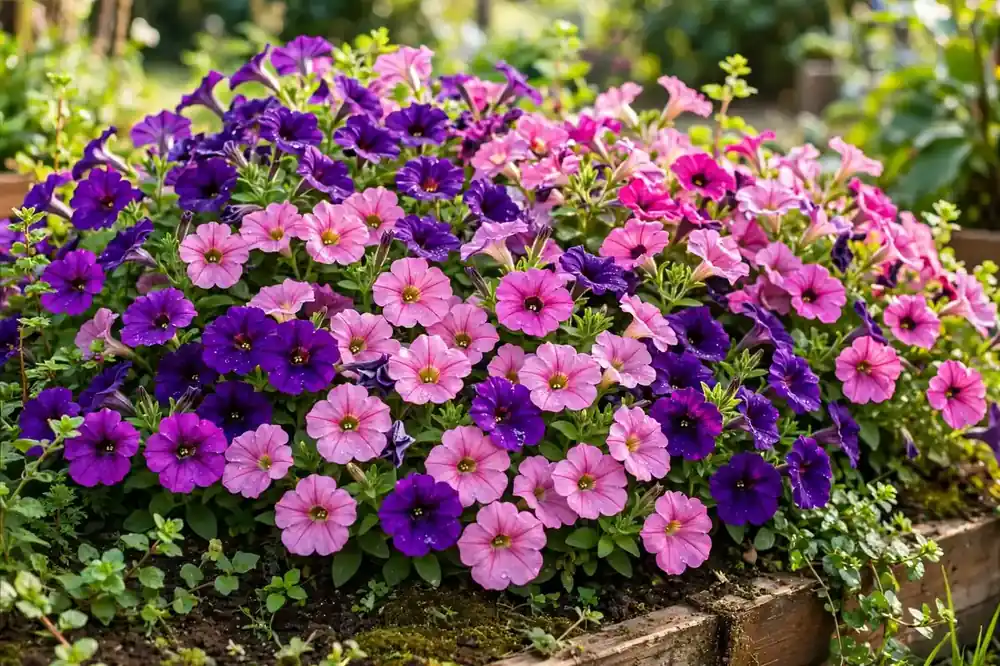
3. Petunia (Petunia × hybrida)
Petunias are the workhorses of summer containers, pumping out trumpet-shaped blooms in nearly every color from planting until frost. Modern Wave and Supertunia series sprawl beautifully over hanging baskets without deadheading, while grandifloras make bolder bedding statements. Give them full sun and regular feeding — petunias are hungry. A midseason haircut revives leggy plants.
Bloom: Summer to fall | Sun: Full sun | Zone: Grown as annual | Best for: Containers, hanging baskets, bedding
4. Pansy (Viola × wittrockiana)
Pansies bring color when little else dares — their cheerful “faces” in purple, yellow, white, and blue thrive in the cool of spring and fall. Plant them 6–8 weeks before first frost for fall bloom, or as soon as soil can be worked in spring. They fade in summer heat, so treat them as a cool-season annual and pull them when temperatures climb.
Bloom: Spring and fall (cool seasons) | Sun: Full sun to part shade | Zone: Grown as cool-season annual | Best for: Spring and fall color, edging
5. Primrose (Primula vulgaris)
Primroses are spring’s gentle openers, with clusters of soft yellow, pink, white, or purple flowers hugging low rosettes of crinkled green leaves. They adore part shade and consistently moist, humus-rich soil — perfect for woodland edges and the shady side of the house. Divide clumps right after flowering every few years to keep them vigorous.
Bloom: Spring | Sun: Part shade | Zone: 4–8 | Best for: Woodland edges, shady spring color
6. Oriental Poppy (Papaver orientale)
Oriental poppies produce some of the largest flowers in the garden — crepe-papery blooms up to 6 inches wide in blazing orange-red, pink, or white with dramatic dark centers. They bloom in late spring, then the foliage dies back for summer dormancy (don’t panic — it’s normal). Plant once and never move them; their deep taproots hate disturbance.
Bloom: Late spring to early summer | Sun: Full sun | Zone: 3–7 | Best for: Bold spring statements
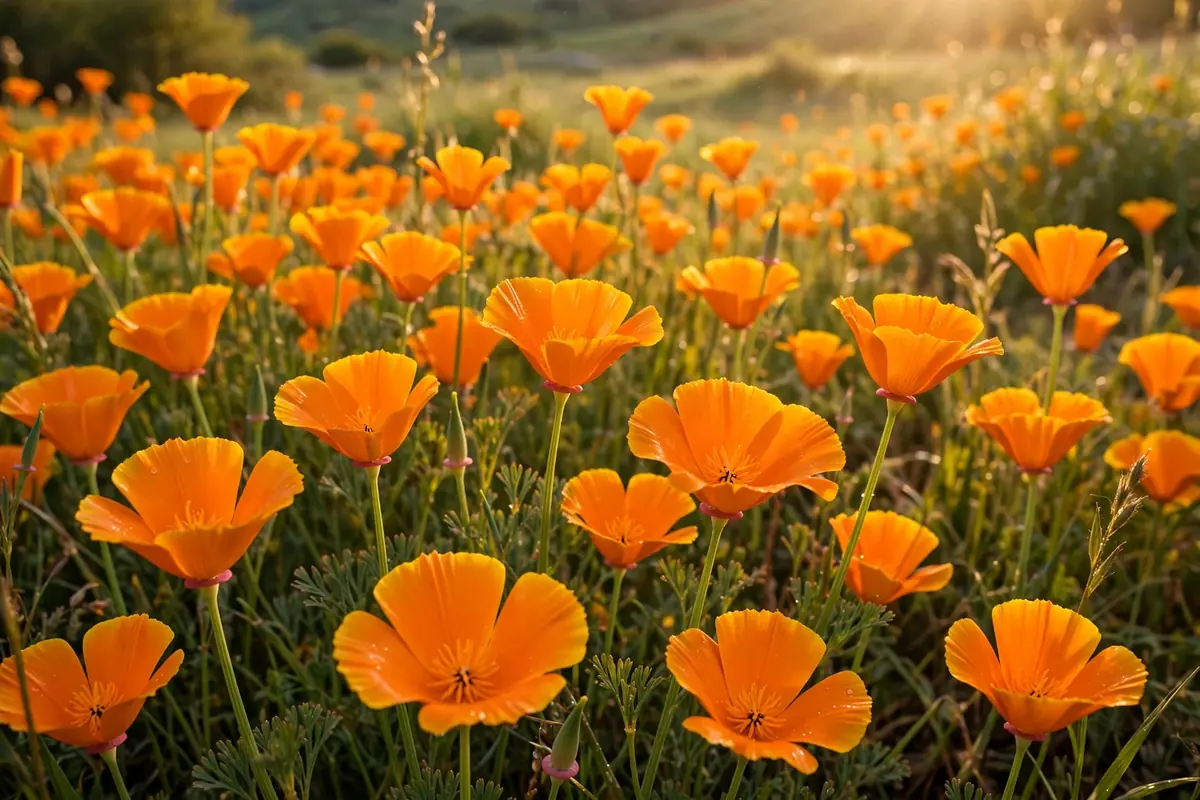
7. California Poppy (Eschscholzia californica)
The California poppy turns hillsides gold each spring with silky orange cups that close at night and on cloudy days. This western native thrives on neglect — full sun, poor soil, and almost no water once established. Sow seeds directly in fall or early spring where you want them; they self-sow freely and return year after year.
Bloom: Spring to summer | Sun: Full sun | Zone: 6–10; self-sows freely | Best for: Wildflower meadows, low-water gardens
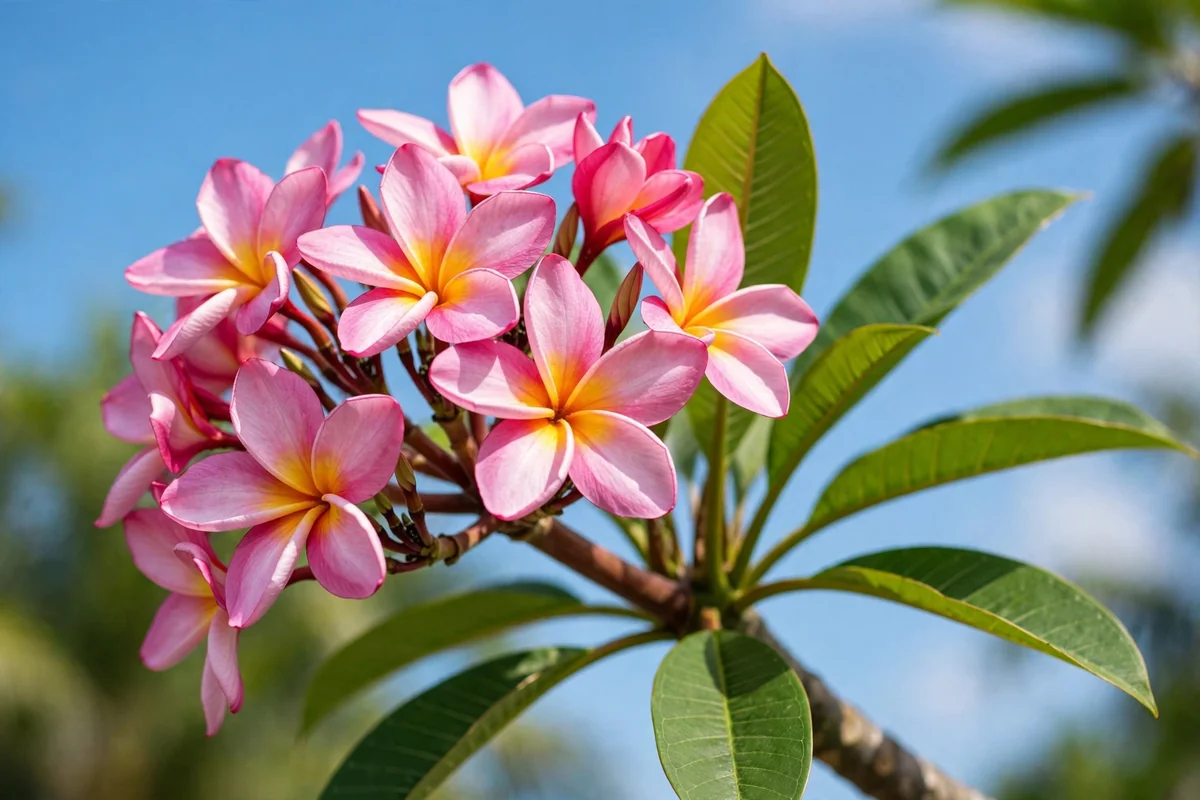
8. Plumeria — Frangipani (Plumeria rubra)
Plumeria’s waxy, sweetly fragrant blossoms in pink, white, yellow, and red are the scent of Hawaiian leis. This tropical small tree needs full sun, excellent drainage, and warmth — it goes dormant and drops its leaves in cool weather. In zones below 10, grow it in a pot and overwinter indoors, watering sparingly until spring growth resumes.
Bloom: Summer to fall | Sun: Full sun | Zone: 10–12; container elsewhere | Best for: Fragrance, tropical patios
9. Moss Rose (Portulaca grandiflora)
Moss rose is the toughest flower in the summer garden — rose-like blooms in hot pink, orange, yellow, and white open over succulent needle-like foliage, shrugging off drought, heat, and poor soil. It needs full sun and almost nothing else; overwatering is its only real enemy. The flowers close in late afternoon and reopen with the morning sun.
Bloom: Summer to fall | Sun: Full sun | Zone: Grown as annual | Best for: Hot dry spots, rock gardens
10. Poinsettia (Euphorbia pulcherrima)
Poinsettias are the signature flower of the holiday season, with brilliant red, white, or pink bracts surrounding tiny true flowers. Keep them in bright indirect light away from drafts and cold windows, watering only when the soil surface dries. Getting one to rebloom takes 14 hours of uninterrupted darkness nightly for 8 weeks — a fun challenge for patient gardeners.
Bloom: Winter (colorful bracts) | Sun: Bright indirect light | Zone: 9–11; houseplant elsewhere | Best for: Holiday displays, indoor color
11. Purple Coneflower (Echinacea purpurea)
Purple coneflower is a native prairie star with daisy-like purple-pink petals drooping from spiky orange cones. Blooming all summer in full sun, it feeds butterflies and bees, then feeds goldfinches when the seed heads ripen. Deadhead for more flowers or leave the cones standing for winter interest. One of the easiest perennials a beginner can plant.
Bloom: Summer | Sun: Full sun | Zone: 3–8 | Best for: Pollinator gardens, easy perennials
12. Penstemon — Beardtongue (Penstemon spp.)
Penstemon, or beardtongue, offers tubular flowers in purple, pink, red, blue, and white on upright spikes that hummingbirds can’t resist. With species native across North America, there’s a penstemon for almost every region — just match the species to your climate. They demand excellent drainage and full sun; soggy winter soil is their biggest killer.
Bloom: Late spring to summer | Sun: Full sun | Zone: 3–9 (varies by species) | Best for: Hummingbirds, native gardens
13. Pincushion Flower (Scabiosa columbaria)
Pincushion flowers earn their name from blooms that look like tiny pincushions — frilly blue, purple, pink, or white petals surrounding a domed center on wiry stems. They bloom from summer to fall if deadheaded regularly and make excellent, long-lasting cut flowers. Give them full sun and well-drained soil; they dislike wet feet.
Bloom: Summer to fall | Sun: Full sun | Zone: 3–7 | Best for: Cut flowers, cottage borders
14. Peace Lily (Spathiphyllum wallisii)
Peace lilies are among the most forgiving flowering houseplants, producing elegant white spathes above glossy dark leaves even in lower light. They tell you when they’re thirsty by drooping dramatically, then perk up within hours of watering. Keep them in bright indirect light, away from cold drafts, and wipe the leaves occasionally to keep them gleaming.
Bloom: Year-round indoors | Sun: Bright indirect light | Zone: Houseplant (11–12 outdoors) | Best for: Indoor plants, offices
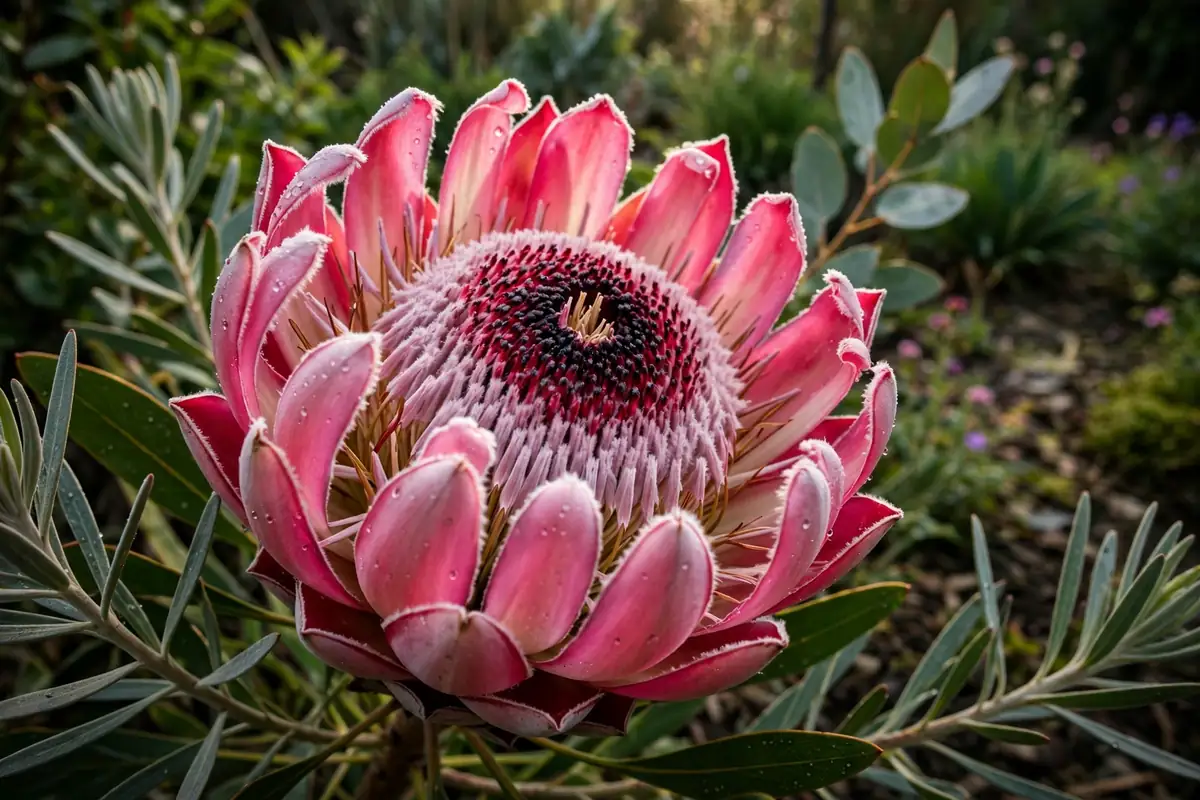
15. King Protea (Protea cynaroides)
The king protea is South Africa’s national flower — a spectacular artichoke-sized bloom in pink, red, or cream ringed by stiff pointed bracts. This evergreen shrub needs full sun, acidic well-drained soil, and very little phosphorus fertilizer (proteas are adapted to poor soils). A true showpiece for frost-free gardens in zones 9–11.
Bloom: Spring to summer | Sun: Full sun | Zone: 9–11 | Best for: Exotic focal points, cut flowers
16. Pasque Flower (Pulsatilla vulgaris)
Pasque flowers are among the first perennials to bloom, pushing silky purple, white, or red cups through the cold spring soil — often while snow still lingers. Feathery seed heads follow the flowers for extended interest. They need full sun and sharp drainage and resent disturbance, so choose their spot carefully and leave them alone.
Bloom: Early spring | Sun: Full sun | Zone: 4–8 | Best for: Early spring color, rock gardens
17. Persian Buttercup (Ranunculus asiaticus)
Persian buttercups look like tissue-paper roses, with layer upon layer of petals in red, pink, orange, yellow, and white. Soak the claw-like corms for a few hours before planting in fall (warm zones) or early spring. They make spectacular cut flowers with a week-plus vase life. In cold zones, treat them as annuals or lift the corms for winter.
Bloom: Spring | Sun: Full sun | Zone: 8–10; annual elsewhere | Best for: Cut flowers, spring containers
18. Garden Pinks (Dianthus plumarius)
Garden pinks are old-fashioned charmers with fringed, clove-scented flowers in pink, white, and red over blue-green grassy foliage. They bloom in late spring and rebloom if sheared after the first flush. Give them full sun and alkaline, well-drained soil — they hate wet winters. The fragrance alone earns them a spot near paths and patios.
Bloom: Late spring to early summer | Sun: Full sun | Zone: 3–9 | Best for: Fragrance, edging, rock gardens
19. Madagascar Periwinkle (Catharanthus roseus)
Madagascar periwinkle blooms nonstop from summer to frost with glossy green leaves and flat-faced flowers in pink, white, red, and purple — and it thrives in heat and humidity that flatten lesser annuals. It needs full sun and warm soil; plant it out only after nights stay above 60°F. Note: all parts are toxic if eaten.
Bloom: Summer to fall | Sun: Full sun | Zone: 9–11; annual elsewhere | Best for: Hot humid climates, bedding
20. Passionflower (Passiflora incarnata)
Passionflower produces the most exotic-looking blooms hardy in temperate gardens — intricate purple-and-white fringed flowers up to 4 inches wide on a vigorous vine. This southeastern US native dies back in winter and returns reliably in zones 6–9. Give it a sturdy trellis, full sun, and room to roam; it spreads by suckers.
Bloom: Summer to fall | Sun: Full sun | Zone: 6–9 | Best for: Trellises, exotic flowers, native vines
21. Pear Blossom (Pyrus communis)
Pear blossoms turn orchards into clouds of white each spring — simple five-petaled flowers that are as beautiful as they are productive, since each one can become a pear. Trees need full sun, well-drained soil, and a compatible pollinator variety nearby for fruit. The bloom also feeds early pollinators when little else is flowering.
Bloom: Spring | Sun: Full sun | Zone: 4–8 | Best for: Orchards, spring landscape impact
22. Prickly Pear (Opuntia humifusa)
Prickly pear proves cacti can be flower powerhouses — large waxy yellow (sometimes orange-red) blooms open on flat paddle pads in early summer, followed by edible red fruits. This eastern US native is hardy to zone 4, shrugging off cold that kills desert cacti. Give it full sun and sharp drainage; handle pads with tongs, not fingers.
Bloom: Early summer | Sun: Full sun | Zone: 4–9 | Best for: Xeriscaping, native cactus gardens
23. Prairie Coneflower (Ratibida pinnata)
Prairie coneflower, or gray-headed coneflower, sends up 3- to 5-foot stems topped with drooping yellow petals around a distinctive gray-green cone. A tough central North American native, it thrives in full sun and poor soil, blooming all summer while feeding bees and butterflies. Excellent for prairie restorations and naturalized meadows.
Bloom: Summer | Sun: Full sun | Zone: 3–8 | Best for: Prairies, meadows, native plantings
24. Parrot’s Beak (Lotus berthelotii)
Parrot’s beak is a conversation piece — trailing stems carry clusters of vivid red-orange flowers shaped uncannily like a parrot’s beak, set against silvery needle-like foliage. Native to the Canary Islands, it needs full sun and perfect drainage. Grow it in hanging baskets or as a spiller in containers; in cold zones, treat it as an annual.
Bloom: Spring to summer | Sun: Full sun | Zone: 9–11; annual elsewhere | Best for: Hanging baskets, containers
25. Pearly Everlasting (Anaphalis margaritacea)
Pearly everlasting bears clusters of small white “flowers” — actually papery bracts — that look freshly picked for months, fresh or dried. This easy native perennial blooms from summer to fall in full sun to part shade and spreads politely by rhizomes. Butterflies love it, and dried stems are everlasting-arrangement gold.
Bloom: Summer to fall | Sun: Full sun to part shade | Zone: 3–8 | Best for: Dried arrangements, native borders
26. Cape Plumbago (Plumbago auriculata)
Cape plumbago covers itself in clusters of sky-blue (sometimes white) phlox-like flowers from summer to fall, often while butterflies swarm it. This South African shrub grows fast in full sun and blooms on new wood, so prune hard in spring. In zones below 8, grow it in containers and overwinter indoors.
Bloom: Summer to fall | Sun: Full sun | Zone: 8–11 | Best for: Blue flowers, butterfly gardens
27. Pentas — Egyptian Starcluster (Pentas lanceolata)
Pentas are butterfly magnets — dense clusters of star-shaped red, pink, purple, or white flowers bloom nonstop in heat that stops other plants cold. A go-to for Southern gardens, they need full sun and consistent moisture. In zones 9–11 they return as perennials; elsewhere grow them as annuals or overwinter cuttings indoors.
Bloom: Summer to fall | Sun: Full sun | Zone: 9–11; annual elsewhere | Best for: Butterflies, Southern gardens
28. Pot Marigold (Calendula officinalis)
Pot marigold isn’t a true marigold at all — it’s calendula, with cheerful orange and yellow daisy-like blooms that open from spring to fall. It prefers cool weather, often pausing in midsummer heat, and the petals are edible, brightening salads. Deadhead regularly and it will bloom until hard frost.
Bloom: Spring to fall | Sun: Full sun to part shade | Zone: Grown as annual | Best for: Edible flowers, cool-season color
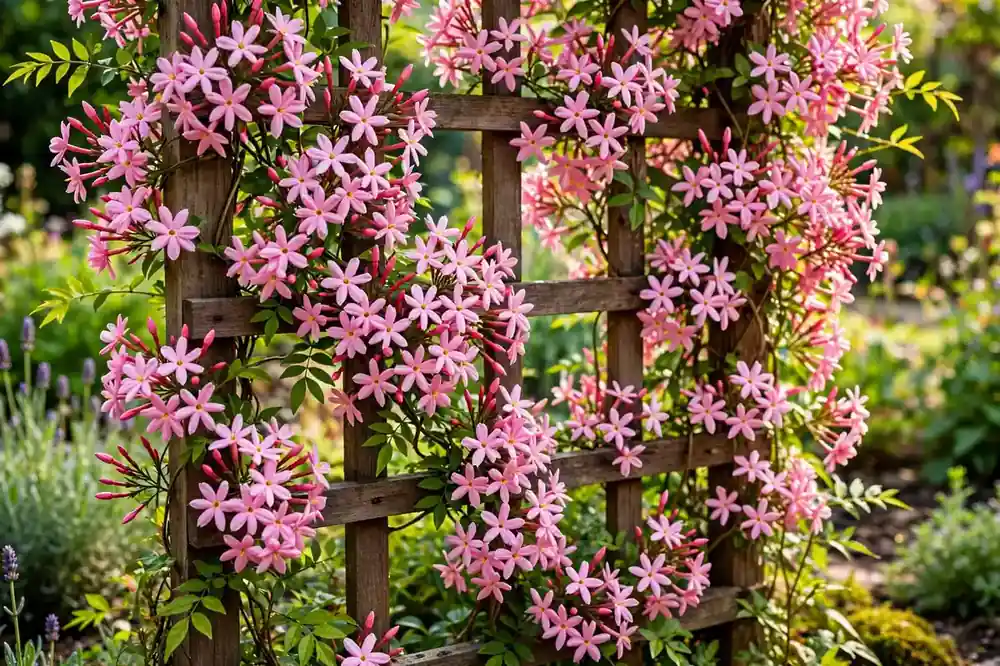
29. Pink Jasmine (Jasminum polyanthum)
Pink jasmine perfumes entire neighborhoods in late winter and spring, when clusters of pink buds open into intensely fragrant white stars. This vigorous evergreen vine needs a sturdy support and full sun to part shade. Prune hard right after flowering to control its enthusiastic growth. Bring containers indoors where winters freeze.
Bloom: Late winter to spring | Sun: Full sun to part shade | Zone: 8–11 | Best for: Fragrance, climbing vines
30. Polyantha Rose (Rosa, Polyantha Group)
Polyantha roses are the ancestors of modern floribundas — compact shrubs smothered in clusters of small pink, red, white, or orange blooms from summer to fall. They’re tougher and more disease-resistant than hybrid teas, needing only full sun, good air flow, and regular deadheading. Excellent for low hedges and mass plantings.
Bloom: Summer to fall | Sun: Full sun | Zone: 5–9 | Best for: Rose hedges, easy-care roses

31. Tree Peony (Paeonia suffruticosa)
Tree peonies are the aristocrats of spring — woody shrubs bearing enormous 8- to 10-inch blooms in pink, white, red, and purple, sometimes with a contrasting dark flare at the petal base. Unlike herbaceous peonies, they keep their woody framework year after year. Give them part afternoon shade in hot climates and never prune them like an ordinary shrub.
Bloom: Spring | Sun: Full sun to part shade | Zone: 4–8 | Best for: Specimen shrubs, luxury spring blooms
32. Persian Violet (Exacum affine)
Persian violet is a jewel of a houseplant, forming tidy mounds of glossy leaves studded with fragrant purple-blue flowers with golden centers. It blooms for months in bright indirect light with consistent moisture. Often sold as a gift plant, it can be kept for years with light pruning after flowering. A charming choice for windowsills.
Bloom: Summer to fall | Sun: Bright indirect light | Zone: 9–11; houseplant elsewhere | Best for: Windowsills, indoor gifts
33. Pride of Madeira (Echium candicans)
Pride of Madeira is pure drama — a rounded evergreen shrub erupting each spring with 2-foot cones of tiny blue-purple flowers that bees mob by the hundreds. Native to Madeira, it needs full sun, sharp drainage, and frost-free winters (zones 9–11). Give it space; mature plants reach 6 feet tall and wide.
Bloom: Spring to early summer | Sun: Full sun | Zone: 9–11 | Best for: Bee gardens, coastal California gardens
34. Prairie Blazing Star (Liatris pycnostachya)
Prairie blazing star does everything backwards — its purple-pink flower spikes bloom from the top down instead of bottom up. This central North American native thrives in full sun and even clay soil, feeding monarchs and bees in midsummer. Plant the corms 4 inches deep in spring; established clumps resent moving.
Bloom: Summer | Sun: Full sun | Zone: 3–8 | Best for: Monarchs, prairie gardens
35. Pussy Willow (Salix discolor)
Pussy willows announce spring before most plants wake up — soft silvery-gray catkins emerge on bare branches in late winter, providing crucial early pollen for bees. This North American native shrub loves moist soil and full sun to part shade. Cut branches in late winter for indoor forcing; the catkins last for weeks.
Bloom: Late winter to early spring | Sun: Full sun to part shade | Zone: 4–8 | Best for: Early pollinators, cut branches
36. Prairie Smoke (Geum triflorum)
Prairie smoke is a native wildflower with nodding pink buds that open into unusual smoky-rose blooms, followed by feathery silver seed heads that look like wisps of smoke — the plant’s namesake. It thrives in full sun and lean, well-drained soil in zones 3–7. A subtle, fascinating choice for rock gardens and native borders.
Bloom: Spring | Sun: Full sun | Zone: 3–7 | Best for: Rock gardens, native wildflower beds
37. Pickerelweed (Pontederia cordata)
Pickerelweed is a standout for water gardens, sending up spikes of blue-violet flowers above heart-shaped leaves from summer into fall. This eastern North American native grows in shallow water or boggy soil at pond edges, where it also filters water and shelters wildlife. Plant in submerged pots to keep its enthusiastic rhizomes in check.
Bloom: Summer to fall | Sun: Full sun | Zone: 3–10 | Best for: Ponds, rain gardens
38. Evening Primrose (Oenothera biennis)
Evening primrose performs a nightly magic show — large lemon-yellow flowers pop open at dusk, releasing a sweet scent that draws night-flying moths. This North American biennial self-sows freely, so one planting becomes a colony. Give it full sun and poor soil; rich soil produces leaves at the expense of flowers.
Bloom: Summer | Sun: Full sun | Zone: 4–9 | Best for: Evening gardens, naturalizing
39. Princess Flower (Tibouchina urvilleana)
Princess flower flaunts some of the most intense purple blooms in gardening — large royal-purple flowers with contrasting stamens smother this Brazilian shrub from summer to fall. It needs full sun to part shade, acidic soil, and frost-free winters. In cold climates, grow it in a large pot and overwinter indoors.
Bloom: Summer to fall | Sun: Full sun to part shade | Zone: 9–11 | Best for: Bold purple color, tropical gardens
40. Paper Daisy (Xerochrysum bracteatum)
Paper daisies, also sold as strawflowers, produce stiff, papery blooms in yellow, orange, pink, and white that look fresh for weeks — on the plant or in a vase. They need full sun and bloom from summer to fall. Cut them just before fully open and hang upside down for everlasting dried arrangements.
Bloom: Summer to fall | Sun: Full sun | Zone: 9–11; annual elsewhere | Best for: Dried flowers, everlasting bouquets
Growing Tips for P-Flowers
With 40 different P-flowers on this list, a few universal rules will set you up for success no matter which ones you choose.
Match the plant to your zone first. Check the hardiness zones in the tables above before you buy. Tropical P-flowers like plumeria, king protea, princess flower, and poinsettia simply cannot survive a freezing winter outdoors — grow them in pots you can move inside, or enjoy them as seasonal annuals.
Map your sun. Watch your garden for a day and note which spots get 6+ hours of direct sun (full-sun lovers like poppies, coneflowers, pentas, and moss rose go there) and which stay shady (primroses, peace lilies, and Persian violets will thank you). Most flowering plants bloom poorly in too much shade.
Drainage beats fertilizer. More P-flowers die from soggy roots than from hunger. Penstemon, pasque flower, pride of Madeira, and prickly pear demand sharp drainage — mix grit or perlite into heavy clay. When planting, set the crown at the same depth it grew in the pot; burying stems invites rot.
Deadhead for more blooms. Snipping spent flowers off petunias, pincushion flowers, pot marigolds, and purple coneflowers redirects energy into new buds instead of seeds, stretching the show by weeks. Leave seed heads on coneflowers and prairie coneflowers in fall if you want goldfinches and self-sown seedlings.
Feed lightly, mulch well. A 2- to 3-inch layer of mulch keeps roots cool, holds moisture, and suppresses weeds around peonies, phlox, and most perennials. Go easy on nitrogen-heavy fertilizer — it grows leaves at the expense of flowers. A balanced slow-release feed in spring is plenty for most P-flowers.

Explore More Flowers
Which P-Flowers Will You Grow?
From the spring trumpets of tree peonies to the fall spikes of prairie blazing star, flowers that start with P cover every season, every sun level, and every USDA zone from 3 to 12. Start with easy winners matched to your conditions — perhaps purple coneflower and penstemon for a sunny border, primroses for shade, or a peace lily for the windowsill. Pick three or four favorites from this list, give them the right spot, and you will be amazed how quickly the letter P fills your garden with color. Bookmark this list, share it with a fellow gardener, and come back each season as your P-flower collection grows.

Frequently Asked Questions
What flowers start with P?
Dozens of garden favorites start with P, including peony, petunia, pansy, primrose, garden phlox, Oriental poppy, California poppy, plumeria, moss rose, poinsettia, purple coneflower, penstemon, pincushion flower, peace lily, and passionflower. This guide covers 40 of them with growing details for each.
What pink flowers start with P?
Lovely pink P-flowers include peony, petunia, garden phlox, pink jasmine, polyantha rose, garden pinks, Persian buttercup, pentas, prairie smoke, plumeria, and moss rose. For the softest pinks, look for blush peony varieties and pale pink phlox cultivars.
What purple flowers start with P?
Top purple choices are purple coneflower, petunia, prairie blazing star, princess flower, pincushion flower, penstemon, pride of Madeira, and Persian violet. Pasque flower opens the season in violet-purple, while princess flower delivers the deepest royal purple of the bunch.
What white flowers start with P?
White P-flowers include peace lily, pear blossom, pearly everlasting, plumeria (white varieties), petunia, pansy, garden phlox, pincushion flower, and white forms of peony, coneflower, and pentas. A white P-flower border glows beautifully in the evening garden.
Which perennial flowers start with P?
Reliable perennial P-flowers include peony, garden phlox, Oriental poppy, purple coneflower, penstemon, pincushion flower, garden pinks, pasque flower, prairie coneflower, prairie blazing star, prairie smoke, pearly everlasting, and pickerelweed. Most return bigger and better each year with minimal care.
What flowers that begin with P bloom in spring?
Spring bloomers include peony, primrose, Oriental poppy, California poppy, pasque flower, Persian buttercup, garden pinks, tree peony, pear blossom, pussy willow, prairie smoke, pink jasmine, and pride of Madeira. Plant a mix for continuous spring color.
Which P-flower names are best for beginners?
Petunia, pansy, moss rose, purple coneflower, pot marigold, and California poppy are nearly foolproof — they germinate or transplant easily, bloom for months, and forgive missed waterings. For perennials, try penstemon, garden pinks, or pearly everlasting for years of low-effort color.
What flowers starting with P grow well in shade?
Shade-tolerant P-flowers include primrose, peace lily, Persian violet, and tree peony (which appreciates afternoon shade in hot climates). Pansies and pot marigolds also perform well in part shade, especially where summers are hot.
Are there fragrant flowers that start with P?
Yes! Pink jasmine is intensely fragrant, especially in the evening. Plumeria’s sweet perfume is legendary, garden phlox and garden pinks (clove-scented) perfume summer borders, Persian violet carries a light fragrance, and peonies range from sweet to spicy depending on variety.
What P-flowers make good cut flowers?
Peony is the queen of P-flower bouquets, with Persian buttercup, pincushion flower, garden phlox, king protea, and purple coneflower close behind. Cut stems early in the morning, strip lower leaves, and condition them in cool water for the longest vase life.
Which flowers that start with the letter P attract pollinators?
Purple coneflower, penstemon, pentas, prairie blazing star, prairie coneflower, pride of Madeira, and Cape plumbago are pollinator magnets. Pussy willow feeds early bees, while evening primrose draws night-flying moths. Planting several together creates a buffet that supports pollinators from spring through fall.