Camellia Flower: Meaning, Types and How to Grow Camellias
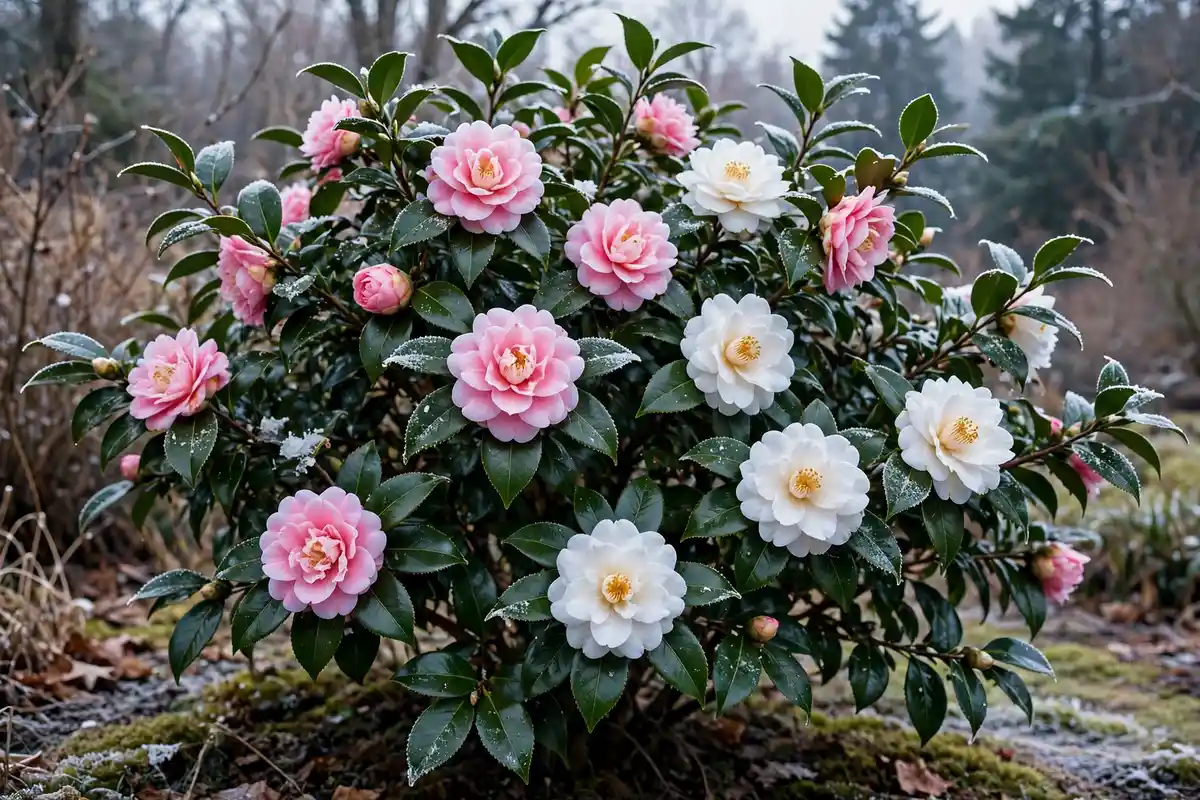
In the depths of winter, when the garden is bare branches and brown leaves, the camellia commits an act of pure defiance: it opens flowers of rose-like perfection, on glossy evergreen leaves, in frost. It is the rose of winter — and it keeps a secret the whole world drinks: the tea in your cup comes from a camellia too.
Camellias have been cultivated in China and Japan for well over a thousand years, guarded in temple gardens, carried to Europe as treasure, and bred into thousands of varieties. This guide covers what a camellia flower is, the six types and flower forms worth knowing, what camellias mean (Chanel, samurai and state flowers included), and how to grow them without the heartbreak of a bush full of buds that never open.
Quick Answer
A camellia flower is the bloom of evergreen shrubs in the genus Camellia (tea family, Theaceae), native to East Asia and flowering mainly from autumn to spring. The garden kinds are Camellia japonica (late winter to spring), C. sasanqua (autumn to early winter) and their hybrids; the same genus gives tea (C. sinensis). Camellias want acid soil (pH 5.5-6.5), part shade, shelter from cold wind and early-morning sun on frosted buds, and steady moisture in late summer while buds form. In return they give decades — sometimes centuries — of winter flowers.
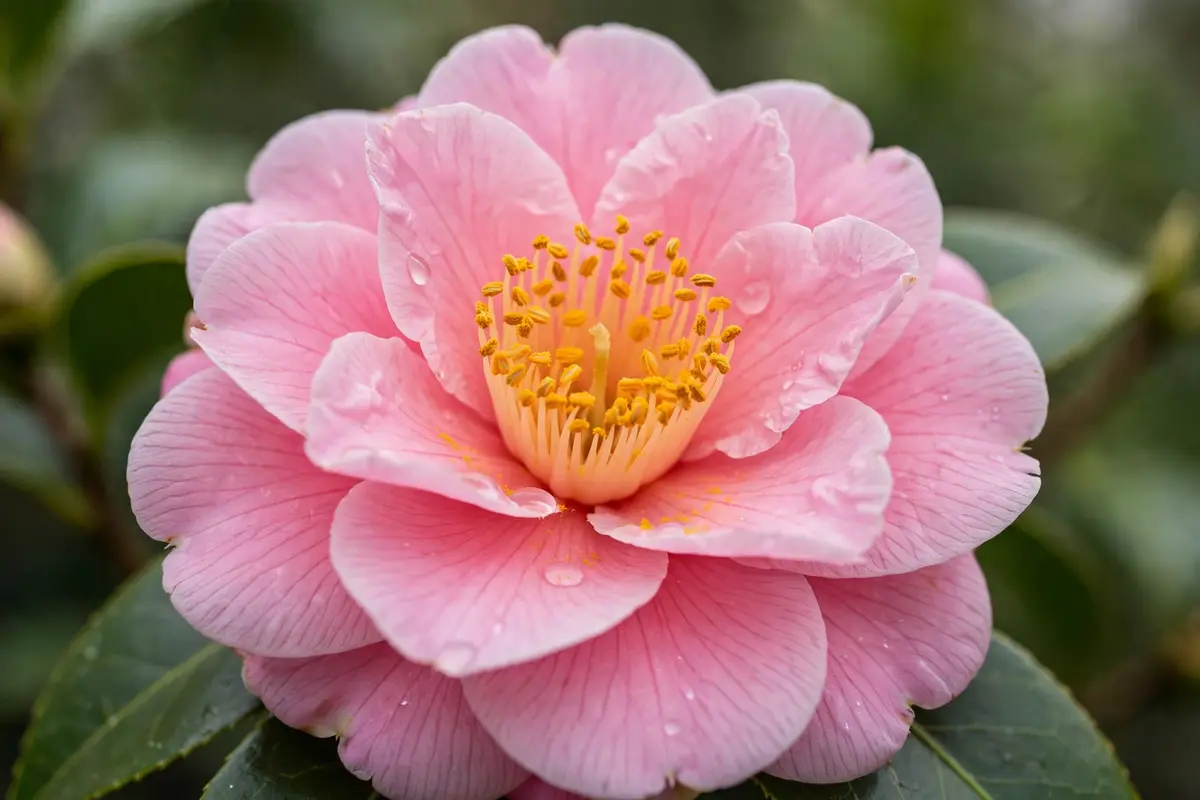
Table of Contents
- What Is a Camellia Flower?
- Types of Camellia and 6 Kinds Worth Growing
- Camellia Flower Meaning and Symbolism
- Camellia Flower Colours and Their Meanings
- How to Grow Camellias
- Common Mistakes When Growing Camellias
- Camellia Bud Drop: Why Buds Fall Without Opening
- Frequently Asked Questions
What Is a Camellia Flower?
The genus Camellia holds roughly 200 to 300 species of evergreen shrubs and small trees from East and Southeast Asia — China, Japan, Korea, Vietnam — in the tea family, Theaceae. Linnaeus named the genus for Georg Joseph Kamel, a Jesuit pharmacist-botanist who worked in the Philippines (and, by most accounts, never saw a camellia). The flowers are built around a boss of golden stamens, with petals that range from a single row of five to the packed, geometric perfection of the formal doubles. You can read more on the Camellia page on Wikipedia.
The garden camellia’s great gift is its calendar. Sasanquas open in autumn, often scented, scattering their petals freely; japonicas take over from midwinter to spring, holding their flowers intact and dropping them whole — a habit with deep meaning in Japan, where the tsubaki was loved by commoners and viewed ambivalently by samurai, to whom the falling whole flower suggested a severed head. Plants are famously long-lived: famous specimens in China are said to be centuries old, and a camellia planted in a London garden in the 1790s can still be flowering. Buy a camellia and you are planting for your grandchildren — which is why the growing section’s advice about position matters so much.
Camellia Flower Quick Facts
- Botanical name: Camellia species — garden hybrids mainly from C. japonica and C. sasanqua.
- Family: Theaceae, the tea family.
- Hardiness: USDA zones 7 to 9 for most (some modern hybrids to zone 6).
- Height: 6 to 15 feet as shrubs; old plants become small trees.
- Bloom time: October to May by species — sasanqua in autumn, japonica in late winter and spring.
- Sun and soil: part shade; acid, humus-rich, moist but drained soil (pH 5.5-6.5).
- Good to know: shallow-rooted — mulch well, and water in late summer as buds set.
Types of Camellia and 6 Kinds Worth Growing
Three species and their hybrids make nearly every garden camellia. The table separates them; the profiles follow. For the full list of flower names, see our flower names A to Z guide.
| Type | Botanical name | Bloom season | Habit | Best use |
|---|---|---|---|---|
| Japonica camellia | C. japonica | Late winter–spring | Dense, glossy, upright | The classic winter shrub |
| Sasanqua camellia | C. sasanqua | Autumn–early winter | Looser, smaller leaves, often scented | Hedges, espalier, autumn colour |
| Reticulata camellia | C. reticulata | Late winter–spring | Open, tree-like | Huge show blooms, mild climates |
| Williamsii hybrids | C. × williamsii | Winter–spring | Vigorous, free-flowering | Cold-hardy, reliable flowering |
| Tea camellia | C. sinensis | Autumn (small white) | Bushy, small leaves | Growing your own tea |
| Formal-double camellias | Japonica cultivars | Late winter–spring | By cultivar | Geometric perfect blooms |
1. Japonica Camellias — the Classic Winter Rose
The camellia most people picture: large, glossy leaves and sumptuous flowers from midwinter into spring, in singles, doubles and every form between, in white, pinks and reds (never true yellow or blue). Thousands of cultivars exist, from the blush perfection of ‘Debutante’ to the marbled ‘Tricolor’. Japonicas are the backbone shrubs of the winter garden — plant one where you can see it from a window in February, which is exactly where it will earn its keep.
2. Sasanqua Camellias — the Autumn Shift
Sasanquas flower a season earlier — from autumn into early winter — on looser, more graceful plants with smaller leaves and often a genuine fragrance, especially in the white and pale pink kinds. They tolerate more sun than japonicas, clip beautifully into hedges and espaliers, and shed their petals in a confetti carpet instead of dropping whole flowers. In warm climates they open the camellia year just as the garden is winding down — among the best of all fall flowers.
3. Reticulata Camellias — the Giants
From Yunnan in China, the reticulatas carry the largest camellia flowers of all — semi-double blooms six inches or more across, in saturated pinks and reds, on open, tree-like plants. They are less hardy (zones 8 to 10, or a sheltered wall elsewhere) and less common in gardens, which is a shame, because a reticulata in full flower stops traffic. Where they thrive, they are the connoisseur’s camellia.
4. Williamsii Hybrids — the Reliable Ones
Crosses between C. japonica and C. saluenensis, bred in Cornwall in the 1930s, the williamsii hybrids are the workhorses: hardier, more vigorous and freer-flowering than most japonicas, with the practical virtue that spent flowers drop cleanly instead of browning on the bush. Cultivars like ‘Donation’ and ‘J.C. Williams’ flower for months and forgive beginners — the recommended starting point in colder gardens.
5. Tea Camellia (Camellia sinensis)
Yes — the tea plant is a camellia, grown for two thousand years for its leaves rather than its modest white autumn flowers. Every cup of true tea — green, black, white, oolong — is this species, processed differently. As a garden plant it makes a neat evergreen shrub for zones 7 to 10, and a handful of bushes will genuinely supply a household’s hobby tea: pluck the bud and top two leaves, wither, roll, oxidise for black tea or steam for green. The flower’s own modest beauty is a bonus.
6. Formal-Double Camellias — Geometry in Petals
The camellia flower forms deserve one profile of their own for the most extreme of them: the formal double, in which dozens of petals overlap in perfect imbricated rows, spiralling to a centre that never shows a stamen — horticultural origami. ‘Alba Plena’, white and perfect since the 1700s, is the form’s masterpiece. Formal doubles are slower and shyer to flower than singles, and gardeners forgive them everything on sight.
Camellia Flower Meaning and Symbolism
The camellia means love, devotion and deep affection — and because it blooms when nothing else dares, it also means constancy: love that holds through the winter. In China, where it has been cultivated for over a millennium, the camellia symbolises romantic love and longevity; its two parts, the petals and the green calyx that holds them, were said to represent a lover and their protector, and unusually, the calyx stays with the fallen flower, so the two are never parted. In Japan, tsubaki signifies a noble death and divine beauty in Shinto tradition, where the flowers decorate shrines — while samurai ambivalence about the whole-falling flower kept it out of some warrior gardens.
The West added fashion: the white camellia became Coco Chanel’s emblem — she wore them, embroidered them, and seeded the motif through her designs — after the flower’s literary fame in Dumas’ La Dame aux Camélias, the story that became Verdi’s La Traviata. The camellia is also Alabama’s state flower. To give camellias is to say: my love is constant, refined, and not afraid of winter.
Camellia Flower Colours and Their Meanings
Camellias cover the warm half of the palette — white through pink to deep red, with a few rare yellows (from C. nitidissima hybrids) and no true blue:
- Red camellia — passionate love and desire: in the old language of flowers, “you are a flame in my heart”. The strongest declaration the genus makes.
- Pink camellia — longing and admiration: “I long for you” — the classic gift between separated lovers, and the most planted colour.
- White camellia — purity, adoration and perfect loveliness: “you are adorable”. Chanel’s colour, and the bride’s.
- Yellow camellia — longing and friendship in Japanese tradition, and rarity value everywhere: the golden camellias were protected treasures in China and Vietnam.
- Variegated camellia — uniqueness: the marbled and striped cultivars (white splashed on red, pink edged in white) say there is no one quite like you — each bloom literally unrepeatable.
How to Grow Camellias
Camellias are not difficult; they are specific. Meet four conditions — acid soil, shelter, part shade, summer water — and a plant will outlive you. Gardeners on r/gardening on Reddit summarise it as “plant it like a rhododendron and leave it alone”.
Position: Shelter Is Everything
Choose a spot out of cold, drying winds and — this is the rule beginners miss — away from early-morning sun in winter. A frosted bud hit by sudden morning sun thaws too fast and browns; the same bud thawing slowly in shade opens perfectly. A north or west-facing sheltered position, or dappled shade under high trees, is ideal. Sasanquas take more sun; japonicas want the shelter most. Remember the plant’s eventual size (6 to 15 feet) and its shallow roots — underplant with bulbs, not with a spade.
Soil: Acid, Rich, and Drained
Camellias need acid soil, pH 5.5 to 6.5, rich in humus and moist but never waterlogged — the same recipe as their companions the azalea and rhododendron. On alkaline soil the leaves yellow between the veins (iron chlorosis); in heavy clay, roots rot. In pots — an excellent option on the wrong soil — use ericaceous (acid) compost, a generous pot, and rainwater if your tap water is hard. Plant at the same depth as the pot, never deeper: camellias resent buried crowns.
Watering: the Late-Summer Rule
The critical watering window is late summer and early autumn, when next spring’s flower buds are forming. Drought then means bud drop in winter (the next section). Water deeply in dry late summers, mulch with leaf mould or bark to hold moisture over the shallow roots, and keep pot plants evenly moist year-round — a camellia in a pot that dries out in August is a shrub of brown buds by February.
Feeding and Pruning
Feed once in spring with an ericaceous fertiliser; more feeding pushes leaves at the expense of buds, and manure-rich kindness kills more camellias than neglect. Pruning is minimal: remove dead wood and shorten wayward shoots immediately after flowering, since next year’s buds form on this summer’s growth. Old, leggy plants can be hard-pruned in spring and usually reshoot from the base with patience.
Common Mistakes When Growing Camellias
The most common mistake is the sunny east-facing wall: frost plus instant morning thaw equals a spring of brown buds — position is destiny for camellias. The second is planting in alkaline soil and wondering at the yellow leaves; test the soil first, or grow in a pot. The third is planting too deep, which sulks the plant for years.
The fourth mistake is forgetting the late-summer water — the buds are made in August, not February. And the fifth is cultivating under the plant: camellia roots feed at the surface, and a fork through them does real damage. Mulch instead, and let the roots keep the topsoil they own.
Camellia Bud Drop: Why Buds Fall Without Opening
A healthy camellia sets far more buds than it can open, and shedding some is normal self-thinning. Abnormal bud drop — most buds browning, loosening and falling — has a short list of causes, in order of frequency: summer drought at bud formation (see the watering rule); hard frost on nearly-open buds, especially with sudden morning sun; waterlogged roots in winter; and overfeeding, which produces soft growth and weak buds. The diagnosis follows the pattern: buds lost all over after a dry summer means water; buds lost on the sun side after one frosty night means position; buds lost with yellowing leaves means soil. Nearly every case is one of the four, and all four are in the grower’s hands.
Frequently Asked Questions
When do camellias bloom?
From October to May, by species: sasanquas open in autumn and early winter, japonicas and williamsii hybrids from midwinter through spring, reticulatas in late winter and spring in mild climates. A garden with both sasanquas and japonicas can hold camellia flowers for nearly half the year, through the heart of the January birth flower season and beyond. If your question is not answered here, the questions about the camellia flower on Quora cover most of the rest.
Is tea really made from a camellia?
Yes — all true tea (green, black, white, oolong and pu-erh) comes from the leaves of Camellia sinensis. Herbal “teas” like chamomile and peppermint are infusions of other plants, but the world’s most-drunk beverage is a camellia. The species makes a perfectly garden-worthy shrub in zones 7 to 10.
Why are my camellia leaves turning yellow?
Usually iron chlorosis from alkaline soil: the leaf yellows between green veins because the plant cannot take up iron at high pH. Move the plant to acid soil or a pot of ericaceous compost, water with rainwater, and use a sequestered-iron feed as a rescue. Yellow leaves with wet soil can also mean root trouble — check the drainage.
Why do my camellia buds turn brown and fall off?
Bud drop is most often summer drought at bud formation, frost damage worsened by morning sun, waterlogged roots, or overfeeding — see the bud-drop section above for the full diagnosis. A few shed buds are normal; a bush that drops nearly all of them is reporting one of those four causes.
Are camellias poisonous to pets?
Camellias are considered non-toxic to cats, dogs and horses — one of the safest show shrubs for pet-owning gardeners. The leaves contain caffeine relatives (as you’d expect from the tea plant’s family) and are bitter, but camellias are not listed among poisonous plants by the major animal-welfare references.
How big do camellias get?
Most garden camellias reach 6 to 12 feet over decades, with old plants becoming small trees of 15 feet or more; growth is slow, a few inches a year. Container plants stay smaller. Choose the spot as if for a tree, because in time that is what you have planted. For more flowers under the same letter, see our guide to flowers that start with C.