40 Flowers That Start With H: Names, Pictures & Growing Tips
40 Flowers That Start With H: Names, Pictures & Growing Tips
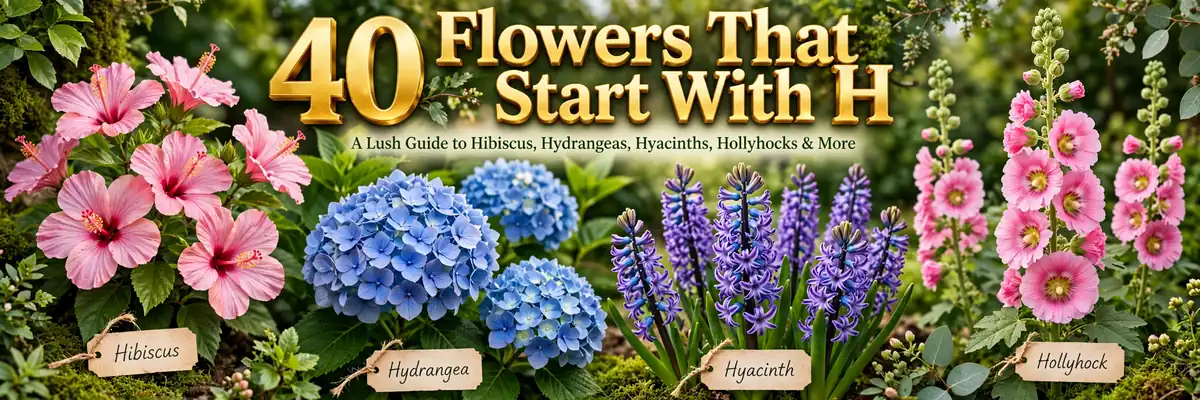
Looking for flower names that start with H? You are in for a treat. The letter H delivers some of the most iconic blooms in American gardens — the dinner-plate drama of tropical hibiscus, the billowing blue clouds of hydrangea, the sweet spring perfume of hyacinth, and the towering spires of hollyhock. Whether you are designing a new border, choosing a bouquet flower, or building an alphabet garden with the kids, this guide covers 40 real flowers that start with H, each with growing advice you can actually use.
Every entry below includes the flower’s scientific name, bloom season, sun needs, and USDA hardiness zone, so you can spot at a glance which H-flowers will thrive in your yard. You will also find two quick comparison tables, practical growing tips for beginners and experienced gardeners alike, and answers to the most common questions gardeners ask about flowers beginning with H. Let’s get planting.
Quick Answer
Popular flowers that start with H include Hibiscus, Hydrangea, Hyacinth, Hollyhock, Honeysuckle, Heliotrope, Helenium, Hosta, Hellebore, and Heather. They span tropical shrubs, spring bulbs, summer perennials, and winter bloomers across USDA zones 3–11, so there is an H-flower for nearly every US garden.
Table of Contents
H-Flowers at a Glance
Use this table to compare all 40 flowers that start with H side by side, from botanical names to native regions.
| Flower name | Scientific name | Type | Color | Native region |
|---|---|---|---|---|
| Tropical Hibiscus | Hibiscus rosa-sinensis | Tropical shrub | Red, pink, yellow, orange, white | East Asia |
| Bigleaf Hydrangea | Hydrangea macrophylla | Deciduous shrub | Blue, pink, purple, white | Japan |
| Common Hyacinth | Hyacinthus orientalis | Spring bulb | Purple, pink, blue, white, yellow | Turkey, Middle East |
| Hollyhock | Alcea rosea | Biennial | Pink, red, white, yellow, purple, near-black | China, Central Asia |
| Honeysuckle | Lonicera spp. | Deciduous vine/shrub | White, yellow, pink, red | Northern Hemisphere |
| Heliotrope | Heliotropium arborescens | Tender perennial | Purple, blue, white | Peru |
| Helenium | Helenium autumnale | Herbaceous perennial | Red, orange, yellow, bronze | North America |
| Coral Bells | Heuchera spp. | Evergreen perennial | Pink, red, white spikes; purple, lime, bronze foliage | North America |
| Hosta | Hosta spp. | Herbaceous perennial | Lavender, white, purple spikes | Japan, China, Korea |
| St. John’s Wort | Hypericum spp. | Deciduous shrub | Yellow | Temperate regions worldwide |
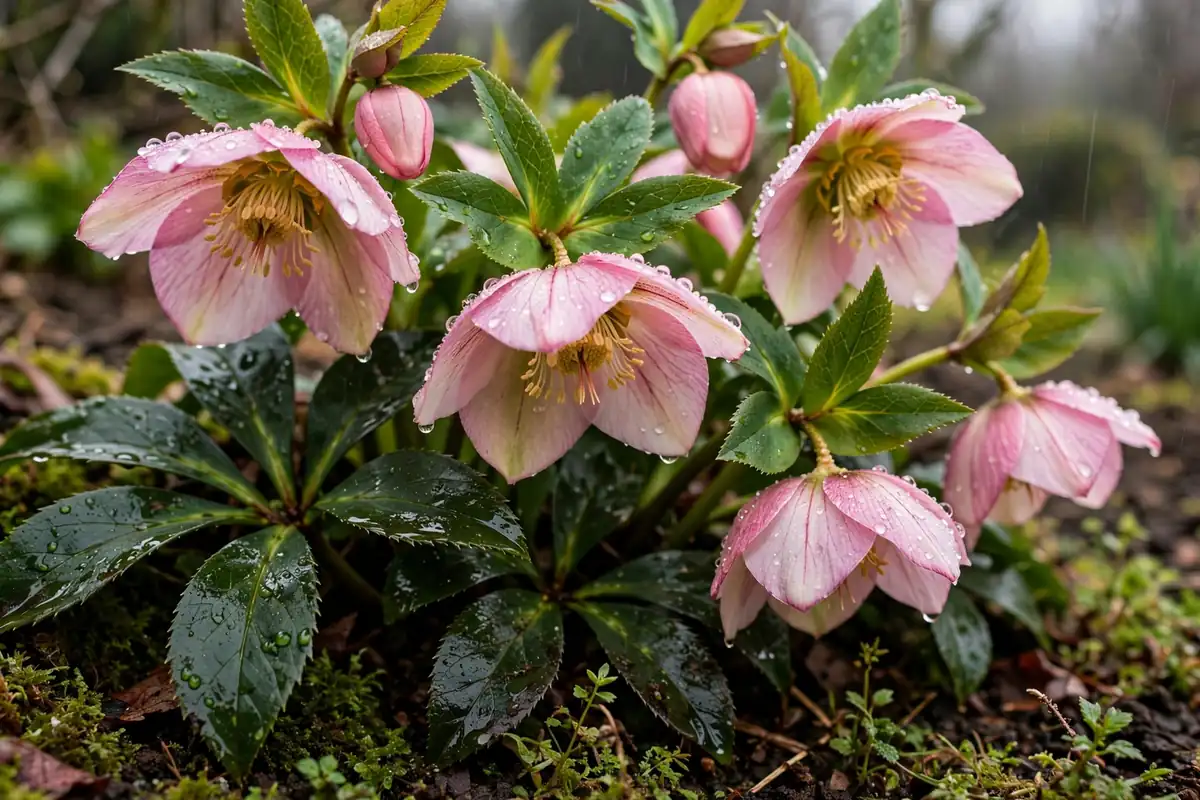
| Hellebore | Helleborus × hybridus | Evergreen perennial | White, pink, purple, green, near-black | Europe, Asia |
| Heather | Calluna vulgaris | Evergreen shrub | Pink, purple, white | Europe, Asia |
| False Sunflower | Heliopsis helianthoides | Herbaceous perennial | Yellow, gold | Central North America |
| Sweet Rocket | Hesperis matronalis | Biennial/short-lived perennial | Purple, pink, white | Europe, Asia |
| Honesty | Lunaria annua | Biennial | Purple, white | Southern Europe |
| Hebe | Hebe spp. | Evergreen shrub | Blue, purple, pink, white | New Zealand |
| Witch Hazel | Hamamelis virginiana | Deciduous shrub/small tree | Yellow | Eastern North America |
| Hawthorn Blossom | Crataegus monogyna | Deciduous tree/shrub | White (pink cultivars) | Europe, Asia |
| Holly Blossom | Ilex aquifolium | Evergreen tree/shrub | Small white flowers | Europe, Asia, North Africa |
| Horse Chestnut Blossom | Aesculus hippocastanum | Deciduous tree | White candles with pink throats | Balkans |
| Wax Plant | Hoya carnosa | Tropical vine (houseplant) | Pink-white star clusters | East Asia, Australia |
| Rose of Sharon | Hibiscus syriacus | Deciduous shrub | Pink, purple, blue, white | East Asia |
| Hardy Hibiscus | Hibiscus moscheutos | Herbaceous perennial | Red, pink, white | Eastern North America |
| Strawflower | Xerochrysum bracteatum | Annual/tender perennial | Red, pink, orange, yellow, white | Australia |
| Hardy Fuchsia | Fuchsia magellanica | Deciduous shrub | Red and purple | Chile, Argentina |
| Himalayan Blue Poppy | Meconopsis baileyi | Short-lived perennial | Sky blue | Himalayas |
| Heartsease | Viola tricolor | Annual/biennial | Purple, yellow, white | Europe, Asia |
| Hyssop | Hyssopus officinalis | Semi-evergreen subshrub | Blue-purple, pink, white | Southern Europe, Middle East |
| Hyacinth Bean | Lablab purpureus | Annual vine | Purple-pink pea flowers | Africa, Asia |
| Harebell | Campanula rotundifolia | Herbaceous perennial | Blue-violet | Northern Hemisphere |
| Hardy Geranium | Geranium spp. | Herbaceous perennial | Pink, blue, purple, white | Temperate regions worldwide |
| Winter Heath | Erica carnea | Evergreen shrub | Pink, red, white | Central and Southern Europe |
| Himalayan Honeysuckle | Leycesteria formosa | Deciduous shrub | White flowers with burgundy bracts | Himalayas, China |
| Panicled Hydrangea | Hydrangea paniculata | Deciduous shrub | White aging to pink | East Asia |
| Climbing Hydrangea | Hydrangea anomala subsp. petiolaris | Climbing vine | White lacecap | Japan, Korea |
| Summer Hyacinth | Galtonia candicans | Summer bulb | White, fragrant | South Africa |
| Spanish Bluebell | Hyacinthoides hispanica | Spring bulb | Blue, pink, white | Iberian Peninsula |
| Hepatica | Hepatica nobilis | Woodland perennial | Blue, pink, white | Northern Hemisphere |
| Bluets | Houstonia caerulea | Native perennial | Pale blue with yellow eye | Eastern North America |
| Peruvian Daffodil | Hymenocallis spp. | Tender bulb | White, fragrant | South America |
Bloom Season, Sun Needs & Hardiness Zones
Planning your garden calendar? This second table shows when each H-flower blooms, how much sun it wants, and the USDA zones where it grows outdoors year-round.
| Flower name | Bloom season | Sun needs | Hardiness zone |
|---|---|---|---|
| Tropical Hibiscus | Summer to fall (year-round in tropics) | Full sun | 9–11; houseplant elsewhere |
| Bigleaf Hydrangea | Summer | Part shade | 5–9 |
| Common Hyacinth | Early to midspring | Full sun to part shade | 4–8 |
| Hollyhock | Summer | Full sun | 3–9 |
| Honeysuckle | Late spring to summer | Full sun to part shade | 4–9 |
| Heliotrope | Summer to fall | Full sun | 10–11; annual elsewhere |
| Helenium | Late summer to fall | Full sun | 3–8 |
| Coral Bells | Late spring to summer | Part shade | 4–9 |
| Hosta | Summer | Part to full shade | 3–9 |
| St. John’s Wort | Summer | Full sun to part shade | 5–9 |
| Hellebore | Late winter to early spring | Part to full shade | 4–9 |
| Heather | Late summer to fall | Full sun | 4–6 |
| False Sunflower | Summer to fall | Full sun | 3–9 |
| Sweet Rocket | Late spring to early summer | Full sun to part shade | 3–8 |
| Honesty | Spring | Full sun to part shade | 4–8 |
| Hebe | Summer to fall | Full sun to part shade | 7–10 |
| Witch Hazel | Fall to early winter | Full sun to part shade | 3–8 |
| Hawthorn Blossom | Late spring | Full sun | 4–8 |
| Holly Blossom | Late spring | Full sun to part shade | 5–9 |
| Horse Chestnut Blossom | Late spring | Full sun | 4–7 |
| Wax Plant | Spring to summer indoors | Bright indirect light | Houseplant (10–11 outdoors) |
| Rose of Sharon | Summer to fall | Full sun | 5–8 |
| Hardy Hibiscus | Summer to early fall | Full sun | 5–9 |
| Strawflower | Summer to fall | Full sun | Grown as annual (8–11 perennial) |
| Hardy Fuchsia | Summer to fall | Part shade | 6–9 |
| Himalayan Blue Poppy | Late spring to early summer | Part shade | 5–8 |
| Heartsease | Spring to fall | Full sun to part shade | 3–9 (often grown as annual) |
| Hyssop | Summer | Full sun | 3–9 |
| Hyacinth Bean | Late summer to fall | Full sun | Grown as annual (9–11 perennial) |
| Harebell | Summer to fall | Full sun to part shade | 3–8 |
| Hardy Geranium | Late spring to fall | Full sun to part shade | 4–8 |
| Winter Heath | Late winter to early spring | Full sun to part shade | 5–7 |
| Himalayan Honeysuckle | Summer to fall | Full sun to part shade | 7–9 |
| Panicled Hydrangea | Summer to fall | Full sun to part shade | 3–8 |
| Climbing Hydrangea | Early summer | Part to full shade | 4–8 |
| Summer Hyacinth | Summer | Full sun | 6–10 |
| Spanish Bluebell | Spring | Part shade | 3–8 |
| Hepatica | Early spring | Part to full shade | 4–8 |
| Bluets | Spring | Full sun to part shade | 4–8 |
| Peruvian Daffodil | Summer | Full sun | 8–10 |
40 Flowers That Start With H: The Complete List
Here they are — 40 beautiful, real flowers beginning with H, each with growing notes so you can pick the right ones for your garden.
1. Tropical Hibiscus (Hibiscus rosa-sinensis)
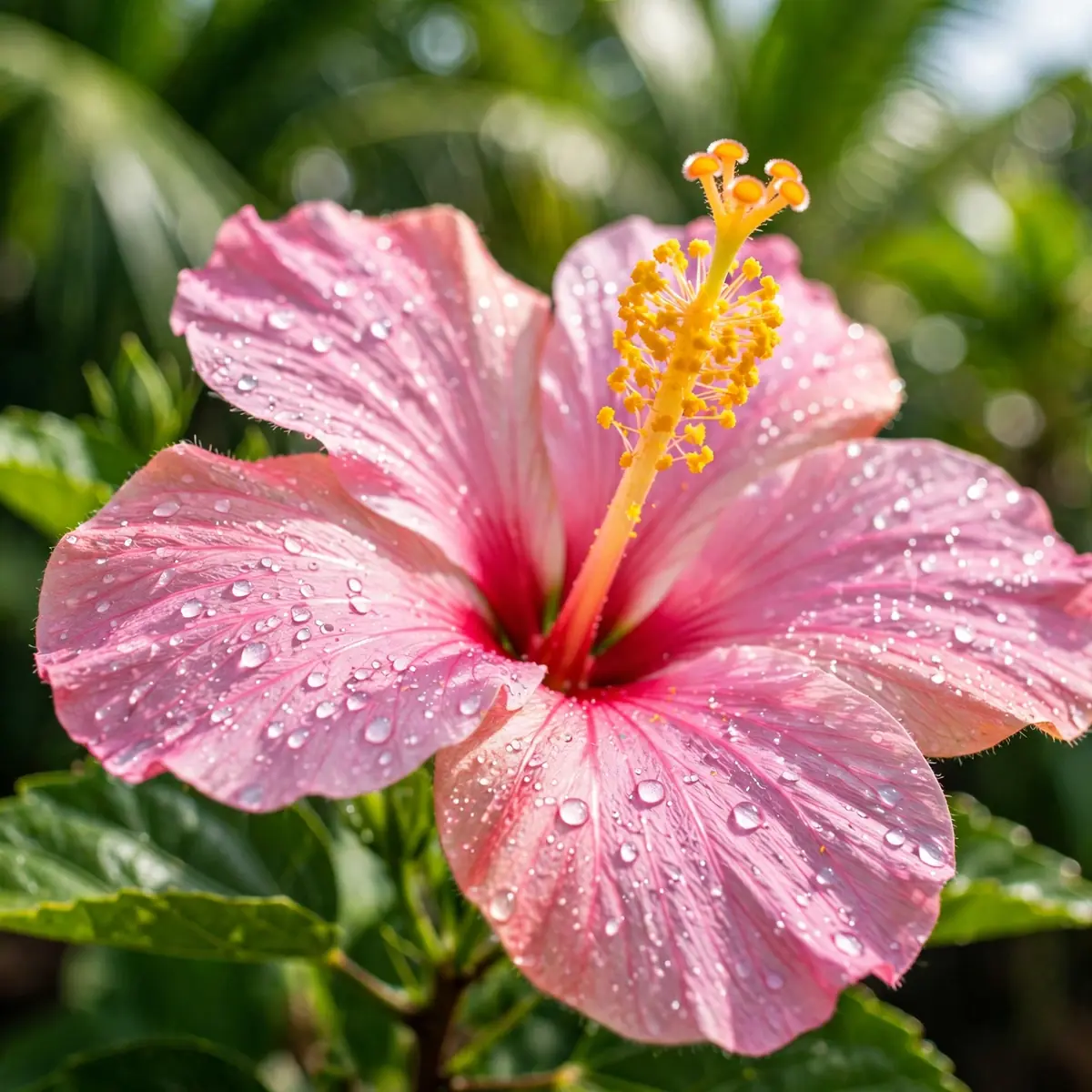
Tropical hibiscus is pure vacation energy — huge satiny blooms up to 6 inches across in red, pink, yellow, orange, and multicolor, each lasting just a day but replaced relentlessly in heat. This glossy-leaved shrub loves full sun, warmth, and regular feeding. In zones 9–11 it lives outdoors year-round; elsewhere grow it in a pot and bring it inside before nights drop below 50°F.
Bloom: Summer to fall (year-round in tropics) | Sun: Full sun | Zone: 9–11; houseplant elsewhere | Best for: Tropical color, patio pots
2. Bigleaf Hydrangea (Hydrangea macrophylla)
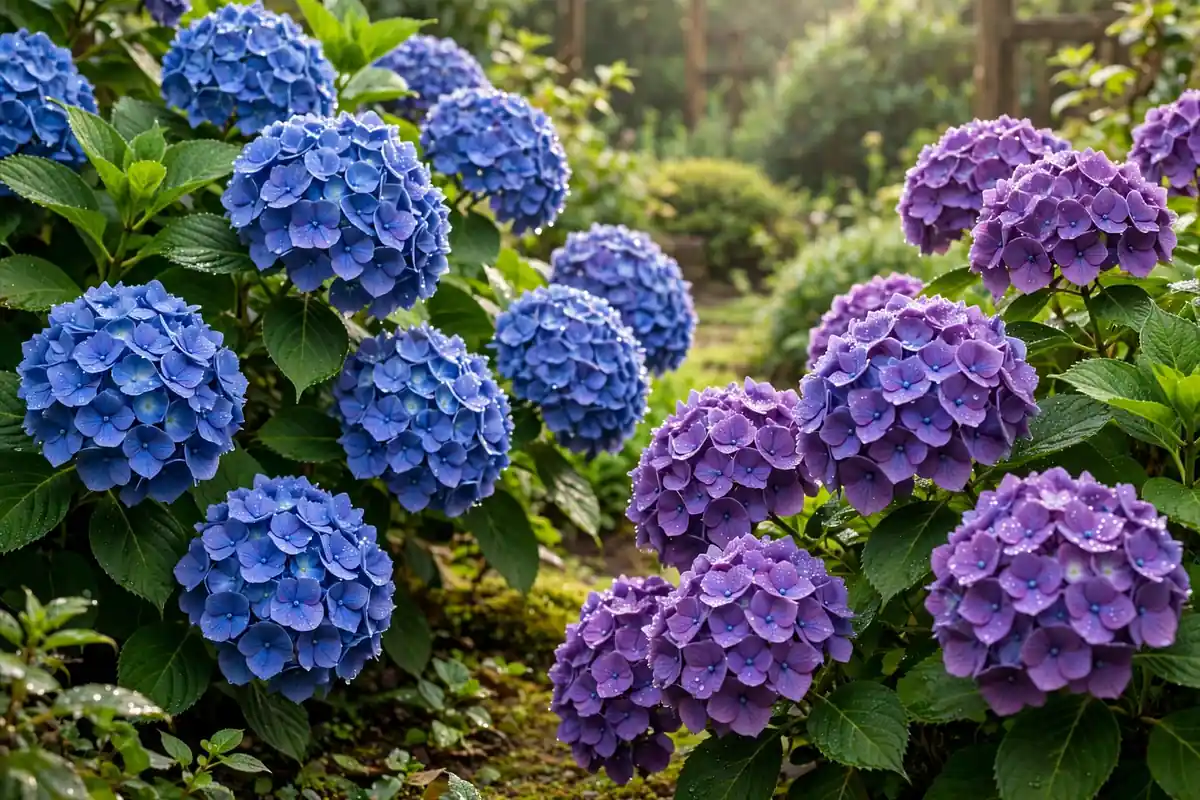
Bigleaf hydrangea produces the classic mophead blooms — giant puffballs of blue, pink, purple, or white that can reach 8 inches wide. The famous color trick is real: acidic soil turns flowers blue, alkaline soil turns them pink. Give it morning sun with afternoon shade, rich moist soil, and shelter from harsh winter winds. Prune right after flowering to protect next year’s buds.
Bloom: Summer | Sun: Part shade | Zone: 5–9 | Best for: Shrub borders, cut flowers
3. Common Hyacinth (Hyacinthus orientalis)
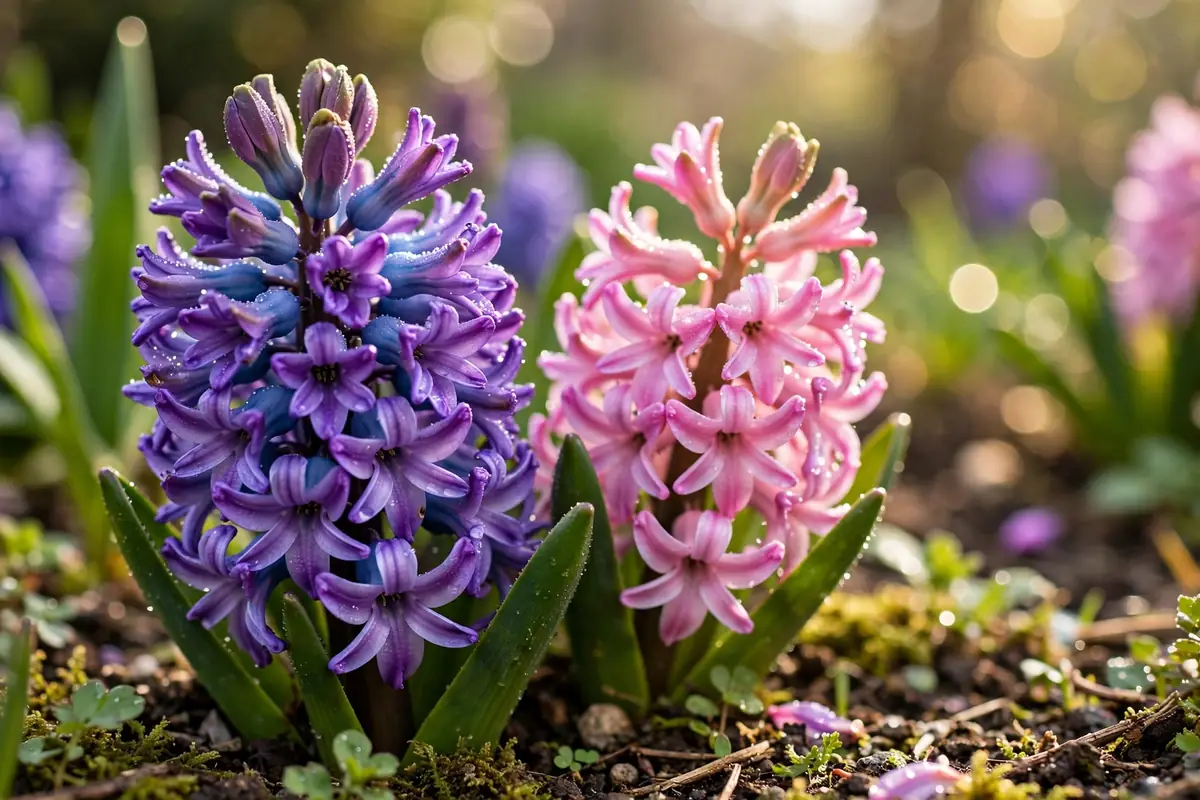
Common hyacinth packs more fragrance per square inch than almost any spring bulb — dense spikes of waxy purple, pink, blue, white, or yellow flowers that perfume an entire garden bed. Plant bulbs 4 inches deep in fall in well-drained soil. They are excellent for forcing indoors in bowls or glasses. Wear gloves when handling bulbs; the oxalic acid can irritate sensitive skin.
Bloom: Early to midspring | Sun: Full sun to part shade | Zone: 4–8 | Best for: Fragrant spring beds, forcing indoors
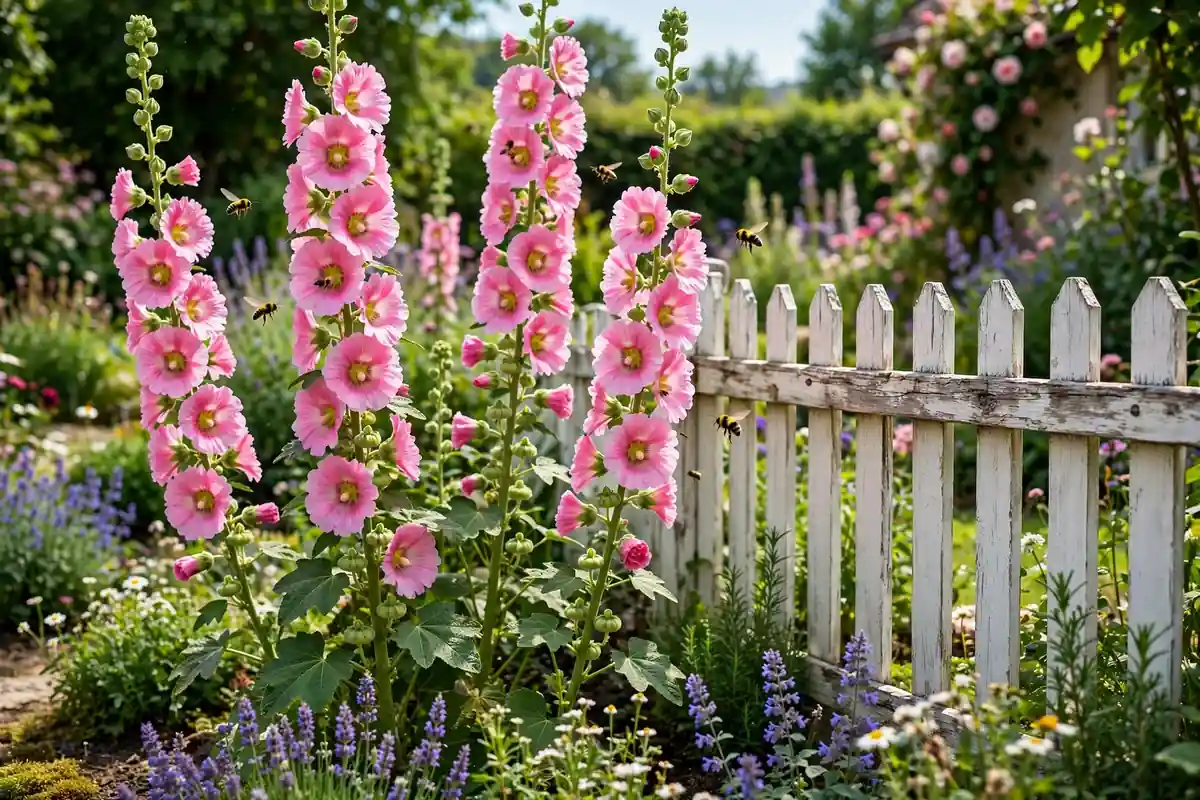
4. Hollyhock (Alcea rosea)
Hollyhocks are the skyscrapers of the cottage garden, launching 6- to 9-foot spires of satiny single or double blooms in pink, red, white, yellow, and near-black each summer. Technically biennial, they self-sow freely so a colony persists for years. Plant in full sun with shelter from strong winds, and water at the base to discourage rust, the orange leaf spots that plague them.
Bloom: Summer | Sun: Full sun | Zone: 3–9 | Best for: Cottage gardens, tall backdrops
5. Honeysuckle (Lonicera spp.)
Few scents say summer like honeysuckle — sweet tubular flowers in white, yellow, pink, or red that release their perfume strongest at dusk. Vigorous vines like Hall’s honeysuckle cover fences and arbors fast, while shrubby types stay compact. Choose non-invasive species (native trumpet honeysuckle is superb) and avoid the aggressively spreading Japanese type where it is a known problem. Hummingbirds adore it.
Bloom: Late spring to summer | Sun: Full sun to part shade | Zone: 4–9 | Best for: Fragrance, trellises, hummingbirds
6. Heliotrope (Heliotropium arborescens)
Heliotrope is the cherry-pie plant — clusters of deep purple-blue flowers that smell unmistakably of vanilla and baked cherries. It blooms nonstop from summer to frost in full sun, staying a tidy 1–2 feet tall. Though perennial in zones 10–11, most gardeners grow it as an annual in beds and containers. Deadhead spent clusters to keep the fragrance factory running.
Bloom: Summer to fall | Sun: Full sun | Zone: 10–11; annual elsewhere | Best for: Vanilla fragrance, bedding
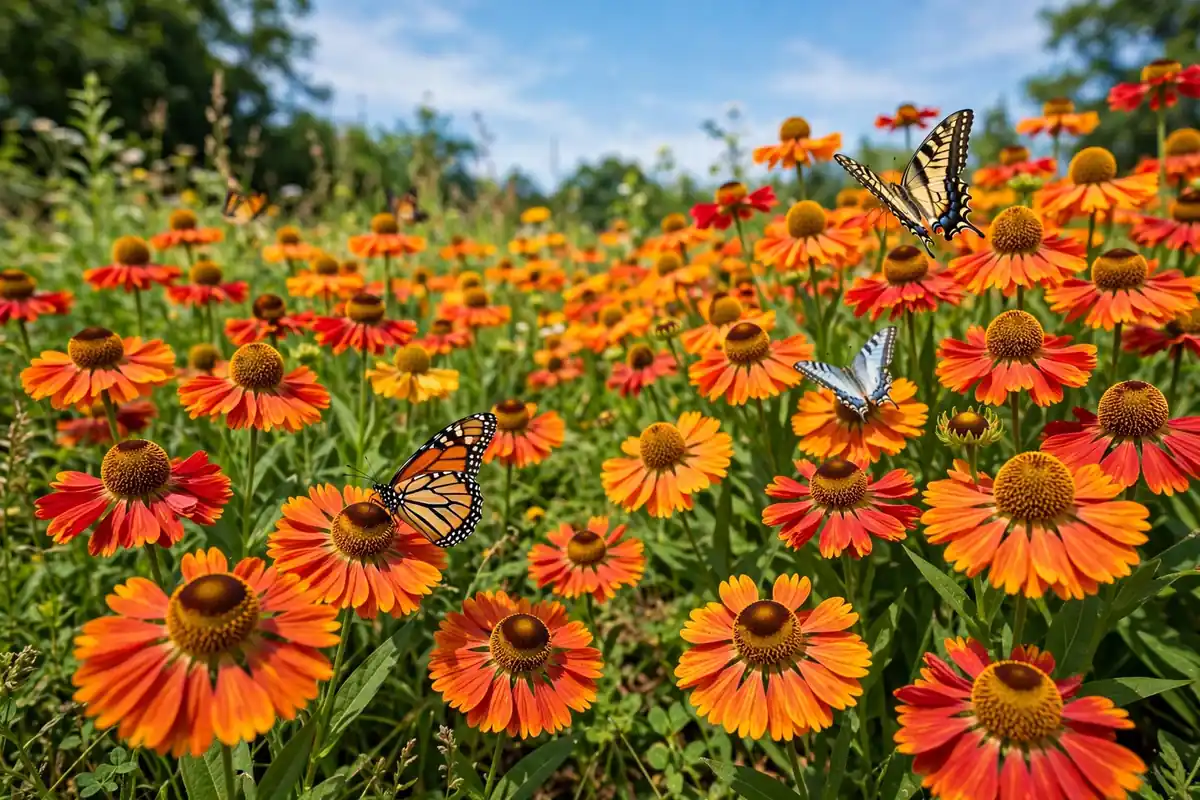
7. Helenium (Helenium autumnale)
Helenium, or sneezeweed, lights up the late-summer border with daisy-like flowers in fiery red, copper, orange, and gold — often with a distinctive raised center cone. It blooms for weeks when many perennials are fading and is a magnet for butterflies. Give it full sun and moisture-retentive soil; it sulks in drought. Divide clumps every 2–3 years for the best display.
Bloom: Late summer to fall | Sun: Full sun | Zone: 3–8 | Best for: Late-season color, pollinators
8. Coral Bells (Heuchera spp.)
Coral bells are grown mainly for their spectacular foliage — ruffled leaves in purple, lime, caramel, and near-black that hold color all season — but don’t overlook the airy spikes of tiny pink, red, or white bells in late spring. This North American native wants part shade and well-drained soil; wet winter crowns are its biggest enemy. A top choice for containers and edging with year-round interest.
Bloom: Late spring to summer | Sun: Part shade | Zone: 4–9 | Best for: Foliage color, edging, containers
9. Hosta (Hosta spp.)
Hostas rule the shade garden with bold, architectural leaves — blue-green, gold, variegated, or giant — that outshine most flowers. In summer they send up spikes of lavender or white trumpet blooms that hummingbirds visit. Give them part to full shade, rich moist soil, and slug patrols (beer traps or iron phosphate work). Thousands of cultivars exist, from tiny ‘Blue Mouse Ears’ to dinner-plate ‘Sum and Substance’.
Bloom: Summer | Sun: Part to full shade | Zone: 3–9 | Best for: Shade foliage, under trees
10. St. John’s Wort (Hypericum spp.)
St. John’s wort covers itself in cheerful butter-yellow, powder-puff flowers each summer, followed by ornamental red or black berries on some varieties. This tough shrub tolerates poor soil, drought, and neglect once established. Compact types like ‘Hidcote’ make excellent low hedges and groundcovers. It blooms on new wood, so prune in late winter for the heaviest flower show.
Bloom: Summer | Sun: Full sun to part shade | Zone: 5–9 | Best for: Low-maintenance shrubs, groundcover
11. Hellebore (Helleborus × hybridus)
Hellebores — the Lenten roses — bloom when the garden is still half asleep, nodding cups of white, pink, purple, green, or speckled near-black from late winter into spring. Their leathery evergreen foliage looks good year-round. Plant in part to full shade with rich, well-drained soil, and resist the urge to move them — hellebores resent disturbance. Trim old leaves in late winter to show off the flowers.
Bloom: Late winter to early spring | Sun: Part to full shade | Zone: 4–9 | Best for: Winter interest, shade gardens
12. Heather (Calluna vulgaris)
Heather paints late-summer moorlands pink and purple with tiny bell-shaped flowers massed on evergreen shrubs. In the garden it forms tidy 1- to 2-foot mounds that need acidic soil (pH 4.5–5.5), full sun, and sharp drainage — think of it as a companion for blueberries and rhododendrons. Shear lightly after flowering to keep plants dense. Bees harvest its famous heather honey.
Bloom: Late summer to fall | Sun: Full sun | Zone: 4–6 | Best for: Acidic soil gardens, groundcover
13. False Sunflower (Heliopsis helianthoides)
False sunflower delivers true sunflower cheer without the fuss — bright golden-yellow daisies, single or double, blooming from summer straight through fall on sturdy 3- to 5-foot stems. It is far more perennial-reliable than annual sunflowers and shrugs off heat and poor soil. Deadhead for continuous bloom or leave seed heads for goldfinches. ‘Summer Nights’ adds bronze-red stems for extra style.
Bloom: Summer to fall | Sun: Full sun | Zone: 3–9 | Best for: Long bloom season, cut flowers
14. Sweet Rocket (Hesperis matronalis)
Sweet rocket earns its keep after dark — clusters of purple, pink, or white phlox-like flowers release an intoxicating clove-vanilla perfume on warm evenings. This old-fashioned biennial self-sows freely in cottage gardens, blooming in its second year. Plant near patios and windows where the evening scent drifts inside. Deadhead some plants and let others seed for a perpetual colony.
Bloom: Late spring to early summer | Sun: Full sun to part shade | Zone: 3–8 | Best for: Evening fragrance, cottage gardens
15. Honesty (Lunaria annua)
Honesty is a two-season star: purple or white flowers in spring, then flat, silvery translucent seed pods — the “silver dollars” — that glow in dried arrangements through winter. This easy biennial self-sows reliably in part shade. Sow seeds in early summer where you want plants; they bloom the next spring. Peel the outer pod walls to reveal the shimmering inner membrane.
Bloom: Spring | Sun: Full sun to part shade | Zone: 4–8 | Best for: Silver seed pods, dried arrangements
16. Hebe (Hebe spp.)
Hebes are the evergreen backbone of mild-climate gardens — neat New Zealand shrubs with glossy foliage and summer spikes of blue, purple, pink, or white flowers. They tolerate wind, salt spray, and poor soil, making them coastal favorites. Most are hardy to about 10°F, so in zones 7–10 they shine; colder gardeners can grow compact types in pots. Shear after flowering to keep them shapely.
Bloom: Summer to fall | Sun: Full sun to part shade | Zone: 7–10 | Best for: Evergreen structure, coastal gardens
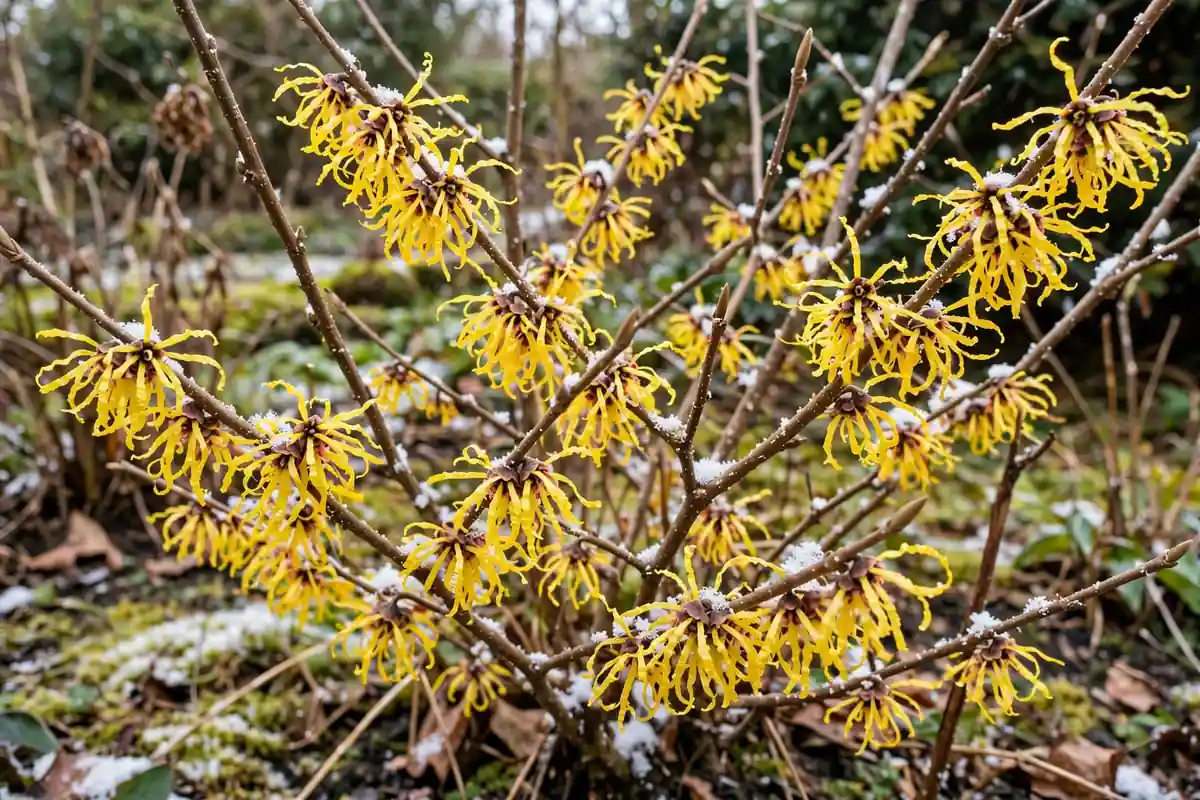
17. Witch Hazel (Hamamelis virginiana)
Witch hazel performs its magic in the cold months — spidery yellow ribbon flowers unfurl on bare branches in fall to early winter, often while snow is on the ground, with a light spicy scent. This tough native shrub tolerates shade, clay, and neglect. Give it room to reach 10–15 feet. The bark and leaves are the source of the classic astringent witch hazel extract.
Bloom: Fall to early winter | Sun: Full sun to part shade | Zone: 3–8 | Best for: Winter flowers, native gardens
18. Hawthorn Blossom (Crataegus monogyna)
Hawthorn blossom — the May flower — smothers thorny branches in clusters of white (or pink in cultivars) blooms each late spring, filling hedgerows with a distinctive sweet-almond scent. The flowers give way to red haws that feed birds all winter. As a small tree or clipped hedge, it is nearly indestructible in zones 4–8. Plant it where the thorns won’t snag passersby.
Bloom: Late spring | Sun: Full sun | Zone: 4–8 | Best for: Wildlife hedges, spring bloom
19. Holly Blossom (Ilex aquifolium)
Holly is famous for its berries, but its small white spring blossoms deserve appreciation — delicate, lightly fragrant, and absolutely essential, since berries only form on female plants pollinated by a nearby male. English holly’s spiny evergreen leaves make it a classic hedge and Christmas symbol. Plant male and female together, give it well-drained soil, and let the bees do the rest.
Bloom: Late spring | Sun: Full sun to part shade | Zone: 5–9 | Best for: Winter berries, evergreen hedges
20. Horse Chestnut Blossom (Aesculus hippocastanum)
Horse chestnut blossom is a spring spectacle — upright white “candles” up to a foot tall, each floret blushed with pink or yellow throats, covering the tree’s broad canopy in May. These majestic trees suit large properties, reaching 50–75 feet. They need full sun and room to spread. Note: the conkers are toxic to humans and pets, though beloved by squirrels and autumn crafters.
Bloom: Late spring | Sun: Full sun | Zone: 4–7 | Best for: Grand shade trees, spring spectacle
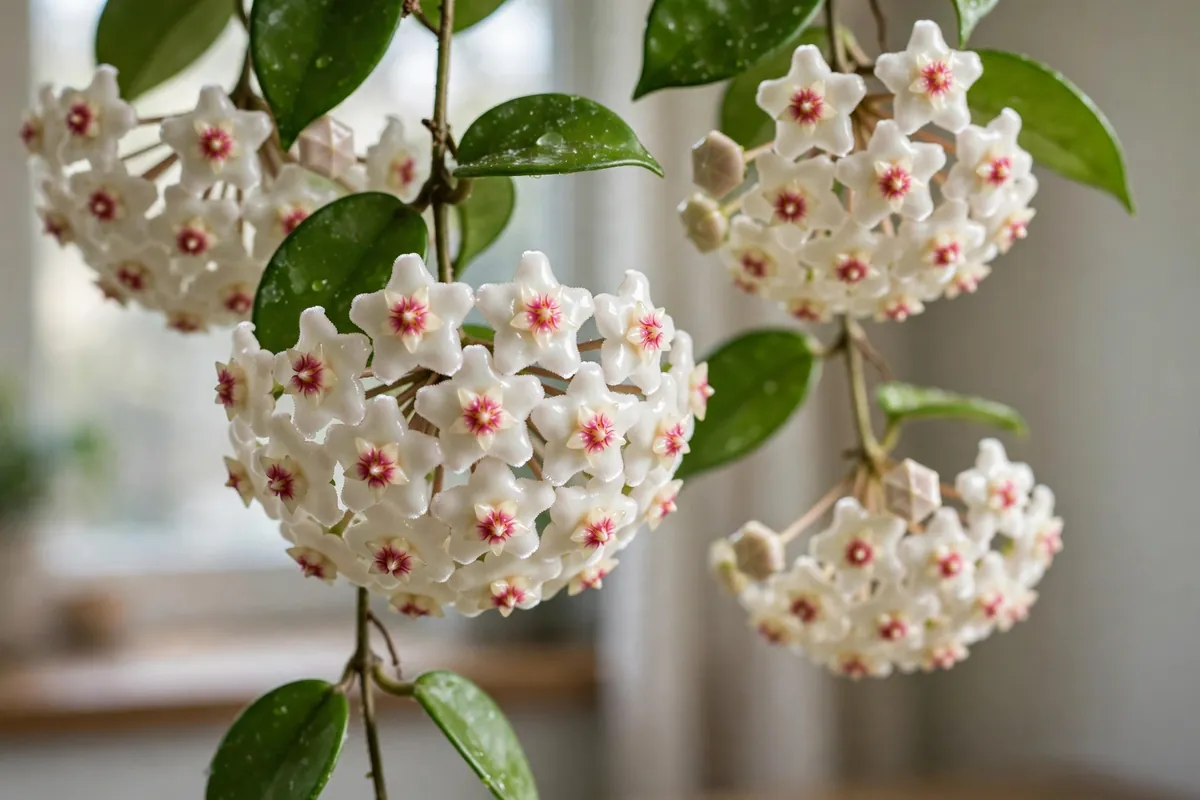
21. Wax Plant (Hoya carnosa)
Wax plant is the beloved grandma’s houseplant that never goes out of style — trailing vines of thick, glossy leaves and umbrella clusters of waxy pink-white stars that smell of chocolate and honey at night. It blooms best when pot-bound and slightly neglected, in bright indirect light. Never cut off the flower spurs; new blooms form on the same nubs year after year.
Bloom: Spring to summer indoors | Sun: Bright indirect light | Zone: Houseplant (10–11 outdoors) | Best for: Hanging baskets, fragrant houseplants
22. Rose of Sharon (Hibiscus syriacus)
Rose of Sharon brings hibiscus glamour to cold climates — big tropical-looking blooms in pink, purple, blue, white, and bicolor on a hardy deciduous shrub that sails through zone 5 winters. It flowers from midsummer to fall, exactly when the garden needs a lift. Plant in full sun and prune in late winter to shape. Self-sown seedlings can be weedy, so deadhead if yours spreads.
Bloom: Summer to fall | Sun: Full sun | Zone: 5–8 | Best for: Late-summer shrubs, flowering hedges
23. Hardy Hibiscus (Hibiscus moscheutos)
Hardy hibiscus produces the biggest flowers of any hardy perennial — dinner-plate blooms up to 12 inches wide in red, pink, or white on 4- to 6-foot stems. This North American native loves sun and moisture, thriving in rain gardens and pond edges where other perennials drown. It dies to the ground each winter and emerges late in spring, so mark its spot and be patient.
Bloom: Summer to early fall | Sun: Full sun | Zone: 5–9 | Best for: Dinner-plate flowers, wet spots
24. Strawflower (Xerochrysum bracteatum)
Strawflower looks fresh-picked forever — papery, daisy-like blooms in red, pink, orange, yellow, and white that hold their color and shape when dried, making them the everlasting flower. Grow as an annual in full sun; it blooms from summer to frost with no deadheading required. Cut stems just as buds open and hang upside down for perfect dried arrangements.
Bloom: Summer to fall | Sun: Full sun | Zone: Grown as annual (8–11 perennial) | Best for: Dried arrangements, cut flowers
25. Hardy Fuchsia (Fuchsia magellanica)
Hardy fuchsia dangles exquisite red-and-purple lantern flowers all summer on an arching shrub that survives zone 6 winters — unlike its tender basket cousins. Hummingbirds fight over it. Plant in part shade with rich, moist soil and mulch the crown heavily in cold zones; even if top growth dies back, it resprouts from the roots. Prune hard in spring for bushy growth.
Bloom: Summer to fall | Sun: Part shade | Zone: 6–9 | Best for: Hummingbirds, hanging baskets
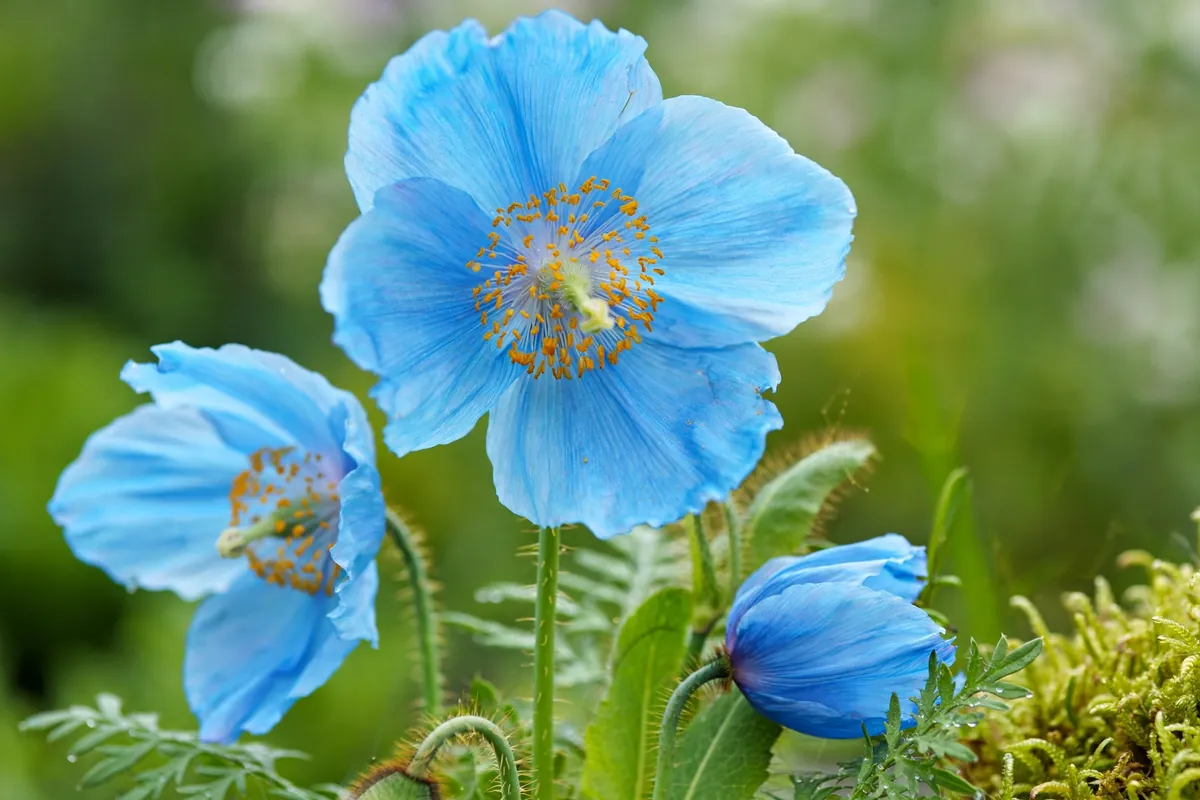
26. Himalayan Blue Poppy (Meconopsis baileyi)
The Himalayan blue poppy is the holy grail of shade gardening — ethereal sky-blue cups with golden stamens, a color almost no other flower achieves. It demands cool summers, part shade, and humus-rich, consistently moist soil, thriving in the Pacific Northwest and similar climates. Often short-lived, it self-sows where happy. Protect from slugs, its arch-nemesis.
Bloom: Late spring to early summer | Sun: Part shade | Zone: 5–8 | Best for: Collector gardens, cool climates
27. Heartsease (Viola tricolor)
Heartsease — wild pansy — is the charming ancestor of modern pansies, with tiny purple, yellow, and white “faces” that bloom from spring to fall. It self-sows cheerfully in paths and bed edges. The flowers are edible, with a mild wintergreen flavor, lovely sugared on cakes. Grow in full sun to part shade; in hot climates it rests through summer and reblooms in fall.
Bloom: Spring to fall | Sun: Full sun to part shade | Zone: 3–9 (often grown as annual) | Best for: Edible flowers, cottage charm
28. Hyssop (Hyssopus officinalis)
Hyssop is an ancient herb with modern garden appeal — dense spikes of blue-purple (also pink or white) flowers on a compact 18- to 24-inch subshrub that bees mob all summer. It wants full sun and lean, well-drained soil; too much richness makes it floppy. Shear after flowering for a second flush. The aromatic leaves flavor teas, soups, and liqueurs like Chartreuse.
Bloom: Summer | Sun: Full sun | Zone: 3–9 | Best for: Herb gardens, pollinators
29. Hyacinth Bean (Lablab purpureus)
Hyacinth bean is the fastest pretty screen you can grow — a vigorous annual vine racing 10–15 feet in one season, with purple-pink pea flowers followed by glossy magenta pods. Give it full sun and a sturdy trellis; it twines eagerly. In frost-free zones it returns as a perennial. The ornamental pods dry beautifully, and the vine smothers ugly fences by midsummer.
Bloom: Late summer to fall | Sun: Full sun | Zone: Grown as annual (9–11 perennial) | Best for: Fast screens, ornamental pods
30. Harebell (Campanula rotundifolia)
Harebell is a delicate wildflower with nodding blue-violet bells on wiry stems, dancing above grassy tufts from summer to fall. This circumboreal native naturalizes beautifully in meadows, rock gardens, and the edges of paths. It wants lean, well-drained soil and resents rich, wet ground. Leave it undisturbed and it will seed into charming drifts year after year.
Bloom: Summer to fall | Sun: Full sun to part shade | Zone: 3–8 | Best for: Rock gardens, wildflower meadows
31. Hardy Geranium (Geranium spp.)
Hardy geraniums — the true geraniums, not the red bedding pelargoniums — are the workhorses of the perennial border, mounding 1–2 feet of deeply cut foliage topped with saucer flowers in pink, blue, purple, or white for months. They weave beautifully through roses and fill gaps under shrubs. Shear back after the first flush for fresh foliage and a second bloom. ‘Rozanne’ flowers from June to frost.
Bloom: Late spring to fall | Sun: Full sun to part shade | Zone: 4–8 | Best for: Groundcover, long-blooming borders
32. Winter Heath (Erica carnea)
Winter heath defies the calendar, opening pink, red, or white bell flowers in late winter — sometimes through snow — on low evergreen mounds. Unlike its fussy cousin heather, it tolerates neutral to slightly alkaline soil. Plant it where you’ll see it from a window: along paths, in rock gardens, or spilling from containers. Shear after flowering to keep the mounds tight.
Bloom: Late winter to early spring | Sun: Full sun to part shade | Zone: 5–7 | Best for: Winter color, rock gardens
33. Himalayan Honeysuckle (Leycesteria formosa)
Himalayan honeysuckle — pheasant berry — is pure exotica: dangling chains of white flowers nested in burgundy bracts, followed by glossy purple-black berries that birds devour. This fast-growing shrub reaches 6 feet in a season in zones 7–9. Give it sun to part shade and cut stems to the ground in spring for the most vigorous flowering shoots.
Bloom: Summer to fall | Sun: Full sun to part shade | Zone: 7–9 | Best for: Exotic berries, wildlife gardens
34. Panicled Hydrangea (Hydrangea paniculata)
Panicled hydrangea is the toughest, most cold-hardy hydrangea — huge cone-shaped white flower heads that blush pink with age, on shrubs hardy to zone 3. Unlike bigleaf types it blooms on new wood, so prune boldly in late winter with zero fear. ‘Limelight’ and ‘Little Lime’ are modern classics. The dried cones look gorgeous in winter arrangements.
Bloom: Summer to fall | Sun: Full sun to part shade | Zone: 3–8 | Best for: Cold-hardy shrubs, dried blooms
35. Climbing Hydrangea (Hydrangea anomala subsp. petiolaris)
Climbing hydrangea solves the north-wall problem — fragrant white lacecap flowers in early summer on a self-clinging vine that thrives in shade where little else flowers. Be patient: it sleeps the first few years, then leaps, eventually covering 30–50 feet with handsome peeling bark for winter interest. Give it a sturdy wall or tree and rich, moist soil.
Bloom: Early summer | Sun: Part to full shade | Zone: 4–8 | Best for: North walls, shade vines
36. Summer Hyacinth (Galtonia candicans)
Summer hyacinth extends the hyacinth season by months — tall 3- to 4-foot stems of nodding white bells with a sweet, heady perfume in midsummer. This South African bulb wants full sun and well-drained soil; plant 4–6 inches deep in spring. In zones below 6, lift bulbs for winter like gladiolus. The fragrance carries beautifully on warm evenings.
Bloom: Summer | Sun: Full sun | Zone: 6–10 | Best for: Fragrant borders, summer bulbs
37. Spanish Bluebell (Hyacinthoides hispanica)
Spanish bluebell carpets spring shade in upright bells of blue, pink, or white on 12- to 18-inch stems — showier and sturdier than its English cousin. It naturalizes enthusiastically under trees, so plant where it can spread. Bulbs go 3–4 inches deep in fall. Let the foliage ripen for six weeks after bloom to feed next year’s display.
Bloom: Spring | Sun: Part shade | Zone: 3–8 | Best for: Woodland drifts, naturalizing
38. Hepatica (Hepatica nobilis)
Hepatica is one of spring’s earliest wildflowers — starry blue, pink, or white blooms with golden centers opening in March above three-lobed evergreen leaves. This woodland gem wants rich, leafy soil and part to full shade, spreading slowly into colonies. Never divide it casually; hepatica resents root disturbance. A precious native for shade and rock gardens.
Bloom: Early spring | Sun: Part to full shade | Zone: 4–8 | Best for: Early wildflowers, shade gardens
39. Bluets (Houstonia caerulea)
Bluets sprinkle lawns and meadows with thousands of tiny pale-blue flowers, each with a sunny yellow eye, every spring. This petite eastern North American native thrives in moist, slightly acidic soil and even tolerates mowing — flowers pop back up within days. Let a patch colonize an unsprayed lawn corner or rock garden for a magical spring carpet.
Bloom: Spring | Sun: Full sun to part shade | Zone: 4–8 | Best for: Lawn wildflowers, native groundcover
40. Peruvian Daffodil (Hymenocallis spp.)
Peruvian daffodil — actually a spider lily — produces extraordinary white flowers: a frilly cup ringed with long, spidery petals, intensely fragrant in the evening. These tender South American bulbs want full sun, rich soil, and consistent moisture in summer. In zones 8–10 plant outdoors; elsewhere grow in pots and overwinter frost-free. A true conversation piece.
Bloom: Summer | Sun: Full sun | Zone: 8–10 | Best for: Fragrant tropical accents, containers
Growing Tips for H-Flowers
With 40 different H-flowers on this list, a few universal rules will set you up for success no matter which ones you choose.
Match the plant to your zone first. Check the hardiness zones in the tables above before you buy. Tropical H-flowers like tropical hibiscus, heliotrope, and wax plant cannot survive a freezing winter outdoors — grow them in pots you can move inside, or treat them as annuals. Meanwhile panicled hydrangea and helenium laugh at zone 3 winters.
Map your sun. Watch your garden for a day and note which spots get 6+ hours of direct sun (full-sun lovers like hollyhock, false sunflower, and strawflower go there) and which stay shady (hosta, hellebore, and climbing hydrangea will thank you). Most flowering plants bloom poorly in too much shade.
Drainage beats fertilizer. More H-flowers die from soggy roots than from hunger. Heather, hyssop, and winter heath demand acidic or lean, sharply drained soil — mix grit or pine bark into heavy clay. When planting, set the crown at the same depth it grew in the pot; burying stems invites rot.
Deadhead for more blooms. Snipping spent flowers off annuals and tender perennials like heliotrope, strawflower, and false sunflower redirects energy into new buds instead of seeds, stretching the show by weeks. Leave seed heads on honesty and helenium if you enjoy winter structure or want self-sown seedlings.
Feed lightly, mulch well. A 2- to 3-inch layer of mulch keeps roots cool, holds moisture, and suppresses weeds around hydrangeas, hostas, and most perennials. Go easy on nitrogen-heavy fertilizer — it grows leaves at the expense of flowers. A balanced slow-release feed in spring is plenty for most H-flowers.
Explore More Flowers
Which H-Flowers Will You Grow?
From the winter ribbons of witch hazel to the summer trumpets of hibiscus, flowers that start with H cover every season, every sun level, and every USDA zone from 3 to 11. Start with easy winners matched to your conditions — perhaps false sunflower and helenium for a sunny border, hosta and hellebore for shade, or a wax plant for the windowsill. Pick three or four favorites from this list, give them the right spot, and the letter H will fill your garden with color from the first thaw to the last frost of the year.
Frequently Asked Questions
What flowers start with H?
Dozens of garden favorites start with H, including hibiscus, hydrangea, hyacinth, hollyhock, honeysuckle, heliotrope, helenium, hosta, hellebore, heather, false sunflower, sweet rocket, honesty, harebell, and hyssop. This guide covers 40 real flowers beginning with H in total, each with its scientific name, bloom season, sun needs, and hardiness zone.
What are some common flower names that start with H for a garden?
For an easy-care garden, start with hydrangea, hollyhock, honeysuckle, helenium, hosta, false sunflower, and hardy geranium. They are widely available at nurseries, adapt to many US climates, and bloom reliably with basic care. Add rose of Sharon or panicled hydrangea for bigger shrub impact, and tuck in hyacinth bulbs each fall for guaranteed spring fragrance.
What pink flowers start with H?
Lovely pink flowers that start with H include tropical hibiscus, bigleaf hydrangea, common hyacinth, hollyhock, honeysuckle, hardy hibiscus, rose of Sharon, strawflower, heather, winter heath, heartsease, and Himalayan honeysuckle. Hardy geranium, coral bells, and sweet rocket also offer beautiful pink shades for borders, cottage gardens, and containers.
What purple flowers start with H?
Top purple flowers that start with H are heliotrope, common hyacinth, honesty, hebe, rose of Sharon, hardy fuchsia, hellebore, and heather. For deep, moody tones, look for near-black hollyhock and hellebore varieties, while hardy geranium and Himalayan blue poppy lean toward violet-blue shades that read as purple in the garden.
What white flowers start with H?
White H-flowers include summer hyacinth, Spanish bluebell, climbing hydrangea, panicled hydrangea, Peruvian daffodil, wax plant, hellebore, hawthorn blossom, holly blossom, horse chestnut blossom, honesty, and hebe. White hydrangeas and white hellebores glow beautifully at dusk, making them perfect for moon gardens and evening patios.
Which perennial flowers start with H?
Reliable perennial flowers that start with H include helenium, hosta, hellebore, false sunflower, coral bells, hardy hibiscus, harebell, hardy geranium, heather, winter heath, hyssop, hepatica, bluets, and St. John’s wort. Most return bigger and better each year with minimal care, making them the backbone of low-maintenance H-themed borders.
What flowers that start with H bloom in spring?
Spring bloomers include common hyacinth, Spanish bluebell, honesty, hepatica, bluets, sweet rocket, hawthorn blossom, holly blossom, horse chestnut blossom, and heartsease. Winter heath and hellebore kick off the show even earlier, in late winter, while Himalayan blue poppy and climbing hydrangea carry the H-theme into early summer.
Which flowers starting with H are best for beginners?
Strawflower, false sunflower, helenium, hardy geranium, hosta, and hyssop are nearly foolproof — they establish easily, bloom for months, and forgive missed waterings. For shrubs, try panicled hydrangea or rose of Sharon; for bulbs, common hyacinth and Spanish bluebell are easy wins. Indoors, wax plant thrives on benign neglect.
What flowers that begin with H grow well in shade?
Shade-tolerant H-flowers include hosta, hellebore, coral bells, climbing hydrangea, hepatica, and Spanish bluebell. Hardy fuchsia, winter heath, and bigleaf hydrangea handle part shade too, while wax plant thrives as an indoor plant in bright indirect light. Even in deep shade, hellebore and hosta deliver reliable flowers and foliage.
Are there fragrant flowers that start with H?
Yes! Common hyacinth is intensely fragrant, honeysuckle perfumes summer evenings, and heliotrope smells of vanilla. Sweet rocket, summer hyacinth, and Peruvian daffodil are also powerfully scented, while wax plant releases a sweet chocolate-honey fragrance at night and hyssop carries a warm, herbal aroma.
What flowers that start with H make good cut flowers?
Hydrangea, false sunflower, helenium, strawflower, and hollyhock all make excellent cut flowers. Strawflower is the dried-arrangement champion, while hydrangea and false sunflower give you weeks of vase life. Cut stems early in the morning, strip the lower leaves, and condition them in cool water for the longest life.
Which H-flowers attract butterflies and bees?
Helenium, false sunflower, hyssop, hardy fuchsia, honeysuckle, and St. John’s wort are pollinator magnets. A tropical flower beginning with H — tropical hibiscus — draws hummingbirds in warm climates, while hellebore feeds early bees in late winter. Planting several together creates a buffet that supports pollinators from the first thaw through fall.