Coneflower: Meaning, Types and How to Grow Echinacea
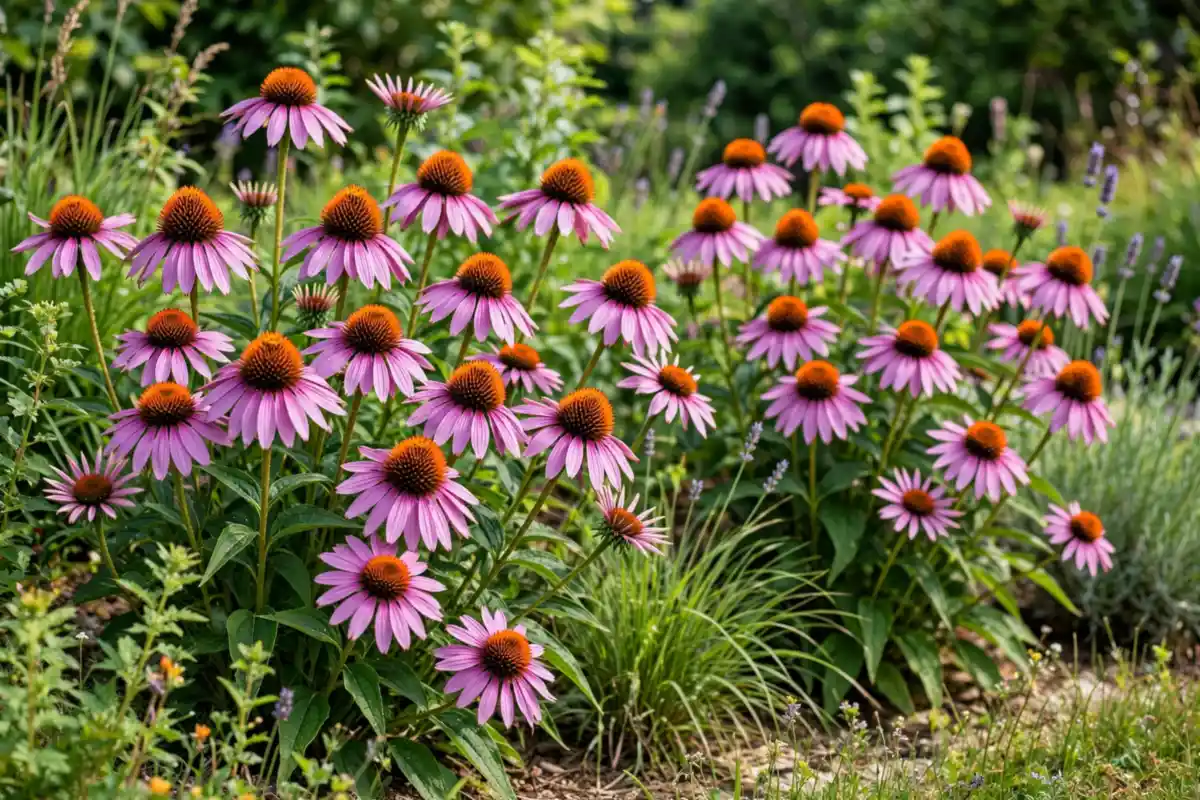
One flower works four jobs in the garden and never clocks off: the coneflower feeds bees all summer, butterflies in high season, goldfinches all autumn, and the winter garden’s architecture until spring — while asking for sun, poor soil and almost no water in return. If prairie gardeners had to keep a single plant, this is the one they would argue for.
The coneflower is Echinacea: a North American prairie native the Plains peoples used as their most trusted medicine plant, now bred in sunset oranges and lime greens far beyond its original purple. This guide covers what a coneflower is, the six kinds worth growing, what it means, and how to grow it — including the case for NOT deadheading it, and an honest word about the famous immune-supplement claims.
Quick Answer
A coneflower is a hardy prairie perennial in the genus Echinacea (aster family), named for the spiky central cone of each flower. The classic is purple coneflower, Echinacea purpurea, flowering from early summer into autumn in USDA zones 3 to 9. Grow it in full sun and well-drained, even poor soil — it is drought-tolerant once established and dislikes rich, wet ground. Leave the seed heads standing after flowering: goldfinches feed on them all autumn and winter.
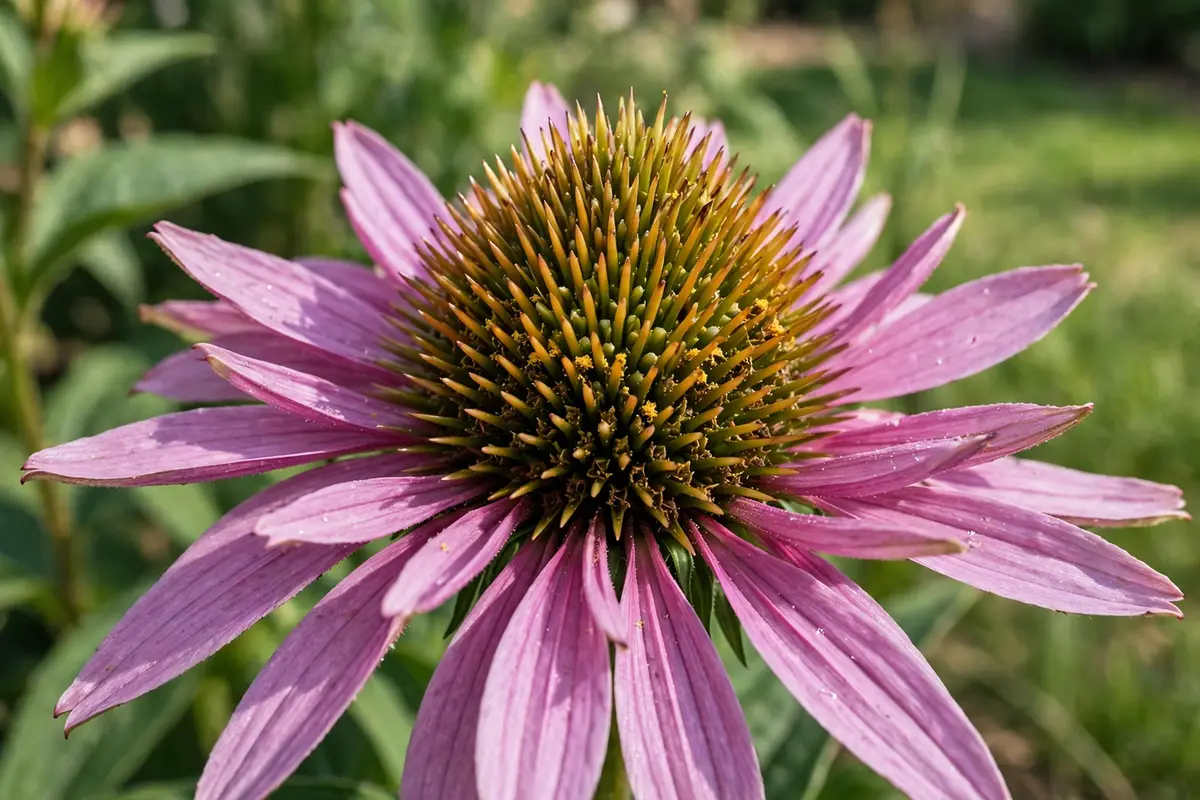
Table of Contents
- What Is a Coneflower?
- Types of Coneflower and 6 Kinds Worth Growing
- Coneflower Meaning and Symbolism
- Coneflower Colours and Their Meanings
- How to Grow Coneflowers
- Common Mistakes When Growing Coneflowers
- Coneflowers for Wildlife: Bees, Butterflies and Goldfinches
- Frequently Asked Questions
What Is a Coneflower?
Coneflowers are the genus Echinacea — nine species of herbaceous perennials in the aster family, Asteraceae, all native to eastern and central North America, from Canadian prairie to the Gulf states. The name is Greek: echinos, a hedgehog (or sea urchin), for the cone at each flower’s heart — a stiff, spiky dome of disk florets that stays handsome long after the drooping ray petals fall. That cone is the plant’s signature and its second career: a seed head built like a bird feeder. You can read more on the Echinacea page on Wikipedia.
Humans met the coneflower as medicine first: Plains peoples — the Sioux, Cheyenne, Pawnee and others — used Echinacea roots for more purposes than any other plant in their pharmacopoeia, from toothache and sore throats to snakebite, and settlers adopted it into the famous (and regulation-ending) patent-medicine era. The modern supplement industry followed. Science’s verdict so far deserves honesty: Echinacea preparations are among the most studied herbal remedies in the world, and the evidence for preventing or shortening colds is mixed and modest at best — interesting, safe for most people, and not a substitute for medicine. In the garden, no such hedging is needed: as an ornamental and wildlife plant the coneflower is simply first-rate, and that is what this guide grows it for.
Coneflower Quick Facts
- Botanical name: Echinacea purpurea and species/hybrids.
- Family: Asteraceae, the aster family.
- Hardiness: USDA zones 3 to 9.
- Height: 1½ to 4 feet by type.
- Bloom time: early summer to autumn — among the longest of any perennial.
- Sun and soil: full sun; average-to-poor, well-drained soil; drought-tolerant.
- Good to know: leave seed heads for goldfinches; divide clumps every 3–4 years.
Types of Coneflower and 6 Kinds Worth Growing
Three species and the modern colour flood. The table separates the key kinds; the profiles follow. For the full list of flower names, see our flower names A to Z guide.
| Type | What it is | Flowers | Height | Best use |
|---|---|---|---|---|
| Purple coneflower ‘Magnus’ | E. purpurea classic | Rosy purple, flat rays | 3 ft | The benchmark plant |
| ‘White Swan’ | E. purpurea white form | White, honey-scented | 2–3 ft | White gardens, seed-grown |
| PowWow series | Seed strains (Wild Berry, White) | Deep rose / white | 1½–2 ft | First-year flowers from seed |
| ‘Cheyenne Spirit’ | Seed mix, AAS winner | Orange, red, yellow, cream | 2–2½ ft | Hot-colour drifts |
| Sombrero series | Compact colour hybrids | Salsa reds, oranges, lemon | 1½–2 ft | Pots, fronts, overwintering |
| Pale purple coneflower | E. pallida species | Pale, strongly drooping rays | 2–3 ft | Prairie plantings, early bloom |
1. ‘Magnus’ — the Benchmark
The purple coneflower against which all others are measured: big rosy-purple flowers with rays held flat rather than drooping (the breeder’s improvement on the wild form), sturdy 3-foot stems, and a constitution that shrugs off heat, drought and poor soil. ‘Magnus’ was the Perennial Plant Association’s Plant of the Year for 1998, and a quarter-century on it is still the one to plant first — long-lived, self-reliant, and the goldfinches’ favourite address.
2. ‘White Swan’ — the White Classic
The same species in white: drooping ivory rays around a green-gold cone, with a light honey fragrance the purples lack. ‘White Swan’ comes reasonably true from seed, suits white and evening gardens, and mixes without arguing with everything. If your border needs the coneflower’s wildlife value in a calmer colour, this is the standard answer.
3. PowWow Series — First-Year Flowers from Seed
Seed-raised coneflowers used to mean waiting a year for bloom; the PowWow series (Wild Berry’s saturated rose-purple, PowWow White) flowers the first summer from an early sowing, on compact 18- to 24-inch plants. For budget drifts, community gardens and impatient beginners they changed the arithmetic — a packet of seed is now a same-year flower bed.
4. ‘Cheyenne Spirit’ — the Colour Mix
An All-America Selections winner grown from seed, producing the whole new palette on first-year plants: scarlet, orange, golden yellow, cream and purple, often several shades in one sowing. The individual plants vary (that is the point), and drifts of it read like a prairie sunset. Colours lean hot — team them with grasses and let them argue with the purple classics.
5. Sombrero Series — the Pot-Ready Colours
Bred for containers and front-of-border work: compact, heavily branching hybrids in saturated shades (Salsa Red, Adobe Orange, Lemon Yellow and more) with notably good overwintering for hybrid coneflowers. Hybrid coneflowers have a reputation for winter losses in cold, wet ground; the Sombreros were selected specifically against it. Sharp drainage still applies — see the mistakes section.
6. Pale Purple Coneflower — Echinacea pallida
The connoisseur’s species: slender, pale petals that droop dramatically like falling water, flowering a few weeks earlier than E. purpurea, with the same medicinal heritage root (this and narrow-leaf E. angustifolia were the Plains tribes’ principal species). In prairie-style plantings its grace beats the hybrids’ bulk; leave it undivided and let it settle in.
Coneflower Meaning and Symbolism
The coneflower means strength and healing — the clearest meaning in this whole series, because it is earned: a plant that survives prairie drought, fire and grazing, and served for centuries as the medicine chest of the Plains, signifies health and resilience more honestly than any hothouse emblem. In the modern language of flowers it carries strength, healing and well-wishing, which makes it the get-well flower with actual credentials (historical, at least) and the sympathy bouquet that says “recover, and come back strong”.
Its structure preaches the same sermon in the garden: the rays fall, the cone stands. Send coneflowers to someone rebuilding — after illness, after a hard year — where a rose would be romance and a lily too funereal. This is the flower of the comeback.
Coneflower Colours and Their Meanings
Breeding exploded the palette; the meanings follow the genus’s healing core, tinted by shade:
- Purple coneflower — strength and healing: the original, and still the wildlife champion.
- White coneflower — purity and good health wishes: ‘White Swan’ for calm recovery messages.
- Pink and rose coneflower — vitality and encouragement: the PowWow Wild Berry shades.
- Orange, red and yellow coneflower — energy and celebration: the sunset hybrids, strength with its sleeves rolled up.
How to Grow Coneflowers
Think prairie: sun, lean soil, and benign neglect. Gardeners on r/gardening on Reddit call coneflowers “the perennial you plant for the birds and keep for yourself”.
Planting and Position
Set plants in full sun (a little afternoon shade is tolerated in hot zones) in any well-drained soil — average garden soil is ideal, poor soil is fine, and rich soil is a mistake (see below). Space 18 inches apart for species types, a little less for compacts. Seed strains can be direct-sown or started indoors; species seed germinates better after a month of cold stratification in the fridge, while modern seed series (PowWow, Cheyenne Spirit) are bred to skip the fuss and flower the first year. Its summer companions in the prairie style are its own family — the aster flower takes over the same border as coneflowers fade.
Water, Food and the Long Bloom
Water through the first season while the taproot establishes; after that, coneflowers ride out drought on their own — deep, infrequent watering beats sprinkling. Do not fertilise beyond a spring compost mulch: pampered coneflowers grow lush, flop, and winter badly. Deadheading the first flush extends flowering into autumn; then stop (wildlife section). Bloom runs June to September on established clumps — among the longest shows of any hardy perennial.
Dividing and the Short-Life Question
Species coneflowers live for years but can thin in the centre; divide clumps in spring every three to four years to renew them, discarding the woody middle. Fancy hybrids are sometimes shorter-lived — two to four good years in wet-winter gardens — so take insurance: let one plant per colour go to seed each year (seedlings of hybrids vary, sometimes charmingly) and keep drainage sharp, which is where most losses begin.
Common Mistakes When Growing Coneflowers
The first mistake is kindness: rich soil, fertiliser and daily water produce the lush flop and winter rot that give coneflowers an undeserved “short-lived” reputation. Plant lean, water deep and rarely. The second is wet feet in winter — in heavy clay, grow in raised beds or add grit generously; more coneflowers die of January wet than of any cold.
The third mistake is tidiness: deadheading every last flower removes the goldfinch harvest (next section). The fourth is ignoring aster yellows — a leafhopper-spread disease that greens and deforms the flowers; there is no cure, and infected plants must be dug out and destroyed before it spreads. And the fifth is crowding: air around the clumps keeps the foliage clean and the cones standing tall beside their tall cousins the sunflowers.
Coneflowers for Wildlife: Bees, Butterflies and Goldfinches
Here is the coneflower’s real job description. The open, landing-pad flowers are worked by bees of every size (the cone is a nectar bar that never seems to close), and in high summer the plants carry butterflies — skippers, fritillaries, painted ladies — from dawn to dusk. Certain specialist bees time their lives to Echinacea pollen. Then, when most perennials are finished, the standing cones ripen seed and the goldfinches arrive, teetering on the stems and picking the heads apart well into winter.
So the management rule is: deadhead the early flowers for more bloom, then from late summer leave every head standing until spring. You lose nothing — the black cones and stems are the winter border’s best structure — and you feed birds through the hungry months. Cut the old stems down only when new growth shows at the base, completing a full year of service from a single plant. In a fall flowers planting, nothing works harder.
Frequently Asked Questions
Is a coneflower the same as Echinacea?
Yes — coneflower is the common name, Echinacea the botanical one; every plant sold as Echinacea is a coneflower (the reverse has one wrinkle: a few other genera, like Rudbeckia, are occasionally called “coneflowers” too, but garden usage means Echinacea). If your question is not answered here, the questions about coneflowers on Quora cover most of the rest.
Are coneflowers perennials?
Yes, hardy perennials in zones 3 to 9. Species types are long-lived with occasional division; some hybrid colours are shorter-lived in wet-winter soils — sharp drainage and a self-seeded insurance plant or two solve it.
When do coneflowers bloom?
From early summer into autumn — roughly June to September, peaking in July — with deadheading extending the display. Pale purple coneflower (E. pallida) opens a few weeks ahead of the purple standard.
Do coneflowers spread?
Gently: clumps widen slowly and self-seed moderately near the parent (seedlings of hybrids vary in colour). They are not thugs — deadhead before seeding if you want them exactly where planted, though the goldfinches will file a complaint.
Can coneflowers grow in pots?
Yes — the compact series (PowWow, Sombrero) suit large, deep pots of gritty compost; their taproots want depth more than width. Water potted plants through drought (pots dry faster than prairies) and give them a sheltered, cold-but-not-sodden winter spot.
Is Echinacea good for colds?
The honest answer: it is the most studied herbal remedy for colds in the world, and rigorous reviews find the effect small and inconsistent — some preparations may shorten a cold slightly; none reliably prevent one. Its Plains-medicine heritage is genuine history, but treat supplements as supplements, not medicine, and never in place of care for a serious illness. Grow the plant for the garden; it is unambiguously excellent there. For more flowers under the same letter, see our guide to flowers that start with C.