
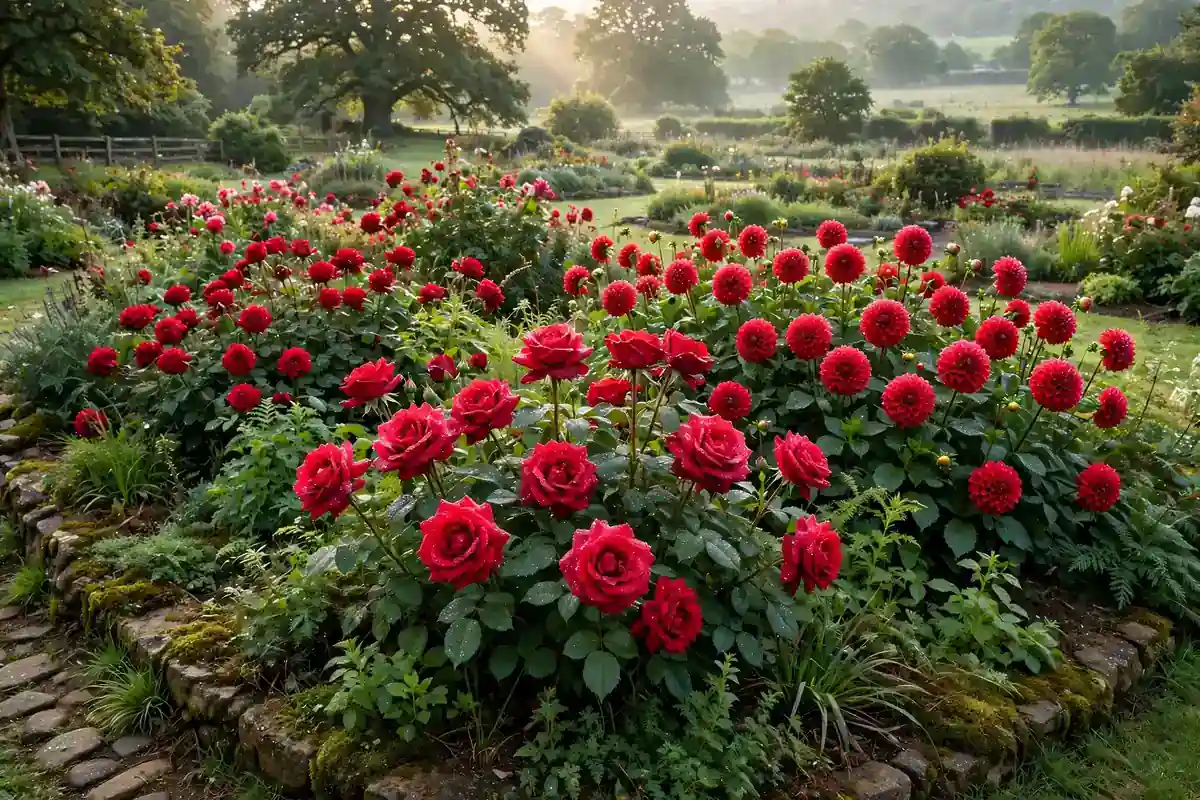
Red Flowers: 30 Bold and Beautiful Varieties
Red is the colour gardeners reach for when a border feels flat. It is the first colour the eye catches from the end of the garden, the colour hummingbirds check first, and the colour that keeps working at dusk when blues and purples have faded to grey. It is also the colour most often bought wrong: a plant labelled “red” turns out orange-red in full sun, pink-red in shade, or a muddy brick shade nobody wanted.
This guide lists 30 red flowers that actually earn the name, grouped by how you will use them — perennials that come back, annuals that flower all summer, bulbs for spring and summer spikes, and shrubs and roses for structure. Every entry gives the botanical name, zones, size, bloom season, and one honest care note — which reds need constant moisture, which rot in wet winter soil, and which are short-day plants that will not flower when you expect.
If you are building a red border, mix the groups rather than planting one type: tulips for spring, bee balm and daylilies for early summer, dahlias and zinnias to frost. Pairing reds with purple perennial flowers is the classic high-contrast combination, and hides clashes between orange-reds and pink-reds better than planting reds side by side.
Quick Answer
The most reliable true-red flowers are roses, tulips, dahlias, zinnias, scarlet sage, cardinal flower, and bee balm. For a red perennial border in zones 5–8, plant bee balm, red daylilies, blanket flower, and Crocosmia ‘Lucifer’. For red from spring to frost, add red tulips in spring, scarlet salvia and zinnias for summer, and dahlias until the first hard freeze. For shade, the honest short list is cardinal flower, red astilbe, and fuchsia — most red flowers need at least six hours of sun to keep their colour and flower well.
One caution before you buy: “red” on a plant label covers three different colours — true red, orange-red (scarlet), and pink-red (crimson to cherry). They clash when planted together. Pick one family per bed and stick to it.
Table of Contents
- Red Flowers at a Glance: All 30 Varieties
- True Red, Orange-Red, and Pink-Red: Know What You Are Buying
- Red Perennial Flowers
- Red Annual Flowers
- Red Bulbs, Tubers, and Rhizomes
- Red Shrubs and Roses
- Red Flowers for Shade, Pots, and the Holidays
- What Red Flowers Mean
- How to Choose the Right Red Flowers
- Common Mistakes With Red Flowers
- Frequently Asked Questions
Red Flowers at a Glance: All 30 Varieties
Use this table to shortlist, then read the entry for the care note before you order. Bloom times are for a zone 6–7 garden and shift two to three weeks earlier in warm zones and later in cold ones.
| Flower | Botanical Name | USDA Zones | Height | Bloom Time |
|---|---|---|---|---|
| Bee Balm | Monarda didyma | 4–9 | 2–4 ft | Early to late summer |
| Cardinal Flower | Lobelia cardinalis | 3–9 | 2–4 ft | Late summer |
| Red Hot Poker | Kniphofia uvaria | 5–9 | 2–4 ft | Late spring to summer |
| Blanket Flower | Gaillardia aristata | 3–10 | 1–2 ft | Summer to frost |
| Red Daylily | Hemerocallis hybrids | 3–9 | 1.5–3 ft | Early to mid summer |
| Red Peony | Paeonia lactiflora | 3–8 | 2–3 ft | Late spring |
| Oriental Poppy | Papaver orientale | 3–7 | 2–3 ft | Late spring to early summer |
| Crocosmia ‘Lucifer’ | Crocosmia × crocosmiiflora | 5–9 | 3–4 ft | Mid to late summer |
| Maltese Cross | Silene chalcedonica | 4–8 | 3–4 ft | Early summer |
| Red Astilbe | Astilbe × arendsii | 4–8 | 1.5–2.5 ft | Early to mid summer |
| Zinnia | Zinnia elegans | Annual | 1–4 ft | Summer to frost |
| Scarlet Sage | Salvia splendens | Annual (10–11 perennial) | 1–2.5 ft | Summer to frost |
| Zonal Geranium | Pelargonium × hortorum | Annual (9–11 perennial) | 1–2 ft | Spring to frost |
| Red Petunia | Petunia × atkinsiana | Annual | 6–12 in, trailing | Spring to frost |
| Celosia | Celosia argentea | Annual | 1–3 ft | Summer to frost |
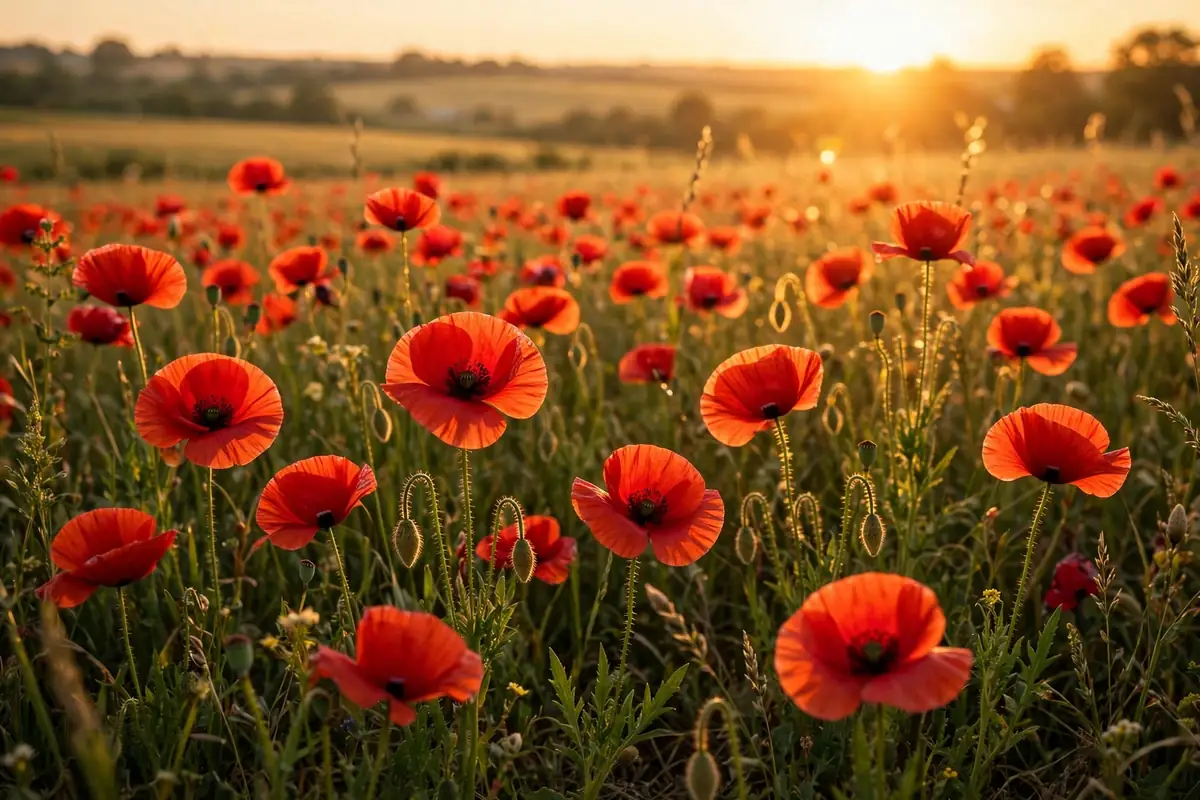
| Field Poppy | Papaver rhoeas | Annual | 1–2.5 ft | Late spring to early summer |
| Nasturtium | Tropaeolum majus | Annual | 1 ft, trailing to 6 ft | Summer to frost |
| Snapdragon | Antirrhinum majus | Annual (7–10 short-lived) | 1–3 ft | Spring and fall |
| Red Tulip | Tulipa hybrids | 3–8 | 1–2 ft | Mid to late spring |
| Dahlia | Dahlia × pinnata | 8–11 (lift elsewhere) | 1.5–6 ft | Mid summer to frost |
| Red Gladiolus | Gladiolus × gandavensis | 7–10 (lift elsewhere) | 3–5 ft | Summer |
| Amaryllis | Hippeastrum hybrids | 8–11 (indoor elsewhere) | 1.5–2 ft | Winter indoors, spring outdoors |
| Canna Lily | Canna × generalis | 7–10 (lift elsewhere) | 3–8 ft | Summer to frost |
| Red Rose | Rosa hybrids | 4–9, varies | 3–6 ft | Late spring to fall, in flushes |
| Tropical Hibiscus | Hibiscus rosa-sinensis | 9–11 | 4–10 ft | Summer to fall |
| Camellia | Camellia japonica | 7–9 | 6–12 ft | Late winter to spring |
| Azalea | Rhododendron hybrids | 4–9, varies | 2–6 ft | Spring |
| Weigela ‘Red Prince’ | Weigela florida | 4–8 | 5–6 ft | Late spring, light rebloom |
| Fuchsia | Fuchsia × hybrida | Annual (10–11 perennial) | 1–2 ft, trailing | Spring to fall |
| Poinsettia | Euphorbia pulcherrima | Annual houseplant (9–11 perennial) | 1–3 ft in pots | Winter, triggered by long nights |
True Red, Orange-Red, and Pink-Red: Know What You Are Buying
Red pigments in flowers come mainly from two chemical families, and they do not mix politely. Orange-reds — the scarlets of red hot poker, Crocosmia ‘Lucifer’, Oriental poppy, and nasturtium — lean warm and look best with yellows, oranges, and bronze foliage. Pink-reds — the crimsons and cherries of many peonies, camellias, and fuchsias — lean cool and sit happily next to purple, white, and silver. True reds, with no strong lean either way, are rarer than catalogues admit: ‘Mister Lincoln’ rose, cardinal flower, scarlet sage, and red tulips like ‘Red Impression’ are honest examples.
Two rules follow. First, judge red in daylight at the nursery, not from a catalogue photo — shade deepens reds, and midday sun washes scarlets toward orange. Second, separate clashing reds with foliage, white flowers, or distance. If colour puzzles are your thing, our collection of unusual and beautiful flowers shows how far flower colour can stray from the label.
Red Perennial Flowers
Perennials are the backbone of a red border: plant once, and they return for years. The ten below cover spring to late summer, sun to part shade, and dry soil to bog — read the moisture notes carefully, because this group contains both the thirstiest and the most drought-tolerant reds on the list.
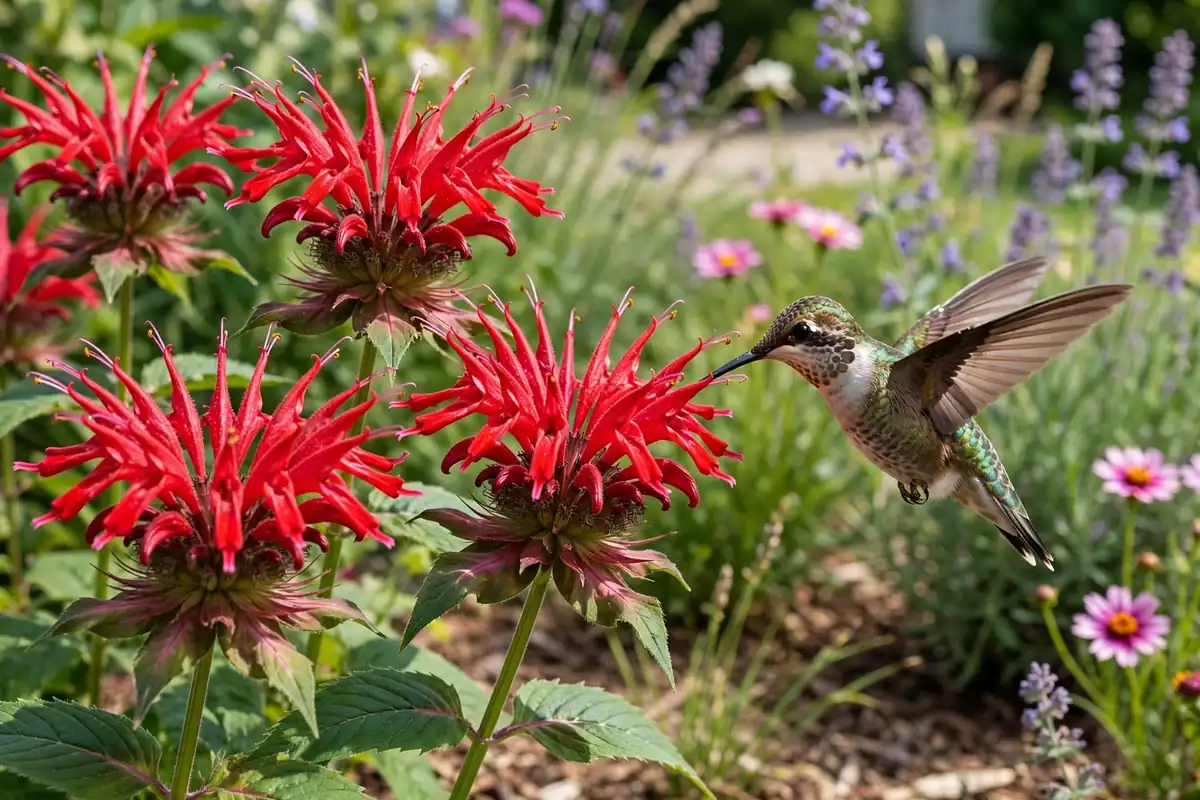
1. Bee Balm (Monarda didyma)
Zones 4–9 | 2–4 ft tall, spreading | Early to late summer | Full sun to part shade
Scarlet bee balm carries shaggy, firework-shaped heads of true-red tubular flowers that hummingbirds work from dawn to dusk. ‘Jacob Cline’ is the variety to buy: a strong true red with the best powdery mildew resistance in the group. That disease is the honest warning here — older varieties defoliate from the bottom up by August in humid weather. Space plants for airflow, water at the base, divide every three years, and discard the woody centre.
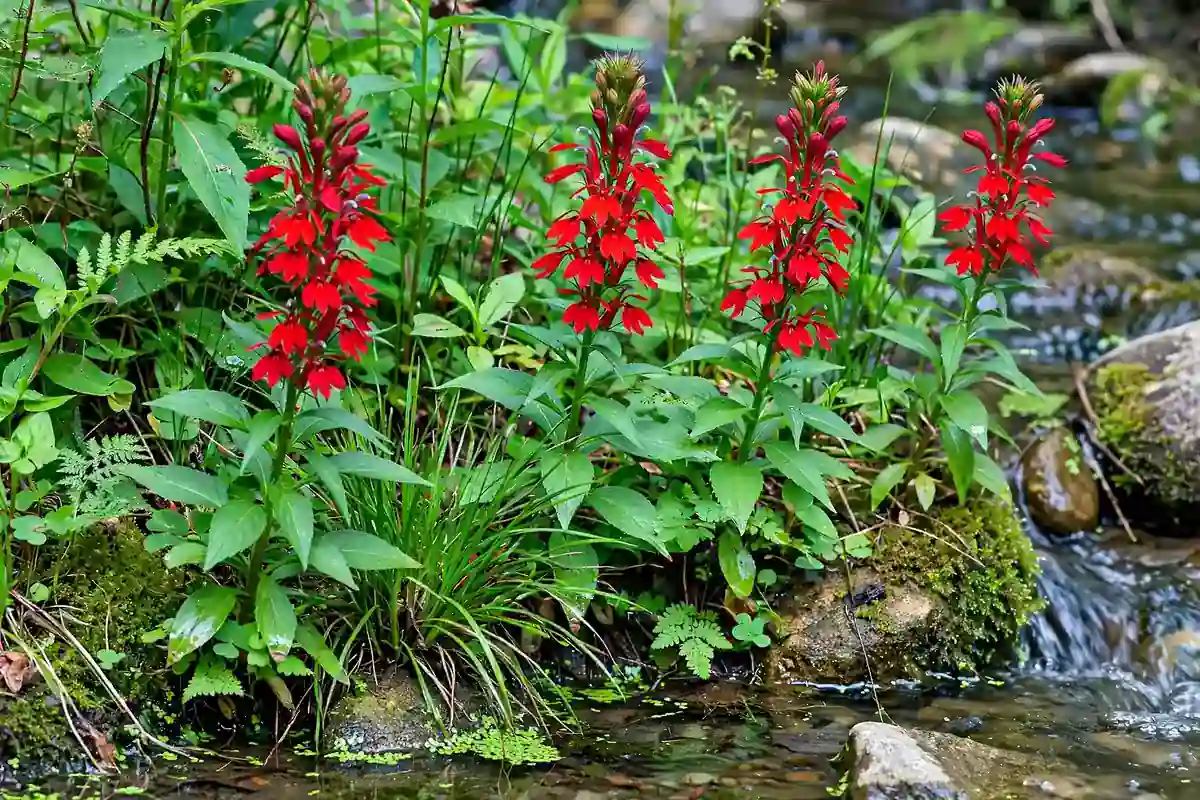
2. Cardinal Flower (Lobelia cardinalis)
Zones 3–9 | 2–4 ft tall | Late summer | Full sun to part shade, wet soil
The most intense true red of any hardy native flower, on spikes that hummingbirds treat as a fuel station. Cardinal flower is also the most demanding plant in this guide about one thing: moisture. It needs constant moisture — a rain garden, a pond edge, or a bed that never fully dries. In ordinary dry border soil it disappears within two seasons. It is short-lived even when happy, so let it self-sow. Keep the crown uncovered in winter; mulch packed over it rots it. All parts are toxic if eaten.
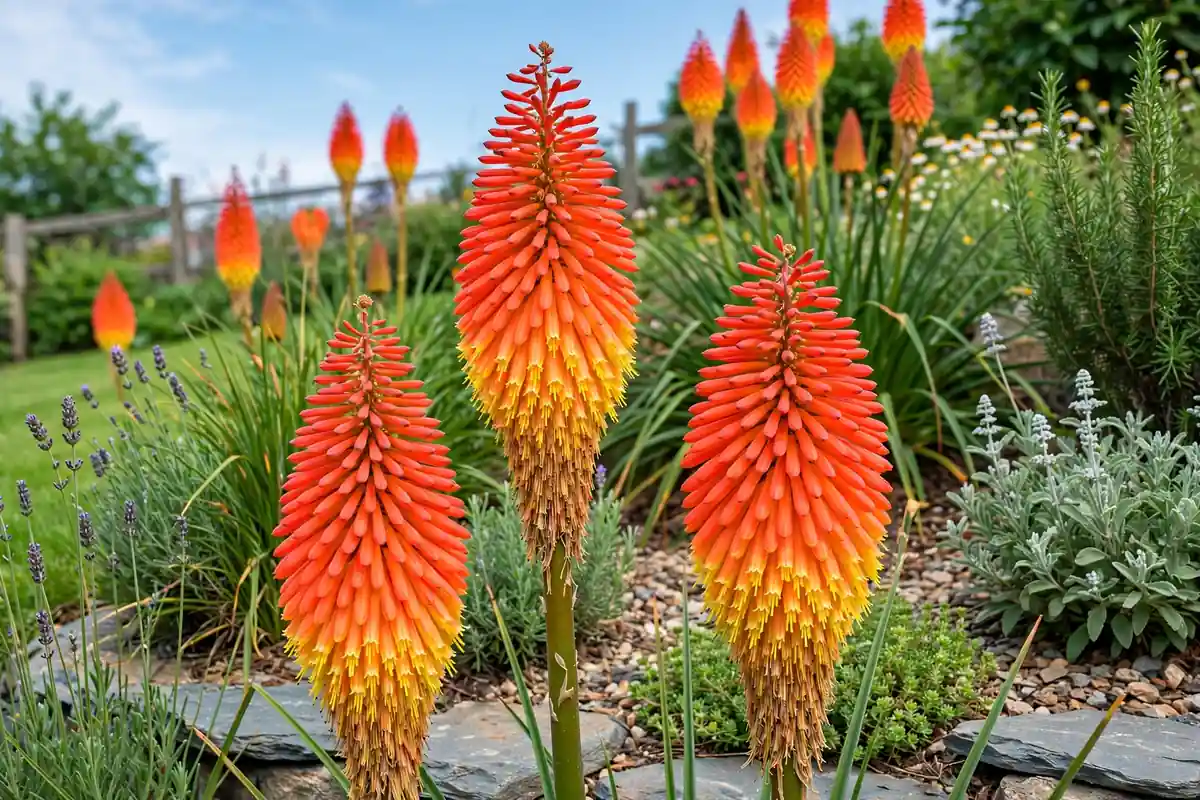
3. Red Hot Poker (Kniphofia uvaria)
Zones 5–9 | 2–4 ft tall | Late spring to summer, often repeating | Full sun
Upright torches that open orange-red from yellow-green buds, held over stiff, grassy foliage. Red hot poker is the mirror image of cardinal flower: it needs sharp drainage and will rot at the crown in wet winter soil, the single most common cause of death. Plant it in gritty or sandy soil, on a slope if your winters are wet, and tie the foliage up over the crown in cold districts to shed rain. In zones 5–6, a spring mulch pulled back in spring beats a wet winter blanket. The RHS guide to growing kniphofia covers winter protection by zone in useful detail.
4. Blanket Flower (Gaillardia aristata)
Zones 3–10 | 1–2 ft tall | Summer to frost | Full sun
Red-and-yellow daisies that flower longer than almost any other perennial on this list, on plants that shrug off heat, drought, and poor soil. ‘Arizona Red Shades’ gives the deepest reds, mostly solid crimson rather than bicolour. The honest note: blanket flower is short-lived, often two to three years, and it hates wet winter soil even more than red hot poker does. Treat it as self-renewing — let a few seed heads stand each fall and seedlings will replace the parents.
5. Red Daylily (Hemerocallis hybrids)
Zones 3–9 | 1.5–3 ft tall | Early to mid summer | Full sun to light shade
Each flower lasts one day, but a mature clump opens dozens in sequence. ‘Pardon Me’ is a compact, fragrant, cherry-red rebloomer that flowers again in late summer if you remove spent scapes; ‘Chicago Apache’ is a taller, velvety scarlet for mid-border. Two warnings: many “red” daylilies are rusty orange-red in hot sun, so buy in bloom where possible; and daylilies in deep shade make leaves, not flowers. They tolerate almost any soil except a bog.
6. Red Peony (Paeonia lactiflora)
Zones 3–8 | 2–3 ft tall | Late spring | Full sun
‘Karl Rosenfield’ is the standard double crimson-red peony: huge, fragrant, and capable of outliving the gardener who planted it. Peonies are a patience plant — expect two or three years before real flowering, and do not move them once settled. The commonest failure is planting too deep: the buds (eyes) on the crown must sit no more than 2 inches below the surface, or the plant leafs out yearly without a bloom. Ants on buds are normal and harmless. Peonies need winter chill, so skip them in zones 9 and warmer.
7. Oriental Poppy (Papaver orientale)
Zones 3–7 | 2–3 ft tall | Late spring to early summer | Full sun
Enormous crepe-paper bowls in scarlet-orange-red with black centres — ‘Beauty of Livermere’ is the deepest red of the group. Plan around its habit: the plant goes dormant and vanishes by midsummer, leaving a gap — plant a dahlia or blanket flower beside it to fill the hole. Oriental poppies resent transplanting (long taproot), so buy potted plants, site them once, and leave them alone. They need cold winters.
8. Crocosmia ‘Lucifer’ (Crocosmia × crocosmiiflora)
Zones 5–9 | 3–4 ft tall | Mid to late summer | Full sun to light shade
Arching wands of flame-orange-red trumpets over pleated, sword-shaped leaves — the plant that carries a hot border through August. ‘Lucifer’ is the hardiest and tallest crocosmia, reliable to zone 5 with a winter mulch. It spreads by corms that pile up; after four or five years the clump crowds and flowering drops, so lift and thin it in spring. In mild, wet climates crocosmia can spread aggressively — never dump spare corms in hedgerows.
9. Maltese Cross (Silene chalcedonica)
Zones 4–8 | 3–4 ft tall | Early summer | Full sun
Flat heads of small, intensely scarlet-orange stars — one of the purest scarlets in the hardy border, in commerce since the 1500s under its older name Lychnis chalcedonica. It tolerates poor soil and dry spells, but the stems are brittle and flop in rich soil or wind, so grow it through neighbours or stake it early. Cut it back hard after flowering for a smaller second flush. It self-sows politely.
10. Red Astilbe (Astilbe × arendsii ‘Fanal’)
Zones 4–8 | 1.5–2.5 ft tall | Early to mid summer | Part shade to full sun with moisture
‘Fanal’ carries deep garnet-red plumes over dark, glossy foliage — the strongest red available for shade. Astilbe is not a drought plant in any colour: dry soil gives scorched leaf edges and plumes that brown before they open. Plant it where soil stays evenly moist, mulch well, and in hot climates keep it out of afternoon sun. In cool, wet summers it flowers happily in full sun. Among flowers that start with R, red astilbe is the one shade gardeners ask about most.
Red Annual Flowers
Annuals do the long shift: most flower from early summer until frost with no gap, which no perennial on this list can match. They are also the cheapest way to test whether a red border suits your garden before committing to shrubs and peonies. For companion planting ideas, red annuals pair well with purple annual flowers such as petunias and verbena, which cool down the hottest scarlets.
11. Zinnia (Zinnia elegans)
Annual | 1–4 ft tall | Summer to frost | Full sun
The cut-and-come-again champion: the more stems you cut, the more branches flower. ‘Benary’s Giant Scarlet’ and the Profusion series give clean, true reds. Zinnias are a warm-soil plant — seed sown into cold ground rots. Sow direct after last frost or start indoors only three to four weeks ahead. Powdery mildew is the standard late-season problem; space plants, water at the base, and choose resistant series in humid climates.
12. Scarlet Sage (Salvia splendens)
Annual (perennial zones 10–11) | 1–2.5 ft tall | Summer to frost | Full sun to light shade
The bedding red of parks and traffic islands, and unfairly dismissed for it: no other annual holds such a pure, saturated scarlet in heat that melts petunias. Spikes keep coming if you pinch out the faded ones. It tolerates light shade better than most annuals here, though flowering thins. It is slow from seed — start eight to ten weeks before last frost, or buy plants.
13. Zonal Geranium (Pelargonium × hortorum)
Annual (perennial zones 9–11) | 1–2 ft tall | Spring to frost | Full sun
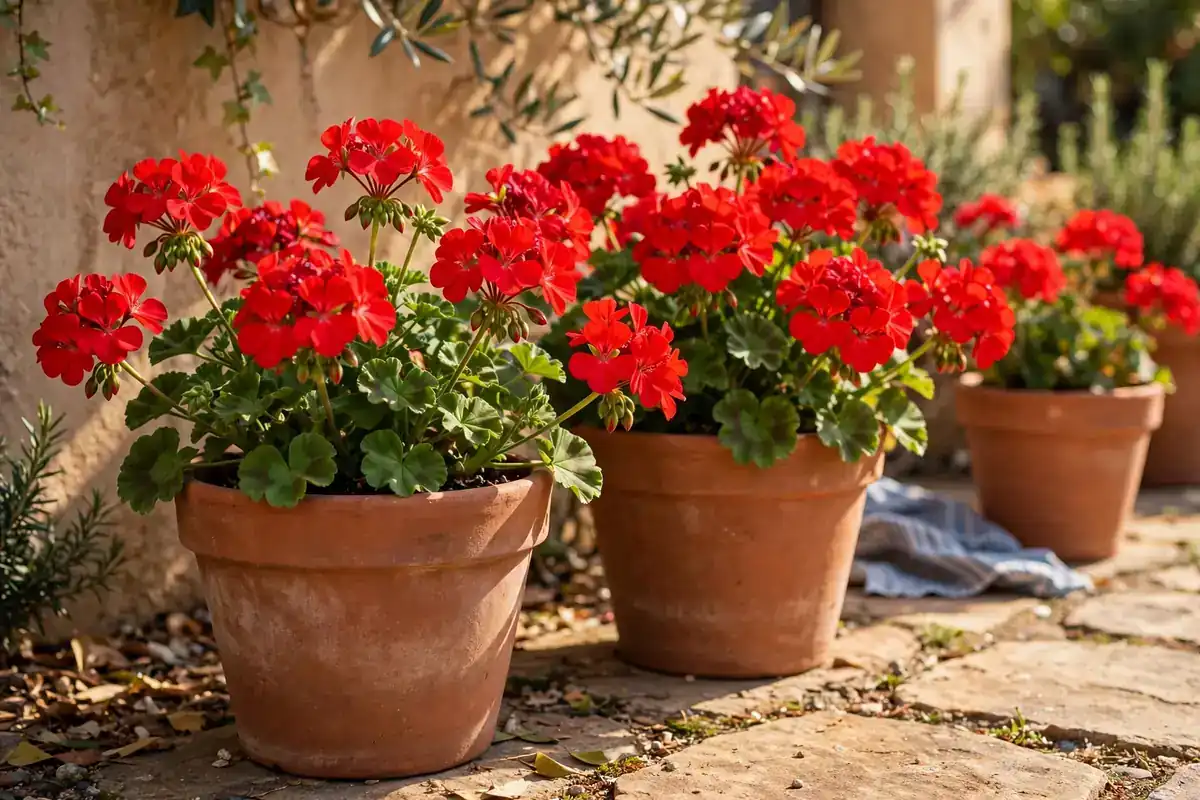
The classic window-box red, and still the best red flower for pots in hot, dry positions where petunias collapse. Round flower heads sit above scalloped leaves, often with a darker zone mark. Geraniums flower best slightly hungry and slightly dry: rich soil and constant feeding produce leaves, not blooms. Let compost dry between waterings, deadhead whole stalks at the base, and never let pots sit in water — stem rot follows fast.
14. Red Petunia (Petunia × atkinsiana)
Annual | 6–12 in tall, trailing to 3 ft | Spring to frost | Full sun
Trailing red petunias pour out of baskets and over walls from late spring until frost, and modern Wave and Supertunia types do it without deadheading. The drawbacks: petunias are heavy feeders that yellow by midsummer in tired compost, and heavy rain turns baskets to mush. Feed weekly with liquid tomato fertiliser; if plants get leggy in August, cut them back by a third and they reflower in three weeks. Red shades vary — check the tag photo, not the series name.
15. Celosia (Celosia argentea)
Annual | 1–3 ft tall | Summer to frost | Full sun
Two shapes share the name: plumed celosia, with feathery red spikes, and crested celosia (cockscomb), with folded, brain-like heads in deep crimson. Both love heat and stall in cold soil, so plant out late with the zinnias. Celosia makes an excellent cut and dried flower — heads keep their colour for months. Seedlings damp off in cold, wet compost, which is why direct-sown plants often outperform pampered transplants by July.
16. Field Poppy (Papaver rhoeas)
Annual | 1–2.5 ft tall | Late spring to early summer | Full sun
The Flanders poppy — single scarlet petals with a dark centre, on wiry stems that move in any breeze. It is a sow-and-forget flower with one strict rule: it hates transplanting. Scatter seed on raked soil in early spring (or autumn in mild zones), thin lightly, and do not touch the roots again. Field poppies flower for about six weeks, set seed freely, and return for years from that seed bank. They want poor, well-drained soil; rich ground gives leafy plants that flop.
17. Nasturtium (Tropaeolum majus)
Annual | 1 ft tall, trailing or climbing to 6 ft | Summer to frost | Full sun to light shade
Orange-red and scarlet trumpets over round, water-repellent leaves. ‘Empress of India’ is the deepest red, with dark foliage that sets it off. Nasturtiums are the one flower in this guide that flowers worse the better you treat it: rich soil gives a mound of leaves and hardly a bloom, so plant them in your worst, thinnest soil and do not feed. Aphids congregate on them — many gardeners plant nasturtiums deliberately as a trap crop near beans. Flowers and young leaves are edible and peppery.
18. Snapdragon (Antirrhinum majus)
Annual (short-lived perennial zones 7–10) | 1–3 ft tall | Spring and fall | Full sun
Deep red snapdragons (‘Night and Day’ is red with a white throat; Rocket series gives tall cutting spikes) flower in the cool shoulders of the year and pause in high summer heat. That pause is not failure — cut plants back and they return for a second, often better, autumn flush. Rust is the disease to watch: buy resistant varieties, space for airflow, and remove infected plants rather than spraying.
Red Bulbs, Tubers, and Rhizomes
Bulbs and their relatives deliver the two ends of the red season: tulips open it in spring, and dahlias close it at the first frost. The group also carries the most storage work — in cold zones, half of these come out of the ground for winter.
19. Red Tulip (Tulipa hybrids)
Zones 3–8 | 1–2 ft tall | Mid to late spring | Full sun
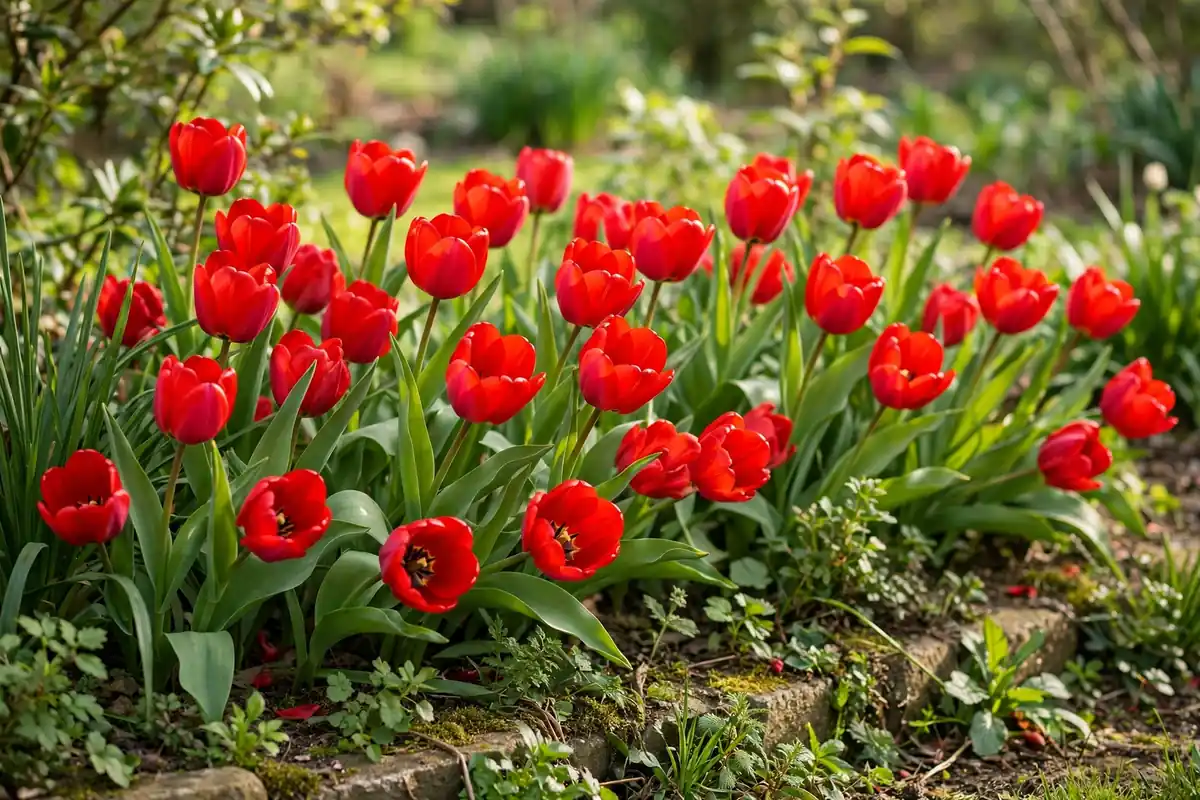
‘Red Impression’ (Darwin hybrid) and ‘Apeldoorn’ are the reliable true reds for beds; species tulip Tulipa sprengeri is a finer, later scarlet for naturalising. Darwin hybrids are among the few tulips that return reliably for years — most bedding tulips fade after one or two seasons, a breeding fact, not your failure. Plant in autumn, three times the bulb’s depth, in drained soil; tulips rot in wet summer ground. Zones 9 and warmer must pre-chill bulbs for eight to ten weeks.
The Missouri Botanical Garden Plant Finder lists chilling and drainage requirements variety by variety.
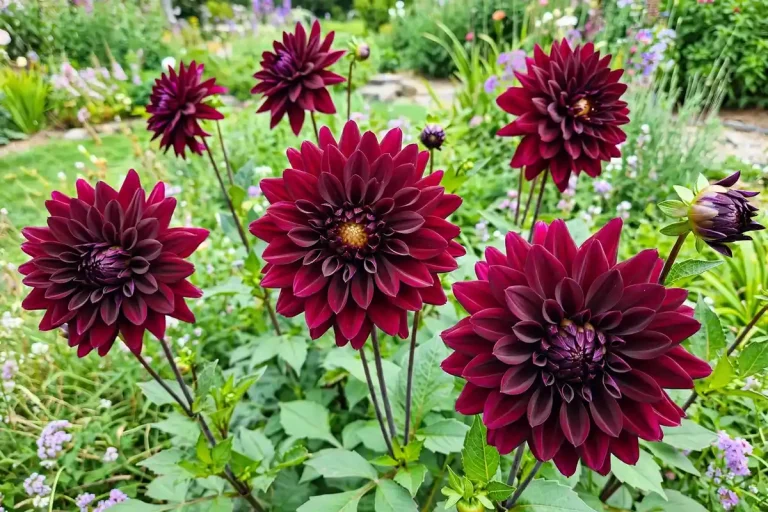
20. Dahlia (Dahlia × pinnata)
Zones 8–11; lift tubers in colder zones | 1.5–6 ft tall | Mid summer to frost | Full sun
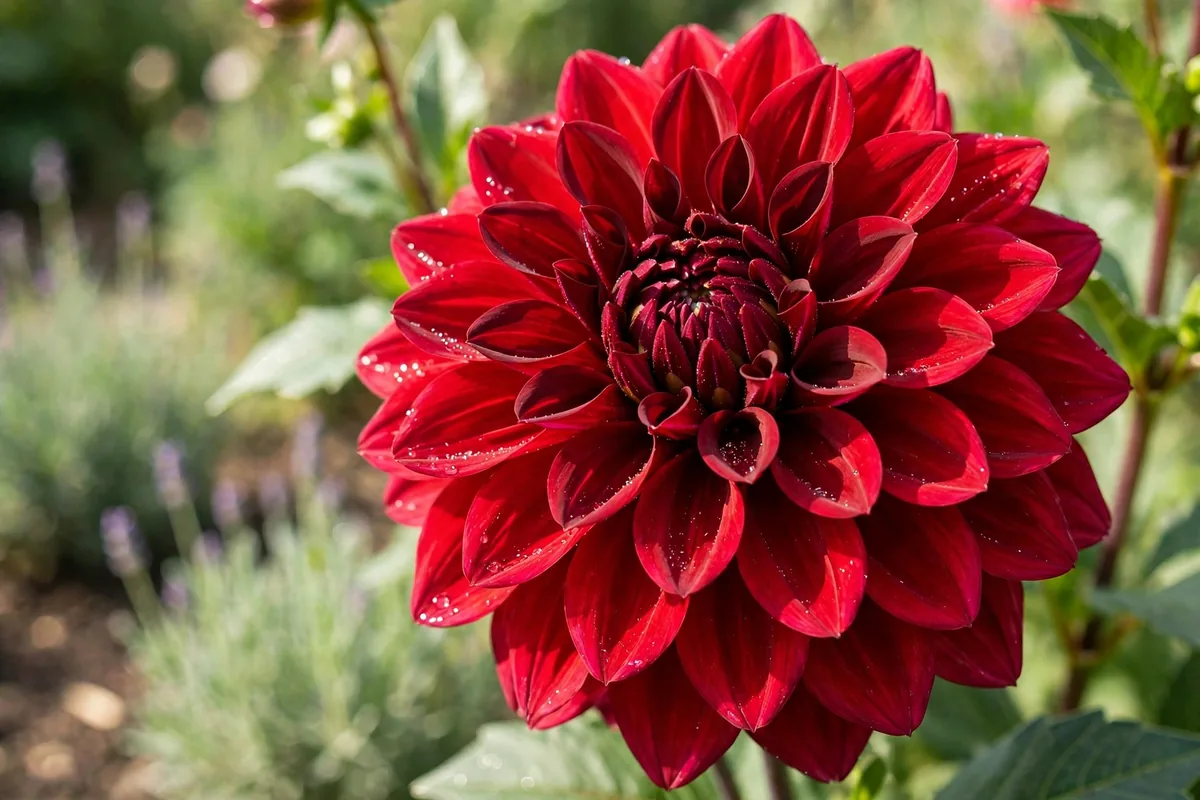
No plant gives more red per square foot in late summer. ‘Bishop of Llandaff’ pairs scarlet single flowers with near-black foliage; ‘Karma Red Corona’ and the Gallery series suit cutting and smaller gardens. Dahlias are hungry, thirsty, and need staking before they need it — tall varieties snapped by an August storm do not recover. After frost blackens the foliage, lift tubers in zones colder than 8 and store in barely damp compost, frost-free. Earwigs and slugs target the blooms.
21. Red Gladiolus (Gladiolus × gandavensis)
Zones 7–10; lift corms in colder zones | 3–5 ft tall | Summer | Full sun
Tall spikes of scarlet florets that open in sequence from the bottom — the backbone of summer flower arrangements. Plant corms every two weeks from spring to early summer for a cutting supply that lasts months instead of one glut. Gladioli are top-heavy — stake them or grow through a grid. Corms are cheap and often treated as annuals in cold zones, honestly simpler than storing them.
22. Amaryllis (Hippeastrum hybrids)
Zones 8–11 outdoors; a houseplant elsewhere | 1.5–2 ft tall | Winter indoors | Bright light
‘Red Lion’ produces two stems of huge scarlet trumpets from a single bulb, usually six to eight weeks after potting. Amaryllis is sold as disposable, which wastes a plant that reflowers for years: after flowering, keep leaves growing in bright light, feed monthly, rest the pot dry for eight to ten weeks in late summer, then water to restart. Plant with the top third of the bulb above the compost — buried bulbs rot.
23. Canna Lily (Canna × generalis)
Zones 7–10; lift rhizomes in colder zones | 3–8 ft tall | Summer to frost | Full sun
Red cannas such as ‘The President’ and ‘Red King Humbert’ combine scarlet flowers with huge paddle leaves, green or bronze — a tropical screen in one season from a rhizome planted in spring. Cannas are among the thirstiest plants here: they flower in pond margins where dahlias would rot. Feed heavily; a pale, slow canna is a hungry canna. In cold zones, lift rhizomes after first frost. Canna virus is incurable — never propagate from a plant with mottled leaves.
Red Shrubs and Roses
Shrubs give a red garden its bones: flowers with height, winter structure, and in the camellia’s case, red in February when nothing else in this guide is awake. If roses are your main interest, our full breakdown of rose types and names covers every class from hybrid teas to ramblers.
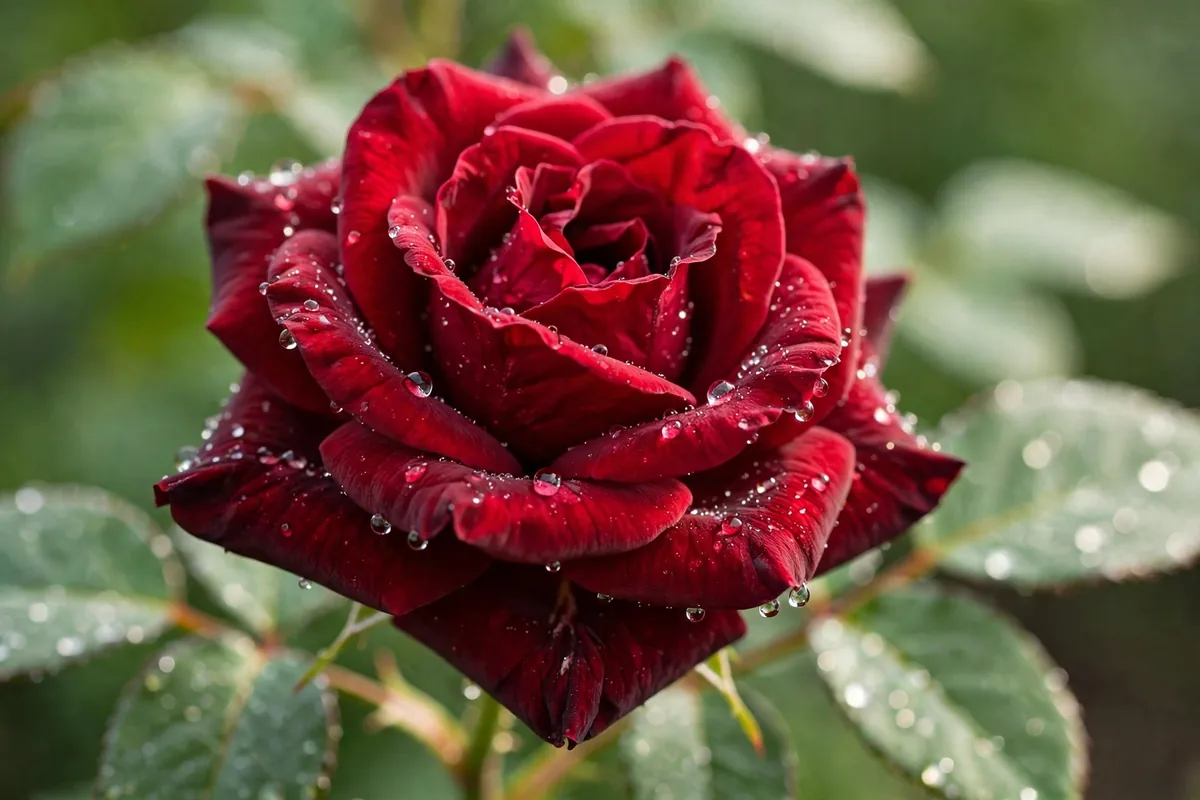
24. Red Rose (Rosa hybrids)
Zones 4–9 depending on variety | 3–6 ft tall | Late spring to fall, in flushes | Full sun
‘Mister Lincoln’ remains the benchmark fragrant true-red hybrid tea — velvety, long-stemmed, and strongly scented. For less work, the landscape rose ‘Knock Out’ trades fragrance for near-continuous cherry-red flowering and strong black spot resistance. Be honest about the trade: hybrid teas need feeding, pruning, and disease watching, and in humid climates an unsprayed ‘Mister Lincoln’ can be leafless by August. All roses want six hours of sun, air movement, and water at the base.
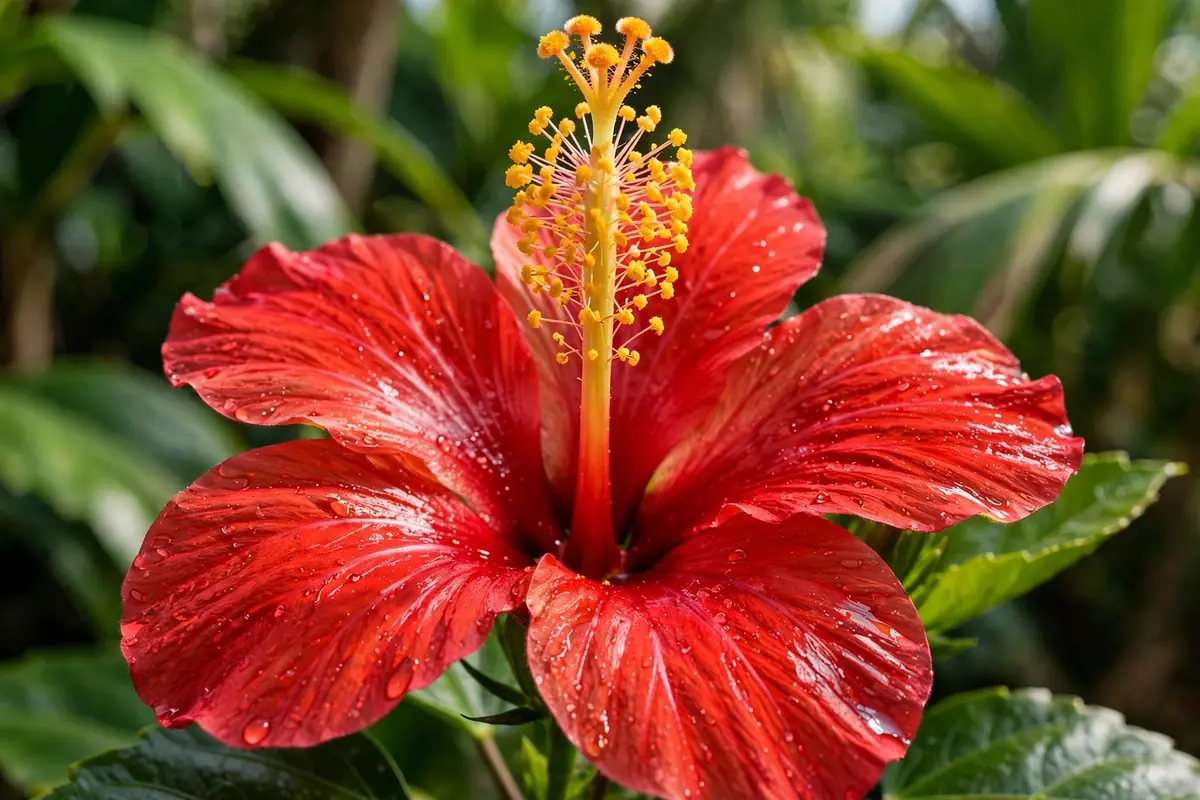
25. Tropical Hibiscus (Hibiscus rosa-sinensis)
Zones 9–11 | 4–10 ft tall | Summer to fall | Full sun
Glossy scarlet saucers the size of a hand, each lasting a single day but replaced daily in warm weather. Outside zones 9–11 this is a patio pot plant that must come indoors before nights drop below 50°F (10°C) — cold shock drops buds and leaves within days. Indoors it needs your brightest window and regular checking for aphids and whitefly. Do not confuse it with hardy rose of Sharon (Hibiscus syriacus), which survives zone 5 but rarely comes in a true red.
26. Camellia (Camellia japonica)
Zones 7–9 | 6–12 ft tall | Late winter to spring | Part shade, shelter
Red camellias such as ‘Adolphe Audusson’ (semi-double, white-flecked) and ‘Bob Hope’ (deep crimson, almost black-red in bud) flower when the rest of the red garden is asleep. Camellias are acid-soil plants; on chalk or lime they yellow and refuse to thrive, so test soil or grow in ericaceous compost in a large pot. The classic disappointment is bud drop — water well in late summer while buds form, and shelter from early morning sun after frosty nights, which thaws buds too fast and browns them.
27. Azalea (Rhododendron hybrids)
Zones 4–9 depending on type | 2–6 ft tall | Spring | Part shade
Red azaleas — evergreen Kurume types like ‘Hino Crimson’ and hardy deciduous hybrids — cover themselves in scarlet for three weeks in spring. Like camellias, they demand acid, drained but moisture-retentive soil, and fail slowly in alkaline ground. Plant shallow — a plant set even two inches too deep struggles for years. Prune, if at all, right after flowering; later pruning cuts off next year’s buds.
28. Weigela ‘Red Prince’ (Weigela florida ‘Red Prince’)
Zones 4–8 | 5–6 ft tall and wide | Late spring, light repeat in summer | Full sun
An arching deciduous shrub loaded with deep red trumpet flowers in late spring, with a smaller second showing later — one of the few hardy shrubs hummingbirds visit as reliably as bee balm. ‘Red Prince’ holds its colour better than older red weigelas, which fade to pink in heat. Prune right after the main flowering, removing a third of the oldest stems at the base; spring pruning removes that year’s flowers. It tolerates most soils except waterlogged ground.
Red Flowers for Shade, Pots, and the Holidays
True shade reds are few, and pretending otherwise wastes gardeners’ money. The plants in this section genuinely cope with shade or container life — but note that cardinal flower and red astilbe, covered above, also belong on the shade list if your soil is wet.
29. Fuchsia (Fuchsia × hybrida)
Annual (perennial zones 10–11) | 1–2 ft, trailing types longer | Spring to fall | Part shade
Red-and-purple dangling bells for hanging baskets in shade where geraniums and petunias refuse to flower. Fuchsias hate heat plus dry roots: a basket that dries out in a hot afternoon drops its buds overnight. Water daily in summer, feed weekly, and site baskets out of wind, which snaps the brittle stems. Hardy Fuchsia magellanica survives winter as a shrub in mild zones; basket hybrids do not.
30. Poinsettia (Euphorbia pulcherrima)
Houseplant (perennial zones 9–11) | 1–3 ft in pots | Winter | Bright indoor light
The red parts are bracts, not petals; the true flowers are the small yellow buds in the centre. Poinsettia is a short-day plant: it colours its bracts only after weeks of nights longer than about 12 hours, uninterrupted by artificial light. That is why a plant in a lit living room stays green, and why recolouring last year’s plant needs 14 hours of complete darkness nightly from early autumn — a cupboard routine most people abandon after one try. Keep bought plants away from radiators and draughts, and water sparingly.
What Red Flowers Mean
Briefly, because it affects what people buy: red roses mean romantic love — a safe Valentine’s choice and a loaded one elsewhere. Red tulips carry the same message more quietly. Red poppies mean remembrance in Commonwealth countries, where the field poppy honours fallen soldiers — worth knowing before putting them in a cheerful bouquet for a British or Canadian recipient. Red zinnias read as warmth and admiration without the romantic weight.
How to Choose the Right Red Flowers
For a red border that flowers all season: combine one plant from each group — red tulips and peonies for spring, bee balm, daylilies, and Maltese cross for early summer, Crocosmia and dahlias for late summer, and zinnias or scarlet sage to fill every gap until frost.
For hummingbirds: cardinal flower, bee balm, scarlet sage, weigela, and fuchsia, in that order of reliability. Tubular flowers in true red and scarlet are what hummingbirds evolved to find; double roses and peonies offer them almost nothing.
For dry, hot, poor soil: blanket flower, red hot poker, nasturtium, celosia, and zonal geraniums in pots. Most sit comfortably alongside other full-sun perennials that share the same lean diet.
For wet soil: cardinal flower first, then canna, red astilbe, and bee balm. This is a short list because most red flowers — tulips, blanket flower, red hot poker — rot in ground that stays wet through winter.
For shade: cardinal flower and red astilbe outdoors, fuchsia in baskets. If your shade is dry as well as dark, no red flower will perform well there; plant green and white there and put your reds where the sun is.
For cutting: roses, dahlias, gladioli, zinnias, and red tulips. Cut dahlias and zinnias fully open — neither opens further in a vase — and tulips nearly closed.
Common Mistakes With Red Flowers
- Mixing orange-reds and pink-reds in one bed. Scarlet crocosmia beside crimson peonies makes both look wrong. Decide which red family you are planting and check new purchases against a flower you already have, in daylight.
- Planting tulips and blanket flowers in wet soil. Both rot over winter in ground that does not drain. If your soil stays soggy, grow them in raised beds or pots, or switch to cardinal flower and canna, which want the water.
- Burying peony crowns too deep. The most common reason a healthy peony never flowers. Lift and replant in autumn with the eyes no more than 2 inches down.
- Sowing zinnias, celosia, and cannas too early. All three are warm-soil plants. Seed started in cold conditions rots or stalls, and the “early” planting flowers later than one sown a month afterwards.
- Feeding nasturtiums and geraniums like petunias. Rich feeding gives leaves instead of flowers on both. Keep them lean; save the fertiliser for the dahlias and cannas.
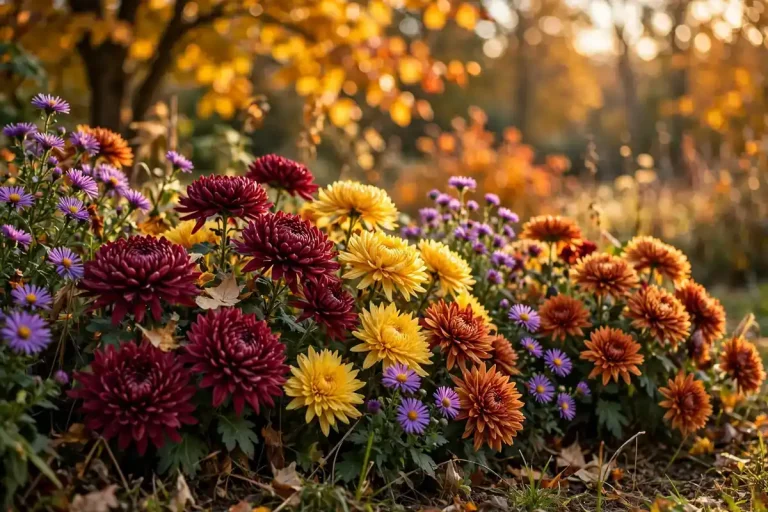
- Expecting red flowers in deep shade. Apart from the short list above, reds need sun to form pigment and buds. Even the fall red of chrysanthemums needs a sunny spot — see our mum care guide for how much light they demand.
- Throwing away amaryllis and poinsettia after one season. Both reflower with a rest period. Amaryllis is genuinely easy to keep; poinsettia recolouring is harder, but the plant itself grows on happily as a green houseplant.
Frequently Asked Questions
What is the best red flower for a beginner?
Zinnias outdoors and zonal geraniums in pots. Zinnias grow from cheap seed, flower until frost, and tolerate missed waterings once established. Geraniums flower for months in containers and forgive drying out. For a perennial, start with blanket flower or a red daylily — both survive neglect that would kill a rose.
Which red flowers bloom the longest?
Among annuals, zinnias, scarlet sage, and trailing petunias flower from early summer to frost without a break. Among perennials, blanket flower has the longest season, often four months. Dahlias start later, in midsummer, but then out-produce everything else until the first hard frost ends them in a single night.
Are there any true red flowers for full shade?
Very few, and none for deep, dry shade. Cardinal flower and red astilbe flower well in part shade if soil stays moist, and fuchsia flowers in bright shade in baskets. In dark corners red fades toward pink and flowering thins — move red to the sunnier edges and use white flowers in the shade itself.
Why did my red flowers turn pink or orange?
Usually heat and light, not disease. Strong sun bleaches some red pigments toward orange; low light pushes others toward pink. Soil pH shifts a few reds slightly, far less than it changes hydrangeas. Also check the variety — many plants sold from a “red” photo are seed strains that vary plant to plant. Buying named varieties in bloom is the only complete fix.
Which red flowers attract hummingbirds best?
Cardinal flower is the strongest magnet, followed by bee balm, scarlet sage, red hot poker, weigela, and fuchsia. Hummingbirds favour tubular, true-red and scarlet flowers with no landing platform — a sign the flower evolved for hovering birds. Keep at least one of these in flower from midsummer onward, when hummingbirds are feeding most heavily before migration.



7 Comments