22 Purple Perennial Flowers That Return Every Year
Purple is the color garden designers reach for when they want depth, calm, and a little drama. It sits at the cool end of the spectrum, which means a bed of purple perennial flowers makes a small garden feel larger, and it flatters almost every color you plant beside it — silver foliage, hot pinks, sunny yellows, even a dozen neighboring shades of purple itself. Best of all, the plants on this list are true perennials: you plant them once and they return bigger and better every year, no replanting required. (If you prefer one-season color for instant impact, see our companion list of purple annual flowers.)
Below you’ll find 22 of the best purple perennials, every one of them a genuine perennial with violet, lavender, lilac, or deep-purple blooms. Each entry gives you the botanical name, bloom season, hardiness zones, mature height, and the growing tips that actually matter — what each plant needs, what it hates, and the named varieties worth hunting down. Start with the quick answer, skim the comparison tables, then dig into the full list.
Quick Answer
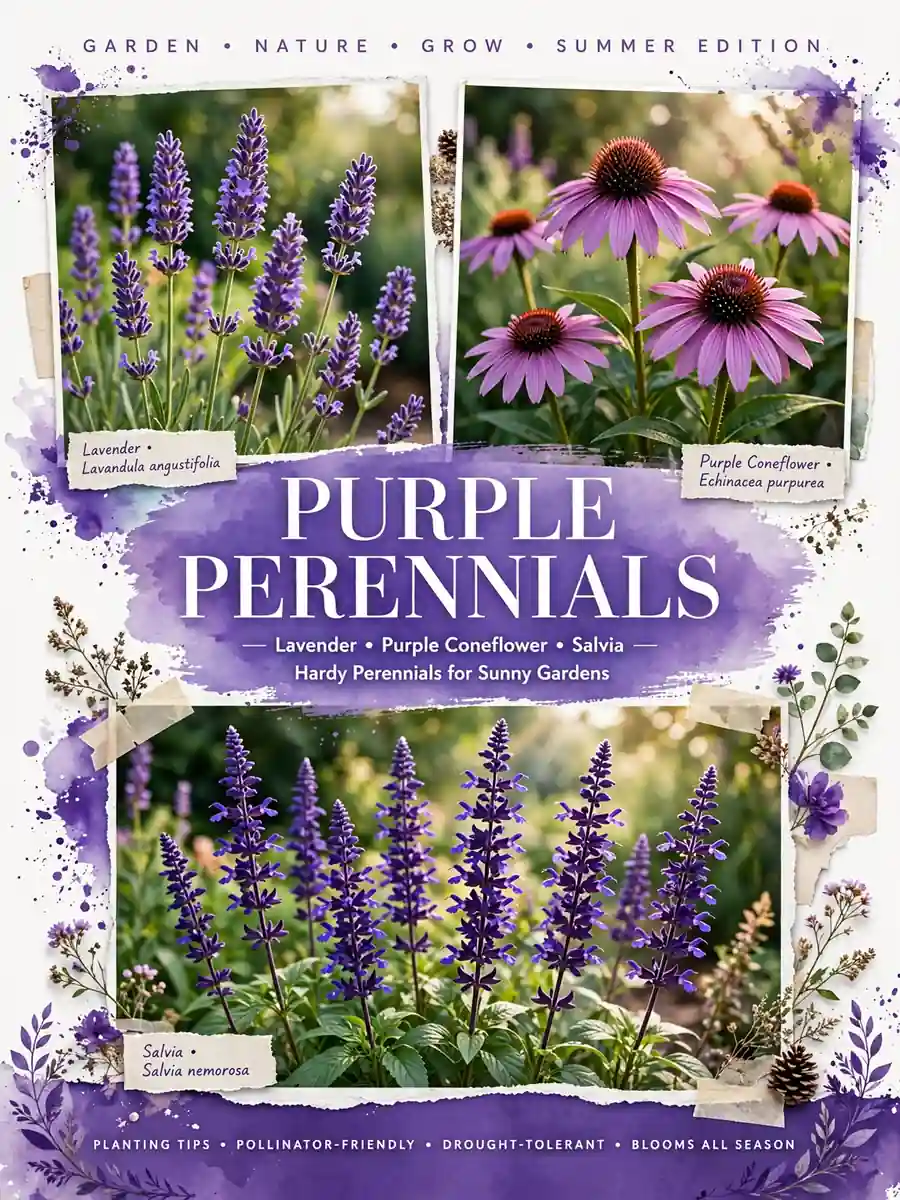
The best purple perennials for most gardens are English lavender (Lavandula angustifolia, zones 5–8), meadow sage (Salvia nemorosa, zones 4–8), Russian sage (Salvia yangii, zones 4–9), purple coneflower (Echinacea purpurea, zones 3–8), and catmint (Nepeta × faassenii ‘Walker’s Low’, zones 3–8). All five bloom in shades of purple from early summer into fall, thrive in full sun with well-drained soil, and return reliably year after year. For the longest season of color, deadhead spent spikes and divide clumps every 3–4 years.
Table of Contents
- Purple Perennials At a Glance
- 1. English Lavender
- 2. Meadow Sage
- 3. Russian Sage
- 4. Purple Coneflower
- 5. Catmint ‘Walker’s Low’
- 6. Ornamental Allium
- 7. Tall Verbena
- 8. New England Aster
- 9. Bee Balm
- 10. Blazing Star
- 11. Siberian Iris
- 12. Delphinium
- 13. Globe Thistle
- 14. Joe Pye Weed
- 15. Balloon Flower
- 16. False Indigo
- 17. Clematis ‘Jackmanii’
- 18. Spike Speedwell
- 19. Hardy Geranium ‘Rozanne’
- 20. Columbine
- 21. Bellflower
- 22. Monkshood
- Sun, Water & Hardiness Zones Table
- Designing With Purple Perennials
- Frequently Asked Questions
- References
Purple Perennials At a Glance
| Flower | Scientific Name | Bloom Season | Mature Height |
|---|---|---|---|
| English Lavender | Lavandula angustifolia | June–August | 2–3 ft |
| Meadow Sage | Salvia nemorosa | June–September | 1.5–3 ft |
| Russian Sage | Salvia yangii | July–September | 3–4 ft |
| Purple Coneflower | Echinacea purpurea | July–September | 2–4 ft |
| Catmint ‘Walker’s Low’ | Nepeta × faassenii ‘Walker’s Low’ | June–September | 2–3 ft |
| Ornamental Allium | Allium ‘Purple Sensation’ | May–June | 2–3 ft |
| Tall Verbena | Verbena bonariensis | July–October | 3–6 ft |
| New England Aster | Symphyotrichum novae-angliae | August–October | 3–5 ft |
| Bee Balm | Monarda didyma cultivars | July–August | 2–4 ft |
| Blazing Star | Liatris spicata | July–August | 2–4 ft |
| Siberian Iris | Iris sibirica | May–June | 2–3 ft |
| Delphinium | Delphinium elatum hybrids | June–July | 3–6 ft |
| Globe Thistle | Echinops ritro | July–September | 2–4 ft |
| Joe Pye Weed | Eutrochium purpureum | July–September | 4–7 ft |
| Balloon Flower | Platycodon grandiflorus | July–August | 1–2.5 ft |
| False Indigo | Baptisia australis | May–June | 3–4 ft |
| Clematis ‘Jackmanii’ | Clematis ‘Jackmanii’ | July–September | 10–12 ft (vine) |
| Spike Speedwell | Veronica spicata | June–August | 1–2 ft |
| Hardy Geranium ‘Rozanne’ | Geranium ‘Rozanne’ | June–October | 1–1.5 ft |
| Columbine | Aquilegia spp. & hybrids | April–June | 1–3 ft |
| Bellflower | Campanula persicifolia / C. carpatica | June–August | 1–3 ft |
| Monkshood | Aconitum napellus | August–September | 3–4 ft |
1. English Lavender (Lavandula angustifolia)
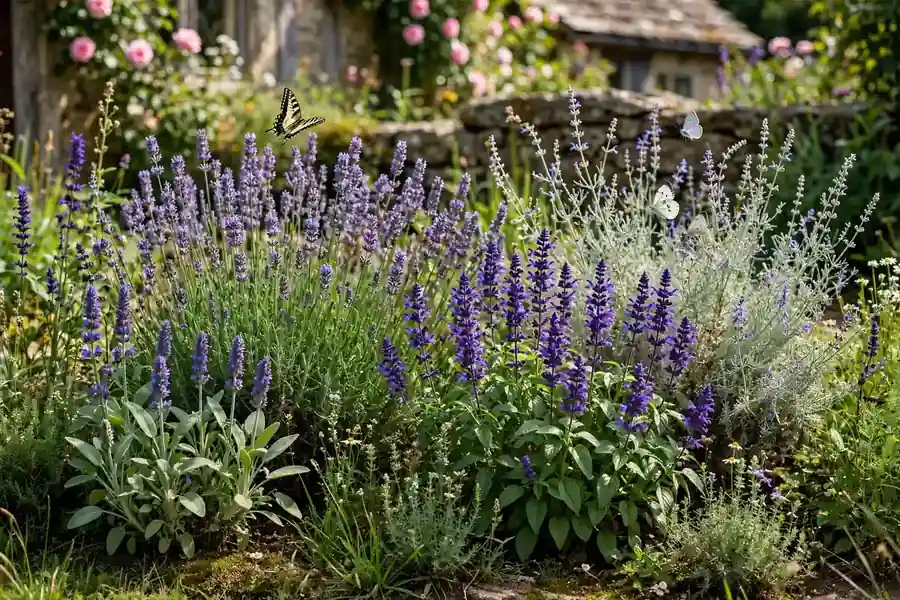
If purple perennials had a queen, it would be lavender. English lavender produces dense spikes of fragrant purple-blue flowers from June to August on neat, silver-gray mounds of aromatic foliage. It is a woody-based subshrub that behaves as a perennial in zones 5–8, reaching 2–3 feet tall and wide. Beyond the garden, the flowers are edible, the foliage scents sachets and drawers, and pollinators — especially bumblebees — work the spikes all summer. To browse more members of this letter’s garden stars, see our list of flowers that start with L.
Growing tips: Full sun is non-negotiable, and drainage is everything — lavender dies from wet feet long before it dies from cold. Plant in average, slightly alkaline, well-drained soil (sandy loam is ideal); in heavy clay, raise it in a mound or container. Water sparingly once established — this is a Mediterranean plant that resents rich, constantly moist soil. Prune lightly after flowering and give a harder shape-up in early spring, but never cut into the woody base where no green shoots show. Varieties to try: ‘Hidcote’ (deep purple, compact), ‘Munstead’ (early, lavender-blue), ‘Phenomenal’ (extra hardy, bred for humidity). In zones colder than 5, grow lavandin types in pots and overwinter them indoors.
2. Meadow Sage (Salvia nemorosa)
Meadow sage is the workhorse of purple borders. Upright, branching spikes of hooded violet-purple flowers rise above aromatic, heart-shaped leaves from June into autumn, and the plant asks for almost nothing in return. Clumps reach 1.5–3 feet and stay put politely, slowly widening over the years. It’s a magnet for bees and hummingbirds, shrugs off deer and rabbits, and pairs beautifully with roses, ornamental grasses, and echinacea. Gardeners also love it alongside other great flowers that start with S.
Growing tips: Plant in full sun (it tolerates light afternoon shade in hot climates) in average, well-drained soil. Meadow sage is drought-tolerant once established and actually blooms best in leaner soil — too much fertilizer produces floppy stems and fewer flowers. The single most important task is deadheading: cut spent spikes back hard after the first flush and you will get a strong second wave in late summer. Divide congested clumps every 3–4 years in spring. Varieties to try: ‘May Night’ (classic deep violet), ‘Caradonna’ (dark purple stems, intense violet flowers), ‘Wesuwe’ (purple-blue, repeat blooms into September).
3. Russian Sage (Salvia yangii)
Russian sage is not a true sage in the culinary sense — botanists recently moved it from Perovskia to Salvia — but gardeners keep the old common name for one of the most beloved purple perennials of the last two decades. From mid-summer to fall it produces airy clouds of tiny lavender-blue flowers on silvery-white stems, with finely dissected silver foliage that looks good from spring to frost. Plants reach 3–4 feet and create a hazy, see-through effect that softens every border it touches. It is also one of the toughest drought-tolerant perennials you can plant, thriving where lesser plants crisp.
Growing tips: Full sun and lean, sharply drained soil — Russian sage sulks in rich, wet ground and flops without enough light. Space plants generously (3 feet apart) so air circulates; crowded plants sprawl. In late winter or very early spring, cut the whole plant back to 6 inches before new growth starts — this one hard prune each year keeps it compact and floriferous. Established plants rarely need water or fertilizer. Varieties to try: ‘Blue Spire’ (deeper violet-blue flowers), ‘Little Spire’ (compact, 2–2.5 ft for smaller gardens), ‘Denim ‘n Lace’ (sturdy, upright stems that resist flopping).
4. Purple Coneflower (Echinacea purpurea)
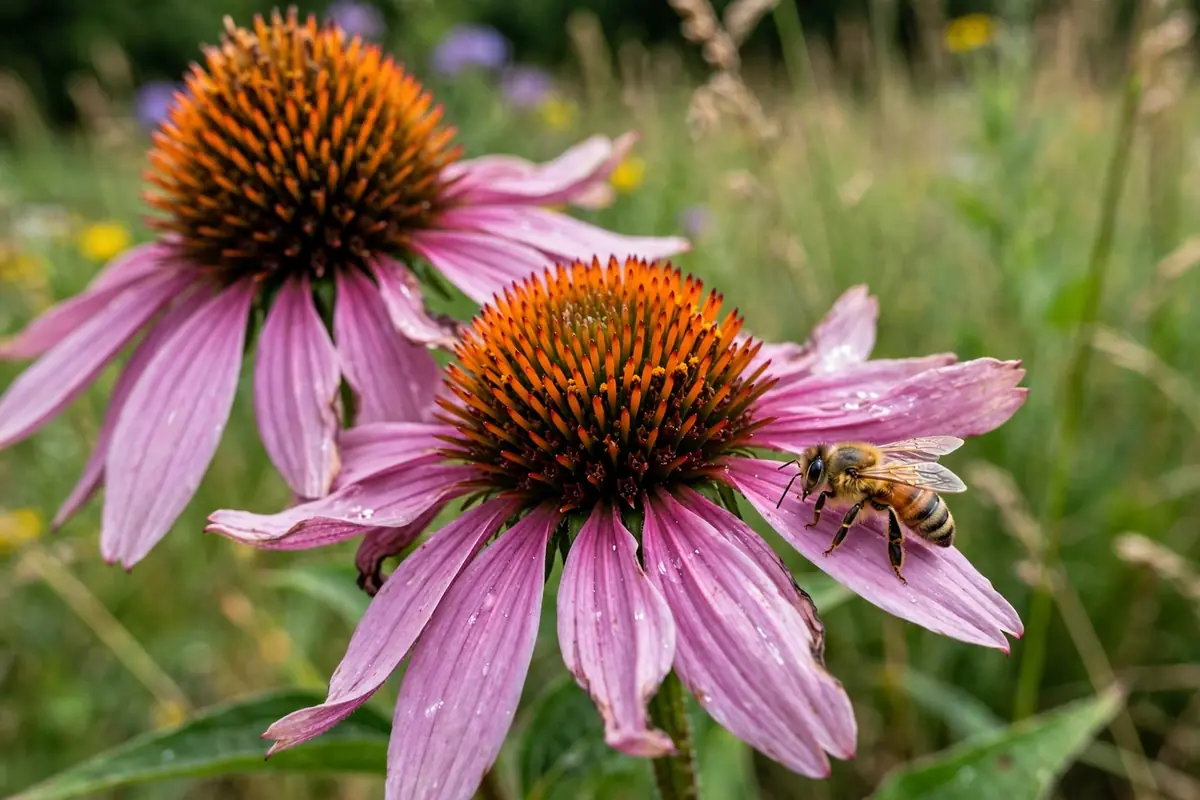
The purple coneflower is the native prairie icon of this list. Large daisy-like blooms with drooping purple-pink ray petals and a spiny copper-orange cone rise on sturdy 2–4 foot stems from July to September. It’s a true North American native perennial, hardy in zones 3–8, and one of the easiest perennials a beginner can grow. Butterflies mob the flowers, goldfinches feast on the seed heads in fall, and the blooms make excellent, long-lasting cut flowers. Newer breeding has added doubles and novel colors, but for a purple garden the species and its purple cultivars remain unbeatable.
Growing tips: Give it full sun — at least 6 hours — in average, well-drained soil. Coneflowers tolerate drought and poor soil once established; rich, soggy ground shortens their lives. Deadhead to extend the first bloom flush, but leave the last flowers standing for winter interest and bird food. Plants have deep taproots and resent being moved, so choose the spot carefully. Divide every 3–4 years in spring or fall. Varieties to try: ‘Magnus’ (horizontal purple petals, gold cone), ‘White Swan’ (companion contrast), ‘PowWow Wild Berry’ (compact, heavy bloomer for containers).
5. Catmint ‘Walker’s Low’ (Nepeta × faassenii ‘Walker’s Low’)
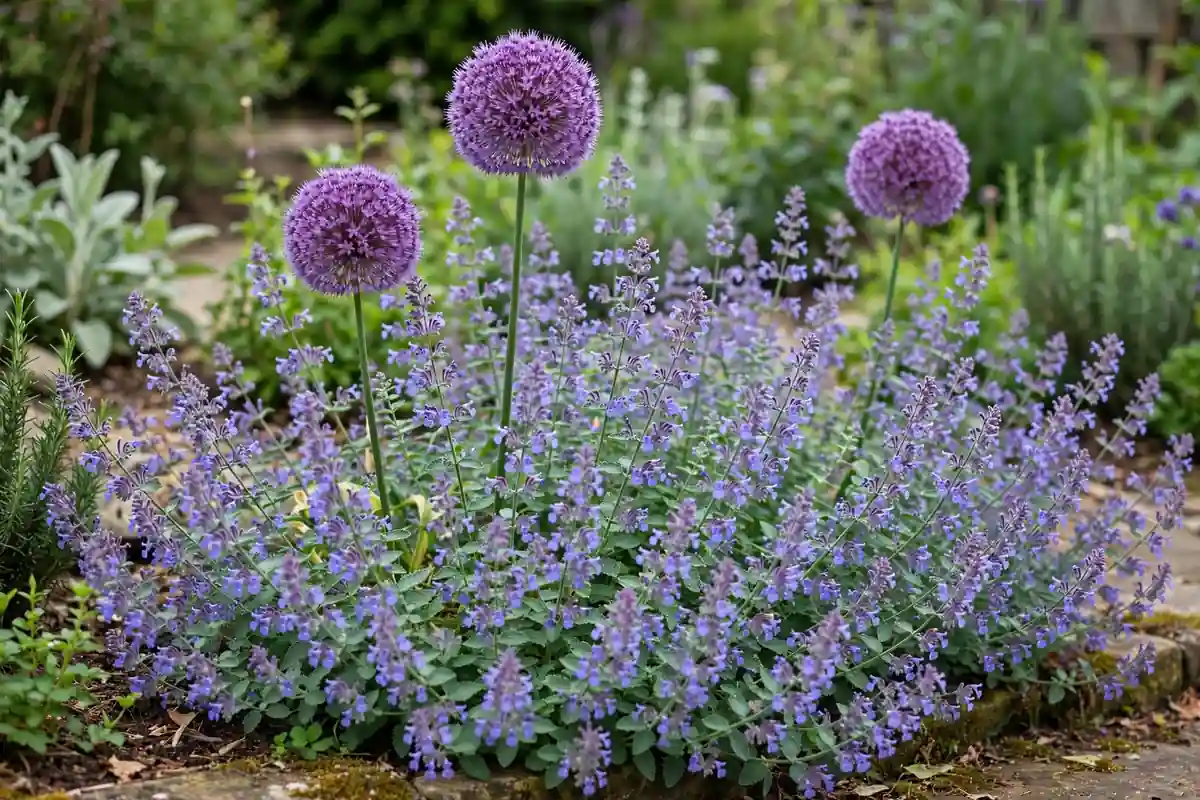
Catmint ‘Walker’s Low’ — named for a British garden, not for being low — is arguably the toughest purple perennial on this list. Billowing mounds of aromatic gray-green foliage send up thousands of small lavender-blue flowers from early summer straight into fall, forming a soft violet cloud 2–3 feet wide. The Perennial Plant Association named it Plant of the Year, and it earned the honor: it blooms for months, tolerates heat, drought, and poor soil, and shrugs off deer. Despite the “cat” name, it’s far less enticing to felines than true catnip. See more of its letter-mates in our flowers that start with C collection.
Growing tips: Full sun to light shade in average, well-drained soil — catmint is remarkably unfussy. After the first heavy flush of bloom (usually by midsummer), shear the plant back by half; fresh foliage and a second wave of flowers follow within weeks. This shearing is the difference between a good catmint and a spectacular one. Divide every 3–4 years to keep centers vigorous. Note that despite its name, ‘Walker’s Low’ is not short — it sprawls gracefully, so give it room at the front of the border. Varieties to try: ‘Walker’s Low’ (the classic), ‘Six Hills Giant’ (taller, 3 ft, for big spaces), ‘Cat’s Pajamas’ (compact 12–14 in., neat and tidy).
6. Ornamental Allium (Allium spp.)
Ornamental alliums bring architecture to the purple palette. In late spring, perfect spheres of starry violet-purple florets float on leafless stems 2–4 feet tall, hovering above neighbors like botanical fireworks. The effect is unforgettable — nothing else in the garden looks quite like an allium globe. After flowering, the dried seed heads hold their shape for weeks and look striking sprayed silver or gold for winter interest. For the letter that also gives us asters and anemones, browse our flowers that start with A.
Growing tips: Plant bulbs in fall, 6–8 inches deep, in full sun with excellent drainage — bulbs rot in winter-wet soil. Zones 4–8 suit most ornamental alliums. The strap-like basal foliage often yellows as flowers open; this is normal, so plant alliums behind or among foliage that hides the decline (hostas, daylilies, ornamental grasses). Allow seed heads to form if you want them to self-sow into drifts; deadhead if you want the clump to stay put. Varieties to try: ‘Purple Sensation’ (the classic 30-inch violet globe), ‘Globemaster’ (huge 8-inch heads, sterile, long-lived), ‘Gladiator’ (tall, 4 ft, light lilac-purple).
7. Tall Verbena (Verbena bonariensis)
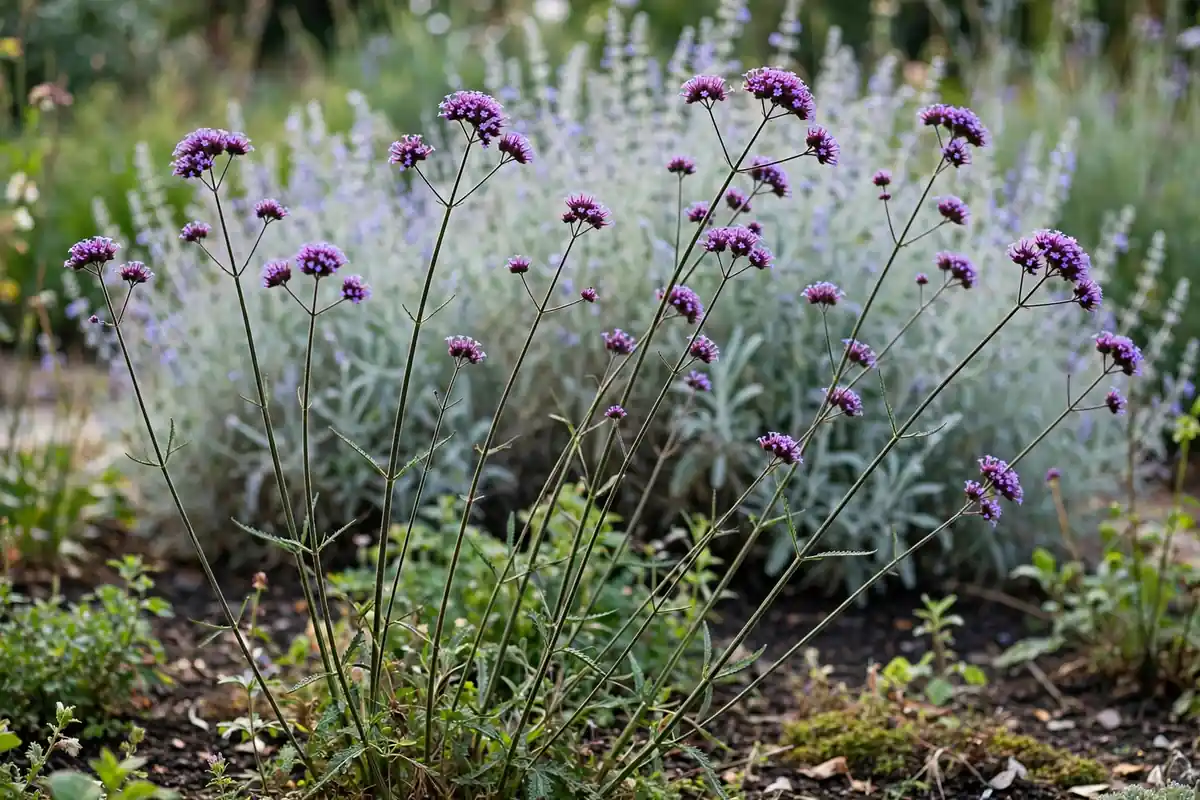
Tall verbena is the see-through plant every designer sneaks into borders. Wiry, almost leafless stems rise 3–6 feet, each topped with flat clusters of tiny vivid violet-purple flowers from July until frost. Because the stems are so thin, you can see straight through the plant — it adds purple color and height without blocking the view behind it. Butterflies adore it, goldfinches strip the seeds in autumn, and it self-sows politely (or enthusiastically, depending on your climate). It is a true tender perennial, hardy in zones 7–11, and grown as a reseeding annual in colder zones. Find it among the flowers that start with V.
Growing tips: Full sun and average, well-drained soil — tall verbena is remarkably tolerant once going. In zones 7 and up it returns from the crown; in colder zones, leave the stems standing over winter and let seedlings do the work. Plants can be leggy when young, so sow or plant in groups of at least 5–7 for impact. Cut back spent flower clusters through summer to keep new buds coming, but leave the last of the season for the birds. It rarely needs staking despite its height — the stiff, square stems stand on their own.
8. New England Aster (Symphyotrichum novae-angliae)
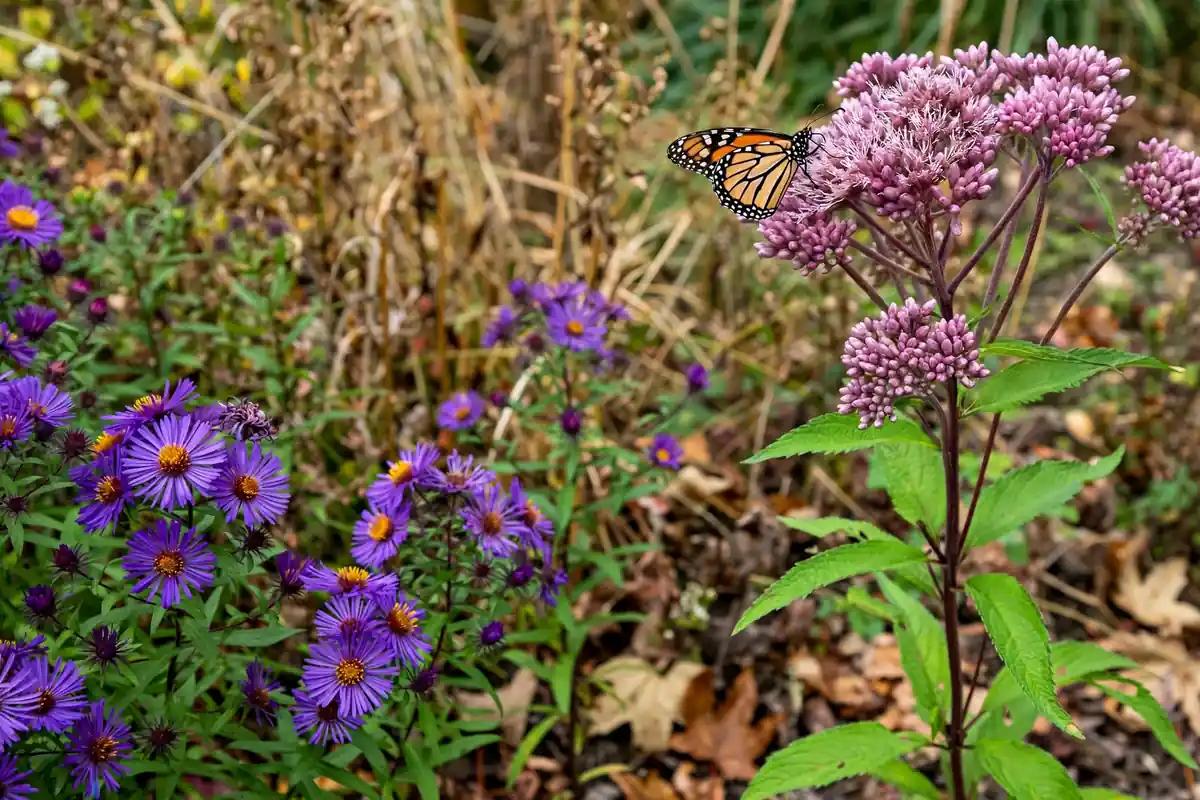
When the rest of the purple garden is winding down, New England aster takes the stage. From August into October this North American native erupts in hundreds of rich purple daisies with golden centers on sturdy 3–5 foot stems. It is one of the most important late-season nectar plants for monarch butterflies fueling up for migration. The flowers close at night and in rain, opening fresh each morning. For more autumn color alongside your asters, read our mum care guide — mums and asters are the classic fall duo.
Growing tips: Full sun in rich, consistently moist soil — unlike most plants on this list, asters do not want drought. In dry soil they sulk and get leggy. Pinch or cut back stems by a third in early summer (before July 4th) to produce bushier plants with more flowers; otherwise the lower foliage drops and stems flop. Good air circulation and morning sun help prevent powdery mildew, the one real pest. Divide every 2–3 years in spring to keep clumps vigorous. Varieties to try: ‘Purple Dome’ (compact 18 in., intense purple), ‘Alma Pötschke’ (hot pink-purple), ‘Vibrant Dome’ (mildew-resistant, 2 ft).
9. Bee Balm (Monarda didyma)
Bee balm’s shaggy, firework-like flower heads in shades of purple and violet are hummingbird magnets — nothing draws ruby-throated hummingbirds to a garden faster. This native perennial blooms July to August on 2–4 foot stems, with aromatic foliage (a cousin of oregano and thyme) that makes a pleasant tea. Purple cultivars range from lavender to deep wine-purple. It’s a spreader, widening into colonies via underground runners, which makes it perfect for naturalized areas and cottage gardens where it can roam a little.
Growing tips: Full sun to part shade in rich, moist soil — bee balm wilts in drought and mildews in stagnant air, so give it space and morning sun. Newer cultivars have dramatically better mildew resistance than old varieties, so buy modern: ‘Blue Stocking’ (violet-blue), ‘Purple Rooster’ (deep purple, mildew-resistant), ‘Balmy Purple’ (compact 12 in. for containers). Deadhead to prevent excessive self-seeding and divide every 3 years in spring, discarding the woody center of old clumps.
10. Blazing Star (Liatris spicata)
Blazing star — also called gayfeather — does something no other flower does: it blooms from the top down. Dense bottlebrush spikes of fuzzy purple florets open at the tip first and progress downward, giving an unusually long display from July into August. Native to North American prairies, it’s hardy in zones 3–8, stands 2–4 feet tall, and thrives on neglect. The vertical accent is invaluable in flat prairie-style plantings, and butterflies treat each spike like a fueling station.
Growing tips: Full sun and well-drained, even poor, soil — liatris rots in winter-wet ground, which is its main enemy. Plant the corm-like tubers 4 inches deep in spring, spacing 12 inches apart. Once established it needs almost no water and no fertilizer. Leave the fluffy seed heads standing for fall interest and finches. Divide crowded clumps every few years in spring; the corms pull apart easily. Varieties to try: ‘Kobold’ (compact 2 ft, intense purple), ‘Floristan Violet’ (tall, 3–4 ft, deep violet), ‘Alba’ (white, for contrast planting).
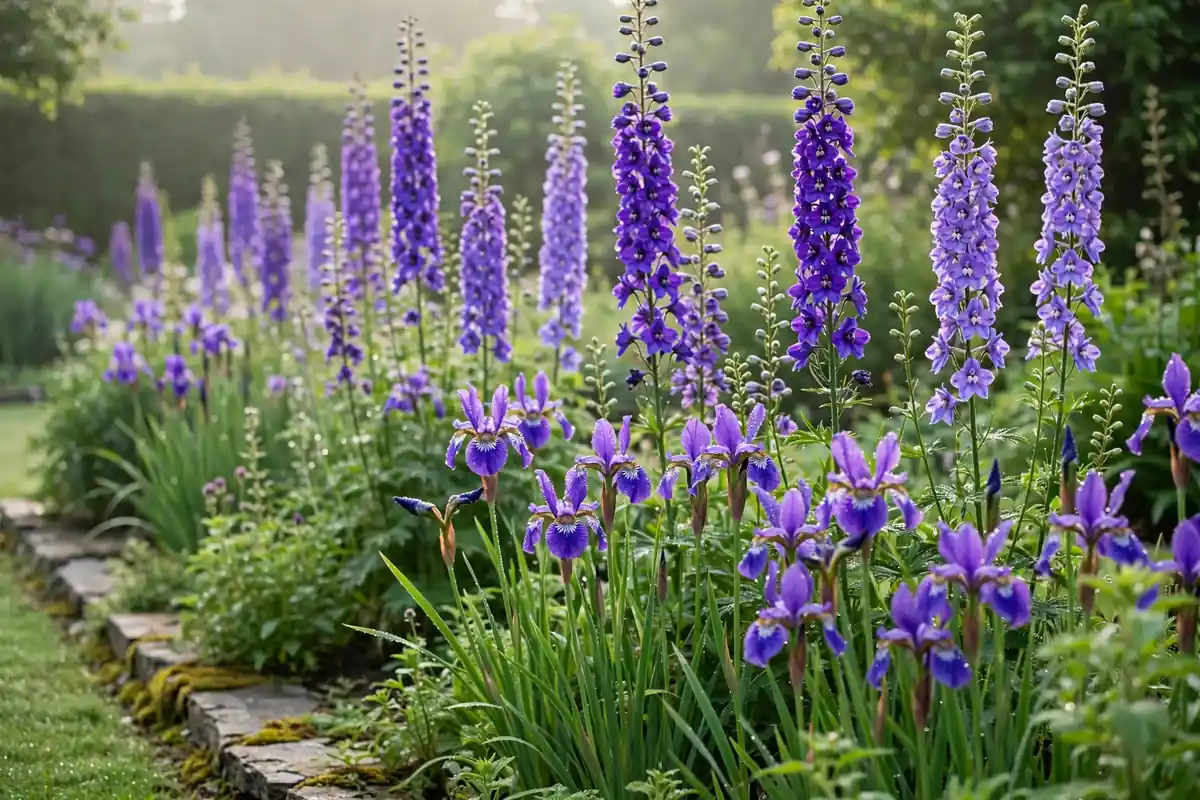
11. Siberian Iris (Iris sibirica)
Siberian iris brings an elegance to the purple garden that few plants match. In May and June, slender stems carry graceful, orchid-like flowers in violet, purple, and blue-purple above a fountain of narrow, grass-like foliage that stays handsome all season. Unlike bearded irises, Siberian irises never need dividing to keep blooming (though you can), never get iris borer, and form increasingly magnificent clumps over decades. They reach 2–3 feet and are hardy in zones 3–8, making them one of the most reliable cold-climate purple perennials.
Growing tips: Full sun to light shade in moist, slightly acidic soil — Siberian iris is one of the few irises that loves moisture and even tolerates boggy edges. Mulch in spring and water deeply during dry spells; drought causes sparse bloom. Leave the foliage standing through winter — it turns a lovely tan and protects the crown. Cut the whole clump to the ground in early spring before new growth emerges. Varieties to try: ‘Caesar’s Brother’ (deep violet-blue, the classic), ‘Silver Edge’ (blue with silver rims), ‘Butter and Sugar’ (white and yellow, for contrast).
12. Delphinium (Delphinium elatum hybrids)
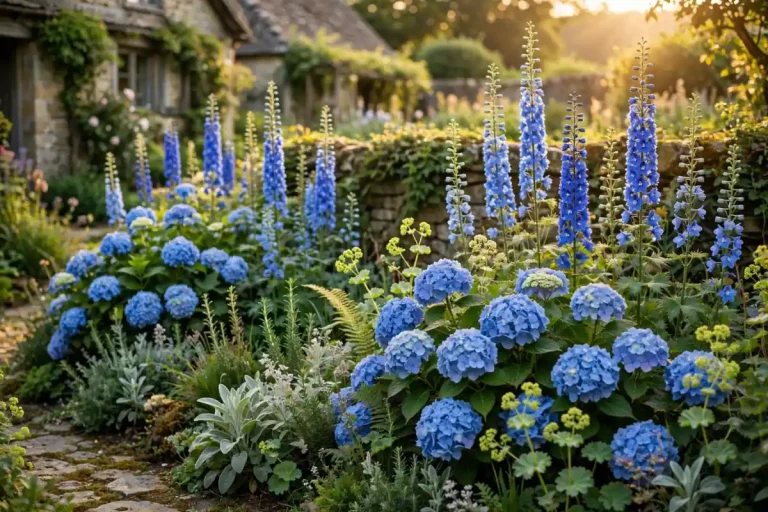
For sheer vertical purple drama, nothing beats delphiniums. Towering 3–6 foot spires packed with dozens of violet, purple, and blue florets rise in June and July like floral skyscrapers. Each floret has a contrasting “bee” — often white or dark purple — at its center, and the effect from a distance is pure cottage-garden romance. Delphiniums are the prima donnas of this list: glorious, but they demand good conditions and rarely live more than 3–4 years in hot, humid climates. In cool-summer regions (zones 3–7) they are magnificent and long-lived.
Growing tips: Full sun (afternoon shade in hot climates) in rich, deeply prepared, well-drained soil with plenty of organic matter. Stake tall varieties before they flop — grow-through supports placed in spring are easiest. Feed lightly in spring; delphiniums are hungry but burn easily with heavy fertilizer. Cut the flower spike to the ground immediately after bloom and you may get a smaller second flush in fall. Watch for slugs on young shoots and powdery mildew in humid air. Varieties to try: ‘Purple Passion’ (rich violet-purple), ‘Black Knight’ group (near-black purple), ‘Magic Fountains’ (compact 3 ft, no staking).
13. Globe Thistle (Echinops ritro)
Globe thistle is the tough guy of the purple border. Perfect steel-blue to violet-purple spheres, 1.5–2 inches across, sit atop spiny gray-green foliage on 2–4 foot stems from July to September. The texture is irresistible — bees crawl all over the globes, and the dried heads are spectacular in winter arrangements. Deer and rabbits won’t touch it (those spines), drought doesn’t faze it, and it thrives in poor soil where fussier perennials fail. It’s the plant you recommend to someone who swears they kill everything.
Growing tips: Full sun and average to poor, well-drained soil — the leaner the better. Globe thistle self-sows freely; deadhead if you don’t want volunteers (or leave the heads for the birds and cut them for dried arrangements). The taproot resents disturbance, so plant it where it will stay. Divide rarely — every 5+ years at most — or simply let it seed into drifts. Varieties to try: ‘Veitch’s Blue’ (intense steel-blue, compact), ‘Taplow Blue’ (large heads, 3–4 ft), ‘Star Frost’ (white-tipped blue, unique).
14. Joe Pye Weed (Eutrochium purpureum)
Don’t let the name fool you — Joe Pye weed is a garden aristocrat. This North American native sends up 4–7 foot stems crowned with huge domed clusters of dusky mauve-purple florets from July to September. It’s a back-of-the-border giant that brings butterflies by the dozen — swallowtails, monarchs, and fritillaries all queue up. In the right spot (moist soil, full sun) it’s a self-sufficient, decades-long performer. Dwarf cultivars have made this former meadow plant viable in average-sized gardens too.
Growing tips: Full sun to light shade in moist, rich soil — Joe Pye weed is the thirstiest plant on this list and sulks in drought. In dry gardens, plant it near a downspout or in a low spot. Cut stems to the ground in late winter. If 7 feet is too much, pinch stems back by a third in June for shorter, bushier plants, or choose compact cultivars. Varieties to try: ‘Gateway’ (5–6 ft, deep mauve), ‘Little Joe’ (3–4 ft, for smaller gardens), ‘Baby Joe’ (2–3 ft, container-friendly). The Old Farmer’s Almanac has a thorough Joe Pye weed growing guide worth bookmarking.
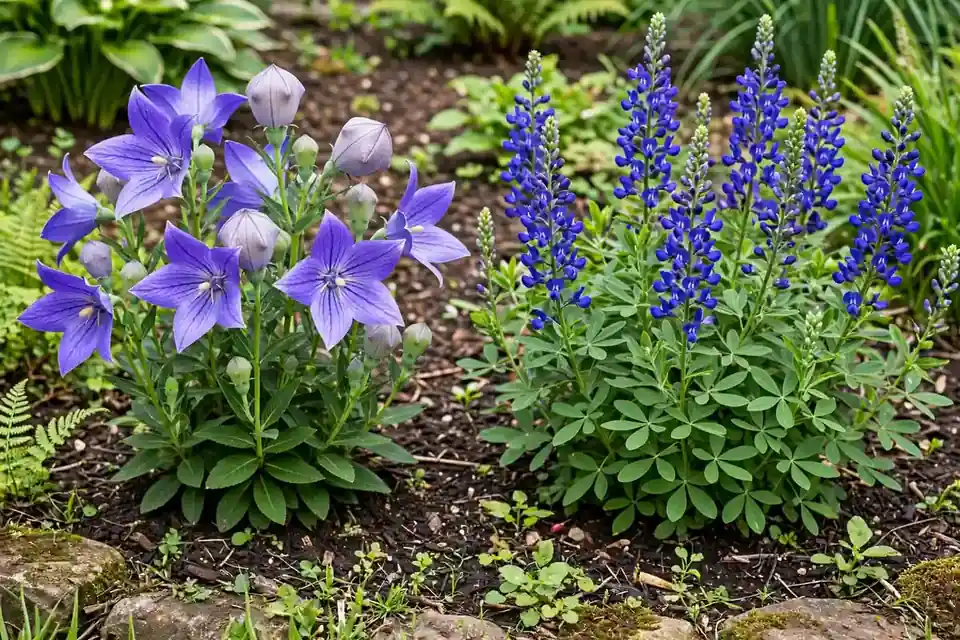
15. Balloon Flower (Platycodon grandiflorus)
Balloon flower earns its name twice: the buds swell like little purple balloons before popping open into perfect five-pointed stars of violet-blue. It’s one of the most charming oddities in the perennial world, blooming July to August on neat 1–2.5 foot mounds. The flowers are long-lasting — individual blooms hold for days — and the plant is extraordinarily long-lived, with fleshy taproots that can persist for decades in one spot. Few perennials give you this much delight for this little effort.
Growing tips: Full sun to part shade in average, well-drained soil. Mark the spot clearly: balloon flower emerges very late in spring (often mid-May), and many gardeners have accidentally dug it up thinking it died. The taproot hates being moved, so plant it once and leave it alone. Deadhead to extend bloom, or leave pods for ornamental seed heads. Cut stems back after the first hard frost. Varieties to try: ‘Sentimental Blue’ (dwarf, 6 in., heavy bloomer), ‘Fuji Blue’ (tall, 2.5 ft, classic violet), ‘Astra Blue’ (compact, double flowers).
16. False Indigo (Baptisia australis)
False indigo is the purple perennial that gets better every year for twenty years. In May and June, lupine-like spikes of indigo-blue to violet-purple flowers rise above blue-green, clover-like foliage on a stately 3–4 foot shrub-like mound. After bloom, inflated charcoal-black seed pods rattle in the breeze and look striking in dried arrangements. It’s a native prairie legume, so it fixes its own nitrogen, laughs at drought, ignores deer, and feeds early bumblebee queens when little else is blooming. Once established, it is nearly indestructible.
Growing tips: Full sun and deep, well-drained soil — baptisia develops a massive taproot, so give it room and never move it once planted (transplants almost always fail). Water the first season, then leave it alone; established plants need nothing. Cut stems to the ground in late winter or leave the pods for winter interest. It takes 2–3 years to hit its stride — be patient. Varieties to try: ‘Purple Smoke’ (smoky violet flowers, charcoal stems), ‘Sparkling Sapphires’ (vivid blue-violet), ‘Indigo Spires’ (tall, deep indigo).
17. Clematis ‘Jackmanii’ (Clematis ‘Jackmanii’)
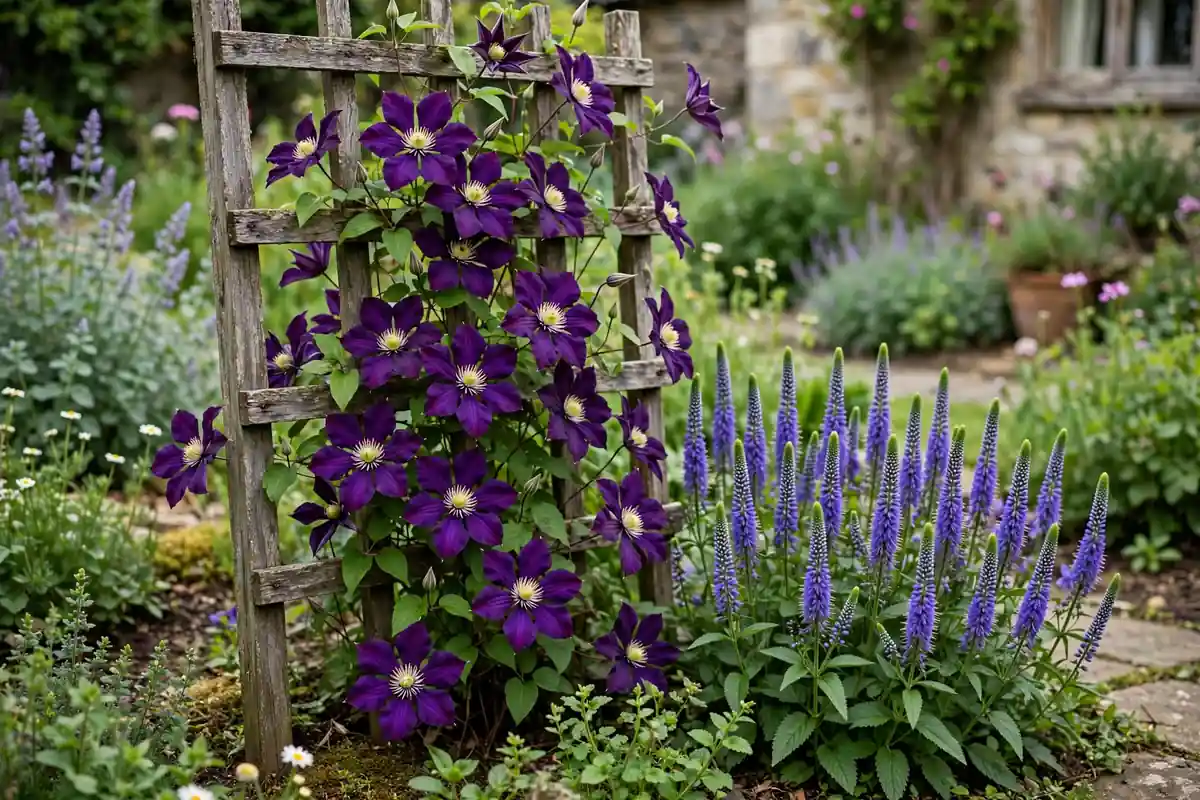
No purple perennial list is complete without the most famous clematis ever bred. ‘Jackmanii’ has produced masses of velvety, deep violet-purple flowers — each 4–5 inches across — every summer since 1862. It climbs 10–12 feet up trellises, arbors, fences, and obelisks, blooming from July to September on new wood, which makes pruning foolproof. Trained through a climbing rose, sprawling over a shrub, or covering an ugly fence, it puts purple at eye level and above, where the rest of this list can’t reach.
Growing tips: Full sun to part shade with “heads in the sun, feet in the shade” — mulch the root zone or plant a low perennial in front to keep roots cool. Plant the crown 2–3 inches deeper than the nursery pot to encourage extra shoots and protect against clematis wilt. Provide a trellis with thin supports it can twine around. As a Group 3 (hard) pruner, cut all stems to 12 inches in late winter — it blooms on new growth, so you can’t prune it wrong. Companions: climbing roses, honeysuckle, and underneath, catmint or hardy geraniums to shade the roots.
18. Spike Speedwell (Veronica spicata)
Spike speedwell is the neat, well-behaved cousin in the purple family. Dense, poker-straight spikes of violet-blue flowers rise 1–2 feet above tidy mounds of dark green foliage from June to August. It’s compact enough for the front of the border, long-blooming enough to carry a bed, and tough enough for zones 4–8 with almost no care. Where salvia gives you drama, speedwell gives you precision — perfect rows of purple candles that look sharp in formal and cottage plantings alike.
Growing tips: Full sun in average, well-drained soil. Deadhead individual spikes as they fade and the plant keeps producing new ones for weeks — this is a plant that rewards five minutes of attention. Divide every 3–4 years in spring to maintain vigor. It dislikes winter wet, so avoid low spots in rainy climates. Varieties to try: ‘Royal Candles’ (deep violet-blue, compact 15 in.), ‘Sunny Border Blue’ (classic, long-blooming), ‘Eveline’ (reddish-purple, unique).
19. Hardy Geranium ‘Rozanne’ (Geranium ‘Rozanne’)
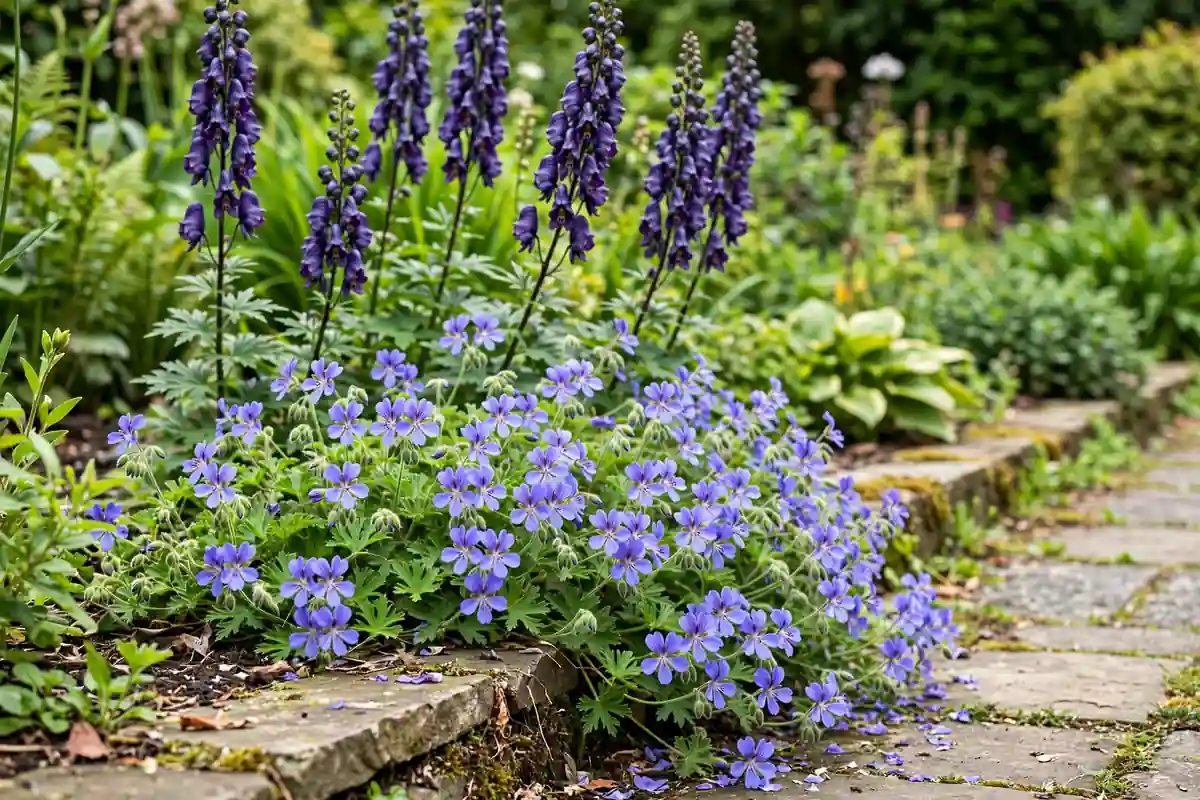
‘Rozanne’ isn’t just a purple perennial — it’s one of the longest-blooming perennials of any color, period. From June until hard frost, it produces an endless succession of large violet-blue flowers with white centers on sprawling 1–1.5 foot mounds. It was named Perennial Plant of the Year and RHS Chelsea Flower Show Plant of the Centenary, and it lives up to both: it weaves through neighbors, softens path edges, fills gaps, and simply never stops. If you plant only one purple perennial this year, make a strong case for this one.
Growing tips: Full sun to part shade in average, well-drained soil — ‘Rozanne’ adapts to more shade than most plants here. Plant it where it can sprawl: at the front of borders, spilling over walls, or threading through roses and shrubs. Shear back by a third in midsummer if it gets lanky; it rebounds with fresh flowers in weeks. It needs no deadheading and no division for years. Note: this is a true geranium (cranesbill), not the annual pelargonium sold as “geranium” in garden centers.
20. Columbine (Aquilegia spp.)
Columbines bring purple to the spring garden when little else is blooming. From April to June, delicate spurred flowers in violet, purple, blue, and bicolors dangle above lacy, blue-green foliage on 1–3 foot stems. They’re old-fashioned cottage garden plants that self-sow gently into drifts, and hummingbirds visit the spurred blooms in early spring. Columbines are also one of the better purple perennials for part shade, making them invaluable under trees and on the north side of the house.
Growing tips: Part shade to full sun (afternoon shade in hot climates) in average, well-drained, humus-rich soil. Columbines are short-lived — individual plants last 3–4 years — but they self-sow so reliably you’ll never be without them; allow some seed heads to ripen. Watch for leaf miners, which draw squiggly trails on foliage; they’re cosmetic, not fatal — just remove affected leaves. Cut foliage to the ground after bloom if it looks ratty; fresh leaves regrow. Varieties to try: ‘McKana Giants’ (large purple-and-white bicolors), ‘Blue Barlow’ (double, deep violet), A. vulgaris ‘Clementina Purple’ (upward-facing, fully double).
21. Bellflower (Campanula spp.)
Bellflowers — campanulas — are a huge genus, and the purple members are garden staples. Peach-leaved bellflower (C. persicifolia) sends up 2–3 foot stems of cup-shaped violet-blue bells in June and July, while Carpathian bellflower (C. carpatica) forms neat 1-foot mounds studded with upward-facing purple cups all summer. Both are easy, cold-hardy (zones 3–8), and charming in that unpretentious cottage way. They naturalize gently and look wonderful tumbling over stone walls.
Growing tips: Full sun to part shade in average, well-drained soil — campanulas rot in soggy ground. Deadhead C. persicifolia after the first flush for rebloom; shear C. carpatica back by half in midsummer for a second wave. Divide every 3–4 years in spring. Tall types may need light staking in rich soil. Watch for slugs and snails, which love the tender foliage — a ring of grit or crushed eggshells around crowns helps. Varieties to try: C. persicifolia ‘Telham Beauty’ (large lavender-blue bells), C. carpatica ‘Blue Clips’ (compact, vivid violet-blue).
22. Monkshood (Aconitum napellus)
Monkshood closes the list with the deepest, most mysterious purple of all. In August and September, 3–4 foot spires of hooded, helmet-shaped flowers in rich indigo-violet rise above dark, glossy, deeply cut foliage — just when the late-summer garden needs a jolt of saturated color. It’s superb for the back of shady borders and one of the few tall purple perennials that genuinely prefers part shade. Important safety note: all parts of monkshood are highly poisonous if ingested. Plant it where children and pets won’t chew it, and wear gloves when handling — the sap can irritate skin.
Growing tips: Part shade to full sun (afternoon shade preferred) in rich, consistently moist, well-drained soil — monkshood wilts in drought. Stake in windy sites; the tall spires can flop after heavy rain. It resents disturbance, so plant it where it will stay and divide only every 5+ years in fall. Leave seed heads for winter interest or deadhead to prevent self-sowing. Varieties to try: ‘Sparks Variety’ (tall, 4–5 ft, branching deep-violet spires), ‘Bicolor’ (white-and-violet), ‘Stainless Steel’ (silvery-blue).
Sun, Water & Hardiness Zones
Most purple perennials are sun-lovers, but their water needs vary widely — from lavender, which wants life on the dry side, to Joe Pye weed, which wants its feet damp. Match the plant to your site using this table, and when in doubt, improve drainage: more perennials die from winter wet than from winter cold. For a deeper dive into sun requirements, see our guide to full-sun perennials.
| Flower | Sun | Water Needs | USDA Zones |
|---|---|---|---|
| English Lavender | Full sun | Low — dry to medium | 5–8 |
| Meadow Sage | Full sun (tolerates part shade) | Low–medium | 4–8 |
| Russian Sage | Full sun | Low — drought tolerant | 4–9 |
| Purple Coneflower | Full sun | Low–medium | 3–8 |
| Catmint ‘Walker’s Low’ | Full sun to part shade | Low–medium | 3–8 |
| Ornamental Allium | Full sun | Medium (dry in summer dormancy) | 4–8 |
| Tall Verbena | Full sun | Medium | 7–11 (reseeds in colder zones) |
| New England Aster | Full sun | Medium–high | 4–8 |
| Bee Balm | Full sun to part shade | Medium–high | 4–9 |
| Blazing Star | Full sun | Low–medium | 3–8 |
| Siberian Iris | Full sun to part shade | Medium–high | 3–8 |
| Delphinium | Full sun (afternoon shade in heat) | Medium–high | 3–7 |
| Globe Thistle | Full sun | Low | 3–8 |
| Joe Pye Weed | Full sun to part shade | High | 4–9 |
| Balloon Flower | Full sun to part shade | Medium | 3–8 |
| False Indigo | Full sun | Low–medium | 3–9 |
| Clematis ‘Jackmanii’ | Full sun to part shade | Medium | 4–8 |
| Spike Speedwell | Full sun | Medium | 4–8 |
| Hardy Geranium ‘Rozanne’ | Full sun to part shade | Medium | 5–8 |
| Columbine | Part shade to full sun | Medium | 3–8 |
| Bellflower | Full sun to part shade | Medium | 3–8 |
| Monkshood | Part shade to full sun | Medium–high | 3–7 |
Designing With Purple Perennials
Purple is easy to design with because it behaves like a neutral with personality. A few principles make the difference between a random purple collection and a garden that glows:
Layer shades, don’t match them. The most beautiful purple borders combine many purples — pale lilac alliums, mid-violet salvias, deep indigo monkshood — rather than repeating one flat tone. Vary flower shapes too: spikes (salvia, veronica, liatris), daisies (coneflower, aster), globes (allium, globe thistle), and bells (campanula, balloon flower) in the same bed create rhythm.
Build a succession. Plan for purple from April to October: columbine and allium in spring, baptisia and iris in early summer, lavender/salvia/coneflower/catmint in midsummer, Russian sage and Joe Pye in late summer, asters and monkshood in fall. No single plant blooms all season — the sequence does.
Use the classic partners. Purple pops against silver foliage (artemisia, lamb’s ears), glows beside chartreuse (lady’s mantle, golden hakone grass), and ignites next to yellow (coreopsis, rudbeckia). Pink-purple combinations (bee balm + phlox) read romantic; purple + orange (coneflower + butterfly weed) reads electric.
Repeat in drifts. One salvia is a dot; seven is a statement. Plant in odd-numbered groups of 3, 5, or 7, and repeat the same plant in at least two places in the bed so the eye travels. ‘Rozanne’ geranium and catmint are perfect “weaver” plants for threading between bolder specimens.
Frequently Asked Questions
What are the easiest purple perennials for beginners?
Catmint ‘Walker’s Low’, purple coneflower, and meadow sage are the most forgiving trio — all hardy in zones 3–8 or 4–8, tolerant of average soil, drought-resistant once established, and heavy bloomers with almost no pest problems. Plant them in full sun, water the first season, and they take care of themselves.
Which purple perennials bloom the longest?
Hardy geranium ‘Rozanne’ blooms from June to frost without deadheading. Catmint, meadow sage, and spike speedwell rebloom for months if you shear or deadhead spent flowers. Tall verbena flowers from July until frost in most climates. For continuous color, combine a long-bloomer like ‘Rozanne’ with spring (allium, columbine) and fall (aster, monkshood) stars.
Are there purple perennials for shade?
Most purple perennials want full sun, but several handle part shade: columbine, monkshood (which prefers afternoon shade), Siberian iris, balloon flower, and hardy geranium ‘Rozanne’ all bloom well with 3–5 hours of sun. In deep shade, focus on foliage and consider relocating purple bloomers to brighter spots.
Which purple perennials are deer resistant?
Lavender, meadow sage, Russian sage, catmint, ornamental allium, and globe thistle are all reliably deer resistant thanks to aromatic foliage, spines, or onion-family chemistry. No plant is 100% deer-proof when animals are starving, but these are the ones deer consistently pass over.
Do purple perennials attract pollinators?
Yes — purple is one of the most attractive flower colors to bees, and many of these plants are pollinator magnets: bee balm for hummingbirds, coneflower and Joe Pye weed for butterflies, salvia and catmint for bees of every kind. Leaving coneflower and verbena seed heads standing also feeds goldfinches through fall and winter.
How do I keep my purple perennials blooming year after year?
Three habits: deadhead or shear spent flowers on rebloomers (salvia, catmint, veronica, delphinium); divide crowded clumps every 3–4 years in spring or fall (coneflower, aster, bee balm, daylily companions); and avoid over-fertilizing, which produces leafy, floppy plants with fewer flowers. A spring top-dressing of compost is all most of these plants need.
References
- Missouri Botanical Garden Plant Finder — Lavandula angustifolia (English lavender)
- RHS — Salvia nemorosa (Balkan clary) growing guide
- RHS — Nepeta × faassenii ‘Walker’s Low’ (catmint) plant details
- The Old Farmer’s Almanac — Purple Flower Names and Pictures
- The Old Farmer’s Almanac — Joe Pye Weed Growing Guide
- The Old Farmer’s Almanac — Caring for Lavender in Winter
Related reading: if your purple border sits in shade rather than sun, see our guide to purple perennials for shade.