40 Flowers That Start With A: Names, Pictures & Growing Tips
40 Flowers That Start With A: Names, Pictures & Growing Tips
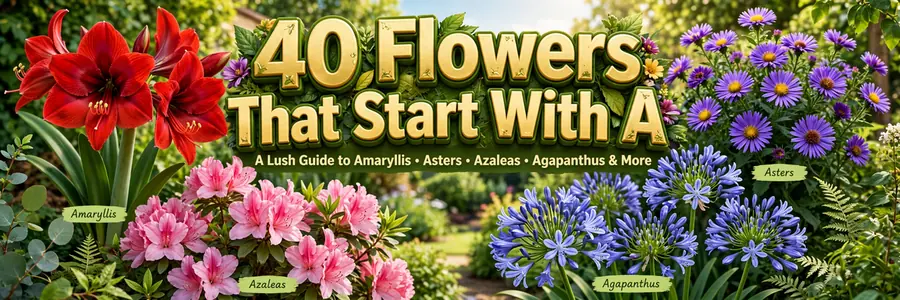
Looking for flower names that start with A? You have come to the right place. The letter A opens the door to some of the most loved blooms in American gardens, from the bold winter trumpets of amaryllis to the daisy-like faces of asters and the spring spectacle of azaleas. Whether you are planning a new flower bed, hunting for a birthday bouquet flower, or helping a child with an alphabet garden project, this guide covers 40 real flowers that start with A, each with a photo-worthy description and practical growing advice.
Every entry below includes the flower’s scientific name, bloom season, sun needs, and USDA hardiness zone, so you can tell at a glance which A-flowers will thrive in your yard. You will also find two quick comparison tables, beginner-friendly growing tips, and answers to the most common questions gardeners ask about flowers beginning with A. Let’s dig in.
Quick Answer
Popular flowers that start with A include Amaryllis, Anemone, Aster, Azalea, Agapanthus, Alyssum, Allium, African Violet, Ageratum, and Alstroemeria. They range from spring bulbs and summer perennials to tropical houseplants, covering USDA zones 3–11, so there is an A-flower for nearly every US garden.
Table of Contents
A-Flowers at a Glance
Use this table to compare all 40 flowers that start with A side by side, from botanical names to native regions.
| Flower name | Scientific name | Type | Color | Native region |
|---|---|---|---|---|
| Amaryllis | Hippeastrum hybrids | Tender bulb | Red, pink, white, orange | South America |
| Anemone | Anemone coronaria | Tuberous perennial | Red, blue, white, pink | Mediterranean |
| Aster | Symphyotrichum novae-angliae | Herbaceous perennial | Purple, pink, blue, white | North America |
| Azalea | Rhododendron spp. | Evergreen/deciduous shrub | Pink, red, white, purple, orange | Asia, North America |
| Agapanthus | Agapanthus africanus | Rhizomatous perennial | Blue, purple, white | South Africa |
| Sweet Alyssum | Lobularia maritima | Annual | White, pink, purple | Mediterranean |
| Ornamental Allium | Allium giganteum | Bulb | Purple, pink, white | Central Asia |
| African Violet | Saintpaulia ionantha | Tropical houseplant | Purple, pink, blue, white | Tanzania |
| Ageratum | Ageratum houstonianum | Annual | Blue, purple, pink, white | Central America |
| Alstroemeria | Alstroemeria hybrids | Rhizomatous perennial | Pink, red, orange, yellow, purple, white | South America |
| Anthurium | Anthurium andraeanum | Tropical houseplant | Red, pink, white | Colombia, Ecuador |
| Asiatic Lily | Lilium (Asiatic hybrids) | Bulb | Orange, yellow, red, pink, white | Asia (hybrid origin) |
| Angelonia | Angelonia angustifolia | Tender perennial | Purple, pink, blue, white | Mexico, Caribbean |
| Amaranth | Amaranthus caudatus | Annual | Red, burgundy, green, gold | South America |
| Bear’s Breeches | Acanthus mollis | Herbaceous perennial | Purple and white spikes | Mediterranean |
| Yarrow | Achillea millefolium | Herbaceous perennial | White, yellow, pink, red | Northern Hemisphere |
| Columbine | Aquilegia spp. | Herbaceous perennial | Blue, purple, red, yellow, white, pink | Northern Hemisphere |
| Sea Thrift | Armeria maritima | Evergreen perennial | Pink, white, red | Coastal Northern Hemisphere |
| Rock Cress | Aubrieta deltoidea | Evergreen perennial | Purple, pink, blue, white | Southern Europe, Central Asia |
| Astilbe | Astilbe × arendsii | Herbaceous perennial | Pink, red, white, purple | Asia, North America |
| Bugleweed | Ajuga reptans | Evergreen groundcover | Blue, purple, pink, white | Europe, Asia |
| Arabian Jasmine | Jasminum sambac | Evergreen shrub/vine | White | South and Southeast Asia |
| Angel’s Trumpet | Brugmansia spp. | Tender shrub/small tree | White, yellow, pink, peach | South America |
| Butterfly Weed | Asclepias tuberosa | Herbaceous perennial | Orange, yellow | Eastern North America |
| Hollyhock | Alcea rosea | Biennial | Pink, red, white, yellow, purple, near-black | China, Central Asia |
| Blue Star | Amsonia tabernaemontana | Herbaceous perennial | Blue | Eastern North America |
| Jack-in-the-Pulpit | Arisaema triphyllum | Tuberous woodland perennial | Green and purple spathe | Eastern North America |
| Aloe Vera | Aloe barbadensis | Succulent | Yellow-orange tubular blooms | Arabian Peninsula |
| Apple Blossom | Malus domestica | Deciduous tree | White and pink | Central Asia |
| Almond Blossom | Prunus dulcis | Deciduous tree | Pale pink and white | Middle East, South Asia |
| Autumn Crocus | Colchicum autumnale | Cormous perennial | Pink-purple, white | Europe, North Africa |
| Anise Hyssop | Agastache foeniculum | Herbaceous perennial | Purple-blue | North American prairies |
| Avens | Geum spp. | Herbaceous perennial | Red, orange, yellow | Temperate regions worldwide |
| African Daisy | Arctotis stoechadifolia | Tender perennial | Orange, yellow, red, pink, white | South Africa |
| Flowering Maple | Abutilon × hybridum | Evergreen shrub | Red, orange, yellow, pink, white | South America (hybrid) |
| Glossy Abelia | Abelia × grandiflora | Semi-evergreen shrub | White and pink | China, Japan (parent species) |
| Abyssinian Gladiolus | Gladiolus murielae | Cormous perennial | White with maroon throat | East Africa |
| Golden Trumpet | Allamanda cathartica | Tropical vine/shrub | Yellow | Brazil |
| Japanese Andromeda | Pieris japonica | Evergreen shrub | White and pink bell clusters | Japan, China |
| Arctic Poppy | Papaver radicatum | Alpine perennial | White, yellow | Arctic regions |
Bloom Season, Sun Needs & Hardiness Zones
Planning your garden calendar? This second table shows when each A-flower blooms, how much sun it wants, and the USDA zones where it grows outdoors year-round.
| Flower name | Bloom season | Sun needs | Hardiness zone |
|---|---|---|---|
| Amaryllis | Winter (indoors) | Bright indirect light | 8–10 outdoors; houseplant elsewhere |
| Anemone | Spring | Full sun to part shade | 7–10 |
| Aster | Late summer to fall | Full sun | 4–8 |
| Azalea | Spring | Part shade | 5–9 (varies by variety) |
| Agapanthus | Summer | Full sun | 7–11 |
| Sweet Alyssum | Spring to fall | Full sun to part shade | Grown as annual; perennial 5–9 |
| Ornamental Allium | Late spring to early summer | Full sun | 4–9 |
| African Violet | Year-round indoors | Bright indirect light | Houseplant (11–12 outdoors) |
| Ageratum | Summer to fall | Full sun to part shade | Grown as annual |
| Alstroemeria | Summer | Full sun to part shade | 6–10 |
| Anthurium | Year-round indoors | Bright indirect light | Houseplant (11–12 outdoors) |
| Asiatic Lily | Early to midsummer | Full sun to part shade | 4–9 |
| Angelonia | Summer to fall | Full sun | 9–11; annual elsewhere |
| Amaranth | Summer to fall | Full sun | Grown as annual |
| Bear’s Breeches | Late spring to summer | Part shade | 7–10 |
| Yarrow | Summer | Full sun | 3–9 |
| Columbine | Spring to early summer | Part shade | 3–9 |
| Sea Thrift | Spring to early summer | Full sun | 4–8 |
| Rock Cress | Spring | Full sun | 4–9 |
| Astilbe | Summer | Part to full shade | 4–9 |
| Bugleweed | Spring | Part to full shade | 4–9 |
| Arabian Jasmine | Summer to fall | Full sun to part shade | 9–11 |
| Angel’s Trumpet | Summer to fall | Full sun to part shade | 9–11 |
| Butterfly Weed | Summer | Full sun | 3–9 |
| Hollyhock | Summer | Full sun | 3–9 |
| Blue Star | Spring | Full sun to part shade | 3–9 |
| Jack-in-the-Pulpit | Spring | Part to full shade | 4–9 |
| Aloe Vera | Winter to spring (mature plants) | Full sun to bright indirect | 9–11; houseplant elsewhere |
| Apple Blossom | Spring | Full sun | 4–8 |
| Almond Blossom | Early spring | Full sun | 7–9 |
| Autumn Crocus | Fall | Full sun to part shade | 4–9 |
| Anise Hyssop | Summer to fall | Full sun | 4–9 |
| Avens | Late spring to summer | Full sun to part shade | 5–9 |
| African Daisy | Summer to fall | Full sun | 9–11; annual elsewhere |
| Flowering Maple | Spring to fall | Full sun to part shade | 9–11 |
| Glossy Abelia | Summer to fall | Full sun to part shade | 6–9 |
| Abyssinian Gladiolus | Late summer | Full sun | 7–10 |
| Golden Trumpet | Summer to fall | Full sun | 10–11 |
| Japanese Andromeda | Early spring | Part shade | 5–8 |
| Arctic Poppy | Summer | Full sun | 2–7 |
40 Flowers That Start With A: The Complete List
Here they are — 40 beautiful, real flowers beginning with A, each with growing notes so you can pick the right ones for your garden.
1. Amaryllis (Hippeastrum hybrids)
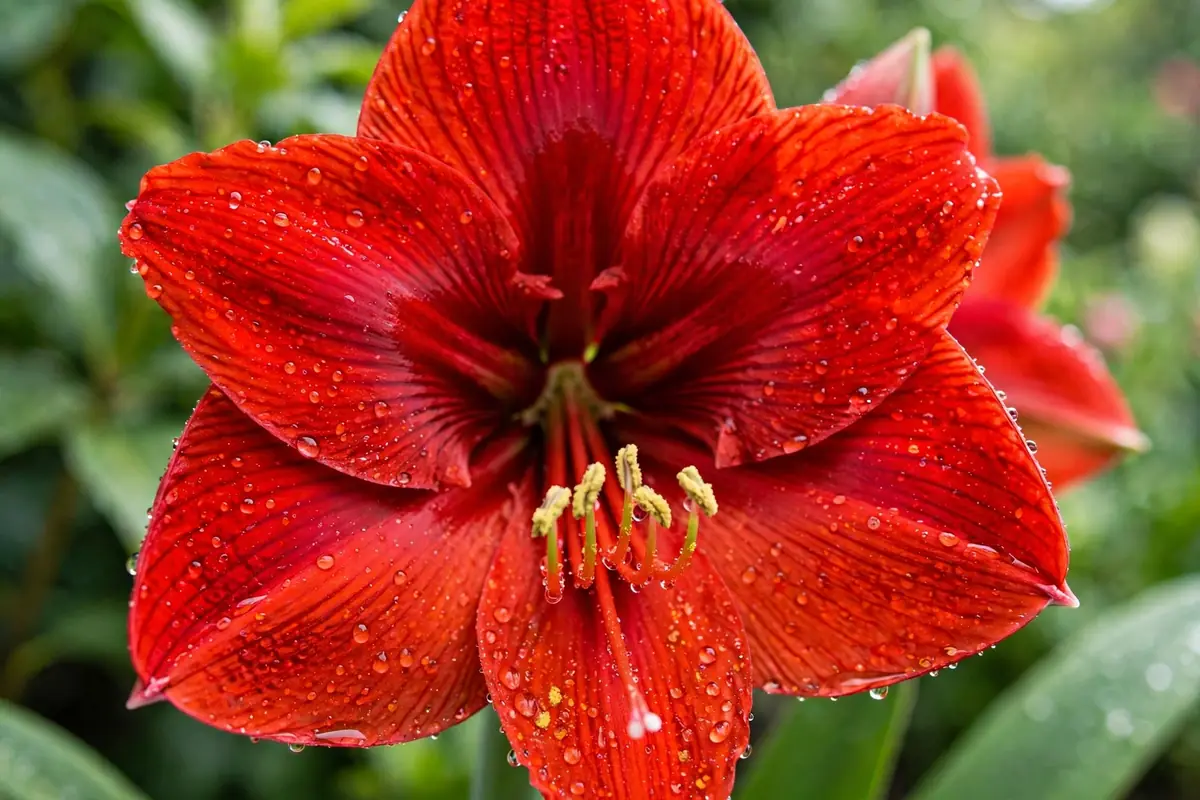
Amaryllis is the superstar of winter indoor gardening. Its huge trumpet-shaped blooms — up to 8 inches across — appear on tall, leafless stalks in shades of red, pink, white, salmon, and striped bicolors. Most gardeners grow amaryllis bulbs indoors for holiday color; plant the bulb with its “shoulders” above the soil and water sparingly until growth starts. In zones 8–10 it can live outdoors year-round.
Bloom: Winter (indoors) | Sun: Bright indirect light | Zone: 8–10 outdoors; houseplant elsewhere | Best for: Holiday displays, indoor pots
2. Anemone (Anemone coronaria)
Often called windflower, the garden anemone produces poppy-like blooms with dark centers on wiry 12- to 18-inch stems. The De Caen and St. Brigid strains offer single and double flowers in vivid red, blue, purple, pink, and white. Soak the corms overnight before planting in fall (warm zones) or early spring (cool zones). Anemones make outstanding cut flowers with a vase life of 7–10 days.
Bloom: Spring | Sun: Full sun to part shade | Zone: 7–10 | Best for: Cut flowers, spring borders
3. Aster (Symphyotrichum novae-angliae)
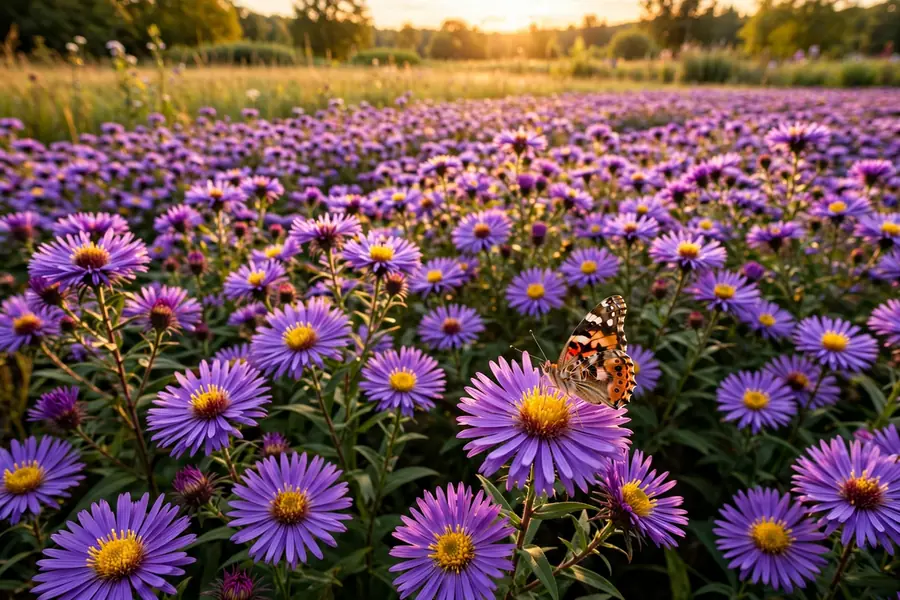
New England asters are fall garden heroes, bursting into daisy-like purple, pink, or blue flowers just as summer perennials fade. Growing 3–5 feet tall, they feed migrating monarch butterflies and late-season bees when little else is blooming. Give them full sun and average soil, and pinch stems back by half in early summer for bushier plants. Divide clumps every 2–3 years to keep them vigorous.
Bloom: Late summer to fall | Sun: Full sun | Zone: 4–8 | Best for: Fall color, pollinator gardens
4. Azalea (Rhododendron spp.)
Few sights beat an azalea in full spring bloom — entire shrubs disappear under masses of pink, red, white, or purple flowers. These broadleaf evergreen (and some deciduous) shrubs prefer acidic soil (pH 4.5–6.0), dappled shade, and consistent moisture. Encore azaleas rebloom in fall for extra value. Mulch with pine needles or bark to keep roots cool, and never plant them deeper than they sat in the nursery pot.
Bloom: Spring (Encore types rebloom in fall) | Sun: Part shade | Zone: 5–9, varies by variety | Best for: Foundation plantings, woodland edges
5. Agapanthus (Agapanthus africanus)
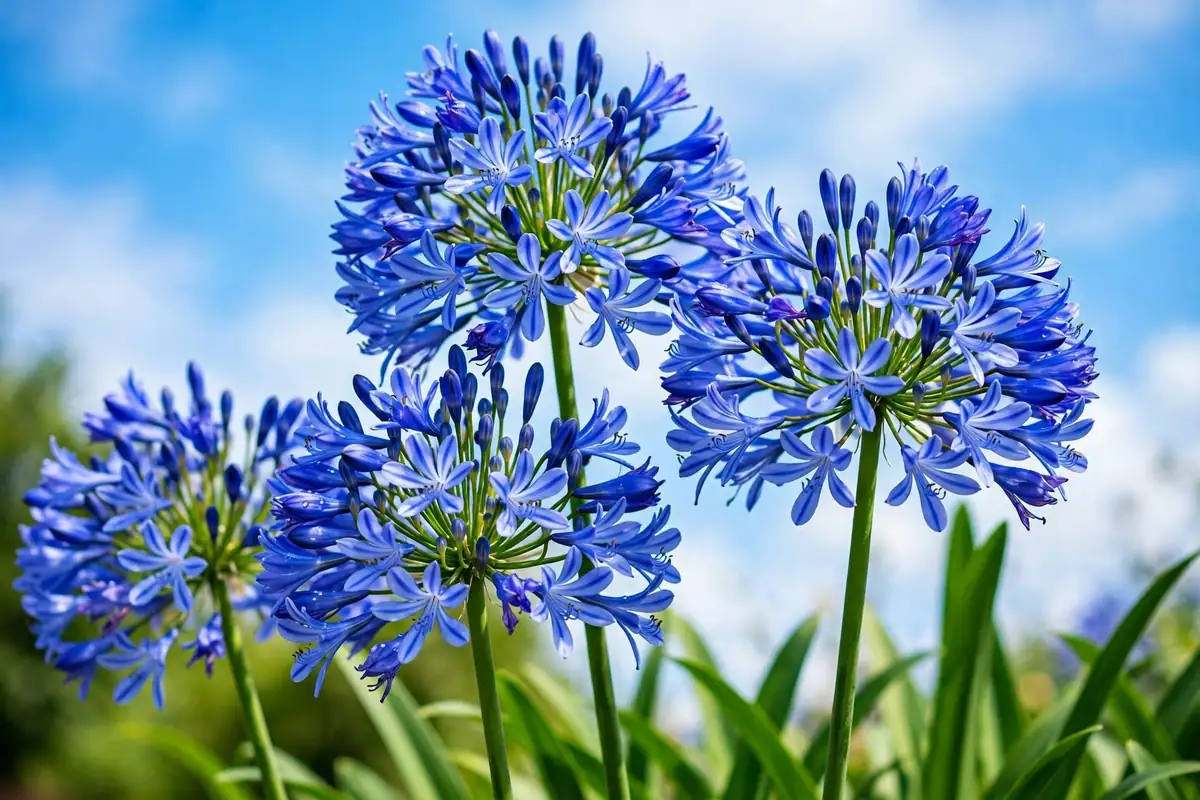
Known as lily of the Nile, agapanthus sends up 2- to 3-foot stalks crowned with round clusters of trumpet-shaped blue, purple, or white flowers. Its strap-like evergreen foliage looks good even when not blooming. This South African native loves heat, full sun, and being slightly root-bound — crowded pots actually bloom better. In zones below 7, grow it in containers and overwinter indoors.
Bloom: Summer | Sun: Full sun | Zone: 7–11 | Best for: Containers, borders, coastal gardens
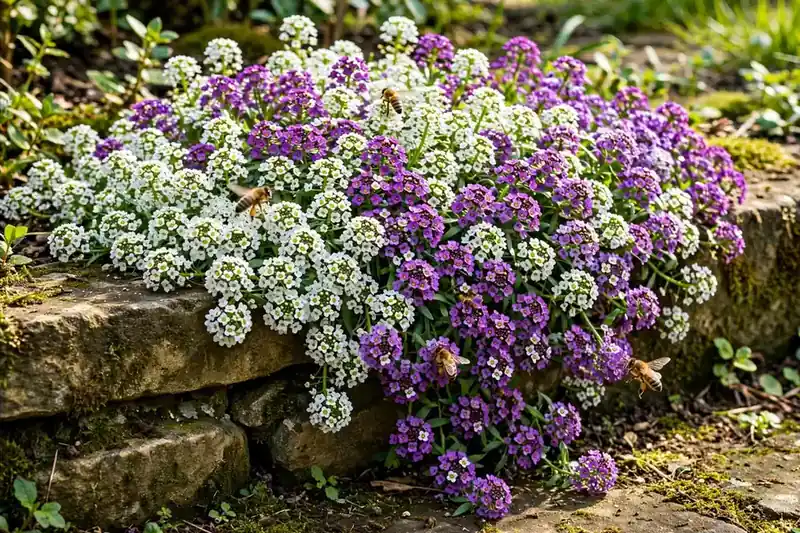
6. Sweet Alyssum (Lobularia maritima)
Sweet alyssum is a low-growing annual that forms fragrant carpets of tiny white, pink, or purple flowers from spring until frost. At just 4–8 inches tall, it is perfect for edging beds, spilling over container rims, and filling gaps between larger plants. The honey scent attracts beneficial insects. Shear plants back by a third in midsummer to trigger a fresh flush of blooms.
Bloom: Spring to fall | Sun: Full sun to part shade | Zone: Grown as annual; perennial in 5–9 | Best for: Edging, containers, groundcover
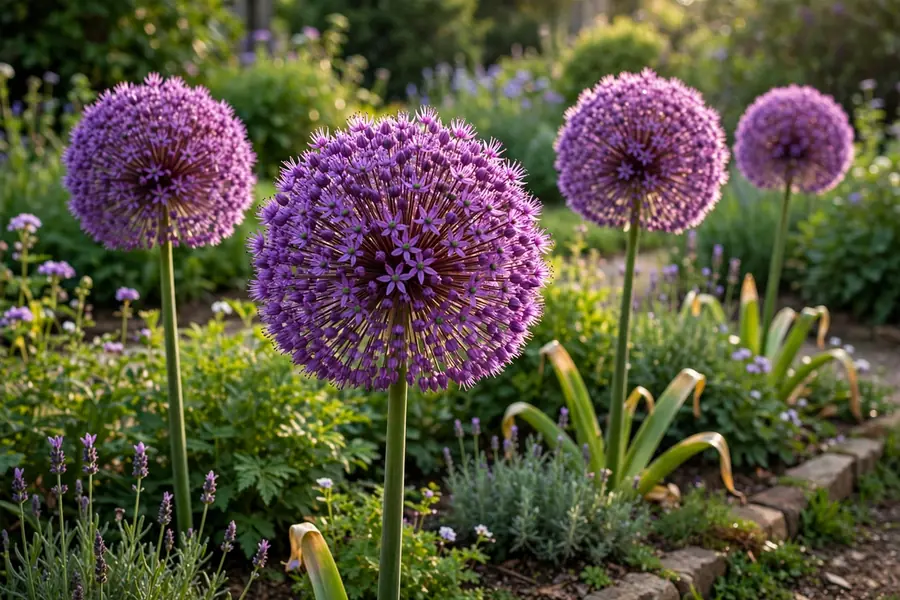
7. Ornamental Allium (Allium giganteum)
Ornamental alliums are the exclamation points of the late-spring garden — giant purple globes up to 6 inches wide floating on 3- to 4-foot stems. Closely related to onions (deer and rodents avoid them), they pair beautifully with roses and peonies. Plant bulbs in fall, 6–8 inches deep, in well-drained soil. Leave the dried seed heads standing for architectural winter interest.
Bloom: Late spring to early summer | Sun: Full sun | Zone: 4–9 | Best for: Vertical accents, deer-resistant beds
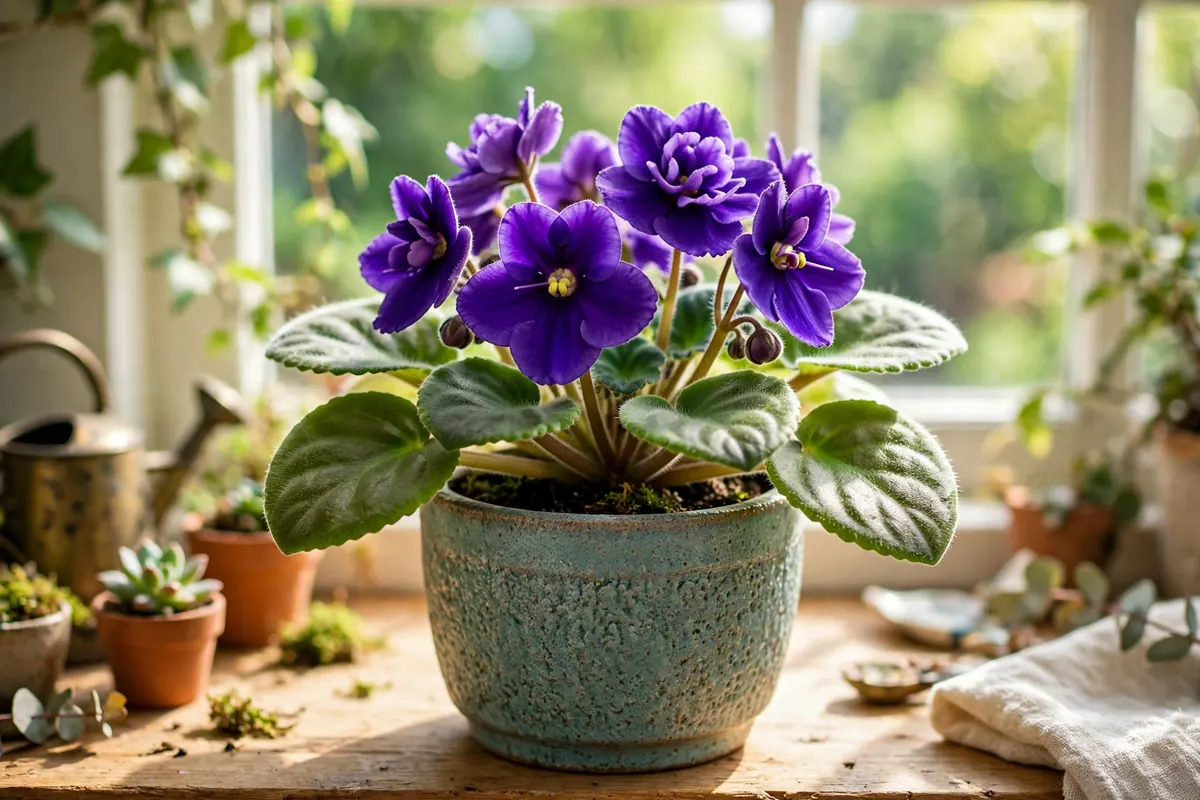
8. African Violet (Saintpaulia ionantha)
African violets are America’s favorite flowering houseplant, blooming nearly year-round in purple, pink, blue, or white above soft, fuzzy leaves. They crave bright indirect light, warm temperatures, and bottom watering — cold water on the leaves causes spots. Use a light African violet potting mix and a small pot; they bloom best when slightly root-bound. Feed lightly with every watering for constant flowers.
Bloom: Year-round indoors | Sun: Bright indirect light | Zone: Houseplant (11–12 outdoors) | Best for: Windowsills, indoor gifts
9. Ageratum (Ageratum houstonianum)
Flossflower earns its keep with fluffy powder-blue pompom blooms that few other annuals can match — plus pink, purple, and white forms. Compact varieties stay 6–12 inches tall, making them ideal for borders, bedding schemes, and patriotic red-white-and-blue plantings. Ageratum blooms nonstop from summer to frost without deadheading and tolerates light shade. Note: it is toxic if eaten, so keep it away from curious pets.
Bloom: Summer to fall | Sun: Full sun to part shade | Zone: Grown as annual | Best for: Bedding, patriotic plantings
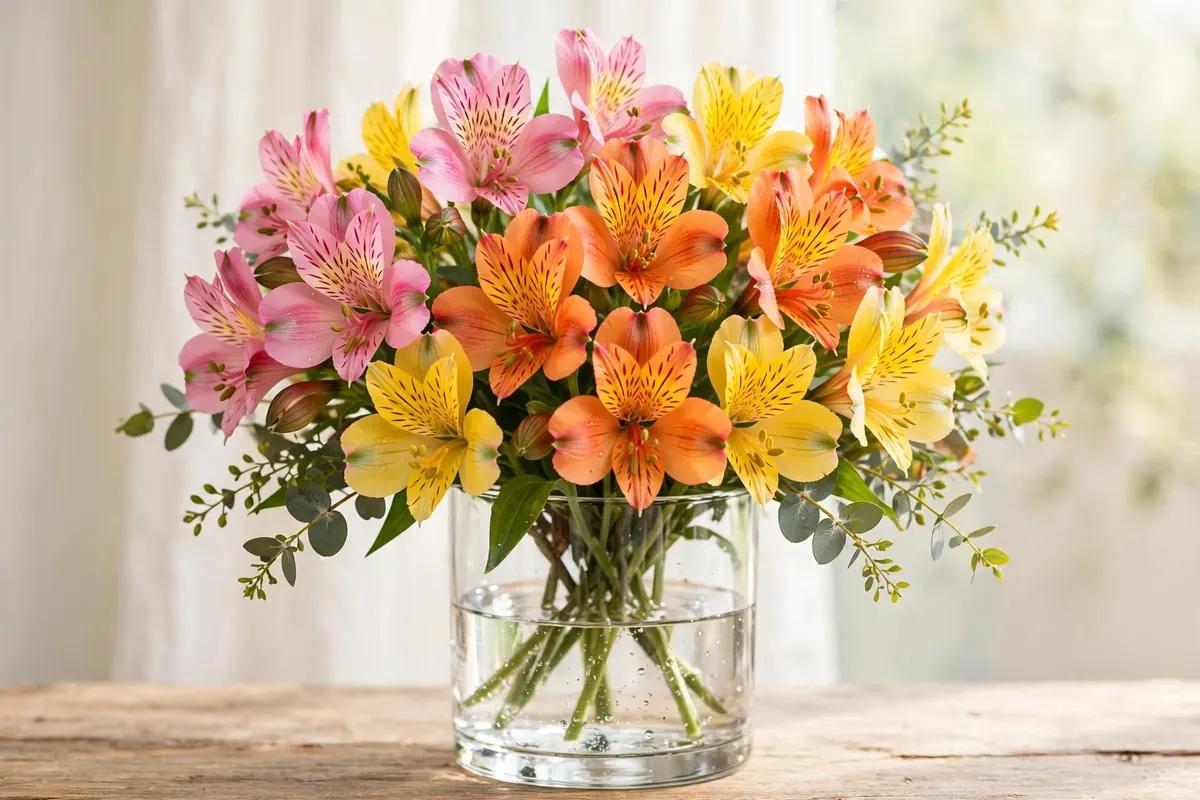
10. Alstroemeria (Alstroemeria hybrids)
Alstroemeria, or Peruvian lily, is the cut-flower champion — stems last an incredible two weeks in a vase. The lily-like blooms come in nearly every color except true blue, often with streaked throats. In the garden, plants form spreading clumps 1–3 feet tall that bloom all summer if spent stems are pulled (not cut) from the base. Provide afternoon shade in hot climates and mulch crowns for winter protection.
Bloom: Summer | Sun: Full sun to part shade | Zone: 6–10 | Best for: Cut flowers, long-blooming borders

11. Anthurium (Anthurium andraeanum)
Anthurium’s glossy, heart-shaped “flowers” are actually colorful spathes surrounding a finger-like spadix, and they can last 6–8 weeks on the plant. Red is classic, but pink, white, and bicolors are widely available. This tropical beauty wants bright indirect light, high humidity, and a chunky orchid-like potting mix. Wipe leaves occasionally to keep them shiny, and keep the plant away from cold drafts.
Bloom: Year-round indoors | Sun: Bright indirect light | Zone: Houseplant (11–12 outdoors) | Best for: Tropical houseplant collections, offices
12. Asiatic Lily (Lilium, Asiatic hybrids)
Asiatic lilies bring bold, upward-facing blooms in early summer in orange, yellow, red, pink, and white — and unlike Oriental lilies, they are fragrance-free, a plus for sensitive noses. Plant bulbs 6 inches deep in spring or fall; they multiply into impressive clumps over the years. Stake tall varieties, mulch well, and deadhead spent flowers while leaving the foliage to feed next year’s bulbs.
Bloom: Early to midsummer | Sun: Full sun to part shade | Zone: 4–9 | Best for: Summer borders, cut flowers
13. Angelonia (Angelonia angustifolia)
Nicknamed summer snapdragon, angelonia looks like a snapdragon but laughs at heat that would flatten the real thing. Upright spikes of purple, pink, blue, or white flowers bloom nonstop from summer to frost with zero deadheading. It thrives in full sun and humidity, making it a top pick for Southern gardens. In zones 9–11 it returns as a perennial; elsewhere grow it as an annual.
Bloom: Summer to fall | Sun: Full sun | Zone: 9–11; annual elsewhere | Best for: Hot climates, heat-proof containers
14. Amaranth (Amaranthus caudatus)
Love-lies-bleeding amaranth is pure garden drama — long, rope-like tassels of crimson, burgundy, or gold flowers cascade 2–3 feet from sturdy stems. This fast-growing annual loves heat and poor soil, asking almost nothing in return. The tassels dry beautifully for everlasting arrangements. Some varieties are also grown for edible grain and greens, making amaranth as useful as it is striking.
Bloom: Summer to fall | Sun: Full sun | Zone: Grown as annual | Best for: Statement plants, dried arrangements
15. Bear’s Breeches (Acanthus mollis)
Bear’s breeches makes a bold architectural statement with huge, glossy, lobed leaves and 3-foot spikes of hooded purple-and-white flowers. The leaf motif famously inspired the carved capitals of ancient Corinthian columns. It prefers part shade and rich, well-drained soil, and once established it is nearly indestructible — give it room, because it spreads. A superb choice for adding grandeur to shady borders.
Bloom: Late spring to summer | Sun: Part shade | Zone: 7–10 | Best for: Architectural foliage, shade borders
16. Yarrow (Achillea millefolium)
Yarrow is one of the toughest perennials you can plant. Flat-topped clusters of white, yellow, pink, or red flowers hover over ferny, aromatic foliage all summer, shrugging off drought, poor soil, and neglect. Modern hybrids like the Galaxy series offer richer colors on sturdier stems. Deadhead after the first flush for rebloom, and divide every 2–3 years. Butterflies adore it.
Bloom: Summer | Sun: Full sun | Zone: 3–9 | Best for: Drought-tolerant gardens, pollinators
17. Columbine (Aquilegia spp.)
Columbines bring woodland charm with their spurred, lantern-like flowers in blue, purple, red, yellow, pink, and white — often two-toned. They bloom in spring to early summer and self-sow gently, creating delightful surprises. Give them part shade and humus-rich soil. Watch for leaf miners (squiggly trails on leaves); the damage is cosmetic and the flowers carry on regardless. Native species support local pollinators best.
Bloom: Spring to early summer | Sun: Part shade | Zone: 3–9 | Best for: Woodland gardens, cottage borders
18. Sea Thrift (Armeria maritima)
Sea thrift forms tight grassy mounds topped with globe-shaped pink, white, or red flowers on wiry stems — like lollipops for the rock garden. As its name suggests, it tolerates salt spray, wind, and sandy soil, making it perfect for coastal gardens and the edges of paths. It needs excellent drainage and full sun. Shear off spent blooms to encourage a second wave.
Bloom: Spring to early summer | Sun: Full sun | Zone: 4–8 | Best for: Rock gardens, coastal plantings, edging
19. Rock Cress (Aubrieta deltoidea)
Rock cress is a spring showstopper for walls and rockeries, cascading over stones in sheets of purple, pink, blue, or white. This evergreen perennial stays under 6 inches tall and spreads into weed-smothering mats. Plant it in full sun with sharp drainage — it hates wet feet in winter. After flowering, trim plants lightly to keep them compact and encourage a possible fall encore.
Bloom: Spring | Sun: Full sun | Zone: 4–9 | Best for: Rock walls, cascading over edges
20. Astilbe (Astilbe × arendsii)
Astilbe lights up shady corners with feathery plumes of pink, red, white, or purple flowers rising above fern-like foliage. Unlike most shade plants, it actually blooms best with consistent moisture — never let it dry out. The dried plumes look striking left standing through winter. Varieties range from 1 to 4 feet tall, so check the tag. Slugs occasionally nibble the leaves but rarely ruin the show.
Bloom: Summer | Sun: Part to full shade | Zone: 4–9 | Best for: Shade gardens, moist borders
21. Bugleweed (Ajuga reptans)
Bugleweed is a fast-spreading evergreen groundcover that carpets shady trouble spots with blue, purple, pink, or white flower spikes in spring. Cultivars like ‘Burgundy Glow’ add tricolor foliage for season-long interest. It tolerates dry shade once established and mows over cleanly if it creeps into the lawn. Give it room or edge it firmly — happy ajuga can be enthusiastic. Excellent under trees where grass refuses to grow.
Bloom: Spring | Sun: Part to full shade | Zone: 4–9 | Best for: Groundcover, under trees
22. Arabian Jasmine (Jasminum sambac)
Arabian jasmine fills warm evenings with intensely sweet fragrance from small white flowers that open at dusk. Unlike hardy jasmines, this is a tropical evergreen shrub or vine for zones 9–11 (or a fragrant houseplant elsewhere). It blooms heaviest in summer heat with full sun. The flowers are used for jasmine tea and leis. Prune after flowering to keep it bushy, and bring containers indoors before first frost.
Bloom: Summer to fall | Sun: Full sun to part shade | Zone: 9–11 | Best for: Fragrance gardens, patios
23. Angel’s Trumpet (Brugmansia spp.)
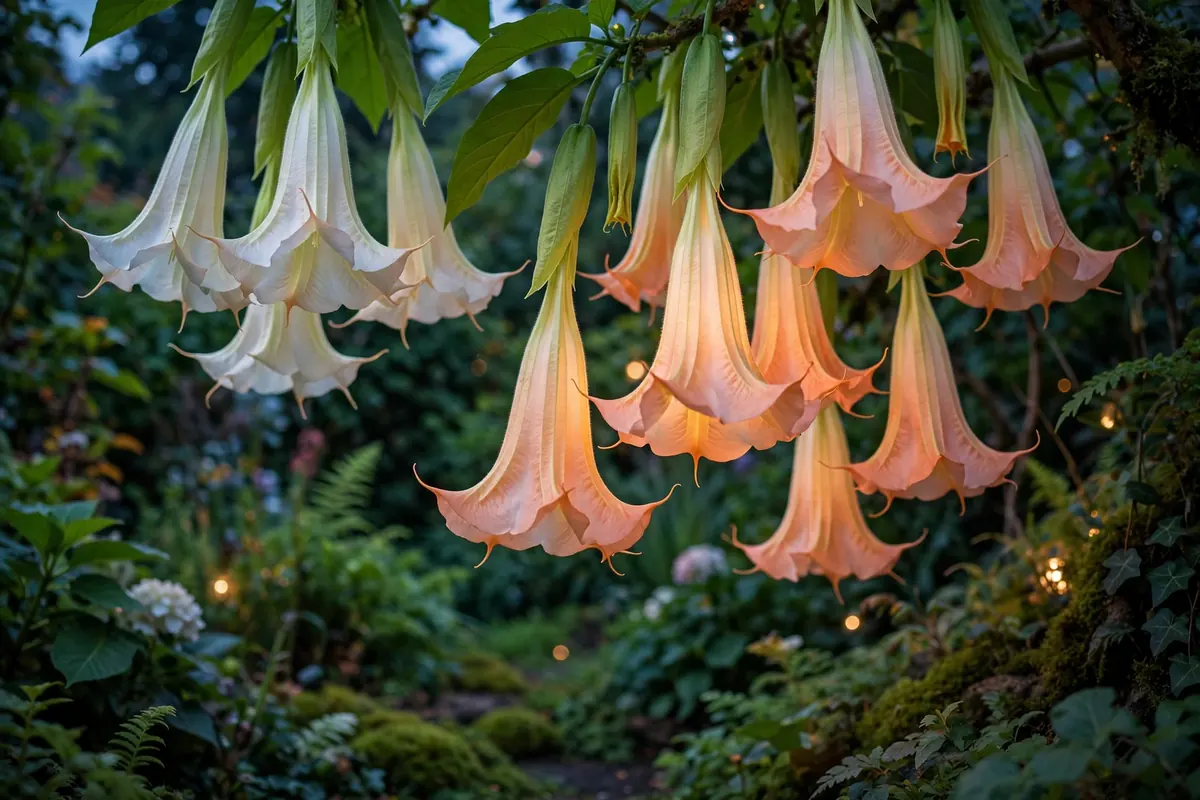
Angel’s trumpet stops traffic: huge 8- to 12-inch pendulous trumpets in white, yellow, pink, or peach dangle from a small tree-like shrub, releasing powerful evening perfume. It grows astonishingly fast in warm climates with rich soil and plenty of water. All parts are toxic if ingested, so plant away from play areas. In zones below 9, grow in large pots and overwinter indoors.
Bloom: Summer to fall | Sun: Full sun to part shade | Zone: 9–11 | Best for: Dramatic focal points, evening gardens
24. Butterfly Weed (Asclepias tuberosa)
Butterfly weed is a native milkweed with brilliant orange (sometimes yellow) flower clusters that monarch butterflies depend on. Unlike common milkweed, it has no milky sap and behaves politely in borders. It demands full sun and excellent drainage — and resents transplanting because of its deep taproot, so plant it once and leave it alone. Drought-tolerant once established; a must for pollinator gardens.
Bloom: Summer | Sun: Full sun | Zone: 3–9 | Best for: Native gardens, monarch habitat
25. Hollyhock (Alcea rosea)
Hollyhocks are cottage-garden classics, sending 6- to 8-foot spires of satiny blooms in pink, red, white, yellow, purple, and near-black skyward each summer. Technically biennial, they self-sow freely so a colony persists for years. Give them full sun, rich soil, and shelter from strong wind. Watch for rust (orange spots on leaves); good air circulation and watering at the base help prevent it.
Bloom: Summer | Sun: Full sun | Zone: 3–9 | Best for: Cottage gardens, back-of-border height
26. Blue Star (Amsonia tabernaemontana)
Blue star is a refined native perennial with clusters of soft periwinkle-blue star-shaped flowers in spring, followed by feathery foliage that turns brilliant gold in fall — two seasons of interest from one plant. It is pest-free, deer-resistant, and adaptable to sun or part shade. Leave the stems standing through winter for structure, then cut back in early spring. A landscaper’s secret weapon.
Bloom: Spring | Sun: Full sun to part shade | Zone: 3–9 | Best for: Native landscapes, fall color
27. Jack-in-the-Pulpit (Arisaema triphyllum)
Jack-in-the-pulpit is a woodland curiosity: a hooded green-and-purple spathe (“the pulpit”) shelters a club-shaped spadix (“Jack”) in spring. Bright red berry clusters follow in fall. This eastern North American native wants rich, moist shade and rewards patience, slowly forming colonies. All parts contain calcium oxalate crystals, so admire — don’t taste. A magical addition to shade and native gardens.
Bloom: Spring | Sun: Part to full shade | Zone: 4–9 | Best for: Woodland gardens, native shade
28. Aloe Vera (Aloe barbadensis)
Best known for its soothing gel, aloe vera also produces striking flowers — tall spikes of tubular yellow-orange blooms on mature plants, usually in winter or spring. Outdoors it thrives in zones 9–11 with full sun and sharp drainage; elsewhere it is an easy, sculptural houseplant. Water deeply but infrequently, letting soil dry completely between waterings. Repot pups to share with friends.
Bloom: Winter to spring (mature plants) | Sun: Full sun to bright indirect | Zone: 9–11; houseplant elsewhere | Best for: Succulent collections, medicinal gardens
29. Apple Blossom (Malus domestica)
Apple blossoms transform orchards into clouds of white and pink each spring — and they are as useful as they are beautiful, since every blossom is a future apple. Even ornamental crabapples (also Malus) put on a spectacular show. Trees need full sun, well-drained soil, and a compatible pollinator variety nearby for fruit. Beyond fruit, the bloom season feeds early pollinators when little else is flowering.
Bloom: Spring | Sun: Full sun | Zone: 4–8 | Best for: Orchards, spring landscape impact
30. Almond Blossom (Prunus dulcis)
Almond blossoms are among the first tree flowers of the year, covering bare branches in pale pink and white as early as February in warm regions. California’s almond bloom is a famous spectacle drawing millions of bees. Trees need full sun, well-drained soil, and 200–300 chill hours, suiting zones 7–9. The blossoms give way to the familiar almond nuts by late summer.
Bloom: Early spring | Sun: Full sun | Zone: 7–9 | Best for: Early spring color, edible landscaping
31. Autumn Crocus (Colchicum autumnale)
Autumn crocus performs a magic trick: strappy leaves appear in spring and vanish, then leafless pink-purple goblets pop up in fall as if from nowhere. Plant the corms in late summer, 3–4 inches deep, in sun or part shade. A serious caution — all parts are highly toxic (they contain colchicine), so wear gloves and keep away from children and pets. The surprise fall color is worth the care.
Bloom: Fall | Sun: Full sun to part shade | Zone: 4–9 | Best for: Surprise fall color (with caution)
32. Anise Hyssop (Agastache foeniculum)
Anise hyssop tops 3- to 4-foot stems with lavender-blue flower spikes that smell deliciously of licorice when brushed. A prairie native, it thrives in full sun and poor soil, blooming from summer to fall while feeding bees, butterflies, and hummingbirds. The leaves make a lovely tea. Deadhead to extend bloom, and leave some seed heads for goldfinches. Short-lived but self-sows.
Bloom: Summer to fall | Sun: Full sun | Zone: 4–9 | Best for: Pollinator gardens, herb gardens
33. Avens (Geum spp.)
Avens bring jewel tones to the late-spring border — saucer-shaped flowers in scarlet, orange, and yellow on wiry stems above scalloped foliage. Modern hybrids like ‘Totally Tangerine’ bloom for months. They prefer full sun to part shade with good drainage and dislike soggy winter soil. Deadhead regularly for continuous flowers, and divide every 2–3 years to maintain vigor.
Bloom: Late spring to summer | Sun: Full sun to part shade | Zone: 5–9 | Best for: Long-blooming borders, hot colors
34. African Daisy (Arctotis stoechadifolia)
African daisies open vivid orange, yellow, red, pink, or white blooms with silvery undersides that close at night and on cloudy days — a fun daily ritual to watch. This South African native demands full sun and sharp drainage, shrugging off heat and drought. In zones 9–11 it returns yearly; elsewhere grow it as an annual. Deadhead for nonstop summer color.
Bloom: Summer to fall | Sun: Full sun | Zone: 9–11; annual elsewhere | Best for: Hot dry spots, vivid color
35. Flowering Maple (Abutilon × hybridum)
Despite the name, flowering maple is no maple at all — it’s a charming evergreen shrub with lantern-shaped blooms in red, orange, yellow, pink, or white nearly year-round in warm climates. The maple-like leaves add texture. Grow in full sun to part shade in zones 9–11, or as a houseplant elsewhere with bright light. Prune in spring to keep it bushy and floriferous.
Bloom: Spring to fall | Sun: Full sun to part shade | Zone: 9–11 | Best for: Lantern flowers, patio pots
36. Glossy Abelia (Abelia × grandiflora)
Glossy abelia is the workhorse flowering shrub: glossy evergreen foliage, arching branches, and masses of small white-pink trumpet flowers from summer to fall that butterflies mob. It is drought-tolerant, deer-resistant, and nearly pest-free once established. Prune lightly after the main bloom to shape. Newer compact cultivars fit small gardens and even containers.
Bloom: Summer to fall | Sun: Full sun to part shade | Zone: 6–9 | Best for: Low-maintenance hedges, pollinators
37. Abyssinian Gladiolus (Gladiolus murielae)
Abyssinian gladiolus — once sold as Acidanthera — is the fragrant rebel of the gladiolus family. Instead of stiff spikes, it bears graceful arching stems of white flowers with deep maroon throats and a sweet, almost jasmine-like scent in late summer. Plant corms in spring after frost danger, 4–6 inches deep in full sun. In zones below 7, lift corms for winter like dahlias.
Bloom: Late summer | Sun: Full sun | Zone: 7–10 | Best for: Fragrant cut flowers, late-summer elegance
38. Golden Trumpet (Allamanda cathartica)
Golden trumpet lives up to its name with huge, buttery-yellow trumpet flowers up to 5 inches wide on a vigorous tropical vine. It blooms heaviest in the heat of summer and fall, quickly covering trellises, fences, and arbors in frost-free zones 10–11. Give it full sun, rich soil, and sturdy support. Prune hard in late winter to control size and boost flowering.
Bloom: Summer to fall | Sun: Full sun | Zone: 10–11 | Best for: Tropical vines, covering structures
39. Japanese Andromeda (Pieris japonica)
Japanese andromeda opens the garden year in style: cascading chains of white or pink bell-shaped flowers dangle from evergreen shrubs in early spring, often while snow still lingers. New foliage emerges bronze-red for bonus color. It demands acidic soil and part shade — treat it like a rhododendron. Keep away from hungry deer only if yours are desperate; they usually leave it alone.
Bloom: Early spring | Sun: Part shade | Zone: 5–8 | Best for: Early spring interest, evergreen structure
40. Arctic Poppy (Papaver radicatum)
Arctic poppy is a tough little survivor from the far north, with delicate white or yellow cup-shaped flowers on short stems above blue-green rosettes. It thrives where most poppies fail — zones 2–7 — asking only for full sun and gritty, well-drained soil. The blooms track the sun across the sky. A charming choice for rock gardens and alpine troughs in cold climates.
Bloom: Summer | Sun: Full sun | Zone: 2–7 | Best for: Rock gardens, cold climates
Growing Tips for A-Flowers
With 40 different A-flowers on this list, a few universal rules will set you up for success no matter which ones you choose.
Match the plant to your zone first. Check the hardiness zones in the tables above before you buy. Tropical A-flowers like anthurium, golden trumpet, and Arabian jasmine simply cannot survive a freezing winter outdoors — grow them in pots you can move inside, or treat them as annuals.
Map your sun. Watch your garden for a day and note which spots get 6+ hours of direct sun (full sun lovers like yarrow, allium, and butterfly weed go there) and which stay shady (astilbe, bugleweed, and columbine will thank you). Most flowering plants bloom poorly in too much shade.
Drainage beats fertilizer. More A-flowers die from soggy roots than from hunger. Rock cress, sea thrift, agapanthus, and aloe vera demand sharp drainage — mix grit or perlite into heavy clay. When planting, set the crown at the same depth it grew in the pot; burying stems invites rot.
Deadhead for more blooms. Snipping spent flowers off annuals like ageratum, angelonia, and sweet alyssum redirects energy into new buds instead of seeds, stretching the show by weeks. Leave seed heads on perennials like purple coneflower relatives and allium if you enjoy winter structure or want self-sown seedlings.
Feed lightly, mulch well. A 2- to 3-inch layer of mulch keeps roots cool, holds moisture, and suppresses weeds around azaleas, astilbes, and most perennials. Go easy on nitrogen-heavy fertilizer — it grows leaves at the expense of flowers. A balanced slow-release feed in spring is plenty for most A-flowers.
Explore More Flowers
Which A-Flowers Will You Grow?
From the winter trumpets of amaryllis to the fall daisies of asters, flowers that start with A cover every season, every sun level, and every USDA zone from 2 to 11. Start with easy winners matched to your conditions — perhaps yarrow and butterfly weed for a sunny border, astilbe and bugleweed for shade, or an African violet for the windowsill. Pick three or four favorites from this list, give them the right spot, and you will be amazed how quickly the letter A fills your garden with color.
Frequently Asked Questions
What flowers start with A?
Dozens of garden favorites start with A, including amaryllis, anemone, aster, azalea, agapanthus, sweet alyssum, ornamental allium, African violet, ageratum, alstroemeria, anthurium, Asiatic lily, angelonia, and yarrow (Achillea). This guide covers 40 of them with growing details for each.
What are some common flower names that start with A for a garden?
For an easy-care garden, start with aster, sweet alyssum, ageratum, yarrow, columbine, and butterfly weed. They are widely available at nurseries, adapt to many US climates, and bloom reliably with basic care. Add azaleas or agapanthus for bigger shrub and perennial impact.
What pink flowers start with A?
Beautiful pink A-flowers include azalea, amaryllis, anemone, aster, angelonia, alstroemeria, rock cress, astilbe, hollyhock, and flowering maple. Sweet alyssum and ageratum also come in soft pink shades perfect for edging and containers.
What purple flowers start with A?
Top purple choices are aster, agapanthus, ornamental allium, African violet, ageratum, anise hyssop, and rock cress. For deep, moody purple, look for near-black hollyhock varieties and dark angelonia cultivars.
What white flowers start with A?
White A-flowers include Arabian jasmine, Abyssinian gladiolus, Japanese andromeda, sweet alyssum, Arctic poppy, autumn crocus, and white forms of azalea, anemone, agapanthus, and alstroemeria. White gardens glow beautifully at dusk.
Which perennial flowers start with A?
Reliable perennial A-flowers include aster, agapanthus, yarrow, columbine, astilbe, butterfly weed, blue star, sea thrift, rock cress, bugleweed, amsonia, and anise hyssop. Most return bigger and better each year with minimal care.
What flowers that start with A bloom in spring?
Spring bloomers include azalea, anemone, columbine, rock cress, sea thrift, blue star, bugleweed, apple blossom, almond blossom, Japanese andromeda, and Jack-in-the-pulpit. Plant a mix for continuous spring color.
Which flowers starting with A are best for beginners?
Sweet alyssum, ageratum, yarrow, angelonia, and African daisy are nearly foolproof — they germinate or transplant easily, bloom for months, and forgive missed waterings. For perennials, try butterfly weed, blue star, or daylily-like agapanthus in warm zones.
What flowers that begin with A grow well in shade?
Shade-tolerant A-flowers include astilbe, bugleweed, columbine, bear’s breeches, Jack-in-the-pulpit, and Japanese andromeda. African violet and anthurium thrive as indoor plants in bright indirect light.
Are there fragrant flowers that start with A?
Yes! Arabian jasmine is intensely fragrant, especially at night. Abyssinian gladiolus smells sweetly of jasmine, sweet alyssum carries a honey scent, anise hyssop smells of licorice, and angel’s trumpet perfumes the evening garden. Many azalea varieties are fragrant too.
What flowers that start with A make good cut flowers?
Alstroemeria lasts up to two weeks in a vase — the best of the bunch. Also excellent: anemone, Asiatic lily, aster, agapanthus, Abyssinian gladiolus, and amaryllis. Cut stems early in the morning and condition them in cool water for longest life.
Which A-flowers attract butterflies and bees?
Butterfly weed (a monarch host plant), aster, yarrow, anise hyssop, glossy abelia, blue star, and ageratum are pollinator magnets. Planting several together creates a buffet that supports butterflies from spring through fall.