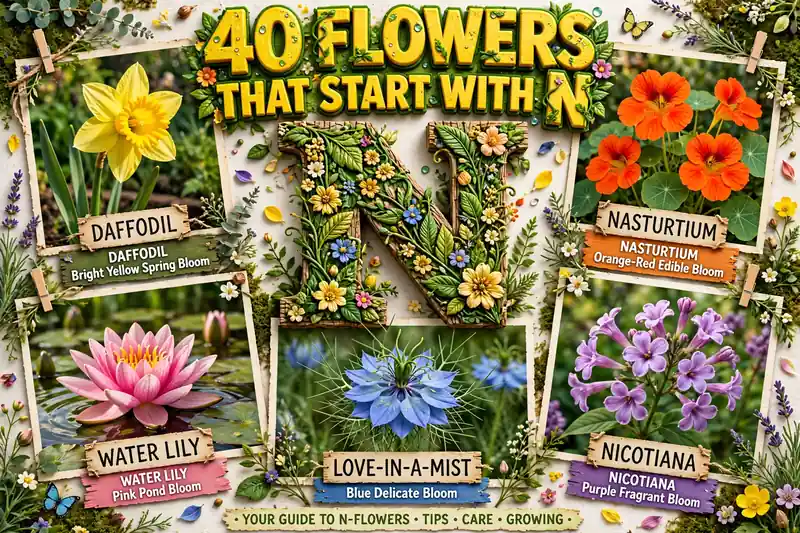
55 Flowers That Start With N: Names, Pictures & Growing Tips
Looking for flower names that start with N? You have landed in the right spot. The letter N brings together some of the most charming blooms in American gardens, from the cheerful spring trumpets of daffodils to the peppery trailing vines of nasturtiums and the serene floating petals of water lilies. Whether you are planning a new flower bed, hunting for a flower that starts with N for a bouquet, or helping a child with an alphabet garden project, this guide covers 55 real flowers that start with N, each with a photo-worthy description and practical growing advice.
Every entry below includes the flower’s scientific name, bloom season, sun needs, and USDA hardiness zone, so you can tell at a glance which N-flowers will thrive in your yard. You will also find a quick comparison table, beginner-friendly growing tips, and answers to the most common questions gardeners ask about flowers beginning with N. Let’s dig in.
Quick Answer
Yes — this page lists 55 flowers that start with N, from narcissus and nasturtiums to nerines and water lilies. Use the at-a-glance table to filter by your USDA zone, sun and bloom season before you buy.
Table of Contents
- Flowers at a glance
- 55 Flowers That Start With N: The Complete List
- N flowers by colour
- Best N flowers by season
- Indoor and container-friendly N flowers
- Beginner-friendly N flowers
- Rare and unusual N flowers
- N flowers with full guides
- Growing Tips for N-Flowers
- Which N-Flowers Will You Grow?
- Frequently Asked Questions
- References
Flowers at a glance
| # | Name | Scientific name | Bloom | Sun | Zone | Best for |
|---|---|---|---|---|---|---|
| 1 | Narcissus (Daffodil) | Narcissus spp. | Spring | Full sun to part shade | 3–9 | Spring borders, naturalizing lawns |
| 2 | Nasturtium | Tropaeolum majus | Summer to fall | Full sun | Grown as annual | Edible flowers, containers, aphid trap crops |
| 3 | Nigella (Love-in-a-Mist) | Nigella damascena | Summer | Full sun | Grown as annual; self-sows | Cottage gardens, dried flower crafts |
| 4 | Nerine (Guernsey Lily) | Nerine bowdenii | Fall | Full sun | 7–10 | Fall color, cut flowers |
| 5 | Nemesia | Nemesia strumosa | Spring to fall | Full sun to part shade | 9–10; annual elsewhere | Fragrant containers, edging |
| 6 | Nierembergia (Cupflower) | Nierembergia hippomanica | Summer to fall | Full sun | 7–10; annual elsewhere | Edging, heat-tolerant containers |
| 7 | Nepeta (Catmint) | Nepeta × faassenii | Late spring to fall | Full sun | 3–8 | Pollinator gardens, drought-tolerant borders |
| 8 | Nicotiana (Flowering Tobacco) | Nicotiana alata | Summer to fall | Full sun to part shade | 10–11; annual elsewhere | Evening fragrance, moon gardens |
| 9 | New Guinea Impatiens | Impatiens hawkeri | Spring to fall | Part shade | 10–11; annual elsewhere | Shade containers, bedding |
| 10 | New Zealand Flax | Phormium tenax | Summer | Full sun | 8–11 | Architectural foliage, coastal gardens |
| 11 | Nymphaea (Hardy Water Lily) | Nymphaea spp. | Summer | Full sun | 3–11 (varies by type) | Ponds, water gardens |
| 12 | Nelumbo (Sacred Lotus) | Nelumbo nucifera | Summer | Full sun | 5–10 | Large ponds, dramatic containers |
| 13 | Night-Blooming Jasmine | Cestrum nocturnum | Summer to fall (nights) | Full sun to part shade | 8–11 | Night fragrance near patios |
| 14 | Night Phlox | Zaluzianskya capensis | Summer (evenings) | Full sun | 8–10; annual elsewhere | Evening scent, containers |
| 15 | Night-Scented Stock | Matthiola longipetala | Summer (evenings) | Full sun | Grown as annual | Evening fragrance, cottage beds |
| 16 | Ninebark | Physocarpus opulifolius | Late spring | Full sun to part shade | 3–8 | Native hedges, four-season interest |
| 17 | New England Aster | Symphyotrichum novae-angliae | Late summer to fall | Full sun | 4–8 | Fall borders, monarch waystations |
| 18 | New York Aster | Symphyotrichum novi-belgii | Late summer to fall | Full sun | 4–8 | Fall color, cut flowers |
| 19 | New York Ironweed | Vernonia noveboracensis | Late summer to fall | Full sun | 5–9 | Rain gardens, back-of-border drama |
| 20 | New Jersey Tea | Ceanothus americanus | Early summer | Full sun to part shade | 4–8 | Native gardens, pollinator habitat |
| 21 | Nemophila (Baby Blue Eyes) | Nemophila menziesii | Spring | Full sun to part shade | Grown as annual | Spring carpets, wildflower mixes |
| 22 | Nolana (Chilean Bellflower) | Nolana paradoxa | Summer to fall | Full sun | Grown as annual | Hanging baskets, trailing groundcover |
| 23 | Nicandra (Shoofly Plant) | Nicandra physalodes | Summer to fall | Full sun | Grown as annual; self-sows | Novelty borders, self-sowing displays |
| 24 | Nodding Onion | Allium cernuum | Summer | Full sun to part shade | 4–8 | Native beds, rock gardens |
| 25 | Narrowleaf Coneflower | Echinacea angustifolia | Summer | Full sun | 3–9 | Prairie gardens, dry slopes |
| 26 | Naked Lady Lily | Amaryllis belladonna | Late summer to fall | Full sun | 7–10 | Surprise late-summer blooms, warm climates |
| 27 | Natal Plum | Carissa macrocarpa | Spring to fall | Full sun | 9–11 | Fragrant security hedges, coastal gardens |
| 28 | Norfolk Island Hibiscus | Lagunaria patersonia | Summer | Full sun | 9–11 | Coastal landscapes, specimen trees |
| 29 | Night-Blooming Cereus | Epiphyllum oxypetalum | Summer nights | Bright indirect light | 10–11; houseplant elsewhere | Nighttime spectacles, collectors |
| 30 | Northern Catalpa | Catalpa speciosa | Late spring | Full sun | 4–8 | Flowering shade trees, quick screens |
| 31 | Nannyberry Viburnum | Viburnum lentago | Late spring | Full sun to part shade | 3–8 | Native hedges, wildlife gardens |
| 32 | Nanking Cherry | Prunus tomentosa | Early spring | Full sun | 3–7 | Early blossoms, edible landscaping |
| 33 | New Zealand Tea Tree | Leptospermum scoparium | Spring to summer | Full sun | 8–11 | Evergreen screening, cut foliage |
| 34 | Nun’s Orchid | Phaius tankervilleae | Spring | Part shade | 9–11; houseplant elsewhere | Beginner orchids, shade beds |
| 35 | Nodding Trillium | Trillium cernuum | Spring | Part to full shade | 4–8 | Woodland gardens, shade groundcover |
| 36 | Northern Blazing Star | Liatris scariosa | Late summer | Full sun | 4–9 | Pollinator gardens, vertical accents |
| 37 | Nettle-Leaved Bellflower | Campanula trachelium | Summer | Part shade | 4–8 | Cottage borders, shade edges |
| 38 | Night Gladiolus | Gladiolus tristis | Spring | Full sun | 8–10 | Evening fragrance, unique cut flowers |
| 39 | Nodding Ladies’ Tresses | Spiranthes cernua | Late summer to fall | Full sun to part shade | 4–8 | Native orchids, moist meadows |
| 40 | Nippon Daisy (Montauk Daisy) | Nipponanthemum nipponicum | Fall | Full sun | 5–9 | Late-fall color, coastal gardens |
| 41 | Nertera | Nertera granadensis | Summer (berries in fall) | Bright indirect light | 9–11; houseplant elsewhere | Houseplant berries, terrariums |
| 42 | New Zealand Cabbage Tree | Cordyline australis | Late spring to summer | Full sun to part shade | 8–11 | Architectural gardens, coastal landscapes |
| 43 | Nuttall’s Larkspur | Delphinium nuttallianum | Spring | Full sun to part shade | 4–8 | Native wildflowers, hummingbirds |
| 44 | Nootka Rose | Rosa nutkana | Spring to summer | Full sun | 4–8 | Native hedges, wildlife thickets |
| 45 | Northern Sea Oats | Chasmanthium latifolium | Summer to fall (seed heads) | Full sun to part shade | 5–9 | Shade-tolerant grasses, cut arrangements |
| 46 | Naked Stem Sunray | Enceliopsis nudicaulis | Spring to summer | Full sun | 5–9 | Desert gardens, rock gardens |
| 47 | Narrowleaf Penstemon | Penstemon angustifolius | Late spring to early summer | Full sun | 3–7 | Rock gardens, dry borders |
| 48 | Nothoscordum | Nothoscordum bivalve | Spring to fall | Full sun to part shade | 5–10 | Naturalizing, wildflower lawns |
| 49 | Neoregelia | Neoregelia carolinae | Colorful bracts last for months | Bright indirect light | 10–11; houseplant elsewhere | Easy houseplants, colorful interiors |
| 50 | Nolina | Nolina microcarpa | Summer (flower spikes) | Full sun | 7–10 | Desert gardens, xeriscapes |
| 51 | Northern Bayberry | Morella pensylvanica | Spring (tiny, fragrant) | Full sun to part shade | 3–7 | Coastal hedges, fragrant foliage |
| 52 | Navelwort | Umbilicus rupestris | Spring to summer | Part shade | 7–10 | Rock gardens, wall crevices |
| 53 | New Zealand Daisy Bush | Olearia macrodonta | Summer | Full sun | 8–10 | Coastal shrubs, evergreen screening |
| 54 | Nuttall’s Violet | Viola nuttallii | Spring | Full sun to part shade | 4–8 | Rock gardens, native wildflowers |
| 55 | Neomarica | Neomarica gracilis | Spring to summer | Bright indirect to part shade | 9–11; houseplant elsewhere | Houseplants, warm-climate borders |
55 Flowers That Start With N: The Complete List
Here they are — 55 beautiful, real flowers beginning with N, each with growing notes so you can pick the right ones for your garden.
1. Narcissus (Daffodil) (Narcissus spp.)
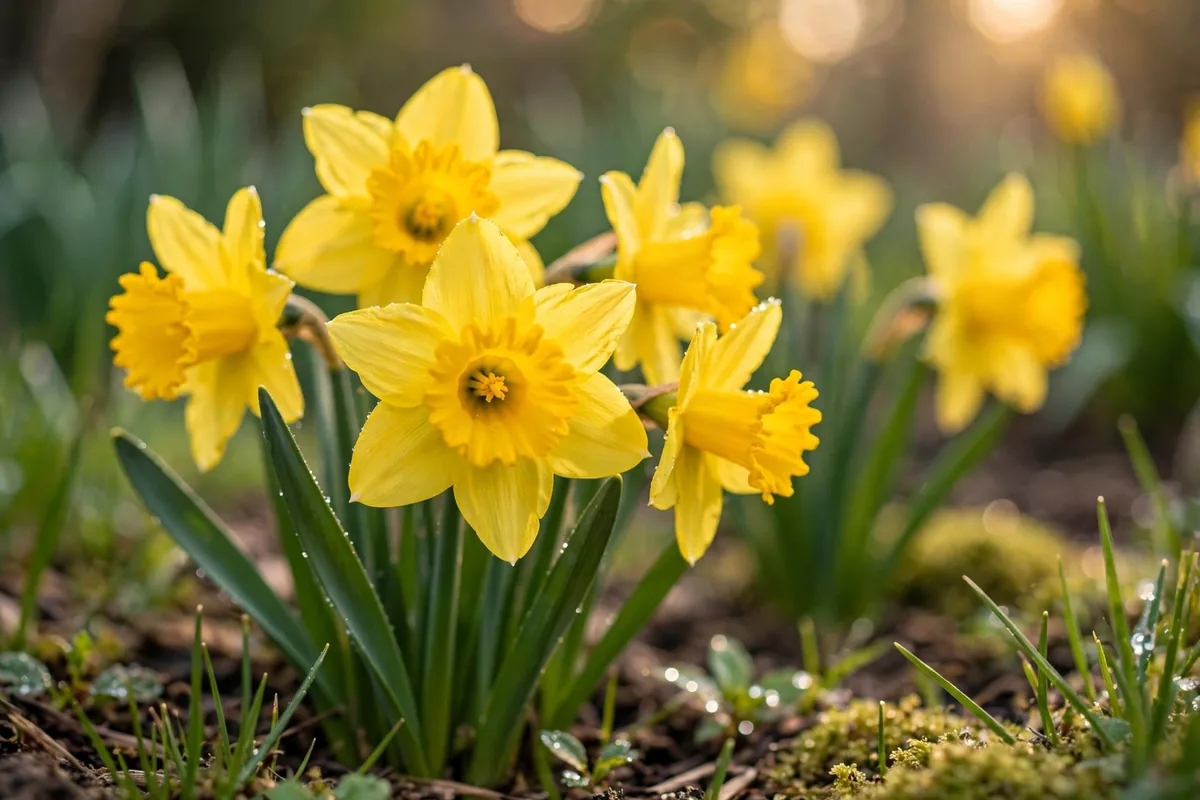
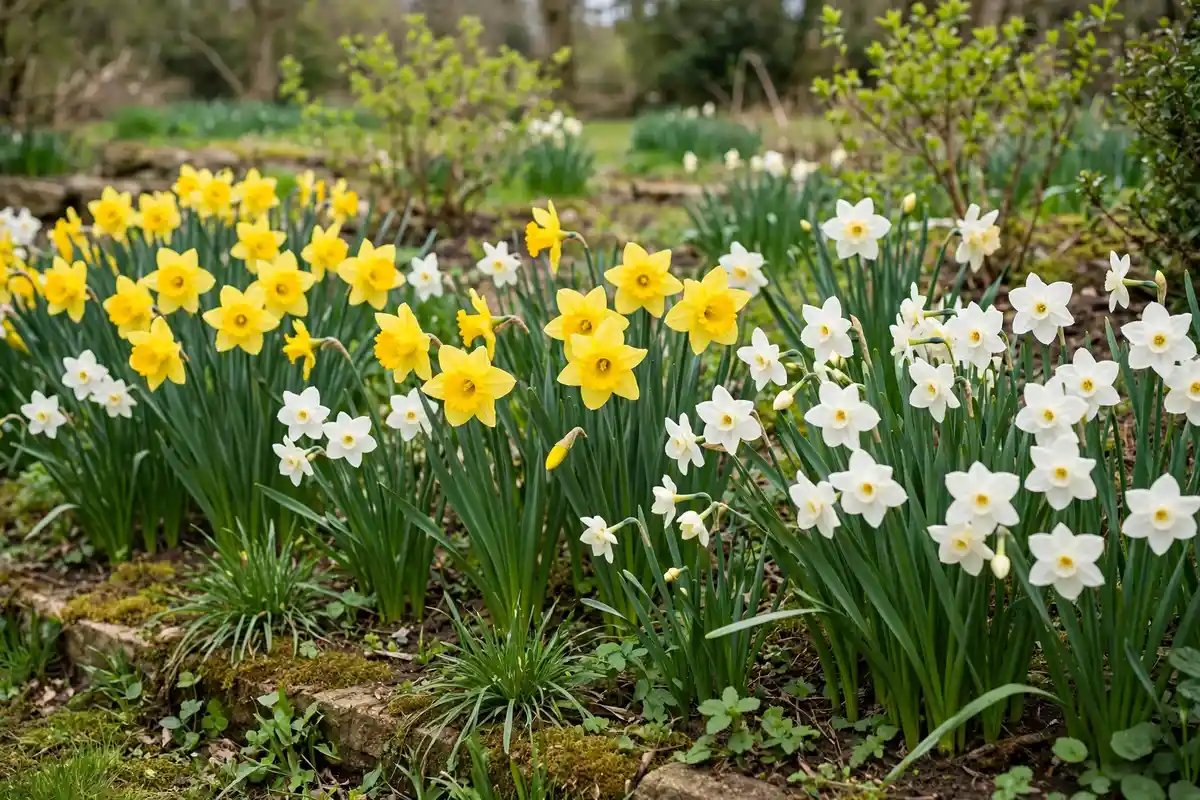
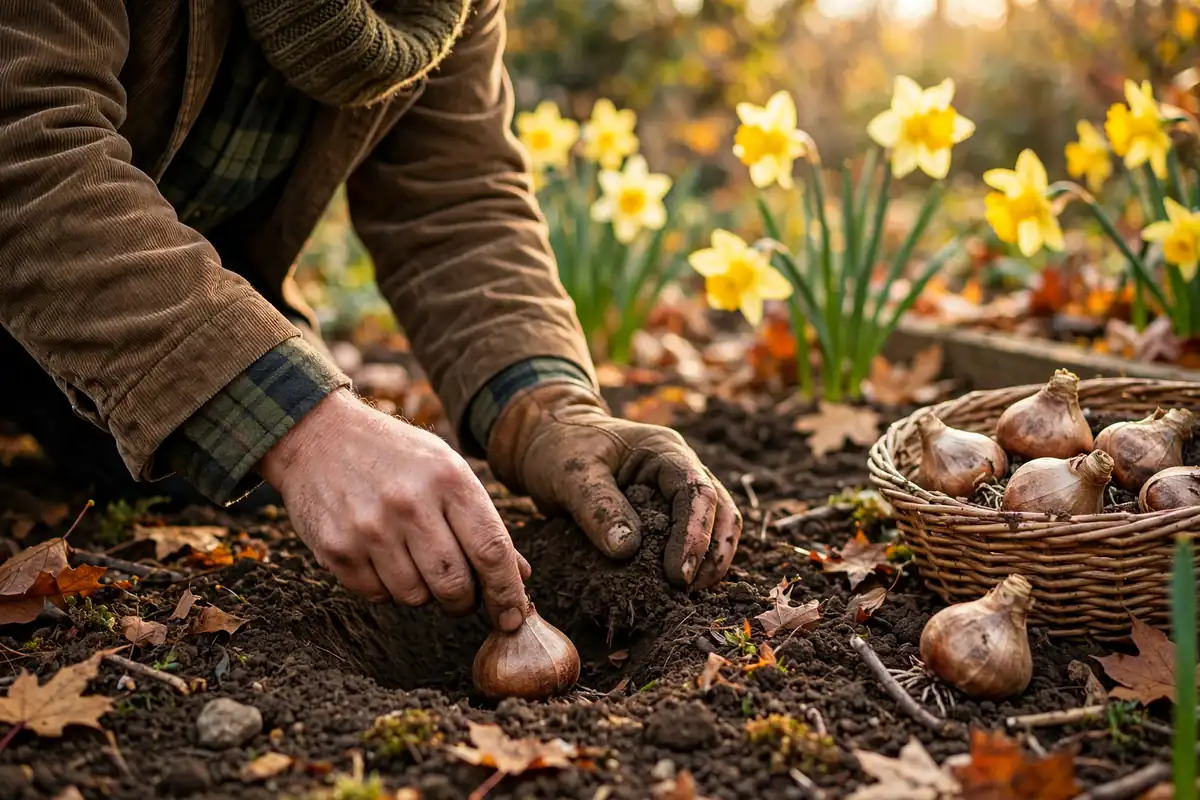
Narcissus is the most beloved of all N-flowers — the classic daffodil that carpets American yards every spring. With over 13,000 registered cultivars, you can find trumpet, double, miniature, and fragrant forms in yellow, white, orange, and pink. Plant bulbs in fall, pointed end up, about 6 inches deep. Deer and rodents leave them alone, and they naturalize beautifully under trees and along paths.
Bloom: Spring | Sun: Full sun to part shade | Zone: 3–9 | Best for: Spring borders, naturalizing lawns
2. Nasturtium (Tropaeolum majus)
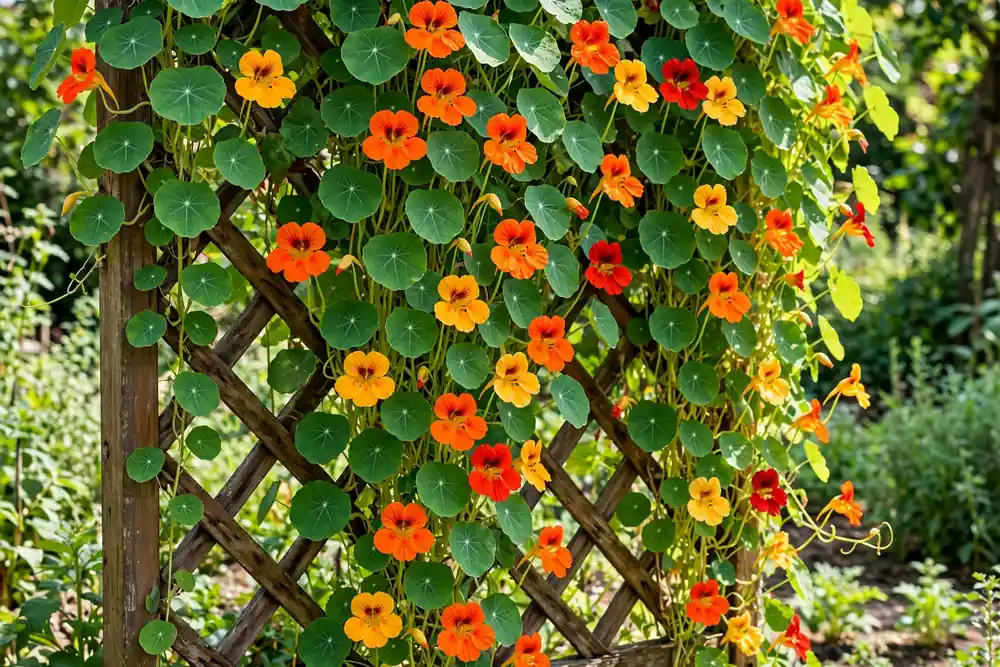
Nasturtium is the cheerful workhorse of summer gardens, with round lily-pad leaves and jewel-toned blooms in red, orange, yellow, and cream. Both the flowers and leaves are edible, adding a peppery bite to salads. They thrive in poor soil — too much fertilizer means leaves instead of flowers. Trailing types spill gorgeously from baskets, while compact mounding forms edge beds beautifully.
Bloom: Summer to fall | Sun: Full sun | Zone: Grown as annual | Best for: Edible flowers, containers, aphid trap crops
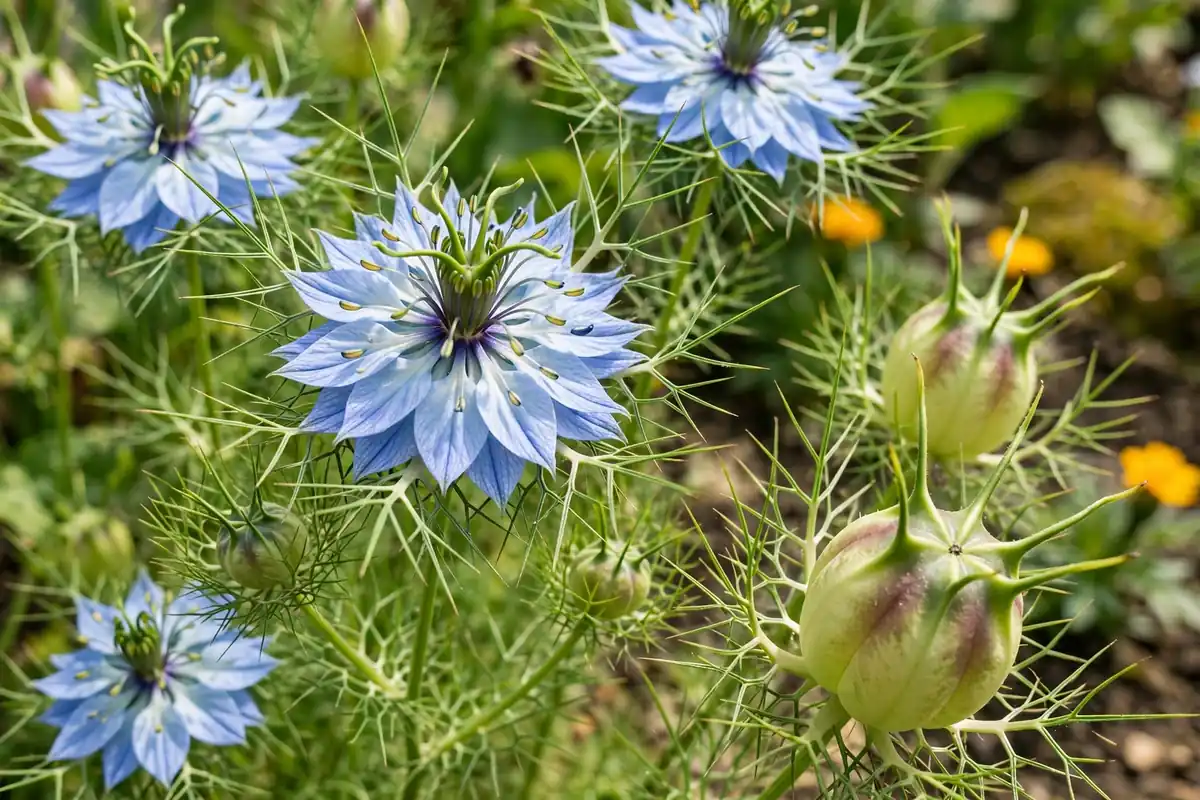
3. Nigella (Love-in-a-Mist) (Nigella damascena)
Love-in-a-mist earns its romantic name from delicate blue, white, or pink blooms floating in a cloud of feathery, fennel-like foliage. Even better, the flowers mature into striking striped seed pods prized for dried arrangements. Sow seeds directly in the garden in early spring — nigella dislikes transplanting. It self-sows freely, so one packet often becomes a permanent cottage-garden resident.
Bloom: Summer | Sun: Full sun | Zone: Grown as annual; self-sows | Best for: Cottage gardens, dried flower crafts
4. Nerine (Guernsey Lily) (Nerine bowdenii)
Nerine delivers a welcome surprise: clusters of crinkled pink, red, or white lily-like blooms on bare stems in October, long after most bulbs have finished. Native to South Africa, it loves hot, dry summers and sharp drainage — plant the bulb neck above the soil surface. Leave clumps undisturbed for years; nerine blooms best when slightly crowded. A superb cut flower with a 2-week vase life.
Bloom: Fall | Sun: Full sun | Zone: 7–10 | Best for: Fall color, cut flowers
5. Nemesia (Nemesia strumosa)
Nemesia, sometimes called Cape jewels, produces masses of small snapdragon-like flowers in blue, pink, white, yellow, and purple from spring through fall. Many varieties are sweetly fragrant, making them stars of window boxes and patio pots. They prefer cool weather and may pause in midsummer heat — shear them back and they rebound for fall. Deadhead regularly to keep new buds coming.
Bloom: Spring to fall | Sun: Full sun to part shade | Zone: 9–10; annual elsewhere | Best for: Fragrant containers, edging
6. Nierembergia (Cupflower) (Nierembergia hippomanica)
Cupflower forms a neat, low mound smothered in violet-blue or white cup-shaped blooms all summer long. This South American native tolerates heat and humidity better than many cool-season annuals, making it a reliable edging plant across the Southeast and Midwest. It needs no deadheading — spent flowers simply drop away. Try it along walkways or cascading over the edge of containers.
Bloom: Summer to fall | Sun: Full sun | Zone: 7–10; annual elsewhere | Best for: Edging, heat-tolerant containers
7. Nepeta (Catmint) (Nepeta × faassenii)
Catmint is one of the toughest perennial flowers that start with N — a billowing cloud of lavender-blue flower spikes that blooms from late spring into fall. Bees and butterflies adore it, and it shrugs off drought, deer, and poor soil. Shear plants back by half after the first flush for a fresh round of blooms. ‘Walker’s Low’ remains the gold-standard variety for borders and low hedges.
Bloom: Late spring to fall | Sun: Full sun | Zone: 3–8 | Best for: Pollinator gardens, drought-tolerant borders
8. Nicotiana (Flowering Tobacco) (Nicotiana alata)
Flowering tobacco opens its starry white, pink, red, or lime-green trumpets in the evening, releasing a powerful jasmine-like perfume that drifts across the garden. Plant it near patios, bedroom windows, or along paths where you stroll after dinner. The tall heirloom types reach 3–5 feet; newer dwarf series suit containers. All parts are toxic if eaten, so site it away from curious toddlers.
Bloom: Summer to fall | Sun: Full sun to part shade | Zone: 10–11; annual elsewhere | Best for: Evening fragrance, moon gardens
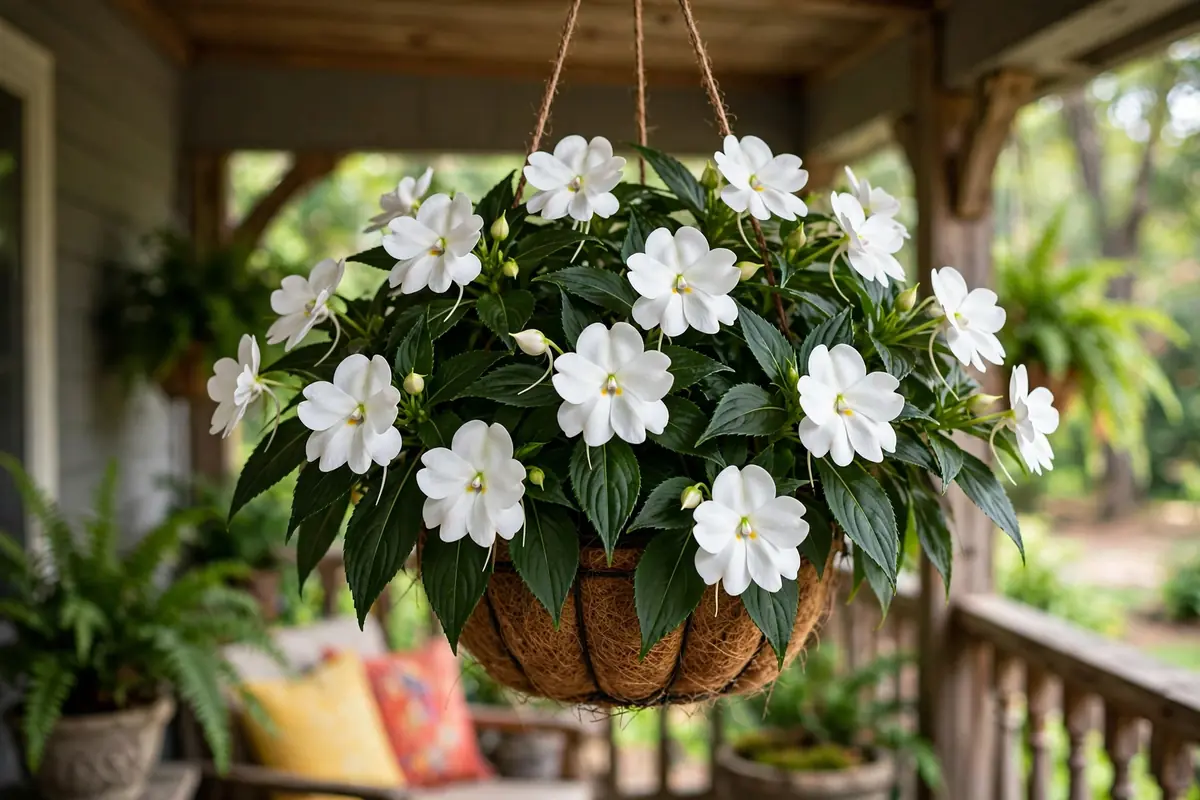
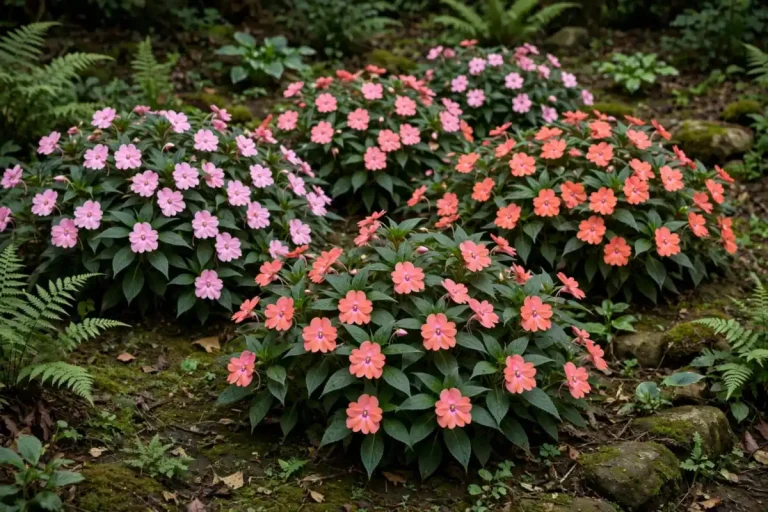
9. New Guinea Impatiens (Impatiens hawkeri)
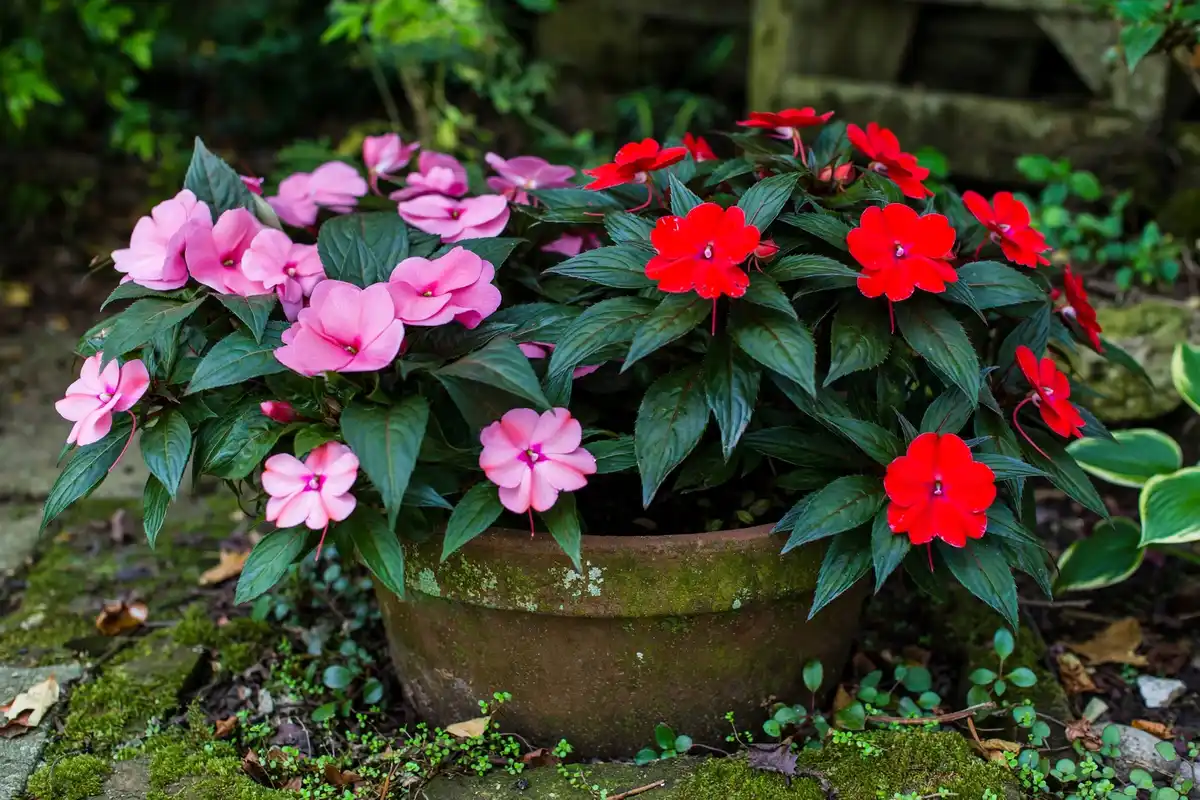
New Guinea impatiens solved the shade gardener’s dilemma — big, bold blooms in pink, red, orange, purple, and white that flower nonstop in part shade, plus variegated foliage for extra interest. Unlike old-fashioned bedding impatiens, they tolerate a few hours of morning sun and resist downy mildew better. Keep soil evenly moist and feed monthly; they are heavy drinkers in containers.
Bloom: Spring to fall | Sun: Part shade | Zone: 10–11; annual elsewhere | Best for: Shade containers, bedding
10. New Zealand Flax (Phormium tenax)
New Zealand flax is grown mainly for its dramatic sword-like foliage — green, bronze, purple, or striped — but mature plants also send up towering spikes of tubular red-orange flowers that hummingbirds love. It brings bold architectural structure to coastal and modern gardens. Give it full sun and room to spread; remove spent flower stalks at the base. Hardy in zones 8–11, it needs winter protection farther north.
Bloom: Summer | Sun: Full sun | Zone: 8–11 | Best for: Architectural foliage, coastal gardens
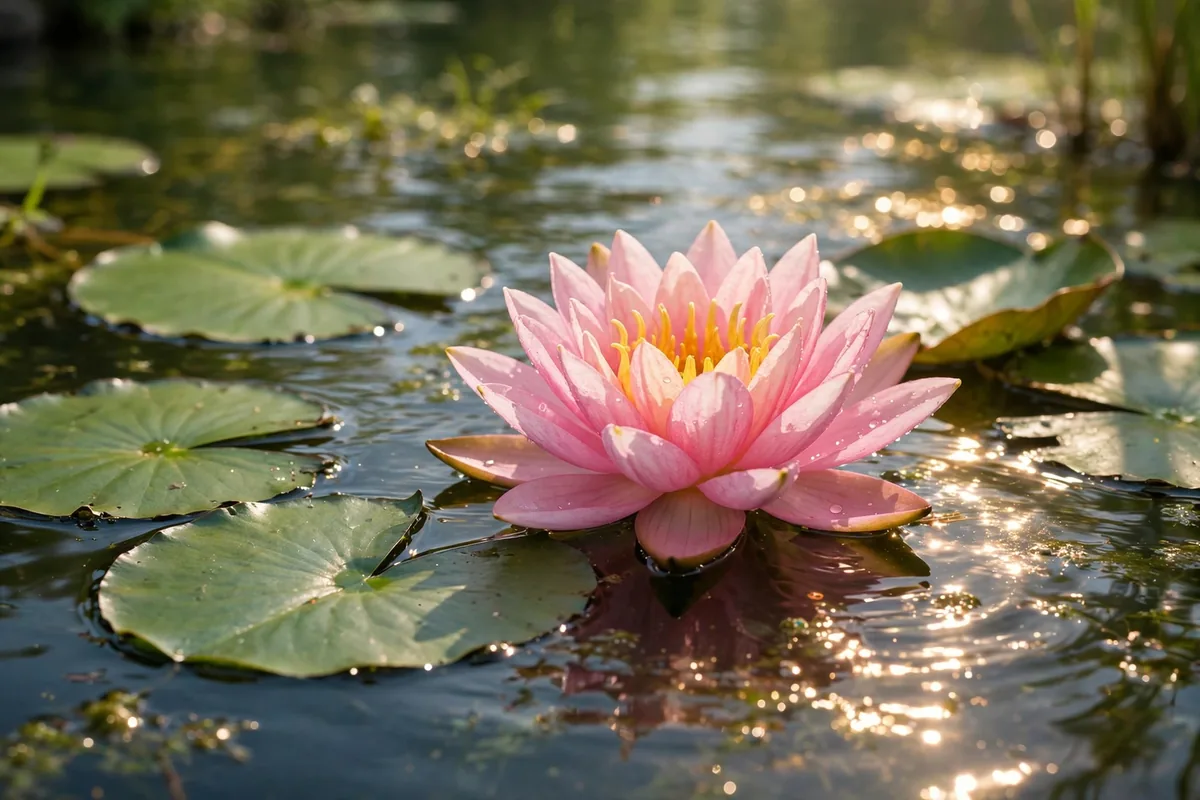
11. Nymphaea (Hardy Water Lily) (Nymphaea spp.)
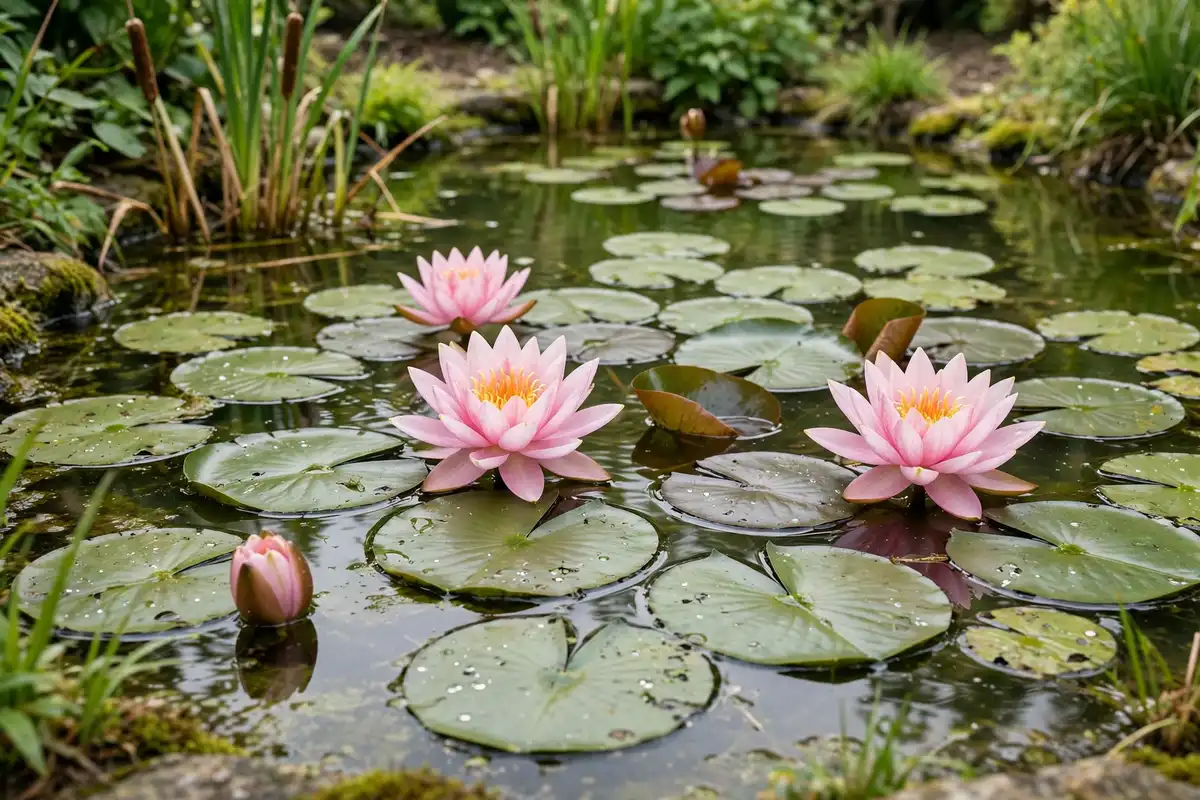
The hardy water lily is the crown jewel of backyard ponds, floating fragrant white, pink, yellow, or red blooms on broad green pads from June until frost. Plant the rhizome in a submerged pot of heavy soil, 12–18 inches below the surface, in full sun. Hardy types survive winters in zones 3–11, while tropical nymphaeas need overwintering indoors. One plant can transform a simple water feature.
Bloom: Summer | Sun: Full sun | Zone: 3–11 (varies by type) | Best for: Ponds, water gardens
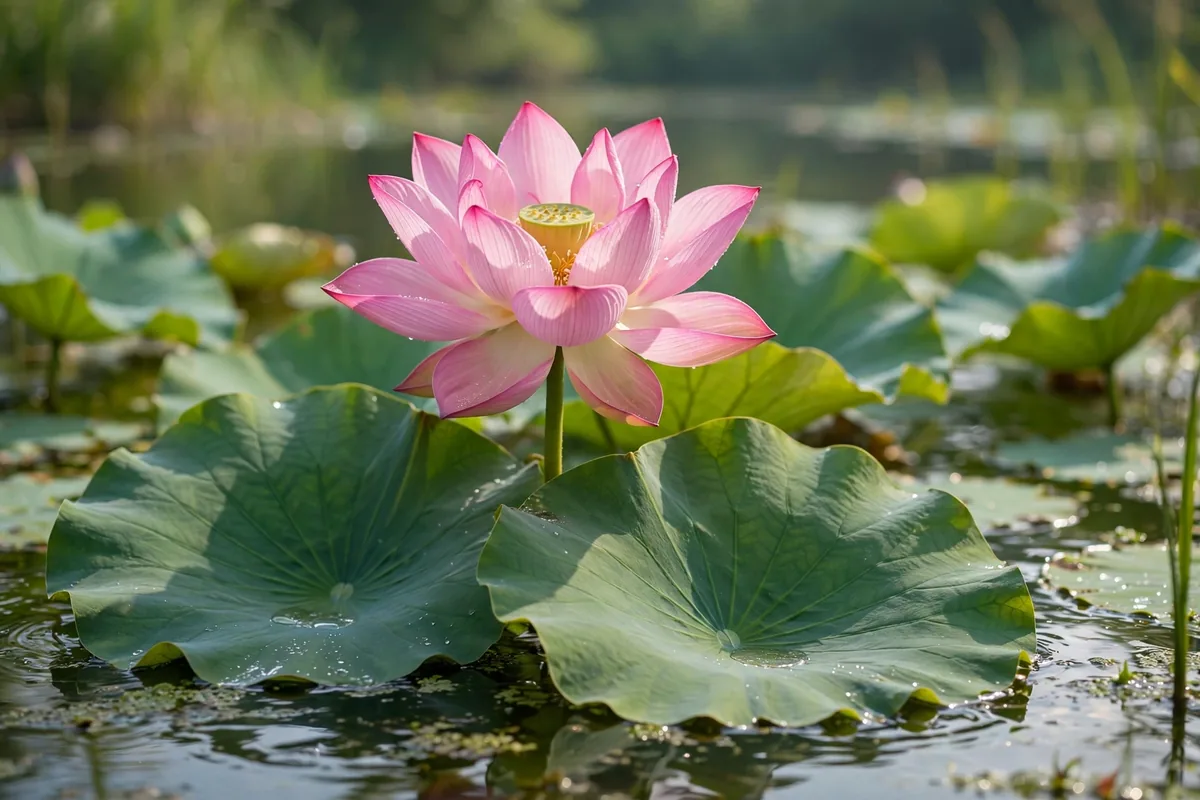
12. Nelumbo (Sacred Lotus) (Nelumbo nucifera)
Sacred lotus rises above the water on tall stalks, holding enormous pink or white blooms high like nature’s own sculpture — a symbol of purity in Asian cultures. It needs a large container or pond, full sun, and warm water to bloom. Lotus tubers are famously long-lived; seeds found in a dry lakebed germinated after 1,300 years. In zones 5–10, sink the pot below the freeze line for winter.
Bloom: Summer | Sun: Full sun | Zone: 5–10 | Best for: Large ponds, dramatic containers
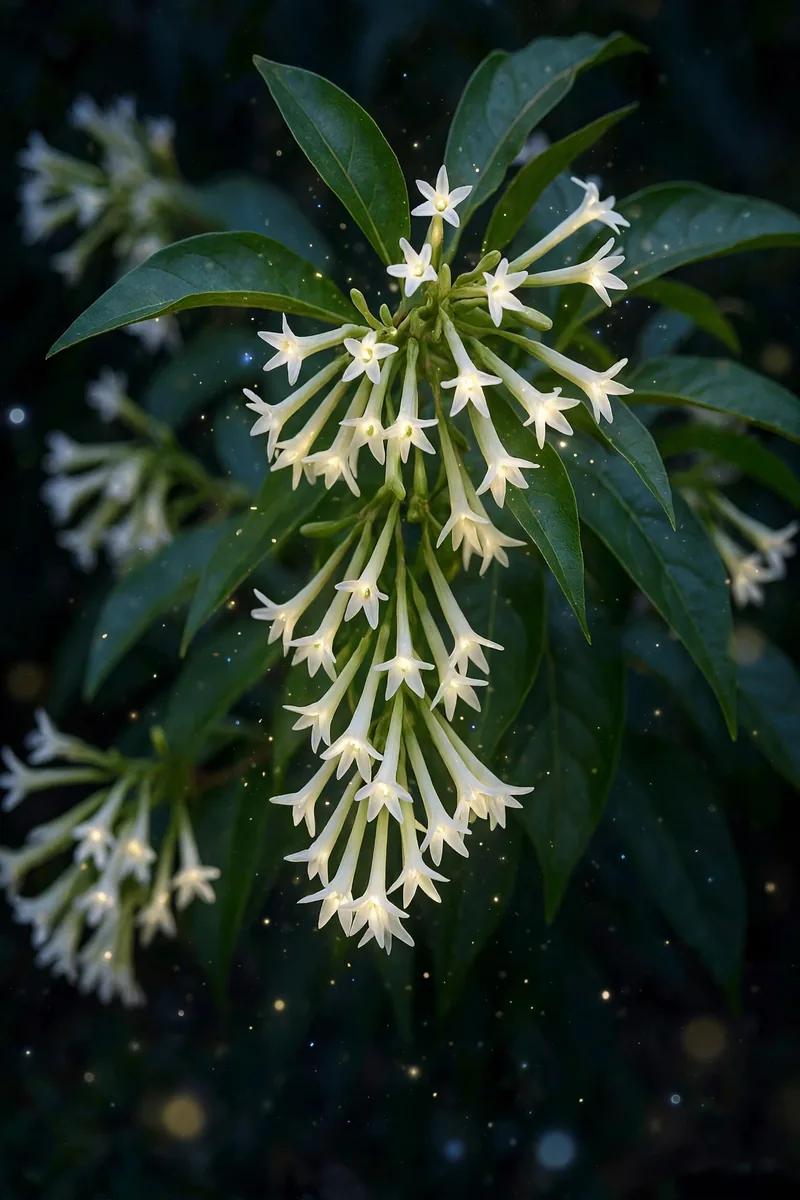
13. Night-Blooming Jasmine (Cestrum nocturnum)
Don’t expect showy daytime blooms — night-blooming jasmine’s tiny greenish-white tubular flowers open after dark and release one of the most intoxicating fragrances in the plant world. A single shrub can perfume an entire patio on a summer evening. Grow it in a pot in zones 8–11, moving it indoors before frost elsewhere. Prune hard in spring; it blooms on new wood and rebounds fast.
Bloom: Summer to fall (nights) | Sun: Full sun to part shade | Zone: 8–11 | Best for: Night fragrance near patios
14. Night Phlox (Zaluzianskya capensis)
Night phlox, sold as ‘Midnight Candy’, looks modest by day — small white flowers with maroon reverses — but at dusk it unleashes a honey-vanilla scent so strong you can smell it from across the yard. This South African native likes full sun and well-drained soil. Grow it in containers near seating areas or along evening walkways. In zones 8–10 it returns yearly; elsewhere, treat it as an annual.
Bloom: Summer (evenings) | Sun: Full sun | Zone: 8–10; annual elsewhere | Best for: Evening scent, containers
15. Night-Scented Stock (Matthiola longipetala)
Night-scented stock is the wallflower of the day garden — its small lilac and purple blooms close up and look unremarkable in sunlight. But come evening, they pump out a rich clove-and-spice perfume that rivals any rose. Scatter seeds along paths and near open windows in spring. Pair it with showier companions like petunias for daytime color and let the stock handle the night shift.
Bloom: Summer (evenings) | Sun: Full sun | Zone: Grown as annual | Best for: Evening fragrance, cottage beds
16. Ninebark (Physocarpus opulifolius)
Ninebark is a tough native shrub with exfoliating bark, colorful foliage (green, gold, or deep purple), and clusters of white to pink button-like flowers in late spring. It tolerates drought, clay, and neglect once established, making it a landscaper favorite. Prune right after flowering to control its arching 6- to 10-foot habit. ‘Diablo’ and ‘Center Glow’ offer the most dramatic foliage.
Bloom: Late spring | Sun: Full sun to part shade | Zone: 3–8 | Best for: Native hedges, four-season interest
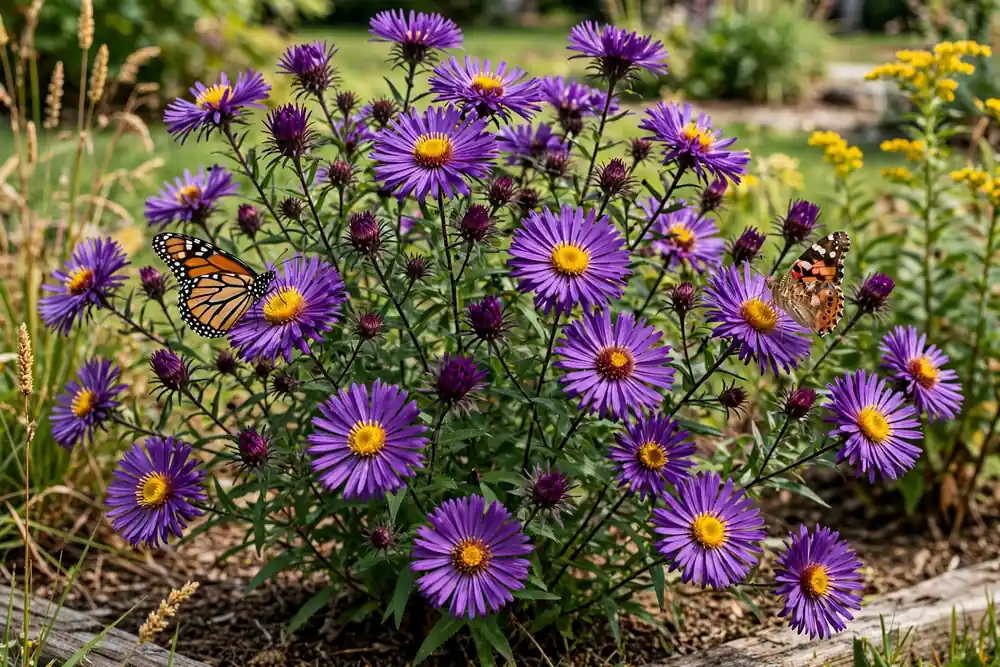
17. New England Aster (Symphyotrichum novae-angliae)
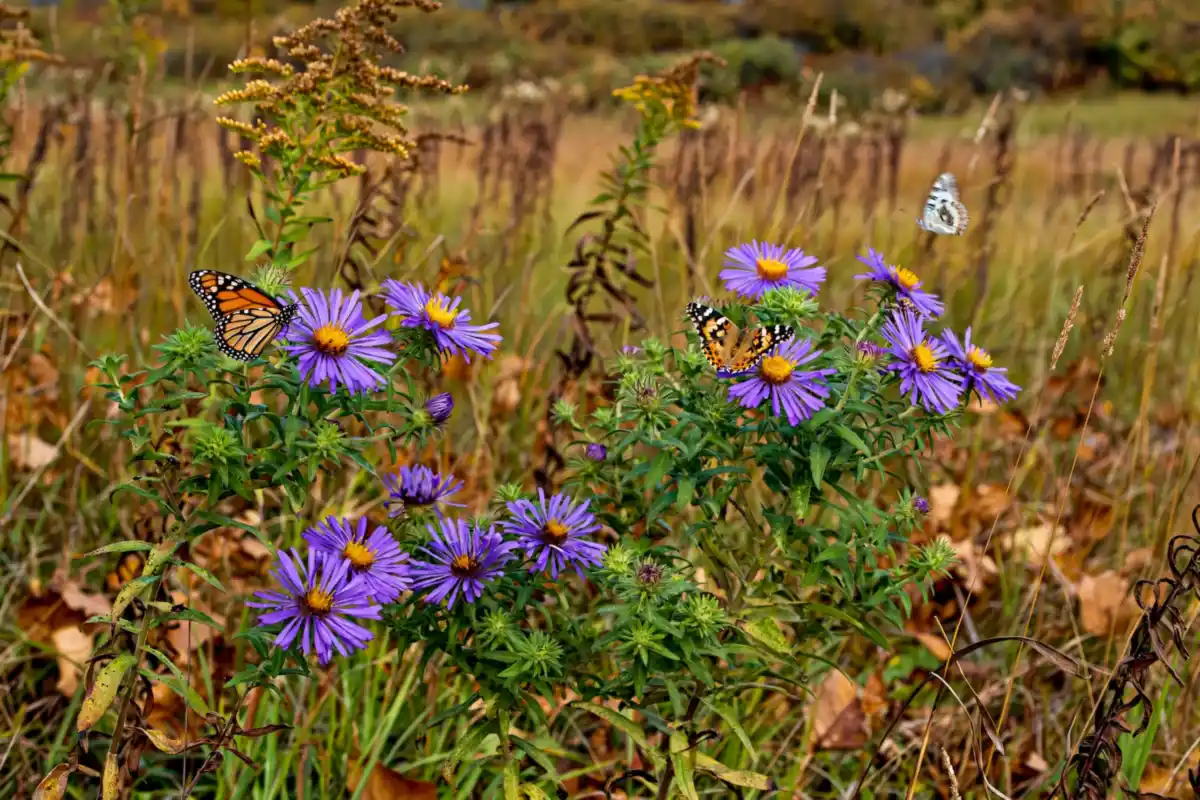
New England aster is the undisputed star of the fall garden, erupting in deep purple or pink daisy blooms with golden centers just when everything else is fading. This native perennial feeds migrating monarch butterflies and late-season bees. It can reach 5 feet, so pinch stems back in early summer for bushier plants. Divide clumps every few years to keep them vigorous.
Bloom: Late summer to fall | Sun: Full sun | Zone: 4–8 | Best for: Fall borders, monarch waystations
18. New York Aster (Symphyotrichum novi-belgii)
New York aster, also called Michaelmas daisy, brings clouds of blue, purple, pink, or white daisies to late-summer borders. It’s more compact and mildew-resistant than its New England cousin, making it a better fit for smaller gardens. Give it full sun and good air circulation to prevent powdery mildew. Deadhead spent blooms to stretch the show, and divide crowded clumps each spring.
Bloom: Late summer to fall | Sun: Full sun | Zone: 4–8 | Best for: Fall color, cut flowers
19. New York Ironweed (Vernonia noveboracensis)
New York ironweed commands attention at 5–8 feet tall, crowned with intense purple flower clusters in late summer. Its iron-tough stems (hence the name) never need staking, and it thrives in moist soils where other perennials sulk — perfect for rain gardens and pond edges. Butterflies flock to it. Site it at the back of the border; its height and bold texture make lesser plants disappear.
Bloom: Late summer to fall | Sun: Full sun | Zone: 5–9 | Best for: Rain gardens, back-of-border drama
20. New Jersey Tea (Ceanothus americanus)
New Jersey tea is a compact native shrub whose frothy white flower clusters feed dozens of butterfly and bee species in early summer — it’s a host plant for several butterfly larvae too. During the Revolutionary War, colonists dried its leaves as a tea substitute. It fixes nitrogen, tolerates poor dry soil, and stays a manageable 3 feet tall. A must-have for native plant gardens.
Bloom: Early summer | Sun: Full sun to part shade | Zone: 4–8 | Best for: Native gardens, pollinator habitat
21. Nemophila (Baby Blue Eyes) (Nemophila menziesii)
Baby blue eyes creates a spring carpet of sky-blue flowers with white centers — a California native wildflower that looks like scattered pieces of sky. Sow seeds in fall or early spring where they are to grow; they bloom best in cool weather and fade as heat arrives. Lovely under spring bulbs, along woodland edges, or mixed into wildflower meadows. Let it self-sow for an annual encore.
Bloom: Spring | Sun: Full sun to part shade | Zone: Grown as annual | Best for: Spring carpets, wildflower mixes
22. Nolana (Chilean Bellflower) (Nolana paradoxa)
Chilean bellflower trails up to 2 feet of blue, lavender, or white trumpet blooms with yellow throats, thriving in heat and poor, sandy soil. This Chilean native is tailor-made for hanging baskets, window boxes, and spilling over retaining walls. It blooms heaviest in cool summer weather and tolerates drought once established. A charming, underused annual for coastal and container gardens.
Bloom: Summer to fall | Sun: Full sun | Zone: Grown as annual | Best for: Hanging baskets, trailing groundcover
23. Nicandra (Shoofly Plant) (Nicandra physalodes)
Shoofly plant is a conversation piece — a fast-growing 3- to 5-foot annual with violet-blue bell flowers, inflated papery seed husks, and a folk reputation for repelling whiteflies. Native to Peru, it self-sows so reliably you’ll plant it once and enjoy it for years. Give it room at the back of the border; its bold, slightly wild habit suits cottage gardens better than formal beds.
Bloom: Summer to fall | Sun: Full sun | Zone: Grown as annual; self-sows | Best for: Novelty borders, self-sowing displays
24. Nodding Onion (Allium cernuum)
Nodding onion is a graceful native wild onion whose pink or white flower clusters dangle charmingly from curved stems, as if bowing to the garden. Unlike ornamental alliums with stiff globes, its relaxed habit suits naturalistic plantings, rock gardens, and meadow edges. The strap-like foliage is edible with a mild onion flavor. Deer-resistant, drought-tolerant, and beloved by native bees.
Bloom: Summer | Sun: Full sun to part shade | Zone: 4–8 | Best for: Native beds, rock gardens
25. Narrowleaf Coneflower (Echinacea angustifolia)
Narrowleaf coneflower is the wild prairie ancestor of garden coneflowers, with slender petals of pale purple-pink drooping from prominent orange cones. It’s tougher and more drought-tolerant than the common purple coneflower, thriving in poor, dry soils. The roots have a long history of medicinal use. Plant it in prairie-style drifts with little bluestem and bee balm for an authentic native display.
Bloom: Summer | Sun: Full sun | Zone: 3–9 | Best for: Prairie gardens, dry slopes
26. Naked Lady Lily (Amaryllis belladonna)
Naked lady lily performs garden magic: fragrant pink trumpet blooms appear on tall bare stalks in late summer, weeks before the strap-like foliage emerges — flowers with no leaves, hence the name. Plant bulbs shallowly in hot, dry spots and never move them; they resent disturbance. Best in zones 7–10, where established clumps bloom more heavily each August.
Bloom: Late summer to fall | Sun: Full sun | Zone: 7–10 | Best for: Surprise late-summer blooms, warm climates
27. Natal Plum (Carissa macrocarpa)
Natal plum is a dense evergreen shrub armed with thorns but blessed with intensely fragrant white star-shaped flowers followed by edible plum-like red fruits. It makes an impenetrable, sweet-smelling hedge in zones 9–11 and tolerates salt spray, drought, and wind — a coastal landscaping champion. The fruits taste like cranberry when fully ripe; just avoid the milky sap and unripe fruit.
Bloom: Spring to fall | Sun: Full sun | Zone: 9–11 | Best for: Fragrant security hedges, coastal gardens
28. Norfolk Island Hibiscus (Lagunaria patersonia)
Norfolk Island hibiscus is an evergreen tree from a tiny Pacific island, producing large pink hibiscus-like blooms all summer against glossy green foliage. It thrives in coastal California, Florida, and the Gulf Coast, shrugging off salt and wind. Give it full sun and room — it can reach 40 feet. A distinctive specimen tree for frost-free gardens craving tropical flair.
Bloom: Summer | Sun: Full sun | Zone: 9–11 | Best for: Coastal landscapes, specimen trees
29. Night-Blooming Cereus (Epiphyllum oxypetalum)
Night-blooming cereus, the “queen of the night,” opens dinner-plate-sized white blooms for a single spectacular night each summer, filling the air with vanilla perfume before wilting by dawn. Grow it as a houseplant or patio plant in zones 10–11, in bright indirect light. Buds telegraph the event days ahead — invite friends over; it’s a genuine garden occasion.
Bloom: Summer nights | Sun: Bright indirect light | Zone: 10–11; houseplant elsewhere | Best for: Nighttime spectacles, collectors
30. Northern Catalpa (Catalpa speciosa)
Northern catalpa is a fast-growing native shade tree that erupts each June in upright panicles of white, orchid-like flowers marked with yellow and purple — a genuine flowering-tree spectacle. It follows with long bean-like pods and huge heart-shaped leaves. Tolerant of tough urban conditions and hardy to zone 4, it’s one of the most dramatic flowering trees for northern gardens.
Bloom: Late spring | Sun: Full sun | Zone: 4–8 | Best for: Flowering shade trees, quick screens
31. Nannyberry Viburnum (Viburnum lentago)
Nannyberry is a large native shrub (or small tree) with flat white flower clusters in late spring, glossy foliage that turns burgundy-red in fall, and blue-black berries that birds devour. It’s remarkably adaptable — wet or dry soil, sun or shade — and makes a superb native hedge or screen. The berries are edible for humans too, with a sweet, prune-like flavor.
Bloom: Late spring | Sun: Full sun to part shade | Zone: 3–8 | Best for: Native hedges, wildlife gardens
32. Nanking Cherry (Prunus tomentosa)
Nanking cherry opens the spring show with a blizzard of pink buds and white blossoms before its leaves appear — weeks ahead of most flowering shrubs. This ultra-hardy shrub (to zone 3) then produces tart red cherries beloved by birds and pie-makers alike. It stays a manageable 6–10 feet, tolerates drought and wind, and makes an excellent early-season pollinator magnet.
Bloom: Early spring | Sun: Full sun | Zone: 3–7 | Best for: Early blossoms, edible landscaping
33. New Zealand Tea Tree (Leptospermum scoparium)
New Zealand tea tree — the source of manuka honey — is an evergreen shrub smothered in small pink, red, or white rose-like flowers each spring. It needs full sun, sharp drainage, and mild winters (zones 8–11), making it a West Coast and Gulf Coast favorite. The fine aromatic foliage makes excellent cut greenery. Prune lightly after flowering to keep it dense.
Bloom: Spring to summer | Sun: Full sun | Zone: 8–11 | Best for: Evergreen screening, cut foliage
34. Nun’s Orchid (Phaius tankervilleae)
Nun’s orchid is one of the easiest orchids for beginners — a terrestrial species with pleated leaves and tall spikes of brown, white, and maroon blooms each spring. In zones 9–11 it grows outdoors in shade beds; elsewhere, it’s a forgiving houseplant in bright indirect light. Water generously in growth, ease off in winter, and repot when the pot fills with pseudobulbs.
Bloom: Spring | Sun: Part shade | Zone: 9–11; houseplant elsewhere | Best for: Beginner orchids, shade beds
35. Nodding Trillium (Trillium cernuum)
Nodding trillium hides its white-to-pink blooms beneath a whorl of three leaves, the flowers dangling discreetly like tiny lanterns — a treasure for observant woodland gardeners. It needs rich, moist, acidic soil and deep shade, spreading slowly into colonies over the years. Never pick the flowers; removing the leaves starves the plant. Buy only nursery-propagated plants to protect wild populations.
Bloom: Spring | Sun: Part to full shade | Zone: 4–8 | Best for: Woodland gardens, shade groundcover
36. Northern Blazing Star (Liatris scariosa)
Northern blazing star sends up 3- to 4-foot spikes of fluffy purple-pink flowers that bloom from the top down — the reverse of most spiky flowers. It’s a butterfly and bee magnet, especially for monarchs, and its corms survive drought and poor soil. Plant in drifts for maximum impact, and leave the seed heads standing for goldfinches. Cut spikes last over a week in arrangements.
Bloom: Late summer | Sun: Full sun | Zone: 4–9 | Best for: Pollinator gardens, vertical accents
37. Nettle-Leaved Bellflower (Campanula trachelium)
Nettle-leaved bellflower is a stately European native with rough, nettle-like leaves and spires of violet-blue bell blooms in midsummer. Unlike its aggressive spreading cousins, it forms a well-behaved clump for cottage borders and woodland edges. It tolerates part shade and clay soil where fussier campanulas fail. Deadhead to prevent self-sowing if you want to keep it contained.
Bloom: Summer | Sun: Part shade | Zone: 4–8 | Best for: Cottage borders, shade edges
38. Night Gladiolus (Gladiolus tristis)
Night gladiolus is the gladiola world’s best-kept secret — slender spikes of pale yellow, sweetly clove-scented blooms that open in the evening. Far more graceful than its stiff hybrid cousins, it naturalizes in warm gardens and makes exquisite, unusual cut flowers. Plant corms in fall in zones 8–10 with sharp drainage. The fragrance alone justifies a spot near the patio.
Bloom: Spring | Sun: Full sun | Zone: 8–10 | Best for: Evening fragrance, unique cut flowers
39. Nodding Ladies’ Tresses (Spiranthes cernua)
Nodding ladies’ tresses is a dainty native orchid whose tiny white flowers spiral up the stem like a braided tress in late summer. It pops up in moist meadows and even lawns, asking nothing but a mow-free late season. A wonderful gateway orchid for native-plant gardeners — no greenhouse required. Leave seed heads to scatter; colonies expand slowly but surely.
Bloom: Late summer to fall | Sun: Full sun to part shade | Zone: 4–8 | Best for: Native orchids, moist meadows
40. Nippon Daisy (Montauk Daisy) (Nipponanthemum nipponicum)
Nippon daisy, better known as Montauk daisy, closes the gardening year with crisp white daisies and yellow centers from September into November. This Japanese native shrugs off salt, wind, and drought, making it a seaside staple. Pinch stems until midsummer to keep plants compact — unpinched plants flop. One of the very last perennial flowers that start with N to bloom.
Bloom: Fall | Sun: Full sun | Zone: 5–9 | Best for: Late-fall color, coastal gardens
41. Nertera (Nertera granadensis)
Bloom: Summer (berries in fall) | Sun: Bright indirect light | Zone: 9–11; houseplant elsewhere | Best for: Houseplant berries, terrariums
Nertera, the coral bead plant, is grown for its jewel-like orange berries that cover the tiny green mat in fall — the flowers themselves are barely noticeable. This New Zealand and South American native makes a charming houseplant or terrarium subject in bright indirect light. Keep soil evenly moist and cool; it dislikes hot, dry rooms.
Note: Grow in the sun and zone shown in the table; check the plant label for the exact cultivar, as ranges vary by type. New entry — bloom, sun and zone NOT independently verified.
42. New Zealand Cabbage Tree (Cordyline australis)
Bloom: Late spring to summer | Sun: Full sun to part shade | Zone: 8–11 | Best for: Architectural gardens, coastal landscapes
New Zealand cabbage tree is a dramatic evergreen for mild climates — a palm-like trunk topped with fountains of sword-shaped leaves, sending up huge plumes of fragrant creamy flowers in early summer. Bees swarm the blooms, and birds feast on the blue-white berries that follow. Give it full sun and sharp drainage; purple-leafed cultivars add year-round color.
Note: Grow in the sun and zone shown in the table; check the plant label for the exact cultivar, as ranges vary by type. New entry — bloom, sun and zone NOT independently verified.
43. Nuttall’s Larkspur (Delphinium nuttallianum)
Bloom: Spring | Sun: Full sun to part shade | Zone: 4–8 | Best for: Native wildflowers, hummingbirds
Nuttall’s larkspur lights up western spring meadows with spires of deep blue-purple spurred flowers that early hummingbirds rely on. This tough native perennial of the Rockies and Pacific Northwest wants full sun to part shade with well-drained soil. Let the seed heads ripen; seedlings often outperform transplants.
Note: Grow in the sun and zone shown in the table; check the plant label for the exact cultivar, as ranges vary by type. New entry — bloom, sun and zone NOT independently verified. All parts are toxic if eaten — admire the flowers, and keep away from livestock and curious pets. Shares the Delphinium genus with Red Larkspur on the live Flowers R page (entry 49) — same genus, different species.
44. Nootka Rose (Rosa nutkana)
Bloom: Spring to summer | Sun: Full sun | Zone: 4–8 | Best for: Native hedges, wildlife thickets
Nootka rose is the wild rose of the Pacific Northwest — fragrant pink single blooms in early summer followed by bright red hips that birds love through winter. This tough native shrub forms wildlife thickets and shrugs off poor soil, drought, and neglect. Give it room to spread; it suckers where happy.
Note: Grow in the sun and zone shown in the table; check the plant label for the exact cultivar, as ranges vary by type. New entry — bloom, sun and zone NOT independently verified. Thorny — site away from walkways and play areas. Shares the Rosa genus with Rose (live R entry 1) and Rugosa Rose (live R entry 33) — same genus, different species.
45. Northern Sea Oats (Chasmanthium latifolium)
Bloom: Summer to fall (seed heads) | Sun: Full sun to part shade | Zone: 5–9 | Best for: Shade-tolerant grasses, cut arrangements
Northern sea oats is one of the few ornamental grasses that thrives in shade — arching stems hung with flat, oat-like seed heads that dangle like tiny lanterns. The seed heads turn bronze in fall and make superb dried arrangements. Give it part shade and room; in rich wet soil it can colonize, so divide clumps every few years.
Note: Grow in the sun and zone shown in the table; check the plant label for the exact cultivar, as ranges vary by type. New entry — bloom, sun and zone NOT independently verified. Self-seeds readily and can spread aggressively in rich, moist soil — deadhead or site it with restraint.
46. Naked Stem Sunray (Enceliopsis nudicaulis)
Bloom: Spring to summer | Sun: Full sun | Zone: 5–9 | Best for: Desert gardens, rock gardens
Naked stem sunray is a silver-leafed desert daisy — cheerful yellow blooms on bare stems rising above a rosette of silvery foliage each spring. This Great Basin native wants full sun and lean, fast-draining soil, thriving on neglect in xeric gardens. A wonderful companion for penstemons and desert marigold.
Note: Grow in the sun and zone shown in the table; check the plant label for the exact cultivar, as ranges vary by type. New entry — bloom, sun and zone NOT independently verified.
47. Narrowleaf Penstemon (Penstemon angustifolius)
Bloom: Late spring to early summer | Sun: Full sun | Zone: 3–7 | Best for: Rock gardens, dry borders
Narrowleaf penstemon brings blue-purple tubular bells to dry, rocky ground where little else blooms — a prairie and foothills native of exceptional hardiness (zone 3). Hummingbirds and native bees work the flowers from late spring on. Give it full sun and sharp drainage; it hates wet winter feet.
Note: Grow in the sun and zone shown in the table; check the plant label for the exact cultivar, as ranges vary by type. New entry — bloom, sun and zone NOT independently verified. Shares the Penstemon genus with Rocky Mountain Penstemon (live R entry 29) — same genus, different species.
48. Nothoscordum (Nothoscordum bivalve)
Bloom: Spring to fall | Sun: Full sun to part shade | Zone: 5–10 | Best for: Naturalizing, wildflower lawns
Nothoscordum, the false garlic, is a dainty wild onion relative with clusters of white starry blooms on wiry stems, flowering on and off from spring into fall. This southeastern US native naturalizes happily in lawns — it blooms below mower height and returns reliably. The foliage carries a mild garlic scent when crushed.
Note: Grow in the sun and zone shown in the table; check the plant label for the exact cultivar, as ranges vary by type. New entry — bloom, sun and zone NOT independently verified. Self-sows freely where happy — let it naturalize in lawns and meadow edges, or deadhead to keep it in bounds.
49. Neoregelia (Neoregelia carolinae)
Bloom: Colorful bracts last for months | Sun: Bright indirect light | Zone: 10–11; houseplant elsewhere | Best for: Easy houseplants, colorful interiors
Neoregelia, the blushing bromeliad, colors up like a sunset — its central rosette of leaves flushes scarlet, pink, or orange when it blooms, with the color lasting for months. This Brazilian native is nearly indestructible indoors: bright indirect light, a water-filled central cup, and benign neglect. One of the easiest flowering houseplants you can grow.
Note: Grow in the sun and zone shown in the table; check the plant label for the exact cultivar, as ranges vary by type. New entry — bloom, sun and zone NOT independently verified. Tropical — not hardy outdoors in most US zones; grow as a houseplant.
50. Nolina (Nolina microcarpa)
Bloom: Summer (flower spikes) | Sun: Full sun | Zone: 7–10 | Best for: Desert gardens, xeriscapes
Nolina, the sacahuista or beargrass, is a southwestern desert icon — a huge fountain of narrow, grass-like leaves erupting from a woody base, topped by towering spikes of creamy flowers in summer. It survives extreme heat, drought, and poor soil with ease. Give it full sun and space; established plants are nearly indestructible.
Note: Grow in the sun and zone shown in the table; check the plant label for the exact cultivar, as ranges vary by type. New entry — bloom, sun and zone NOT independently verified.
51. Northern Bayberry (Morella pensylvanica)
Bloom: Spring (tiny, fragrant) | Sun: Full sun to part shade | Zone: 3–7 | Best for: Coastal hedges, fragrant foliage
Northern bayberry is the coastal gardener’s friend — a tough native shrub with aromatic, bay-scented foliage, tiny spring catkins, and waxy gray berries that birds devour in winter. It fixes nitrogen, tolerates salt spray and poor sand, and makes a fragrant informal hedge. The berries are the traditional source of bayberry candle wax.
Note: Grow in the sun and zone shown in the table; check the plant label for the exact cultivar, as ranges vary by type. New entry — bloom, sun and zone NOT independently verified.
52. Navelwort (Umbilicus rupestris)
Bloom: Spring to summer | Sun: Part shade | Zone: 7–10 | Best for: Rock gardens, wall crevices
Navelwort is a charming succulent for wall crevices and shady rock gardens — round, dimpled leaves like tiny lily pads sending up slender spikes of greenish-white bell flowers. This European native wants part shade and sharp drainage, thriving in the mortar cracks of old stone walls. In cold zones, grow it in troughs you can shelter.
Note: Grow in the sun and zone shown in the table; check the plant label for the exact cultivar, as ranges vary by type. New entry — bloom, sun and zone NOT independently verified.
53. New Zealand Daisy Bush (Olearia macrodonta)
Bloom: Summer | Sun: Full sun | Zone: 8–10 | Best for: Coastal shrubs, evergreen screening
New Zealand daisy bush is an evergreen shrub with handsome holly-like foliage that bursts into clouds of fragrant white daisy flowers each summer. It shrugs off salt, wind, and drought, making it a coastal landscaping star. Give it full sun and sharp drainage; prune lightly after flowering to keep it dense.
Note: Grow in the sun and zone shown in the table; check the plant label for the exact cultivar, as ranges vary by type. New entry — bloom, sun and zone NOT independently verified.
54. Nuttall’s Violet (Viola nuttallii)
Bloom: Spring | Sun: Full sun to part shade | Zone: 4–8 | Best for: Rock gardens, native wildflowers
Nuttall’s violet is the prairie’s spring smile — cheerful yellow faces on low mounds of heart-shaped leaves, blooming across the Great Plains each spring. This tough native wildflower handles drought, clay, and cold with ease. Plant it at the front of native borders or in rock gardens where its early color shines.
Note: Grow in the sun and zone shown in the table; check the plant label for the exact cultivar, as ranges vary by type. New entry — bloom, sun and zone NOT independently verified. Shares the Viola genus with the violets and pansies covered on other HomeYorva letter pages — same genus, different species.
55. Neomarica (Neomarica gracilis)
Bloom: Spring to summer | Sun: Bright indirect to part shade | Zone: 9–11; houseplant elsewhere | Best for: Houseplants, warm-climate borders
Neomarica, the walking iris, is a conversation-piece houseplant — iris-like blue-and-white blooms that last a single day, followed by plantlets that root where the flower stalk touches down (hence “walking”). This Brazilian native wants bright indirect light and even moisture. Easy, architectural, and endlessly fascinating.
Note: Grow in the sun and zone shown in the table; check the plant label for the exact cultivar, as ranges vary by type. New entry — bloom, sun and zone NOT independently verified. Tropical — not hardy outdoors in most US zones; grow as a houseplant.
N flowers by colour
Planning a colour scheme? Here are the 55 N flowers above, grouped by their main flower colour, using the colours named in the FAQ below. Several appear in more than one group — narcissus, asters and impatiens come in many colours — so check the numbered entry for the exact cultivar.
| Colour | N flowers to try |
|---|---|
| White | Night-Blooming Jasmine, Natal Plum, Night Phlox, New Jersey Tea, Nannyberry Viburnum, Nodding Onion, Nodding Ladies’ Tresses, Nippon Daisy, Nothoscordum, New Zealand Daisy Bush |
| Blue and purple | Nigella (Love-in-a-Mist), Nierembergia (Cupflower), Nolana, Nicandra, New York Aster, New York Ironweed, Northern Blazing Star, Nettle-Leaved Bellflower, Nuttall’s Larkspur, Neomarica |
| Pink and red | Nerine (Guernsey Lily), New England Aster, Nootka Rose, New Guinea Impatiens, Neoregelia (colourful bracts), Nanking Cherry |
| Yellow and orange | Narcissus (Daffodil), Nasturtium, Naked Stem Sunray, Nuttall’s Violet, Narrowleaf Coneflower |
Best N flowers by season
A good N border never has an empty month — and N owns both spring (daffodils) and fall (asters). These are the strongest picks from the list for each season, taken from the bloom column of the at-a-glance table.
Spring: Narcissus, Nanking Cherry, Nemophila (Baby Blue Eyes), Nodding Trillium, Nun’s Orchid, Night Gladiolus, Nuttall’s Larkspur and Nuttall’s Violet lead the season, with Ninebark and Northern Catalpa bridging into summer. Summer: the big show — Nasturtium, Nepeta, Nicotiana, Hardy Water Lily, Sacred Lotus, Nodding Onion and the night-scented trio of Night-Blooming Jasmine, Night Phlox and Night-Scented Stock. Fall: N’s second peak — Nerine, New England Aster, New York Aster, New York Ironweed, Nippon Daisy and Naked Lady Lily. Winter: outdoors rests, but indoors Neoregelia’s colourful bracts last for months, Nertera carries berries, and the houseplant N-flowers (Night-Blooming Cereus, Nun’s Orchid, Neomarica) carry the letter through winter.
Indoor and container-friendly N flowers
No garden required: N is full of container plants. The table’s own picks include Nasturtium for containers, Nemesia for fragrant containers and edging, Nierembergia for heat-tolerant containers, New Guinea Impatiens for shade containers, Night Phlox for evening-scented pots and even Sacred Lotus in dramatic water containers. The houseplant bench is deep too: Night-Blooming Cereus, Nun’s Orchid, Nertera, Neoregelia and Neomarica all live indoors in bright indirect light.
Beginner-friendly N flowers
New to gardening? Start with the page’s own easiest picks, named in the FAQ: Nasturtium, Narcissus, Nigella, Nepeta and New England Aster — nearly foolproof plants that germinate or transplant easily, bloom for months and forgive missed waterings. For shade, the FAQ suggests New Guinea Impatiens; for ponds, Hardy Water Lilies are surprisingly low-maintenance; and Nolina and Neoregelia are nearly indestructible for desert and indoor colour.
Rare and unusual N flowers
Beyond the classics, N is the night letter. Night-Blooming Cereus opens huge fragrant flowers on summer nights — a one-night spectacle for collectors. Night-Blooming Jasmine, Night Phlox and Night-Scented Stock perfume the evening air, which is why the FAQ calls N perhaps the most fragrant letter in the garden. By day, Sacred Lotus and Hardy Water Lily rule the pond, Naked Lady Lily appears leafless in late summer, and Nodding Ladies’ Tresses is a native orchid for moist meadows.
N flowers with full guides on HomeYorva
Several flowers in this list have their own complete growing and care guides elsewhere on HomeYorva. If one of these is your flower, start there:
- Aster Flower guide — asters, including New England Aster and New York Aster (entries 17 and 18)
- Coneflower guide — coneflowers, including Narrowleaf Coneflower (entry 25)
- Fragrant Flowers guide — the night-scented N flowers are the most fragrant group on this page
- Red Flowers · Blue Flowers · White Flowers · Purple Perennial Flowers — colour guides for planning an N border by colour
Browse the rest of the letter: Flowers That Start With C · Flowers That Start With P · Flowers That Start With D · Flowers That Start With M · Flowers That Start With K · Flowers That Start With L · Flowers That Start With I · Flowers That Start With A · Flowers That Start With E · Flowers That Start With S · Flowers That Start With J · Flowers That Start With R · Flowers That Start With H · Flowers That Start With G · or see all 26 letters in the Flower Names A–Z hub. There is also a companion Plants That Start With N page.
Growing Tips for N-Flowers
With 55 very different N-flowers on this list — from pond plants to desert bulbs — a few universal rules will set you up for success no matter which ones you choose.
Match the plant to your zone first. Check the hardiness zones in the tables above before you buy. Tropical N-flowers like night-blooming jasmine, natal plum, and night-blooming cereus cannot survive a freezing winter outdoors — grow them in pots you can move inside, or treat them as annuals. Hardy picks like narcissus, nepeta, ninebark, and nodding onion sail through cold winters with no fuss.
Plant bulbs at the right time and depth. Fall-planted bulbs — narcissus, nerine, naked lady lily, and night gladiolus — need 6–12 weeks of cool soil to root before winter. Set daffodils about 6 inches deep, but keep nerine and naked lady bulbs with their necks just above the surface. Mark the spot so you don’t dig them up by accident.
Water wisely for each group. N-flowers span every moisture extreme. Water lilies and lotus need standing water; nasturtiums, nepeta, and narrowleaf coneflower prefer lean, dryish soil (too much water and fertilizer means floppy growth). New Guinea impatiens and nodding trillium want consistently moist soil — mulch them to hold moisture.
Deadhead for more blooms, or don’t. Snipping spent flowers off nemesia, nierembergia, and nicotiana redirects energy into new buds, stretching the show by weeks. But leave nigella and nicandra alone — their ornamental seed pods are half the display and they self-sow for next year. Cut back catmint by half after its first flush for a fresh round of spikes.
Give night bloomers a front-row seat. Night-blooming jasmine, night phlox, night-scented stock, nicotiana, and night gladiolus waste their perfume if planted at the far end of the yard. Place them along patios, paths, and bedroom windows where you’ll actually be after dark. A moon garden of white N-flowers — nicotiana, night phlox, natal plum — glows beautifully under evening light.
Additional growing tips for the new entries
- Watch the self-sowers and spreaders. Northern sea oats and nothoscordum self-sow freely — leave seed heads for naturalizing in meadow edges and wildflower lawns, or deadhead to keep them in bounds. Nigella and nicandra on the live page behave the same way.
- Match tender plants to your zone. Nertera, neoregelia, and neomarica need frost-free conditions — grow them as houseplants or in pots you can move indoors, like the night-blooming cereus and New Guinea impatiens already on this page. New Zealand cabbage tree, navelwort, and New Zealand daisy bush are hardy only in mild-winter zones.
- Give the natives lean soil. Nuttall’s larkspur, naked stem sunray, narrowleaf penstemon, and Nuttall’s violet all evolved in lean, well-drained ground — rich soil and heavy watering make them floppy and short-lived. Plant them like the narrowleaf coneflower and nodding onion already on this page: full sun, sharp drainage, no coddling.
Explore More Flowers
Which N-Flowers Will You Grow?
From the spring trumpets of daffodils to the fall daisies of Nippon daisy, flowers that start with N cover every season, every sun level, and every USDA zone from 3 to 11. Start with easy winners matched to your conditions — perhaps nepeta and nasturtium for a sunny border, New Guinea impatiens and nodding trillium for shade, or a water lily for the pond. Pick three or four favorites from this list, give them the right spot, and the letter N will fill your garden with color from March to November. Bookmark this guide, share it with a fellow gardener, and save a spot near your patio for the night bloomers — their evening perfume will reward you all summer long.
Frequently Asked Questions
What flowers start with N?
Dozens of garden favorites start with N, including narcissus (daffodil), nasturtium, nigella (love-in-a-mist), nerine, nemesia, nierembergia, nepeta (catmint), nicotiana, New Guinea impatiens, New England aster, nodding onion, and nymphaea (water lily). This guide covers 55 entries in total, each with its scientific name, bloom season, sun needs and hardiness zone.
What are the most popular flower names that start with N?
The most searched flower names that start with N are narcissus, nasturtium, nigella, nepeta, nerine, New Guinea impatiens, and New England aster. Daffodils lead by a wide margin — they are the signature flower of spring — followed by easy-care nasturtiums and the fall color of New England asters.
What white flowers start with N?
Beautiful white N-flowers include night-blooming jasmine, natal plum, night phlox, New Jersey tea, nannyberry viburnum, nodding onion, nodding ladies’ tresses, Nippon daisy, and white forms of narcissus, nicotiana, nerine, and New York aster. White night-bloomers glow beautifully after dark, so plant them where evening light catches them. The new entries add the white starry blooms of nothoscordum and New Zealand daisy bush.
What blue flowers start with N?
Lovely blue N-flowers include nigella (love-in-a-mist), nierembergia (cupflower), nolana, nicandra, New York aster, New York ironweed, northern blazing star, nettle-leaved bellflower, and blue forms of nemesia. The new entries add Nuttall’s larkspur’s deep blue-purple spires and neomarica’s iris-blue blooms — blue is well represented in the letter N.
Which perennial flowers start with N?
Reliable perennial flowers that start with N include nepeta, New England aster, New York aster, nodding onion, narrowleaf coneflower, nerine, nierembergia, northern blazing star, nettle-leaved bellflower, Nippon daisy, and hardy water lilies. Most return bigger and better each year with minimal care. The new entries add Nuttall’s larkspur, narrowleaf penstemon, Nuttall’s violet, northern sea oats, naked stem sunray, northern bayberry, and navelwort to the perennial ranks.
What flowers that start with N bloom in spring?
Spring bloomers include narcissus, Nanking cherry, nemophila (baby blue eyes), nodding trillium, nun’s orchid, night gladiolus, ninebark, nannyberry viburnum, northern catalpa, and New Zealand tea tree. The new entries add Nuttall’s larkspur, naked stem sunray, northern bayberry, navelwort, and Nuttall’s violet. Plant a mix for continuous spring color, then follow with ninebark and New Jersey tea to bridge into summer.
What flowers beginning with N grow well in shade?
Several N-flowers prefer life out of the sun. New Guinea impatiens blooms nonstop in part shade, while nodding trillium and nettle-leaved bellflower light up woodland edges. Nun’s orchid is an easy shade-bed orchid in warm zones, and nicotiana tolerates part shade while adding evening fragrance. Night-blooming cereus thrives indoors in bright indirect light. The new entries add navelwort for shady rock gardens and neomarica as a shade-tolerant houseplant.
Which flowers starting with N are best for beginners?
Nasturtium, narcissus, nigella, nepeta, and New England aster are nearly foolproof — they germinate or transplant easily, bloom for months, and forgive missed waterings. For shade, try New Guinea impatiens. For ponds, hardy water lilies are surprisingly low-maintenance. The new entries add the nearly indestructible nolina and neoregelia for easy desert and indoor color.
What flowers that start with N attract hummingbirds and butterflies?
New England aster, nepeta, New York ironweed, northern blazing star, New Jersey tea, narrowleaf coneflower, and nodding onion are pollinator magnets. New England aster is especially valuable — its fall blooms fuel migrating monarch butterflies. The new entries add Nuttall’s larkspur, narrowleaf penstemon, and New Zealand cabbage tree’s nectar-rich plumes. Planting several together creates a buffet from spring through fall.
Are there fragrant flowers that start with N?
Yes — N might be the most fragrant letter in the garden. Night-blooming jasmine, night phlox, night-scented stock, and nicotiana all perfume the evening air. Nerine, night gladiolus, natal plum, and naked lady lily smell wonderful by day, and many narcissus varieties are sweetly scented too. The new entries add New Zealand cabbage tree’s honeyed summer plumes and northern bayberry’s aromatic foliage.
What flowers that start with the letter N make good cut flowers?
Nerine lasts up to two weeks in a vase — the best of the bunch. Also excellent: narcissus, New England and New York asters, night gladiolus, nicotiana, northern blazing star, and nigella (both fresh flowers and dried pods). The new entries add northern sea oats’ bronze seed heads for dried arrangements. Cut stems early in the morning for longest life.
Which flowers that start with N are native to North America?
Native N-flowers include New England aster, New York aster, New York ironweed, New Jersey tea, nodding onion, narrowleaf coneflower, ninebark, nannyberry viburnum, northern catalpa, nodding trillium, northern blazing star, and nodding ladies’ tresses — excellent choices for native and pollinator gardens. The new entries add Nuttall’s larkspur, Nootka rose, northern sea oats, naked stem sunray, narrowleaf penstemon, nothoscordum, Nuttall’s violet, and northern bayberry.

3 Comments