
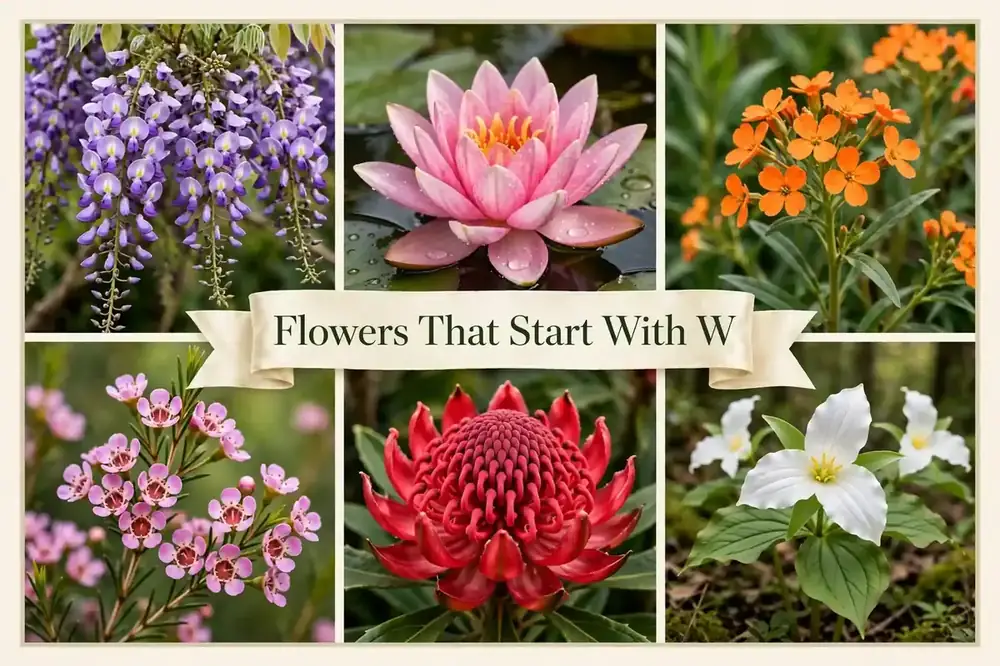
55 Flowers That Start With W: Names, Pictures & Growing Tips
Looking for flowers that start with W? You have come to the right place. The letter W brings some of the garden’s most dramatic performers — the cascading purple racemes of wisteria, the floating perfection of water lilies, the honey-scented spring display of wallflowers, and the bold crimson blooms of the Australian waratah. Whether you are hunting for a fragrant vine, a pond plant, a shade wildflower, or something special for an alphabet garden project, this guide covers 55 real flowers that start with W, each with a vivid description and practical growing advice.
Every entry below lists the flower’s scientific name, bloom season, sun needs, and USDA hardiness zone, so you can tell at a glance which W-flowers fit your yard. You will also find a quick comparison table, practical growing tips, and answers to the questions gardeners ask most about flowers starting with W. Let’s dig in.
Quick Answer
Yes — this page lists 55 flowers that start with W, from wisteria and water lilies to waratah and winter jasmine. Use the at-a-glance table to filter by your USDA zone, sun and bloom season before you buy.
Table of Contents
Flowers at a glance
| # | Name | Scientific name | Bloom | Sun | Zone | Best for |
|---|---|---|---|---|---|---|
| 1 | Wisteria | Wisteria sinensis | Late spring | Full sun | 5–8 | Pergolas, arbors, cottage gardens (with strong supports) |
| 2 | Japanese Wisteria | Wisteria floribunda | Late spring | Full sun | 4–9 | Show-stopping pergolas, extra-long flower racemes |
| 3 | Water Lily | Nymphaea spp. | Summer to fall | Full sun (6+ hours) | Hardy types 4–10; tropicals as annuals | Ponds, water gardens |
| 4 | Windflower | Anemone blanda | Early to mid spring | Full sun to part shade | 5–9 | Naturalizing, under trees, rock gardens |
| 5 | Wallflower | Erysimum cheiri | Spring | Full sun | 7–10; biennial/annual elsewhere | Fragrant spring borders, cottage gardens |
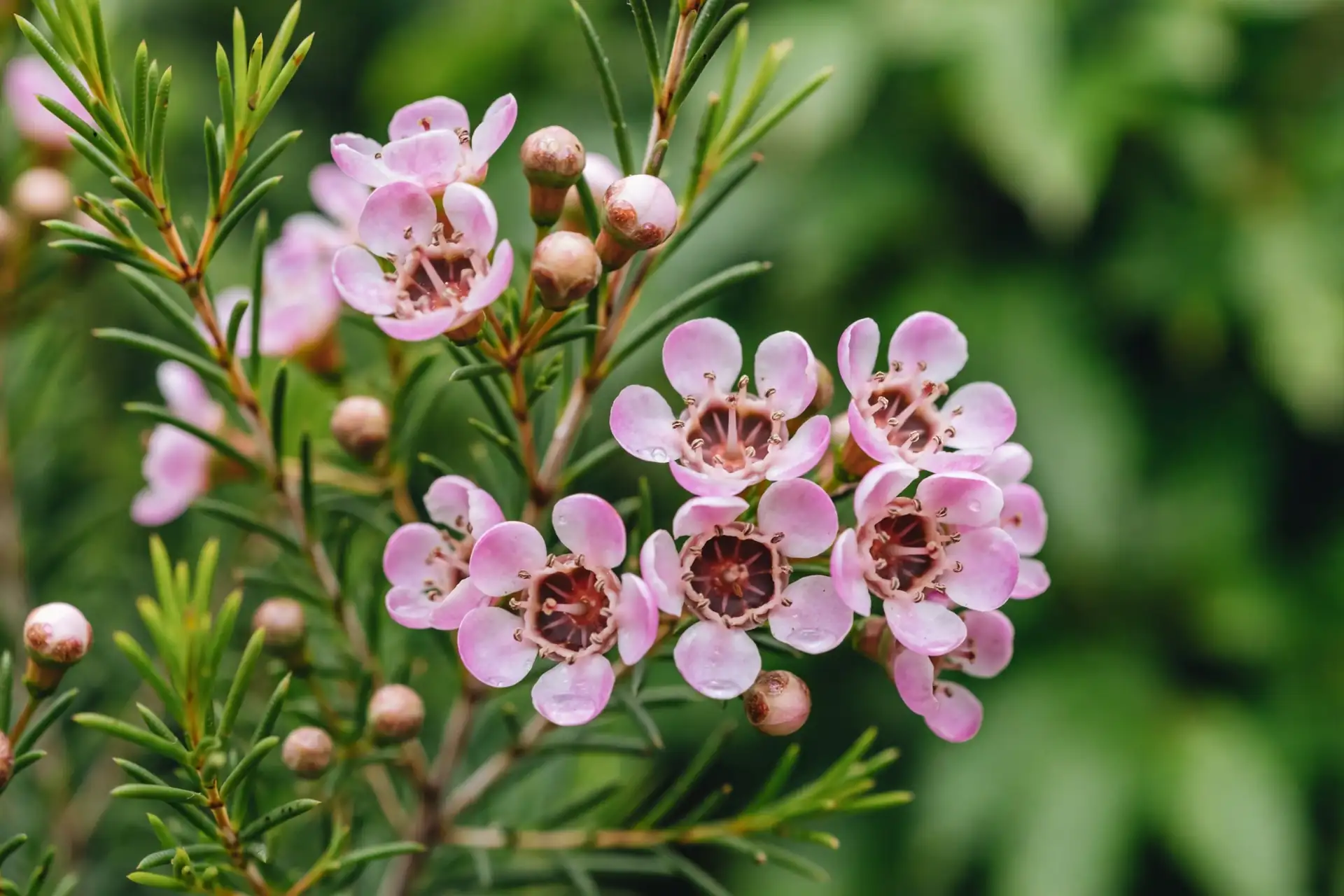
| 6 | Waxflower | Chamelaucium uncinatum | Late winter to spring | Full sun | 9–10 | Cut flowers, warm-climate gardens, containers |
| 7 | Weigela | Weigela florida | Late spring, often reblooms | Full sun to part shade | 4–8 | Foundation plantings, hummingbird gardens, hedges |
| 8 | Wild Bergamot | Monarda fistulosa | Summer | Full sun to part shade | 3–9 | Native gardens, pollinators, meadow plantings |
| 9 | Wood Anemone | Anemone nemorosa | Early spring | Part to full shade | 4–8 | Woodland gardens, shade drifts |
| 10 | Winter Aconite | Eranthis hyemalis | Late winter | Full sun to part shade | 4–9 | Earliest color, naturalizing under trees |
| 11 | Wishbone Flower | Torenia fournieri | Summer to frost | Part shade | Grown as annual | Shade containers, hanging baskets |
| 12 | White Trillium | Trillium grandiflorum | Mid spring | Part to full shade | 4–8 | Woodland gardens, native plantings |
| 13 | Wild Indigo | Baptisia australis | Late spring to early summer | Full sun | 3–9 | Prairie gardens, low-maintenance borders |
| 14 | Watsonia | Watsonia borbonica | Summer | Full sun | 8–10 | Warm-climate borders, cut flowers |
| 15 | Waratah | Telopea speciosissima | Spring | Full sun to part shade | 9–10 | Statement shrubs, Australian native gardens |
| 16 | Winter Jasmine | Jasminum nudiflorum | Late winter | Full sun to part shade | 6–10 | Winter color, walls and banks |
| 17 | White Snakeroot | Ageratina altissima | Late summer to fall | Part shade | 3–8 | Late-season shade color (toxic — handle with care) |
| 18 | Wood Lily | Lilium philadelphicum | Early to midsummer | Full sun to part shade | 3–8 | Native gardens, naturalized meadows |
| 19 | Water Hyacinth | Eichhornia crassipes | Summer to fall | Full sun | 9–11; annual elsewhere (check local laws) | Contained tub ponds only |
| 20 | Wild Rose | Rosa acicularis | Late spring to summer | Full sun | 2–7 | Wildlife hedges, cold climates, rose hips |
| 21 | Wahlenbergia | Wahlenbergia gloriosa | Spring to summer | Full sun to part shade | 8–10 | Rock gardens, true-blue color |
| 22 | Winecup | Callirhoe involucrata | Late spring to summer | Full sun | 4–8 | Prairie gardens, hot dry spots, groundcover |
| 23 | Woolly Bluecurls | Trichostema lanatum | Spring to summer | Full sun | 8–10 | Drought-tolerant gardens, California natives |
| 24 | Western Bleeding Heart | Dicentra formosa | Spring to early summer | Part to full shade | 4–8 | Shade gardens, woodland edges |
| 25 | White Baneberry | Actaea pachypoda | Late spring (berries in late summer) | Part to full shade | 3–8 | Woodland gardens — berries toxic, plant with care |
| 26 | Wild Ginger | Asarum canadense | Spring (tiny, at ground level) | Part to full shade | 4–6 | Deep-shade groundcover |
| 27 | White Turtlehead | Chelone glabra | Late summer to fall | Full sun to part shade | 3–8 | Rain gardens, pond edges, butterflies |
| 28 | Wood Poppy | Stylophorum diphyllum | Spring | Part shade | 4–9 | Woodland gardens, spring color in shade |
| 29 | Water Poppy | Hydrocleys nymphoides | Summer to fall | Full sun | 9–11; tub pond elsewhere | Tub ponds, containers, tropical water gardens |
| 30 | White Water Lily | Nymphaea alba | Summer | Full sun | 4–10 | Ponds, fragrant white blooms |
| 31 | Western Wallflower | Erysimum capitatum | Spring to early summer | Full sun | 4–9 | Native borders, rock gardens, pollinators |
| 32 | White Wild Indigo | Baptisia alba | Late spring to early summer | Full sun | 3–9 | White prairie gardens, low-maintenance borders |
| 33 | White Wood Aster | Eurybia divaricata | Late summer to fall | Part to full shade | 3–8 | Woodland edges, fall shade color |
| 34 | Woolly Mullein | Verbascum thapsus | Summer | Full sun | 3–9 | Cottage gardens, drought-tolerant borders |
| 35 | Wild Carrot | Daucus carota | Summer | Full sun | 3–9 | Meadows, cottage gardens, pollinators |
| 36 | Wild Quinine | Parthenium integrifolium | Summer | Full sun to part shade | 4–8 | Native borders, pollinators, rain gardens |
| 37 | White Beebalm | Monarda clinopodia | Summer | Full sun to part shade | 4–9 | White native gardens, pollinators |
| 38 | White Meadowfoam | Limnanthes alba | Spring | Full sun | Hardy annual | Vernal pools, meadows, pollinators |
| 39 | White Hellebore | Veratrum album | Summer | Part to full shade | 4–7 | Woodland gardens, bold foliage — plant with caution (toxic) |
| 40 | Winter Hazel | Corylopsis pauciflora | Late winter to early spring | Full sun to part shade | 6–8 | Winter fragrance, foundation plantings |
| 41 | Winter Sweet | Chimonanthus praecox | Winter | Full sun to part shade | 6–9 | Winter fragrance, entry gardens |
| 42 | White Coral Pea | Hardenbergia violacea ‘Alba’ | Spring | Full sun | 9–11; houseplant elsewhere | Trellises, hanging baskets, containers |
| 43 | Watermelon Begonia | Pellionia repens | Rarely (grown for foliage) | Bright indirect light | Houseplant | Hanging baskets, terrariums, shade containers |
| 44 | Wandering Heart | Callisia repens | Rarely (grown for foliage) | Bright indirect light to part shade | Houseplant | Hanging baskets, groundcover in warm climates |
| 45 | Wild Strawberry | Fragaria virginiana | Spring (white blooms) | Full sun to part shade | 3–8 | Edible groundcover, native gardens |
| 46 | White Evening Primrose | Oenothera pallida | Summer (opens at dusk) | Full sun | 4–9 | Evening gardens, native borders, moon gardens |
| 47 | Whorled Loosestrife | Lysimachia quadrifolia | Summer | Full sun to part shade | 4–9 | Native borders, rain gardens, naturalized areas |
| 48 | Wreath Goldenrod | Solidago caesia | Late summer to fall | Part shade | 4–8 | Woodland edges, fall color in shade |
| 49 | Wright’s Skullcap | Scutellaria wrightii | Spring to summer | Full sun | 7–10 | Rock gardens, native borders, pollinators |
| 50 | Water Canna | Thalia dealbata | Summer | Full sun | 6–10; tub pond elsewhere | Pond margins, rain gardens, tropical look |
| 51 | Water Snowflake | Nymphoides indica | Summer to fall | Full sun | 9–11; tub pond elsewhere | Tub ponds, containers, floating flowers |
| 52 | Water Hawthorn | Aponogeton distachyos | Fall to spring (cool water) | Full sun | 7–10 | Ponds, cool-season water color |
| 53 | Water Forget-Me-Not | Myosotis scorpioides | Late spring to summer | Full sun to part shade | 4–9 | Pond edges, rain gardens, stream banks |
| 54 | White Prairie Clover | Dalea candida | Summer | Full sun | 3–8 | Native meadows, pollinators, prairie gardens |
| 55 | White Gentian | Gentiana alba | Late summer to fall | Full sun to part shade | 3–8 | Native borders, prairie gardens, fall color |
55 Flowers That Start With W: The Complete List
Here is the full alphabetical lineup, with growing details for each.
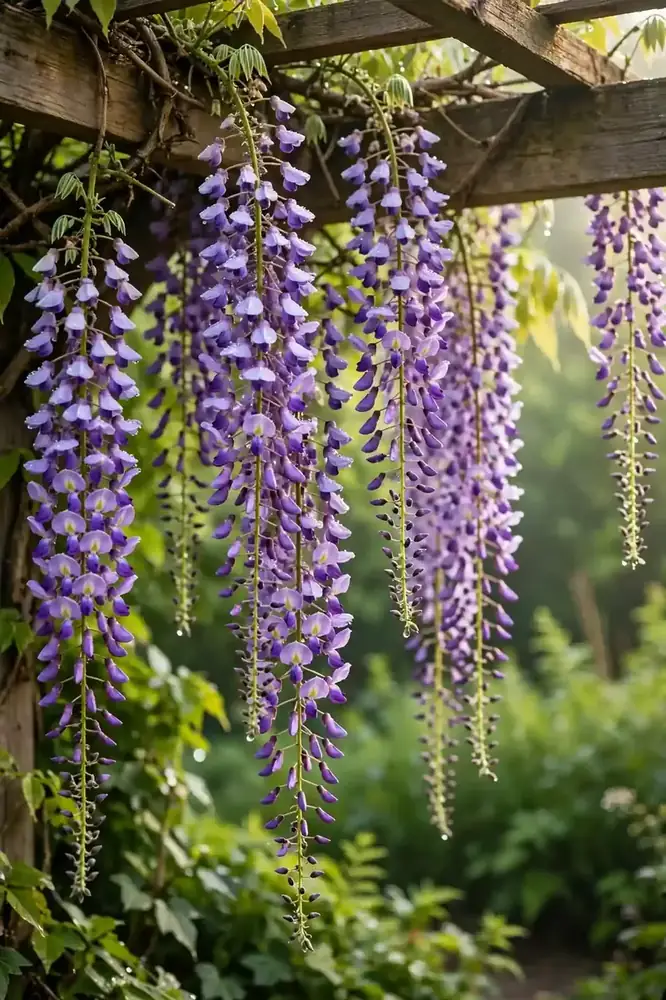
1. Wisteria (Wisteria sinensis)
Wisteria is the most famous flower that starts with W — and arguably the most romantic plant in gardening. Every May, Chinese wisteria drapes pergolas and old walls in hanging racemes of fragrant, pea-like blossoms in lavender-blue, with white and pink forms also available. It is a vigorous deciduous vine that can live for decades, even centuries, but vigor is the catch: left alone it will swallow gutters, fences, and neighboring trees. Give it full sun, a seriously strong support (steel or heavy timber, never a flimsy trellis), and prune twice a year — a summer trim to shorten whippy shoots and a winter cutback to two or three buds — and it will flower reliably for generations. Note that the seeds and pods are toxic if eaten.
Bloom: Late spring | Sun: Full sun | Zone: 5–8 | Best for: Pergolas, arbors, cottage gardens (with strong supports)
2. Japanese Wisteria (Wisteria floribunda)
Japanese wisteria takes everything Chinese wisteria does and stretches it: its flower racemes can hang three feet long — nearly twice the length of W. sinensis — and they open gradually from base to tip as the leaves emerge, creating a lovely two-tone effect. Colors run through violet-blue, pink, white, and reddish-purple, and the vine is slightly hardier, thriving in zones 4–9. It needs the same deal — full sun, a massive support, and ruthless twice-yearly pruning — and rewards patience: seed-grown plants can take a decade to bloom, so buy a grafted plant from a nursery to see flowers within a few years.
Bloom: Late spring | Sun: Full sun | Zone: 4–9 | Best for: Show-stopping pergolas, extra-long flower racemes
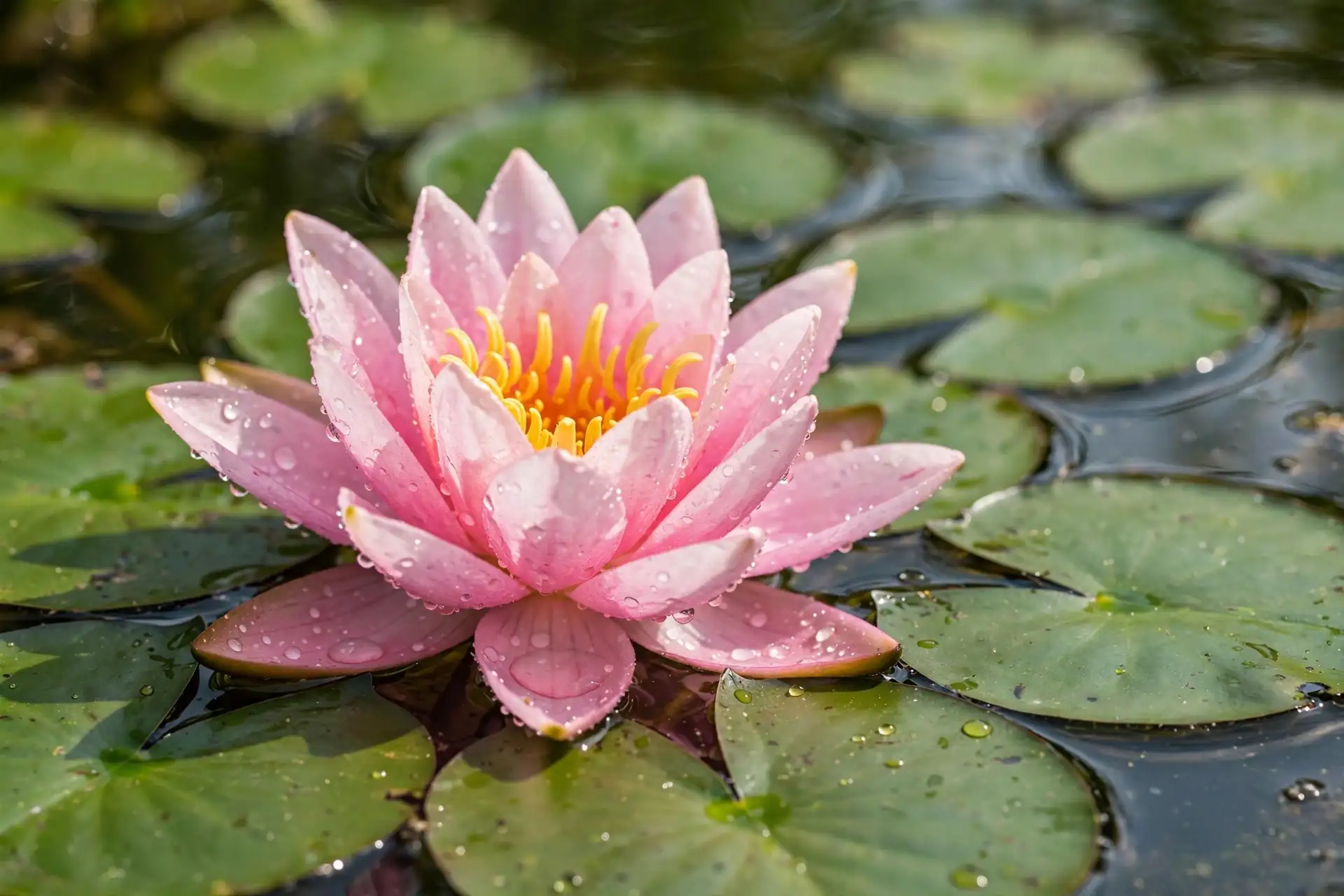
3. Water Lily (Nymphaea spp.)
Few sights beat a water lily floating on a still pond — perfect round pads and chalice-shaped blooms in white, pink, yellow, or red that open in the morning and close by afternoon. Hardy water lilies (such as Nymphaea odorata and its hybrids) survive winters in zones 4–10 and suit most backyard ponds; tropical types bloom bigger and more exotically but must be overwintered indoors or grown as annuals. Plant rhizomes in wide, shallow aquatic baskets of heavy loam, set the crown at soil level, and give them at least six hours of direct sun — shade means leaves but no flowers. Feed with slow-release aquatic fertilizer tablets pushed into the soil, never loose fertilizer in the water.
Bloom: Summer to fall | Sun: Full sun (6+ hours) | Zone: Hardy types 4–10; tropicals as annuals | Best for: Ponds, water gardens
4. Windflower (Anemone blanda)
Grecian windflower is one of spring’s first and finest small bulbs — low mounds of ferny foliage studded with daisy-like flowers in sky blue, white, and rose-pink that open in sunshine and nod closed at night. Native to the Balkans and Turkey, Anemone blanda naturalizes beautifully under deciduous trees, where it blooms before the canopy leafs out. Plant the knobby corms in fall, 2–3 inches deep, in soil that drains well but stays moist in spring, and soak the corms overnight before planting to wake them up. Hardy in zones 5–9, it spreads politely into generous drifts over the years.
Bloom: Early to mid spring | Sun: Full sun to part shade | Zone: 5–9 | Best for: Naturalizing, under trees, rock gardens
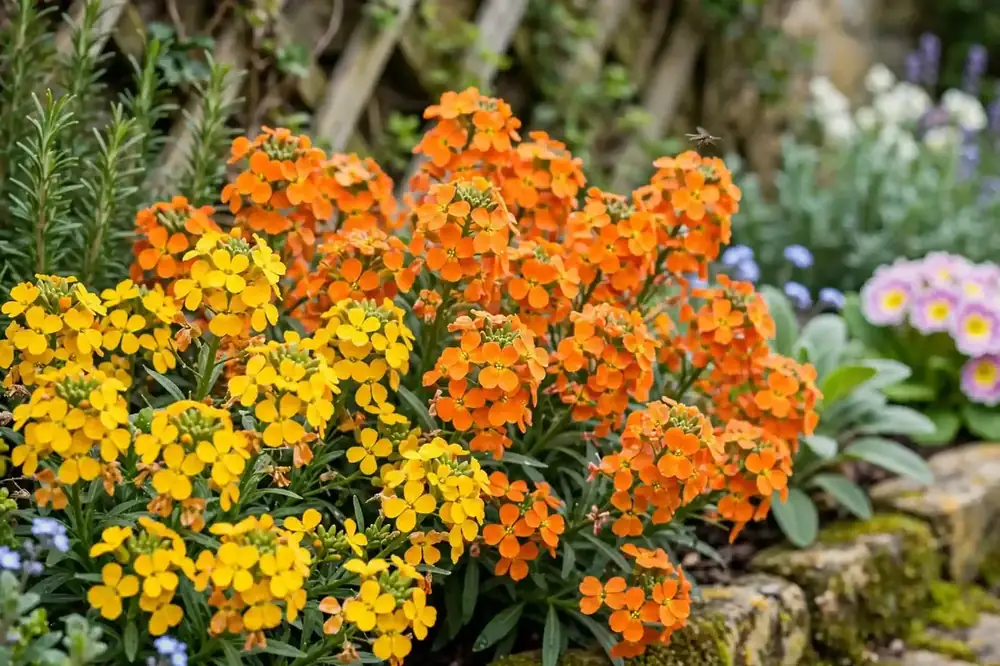
5. Wallflower (Erysimum cheiri)
Wallflowers are the unsung heroes of the spring garden — compact plants smothered in clusters of honey-scented flowers in burnt orange, gold, rust, and mahogany that bloom for weeks when little else does. Traditionally a biennial sown in summer for the following spring, Erysimum cheiri is hardy in zones 7–10 but usually grown as a spring annual in colder regions. Give it full sun and lean, well-drained soil; rich soil produces leaves at the expense of flowers. Deadhead to stretch the show, and plant it along paths or near doorways where you will catch the sweet, clove-like perfume.
Bloom: Spring | Sun: Full sun | Zone: 7–10; biennial/annual elsewhere | Best for: Fragrant spring borders, cottage gardens
6. Waxflower (Chamelaucium uncinatum)
Geraldton waxflower brings a piece of Western Australia to the garden — an evergreen shrub whose slender stems carry masses of small, waxy, long-lasting blooms in white, pink, and lavender from late winter into spring. Florists prize it as a filler flower because the waxy petals hold for weeks in arrangements. In the garden it wants full sun, sharply drained (even sandy) soil, and warm winters — hardy only in zones 9–10, so northern gardeners grow it in pots and bring it inside. Do not overwater or fertilize heavily; it evolved in poor soils and resents coddling.
Bloom: Late winter to spring | Sun: Full sun | Zone: 9–10 | Best for: Cut flowers, warm-climate gardens, containers
7. Weigela (Weigela florida)
Weigela is the easygoing shrub that anchors a thousand foundation plantings — and earns its place with a spectacular late-spring flush of trumpet-shaped flowers in pink, rose, red, or white that hummingbirds adore. Old-fashioned weigela (Weigela florida) and its many hybrids grow 3–6 feet tall in zones 4–8, tolerating full sun to part shade and most soils. Newer varieties add season-long interest with burgundy, gold, or variegated foliage. Prune right after flowering, since it blooms on old wood, and give it room — shearing it into a ball ruins its graceful arching habit.
Bloom: Late spring, often reblooms | Sun: Full sun to part shade | Zone: 4–8 | Best for: Foundation plantings, hummingbird gardens, hedges
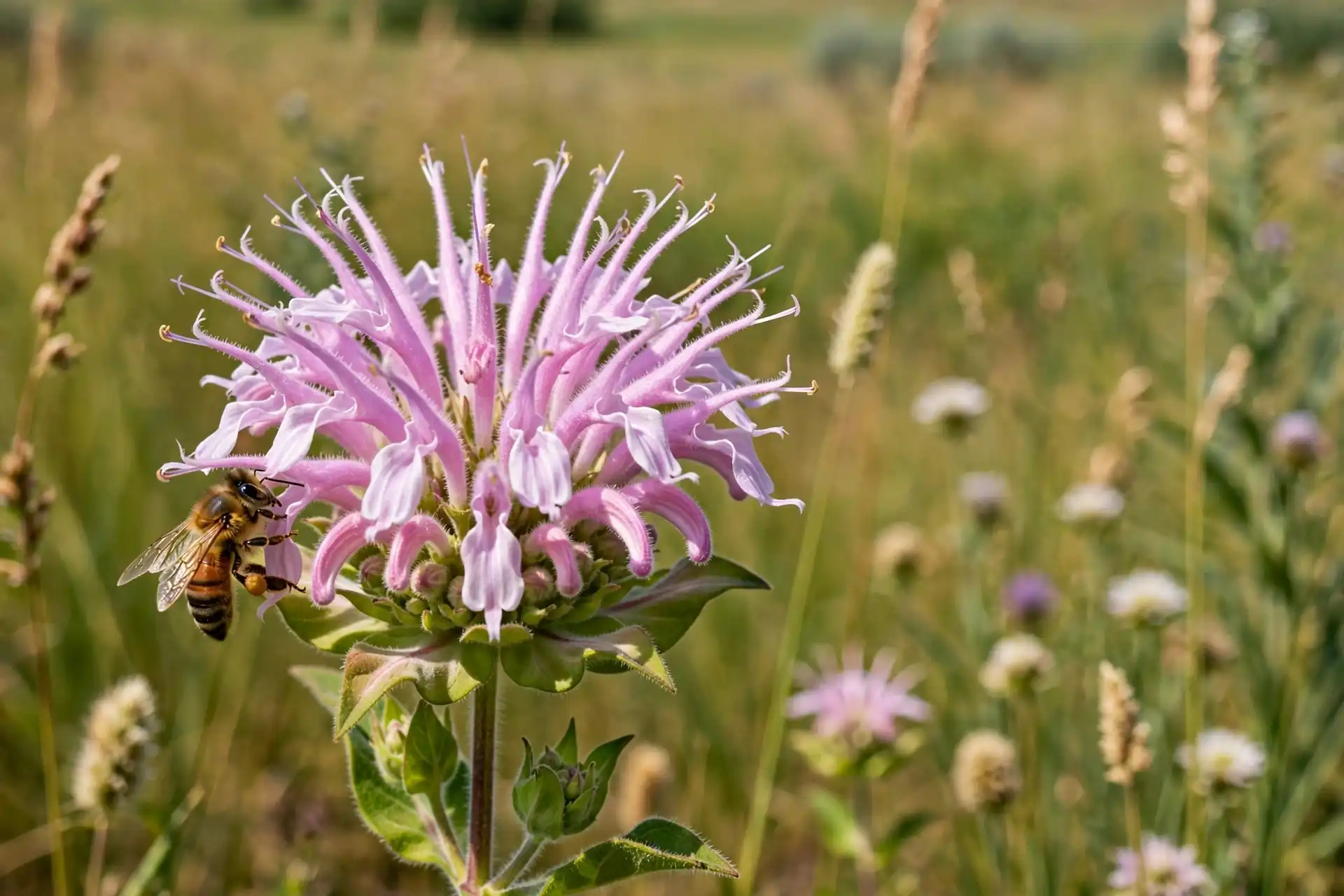
8. Wild Bergamot (Monarda fistulosa)
Wild bergamot is North America’s native bee balm — tall stems topped with shaggy, lavender-pink flower heads that look like tiny fireworks and smell faintly of Earl Grey tea when the foliage is crushed. A mint-family perennial hardy in zones 3–9, Monarda fistulosa feeds bees, butterflies, and hummingbirds through the heat of summer. Plant it in full sun to part shade with average soil; it tolerates clay and drought once established. Like all monardas it can get powdery mildew — give it air circulation, water at the base, and divide clumps every few years to keep it vigorous.
Bloom: Summer | Sun: Full sun to part shade | Zone: 3–9 | Best for: Native gardens, pollinators, meadow plantings
9. Wood Anemone (Anemone nemorosa)
Wood anemone carpets European woodlands each spring with nodding white stars — a sight gardeners elsewhere can recreate in shady corners. Anemone nemorosa spreads by creeping rhizomes into broad drifts of deeply cut foliage topped with white, sometimes pink-flushed, blooms in early spring. Plant rhizomes in fall in humus-rich, moisture-retentive soil in part to full shade; it goes dormant by midsummer, so pair it with ferns or hostas that fill in later. Hardy in zones 4–8. Be patient — drifts take a few years to build, but they are worth it.
Bloom: Early spring | Sun: Part to full shade | Zone: 4–8 | Best for: Woodland gardens, shade drifts
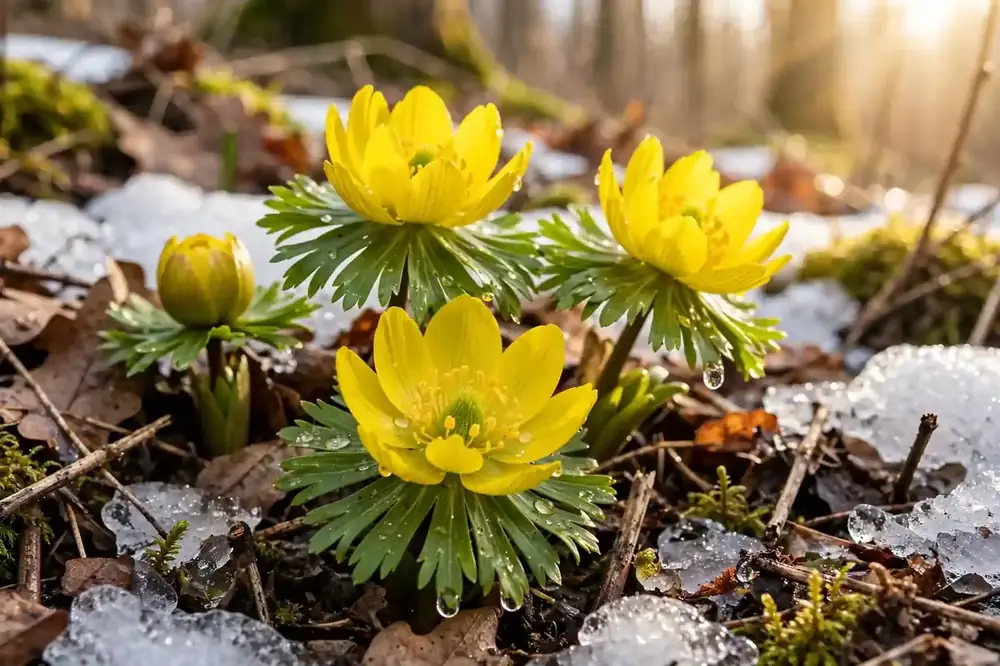
10. Winter Aconite (Eranthis hyemalis)
Winter aconite is proof that the gardening year starts earlier than you think — bright yellow, buttercup-like flowers ringed with a green ruff that push through snow in late winter, often blooming alongside snowdrops. This little tuberous perennial from southern Europe naturalizes into golden carpets under trees and shrubs in zones 4–9. Plant tubers in fall in humus-rich soil that stays moist in spring; like windflowers, they establish better if soaked overnight before planting. One caution: all parts, especially the tubers, are toxic if eaten, so wear gloves and keep them away from pets that dig.
Bloom: Late winter | Sun: Full sun to part shade | Zone: 4–9 | Best for: Earliest color, naturalizing under trees
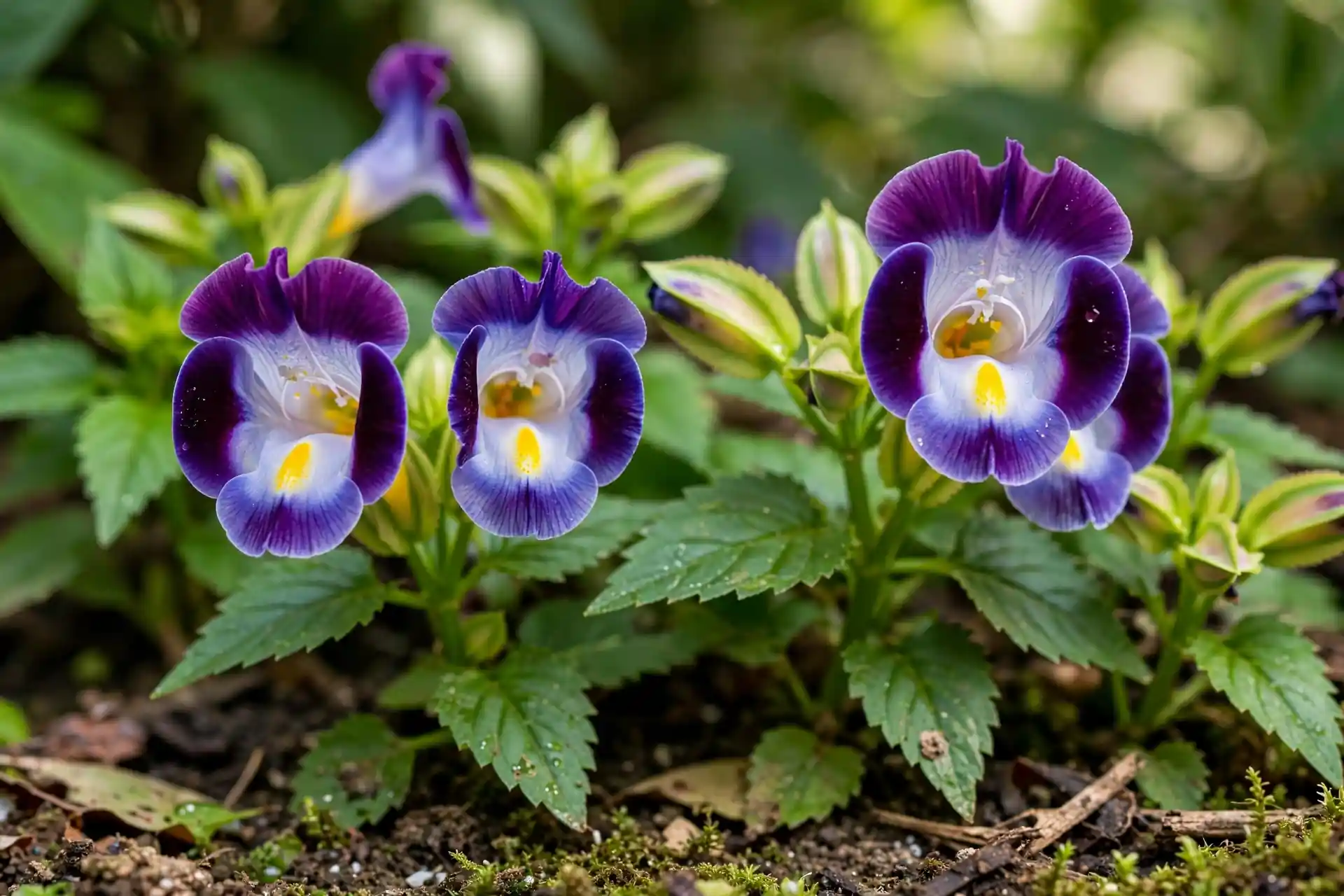
11. Wishbone Flower (Torenia fournieri)
Wishbone flower is the shade garden’s answer to petunias — trumpet-shaped blooms in blue, purple, pink, white, and yellow that flower nonstop from summer to frost without deadheading. Look inside the throat and you will see the curved stamens that give it its name, joined like a wishbone. Native to Asia, Torenia fournieri is grown as a tender annual, thriving in part shade with rich, moist soil where sun-loving annuals sulk. It is a superb choice for hanging baskets, window boxes, and the north side of the house. Pinch young plants once to encourage bushy growth.
Bloom: Summer to frost | Sun: Part shade | Zone: Grown as annual | Best for: Shade containers, hanging baskets
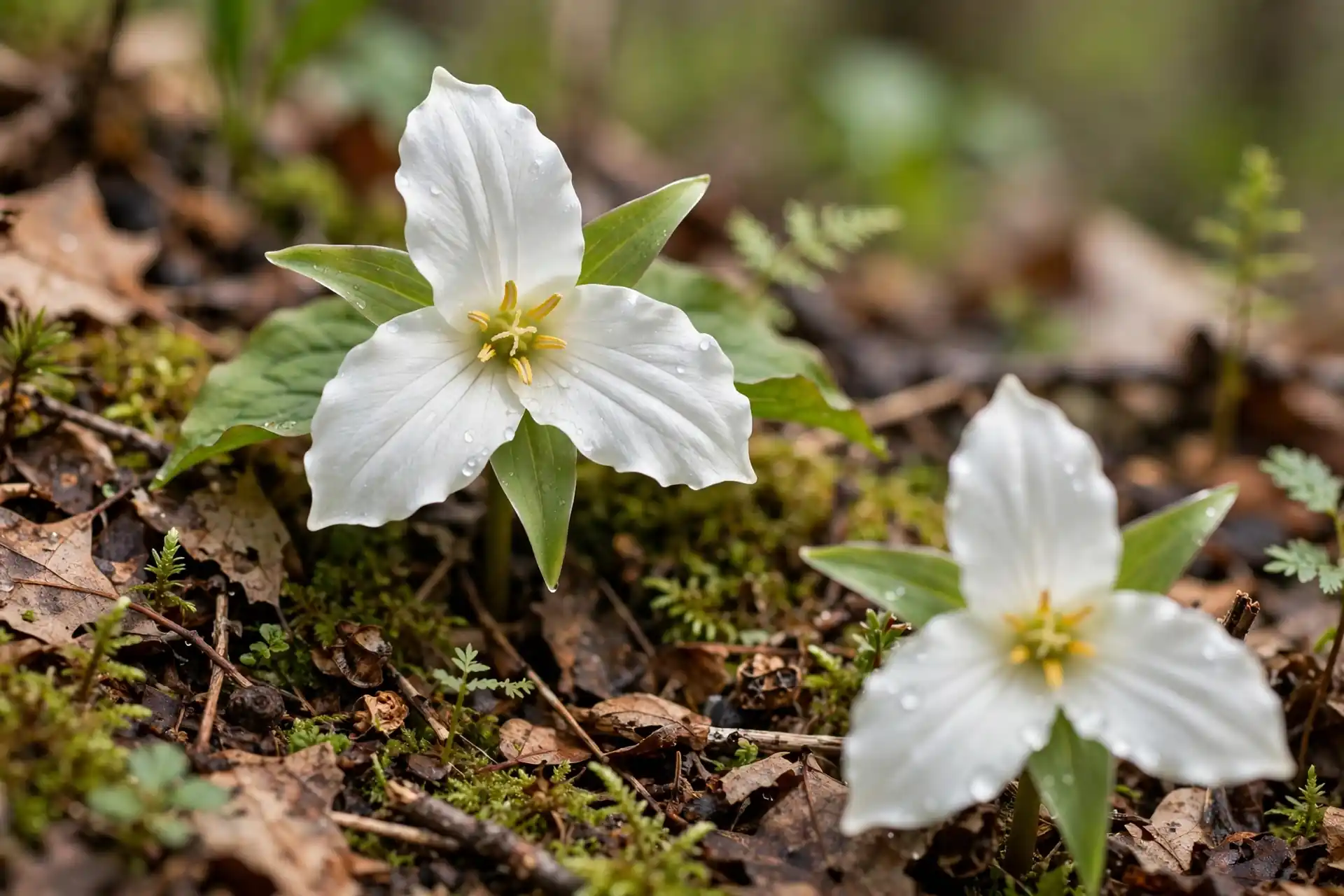
12. White Trillium (Trillium grandiflorum)
White trillium is the crown jewel of the eastern woodland — a single stem bearing three broad white petals (fading to pink with age) above a whorl of three leaves, blooming in mid-spring. Trillium grandiflorum is slow and precious: plants can take five to seven years to flower from seed, so buy nursery-grown plants and never collect from the wild. Give it rich, humusy soil in part to full shade and then leave it alone — trilliums resent disturbance. Hardy in zones 4–8. Never pick the flower; removing the leaves starves the rhizome and can kill the plant.
Bloom: Mid spring | Sun: Part to full shade | Zone: 4–8 | Best for: Woodland gardens, native plantings
13. Wild Indigo (Baptisia australis)
Blue false indigo is a prairie aristocrat — in late spring, 3- to 4-foot spires of indigo-blue pea flowers rise above blue-green foliage, followed by attractive black seed pods that rattle in the fall wind. Baptisia australis is one of the toughest, longest-lived perennials you can plant: its deep taproot makes it drought-proof and deer-resistant, and established clumps can thrive for decades in zones 3–9. Full sun and well-drained soil are all it asks. Plant it once and never move it — that taproot resents transplanting. White (B. alba) and yellow (B. sphaerocarpa) cousins extend the palette.
Bloom: Late spring to early summer | Sun: Full sun | Zone: 3–9 | Best for: Prairie gardens, low-maintenance borders
14. Watsonia (Watsonia borbonica)
Watsonia brings gladiola-like drama to warm gardens — tall, sword-shaped leaves and summer spikes of funnel-shaped flowers in pink, salmon, orange, or white, each bloom lasting for days. This South African corm is a cousin of gladiolus and wants similar care: full sun, well-drained soil, and a dry winter rest. Hardy in zones 8–10, it can be grown in colder regions if the corms are lifted in fall like gladioli. Plant corms 4–5 inches deep in spring and let clumps build undisturbed; they flower best when slightly crowded.
Bloom: Summer | Sun: Full sun | Zone: 8–10 | Best for: Warm-climate borders, cut flowers
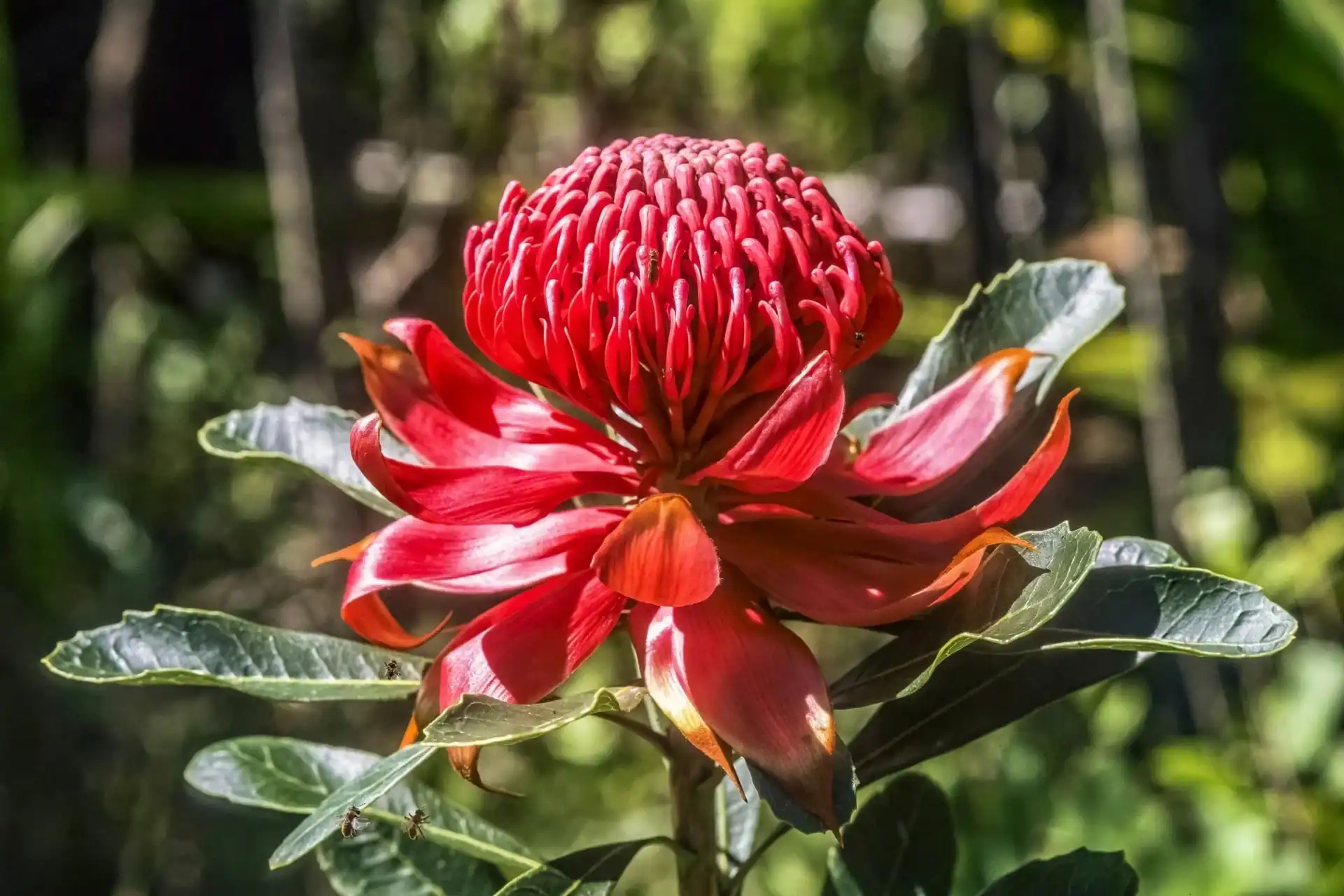
15. Waratah (Telopea speciosissima)
The waratah is Australia’s floral showpiece — a large, crimson, dome-shaped bloom (technically a dense cluster of hundreds of tiny flowers) rising above glossy evergreen foliage in spring. As the floral emblem of New South Wales, Telopea speciosissima carries serious garden drama, and protea-family relatives come in pink and white too. It needs full sun to part shade, sharply drained acidic soil, and warm winters (zones 9–10); it hates phosphorus-heavy fertilizers and wet feet. A challenge outside mild climates, but unforgettable where it thrives.
Bloom: Spring | Sun: Full sun to part shade | Zone: 9–10 | Best for: Statement shrubs, Australian native gardens
16. Winter Jasmine (Jasminum nudiflorum)
Winter jasmine is the shrub that blooms when nothing else dares — cheerful yellow flowers opening on bare green stems from late winter, weeks before forsythia. Jasminum nudiflorum is a scrambling deciduous shrub from China, hardy in zones 6–10, that looks best trained against a wall or spilling over a bank. Unlike its summer cousins it is not fragrant, but the winter color more than compensates. Give it full sun to part shade and prune after flowering, since it blooms on the previous year’s wood. Nearly indestructible once established.
Bloom: Late winter | Sun: Full sun to part shade | Zone: 6–10 | Best for: Winter color, walls and banks
17. White Snakeroot (Ageratina altissima)
White snakeroot lights up the late-season shade garden with fluffy clusters of bright white flowers from late summer into fall, feeding bees and butterflies when little else blooms. This adaptable eastern North American native (zones 3–8) tolerates dry shade once established — a rare and valuable trait. But it comes with a serious warning: all parts contain tremetol, the toxin behind “milk sickness” that killed Abraham Lincoln’s mother. Admire it in the back of the border, wear gloves when handling, and never plant it where livestock graze or where curious children play.
Bloom: Late summer to fall | Sun: Part shade | Zone: 3–8 | Best for: Late-season shade color (toxic — handle with care)
18. Wood Lily (Lilium philadelphicum)
Wood lily is North America’s native answer to the Asiatic lily — upward-facing, cup-shaped blooms in vivid orange-red spotted with maroon, rising 1–3 feet above whorled leaves in early summer. Lilium philadelphicum grows wild from the Rockies to the East Coast in sandy, well-drained soils, hardy in zones 3–8. In the garden, give it full sun to light shade and excellent drainage; it dislikes heavy clay and competition from aggressive neighbors. It is endangered or threatened in several states, so always buy from reputable native-plant nurseries and never dig plants from the wild.
Bloom: Early to midsummer | Sun: Full sun to part shade | Zone: 3–8 | Best for: Native gardens, naturalized meadows
19. Water Hyacinth (Eichhornia crassipes)
Water hyacinth produces genuinely beautiful flowers — spikes of soft lavender-blue blooms with a yellow eye, floating on glossy rosettes — and it is also one of the world’s most invasive aquatic weeds, choking waterways across the tropics. If you grow it (zones 9–11, or as a summer annual elsewhere), keep it strictly contained in a tub or barrel pond with no outlet to natural water, and never compost or release it. Many states restrict or ban it, so check local regulations first. In the right contained setup it is a fast, free-floating pond ornamental; outside one, it is an ecological disaster.
Bloom: Summer to fall | Sun: Full sun | Zone: 9–11; annual elsewhere — check local laws | Best for: Contained tub ponds only
20. Wild Rose (Rosa acicularis)
The prickly wild rose is the tough, thorny ancestor behind many garden roses — single pink blooms with golden centers in late spring, followed by brilliant red hips that feed birds through winter. Rosa acicularis ranges across the far north of North America, Asia, and Europe, shrugging off zone 2 winters that kill hybrid teas outright. Give it full sun and room to form a thicket; it suckers freely, which makes it superb for wildlife hedges and erosion control but a bully in small beds. The vitamin-rich hips make excellent tea and jelly.
Bloom: Late spring to summer | Sun: Full sun | Zone: 2–7 | Best for: Wildlife hedges, cold climates, rose hips
21. Wahlenbergia (Wahlenbergia gloriosa)
Royal bluebell is Australia’s answer to the harebell — delicate, bell-shaped flowers in an intense royal blue on wiry stems through spring and summer. Wahlenbergia gloriosa, the floral emblem of the Australian Capital Territory, forms a low, spreading perennial for rock gardens, crevices, and the front of borders in zones 8–10. Give it full sun to part shade and well-drained, slightly acidic soil; it dislikes winter wet. Where winters are cold, grow it in an alpine trough or pot that can be sheltered. The pure blue is a color few perennials can match.
Bloom: Spring to summer | Sun: Full sun to part shade | Zone: 8–10 | Best for: Rock gardens, true-blue color
22. Winecup (Callirhoe involucrata)
Winecup — also called purple poppy mallow — is a prairie native that pours magenta, cup-shaped flowers over sprawling stems from late spring into summer, each bloom like a miniature wine glass. Callirhoe involucrata thrives on neglect: full sun, poor to average well-drained soil, and drought once established in zones 4–8. Its deep taproot makes it a permanent resident, so plant it where it can stay and let it weave through grasses and other prairie plants. Excellent in hot, dry spots where fussier flowers fry.
Bloom: Late spring to summer | Sun: Full sun | Zone: 4–8 | Best for: Prairie gardens, hot dry spots, groundcover
23. Woolly Bluecurls (Trichostema lanatum)
Woolly bluecurls is a California chaparral original with serious charisma — dense spikes of fuzzy, blue-violet flowers with long curled stamens, blooming over aromatic, rosemary-like evergreen foliage in spring and summer. Trichostema lanatum wants exactly what its homeland offers: full sun, sharp drainage, and no summer water once established (zones 8–10). It is short-lived — typically 3 to 5 years — but self-sows, and crushing the leaves releases a pungent, sage-like scent. A standout for native and drought-tolerant gardens in mild-winter regions.
Bloom: Spring to summer | Sun: Full sun | Zone: 8–10 | Best for: Drought-tolerant gardens, California natives
24. Western Bleeding Heart (Dicentra formosa)
Western bleeding heart brings the beloved bleeding-heart look to mild, moist shade — arching stems of pink, heart-shaped flowers with white tips blooming over ferny, blue-green foliage from spring into early summer. Dicentra formosa, native to the Pacific Northwest, is tougher and longer-blooming than its eastern cousin, thriving in part to full shade with rich, moist soil in zones 4–8. Unlike the old-fashioned bleeding heart it rarely goes fully dormant, giving months of interest. Lovely under trees, along north-facing foundations, and in woodland gardens.
Bloom: Spring to early summer | Sun: Part to full shade | Zone: 4–8 | Best for: Shade gardens, woodland edges
25. White Baneberry (Actaea pachypoda)
White baneberry earns its keep twice: first with fluffy white flower clusters in late spring, then with its famous “doll’s eyes” — white berries with a dark pupil-like dot on red stalks in late summer. Actaea pachypoda is a refined woodland perennial for part to full shade and rich, moist soil in zones 3–8. The catch: those striking berries are highly toxic if eaten, so plant it in the back of the shade border, out of reach of children and pets. The foliage and form are lovely enough that the berries are a bonus for the careful gardener.
Bloom: Late spring (berries in late summer) | Sun: Part to full shade | Zone: 3–8 | Best for: Woodland gardens — berries toxic, plant with care
26. Wild Ginger (Asarum canadense)
Let’s be honest about wild ginger: you do not grow it for the flowers. Its curious little maroon-brown, jug-shaped blooms hide at ground level beneath the leaves in spring, pollinated by beetles and ants rather than bees. You grow Asarum canadense for the foliage — heart-shaped, velvety leaves forming a lush, weed-smothering carpet in deep shade where almost nothing else thrives. Hardy in zones 4–6, it wants rich, moist, humusy soil and spreads steadily by rhizomes. A workhorse groundcover for the darkest corners of the woodland garden.
Bloom: Spring (tiny, at ground level) | Sun: Part to full shade | Zone: 4–6 | Best for: Deep-shade groundcover
27. White Turtlehead (Chelone glabra)
White turtlehead is a late-season lifesaver for wet spots — stiff spikes of white, snapdragon-like flowers (each bud really does look like a turtle’s head) blooming from late summer into fall. Chelone glabra, native to eastern North American wetlands, thrives in full sun to part shade in consistently moist to wet soil — even standing water at a pond’s edge — in zones 3–8. It is also the essential host plant for the Baltimore checkerspot butterfly: plant it and you may get caterpillars, which is the whole point. Cut back in late fall for tidy spring regrowth.
Bloom: Late summer to fall | Sun: Full sun to part shade | Zone: 3–8 | Best for: Rain gardens, pond edges, butterflies
28. Wood Poppy (Stylophorum diphyllum)
Wood poppy — also called celandine poppy — lights up the spring shade garden with large, golden-yellow, poppy-like flowers over several weeks, each bloom holding bright orange-yellow stamens. Stylophorum diphyllum is an eastern North American woodland native for part shade and humus-rich soil in zones 4–9, forming handsome clumps that self-sow politely. Unlike true poppies it tolerates — even prefers — shade, and the blue-green lobed foliage stays attractive after bloom. Pair it with ferns, wild ginger, and foamflower for a classic woodland composition.
Bloom: Spring | Sun: Part shade | Zone: 4–9 | Best for: Woodland gardens, spring color in shade
29. Water Poppy (Hydrocleys nymphoides)
- Bloom: Summer to fall | Sun: Full sun | Zone: 9–11; tub pond elsewhere | Best for: Tub ponds, containers, tropical water gardens
- Note: New entry — bloom, sun and zone NOT independently verified.
Water poppy is the water lily for people without a pond — a tropical floating plant that sends up cheerful, three-petaled yellow flowers from summer to fall. Hydrocleys nymphoides roots in submerged pots of heavy soil while its glossy, round leaves rest on the surface. It needs full sun, warm water, and a tub or container pond at least a foot deep. In zones 9–11 it can stay out year-round; everywhere else, overwinter the tuberous roots indoors in damp sand and replant after the water warms in late spring.
30. White Water Lily (Nymphaea alba)
- Bloom: Summer | Sun: Full sun | Zone: 4–10 | Best for: Ponds, fragrant white blooms
- Note: New entry — bloom, sun and zone NOT independently verified. A species distinct from the general entry (Water Lily, #3), which covers Nymphaea spp. including hybrids.
The white water lily is the wild ancestor behind countless hybrids — a European and North African native with pure white, sweetly fragrant blooms floating among dark green pads in summer. Nymphaea alba is hardy to zone 4 and needs still, full-sun water at least 18 inches deep, planted in a basket of heavy loam so the rhizome stays put. Divide crowded crowns every few years in spring. It will happily share a pond with the tropicals in entry #3 if your summers are hot.
31. Western Wallflower (Erysimum capitatum)
- Bloom: Spring to early summer | Sun: Full sun | Zone: 4–9 | Best for: Native borders, rock gardens, pollinators
- Note: New entry — bloom, sun and zone NOT independently verified. A species distinct from the general entry (Wallflower, #5), which covers Erysimum cheiri.
Western wallflower is the rugged North American cousin of the garden wallflower — tall spikes of fragrant orange, yellow, or brick-red blooms on a short-lived perennial from spring into early summer. Erysimum capitatum thrives in lean, well-drained soil with full sun and is a magnet for native bees and butterflies. Let it self-sow for a permanent, shifting colony in rock gardens and meadow edges; deadhead if you want a second flush.
32. White Wild Indigo (Baptisia alba)
- Bloom: Late spring to early summer | Sun: Full sun | Zone: 3–9 | Best for: White prairie gardens, low-maintenance borders
- Note: New entry — bloom, sun and zone NOT independently verified. A species distinct from the general entry (Wild Indigo, #13), which covers Baptisia australis.
White wild indigo brings ghostly white spires to the prairie palette — tall, pea-like flower spikes on blue-green foliage in late spring. Baptisia alba is as tough and long-lived as its blue cousin, with the same deep taproot that hates disturbance: plant it once and leave it alone. The charcoal-black seed pods that follow are striking in fall arrangements. Site it in full sun and average, well-drained soil.
33. White Wood Aster (Eurybia divaricata)
- Bloom: Late summer to fall | Sun: Part to full shade | Zone: 3–8 | Best for: Woodland edges, fall shade color
- Note: New entry — bloom, sun and zone NOT independently verified.
White wood aster solves the hardest garden problem: color in dry shade in fall. Clouds of small white daisies with yellow centers float over dark stems from late summer to frost, feeding late-season pollinators. Eurybia divaricata spreads by rhizomes into handsome drifts at woodland edges in zones 3–8 and tolerates the root competition of trees. Cut it back by half in early summer for bushier plants with more blooms.
34. Woolly Mullein (Verbascum thapsus)
- Bloom: Summer | Sun: Full sun | Zone: 3–9 | Best for: Cottage gardens, drought-tolerant borders
- Note: New entry — bloom, sun and zone NOT independently verified.
Woolly mullein — common mullein — is a biennial that earns its keep with architecture: a first-year rosette of huge, silvery-woolly leaves, then a towering second-year spike of yellow flowers that can reach 6 feet. Verbascum thapsus self-sows freely in poor, well-drained soil with full sun and shrugs off drought. It reads as a weed only if you let it; give it a deliberate spot at the back of a cottage border and it becomes sculpture.
35. Wild Carrot (Daucus carota)
- Bloom: Summer | Sun: Full sun | Zone: 3–9 | Best for: Meadows, cottage gardens, pollinators
- Note: New entry — bloom, sun and zone NOT independently verified.
Wild carrot — Queen Anne’s lace — is the ancestor of every garden carrot, wearing flat-topped white umbels, often with a single dark floret at the center, all summer. Daucus carota is a biennial that self-sows in meadows and cottage gardens, feeding a parade of beneficial insects and swallowtail caterpillars. Give it full sun and lean soil; in rich soil it grows rank and flops. Deadhead to control its enthusiasm.
36. Wild Quinine (Parthenium integrifolium)
- Bloom: Summer | Sun: Full sun to part shade | Zone: 4–8 | Best for: Native borders, pollinators, rain gardens
- Note: New entry — bloom, sun and zone NOT independently verified.
Wild quinine is a prairie workhorse with an old medicinal name — sturdy stems topped all summer with flat clusters of small white flowers. Parthenium integrifolium tolerates clay, drought, and neglect in zones 4–8, making it a reliable backbone for native borders and rain gardens. The blooms attract a crowd of pollinators, and the seed heads add winter structure. Despite the name, it contains no quinine and is not a malaria treatment.
37. White Beebalm (Monarda clinopodia)
- Bloom: Summer | Sun: Full sun to part shade | Zone: 4–9 | Best for: White native gardens, pollinators
- Note: New entry — bloom, sun and zone NOT independently verified. A species distinct from the general entry (Wild Bergamot, #8), which covers Monarda fistulosa.
White beebalm is the cool, woodland-edge cousin of wild bergamot — shaggy white flower heads in summer on a clump-forming native of the eastern woodlands. Monarda clinopodia tolerates more shade and moisture than its prairie relatives and is notably mildew-resistant, a welcome trait in the genus. Plant it in rich, moist soil with good air circulation and let the bees do the rest.
38. White Meadowfoam (Limnanthes alba)
- Bloom: Spring | Sun: Full sun | Zone: Hardy annual | Best for: Vernal pools, meadows, pollinators
- Note: New entry — bloom, sun and zone NOT independently verified.
White meadowfoam carpets western vernal pools each spring with cupped white blooms streaked yellow at the base — a true wildflower spectacle in miniature. Limnanthes alba is a hardy annual that germinates with fall rains, blooms in spring, and sets seed before summer drought. Sow directly in fall in a sunny, winter-wet spot; it wants no coddling, just seasonal moisture and lean soil. A superb early nectar source for native bees.
39. White Hellebore (Veratrum album)
- Bloom: Summer | Sun: Part to full shade | Zone: 4–7 | Best for: Woodland gardens, bold foliage — plant with caution (toxic)
- Note: New entry — bloom, sun and zone NOT independently verified.
White hellebore is not a true hellebore at all — it is false hellebore, a statuesque woodland perennial with pleated, hosta-like leaves and tall summer plumes of starry white-green flowers. Veratrum album makes a dramatic foliage anchor for moist, shady spots in zones 4–7. But every part is seriously toxic, so plant it where children and pets will not browse, and wear gloves when handling. The similar American species (V. viride) is equally dangerous.
40. Winter Hazel (Corylopsis pauciflora)
- Bloom: Late winter to early spring | Sun: Full sun to part shade | Zone: 6–8 | Best for: Winter fragrance, foundation plantings
- Note: New entry — bloom, sun and zone NOT independently verified.
Buttercup winter hazel is a compact deciduous shrub that dangles pale yellow, sweetly fragrant bells in late winter, weeks before forsythia wakes up. Corylopsis pauciflora grows 4–6 feet in zones 6–8 with an elegant layered habit and clean blue-green foliage that turns gold in fall. Site it in shelter from harsh wind, in moist, acidic soil, near a path where the primrose scent can be savored.
41. Winter Sweet (Chimonanthus praecox)
- Bloom: Winter | Sun: Full sun to part shade | Zone: 6–9 | Best for: Winter fragrance, entry gardens
- Note: New entry — bloom, sun and zone NOT independently verified.
Wintersweet is the shrub that makes gardeners brave January — waxy, translucent yellow blooms with maroon centers opening on bare stems, perfuming the cold air with a spicy-sweet scent. Chimonanthus praecox is a large deciduous shrub for zones 6–9 that wants full sun to part shade and well-drained soil. Plant it near a door or window, because its winter flowers demand to be smelled, not just seen.
42. White Coral Pea (Hardenbergia violacea ‘Alba’)
- Bloom: Spring | Sun: Full sun | Zone: 9–11; houseplant elsewhere | Best for: Trellises, hanging baskets, containers
- Note: New entry — bloom, sun and zone NOT independently verified.
White coral pea is the albino form of Australia’s happy wanderer vine — cascades of pea-like white blooms smothering an evergreen climber in spring. Hardenbergia violacea ‘Alba’ scrambles 10–16 feet over trellises and arbors in zones 9–11; elsewhere, grow it in a container and overwinter indoors in bright light. Give it full sun, sharp drainage, and a hard prune after flowering to keep it dense.
43. Watermelon Begonia (Pellionia repens)
- Bloom: Rarely (grown for foliage) | Sun: Bright indirect light | Zone: Houseplant | Best for: Hanging baskets, terrariums, shade containers
- Note: New entry — bloom, sun and zone NOT independently verified.
Watermelon begonia is grown for its leaves, not its flowers — trailing stems of quilted, watermelon-rind-patterned foliage in green, silver, and bronze. Pellionia repens is a tropical trailer for hanging baskets and terrariums that wants bright indirect light, high humidity, and evenly moist soil. Pinch regularly to keep it bushy, and keep it away from cold drafts. Its tiny pinkish blooms are a footnote.
44. Wandering Heart (Callisia repens)
- Bloom: Rarely (grown for foliage) | Sun: Bright indirect light to part shade | Zone: Houseplant | Best for: Hanging baskets, groundcover in warm climates
- Note: New entry — bloom, sun and zone NOT independently verified.
Wandering heart — turtle vine — is a fast, forgiving trailer of small, heart-shaped green leaves, sometimes flushed purple beneath, spilling from baskets and pots. Callisia repens tolerates neglect that would kill fussier houseplants: bright indirect light to part shade, average water, and a haircut when it gets leggy. Outdoors it is hardy only in frost-free zones, where it can become enthusiastic groundcover — contain it.
45. Wild Strawberry (Fragaria virginiana)
- Bloom: Spring (white blooms) | Sun: Full sun to part shade | Zone: 3–8 | Best for: Edible groundcover, native gardens
- Note: New entry — bloom, sun and zone NOT independently verified.
Wild strawberry earns its place with simple white spring flowers that become intensely flavored — if tiny — red berries. Fragaria virginiana is a North American native groundcover for zones 3–8 that spreads by runners into a weed-smothering mat in sun to part shade. The berries are small but unforgettable, and the plant feeds native pollinators and birds alike. Mow or shear old foliage in early spring to refresh the patch.
46. White Evening Primrose (Oenothera pallida)
- Bloom: Summer (opens at dusk) | Sun: Full sun | Zone: 4–9 | Best for: Evening gardens, native borders, moon gardens
- Note: New entry — bloom, sun and zone NOT independently verified.
White evening primrose is a moon-garden star — large white cups that open at dusk in summer, glowing in the twilight and perfuming the night air for moths. Oenothera pallida is a western North American native for lean, sandy soil and full sun in zones 4–9. It self-sows politely and needs no water once established. Plant it where you sit on summer evenings.
47. Whorled Loosestrife (Lysimachia quadrifolia)
- Bloom: Summer | Sun: Full sun to part shade | Zone: 4–9 | Best for: Native borders, rain gardens, naturalized areas
- Note: New entry — bloom, sun and zone NOT independently verified.
Whorled loosestrife is the well-behaved native loosestrife — whorls of narrow leaves up the stem, each axil holding a starry yellow flower in summer. Lysimachia quadrifolia forms tidy clumps in zones 4–9 without the thuggish spreading of its purple cousin. It suits native borders, rain gardens, and naturalized areas in average to moist soil. Not to be confused with the invasive purple loosestrife (Lythrum salicaria).
48. Wreath Goldenrod (Solidago caesia)
- Bloom: Late summer to fall | Sun: Part shade | Zone: 4–8 | Best for: Woodland edges, fall color in shade
- Note: New entry — bloom, sun and zone NOT independently verified.
Wreath goldenrod — blue-stemmed goldenrod — breaks the goldenrod rules: it blooms in part shade, along arching blue-gray stems wreathed with small yellow flower clusters in late summer and fall. Solidago caesia is a refined eastern woodland native for zones 4–8 that never runs aggressively. It is a top-tier late pollinator plant and pairs beautifully with white wood aster (#33) at the woodland edge.
49. Wright’s Skullcap (Scutellaria wrightii)
- Bloom: Spring to summer | Sun: Full sun | Zone: 7–10 | Best for: Rock gardens, native borders, pollinators
- Note: New entry — bloom, sun and zone NOT independently verified.
Wright’s skullcap is a Texas native charmer — low mounds of small gray-green leaves studded with violet-blue, snapdragon-like flowers from spring into summer. Scutellaria wrightii wants full sun, lean well-drained soil, and heat, thriving in zones 7–10 where fussier perennials fade. It is compact enough for rock gardens and front-of-border, and native bees work the blooms steadily. Shear after the first flush for rebloom.
50. Water Canna (Thalia dealbata)
- Bloom: Summer | Sun: Full sun | Zone: 6–10; tub pond elsewhere | Best for: Pond margins, rain gardens, tropical look
- Note: New entry — bloom, sun and zone NOT independently verified.
Powdery alligator-flag — water canna — brings a tropical silhouette to temperate ponds: tall stems of blue-green, canna-like leaves dusted white, topped with violet-blue flower spikes in summer. Thalia dealbata roots in shallow water or boggy soil in full sun and is hardy to zone 6 with mulch; north of that, lift the rhizomes like dahlias. It anchors pond margins and rain gardens with serious architectural presence.
51. Water Snowflake (Nymphoides indica)
- Bloom: Summer to fall | Sun: Full sun | Zone: 9–11; tub pond elsewhere | Best for: Tub ponds, containers, floating flowers
- Note: New entry — bloom, sun and zone NOT independently verified.
Water snowflake is a dainty floating beauty — small, fringed white flowers with yellow centers held just above lily-pad-like leaves from summer to fall. Nymphoides indica suits small tub ponds and containers where true water lilies would overwhelm, rooting in submerged pots in full sun. In zones 9–11 it is perennial; elsewhere, treat it as an annual or overwinter indoors. Check local regulations, as some Nymphoides species are weedy.
52. Water Hawthorn (Aponogeton distachyos)
- Bloom: Fall to spring (cool water) | Sun: Full sun | Zone: 7–10 | Best for: Ponds, cool-season water color
- Note: New entry — bloom, sun and zone NOT independently verified.
Water hawthorn — Cape pondweed — is the pond plant that blooms when others rest: fragrant white flower spikes on the water’s surface from fall through spring in cool water. Aponogeton distachyos goes dormant in summer heat and wakes as temperatures drop, a perfect complement to summer-blooming lilies. It needs full sun and still water in zones 7–10 and naturalizes gently where happy. A South African native with old-fashioned charm.
53. Water Forget-Me-Not (Myosotis scorpioides)
- Bloom: Late spring to summer | Sun: Full sun to part shade | Zone: 4–9 | Best for: Pond edges, rain gardens, stream banks
- Note: New entry — bloom, sun and zone NOT independently verified.
Water forget-me-not edges ponds with the same sky-blue, yellow-eyed blooms as its woodland cousin — but it loves wet feet. Myosotis scorpioides creeps along pond margins, stream banks, and rain gardens in zones 4–9, blooming from late spring into summer. It self-sows freely in moist soil, so give it room or deadhead. A classic cottage-garden edger that doubles as a pollinator plant.
54. White Prairie Clover (Dalea candida)
- Bloom: Summer | Sun: Full sun | Zone: 3–8 | Best for: Native meadows, pollinators, prairie gardens
- Note: New entry — bloom, sun and zone NOT independently verified.
White prairie clover lifts elegant white flower cylinders above fine, feathery foliage all summer — a legume that feeds the soil while it feeds the bees. Dalea candida is a deep-rooted prairie native for zones 3–8 that fixes nitrogen, tolerates drought, and never needs fertilizer. Plant it in full sun in well-drained soil and leave the seed heads for goldfinches. Its purple cousin (D. purpurea) is equally garden-worthy.
55. White Gentian (Gentiana alba)
- Bloom: Late summer to fall | Sun: Full sun to part shade | Zone: 3–8 | Best for: Native borders, prairie gardens, fall color
- Note: New entry — bloom, sun and zone NOT independently verified.
White gentian — cream gentian — closes the list with late-season grace: clusters of creamy-white, never-quite-opening blooms atop sturdy stems from late summer into fall. Gentiana alba is a prairie and savanna native for zones 3–8 that bumblebees pry open with enthusiasm. It resents disturbance, so plant it once in moist, well-drained soil and let it settle. A quiet, long-lived perennial for the native border’s final act.
Growing Tips for W-Flowers
With 55 very different W-flowers on this list, a few universal rules will set you up for success no matter which ones you choose.
Match the plant to your zone and sun before you fall in love. Check the hardiness zones in the table above before you buy. Warm-climate W-flowers like waxflower, waratah, watsonia, woolly bluecurls, and wahlenbergia cannot survive freezing winters outdoors — grow them in pots you can shelter or treat as seasonal stars. Hardy natives like wild bergamot, wild indigo, winecup, white turtlehead, and wood poppy sail through cold winters with no help, while wishbone flower and tropical water lilies are grown as annuals almost everywhere.
Respect wisteria’s strength. Both wisterias on this list are magnificent and both are thugs. Never train one on a flimsy trellis or against a house without a heavy-duty support — mature vines can crush gutters and warp pergolas. Prune twice a year: shorten the long whippy shoots in summer, then cut side shoots back to two or three buds in winter to concentrate flowering. And buy a grafted plant rather than growing from seed unless you enjoy waiting a decade for first bloom.
Handle the toxic beauties with care. White snakeroot (tremetol poisoning), white baneberry berries, and winter aconite tubers are all genuinely dangerous if eaten, and wisteria seeds and pods are toxic too. Wear gloves when handling these plants, site them in the back of borders away from play areas, and teach children never to eat garden berries. Toxicity does not mean you cannot grow them — just grow them thoughtfully.
Leave the woodlanders undisturbed. White trillium, wood anemone, wild ginger, and wood poppy evolved on the forest floor: rich humus, even moisture, dappled shade, and nobody digging around their roots. Plant them once, mulch with leaf mold, and let them naturalize. Never collect trilliums or wood lilies from the wild — buy from reputable native-plant nurseries so wild populations stay intact.
Contain the water plants. Water lilies stay put in their baskets and behave beautifully, but water hyacinth is a global invasive — keep it in a closed tub with no outlet to natural waterways, check your state’s regulations before buying, and never release it. A contained barrel pond gives you the gorgeous lavender blooms with zero ecological guilt.
Additional growing tips for the new entries
- Contain the self-sowers and spreaders. Wild carrot, woolly mullein, and white evening primrose self-sow freely — deadhead if you want to keep them in bounds. Wild strawberry spreads by runners and makes a welcome living mulch, while wandering heart can be aggressive as a groundcover in frost-free zones, so keep it in a pot there.
- Match the water plants to your winters. Water poppy, water snowflake, and water canna are tropical — grow them in tub ponds you can bring indoors where winters freeze. Water hawthorn is the opposite: it blooms in cool water and rests through summer heat, so site it where it gets autumn-through-spring pond time.
- Respect the toxic beauties. White hellebore is poisonous in all its parts — site it at the back of the shade border away from children and pets, like the white snakeroot and white baneberry already on this page. White coral pea is tender (zones 9–11), so treat it as a container plant or houseplant everywhere else.
Which W-Flowers Will You Grow?
From the cascading romance of wisteria to the floating elegance of water lilies, the honey perfume of wallflowers, and the wild drama of the waratah, flowers that start with W span every season, every sun level, and USDA zones 2 through 11. Start with easy winners matched to your conditions — perhaps a grafted wisteria for the pergola, wild bergamot or winecup for a sunny native border, white trillium or western bleeding heart for shade, and wishbone flower for containers. Pick three or four favorites from this list, give them the right spot, and the letter W will fill your garden with color from late-winter aconites to fall-blooming turtlehead.
Frequently Asked Questions
What flowers start with W?
Dozens of garden favorites start with W, including wisteria, water lily, wallflower, windflower, waxflower, weigela, wild bergamot, wild indigo, waratah, winter jasmine, white trillium, water hyacinth, and wild rose. This guide covers 55 entries in total, each with its scientific name, bloom season, sun needs and hardiness zone.
What are the most popular flower names that start with W?
The most searched flower names that start with W are wisteria, water lily, wallflower, weigela, windflower, waratah, and winter jasmine. Wisteria leads as the iconic spring vine, followed by water lilies for pond gardeners and wallflowers for fragrant spring borders.
What white flowers start with W?
White W-flowers include white trillium, white snakeroot, white baneberry, white turtlehead, white water lily, white beebalm, white wild indigo, white wood aster, white meadowfoam, white evening primrose, and white gentian. The new entries add white prairie clover’s candle spikes and white coral pea’s spring racemes. A white W-flower border glows beautifully at dusk.
Which perennial flowers start with W?
Reliable perennial W-flowers include wisteria, weigela, wild bergamot, wild indigo, waratah, winter jasmine, white trillium, white turtlehead, wood poppy, winecup, western bleeding heart, and white baneberry. Most return bigger each year with minimal care. The new entries add western wallflower, white wild indigo, white wood aster, wild quinine, white beebalm, whorled loosestrife, wreath goldenrod, white prairie clover, and white gentian to the perennial ranks.
What flowers that start with W bloom in spring?
Spring W-bloomers include wisteria, Japanese wisteria, wallflower, waxflower, weigela, windflower, wood anemone, waratah, white trillium, wild rose, and wood poppy. The new entries add western wallflower, winter hazel, winter sweet’s late-winter perfume, white coral pea, and wild strawberry’s white blossoms. Plant a mix for continuous spring color from March through June.
What flowers beginning with W grow well in shade?
Shade-tolerant W-flowers include windflower, wood anemone, white trillium, western bleeding heart, white baneberry, wild ginger, wood poppy, winter aconite, and wishbone flower (for containers). The new entries add white wood aster for dry shade, wreath goldenrod for fall color in shade, and white hellebore for bold foliage at the back of the shade border.
Which flowers starting with W are best for beginners?
Wild bergamot, winecup, weigela, wallflower, and wood poppy are nearly foolproof — they transplant easily, bloom reliably, and forgive missed waterings. For shade, try wild ginger or white turtlehead; for ponds, hardy water lilies are simpler than their reputation suggests. The new entries add wild carrot and white evening primrose — both easy self-sowers you plant once.
What flowers that start with W attract hummingbirds and butterflies?
Weigela, wild bergamot, white turtlehead (a Baltimore checkerspot host), wallflower, water hyacinth’s blooms, and white snakeroot’s late flowers are pollinator magnets. The new entries add western wallflower, wild quinine, white beebalm, white wild indigo, white prairie clover, and Wright’s skullcap for season-long pollinator action. Plant several together with staggered bloom times for continuous support.
Are there fragrant flowers that start with W?
Yes! Wisteria’s spring racemes are famously perfumed, wallflowers smell of honey and cloves, winter sweet fills the winter air with spicy perfume, winter hazel is sweetly scented in late winter, and wild bergamot’s foliage smells of Earl Grey tea. The new entries add white water lily’s sweet blooms and water hawthorn’s fragrant white flowers.
What flowers that start with the letter W make good cut flowers?
Waxflower, watsonia, weigela branches, wild bergamot, and white turtlehead all make excellent cut flowers. Wallflowers add honey-scented spring stems to arrangements. The new entries add white coral pea’s spring racemes and white evening primrose’s glowing dusk blooms — cut both early in the morning for longest vase life.
Which flowers that start with W are native to North America?
Native W-flowers include wild bergamot, wild indigo, white trillium, wood lily, white snakeroot, white turtlehead, wood poppy, wild rose, winecup, woolly bluecurls, western bleeding heart, white baneberry, wild ginger, and white turtlehead — excellent choices for native and pollinator gardens. The new entries add western wallflower, white wild indigo, white wood aster, wild quinine, white beebalm, white prairie clover, white gentian, whorled loosestrife, and wreath goldenrod.
Can I grow water flowers like water lily and water poppy without a pond?
Yes — a large tub, half-barrel, or even a sturdy planter with no drainage hole becomes a mini pond. Hardy water lilies and white water lilies need at least six hours of sun and a wide, shallow aquatic basket of heavy loam. Tropical water poppy and water snowflake are grown as summer annuals in cold zones — lift them into an indoor tub before frost. Water hawthorn prefers cool water and blooms fall through spring, pairing perfectly with summer-blooming water plants.
Explore More Flowers
- Flowers A
- Flowers B
- Flowers C
- Flowers D
- Flowers E
- Flowers F
- Flowers G
- Flowers H
- Flowers I
- Flowers J
- Flowers K
- Flowers L
- Flowers M
- Flowers N
- Flowers O
- Flowers P
- Flowers R
- Flowers S
- Flowers V
- Flowers Z
- Plants T
3 Comments