
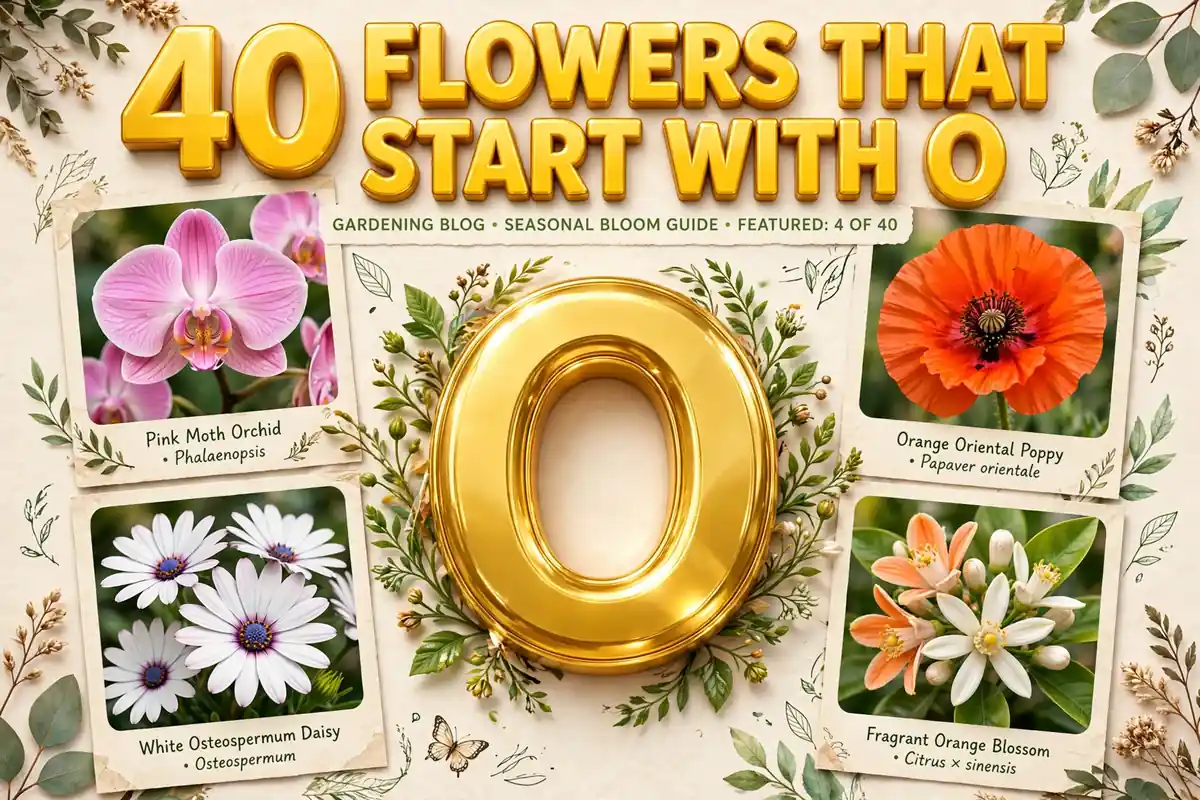
55 Flowers That Start With O: Names, Pictures & Growing Tips
Searching for flower names that start with O? You are in the right place. The letter O delivers some of the garden’s most dramatic blooms, from the exotic elegance of orchids to the tissue-paper petals of oriental poppies and the citrus-sweet perfume of orange blossom. Whether you are designing an alphabet garden with the kids, hunting for orange flowers that start with O to brighten a border, or simply curious which O-flowers survive your climate, this guide rounds up 55 flowers that start with O — each with a photo-worthy description and honest growing advice.
Every entry lists the flower’s scientific name, bloom season, sun needs, and USDA hardiness zone, so you can spot at a glance which flowers beginning with O will thrive in your yard. You will also find a quick comparison table, practical growing tips, and answers to the questions gardeners ask most about flowers starting with the letter O. Let’s get growing.
Quick Answer
Yes — this page lists 55 flowers that start with O, from orchids and oriental lilies to ocotillo and Oregon sunshine. Use the at-a-glance table to filter by your USDA zone, sun and bloom season before you buy.
Table of Contents
- O-Flowers at a Glance
- 55 Flowers That Start With O: The Complete List
- O Flowers by Colour
- Best O Flowers by Season
- Indoor and Container-Friendly O Flowers
- Beginner-Friendly O Flowers
- Rare and Unusual O Flowers
- O Flowers With Full Guides on HomeYorva
- Growing Tips for O-Flowers
- Which O-Flowers Will You Grow?
- Frequently Asked Questions
- References
O-Flowers at a Glance
Use this table to compare all 55 flowers that start with O side by side, from botanical names to native regions.
| # | Name | Scientific name | Bloom | Sun | Zone | Best for |
|---|---|---|---|---|---|---|
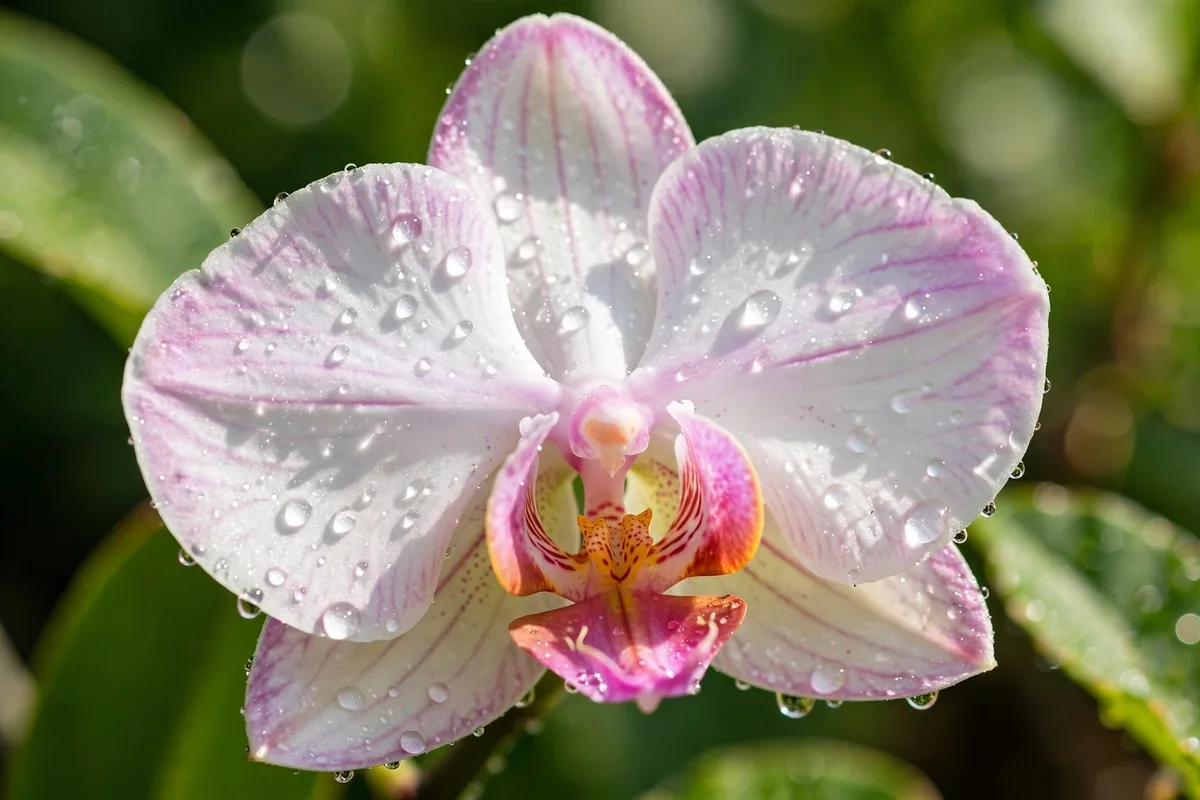
| 1 | Moth Orchid | Phalaenopsis amabilis | Winter to spring (often sold in bloom year-round) | Bright indirect light | Houseplant (10–12 outdoors) | Windowsills, long-lasting indoor color |
| 2 | Oriental Lily | Lilium (Oriental hybrids) | Midsummer to late summer | Full sun to part shade | 4–9 | Fragrant borders, cut flowers |
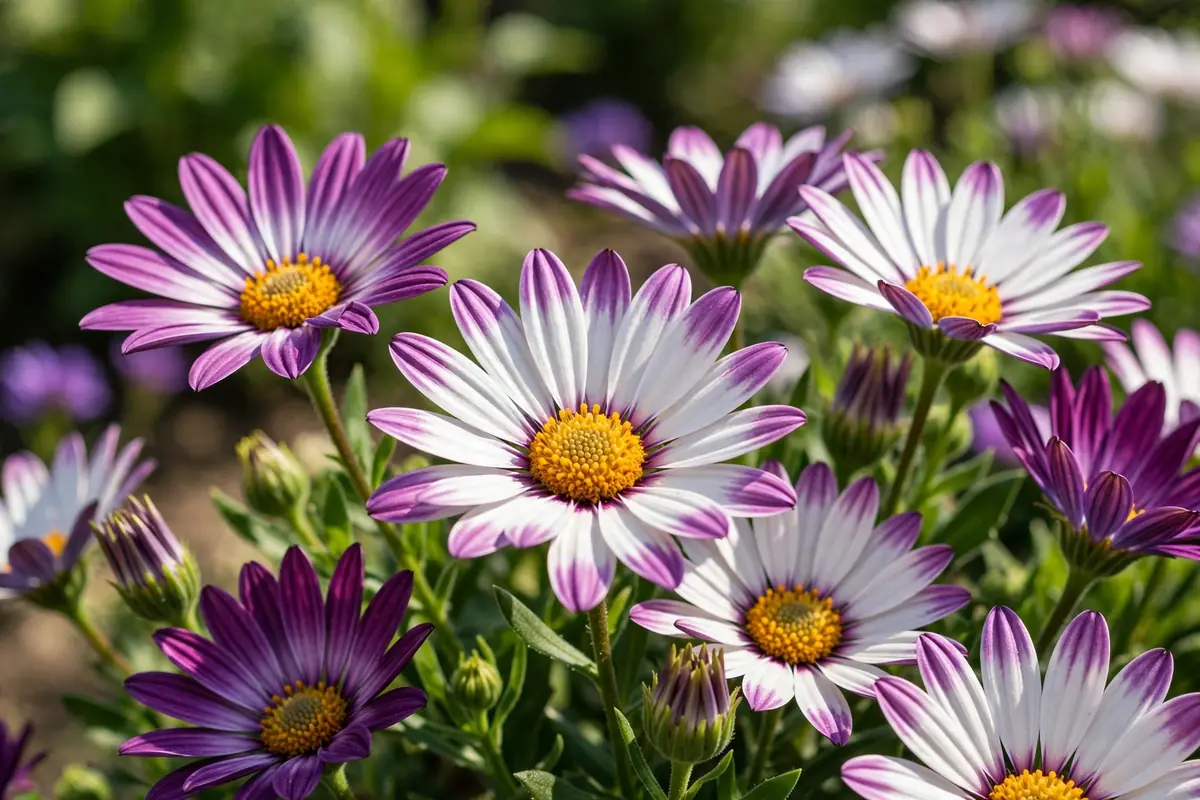
| 3 | Osteospermum | Osteospermum ecklonis | Spring to fall | Full sun | 10–11; annual elsewhere | Containers, sunny bedding |
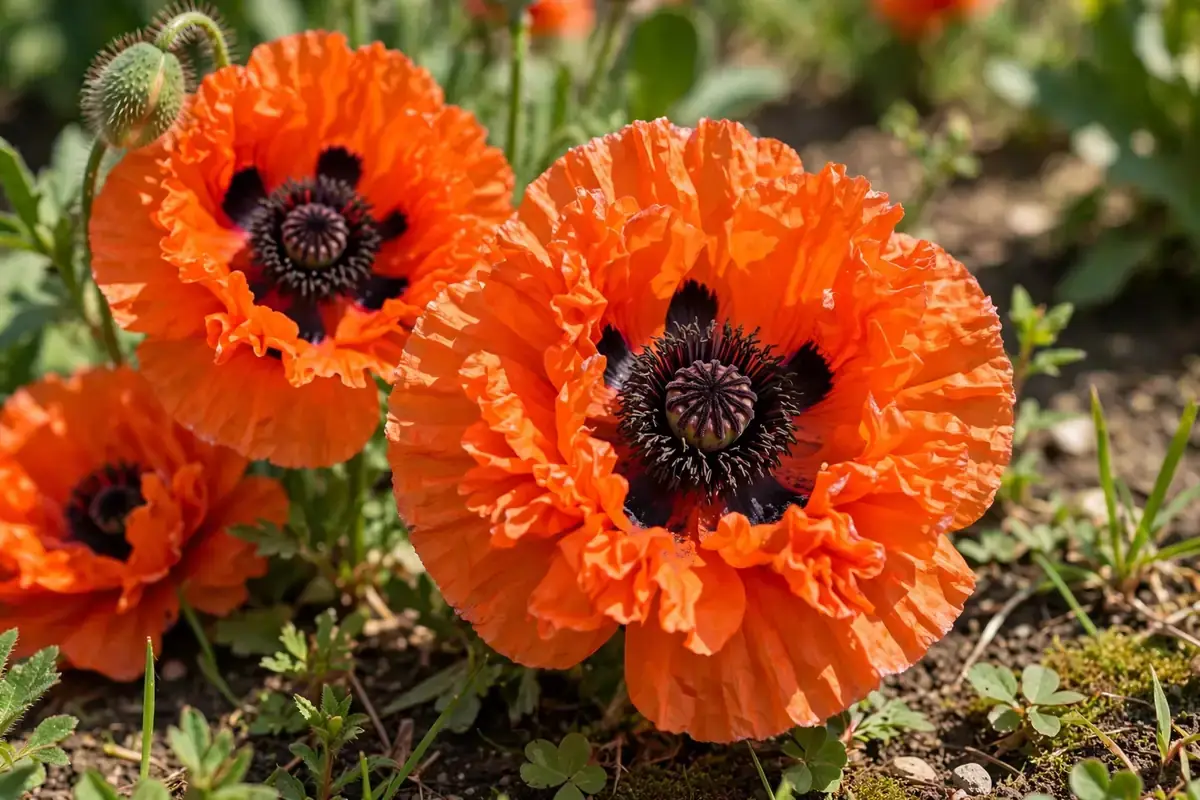
| 4 | Oriental Poppy | Papaver orientale | Late spring to early summer | Full sun | 3–7 | Bold spring color, cottage borders |
| 5 | Oxeye Daisy | Leucanthemum vulgare | Early to midsummer | Full sun to part shade | 3–8 | Meadows, cottage gardens |
| 6 | Obedient Plant | Physostegia virginiana | Late summer to fall | Full sun to part shade | 3–9 | Fall color, pollinators |
| 7 | Orange Blossom | Citrus × sinensis | Spring | Full sun | 9–11 | Fragrance, edible landscaping |
| 8 | Evening Primrose | Oenothera biennis | Summer to fall (opens at dusk) | Full sun | 4–9 | Evening gardens, naturalized areas |
| 9 | Sweet Osmanthus | Osmanthus fragrans | Fall, with sporadic blooms | Full sun to part shade | 7–10 | Fragrance gardens, evergreen structure |
| 10 | Oleander | Nerium oleander | Summer to fall | Full sun | 8–11 | Flowering hedges, hot climates (with caution) |
| 11 | Orange Star | Ornithogalum dubium | Winter to spring | Full sun to part shade | 9–11; houseplant elsewhere | Winter indoor color, gift plants |
| 12 | Purple Shamrock | Oxalis triangularis | Summer | Bright indirect to part shade | 8–11; houseplant elsewhere | Houseplants, purple foliage contrast |
| 13 | Orange Cosmos | Cosmos sulphureus | Summer to fall | Full sun | Grown as annual | Beginner gardens, butterfly beds |
| 14 | Orange Daylily | Hemerocallis fulva | Early to midsummer | Full sun to part shade | 3–9 | Tough sunny spots, mass plantings |
| 15 | Ozark Sundrops | Oenothera macrocarpa | Late spring to summer | Full sun | 5–9 | Rock gardens, dry sunny slopes |
| 16 | Oakleaf Hydrangea | Hydrangea quercifolia | Early summer | Full sun to part shade | 5–9 | Native landscapes, four-season interest |
| 17 | Orange Coneflower | Rudbeckia fulgida | Midsummer to fall | Full sun | 3–9 | Sunny borders, pollinator gardens |
| 18 | Ornamental Oregano | Origanum laevigatum | Summer to fall | Full sun | 5–9 | Edging, bee gardens |
| 19 | Old Man’s Beard | Clematis vitalba | Summer | Full sun to part shade | 4–9 | Covering fences, wildlife gardens (with room) |
| 20 | Ohio Spiderwort | Tradescantia ohiensis | Late spring to summer | Full sun to part shade | 4–9 | Native borders, clay soil |
| 21 | Orange Trumpet Vine | Pyrostegia venusta | Winter to spring | Full sun | 9–11 | Arbors, winter color in warm climates |
| 22 | Orchid Cactus | Epiphyllum hybrids | Spring to early summer (night-blooming) | Bright indirect light | 10–12; houseplant elsewhere | Hanging baskets, night gardens |
| 23 | Prickly Pear | Opuntia humifusa | Late spring to summer | Full sun | 4–9 | Native cactus gardens, xeriscapes |
| 24 | Oregon Grape | Mahonia aquifolium | Spring | Part shade | 5–9 | Dry shade, native evergreen structure |
| 25 | Oxblood Lily | Rhodophiala bifida | Late summer to fall | Full sun to part shade | 7–10 | Surprise fall color, naturalizing |
| 26 | Orange Lily | Lilium bulbiferum | Early summer | Full sun to part shade | 3–9 | Naturalized drifts, wildflower borders |
| 27 | Orange Montbretia | Crocosmia × crocosmiiflora | Midsummer to fall | Full sun | 6–9 | Hummingbird gardens, hot color |
| 28 | Orange Honeysuckle | Lonicera ciliosa | Late spring to summer | Full sun to part shade | 4–8 | Hummingbirds, native vines |
| 29 | Orange Bells | Tecoma capensis | Fall to winter (frost-free climates) | Full sun to part shade | 9–11 | Winter color, fast screening |
| 30 | Ozark Witch Hazel | Hamamelis vernalis | Late winter to early spring | Full sun to part shade | 4–8 | Winter fragrance, tough native shrubs |
| 31 | Orchid Tree | Bauhinia × blakeana | Fall to spring | Full sun | 9–11 | Specimen trees, warm-climate streets |
| 32 | Oncidium Orchid | Oncidium spp. | Fall to spring (varies) | Bright indirect light | Houseplant (10–12 outdoors) | Windowsill orchid collections |
| 33 | False Sunflower | Heliopsis helianthoides | Midsummer to fall | Full sun | 3–9 | Back of border, pollinators |
| 34 | Orange Hawkweed | Pilosella aurantiaca | Summer | Full sun | 3–8 | Rock gardens (with caution — can be invasive) |
| 35 | Oxlip | Primula elatior | Spring | Part shade | 4–8 | Woodland edges, spring borders |
| 36 | Orange Milkweed | Asclepias tuberosa | Summer | Full sun | 3–9 | Monarch habitat, native borders |
| 37 | Orange Jessamine | Murraya paniculata | Spring to fall | Full sun to part shade | 9–11 | Fragrant hedges, patios |
| 38 | Ornamental Pepper | Capsicum annuum | Summer to fall | Full sun | Grown as annual; perennial 9–11 | Fall containers, colorful edging |
| 39 | Lily Turf | Ophiopogon japonicus | Late summer | Part to full shade | 6–10 | Edging, dry shade groundcover |
| 40 | Pink Evening Primrose | Oenothera speciosa | Spring to fall | Full sun | 4–9 | Flowering groundcover, hot dry banks |
| 41 | Orange Fringed Orchid | Platanthera ciliaris | Summer | Full sun to part shade | 4–9 | Native orchids, bog gardens, pollinators |
| 42 | Oconee Bells | Shortia galacifolia | Spring | Part to full shade | 5–8 | Woodland gardens, native wildflowers, groundcover |
| 43 | Yellow Oleander | Cascabela thevetia | Summer to fall | Full sun | 9–11 | Warm-climate hedges, tropical gardens — plant with caution (highly toxic) |
| 44 | Orange Puccoon | Lithospermum canescens | Late spring to early summer | Full sun to part shade | 3–8 | Native wildflowers, rock gardens, pollinators |
| 45 | Orange Milkwort | Polygala lutea | Spring to fall | Full sun to part shade | 6–9 | Native bog gardens, wildflower meadows, pollinators |
| 46 | Old Man of the Mountain | Rydbergia grandiflora | Summer | Full sun | 4–8 | Alpine gardens, rock gardens, native wildflowers |
| 47 | Oregon Sunshine | Eriophyllum lanatum | Summer | Full sun | 5–9 | Native meadows, dry borders, pollinators |
| 48 | Ocotillo | Fouquieria splendens | Spring | Full sun | 8–11 | Desert gardens, xeriscapes, hummingbirds |
| 49 | Oscularia | Oscularia caulescens | Spring | Full sun | 9–11; container elsewhere | Succulent containers, rock gardens, drought-tolerant plantings |
| 50 | Othonna | Othonna capensis ‘Ruby Necklace’ | Summer (small yellow daisies) | Full sun to part shade | 9–11; houseplant elsewhere | Hanging baskets, succulent collections |
| 51 | Orange Esperanza | Tecoma stans ‘Orange Jubilee’ | Summer to fall | Full sun | 8–11 | Hummingbird gardens, warm-climate shrubs, fast color |
| 52 | Orange Mint | Mentha × piperita f. citrata ‘Orange’ | Summer (small lavender flowers) | Full sun to part shade | 4–9 | Herb gardens, containers, fragrant foliage |
| 53 | Orlaya | Orlaya grandiflora | Late spring to summer | Full sun | Hardy annual | Cut flowers, cottage gardens, pollinators |
| 54 | Ononis | Ononis spinosa | Summer | Full sun | 5–9 | Rock gardens, dry banks, pollinators |
| 55 | Ocean Pearls | Agrostemma githago ‘Ocean Pearls’ | Summer | Full sun | Hardy annual | Cut flowers, cottage gardens, meadow plantings |
55 Flowers That Start With O: The Complete List
Here they are — 55 beautiful, real flowers beginning with O, each with growing notes so you can pick the right ones for your garden.
1. Moth Orchid (Phalaenopsis amabilis)
The moth orchid is the world’s best-selling houseplant for a reason: arching sprays of butterfly-like blooms in white, pink, purple, and yellow can last three months or more. Keep it in bright indirect light, water only when the bark mix dries out, and never let it sit in water. After flowering, cut the stem above a node and it may rebloom within months.
Bloom: Winter to spring (often sold in bloom year-round) | Sun: Bright indirect light | Zone: Houseplant (10–12 outdoors) | Best for: Windowsills, long-lasting indoor color
2. Oriental Lily (Lilium, Oriental hybrids)
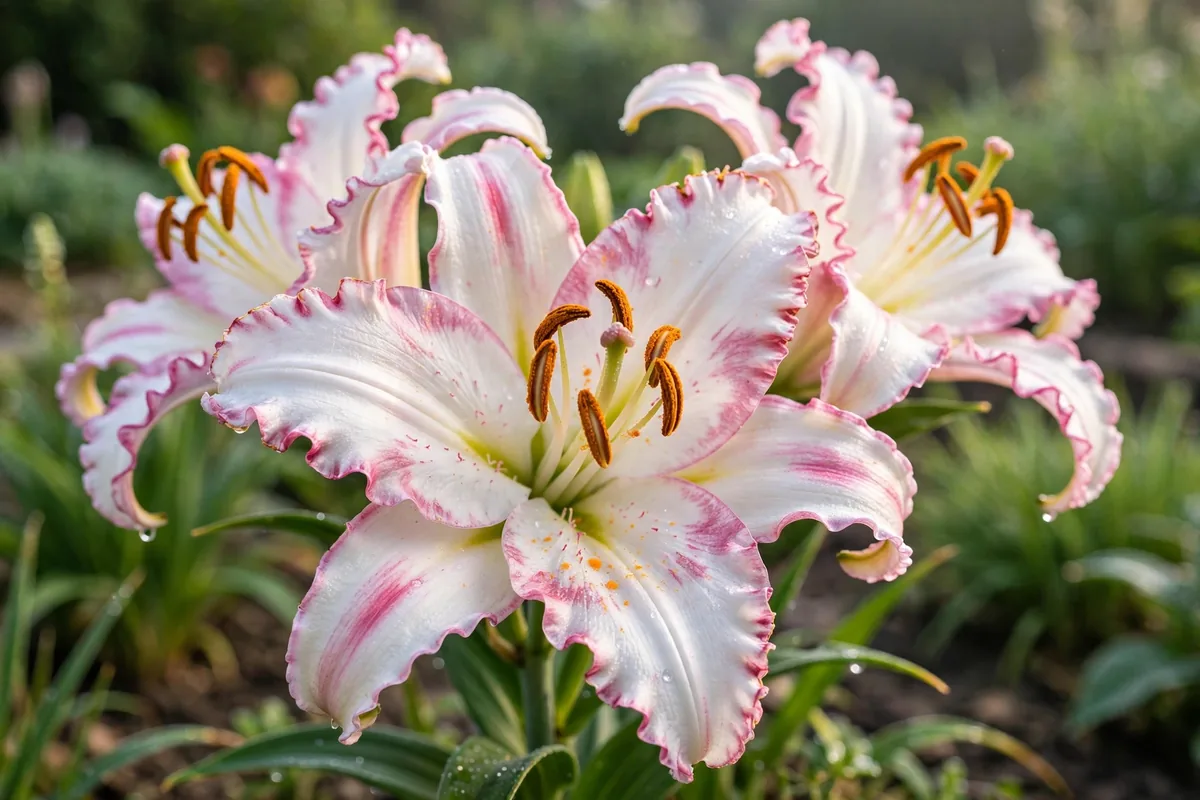
Oriental lilies are the perfume queens of the summer garden, with huge ruffled blooms in white, pink, and crimson that release an intoxicating evening scent. Plant bulbs 6 inches deep in spring or fall in well-drained soil, and stake tall stems before the buds get heavy. Unlike Asiatic lilies, Orientals bloom later and demand excellent drainage to survive wet winters.
Bloom: Midsummer to late summer | Sun: Full sun to part shade | Zone: 4–9 | Best for: Fragrant borders, cut flowers
3. Osteospermum (Osteospermum ecklonis)
Osteospermum — the African daisy — covers itself in crisp daisy flowers with spoon-shaped petals in white, purple, pink, and orange from spring into fall. It loves full sun and cool weather, often pausing in extreme summer heat before rebounding. Deadhead regularly, feed lightly, and treat it as an annual outside zones 10–11 for months of nonstop color.
Bloom: Spring to fall | Sun: Full sun | Zone: 10–11; annual elsewhere | Best for: Containers, sunny bedding
4. Oriental Poppy (Papaver orientale)
Oriental poppies produce some of the largest flowers in the perennial border — crepe-paper blooms up to 6 inches wide in scarlet, orange, salmon, and pink with dramatic dark centers. They bloom in late spring, then the foliage dies back for summer; mark their spot so you don’t dig them up. Plant in fall in full sun and never move them — they resent disturbance.
Bloom: Late spring to early summer | Sun: Full sun | Zone: 3–7 | Best for: Bold spring color, cottage borders
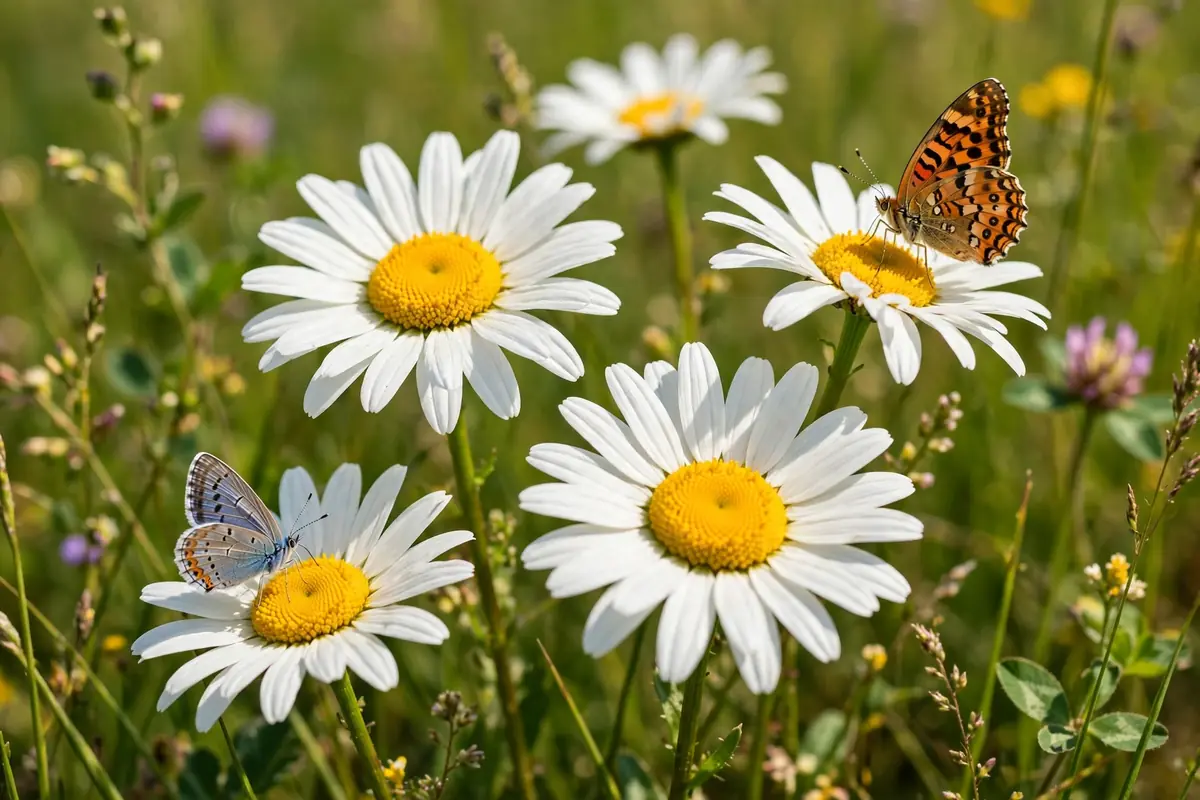
5. Oxeye Daisy (Leucanthemum vulgare)
The classic wildflower daisy, oxeye daisy bears cheerful white petals around golden centers on 1- to 2-foot stems in early summer. It naturalizes happily in meadows and cottage borders, feeding bees and butterflies. Deadhead to prevent heavy self-sowing — it can be enthusiastic in rich soil. Tough, drought-tolerant, and utterly charming in informal plantings.
Bloom: Early to midsummer | Sun: Full sun to part shade | Zone: 3–8 | Best for: Meadows, cottage gardens
6. Obedient Plant (Physostegia virginiana)
Obedient plant earns its name from flowers that stay put when bent — a fun trick for kids. Dense spikes of pink, purple, or white snapdragon-like blooms appear from late summer to fall on 2- to 4-foot stems. It spreads by rhizomes, so give it room or contain it. Bees and hummingbirds love it, and it shrugs off clay soil.
Bloom: Late summer to fall | Sun: Full sun to part shade | Zone: 3–9 | Best for: Fall color, pollinators
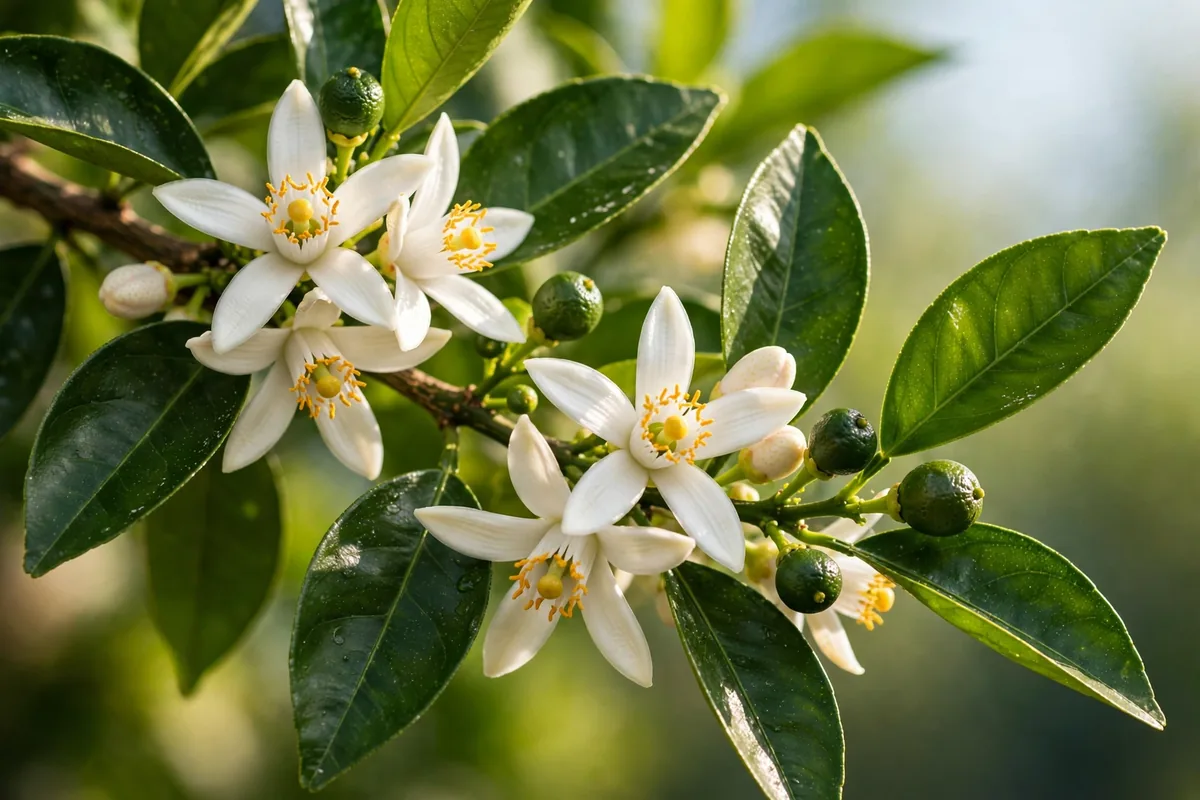
7. Orange Blossom (Citrus × sinensis)
Orange blossoms are among the most fragrant flowers on earth — a single blooming tree can perfume an entire neighborhood in spring. The waxy white flowers cluster on evergreen citrus trees in zones 9–11, each one promising a future orange. In colder climates, grow dwarf citrus in pots and move them indoors for winter; you will still get the legendary scent.
Bloom: Spring | Sun: Full sun | Zone: 9–11 | Best for: Fragrance, edible landscaping
8. Evening Primrose (Oenothera biennis)
Common evening primrose opens bright yellow, lemon-scented cups at dusk — you can watch them unfurl in real time on warm summer evenings. This tough biennial self-sows freely in poor soil and full sun. Night-flying moths pollinate the blooms. Give it space; seedlings pop up everywhere, which is a feature if you want a naturalized patch.
Bloom: Summer to fall (opens at dusk) | Sun: Full sun | Zone: 4–9 | Best for: Evening gardens, naturalized areas
9. Sweet Osmanthus (Osmanthus fragrans)
Sweet osmanthus is a fall garden treasure: tiny cream-white flowers release an intensely sweet, apricot-like fragrance that carries across the yard. This evergreen shrub or small tree grows slowly to 10–15 feet in zones 7–10. Plant it near a walkway or window where you will catch the scent, and prune after flowering to shape.
Bloom: Fall, with sporadic blooms | Sun: Full sun to part shade | Zone: 7–10 | Best for: Fragrance gardens, evergreen structure
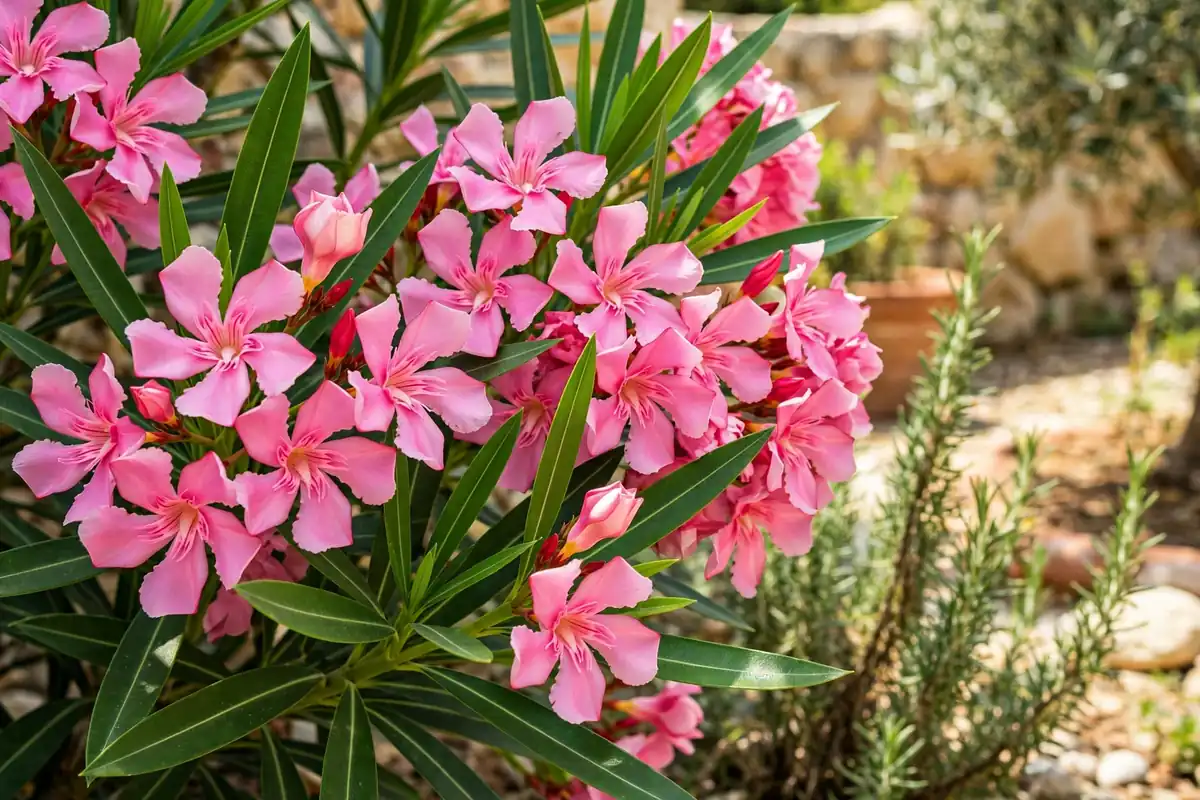
10. Oleander (Nerium oleander)
Oleander is a Mediterranean classic — evergreen shrubs smothered in pink, red, white, or yellow funnel-shaped flowers from summer to fall, thriving on heat, drought, and neglect. It makes a superb flowering hedge in zones 8–11. One critical warning: every part of oleander is highly toxic if eaten, so keep it away from children, pets, and grazing animals.
Bloom: Summer to fall | Sun: Full sun | Zone: 8–11 | Best for: Flowering hedges, hot climates (with caution)
11. Orange Star (Ornithogalum dubium)
Orange star lights up winter windowsills with tight clusters of vivid orange, star-shaped flowers on sturdy stems. This South African bulb is tender (zones 9–11), so most US gardeners grow it as a houseplant or in pots brought indoors for winter. Give it bright light and let the soil dry slightly between waterings for months of brilliant color.
Bloom: Winter to spring | Sun: Full sun to part shade | Zone: 9–11; houseplant elsewhere | Best for: Winter indoor color, gift plants
12. Purple Shamrock (Oxalis triangularis)
Purple shamrock grows as much for its foliage as its flowers — deep purple, butterfly-shaped leaves that fold up at night, topped with dainty pink-white blooms in summer. It makes a charming houseplant in bright indirect light. Expect a dormancy period when leaves die back; don’t throw it out — rest the bulbs dry and they will resprout.
Bloom: Summer | Sun: Bright indirect to part shade | Zone: 8–11; houseplant elsewhere | Best for: Houseplants, purple foliage contrast
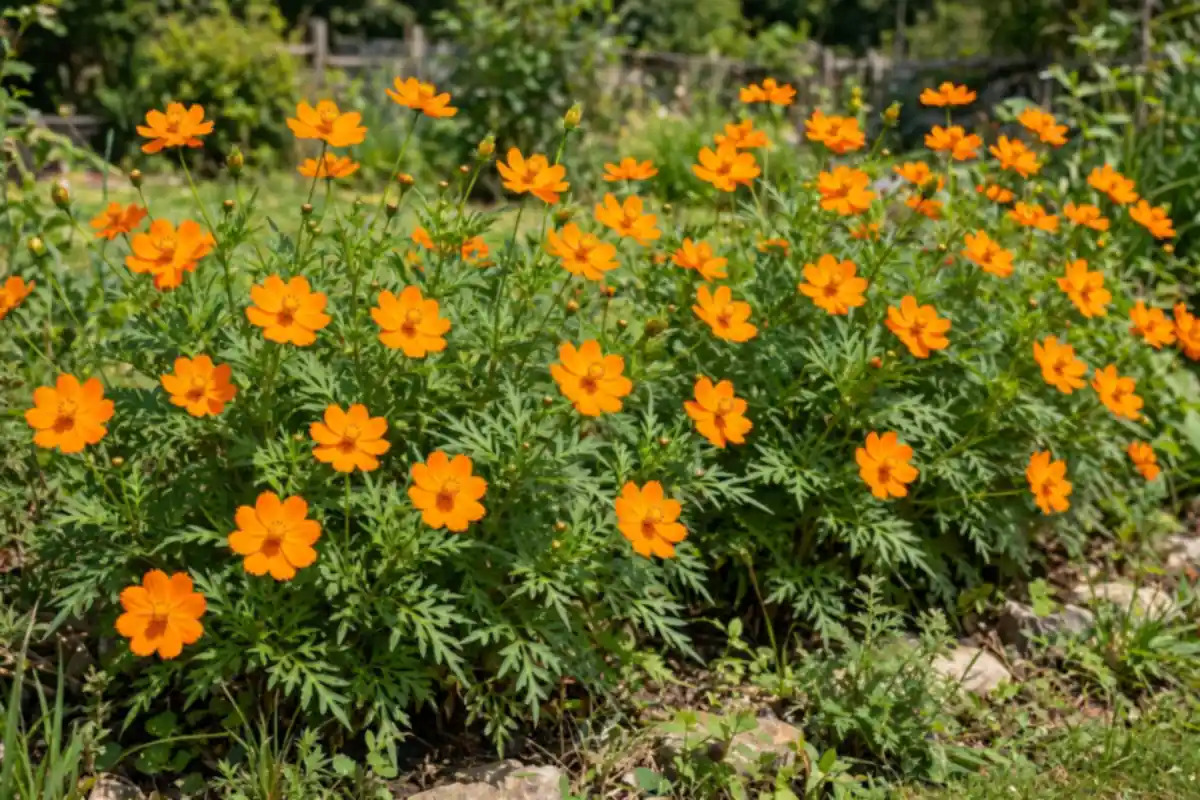
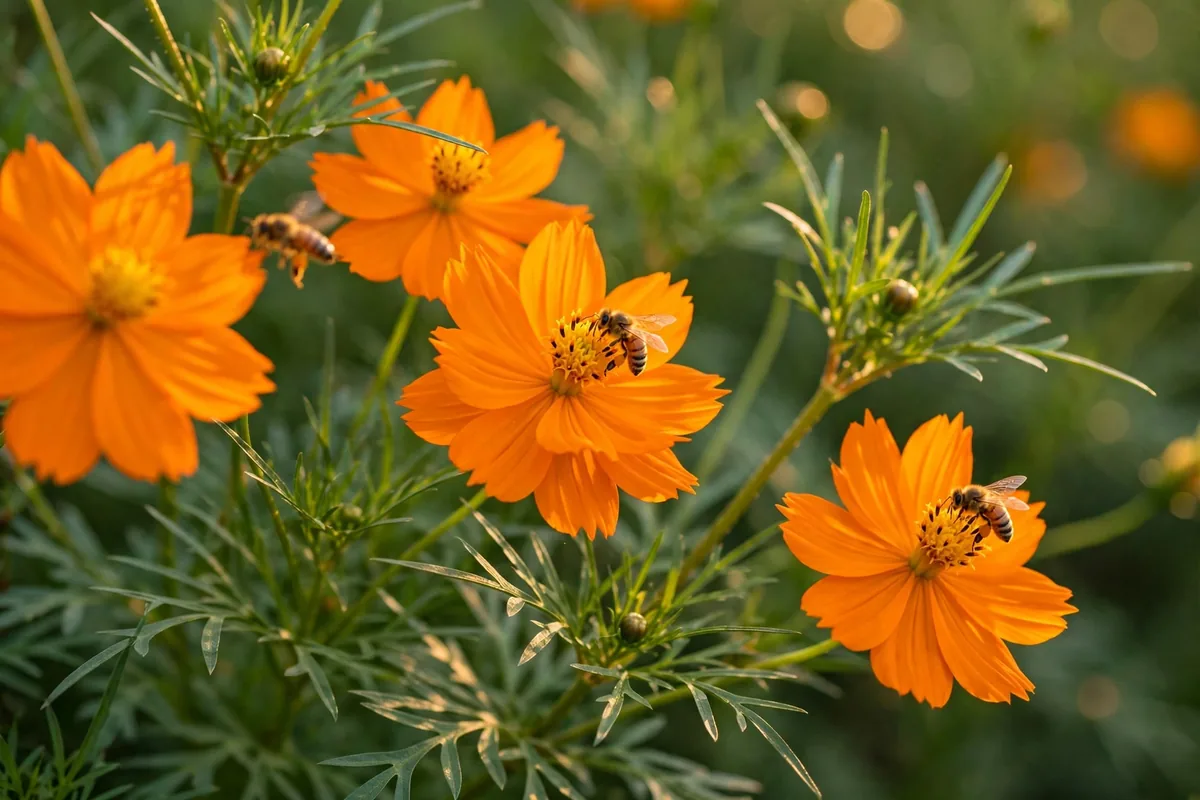
13. Orange Cosmos (Cosmos sulphureus)
Orange cosmos is pure sunshine: brilliant orange and gold daisies on feathery foliage from summer until frost, with zero fuss. Sow seeds directly in poor soil after frost — rich soil grows leaves instead of flowers. Butterflies flock to it. Deadhead for more blooms, or leave seed heads for goldfinches in fall.
Bloom: Summer to fall | Sun: Full sun | Zone: Grown as annual | Best for: Beginner gardens, butterfly beds
14. Orange Daylily (Hemerocallis fulva)
The tawny or orange daylily is the roadside classic — trumpet-shaped orange blooms with ruffled throats on 3-foot scapes each summer. Every flower lasts a single day, but buds open in succession for weeks. It tolerates almost any soil and spreads into bold clumps. Divide every few years to keep it blooming strongly.
Bloom: Early to midsummer | Sun: Full sun to part shade | Zone: 3–9 | Best for: Tough sunny spots, mass plantings
15. Ozark Sundrops (Oenothera macrocarpa)
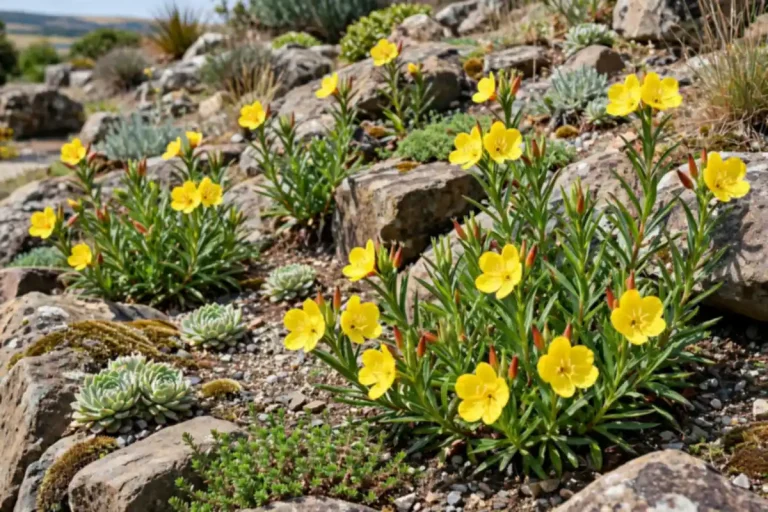
Ozark sundrops — also sold as Missouri evening primrose — produces huge, tissue-thin yellow cups up to 5 inches wide from late spring into summer. This low, spreading native thrives in hot, dry, rocky spots where fussier plants fail. The flowers open in late afternoon and glow at dusk. Perfect for the front of a sunny, drought-tolerant border.
Bloom: Late spring to summer | Sun: Full sun | Zone: 5–9 | Best for: Rock gardens, dry sunny slopes
16. Oakleaf Hydrangea (Hydrangea quercifolia)
Oakleaf hydrangea is a four-season native shrub: big cone-shaped white flower clusters in early summer, bold oak-like leaves, stunning burgundy fall color, and peeling cinnamon bark in winter. It grows 6–8 feet in zones 5–9 and tolerates more sun and drought than other hydrangeas. Leave the dried flower heads for winter interest.
Bloom: Early summer | Sun: Full sun to part shade | Zone: 5–9 | Best for: Native landscapes, four-season interest
17. Orange Coneflower (Rudbeckia fulgida)
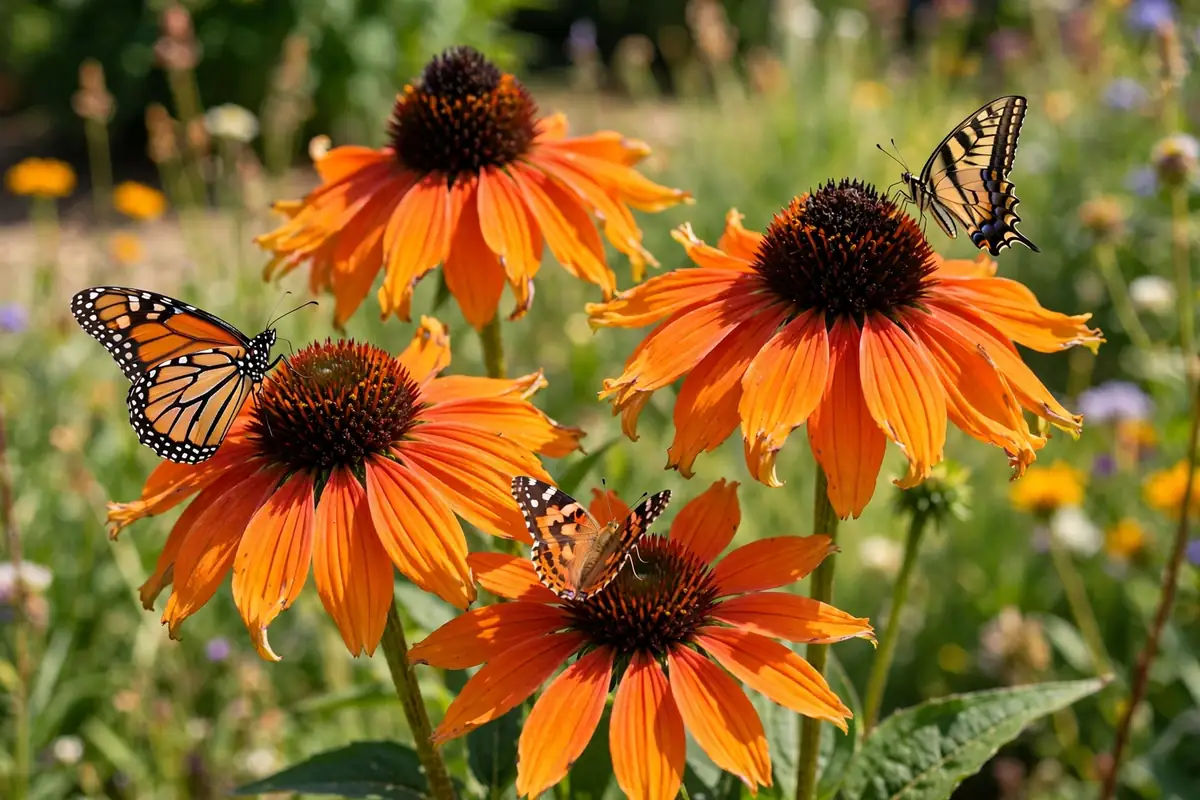
Orange coneflower — the beloved ‘Goldsturm’ rudbeckia — masses golden-orange daisies with dark centers from midsummer to fall. It is one of the most reliable perennials for hot, sunny borders, shrugging off heat and clay. Deadhead for rebloom, leave the seed heads for birds, and divide every 3–4 years. Butterflies adore it.
Bloom: Midsummer to fall | Sun: Full sun | Zone: 3–9 | Best for: Sunny borders, pollinator gardens
18. Ornamental Oregano (Origanum laevigatum)
Ornamental oregano ‘Herrenhausen’ is grown for flowers, not flavor: dense clusters of rosy-purple blooms top aromatic gray-green foliage from summer to fall. Bees mob it. Unlike culinary oregano, it forms tidy mounds that edge borders beautifully. Give it full sun and sharp drainage; it dislikes wet winter soil.
Bloom: Summer to fall | Sun: Full sun | Zone: 5–9 | Best for: Edging, bee gardens
19. Old Man’s Beard (Clematis vitalba)
Old man’s beard is a vigorous climbing clematis with masses of small, creamy-white, almond-scented flowers in summer, followed by the fluffy silver seed heads that give it its name. It can scramble 20+ feet over fences and arbors. Plant it where it has room to roam, and prune hard in late winter — it flowers on new wood.
Bloom: Summer | Sun: Full sun to part shade | Zone: 4–9 | Best for: Covering fences, wildlife gardens (with room)
20. Ohio Spiderwort (Tradescantia ohiensis)
Ohio spiderwort opens three-petaled blue-violet flowers each morning from late spring into summer — each bloom lasts a day, but new buds follow daily. The grass-like foliage looks good even when not flowering. It self-sows gently in sun or part shade and tolerates clay. A graceful native for cottage gardens and wildflower borders.
Bloom: Late spring to summer | Sun: Full sun to part shade | Zone: 4–9 | Best for: Native borders, clay soil
21. Orange Trumpet Vine (Pyrostegia venusta)
Orange trumpet vine is a winter spectacle in frost-free gardens: cascading clusters of brilliant orange tubular flowers drape over fences and arbors from winter into spring. This vigorous Brazilian vine needs full sun and sturdy support in zones 9–11. Prune after flowering to control its enthusiastic growth.
Bloom: Winter to spring | Sun: Full sun | Zone: 9–11 | Best for: Arbors, winter color in warm climates
22. Orchid Cactus (Epiphyllum hybrids)
Orchid cactus produces jaw-dropping blooms — dinner-plate-sized flowers in pink, red, orange, or white that open at night in spring. The flattened, leaf-like stems hang beautifully from baskets. Give it bright indirect light and a winter rest with less water to trigger buds. Most US gardeners grow it as a houseplant.
Bloom: Spring to early summer (night-blooming) | Sun: Bright indirect light | Zone: 10–12; houseplant elsewhere | Best for: Hanging baskets, night gardens
23. Prickly Pear (Opuntia humifusa)
Eastern prickly pear proves cacti aren’t just for the desert — this native survives winters to zone 4. In early summer it bears waxy yellow (sometimes red-centered) flowers up to 3 inches wide, followed by edible red fruits. Plant in full sun with sharp drainage and handle with thick gloves. A bold, architectural native.
Bloom: Late spring to summer | Sun: Full sun | Zone: 4–9 | Best for: Native cactus gardens, xeriscapes
24. Oregon Grape (Mahonia aquifolium)
Oregon grape is an evergreen native shrub with holly-like leaves and bright yellow flower clusters in spring that smell faintly of honey. Blue-black berries follow, feeding birds. It thrives in part shade in zones 5–9 and tolerates dry shade once established — a rare and valuable trait for under-tree plantings.
Bloom: Spring | Sun: Part shade | Zone: 5–9 | Best for: Dry shade, native evergreen structure
25. Oxblood Lily (Rhodophiala bifida)
Oxblood lily performs a magic trick: in late summer, leafless stalks shoot up bearing clusters of deep red trumpet flowers, weeks before the strap-like foliage appears. This South American bulb naturalizes in zones 7–10 with full sun to part shade. Plant bulbs in spring and leave them undisturbed to multiply into drifts.
Bloom: Late summer to fall | Sun: Full sun to part shade | Zone: 7–10 | Best for: Surprise fall color, naturalizing
26. Orange Lily (Lilium bulbiferum)
The true orange lily is a European wildflower with upward-facing blooms in fiery orange spotted with dark maroon. It flowers in early summer on 2- to 3-foot stems and naturalizes in zones 3–9. Plant bulbs in fall in well-drained soil, and let the foliage ripen fully after flowering to feed next year’s bulbs.
Bloom: Early summer | Sun: Full sun to part shade | Zone: 3–9 | Best for: Naturalized drifts, wildflower borders
27. Orange Montbretia (Crocosmia × crocosmiiflora)
Orange montbretia sends up arching fans of sword-like leaves topped with sprays of funnel-shaped orange flowers from midsummer to fall. Hummingbirds love the tubular blooms. Plant corms in spring in full sun; in zones 6–9 they return reliably, multiplying into bold clumps. In colder zones, lift corms like gladiolus.
Bloom: Midsummer to fall | Sun: Full sun | Zone: 6–9 | Best for: Hummingbird gardens, hot color
28. Orange Honeysuckle (Lonicera ciliosa)
Orange honeysuckle is a western native vine with clusters of brilliant orange-red trumpet flowers in late spring and summer that hummingbirds find irresistible. Unlike Japanese honeysuckle, it is well-behaved and non-invasive. Give it a trellis in sun or part shade (zones 4–8); red berries follow the flowers.
Bloom: Late spring to summer | Sun: Full sun to part shade | Zone: 4–8 | Best for: Hummingbirds, native vines
29. Orange Bells (Tecoma capensis)
Orange bells — Cape honeysuckle — is a scrambling evergreen shrub that erupts in clusters of bright orange trumpet flowers from fall into winter in frost-free zones 9–11, right when little else blooms. It grows fast and tolerates drought, heat, and poor soil. Prune hard in spring to keep it bushy rather than sprawling.
Bloom: Fall to winter (frost-free climates) | Sun: Full sun to part shade | Zone: 9–11 | Best for: Winter color, fast screening
30. Ozark Witch Hazel (Hamamelis vernalis)
Ozark witch hazel blooms when almost nothing else dares — fragrant, ribbon-like yellow to copper-red flowers open on bare branches in late winter. This tough native shrub grows 8–10 feet in zones 4–8 and tolerates clay, drought, and shade. Plant it where you will pass on cold days and catch its spicy-sweet scent.
Bloom: Late winter to early spring | Sun: Full sun to part shade | Zone: 4–8 | Best for: Winter fragrance, tough native shrubs
31. Orchid Tree (Bauhinia × blakeana)
The Hong Kong orchid tree bears spectacular 5-inch orchid-like flowers in pink, purple, or magenta from fall into spring in zones 9–11. Its twin-lobed leaves look like butterfly wings. This fast-growing small tree needs full sun and room to spread. Note it can be invasive in South Florida — check local guidance before planting.
Bloom: Fall to spring | Sun: Full sun | Zone: 9–11 | Best for: Specimen trees, warm-climate streets
32. Oncidium Orchid (Oncidium spp.)
Oncidium — the dancing lady orchid — sprays hundreds of small yellow and brown ruffled blooms that really do look like tiny dancers in flowing skirts. It wants bright indirect light, regular water while growing, and a drier rest after flowering. Easier than its reputation suggests, it reblooms reliably on a sunny windowsill.
Bloom: Fall to spring (varies) | Sun: Bright indirect light | Zone: Houseplant (10–12 outdoors) | Best for: Windowsill orchid collections
33. False Sunflower (Heliopsis helianthoides)
False sunflower looks like a sunflower but behaves like a well-mannered perennial, bearing golden-yellow daisies with brown centers from midsummer to fall on 3- to 5-foot stems. It tolerates clay, drought, and part shade (zones 3–9). Deadhead to extend bloom, and stake tall varieties. A pollinator powerhouse for the back of the border.
Bloom: Midsummer to fall | Sun: Full sun | Zone: 3–9 | Best for: Back of border, pollinators
34. Orange Hawkweed (Pilosella aurantiaca)
Orange hawkweed — devil’s paintbrush — forms low rosettes topped with fiery orange-red dandelion-like flowers in summer. It is undeniably striking in rock gardens and meadows (zones 3–8). One caution: it spreads aggressively by runners and seed and is listed as invasive in several northern states — admire it, but think twice before planting.
Bloom: Summer | Sun: Full sun | Zone: 3–8 | Best for: Rock gardens (with caution — can be invasive)
35. Oxlip (Primula elatior)
Oxlip is a sweet spring wildflower — clusters of nodding, pale yellow, cowslip-like blooms on 6- to 8-inch stems above crinkled green rosettes. This European native loves part shade and moist, humus-rich soil in zones 4–8. It naturalizes gently along woodland edges and is a charming, old-fashioned choice for spring borders.
Bloom: Spring | Sun: Part shade | Zone: 4–8 | Best for: Woodland edges, spring borders
36. Orange Milkweed (Asclepias tuberosa)
Orange milkweed is the same beloved native as butterfly weed — brilliant orange flower clusters on 2-foot stems that monarch butterflies depend on as a host plant. It demands full sun and sharp drainage and resents transplanting thanks to its deep taproot. Plant it once, leave it alone, and enjoy the monarch show every summer.
Bloom: Summer | Sun: Full sun | Zone: 3–9 | Best for: Monarch habitat, native borders
37. Orange Jessamine (Murraya paniculata)
Orange jessamine fills warm nights with powerful orange-blossom perfume from clusters of small white flowers that bloom in waves from spring to fall. This glossy evergreen shrub makes a superb hedge in zones 9–11. Prune after flowering flushes; in colder climates, grow it in a pot and bring it indoors for winter.
Bloom: Spring to fall | Sun: Full sun to part shade | Zone: 9–11 | Best for: Fragrant hedges, patios
38. Ornamental Pepper (Capsicum annuum)
Ornamental peppers are grown for their looks: compact plants studded with glossy purple, red, orange, and yellow peppers from summer to fall, preceded by small starry white flowers. They love heat and full sun. One caution — many varieties are extremely hot, so grow them for show and keep curious kids from tasting.
Bloom: Summer to fall | Sun: Full sun | Zone: Grown as annual; perennial 9–11 | Best for: Fall containers, colorful edging
39. Lily Turf (Ophiopogon japonicus)
Lily turf is the shade gardener’s workhorse — evergreen, grass-like tufts topped with spikes of small lavender bell flowers in late summer, followed by black berries. It edges paths and fills dry shade in zones 6–10 where little else thrives. Mow or shear old foliage in late winter for a fresh spring flush.
Bloom: Late summer | Sun: Part to full shade | Zone: 6–10 | Best for: Edging, dry shade groundcover
40. Pink Evening Primrose (Oenothera speciosa)
Pink evening primrose — pinkladies — carpets the ground with silky pink cups with yellow throats from spring to fall. This tough south-central native thrives in heat, drought, and poor soil in full sun (zones 4–9). It spreads enthusiastically, so give it room or enjoy it as a flowering groundcover in hot, dry spots.
Bloom: Spring to fall | Sun: Full sun | Zone: 4–9 | Best for: Flowering groundcover, hot dry banks
41. Orange Fringed Orchid (Platanthera ciliaris)
Bloom: Summer | Sun: Full sun to part shade | Zone: 4–9 | Best for: Native orchids, bog gardens, pollinators
A native orchid — never wild-collect; buy nursery-propagated plants only. Needs consistently moist, acidic soil.
Orange fringed orchid is the showiest native orchid of the eastern US — tall spikes of brilliantly fringed, deep-orange flowers that glow in summer bogs and wet meadows. Swallowtail butterflies are its chief pollinators, sipping from the long nectar spurs. Give it sun to part shade with acidic, moisture-retentive soil and never let it dry out; it is a treasure for native bog gardens.
42. Oconee Bells (Shortia galacifolia)
Bloom: Spring | Sun: Part to full shade | Zone: 5–8 | Best for: Woodland gardens, native wildflowers, groundcover
Rare in the wild — buy nursery-propagated plants only. Slow to establish; be patient.
Oconee bells is a southern Appalachian jewel — nodding, waxy white bells on short stems above glossy evergreen rosettes in early spring. This rare native wildflower spreads slowly into refined colonies in humus-rich, acidic woodland soil. Give it part to full shade and consistent moisture; once settled, its evergreen foliage looks good all year.
43. Yellow Oleander (Cascabela thevetia)
Bloom: Summer to fall | Sun: Full sun | Zone: 9–11 | Best for: Warm-climate hedges, tropical gardens — plant with caution (highly toxic)
ALL parts are highly toxic if eaten (cardiac glycosides) — keep away from children, pets, and livestock. Invasive in some warm regions (Florida, Hawaii) — check local guidance before planting.
Yellow oleander is the tropical oleander’s golden cousin — an evergreen shrub or small tree with glossy willow-like leaves, fragrant yellow trumpet flowers, and odd triangular fruits that ripen red to black. It blooms nearly year-round in frost-free zones 9–11 and makes a fast, dense hedge. Every part is dangerously poisonous, so plant it only where no one will be tempted to taste it.
44. Orange Puccoon (Lithospermum canescens)
Bloom: Late spring to early summer | Sun: Full sun to part shade | Zone: 3–8 | Best for: Native wildflowers, rock gardens, pollinators
Deep taproot — resents transplanting; plant it once and leave it alone.
Orange puccoon lights up prairies in late spring — dense clusters of bright orange-yellow tubular flowers over soft, hairy gray-green foliage. This central North American native thrives in poor, dry soil where fussier wildflowers fail, feeding early bees and butterflies. Give it full sun to part shade with sharp drainage; its taproot means it sulks if moved.
45. Orange Milkwort (Polygala lutea)
Bloom: Spring to fall | Sun: Full sun to part shade | Zone: 6–9 | Best for: Native bog gardens, wildflower meadows, pollinators
Needs moist, acidic soil — a true bog plant. Short-lived perennial; allow it to self-sow.
Orange milkwort is a pine-flatwoods sparkler — dense, cylindrical heads of vivid orange flowers on slender stems from spring into fall. This southeastern native of wet, acidic bogs and savannas is a pollinator favorite, especially with bees. Give it sun to part shade with constantly moist, peaty soil; it is short-lived but reseeds where happy.
46. Old Man of the Mountain (Rydbergia grandiflora)
Bloom: Summer | Sun: Full sun | Zone: 4–8 | Best for: Alpine gardens, rock gardens, native wildflowers
Needs sharp drainage and cool summers — rots in wet winter soil. A true alpine; struggles in hot, humid climates.
Old man of the mountain is the alpine sunflower — huge, fragrant yellow daisies up to 4 inches wide on silvery, woolly stems high in the Rockies. This short-lived perennial wants full sun, lean gritty soil, and excellent drainage, mimicking its scree-slope home. Give it a rock garden crevice and cool nights; it dislikes winter wet more than winter cold.
47. Oregon Sunshine (Eriophyllum lanatum)
Bloom: Summer | Sun: Full sun | Zone: 5–9 | Best for: Native meadows, dry borders, pollinators
Needs excellent drainage — dislikes humid summers and wet winter soil.
Oregon sunshine is the Pacific Northwest’s happy daisy — masses of bright yellow, sunflower-like blooms over soft, woolly gray foliage all summer. This drought-tolerant native thrives in poor, rocky soil and full sun, feeding native bees for months. Give it sharp drainage and lean soil; rich soil and summer humidity shorten its life.
48. Ocotillo (Fouquieria splendens)
Bloom: Spring | Sun: Full sun | Zone: 8–11 | Best for: Desert gardens, xeriscapes, hummingbirds
Extremely sharp thorns — plant away from paths and wear heavy gloves. Needs true desert conditions: blazing sun and sharp drainage.
Ocotillo is the desert’s candelabra — a fountain of thorny gray-green canes that leaf out after rain and tip each cane with flaming red-orange flower clusters in spring. Hummingbirds mob the blooms, and the sculptural canes look striking year-round. Give it full desert sun, virtually no water once established, and room to spread its dramatic 10- to 15-foot form.
49. Oscularia (Oscularia caulescens)
Bloom: Spring | Sun: Full sun | Zone: 9–11; container elsewhere | Best for: Succulent containers, rock gardens, drought-tolerant plantings
Tender succulent — zones 9–11 outdoors; grow in containers elsewhere. Needs sharp drainage; rots in wet soil.
Oscularia is the toothy succulent — chunky blue-gray leaves with tiny teeth along the edges, blushing pink in sun, topped with small pink daisy-like flowers in spring. This South African native wants full sun and gritty, fast-draining soil, thriving on neglect. In cold zones it makes a charming container succulent for a sunny windowsill.
50. Othonna (Othonna capensis ‘Ruby Necklace’)
Bloom: Summer (small yellow daisies) | Sun: Full sun to part shade | Zone: 9–11; houseplant elsewhere | Best for: Hanging baskets, succulent collections
Tender — grow as a houseplant or in hanging baskets brought indoors in cold zones. Let soil dry between waterings.
Othonna ‘Ruby Necklace’ is the jewel-box trailer — bean-shaped green leaves on vivid ruby-red stems that cascade from hanging baskets, dotted with small yellow daisy flowers in summer. This South African succulent loves bright light, which keeps the stems their reddest. Give it a hanging basket with fast-draining soil and water only when dry.
51. Orange Esperanza (Tecoma stans ‘Orange Jubilee’)
Bloom: Summer to fall | Sun: Full sun | Zone: 8–11 | Best for: Hummingbird gardens, warm-climate shrubs, fast color
Shares the Tecoma genus with Orange Bells (entry 29) — same genus, different species. Can be invasive in frost-free areas — check local guidance; in zone 8 it dies back in winter and returns from the roots.
Orange esperanza is the hummingbird magnet — a fast-growing shrub smothered in clusters of bright orange trumpet flowers from summer to fall. ‘Orange Jubilee’ blooms young and heavily, thriving in heat, drought, and poor soil in zones 8–11. Give it full sun and room to reach 8–12 feet; prune in late winter to keep it bushy.
52. Orange Mint (Mentha × piperita f. citrata ‘Orange’)
Bloom: Summer (small lavender flowers) | Sun: Full sun to part shade | Zone: 4–9 | Best for: Herb gardens, containers, fragrant foliage
Spreads aggressively by runners — grow in containers, not open garden beds. Deadhead to prevent self-sowing.
Orange mint is the citrus mint — bright green leaves with a distinct orange-citrus scent when crushed, topped with small lavender flower spikes in summer that bees adore. Like all mints, it spreads relentlessly by underground runners, so a pot is the only safe home. Give it sun to part shade and regular water for the most fragrant foliage.
53. Orlaya (Orlaya grandiflora)
Bloom: Late spring to summer | Sun: Full sun | Zone: Hardy annual | Best for: Cut flowers, cottage gardens, pollinators
Hardy annual — sow in fall or early spring where it is to grow. Self-sows where happy.
Orlaya — white laceflower — is Queen Anne’s lace refined for the cutting garden: large, flat umbels of pure white flowers on sturdy 2- to 3-foot stems from late spring into summer. This Mediterranean annual makes a superb, long-lasting cut flower and feeds beneficial insects. Sow directly in full sun; it dislikes transplanting but self-sows politely for next year.
54. Ononis (Ononis spinosa)
Bloom: Summer | Sun: Full sun | Zone: 5–9 | Best for: Rock gardens, dry banks, pollinators
Spiny stems — wear gloves when handling. Deep taproot; drought-tolerant once established.
Ononis — spiny restharrow — is the tough European wildflower: pink, pea-like blooms on thorny, tangled stems all summer, thriving in poor, dry, even chalky soil. Its deep taproot makes it nearly indestructible once established and a favorite of bumblebees. Give it full sun and the leanest, driest spot you have; it asks for nothing more.
55. Ocean Pearls (Agrostemma githago ‘Ocean Pearls’)
Bloom: Summer | Sun: Full sun | Zone: Hardy annual | Best for: Cut flowers, cottage gardens, meadow plantings
All parts are mildly toxic if eaten (saponins) — keep away from curious kids and pets. Self-sows freely.
Ocean pearls is corn cockle in bridal white — elegant, papery white blooms with a soft sheen on tall, slender gray-green stems all summer. This hardy annual makes a dreamy cut flower and weaves beautifully through cottage borders and meadows. Sow directly in full sun in spring; it self-sows generously, so deadhead if you want to limit its spread.
O Flowers by Colour
O is the orange letter — no other letter claims so many orange blooms — but it also hides whites, pinks and purples. Use this table to plan by colour.
| Colour | O flowers to try |
|---|---|
| Orange | Orange Cosmos, Orange Daylily, Orange Coneflower, Orange Star, Orange Milkweed, Orange Montbretia, Orange Honeysuckle, Orange Trumpet Vine, Orange Hawkweed, Orange Bells, Orange Lily, Orange Fringed Orchid, Orange Puccoon, Orange Milkwort, Orange Esperanza and orange shades of Oriental Poppy |
| White | Orange Blossom, Sweet Osmanthus, Orange Jessamine (white flowers despite the name), Old Man’s Beard, Oconee Bells, Orlaya, Ocean Pearls and white forms of Oriental Lily, Osteospermum, Oleander and Obedient Plant |
| Yellow | Ozark Sundrops, Oxeye Daisy, False Sunflower, Oregon Sunshine, Old Man of the Mountain, Yellow Oleander, Oregon Grape and the yellow daisies of Oscularia and Othonna |
| Pink and purple | Obedient Plant, Pink Evening Primrose, Purple Shamrock, Orchid Cactus, Oncidium Orchid, Moth Orchid, Ononis and the orchid-pink blooms of Orchid Tree |
For a white O border, the white flowers guide shows how to layer these cool tones; for scent, skip ahead to the fragrance stars in the fragrant flowers guide.
Best O Flowers by Season
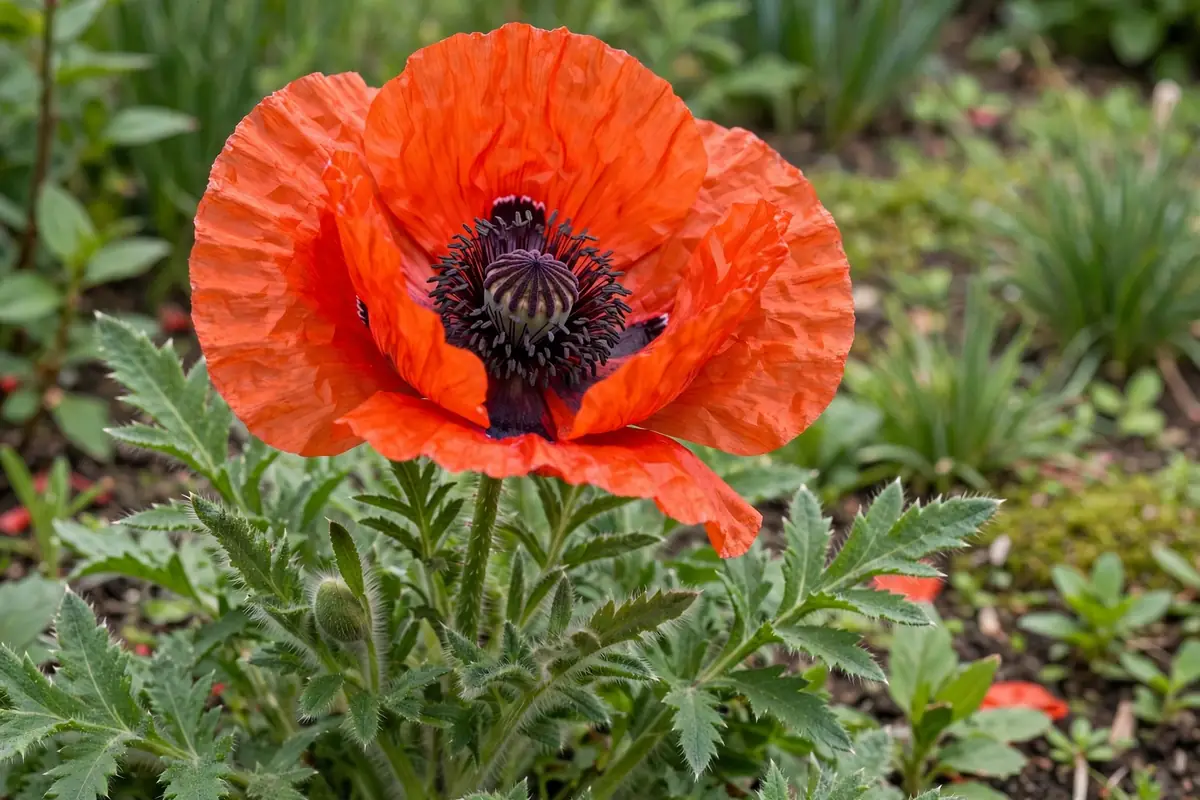
Spring: Oriental Poppy and Oxeye Daisy open the show, with Orange Blossom, Oregon Grape, Oxlip, Oconee Bells and Ozark Witch Hazel (late winter into spring) carrying the early garden, and Ocotillo firing red torches in desert gardens.
Summer: Peak O season — the whole orange army blooms now, from Orange Cosmos and Orange Milkweed to Oriental Lily, Oleander and the evening primroses.
Fall: Obedient Plant, Sweet Osmanthus, Orange Bells, Oxblood Lily and False Sunflower carry colour into autumn, while Ornamental Pepper fruits glow in containers.
Winter: Orange Star and Moth Orchid flower indoors, Orange Trumpet Vine and Orchid Tree bloom in frost-free gardens, and Ozark Witch Hazel opens the year with winter fragrance.
Indoor and Container-Friendly O Flowers
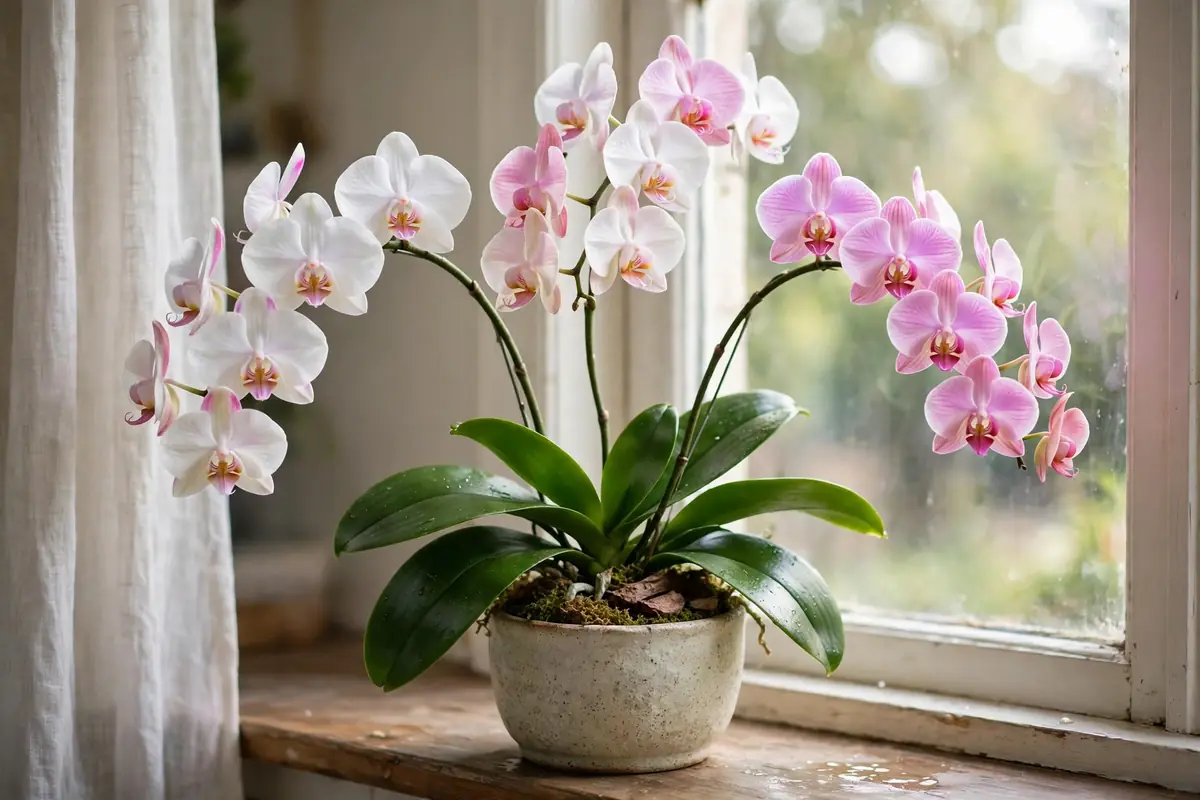
Moth Orchid is the indoor O star — months of bloom on a windowsill — joined by Oncidium Orchid, Orchid Cactus in hanging baskets, Purple Shamrock and Orange Star as houseplants, and the tender succulents Oscularia and Othonna ‘Ruby Necklace’ in pots. Outdoors, Osteospermum is the classic container annual, Ornamental Pepper lights up fall pots, and Orange Mint belongs in a container of its own — it spreads aggressively by runners in open beds.
Beginner-Friendly O Flowers
Orange cosmos, osteospermum, obedient plant, false sunflower and orange coneflower are nearly foolproof — they transplant easily, bloom for months and forgive missed waterings. For shade, try lily turf or oxlip; indoors, moth orchids are easier than their reputation suggests. Orlaya and Ocean Pearls are easy hardy annuals you sow direct where they are to flower.
Rare and Unusual O Flowers
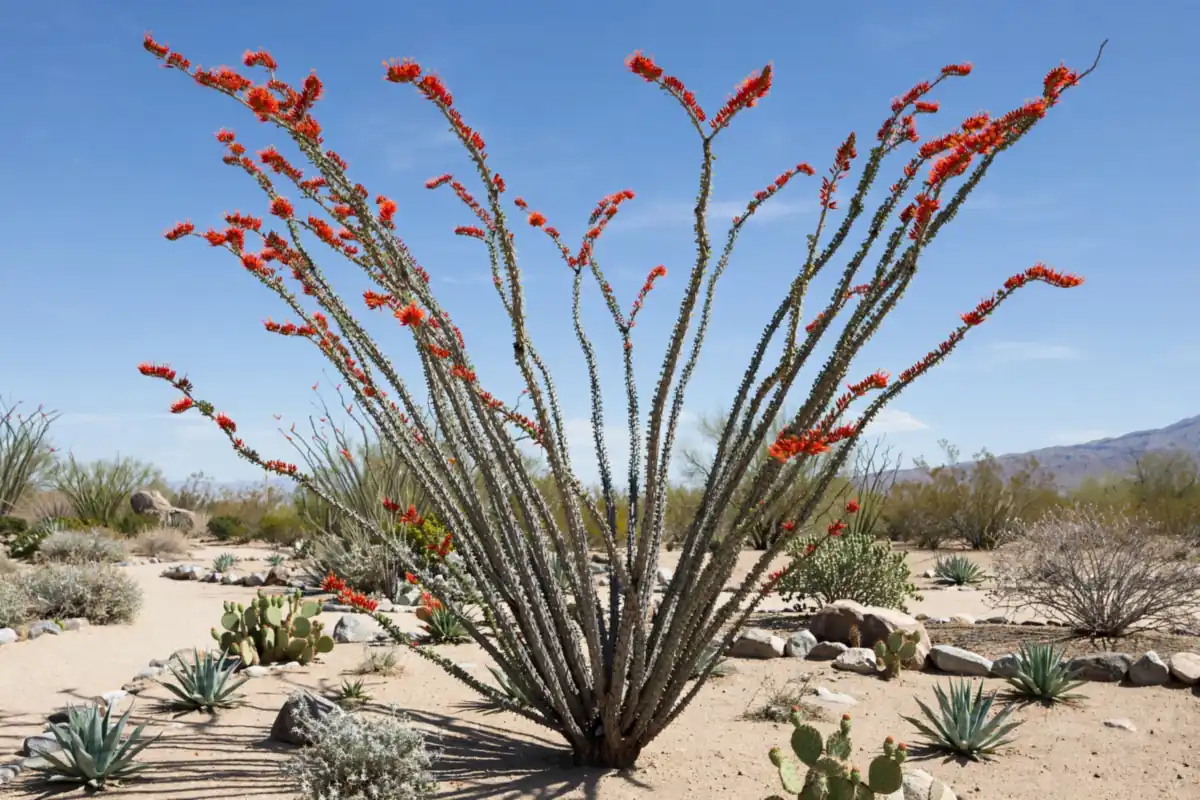
Oconee Bells is a genuine rarity — a wildflower found almost nowhere outside a few Appalachian coves — and Orange Fringed Orchid is a native bog orchid: buy both nursery-propagated only, never wild-collected. Ocotillo’s thorny canes (plant away from paths) and Old Man of the Mountain, a true alpine that rots in wet winter soil, reward specialist growers. Two safety notes from the list: Yellow Oleander is highly toxic in all parts — keep it away from children, pets and livestock — and Orange Hawkweed can be invasive, so plant it with caution.
O Flowers With Full Guides on HomeYorva
Some O favourites have full growing guides on this site:
- Cosmos flower — the full guide behind entry 13’s Orange Cosmos
- Fragrant flowers — orange blossom, sweet osmanthus and orange jessamine are among the most perfumed flowers on this page
- White flowers — orlaya, ocean pearls and oconee bells for white borders
Browse the rest of the alphabet: A, B, C, D, E, F, G, H, I, J, K, L, M, N, P, R, V, Z — the full A–Z collection is in our flower names A to Z pillar, and the companion list is plants that start with O.
Growing Tips for O-Flowers
With 55 different O-flowers on this list, a few universal rules will set you up for success no matter which ones you choose.
Match the plant to your zone first. Check the hardiness zones in the table above before you buy. Tropical O-flowers like moth orchid, oncidium, orange star, and orange jessamine simply cannot survive a freezing winter outdoors — grow them in pots you can move inside, or treat tender types like osteospermum and ornamental pepper as annuals.
Map your sun. Watch your garden for a day and note which spots get 6+ hours of direct sun (full-sun lovers like oriental poppy, orange cosmos, and orange milkweed go there) and which stay shady (oxlip, lily turf, and Oregon grape will thank you). Most flowering plants bloom poorly in too much shade, while shade plants scorch in full sun.
Drainage beats fertilizer. More O-flowers die from soggy roots than from hunger. Prickly pear, oriental lily, ornamental oregano, and oxblood lily demand sharp drainage — mix grit or perlite into heavy clay. When planting, set bulbs and crowns at the right depth; burying them invites rot.
Deadhead for more blooms. Snipping spent flowers off osteospermum, orange cosmos, and orange coneflower redirects energy into new buds instead of seeds, stretching the show by weeks. Leave seed heads on perennials like false sunflower and obedient plant if you enjoy winter structure or want self-sown seedlings.
Feed lightly, mulch well. A 2- to 3-inch layer of mulch keeps roots cool, holds moisture, and suppresses weeds around oriental lilies, oakleaf hydrangea, and most perennials. Go easy on nitrogen-heavy fertilizer — it grows leaves at the expense of flowers. A balanced slow-release feed in spring is plenty for most O-flowers.
Additional growing tips for the new entries
- Respect the toxic ones. Yellow oleander is highly poisonous — every part of it — and ocean pearls seeds contain saponins; site both well away from children, pets, and grazing animals, just like the oleander already on this page.
- Give desert and alpine plants sharp drainage. Ocotillo, oscularia, othonna, Oregon sunshine, and old man of the mountain all rot in soggy soil — plant them in gritty mix or raised beds, like the prickly pear and oriental poppy already on this page.
- Contain the spreaders. Orange mint runs by runners, ononis and ocean pearls self-sow freely, and orlaya reseeds where happy — grow mint in pots and deadhead the self-sowers if you want them in bounds, like the evening primrose already on this page.
Explore More Flowers
- Flowers That Start With A
- Flowers That Start With B
- Flowers That Start With C
- Flowers That Start With D
- Flowers That Start With E
- Flowers That Start With F
- Flowers That Start With G
- Flowers That Start With H
- Flowers That Start With I
- Flowers That Start With J
- Flowers That Start With K
- Flowers That Start With L
- Flowers That Start With M
- Flowers That Start With N
- Flowers That Start With P
- Flowers That Start With R
- Flowers That Start With S
- Flowers That Start With V
- Flowers That Start With W
- Flowers That Start With Z
- Plants That Start With T
Which O-Flowers Will You Grow?
From the exotic sprays of moth orchids to the roadside cheer of orange daylilies, flowers that start with O cover every season, every style, and USDA zones 3 through 11. Beginners can’t go wrong with orange cosmos, osteospermum, or obedient plant in a sunny bed, while shade gardeners should try oxlip, lily turf, or Oregon grape. If fragrance is your thing, sweet osmanthus, orange blossom, and Ozark witch hazel will perfume your yard for months. Pick three or four favorites matched to your sun and zone, plant them well, and the letter O will reward you with color from late winter’s witch hazel to fall’s obedient plant spikes.
Frequently Asked Questions
What flowers start with O?
Dozens of garden favorites start with O, including orchid, oriental lily, osteospermum, oriental poppy, oxeye daisy, obedient plant, orange blossom, evening primrose, sweet osmanthus, oleander, orange cosmos, orange coneflower, and orange milkweed. This guide covers 55 entries in total, each with its scientific name, bloom season, sun needs and hardiness zone.
What are the most popular flower names that start with O?
The most searched flower names that start with O are orchid, oriental lily, osteospermum, oriental poppy, oxeye daisy, obedient plant, orange blossom, evening primrose, sweet osmanthus, and oleander. Orchids lead as the classic O-flower for indoors, followed by fragrant oriental lilies and the butterfly-magnet orange coneflower.
What orange flowers start with O?
The letter O is full of orange blooms: orange cosmos, orange daylily, orange coneflower, orange star, orange milkweed, orange montbretia, orange honeysuckle, orange trumpet vine, orange hawkweed, orange bells, orange lily, and oriental poppy in orange shades. The new entries add orange fringed orchid, orange puccoon, orange milkwort, orange esperanza, and orange mint. Plant several together for a fiery warm-color border.
What white flowers start with O?
White O-flowers include orange blossom, sweet osmanthus, orange jessamine (white flowers despite the name), old man’s beard, oriental lily in white forms, and white osteospermum varieties. Oleander and obedient plant also come in white. The new entries add oconee bells’ white bells, orlaya’s white lace umbels, and ocean pearls’ papery white blooms. A white O-flower border glows beautifully at dusk.
Which perennial flowers start with O?
Reliable perennial O-flowers include oriental poppy, oxeye daisy, obedient plant, orange daylily, orange coneflower, false sunflower, orange milkweed, Ozark sundrops, pink evening primrose, ornamental oregano, Ohio spiderwort, and oakleaf hydrangea. Most return bigger each year with minimal care. The new entries add orange fringed orchid, oconee bells, orange puccoon, orange milkwort, old man of the mountain, Oregon sunshine, and ononis to the perennial ranks.
What flowers that start with O bloom in spring?
Spring O-bloomers include orange blossom, oxeye daisy, oriental poppy, oxlip, Oregon grape, Ozark sundrops, orange star, orange lily, and pink evening primrose. In warm zones, orange trumpet vine and orchid tree bloom from winter into spring. The new entries add oconee bells, ocotillo, oscularia, and orange mint’s lavender spikes. Plant a mix for continuous spring color from March through June.
What flowers beginning with O grow well in shade?
Shade-tolerant O-flowers include oxlip, lily turf, Oregon grape, oakleaf hydrangea, and Ozark witch hazel. Ohio spiderwort and obedient plant handle part shade, and moth orchid, oncidium, and purple shamrock thrive as houseplants in bright indirect indoor light. The new entries add oconee bells for woodland shade and othonna as a shade-tolerant succulent houseplant.
Which flowers starting with O are best for beginners?
Orange cosmos, osteospermum, obedient plant, false sunflower, and orange coneflower are nearly foolproof — they transplant easily, bloom for months, and forgive missed waterings. For shade, try lily turf or oxlip; indoors, moth orchids are easier than their reputation suggests. The new entries add orlaya and ocean pearls — both easy hardy annuals you sow direct.
What flowers that start with O attract hummingbirds and butterflies?
Orange milkweed is a monarch host plant, while orange coneflower, false sunflower, obedient plant, ornamental oregano, orange cosmos, and evening primrose are all pollinator magnets. The new entries add orange fringed orchid (swallowtails), orange esperanza and ocotillo (hummingbirds), Oregon sunshine, orange puccoon, and ononis for season-long pollinator action. Planting a few together feeds butterflies and bees from spring through fall.
Are there fragrant flowers that start with O?
Yes — some of the most fragrant flowers of all start with O. Orange blossom, sweet osmanthus, orange jessamine, and Ozark witch hazel are famous for perfume; oriental lilies scent summer evenings, evening primrose smells of lemon at dusk, and old man’s beard carries a sweet almond fragrance. The new entries add yellow oleander’s sweet trumpet scent and orange mint’s citrus foliage.
What flowers that start with the letter O make good cut flowers?
Oriental lilies, osteospermum, orange cosmos, orange coneflower, false sunflower, and obedient plant all make excellent, long-lasting cut flowers. Oxeye daisies add classic charm to arrangements. The new entries add orlaya’s airy white umbels and ocean pearls’ papery whites — both superb cut flowers. Cut stems early in the morning for longest vase life.
Which flowers that start with O are native to North America?
Native O-flowers include obedient plant, oxeye daisy (naturalized), orange coneflower, false sunflower, orange milkweed, Ozark sundrops, pink evening primrose, Ohio spiderwort, oakleaf hydrangea, Oregon grape, prickly pear, and Ozark witch hazel — excellent choices for native and pollinator gardens. The new entries add orange fringed orchid, oconee bells, orange puccoon, orange milkwort, old man of the mountain, Oregon sunshine, and ocotillo.

One Comment