40 Flowers That Start With R: Names, Pictures & Growing Tips
40 Flowers That Start With R: Names, Pictures & Growing Tips
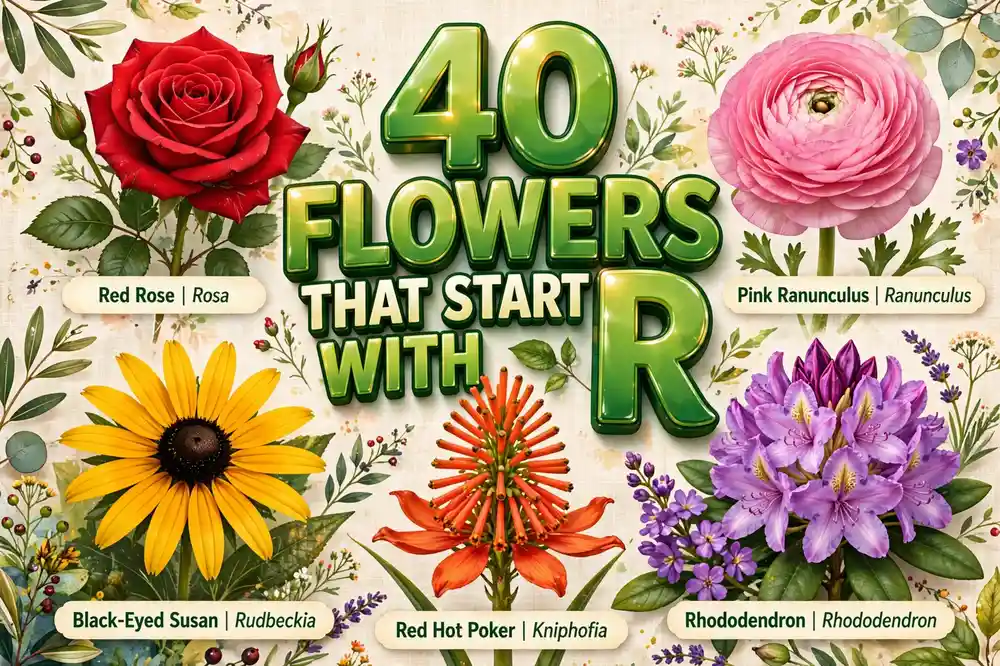
Looking for flower names that start with R? You are in the right place. The letter R delivers some of the most iconic blooms in American gardening, from the timeless romance of roses to the spring fireworks of ranunculus and the daisy-bright faces of black-eyed Susans. Whether you are designing a rose garden, hunting for red flowers that start with R for a bold summer bed, or planning a pollinator border, this guide brings together 40 real flowers that start with R, each with a vivid description and practical growing advice.
Each entry below includes the flower’s scientific name, bloom season, sun needs, and USDA hardiness zone, so you can tell at a glance which R-flowers will thrive in your yard. You will also find two quick comparison tables, beginner-friendly growing tips, and answers to the most common questions gardeners ask about flowers beginning with R. Grab your trowel and let’s get growing.
Quick Answer
Popular flowers that start with R include Rose, Ranunculus, Rhododendron, Black-Eyed Susan, Rock Rose, Red Hot Poker, Royal Poinciana, Russian Sage, Red Valerian, and Rattlesnake Master. They span bulbs, perennials, shrubs, and trees across USDA zones 2–12, so an R-flower fits nearly every US garden.
Table of Contents
R-Flowers at a Glance
Use this table to compare all 40 flowers that start with R side by side, from botanical names to native regions.
| Flower name | Scientific name | Type | Color | Native region |
|---|---|---|---|---|
| Rose | Rosa spp. | Deciduous/evergreen shrub | Red, pink, white, yellow, orange, purple | Asia, Europe, North America |
| Ranunculus | Ranunculus asiaticus | Tender tuberous perennial | Red, pink, orange, yellow, white | Eastern Mediterranean |
| Rhododendron | Rhododendron spp. | Evergreen/deciduous shrub | Pink, red, purple, white, yellow | Asia, North America, Europe |
| Black-Eyed Susan | Rudbeckia hirta | Short-lived perennial | Golden yellow with dark centers | North America |
| Rock Rose | Cistus spp. | Evergreen shrub | White, pink, purple with yellow centers | Mediterranean |
| Red Hot Poker | Kniphofia uvaria | Rhizomatous perennial | Red, orange, yellow spikes | South Africa |
| Royal Poinciana | Delonix regia | Tropical flowering tree | Scarlet-red and orange | Madagascar |
| Russian Sage | Salvia yangii | Woody perennial | Lavender-blue | Central Asia |
| Red Valerian | Centranthus ruber | Herbaceous perennial | Red-pink, white | Mediterranean |
| Rattlesnake Master | Eryngium yuccifolium | Herbaceous perennial | Greenish-white thistle heads | Central North America |
| Reticulated Iris | Iris reticulata | Bulb | Purple, blue, yellow | Turkey, Caucasus, Iran |
| Regal Geranium | Pelargonium × domesticum | Tender perennial | Pink, red, purple, white | South Africa (hybrid origin) |
| Rose Campion | Silene coronaria | Biennial/short-lived perennial | Magenta, pink, white | Southern Europe, Asia |
| Rain Lily | Zephyranthes candida | Bulb | White (pink and yellow species) | South America |
| Rose of Sharon | Hibiscus syriacus | Deciduous shrub | Pink, purple, blue, white, red | East Asia |
| Rieger Begonia | Begonia × hiemalis | Tropical perennial/houseplant | Red, pink, orange, yellow, white | Hybrid origin |
| Red Buckeye | Aesculus pavia | Deciduous small tree/shrub | Red | Southeastern North America |
| Rock Jasmine | Androsace septentrionalis | Alpine annual/biennial | White to pink | Northern Hemisphere |
| Round-Lobed Hepatica | Anemone americana | Woodland perennial | Blue, pink, white | Eastern North America |
| Rocky Mountain Columbine | Aquilegia coerulea | Herbaceous perennial | Blue and white | Rocky Mountains, North America |
| Red Chokeberry | Aronia arbutifolia | Deciduous shrub | White to pale pink | Eastern North America |
| Redbud | Cercis canadensis | Deciduous tree | Pink-purple | Eastern North America |
| Roman Chamomile | Chamaemelum nobile | Evergreen perennial herb | White with yellow centers | Western Europe |
| Rocket Larkspur | Consolida ajacis | Hardy annual | Blue, pink, purple, white | Mediterranean |
| Rose Verbena | Glandularia canadensis | Herbaceous perennial | Pink, purple, red, white | Eastern North America |
| Red Yucca | Hesperaloe parviflora | Evergreen succulent perennial | Coral-red, pink, yellow | Texas, Mexico |
| Rose Mallow | Hibiscus moscheutos | Herbaceous perennial | Pink, white, red | Eastern North America |
| Rough Blazing Star | Liatris aspera | Cormous perennial | Purple-pink | Central North America |
| Rocky Mountain Penstemon | Penstemon strictus | Herbaceous perennial | Blue-purple | Western North America |
| Purple Bell Vine | Rhodochiton atrosanguineum | Tender vine | Deep purple and maroon | Mexico |
| Red Flowering Currant | Ribes sanguineum | Deciduous shrub | Pink to deep red | Western North America |
| Rodgersia | Rodgersia pinnata | Rhizomatous perennial | Pink, red, white | China, Japan |
| Rugosa Rose | Rosa rugosa | Deciduous shrub | Pink, white, red-purple | East Asia |
| Roscoea | Roscoea spp. | Rhizomatous perennial | Purple, pink, yellow | Himalayas, China |
| Brown-Eyed Susan | Rudbeckia triloba | Biennial/short-lived perennial | Yellow with brown centers | Central North America |
| Rockfoil | Saxifraga spp. | Evergreen alpine perennial | White, pink, red, yellow | Northern Hemisphere mountains |
| Royal Catchfly | Silene regia | Herbaceous perennial | Scarlet-red | Central North America |
| Ragged Robin | Silene flos-cuculi | Herbaceous perennial | Pink | Europe, Asia |
| Rue Anemone | Thalictrum thalictroides | Woodland perennial | White to pale pink | Eastern North America |
| Red Trillium | Trillium erectum | Woodland perennial | Deep red to maroon | Eastern North America |
Bloom Season, Sun Needs & Hardiness Zones
Planning your garden calendar? This second table shows when each R-flower blooms, how much sun it wants, and the USDA zones where it grows outdoors year-round.
| Flower name | Bloom season | Sun needs | Hardiness zone |
|---|---|---|---|
| Rose | Summer to fall (repeat) | Full sun | 5–9 (varies by type) |
| Ranunculus | Spring | Full sun to part shade | 8–11; annual elsewhere |
| Rhododendron | Spring | Part shade | 4–8 (varies by variety) |
| Black-Eyed Susan | Summer to fall | Full sun | 3–9 |
| Rock Rose | Late spring to early summer | Full sun | 8–10 |
| Red Hot Poker | Summer to fall | Full sun | 5–9 |
| Royal Poinciana | Late spring to summer | Full sun | 10–12 |
| Russian Sage | Summer to fall | Full sun | 5–9 |
| Red Valerian | Late spring to fall | Full sun to part shade | 5–8 |
| Rattlesnake Master | Summer | Full sun | 3–8 |
| Reticulated Iris | Early spring | Full sun to part shade | 5–9 |
| Regal Geranium | Spring to early summer | Full sun to part shade | 10–11; annual/houseplant elsewhere |
| Rose Campion | Summer | Full sun | 4–8 |
| Rain Lily | Summer to fall (after rains) | Full sun to part shade | 7–10 |
| Rose of Sharon | Summer to fall | Full sun to part shade | 5–9 |
| Rieger Begonia | Fall to spring (indoors) | Bright indirect light | Houseplant (10–11 outdoors) |
| Red Buckeye | Spring | Full sun to part shade | 4–9 |
| Rock Jasmine | Spring | Full sun | 2–7 |
| Round-Lobed Hepatica | Early spring | Part to full shade | 3–8 |
| Rocky Mountain Columbine | Late spring to early summer | Part shade | 3–8 |
| Red Chokeberry | Spring | Full sun to part shade | 3–9 |
| Redbud | Spring | Full sun to part shade | 4–9 |
| Roman Chamomile | Summer | Full sun to part shade | 4–9 |
| Rocket Larkspur | Late spring to summer | Full sun | Grown as annual |
| Rose Verbena | Spring to fall | Full sun | 6–10 |
| Red Yucca | Late spring to fall | Full sun | 5–11 |
| Rose Mallow | Summer | Full sun | 5–9 |
| Rough Blazing Star | Late summer to fall | Full sun | 3–9 |
| Rocky Mountain Penstemon | Late spring to early summer | Full sun | 3–8 |
| Purple Bell Vine | Summer to fall | Full sun to part shade | 9–11; annual elsewhere |
| Red Flowering Currant | Spring | Full sun to part shade | 6–8 |
| Rodgersia | Summer | Part shade | 5–8 |
| Rugosa Rose | Summer to fall (repeat) | Full sun | 2–9 |
| Roscoea | Summer | Part shade | 6–9 |
| Brown-Eyed Susan | Summer to fall | Full sun to part shade | 4–8 |
| Rockfoil | Spring | Full sun to part shade | 4–8 |
| Royal Catchfly | Summer | Full sun to part shade | 4–8 |
| Ragged Robin | Late spring to summer | Full sun to part shade | 4–8 |
| Rue Anemone | Spring | Part to full shade | 4–8 |
| Red Trillium | Spring | Part to full shade | 4–8 |
40 Flowers That Start With R: The Complete List
Here they are — 40 beautiful, real flowers beginning with R, each with growing notes so you can pick the right ones for your garden.
1. Rose (Rosa spp.)
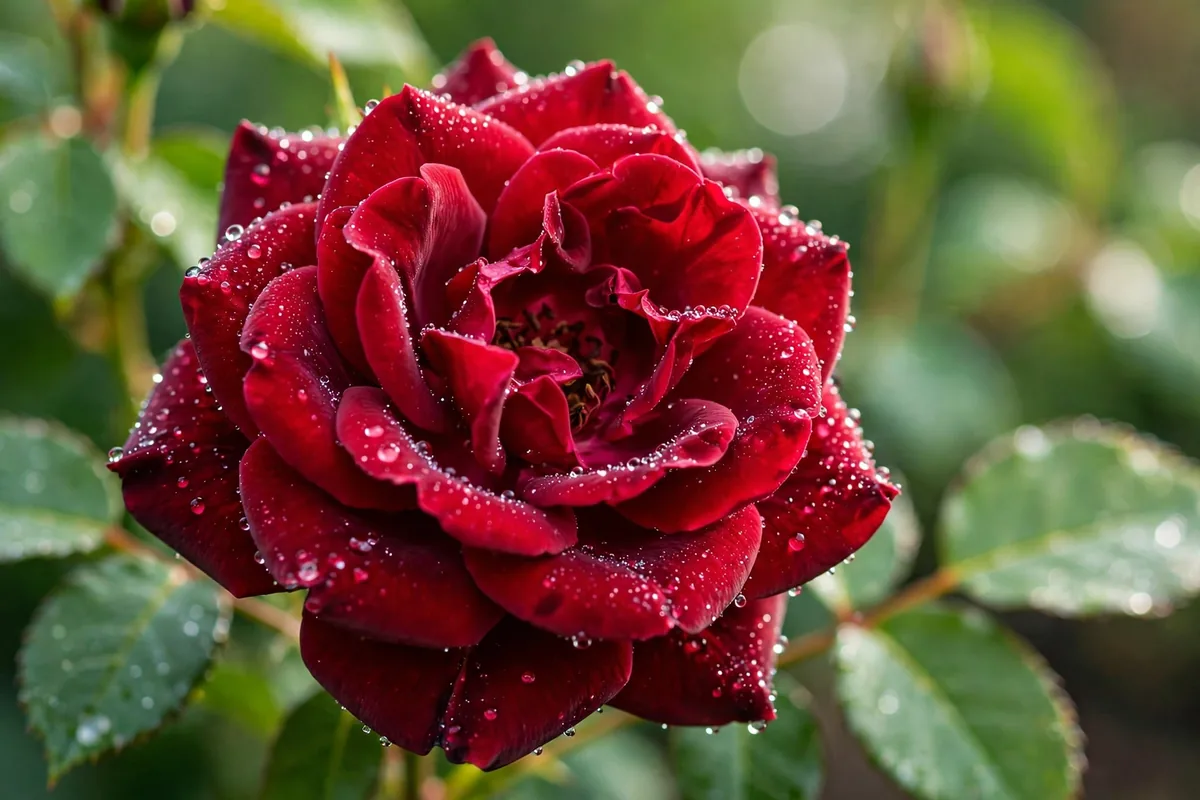
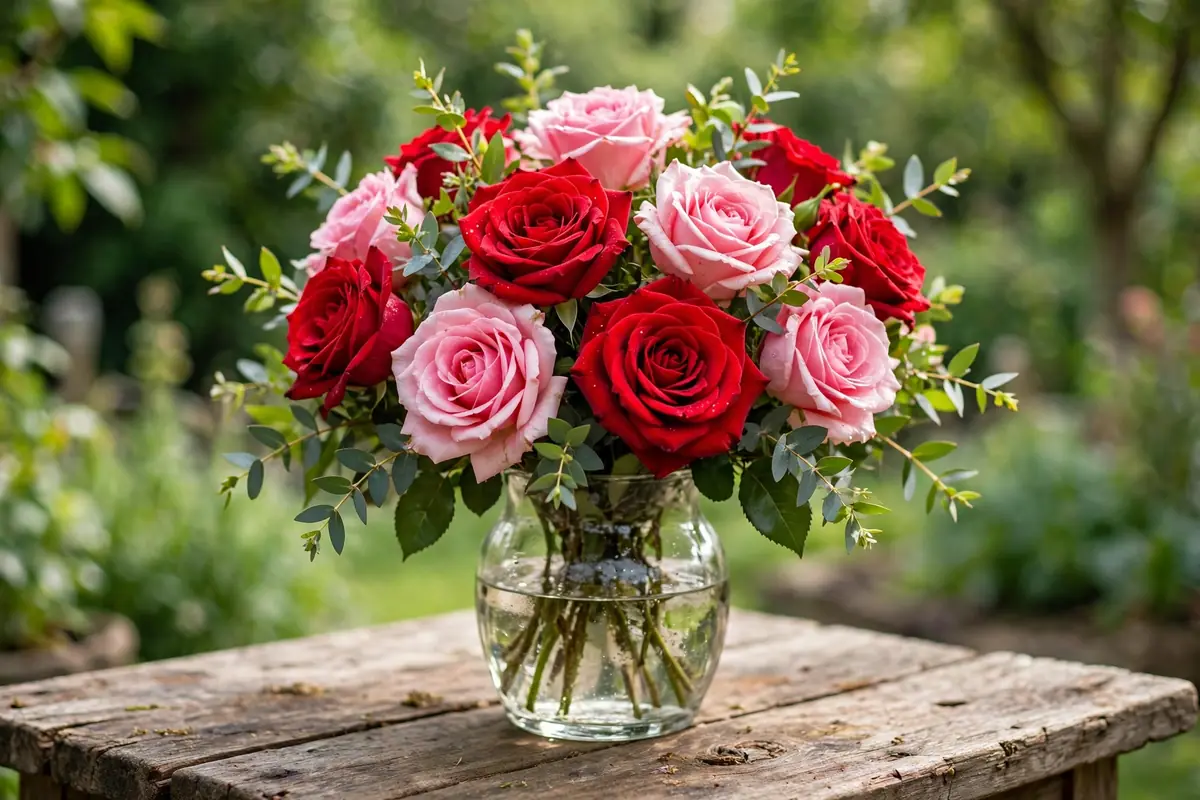
No flower carries more meaning than the rose. With thousands of varieties — hybrid teas, floribundas, climbers, and old garden roses — blooms come in nearly every color except true blue, many with unforgettable fragrance. Roses want full sun, rich well-drained soil, and good air circulation. Prune in late winter, feed in spring, and deadhead spent blooms to keep the show going into fall.
Bloom: Summer to fall (repeat) | Sun: Full sun | Zone: 5–9, varies by type | Best for: Cut flowers, romantic gardens
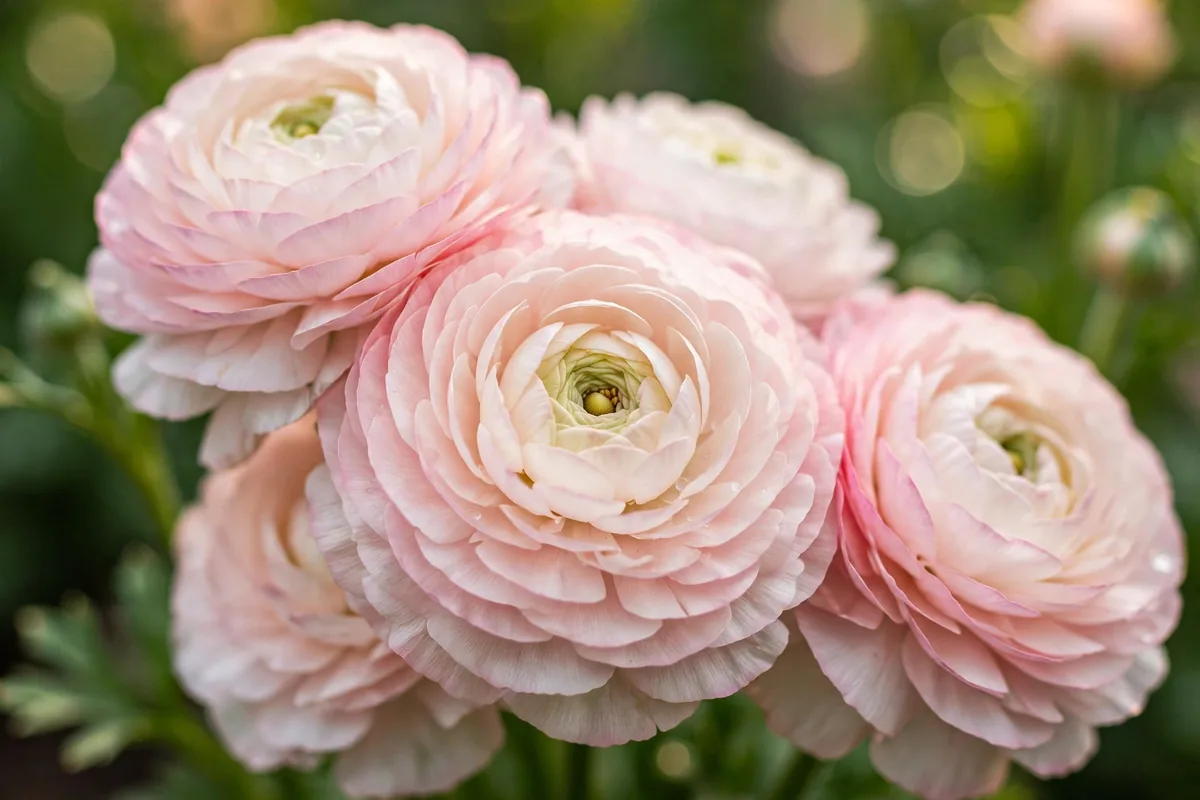
2. Ranunculus (Ranunculus asiaticus)
Ranunculus looks like a rose made of tissue paper, with layer upon layer of silky petals in red, pink, orange, yellow, and white. The Tecolote strain produces huge 3- to 5-inch blooms on long stems that florists prize. Plant corms in fall in warm zones or early spring elsewhere, giving them cool weather and full sun. They bloom gloriously in spring, then rest through summer heat.
Bloom: Spring | Sun: Full sun to part shade | Zone: 8–11; annual elsewhere | Best for: Cut flowers, spring color
3. Rhododendron (Rhododendron spp.)
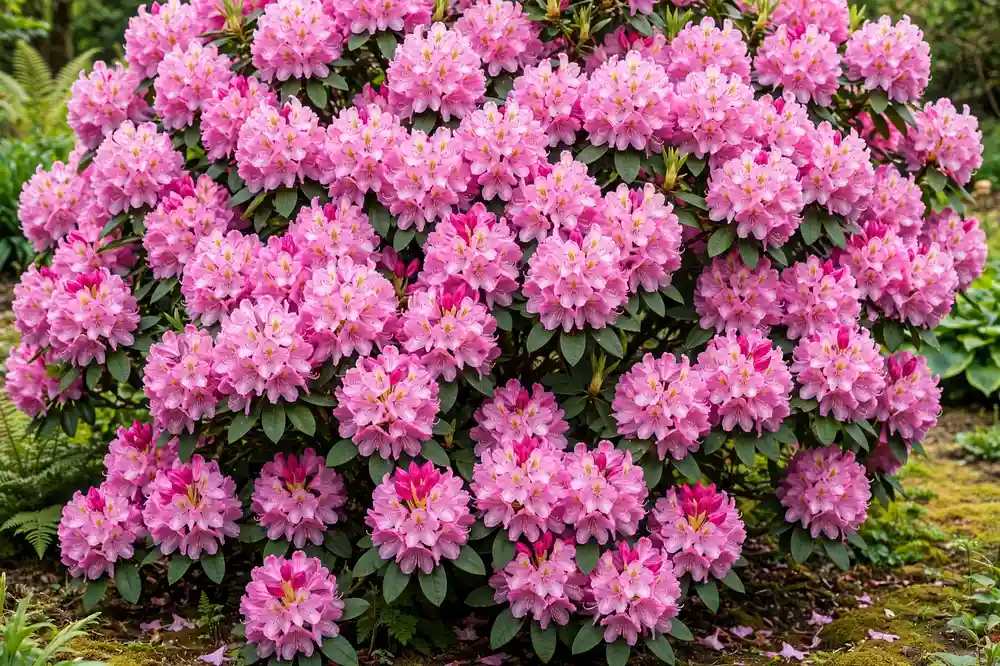
Rhododendrons turn spring shade gardens into festivals of pink, red, purple, and white trusses, each holding up to 20 bell-shaped flowers. These broadleaf evergreens demand acidic soil (pH 4.5–6.0), dappled shade, and consistent moisture — treat them like azaleas, their close cousins. Mulch generously and never plant deeper than the nursery pot. Compact types suit foundation beds; large-leaf varieties suit woodland edges.
Bloom: Spring | Sun: Part shade | Zone: 4–8, varies by variety | Best for: Shade gardens, woodland edges
4. Black-Eyed Susan (Rudbeckia hirta)
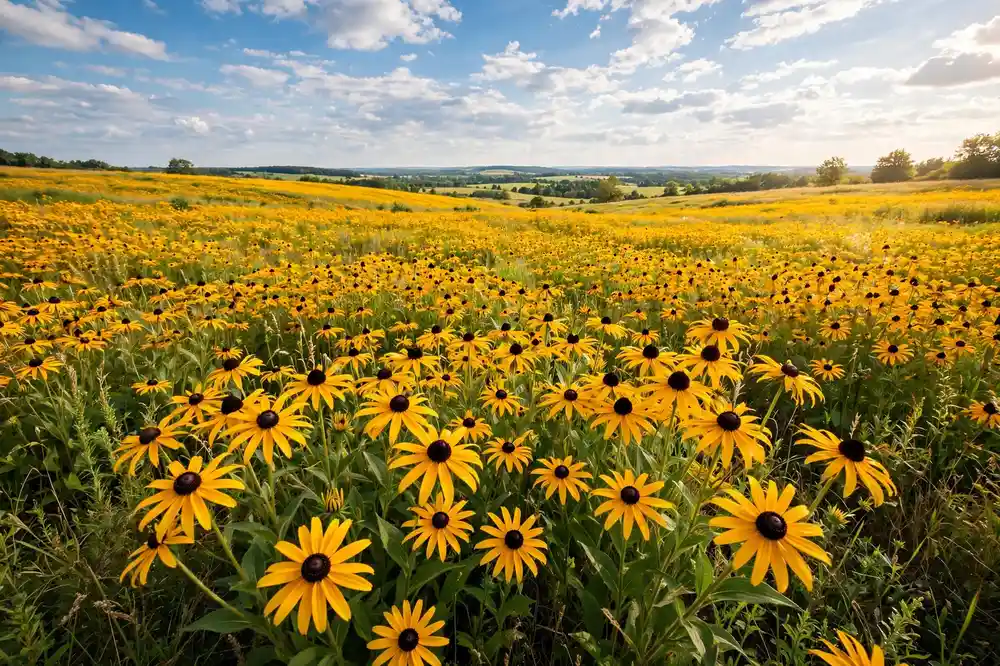
Black-eyed Susans are the golden workhorses of the summer garden, covering 2- to 3-foot mounds with cheerful yellow daisies centered in chocolate brown. Native to North America, they thrive in full sun and poor soil, shrug off drought, and bloom from midsummer to frost. Deadhead for more flowers or leave seed heads for goldfinches. The classic ‘Goldsturm’ variety remains a top performer.
Bloom: Summer to fall | Sun: Full sun | Zone: 3–9 | Best for: Sunny borders, pollinators
5. Rock Rose (Cistus spp.)
Rock roses bring Mediterranean charm with papery white, pink, or purple blooms — each lasting a single day but replaced by dozens of buds for weeks. The evergreen, aromatic foliage stays handsome year-round. These tough shrubs demand full sun and sharp drainage, hating wet winter soil. Once established they need almost no water, making them stars of drought-tolerant and coastal gardens in warm climates.
Bloom: Late spring to early summer | Sun: Full sun | Zone: 8–10 | Best for: Drought-tolerant gardens, slopes
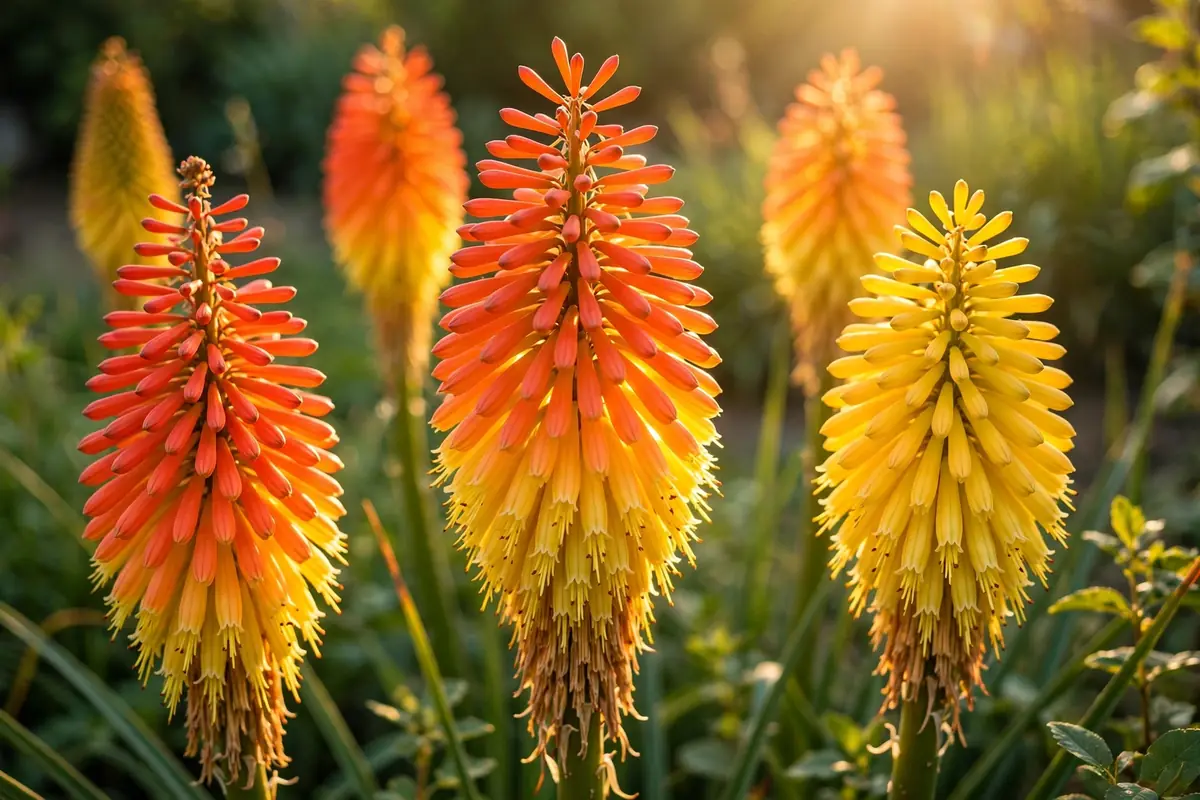
6. Red Hot Poker (Kniphofia uvaria)
Red hot pokers light up summer borders like torches, with 3- to 4-foot spikes that open red at the top and fade to yellow below. Hummingbirds mob them. This South African native wants full sun and well-drained soil; soggy winter crowns rot, so mulch lightly and avoid heavy clay. Leave the strappy evergreen foliage alone in fall — cutting it back invites cold damage.
Bloom: Summer to fall | Sun: Full sun | Zone: 5–9 | Best for: Hummingbirds, bold vertical accents
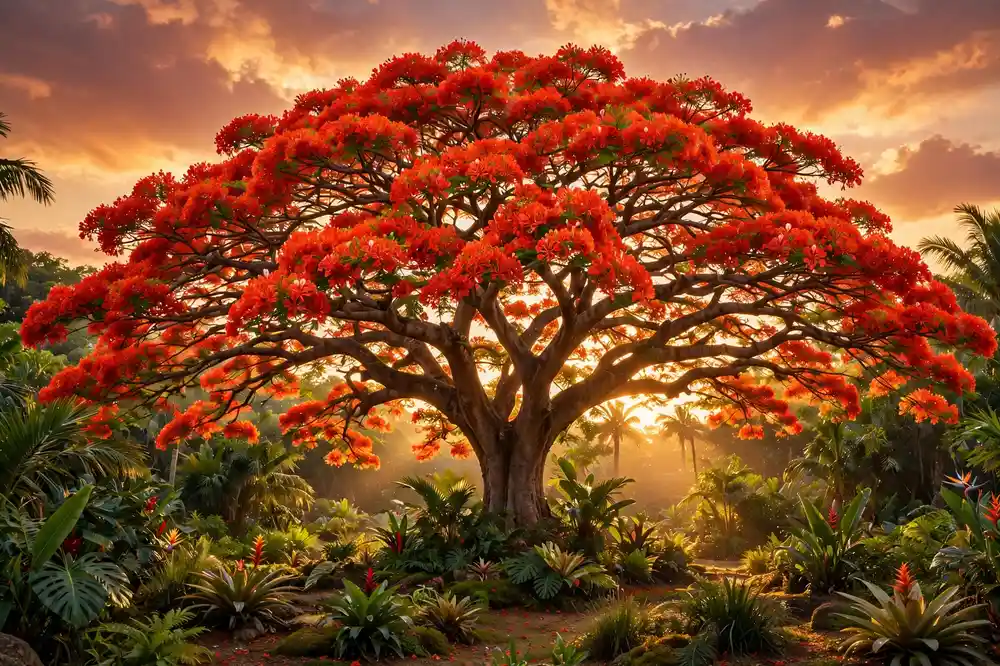
7. Royal Poinciana (Delonix regia)
Royal poinciana is pure tropical theater — a wide-spreading tree that erupts in umbrella-like clusters of scarlet-orange flowers each spring, often while the feathery leaves are still emerging. Native to Madagascar, it needs frost-free zones, full sun, and room to spread its broad canopy. Give young trees deep, infrequent water; established specimens handle drought and salt with ease.
Bloom: Late spring to summer | Sun: Full sun | Zone: 10–12 | Best for: Tropical shade trees, dramatic spring color
8. Russian Sage (Salvia yangii)
Russian sage fills late-summer borders with clouds of lavender-blue flowers on silvery stems, glowing at dusk and feeding bees for months. Despite the name, it is a Central Asian native in the sage family — botanists moved it from Perovskia to Salvia. It demands full sun and lean, well-drained soil, since rich soil makes it floppy. Cut stems to the ground in early spring for a fresh, upright flush.
Bloom: Summer to fall | Sun: Full sun | Zone: 5–9 | Best for: Silver-blue contrast, pollinator borders
9. Red Valerian (Centranthus ruber)
Red valerian spills clusters of tiny crimson-pink flowers over walls and cottage borders from late spring to fall, thriving in poor, chalky, or gravelly soil where fussier plants fail. Butterflies adore it. This Mediterranean native self-sows freely — deadhead after the first flush to limit seedlings and encourage rebloom. The white form, ‘Albus’, lights up evening gardens.
Bloom: Late spring to fall | Sun: Full sun to part shade | Zone: 5–8 | Best for: Cottage gardens, walls, poor soil
10. Rattlesnake Master (Eryngium yuccifolium)
Rattlesnake master is a conversation piece: stiff, yucca-like leaves topped with golf-ball-sized, greenish-white thistle flowers on 3- to 5-foot stems. This prairie native thrives in full sun and average to poor soil, tolerating both drought and clay. Its deep taproot resents transplanting, so plant it once and leave it be. A magnet for native bees and beneficial wasps.
Bloom: Summer | Sun: Full sun | Zone: 3–8 | Best for: Native prairies, architectural texture
11. Reticulated Iris (Iris reticulata)
Reticulated irises are among the first flowers of the year, pushing fragrant purple, blue, or yellow blooms through late-winter soil — sometimes while snow still lingers. At just 4–6 inches tall, they shine in rock gardens, along paths, and in pots by the front door. Plant bulbs 3–4 inches deep in fall in well-drained soil. They multiply slowly into charming drifts.
Bloom: Early spring | Sun: Full sun to part shade | Zone: 5–9 | Best for: Early spring color, rock gardens
12. Regal Geranium (Pelargonium × domesticum)
Regal geraniums, also called Martha Washington geraniums, flaunt ruffled, pansy-like blooms in rich jewel tones, often with dramatic dark blotches. They bloom heaviest in the cool of spring and early summer, sulking in extreme heat. Give them full sun to part shade and cool nights. In most of the US they star as spring container plants or overwinter indoors on a bright windowsill.
Bloom: Spring to early summer | Sun: Full sun to part shade | Zone: 10–11; annual/houseplant elsewhere | Best for: Spring containers, patios
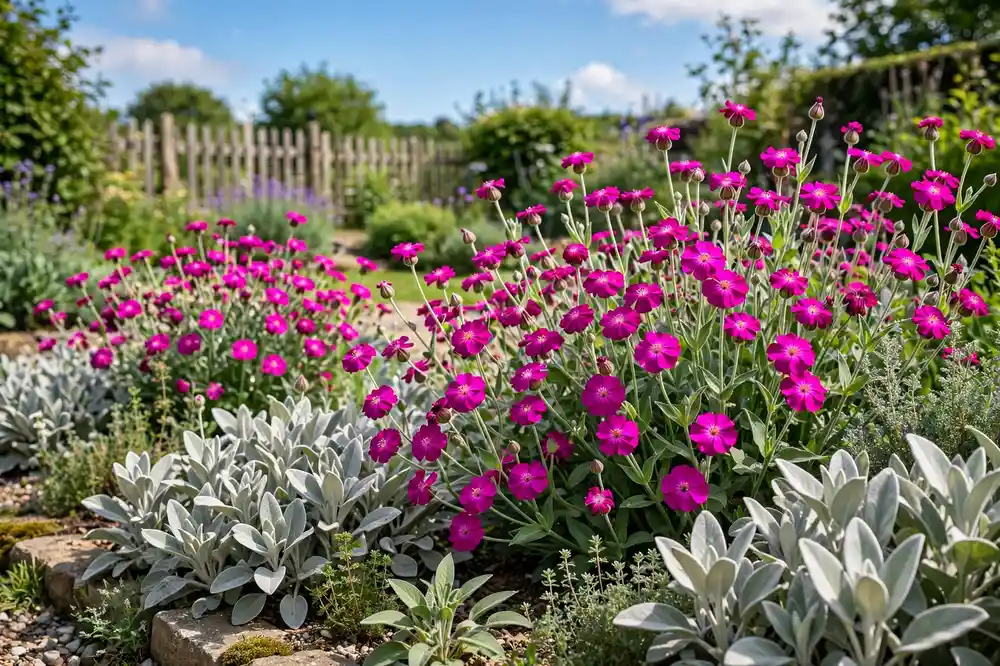
13. Rose Campion (Silene coronaria)
Rose campion pairs shocking-magenta flowers with felted silver foliage — a color combination that electrifies cottage borders. This short-lived perennial, often grown as a biennial, self-sows generously, so one planting becomes a permanent colony. It asks only for full sun and decent drainage. Deadhead if you want to limit volunteers, or let seedlings fill gaps. The white form is equally lovely.
Bloom: Summer | Sun: Full sun | Zone: 4–8 | Best for: Silver-and-pink schemes, self-sowing drifts
14. Rain Lily (Zephyranthes candida)
Rain lilies perform magic after summer storms: within days of a good soaking, white — or pink and yellow in other species — crocus-like flowers pop up on 6- to 10-inch stems. Plant bulbs in spring in full sun to part shade with regular water during the growing season. In warm zones they naturalize into delightful colonies; in colder areas, lift bulbs or grow them in pots.
Bloom: Summer to fall, after rains | Sun: Full sun to part shade | Zone: 7–10 | Best for: Surprise blooms, edging
15. Rose of Sharon (Hibiscus syriacus)
Rose of Sharon covers itself in hibiscus-like blooms — pink, purple, blue, white, or red, many with contrasting throats — from midsummer into fall, when few shrubs flower. This tough deciduous shrub tolerates heat, drought, and poor soil once established. Prune in late winter to shape and boost blooms, since flowers form on new wood. Newer sterile varieties won’t self-sow.
Bloom: Summer to fall | Sun: Full sun to part shade | Zone: 5–9 | Best for: Late-summer shrubs, hedges
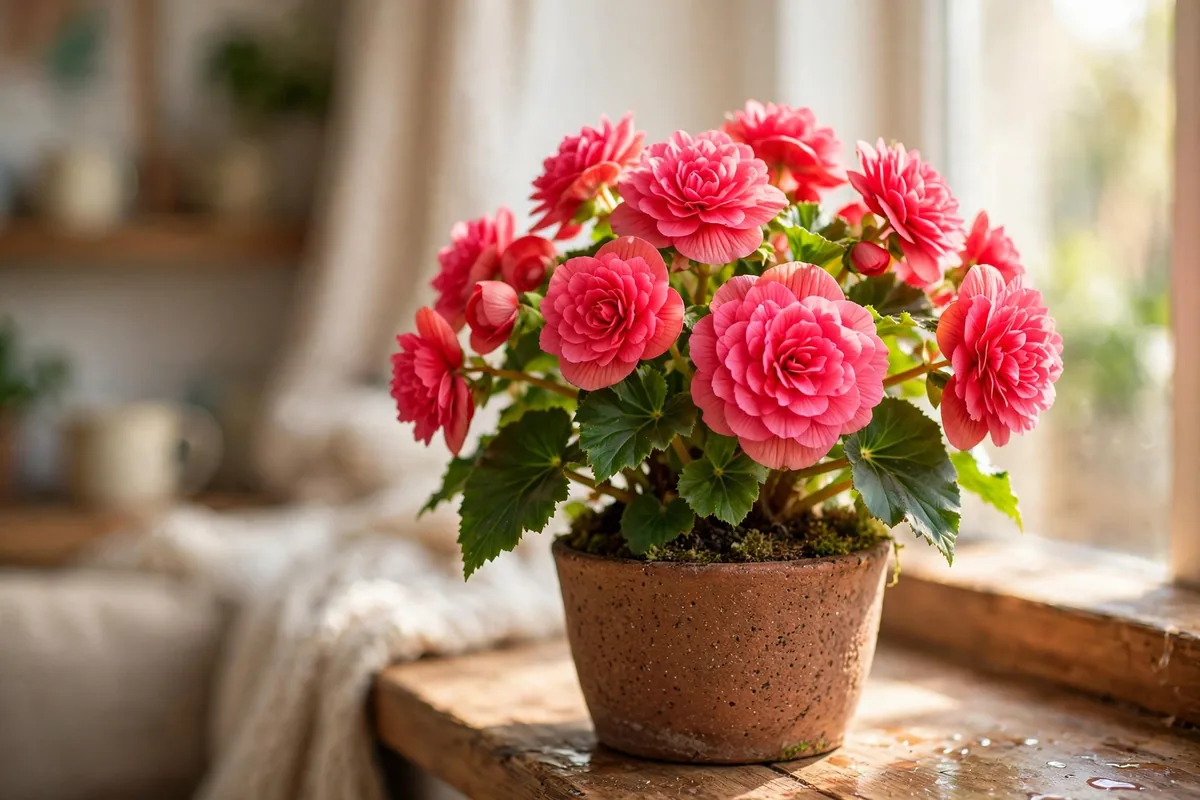
16. Rieger Begonia (Begonia × hiemalis)
Rieger begonias are the florist’s winter stars, smothered in clusters of rose-like double blooms in red, pink, orange, yellow, or white. They shine as holiday gift plants and bright indoor displays from fall through spring. Give them bright indirect light, even moisture, and cool room temperatures. Let the top inch of soil dry between waterings — soggy roots are their downfall.
Bloom: Fall to spring indoors | Sun: Bright indirect light | Zone: Houseplant (10–11 outdoors) | Best for: Indoor color, gifts
17. Red Buckeye (Aesculus pavia)
Red buckeye brings hummingbirds to spring gardens with upright panicles of brilliant red tubular flowers. This small southeastern native tree — often grown as a large shrub — reaches 10–20 feet, thriving in sun to part shade and moist soil. Glossy buckeye nuts follow in fall; they are handsome but toxic if eaten, so site it thoughtfully. Fall foliage turns a respectable yellow.
Bloom: Spring | Sun: Full sun to part shade | Zone: 4–9 | Best for: Hummingbirds, native woodland edges
18. Rock Jasmine (Androsace septentrionalis)
Rock jasmine is a tiny alpine charmer, forming tight rosettes that send up umbrellas of dainty white-to-pink flowers in spring. At just a few inches tall, it belongs in rock gardens, troughs, and the fronts of alpine beds. It demands full sun and gritty, fast-draining soil, resenting winter wet. Short-lived but self-sows where happy — a jewel for crevice gardens.
Bloom: Spring | Sun: Full sun | Zone: 2–7 | Best for: Rock gardens, alpine troughs
19. Round-Lobed Hepatica (Anemone americana)
Round-lobed hepatica is a spring-woodland treasure, opening blue, pink, or white anemone-like flowers above leathery three-lobed leaves — often before neighboring plants leaf out. This eastern native wants rich, humus-filled shade and consistent moisture. Colonies expand slowly but surely. Leave last year’s leaves in place through winter; they shelter the emerging buds.
Bloom: Early spring | Sun: Part to full shade | Zone: 3–8 | Best for: Woodland gardens, early wildflowers
20. Rocky Mountain Columbine (Aquilegia coerulea)
Colorado’s state flower earns the honor: elegant spurred blooms in sky blue and white nod above lacy foliage in late spring. This mountain native prefers part shade, cool summers, and humus-rich, well-drained soil. It self-sows gently, creating natural drifts. Like all columbines, it may host leaf miners — the squiggly trails are cosmetic, and the flowers carry on regardless.
Bloom: Late spring to early summer | Sun: Part shade | Zone: 3–8 | Best for: Mountain gardens, native wildflowers
21. Red Chokeberry (Aronia arbutifolia)
Red chokeberry earns its place twice: clouds of white-to-pink spring flowers followed by brilliant red berries that persist into winter, feeding birds when little else remains. This eastern native shrub grows 6–10 feet tall in sun or part shade and tolerates wet soil. Fall foliage blazes red. Plant several for the best berry set — cross-pollination helps.
Bloom: Spring | Sun: Full sun to part shade | Zone: 3–9 | Best for: Native shrubs, winter berries
22. Redbud (Cercis canadensis)
Eastern redbud sets spring ablaze when bare branches erupt in rosy pink-purple pea-like flowers — even the trunk blooms, a phenomenon called cauliflory. Heart-shaped leaves follow, turning gold in fall. This adaptable native tree grows 20–30 feet in sun or part shade. Give it well-drained soil and avoid moving large specimens; young container-grown trees establish best.
Bloom: Spring | Sun: Full sun to part shade | Zone: 4–9 | Best for: Spring flowering trees, native landscapes
23. Roman Chamomile (Chamaemelum nobile)
Roman chamomile carpets the ground with apple-scented foliage and cheerful white daisies all summer. Treadable enough for garden paths and lawns in mild climates, it doubles as the classic calming tea herb. Give it full sun to part shade and well-drained soil. Mow or shear spent flowers to keep the mat tidy and encourage fresh blooms.
Bloom: Summer | Sun: Full sun to part shade | Zone: 4–9 | Best for: Fragrant lawns, herb gardens, tea
24. Rocket Larkspur (Consolida ajacis)
Rocket larkspur sends up 3- to 4-foot spires of blue, pink, purple, or white blooms that look like delphinium’s wild cousin — at a fraction of the fuss. Sow seeds directly in fall or early spring; it dislikes transplanting. This hardy annual blooms from late spring into summer, then self-sows for next year. All parts are toxic if eaten, so keep it from grazing pets.
Bloom: Late spring to summer | Sun: Full sun | Zone: Grown as annual | Best for: Cottage spires, cut flowers
25. Rose Verbena (Glandularia canadensis)
Rose verbena spreads into weed-smothering mats topped with clusters of pink, purple, or red flowers from spring to fall. This eastern native thrives in full sun and average soil, tolerating heat and drought once established. Shear back by a third in midsummer for a fresh flush. It weaves beautifully through mixed borders and over wall edges.
Bloom: Spring to fall | Sun: Full sun | Zone: 6–10 | Best for: Groundcover, sprawling borders
26. Red Yucca (Hesperaloe parviflora)
Red yucca is neither red nor a yucca — but gardeners don’t care. Its grass-like clumps send up 4- to 6-foot wands of coral-red tubular bells that hummingbirds fight over from late spring to fall. This Texas native demands full sun and sharp drainage, thriving on neglect and extreme heat. Evergreen foliage adds winter structure. Cut spent stalks to the base.
Bloom: Late spring to fall | Sun: Full sun | Zone: 5–11 | Best for: Desert gardens, hummingbirds, xeriscapes
27. Rose Mallow (Hibiscus moscheutos)
Rose mallow produces dinner-plate-sized blooms — up to 10 inches across — in pink, white, or red on 4- to 6-foot stems each summer. This eastern native perennial dies to the ground in winter and emerges late in spring, so mark its spot and be patient. Give it full sun and consistently moist soil; it even tolerates wet feet. Each flower lasts a day, but buds keep coming for weeks.
Bloom: Summer | Sun: Full sun | Zone: 5–9 | Best for: Bold summer color, rain gardens
28. Rough Blazing Star (Liatris aspera)
Rough blazing star does everything backwards — its purple-pink flower spikes bloom from the top down, a quirky trait butterflies and bees adore. This prairie native grows 2–4 feet tall in full sun and poor soil, tolerating drought with ease. Plant corms in spring, 2–4 inches deep. Leave seed heads standing for goldfinches and winter interest.
Bloom: Late summer to fall | Sun: Full sun | Zone: 3–9 | Best for: Native prairies, pollinators
29. Rocky Mountain Penstemon (Penstemon strictus)
Rocky Mountain penstemon erects 2-foot spires of intense blue-purple tubular flowers in late spring, glowing against evergreen basal rosettes. This western native wants full sun and lean, fast-draining soil — rich or soggy ground shortens its life. It self-sows politely in gravelly spots. Hummingbirds visit, and the seed heads add winter texture.
Bloom: Late spring to early summer | Sun: Full sun | Zone: 3–8 | Best for: Western natives, rock gardens
30. Purple Bell Vine (Rhodochiton atrosanguineum)
Purple bell vine dangles extraordinary two-tone bells — deep purple tubes beneath maroon calyces — on twining 6- to 10-foot vines all summer. This Mexican native wants full sun to part shade and rich, moist soil. In warm zones it returns yearly; elsewhere grow it as a fast annual from seed started indoors. Give it a trellis and watch hummingbirds arrive.
Bloom: Summer to fall | Sun: Full sun to part shade | Zone: 9–11; annual elsewhere | Best for: Trellises, hanging baskets
31. Red Flowering Currant (Ribes sanguineum)
Red flowering currant drapes itself in drooping clusters of pink-to-red blossoms in early spring, feeding the season’s first hummingbirds and bees. This western native shrub grows 6–10 feet in sun or part shade. Blue-black berries follow, relished by birds. Prune right after flowering, since next year’s buds form on summer growth.
Bloom: Spring | Sun: Full sun to part shade | Zone: 6–8 | Best for: Early pollinators, native hedges
32. Rodgersia (Rodgersia pinnata)
Rodgersia brings drama to damp shade with bold, horse-chestnut-like leaves and 3- to 4-foot plumes of pink, red, or white astilbe-like flowers in summer. This Asian native demands consistently moist, humus-rich soil — it sulks in dry shade. Give it room to form impressive clumps. The bronze-tinged spring foliage adds a second season of interest.
Bloom: Summer | Sun: Part shade | Zone: 5–8 | Best for: Moist shade, bold foliage
33. Rugosa Rose (Rosa rugosa)
Rugosa rose is the toughest rose of all, shrugging off salt spray, sandy soil, and zone-2 winters while pumping out fragrant pink, white, or magenta blooms all summer. Wrinkled, disease-resistant foliage turns gold in fall, followed by huge vitamin-rich rose hips. Plant it as an informal hedge or coastal screen. Prune lightly — it blooms on old and new wood.
Bloom: Summer to fall (repeat) | Sun: Full sun | Zone: 2–9 | Best for: Tough hedges, coastal gardens, rose hips
34. Roscoea (Roscoea spp.)
Roscoeas look like tiny exotic orchids but survive real winters, sending up purple, pink, or yellow hooded flowers in summer above strap-like leaves. These Himalayan natives want part shade and humus-rich, well-drained soil that stays moist in summer. They emerge late in spring, so mark plantings to avoid spearing them. A refined choice for woodland edges.
Bloom: Summer | Sun: Part shade | Zone: 6–9 | Best for: Woodland edges, collectors
35. Brown-Eyed Susan (Rudbeckia triloba)
Brown-eyed Susan is black-eyed Susan’s wilder cousin, branching into airy 3- to 5-foot sprays studded with hundreds of small golden daisies with brown centers. This native biennial blooms its heart out from summer to fall, then self-sows. Give it full sun to part shade and average soil. It fills the back of borders with carefree, pollinator-friendly color.
Bloom: Summer to fall | Sun: Full sun to part shade | Zone: 4–8 | Best for: Naturalized drifts, pollinators
36. Rockfoil (Saxifraga spp.)
Rockfoils are the jewels of the rock garden, forming mossy or encrusted rosettes that erupt in sprays of white, pink, red, or yellow flowers each spring. With hundreds of species, there is a saxifrage for every crevice. Most want full sun to part shade with gritty, fast-draining soil and resent winter wet. Tuck them between stones where their delicate blooms can shine.
Bloom: Spring | Sun: Full sun to part shade | Zone: 4–8 | Best for: Rock gardens, crevice plantings
37. Royal Catchfly (Silene regia)
Royal catchfly lives up to its name with brilliant scarlet star-shaped flowers held high on 3- to 4-foot stems in midsummer — a beacon for hummingbirds crossing the prairie. This central North American native wants full sun to part shade and well-drained soil. Slow to establish from its deep taproot, it rewards patience with decades of loyal blooms.
Bloom: Summer | Sun: Full sun to part shade | Zone: 4–8 | Best for: Hummingbirds, native prairies
38. Ragged Robin (Silene flos-cuculi)
Ragged robin charms with raggedly fringed pink flowers that look like tiny tattered ballerinas dancing above meadow grass in late spring. This European native loves moist soil and even tolerates damp meadows where other perennials drown. Give it full sun to part shade. Deadhead to prevent rampant self-sowing, or let it naturalize in wildflower areas.
Bloom: Late spring to summer | Sun: Full sun to part shade | Zone: 4–8 | Best for: Wildflower meadows, damp spots
39. Rue Anemone (Thalictrum thalictroides)
Rue anemone carpets spring woodlands with delicate white-to-pink flowers floating above whorled, maidenhair-like foliage. This eastern native forms slowly expanding colonies in rich, humusy shade, often alongside hepaticas and trilliums. Give it consistent moisture and leave it undisturbed — happy colonies persist for decades. A must for native shade gardens.
Bloom: Spring | Sun: Part to full shade | Zone: 4–8 | Best for: Native woodlands, shade groundcover
40. Red Trillium (Trillium erectum)
Red trillium — also called wake-robin — unfurls three maroon petals above a whorl of three leaves each spring, with a faint scent that attracts its fly pollinators. This eastern woodland native needs rich, moist shade and time; colonies build slowly from seed. Never pick the flower — removing the leaves starves the rhizome. A true native-garden treasure.
Bloom: Spring | Sun: Part to full shade | Zone: 4–8 | Best for: Woodland wildflowers, native shade
Growing Tips for R-Flowers
With 40 different R-flowers on this list, a few universal rules will set you up for success no matter which ones you choose.
Match the plant to your zone first. Check the hardiness zones in the tables above before you buy. Tropical R-flowers like royal poinciana simply cannot survive a freezing winter outdoors — grow them only where winters stay mild. Tender beauties like purple bell vine and regal geranium work as annuals or overwintered houseplants in colder regions.
Map your sun. Watch your garden for a day and note which spots get 6+ hours of direct sun (full sun lovers like black-eyed Susan, red hot poker, and Russian sage go there) and which stay shady (rhododendron, hepatica, trillium, and rue anemone will thank you). Most flowering plants bloom poorly in too much shade.
Drainage beats fertilizer. More R-flowers die from soggy roots than from hunger. Rock rose, rock jasmine, rockfoil, and red yucca demand sharp drainage — mix grit or perlite into heavy clay. When planting, set the crown at the same depth it grew in the pot; burying stems invites rot.
Deadhead for more blooms. Snipping spent flowers off roses, ranunculus, rose campion, and red valerian redirects energy into new buds instead of seeds, stretching the show by weeks. Leave seed heads on rudbeckias and blazing star if you enjoy feeding goldfinches or want self-sown seedlings.
Feed lightly, mulch well. A 2- to 3-inch layer of mulch keeps roots cool, holds moisture, and suppresses weeds around rhododendrons, rodgersias, and roses. Go easy on nitrogen-heavy fertilizer — it grows leaves at the expense of flowers. A balanced slow-release feed in spring is plenty for most R-flowers.
Respect the taproot. Several R natives — rattlesnake master, royal catchfly, and redbud — grow deep taproots and resent transplanting. Buy young container plants, set them in their permanent spot, water well through the first season, and then leave them alone to settle in for decades.
Explore More Flowers
Which R-Flowers Will You Grow?
From the first reticulated iris of late winter to the last black-eyed Susan of fall, flowers that start with R carry a garden through every season. Start with easy winners matched to your conditions — perhaps roses and Russian sage for a sunny border, rhododendron and trillium for shade, or a potted rieger begonia for the windowsill. Red flowers that start with R, like red hot poker, royal catchfly, and red valerian, add sizzling color wherever they land. Pick three or four favorites from this list, give them the right spot, and the letter R will reward you with blooms from spring’s first thaw to autumn’s final frost.
Frequently Asked Questions
What flowers start with R?
Dozens of garden favorites start with R, including rose, ranunculus, rhododendron, black-eyed Susan, rock rose, red hot poker, royal poinciana, Russian sage, red valerian, rattlesnake master, redbud, and rose of Sharon. This guide covers 40 of them with growing details for each.
What are the most popular flower names that start with R?
The most searched flower names that start with R are rose, ranunculus, rhododendron, black-eyed Susan, red hot poker, Russian sage, redbud, and rose of Sharon. Roses lead by a wide margin — they are the world’s most popular flower — followed by spring-loved ranunculus and the fall color of rudbeckias.
What red flowers start with R?
Beautiful red flowers that start with R include red hot poker, royal catchfly, red valerian, red buckeye, red trillium, and red yucca — plus red varieties of rose, ranunculus, rhododendron, rose campion, and rose mallow. For the deepest reds, look for red buckeye’s spring panicles and royal catchfly’s scarlet summer stars.
What pink flowers start with R?
Pretty pink R-flowers include rose, ranunculus, rhododendron, rose of Sharon, rose campion, rose verbena, rodgersia, ragged robin, red flowering currant, and rain lily species in pink. Rugosa roses and red valerian also bloom in lovely pink shades from summer into fall.
Which perennial flowers start with R?
Reliable perennial flowers that start with R include black-eyed Susan, Russian sage, red hot poker, red valerian, rose campion, rattlesnake master, rose mallow, rough blazing star, Rocky Mountain penstemon, brown-eyed Susan, royal catchfly, and ragged robin. Most return bigger and better each year with minimal care.
What flowers that start with R bloom in spring?
Spring bloomers include redbud, rhododendron, reticulated iris, ranunculus, rockfoil, round-lobed hepatica, rue anemone, red trillium, red flowering currant, red buckeye, red chokeberry, rock jasmine, and Rocky Mountain columbine. For continuous spring color, layer early bulbs like reticulated iris under flowering shrubs like redbud and rhododendron, then let woodland wildflowers such as hepatica and trillium fill the shady spots.
What flowers beginning with R grow well in shade?
Shade-tolerant R-flowers include rhododendron, round-lobed hepatica, red trillium, rue anemone, rodgersia, roscoea, and Rocky Mountain columbine. Rieger begonia and regal geranium thrive as indoor plants in bright indirect light. Most want rich, humus-filled soil and consistent moisture rather than dry shade. For deep shade, hepatica, trillium, and rue anemone form lovely native colonies, while rodgersia and roscoea add bold texture to damp, part-shade borders.
Which flowers starting with R are best for beginners?
Black-eyed Susan, rose campion, red valerian, rugosa rose, rose of Sharon, and rain lily are nearly foolproof — they transplant easily, bloom for months, and forgive missed waterings. For instant impact, try red hot poker or Russian sage in a sunny spot with decent drainage.
What flowers that start with R attract hummingbirds and butterflies?
Red hot poker, royal catchfly, red yucca, red buckeye, and red flowering currant are hummingbird magnets thanks to their tubular red blooms. Butterflies flock to black-eyed Susan, brown-eyed Susan, rough blazing star, rattlesnake master, red valerian, and rose verbena. Plant several together for season-long pollinator action.
Are there fragrant flowers that start with R?
Yes! Many roses — especially old garden roses and rugosa roses — are intensely fragrant. Reticulated iris carries a sweet violet-like scent, Roman chamomile smells of apples when brushed, and some rhododendron varieties are sweetly perfumed. Ranunculus has a light, pleasant fragrance up close.
What flowers that start with the letter R make good cut flowers?
Roses are the classic cut flower, lasting a week or more in a vase. Ranunculus is a florist favorite with a 7- to 10-day vase life. Also excellent: rocket larkspur, black-eyed Susan, brown-eyed Susan, and red hot poker. Cut stems early in the morning and condition them in cool water for longest life.
Which flowers that start with R are native to North America?
Native R-flowers include black-eyed Susan, brown-eyed Susan, rattlesnake master, royal catchfly, rough blazing star, redbud, red buckeye, red trillium, round-lobed hepatica, rue anemone, rose mallow, rose verbena, red flowering currant, red chokeberry, Rocky Mountain penstemon, and Rocky Mountain columbine — excellent choices for native and pollinator gardens.