
Larkspur Flower: Meaning, Types and How to Grow Larkspur
Every blue spire in a cottage garden has two suspects: the delphinium, diva of the border, and its easy-going annual cousin the larkspur — same towering spikes of violet, pink and white, at a tenth of the effort. Sow larkspur once where it is to flower, and it returns by self-seeding for years, the laziest vertical accent in gardening.
Larkspur is the July birth flower, the buttercup family’s tall blue, and a plant with a double reputation: beloved cut flower, honest cattle poison. This guide covers what a larkspur flower is (and how it differs from delphinium), the six kinds worth growing, what it means, and how to grow it — starting with why autumn sowing beats spring, and why the seed packet wants a week in your fridge.
Quick Answer
A larkspur flower is the spurred bloom of annual plants in the genus Consolida (buttercup family), most often Consolida ajacis. Larkspur grows 1 to 4 feet tall with spikes of blue, purple, pink or white flowers in late spring and early summer, and it is the July birth flower. Sow seed directly where it will flower — it hates transplanting — in autumn in mild zones or early spring elsewhere, in full sun and drained soil. Caution: all parts are toxic if eaten, so keep it away from grazing livestock and treat it as decoration, not food.
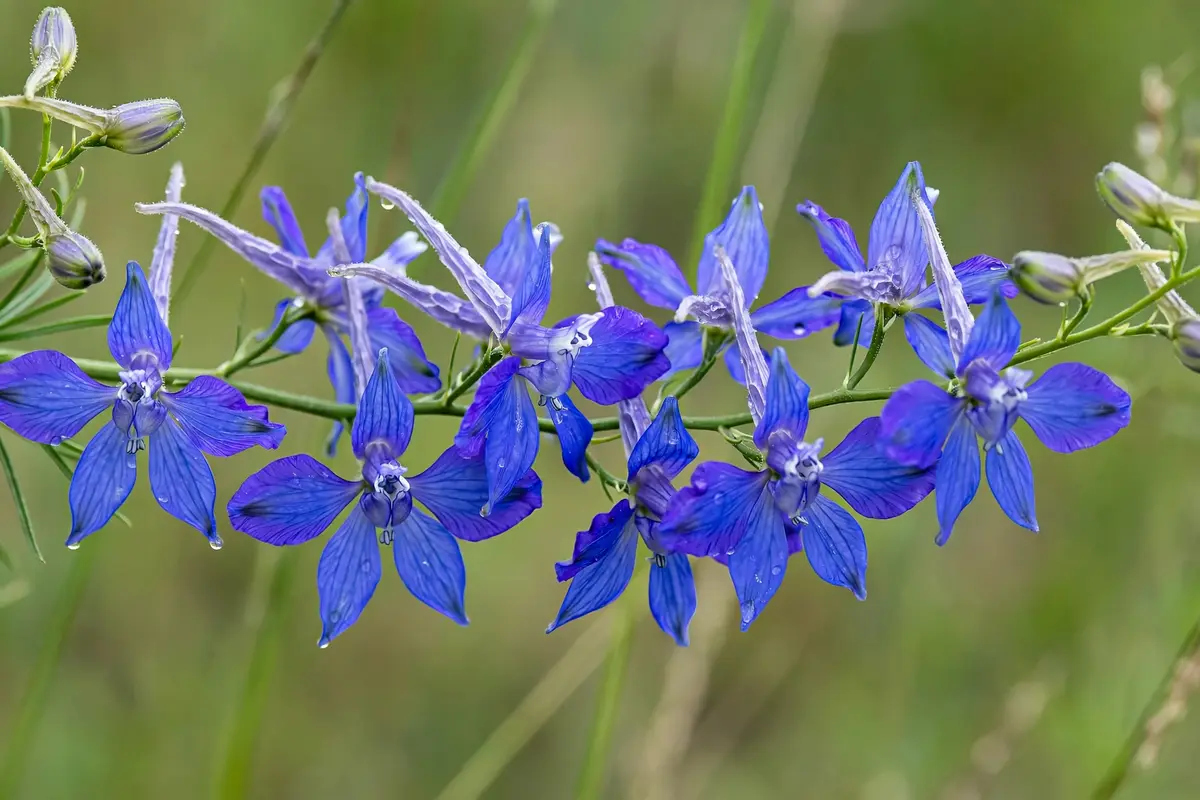
Table of Contents
- What Is a Larkspur Flower?
- Types of Larkspur and 6 Kinds Worth Growing
- Larkspur Flower Meaning and Symbolism
- Larkspur Flower Colours and Their Meanings
- How to Grow Larkspur
- Common Mistakes When Growing Larkspur
- Larkspur vs Delphinium: What Is the Difference?
- Frequently Asked Questions
What Is a Larkspur Flower?
Larkspurs are hardy annuals of the genus Consolida — around forty species in the buttercup family, Ranunculaceae, native across Europe, the Mediterranean and western Asia. Botanists moved them out of Delphinium into their own genus (recent DNA work argues about moving them back; seed catalogues mostly say Consolida), and the garden distinction is practical: larkspur is the annual one with the single spur. That spur — a long nectar tube jutting from the back of each flower — is the name: bent like a lark’s hind claw, or “spur”. Greek myth ties the flower to the hero Ajax, from whose blood it sprang (the same myth claimed for hyacinth; the markings on the petals were read as “AI”, Ajax’s initials and his cry of grief). You can read more on the Consolida page on Wikipedia.
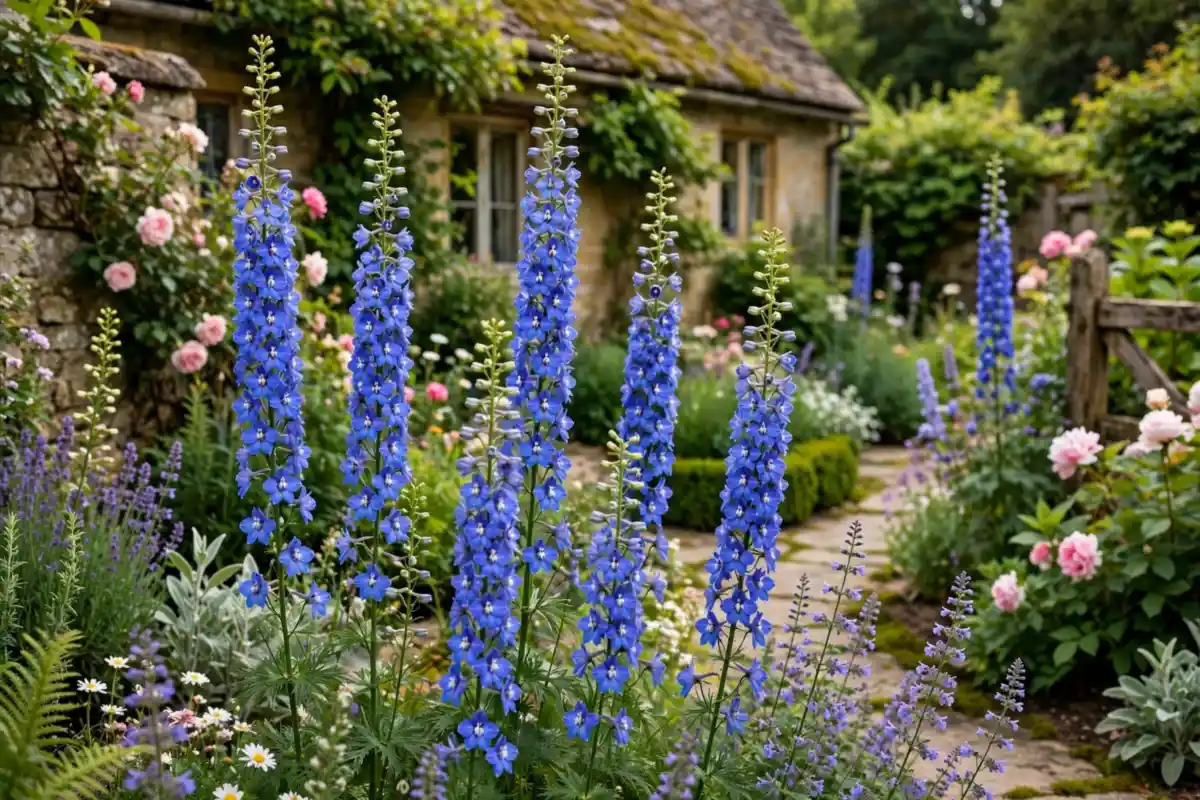
What larkspur does in the garden is verticality for free: ferny, finely cut foliage, then unbranched or branching spikes studded with spurred flowers in the full blue-purple-pink-white range. It is the July birth flower (sharing the month with water lily), a mainstay of the cutting garden — it lasts well in water and dries superbly — and, honesty again, a genuinely poisonous plant: its diterpene alkaloids are the same family of toxins as its delphinium cousins, and larkspur poisoning of cattle on western rangelands is a documented ranching problem. Gardeners simply grow it, cut it, and don’t eat it — like most of the buttercup family.
Larkspur Flower Quick Facts
- Botanical name: Consolida ajacis, C. regalis and hybrids.
- Family: Ranunculaceae, the buttercup family.
- Life cycle: hardy annual; self-seeds freely.
- Height: 1 to 4 feet by strain.
- Bloom time: late spring to midsummer.
- Sun and soil: full sun; well-drained soil; seed needs cold to germinate well.
- Good to know: the July birth flower; toxic if eaten; dries beautifully.
Types of Larkspur and 6 Kinds Worth Growing
Seed strains do the variety work here. The table separates them; the profiles follow. For the full list of flower names, see our flower names A to Z guide.
| Type | What it is | Height | Colours | Best use |
|---|---|---|---|---|
| Giant Imperial strain | Branching base, delphinium-like spikes | 3–4 ft | Full range | Cutting, borders |
| QIS series | Professional cut-flower strain | 3–4 ft | Singles by colour | Florists, straight stems |
| ‘Misty Lavenders’ | Smoky lavender-blue mix | 3 ft | Lavender shades | Drying, soft schemes |
| Hyacinth-flowered dwarfs | Stocky double spikes | 1–1½ ft | Full range | Fronts, pots |
| Forked larkspur | C. regalis, airier sprays | 1–2 ft | Blue-violet | Wildflower plantings |
| Double-flowered strains | Ruffled doubles, ‘Giant Hyacinth’ | 2–3 ft | Full range | Showiest spikes |
1. Giant Imperial — the Border Standard
The strain that made annual larkspur respectable: plants branch from the base (older types ran up a single stem), carrying long, delphinium-style spikes in the full colour range — the deepest blues outside the perennial border. At 3 to 4 feet it is the cottage garden’s backbone from June into July, and the strain to sow for a first attempt: forgiving, floriferous, and it self-seeds true enough to become a fixture.
2. QIS Series — the Florist’s Larkspur
Bred for the professional cut-flower trade: single colours sold separately (QIS Carmine, QIS Dark Blue, QIS White and more), dead-straight stems, uniform height, and florets packed for shipping. Market growers sow it by the row; home gardeners who cut seriously should too. It is the strain behind most larkspur in quality bouquets — including the spikes in our blue flowers roundup’s dreams.
3. ‘Misty Lavenders’ — the Smoky One
A colour mix rather than a form: antique lavenders, smoky mauves and grey-blues that dry to the shades dried-flower arrangers chase hardest. Grow it for the drying rack and for wedding work in the fashionable muted palette. Fresh it reads romantic; dried, it keeps for years with the colour of old silk.
4. Hyacinth-Flowered Dwarfs — the Front Row
Stocky 12- to 18-inch plants with dense, hyacinth-like spikes — the larkspur for pot edges, window boxes and the front of the border where the giants would loom. The sacrifice is stem length for cutting; the gain is a plant that needs no staking, ever, and flowers in the same colours as its tall cousins.
5. Forked Larkspur — Consolida regalis
The wilder species: looser, branching sprays of smaller blue-violet flowers with a meadow character the bred strains have lost. It is a European wildflower (now rare in the wild in parts of its range) and the choice for naturalistic plantings, wildflower mixes and gardens that want larkspur’s colour without its architecture. Self-seeds like a native, because it is one.
6. Double-Flowered Strains — the Ruffles
Double larkspurs carry rosettes instead of single spurred stars: fuller spikes, a peony-like richness at spike scale, and the longest vase life of the group. ‘Giant Hyacinth-flowered’ mixtures are the common seed offer. Purists note the doubles lose the flower’s delicate silhouette; everyone else just enjoys the extra petals.
Larkspur Flower Meaning and Symbolism
Larkspur means levity, lightness and laughter — an open heart and a carefree spirit. Of all the birth flowers it is the merriest: while other months got solemnity, July got the flower of summer ease, of ardent attachment worn lightly. In the Victorian language it also signified an open heart and ardent attachment; the plant’s lifting spikes and dancing spurs made it the emblem of lightness itself.
As the July birth flower it is the birthday gift for midsummer people — our July birth flower guide pairs it with water lily, its serene co-symbol (the month gets one flower for energy, one for calm). A bouquet of larkspur says: stay light, stay laughing, I am attached to you ardently and without weight.
Larkspur Flower Colours and Their Meanings
The Victorians split this flower’s message sharply by colour — including its one famous negative:
- Blue and purple larkspur — grace, joy and first love’s sweetness: the classic colours, and the strongest senders of the happy message.
- White larkspur — a happy nature and joyful spirit: innocence with a smile.
- Pink larkspur — fickleness: the family’s one cautionary colour, in the old lists a gentle accusation of inconstancy. (Modern givers ignore this and send pink freely; Victorian recipients read the fine print.)
How to Grow Larkspur
The whole craft is in the sowing: cold, direct, and early. Gardeners on r/gardening on Reddit summarise it as “sow it like peas, in the cold, where it will flower”.
Sowing: Autumn Beats Spring
Larkspur seed germinates best after chilling — the famous trick is a week or two in the fridge (in a sealed packet with a pinch of damp sand) before sowing, which lifts germination dramatically. Sow directly where plants will flower: larkspur grows a taproot and hates transplanting. Best of all is autumn sowing in zones 6 and warmer, or anywhere winters are not brutally wet: the seedlings overwinter as small rosettes and rocket in spring, flowering weeks before spring-sown plants and standing twice as tall. Spring sowing (as early as the soil can be worked) is the cold-zone route. Scatter thinly, cover with a quarter-inch of soil — seed needs darkness — and thin seedlings to 9–12 inches.
Growing On
Full sun, soil drained and only moderately rich (over-rich ground gives foliage and flop). Tall strains benefit from twiggy support slipped in early or netting over the patch; water in drought while spikes are building. Deadhead the main spike just as it fades and side branches extend the show; leave the last spikes to seed if you want the colony permanent — larkspur self-sows so reliably that one sowing can furnish a garden for decades. Watch for powdery mildew in humid spells (airflow helps) and crown rot in wet soil (drainage again).
Cutting and Drying
Cut spikes when the bottom third to half of the florets are open — the rest open in the vase — and expect a week of life. For drying, larkspur is elite: hang single stems upside down in a dark, airy place and the blues (the colour most flowers lose) hold fast. Dried larkspur is a wreath and bouquet staple; the ‘Misty Lavenders’ shades are bred with exactly this in mind. Treat dried stems gently and keep bouquets out of hungry hands: this is a toxic plant fresh or dry.
Common Mistakes When Growing Larkspur
The first mistake is starting it in pots and transplanting — the taproot objects, and sulking plants never recover; direct-sow always. The second is sowing warm in late spring and blaming the seed: without a chill, germination is patchy. (The fridge trick exists precisely for this.)
The third mistake is rich soil and shade, producing leafy, flopping spikes. The fourth is deadheading every last spike and then wondering where next year’s plants are — leave some to self-seed. And the fifth is growing it where livestock graze or toddlers browse: admire its spires in the flower garden, where its poison is nobody’s business.
Larkspur vs Delphinium: What Is the Difference?
The question that launched a thousand mislabeled seed packets. Both are buttercup-family spires in the same colours, and they were once classified together. The working differences: larkspur (Consolida) is an annual grown from direct-sown seed, with finer, fernier foliage, looser spikes, and a single nectar spur per flower; its seeds are carried in a single follicle pod. Delphinium (the elatum hybrids) is a perennial, grown from plants or tricky seed, with denser, show-bench spikes, bolder foliage, multiple spurs in a more complex flower, and seed in clusters of pods.
In the garden the choice is effort versus permanence: delphiniums reward feeding, staking and dividing with drama; larkspur rewards a handful of autumn-scattered seed with the same vertical joy, a season at a time, forever renewed. Their spiky summer company — the snapdragon flower — shares the sowing season and the cutting patch.
Frequently Asked Questions
Is larkspur an annual or a perennial?
An annual — a hardy one, grown from seed each year, though it behaves like a permanent resident through self-seeding. Its perennial lookalike is the delphinium. If your question is not answered here, the questions about the larkspur flower on Quora cover most of the rest.
Is larkspur poisonous?
Yes. All parts contain diterpene alkaloids and are toxic to people and animals if eaten — cattle losses on rangeland are the serious case. In gardens the rule is simple: grow it for eyes and vases, keep it out of grazing areas and away from nibbling pets, and wash hands after handling seed.
When does larkspur bloom?
Late spring into midsummer — May to July in most zones — with autumn-sown plants earliest and strongest. Deadheading extends the show, and leaving seed heads ends it (by design — that is next year’s crop ripening).
Why did my larkspur seed not germinate?
Heat is the usual culprit: larkspur seed germinates in cool soil (around 10–15°C) and sulks in warmth. Chill the seed in the fridge for a week or two, sow in autumn or earliest spring, and cover it — the seed needs darkness. Old seed also fades fast; buy fresh each year.
Does larkspur come back every year?
The individual plant does not (it is an annual), but the colony does: leave a few spikes to drop seed and larkspur reappears every spring indefinitely — in the same spirit as a perennial, with none of the dividing. Thin the volunteers to the spacing above and cull colours you dislike before they seed.
Can larkspur grow in pots?
The dwarf hyacinth-flowered strains, yes — in deep pots of free-draining compost, sown directly into the pot. Tall strains make poor pot plants (top-heavy, thirsty, taprooted). For more flowers under the same letter, see our guide to flowers that start with L.
One Comment