Impatiens: Types, Meaning and How to Grow Them
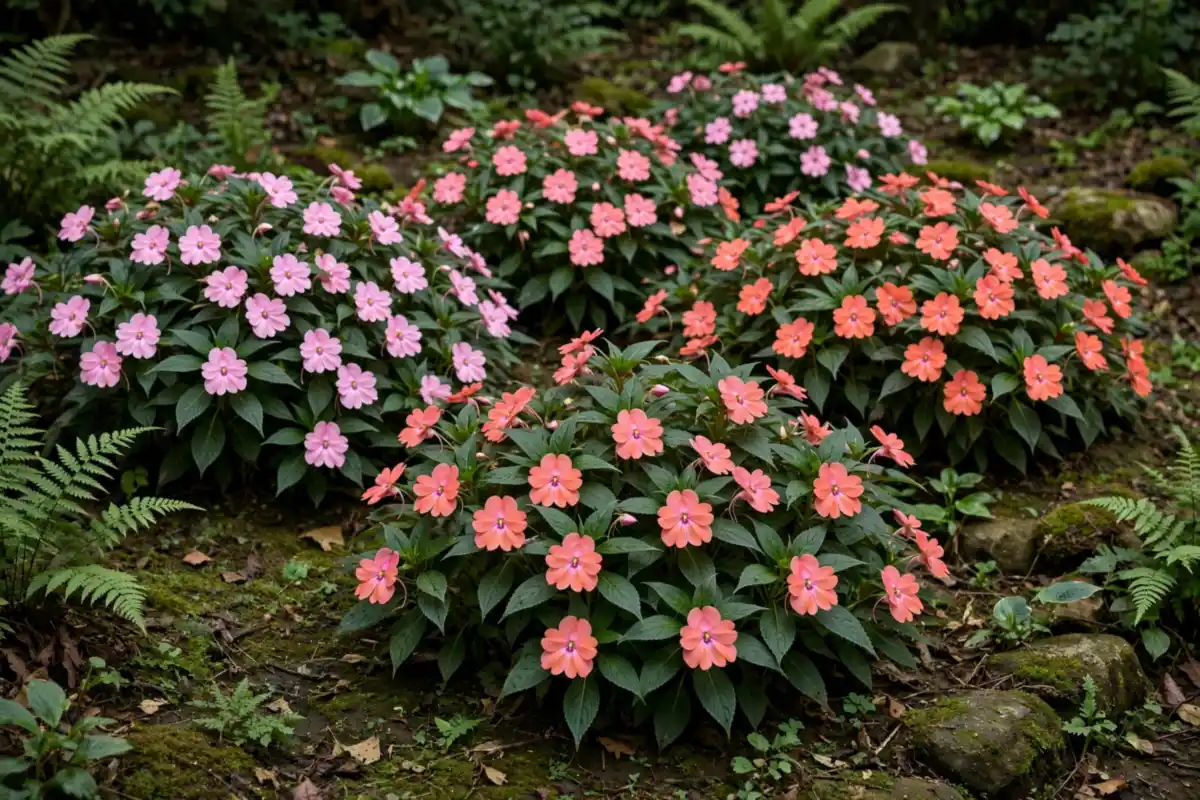
Every garden has the impossible corner: the dark side of the house, the shade of the fence, the ground under the tree where grass gives up. Impatiens is the flower that moved into those corners and lit them. Mounds of flat, jewel-bright blooms pour over shade beds and hanging baskets from late spring to frost, asking only for water and kindness — and the genus earned its name from the opposite temperament: touch a ripe seed pod and it explodes, flinging its seeds in a botanical jump-scare that has startled gardeners for centuries.
This guide covers the six impatiens worth knowing (the classic bedding walleriana, the sun-proof New Guinea hybrids, and their wilder relatives), what it means — patience, motherly love and the apology flower — and the disease that rewrote the genus, plus the wilt that tells you it is thirsty before it is dead.
Quick Answer
The impatiens flower is Impatiens, a genus of over 1,000 species in the balsam family Balsaminaceae from the tropics of Africa and Asia, grown worldwide as the classic shade-bedding annual, with flat, five-petalled flowers in nearly every colour over succulent stems and leaves. Garden impatiens are frost-tender annuals in temperate climates (perennials in zones 10 to 11), flower from late spring to frost in shade to part shade, and need consistent moisture. The impatiens flower means patience, motherly love and reconciliation.
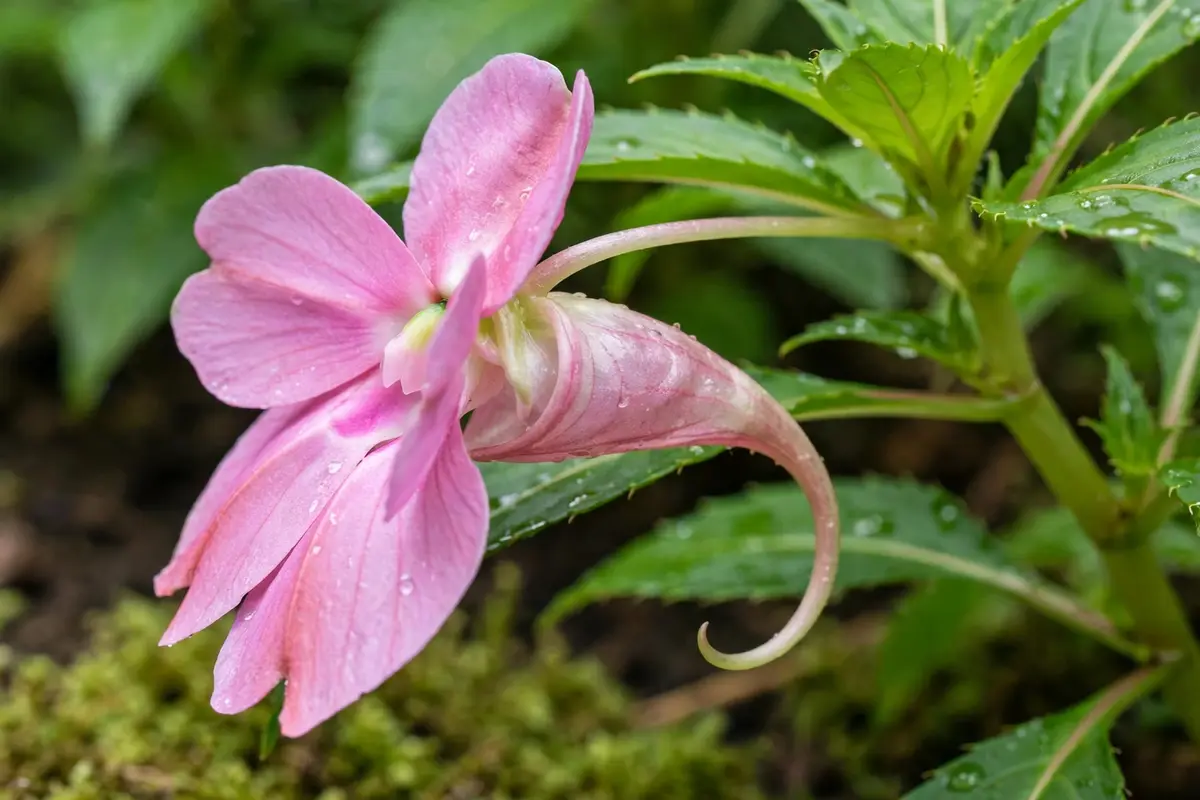
Table of Contents
- What Is an Impatiens Flower?
- Types of Impatiens and 6 Kinds Worth Knowing
- Impatiens Flower Meaning and Symbolism
- Impatiens Flower Colours and Their Meanings
- How to Grow Impatiens
- Common Mistakes When Growing Impatiens
- Impatiens vs New Guinea Impatiens: The Shade Question, Settled
- Frequently Asked Questions
What Is an Impatiens Flower?
The name is the seed pod’s confession: impatiens, Latin for “impatient,” because the ripe capsules cannot wait — their walls coil inward under tension until a touch (a raindrop, a thumb, a passing gardener) triggers them to burst and catapult the seeds several feet. The British cousin that does it most famously is called touch-me-not, and the Himalayan species turned the trick into an invasion strategy across Europe’s riverbanks. The garden flower itself is a study in shade engineering: flat-faced blooms held clear of glossy, water-shedding leaves, nectar spurred behind the flower (a tail curved like a tiny question mark), and stems so succulent they store water against short droughts — then wilt theatrically to ask for more. You can read more on the Impatiens page on Wikipedia.
Three groups run the modern garden. The classic bedding impatiens (I. walleriana and its series — Busy Lizzie to generations of gardeners) owns deep shade but was devastated by impatiens downy mildew after 2011, which is why disease-resistant lines (the Imara and Beacon series) now headline the catalogues. The New Guinea hybrids take sun the classic cannot. And SunPatiens, bred from wild species, split the difference with vigour. Choose by your light and your region’s disease pressure, and the impossible corner stops being impossible.
Impatiens Quick Facts
- Botanical name: Impatiens spp. (chief garden kinds: I. walleriana, New Guinea hybrids, I. × hybrida SunPatiens).
- Family: Balsaminaceae, the balsam family.
- Hardiness: frost-tender annuals in temperate zones; short-lived perennials in zones 10 to 11.
- Height: 6 inches (dwarf bedding) to 2–3 feet (SunPatiens and New Guinea kinds).
- Bloom time: late spring to first frost, continuously.
- Sun and soil: shade to part shade for walleriana; New Guinea and SunPatiens take full sun; rich, moisture-retentive soil.
- Good to know: explosive seed pods (“impatient”); dramatic but recoverable wilt; downy mildew resistance varies by series — choose resistant lines for walleriana.
Types of Impatiens and 6 Kinds Worth Knowing
The shade classic rebuilt, the sun-tolerant hybrids, and the doubles. The table separates them; the profiles follow. For the full list of flower names, see our flower names A to Z guide.
| Type | Flowers | Height | Light | Best use |
|---|---|---|---|---|
| Beacon series (walleriana) | Classic colours, mildew-resistant | 10–12 in | Shade–part shade | Shade beds, mass planting |
| Imara XDR (walleriana) | Full colour range, high resistance | 10–12 in | Shade–part shade | Comeback plantings |
| New Guinea hybrids | Large blooms, bold/variegated leaves | 12–18 in | Part shade–sun | Containers, bright beds |
| SunPatiens | Non-stop, heat-proof | 18–36 in | Full sun–shade | Landscapes, big pots |
| Double impatiens (Fiesta) | Rose-like double blooms | 10–16 in | Shade–part shade | Baskets, close-up pots |
| Balsam (I. balsamina) | Camellia-like, on the stem | 12–30 in | Sun–part shade | Cottage heirloom rows |
1. Beacon Series — the Classic, Rebuilt
When downy mildew emptied the shade beds of half the world in the 2010s, Beacon was the answer bred for it: true walleriana colour and habit with high resistance to the disease, verified in trial grounds across continents. Beacon is the safe way back to the classic look — mounds of flat blooms in coral, violet, white and red for the north side of the house — and the series most landscapers now specify by name.
2. Imara XDR — the Other Comeback Line
Imara (Swahili for “strong”) carries the same brief: walleriana’s shade-loving nature with extra disease resistance (the XDR), in a full colour palette including bicolours. Between Beacon and Imara, the bedding impatiens is a responsible choice again — rotate the two series between years and beds, keep air moving through plantings, and the mildew years stay history.
3. New Guinea Hybrids — the Sun Learners
Bred from species collected in Papua New Guinea in the 1970s, these are impatiens with presence: larger flowers, thicker, often variegated or bronze foliage, and a constitution that takes morning sun and bright conditions the classic walleriana wilts under. New Guineas are the container impatiens — one plant fills a pot with architecture — and their foliage earns its place even between blooms.
4. SunPatiens — the Full-Sun Breakthrough
The hybrids that broke the genus’s shade-only rule: bred down from wild Indonesian species, SunPatiens thrive in full sun and serious heat, growing vigorously to 2–3 feet and flowering without pause until frost — in sun or shade alike. They are the landscape answer where impatiens colour is wanted in open beds, and their thick roots shrug off the downy mildew that haunts their cousins.
5. Double Impatiens — the Little Roses
Fiesta and the double-flowered lines fold the petals into miniature roses — white, pink, lavender and red doubles over the classic foliage, in shade, all season. Doubles are the hanging-basket and window-box impatiens, made for close viewing: at arm’s length the disguise is complete, and only the succulent stems give the secret away.
6. Garden Balsam — the Heirloom
Impatiens balsamina, the cottage original from Asia: an upright annual carrying its camellia-like doubles directly along the stem, like flowers pinned to a green pole. Victorian gardens adored it (“balsam” in every seed list); modern ones rediscover it for height in annual rows and for seed pods that pop with the genus’s full theatricality — children have farmed this entertainment for centuries.
Impatiens Flower Meaning and Symbolism
The impatiens carries a small paradox in its meanings: the flower of patience with a name meaning impatient. The flower language resolves it by focusing on the bloom, not the pod: impatiens means motherly love, patience, and — in its most-used modern sense — reconciliation: it is the apology flower, sent to say “let us not be impatient with each other.” The exploding pods add the folk reading everyone keeps anyway: a love that cannot contain itself, feelings that burst out. Both readings survive because both are visibly true of the plant, which blooms with endless maternal generosity all summer and then literally cannot hold its seeds in.
Send impatiens to mend and to thank: apologies, mother’s baskets, the friend who waited. Among shade flowers it stands with the gentle crew in our flowers that start with I guide — the letter’s softest argument.
Impatiens Flower Colours and Their Meanings
- Pink — motherly love, in full: the classic hanging-basket shade.
- White — a clean apology: doubles for weddings and reconciliations.
- Red and coral — feelings that burst out: the pod’s meaning in flower form.
- Violet and lavender — patience, deepened: Beacon violet in the shade.
- Orange — warmth restored: SunPatiens lighting a sunny bed.
How to Grow Impatiens
Shade, water, and restraint at the nursery: that is most of the craft. Gardeners on r/gardening on Reddit pass on the watering wisdom as a proverb: “impatiens wilt to tell you, not to die — water before noon and they are standing by lunch.”
Planting and Position
Plant out only after all frost danger (impatiens blacken at a rumour of frost) into rich, moisture-retentive soil improved with compost. Site classic walleriana in shade to part shade — a couple of hours of gentle morning sun is the limit in hot climates — and space 8–12 inches apart for the famous carpet effect; the plants knit within weeks. New Guinea kinds take brighter spots and bigger pots; SunPatiens go anywhere sunny. Pinch young walleriana once to thicken the mound.
Watering and Feeding
Impatiens are honest drinkers: keep the soil evenly moist and they flower without a gap; let them dry and they wilt flat — dramatically, but usually recoverably if watered within hours (a wilt caught by evening is theatre, not tragedy). Pots and baskets may need water daily in heat. Feed lightly and regularly (half-strength liquid feed every couple of weeks) — overfeeding grows leaves at the flowers’ expense. Deadheading is unnecessary: the plants are self-cleaning, dropping spent blooms and replacing them continuously.
Common Mistakes When Growing Impatiens
Mistake one is planting classic walleriana in full sun and midday heat, where it wilts daily and sulks — shade is its job description; for sun, plant SunPatiens instead. Mistake two is ignoring the downy mildew lesson: in regions where the disease struck, non-resistant walleriana in the same beds can collapse in weeks in a wet summer — plant the resistant Beacon/Imara lines and keep foliage dry where you can.
Mistake three is letting pots swing between drought and flood: the wilt-recover cycle works, but repeated hard wilting costs flowers and invites spider mites in hot, dry air. Mistake four is planting out too early — one cold night after a warm spell ends the season before it starts. And mistake five is overfeeding into lush, flower-shy foliage: impatiens bloom on a modest diet and flower harder for it.
Impatiens vs New Guinea Impatiens: The Shade Question, Settled
Same genus name on the label, different assignments. Classic impatiens (walleriana series): small-to-medium flat flowers in dense mounds, fine in deep shade, the cheapest and fastest carpet for dark beds; modern resistant lines (Beacon, Imara) have fixed the mildew flaw. New Guinea impatiens: bigger flowers, showier (often variegated or bronze) leaves, upright container presence, and real sun tolerance up to bright part-day sun; pricier per plant, but one fills a pot. The decision rule: ground-cover in shade — classic; specimen in a pot or a bright bed — New Guinea; open sunny border — their cousin SunPatiens, which out-sizes both. Pick by the corner, not by the prettier label photo.
Frequently Asked Questions
Do impatiens come back every year?
Not in temperate climates — they are frost-tender and the first frost ends them, though they live as short-lived perennials in zones 10–11. They do self-sow modestly in mild gardens (the exploding pods see to the distribution), and cuttings root easily in water for overwintering favourite colours indoors. If your question is not answered here, the questions about the impatiens flower on Quora cover most of the rest.
Why are my impatiens wilting every day?
Thirst, announced theatrically: the succulent stems lose turgor fast in heat or in a dry pot. Water deeply and they typically recover within hours. If daily wilting continues despite moist soil, check for too much sun on a walleriana planting, a root-bound pot, or stem rot at the base.
What is impatiens downy mildew and should I worry?
A water-mould disease (Plasmopara obducens) that devastated classic walleriana plantings worldwide from about 2011: yellowing leaves, white fuzz beneath, collapse. The modern answer is genetic — plant resistant series (Beacon, Imara XDR) or switch to New Guinea/SunPatiens, which are not affected. Do not replant non-resistant walleriana where the disease has struck.
Can impatiens grow in full sun?
SunPatiens, yes — that is their entire breeding brief, and they thrive in it. New Guinea hybrids take part sun to bright conditions. Classic walleriana, no: sun plus heat makes it wilt and scorch; it is the shade specialist.
Are impatiens safe for pets?
Yes — impatiens are listed as non-toxic to cats and dogs, one more reason they rule the family garden’s shady corners. The sap is a mild irritant to skin in sensitive people at worst; the plant is not a food, but it is not a hazard either.
Why do impatiens seed pods explode?
Built-in ballistics: the pod walls dry under tension, coiling like springs until a touch releases them and the walls snap inward, flinging seeds up to several feet. It is the genus’s dispersal strategy — and the source of its name, its touch-me-not nicknames, and centuries of gardeners showing children the trick. Their pods pair curiously well, in the dried-arrangement imagination, with the striped balloons in our nigella guide — two plants whose seed stage steals the show.