Coreopsis: Types, Meaning and How to Grow It
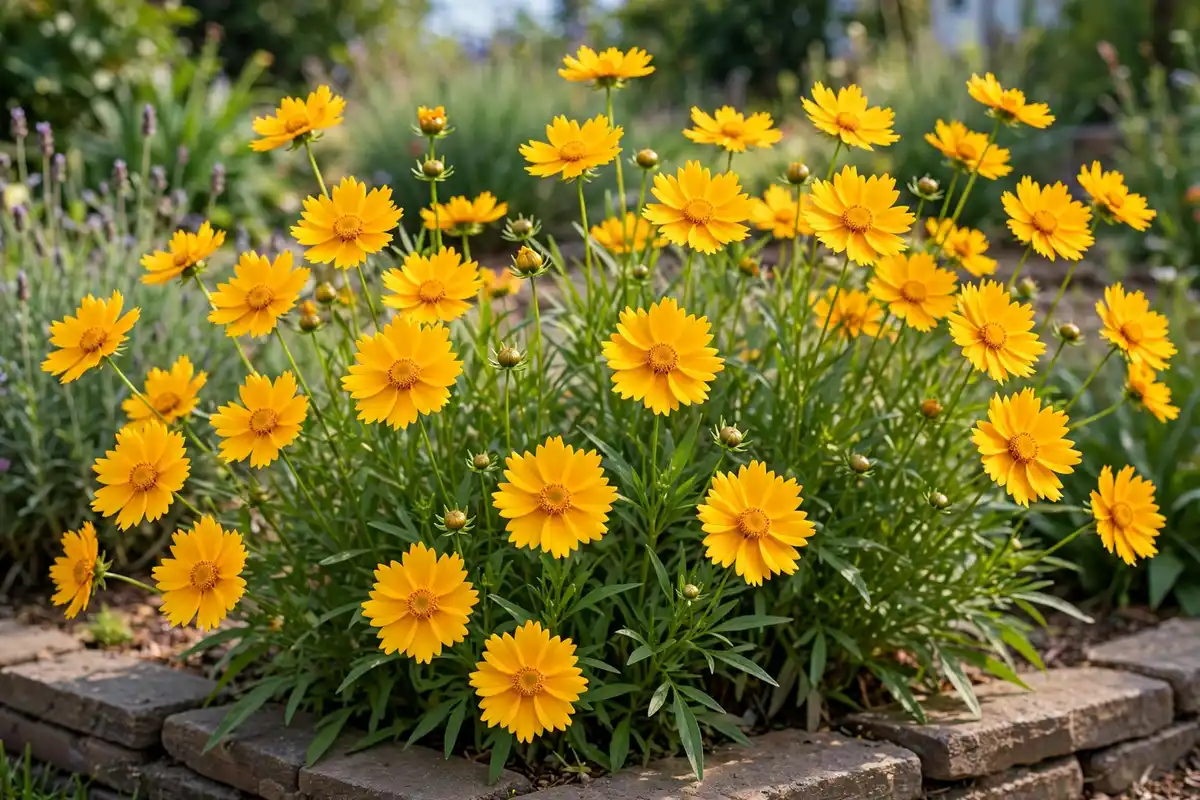
Coreopsis is the prairie’s answer to the question every gardener asks in June: what will flower all summer without asking for anything? The answer comes up gold — daisy after daisy on wiry stems, from late spring until frost, through heat, drought and poor soil, feeding bees all the while and finches after. Its only genuinely unfortunate fact is its nickname: tickseed, earned because the seeds look like ticks. Gardeners have forgiven it for a century, because nothing this cheerful gets held to its seed’s resemblance.
This guide covers the six coreopsis worth knowing (the threadleaf ‘Moonbeam’, the tall plains species, and the blush-pink modern hybrids), what it means — always cheerful, love at first sight, and hope — and the simple trade at the genus’s heart: deadhead for flowers, or leave the last seeds standing for the birds.
Quick Answer
The coreopsis is Coreopsis, a genus of some 75–80 daisy-family (Asteraceae) species native to the Americas — chiefly the prairies and plains of North America — bearing golden, daisy-like flowers on slender stems from late spring to frost. Coreopsis grows in USDA zones 3 to 10 by species, wants full sun and lean, well-drained soil, and shrugs off drought and neglect. The coreopsis flower means cheerfulness, love at first sight and hope — it is the state wildflower of Florida and Mississippi.
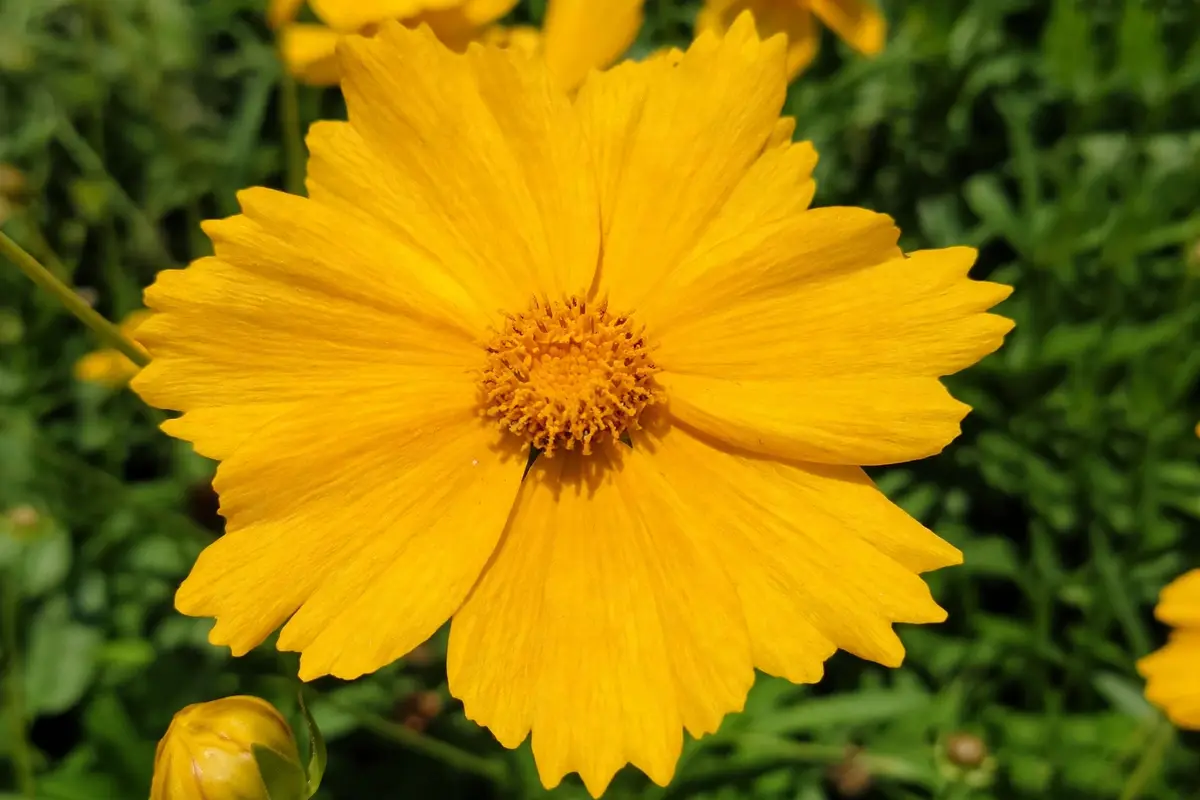
Table of Contents
- What Is a Coreopsis Flower?
- Types of Coreopsis and 6 Kinds Worth Knowing
- Coreopsis Flower Meaning and Symbolism
- Coreopsis Flower Colours and Their Meanings
- How to Grow Coreopsis
- Common Mistakes When Growing Coreopsis
- The Deadheading Deal: Flowers for You, or Seeds for the Birds?
- Frequently Asked Questions
What Is a Coreopsis Flower?
A coreopsis flower is a classic daisy with a prairie twist: the ray florets around the golden centre disc are notched at their tips — as if snipped with pinking shears — giving each bloom a fringed, hand-made look. The name is the seed’s portrait: Greek koris (bug) + opsis (appearance), because the small dark achenes genuinely resemble ticks or bedbugs, and the English “tickseed” followed it home. The plants themselves are airy mounds of fine foliage that seem to float their flowers on nothing — the tall species over waist height, the threadleaf kinds in neat domes — and they are woven through American wildflower culture: two species are state wildflowers (Florida claims the whole genus; Mississippi names C. lanceolata), and the genus was a dye plant, yielding gold and rust colours to early dyers. You can read more on the Coreopsis page on Wikipedia.
Coreopsis divides, for gardeners, into the hardy perennials (threadleaf verticillata, lanceolata, grandiflora, rosea) and the tender annuals (tinctoria, basalis) treated as summer bedding — and modern breeding has scrambled the border, producing hardy hybrids in cream, blush, bicolour and red that flower like annuals and return like perennials, at least in kind climates. What unites all of them: sun, leanness, and a work rate per plant that embarrasses fussier daisies.
Coreopsis Quick Facts
- Botanical name: Coreopsis spp. (chief garden species: C. verticillata, C. lanceolata, C. grandiflora, C. rosea, C. tinctoria).
- Family: Asteraceae, the daisy family.
- Hardiness: zones 3 to 9 for the main perennials (grandiflora shorter-lived); annual kinds grown as summer annuals.
- Height: 12 inches (dwarf/threadleaf mounds) to 4 feet (tall plains and tinctoria types).
- Bloom time: late spring to first frost, with deadheading or a midsummer shear.
- Sun and soil: full sun; lean, well-drained soil — rich soil flops it.
- Good to know: premier bee and butterfly plant; seed heads feed goldfinches in autumn; deer and rabbits mostly leave it alone.
Types of Coreopsis and 6 Kinds Worth Knowing
The lemon threadleaf, the two plains classics, the pink surprise and the modern hybrids. The table separates them; the profiles follow. For the full list of flower names, see our flower names A to Z guide.
| Type | Flowers | Height | Season | Best use |
|---|---|---|---|---|
| ‘Moonbeam’ (threadleaf) | Pale lemon, fine fern foliage | 18 in | Summer–frost | Front border, edging |
| Lanceleaf (C. lanceolata) | Rich gold, notched rays | 1–2 ft | Late spring–summer | Wildflower meadows |
| Large-flowered (C. grandiflora) | Big golden doubles/singles | 2–3 ft | Summer | Cutting, show beds |
| ‘American Dream’ (pink, C. rosea) | Blush pink with gold eye | 18 in | Summer–frost | Colour-break plantings |
| Uptick / Big Bang hybrids | Cream, red, bicolour | 1–2 ft | Summer–frost | Containers, modern beds |
| Plains coreopsis (C. tinctoria) | Gold with mahogany eye | 2–4 ft | Summer (annual) | Seed mixes, dye gardens |
1. ‘Moonbeam’ — the Lemon Standard
The threadleaf cultivar that made coreopsis a design plant: clouds of ferny, thread-fine foliage and an endless procession of pale lemon daisies from early summer to frost, on self-supporting 18-inch domes that never flop and never need staking. Moonbeam was the Perennial Plant of the Year in 1992 and has been selling the genus ever since — the edging plant against which all summer-long yellows are measured, and the most drought-proof of the clan once settled.
2. Lanceleaf Coreopsis — the Meadow Gold
Coreopsis lanceolata is the wildflower-mix workhorse and Mississippi’s state flower: rich golden, deeply notched daisies on 1-to-2-foot stems from late spring, self-sowing into drifts that hold roadsides and meadow plantings in solid bloom. It is a generous but shortish-lived perennial (three to four years), which hardly matters because its seedlings renew the colony free of charge. Plant it where a little glorious untidiness is welcome.
3. Large-Flowered Coreopsis — the Show Daisy
Coreopsis grandiflora scales the flower up: big, richly gold blooms (doubles like ‘Early Sunrise’ among them) on 2-to-3-foot stems that cut superbly and star the summer border. The trade is lifespan — grandiflora is the shortest-lived of the perennials, often behaving as a biennial in rich beds — so treat it as the diva it is: sharp drainage, a midsummer shear after the main flush, and seedlings welcomed as understudies.
4. Pink Coreopsis — the Colour Surprise
Coreopsis rosea breaks the genus’s golden rule: a native of eastern wetlands bearing blush-pink daisies with golden eyes, spreading by rhizomes into tidy mats (‘American Dream’ is the selected form). It wants more moisture than its prairie cousins — a pond edge or a reliably watered bed — and rewards it with summer-long pink that mixes where yellow cannot go. The gentle oddity of the family, and proof the genus has a pastel side.
5. Uptick and Big Bang Hybrids — the Modern Colours
Contemporary breeding crossed the species into compact, non-stop hybrids: the Uptick series (cream, gold-and-red eyes, oversized flowers) and Big Bang types in sunset shades, flowering from early summer to frost with an annual’s energy on perennial frames. Hardiness varies by series and climate, so buy them as long-season stars first and perennials second — even one endless summer of them earns their place, and in zones 7+ most return.
6. Plains Coreopsis — the Dye Flower
Coreopsis tinctoria is the tall annual: wiry 2-to-4-foot stems of small golden daisies with mahogany-red eyes, blooming fast from a spring sowing and dyeing wool gold and rust as its Latin name promises (tinctoria = the dyer’s). It is the coreopsis of seed packets and wildflower strips — sow it thick, let it sparkle over a summer, and let the finches invoice the seed heads in autumn.
Coreopsis Flower Meaning and Symbolism
Coreopsis means cheerfulness, in the language of flowers quite literally “always cheerful” — the bloom that never has an off day. It also carries love at first sight and hope, the twin meanings of a flower that appears early, stays late and arrives smiling. Its state-flower honours (all Coreopsis species for Florida, lanceolata for Mississippi) made it an emblem of wild, native beauty protected by law and loved by the roadside. There is no tragedy in coreopsis lore, no mythic wound — just a Greek joke about its seeds and a continent that found its gold irresistible. Sometimes a flower’s symbolism is simply its behaviour, and this one’s behaviour is joy sustained for five months.
Send coreopsis when the message is uncomplicated good cheer: get-well baskets, congratulations, gardens meant to lift a street. It grows in the same optimistic register as the sunflower varieties — the other great American gold — at a scale that fits a front garden.
Coreopsis Flower Colours and Their Meanings
- Gold — cheerfulness in full: the wild species and state-flower gold.
- Pale lemon — gentle joy: ‘Moonbeam’, sunshine thinned to moonlight.
- Blush pink — love at first sight, softened: the rosea line.
- Cream and bicolour — hope with flair: the modern hybrids.
- Mahogany-eyed gold — the dyer’s gold: tinctoria’s two-tone sparkle.
How to Grow Coreopsis
Sun, lean soil, and a pair of shears in July: that is the entire curriculum. Gardeners on r/gardening on Reddit describe the midsummer shear as the free second plant: “chop the whole mound by a third when the first wave fades — it comes back tighter and flowers till frost.”
Planting and Position
Full sun is non-negotiable (part shade makes threadleaf kinds leggy and shy). Soil should be average to poor and sharply drained — on rich, fed beds the tall species grow soft, flop, and live short; on lean ground they stand up and endure. Space the mounding kinds a foot or more apart for air, water to establish through the first season, and then step back: established coreopsis is drought-tolerant and nearly self-running. Sow annual tinctoria directly where it is to flower in spring.
Deadheading, Shearing and Renewal
Snip spent blooms on the show kinds, or shear whole plants by a third after the first great flush — the production method — and a fresh, tighter mound of buds follows within weeks, flowering to frost. Short-lived kinds (grandiflora, lanceolata) renew themselves if you let a few late heads seed; mark the seedlings, and lift and divide threadleaf clumps every three years in spring if the centres thin. Cut everything to the basal foliage in late autumn — or leave the last seed heads standing for the birds and tidy in early spring.
Common Mistakes When Growing Coreopsis
Mistake one is kindness: rich soil, compost blankets and fertiliser produce lush, floppy, short-lived plants — coreopsis wants the lean life it evolved for. Mistake two is wet feet in winter, which rots the crowns of grandiflora especially; if your soil stays soggy, raise the bed or choose the moisture-tolerant pink rosea instead.
Mistake three is skipping the midsummer shear and concluding the plant “finished in July” — unsheared plants coast on a few late blooms; sheared ones reflower wholesale. Mistake four is shade creep from expanding neighbours, which draws the plants up weak and bloom-poor. And mistake five is deadheading every last head in September and then wondering where the goldfinches went: the final seed crop is their autumn pantry, and the plant’s renewal bank.
The Deadheading Deal: Flowers for You, or Seeds for the Birds?
Every coreopsis grower eventually faces the trade, and it deserves a straight answer rather than a rule. Deadhead through the main season — June to August — and you are buying repeat flowers; the plant, denied seed, keeps making blooms. Stop in September and you are selling the last flush to the birds: goldfinches work the standing heads for weeks, and a few seedlings bank next year’s renewal. The wise compromise is written into the plant’s season: shears early, mercy late. Do both and the coreopsis pays its rent twice — once in gold, once in finches.
Frequently Asked Questions
Is coreopsis a perennial or an annual?
Both exist. The garden mainstays — threadleaf (verticillata, ‘Moonbeam’), lanceolata, grandiflora and pink rosea — are perennials (zones 3–9), though lanceolata and grandiflora are on the short-lived side and renew by self-sowing. Tinctoria and basalis are annuals grown from seed each year. If your question is not answered here, the questions about the coreopsis flower on Quora cover most of the rest.
Does coreopsis bloom all summer?
Yes, with help: the natural first flush runs late spring into midsummer, and a shear by a third at that point triggers a second, tighter flowering that lasts to frost. Threadleaf kinds and modern hybrids need the least encouragement.
Why is coreopsis called tickseed?
Because the small, dark, flattened seeds look like ticks — the Greek name means “bug-like” for the same reason. The resemblance stops at the seed packet; the plant itself has nothing to do with ticks and does not attract them.
Is coreopsis deer resistant?
Mostly — it sits on many deer-resistant lists and is rarely bothered where other forage exists, though no flowering plant is guaranteed under heavy pressure. Rabbits likewise tend to pass it by.
Does coreopsis attract pollinators?
Strongly. The open, nectar-and-pollen-rich discs are worked by bees and butterflies all season, and the standing seed heads are a goldfinch favourite in autumn — few border flowers serve wildlife at both ends of their season so well.
Can coreopsis grow in pots?
Yes — the compact threadleaf and modern hybrid kinds are excellent in containers of gritty, lean compost, flowering all summer with deadheading. Use a pot with drainage, go easy on feed, and shear mid-season as you would in the ground. For more flowers under the same letter, see our guide to flowers that start with C.