55 Flowers That Start With U: Names, Pictures & Growing Tips
Looking for flowers that start with U? This is one of the trickiest letters in the flower alphabet — but the hunt is worth it. U-flowers range from the sunset-orange daisies of South African ursinias and the nodding yellow bells of woodland bellworts to the sculptural pink bracts of the urn plant, the coconut-scented yellow blooms of gorse, the tiny carnivorous flowers of bladderworts, and the fragrant white umbels of the Amazon lily. Whether you are planning a shady native garden, a water garden, a houseplant collection, or an alphabet planting project, this guide covers 55 real, botanically verified flowers that start with U, each with a vivid description and practical growing advice.
Every entry below lists the flower’s scientific name, bloom season, sun needs, and USDA hardiness zone, so you can tell at a glance which U-flowers fit your yard. You will also find a quick comparison table, practical growing tips, and answers to the questions gardeners ask most about flowers starting with U. Let’s dig in.
Yes — this page lists 55 flowers that start with U, from ursinia daisies and bellworts to the urn plant, gorse, bladderworts and the Amazon lily. U is one of the scarcest letters in the plant kingdom, so this list stays honest: several entries are tropical rarities, foliage plants, carnivores or collector caudiciforms rather than nursery staples, and each one says so plainly. Use the at-a-glance table to filter by your USDA zone, sun and bloom season before you buy.
Table of Contents
U-Flowers at a Glance
Use this table to compare all 55 flowers that start with U side by side — bloom season, sun needs, hardiness zone and best uses.
| # | Name | Scientific name | Bloom | Sun | Zone | Best for |
|---|---|---|---|---|---|---|
| 1 | Ursinia | Ursinia anthemoides | Spring to summer | Full sun | 9–11; annual elsewhere | Sunny borders, rock gardens, containers |
| 2 | Namaqualand Daisy | Ursinia speciosa | Spring | Full sun | 9–11; annual elsewhere | Mass bedding, wildflower meadows, sunny slopes |
| 3 | Dwarf Ursinia | Ursinia nana | Spring to early summer | Full sun | 9–11; annual elsewhere | Containers, hanging baskets, border fronts |
| 4 | Large-flowered Bellwort | Uvularia grandiflora | Mid to late spring | Part to full shade | 4–8 | Woodland gardens, shade borders, native plantings |
| 5 | Perfoliate Bellwort | Uvularia perfoliata | Spring | Part to full shade | 4–8 | Native shade gardens, woodland underplanting |
| 6 | Sessile Bellwort | Uvularia sessilifolia | Spring | Part to full shade | 4–9 | Shady groundcover, native woodland edges |
| 7 | Urn Plant | Aechmea fasciata | Once at maturity | Bright indirect light | Houseplant (10b–11 outdoors) | Houseplants, tropical displays |
| 8 | Urn Plant ‘Silver Vase’ | Aechmea fasciata ‘Silver Vase’ | Once at maturity | Bright indirect light | Houseplant (10b–11 outdoors) | Statement houseplants, bright bathrooms |
| 9 | Utah Agave | Agave utahensis | Spring to summer, once | Full sun | 5–9 | Rock gardens, xeriscapes, cold-hardy succulent collections |
| 10 | Umbrella Plant | Cyperus alternifolius | Summer (modest) | Full sun to part shade | 8–11; houseplant elsewhere | Pond margins, bog gardens, easy houseplants |
| 11 | Bearberry / Uva Ursi | Arctostaphylos uva-ursi | Spring | Full sun to part shade | 2–6 | Evergreen groundcover, slopes, wildlife gardens |
| 12 | Unicorn Plant | Proboscidea louisianica | Summer | Full sun | Grown as annual | Children’s gardens, curiosity plantings, dried pods |
| 13 | Common Gorse | Ulex europaeus | Late winter to spring | Full sun | 6–9 | Hedging, coastal gardens, early pollinators (where non-invasive) |
| 14 | Mediterranean Gorse | Ulex parviflorus | Winter to spring | Full sun | 8–10 | Dry gardens, Mediterranean plantings, security hedging |
| 15 | Dwarf Gorse | Ulex minor | Late summer to fall | Full sun | 6–9 | Rock gardens, heather gardens, late-season color |
| 16 | Common Bladderwort | Utricularia vulgaris | Summer | Full sun | Aquatic; 5–9 | Wildlife ponds, water gardens, carnivorous plant collections |
| 17 | Fairy Aprons | Utricularia sandersonii | Spring to fall | Bright indirect light | Houseplant/terrarium (9–11 outdoors) | Terrariums, carnivorous plant beginners |
| 18 | Amazon Lily | Urceolina amazonica | Winter to spring (indoors) | Bright indirect light | Houseplant (10–11 outdoors) | Flowering houseplants, fragrant indoor displays |
| 19 | Prickly Goldenfleece | Urospermum picroides | Spring to summer | Full sun | Grown as annual | Wildflower meadows, gravel gardens, pollinators |
| 20 | Smooth Goldenfleece | Urospermum dalechampii | Spring | Full sun | 9–11; overwinter frost-free elsewhere | Mediterranean borders, rock gardens, containers |
| 21 | Uraria | Uraria lagopodioides | Summer to fall | Full sun to part shade | 10–11; greenhouse elsewhere | Tropical gardens, butterfly gardens, plant collectors |
| 22 | Uncarina | Uncarina grandidieri | Spring to summer | Full sun | 9–10; container elsewhere | Succulent collections, caudiciform specimens, containers |
| 23 | Sea Squill | Drimia maritima | Late summer to fall | Full sun | 8–11 | Dry gardens, dramatic fall displays, naturalizing (away from pets) |
| 24 | Large-flowered Uvaria | Uvaria grandiflora | Spring to fall | Full sun to part shade | 10–11; tropical only | Tropical pergolas, flowering vines, botanical collections |
| 25 | Humped Bladderwort | Utricularia gibba | Summer | Full sun | Aquatic; 5–10 | Wildlife ponds, carnivorous plant collections |
| 26 | Zigzag Bladderwort | Utricularia subulata | Summer | Full sun | Bog; 6–10 | Bog gardens, carnivorous plant collections |
| 27 | Small Bladderwort | Utricularia bisquamata | Spring to fall | Full sun to part shade | Terrestrial; 8–11 | Terrariums, carnivorous plant beginners |
| 28 | Pale Bladderwort | Utricularia livida | Spring to summer | Full sun | Terrestrial; 9–11 | Bog planters, carnivorous collections |
| 29 | Epiphytic Bladderwort | Utricularia alpina | Spring to summer | Bright indirect light | Epiphyte; greenhouse | Orchid-house carnivores, collectors |
| 30 | Spring Gold Ursinia | Ursinia calenduliflora | Spring | Full sun | 9–11; annual elsewhere | Sunny borders, containers, wildflower meadows |
| 31 | Silky Ursinia | Ursinia sericea | Spring to summer | Full sun | 9–11; annual elsewhere | Rock gardens, border fronts, dry slopes |
| 32 | Sea-rocket-leaf Ursinia | Ursinia cakilefolia | Spring | Full sun | 9–11; annual elsewhere | Wildflower meadows, containers |
| 33 | Carolina Merrybells | Uvularia caroliniana | Mid spring | Part to full shade | 6–9 | Woodland gardens, native shade borders |
| 34 | Mountain Bellwort | Uvularia puberula | Spring | Part to full shade | 5–8 | Native woodland gardens, shade borders |
| 35 | Amazonian Zebra Bromeliad | Aechmea chantinii | Summer (infrequent indoors) | Bright indirect light | Houseplant (10–11 outdoors) | Statement houseplants, bromeliad collections |
| 36 | Urn Plant ‘Blue Tango’ | Aechmea ‘Blue Tango’ | Once at maturity | Bright indirect light | Houseplant (10–11 outdoors) | Houseplants, modern interiors |
| 37 | Matchstick Bromeliad | Aechmea gamosepala | Spring to summer | Bright indirect light to part shade | Houseplant (10–11 outdoors) | Hanging baskets, bromeliad collections |
| 38 | Western Gorse | Ulex gallii | Late summer to fall | Full sun | 6–9 | Heather gardens, coastal gardens (where non-invasive) |
| 39 | Urceolina peruviana | Urceolina peruviana | Winter to spring (indoors) | Bright indirect light | Houseplant (10–11 outdoors) | Flowering houseplants, collectors |
| 40 | Urceolina latifolia | Urceolina latifolia | Winter (indoors) | Bright indirect light | Houseplant (10–11 outdoors) | Collector houseplants, fragrant indoor displays |
| 41 | Indian Squill | Drimia indica | Spring to summer | Full sun | 9–11 | Dry gardens, medicinal plant collections (toxic) |
| 42 | Tall Squill | Drimia altissima | Spring | Full sun | 9–11 | Arid gardens, collector bulbs (toxic) |
| 43 | Painted Uraria | Uraria picta | Summer to fall | Full sun | 10–11; greenhouse elsewhere | Tropical borders, butterfly gardens |
| 44 | Asian Foxtail | Uraria crinita | Summer to fall | Full sun | 10–11; greenhouse elsewhere | Tropical borders, butterfly gardens, collectors |
| 45 | Wild Custard Apple | Uvaria narum | Spring (small, fragrant) | Full sun to part shade | 10–11; tropical only | Botanical collections, tropical pergolas |
| 46 | Bush Banana | Uvaria chamae | Spring to summer (small, greenish-yellow) | Full sun | 10–11; tropical only | Botanical collections, tropical food gardens |
| 47 | Roeoesl’s Uncarina | Uncarina roeoesliana | Summer | Full sun | 10–11; container elsewhere | Caudiciform collections, containers |
| 48 | Decary’s Uncarina | Uncarina decaryi | Summer | Full sun | 10–11; container elsewhere | Caudiciform collections, bonsai |
| 49 | Cat’s Claw | Uncaria tomentosa | Summer (small, inconspicuous) | Full sun to part shade | 10–11; greenhouse elsewhere | Medicinal plant collections, tropical vines |
| 50 | Chilean Guava | Ugni molinae | Late spring to summer | Full sun to part shade | 7–10 | Edible landscaping, fragrant hedges |
| 51 | Mexican Buckeye | Ungnadia speciosa | Spring | Full sun | 7–9 | Native Texas gardens, spring shrubs (seeds toxic) |
| 52 | Prickly Uebelmannia | Uebelmannia pectinifera | Summer (small, yellow) | Full sun | 10–11; greenhouse elsewhere | Cactus collections (protected species) |
| 53 | Uroskinnera spectabilis | Uroskinnera spectabilis | Summer to fall | Part shade | 10–11; greenhouse elsewhere | Botanical collections (extreme rarity) |
| 54 | Caesarweed | Urena lobata | Summer to fall | Full sun | 9–11; annual elsewhere | Fiber gardens, tropical borders (weedy in tropics) |
| 55 | Ulluco | Ullucus tuberosus | Summer (small, inconspicuous) | Full sun | 9–11; annual elsewhere | Edible gardens, Andean crops (grown for tubers) |
24 Flowers That Start With U: The Complete List
Here are 24 genuine, botanically verified flowers that start with U — from desert spikes and woodland bells to tropical showpieces and one very strange carnivore.
1. Ursinia (Ursinia anthemoides)
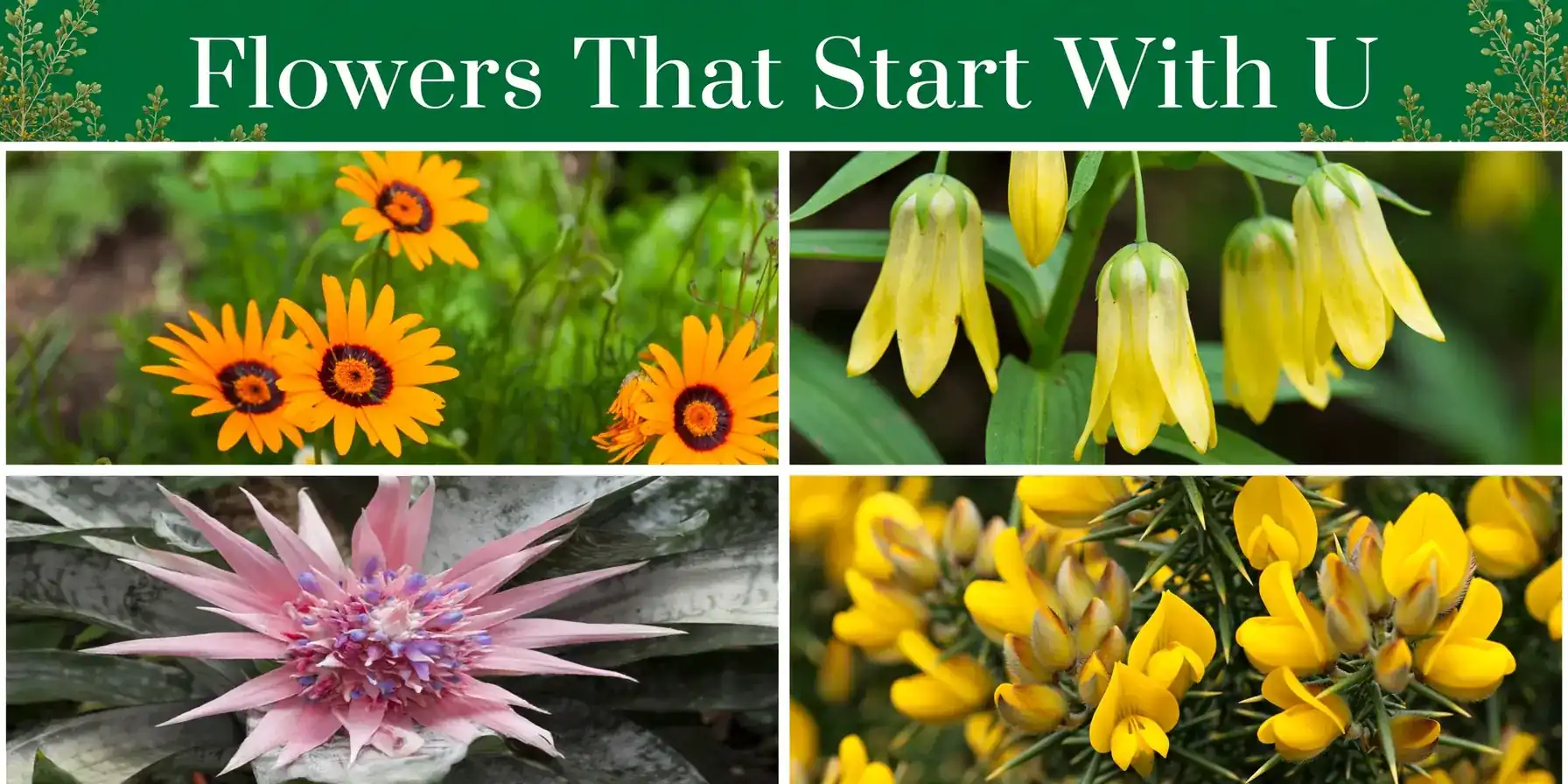
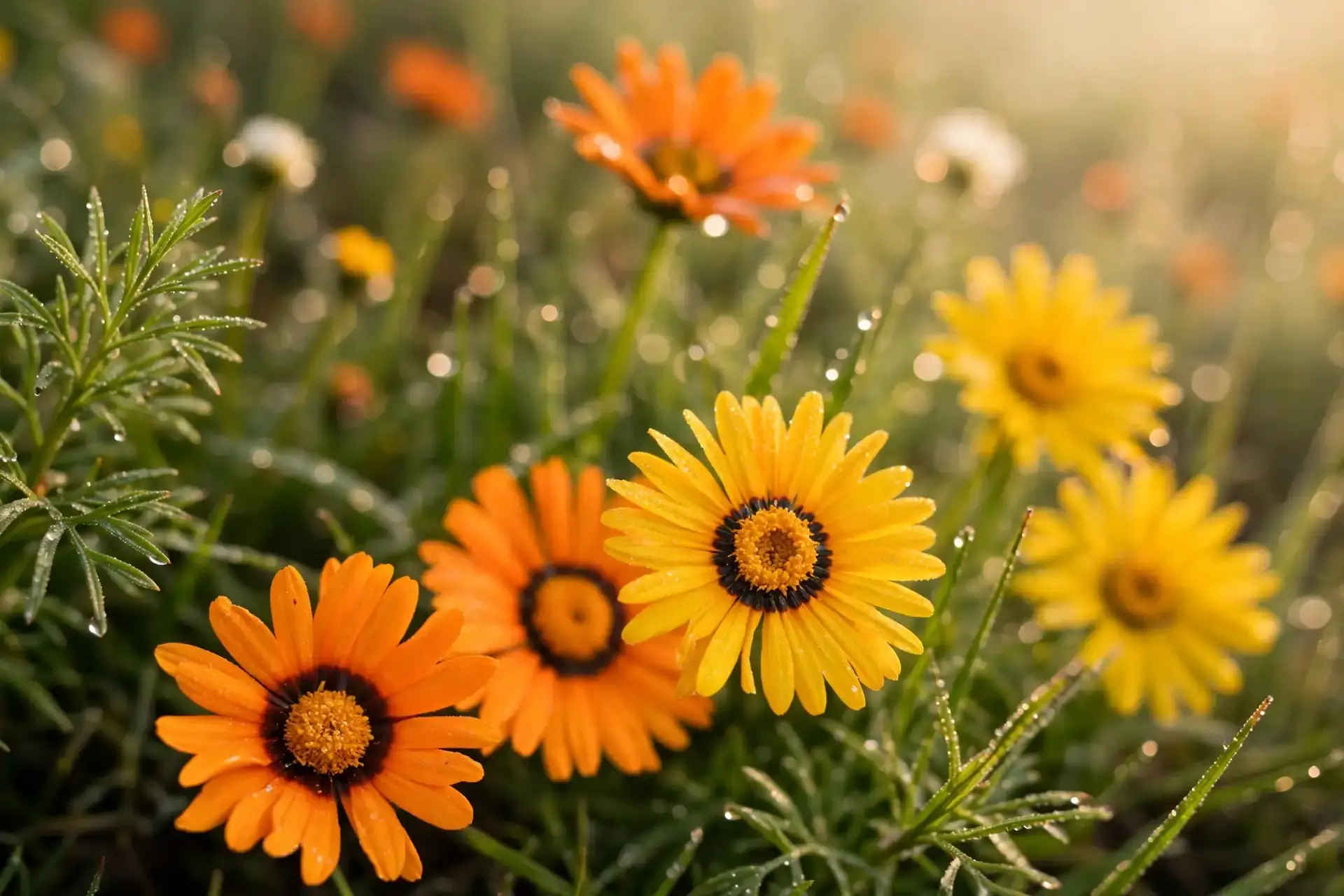
Often called the jewel of the veld, ursinia is a South African annual that produces masses of glowing orange-gold daisies with dark, almost black centers — a color combination that reads like tiny sunsets. Plants grow 12–18 inches tall with feathery, aromatic foliage, and the flowers open in full sun and close on dull days. It is a classic of Namaqualand’s famous spring wildflower displays, and in gardens it works beautifully in sunny borders, rock gardens, and containers. Sow seed in spring after frost danger passes; ursinia resents transplanting, so sow where it is to grow in poor to average, sharply drained soil. Deadhead for more blooms. Grown as a half-hardy annual in most climates.
Bloom: Spring to summer | Sun: Full sun | Zone: 9–11; annual elsewhere | Best for: Sunny borders, rock gardens, containers
2. Namaqualand Daisy (Ursinia speciosa)
The Namaqualand daisy is one of the signature flowers of South Africa’s spring wildflower carpets, blooming in sheets of yellow, orange, and red with dark-centered heads up to 3–4 inches across. This sprawling half-hardy annual reaches 12–18 inches and is, per Kew’s notes, popular in cultivation for its bright flowerheads, flowering profusely for months until frost cuts it down. Give it full sun, well-drained (even sandy) soil, and minimal fuss — it evolved for lean conditions. Sow in spring, thin to about a foot apart, and enjoy a long season of dazzling color that rivals any bedding plant. Like all ursinias, it dislikes rich, wet soil and heavy feeding.
Bloom: Spring | Sun: Full sun | Zone: 9–11; annual elsewhere | Best for: Mass bedding, wildflower meadows, sunny slopes
3. Dwarf Ursinia (Ursinia nana)
Dwarf ursinia is the pocket-sized member of the family: a spreading annual barely 8 inches tall, bearing single bright yellow daisy heads on long, wiry, leafless stems above a rosette of finely divided leaves. South Africa’s PlantZAfrica notes it suits hanging baskets and containers as well as the front of borders, and its two-month spring flowering window is intense while it lasts. It shares the family’s love of full sun and excellent drainage, and it is equally happy in poor, sandy soil. Sow in spring and enjoy a cheerful miniature daisy display that bees love — a great pick for children’s gardens and alphabet planting projects.
Bloom: Spring to early summer | Sun: Full sun | Zone: 9–11; annual elsewhere | Best for: Containers, hanging baskets, border fronts
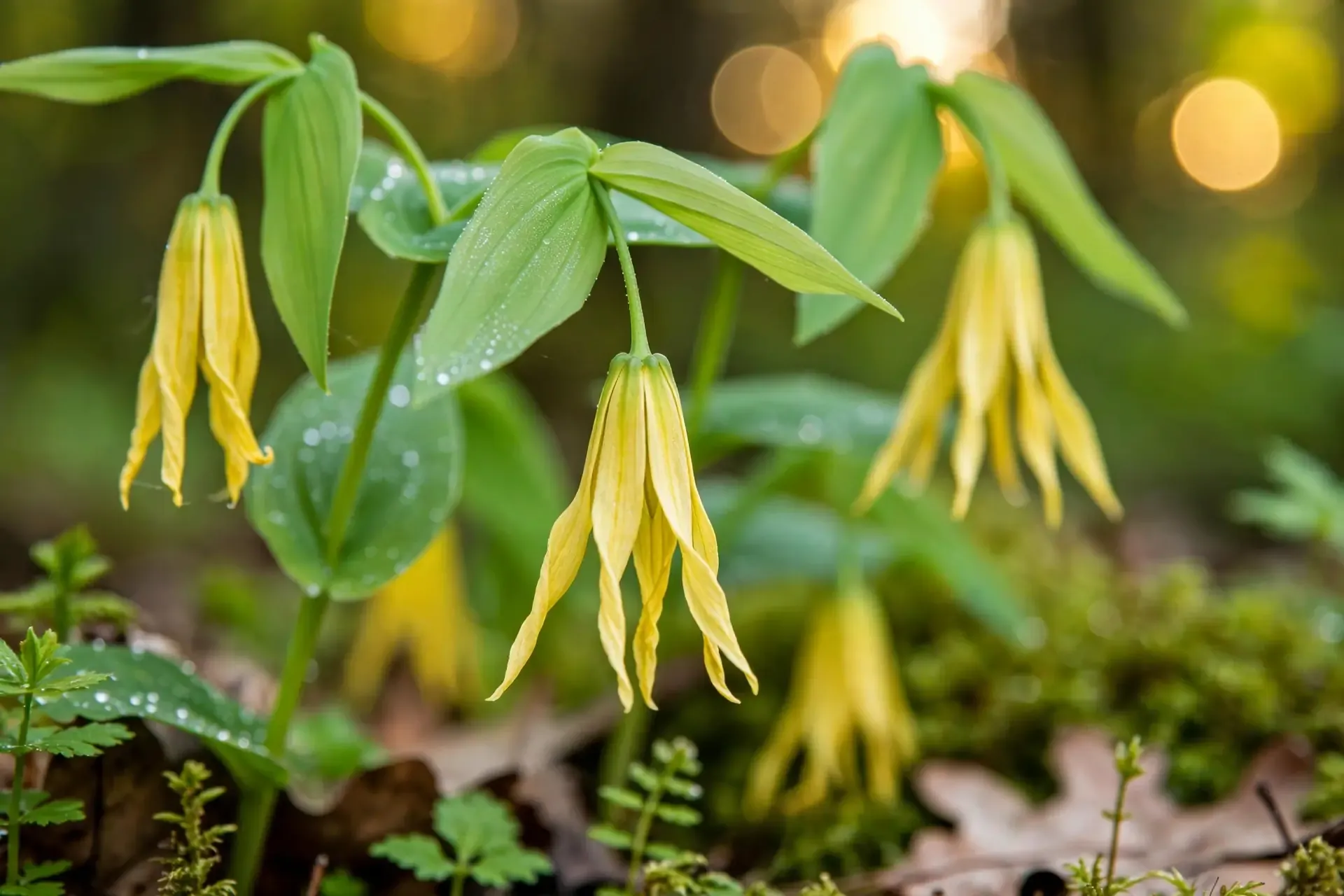
4. Large-flowered Bellwort (Uvularia grandiflora)
Large-flowered bellwort, also called merrybells, is one of the finest shade-garden natives of eastern and central North America. Arching stems up to 30 inches bear pale green leaves and clusters of nodding, narrowly bell-shaped yellow flowers with twisted petals in mid to late spring. The RHS recommends growing it in fertile, humus-rich, moist but well-drained soil in deep or partial shade — think woodland edges, underplanting of shrubs, and cottage borders. It is rhizomatous and slowly forms graceful clumps that return reliably for decades. Divide congested clumps in early spring. The whole plant is deer-resistant and generally trouble-free.
Bloom: Mid to late spring | Sun: Part to full shade | Zone: 4–8 | Best for: Woodland gardens, shade borders, native plantings
5. Perfoliate Bellwort (Uvularia perfoliata)
Perfoliate bellwort earns its name from leaves that appear pierced by the stem — the stem seems to grow straight through each leaf blade. In spring it produces nodding pale-yellow bells distinguished from its cousins by tiny orange bumps on the petal surfaces. Native to eastern North American woodlands, it forms slowly spreading colonies in the same conditions as large-flowered bellwort: shade, leafy soil, and consistent moisture. It is slightly daintier in habit and combines beautifully with ferns, trilliums, and wild ginger. Plant rhizomes 2 inches deep in fall or spring, mulch with leaf mold, and leave it undisturbed to naturalize.
Bloom: Spring | Sun: Part to full shade | Zone: 4–8 | Best for: Native shade gardens, woodland underplanting
6. Sessile Bellwort (Uvularia sessilifolia)
Sessile bellwort is the smallest of the Uvularias, with slender stems to about 12 inches and petite creamy-yellow bells that dangle beneath the leaves in spring. Unlike its perfoliate cousins, its leaves sit directly on the stem rather than being pierced by it. It spreads gently by rhizomes to form a delicate groundcover in moist, shady spots — ideal for the front of a woodland border or along a shaded path. Give it rich, humusy, consistently moist soil and it will quietly colonize. Wildflower gardeners value it as a true native for eastern North American shade gardens, where it partners well with foamflower and bloodroot.
Bloom: Spring | Sun: Part to full shade | Zone: 4–9 | Best for: Shady groundcover, native woodland edges
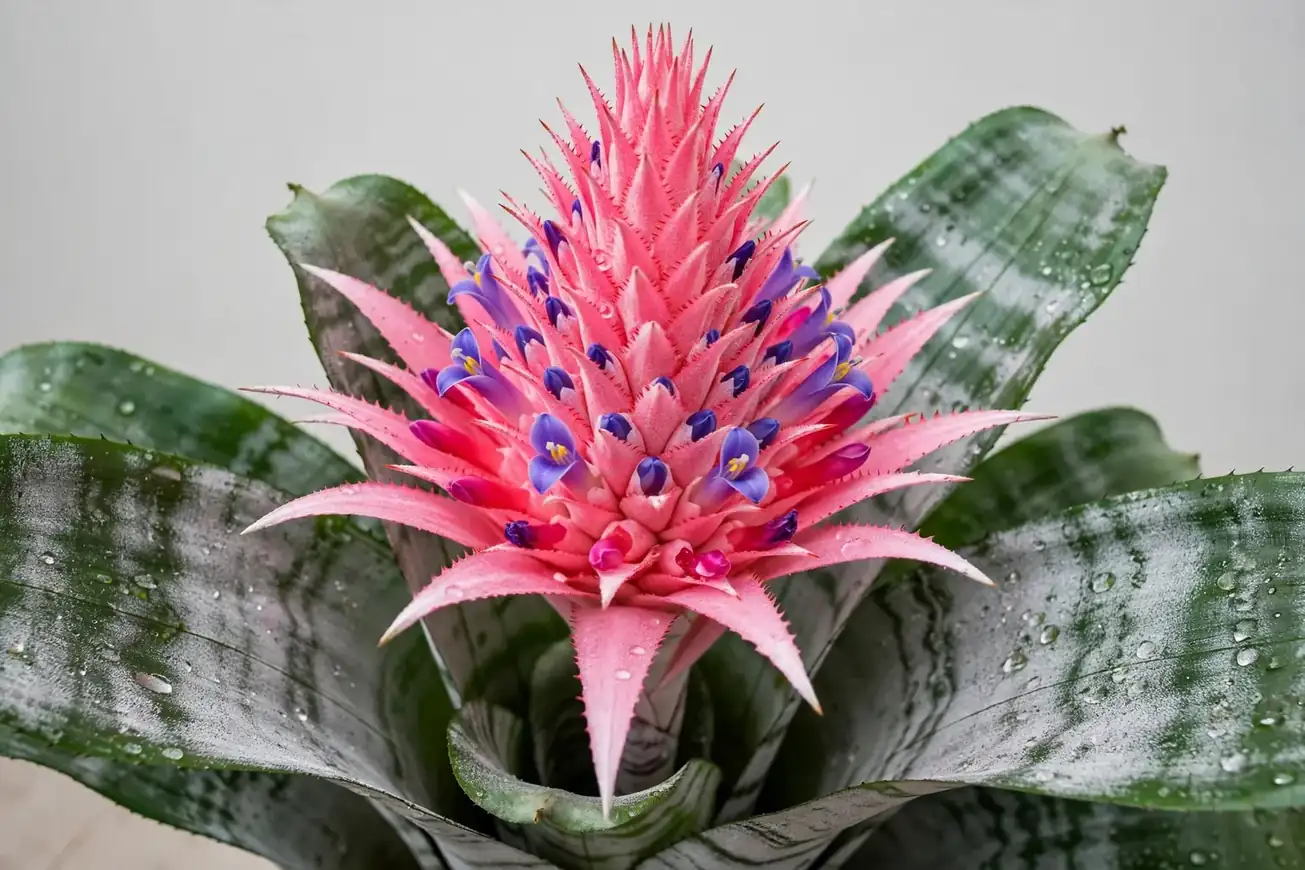
7. Urn Plant (Aechmea fasciata)
The urn plant is arguably the most famous bromeliad in cultivation — a Brazilian epiphyte whose stiff, silver-banded leaves form a watertight rosette “urn,” from which rises a long-lasting pyramidal bract of bright pink studded with small blue flowers. The bloom can persist for months, and Gardening Know How notes that in zones 10b–11 it can even grow outdoors year-round, though everywhere else it is a beloved houseplant. Keep the central cup filled with fresh water (emptied and refilled weekly), give bright indirect light, and pot in airy orchid-style mix. After flowering the mother rosette slowly declines but produces pups to carry on the line.
Bloom: Once at maturity | Sun: Bright indirect light | Zone: Houseplant (10b–11 outdoors) | Best for: Houseplants, tropical displays
8. Urn Plant ‘Silver Vase’ (Aechmea fasciata ‘Silver Vase’)
‘Silver Vase’ is a selected form of the urn plant bred for even more dramatic silver banding across its broad, arching leaves — the namesake “silver vase” effect at its most striking. Its flower display is the same showstopping pink bract with blue florets, lasting for months indoors. Culture is identical to the species: bright indirect light, water in the cup, excellent air circulation, and protection from frost. It is slightly more compact and symmetrical than seed-grown plants, making it a favorite for modern interiors. Propagate from pups when they reach about a third of the mother plant’s size.
Bloom: Once at maturity | Sun: Bright indirect light | Zone: Houseplant (10b–11 outdoors) | Best for: Statement houseplants, bright bathrooms
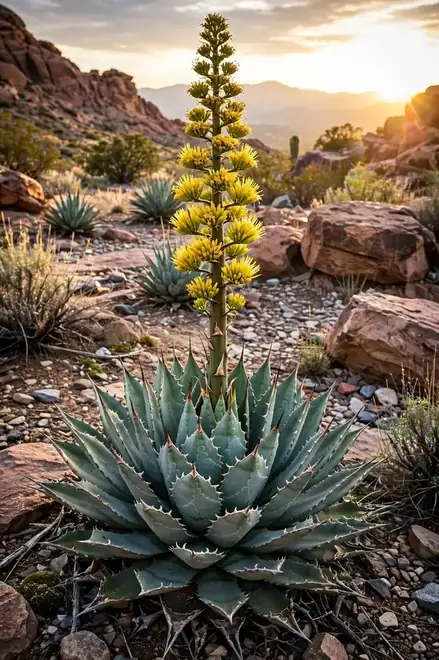
9. Utah Agave (Agave utahensis)
Utah agave is one of the toughest agaves on earth — a compact, fiercely spined rosette of blue-green leaves hardy down to zone 5, far colder than most agaves dare. It earns its place on this list with its once-in-a-lifetime flower show: after many years, the rosette sends up a towering 6- to 12-foot spike studded with clusters of yellow flowers that draw bees, hummingbirds, and every pollinator for miles. True to agave tradition, the flowering rosette dies afterward but leaves offsets behind. Plant it in full sun with razor-sharp drainage, water deeply but rarely, and give it room — this is a specimen plant for rock gardens and xeriscapes, not a pot on the patio edge.
Bloom: Spring to summer, once | Sun: Full sun | Zone: 5–9 | Best for: Rock gardens, xeriscapes, cold-hardy succulent collections
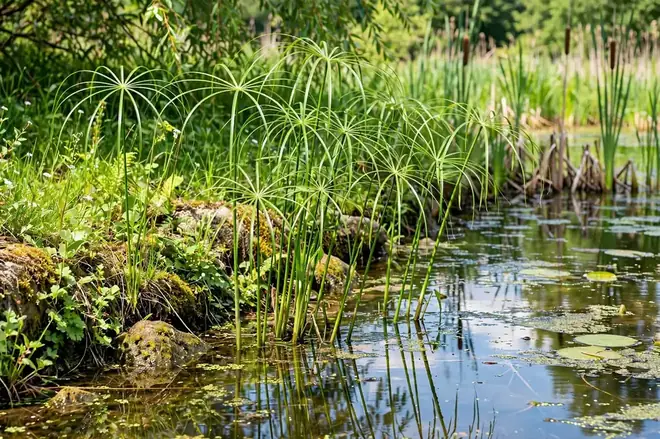
10. Umbrella Plant (Cyperus alternifolius)
An honest caveat first: the umbrella plant is grown for its architecture, not its flowers. This Madagascan sedge sends up slender stems topped with radiating whorls of narrow leaves like tiny green umbrellas, and its blooms are small brown-green clusters that most gardeners barely notice. But the structure is so striking — and the plant so easy — that it belongs here anyway. It thrives with its feet wet: pond margins, bog gardens, and even pots standing in saucers of water. In cold climates it makes a superb houseplant that forgives overwatering. Full sun to part shade, zones 8–11 outdoors.
Bloom: Summer (modest) | Sun: Full sun | Zone: 8–11; houseplant elsewhere | Best for: Pond margins, bog gardens, easy houseplants
11. Bearberry / Uva Ursi (Arctostaphylos uva-ursi)
Bearberry — sold in nurseries under its Latin alias uva ursi, literally “bear’s grape” — is a tough evergreen groundcover whose small pink-white urn-shaped bells nod in spring clusters. The flowers are dainty rather than showy, but they ripen into glossy red berries that feed birds and wildlife through fall and winter, while the leathery foliage turns bronze-red in cold weather. Hardy from zones 2–6 and native across the northern hemisphere, it is a workhorse for poor, sandy, acidic soils where little else thrives: slopes, rock gardens, and under pines. Give it full sun to part shade, sharp drainage, and patience — it is slow to establish but nearly indestructible once settled.
Bloom: Spring | Sun: Full sun to part shade | Zone: 2–6 | Best for: Evergreen groundcover, slopes, wildlife gardens
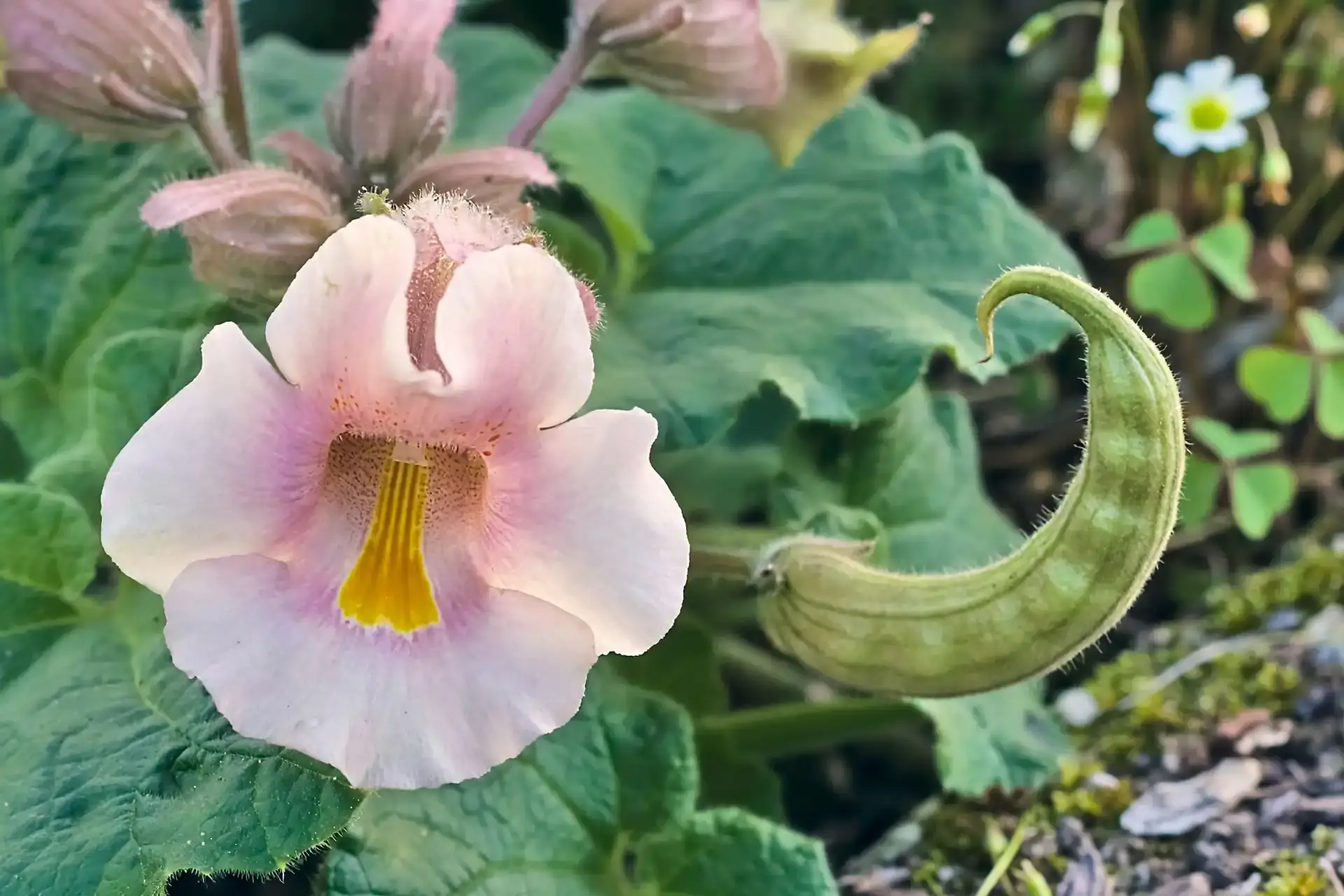
12. Unicorn Plant (Proboscidea louisianica)
The unicorn plant has some of the oddest — and prettiest — flowers on this list: large, orchid-like trumpets of pale pink to lavender with yellow throats and purple speckling, blooming all summer on a fast-growing annual. Then comes the weird part: the flowers give way to curved, clawed seed pods (“devil’s claws”) whose hooked tips were traditionally used by Native peoples and are irresistible to curious gardeners. It is easy from seed in full sun with average soil, needs no coddling, and self-sows freely. Grow it for the conversation-starting pods as much as the flowers — a guaranteed hit in children’s and novelty gardens.
Bloom: Summer | Sun: Full sun | Zone: Grown as annual | Best for: Children’s gardens, curiosity plantings, dried pods
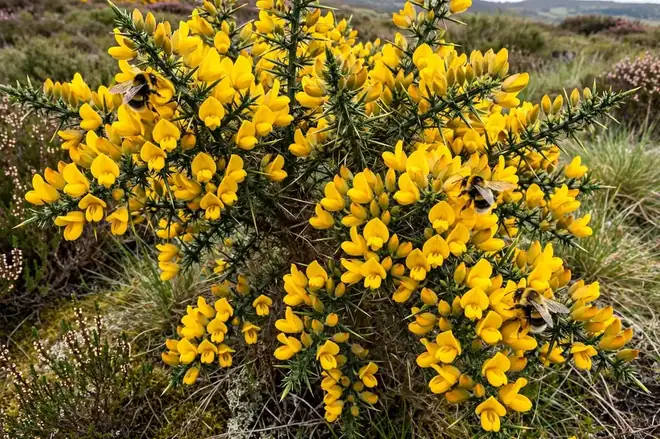
13. Common Gorse (Ulex europaeus)
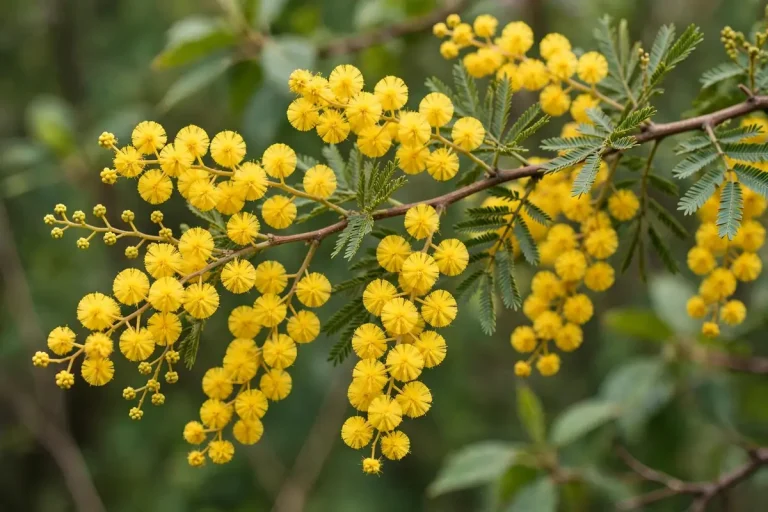
Common gorse is the blazing-yellow shrub of European heathlands, famous for the old saying that it is “in flower when kissing’s in fashion” — some blooms can be found in nearly every month. The coconut-scented pea flowers smother the fiercely spiny, evergreen branches from late winter through spring, feeding early bumblebees when little else blooms. It wants full sun and poor, even acidic soil, and it genuinely thrives on neglect. One caution: it self-seeds enthusiastically and is invasive in parts of North America, Australia, and New Zealand — check local guidance before planting, and deadhead or choose sterile garden settings where it is a known problem.
Bloom: Late winter to spring | Sun: Full sun | Zone: 6–9 | Best for: Hedging, coastal gardens, early pollinators (where non-invasive)
14. Mediterranean Gorse (Ulex parviflorus)
Mediterranean gorse is the smaller-flowered southern cousin of common gorse, a dense spiny shrub of the western Mediterranean that lights up winter and early spring with masses of small golden pea blooms. It is even more drought-tolerant than its cousin, perfectly at home in hot, dry, limestone soils with zero summer water once established. Use it as an impenetrable informal hedge, a slope stabilizer, or a bold textural shrub in Mediterranean-style plantings. Like all gorses, it fixes nitrogen and tolerates the poorest soils — but shares the family’s vigorous self-seeding habit, so site it thoughtfully.
Bloom: Winter to spring | Sun: Full sun | Zone: 8–10 | Best for: Dry gardens, Mediterranean plantings, security hedging
15. Dwarf Gorse (Ulex minor)
Dwarf gorse breaks the family rule in the best way: instead of spring, this low, compact species blooms from late summer into fall, extending the gorse season when most yellow-flowered shrubs are finished. Growing just 1–2 feet tall, it forms neat spiny cushions studded with small golden pea flowers — ideal for the front of a sunny border, a heather garden, or a large rockery. It shares the genus’s love of full sun and poor, well-drained, acidic soil and its toughness against wind and drought. A choice, underused plant for late-season color in gravel and heath gardens.
Bloom: Late summer to fall | Sun: Full sun | Zone: 6–9 | Best for: Rock gardens, heather gardens, late-season color
16. Common Bladderwort (Utricularia vulgaris)
Common bladderwort is a carnivorous plant with a split personality: beneath the water it is a tangle of fine stems studded with tiny vacuum-trap bladders that snap shut on microscopic prey, while above the surface it sends up elegant spikes of bright yellow, snapdragon-like flowers in summer. It is rootless and free-floating, making it a fascinating (and mosquito-larvae-eating) addition to wildlife ponds and water barrels. Give it full sun, still or slow-moving unfertilized water, and winter dormancy — it forms resting buds (turions) that sink and resprout in spring. A genuinely easy carnivore and a brilliant talking point.
Bloom: Summer | Sun: Full sun | Zone: Aquatic; 5–9 | Best for: Wildlife ponds, water gardens, carnivorous plant collections
17. Fairy Aprons (Utricularia sandersonii)
Fairy aprons may have the cutest flowers in the carnivorous plant world: tiny white blooms with lavender markings that look like miniature bunny faces or dancing skirts, held above a moss-like carpet of foliage. This South African bladderwort is terrestrial rather than aquatic, trapping tiny soil organisms with underground bladders. It is a favorite for terrariums, carnivorous-plant windowsills, and bog planters — kept constantly moist in a peat-sand mix with bright indirect light and no fertilizer ever. It spreads into a charming mat and blooms on and off from spring to fall. An easy, enchanting first carnivore.
Bloom: Spring to fall | Sun: Bright indirect light | Zone: Houseplant/terrarium (9–11 outdoors) | Best for: Terrariums, carnivorous plant beginners
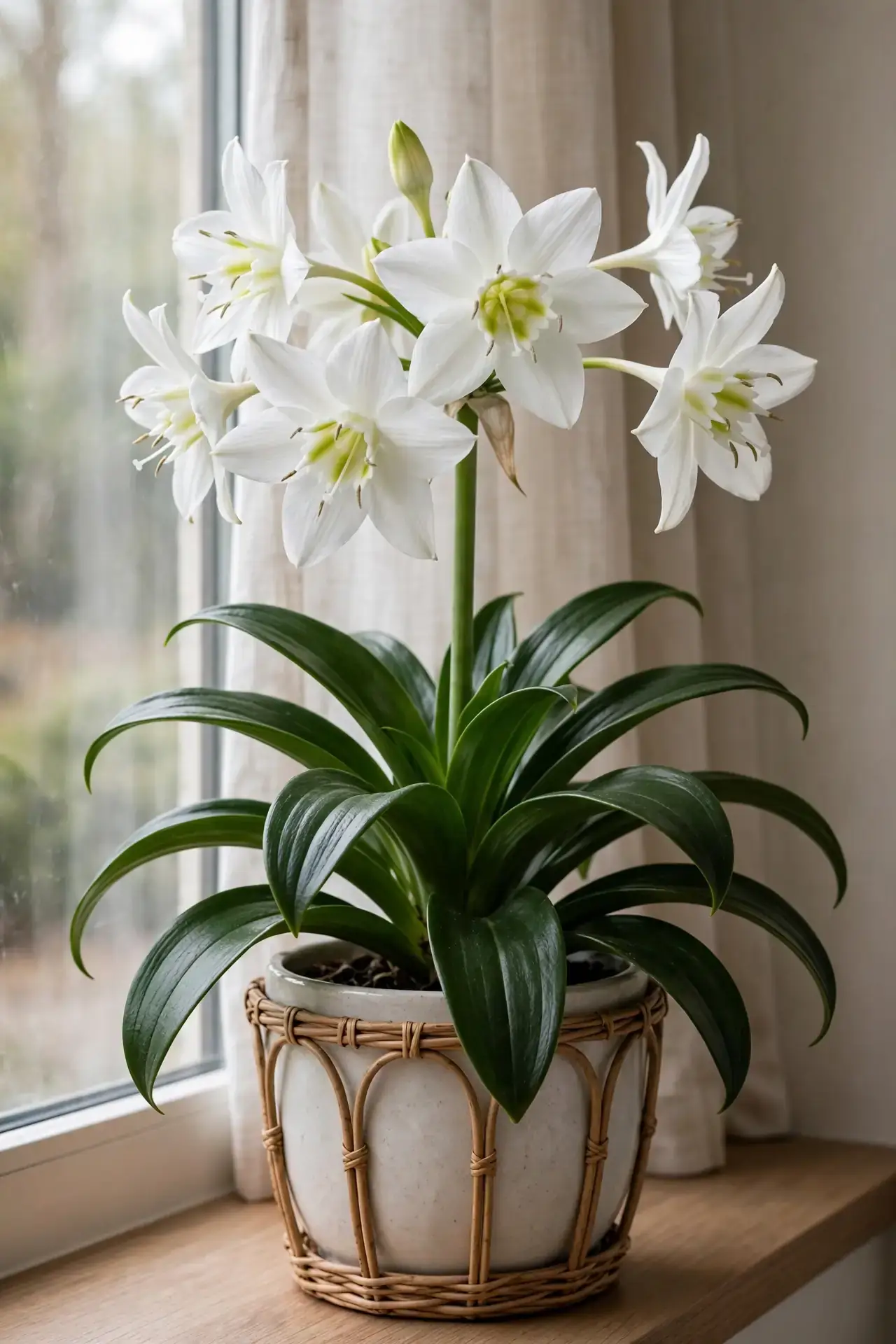
18. Amazon Lily (Urceolina amazonica)
The Amazon lily — long sold as Eucharis amazonica before botanists merged the genus into Urceolina — is a Peruvian bulb that produces umbels of large, fragrant, pure-white flowers resembling daffodils crossed with lilies. Indoors it typically blooms in winter to spring, with glossy dark-green leaves providing year-round good looks. It wants warmth (never below about 55°F), bright indirect light, rich moist soil, and a snug pot — slightly root-bound plants bloom best. A classic Victorian conservatory plant, it remains one of the most elegant flowering houseplants you can grow, with a sweet perfume that fills a room.
Bloom: Winter to spring (indoors) | Sun: Bright indirect light | Zone: Houseplant (10–11 outdoors) | Best for: Flowering houseplants, fragrant indoor displays
19. Prickly Goldenfleece (Urospermum picroides)
Prickly goldenfleece is a Mediterranean wildflower with shaggy yellow dandelion-like heads ringed by bristly, almost spiny bracts — the “prickly” in its name. A fast annual or biennial of roadsides and waste ground, it blooms from spring into summer with cheerful flowers that bees work hard. In gardens it suits wildflower meadows, gravel gardens, and naturalized corners where its self-seeding habit is an asset rather than a nuisance. Sow in fall or spring in full sun and poor to average soil; it asks for nothing more. A great honest wildflower for low-input, pollinator-friendly plantings.
Bloom: Spring to summer | Sun: Full sun | Zone: Grown as annual | Best for: Wildflower meadows, gravel gardens, pollinators
20. Smooth Goldenfleece (Urospermum dalechampii)
Smooth goldenfleece is the showier perennial sibling: large, pale-sulfur-yellow flower heads up to 3 inches across on 10–20 inch stems, blooming abundantly through spring over rosettes of soft, hairy leaves. Native to sunny, rocky sites across the western and central Mediterranean, it is easily grown in rich, well-drained soil in full sun — but it dislikes hard frost, so in cold climates grow it in pots and overwinter frost-free. Research attention as a traditional Mediterranean edible plant has only added to its charm. Deadhead to extend bloom and prevent excessive self-seeding.
Bloom: Spring | Sun: Full sun | Zone: 9–11; overwinter frost-free elsewhere | Best for: Mediterranean borders, rock gardens, containers
21. Uraria (Uraria lagopodioides)
Uraria is a little-known tropical legume from Asia and Australia, grown in warm-climate gardens for its dense terminal spikes of small purple-violet pea flowers that bloom from summer into fall. A low, spreading perennial herb with trifoliate leaves, it is more often seen in botanical collections and butterfly gardens than in mainstream nurseries — which is exactly what makes it a fun discovery. Give it full sun to part shade, warmth, and well-drained soil; in frost-free zones (10–11) it is perennial, elsewhere a greenhouse or summer-container curiosity. As a legume it fixes its own nitrogen, so feed lightly.
Bloom: Summer to fall | Sun: Full sun to part shade | Zone: 10–11; greenhouse elsewhere | Best for: Tropical gardens, butterfly gardens, plant collectors
22. Uncarina (Uncarina grandidieri)
Uncarina is the showpiece of the caudiciform world: a Madagascan succulent shrub that develops a massively swollen, water-storing trunk, then covers its bare spring branches with big, petunia-like, bright-yellow flowers with dark crimson throats before the fuzzy leaves even emerge. It is a collector’s plant through and through — full sun, gritty cactus mix, generous summer water, and a completely dry winter rest. Hardy only to about zone 9–10, most growers keep it in a pot and bring it in for winter. Handle the hooked seed capsules with respect — they cling like tiny mousetraps, hence the nickname “mousetrap tree.”
Bloom: Spring to summer | Sun: Full sun | Zone: 9–10; container elsewhere | Best for: Succulent collections, caudiciform specimens, containers
23. Sea Squill (Drimia maritima)
Sea squill is a Mediterranean bulb of remarkable drama: from a huge bulb that sits half-exposed at the soil surface, it fires a 3- to 5-foot spike of hundreds of small white starry flowers in late summer to fall — often with no leaves in sight, as the foliage appears in winter. It is supremely drought-tolerant, thriving in the hottest, driest, sunniest spots, and it naturalizes into spectacular colonies. Two caveats: every part is toxic (it has a long history as rat poison and medicine), so site it away from curious pets and children, and give it extremely sharp drainage. Zones 8–11.
Bloom: Late summer to fall | Sun: Full sun | Zone: 8–11 | Best for: Dry gardens, dramatic fall displays, naturalizing (away from pets)
24. Large-flowered Uvaria (Uvaria grandiflora)
Large-flowered uvaria closes our list with tropical extravagance: a woody climbing shrub from Southeast Asia whose solitary flowers reach 4 inches across, with six thick, velvety petals of deep vermilion red that age to purple — Singapore’s NParks notes it is even called “Red Hot Poker” there. It needs a trellis or pergola, warmth year-round, and full sun to part shade, thriving only in zones 10–11. Outside the tropics it is a heated-greenhouse rarity. For gardeners in frost-free climates, though, it is a spectacular flowering vine with glossy foliage, fragrant blooms, and ornamental orange fruits to follow.
Bloom: Spring to fall | Sun: Full sun to part shade | Zone: 10–11; tropical only | Best for: Tropical pergolas, flowering vines, botanical collections
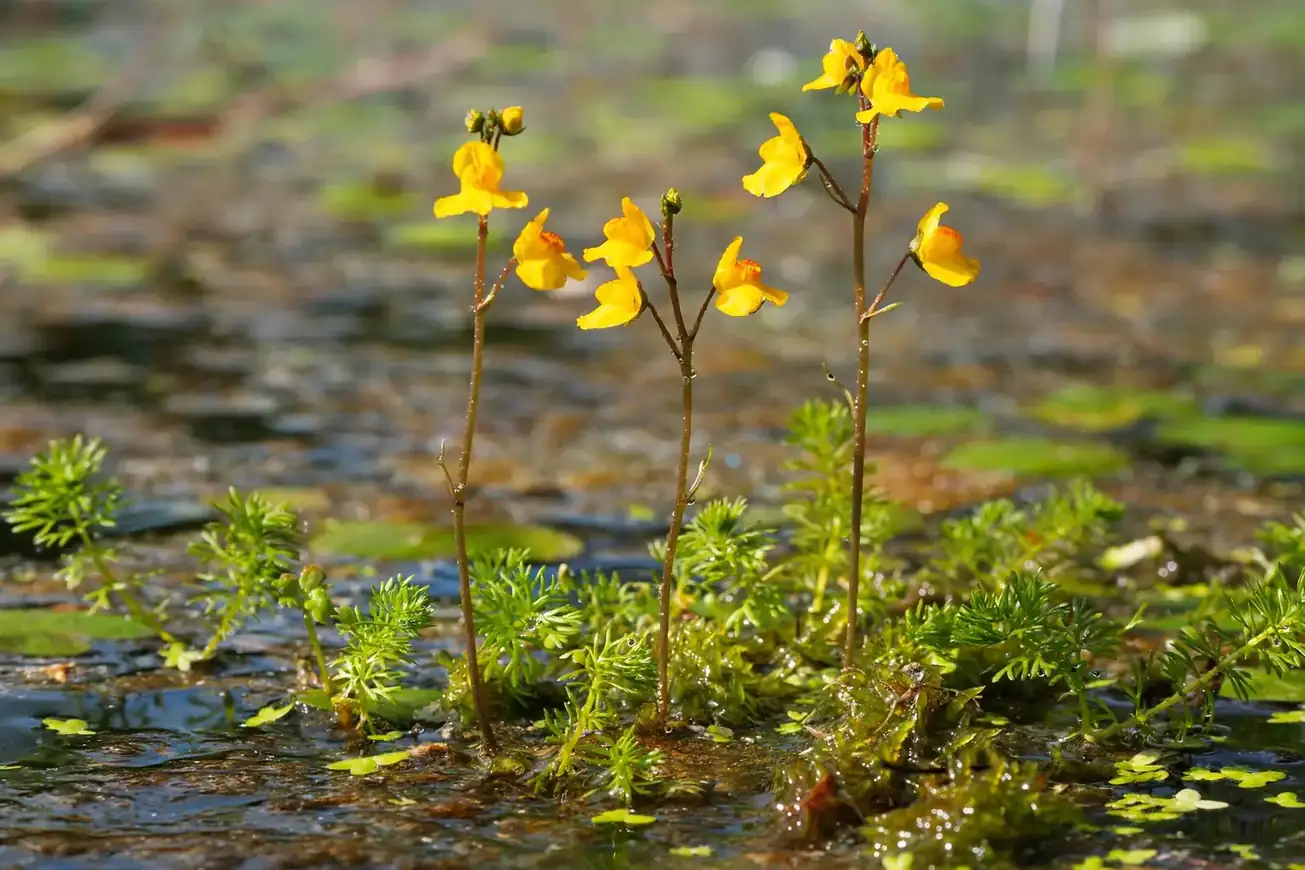
25. Humped Bladderwort (Utricularia gibba)
Bloom: Summer | Sun: Full sun | Zone: Aquatic; 5–10 | Best for: Wildlife ponds, carnivorous plant collections
– Note: Grow in the sun and zone shown in the table; check the plant label for the exact type, as ranges vary. New entry — bloom, sun and zone NOT independently verified. Aquatic carnivore — free-floating and rootless; give it still, unfertilized water and never feed it. Shares the Utricularia genus with the live Common Bladderwort (entry 16) and Fairy Aprons (entry 17) — same genus, different species.
Humped bladderwort is the pondkeeper’s secret weapon — a tangle of fine, rootless stems floating just under the surface, studded with tiny vacuum-trap bladders that devour mosquito larvae and water fleas. In summer it sends up slender stalks of small, bright-yellow, snapdragon-like flowers above the waterline. Give it full sun and clean, nutrient-poor water; it overwinters as sinking resting buds (turions) and resprouts in spring. A genuinely useful carnivore for wildlife ponds and water barrels.
26. Zigzag Bladderwort (Utricularia subulata)
Bloom: Summer | Sun: Full sun | Zone: Bog; 6–10 | Best for: Bog gardens, carnivorous plant collections
– Note: Grow in the sun and zone shown in the table; check the plant label for the exact type, as ranges vary. New entry — bloom, sun and zone NOT independently verified. Terrestrial carnivore — keep the soil constantly moist with rainwater and zero fertilizer. Shares the Utricularia genus with the live Common Bladderwort (entry 16) and Fairy Aprons (entry 17) — same genus, different species.
Zigzag bladderwort is the tiniest terror of the bog garden — thread-thin stems bearing some of the smallest yellow flowers in the carnivorous plant world, barely an eighth of an inch across. Below the surface its threadlike leaves carry microscopic bladders that trap soil microfauna. This eastern North American native colonizes wet peat and sand in full sun, often arriving uninvited in other carnivorous plants’ pots. Give it a bog planter or pond margin in zones 6–10; it asks for nothing but clean water.
27. Small Bladderwort (Utricularia bisquamata)
Bloom: Spring to fall | Sun: Full sun to part shade | Zone: Terrestrial; 8–11 | Best for: Terrariums, carnivorous plant beginners
– Note: Grow in the sun and zone shown in the table; check the plant label for the exact type, as ranges vary. New entry — bloom, sun and zone NOT independently verified. Terrestrial carnivore — keep constantly moist in peat-sand mix, bright light, no fertilizer ever. Shares the Utricularia genus with the live Common Bladderwort (entry 16) and Fairy Aprons (entry 17) — same genus, different species.
Small bladderwort is the beginner’s bladderwort — a South African terrestrial species that forms a low moss-like carpet and covers itself with clouds of tiny white-and-lavender blooms from spring to fall. Its underground bladders quietly trap soil organisms, but all you will notice is the charming mat of flowers. Give it full sun to part shade in a constantly moist peat-sand mix and never fertilize; in zones 8–11 it can live outdoors, elsewhere it is a delightful terrarium plant. Spreads gently — contain it in its own pot.
28. Pale Bladderwort (Utricularia livida)
Bloom: Spring to summer | Sun: Full sun | Zone: Terrestrial; 9–11 | Best for: Bog planters, carnivorous collections
– Note: Grow in the sun and zone shown in the table; check the plant label for the exact type, as ranges vary. New entry — bloom, sun and zone NOT independently verified. Terrestrial carnivore — wet peat, full sun, rainwater only, no fertilizer. Shares the Utricularia genus with the live Common Bladderwort (entry 16) and Fairy Aprons (entry 17) — same genus, different species.
Pale bladderwort is the showiest of the small terrestrial bladderworts — wiry stems topped with comparatively large, pale-lavender to white flowers with yellow throats in spring and summer. Native to tropical Africa and Mexico, it wants full sun, constantly wet acidic soil, and warmth, making it a natural for heated bog planters and carnivorous collections in zones 9–11. Give it rainwater and nothing else; it spreads by stolons into a flowering carpet. One of the easiest ways to own a genuinely beautiful carnivore.
29. Epiphytic Bladderwort (Utricularia alpina)
Bloom: Spring to summer | Sun: Bright indirect light | Zone: Epiphyte; greenhouse | Best for: Orchid-house carnivores, collectors
– Note: Grow in the sun and zone shown in the table; check the plant label for the exact type, as ranges vary. New entry — bloom, sun and zone NOT independently verified. Epiphytic carnivore — grows on bark or moss like an orchid, not in soil; greenhouse or terrarium only. Shares the Utricularia genus with the live Common Bladderwort (entry 16) and Fairy Aprons (entry 17) — same genus, different species.
Epiphytic bladderwort breaks every bladderwort rule — instead of water or bog, it grows on tree branches in Caribbean and South American cloud forests, trapping prey in bladders dangling among moss. Its reward is spectacular: large, orchid-like white flowers with yellow markings, far bigger than any pond bladderwort’s. Grow it mounted on bark or in coarse orchid mix in a humid greenhouse or terrarium with bright indirect light. A collector’s carnivore and proof that the U-letter hides real botanical wonders.
30. Spring Gold Ursinia (Ursinia calenduliflora)
Bloom: Spring | Sun: Full sun | Zone: 9–11; annual elsewhere | Best for: Sunny borders, containers, wildflower meadows
– Note: Grow in the sun and zone shown in the table; check the plant label for the exact type, as ranges vary. New entry — bloom, sun and zone NOT independently verified. Half-hardy annual — sow where it is to grow; resents transplanting and rich, wet soil. Shares the Ursinia genus with live entries 1–3 — same genus, different species.
Spring gold ursinia is Namaqualand in a seed packet — masses of bright golden-yellow daisies with dark centers blooming all spring on bushy 12- to 18-inch plants. This South African annual evolved for lean, sandy soils and blazing sun, and it sulks in rich ground or heavy water. Sow in spring after frost in sharply drained soil, thin generously, and deadhead for months of sunset color. Pair it with the live ursinias for a full orange-to-gold daisy spectrum.
31. Silky Ursinia (Ursinia sericea)
Bloom: Spring to summer | Sun: Full sun | Zone: 9–11; annual elsewhere | Best for: Rock gardens, border fronts, dry slopes
– Note: Grow in the sun and zone shown in the table; check the plant label for the exact type, as ranges vary. New entry — bloom, sun and zone NOT independently verified. Half-hardy annual — full sun, excellent drainage, lean soil. Shares the Ursinia genus with live entries 1–3 — same genus, different species.
Silky ursinia earns its name twice — soft, silvery, finely divided foliage and bright yellow daisy heads that glow against it from spring into summer. More compact than its cousins at 8–12 inches, it is the rock-garden ursinia, thriving in the hottest, driest, poorest spots. Give it full sun and gritty soil; it needs no feeding and little water once going. A South African native that proves drought-tolerant can still be dazzling.
32. Sea-rocket-leaf Ursinia (Ursinia cakilefolia)
Bloom: Spring | Sun: Full sun | Zone: 9–11; annual elsewhere | Best for: Wildflower meadows, containers
– Note: Grow in the sun and zone shown in the table; check the plant label for the exact type, as ranges vary. New entry — bloom, sun and zone NOT independently verified. Half-hardy annual — sow in spring, thin to a foot apart, deadhead for rebloom. Shares the Ursinia genus with live entries 1–3 — same genus, different species.
Sea-rocket-leaf ursinia is the wild one of the family — a sprawling South African annual with fleshy, sea-rocket-like leaves and cheerful yellow-orange daisies on long stems in spring. It is the least domesticated ursinia on this list, happiest in sandy, unimproved soil where it self-sows freely. Grow it in wildflower meadows, gravel gardens, or big containers in full sun; leave some heads to seed and it will return. Bees work the blooms hard.
33. Carolina Merrybells (Uvularia caroliniana)
Bloom: Mid spring | Sun: Part to full shade | Zone: 6–9 | Best for: Woodland gardens, native shade borders
– Note: Grow in the sun and zone shown in the table; check the plant label for the exact type, as ranges vary. New entry — bloom, sun and zone NOT independently verified. Woodland perennial — plant rhizomes in fall or spring, mulch with leaf mold, leave undisturbed to naturalize. Shares the Uvularia genus with live entries 4–6 — same genus, different species.
Carolina merrybells is the southern belle of the bellworts — nodding, pale-yellow bells on arching stems in mid spring, native to rich woodlands of the southeastern US. Slightly more heat-tolerant than its northern cousins, it forms graceful clumps in part to full shade with humus-rich, consistently moist soil. Pair it with ferns, foamflower, and trilliums for a true native woodland vignette. Like all Uvularias, it is deer-resistant and returns faithfully for decades once settled.
34. Mountain Bellwort (Uvularia puberula)
Bloom: Spring | Sun: Part to full shade | Zone: 5–8 | Best for: Native woodland gardens, shade borders
– Note: Grow in the sun and zone shown in the table; check the plant label for the exact type, as ranges vary. New entry — bloom, sun and zone NOT independently verified. Woodland perennial — rich, humusy soil, consistent moisture, deep or partial shade. Shares the Uvularia genus with live entries 4–6 — same genus, different species.
Mountain bellwort is the downy one — straw-yellow bells dangling from arching stems whose leaves and stalks wear a soft fuzz, blooming in spring across Appalachian woodlands. At 12–18 inches it suits the front of the shade border, spreading slowly by rhizomes into polite colonies. Give it the classic bellwort recipe: shade, leafy soil, steady moisture. Its subtle coloring pairs beautifully with bolder spring ephemerals like bloodroot and Virginia bluebells.
35. Amazonian Zebra Bromeliad (Aechmea chantinii)
Bloom: Summer (infrequent indoors) | Sun: Bright indirect light | Zone: Houseplant (10–11 outdoors) | Best for: Statement houseplants, bromeliad collections
– Note: Grow in the sun and zone shown in the table; check the plant label for the exact type, as ranges vary. New entry — bloom, sun and zone NOT independently verified. Tropical epiphyte — bright indirect light, water in the cup, airy mix; grown for its banded foliage. Shares the Aechmea genus with the live Urn Plant (entry 7) and ‘Silver Vase’ (entry 8) — same genus, different species. Its “zebra” common name is different from the Zebra Plant (Calathea zebrina) on the Flowers Z page — different plant entirely.
Amazonian zebra bromeliad is the urn plant’s wilder cousin — a large Brazilian epiphyte whose broad leaves wear bold silver banding like zebra stripes, the most dramatic foliage in the Aechmea genus. When mature it sends up a branched spike of red and yellow bracts, but indoors it is grown for the leaves. Give it bright indirect light, keep the central cup filled with fresh water, and pot in orchid-style mix. After flowering the mother rosette pups and declines, like all bromeliads. A true statement houseplant.
36. Urn Plant ‘Blue Tango’ (Aechmea ‘Blue Tango’)
Bloom: Once at maturity | Sun: Bright indirect light | Zone: Houseplant (10–11 outdoors) | Best for: Houseplants, modern interiors
– Note: Grow in the sun and zone shown in the table; check the plant label for the exact cultivar, as ranges vary. New entry — bloom, sun and zone NOT independently verified. A cultivar, not a species — buy it by name for the blue-purple bracts. Culture as for the urn plant: water in the cup, bright indirect light, frost protection. Shares the Aechmea genus with the live Urn Plant (entry 7) and ‘Silver Vase’ (entry 8) — same genus, different cultivar.
Urn plant ‘Blue Tango’ is the designer urn plant — a selected Aechmea hybrid whose flower bracts open in unusual blue-violet tones instead of the classic pink, lasting for months indoors. The silver-banded rosette is as handsome as the species, and culture is identical: bright indirect light, fresh water in the central cup, airy potting mix, and no frost ever. Propagate from pups when they reach a third of the mother’s size. For modern interiors, it is the most striking U-houseplant on this list.
37. Matchstick Bromeliad (Aechmea gamosepala)
Bloom: Spring to summer | Sun: Bright indirect light to part shade | Zone: Houseplant (10–11 outdoors) | Best for: Hanging baskets, bromeliad collections
– Note: Grow in the sun and zone shown in the table; check the plant label for the exact type, as ranges vary. New entry — bloom, sun and zone NOT independently verified. Tropical epiphyte — bright light, water in the leaf cups, excellent air circulation. Shares the Aechmea genus with the live Urn Plant (entry 7) and ‘Silver Vase’ (entry 8) — same genus, different species.
Matchstick bromeliad is the easy, clumping Aechmea — rosettes of narrow green leaves that flush red in bright light, sending up poker-like spikes of red bracts tipped with yellow “match heads” in spring and summer. This Brazilian native pups freely, quickly forming a handsome cluster that cascades from hanging baskets. Give it bright indirect light to part shade and water in the cups; it is more forgiving of cool nights than the big urn plants. One of the best bromeliads for beginners.
38. Western Gorse (Ulex gallii)
Bloom: Late summer to fall | Sun: Full sun | Zone: 6–9 | Best for: Heather gardens, coastal gardens (where non-invasive)
– Note: Grow in the sun and zone shown in the table; check the plant label for the exact type, as ranges vary. New entry — bloom, sun and zone NOT independently verified. Spiny evergreen shrub — full sun, poor acidic soil, thrives on neglect; self-seeds, so site thoughtfully where gorse is a known problem. Shares the Ulex genus with live entries 13–15 — same genus, different species, and shares Dwarf Gorse’s (entry 15) late-season bloom habit.
Western gorse is the autumn gorse — a low, dense, fiercely spiny shrub of western Europe’s heaths and coasts that waits until late summer to smother itself in golden pea flowers with a coconut scent. Growing 2–3 feet tall, it extends the gorse season exactly like dwarf gorse, and the two are often confused. Give it full sun and poor, acidic, well-drained soil; it fixes its own nitrogen and needs nothing else. A superb late-season shrub for heather gardens and windy coastal sites — where it is not invasive.
39. Urceolina peruviana (Urceolina peruviana)
Bloom: Winter to spring (indoors) | Sun: Bright indirect light | Zone: Houseplant (10–11 outdoors) | Best for: Flowering houseplants, collectors
– Note: Grow in the sun and zone shown in the table; check the plant label for the exact type, as ranges vary. New entry — bloom, sun and zone NOT independently verified. Tropical bulb — warmth above 55°F, bright indirect light, rich moist soil, slightly root-bound for best bloom. Shares the Urceolina genus with the live Amazon Lily (entry 18) — same genus, different species.
Urceolina peruviana is the Amazon lily’s Peruvian sister — a tropical bulb producing umbels of large, fragrant, pure-white flowers like daffodils crossed with lilies, typically in winter to spring indoors. Culture mirrors the Amazon lily: warmth, bright indirect light, rich moist soil, and a snug pot. Its glossy dark-green leaves look good year-round even out of bloom. For collectors of the genus, it is the essential companion to the live entry 18 — same elegance, a different species.
40. Urceolina latifolia (Urceolina latifolia)
Bloom: Winter (indoors) | Sun: Bright indirect light | Zone: Houseplant (10–11 outdoors) | Best for: Collector houseplants, fragrant indoor displays
– Note: Grow in the sun and zone shown in the table; check the plant label for the exact type, as ranges vary. New entry — bloom, sun and zone NOT independently verified. Tropical bulb — warm, humid, bright indirect light; a specialist plant, rarely in mainstream nurseries. Shares the Urceolina genus with the live Amazon Lily (entry 18) — same genus, different species.
Urceolina latifolia is the broad-leafed one — exceptionally wide, glossy leaves and umbels of fragrant white flowers in winter, a true collector’s bulb from Peru. It wants the same warm conservatory treatment as the Amazon lily: no chill below about 55°F, bright indirect light, rich moist soil. Rarely offered commercially, it is included here for botanical completeness — the U-letter’s white-flower story does not end with the Amazon lily. Find it through specialist bulb growers.
41. Indian Squill (Drimia indica)
Bloom: Spring to summer | Sun: Full sun | Zone: 9–11 | Best for: Dry gardens, medicinal plant collections (toxic)
– Note: Grow in the sun and zone shown in the table; check the plant label for the exact type, as ranges vary. New entry — bloom, sun and zone NOT independently verified. Every part is toxic (cardiac glycosides) — site away from children, pets and livestock, wear gloves when handling. Shares the Drimia genus with the live Sea Squill (entry 23) — same genus, different species.
Indian squill is the sea squill’s Asian cousin — a large bulb firing a tall spike of small white-green starry flowers in spring to summer, with strap-like leaves that appear in the cooler months. Native to India and Southeast Asia, it shares the family’s extreme drought tolerance and its potent cardiac glycosides, long used in traditional medicine and rat poisons. Give it full sun and brutally sharp drainage in zones 9–11. Admire the architecture; respect the chemistry.
42. Tall Squill (Drimia altissima)
Bloom: Spring | Sun: Full sun | Zone: 9–11 | Best for: Arid gardens, collector bulbs (toxic)
– Note: Grow in the sun and zone shown in the table; check the plant label for the exact type, as ranges vary. New entry — bloom, sun and zone NOT independently verified. Every part is toxic (cardiac glycosides) — plant away from curious pets and children. Shares the Drimia genus with the live Sea Squill (entry 23) — same genus, different species.
Tall squill lives up to its name — a southern African bulb whose flower spike can top 6 feet, carrying hundreds of small white blooms above a half-buried bulb in spring. It is the most architectural of the U-letter squills and a genuine collector’s bulb for hot, dry gardens. Like its cousins it is fiercely drought-tolerant and thoroughly toxic, so site it where it will be seen but not touched. Full sun, lean soil, and almost no summer water.
43. Painted Uraria (Uraria picta)
Bloom: Summer to fall | Sun: Full sun | Zone: 10–11; greenhouse elsewhere | Best for: Tropical borders, butterfly gardens
– Note: Grow in the sun and zone shown in the table; check the plant label for the exact type, as ranges vary. New entry — bloom, sun and zone NOT independently verified. Tropical legume — full sun, warmth, well-drained soil; perennial only where frost-free. Shares the Uraria genus with the live Uraria (entry 21) — same genus, different species.
Painted uraria is the pretty one of the genus — dense terminal spikes of small pink-purple pea flowers from summer into fall, held above foliage whose leaflets carry a painted pale stripe along the midvein. This Asian subshrub reaches 3–5 feet in frost-free gardens, feeding butterflies like its cousin. Give it full sun and warmth; elsewhere it is a greenhouse or summer-container curiosity. As a legume it fixes nitrogen, so feed lightly and enjoy the show.
44. Asian Foxtail (Uraria crinita)
Bloom: Summer to fall | Sun: Full sun | Zone: 10–11; greenhouse elsewhere | Best for: Tropical borders, butterfly gardens, collectors
– Note: Grow in the sun and zone shown in the table; check the plant label for the exact type, as ranges vary. New entry — bloom, sun and zone NOT independently verified. Tropical legume — full sun, warmth, tolerates poor to saline soils; a traditional medicinal plant, not an ornamental staple. Shares the Uraria genus with the live Uraria (entry 21) — same genus, different species.
Asian foxtail — cat’s tail plant — is grown for its extraordinary inflorescence: long, bushy spikes of light-purple flowers resembling a fox’s tail, blooming summer to fall on a 3- to 5-foot subshrub. Native from the Himalayas to Southeast Asia and northern Australia, it tolerates poor and even saline soils in full sun. Give it warmth and drainage; in frost-free zones it is perennial, elsewhere a greenhouse specimen. The flowers draw butterflies, and the plant has a long medicinal history.
45. Wild Custard Apple (Uvaria narum)
Bloom: Spring (small, fragrant) | Sun: Full sun to part shade | Zone: 10–11; tropical only | Best for: Botanical collections, tropical pergolas
– Note: Grow in the sun and zone shown in the table; check the plant label for the exact type, as ranges vary. New entry — bloom, sun and zone NOT independently verified. Woody climber — needs a sturdy trellis, year-round warmth, and patience; a botanical-collection plant, not a home-garden vine. Shares the Uvaria genus with the live Large-flowered Uvaria (entry 24) — same genus, different species.
Wild custard apple is the fragrant climber of India’s Western Ghats — a large woody vine twining through wet-forest trees, opening clusters of small, creamy, sweetly scented flowers in spring followed by purple ovoid fruits. Unlike its showy cousin, its beauty is in the perfume and the glossy foliage, and it has a long Ayurvedic history. Give it a tropical pergola, full sun to part shade, and humid warmth; outside zones 10–11 it belongs in a heated greenhouse. For botanical gardens, a genuine rarity.
46. Bush Banana (Uvaria chamae)
Bloom: Spring to summer (small, greenish-yellow) | Sun: Full sun to part shade | Zone: 10–11; tropical only | Best for: Botanical collections, tropical food gardens
– Note: Grow in the sun and zone shown in the table; check the plant label for the exact type, as ranges vary. New entry — bloom, sun and zone NOT independently verified. Climbing shrub or small tree — grown for its edible finger-like fruits and medicinal uses, not its modest flowers; tropical only. Shares the Uvaria genus with the live Uraria (entry 21) — same genus, different species.
Bush banana — finger root — is West Africa’s multipurpose Uvaria: a climbing shrub or small tree bearing finger-like clusters of sweet yellow fruits eaten raw across the region, with small greenish-yellow flowers in spring to summer. Every part is used locally, from medicine to food to fuel. In cultivation it needs full sun, tropical warmth, and room to climb or spread 10–15 feet. A fascinating ethnobotanical addition for tropical food gardens and botanical collections — honest about its modest blooms.
47. Roeoesl’s Uncarina (Uncarina roeoesliana)
Bloom: Summer | Sun: Full sun | Zone: 10–11; container elsewhere | Best for: Caudiciform collections, containers
– Note: Grow in the sun and zone shown in the table; check the plant label for the exact type, as ranges vary. New entry — bloom, sun and zone NOT independently verified. Caudiciform succulent — gritty mix, generous summer water, completely dry winter rest; handle the hooked seed capsules with care. Shares the Uncarina genus with the live Uncarina (entry 22) — same genus, different species.
Roeoesl’s uncarina is the gentle giant of the genus — a Madagascan caudiciform shrub to 6 feet with soft, velvety gray-green leaves and 2-inch bright-yellow petunia-like flowers in summer, the smallest blooms of any Uncarina. It forms a handsome irregular caudex and, unlike many succulents, enjoys generous water in full sun during the growing season. Give it a gritty mix and a bone-dry winter rest; most growers keep it in a container. The bizarre horned seed pods stick to everything — admire, don’t touch.
48. Decary’s Uncarina (Uncarina decaryi)
Bloom: Summer | Sun: Full sun | Zone: 10–11; container elsewhere | Best for: Caudiciform collections, bonsai
– Note: Grow in the sun and zone shown in the table; check the plant label for the exact type, as ranges vary. New entry — bloom, sun and zone NOT independently verified. Caudiciform succulent — full sun, lean mineral mix, dry winter rest; a specialist plant for collectors. Shares the Uncarina genus with the live Uncarina (entry 22) — same genus, different species.
Decary’s uncarina is the sculptural one — a Madagascan succulent shrub or small tree with a massively swollen caudex base, deeply lobed green leaves, and cheerful yellow flowers with dark centers in summer. Similar to the live Uncarina grandidieri but with smaller flowers and more dramatic foliage, it is a prize for caudiciform collectors and bonsai growers. Give it full sun, fast drainage, and a dry winter dormancy; hardy only to about zone 10. Handle the hooked “mousetrap” seed pods with respect.
49. Cat’s Claw (Uncaria tomentosa)
Bloom: Summer (small, inconspicuous) | Sun: Full sun to part shade | Zone: 10–11; greenhouse elsewhere | Best for: Medicinal plant collections, tropical vines
– Note: Grow in the sun and zone shown in the table; check the plant label for the exact type, as ranges vary. New entry — bloom, sun and zone NOT independently verified. Woody liana — grown for its medicinal inner bark, not its blooms; needs tropical warmth and something big to climb.
Cat’s claw is the famous Amazonian medicinal vine — a massive woody liana climbing rainforest trees with the help of curved, cat-claw thorns, producing small cream flower heads in summer. Its inner bark is one of the world’s best-known herbal medicines, which is why it is cultivated, not its modest blooms. In gardens it needs a tropical climate, full sun to part shade, and a very sturdy support. Included for botanical completeness — buy it for the story and the ethnobotany, not the flower show.
50. Chilean Guava (Ugni molinae)
Bloom: Late spring to summer | Sun: Full sun to part shade | Zone: 7–10 | Best for: Edible landscaping, fragrant hedges
– Note: Grow in the sun and zone shown in the table; check the plant label for the exact type, as ranges vary. New entry — bloom, sun and zone NOT independently verified. Evergreen myrtle shrub — hardy to zone 7, prune after fruiting, mulch in cold winters.
Chilean guava is the U-letter’s tastiest entry — an evergreen Chilean shrub with small white-to-pink myrtle flowers in late spring, followed by red berries that taste uncannily of wild strawberries. Queen Victoria reportedly loved them, and they remain a connoisseur’s fruit. It makes a fragrant, compact hedge 3–5 feet tall in zones 7–10, tolerating part shade and coastal wind. Give it full sun to part shade and acid to neutral soil; the flowers are dainty, but the berries are the real prize.
51. Mexican Buckeye (Ungnadia speciosa)
Bloom: Spring | Sun: Full sun | Zone: 7–9 | Best for: Native Texas gardens, spring shrubs (seeds toxic)
– Note: Grow in the sun and zone shown in the table; check the plant label for the exact type, as ranges vary. New entry — bloom, sun and zone NOT independently verified. Deciduous native shrub — full sun, excellent drainage, drought-tolerant once established; seeds are toxic if eaten, so site away from children and pets.
Mexican buckeye is Texas spring in shrub form — clusters of fragrant pink flowers opening on bare branches in early spring, before the leaves, followed by distinctive three-lobed seed capsules. This native of Texas and northern Mexico grows 8–12 feet in full sun with sharp drainage, thriving on heat and neglect in zones 7–9. The flowers feed early pollinators; the black seeds are toxic, so enjoy the display and leave the pods alone. A superb native alternative to fussy exotic spring shrubs.
52. Prickly Uebelmannia (Uebelmannia pectinifera)
Bloom: Summer (small, yellow) | Sun: Full sun | Zone: 10–11; greenhouse elsewhere | Best for: Cactus collections (protected species)
– Note: Grow in the sun and zone shown in the table; check the plant label for the exact type, as ranges vary. New entry — bloom, sun and zone NOT independently verified. Brazilian endemic cactus — a CITES-protected species; buy nursery-propagated plants only, never wild-collected. Grown for its ribbed, waxy form; the small yellow flowers are a bonus.
Prickly uebelmannia is the jewel cactus of Brazil’s high rocky campos — a ribbed, barrel-shaped cactus coated in a waxy white bloom that glows in full sun, with small yellow flowers in summer. It is slow, rare in the wild, and protected under CITES, which makes nursery-propagated plants the only ethical choice. Give it blazing sun, mineral soil, and careful watering in a greenhouse or warm windowsill. A collector’s cactus and a conservation story in one pot.
53. Uroskinnera spectabilis (Uroskinnera spectabilis)
Bloom: Summer to fall | Sun: Part shade | Zone: 10–11; greenhouse elsewhere | Best for: Botanical collections (extreme rarity)
– Note: Grow in the sun and zone shown in the table; check the plant label for the exact type, as ranges vary. New entry — bloom, sun and zone NOT independently verified. Extreme rarity — a localized Guatemalan endemic, essentially unavailable commercially; a botanical-collection plant, not a garden plant.
Uroskinnera spectabilis is the rarest flower on this list — a 5-foot shrub known from a small area of eastern Guatemala, first described in 1857 and rarely seen since. Its tubular blooms open in summer to fall in part shade. Kew accepts the species, but you will not find it in nurseries; it is included here so the U-list is botanically complete and honest. Think of it as the U-letter’s unicorn — known, documented, and almost certainly never to be grown in your garden.
54. Caesarweed (Urena lobata)
Bloom: Summer to fall | Sun: Full sun | Zone: 9–11; annual elsewhere | Best for: Fiber gardens, tropical borders (weedy in tropics)
– Note: Grow in the sun and zone shown in the table; check the plant label for the exact type, as ranges vary. New entry — bloom, sun and zone NOT independently verified. Pantropical weed — small pink hibiscus-family flowers, useful fiber plant, but self-seeds aggressively in warm climates; keep it contained or grow as an annual.
Caesarweed is the U-letter’s honest weed — a pantropical member of the hibiscus family with small pink flowers from summer to fall and burr-like seed capsules that hitch rides on clothing and fur. It has genuine uses: a traditional fiber plant and folk medicine across the tropics. In zones 9–11 it self-seeds freely, so grow it as an annual or deadhead ruthlessly; in cold climates it is a well-behaved summer curiosity. Full sun and average soil are all it asks.
55. Ulluco (Ullucus tuberosus)
Bloom: Summer (small, inconspicuous) | Sun: Full sun | Zone: 9–11; annual elsewhere | Best for: Edible gardens, Andean crops (grown for tubers)
– Note: Grow in the sun and zone shown in the table; check the plant label for the exact type, as ranges vary. New entry — bloom, sun and zone NOT independently verified. Andean tuber crop — grown for its colorful waxy tubers, not its tiny pinkish flowers; needs a long, cool growing season.
Ulluco is the Andes’ answer to the potato — a traditional tuber crop grown for thousands of years, producing waxy, jewel-colored tubers in red, yellow, and pink. Its small pinkish flowers in summer are an afterthought; the harvest is the point. Give it full sun, rich moist soil, and a long cool season — it forms tubers as days shorten in fall. In warm climates grow it as a novelty annual. Included for botanical completeness: a genuine U-plant, even if you grow it for dinner, not the vase.
Growing Tips for U-Flowers
With 55 very different U-flowers on this list — from desert succulents to shade woodlanders to aquatics — a few guiding principles will help you pick winners.
Match the plant to your conditions, not the other way around. The U-list is extreme in its diversity: bellworts demand shade and leafy soil, ursinias and gorse demand blazing sun and poor soil, bladderworts need a pond, and the Amazon lily wants a warm windowsill. Read the sun and zone columns in the table above before you buy — most U-flower failures come from planting a sun-lover in shade or a tender tropical outdoors in a cold climate.
Respect the one-shot bloomers. Utah agave and the urn plant flower once and then decline — that is their natural life cycle, not a failure. With agaves, leave the offsets that form around the base; with urn plants, wait until pups are a third of the mother’s size before separating. Planning for the next generation is part of growing these plants.
Give carnivores pure water and zero fertilizer. Both bladderworts evolved in nutrient-poor water and soil, and minerals or fertilizer will kill them faster than neglect. Use rainwater or distilled water for fairy aprons in terrariums, and never “feed” a pond bladderwort — it catches its own food. This single rule separates thriving carnivorous plants from dead ones.
Use the tough ones where nothing else grows. Gorse, bearberry, sea squill, and Utah agave are specialists in poor, dry, or cold conditions that defeat fussier plants. A sunny, impoverished slope is a liability for roses but paradise for gorse and bearberry; a scorching gravel strip is ideal for sea squill and Utah agave. Let the site choose the plant.
Start tender exotics in containers. Uncarina, smooth goldenfleece, the Amazon lily, and fairy aprons all need winter protection in most of the US. Growing them in pots from the start means autumn is a simple matter of carrying them indoors — no digging, no losses, and many more years of those remarkable flowers.
Additional growing tips for the new entries
- Give carnivores pure water and zero fertilizer. The five new bladderworts (entries 25–29) join the live bladderworts in demanding rainwater or distilled water and no fertilizer ever — minerals kill them faster than neglect. Aquatic humped bladderwort (entry 25) wants still, unfertilized pond water; the terrestrial ones (entries 26–28) want constantly moist peat-sand; the epiphytic one (entry 29) grows on bark like an orchid. This single rule separates thriving carnivores from dead ones.
- Match the tropicals to your winters honestly. Most of entries 35–53 are tropical, subtropical or Madagascan — zones 10–11, greenhouse, or container culture. The genuinely growable additions for ordinary gardens are the three new ursinias (entries 30–32, half-hardy annuals), the two new bellworts (entries 33–34, hardy woodlanders), western gorse (entry 38, zones 6–9), Chilean guava (entry 50, zones 7–10) and Mexican buckeye (entry 51, zones 7–9). Everything else is a specialist, conservatory or collector plant.
- Respect the toxic and the weedy. Indian squill (entry 41) and tall squill (entry 42) carry toxic cardiac glycosides — admire from a distance, like the sea squill already on this page. Mexican buckeye (entry 51) has toxic seeds, so site it away from children and pets. Caesarweed (entry 54) self-seeds aggressively in warm climates — deadhead it or grow it as an annual. And prickly uebelmannia (entry 52) is a protected species: buy nursery-propagated plants only, never wild-collected.
Which U-Flowers Will You Grow?
From the sunset daisies of ursinia to the woodland bells of Uvularia, the architectural drama of the urn plant and Utah agave, the coconut perfume of gorse, the underwater traps of bladderwort, and the fragrant white trumpets of the Amazon lily, flowers that start with U cover every garden niche — sun and shade, pond and desert, windowsill and wildflower meadow, across USDA zones 2 through 11. Start with easy winners matched to your conditions: bellworts for shade, ursinias or gorse for sun, an urn plant or Amazon lily for indoors, or a bladderwort for the pond. Pick three or four favorites from this list, give them the right spot, and one of the alphabet’s scarcest letters will fill your garden with surprises from spring’s first bells to fall’s last golden spikes.
Frequently Asked Questions
What flowers start with U?
Real flowers that start with U include ursinia, bellwort (Uvularia), urn plant (Aechmea fasciata), Utah agave, umbrella plant, bearberry (uva ursi), unicorn plant, gorse (Ulex), bladderwort (Utricularia), Amazon lily (Urceolina), uncarina, sea squill, and uvaria. This guide covers 55 of them with growing details for each — one of the scarcest letters in the plant kingdom, so several entries are tropical rarities, carnivores or collector plants rather than nursery staples, and each one says so plainly.
What are the most popular flower names that start with U?
The urn plant (Aechmea fasciata) is the best-known U-flower — a hugely popular, long-blooming houseplant. Large-flowered bellwort is a beloved native shade perennial, gorse is iconic in European landscapes, ursinia daisies are stars of South African wildflower displays, and the Amazon lily is a classic fragrant houseplant. The new entries add the Amazonian zebra bromeliad (entry 35) for houseplant collectors and Chilean guava (entry 50) for edible landscapers.
What yellow flowers start with U?
Beautiful yellow U-flowers include all three ursinias, the three bellworts, common gorse, Mediterranean and dwarf gorse, common bladderwort, uncarina’s yellow trumpets, Utah agave’s flower spike, and both goldenfleeces. The new entries add three more ursinias (entries 30–32), western gorse’s late-season gold (entry 38), the bladderworts’ small yellow blooms (entries 25–28), and both new uncarinas (entries 47–48). Ursinias and gorse give the boldest yellow displays.
What white flowers start with U?
White flowers that start with U include the Amazon lily’s fragrant white umbels, fairy aprons’ white-and-lavender blooms, bearberry’s pink-white bells, and sea squill’s white starry spikes. The new entries add both new urceolinas’ fragrant white umbels (entries 39–40), the epiphytic bladderwort’s orchid-like white flowers (entry 29), and the small bladderwort’s white-and-lavender carpet (entry 27). The Amazon lily remains the standout choice for a white U-flower display indoors.
Which perennial flowers start with U?
Reliable perennial U-flowers include the three bellworts (zones 4–9), bearberry (zones 2–6), common gorse (zones 6–9), dwarf gorse, smooth goldenfleece (zones 9–11), Utah agave (zones 5–9), sea squill (zones 8–11), and bladderworts in suitable ponds. The new entries add mountain bellwort and Carolina merrybells for shade (entries 33–34), western gorse (entry 38), the perennial bladderworts (entries 26–28), the two new squills (entries 41–42), Chilean guava (entry 50, zones 7–10) and Mexican buckeye (entry 51, zones 7–9). Ursinias and unicorn plant are grown as annuals in most climates.
What flowers that start with U bloom in spring?
Spring U-bloomers include the three ursinias, the three bellworts, bearberry, common and Mediterranean gorse, both goldenfleeces, uncarina, and sea squill’s late-summer show is the exception. The new entries add three more ursinias (entries 30–32), Carolina merrybells and mountain bellwort (entries 33–34), both new squills (entries 41–42), Mexican buckeye’s fragrant pink clusters (entry 51), and Chilean guava (entry 50). For the earliest color, gorse (late winter) and the ursinias are the most reliable.
What flowers beginning with U grow well in shade?
The three bellworts (Uvularia grandiflora, U. perfoliata, U. sessilifolia) are the top shade choices — true woodland natives for part to full shade. The Amazon lily and fairy aprons thrive in bright indirect light indoors, and bearberry tolerates part shade. The new entries add Carolina merrybells and mountain bellwort (entries 33–34) to the true-shade ranks, plus the urn-plant cultivars and bromeliads (entries 35–37) for bright indoor light. Everything else on this list wants full sun.
Which flowers starting with U are best for beginners?
The urn plant is the runaway winner — bright indirect light, water in the cup, months of bloom, done. Ursinias are nearly as easy from seed in full sun, and the unicorn plant self-sows freely for children’s gardens. As carnivores go, small bladderwort (entry 27) is the most forgiving first bladderwort. The new ursinias (entries 30–32) grow exactly like the live ones if you can find the seed. Everything else new on this list is a specialist, tropical or collector plant.
What flowers that start with U attract hummingbirds and butterflies?
Gorse’s coconut-scented blooms feed early bumblebees; ursinia daisies are bee magnets; unicorn plant’s trumpets draw pollinators all summer; Utah agave’s towering spike is a pollinator beacon. The new entries add the three new ursinias (entries 30–32), both new urarias’ butterfly-visited spikes (entries 43–44), western gorse (entry 38), and Mexican buckeye’s early-spring clusters (entry 51). Plant the daisies in drifts for the biggest pollinator payoff.
Are there fragrant flowers that start with U?
Yes — a small but real set. Gorse’s pea flowers smell of coconut, the Amazon lily’s white umbels are sweetly perfumed, and bearberry’s bells carry a light honey scent. The new entries add both new urceolinas’ fragrant white blooms (entries 39–40), Mexican buckeye’s sweet spring clusters (entry 51), Chilean guava’s fragrant flowers (entry 50), and the wild custard apple’s scented blossoms (entry 45). The new entries roughly double the fragrant U-list.
What flowers that start with the letter U make good cut flowers?
Ursinia daisies make cheerful, long-lasting cut flowers — deadhead and they keep coming. The matchstick bromeliad’s spikes (entry 37) suit tropical arrangements, and the Amazonian zebra bromeliad’s bracts (entry 35) are dramatic cut stems. For dried arrangements, unicorn plant’s curved pods (live entry 12) are unbeatable conversation pieces. Most other U-flowers are too small, too rare, or too tropical to cut — grow this list for the garden and the collection, not the vase.
Which flowers that start with U are native to North America?
Native U-flowers include the three bellworts (eastern and central woodlands), bearberry (zones 2–6, across the northern hemisphere), Utah agave (Southwest), unicorn plant (south-central US), and zigzag bladderwort (entry 26, eastern bogs). The new entries add Carolina merrybells and mountain bellwort (entries 33–34, southeastern and Appalachian woodlands) and Mexican buckeye (entry 51, Texas native). That is a solid native showing for such a scarce letter — excellent for woodland, xeriscape and native-shrub plantings.
Explore More
- Flowers A
- Flowers B
- Flowers C
- Flowers D
- Flowers E
- Flowers F
- Flowers G
- Flowers H
- Flowers I
- Flowers J
- Flowers K
- Flowers L
- Flowers M
- Flowers N
- Flowers O
- Flowers P
- Flowers Q
- Flowers R
- Flowers S
- Flowers V
- Flowers W
- Flowers X
- Flowers Y
- Flowers Z
- Plants T