Delphinium Flower: Meaning, Types and How to Grow It
It is the tallest blue thing in a summer border, a spire so straight it looks drawn with a ruler — and then you learn it is also one of the most poisonous plants a gardener can grow, a short-lived perennial that sulks in heat, and a flower whose name most people use for a completely different plant. The delphinium flower is all of those things at once, and that contradiction is exactly why gardeners keep coming back to it.
This guide separates the true perennial delphinium from the annual larkspur that shares its name, covers the six kinds worth growing — from the six-foot Pacific Giants to the one-foot Chinese delphinium — explains what the flower means, and gives the honest growing rules: cool summers, rich lime-loving soil, staking before the wind finds it, and gloves on, always.
Quick Answer
A delphinium flower is the tall, spired bloom of Delphinium, a genus of about 300 species in the buttercup family Ranunculaceae, native across the Northern Hemisphere. Garden delphiniums are short-lived perennials, usually lasting 3 to 5 years, grown for dense spikes of blue, purple, pink or white flowers in early summer. They need full sun, rich, well-drained, slightly alkaline soil and cool summers, and every part of the plant is toxic if eaten, so they must be grown away from grazing animals, pets and small children.
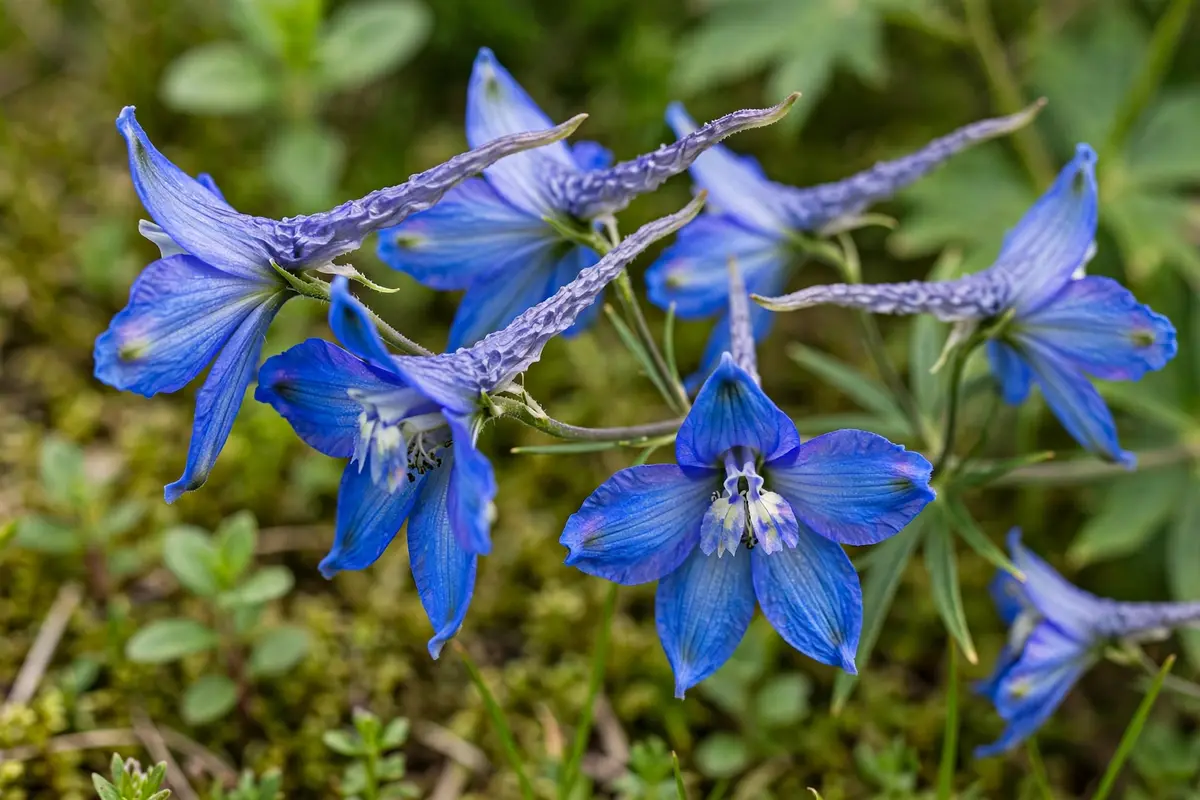
Table of Contents
- What Is a Delphinium Flower?
- Types of Delphinium and 6 Kinds Worth Knowing
- Delphinium Flower Meaning and Symbolism
- Delphinium Flower Colours and Their Meanings
- How to Grow Delphinium
- Common Mistakes When Growing Delphinium
- Delphinium vs Larkspur: The Name Confusion, Cleared Up
- Frequently Asked Questions
What Is a Delphinium Flower?
Delphinium is a genus of about 300 species of annual and perennial flowering plants in the family Ranunculaceae, the buttercup family, native throughout the Northern Hemisphere and on the high mountains of tropical Africa — see the Delphinium page on Wikipedia for the full species list. The genus was named by Carl Linnaeus, and its name comes from the Greek word delphis, meaning dolphin — because the unopened flower bud, with its long spur curving behind it, was thought to look like a dolphin.
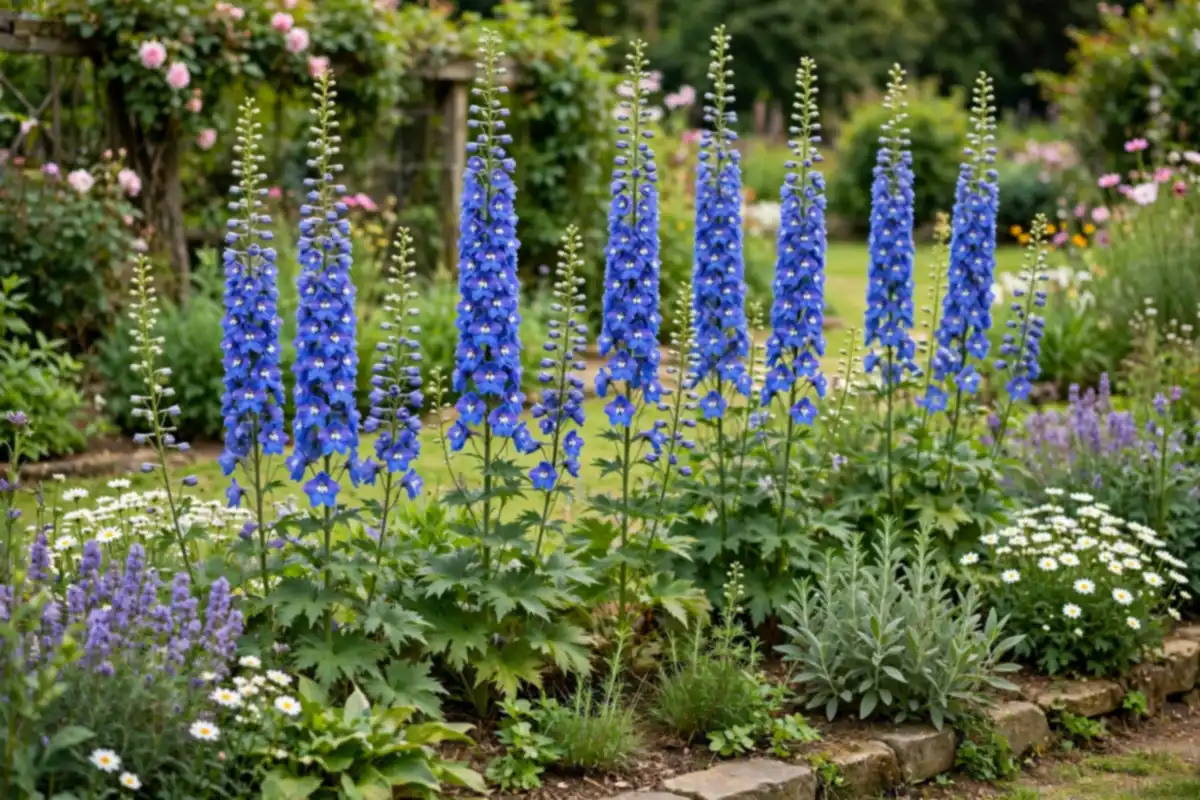
That spur is the plant’s signature. Each flower has five petal-like sepals, one of which stretches back into a hollow spur, which is also where the name larkspur comes from: the spur looks like a lark’s claw. It sits in our flower names A to Z guide among the tallest of all the flower names, and its height is the first thing a new grower should plan for. The flowers are packed along a tall upright spike, single or double, and they open from the bottom of the spike upward, so one stem can be in flower for weeks. Heights run from dwarf kinds at 1 to 2 feet to the great garden kinds that reach 5 to 7 feet, and the colours are the reason the plant is famous: true blues that few other flowers can match, plus purple, lavender, pink and white, with rare scarlet and yellow species in the wild.
Delphiniums are the classic cottage-garden spire, the vertical accent that stands behind roses and peonies and gives a border its height. They are also, honestly, a demanding plant. They are short-lived perennials, typically lasting only 3 to 5 years, they want cool springs and dislike hot, humid summers, and they are hungry, thirsty and prone to slugs, powdery mildew and wind damage. Gardeners who grow them well do not grow them by accident — they grow them by giving them exactly what they ask for, and accepting that a delphinium is a plant you replant, not a plant you plant once and forget.
Types of Delphinium and 6 Kinds Worth Knowing
The garden delphiniums are not one plant but a set of groups, bred from different species for different gardens. Choosing the wrong group for your climate is the most common reason a delphinium fails, so it is worth knowing the six that matter.
| Kind | Height | Best For | Notes |
|---|---|---|---|
| Elatum Group (D. elatum) | 5 to 6 feet | Tall back-of-border spires | Alpine delphinium, also called candle larkspur; the classic tall kind |
| Pacific Giants / Pacific Hybrids | 4 to 6 feet, sometimes 7 | Show-stopping columns of colour | Named for King Arthur’s court characters; huge double florets |
| Belladonna Group | 3 to 4 feet | Cut flowers and hot summers | Airy, loosely packed spikes; seldom needs staking; reblooms in fall |
| Grandiflorum Group / Chinese Delphinium | 1 to 2 feet | Front of border, pots, hot gardens | Compact and more heat-tolerant; ‘Blue Butterfly’ is the famous one |
| New Zealand Hybrids | 4 to 5 feet | Strong stems and big flowers | Bred for sturdier stems and very large, densely packed florets |
| Delphinium cardinale (Scarlet Larkspur) | 2 to 3 feet | Wildflower and dry gardens | Rare red delphinium, native to California; hummingbird-pollinated |
1. Elatum Group — the classic tall delphinium
The elatum group comes from Delphinium elatum, the alpine delphinium, and it is the plant most people picture when they hear the name: clump-forming perennials with spikes up to 2 metres tall and flowers up to 2.5 inches wide, in shades of blue, purple, pink and white. It is fully hardy in zones 2 to 9, but it is a cool-climate plant at heart, happiest where springs are long and summers are not too hot. In a hot summer climate it will struggle, and it is unlikely to do well in zones 7 and higher without afternoon shade and constant moisture.
2. Pacific Giants — the giants of the border
The Pacific Giants, also called the Pacific Hybrids or Pacific Strain, are the tallest and most dramatic of all, growing 4 to 6 feet and sometimes to 7 feet, with columnar spikes of single to double florets in blue, white, purple, lavender and pink. They were bred in California and named for characters from King Arthur’s court — ‘King Arthur’, ‘Guinevere’, ‘Lancelot’, ‘Galahad’ and the rest — and they flower in summer. They are magnificent and they are greedy: they need the richest soil, the most water and the strongest staking of any group, and they are the first to fall over in a storm if you skip it.
3. Belladonna Group — the practical one
The Belladonna group is the one experienced gardeners recommend to beginners, and for good reason. At 3 to 4 feet tall, with airy, loosely packed spikes of single or double flowers in sky blue and light blue, it is bushy, seldom needs support, and actually likes summer heat — the opposite of the tall elatums. It is hardy in zones 3 to 8, flowers in early summer, and will often rebloom in fall if you cut the first spikes back after flowering. It is also the best delphinium for cutting, because its branching stems give you many stems from one plant instead of one giant spike.
4. Grandiflorum Group — the small, tough one
The grandiflorum group, or Chinese delphinium (Delphinium grandiflorum), is the compact cousin: 1 to 2 feet tall, with finely divided foliage and open, butterfly-like flowers. The best-known cultivar, ‘Blue Butterfly’, grows about 14 inches tall and is more heat-tolerant than any other delphinium, which makes it the right choice for warm gardens and for pots, where the tall kinds would be absurd. It is often grown as a short-lived perennial or even as an annual, and it flowers over a long season if deadheaded.
5. New Zealand Hybrids — the modern giants
Bred in New Zealand, this group was developed to fix the Pacific Giants’ biggest weakness: weak stems. New Zealand hybrids grow 4 to 5 feet tall with very large, densely packed florets and noticeably sturdier stems, and they come in the full range of blues, purples, pinks and whites, including striking bicolours with a dark “bee” — the contrasting centre of the flower. They are the best choice if you want the giant look but live somewhere windy.
6. Scarlet Larkspur — the red exception
Almost every delphinium is blue, purple, pink or white, which makes Delphinium cardinale, the scarlet larkspur, worth knowing about. It is a wild species native to California, growing 2 to 3 feet tall with vivid red flowers that are pollinated by hummingbirds rather than bees. It needs dry, well-drained soil and a hot, dry summer rest, so it is a plant for Mediterranean and dry gardens, not for a damp English border — but it proves the genus has more in it than blue.
Delphinium Flower Meaning and Symbolism
The delphinium flower means an open heart, ardent attachment and lightness of spirit. In the Victorian language of flowers, delphinium stood for an open heart and for attachment — a flower given to say that your heart is open and your feelings are offered honestly. Its tall, upright habit added a second meaning: aspiration, the wish to rise, and the lightness that comes with it.
The flower’s folk story is darker, and it is worth telling because it explains the plant’s other name. In Greek myth, the first delphinium grew from the blood of Ajax, the hero who fell on his sword after the Trojan War, and the letters on its petals were said to spell his grief. The same myth runs through the larkspur story in our larkspur flower guide, where the July birth flower connection is told in full — delphinium is listed as a July birth flower in many guides, sharing the month with larkspur, and the two flowers’ meanings overlap for that reason. The dolphin story is the gentler one: the bud shaped like a dolphin, an animal the Greeks took as a symbol of protection, guidance and safe passage across the sea.
In modern use, delphinium is the flower of July birthdays and of congratulations — given for new beginnings, for graduations, for a new home — because its meaning is about openness and rising, not about romance. A bouquet of blue delphinium says “my heart is open to you” without saying anything more, which is why it is a favourite for friends rather than for lovers.
Delphinium Flower Colours and Their Meanings
Blue is the delphinium’s true colour, and it carries the flower’s core meaning: blue delphinium means dignity, grace and an open heart, and it is the colour most often given for July birthdays. The blue is not a trick of the light — delphinium is one of the few garden flowers that produces a genuinely true blue, which is why breeders have chased it for a century and why a blue delphinium spike stops people in a garden. Among blue flowers, it is the tallest and the bluest, and that is the whole point of growing it.
Purple delphinium means royalty and admiration, and it is the colour of the great Pacific Giants at their most dramatic. Pink delphinium means lightness and youth, and it softens the plant’s formality — a pink spike reads as joyful rather than grand. White delphinium means purity and new beginnings, and it is the colour chosen for weddings and christenings, where its height gives a bouquet architecture. Lavender delphinium sits between blue and pink and means grace and calm, and the rare red of the scarlet larkspur means passion and courage, the hummingbird’s colour.
The dark centre of many delphinium flowers, called the bee, matters too: a white flower with a black bee, or a blue flower with a white bee, is prized by breeders because the contrast makes the spike readable from across a garden. When you buy a named cultivar, check the bee colour as well as the petal colour — it changes the whole look.
How to Grow Delphinium
Delphiniums reward gardeners who prepare the ground properly and punish those who do not. The plant’s demands are simple, but they are not optional — and if you want to see how other growers handle them, the staking and soil threads on r/gardening on Reddit are full of delphinium photos and hard-won advice.
Site and sun. Give delphinium full sun, at least six to eight hours a day, with some light afternoon shade in hot climates. It needs a sheltered spot: tall spikes catch the wind, and a delphinium in an exposed position will be flat after the first summer storm. Plant it where a fence, a wall or a hedge breaks the wind, and never in a frost pocket, where cold air settles.
Soil. Delphiniums are lime lovers. They need well-drained, fertile, humus-rich soil, slightly alkaline to neutral, and they hate wet feet in winter more than anything else. Dig in plenty of compost or well-rotted manure before planting, and if your soil is acid, add lime. On heavy clay, plant on a slight mound or in a raised bed so water drains away from the crown, because crown rot in a wet winter is the single biggest killer of delphiniums.
Planting. Plant in spring or early autumn, spacing tall kinds 18 to 24 inches apart and compact kinds 12 inches apart. Set the crown at soil level, never buried, and water in well. Delphiniums are best bought as young plants rather than grown from seed unless you want a surprise: seed-grown plants vary, while named cultivars must be propagated by cuttings or division to stay true.
Water and feeding. Water deeply and regularly in dry weather, keeping the soil consistently moist but never waterlogged — a delphinium that dries out in spring will produce a short, stunted spike. Feed in spring with a balanced fertiliser, and again as the flower spikes appear, because a six-foot spike is built out of food and water. Mulch in spring to hold moisture, but keep the mulch away from the crown.
Staking. Stake tall delphiniums early, when the stems are about a foot high, before they need it. Use a ring stake or three canes with twine, and tie the stem loosely in two or three places as it grows. Staking a delphinium after it has started to lean is almost useless — the stem will snap at the tie. The Belladonna group and the compact grandiflorum group usually need no staking at all, which is one more reason beginners love them.
Deadheading and rebloom. Cut the main spike back to the base as soon as it fades, leaving the side shoots. In a cool summer, many delphiniums — the Belladonna group especially — will send up a second, smaller flush in fall. Do not cut the foliage back in autumn: leave it until spring, when new growth appears, and then clear the old leaves away so slugs have nowhere to hide.
Propagation. Take basal cuttings in spring from the new shoots at the base of the plant, when they are 3 to 4 inches long, and root them in gritty compost. Divide established clumps in spring, but only every three or four years — delphiniums resent disturbance, and a divided plant may sulk for a season. Replace plants every three to five years anyway, because they are short-lived: a delphinium garden is maintained by regular renewal, not by permanence.
Common Mistakes When Growing Delphinium
The first mistake is planting delphinium in hot, humid summers and expecting it to behave like a plant from a cool climate. It will not. In warm gardens, grow the Belladonna or grandiflorum groups, give afternoon shade, and accept a shorter season — or grow it as an annual and enjoy it for one summer.
The second mistake is wet winter soil. Delphiniums die far more often from crown rot in a wet winter than from cold. If your soil stays wet, plant on a mound, improve the drainage, and never mulch over the crown in winter.
The third mistake is skipping the staking, or staking too late. A six-foot spike in full flower is a sail, and one windy night will snap it at the base. Stake when the plant is a foot high, and you will never have to rescue it.
The fourth mistake is forgetting the slugs. Slugs love young delphinium shoots in spring, and a single night’s feeding can destroy a plant before it starts. Check at dusk in spring, use barriers or traps, and clear dead leaves from around the crown so slugs have no shelter.
The fifth mistake is ignoring powdery mildew. Delphiniums are prone to it in humid, airless conditions, and it shows as a white powder on the leaves in late summer. Give the plant space for air to move, water at the base rather than overhead, and remove affected leaves early. A plant that is well fed and well watered resists mildew far better than a stressed one.
The last mistake is the dangerous one: forgetting that delphinium is toxic. All parts of the plant contain toxic diterpenoid alkaloids, with the highest concentration in the new growth and the seeds, and the plant is poisonous to humans, pets and livestock — cattle poisoning is the classic case, and horses are also affected. Wear gloves when handling it, wash your hands afterwards, never eat any part of it, and plant it where children and pets will not chew it. The flowers are for looking at, not for tasting, and the plant should never be planted in a vegetable garden or where grazing animals can reach it.
Delphinium vs Larkspur: The Name Confusion, Cleared Up
Almost every gardener has been confused by this, and the confusion is built into the names. “Larkspur” is a common name shared between the perennial delphiniums and the annual species of the genus Consolida, and many sources use the two words as if they were the same plant. They are not.
The true larkspurs, in the genus Consolida, are annuals: they grow from seed each year, they have smaller spikes with fewer florets, and their leaves are very finely cut, almost feathery. Our larkspur flower guide covers them in full, including the fridge trick for their seed and the Victorian warning attached to pink larkspur. Delphiniums, by contrast, are mostly short-lived perennials with much taller, denser spikes, broader lobed leaves and a clump that returns — for a few years, at least — from the same crown.
The practical difference is simple: if you buy a plant, it is a delphinium; if you sow seed for a summer of airy, self-seeding spikes, it is probably a larkspur. If you want the six-foot blue column, you want a delphinium, and you want the elatum or Pacific Giants group. If you want a cottage-garden filler that seeds itself around the garden, you want a larkspur. Both share the spur, the toxicity and the July birthday connection — which is why the names got tangled in the first place — but they are different plants with different habits, and knowing which one you have tells you how to grow it.
One more name to be careful with: the giant larkspurs once classed as delphiniums are now reclassified as Consolida regalis, and the “forking larkspur” sold in some catalogues is not a delphinium at all. When a label says delphinium, check the botanical name — Delphinium elatum, D. belladonna, D. grandiflorum and their hybrids are the true garden delphiniums, and they are the ones this guide covers.
Frequently Asked Questions
Is delphinium the same as larkspur?
Not quite. “Larkspur” is a common name shared by perennial delphiniums and by the annual species of the genus Consolida, which are the true larkspurs — a confusion that comes up often in the questions about the delphinium flower on Quora, where new growers ask which plant they actually bought. Delphiniums are short-lived perennials with tall, dense spikes; true larkspurs are annuals with smaller, airier spikes that self-seed. They are cousins in the same family, they share the spur-shaped flower and the toxicity, but they are different plants — see our larkspur flower guide for the annual side of the story.
Are delphiniums poisonous?
Yes — all members of the genus Delphinium are toxic to humans and livestock. Every part contains diterpenoid alkaloids such as delphinine, with the highest concentration in the new growth and the seeds. Eating it can cause nausea, vomiting, numbness, muscle spasms and, in large amounts, far worse. Wear gloves, wash your hands after handling it, keep it away from children, pets and grazing animals, and never plant it where animals can reach it. It does not normally cause contact dermatitis, but it should always be treated with respect.
How long do delphiniums live?
Delphiniums are short-lived perennials, typically lasting 3 to 5 years. They grow best where springs are cool and long, and they often decline after a hot summer or a wet winter. Plan to replace them regularly: take basal cuttings in spring, divide clumps every three or four years, and buy fresh young plants so there is always a new generation coming on.
Do delphiniums come back every year?
Yes, for a few years — delphiniums are perennials, so the same crown returns each spring, unlike annual larkspur, which must be sown again. But they are not long-lived, and a plant that flowered magnificently in its second year may be gone by its fifth. Cutting the faded spikes back promptly encourages a second flush in fall and helps the plant store energy for the next spring.
Why is my delphinium not flowering?
The usual reasons are heat, hunger or youth. Delphiniums need a cool spring to set their spikes, rich soil to build them, and a full season to establish — a first-year plant often flowers weakly or not at all. Check that the plant gets at least six hours of sun, feed it in spring, water it deeply in dry weather, and make sure it is not sitting in wet winter soil, which rots the crown before flowering can start. Slugs eating the spring shoots can also remove the flowering stems before you ever see them.
Can you grow delphinium in pots?
Yes, but choose the right kind. The compact grandiflorum group, especially ‘Blue Butterfly’ at about 14 inches tall, grows well in a large pot with rich, well-drained compost. For more ideas in the same letter, see our flowers that start with D guide. Tall kinds such as the Pacific Giants are a poor choice for pots — they need deep soil, heavy feeding and serious staking, and a pot cannot give them any of those. Whatever you grow in a pot, water it more often than a plant in the ground, feed it regularly, and keep the pot where the wind cannot topple it.