24 Flowers That Start With Y: Names, Pictures & Growing Tips
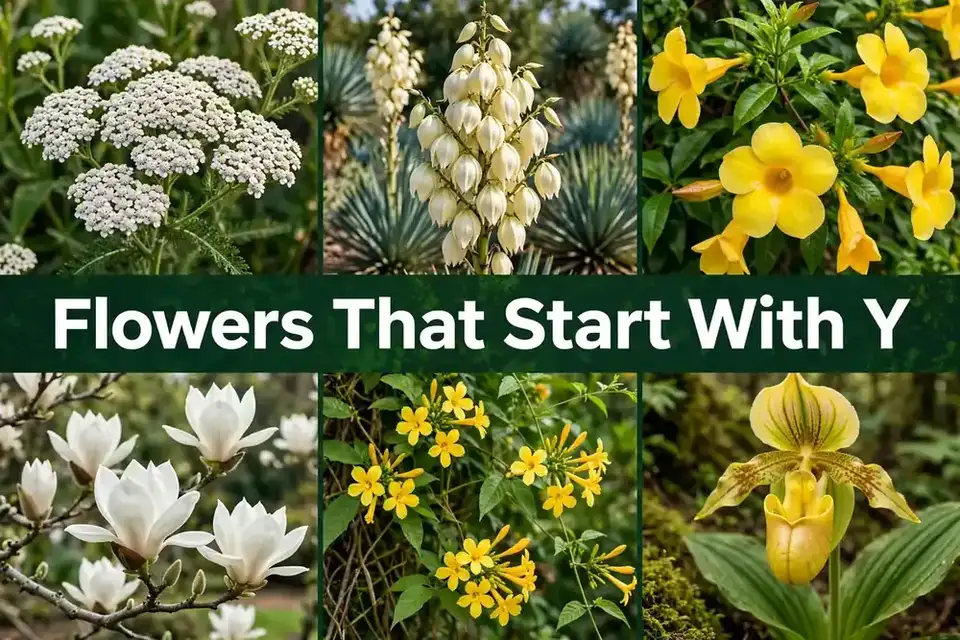
Looking for flowers that start with Y? You have come to the right place. The letter Y may be near the end of the alphabet, but it holds some of the garden’s most rewarding plants — from the tough, butterfly-covered yarrow that blooms all summer and the towering white bloom spikes of yucca, to the golden trumpet clusters of yellow bells, the perfume-heavy flowers of ylang-ylang, and the early-spring goblets of yulan magnolia. Whether you are planning a pollinator border, a woodland shade garden, a fragrant evening patio, or an alphabet planting project with young gardeners, this guide covers 55 real flowers that start with Y, each with a vivid description and practical growing advice.
Every entry below lists the flower’s scientific name, bloom season, sun needs, and USDA hardiness zone, so you can tell at a glance which Y-flowers fit your yard. You will also find a quick comparison table, practical growing tips, and answers to the questions gardeners ask most about flowers starting with Y. Let’s dig in.
Yes — this page lists 55 flowers that start with Y, from yarrow and yucca to yellow bells, yulan magnolia and yellow coneflower. Use the at-a-glance table to filter by your USDA zone, sun and bloom season before you buy.
Table of Contents
Y-Flowers at a Glance
Use this table to compare all 55 flowers that start with Y side by side — bloom season, sun needs, hardiness zone and best uses.
| # | Name | Scientific name | Bloom | Sun | Zone | Best for |
|---|---|---|---|---|---|---|
| 1 | Yarrow | Achillea millefolium | Summer to fall | Full sun | 3–9 | Pollinator gardens, drought-tolerant borders, cut and dried flowers |
| 2 | Yarrow ‘Moonshine’ | Achillea ‘Moonshine’ | Summer | Full sun | 3–8 | Tidy borders, silver-and-yellow color schemes, low-water gardens |
| 3 | Yucca Flower (Adam’s Needle) | Yucca filamentosa | Late spring to early summer | Full sun | 5–10 | Architectural structure, dry gardens, year-round foliage |
| 4 | Yucca ‘Color Guard’ | Yucca filamentosa ‘Color Guard’ | Early summer | Full sun | 5–9 | Variegated evergreen foliage, winter interest, low-maintenance plantings |
| 5 | Yellow Bells | Tecoma stans | Summer to fall | Full sun | 8–11; root hardy in 8 | Hummingbirds, hot sunny spots, fast summer color |
| 6 | Ylang-Ylang | Cananga odorata | Year-round in the tropics | Full sun | 10–11; conservatory elsewhere | Tropical fragrance, perfume lovers, frost-free gardens |
| 7 | Yulan Magnolia | Magnolia denudata | Early spring | Full sun to part shade | 5–8 | Specimen trees, early spring display, fragrant gardens |
| 8 | Yellow Flag Iris | Iris pseudacorus | Late spring | Full sun to part shade | 4–9 | Contained ponds, rain gardens; avoid near natural wetlands (invasive) |
| 9 | Yellow Archangel | Lamiastrum galeobdolon | Spring | Part shade to full shade | 4–8 | Dry shade groundcover (contained beds only — invasive in the PNW) |
| 10 | Yesterday-Today-Tomorrow | Brunfelsia pauciflora | Spring to summer | Part shade | 9–11; container elsewhere | Fragrant patios, multi-color flowers, tropical shrubs |
| 11 | Carolina Jessamine | Gelsemium sempervirens | Late winter to early spring | Full sun to part shade | 7–10 | Fragrant vines, early spring color, arbors and fences (toxic — site carefully) |
| 12 | Yellow Lady’s Slipper | Cypripedium parviflorum | Spring | Part shade | 4–8 | Native woodland gardens, orchid collectors (buy nursery-propagated only) |
| 13 | Yellow Trillium | Trillium luteum | Spring | Part shade to full shade | 5–8 | Native shade gardens, spring ephemerals, woodland plantings |
| 14 | Yellow Corydalis | Corydalis lutea | Spring to fall | Part shade | 5–7 | Stone walls, shady crevices, long-blooming shade perennials |
| 15 | Yellow Foxglove | Digitalis grandiflora | Early summer | Part shade | 3–8 | Woodland borders, perennial foxgloves, bee gardens (toxic — site carefully) |
| 16 | Yellow Buckeye | Aesculus flava | Spring | Full sun to part shade | 4–8 | Native shade trees, spring flowers, large landscapes |
| 17 | Yellowroot | Xanthorhiza simplicissima | Early spring (small, inconspicuous flowers) | Part shade to full shade | 3–9 | Streambank stabilization, native shade plantings, fall color |
| 18 | Yellow Pimpernel | Lysimachia nemorum | Late spring to summer | Part shade | 5–8 | Woodland groundcover, damp shade, naturalistic plantings |
| 19 | Yuzu | Citrus junos | Spring (fragrant white blossoms) | Full sun | 8–10 | Edible gardens, fragrant blossoms, cold-hardy citrus |
| 20 | Yellow Pond Lily | Nuphar lutea | Summer | Full sun | 4–9 | Ponds, water gardens, wildlife habitat (contain in small ponds) |
| 21 | Golden Columbine | Aquilegia chrysantha | Spring to early summer | Part shade | 3–8 | Native columbines, hummingbirds, woodland edges |
| 22 | Yellow Horned Poppy | Glaucium flavum | Summer | Full sun | 5–9 | Gravel gardens, coastal plantings, silver foliage and yellow flowers |
| 23 | Yellow Waxbells | Kirengeshoma palmata | Late summer | Part shade to full shade | 5–8 | Late-summer shade color, woodland borders, architectural foliage |
| 24 | Yunnan Primrose | Primula yunnanensis | Spring | Part shade | 5–8 | Moist shade, candelabra primroses, spring vertical accent |
| 25 | Yarrow ‘Coronation Gold’ | Achillea filipendulina | Summer | Full sun | 3–8 | Hot-color borders, cut and dried flowers |
| 26 | Yucca ‘Golden Sword’ | Yucca filamentosa ‘Golden Sword’ | Early summer | Full sun | 5–9 | Variegated architecture, dry gardens, containers |
| 27 | Yellow Cape Honeysuckle | Tecomaria capensis ‘Lutea’ | Fall to winter (warm zones) | Full sun | 9–11; container elsewhere | Warm walls, hummingbirds, winter color |
| 28 | Yesterday-Today-Tomorrow ‘Royal Robe’ | Brunfelsia pauciflora ‘Royal Robe’ | Spring to summer | Part shade | 9–11; container elsewhere | Fragrant patios, deeper purple color |
| 29 | Yellow Columbine | Aquilegia flavescens | Late spring to early summer | Full sun to part shade | 3–8 | Native borders, pollinators, cottage gardens |
| 30 | Yellow Loosestrife | Lysimachia vulgaris | Summer | Full sun to part shade | 4–8 | Rain gardens, pond margins (can spread — site carefully) |
| 31 | Yellow Gentian | Gentiana lutea | Summer | Full sun to part shade | 4–7 | Herb borders, collectors, bold texture |
| 32 | Yellow False Foxglove | Aureolaria flava | Late summer | Full sun to part shade | 5–8 | Native borders, pollinators, woodland edges |
| 33 | Yellow Coneflower | Echinacea paradoxa | Summer | Full sun | 3–8 | Native meadows, pollinators, prairie gardens |
| 34 | Yellow Wild Indigo | Baptisia tinctoria | Summer | Full sun | 4–8 | Native borders, dye gardens, low-maintenance plantings |
| 35 | Yellow Flax | Linum flavum | Late spring to summer | Full sun | 5–8 | Rock gardens, edging, sunny borders |
| 36 | Yellow Toadflax | Linaria vulgaris | Summer | Full sun | 4–8 | Cottage gardens, meadows (self-sows — deadhead) |
| 37 | Yellow Rattle | Rhinanthus minor | Summer | Full sun | 3–8 | Wildflower meadows (sow into existing grass) |
| 38 | Yellow Giant Hyssop | Agastache nepetoides | Late summer | Full sun to part shade | 4–8 | Pollinators, native borders, late-season color |
| 39 | Yellow Sundrops | Oenothera fruticosa | Summer | Full sun | 4–9 | Native borders, pollinators, sunny slopes |
| 40 | Yellow Shrimp Plant | Pachystachys lutea | Year-round in warmth | Full sun to part shade | 10–11; houseplant elsewhere | Tropical containers, warm patios |
| 41 | Yellow Canna | Canna flaccida | Summer | Full sun | 8–10; container elsewhere | Pond margins, rain gardens, tropical look |
| 42 | Yellow Daylily | Hemerocallis lilioasphodelus | Early summer | Full sun to part shade | 3–9 | Borders, mass plantings, tough sunny spots |
| 43 | Yellow Ginger | Hedychium flavescens | Late summer to fall | Full sun to part shade | 8–10 | Tropical borders, fragrance, warm gardens |
| 44 | Yellow Crocus | Crocus flavus | Early spring | Full sun | 3–8 | Lawns, rock gardens, early pollinators |
| 45 | Yellow Bird Magnolia | Magnolia ‘Yellow Bird’ | Late spring | Full sun to part shade | 5–8 | Specimen trees, late frost avoidance |
| 46 | Yellow Lotus | Nelumbo lutea | Summer | Full sun | 4–10 | Ponds, water gardens (needs room) |
| 47 | Yellow Trumpet Pitcher Plant | Sarracenia flava | Spring | Full sun | 6–9 | Bog gardens, collectors, conversation pieces |
| 48 | Yellow Monkeyflower | Mimulus guttatus | Summer | Full sun to part shade | 5–9 | Rain gardens, stream edges, moist borders |
| 49 | Yellow Cosmos | Cosmos sulphureus | Summer to frost | Full sun | Grown as annual | Hot-color borders, cut flowers, pollinators |
| 50 | Yam Daisy | Microseris lanceolata | Spring | Full sun | 7–10; annual elsewhere | Wildflower gardens, edible native plantings |
| 51 | Yellow Billy Buttons | Craspedia globosa | Summer | Full sun | 8–10; annual elsewhere | Cut and dried flowers, borders, containers |
| 52 | Yellow Avens | Geum aleppicum | Summer | Full sun to part shade | 3–7 | Native borders, meadows, cottage gardens |
| 53 | Yellow Salsify | Tragopogon dubius | Summer | Full sun | 3–8 | Wildflower meadows (self-sows — deadhead) |
| 54 | Yellow Monkshood | Aconitum lycoctonum | Summer | Part shade | 4–7 | Woodland borders — HIGHLY TOXIC, site carefully |
| 55 | Yellow Star Grass | Hypoxis hirsuta | Spring to summer | Full sun to part shade | 4–9 | Native borders, rain gardens, meadows |
24 Flowers That Start With Y: The Complete List
Here they are — 24 beautiful, real flowers beginning with Y, each with growing notes so you can pick the right ones for your garden.
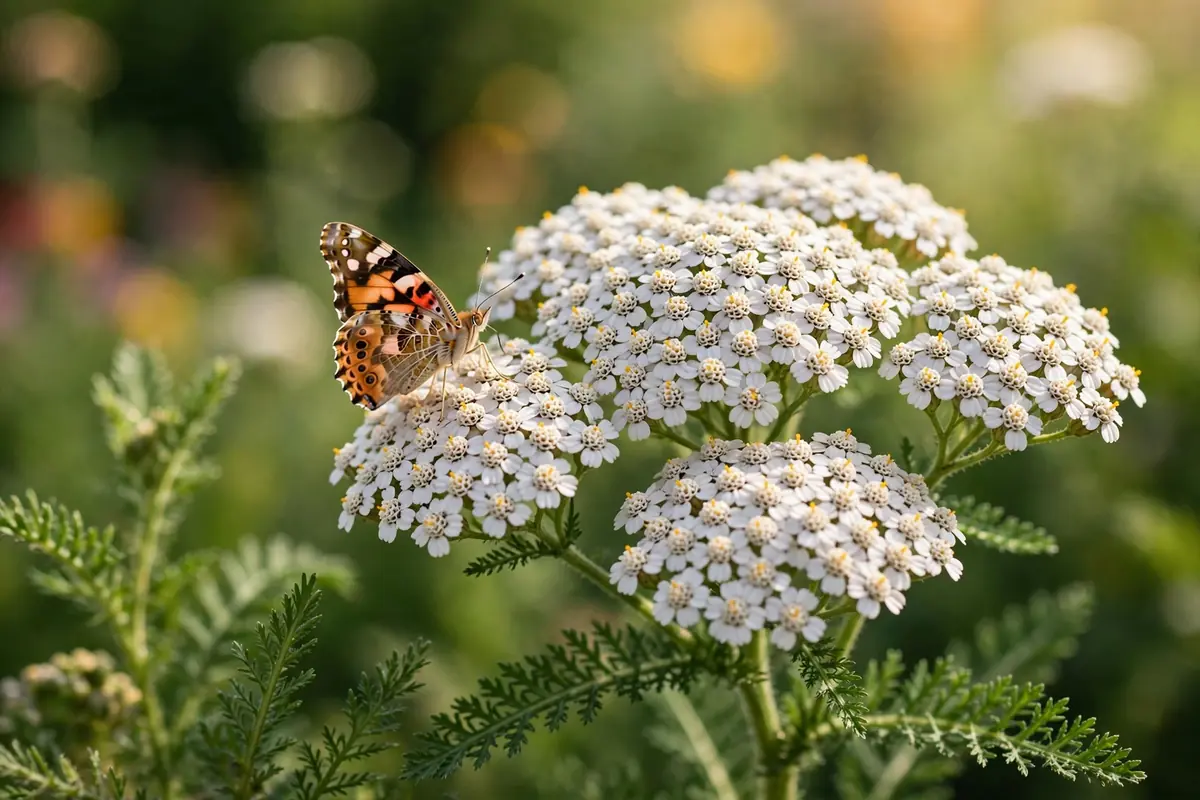
1. Yarrow (Achillea millefolium)
Yarrow is the workhorse of the sunny border — tough, drought-proof, and absolutely smothered in flat-topped clusters of tiny white flowers from summer into fall. The ferny, aromatic foliage forms spreading mats that knit beds together, while the flower heads are magnets for butterflies, bees, and beneficial insects. Yarrow has one of the longest medicinal histories of any garden plant — the genus name honors Achilles, who supposedly used it to staunch his soldiers’ wounds — and the blooms dry beautifully for everlasting arrangements. Plant it in lean, well-drained soil in full sun; rich soil and too much water make stems floppy. Divide clumps every few years to keep them vigorous, and deadhead after the first flush for a second round of bloom. Note that species yarrow spreads by rhizomes and self-seeding, so give it room or choose a well-behaved cultivar.
Bloom: Summer to fall | Sun: Full sun | Zone: 3–9 | Best for: Pollinator gardens, drought-tolerant borders, cut and dried flowers
2. Yarrow ‘Moonshine’ (Achillea ‘Moonshine’)
‘Moonshine’ is the yarrow cultivar every designer reaches for: bright lemon-yellow flower heads held on sturdy stems above silvery, ferny foliage that looks good even when the plant is not blooming. Unlike the species, ‘Moonshine’ is a tidy, non-aggressive clump-former, so it will not take over the bed. It blooms heavily in summer and often reblooms if sheared back after flowering. Grow it in full sun with lean, well-drained soil — it actually prefers poor soil and shrugs off drought, heat, and deer. The pale yellow color bridges beautifully between hot oranges and cool blues in a mixed border, and the flowers cut well and hold their color when dried. At 18–24 inches tall, it is ideal for the middle of the border.
Bloom: Summer | Sun: Full sun | Zone: 3–8 | Best for: Tidy borders, silver-and-yellow color schemes, low-water gardens
3. Yucca Flower (Adam’s Needle) (Yucca filamentosa)
When yucca blooms, it is unforgettable: a towering 5- to 6-foot spike rises from the rosette of sword-like evergreen leaves, opening dozens of creamy-white, waxy bell flowers in late spring. Adam’s needle is native to the sandy soils of the Southeast, and it is one of the hardiest yuccas, thriving far beyond its southern home. Each flower is pollinated at night by the yucca moth in one of nature’s most famous partnerships. Give it full sun and very sharp drainage — wet winter soil is its only real enemy — and it will ask for nothing else, tolerating drought, heat, salt, and poor soil. The evergreen foliage gives year-round structure, while the bloom spike is a genuine event. Wear gloves when working near the sharp-tipped leaves.
Bloom: Late spring to early summer | Sun: Full sun | Zone: 5–10 | Best for: Architectural structure, dry gardens, year-round foliage
4. Yucca ‘Color Guard’ (Yucca filamentosa ‘Color Guard’)
‘Color Guard’ takes the classic yucca bloom display and pairs it with foliage that is a show in itself: broad sword leaves with a bold gold-to-cream center stripe edged in blue-green. In winter the center flushes rose-pink, adding cold-season color. Like the species, it sends up a tall spike of creamy-white bell flowers in early summer, and it is just as tough — full sun, sharp drainage, and complete indifference to drought. ‘Color Guard’ is slightly more compact than the species, around 2–3 feet for the foliage rosette, making it easier to place in borders. Use it as an evergreen exclamation point among softer perennials, or mass several for a bold, low-water planting. It is hardy and reliable with almost no maintenance beyond removing spent flower spikes.
Bloom: Early summer | Sun: Full sun | Zone: 5–9 | Best for: Variegated evergreen foliage, winter interest, low-maintenance plantings
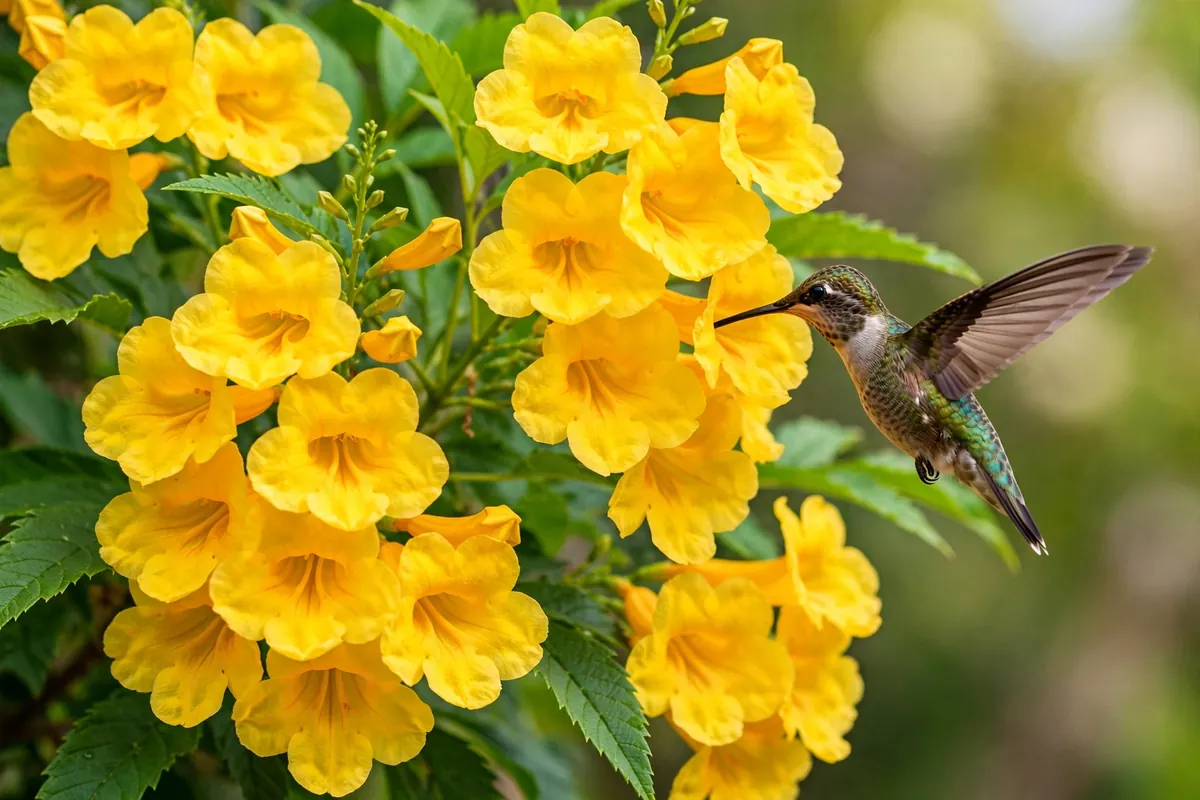
5. Yellow Bells (Tecoma stans)
Yellow bells is pure sunshine in shrub form — a fast-growing, heat-loving shrub (sometimes a small tree) that covers itself in upright clusters of golden-yellow trumpet flowers from summer through fall. Hummingbirds and butterflies visit the nectar-rich blooms constantly, and in warm climates it can bloom nearly year-round. Give it full sun, heat, and well-drained soil; it is remarkably drought-tolerant once established and thrives where fussier shrubs fry. In zones 9–11 it is evergreen; in zone 8 it dies back in winter and returns from the roots like a giant perennial. It can self-seed generously, so deadhead if you want to limit volunteers. Prune in late winter to keep it bushy and full of bloom.
Bloom: Summer to fall | Sun: Full sun | Zone: 8–11; root hardy in 8 | Best for: Hummingbirds, hot sunny spots, fast summer color
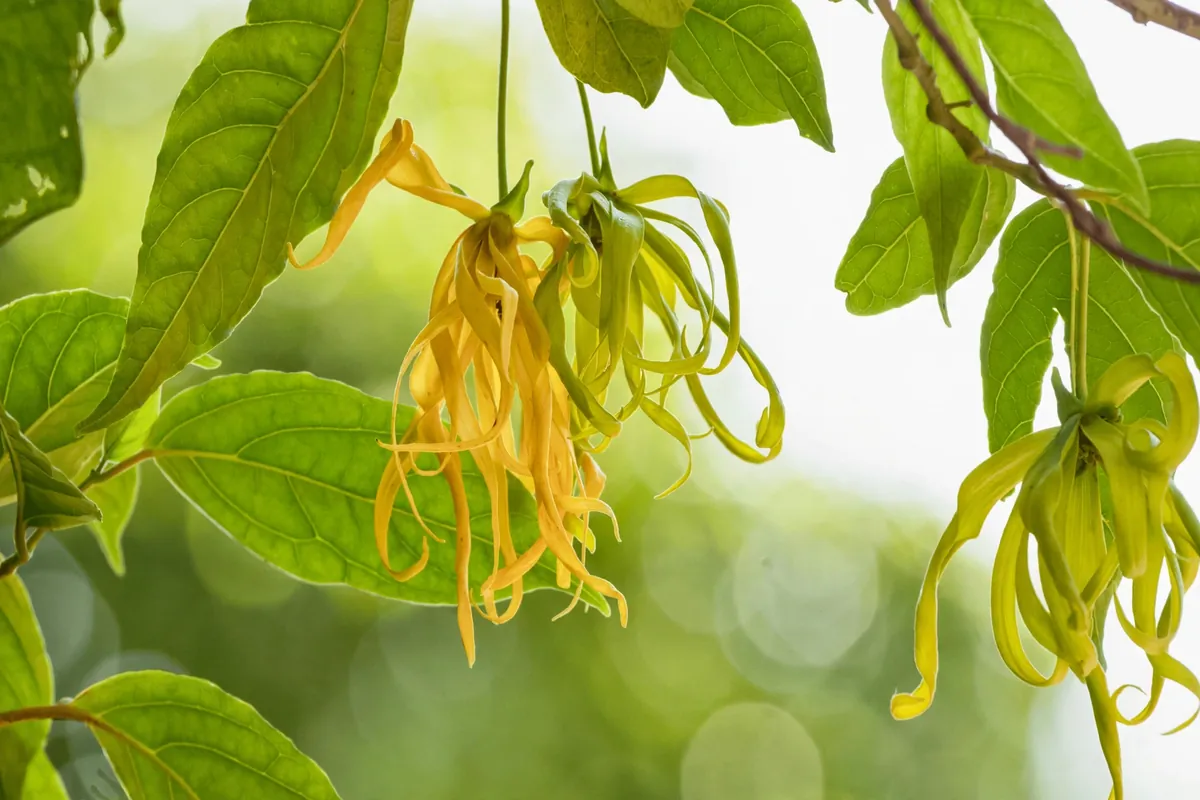
6. Ylang-Ylang (Cananga odorata)
Ylang-ylang is the perfume tree: its drooping, greenish-yellow flowers are not the showiest blooms, but their rich, exotic fragrance is one of the most famous scents in the world — the essential oil is a key note in Chanel No. 5. The narrow, ribbon-like petals dangle from the branches of a fast-growing tropical tree that can reach 40–60 feet in its native Southeast Asia. The flowers appear year-round in the tropics, deepening in scent at night. It needs full sun, warmth, and moisture, and is hardy only in zones 10–11; elsewhere it must be grown in a conservatory or large container moved indoors. For most gardeners, ylang-ylang is a dream plant — but in frost-free climates it is a spectacular and fragrant shade tree.
Bloom: Year-round in the tropics | Sun: Full sun | Zone: 10–11; conservatory elsewhere | Best for: Tropical fragrance, perfume lovers, frost-free gardens
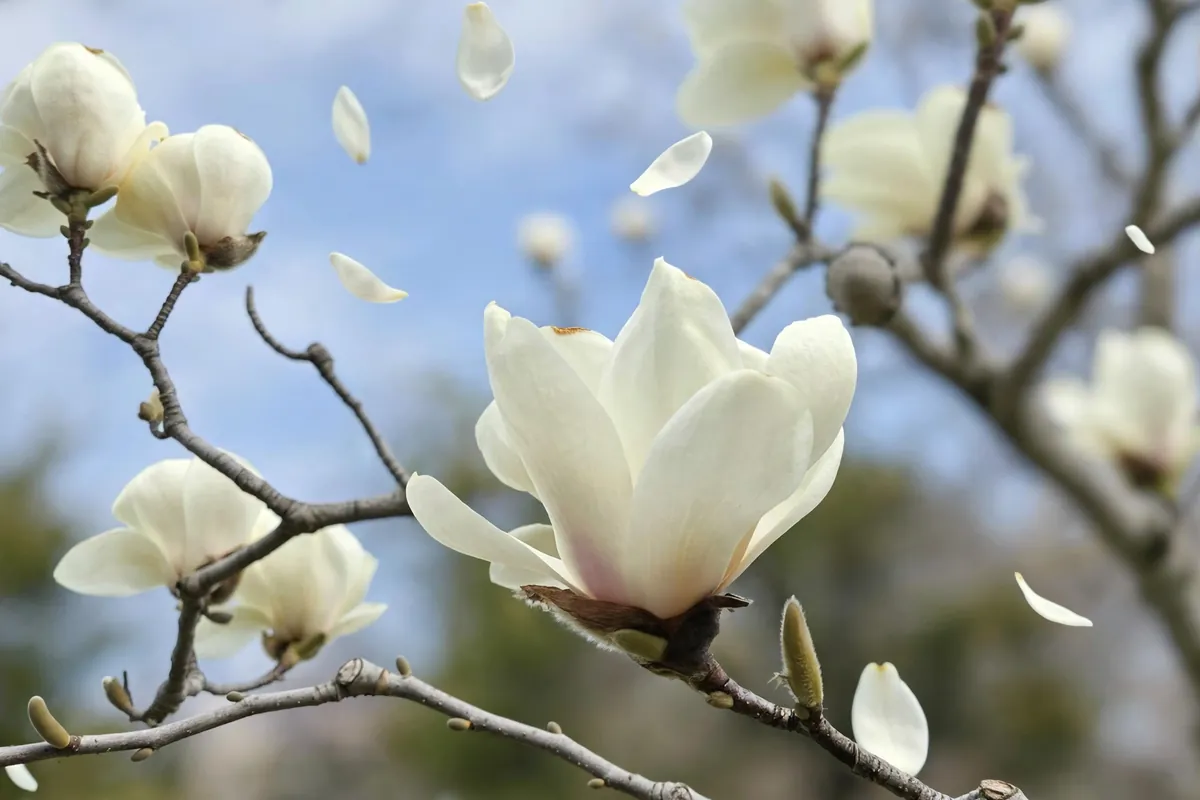
7. Yulan Magnolia (Magnolia denudata)
Yulan magnolia is one of the great heralds of spring: in early spring, before a single leaf appears, the bare branches are studded with large, ivory-white, goblet-shaped flowers with a sweet lemony fragrance. Native to China, where it has been cultivated in temple gardens for over a thousand years — “Yulan” means jade orchid — it is the refined, white-flowered cousin of the more common saucer magnolia. It grows into an elegant small to medium tree, 25–30 feet tall, and prefers full sun to part shade with rich, slightly acidic, well-drained soil. Protect early blooms from late frosts by planting in a sheltered spot away from morning sun, which thaws frozen buds too fast. A breathtaking specimen tree worth planning a garden around.
Bloom: Early spring | Sun: Full sun to part shade | Zone: 5–8 | Best for: Specimen trees, early spring display, fragrant gardens
8. Yellow Flag Iris (Iris pseudacorus)
Yellow flag iris is a bold waterside plant with bright yellow, classic iris blooms in late spring above handsome sword-like foliage. It thrives with its feet wet — pond margins, stream banks, and boggy soil are its happy places — and it is extremely vigorous. That vigor is the catch: yellow flag is aggressively invasive in North American wetlands, where it crowds out native plants, so never plant it near natural waterways and check your state’s invasive list first. In a contained garden pond or a lined bog bed, however, it is spectacular and nearly carefree, growing in full sun to part shade in zones 4–9. Divide congested clumps every few years, and wear gloves — the sap can irritate skin.
Bloom: Late spring | Sun: Full sun to part shade | Zone: 4–9 | Best for: Contained ponds, rain gardens; avoid near natural wetlands (invasive)
9. Yellow Archangel (Lamiastrum galeobdolon)
Yellow archangel is a cheerful woodland groundcover with hooded yellow flowers that bloom in spring above toothed, often silver-splashed leaves. The variegated form ‘Variegatum’ is the one most gardeners grow — its silvery foliage brightens dark shade and looks good all season. It spreads by runners into a dense carpet that suppresses weeds under trees and along shady banks, thriving in part to full shade with average, well-drained soil in zones 4–8. Here is the important warning: yellow archangel is seriously invasive in Pacific Northwest forests and parts of the eastern US, smothering native woodland plants. Do not plant it near natural areas; in affected regions, choose a native groundcover instead. Where it is not invasive, keep it within bounds with edging or regular trimming.
Bloom: Spring | Sun: Part shade to full shade | Zone: 4–8 | Best for: Dry shade groundcover (contained beds only — invasive in the PNW)
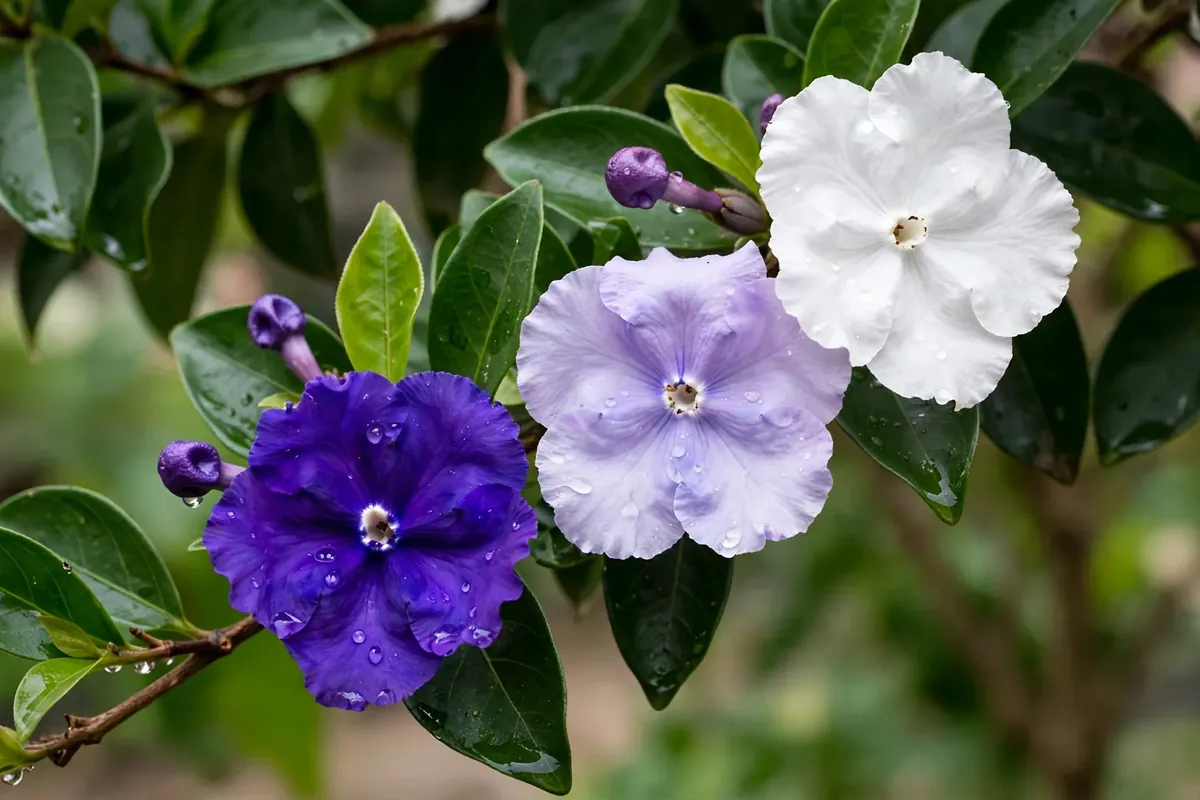
10. Yesterday-Today-Tomorrow (Brunfelsia pauciflora)
Yesterday-today-tomorrow is a living color trick: each fragrant flower opens deep violet-purple, fades to lavender the next day, and turns white the day after — so a single shrub displays all three colors at once. This evergreen shrub from Brazil blooms heaviest in spring and summer, perfuming the garden with a sweet, jasmine-like scent, especially in the evening. It wants part shade (it scorches in harsh afternoon sun), rich, well-drained, slightly acidic soil, and consistent moisture. Hardy only in zones 9–11, it is grown in containers elsewhere and overwintered indoors. Give it room — plants can reach 6–10 feet in the ground — and prune after flowering to shape. Note that all parts are toxic if eaten, so it is not a plant for gardens with curious toddlers or pets that chew.
Bloom: Spring to summer | Sun: Part shade | Zone: 9–11; container elsewhere | Best for: Fragrant patios, multi-color flowers, tropical shrubs
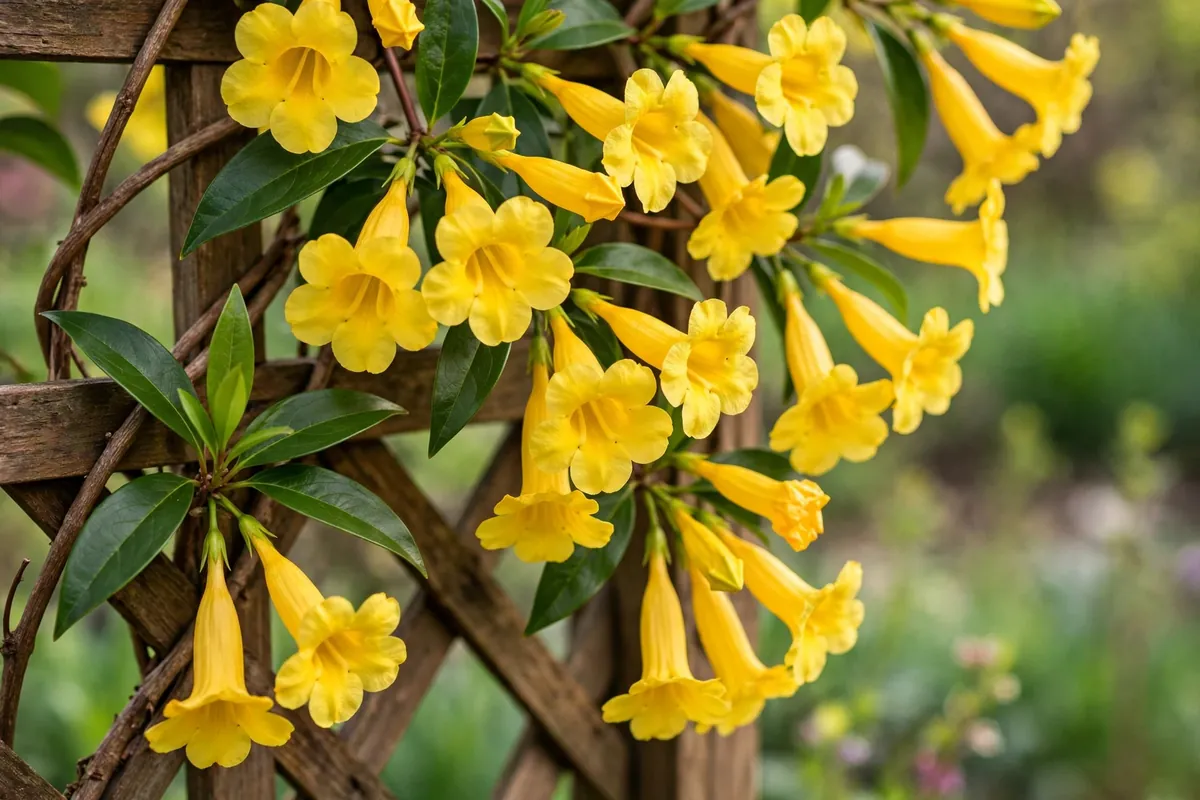
11. Carolina Jessamine (Gelsemium sempervirens)
Carolina jessamine — also called yellow jessamine — is the South’s beloved harbinger of spring: an evergreen twining vine that drapes fences, arbors, and trellises in cascades of fragrant, buttery-yellow trumpet flowers in late winter and early spring. The glossy lance-shaped leaves often take on bronze tones in winter, giving year-round interest. It is the state flower of South Carolina and a magnet for early-season pollinators. Grow it in full sun to part shade with average, well-drained soil in zones 7–10; it climbs 10–20 feet with support and also works as a sprawling groundcover on banks. Prune right after flowering to control size. Important: all parts are highly toxic — the plant contains the neurotoxin gelsemine — so plant it away from vegetable gardens and keep children and pets from chewing it.
Bloom: Late winter to early spring | Sun: Full sun to part shade | Zone: 7–10 | Best for: Fragrant vines, early spring color, arbors and fences (toxic — site carefully)
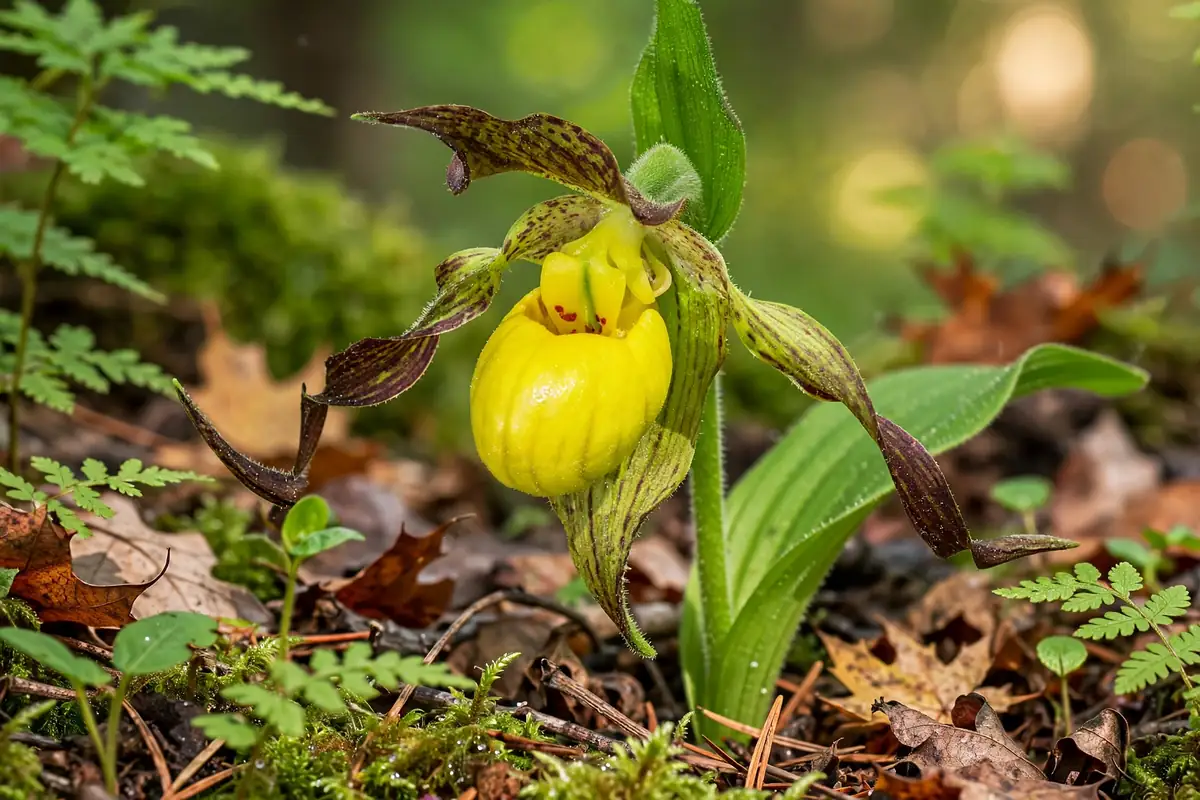
12. Yellow Lady’s Slipper (Cypripedium parviflorum)
Yellow lady’s slipper is North America’s most enchanting native orchid: a bright yellow pouch-like lip flanked by twisted, maroon-brown petals and sepals, rising above pleated leaves in spring. It grows in rich, moist woodland soils from the East Coast to the Rockies, where it depends on a partnership with soil fungi — which is why it must never be dug from the wild. Buy only nursery-propagated plants, and give them what they need: part shade, cool, humus-rich, well-drained soil, and a spot that is left undisturbed, in zones 4–8. Plants are slow to establish but can live for decades once happy, forming generous clumps. It is a crown jewel for native shade gardens and the plant that turns casual gardeners into orchid people.
Bloom: Spring | Sun: Part shade | Zone: 4–8 | Best for: Native woodland gardens, orchid collectors (buy nursery-propagated only)
13. Yellow Trillium (Trillium luteum)
Yellow trillium is a spring woodland treasure: lemon-yellow, upright, sessile flowers (no stalk — they sit directly on the whorl of three leaves) with a sweet lemon scent, floating above marbled, mottled foliage. Native to the rich coves and slopes of the Southeast, it blooms in mid-spring and goes dormant by midsummer. Plant nursery-grown — never wild-collected — rhizomes in fall, in part to full shade with humus-rich, well-drained soil, in zones 5–8. Like all trilliums, it resents disturbance and is slow to settle in, but a happy clump will multiply and bloom faithfully for decades. Pair it with ferns, wild ginger, and foamflower for a classic native shade vignette. Leave the foliage to ripen naturally so the plant stores energy for next year.
Bloom: Spring | Sun: Part shade to full shade | Zone: 5–8 | Best for: Native shade gardens, spring ephemerals, woodland plantings
14. Yellow Corydalis (Corydalis lutea)
Yellow corydalis is the plant that fills the cracks: delicate, ferny blue-green foliage and sprays of tubular yellow flowers that bloom from spring all the way into fall. It self-sows gently into stone walls, steps, and shady crevices, softening hard edges with almost no help from you. Native to southern Europe, it prefers part shade and well-drained, even alkaline soil in zones 5–7, and it tolerates dry shade once established. The ferny foliage is attractive all season, and the long bloom run makes it one of the best-value shade perennials. Deadhead if you want to limit self-seeding, or let it wander — seedlings are easy to move. It pairs beautifully with hostas, ferns, and bleeding heart.
Bloom: Spring to fall | Sun: Part shade | Zone: 5–7 | Best for: Stone walls, shady crevices, long-blooming shade perennials
15. Yellow Foxglove (Digitalis grandiflora)
Yellow foxglove brings the classic foxglove spire in a softer palette: one-sided racemes of large, pale-yellow, tubular bells with brown-speckled throats, blooming in early summer above handsome dark-green rosettes. Unlike the common foxglove, which is biennial, yellow foxglove is a true perennial that returns reliably for years in part shade with rich, well-drained soil, in zones 3–8. It is a superb plant for woodland edges and cottage borders, where its 2- to 3-foot spires rise above ferns and hostas. Bees adore it. Critical warning: like all foxgloves, it contains potent cardiac glycosides and is highly toxic if ingested — beautiful to look at, but never plant where children or pets might chew it.
Bloom: Early summer | Sun: Part shade | Zone: 3–8 | Best for: Woodland borders, perennial foxgloves, bee gardens (toxic — site carefully)
16. Yellow Buckeye (Aesculus flava)
Yellow buckeye is a stately native tree that earns its place in spring, when its branches carry upright panicles of pale-yellow flowers — among the earliest blooms for hummingbirds and native bees. The flowers give way to the familiar shiny buckeye seeds in fall, and the foliage turns a rich pumpkin-orange. Native to the Appalachian Mountains and Ohio Valley, it grows 50–75 feet tall and prefers full sun to part shade with moist, well-drained soil, in zones 4–8. It is a magnificent shade tree for large properties and parks, with none of the litter issues of its horsechestnut cousins. Note that the seeds and young shoots are toxic if eaten, so site it thoughtfully if you have livestock.
Bloom: Spring | Sun: Full sun to part shade | Zone: 4–8 | Best for: Native shade trees, spring flowers, large landscapes
17. Yellowroot (Xanthorhiza simplicissima)
An honest note first: yellowroot’s flowers are small — tiny, starry, purple-brown blooms in drooping clusters in very early spring, easy to miss if you are not looking. This eastern US native shrub is grown for other reasons: brilliant yellow roots and inner bark (once used as a dye), glossy compound leaves that turn glowing gold and red in fall, and a tough, suckering habit that makes it superb for stabilizing streambanks and shady slopes. It thrives in part to full shade with moist soil in zones 3–9, spreading into colonies where it is happy. If you want a native workhorse for a difficult wet-shade spot, yellowroot is excellent — just do not plant it expecting a floral show.
Bloom: Early spring (small, inconspicuous flowers) | Sun: Part shade to full shade | Zone: 3–9 | Best for: Streambank stabilization, native shade plantings, fall color
18. Yellow Pimpernel (Lysimachia nemorum)
Yellow pimpernel is a dainty woodland groundcover that lights up shade with bright, starry yellow flowers in late spring and summer. This European native creeps along the ground, rooting as it goes, forming a low carpet of small rounded leaves studded with cheerful 5-petaled blooms. It wants part shade and consistently moist soil in zones 5–8 — think woodland paths, damp shady corners, and the edges of water features. It is not aggressive like some lysimachias, staying politely in bounds. Combine it with ferns, mosses, and primroses for a classic woodland-floor tapestry. Note that some references still list it under its old name, Anagallis nemorum.
Bloom: Late spring to summer | Sun: Part shade | Zone: 5–8 | Best for: Woodland groundcover, damp shade, naturalistic plantings
19. Yuzu (Citrus junos)
Yuzu is best known for its intensely aromatic fruit — a cornerstone of Japanese cuisine — but its flowers deserve attention too: fragrant white blossoms, like all citrus, that perfume the garden in spring and draw clouds of bees. The tree itself is a garden asset, an evergreen small tree with glossy foliage and an appealing, slightly wild form, and it is notably more cold-hardy than most citrus, thriving in zones 8–10 where lemons would freeze. Grow it in full sun with well-drained, slightly acidic soil, and protect young trees from hard freezes. Beyond the blossoms and fruit, the thorny branches make an effective barrier hedge. For gardeners in the Southeast and mild West, yuzu is the citrus that actually works.
Bloom: Spring (fragrant white blossoms) | Sun: Full sun | Zone: 8–10 | Best for: Edible gardens, fragrant blossoms, cold-hardy citrus
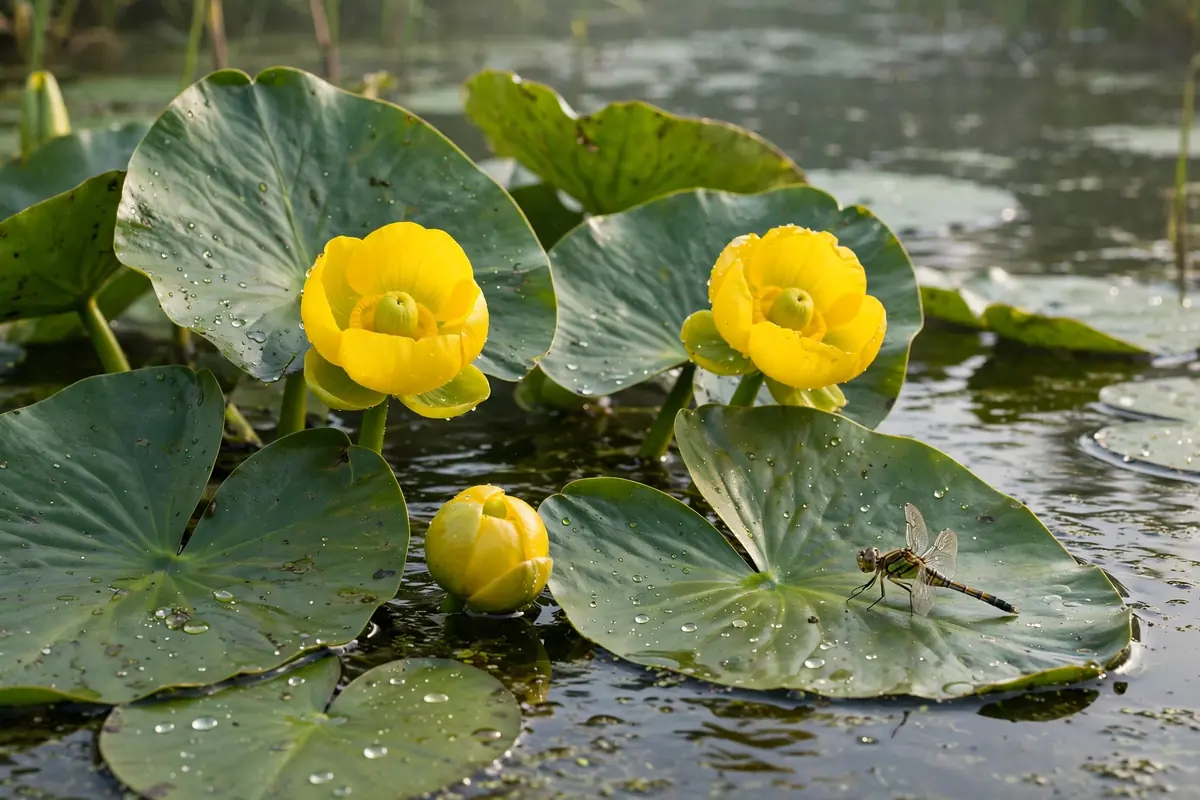
20. Yellow Pond Lily (Nuphar lutea)
Yellow pond lily — also called spatterdock — is the classic water-garden plant with cheerful yellow, cup-shaped flowers held just above the water’s surface in summer, surrounded by big, leathery, heart-shaped floating leaves. Native across the Northern Hemisphere, it is a stalwart for ponds and slow streams, providing shade that keeps water cool and algae down, plus cover for fish and frogs. Plant it in full sun in 1–3 feet of water in zones 4–9; a heavy pot sunk into the pond keeps its spreading rhizomes in check, because it can be aggressive in small ponds. The flowers have a faintly boozy scent that gives spatterdock its odd nickname. A must for naturalistic water gardens.
Bloom: Summer | Sun: Full sun | Zone: 4–9 | Best for: Ponds, water gardens, wildlife habitat (contain in small ponds)
21. Golden Columbine (Aquilegia chrysantha)
Golden columbine is the long-spurred yellow columbine of the American Southwest — graceful, nodding, golden-yellow flowers with dramatically long nectar spurs, blooming in spring and early summer above delicate, blue-green, maidenhair-like foliage. Native to the mountains of New Mexico, Arizona, and northern Mexico, it is more heat- and drought-tolerant than most columbines, though it still prefers part shade and decent soil in zones 3–8. Hummingbirds prize the long-spurred blooms. It self-sows gently, and seedlings may cross with other columbines nearby, which only adds to the fun. Let the foliage stand after bloom; it stays attractive through the season. A refined native for woodland edges and cottage gardens.
Bloom: Spring to early summer | Sun: Part shade | Zone: 3–8 | Best for: Native columbines, hummingbirds, woodland edges
22. Yellow Horned Poppy (Glaucium flavum)
Yellow horned poppy is a seaside specialist with a wild, romantic look: rosettes of deeply lobed, silvery-blue, wavy foliage topped in summer by large, satiny yellow poppy flowers, followed by long, curved, horn-shaped seed pods. Native to the shingle beaches and dunes of coastal Europe, it demands full sun and extremely sharp drainage — gravelly, sandy, even poor soil — and it hates winter wet, thriving in zones 5–9. It is typically biennial or short-lived perennial, but it self-sows freely, so a colony persists. Grow it in gravel gardens, coastal plantings, and hot dry borders where its glaucous foliage glows. Note that the sap can irritate skin, and all parts are mildly toxic if eaten.
Bloom: Summer | Sun: Full sun | Zone: 5–9 | Best for: Gravel gardens, coastal plantings, silver foliage and yellow flowers
23. Yellow Waxbells (Kirengeshoma palmata)
Yellow waxbells is a connoisseur’s shade perennial: bold, maple-like leaves on arching 3- to 4-foot stems, topped in late summer with clusters of nodding, waxy, pale-yellow bells that look carved from butter. Native to the woodlands of Japan, Korea, and China, it fills the late-summer gap in shade gardens when little else is blooming. Give it part to full shade with rich, consistently moist, humus-laden soil in zones 5–8 — it sulks in dry soil. It is slow to establish but long-lived and trouble-free, with virtually no pest problems. Plant it where you will see the nodding bells up close: along a shady path, near a bench, or at the front of a woodland border.
Bloom: Late summer | Sun: Part shade to full shade | Zone: 5–8 | Best for: Late-summer shade color, woodland borders, architectural foliage
24. Yunnan Primrose (Primula yunnanensis)
Yunnan primrose rounds out our Y list with tiers of eye-catching flowers: whorls of rosy-pink to magenta blooms stacked up tall, candelabra-style stems in spring, rising above rosettes of textured green leaves. Native to the mountains of Yunnan Province in China, it is one of the candelabra primroses, a group prized by shade gardeners for their vertical accent. It wants part shade and consistently moist, humus-rich soil in zones 5–8 — a streamside or bog-edge spot is ideal. Mulch well and never let it dry out. It self-sows modestly in happy conditions. Pair it with ferns, hostas, and astilbe for a lush, layered shade planting with real spring drama.
Bloom: Spring | Sun: Part shade | Zone: 5–8 | Best for: Moist shade, candelabra primroses, spring vertical accent
25. Yarrow ‘Coronation Gold’ (Achillea filipendulina)
Bloom: Summer | Sun: Full sun | Zone: 3–8 | Best for: Hot-color borders, cut and dried flowers
– Note: Grow in the sun and zone shown in the table; check the plant label for the exact cultivar, as ranges vary by type. New entry — bloom, sun and zone NOT independently verified. Shares the Achillea genus with the live Yarrow (entry 1) and Yarrow ‘Moonshine’ (entry 2) — same genus, different species (fernleaf yarrow). A named cultivar — buy the true cultivar, not seed strains.
‘Coronation Gold’ is the yarrow for hot color schemes — broad, flat plates of deep golden-yellow flowers held high on sturdy 2- to 3-foot stems above silver-gray, fern-like foliage all summer. Unlike common yarrow it is a clump-former that stays put, and the blooms are among the very best for cutting and drying, holding their color for months. Give it full sun and lean, well-drained soil; like all yarrows it blooms best when kept a little hungry. Deadhead after the first flush for a second round.
26. Yucca ‘Golden Sword’ (Yucca filamentosa ‘Golden Sword’)
Bloom: Early summer | Sun: Full sun | Zone: 5–9 | Best for: Variegated architecture, dry gardens, containers
– Note: Grow in the sun and zone shown in the table; check the plant label for the exact cultivar, as ranges vary by type. New entry — bloom, sun and zone NOT independently verified. Shares the Yucca genus with the live Yucca Flower (entry 3) and Yucca ‘Color Guard’ (entry 4) — same species, named cultivar. A named cultivar — buy the true cultivar, not seed strains.
‘Golden Sword’ takes the classic Adam’s needle bloom display and gilds the foliage: broad sword leaves with a wide, bright-gold center stripe edged in blue-green, glowing all year. In early summer it sends up the familiar towering spike of creamy-white bell flowers, pollinated by yucca moths. It wants full sun and very sharp drainage — wet winter soil is its only enemy — and asks nothing else. Use it as a year-round exclamation point in dry borders, gravel gardens, or large containers.
27. Yellow Cape Honeysuckle (Tecomaria capensis ‘Lutea’)
Bloom: Fall to winter (warm zones) | Sun: Full sun | Zone: 9–11; container elsewhere | Best for: Warm walls, hummingbirds, winter color
– Note: Grow in the sun and zone shown in the table; check the plant label for the exact cultivar, as ranges vary by type. New entry — bloom, sun and zone NOT independently verified. Shares the Tecoma/Tecomaria genus with the live Yellow Bells (entry 5) — same genus, different species. Tender — zones 9–11 outdoors; grow in containers or as a houseplant elsewhere. A named cultivar — buy the true cultivar, not seed strains.
Yellow cape honeysuckle is the warm-climate winter bloomer — a scrambling evergreen shrub smothered in clusters of tubular golden-yellow flowers from fall into winter, exactly when the garden needs them most. Hummingbirds work the blooms constantly in frost-free gardens. Give it full sun, heat, and well-drained soil; it scrambles 10–15 feet over walls and trellises or mounds as a large shrub with pruning. In cold climates it makes a fine large conservatory or patio container plant, flowering best with a cool, bright winter rest.
28. Yesterday-Today-Tomorrow ‘Royal Robe’ (Brunfelsia pauciflora ‘Royal Robe’)
Bloom: Spring to summer | Sun: Part shade | Zone: 9–11; container elsewhere | Best for: Fragrant patios, deeper purple color
– Note: Grow in the sun and zone shown in the table; check the plant label for the exact cultivar, as ranges vary by type. New entry — bloom, sun and zone NOT independently verified. A named cultivar of the same species as the live Yesterday-Today-Tomorrow (entry 10) — kept per the Z-draft cultivar precedent. All parts are toxic if eaten — site away from children and pets that chew. A named cultivar — buy the true cultivar, not seed strains.
‘Royal Robe’ is the richest-colored form of yesterday-today-tomorrow — each fragrant flower opens a deeper violet-purple than the species before fading through lavender to white, so the shrub carries all three shades at once. The jasmine-like evening perfume is just as strong, and the habit is the same evergreen shrub for part shade in zones 9–11. Give it rich, well-drained, slightly acidic soil and consistent moisture, and prune after flowering to shape. Containers elsewhere, overwintered bright and cool.
29. Yellow Columbine (Aquilegia flavescens)
Bloom: Late spring to early summer | Sun: Full sun to part shade | Zone: 3–8 | Best for: Native borders, pollinators, cottage gardens
– Note: Grow in the sun and zone shown in the table; check the plant label for the exact cultivar, as ranges vary by type. New entry — bloom, sun and zone NOT independently verified. Shares the Aquilegia genus with the live Golden Columbine (entry 21) — same genus, different species.
Yellow columbine is the mountain columbine in pure gold — nodding, clear-yellow flowers with short, straight spurs dancing above delicate blue-green foliage in late spring. Native to the high country of the northern Rockies, it is tougher and more sun-tolerant than most columbines, thriving in zones 3–8. Give it full sun to part shade with average, well-drained soil; it self-sows gently and may cross with nearby columbines. A refined native for rock gardens and woodland edges.
30. Yellow Loosestrife (Lysimachia vulgaris)
Bloom: Summer | Sun: Full sun to part shade | Zone: 4–9 | Best for: Rain gardens, pond margins (can spread — site carefully)
– Note: Grow in the sun and zone shown in the table; check the plant label for the exact cultivar, as ranges vary by type. New entry — bloom, sun and zone NOT independently verified. Shares the Lysimachia genus with the live Yellow Pimpernel (entry 18) and the whorled loosestrife in the Flowers W draft (entry 47) — same genus, different species. Can spread vigorously in wet soil — give it a contained pond margin or rain garden, never a natural waterway.
Yellow loosestrife is the tall, bold loosestrife — 3- to 4-foot stems topped with branching clusters of cupped, bright-yellow flowers all summer, a beacon for bees and hoverflies. Unlike its polite woodland cousin on this page, it runs by rhizomes where soil stays wet, so site it where it can roam: a lined bog bed, a contained pond margin, or a rain garden. Give it full sun to part shade and steady moisture in zones 4–9. Deadhead to limit self-seeding.
31. Yellow Gentian (Gentiana lutea)
Bloom: Summer | Sun: Full sun to part shade | Zone: 4–7 | Best for: Herb borders, collectors, bold texture
– Note: Grow in the sun and zone shown in the table; check the plant label for the exact cultivar, as ranges vary by type. New entry — bloom, sun and zone NOT independently verified. Shares the Gentiana genus with the white gentian in the Flowers W draft (entry 55) — same genus, different species.
Yellow gentian — the great yellow gentian — is grown for drama: massive, ribbed, tobacco-like leaves in a bold basal rosette, with stout 3- to 5-foot stems carrying whorls of starry yellow flowers in summer. This European alpine-meadow native is famously slow — plants can take years to flower — but a mature clump is a landmark. Give it full sun to part shade with deep, rich, well-drained soil in zones 4–7, and never move it once planted. A collector’s statement plant with real presence.
32. Yellow False Foxglove (Aureolaria flava)
Bloom: Late summer | Sun: Full sun to part shade | Zone: 5–8 | Best for: Native borders, pollinators, woodland edges
– Note: Grow in the sun and zone shown in the table; check the plant label for the exact cultivar, as ranges vary by type. New entry — bloom, sun and zone NOT independently verified. Hemiparasitic on tree roots (oaks especially) — plant near a host tree and never move it once established.
Yellow false foxglove brings foxglove towers in soft gold — 3- to 5-foot stems lined with downy, tubular yellow bells in late summer, beloved by bumblebees. This eastern North American native is hemiparasitic, tapping oak roots for part of its needs, so it only thrives planted near a host tree in zones 5–8. Give it full sun to part shade and leave it undisturbed; nursery-grown plants establish best. A specialist plant for native gardens with oaks.
33. Yellow Coneflower (Echinacea paradoxa)
Bloom: Summer | Sun: Full sun | Zone: 3–8 | Best for: Native meadows, pollinators, prairie gardens
– Note: Grow in the sun and zone shown in the table; check the plant label for the exact cultivar, as ranges vary by type. New entry — bloom, sun and zone NOT independently verified. Shares the Echinacea genus with the coneflowers used in the C, E and N drafts — same genus, different species.
Yellow coneflower is the rule-breaker of the echinacea world — the only species with clear yellow ray flowers, drooping gracefully from prominent orange-brown cones all summer. Native to the rocky glades and prairies of the Ozarks, it is as tough and drought-proof as its purple cousins, thriving in zones 3–8. Give it full sun and lean, well-drained soil; it resents rich ground and wet feet. Goldfinches prize the seed heads — leave them standing through fall.
34. Yellow Wild Indigo (Baptisia tinctoria)
Bloom: Summer | Sun: Full sun | Zone: 4–8 | Best for: Native borders, dye gardens, low-maintenance plantings
– Note: Grow in the sun and zone shown in the table; check the plant label for the exact cultivar, as ranges vary by type. New entry — bloom, sun and zone NOT independently verified. Shares the Baptisia genus with the white wild indigo in the Flowers W draft (entry 32) — same genus, different species. Deep taproot — plant it once and never move it.
Yellow wild indigo — horsefly weed — is the smaller, sunnier baptisia: bright yellow pea flowers on 2- to 3-foot stems in summer, followed by attractive dark pods, over blue-green clover-like foliage. This eastern US native thrives in zones 4–8 on a deep taproot that laughs at drought and poor soil. Give it full sun and well-drained ground; like all baptisias it resents transplanting, so choose its spot carefully. Once used as a yellow dye plant, now valued as a tough, long-lived native.
35. Yellow Flax (Linum flavum)
Bloom: Late spring to summer | Sun: Full sun | Zone: 5–8 | Best for: Rock gardens, edging, sunny borders
– Note: Grow in the sun and zone shown in the table; check the plant label for the exact cultivar, as ranges vary by type. New entry — bloom, sun and zone NOT independently verified. Shares the Linum genus with the flax used in the B, F, L and N drafts — same genus, different species.
Yellow flax is sunshine in miniature — masses of golden, saucer-shaped flowers opening over fine, wiry blue-green foliage from late spring into summer. This southeastern European native forms a neat 12- to 18-inch mound, perfect for rock garden crevices, sunny edging, and the front of the border. Give it full sun and sharp drainage in zones 5–8; it sulks in rich, wet soil. Deadhead lightly to extend bloom, or let it self-sow gently.
36. Yellow Toadflax (Linaria vulgaris)
Bloom: Summer | Sun: Full sun | Zone: 4–8 | Best for: Cottage gardens, meadows (self-sows — deadhead)
– Note: Grow in the sun and zone shown in the table; check the plant label for the exact cultivar, as ranges vary by type. New entry — bloom, sun and zone NOT independently verified. Shares the Linaria genus with the purple toadflax in the Flowers L draft (entry 35) — same genus, different species. Self-sows freely — deadhead if you want to keep it in bounds.
Yellow toadflax — butter-and-eggs — is cottage-garden charm with a wild streak: spikes of snapdragon-like flowers in yellow with orange throats, blooming all summer on wiry 1- to 2-foot stems. It thrives in the leanest, driest soils where fussier plants fail, shrugging off drought and poor ground in zones 4–8. The catch is enthusiasm — it self-sows and creeps, so deadhead after bloom or give it a meadow corner to colonize. Bees visit constantly.
37. Yellow Rattle (Rhinanthus minor)
Bloom: Summer | Sun: Full sun | Zone: 3–8 | Best for: Wildflower meadows (sow into existing grass)
– Note: Grow in the sun and zone shown in the table; check the plant label for the exact cultivar, as ranges vary by type. New entry — bloom, sun and zone NOT independently verified. Hemiparasitic on grasses — sow into existing turf or meadow in fall, not into bare beds; an annual that must re-seed each year.
Yellow rattle is the meadow-maker’s secret weapon — an annual with helmet-shaped yellow flowers whose real work is underground, parasitizing grass roots and weakening turf so wildflowers can compete. Sow it into existing grass in fall in zones 3–8; it germinates with winter cold and flowers the following summer. The dry seed pods rattle when ripe — hence the name. Let it set seed each year or it vanishes. A functional plant for converting lawn to meadow, not a border flower.
38. Yellow Giant Hyssop (Agastache nepetoides)
Bloom: Late summer | Sun: Full sun to part shade | Zone: 4–8 | Best for: Pollinators, native borders, late-season color
– Note: Grow in the sun and zone shown in the table; check the plant label for the exact cultivar, as ranges vary by type. New entry — bloom, sun and zone NOT independently verified. Shares the Agastache genus with the hyssop used in the A, G, H, M and N drafts — same genus, different species.
Yellow giant hyssop is the tall, pale one of the agastache clan — 4- to 6-foot spikes of tiny greenish-yellow tubular flowers in late summer, absolutely mobbed by bees, wasps, and butterflies. This central and eastern North American native is a true perennial for zones 4–8, thriving in average to dry soil with full sun to part shade. Give it room at the back of the border; it self-sows politely. The foliage has a mild anise scent when crushed.
39. Yellow Sundrops (Oenothera fruticosa)
Bloom: Summer | Sun: Full sun | Zone: 4–9 | Best for: Native borders, pollinators, sunny slopes
– Note: Grow in the sun and zone shown in the table; check the plant label for the exact cultivar, as ranges vary by type. New entry — bloom, sun and zone NOT independently verified. Shares the Oenothera genus with the white evening primrose in the Flowers W draft (entry 46) and the Ozark sundrops in the Flowers O draft (entry 15) — same genus, different species.
Yellow sundrops — the day-blooming primrose — opens bright yellow cups in the morning sun all summer, unlike its night-blooming cousins. This eastern US native forms tidy 1- to 2-foot clumps rather than running, making it the well-behaved oenothera for borders in zones 3–8. Give it full sun and average to dry soil; it tolerates drought and poor ground. Deadhead for rebloom, or let the seed heads stand for goldfinches.
40. Yellow Shrimp Plant (Pachystachys lutea)
Bloom: Year-round in warmth | Sun: Full sun to part shade | Zone: 10–11; houseplant elsewhere | Best for: Tropical containers, warm patios
– Note: Grow in the sun and zone shown in the table; check the plant label for the exact cultivar, as ranges vary by type. New entry — bloom, sun and zone NOT independently verified. Tropical — a houseplant or patio container outside zones 10–11. A different plant from the shrimp plant (Jacobinia, Justicia brandegeeana) on the Flowers J page — this is the golden-shrimp species.
Yellow shrimp plant — golden shrimp plant — is a tropical showpiece: upright spikes of overlapping golden-yellow bracts, each tipped with a small white tubular flower, blooming nearly year-round in warmth. This Peruvian native wants full sun to part shade, rich moist soil, and heat in zones 10–11; elsewhere it thrives as a houseplant in a bright window. Pinch regularly to keep it bushy, and bring containers in before nights drop below 50°F. Hummingbirds visit the blooms outdoors.
41. Yellow Canna (Canna flaccida)
Bloom: Summer | Sun: Full sun | Zone: 8–10; container elsewhere | Best for: Pond margins, rain gardens, tropical look
– Note: Grow in the sun and zone shown in the table; check the plant label for the exact cultivar, as ranges vary by type. New entry — bloom, sun and zone NOT independently verified. Shares the Canna genus with the canna lily used in the C, I and W drafts — same genus, different species. Loves wet feet — at home at the pond’s edge.
Yellow canna — golden canna, bandana of the Everglades — is the native wetland canna: soft, pale-yellow, iris-like flowers on 3- to 5-foot stems all summer, with handsome blue-green paddle leaves. This southeastern US native wants full sun and wet soil — pond margins, rain gardens, and boggy spots in zones 8–10 are ideal. In cold climates lift the rhizomes like dahlias or grow it as a bold container annual. Far more graceful than the big hybrid cannas, and a genuine native.
42. Yellow Daylily (Hemerocallis lilioasphodelus)
Bloom: Early summer | Sun: Full sun to part shade | Zone: 3–9 | Best for: Borders, mass plantings, tough sunny spots
– Note: Grow in the sun and zone shown in the table; check the plant label for the exact cultivar, as ranges vary by type. New entry — bloom, sun and zone NOT independently verified. Shares the Hemerocallis genus with the daylily used in the D, H and O drafts — same genus, different species.
Yellow daylily — the lemon lily — is the fragrant species daylily: clear lemon-yellow trumpet flowers with a sweet evening perfume, blooming in early summer on 2- to 3-foot scapes. This Asian native is every bit as tough as the modern hybrids, thriving in zones 3–9 with full sun to part shade and almost any soil. Give it average moisture; it naturalizes into generous clumps. Plant near a patio or path where the evening fragrance can be enjoyed.
43. Yellow Ginger (Hedychium flavescens)
Bloom: Late summer to fall | Sun: Full sun to part shade | Zone: 8–10 | Best for: Tropical borders, fragrance, warm gardens
– Note: Grow in the sun and zone shown in the table; check the plant label for the exact cultivar, as ranges vary by type. New entry — bloom, sun and zone NOT independently verified. Shares the Hedychium genus with the ginger lily in the Flowers G draft (entry 24) — same genus, different species. Can spread by rhizomes in frost-free zones — contain or site carefully.
Yellow ginger is the tropical-fragrance ginger — tall canes of lush green leaves topped in late summer with dense spikes of pale-yellow, sweetly perfumed flowers. This Himalayan native wants full sun to part shade, rich moist soil, and warmth in zones 8–10; elsewhere it grows as a patio container plant overwintered indoors. In frost-free gardens it can run by rhizomes, so give it contained beds. The scent carries beautifully on warm evenings.
44. Yellow Crocus (Crocus flavus)
Bloom: Early spring | Sun: Full sun | Zone: 3–8 | Best for: Lawns, rock gardens, early pollinators
– Note: Grow in the sun and zone shown in the table; check the plant label for the exact cultivar, as ranges vary by type. New entry — bloom, sun and zone NOT independently verified. Shares the Crocus genus with the saffron crocus in the Flowers S draft — same genus, different species.
Yellow crocus is the earliest yellow of the year — bright golden cups pushing through late-winter soil, often blooming with the snowdrops while pollinators are still scarce. Crocus flavus and its hybrids naturalize beautifully in lawns and rock gardens in zones 3–8, multiplying into generous drifts. Plant corms in fall, 3 inches deep, in full sun with sharp drainage; let the foliage ripen naturally after bloom. One of the first nectar sources for emerging bees.
45. Yellow Bird Magnolia (Magnolia ‘Yellow Bird’)
Bloom: Late spring | Sun: Full sun to part shade | Zone: 5–8 | Best for: Specimen trees, late frost avoidance
– Note: Grow in the sun and zone shown in the table; check the plant label for the exact cultivar, as ranges vary by type. New entry — bloom, sun and zone NOT independently verified. Shares the Magnolia genus with the live Yulan Magnolia (entry 7) — same genus, hybrid cultivar. Blooms weeks later than early magnolias, dodging the late frosts that ruin their flowers. A named cultivar — buy the true cultivar, not seed strains.
‘Yellow Bird’ is the yellow magnolia that actually works — deep, clear-yellow goblet flowers opening in late spring, after the frost danger that spoils early magnolias has passed. This Brooklyn Botanic Garden hybrid grows into a vigorous 25- to 30-foot tree with handsome foliage all summer. Give it full sun to part shade with rich, slightly acidic, well-drained soil in zones 5–8. The late bloom is the whole point: reliable yellow flowers every year, not just in kind springs.
46. Yellow Lotus (Nelumbo lutea)
Bloom: Summer | Sun: Full sun | Zone: 4–10 | Best for: Ponds, water gardens (needs room)
– Note: Grow in the sun and zone shown in the table; check the plant label for the exact cultivar, as ranges vary by type. New entry — bloom, sun and zone NOT independently verified. Shares the Nelumbo genus with the lotus used in the I, L and N drafts — same genus, different species. Needs a large pond or tub — not for small water features; can be aggressive where happy.
Yellow lotus — American lotus — is North America’s own sacred flower: huge, pale-yellow, chalice-like blooms rising 3–4 feet above round, umbrella leaves on a pond in summer. This native of eastern and central US waters wants full sun and 1–3 feet of water in zones 4–10, planted in a large aquatic basket or tub to restrain its roaming rhizomes. Give it room — a happy lotus covers serious water. The seed pods are striking in dried arrangements.
47. Yellow Trumpet Pitcher Plant (Sarracenia flava)
Bloom: Spring | Sun: Full sun | Zone: 6–9 | Best for: Bog gardens, collectors, conversation pieces
– Note: Grow in the sun and zone shown in the table; check the plant label for the exact cultivar, as ranges vary by type. New entry — bloom, sun and zone NOT independently verified. Carnivorous — bog conditions only: wet, acidic, nutrient-poor soil and NEVER any fertilizer; buy nursery-propagated plants only.
Yellow trumpet pitcher plant is the skyscraper of the carnivorous world — 2- to 3-foot tall, bright-yellow trumpet pitchers veined in crimson, nodding yellow flowers in spring before the pitchers unfurl. This southeastern US bog native wants full sun, constantly wet acidic soil (peat and sand), and zero fertilizer in zones 6–9. It catches its own food. Grow it in a dedicated bog container or bog garden; never dig from the wild — buy nursery-propagated plants. A living conversation piece.
48. Yellow Monkeyflower (Mimulus guttatus)
Bloom: Summer | Sun: Full sun to part shade | Zone: 5–9 | Best for: Rain gardens, stream edges, moist borders
– Note: Grow in the sun and zone shown in the table; check the plant label for the exact cultivar, as ranges vary by type. New entry — bloom, sun and zone NOT independently verified. Shares the Mimulus genus with the monkey flower in the Flowers M draft (entry 39) — same genus, different species (often listed as Erythranthe guttata). Self-sows where happy — deadhead if you want to keep it in bounds.
Yellow monkeyflower — common monkeyflower — is the cheerful streamside native: bright yellow, snapdragon-like blooms dotted with red speckles in the throat, flowering all summer where soil stays moist. This western North American native wants full sun to part shade with steady moisture in zones 5–9 — rain gardens, pond edges, and damp borders are ideal. It self-sows freely in happy spots, which is a feature in naturalized plantings. Hummingbirds and bees visit constantly.
49. Yellow Cosmos (Cosmos sulphureus)
Bloom: Summer to frost | Sun: Full sun | Zone: Grown as annual | Best for: Hot-color borders, cut flowers, pollinators
– Note: Grow in the sun and zone shown in the table; check the plant label for the exact cultivar, as ranges vary by type. New entry — bloom, sun and zone NOT independently verified. Shares the Cosmos genus with the cosmos used in the C draft (entries 19 and 40) — same genus, different species. Annual — sow direct after frost; self-sows.
Yellow cosmos — sulfur cosmos — is the heat-proof cosmos: brilliant yellow to orange daisies on airy 2- to 4-foot stems from summer to frost, thriving in the hot, poor soils where common cosmos sulks. Sow direct after frost in full sun; it wants lean soil — rich ground makes leaves, not flowers. Deadhead for continuous bloom or let it self-sow for next year. Butterflies mob it, and the stems cut well for wild-looking arrangements.
50. Yam Daisy (Microseris lanceolata)
Bloom: Spring | Sun: Full sun | Zone: 7–10; annual elsewhere | Best for: Wildflower gardens, edible native plantings
– Note: Grow in the sun and zone shown in the table; check the plant label for the exact cultivar, as ranges vary by type. New entry — bloom, sun and zone NOT independently verified. Australian native with an edible tuber (murnong) — a food plant as well as an ornamental; harvest lightly.
Yam daisy — murnong — is the dandelion-like wildflower of Australian grasslands: bright yellow, many-petaled blooms on slender stems in spring, followed by fluffy seed clocks. For gardeners it is a charming wildflower; for its story, it is one of Australia’s traditional staple foods, grown for its sweet, crisp tubers. Give it full sun and well-drained soil in zones 7–10, or grow as an annual elsewhere. Sow in fall where winters are mild.
51. Yellow Billy Buttons (Craspedia globosa)
Bloom: Summer | Sun: Full sun | Zone: 8–10; annual elsewhere | Best for: Cut and dried flowers, borders, containers
– Note: Grow in the sun and zone shown in the table; check the plant label for the exact cultivar, as ranges vary by type. New entry — bloom, sun and zone NOT independently verified. Australian native — superb cut and dried flower; needs sharp drainage.
Yellow billy buttons — drumsticks — are pure sculpture: perfect golden spheres of hundreds of tiny flowers held on wiry 2-foot stems all summer, like botanical lollipops. This Australian native wants full sun and sharp drainage in zones 8–10; elsewhere grow it as an annual from seed. The blooms are exceptional cut fresh and hold their shape and color dried for months. Give it lean soil — rich ground makes floppy stems.
52. Yellow Avens (Geum aleppicum)
Bloom: Summer | Sun: Full sun to part shade | Zone: 3–7 | Best for: Native borders, meadows, cottage gardens
– Note: Grow in the sun and zone shown in the table; check the plant label for the exact cultivar, as ranges vary by type. New entry — bloom, sun and zone NOT independently verified. Shares the Geum genus with the avens in the Flowers A draft (entry 33) — same genus, different species.
Yellow avens is the quiet native charmer — small, bright-yellow, strawberry-like flowers on wiry 1- to 2-foot stems all summer, over a rosette of handsome divided leaves. This circumboreal native of meadows and open woods thrives in zones 3–7 with full sun to part shade and average soil. It self-sows gently and asks for nothing, making it a lovely filler for native borders and cottage gardens. The burr-like seed heads that follow are part of its wild character.
53. Yellow Salsify (Tragopogon dubius)
Bloom: Summer | Sun: Full sun | Zone: 3–8 | Best for: Wildflower meadows (self-sows — deadhead)
– Note: Grow in the sun and zone shown in the table; check the plant label for the exact cultivar, as ranges vary by type. New entry — bloom, sun and zone NOT independently verified. Biennial that self-sows freely — deadhead if you want to keep it in bounds; the giant seed clocks are spectacular but each one is next year’s colony.
Yellow salsify — western salsify — is a meadow biennial with a two-act show: dandelion-like yellow heads in summer, then enormous, shimmering seed clocks — the largest of any wildflower — that catch the light like orreries. It thrives in lean, sunny ground in zones 3–8, flowering the second year from seed. Give it a wildflower meadow corner and let it seed, or deadhead ruthlessly in tidy gardens. The young roots are edible, like its cultivated cousin.
54. Yellow Monkshood (Aconitum lycoctonum)
Bloom: Summer | Sun: Part shade | Zone: 4–7 | Best for: Woodland borders — HIGHLY TOXIC, site carefully
– Note: Grow in the sun and zone shown in the table; check the plant label for the exact cultivar, as ranges vary by type. New entry — bloom, sun and zone NOT independently verified. Shares the Aconitum genus with the monkshood in the Flowers M draft (entry 11) — same genus, different species. HIGHLY TOXIC in all parts (aconitine) — wear gloves when handling; site far from children, pets and livestock.
Yellow monkshood — wolf’s bane — carries its warning in its beauty: spires of creamy-yellow, helmet-shaped flowers rising 3–4 feet over divided foliage in summer shade. This European native wants part shade with rich, moist, well-drained soil in zones 4–7. Every part contains aconitine, one of the plant world’s most potent toxins — admire it, photograph it, but never handle it casually and never plant it where anyone might chew it. A plant for the back of the border, treated with respect.
55. Yellow Star Grass (Hypoxis hirsuta)
Bloom: Spring to summer | Sun: Full sun to part shade | Zone: 4–9 | Best for: Native borders, rain gardens, meadows
– Note: Grow in the sun and zone shown in the table; check the plant label for the exact cultivar, as ranges vary by type. New entry — bloom, sun and zone NOT independently verified.
Yellow star grass is the meadow’s quiet star — small, bright-yellow, six-petaled stars on wiry 6- to 12-inch stems, blooming generously from spring into summer. This eastern and central North American native forms tidy grass-like clumps from corms, thriving in zones 4–9 with full sun to part shade and average to moist soil. It naturalizes gently in meadows and rain gardens, asking nothing once established. A perfect companion for sedges and spring bulbs.
Growing Tips for Y-Flowers
With 55 very different Y-flowers on this list — from desert yuccas to pond lilies — a few universal rules will set you up for success no matter which ones you choose.
Match the plant to your water, not just your zone. The biggest Y-flower mistakes come from ignoring moisture needs. Yucca, yarrow, yellow bells, and yellow horned poppy demand sharp drainage and resent wet feet; yellow flag iris, yellow pond lily, yellow pimpernel, and Yunnan primrose want steady moisture. A zone-hardy plant in the wrong moisture regime will still fail. When in doubt, check the table above before you buy.
Respect the invasives and the toxics. Three Y-flowers on this list need a responsible hand: yellow flag iris and yellow archangel are invasive in parts of North America — plant them only in contained beds and never near natural areas. Carolina jessamine, yellow foxglove, and yesterday-today-tomorrow are beautiful but toxic; site them away from play areas and chewing pets. Gorgeous does not always mean carefree.
Buy native orchids and trilliums nursery-propagated. Yellow lady’s slipper and yellow trillium depend on soil fungi and cannot be transplanted from the wild — wild-dug plants almost always die, and collecting them harms fragile populations. Reputable nurseries sell nursery-propagated stock; plant it in undisturbed, humus-rich shade and then leave it alone. Patience pays: both can live for decades once established.
Give sun-lovers lean soil and shade-lovers rich soil. Yarrow, yucca, and yellow horned poppy actually bloom better in poor, lean soil — rich soil makes yarrow floppy and rots yucca crowns. Meanwhile woodland Y-flowers like yellow waxbells, Yunnan primrose, and yellow corydalis want humus-rich, moisture-holding soil. Feeding everything the same way is the fastest route to disappointment.
Time your pruning right. Deadhead yarrow and yellow bells to extend bloom; cut back yellow archangel after flowering to keep it tidy and in bounds. Prune Carolina jessamine and yesterday-today-tomorrow right after their spring bloom — both set next year’s flowers on wood grown during summer. Cut yulan magnolia only in summer if you must, since it blooms on old wood, and never shear a yucca rosette — just remove spent flower spikes.
Additional growing tips for the new entries
- Contain the self-sowers and spreaders. Yellow toadflax and yellow salsify self-sow freely — deadhead if you want to keep them in bounds. Yellow loosestrife runs by rhizomes in wet soil, so give it a contained pond margin or rain garden, never a natural waterway, and yellow ginger can spread in frost-free zones — like the yellow archangel already on this page, it needs edging or a container there.
- Match the water plants to their bogs and ponds. Yellow trumpet pitcher plant needs wet, acidic, nutrient-poor bog soil and must never be fertilized; yellow lotus wants a large pond or tub, not a small water feature; yellow canna and yellow monkeyflower like wet feet at pond edges. Yellow rattle and yellow false foxglove are hemiparasitic — sow rattle into existing grass and plant false foxglove near an oak, and never move either once established.
- Respect the toxic beauties. Yellow monkshood is highly toxic in all its parts — like the Carolina jessamine, yellow foxglove and yesterday-today-tomorrow already on this page, site it at the back of the border away from children and pets, and wear gloves when handling. Yesterday-today-tomorrow ‘Royal Robe’ is toxic too. Yellow shrimp plant and yellow cape honeysuckle are tender (zones 10–11 and 9–11), so treat them as container plants or houseplants everywhere else.
Which Y-Flowers Will You Grow?
From the summer-long stamina of yarrow to the architectural drama of yucca bloom spikes, the golden trumpets of yellow bells, the night perfume of ylang-ylang, and the spring magic of yulan magnolia, flowers that start with Y span every season, every sun level, and USDA zones 3 through 11. Start with easy winners matched to your conditions — perhaps ‘Moonshine’ yarrow for a sunny border, Carolina jessamine for a fragrant spring fence, golden columbine or yellow trillium for native shade, or a yellow pond lily for the water garden. Pick three or four favorites from this list, give them the right spot, and the letter Y will fill your garden with color from the first spring trilliums to the last fall yarrow blooms.
Frequently Asked Questions
What flowers start with Y?
Real flowers that start with Y include yarrow (Achillea millefolium), yucca, yellow bells (Tecoma stans), ylang-ylang (Cananga odorata), yulan magnolia (Magnolia denudata), yesterday-today-tomorrow (Brunfelsia pauciflora), Carolina jessamine (Gelsemium sempervirens), yellow flag iris, yellow lady’s slipper, yellow trillium, yellow corydalis, and yellow foxglove. This guide covers 55 entries in total, each with its scientific name, bloom season, sun needs and hardiness zone.
What are the most popular flower names that start with Y?
Yarrow is by far the most popular Y-flower — tough, drought-tolerant, and blooming for months with flat-topped flower clusters that butterflies love. Yucca is a close second for its dramatic bloom spikes and evergreen structure, followed by yellow bells for hot climates, Carolina jessamine for fragrant spring vines, and yulan magnolia for early-spring trees.
What yellow flowers start with Y?
The Y list is full of yellows: yarrow ‘Moonshine’, yellow bells, yellow flag iris, yellow archangel, yellow lady’s slipper, yellow trillium, yellow corydalis, yellow foxglove, yellow buckeye, yellow pimpernel, yellow pond lily, golden columbine, yellow horned poppy, and yellow waxbells. The new entries add yellow coneflower, yellow sundrops, yellow cosmos, yellow avens, yellow star grass, and yellow billy buttons. Carolina jessamine adds fragrant buttery-yellow blooms in late winter.
What white flowers start with Y?
White flowers that start with Y include yarrow (Achillea millefolium), yucca bloom spikes, yulan magnolia, yuzu blossoms, and the white phase of yesterday-today-tomorrow flowers. Yarrow and yucca are the easiest white Y-flowers for most gardens, while yulan magnolia gives the most dramatic early-spring white display.
Which perennial flowers start with Y?
Reliable perennial Y-flowers include yarrow (zones 3–9), yucca (zones 5–10), yellow archangel (zones 4–8), yellow lady’s slipper (zones 4–8), yellow trillium (zones 5–8), yellow corydalis (zones 5–7), yellow foxglove (zones 3–8), golden columbine (zones 3–8), yellow waxbells (zones 5–8), and Yunnan primrose (zones 5–8). The new entries add yellow coneflower, yellow wild indigo, yellow avens, yellow star grass, yellow gentian, and yellow columbine to the perennial ranks. Yellow bells, ylang-ylang, and yesterday-today-tomorrow are woody plants for warm zones.
What flowers that start with Y bloom in spring?
Spring Y-bloomers include yulan magnolia, Carolina jessamine, yellow trillium, yellow corydalis, yellow lady’s slipper, golden columbine, yuzu blossoms, and Yunnan primrose. The new entries add yellow crocus for the earliest color, yellow avens, yellow bird magnolia’s late-spring goblets, and yam daisy. Plant a mix for continuous spring color from March through June.
What flowers beginning with Y grow well in shade?
Shade-tolerant Y-flowers include yellow archangel, yellow trillium, yellow corydalis, yellow foxglove, yellow lady’s slipper, yellow pimpernel, yellow waxbells, and Yunnan primrose. The new entries add yellow false foxglove and yellow monkshood for part shade, plus yellow avens and yellow star grass for light shade. Yesterday-today-tomorrow wants part shade in warm climates.
Which flowers starting with Y are best for beginners?
Yarrow, yucca, and yellow bells are nearly foolproof — they transplant easily, bloom reliably, and forgive missed waterings. Yellow horned poppy and yellow archangel are easy where they are not invasive. The new entries add yellow cosmos and yellow star grass — both sow-and-forget easy — plus yellow avens and yellow sundrops for low-maintenance native borders.
What flowers that start with Y attract hummingbirds and butterflies?
Yellow bells, golden columbine, and yellow cape honeysuckle are hummingbird magnets thanks to their tubular blooms. Butterflies flock to yarrow, yellow coneflower, yellow giant hyssop, yellow cosmos, and yellow horned poppy. The new entries add yellow sundrops, yellow wild indigo, and yellow billy buttons for season-long pollinator action. Plant several together with staggered bloom times for continuous support.
Are there fragrant flowers that start with Y?
Yes! Ylang-ylang’s night perfume is legendary, Carolina jessamine scents late winter, yesterday-today-tomorrow smells of jasmine in the evening, yuzu blossoms perfume spring, and yulan magnolia carries a sweet lemony scent. The new entries add yellow ginger’s warm-evening perfume, yesterday-today-tomorrow ‘Royal Robe’, and the sweet evening scent of yellow daylily.
What flowers that start with the letter Y make good cut flowers?
Yarrow is the classic Y cut flower — it cuts fresh and dries beautifully. The new entries add yarrow ‘Coronation Gold’, yellow billy buttons (superb fresh and dried), yellow cosmos, yellow sundrops, and yellow avens for wild-looking arrangements. Yucca bloom spikes make dramatic event-scale cuts. Cut all of them early in the morning for longest vase life.
Which flowers that start with Y are native to North America?
Native Y-flowers include yarrow, yucca, yellow lady’s slipper, yellow trillium, Carolina jessamine, yellow buckeye, yellowroot, golden columbine, and yellow pond lily — excellent choices for native and pollinator gardens. The new entries add yellow coneflower, yellow wild indigo, yellow lotus, yellow avens, yellow star grass, yellow false foxglove, yellow monkeyflower, and yellow columbine.
Explore More
- Flowers A
- Flowers B
- Flowers C
- Flowers D
- Flowers E
- Flowers F
- Flowers G
- Flowers H
- Flowers I
- Flowers J
- Flowers K
- Flowers L
- Flowers M
- Flowers N
- Flowers O
- Flowers P
- Flowers Q
- Flowers R
- Flowers S
- Flowers V
- Flowers W
- Flowers X
- Flowers Z
- Plants T
References
- Missouri Botanical Garden — Yarrow (Achillea millefolium) Plant Finder
- Missouri Botanical Garden — Plant Finder
- The Old Farmer’s Almanac — How to Grow Yarrow
- Gardening Know How — Growing Yarrow Plants
- Royal Horticultural Society — Yarrow (Achillea millefolium) Growing Guide
- Royal Horticultural Society — Yarrow Plant Search