
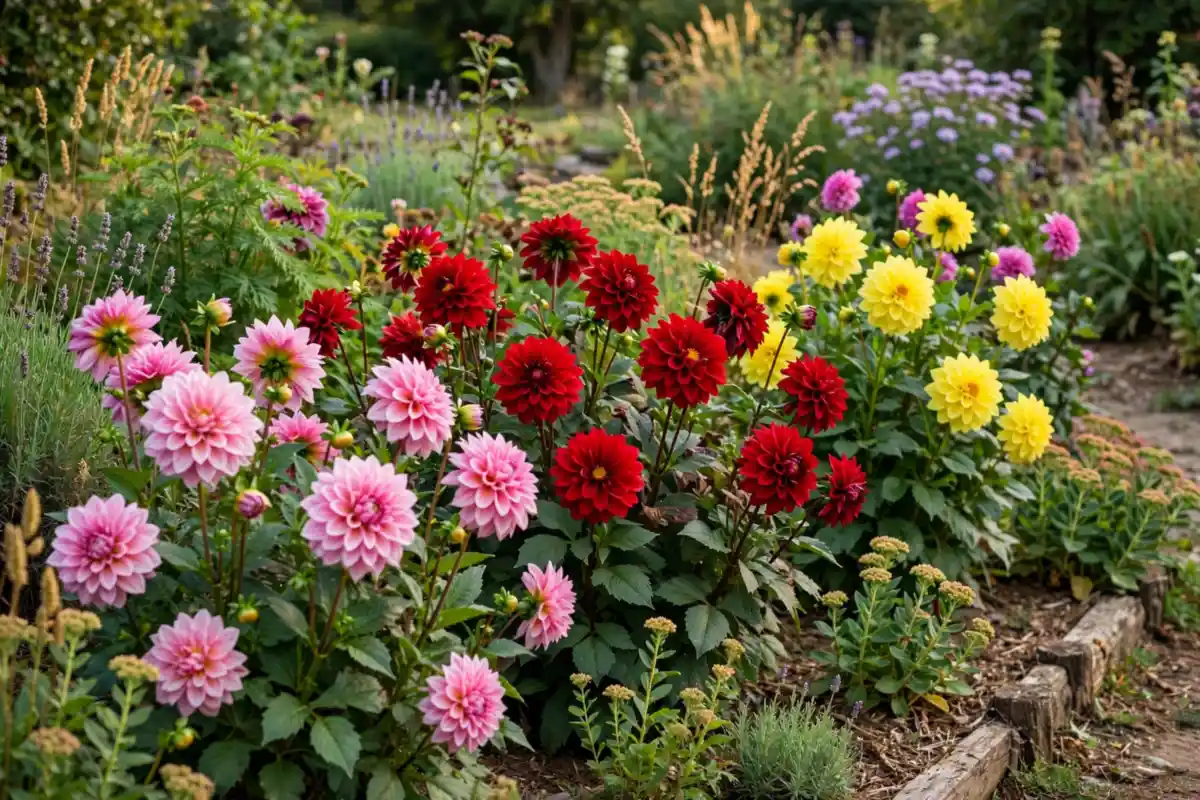
Dahlia Flower: Meaning, Types and How to Grow Dahlias
From midsummer until the first frost, one flower rules the border and the show bench: the dahlia. No other plant offers so much choice — flowers from one-inch pompons to dinner plates a foot across, in every colour the rainbow owns except blue — or so much flower, for so long, from a single tuber.
The dahlia travelled from Aztec gardens in the Mexican highlands to become Mexico’s national flower and the most bred ornamental on earth, with tens of thousands of registered varieties. This guide covers what a dahlia flower is, the six types every gardener should know, what dahlias mean, and how to grow them — including the winter storage ritual that cold-climate gardeners build their autumn around.
Quick Answer
A dahlia flower is the bloom of tuberous plants in the genus Dahlia (aster family, Asteraceae), native to Mexico and Central America. Dahlias flower from midsummer to the first frost in colours covering everything but true blue. They grow 1 to 6 feet tall in full sun and rich, drained soil. The tubers are tender: perennial outdoors in USDA zones 8 to 11, but in colder zones they must be lifted after the first frost and stored frost-free for winter, then replanted in spring.
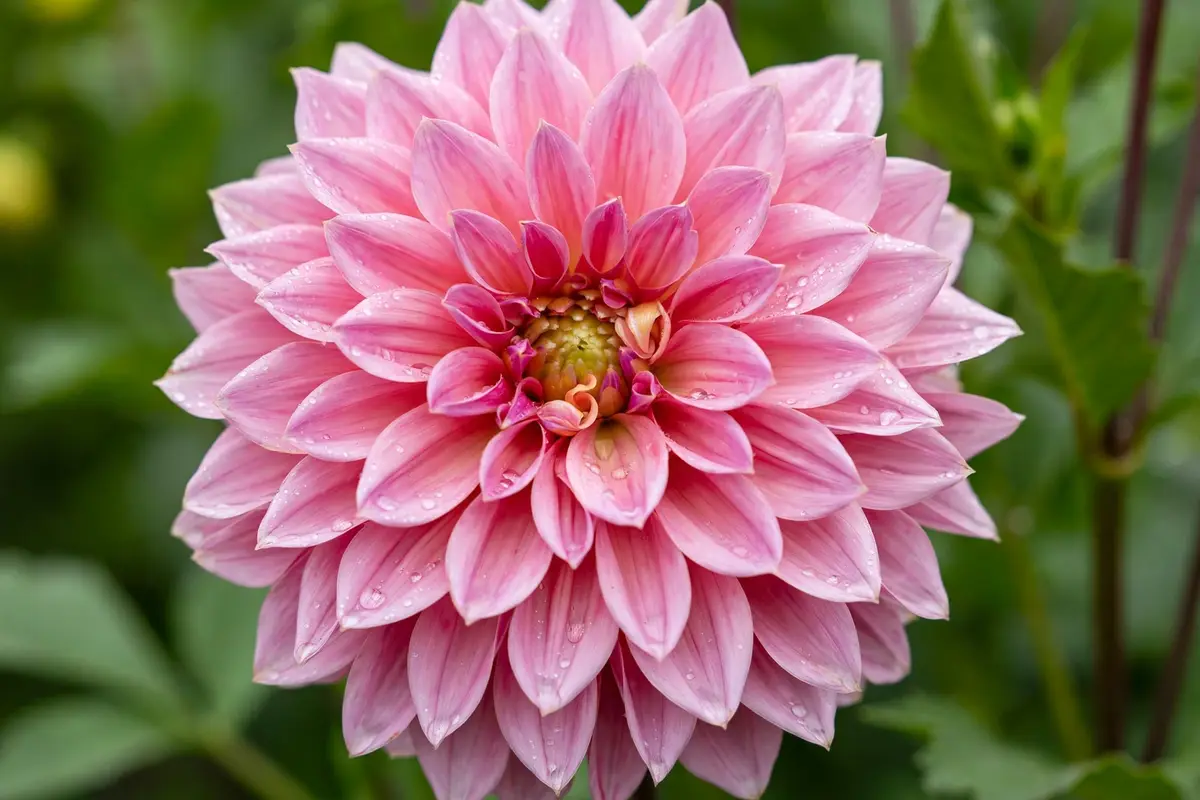
Table of Contents
- What Is a Dahlia Flower?
- Types of Dahlia and 6 Groups Worth Growing
- Dahlia Flower Meaning and Symbolism
- Dahlia Flower Colours and Their Meanings
- How to Grow Dahlias
- Common Mistakes When Growing Dahlias
- Storing Dahlia Tubers for Winter
- Frequently Asked Questions
What Is a Dahlia Flower?
Dahlias are tuberous perennials in the daisy family, Asteraceae — cousins of the sunflower and the aster — native to the high mountains of Mexico and Central America, where some species climb into trees. The genus was named by the Spanish botanist Cavanilles for Anders Dahl, a Swedish pupil of Linnaeus. The Aztecs knew the plant long before Europe: they grew it (as cocoxochitl) for food, for medicine, and — legend’s favourite detail — used the hollow stems of the tall species as water pipes. You can read more on the Dahlia page on Wikipedia.
What arrived in Madrid in 1789 as a curiosity became, within fifty years, one of the great breeding obsessions of horticulture: by the 1800s the first doubles appeared, and today the major societies classify dahlias into a dozen-plus flower forms and count over 50,000 named cultivars — more than almost any other garden plant. The show never pauses: the flower head is a composite of many tiny florets arranged as ray petals around a central disc, and breeders have doubled, quilled, spiked and ruffled those rays into forms from perfect balls to shaggy stars. Mexico made the dahlia its national flower in 1963 — an Aztec original, reclaimed.
Dahlia Flower Quick Facts
- Botanical name: Dahlia species and hybrids (mostly D. × pinnata parentage).
- Family: Asteraceae, the daisy family.
- Hardiness: USDA zones 8 to 11 in the ground; lift and store tubers in colder zones.
- Height: 1 foot (dwarf bedding) to 6 feet (dinnerplates); tree dahlias far taller.
- Bloom time: midsummer to first frost — the longest show of any border flower.
- Sun and soil: full sun; rich, fertile, well-drained soil; regular water and feed.
- Good to know: pinch young plants for bushiness; the more you cut, the more they flower.
Types of Dahlia and 6 Groups Worth Growing
Officially there are more than a dozen dahlia forms; these six cover what gardens actually grow. The table separates them; the profiles follow. For the full list of flower names, see our flower names A to Z guide.
| Type | Flower form | Size | Height | Best use |
|---|---|---|---|---|
| Dinnerplate (decorative) | Fully double, broad petals | 8–12+ in | 4–6 ft | Show, drama, cutting |
| Cactus & semi-cactus | Spiky, rolled petals | 4–10 in | 3–5 ft | Show, texture |
| Ball & pompon | Perfect spheres | 2–5 in (pompon under 2 in) | 3–4 ft | Cutting, geometry |
| Waterlily | Shallow, layered, flat | 4–6 in | 3–4 ft | Floating in bowls, elegance |
| Single & collerette | Open centre, one ring + collar | 3–5 in | 2–4 ft | Bees, informal gardens |
| Anemone-flowered | Cushion centre, outer ring | 3–5 in | 2–4 ft | Novelty, bees |
1. Dinnerplate Dahlias — the Giants
The headline act: fully double decorative dahlias the size of the plate they are named for — ‘Café au Lait’ in coffee-blush is the wedding industry’s favourite flower of the last decade, and giants like ‘Emory Paul’ pass ten inches. Dinnerplates need the full treatment: rich soil, staking from planting day, disbudding for size (see the growing section) and shelter from wind. What they return is unreasonable: single blooms that fill a vase and stop conversations.
2. Cactus and Semi-Cactus Dahlias — the Spiky Ones
Petals rolled lengthways into points, radiating like fireworks or sea urchins — the cactus forms are the show bench’s sculpture class. They hold up remarkably in the garden, shedding rain that ruins flatter forms, and their texture makes whole borders look designed. Semi-cactus types roll only the petal tips, a halfway house for gardeners who find the full spikes too much of a statement. (They are making the statement anyway.)
3. Ball and Pompon Dahlias — the Perfectionists
Geometrically perfect spheres of honeycomb-packed petals, bred to standards so exact that show judges use gauges. Balls (over two inches) and pompons (under two) are also the practical grower’s friends: long, strong stems, excellent vase life, and flowers produced in quantities no other form matches. For cutting gardens and market growers, this group quietly does the work while the dinnerplates take the photographs.
4. Waterlily Dahlias — the Elegant Ones
Shallow, layered blooms that genuinely resemble waterlilies: broad petals in overlapping tiers, floating flat on the stem. Waterlily dahlias are the florist’s refinement — they sit in low bowls and bridal work where a dinnerplate would overwhelm — and in the border they read as calm among the spikes and spheres. Cut them fully open; unlike most dahlias, they do not open further in the vase.
5. Single and Collerette Dahlias — the Bees’ Choice
One ring of petals around an open golden centre — the flower as the insects evolved it. Singles and their collerette cousins (which add a frill of smaller petals around the disc) are the wildlife dahlias: bees work them all day, hoverflies queue, and the plants are correspondingly generous with seed and charm. In informal and cottage plantings — and anywhere the show-bench forms look overbred — these are the dahlias to grow, and the group our fall flowers display keeps returning to.
6. Anemone-Flowered Dahlias — the Cushion Crowns
A ring of flat petals wearing a pincushion: the centre disc florets elongate into a dome of tiny tubes, giving each bloom a two-storey architecture. Anemone dahlias are bee-friendly like the singles, with a silhouette all their own — ‘Totally Tangerine’ and its kin have become modern classics. They are the form beginners miss in catalogues and everyone asks about in the garden.
Dahlia Flower Meaning and Symbolism
The dahlia means inner strength, dignity, elegance and lasting commitment — a bond that endures. The meanings hang on its story: a flower that survives mountain climates, travels the world, and blooms undaunted until frost reads as resilience in petal form. Victorian floriography, characteristically, split its vote — dahlias could signal dignity and good taste, or (in some lists) instability and betrayal, which modern readers mostly ignore in favour of the strength reading. In Mexico, as the national flower, the dahlia stands for national pride and the endurance of Aztec heritage.
Modern gifting uses dahlias for commitment and celebration: they are a traditional 14th wedding anniversary flower in some lists, and their sheer variety makes the message personal — choose the form and colour that fits the person, from a pompon’s precision to a dinnerplate’s magnificence. A bouquet of dahlias says: I am in this, fully, until the frost.
Dahlia Flower Colours and Their Meanings
Every colour except true blue — the “blue dahlia” remains breeders’ holy grail, unclaimed:
- Red dahlia — strength and power: the Mexican classic, and the colour of perseverance.
- Pink dahlia — kindness and grace: ‘Café au Lait’ territory, weddings and gentle messages.
- White dahlia — purity and focus: the exhibition whites are judged the most severely of all.
- Yellow and orange dahlia — joy and celebration: late-summer sunshine in flower form, unmissable from the road.
- Purple and near-black dahlia — dignity and mystery: the “black” dahlias of catalogues are in truth the deepest burgundy-purple, never a true black — the darkness is velvet, not ink.
How to Grow Dahlias
Dahlias are hungry, thirsty and worth it: feed the soil, keep the water coming, and cut constantly. Gardeners on r/gardening on Reddit summarise the creed as “sun, food, water, scissors”.
Planting Tubers in Spring
Plant tubers after the last frost, when the soil has warmed (dahlias planted into cold soil sit and rot), 4 to 6 inches deep with the eye (growing point) up, in soil enriched with compost. Space by size: dinnerplates 2 to 3 feet apart, dwarfs a foot. Push the stake in at planting time — driving it later spears tubers. In cold climates, start tubers in pots indoors a few weeks early for a head start, planting out after frost. Do not water until shoots appear, unless the soil is bone dry: a sleepless tuber in wet soil is a rotten one.
The Pinch and the Disbud
When the plant has three to four pairs of leaves, pinch out the growing tip: the plant branches into a bush and doubles its flowering stems. Show growers go further and disbud — removing the side buds beside each terminal bud so all energy pours into one giant flower. Garden growers can skip disbudding and simply cut constantly: every stem cut for the vase is two stems returning. Either way, dahlias flower on new growth, so the scissors are the fertiliser’s partner.
Water, Food and the Long Season
Once growing, dahlias want deep water two to three times a week in dry weather and a mulch to hold it — they are Mexican mountain plants that expect a rainy season. Feed with a balanced or tomato-type fertiliser through summer; too much nitrogen gives leaves, not flowers. Deadhead religiously — a dahlia allowed to set seed concludes its season early. Kept cut and fed, the plants peak in September, filling the September birth flower season with more colour than everything else in the border combined.
Pests and Problems
Earwigs love the petals (trap them in straw-filled upturned pots), slugs love the young shoots (guard them until stems toughen), and powdery mildew arrives in dry autumn air (space plants, water the soil not the leaves). The serious threat is virus — mottled, stunted plants should be dug out and binned, never composted, and tools cleaned between plants. Buy tubers from reputable growers; the cheap mixed bag is where virus travels.
Common Mistakes When Growing Dahlias
The first mistake is planting too early into cold ground — patience in spring is worth three weeks in autumn. The second is watering the un-sprouted tuber bed daily: rot before growth. The third is skipping the stake until the six-foot dinnerplate is horizontal in a September gale.
The fourth mistake is forgetting to lift tubers in a cold climate and finding black mush in spring (storage ritual below). And the fifth is letting the plants seed: one fat seed head tells the plant the season’s work is done. Cut, cut, cut — dahlias are the most obliging flowers in the garden, but they take their cue from you.
Storing Dahlia Tubers for Winter
In zones 8 and warmer, tubers can stay in the ground under a deep mulch. Colder gardeners perform the autumn ritual: after the first frost blackens the foliage, cut the stems to a few inches, wait a week if you can (the tubers finish ripening), then lift the clumps carefully with a fork. Shake off the soil, let the clumps dry upside-down for a few days so water drains from the hollow stems, label them — you will not remember which is which — and store in boxes of barely-damp compost, vermiculite or wood shavings in a frost-free, cool place (around 5°C / 41°F is ideal).
Check monthly: shrivelled tubers want a mist of water; mouldy ones want air and the bad parts cut away. In spring, clumps can be divided — each division needs a piece of crown with an eye — or planted whole for a bigger plant. Done yearly, one tuber becomes a colony: the dahlia’s quiet compound interest.
Frequently Asked Questions
Are dahlias perennials or annuals?
Perennials by nature — tuberous ones, hardy in the ground in USDA zones 8 to 11. In colder zones they are grown as half-hardy annuals in effect: lift the tubers in autumn, store them frost-free, and the same plant returns next year. Bedding dahlias raised from seed are usually treated as true annuals. If your question is not answered here, the questions about the dahlia flower on Quora cover most of the rest.
When do dahlias bloom?
From midsummer (about eight weeks after planting) until the first hard frost — the longest flowering season of any border plant, peaking in late summer and September. Cutting and deadheading keep new buds coming; a hard frost ends the show overnight.
Why is my dahlia not flowering?
The usual causes: too much shade (dahlias need six-plus hours of sun), too much nitrogen (all leaf), tubers planted too late or too deep, or plants checked by drought at budding. Dwarf bedding types flower fastest; dinnerplates are the slowest. Sun and a tomato feed fix most cases.
Can dahlias grow in pots?
Yes — dwarf and medium types thrive in large pots (at least 12 to 15 inches) of rich compost, with daily water in summer and regular feeding. Pots are ideal for patios and for starting tubers early indoors. Giant dinnerplates can be potted too, but stake well: a top-heavy dahlia in a gale is a sail.
Are dahlia tubers edible?
Historically, yes — the Aztecs ate them, and the tubers are not considered toxic; some modern chefs experiment with them (flavours vary from celery-like to bland). In practice, garden tubers may carry sprays and are worth far more as next year’s flowers. Admire, divide, replant; leave eating to the historically curious with untreated plants.
What is a dinnerplate dahlia?
The informal name for the largest decorative dahlias, with fully double blooms eight inches across and upward — the size of the plate they are named after. They are a size class within the decorative form, not a species. For more flowers under the same letter, see our guide to flowers that start with D.

One Comment