Tiger Lily Flower: Meaning, Types and How to Grow Lilium Lancifolium
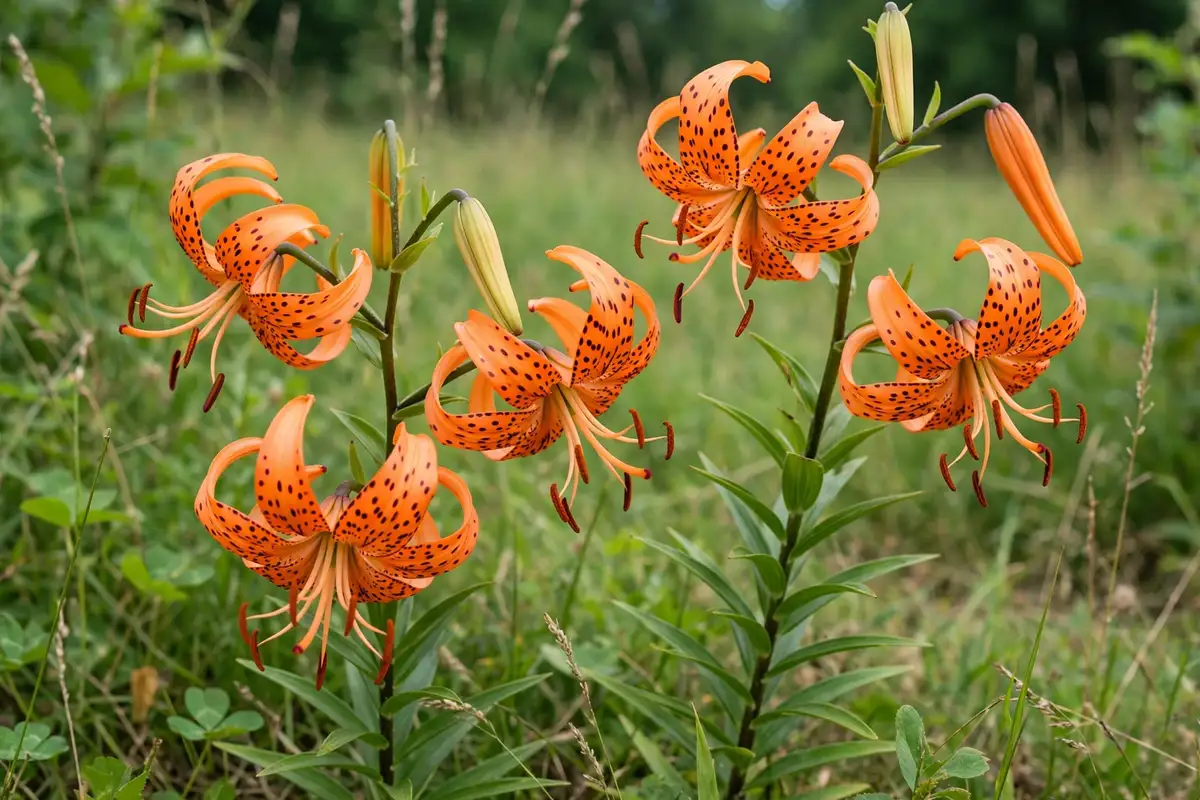
Orange, spotted, and swept back like a sultan’s turban: the tiger lily is the lily that gardens itself. It plants its own babies along its stem (little black bulbils in the leaf joints), shrugs off neglect that would finish a hybrid, and returns every summer with dozens of freckled orange trumpets — whether you remembered it or not.
It is also the most misidentified name in the flower garden, borrowed by the roadside daylily, and it carries two serious footnotes: cat owners must keep it away entirely, and lily purists keep it away from their other lilies, because it often carries virus without symptoms. This guide covers the true tiger lily, the six kinds worth knowing, what it means (wealth and prosperity), and how to grow it.
Quick Answer
A tiger lily flower is the spotted orange bloom of Lilium lancifolium (syn. L. tigrinum), a true lily from East Asia with strongly recurved petals and dark purple-brown spots. It grows 3 to 5 feet tall, flowering in mid-to-late summer in USDA zones 3 to 9, and propagates itself from black bulbils that form in its leaf axils. Plant bulbs in autumn in full sun and well-drained soil. Two cautions: all true lilies are severely toxic to cats, and tiger lilies commonly carry lily viruses without symptoms, so grow them apart from prized lily collections.
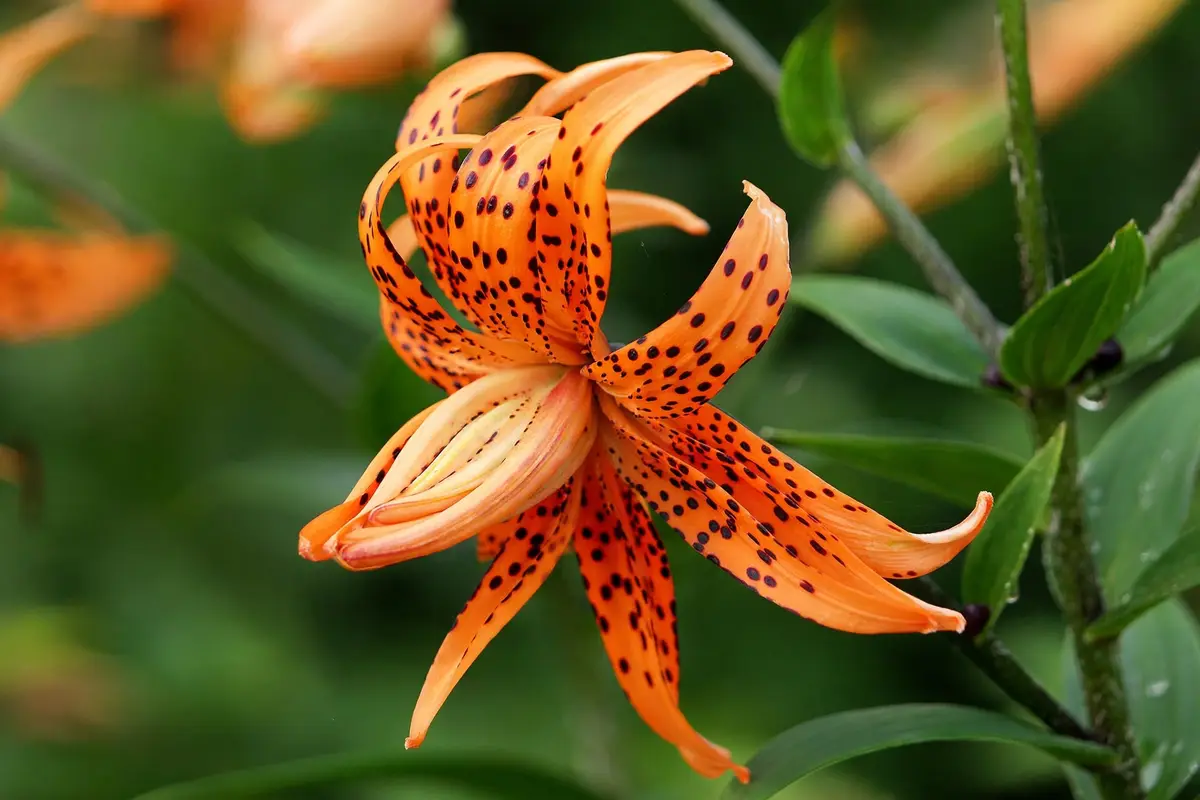
Table of Contents
- What Is a Tiger Lily Flower?
- Types of Tiger Lily and 6 Kinds Worth Knowing
- Tiger Lily Flower Meaning and Symbolism
- Tiger Lily Flower Colours and Their Meanings
- How to Grow Tiger Lilies
- Common Mistakes When Growing Tiger Lilies
- Tiger Lily vs Daylily: Which One Is It?
- Frequently Asked Questions
What Is a Tiger Lily Flower?
The true tiger lily is Lilium lancifolium, a species lily in the lily family, Liliaceae, native to China, Japan and Korea, where it grows on hillsides and field edges and has been cultivated for centuries (the bulbs are eaten in parts of East Asia, and the species naturalised so happily abroad that it now grows wild along roadsides in eastern North America). The flower is unmistakable once seen: six tepals of vivid orange, freckled thickly with raised dark spots, curving back on themselves until the tips nearly touch the stem — the “turk’s-cap” shape — with long stamens dangling beneath. The name is the spots: not stripes like the tiger, but the garden imagination made the leap anyway. You can read more on the Lilium lancifolium page on Wikipedia.
The plant’s party trick is self-propagation: in the joint of nearly every leaf, a round black bulbil grows — a miniature bulb that drops, roots, and clones the parent. A single stem sheds dozens, which is why old plantings become colonies and why tiger lilies outlast the houses they were planted beside. It is a triploid (three sets of chromosomes), which makes it effectively sterile by seed — the bulbils are its whole reproductive strategy, and they work superbly.
Tiger Lily Flower Quick Facts
- Botanical name: Lilium lancifolium (syn. Lilium tigrinum).
- Family: Liliaceae, the lily family.
- Hardiness: USDA zones 3 to 9.
- Height: 3 to 5 feet; wiry, dark stems with narrow leaves.
- Bloom time: mid-to-late summer.
- Sun and soil: full sun (cool roots via mulch or low companions); any well-drained soil.
- Good to know: self-propagates by bulbils; highly toxic to cats; often a symptomless virus carrier.
Types of Tiger Lily and 6 Kinds Worth Knowing
One species, its forms, and its turk’s-cap relatives. The table separates them; the profiles follow. For the full list of flower names, see our flower names A to Z guide.
| Type | What it is | Flowers | Height | Best use |
|---|---|---|---|---|
| L. lancifolium (species) | The true tiger lily | Orange, dark spots, recurved | 3–5 ft | Naturalising, colonies |
| ‘Splendens’ (Flore Pleno) | Double tiger lily | Double orange, spotted | 3–4 ft | Showiest form, no messy pollen |
| Yellow form (var. flaviflorum) | Colour variant | Yellow, dark spots | 3–4 ft | Softer schemes |
| Lilium henryi | Henry’s lily (“false tiger”) | Soft orange, papillae bumps | 5–8 ft | Back of border, lime soils |
| Martagon lilies | L. martagon group | Small turk’s-caps, many colours | 3–5 ft | Shade-tolerant lilies |
| Spotted Asiatic hybrids | Modern garden hybrids | Spotted, upright-facing | 2–4 ft | Clean virus-free colour |
1. The Species — the True Tiger Lily
The original: single orange turk’s-caps, spotted and recurved, on dark wiry stems, flowering for weeks because each stem opens its buds in sequence. This is the form that naturalises, self-sows its bulbils and builds the colonies that mark old gardens. For the wilder corners, woodland edges and any spot you want lily drama without lily fuss, the species is the answer — plant it where its vigour and its virus-passenger status can do no harm (isolation guidance in the growing section).
2. ‘Splendens’ — the Double Tiger Lily
The double form (sold as ‘Flore Pleno’ or ‘Splendens’): tiered extra tepals make a ruffled, fuller flower in the same spotted orange — and because the stamens are transformed into petals, there is little of the pollen that stains clothes and tablecloths from the single form. Old-fashioned, tough, and still the tiger grown for cutting. It bulbils like its parent and doubles the drama per stem.
3. The Yellow Form — var. flaviflorum
Same plant, citron-yellow flowers still carrying the dark spots and the full turk’s-cap swirl. The yellow form softens the tiger into cottage-garden company and mixes where the orange would shout. Rare white forms exist in specialist lists; the yellow is the one you will actually find, and it propagates by bulbils exactly like the type.
4. Henry’s Lily — Lilium henryi
Often mistaken for a grand tiger lily: soft apricot-orange recurved flowers with distinctive raised bumps (papillae) in the throat, on arching stems that can pass 6 feet. Henry’s lily is the tiger’s distinguished cousin — famously lime-tolerant (rare among lilies), long-lived, and a great parent of modern hybrids. If you love the shape but garden on chalk, this is your lily.
5. Martagon Lilies — the Shade Turk’s-Caps
The other great recurved tribe: Lilium martagon and its hybrids carry whorls of small turk’s-cap flowers — dozens to a stem in purple, pink, orange, white and wine — and, unlike most lilies, they thrive in light shade and leaf-mould soils. Slower to establish (“sulky” the first year is normal) and then permanent. They are the tiger lily’s elegant relatives for the woodland garden, and they bring the same silhouette into our white flowers palette with forms like ‘Album’.
6. Spotted Asiatic Hybrids — the Clean Alternatives
Modern Asiatic hybrids with spotted, upward-facing flowers (the ‘Tiger’ lines and spotted selections like ‘Citronella’-style yellows) deliver the freckled look on virus-free, nursery-raised bulbs, in more colours and tidier habits. They lack the turk’s-cap swirl and the bulbil trick, but for mixed lily borders — where the true tiger’s virus risk is unwelcome — they are the responsible way to keep the spots.
Tiger Lily Flower Meaning and Symbolism
The tiger lily means wealth, prosperity and pride — in flower language it is the confident bloom: “I am rich, I am proud, and I dare you to love me” (that daring line is a traditional attribution repeated in floriography lists, and it fits the flower’s swagger exactly). Orange carries energy and good fortune across many cultures; flower sellers in China group tiger lilies with prosperity wishes, and in Korea the plant is tied to the beloved folk tale of the tiger and the mother — the flower keeps company with devotion in the stories of its homeland.
Send tiger lilies for ambition and success: a new business, a promotion, a bold beginning. They are not the flower of meek apologies — this is the bouquet that arrives chin-up, spotted, and entirely sure of itself.
Tiger Lily Flower Colours and Their Meanings
The classic is orange; its forms and relatives extend the message:
- Orange tiger lily — wealth, prosperity and pride: the signature colour and its full confidence.
- Yellow tiger lily — cheerfulness and good fortune: the softer flaviflorum form, same spots, sunnier mood.
- Double tiger lily — abundance doubled: ‘Splendens’ for celebrations that want the volume turned up.
- Pink and white martagons — grace and remembrance: the turk’s-cap cousins carry gentler messages into shade.
How to Grow Tiger Lilies
Easy — with two management rules (cats, and separation) doing the real work. Gardeners on r/gardening on Reddit describe tiger lilies as “the lily that survives landlords” — planted, forgotten, still performing.
Planting Bulbs and Bulbils
Plant bulbs in autumn (spring works, autumn is better), 4 to 6 inches deep — lilies root from the stem above the bulb as well as below — in full sun, spacing a foot apart for a colony effect. The fun route is bulbils: gather the ripe black bulbils from the leaf axils in late summer, sow them in a nursery row or pots of gritty compost, and they flower in two to three years, exact clones of the parent. Leave some on the plant and the colony expands itself. In the border they flower right through the July birth flower season into August, filling the height gap behind summer bedding.
Site, Soil and Care
Sun on the flowers, shade on the roots is the lily ideal: mulch thickly or underplant with low growers. Tiger lilies accept most drained soils, including clay improved with grit, and need no feeding beyond a spring mulch — overfed lilies grow soft and flop. The wiry stems rarely need staking except in wind tunnels. After flowering, leave the stems standing until they yellow: the leaves are refilling the bulb, and the bulbils are the harvest. Cut flowers last a week — remove the anthers indoors, because tiger lily pollen stains everything it touches an indelible orange.
The Two Safety Rules
Cats: all true lilies (Lilium species, tiger included) are severely toxic to cats — even pollen licked from fur can cause kidney failure. Cat-owning households should not grow them anywhere cats roam, and should never bring the cut flowers indoors; choose the daylily lookalike or another flower instead. Other lilies: tiger lilies commonly carry mosaic viruses without showing symptoms, and aphids can carry those viruses to your prized Orientals and Asiatics. Grow tigers in their own patch, away from the lily collection, and never propagate cuttings from a collection plant into tiger ground (or the reverse). Both rules are simple geography, and both are absolute.
Common Mistakes When Growing Tiger Lilies
The gravest mistake is the cat one above — no flower is worth it. The second is planting tigers in the middle of a treasured lily border, importing their silent virus load. The third is mowing or tidying the stems right after flowering, starving next year’s bulb.
The fourth is planting bulbs in a bog: lilies rot in standing water (drainage, always). And the fifth is surprise at the colony: bulbils travel on boots and in compost, and a tiger lily patch expands — site it where expansion is the plan, as it is in our fall flowers bulb-planting roundups.
Tiger Lily vs Daylily: Which One Is It?
The roadside “tiger lily” of North America is usually not a lily at all: it is the tawny daylily, Hemerocallis fulva — orange, spotted-ish, midsummer, and naturalised in every ditch. The ten-second ID: tiger lily has a single tall stem with leaves all the way up it, black bulbils in the leaf joints, and flowers whose tepals curve right back; daylily has a fountain of grass-like leaves from the base, leafless flower stalks, and trumpet flowers that face outward, each lasting one day. Different families in modern classification, different dangers (daylilies are also listed toxic to cats, though the evidence is debated — keep both away), and different habits: plant the daylily anywhere; plant the true tiger lily with the two safety rules in mind.
Frequently Asked Questions
Are tiger lilies poisonous to cats?
Yes — seriously. All true lilies, tiger lilies included, can cause fatal kidney failure in cats from even small exposures, including pollen. Households with cats should not grow them or bring bouquets indoors. This is a veterinary consensus, not a garden myth. If your question is not answered here, the questions about tiger lilies on Quora cover most of the rest.
When do tiger lilies bloom?
Mid-to-late summer — July into August in most zones — with each stem opening its buds in sequence over several weeks. Among true lilies they are usefully late, carrying the lily season toward autumn.
How do tiger lilies spread?
By bulbils: the black pea-sized bulbs that grow in the leaf axils drop and root where they land (or where you plant them), cloning the parent. The plant is a sterile triploid and does not set viable seed — all spread is bulbil spread, plus bulbs dividing slowly underground.
Can tiger lilies grow in pots?
Yes — three bulbs to a deep 12-inch pot of gritty compost, watered in growth, kept dry-ish and cold in winter. Pot culture is also a tidy way to quarantine them from a ground-planted lily collection (the virus rule still applies to shared tools and aphids, but distance helps).
Why are my tiger lily flowers deformed or streaked?
Likely virus expressing itself (streaked, twisted blooms), or lily beetle damage to buds — scarlet lily beetles and their larvae chew buds and leaves and are the lily family’s public enemy; pick them off by hand. Virus has no cure: a badly declining plant is best removed — and kept away from other lilies regardless.
Is the tiger lily edible?
The bulbs are eaten in parts of East Asia (a traditional food and medicine ingredient), and the buds of its daylily impostor are the famous “golden needles” of Chinese cooking — but wild identification errors with lilies are dangerous, nothing here is a recommendation, and the cat-toxicity alone argues for keeping tiger lilies strictly ornamental at home. For more flowers under the same letter, see our guide to flowers that start with T.