Wisteria Flower: Meaning, Types and How to Grow It
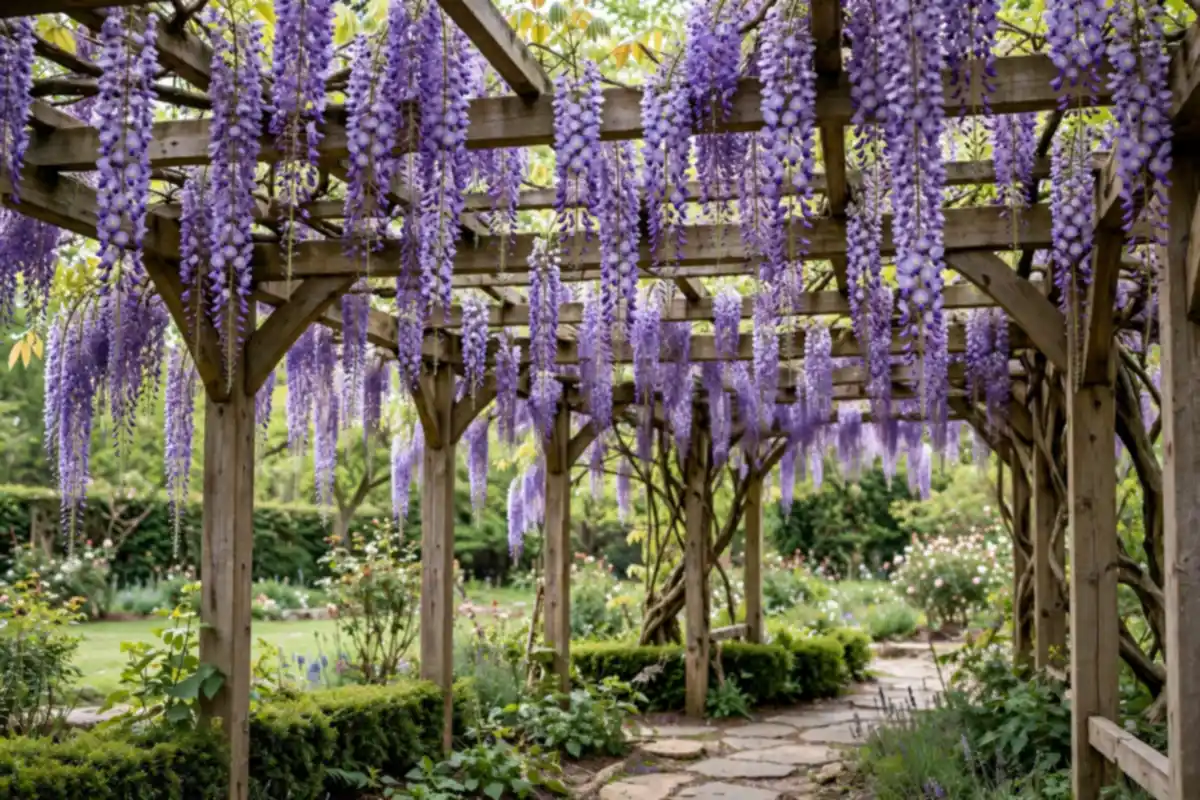
In late spring, for about three weeks, a mature wisteria is the most romantic object in the gardening world: a pergola turned into a waterfall, hundreds of lilac-violet chains pouring down, humming with bees and smelling of warm grapes. It is also a plant with a will of iron, a lifespan measured in centuries, and a famous grudge against gardeners who plant it from seed. Both halves of that reputation are earned.
This guide covers the six wisterias worth knowing (including the record-breaking Japanese flower chains and the well-behaved American native), what wisteria means — longevity, devotion, and in Japan, undying love — and the pruning system that turns a thug into a fountain.
Quick Answer
A wisteria flower is the hanging, pea-like blossom of Wisteria, a genus of woody climbing vines in the legume family, loved for spring chains (racemes) of violet, pink or white flowers that can reach 3 feet long on Japanese types. Chinese wisteria (W. sinensis) and Japanese wisteria (W. floribunda) grow 25 to 30 feet or more in USDA zones 5 to 9 and live for centuries; American species are smaller and better behaved. Wisteria means longevity and devotion — in Japanese tradition, undying love. All parts, especially the seeds, are poisonous.
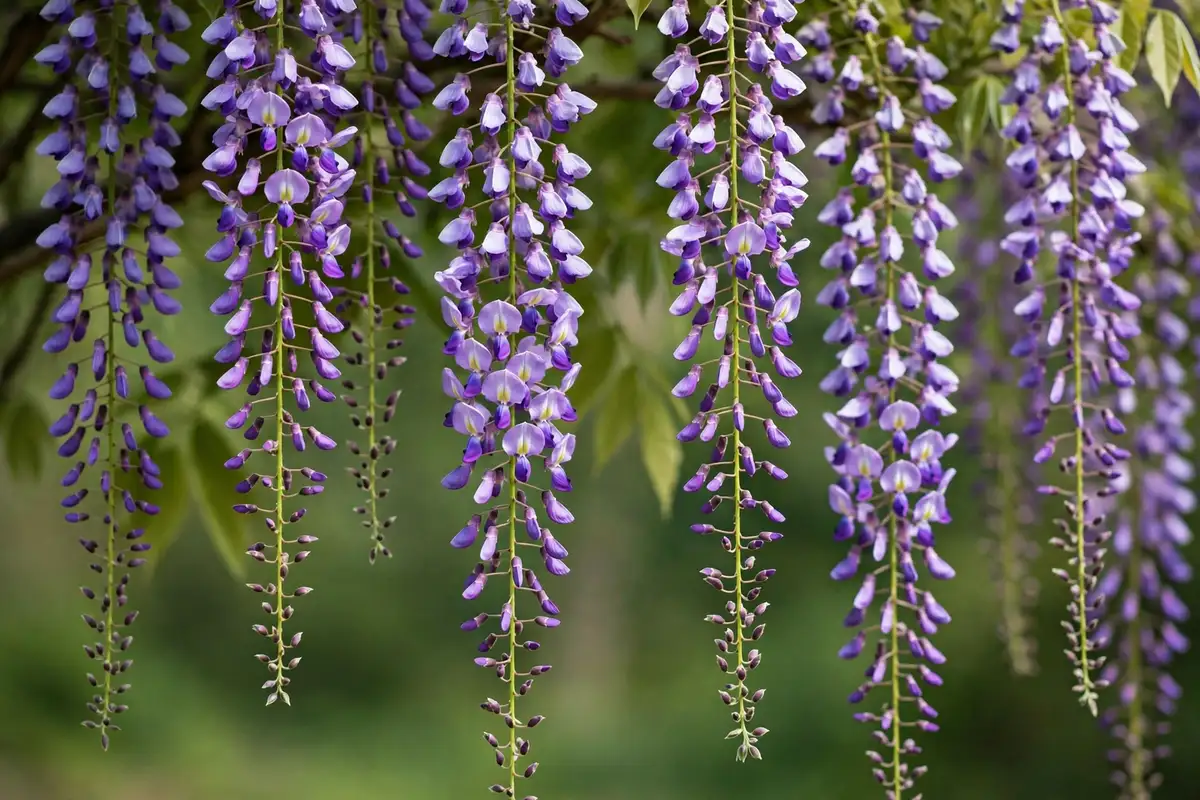
Table of Contents
- What Is a Wisteria Flower?
- Types of Wisteria and 6 Kinds Worth Knowing
- Wisteria Flower Meaning and Symbolism
- Wisteria Flower Colours and Their Meanings
- How to Grow Wisteria
- Common Mistakes When Growing Wisteria
- Chinese vs Japanese Wisteria: Telling Them Apart
- Frequently Asked Questions
What Is a Wisteria Flower?
Wisteria is a small genus of deciduous woody climbers in Fabaceae, the pea family — named not, as often misprinted, for a wistful mood, but for Caspar Wistar, the American anatomist. The flowers announce the family at once: each bloom is a little pea-flower with a banner petal and a keel, and they hang in chains called racemes that open from the top down over a fortnight, so a plant in full flower carries every stage from bud to cascade at once. The vines climb by twining — woody stems that can crush a flimsy trellis, strangle a young tree, and, given a century, thicken into self-supporting trunks: the world’s largest flowering plant is a single Chinese wisteria planted in 1894 in Sierra Madre, California, now covering more than an acre, holding an annual festival, and estimated at over a million blooms in season. You can read more on the Wisteria page on Wikipedia.
Japan has made the flower a national spring event second only to cherry blossom: at Ashikaga Flower Park a single 150-year-old wisteria spreads over a specially built grid the size of a tennis court, and the Kawachi Wisteria Garden’s tunnels — curtains of white, pink and violet chains overhead — are among the most photographed gardens on earth. In Japanese culture the flower (fuji) is ancient nobility: the Fujiwara clan took it as their emblem, kabuki dances celebrate it, and in the anime Demon Slayer wisteria is famously the flower demons cannot abide — a piece of folklore-flavoured fiction that has sent a whole generation searching for the real plant. The honest caution rides along with the romance: Asian wisterias have escaped gardens and naturalised aggressively across the American South and beyond, and every part of the plant, seeds especially, is toxic. Plant the right wisteria, in the right place, with your eyes open.
Wisteria Flower Quick Facts
- Botanical names: Wisteria sinensis (Chinese), W. floribunda (Japanese), W. frutescens (American).
- Family: Fabaceae, the pea/legume family.
- Hardiness: zones 5 to 9 (Asian types); Kentucky wisteria to zone 3–4.
- Size: 25–30+ feet Asian vines; 15–25 feet American species.
- Bloom time: mid to late spring; some types repeat lightly in summer.
- Sun and soil: full sun; moist, well-drained soil; flowers best slightly root-stressed.
- Good to know: seeds and pods are poisonous; seed-grown plants may take 7–15 years to flower — buy grafted or named plants.
Types of Wisteria and 6 Kinds Worth Knowing
The two Asian giants, the two American civilisers, the silk-flowered connoisseur’s species, and the summer evergreen. The table separates them; the profiles follow. For the full list of flower names, see our flower names A to Z guide.
| Type | Flower chains | Twining | Hardiness | Best use |
|---|---|---|---|---|
| Chinese wisteria (W. sinensis) | 6–12 in, lilac, fragrant, before leaves | Anticlockwise | Zones 5–9 | Pergolas, walls; the classic |
| Japanese wisteria (W. floribunda) | 1–3 ft, longest of all | Clockwise | Zones 5–9 | Tunnels, big pergolas |
| American wisteria (W. frutescens) | 4–6 in, lilac-blue, after leaves | Anticlockwise | Zones 5–9 | Smaller gardens, not invasive |
| Kentucky wisteria (W. macrostachya) | 7–12 in, blue-lilac | Anticlockwise | Zones 3–9 | Coldest gardens, ‘Blue Moon’ reblooms |
| Silky wisteria (W. brachybotrys) | 4–6 in, silky-haired, richly scented | Anticlockwise | Zones 6–9 | Connoisseur colour (‘Showa-Beni’ pink) |
| Evergreen wisteria (Callerya reticulata) | Short, deep purple, summer | Twining | Zones 8–10 | Mild climates, summer flower |
1. Chinese Wisteria — the Classic Waterfall
Wisteria sinensis is the wisteria of English cottage walls and a million pergolas: fragrant lilac chains opening just before or with the first leaves, on a vine that twines anticlockwise and thinks nothing of 30 feet. ‘Prolific’ flowers young and heavily; the white ‘Alba’ lights a shady wall. Vigorous to a fault — magnificent where it has room and a structure built like a bridge, a menace on a wobbly fence.
2. Japanese Wisteria — the Record Chains
Wisteria floribunda holds the length record: selected forms (‘Royal Purple’, the pink ‘Rosea’) carry racemes of two to three feet, the flowers opening gradually down the chain so a tunnel of it blooms for a month. It twines clockwise — the instant field mark against its Chinese cousin — and flowers as the leaves emerge. This is the Ashikaga and Kawachi tunnel species: plant it where the chains can hang free into open air, and walk underneath.
3. American Wisteria — the Civilised Native
Wisteria frutescens, from the southeastern US wetlands, is the answer to every invasiveness warning: a smaller vine (15–25 feet), shorter lilac-blue chains after the leaves, smooth (not velvety) seed pods, and no ambitions of conquest. ‘Amethyst Falls’ flowers young — often in its first or second year — and repeats lightly through summer. For most home gardens in its homeland, this is the right wisteria.
4. Kentucky Wisteria — the Cold-Climate Champion
Wisteria macrostachya (now often folded into frutescens) is the hardiest wisteria in cultivation — flower buds surviving zone 3–4 winters that kill Asian flower buds stone dead. Its famous cultivar ‘Blue Moon’ adds the other miracle: it reblooms, flowering up to three times from spring into summer. Northern gardeners: this is your wisteria, and it is not even a compromise.
5. Silky Wisteria — the Connoisseur’s Species
Wisteria brachybotrys carries shorter chains on silky-haired stems, with two claims on a connoisseur’s heart: the richest scent of the genus, and ‘Showa-Beni’, the finest true pink wisteria grown — and ‘Shiro Kapitan’, a white of equal purity. Slightly tenderer than its cousins; give it the warm wall and it will repay you in perfume.
6. Evergreen Wisteria — the Summer Impostor
Callerya reticulata (long sold as Millettia) is not a true Wisteria at all, but it wears the name in every mild-climate nursery: an evergreen twiner with short, deep-purple, orchid-like chains in summer rather than spring, for zones 8–10 where a winter-green screen matters more than spring spectacle. Different genus, different season — same job, done in July.
Wisteria Flower Meaning and Symbolism
Wisteria means longevity first of all — a vine that outlives its planter by centuries cannot help it — and with longevity, devotion: in Japanese tradition the hanging chains are a bowed head, humility and undying love, which is why fuji blooms crowd wedding kimonos and family crests of the old Fujiwara nobility. In the West the flower picked up romance and welcome (a wisteria over the door is a house that embraces you), plus a shadow-meaning of obsession — a love that twines and will not let go, which anyone who has fought a sinensis off a chimney will recognise as fair comment.
Give wisteria for long devotion: anniversaries measured in decades, housewarmings meant to last, the love that plans in generations. Plant one, and the gift outlives the giver — which is precisely its meaning.
Wisteria Flower Colours and Their Meanings
- Violet and lilac — devotion and longevity: the classic chains, spring partners to our violet flower in the purple season.
- Pink — tender, undying love: ‘Showa-Beni’ and the Kawachi tunnels at full blush.
- White — purity and welcome: ‘Alba’ chains gleaming on a wall at dusk.
- Blue — calm loyalty: ‘Blue Moon’ and the Kentucky blues.
How to Grow Wisteria
Buy right, build strong, prune twice — that is the entire secret of the world’s great wisterias. Growers on r/gardening on Reddit tell the cautionary tale in every wisteria thread: “the seed-grown one is old enough to vote and has never flowered — buy the grafted plant, learn the two-cut prune, and thank us in three years.”
Buying and Planting
Buy a grafted or cutting-grown named cultivar, ideally already showing flower buds in the nursery — seed-grown wisteria can stay stubbornly juvenile and flowerless for 7 to 15 years, the single most common wisteria heartbreak. Plant in full sun (six hours minimum; shade grows leaves, not chains) in moist, well-drained soil, away from the house’s foundations and any structure you are fond of: the support must be pergola-timber, steel cable or a brick wall, because a mature vine weighs tons. American species forgive smaller ambitions — a sturdy arbor is enough.
The Two-Cut Prune
Wisteria flowers on short spurs of old wood, and pruning coaxes the vine to make them. Summer cut (July–August): shorten every long whippy side-shoot to about six leaves — this stops the jungle and lets sun into the buds. Winter cut (January–February): shorten those same shoots again to two or three buds. That is the whole system — two cuts a year, every year — and it is the difference between a green octopus and a flowering fountain. Add a high-potash feed in spring, water in drought while young, and never high-nitrogen fertiliser (the lawn feed that drifts onto wisteria roots is a famous cause of all-leaf years).
Common Mistakes When Growing Wisteria
Mistake one is buying (or worse, growing) a seedling and waiting a decade for flowers that a grafted plant gives in year two. Mistake two is a flimsy support: wisteria does not climb structures, it arm-wrestles them, and cheap trellis loses. Mistake three is skipping the prune — an unpruned Asian wisteria makes metres of whip, no spurs, and three flowers as an apology.
Mistake four is planting Chinese or Japanese wisteria where it can escape: near woodland edges in warm, wet climates it naturalises into tree-smothering thickets, which is why the American species exist in this guide and why responsible growers deadhead and bin the pods. Mistake five is feeding it like a lawn — nitrogen is leaves. Sun, spurs and restraint: the vine supplies the drama itself.
Chinese vs Japanese Wisteria: Telling Them Apart
The two Asian giants, separated by three field marks. Twining: Chinese stems twine anticlockwise; Japanese twine clockwise (viewed from above) — the quickest test there is. Chains: Chinese racemes run 6–12 inches with flowers opening almost together; Japanese run 1–3 feet in the long forms, opening gradually from the top down over weeks. Timing: Chinese flowers just before or with the leaves; Japanese as the leaves unfurl. Both are fragrant, violet-first, and vigorous enough to need the two-cut prune; the Japanese is the tunnel flower, the Chinese the wall flower — and both yield the garden to the American species where invasiveness is a real concern.
Frequently Asked Questions
How long does wisteria take to flower?
A grafted or named plant: two to four years, often sooner (‘Amethyst Falls’ and ‘Prolific’ can flower in year one or two). A seed-grown plant: seven to fifteen years is common, and some seedlings never flower well at all — the strongest argument in gardening for buying the named plant. If your question is not answered here, the questions about the wisteria flower on Quora cover most of the rest.
Is wisteria poisonous?
Yes — all parts, the seeds and pods most of all, contain lectins and wisterin that cause serious stomach illness in people and pets. Teach children the pods are not beans (they look temptingly like them), and site vines so pods do not drop into dog runs or play areas.
Is wisteria invasive?
The Asian species can be, in warm humid regions — they have naturalised across much of the American Southeast and similar climates, climbing into woodland trees. The American species (frutescens, macrostachya) are not invasive and are the responsible choice there. Everywhere, deadheading pods and pruning runaway shoots keeps any wisteria a garden plant rather than a neighbourhood one.
Why is my wisteria not flowering?
Run the checklist: seed-grown juvenile (wait, or graft a flowering scion onto it); shade; skipped pruning, so no flower spurs; high-nitrogen feed making leaves; or winter cold killing Asian flower buds (switch to ‘Blue Moon’ Kentucky wisteria in cold zones). Most cases are two of these at once, and most are fixable within two seasons of the two-cut prune.
Can wisteria grow in a pot?
Yes, with commitment: a large pot (45 cm plus), a grafted compact or American cultivar, annual root-pruning when you repot, the same two-cut prune, and never letting it dry out. Potted wisteria trained as a standard — a flowering lollipop tree — is a Japanese garden classic and the best way to keep the vine small-space honest.
What does wisteria mean in Japan?
Fuji is an emblem of longevity, humility and undying love — the Fujiwara clan’s crest, a wedding-kimono staple, and a spring festival flower second only to cherry blossom. The Demon Slayer fame is the modern layer: in the story, demons cannot stand wisteria — fiction, but fiction rooted in the flower’s real, ancient protective aura. For more flowers under the same letter, see our guide to flowers that start with W.