Wax Flower: Meaning, Types and How to Grow It
Florists reach for wax flower when a bouquet has to look fresh not for days but for weeks: woody stems crowded with small, starry, waxy blooms that seem poured from pink porcelain. It is the Geraldton wax of Western Australia — a tough desert-edge shrub named for a port town, exported around the world as a cut flower, and in its home state part of one of the greatest wildflower shows on Earth.
This guide covers the six wax flowers worth knowing (the wild species, the florist cultivars and the bigger-bloomed relative), explains its meanings — happiness, lasting love and success, which is why it hides in so many wedding bouquets — separates it from the other “wax flowers” (hoya is not it), and gives the Mediterranean-climate growing rules it insists on.
Quick Answer
The wax flower is the waxy, star-shaped bloom of Chamelaucium uncinatum (Geraldton wax), an evergreen shrub in the myrtle family Myrtaceae from south-west Western Australia, named for the town of Geraldton where it was first collected for science. It grows 6 to 10 feet in USDA zones 9 to 11 (in a pot elsewhere), flowers from late winter through spring in full sun and sharply drained, sandy soil, and its cut stems last two to three weeks in the vase. Wax flower means happiness, lasting love and success in florist tradition. It is not the hoya “wax plant” — a different flower entirely, untangled below.
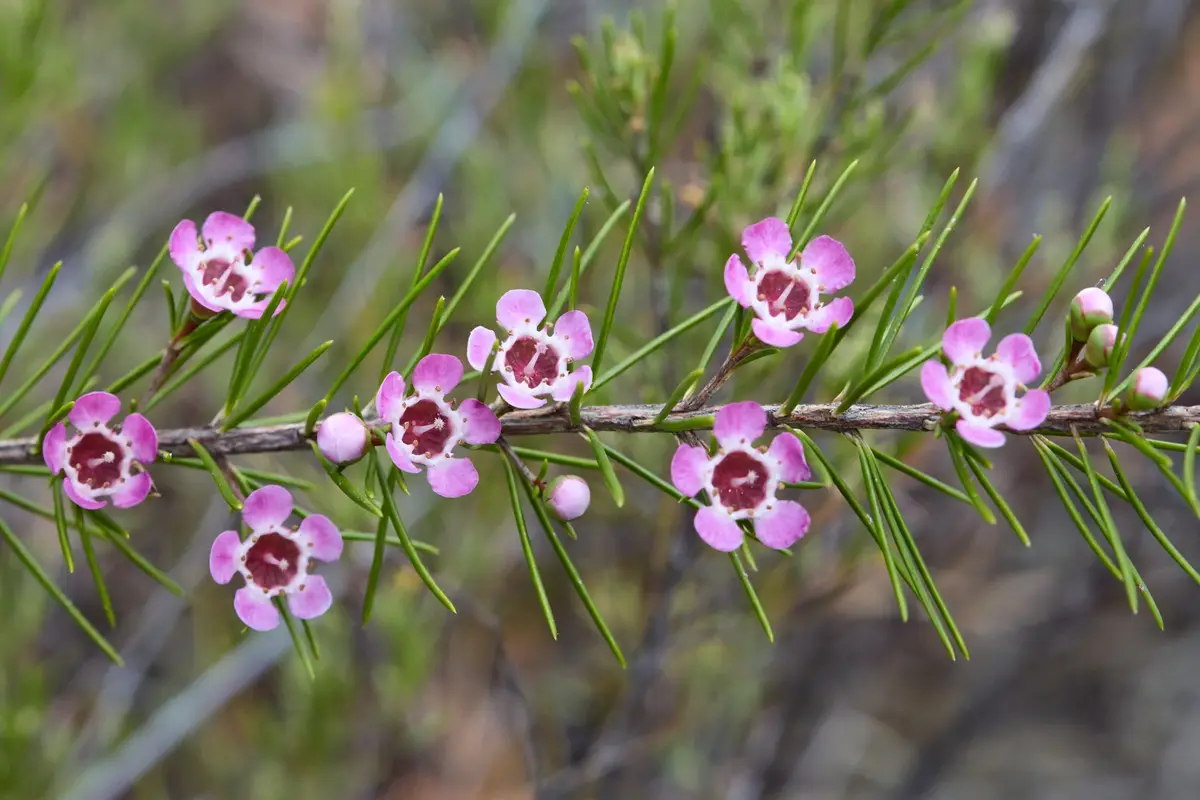
Table of Contents
- What Is a Wax Flower?
- Types of Wax Flower and 6 Kinds Worth Knowing
- Wax Flower Meaning and Symbolism
- Wax Flower Colours and Their Meanings
- How to Grow Wax Flower
- Common Mistakes When Growing Wax Flower
- Wax Flower vs Hoya: Two “Wax Flowers”, No Relation
- Frequently Asked Questions
What Is a Wax Flower?
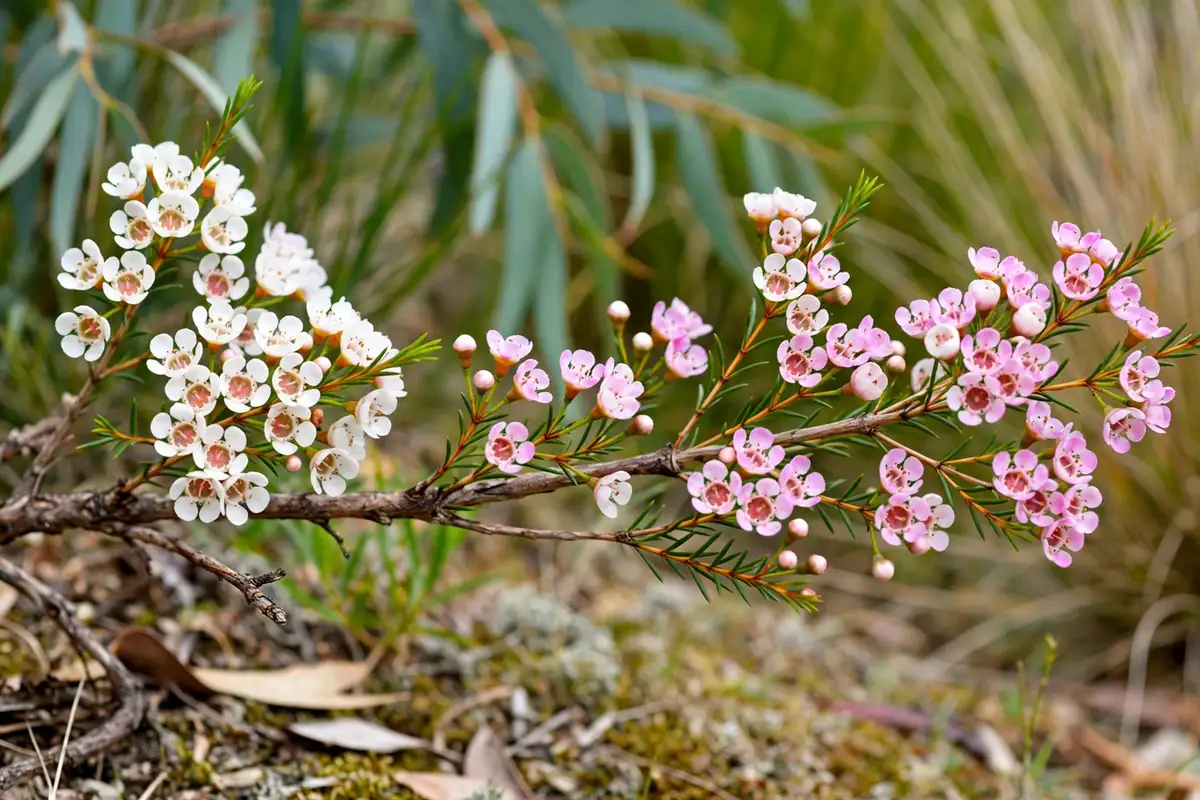
Chamelaucium uncinatum is a member of Myrtaceae — the family of eucalyptus, tea tree and bottlebrush — and it shows the family habits: needle-like aromatic leaves, woody stems, and flowers that are mostly cup and stamens. Five rounded petals (white, pink or mauve in the wild) form a waxy, long-lived cup; the wax is practical, slowing water loss under the Western Australian sun. The shrub comes from the sandplains north of Perth around Geraldton, and commercial breeding — much of it in Israel and Australia, crossing uncinatum with its relatives — has stretched the season, deepened the purples, and made it a top-ten world cut flower. It headlines our field guide to Australian native flowers, where it belongs among the kangaroo paws and waratahs. You can read more on the Chamelaucium page on Wikipedia.
Its home season is spectacle: in late winter and spring the WA wildflower trail turns whole roadsides pink-white with waxflower scrub for hundreds of kilometres, and the cut-flower stems flown to Europe and America for Mother’s Day and weddings are cut from plantation rows of the same plant. Two honest handling notes. First, waxflower is famously long-lived cut — but it drops its petals if the water fouls, so a clean vase is not a nicety, it is the whole trick. Second, the foliage is myrtle-oily and the plant is grown outdoors or as a conservatory shrub: it needs sun and air movement like a coastline, and sulks in stuffy rooms.
Wax Flower Quick Facts
- Botanical name: Chamelaucium uncinatum; hybrids sold as Chamelaucium × and under the trade name Waxflower.
- Family: Myrtaceae, the myrtle family.
- Hardiness: zones 9 to 11; pot + frost shelter elsewhere.
- Height: 6 to 10 feet in ground; 3 to 4 feet in pots.
- Bloom time: late winter to late spring (earlier forcing for florists).
- Sun and soil: full sun; sandy, gravelly, sharply drained; hates wet winter roots and heavy feeding.
- Good to know: vase life 2–3 weeks; prune hard after flowering; one of Western Australia’s signature wildflowers.
Types of Wax Flower and 6 Kinds Worth Knowing
The wild shrub, the wedding whites, the deep purples and the big-flowered relative. The table separates them; the profiles follow. For the full list of flower names, see our flower names A to Z guide.
| Type | Flowers | Season | Habit | Best use |
|---|---|---|---|---|
| Geraldton wax (C. uncinatum) | Pink-white stars | Late winter–spring | Shrub 6–10 ft | The species, garden shrub |
| ‘Purple Pride’ | Deep mauve-purple | Spring | Shrub 5–8 ft | The famous cut flower |
| ‘Dawn Pearl’ (white forms) | Pure white | Late winter–spring | Shrub 5–8 ft | Weddings, bridal work |
| ‘Sarah’s Delight’ | Rich cerise pink | Spring | Hybrid shrub | Deep pink cut stems |
| ‘Moonlight Delight’ | Cream ageing pink | Spring | Hybrid shrub | Soft two-tone arrangements |
| Large wax flower (C. megalopetalum) | Oversized white-pink | Spring | Shrub 4–6 ft | Big blooms, tubs |
1. Geraldton Wax — Chamelaucium uncinatum, the Species
The wild original and still a fine garden shrub where the climate suits: an airy evergreen thicket of needle leaves, smothered for weeks in spring with small pink-to-white waxy cups, each flower ageing through shades on the same stem so the bush wears watercolour. Hardy, drought-proof once established, and the benchmark plant against which every cultivar below was bred. In its home state it needs no irrigation at all; in gardens elsewhere it asks only for drainage and sun.
2. ‘Purple Pride’ — the Famous Mauve
The cultivar that built the export trade: deep mauve-purple flowers in heavy crops on long, straight, cuttable stems. If the waxflower in your florist’s bucket is purple, it is very likely this plant or its offspring. In the garden it is the most reliable purple for spring, holding colour as the flowers age rather than bleaching in the sun.
3. ‘Dawn Pearl’ — the Wedding White
Pure white waxflower is bridal infrastructure: ‘Dawn Pearl’ and its white sister seedlings give clean, porcelain flowers that survive the bouquet, the buttonhole and the photographer’s afternoon without wilting. Grow it where a white spring shrub is wanted that will not be over in a fortnight — waxflower’s whole advantage over the spring crowd is duration.
4. ‘Sarah’s Delight’ — the Deep Pink Hybrid
A modern hybrid with larger, rich cerise-pink flowers and a longer cutting season, bred for the premium stems florists fight over. The hybrids (crosses between uncinatum and other Chamelaucium species) also bring slightly broader leaves and heavier flowering into cool gardens, extending waxflower’s comfortable range a little further from the equator of its birth.
5. ‘Moonlight Delight’ — the Colour-Changer
Cream buds opening pale and deepening to soft pink as they age — a whole arrangement’s gradient on one stem. ‘Moonlight Delight’ is the florist’s blending flower, bridging whites and pinks in a bouquet, and the prettiest waxflower to watch in a vase over its long life, since it is still changing a week after you bought it.
6. Large Wax Flower — Chamelaucium megalopetalum
The big sibling: flowers noticeably larger than the Geraldton species, white blushing pink, on a smaller shrub that suits tubs and courtyards where uncinatum would outgrow the space. Many modern hybrid lines draw on megalopetalum blood for flower size — if a waxflower’s blooms look almost too big for the name, this species is usually in the parentage.
Wax Flower Meaning and Symbolism
Florist tradition gives wax flower three linked meanings: happiness, success, and lasting love — which is why it is tucked into wedding bouquets and anniversary arrangements so constantly that most recipients have received its message without knowing its name. The logic is its vase life: a flower that stays fresh for weeks stands for a love built to last and a happiness that does not fade by Friday. Australian readings add endurance and good fortune in hard conditions — the desert-edge shrub that flowers beautifully on sand and neglect.
Send wax flower for weddings, anniversaries, new ventures and congratulations — anywhere “may it last” is the real message. As cut stems rather than a growing plant, it suits almost any recipient; as a plant, it is a gift only for the sunny, drained garden (or the committed pot-keeper in a cold climate).
Wax Flower Colours and Their Meanings
- White — lasting love and purity: the bridal ‘Dawn Pearl’ whites.
- Soft pink — happiness: the wild Geraldton shades, spring itself.
- Deep mauve-purple — success and distinction: ‘Purple Pride’, the florist’s flagship.
- Cerise pink — joy and celebration: ‘Sarah’s Delight’ at full colour.
- Cream to pink — growing affection: ‘Moonlight Delight’ changing in the vase.
How to Grow Wax Flower
Think Western Australian sandplain: baking sun, gritty free-draining ground, winter rain and summer drought. Gardeners on r/gardening on Reddit repeat one waxflower law: “it is not cold that kills them in most gardens, it is wet winter soil — plant it in gravel on a slope and it will forgive almost anything else.”
Planting — Drainage Above All
Plant in spring into the sunniest, sharpest-drained spot you have; on clay, build a raised mound of sandy soil and gravel and plant into that. Water to establish through the first dry season, then step back — established plants are drought-tolerant and resent coddling. In zones below 9, grow it in a large pot of gritty, soil-based compost and give it a frost-free, bright winter (a cold greenhouse or porch), moving it out after the last frost.
Pruning and Cut-Flower Care
Prune immediately after flowering, taking up to a third of the growth — this is also your harvest: the cut stems are the crop, lasting two to three weeks in clean water with the lower leaves stripped. Never hard-prune into bare old wood deep in the bush; like many myrtles it resprouts reluctantly from naked trunks. Feed almost nothing: a light spring sprinkle of low-phosphorus feed (Australian natives are adapted to phosphorus-poor soils and can be damaged by rich fertiliser) is the whole programme.
Common Mistakes When Growing Wax Flower
Mistake one is heavy, wet soil — root rot in a wet winter is the standard waxflower death outside its climate. If your garden holds water, the plant belongs in a pot or a gravel mound, full stop. Mistake two is rich feeding: phosphorus-heavy fertiliser on an Australian native is poison disguised as kindness. Feed lightly, feed low-phosphorus, or do not feed.
Mistake three is skipping the post-flower prune: unpruned bushes go woody and straggly, flower only at the tips, and split in wind by year four. Mistake four is treating it as a houseplant: indoors without blasting sun and moving air it drops leaves and sulks — it is a patio-and-greenhouse shrub in cold climates, not a windowsill plant. And mistake five, for florists rather than growers, is dirty vase water: waxflower repays a scrupulously clean vase with a third week of bloom and punishes a stale one by dropping every petal at once.
Wax Flower vs Hoya: Two “Wax Flowers”, No Relation
The name collision that fills garden-centre labels. Wax flower (this guide): Chamelaucium, an Australian MYRTLE shrub — woody stems, needle leaves, small pink-white cups in sprays, grown outdoors or as cut flowers, needs blazing sun and drainage. Hoya, the “wax plant”: a tropical vine in the dogbane family Apocynaceae — thick succulent leaves, umbrellas of starry, porcelain, highly-scented flowers, grown as a trailing HOUSEPLANT in bright indoor light. They share only the waxy texture that named them both. The test in the shop is the leaf: needles on a woody shrub = Chamelaucium; fat, glossy vine leaves = hoya. Buy the one that matches your climate — the hoya will forgive your living room; the waxflower never will.
Frequently Asked Questions
How long does wax flower last in a vase?
Two to three weeks — among the longest of any cut flower. The conditions are simple: squeaky-clean vase, fresh water changed every few days, lower leaves stripped so none sit in the water, and stems recut on arrival. Dirty water is its one enemy and causes the famous sudden petal-drop. If your question is not answered here, the questions about the wax flower on Quora cover most of the rest.
Is wax flower a wedding flower?
One of the most used in the trade — its meanings (happiness, lasting love, success), its toughness in bouquets and buttonholes, and its fine texture against roses and lisianthus make it a florist’s bridal staple. White and blush forms do most of the wedding work; ‘Purple Pride’ carries autumn ceremonies.
When does wax flower bloom?
Late winter through spring in its home hemisphere (roughly August to November in Australia; February to May when grown in the northern hemisphere), with florist production forcing stems outside that window. In the vase it keeps “blooming” in a sense — buds along the stem continue opening for days after cutting.
Can wax flower grow in pots?
Yes — and in any climate colder than zone 9, a pot is the way. Use the largest pot you can move, gritty free-draining compost, full sun all summer, and a bright frost-free winter quarters. The smaller species (megalopetalum kinds) and young hybrid plants make the best long-term pot subjects.
Is wax flower toxic?
It is not listed among the seriously toxic garden plants, and it is a mainstream florist flower handled barehanded daily; as ever with ornamental shrubs, it is not a food plant, and the myrtle-oily foliage is best kept out of pet-chewing reach as a precaution. The cut stems are safe in any bouquet.
Why is my wax flower dropping its petals?
In a vase: stale water, almost every time — recut, scald-clean the vase, refill. On the bush: root trouble from wet soil is the first suspect, followed by a plant kept too dark and still indoors. The shrub answers drainage and sunlight with years of flowers; it answers wet feet and shade with a quick goodbye. For more flowers under the same letter, see our guide to flowers that start with W.