

Cosmos Flower: Types, Meaning, Symbolism and How to Grow Cosmos
A cosmos flower is hard to miss and easy to love. Its open, daisy-like blooms sit on tall, airy stems above soft, feathery leaves, and they keep coming from midsummer until the first frost. Few flowers give so much colour for so little work.
Cosmos grow wild in the scrub and meadows of Mexico, and they are one of the best flowers for a sunny garden with poor soil, because rich soil makes them grow tall and leafy with fewer flowers. They are also one of the best flowers for bees and butterflies, and they make lovely cut flowers for the house.
Quick Answer
A cosmos flower is a daisy-like annual from the genus Cosmos, in the daisy family. There are about 20 to 26 species, all native to Mexico and Central and South America. Most garden cosmos grow 2 to 6 feet tall, bloom from summer until frost, and do best in full sun and well-drained, not-too-rich soil. Cosmos is also October’s second birth flower, after the marigold.
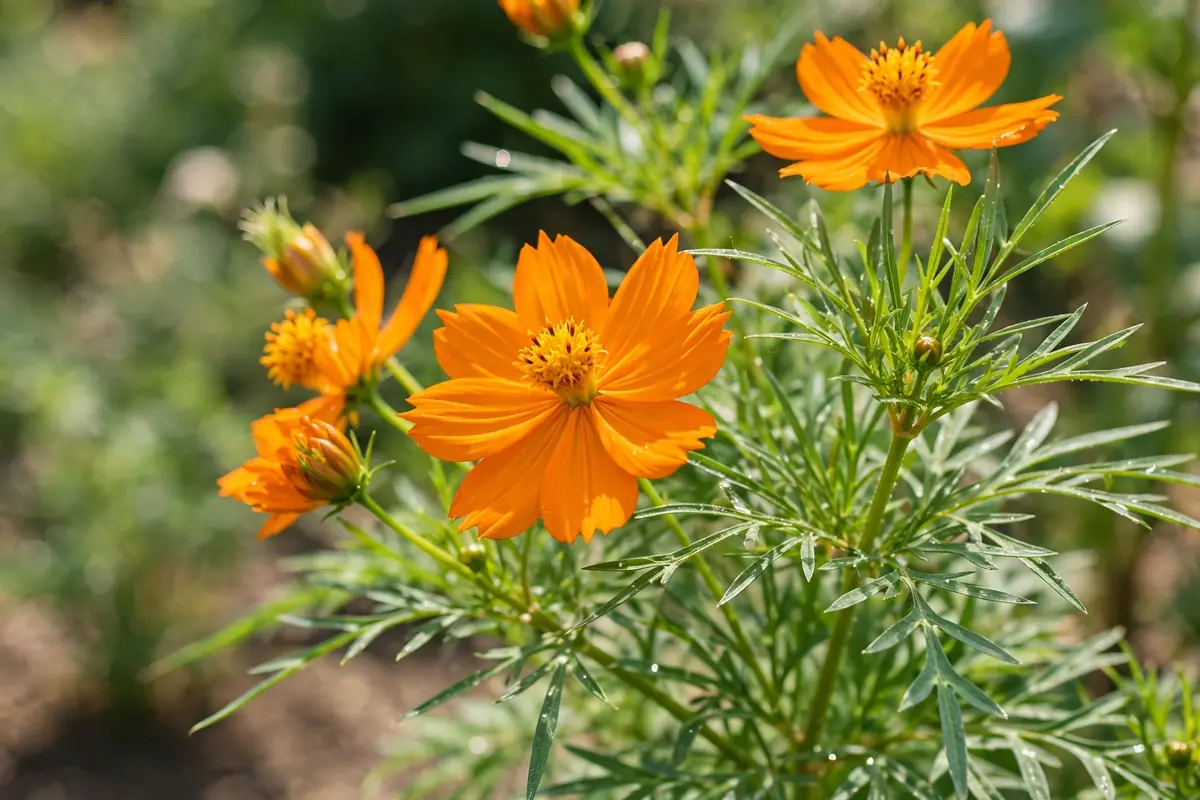
Table of Contents
- What Is a Cosmos Flower?
- 7 Types of Cosmos
- Cosmos Flower Meaning and Symbolism
- What Each Cosmos Colour Means
- How to Grow Cosmos
- Common Mistakes When Growing Cosmos
- Cosmos in Bouquets and Cut Flowers
- Frequently Asked Questions
What Is a Cosmos Flower?
Cosmos belongs to the genus Cosmos, in the daisy family Asteraceae. The name comes from the Greek word kosmos, meaning order, harmony and beauty, because the petals sit in such a neat, even ring around the centre. In Japan the flower is called aki-zakura, the autumn cherry, because it blooms so freely in autumn. You can read more on the cosmos page on Wikipedia.
Each flower is a single daisy head, with eight broad ray petals around a yellow centre of tiny disc florets. Bees and butterflies visit the centre for nectar and pollen, and the feathery, fern-like leaves let light and air through, so the plants look light and graceful even when they grow tall. Garden cosmos are annuals: they grow from seed, flower in their first year, and die with the frost, but they self-seed so freely that new plants often appear in the same spot the next spring.
Cosmos Quick Facts
- Family: Asteraceae, the daisy family.
- Genus: Cosmos, with about 20 to 26 species.
- Life cycle: annual (chocolate cosmos is a tender perennial).
- Height: 2 to 6 feet for garden cosmos, 1 to 3 feet for sulphur cosmos.
- Bloom time: summer until the first frost.
- Sun: full sun, at least 6 hours a day.
- Soil: well-drained, average to poor soil; rich soil means more leaves and fewer flowers.
- Zones: grown as an annual in zones 2 to 11.
7 Types of Cosmos
Most garden cosmos come from just two species, plus one rare and famous cousin. The varieties below are the ones you will actually find in seed catalogues and garden centres.
1. Sensation Mix (Cosmos bipinnatus)
Sensation is the classic tall garden cosmos, growing 3 to 5 feet high with large pink, rose and white flowers up to 4 inches across. It is the best choice for the back of a border, a wildflower meadow, or a fence line where tall, airy colour is wanted. Give it room and a little support in windy spots.
2. Sonata Series (Cosmos bipinnatus)
Sonata is the dwarf version of the garden cosmos, growing only about 2 feet tall. It flowers earlier than the tall types and stays neat without staking, so it suits pots, window boxes and the front of a border. The colours are white, pink, rose and carmine red, and the plants branch well from the base.
3. Cupcakes (Cosmos bipinnatus)
Cupcakes is a white variety with an unusual shape: the petals are fused into a cup, like a small white teacup, instead of lying flat. It is one of the most talked-about cosmos varieties, and it looks beautiful next to the white flowers in a moon garden. It grows about 3 to 4 feet tall.
4. Seashells Mix (Cosmos bipinnatus)
In Seashells, each petal is rolled into a thin tube, so the flowers look like little pink, rose and white shells. The plants grow 3 to 4 feet tall and flower freely. Seashells is a good pick if you want a cosmos that looks different from every other daisy in the garden.
5. Bright Lights and Diablo (Cosmos sulphureus)
Sulphur cosmos brings the hot colours: yellow, gold, orange and orange-red. Bright Lights is a cheerful mix of yellow, orange and gold on plants about 2 to 3 feet tall, and Diablo is a deep orange-red that stands out from across the garden. Sulphur cosmos has slightly broader leaves than garden cosmos and it loves heat, so it is a good choice for hot, dry summers.
6. Xanthos (Cosmos bipinnatus)
Xanthos is a soft yellow garden cosmos, about 2 feet tall, and it flowers earlier than most yellow types. Yellow cosmos of this kind fill the gap between the pink garden cosmos and the orange sulphur cosmos. They pair well with fall flowers in a late-season border.
7. Chocolate Cosmos (Cosmos atrosanguineus)
Chocolate cosmos is the famous one. Its deep maroon flowers are smaller than garden cosmos, about 1 to 2 inches across, and they really do smell of cocoa. It is a tender perennial from Mexico, not an annual, and it is sterile, so it never sets seed: new plants come from dividing the tubers in spring. Grow it in a pot you can bring under cover in winter, in full sun, and it will flower from summer until frost.
Cosmos Flower Meaning and Symbolism
The meaning of the cosmos flower comes straight from its name. Kosmos means order and harmony in Greek, so the flower stands for harmony, peace, balance and order. It is also a symbol of innocence, modesty and joy, and in the language of flowers it says “joy in love and life”.
Cosmos is October’s second birth flower, sharing the month with the marigold. You can read the full story in our October birth flower guide, where cosmos stands for the calm half of October: harmony and balance next to the marigold’s fire. That is also why cosmos is a thoughtful birthday flower for anyone born in October.
In Japan, cosmos is a flower of autumn. Whole fields of pink and white cosmos bloom in parks and along rivers in September and October, and people travel to see them just as they travel to see the cherry blossom in spring. The flower’s neat, even petals are part of its charm: nothing about a cosmos looks messy or out of place, and that order is what the flower has always meant.
What Each Cosmos Colour Means
Cosmos come in soft pastels and hot sunset colours, and each colour carries its own meaning.
- Pink cosmos means love, affection and gentleness. Pink is the most common cosmos colour, and the softest message of the group.
- White cosmos means purity, innocence and honesty. White varieties like Cupcakes look lovely in evening gardens, where they seem to glow at dusk.
- Red and crimson cosmos mean love and passion. Deep red shades are the boldest cosmos, and they suit a bright, romantic bunch.
- Yellow cosmos mean joy, cheerfulness and friendship. Yellow varieties like Xanthos bring sunshine into a border.
- Orange cosmos mean warmth, energy and enthusiasm. Sulphur cosmos in orange and gold is the most cheerful of all.
- Chocolate cosmos means deep, rare love. Its dark maroon colour and cocoa scent make it the most unusual and romantic cosmos of all.
How to Grow Cosmos
Cosmos are one of the easiest flowers to grow from seed. They are happy in poor soil, they forgive a missed watering, and they flower for months. Here is what they need.
Sun and Soil
Give cosmos full sun, at least 6 hours a day, and well-drained soil. They are one of the few flowers that flower better in average or poor soil: in rich, fertilised soil they grow tall and leafy and make far fewer flowers. If your soil is very rich, skip the fertiliser altogether. Cosmos also handle drought well once they are established, and they do not like wet feet, so avoid heavy clay that stays soggy.
Sowing Seeds
Sow cosmos after the last frost, when the soil is warm. You can sow them straight where they will flower, or start them indoors 4 to 6 weeks earlier. Cosmos seeds need light to germinate, so press them lightly into the soil and cover them with only a dusting of soil, or none at all. Keep the soil moist until they sprout, which usually takes 7 to 14 days. Thin seedlings to about 12 to 18 inches apart so air can move between the plants.
Watering and Aftercare
Water young plants regularly until they are established, then water only in dry spells. Overwatering is a common mistake: too much water makes the plants leggy and soft. Tall varieties like Sensation may need a stake or a neighbour to lean on in windy spots. Gardeners share plenty of practical tips in r/gardening on Reddit, where cosmos is a regular favourite for beginner growers.
Deadheading for More Flowers
Pick off the faded flowers every week or two, and the plant will keep making new buds right up to the first frost. If you want the plants to self-seed for next year, leave a few flower heads on the plant at the end of the season and let them ripen and drop. One warning: deadheading stops working if the plant has already set a lot of seed, so start early in the season.
Common Mistakes When Growing Cosmos
- Feeding them too much: fertiliser and rich soil give you tall leaves and few flowers. Cosmos flower best when they are a little bit hungry.
- Sowing too early: cosmos hate frost. Sow after the last frost date, and do not rush them outside in cold soil.
- Too much shade: in shade, cosmos grow leggy, flop over and flower poorly. They need full sun to flower well.
- Planting too close: crowded plants stay damp and get mildew. Give them 12 to 18 inches of space and good air flow.
- Skipping the deadheading: if faded flowers stay on the plant, it stops making new buds and puts its energy into seed instead.
- Overwatering: soggy soil rots the roots. Water deeply but rarely, and let the soil dry a little between waterings.
Cosmos in Bouquets and Cut Flowers
Cosmos make wonderful cut flowers: the long, wiry stems are easy to arrange, the flowers open wide, and a bunch lasts about 5 to 7 days in a vase. Cut the stems in the morning, when the buds are just opening and the flowers are fresh, and put them in water straight away. Strip off any leaves that would sit below the waterline, or the water will turn cloudy.
Cosmos mix well with other cottage-garden flowers. Try them with zinnias and dahlias for a bright summer bunch, or with white cosmos and soft pink for a gentle, romantic one. For more on keeping any cut flowers fresh, see our guide on how to make cut flowers last longer. And if you like bold, tall flowers, our poppy flower guide has another cottage-garden favourite that pairs well with cosmos in a sunny border.
Frequently Asked Questions
Do cosmos come back every year?
Garden cosmos are annuals, so the plant itself dies with the frost. But they self-seed very freely, and new seedlings often appear in the same spot the next spring. Chocolate cosmos is different: it is a tender perennial that comes back from its tubers if it is kept frost-free over winter.
When should I plant cosmos seeds?
Sow cosmos after the last frost in spring, when the soil is warm. In warm climates you can sow a second batch in early summer for flowers into autumn. Start seeds indoors 4 to 6 weeks before the last frost if you want earlier flowers.
Do cosmos need full sun?
Yes. Cosmos need at least 6 hours of direct sun a day to flower well. In part shade they grow tall and leggy, flop over, and make far fewer flowers.
Why are my cosmos tall with no flowers?
The most common reason is soil that is too rich, or too much fertiliser. Cosmos flower best in average or poor soil. Too much shade and too much water cause the same problem. Move them to a sunnier spot, stop feeding them, and deadhead the few flowers they do make.
Are cosmos good for bees and butterflies?
Yes, cosmos are one of the best flowers for pollinators. Bees and butterflies visit the open flowers all summer, and the plants are a favourite in wildflower meadows and cottage gardens. Gardeners often ask for more growing tips in questions about the cosmos flower on Quora, and the advice is almost always the same: give them sun, poor soil, and room to grow.



One Comment