Sundrop Flower: Types, Meaning and How to Grow It
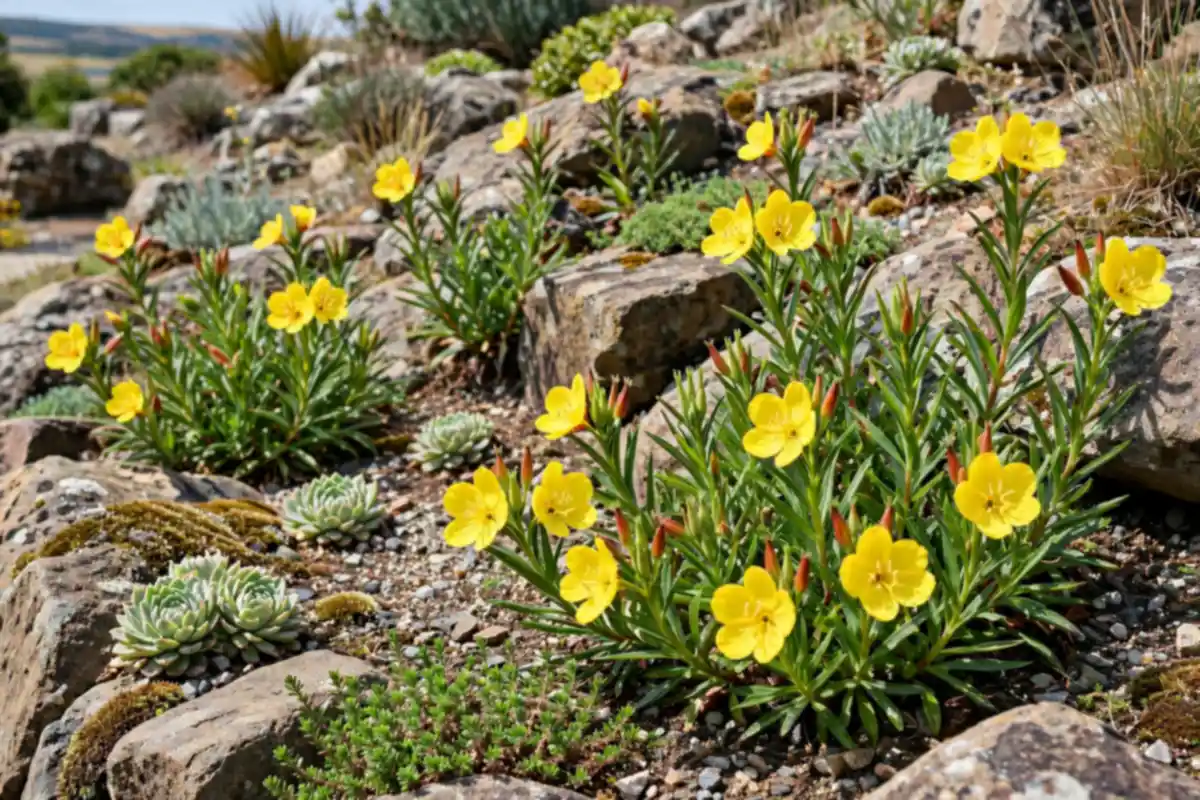
Most yellow flowers open with the sun and close against the evening. The sundrop inverted the schedule — or rather, it never read it. A sundrop is an evening primrose that opens its lemon-yellow cups in broad daylight and keeps them open through the hottest hours, a spill of sunshine at ground level from late spring to the frost. Where its famous cousins save their perfume and pale blooms for dusk, the sundrop works the day shift, and rock gardens, path edges and dry banks across two continents are brighter for it.
This guide covers the six sundrops and day-blooming evening primroses worth knowing (the classic fruticosa, the Ozark giant-flowered kind, and the pink lady at the family’s other end), what it means — sunshine, constancy, and a happiness that shows up in daylight — and the one family habit to plan around: some of these plants spread like they mean it.
Quick Answer
The sundrop flower is Oenothera fruticosa and its day-blooming relatives, herbaceous perennials in the evening primrose family Onagraceae from eastern and central North America, bearing clusters of bright lemon-yellow, cup-shaped flowers that open in full daylight from late spring to summer. Sundrops are hardy perennials (zones 3 to 9 by kind) for full sun and well-drained, even poor or dry soil; several kinds spread vigorously by runners or self-sowing. The sundrop flower means sunshine, cheerfulness and constancy.
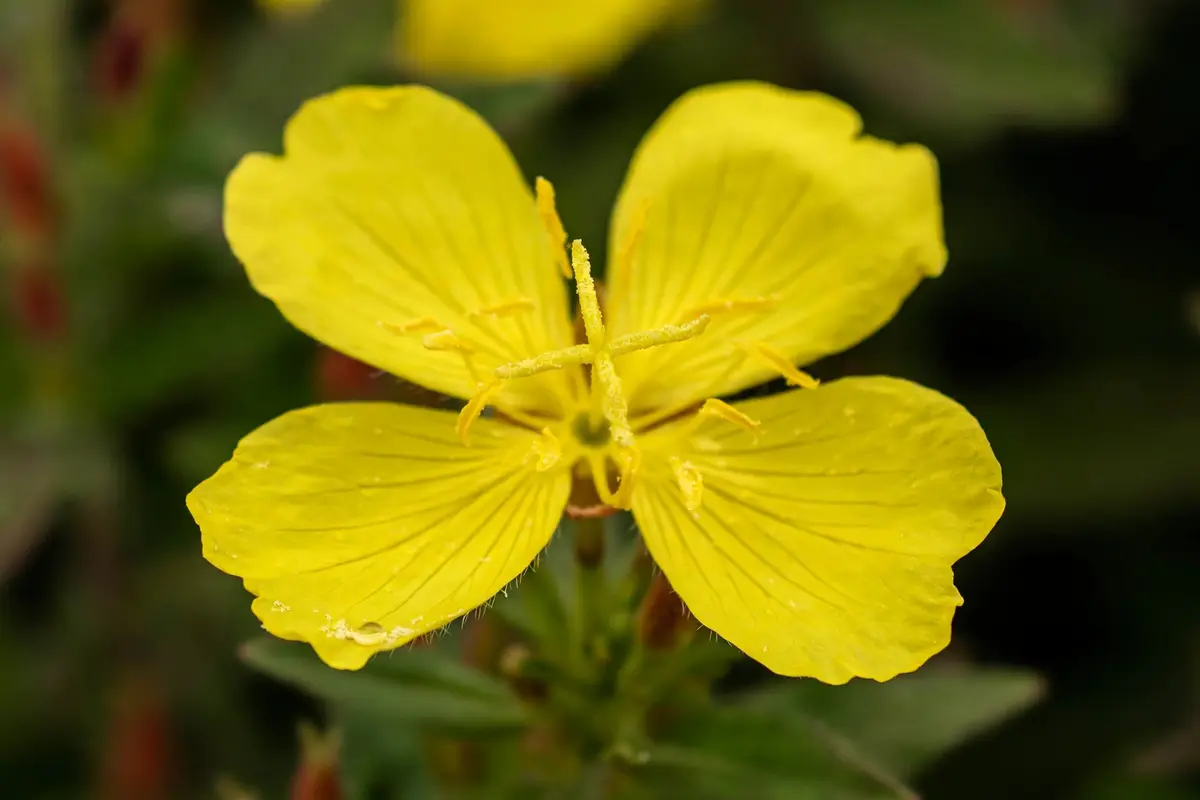
Table of Contents
- What Is a Sundrop Flower?
- Types of Sundrops and 6 Kinds Worth Knowing
- Sundrop Flower Meaning and Symbolism
- Sundrop Flower Colours and Their Meanings
- How to Grow Sundrops
- Common Mistakes When Growing Sundrops
- Sundrops vs Evening Primrose: Same Family, Opposite Shifts
- Frequently Asked Questions
What Is a Sundrop Flower?
Start with the family paradox. The evening primroses (Oenothera) mostly flower at dusk — pale, perfumed blooms that unfurl at twilight for night-flying moths, the world of our moon flower guide. The sundrops are the branch that broke ranks: their buds open in the morning sun and the four-petalled cups — satiny yellow, with the family’s signature cross-shaped stigma at the centre — stay open all day. The name is a small poem about it: drops of sun, spilled along the border edge. The plants are recognisably kin beneath the schedule change — alternate leaves often flushed red in autumn, four petals, long seed capsules, and a constitution tuned to open, dry, sun-beaten ground. You can read more on the Oenothera fruticosa page on Wikipedia.
Gardeners value sundrops for the toughest brief in the border: weeks of saturated yellow in early summer, in soil too dry and poor for fussier perennials, with deer largely uninterested. The family’s garden manners divide by kind — the eastern sundrop and its cultivars behave; the Ozark and Mexican kinds run or sow with ambition — so the profiles below mark the spreaders honestly, because a sundrop in the wrong place is a decade of weeding.
Sundrop Quick Facts
- Botanical name: Oenothera fruticosa (eastern sundrop) and relatives: O. macrocarpa, O. speciosa, O. pilosella, O. tetragona.
- Family: Onagraceae, the evening primrose and fuchsia family.
- Hardiness: hardy perennials, zones 3 to 9 by kind; O. speciosa is tender in cold zones and often grown as a self-sowing annual there.
- Height: 6 inches (Ozark groundcover) to 24 inches (eastern sundrop).
- Bloom time: late spring to midsummer, with lighter repeat; day-opening flowers.
- Sun and soil: full sun; well-drained soil — thrives in dry, poor, even gravelly ground; hates winter wet.
- Good to know: day-blooming branch of a night-blooming family; several kinds spread vigorously — check the profile before planting.
Types of Sundrops and 6 Kinds Worth Knowing
The well-behaved yellows, the giant-flowered groundcover, and the beautiful runner. The table separates them; the profiles follow. For the full list of flower names, see our flower names A to Z guide.
| Type | Flowers | Height | Zones | Best use |
|---|---|---|---|---|
| Eastern sundrop (O. fruticosa) | Lemon-yellow clusters | 12–24 in | 3–8 | Borders, the standard |
| ‘Fireworks’ | Yellow, red buds/stems | 12–18 in | 4–8 | Colour-planned beds |
| Ozark sundrop (O. macrocarpa) | Huge yellow cups | 6–10 in | 5–8 | Rock gardens, walls |
| Prairie sundrop (O. pilosella) | Soft yellow, day-long | 12–24 in | 4–8 | Meadows, moist edges |
| Northern sundrop (O. tetragona) | Yellow, red autumn leaves | 12–24 in | 3–8 | Cold gardens |
| Pinkladies (O. speciosa) | Pink-white cups | 8–18 in | 7–10 | Groundcover (spreads!) |
1. Eastern Sundrop — the Standard
Oenothera fruticosa, the sundrop of eastern North American meadows and the plant the name belongs to: upright stems topped with clusters of lemon-yellow cups from late spring into summer, over basal rosettes that flush wine-red in autumn. It self-sows gently and clumps politely — the sundrop to start with, and the one against which the family’s manners are judged.
2. ‘Fireworks’ — the Red-Stemmed Selection
A fruticosa cultivar chosen for everything around the flower: buds and stems in deep red, foliage tinged bronze, so the plant is coloured before, during and after its yellow flush. Fireworks is the designer’s sundrop — the red stems against the lemon cups are the whole point — and its autumn leaf colour closes the season in the same register.
3. Ozark Sundrop — the Giant Cups
Oenothera macrocarpa (Missouri evening primrose), the groundcover of the Ozarks: sprawling stems on rock and gravel, each bearing single yellow cups up to four or five inches across — the largest flowers in the family — followed by winged seed pods like paper lanterns. It opens toward evening more than its cousins but holds blooms through the day in cool weather. For walls, scree and the tops of banks, nothing else in the genus competes.
4. Prairie Sundrop — the Meadow Kind
Oenothera pilosella, the midwestern prairie species: soft-yellow day flowers over hairy foliage, in colonies that suit meadow plantings and the moister ground the eastern kind tolerates less happily. Prairie sundrop spreads by rhizomes at a walking pace — welcome in a meadow, to be watched in a border — and its long bloom makes it the pollinator strip’s yellow anchor.
5. Northern Sundrop — the Cold-Climate Cousin
Oenothera tetragona (long filed under fruticosa), the hardier northern counterpart: similar yellow clusters on slightly airier plants, with some of the best autumn colour in the group — leaves turning clear red as the season closes. Northern gardens that lose fruticosa selections to hard winters grow tetragona unbothered to zone 3.
6. Pinkladies — the Beautiful Runner
Oenothera speciosa, the showy evening primrose: cups of white blushing to pink with yellow-green throats, opening toward evening but performing all day in mild weather — and spreading by runners with legendary enthusiasm. Pinkladies is glorious on a dry bank it can own and a menace in a mixed border; plant it like mint, in the ground it cannot escape or the ground you are happy to surrender. Gardeners in hot, dry regions forgive it everything for the spring display.
Sundrop Flower Meaning and Symbolism
The sundrop’s meaning is written on its face: sunshine carried at ground level, cheerfulness, and constancy — the flower that keeps office hours with the sun and never stands anyone up. Within its family it carries the balancing half of the evening primrose’s language: where the night-blooming kinds mean inconstancy and fleeting love in the old floriography (beauty that keeps irregular hours), the day-blooming sundrop answers with dependability — happiness in daylight, affection that shows up on time. Its season helps: it flowers at the year’s most generous point, late spring into high summer, and means high summer while it does it.
Send or plant sundrops for encouragement and steady good cheer: new jobs, recoveries, the friend whose optimism is a public service. In our flowers that start with S guide it stands as the letter’s sunniest citizen — the S-list’s answer to a grey day.
Sundrop Flower Colours and Their Meanings
- Lemon yellow — sunshine and constancy: the true sundrops, in daylight.
- Golden yellow — high-summer cheer: the Ozark giant cups.
- Pink and blush white — tenderness at the family’s edge: pinkladies (speciosa).
- Red stems and buds — warmth around the gold: ‘Fireworks’, colour before the flower.
How to Grow Sundrops
Sun, drainage, and an honest conversation about spreading: that is the whole syllabus. Gardeners on r/gardening on Reddit pass on the placement rule as a warning label: “sundrops are perfect — in the place you chose for them, which had better not be the place everything else chose too.”
Planting and Position
Plant in spring (or autumn in mild zones) in full sun and well-drained soil — lean, sandy or gravelly ground is home turf, and rich soil only makes soft, floppy growth that flowers less. Space the upright kinds 12–18 inches apart; give the Ozark kind a slope, wall-top or scree where its stems can trail. Water to establish, then stop: established sundrops are drought plants, and kindness in the form of irrigation is the fastest way to shorten their lives.
Care and Containment
Deadhead the self-sowers if you want to limit volunteers (fruticosa sows politely; speciosa does not sow so much as advance). Shear upright clumps lightly after the main flush to tidy and encourage a lighter second flowering. Containment is species-specific: rhizome kinds (pilosella, speciosa) want root barriers, gravel beds, or banks of their own; clump kinds need nothing but division every few years when the centre thins. Autumn asks nothing — the rosettes’ red flush is the plant’s own winter decoration.
Common Mistakes When Growing Sundrops
Mistake one is rich, wet soil — the family evolved for lean and dry, and winter wet on heavy ground rots more sundrops than cold ever has. If your soil holds water, plant on a slope or in gravel and let drainage do the work. Mistake two is feeding: fertilised sundrops grow leaves, flop, and flower like they are embarrassed; hunger is the bloom trigger.
Mistake three is planting pinkladies (speciosa) or prairie sundrop inside a mixed border without a containment plan — both are lovely, both are annexationists, and the regret arrives in year two at weeding pace. Mistake four is shade: in part shade the stems stretch, the flowers thin out, and the whole point (sunshine, delivered) is lost. And mistake five is watering established plants on a lawn schedule — sundrops in irrigated beds live fast, rot young, and get replaced by the gardener who then concludes they are “short-lived perennials” by nature.
Sundrops vs Evening Primrose: Same Family, Opposite Shifts
Both are Oenothera, and telling them apart is a matter of the clock. Sundrops (fruticosa and kin): flowers open in the morning and work all day, colours saturated yellow, pollinated by bees and day insects, garden role = border front, rock garden, dry bank. Evening primroses (biennis, speciosa at the borderline, and the true night kinds): flowers unfurl at dusk — pale yellow, pink or white, often perfumed — for hawkmoths, fade by the next noon; garden role = evening gardens, wild plantings, moonlight corners. The sundrop is the one to choose for a border you look at over breakfast; the evening kinds own the terrace at nine. Many gardeners, reasonably, plant both and let the genus cover the full twenty-four hours.
Frequently Asked Questions
Are sundrops the same as evening primrose?
Same genus, opposite schedule: sundrops are the day-blooming branch of Oenothera (led by O. fruticosa), while the classic evening primroses open at dusk. Nurseries blur the names freely — check the species name on the label: fruticosa, tetragona and pilosella are day kinds; macrocarpa opens late-day; speciosa straddles the line. If your question is not answered here, the questions about the sundrop flower on Quora cover most of the rest.
Do sundrops spread?
By kind. Eastern sundrop and its cultivars clump and self-sow politely; prairie sundrop spreads by rhizomes at a walking pace; pinkladies (speciosa) runs aggressively by runners and should be planted where it can be contained or allowed to own the ground. The Ozark kind sprawls without truly spreading — it stays where its stems can reach.
When do sundrops bloom?
Late spring into midsummer is the main flush — roughly May to July in temperate gardens — with lighter repeat flowering into late summer if the spent stems are sheared. The Ozark kind often starts a little later and runs longer. Each individual cup lasts a day or two, but the clusters open in succession for weeks.
Can sundrops grow in poor soil?
Poor soil is their preference: lean, sandy, gravelly and dry suits the whole group, and rich ground actively worsens them (soft growth, fewer flowers, winter rot). They are among the first recommendations for hot, dry banks, gravel gardens and the thin soil over rubble where little else flowers in June.
Are sundrops good for pollinators?
Yes — the day-open cups are worked by bees (including specialist evening-primrose bees that forage at dawn), butterflies and hoverflies, and the plants host the caterpillars of several moths, including the spectacular pink primrose moth, which rests in the flowers by day coloured exactly like them.
Are sundrops deer resistant?
Largely, yes: deer and rabbits usually pass them by for softer fare, which is one reason sundrops anchor so many unfenced country borders. No plant is deer-proof in a hard winter, but sundrops sit well down the browsing list in ordinary years.