
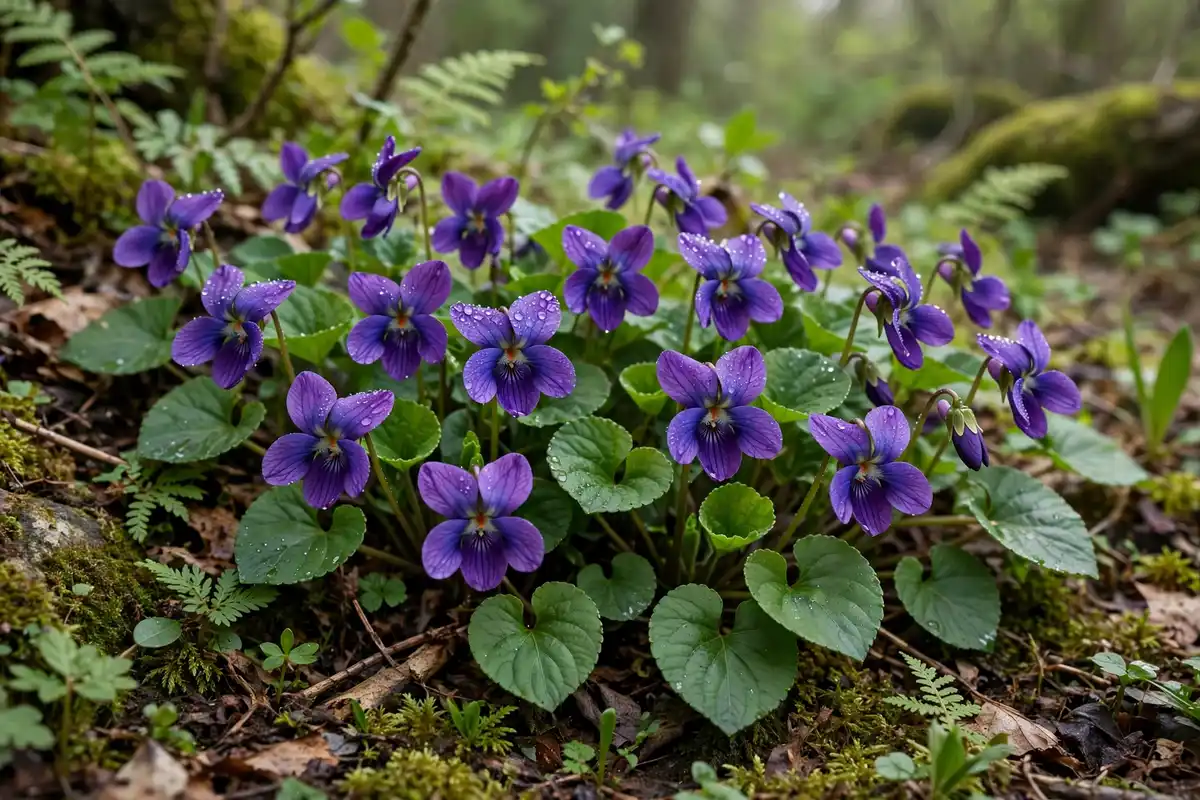
Violet Flower: Types, Meaning, Symbolism and How to Grow Violets
A violet is a small flower with an outsized reputation. It hides low in the grass, blooms before most of the garden wakes up, and carries a scent so sweet that perfumers have chased it for centuries. Poets wrote about it, Napoleon carried it as his emblem, and gardeners still plant it along shady paths where almost nothing else will flower so early.
Violets are also easy to grow once you understand what they want: cool weather, soft shade, and soil that stays moist but never soggy. Give them that, and a small clump will spread into a fragrant carpet that returns year after year. This guide covers the main types of violet flower, what each colour means, and how to grow them, with the common mix-ups cleared up first.
Quick Answer
A violet flower is a small, five-petalled bloom from the genus Viola, in the family Violaceae. The best-known kind is the sweet violet (Viola odorata), a low perennial with heart-shaped leaves and deep purple, sweetly scented flowers. Most true violets grow 3 to 8 inches tall, bloom in late winter to spring, and do best in partial shade and moist, humus-rich soil in USDA zones 5 to 9. The violet is also February’s birth flower. African violets look similar but are not true violets at all — they belong to a different genus, Streptocarpus, and are grown as houseplants.
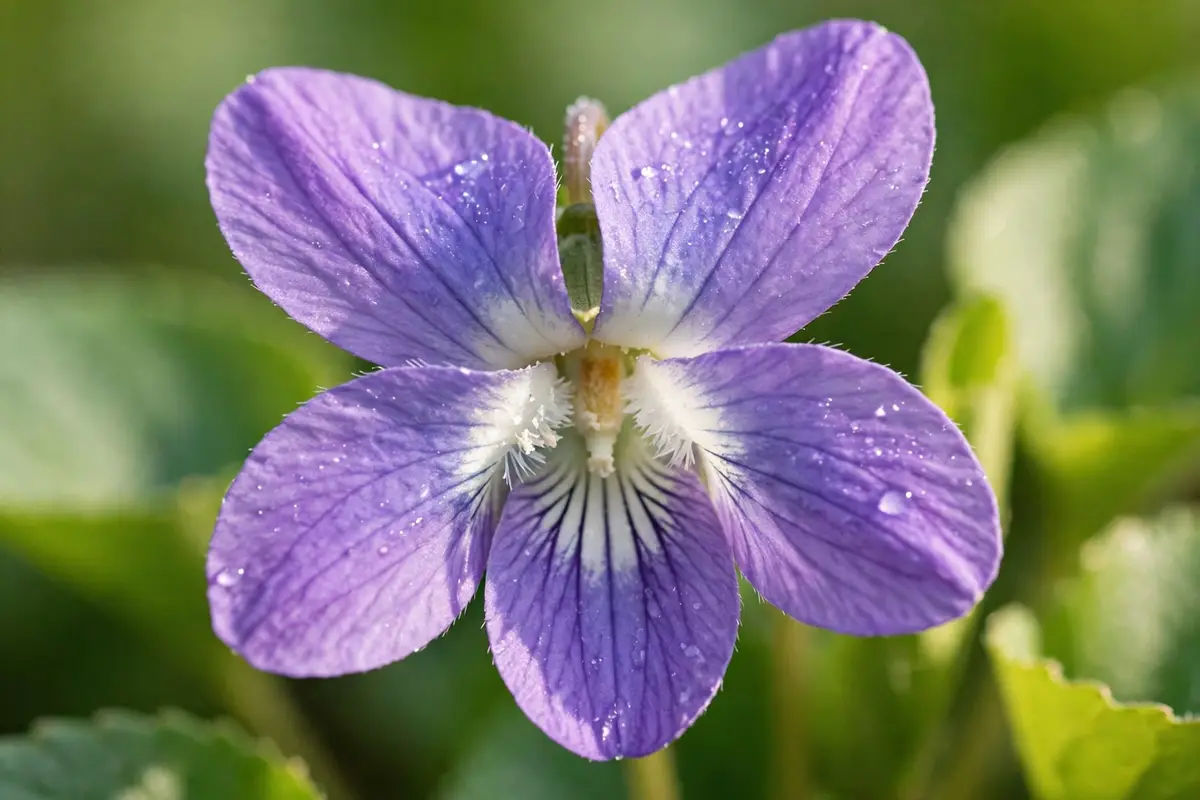
Table of Contents
- What Is a Violet Flower?
- Types of Violet and 6 Popular Varieties
- Violet Flower Meaning and Symbolism
- What Each Violet Colour Means
- How to Grow Violets
- Common Mistakes When Growing Violets
- Violets in Bouquets, the Kitchen and Perfume
- Frequently Asked Questions
What Is a Violet Flower?
A violet belongs to the genus Viola, in its own family, Violaceae. The genus holds more than 500 species, growing wild across Europe, Asia, and North and South America. Most of them are small, low plants with heart-shaped or rounded leaves and five-petalled flowers. The lowest petal is always larger than the other four and carries a small spur at the back, where the nectar sits. You can read more on the violet page on Wikipedia.
The sweet violet, Viola odorata, is the species most people mean when they say “violet flower.” It is native to Europe and Asia, and it has been grown in gardens for well over a thousand years. Its flowers are usually deep violet-purple, about half an inch to an inch across, and they smell of powdery sweetness. That scent comes from compounds called ionones, which have a curious trick: after a few sniffs they briefly numb the nose to themselves, so the fragrance seems to vanish and then return. Gardeners who bury their nose in a violet and smell nothing on the second sniff are not imagining it.
Do not confuse a true violet with an African violet. African violets are houseplants with soft, fuzzy leaves and clusters of purple, pink or white flowers, but they belong to the genus Streptocarpus and come from East Africa. They need warm indoor conditions and never survive a frost. True violets are hardy outdoor perennials that need winter cold to bloom well.
Violets also have a second, hidden kind of flower. Alongside the open, showy blooms, most species produce small closed flowers that never open at all. These self-pollinate and set seed without any insect visit, which is one reason violets spread so reliably. Ants carry the seeds away — each seed has a small fatty snack attached that ants love — and drop them in new spots, so violets often pop up where you never planted them.
Violet Quick Facts
- Family: Violaceae, the violet family.
- Genus: Viola, with more than 500 species.
- Best-known species: sweet violet, Viola odorata.
- Life cycle: hardy perennial; most kinds return every year.
- Height: 3 to 8 inches for most garden violets; pansies reach about 9 inches.
- Bloom time: late winter to spring for sweet violets; some kinds flower again in autumn.
- Sun: partial shade or dappled sunlight; a few hours of morning sun is ideal.
- Zones: USDA 5 to 9 for sweet violets; some wild species are hardier still.
- Good to know: the violet is February’s birth flower, and the common blue violet is the state flower of Illinois.
Types of Violet and 6 Popular Varieties
Every garden violet belongs to the same genus, but the species behave differently. Some are prized for scent, some for ground-cover habit, and some — the pansies — for big, bold faces. The table below compares six kinds worth knowing, and each one is described in detail underneath. Our flower names A to Z guide lists the violet alongside every other flower name if you want to compare it with the rest of the alphabet.
| Variety | Species | Colour | Scent | Height |
|---|---|---|---|---|
| Sweet Violet | Viola odorata | Deep purple, blue, white | Strong and sweet | 3 to 8 inches |
| Common Blue Violet | Viola sororia | Blue-violet, sometimes white | None or very faint | 4 to 8 inches |
| Dog Violet | Viola riviniana | Pale violet-blue | None | 4 to 8 inches |
| Horned Violet | Viola cornuta | Purple, blue, yellow, white | Light | 6 to 10 inches |
| Johnny-Jump-Up | Viola tricolor | Purple, yellow and white | Light and sweet | 4 to 8 inches |
| Garden Pansy | Viola × wittrockiana | Almost every colour | Usually none | 6 to 9 inches |
1. Sweet Violet (Viola odorata)
The classic violet, and the only common kind with a truly strong scent. Sweet violets form low rosettes of heart-shaped, softly hairy leaves and spread by creeping stems called stolons, so a single plant slowly becomes a patch. The old cultivars are still the best: ‘Königin Charlotte’ has deep violet-purple flowers and is one of the most fragrant, while ‘Alba’ is the white-flowered form, sweetly scented and luminous in shade. White violets like ‘Alba’ glow in dim corners, and our guide to white flowers has more blooms that do the same. Sweet violet is the one to plant under deciduous trees, along a north-facing wall, or at the edge of a woodland bed.
2. Common Blue Violet (Viola sororia)
The wild violet of North American lawns and woods. Common blue violets have smooth, heart-shaped leaves and blue-violet flowers with a white throat, sometimes opening white altogether. They have almost no scent, but they make up for it with toughness: they grow in lawns, in cracks, in dry shade, and in places where fussier flowers give up. Many gardeners treat them as weeds and pull them out; just as many leave them alone and enjoy a free spring carpet. It is the state flower of Illinois, and the violet most American children meet first.
3. Dog Violet (Viola riviniana)
The dog violet is the unscented cousin of the sweet violet, and the name is the clue — “dog” here means false, as in dog rose. It grows wild across European woods and hedgerows, with pale violet-blue flowers on taller, leafier stems than the sweet violet. It is not a garden star, but it matters for wildlife: its leaves feed the caterpillars of several fritillary butterflies, including the pearl-bordered fritillary. If you want a violet patch that helps local insects, dog violet earns its place.
4. Horned Violet (Viola cornuta)
Horned violets come from the Pyrenees mountains of Spain and France, and they flower far longer than sweet violets — often from spring right through to autumn in cool climates. The name comes from the long, slender spur behind each flower, which looks like a tiny horn. They come in purple, blue, yellow and white, and they are the parents of many modern bedding violas. Plant them at the front of a border or in pots, where their long flowering season shows best.
5. Johnny-Jump-Up (Viola tricolor)
The wild pansy, also called heartsease. Johnny-jump-ups carry small, cheerful flowers in purple, yellow and white — three colours on one tiny face, which is how they got their name. They self-seed freely and pop up in paths, pots and gravel, which is exactly why gardeners love them. They are short-lived but generous, and a single plant can scatter enough seed for next year’s patch. The flowers are edible in the traditional sense, like sweet violets, and are sometimes used to decorate cakes and salads.
6. Garden Pansy (Viola × wittrockiana)
The pansy is a violet too, bred over two centuries from wild violas into a big-faced bedding flower. Modern pansies come in almost every colour, including near-black, orange and true blue, and they flower through the cool months when little else does. They are usually grown as annuals or short-lived biennials and replaced each season. If you want violet colour in a sunny window box or a winter pot, the pansy is the practical choice, while the sweet violet is the fragrant one.
Violet Flower Meaning and Symbolism
The violet has meant modesty, faithfulness and remembrance for longer than almost any other garden flower. The symbolism fits the plant: it is small, it hides its face in the leaves, and it blooms quietly before the showy flowers arrive. In the language of flowers, giving someone violets says “I will always be true” — a message of quiet loyalty rather than grand romance.
The ancient Greeks wove violets into garlands for both weddings and funerals, and the flower was linked to Athens itself. In Shakespeare’s Hamlet, Ophelia says she would give violets, “but they withered all when my father died” — the flower standing for faithfulness and loss in a single line. Napoleon Bonaparte loved violets so much that after his exile, his supporters identified themselves with a violet, calling themselves “Les Violettes” and wearing the flower as a secret badge.
The violet is February’s birth flower, sharing the month with the primrose. Our guide to the February birth flower explains the pairing and what to give someone born in that month. Violets are also the traditional flower for a 10th wedding anniversary in some lists, which suits a flower that stands for a decade of quiet faithfulness.
What Each Violet Colour Means
Violet colour carries its own messages, and the shades are easy to tell apart once you know them. Purple and violet are the classic colours, and they mean modesty, humility and deep, faithful love — the core meaning of the flower. Blue violets are rarer in the wild, and they mean calm, trust and devotion; if you love blue flowers generally, our guide to blue flowers has more blooms in that shade. White violets mean purity, innocence and a fresh start, and they are the ones most often given to new mothers or at christenings. Pink violets are a newer garden colour, and they mean gentle affection and admiration. Yellow violets, like the horned violet and the wild yellow violet, mean happiness, sunshine and a cheerful spirit — a brighter, lighter message than the purple kind.
How to Grow Violets
Violets are forgiving plants, but they have three firm preferences: cool weather, soft shade, and soil that never dries out completely. Get those three right and they mostly look after themselves. Gardeners on r/gardening on Reddit often recommend them as one of the easiest ground covers for shady spots, and the advice below matches what works in real gardens.
Light
Give violets partial shade or dappled sunlight — a few hours of gentle morning sun, then shade through the hot afternoon. Under deciduous trees is ideal, because violets get spring sun before the leaves open and shade through the summer. Full sun is fine only in cool climates; in hot summers it scorches the leaves and stops flowering.
Soil
Violets like soil that is moist, rich in organic matter, and free-draining — never waterlogged and never bone dry. Dig in compost or well-rotted leaf mould before planting, and mulch with more leaf mould in autumn. They prefer neutral to slightly alkaline soil, but they are not fussy about exact pH.
Planting
Plant violets in early spring or in autumn, when the weather is cool and the soil is workable. Autumn planting is often better, because the roots settle in over winter and the plants flower strongly in their first spring. Space plants 6 to 8 inches apart, with the crown — where the leaves meet the roots — level with the soil surface. Water them in well.
Watering and Feeding
Keep the soil consistently moist, especially in dry spells, but do not overwater: soggy soil rots the crown. A light mulch helps hold moisture. Feed lightly — a slow-release fertiliser at planting time, and a weak liquid feed while the plants are in flower, is enough. Overfeeding produces leaves at the expense of flowers.
Propagation
The easiest way to get more violets is to lift and divide a clump in autumn or early spring, or to pot up the rooted runners that form at the ends of the stolons. Sweet violets spread by themselves and usually need dividing every few years to keep them vigorous. You can also grow them from seed, but named cultivars rarely come true from seed, so division is the reliable route.
Growing Violets in Pots
Violets do well in pots and window boxes, which is handy if your garden soil is dry or you want the scent near a door. Use a pot with drainage holes, ordinary potting compost mixed with a little leaf mould, and keep the pot in shade. Water often in summer, because pots dry out faster than beds. Bring potted sweet violets close to the house in winter so you can catch the scent.
Common Mistakes When Growing Violets
The most common mistake is planting violets in hot, sunny, dry soil and wondering why they vanish by midsummer. Violets are cool-weather, shade-loving plants; a sunny rockery is the wrong home for them. The second mistake is letting them dry out — a violet that wilts repeatedly will stop flowering and may not recover. The third is planting them too deep: a buried crown rots, so keep it at soil level. The fourth is expecting scent from every violet. Only sweet violets and a few of their cultivars are strongly fragrant; common blue violets and dog violets smell of almost nothing, and that is normal, not a sign of a sick plant. Finally, do not expect violets to behave like pansies. Pansies are bred for sunny bedding and short seasons; true violets are shade perennials that build up slowly and last for years.
Violets in Bouquets, the Kitchen and Perfume
Violets are too short-stemmed for tall bouquets, but they are perfect for small posies, buttonholes and jam-jar arrangements — a handful of sweet violets with their leaves makes a posy that smells wonderful. Cut them in the morning, when the scent is strongest, and stand them in cool water straight away.
In the kitchen, sweet violet flowers have a long traditional use: crystallised or candied violets decorate cakes and desserts, violet syrup flavours drinks and sweets, and fresh flowers are scattered over salads. Use only sweet violet flowers from plants you know have never been sprayed, wash them gently, and use them in small amounts as a garnish. Do not eat violets from a florist’s bouquet or a treated lawn. In perfume, violet leaf and violet flower have been prized for centuries — the powdery, green-sweet note in many classic perfumes comes from the violet, and it is the ionones in the flower that give that unmistakable scent.
Frequently Asked Questions
Are violets and African violets the same thing?
No. True violets are hardy outdoor plants in the genus Viola. African violets are tropical houseplants in the genus Streptocarpus. They look similar — small, low plants with purple flowers — but they need completely different care, and an African violet will die outdoors in a frost.
Do violets come back every year?
Yes. Most true violets are hardy perennials that return every spring and slowly spread by runners and seed. Pansies and bedding violas are the exception: they are usually grown as annuals and replaced each season.
When do violets bloom?
Sweet violets bloom from late winter to spring, with a smaller flush sometimes in autumn. Horned violets and bedding violas flower much longer, often from spring through to autumn in cool climates. If your violets have plenty of leaves but no flowers, they are usually getting too much shade, too much fertiliser, or too little winter cold.
Why can’t I smell my violets?
Two reasons are common. First, only sweet violets are strongly scented — common blue violets and dog violets have almost no scent at all. Second, the scent chemical ionone briefly numbs your nose, so the fragrance seems to disappear after the first sniff. Smell a fresh flower after a minute away, and the scent returns.
Are violet flowers edible?
Sweet violet flowers have been used traditionally as a garnish, in candied form on cakes, and in syrups. Use only flowers from unsprayed plants you grew yourself, wash them, and use small amounts. Never eat violets from a florist, a garden centre plant that may have been treated, or a lawn that has been sprayed. If you have questions about the violet flower and its uses, you will find plenty of discussion in the questions about the violet flower on Quora.
Can I grow violets indoors?
Sweet violets can be grown in a cool, bright room for a short time, but they do best outdoors, where they get winter cold and natural day length. For a permanent indoor violet, grow an African violet instead — it is bred for windowsills. For more flowers whose names begin with the same letter, see our guide to flowers that start with V.


2 Comments