
White Flowers: 30 Elegant Varieties for Every Garden
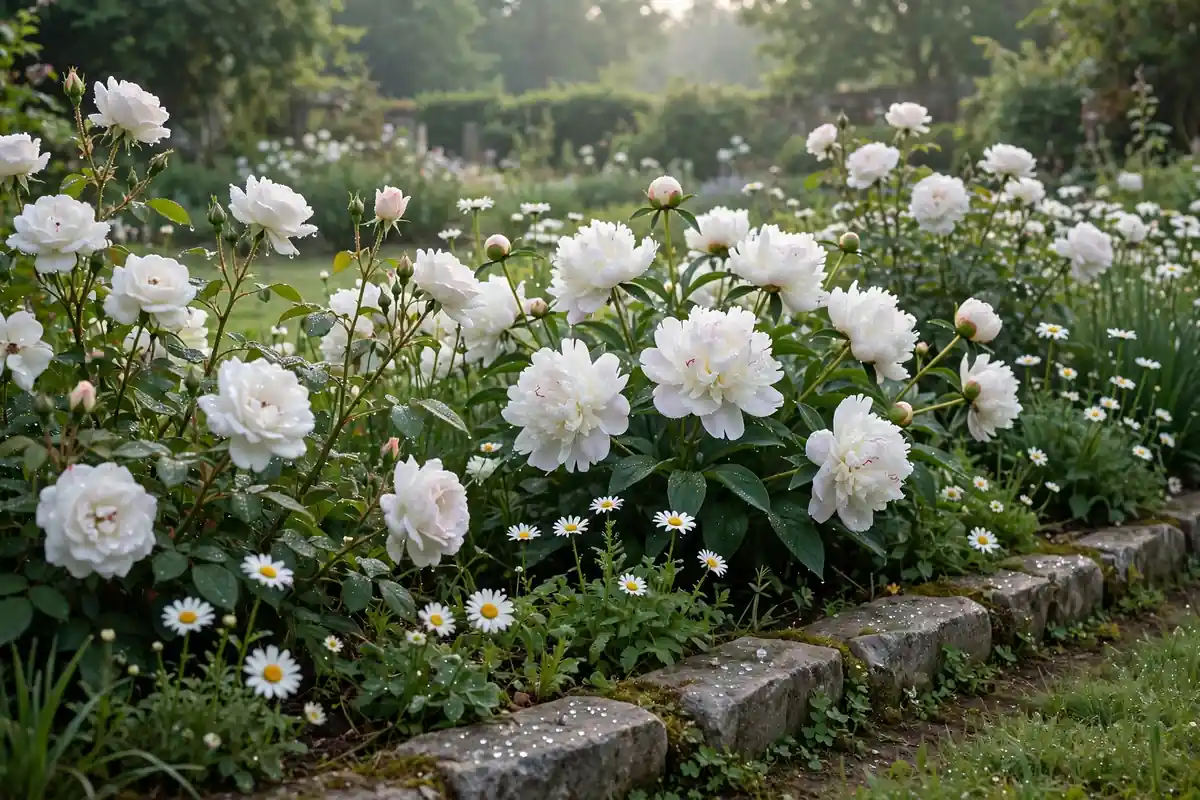
White flowers do something no other colour can: they make a garden look calmer, larger and more expensive than it really is. A drift of white tulips cools down a border that was shouting in reds and oranges. A single white rose glows at dusk long after the pink ones have faded into the shadows. And on a hot evening, a patch of white cosmos or moonflowers is the part of the garden your eyes keep returning to.
This guide lists 30 proven white flowers — not pale imitations, but varieties that are genuinely, reliably white — with botanical names, USDA zones, heights, bloom times and the honest care notes nurseries often leave off the label: which ones flop, which ones spread, which ones need their bulbs lifted, and which ones will quietly take over a shady corner if you let them. If you are browsing by letter as well, white bloomers dominate the list of flowers that start with W, from wallflowers to wedge peperomia lookalikes in the flower beds.
Whether you want a spring bulb display, an all-white moon garden for evening sitting, or simply the best white varieties of plants you already grow, start with the table, then read the entries in the season or situation that matches your garden.
Quick Answer
The best all-round white flowers are the Iceberg rose, Shasta daisy, Annabelle hydrangea, white peony and Madonna lily — all hardy, long-lived and genuinely white. For spring, plant snowdrops, white tulips and Narcissus ‘Thalia’. For shade, choose hellebores, astilbe ‘Bridal Veil’ and white bleeding heart. For evening gardens, moonflower and white cosmos glow after dark. Every one of the 30 varieties below includes its zones, height and bloom time so you can match plants to your exact spot instead of guessing at the garden centre.
Table of Contents
- White Flowers at a Glance: All 30 Varieties
- White Spring Flowers
- White Roses, Peonies and Flowering Shrubs
- White Lilies
- White Summer Border Flowers
- Late-Season White Flowers
- White Climbing Flowers
- White Flowers for Shade
- Designing With White: The Moon Garden Effect
- How to Choose the Right White Flowers
- Common Mistakes With White Flowers
- Frequently Asked Questions
- References
White Flowers at a Glance: All 30 Varieties
Use this table as your shopping list. Heights are mature sizes; bloom times are for a temperate zone 6–7 garden and shift two to three weeks earlier in warm zones, later in cold ones.
| Flower | Botanical Name | USDA Zones | Height | Bloom Time |
|---|---|---|---|---|
| Snowdrop | Galanthus nivalis | 3–8 | 6 in | Late winter–early spring |
| White Tulip ‘White Triumphator’ | Tulipa ‘White Triumphator’ | 3–8 | 18–24 in | Mid spring |
| Daffodil ‘Thalia’ | Narcissus ‘Thalia’ | 4–8 | 12–16 in | Mid spring |
| Lily of the Valley | Convallaria majalis | 3–8 | 6–12 in | Late spring |
| White Hyacinth ‘Carnegie’ | Hyacinthus orientalis ‘Carnegie’ | 4–8 | 8–12 in | Early–mid spring |
| Christmas Rose (Hellebore) | Helleborus niger | 3–8 | 12–15 in | Winter–early spring |
| Iceberg Rose | Rosa ‘Iceberg’ | 5–9 | 3–5 ft | Late spring–fall (repeat) |
| White Peony ‘Duchesse de Nemours’ | Paeonia lactiflora ‘Duchesse de Nemours’ | 3–8 | 2–3 ft | Late spring |
| Gardenia | Gardenia jasminoides | 8–11 | 3–6 ft | Summer |
| Camellia ‘Alba Plena’ | Camellia japonica ‘Alba Plena’ | 7–9 | 6–12 ft | Late winter–spring |
| Madonna Lily | Lilium candidum | 5–8 | 3–4 ft | Early summer |
| Oriental Lily ‘Casa Blanca’ | Lilium ‘Casa Blanca’ | 4–9 | 3–4 ft | Mid–late summer |
| Calla Lily | Zantedeschia aethiopica | 8–10 | 2–3 ft | Summer |
| Shasta Daisy ‘Alaska’ | Leucanthemum × superbum ‘Alaska’ | 5–9 | 2–3 ft | Summer |
| White Cosmos ‘Purity’ | Cosmos bipinnatus ‘Purity’ | Annual | 3–5 ft | Summer–fall |
| White Zinnia ‘Polar Bear’ | Zinnia elegans ‘Polar Bear’ | Annual | 2–3 ft | Summer–fall |
| White Coneflower ‘White Swan’ | Echinacea purpurea ‘White Swan’ | 3–9 | 2–3 ft | Summer |
| White Lavender ‘Edelweiss’ | Lavandula angustifolia ‘Edelweiss’ | 5–9 | 18–24 in | Summer |
| Gaura ‘Whirling Butterflies’ | Gaura lindheimeri ‘Whirling Butterflies’ | 5–9 | 2–3 ft | Summer–fall |
| White Dahlia ‘White Perfection’ | Dahlia ‘White Perfection’ | 8–11 (lift tubers) | 3–4 ft | Summer–fall |
| Smooth Hydrangea ‘Annabelle’ | Hydrangea arborescens ‘Annabelle’ | 3–9 | 3–5 ft | Summer |
| Panicle Hydrangea ‘Limelight’ | Hydrangea paniculata ‘Limelight’ | 3–8 | 6–8 ft | Summer–early fall |
| Japanese Anemone ‘Honorine Jobert’ | Anemone ‘Honorine Jobert’ | 4–8 | 3–4 ft | Late summer–fall |
| Rose of Sharon ‘White Chiffon’ | Hibiscus syriacus ‘White Chiffon’ | 5–9 | 8–12 ft | Late summer |
| Sweet Pea ‘White Supreme’ | Lathyrus odoratus ‘White Supreme’ | Annual | 5–6 ft vine | Spring–summer |
| Clematis ‘Henryi’ | Clematis ‘Henryi’ | 4–9 | 8–12 ft vine | Late spring, again in fall |
| Moonflower | Ipomoea alba | Annual (9–11 perennial) | 10–15 ft vine | Summer nights |
| White Foxglove ‘Snow Thimble’ | Digitalis purpurea ‘Snow Thimble’ | 4–9 (biennial) | 3–4 ft | Late spring–summer |
| Astilbe ‘Bridal Veil’ | Astilbe × arendsii ‘Bridal Veil’ | 4–9 | 2–3 ft | Early summer |
| White Bleeding Heart ‘Alba’ | Dicentra spectabilis ‘Alba’ | 3–9 | 2–3 ft | Spring |
White Spring Flowers
Spring is where white earns its keep. The early garden is mostly bare soil and brown stems, so white blooms read as clean and deliberate rather than washed out — and they pair with absolutely everything that follows, from purple crocus to the first pink cherry blossom.
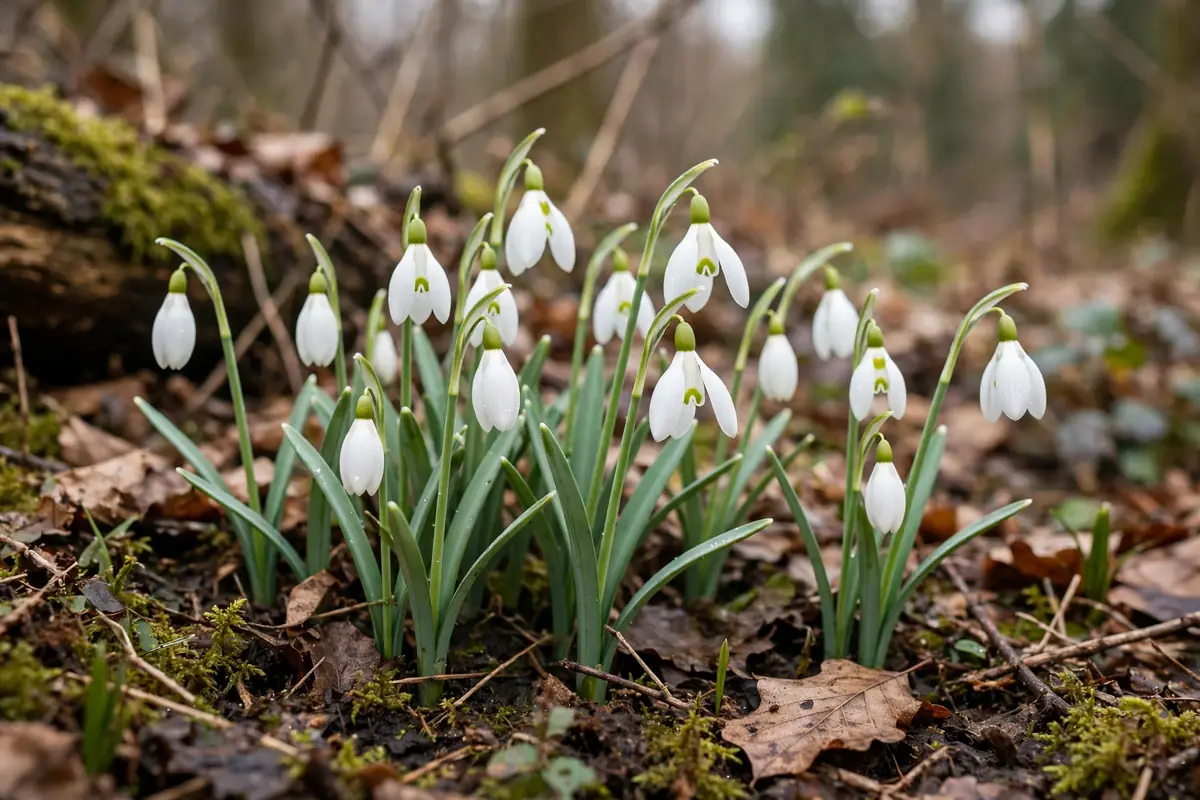
1. Snowdrop (Galanthus nivalis)
Zones 3–8 · 6 in · late winter to early spring · full sun to part shade. The first white flower of the year. Snowdrops look best in drifts of 25 or more under deciduous trees, where they flower before the canopy closes. Plant bulbs in fall, 3 inches deep, in soil that stays moist in spring. Honest note: single bulbs look lost — this is a plant that only works in crowds, and clumps take two or three years to bulk up.
2. White Tulip ‘White Triumphator’ (Tulipa ‘White Triumphator’)
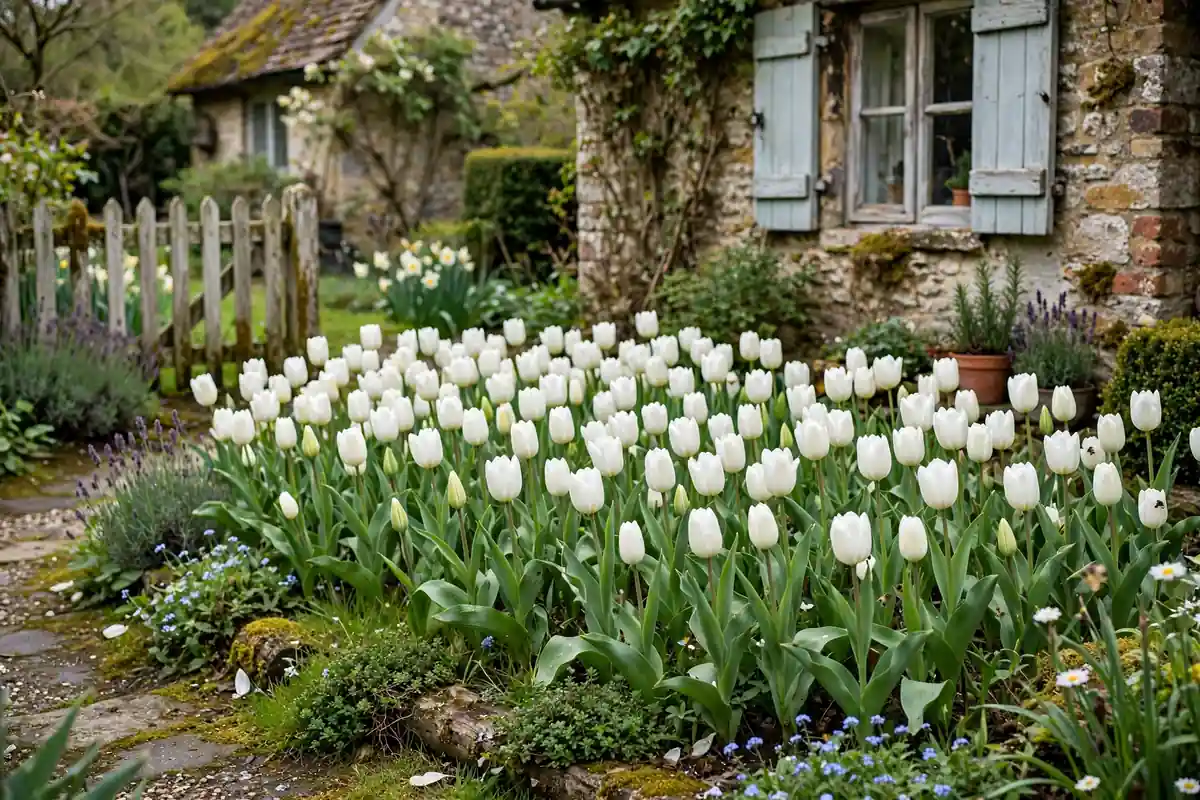
Zones 3–8 · 18–24 in · mid spring · full sun. A lily-flowered tulip with pointed, reflexed petals — the most elegant shape in the tulip family, and pure white rather than cream. It is one of the better perennialising tulips, returning for several years in well-drained soil, unlike many modern hybrids that fade after one season. Plant 6 inches deep in late fall, in groups of at least nine. Honest note: deer and rabbits treat tulips as a salad bar; if they are a problem in your area, plant these in pots or behind daffodils, which animals avoid.
3. Daffodil ‘Thalia’ (Narcissus ‘Thalia’)
Zones 4–8 · 12–16 in · mid spring · full sun to light shade. An heirloom triandrus daffodil from 1916 with two or three nodding, milk-white flowers per stem and a light, sweet fragrance. Unlike the big yellow trumpet types, Thalia looks natural in grass, woodland edges and mixed borders, and it naturalises reliably — clumps genuinely get better every year. Plant bulbs in fall at three times their own depth. Honest note: the foliage must be left for six weeks after flowering to feed the bulb, so tuck it among perennials that will grow up and hide it.
4. Lily of the Valley (Convallaria majalis)
Zones 3–8 · 6–12 in · late spring · part to full shade. Tiny white bells with one of the strongest perfumes in the spring garden, carried on arching stems above broad green leaves. It is a superb groundcover for dry shade under trees where little else thrives. Honest note, and it matters: lily of the valley spreads vigorously by rhizomes and every part of the plant is toxic. Give it a contained corner, a strip between path and wall, or a large pot — never a small mixed border you care about, because you will be evicting it for years.
5. White Hyacinth ‘Carnegie’ (Hyacinthus orientalis ‘Carnegie’)
Zones 4–8 · 8–12 in · early to mid spring · full sun. Dense spikes of waxy white florets with a heavy, sweet scent you can detect from several feet away. Carnegie is the standard white for bedding schemes and spring pots, and a handful of bulbs perfumes a whole room if you force them indoors. In the ground, expect the spikes to get looser and smaller from the second year — treat them as short-term display bulbs in formal beds, or let them relax into informal clumps. Plant in fall in sharply drained soil; wet winter soil rots them.
6. Christmas Rose (Helleborus niger)
Zones 3–8 · 12–15 in · winter to early spring · part shade. Saucer-shaped white flowers, often opening at Christmas in mild climates, held above leathery evergreen leaves. Hellebores are among the longest-lived perennials you can plant — a happy clump is still flowering decades later. They resent disturbance, so choose the spot once: moist, humus-rich soil in dappled shade, sheltered from morning sun in very cold zones (frozen buds thawing too fast is what damages them). Honest note: seedlings rarely match the parent, so buy named plants in flower if pure white matters to you.
White Roses, Peonies and Flowering Shrubs
The backbone plants. These are bigger, longer-lived and more expensive than bulbs, so they are worth choosing carefully — a white rose or hydrangea in the wrong place will annoy you for ten years, while the right one becomes the plant visitors ask about.
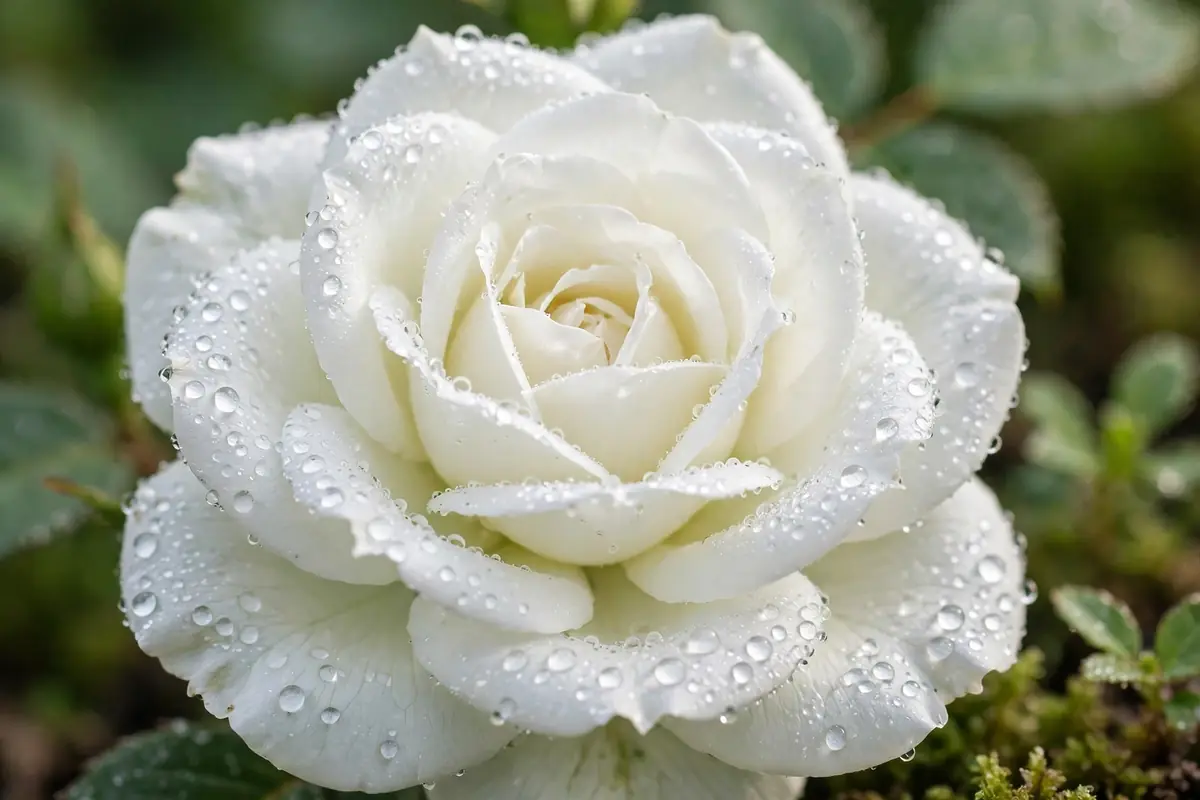
7. Iceberg Rose (Rosa ‘Iceberg’)
Zones 5–9 · 3–5 ft · late spring to fall, repeat flowering · full sun. The benchmark white rose since 1958: clusters of clean white, lightly scented blooms produced in waves from late spring until frost, on a bush with better disease resistance than most hybrid teas. It also comes in a climbing form that will cover a fence. Deadhead the first flush to speed the second, and prune lightly in early spring. Honest note: in humid climates it still gets some black spot by late summer — plant it where air moves, water at the base, and it stays acceptable rather than pristine.
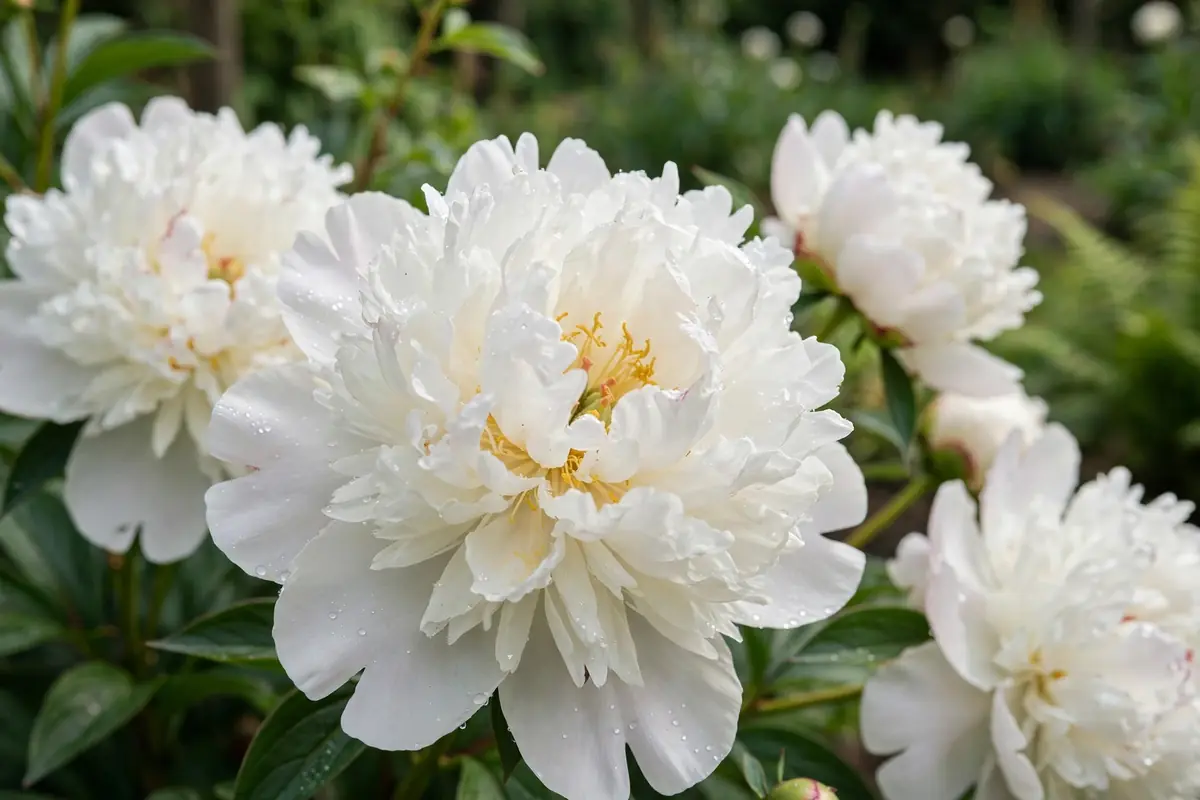
8. White Peony ‘Duchesse de Nemours’ (Paeonia lactiflora ‘Duchesse de Nemours’)
Zones 3–8 · 2–3 ft · late spring · full sun. A French heirloom from 1856 with huge, cupped white blooms, a hint of cream in the centre and a genuine perfume. Peonies are a lifetime investment: plant the crown no more than 2 inches below the surface (the single most common reason peonies refuse to flower is planting too deep), in rich soil, and then leave them alone — established clumps resent being moved. Honest note: the flower heads are heavy and will flop after rain unless you use a simple ring support put in place in spring, before you think you need it.
9. Gardenia (Gardenia jasminoides)
Zones 8–11 · 3–6 ft · summer · part shade in hot zones. Glossy evergreen leaves and waxy, roselike white flowers with arguably the finest fragrance of any shrub. Gardenias are divas with a short list of demands: acidic soil (pH 5.0–6.5), steady moisture, humidity and no disturbance once settled. Yellow leaves usually mean the soil is not acidic enough — feed with an ericaceous fertiliser before blaming disease. In zones colder than 8, grow hardy types like ‘Kleim’s Hardy’ in a pot and overwinter it under cover. Honest note: buds drop when night temperatures swing sharply; a sheltered wall helps more than any feed.
10. Camellia ‘Alba Plena’ (Camellia japonica ‘Alba Plena’)
Zones 7–9 · 6–12 ft · late winter to spring · part shade. One of the oldest camellia cultivars in the West, with formal double white flowers that look carved from wax. Camellias give you an evergreen structure shrub that happens to flower when almost nothing else does. They need acidic, humus-rich, well-drained soil and shelter from cold east winds and early morning sun after frost. Honest note: growth is slow — buy the biggest plant you can afford, because a camellia adds only a few inches a year and a cheap small one takes a decade to make an impression.
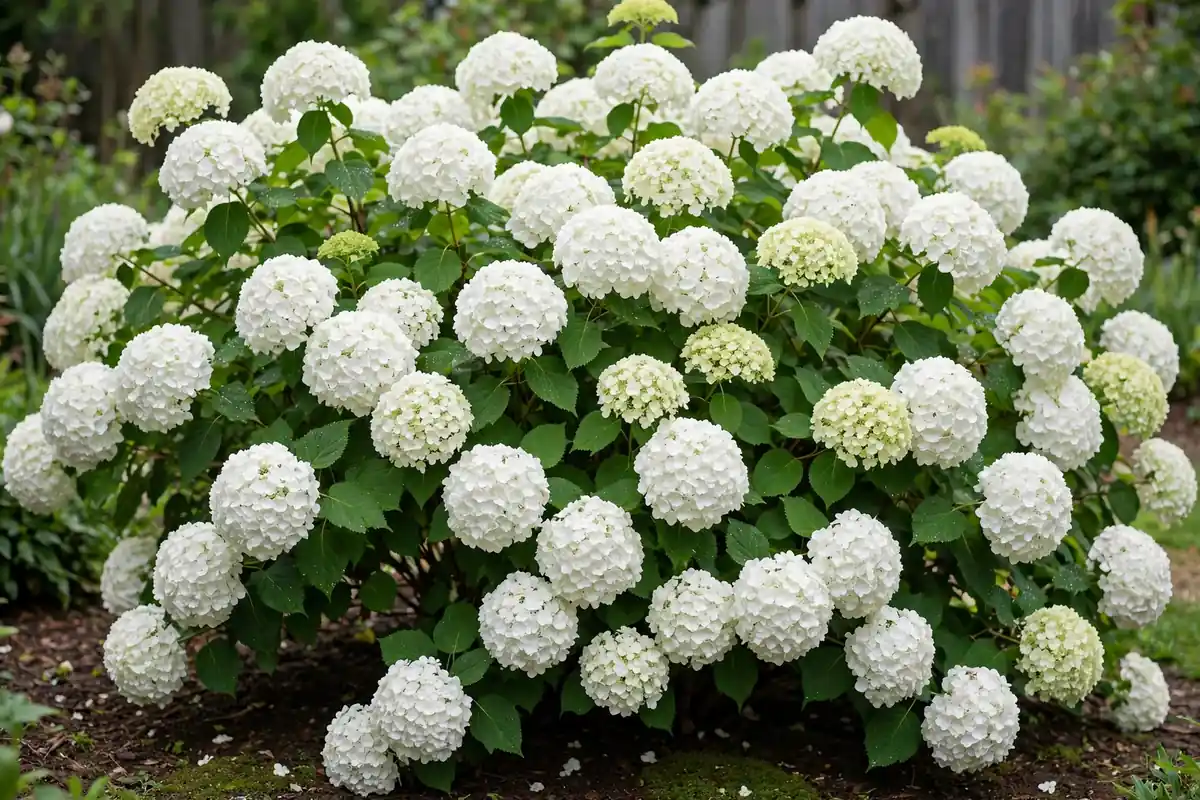
11. Smooth Hydrangea ‘Annabelle’ (Hydrangea arborescens ‘Annabelle’)
Zones 3–9 · 3–5 ft · summer · part shade to sun. Enormous rounded heads of white flowers, up to 12 inches across, opening lime-green and maturing to pure white, on a hardy North American native shrub. Annabelle flowers on new wood, so you can cut it almost to the ground in late winter and still get a full display — a huge advantage over old-wood hydrangeas in cold zones. Honest note: the heads are so heavy that stems flop after heavy rain; the newer ‘Incrediball’ has stouter stems if your garden is exposed. It is also one of the most reliable shrubs for pairing with the purple tones in our purple perennial flowers guide — white heads make purple look richer.
12. Panicle Hydrangea ‘Limelight’ (Hydrangea paniculata ‘Limelight’)
Zones 3–8 · 6–8 ft · summer to early fall · full sun to part shade. Cone-shaped flower heads that open fresh lime-white, hold white through summer and blush pink as nights cool — three seasons of colour from one shrub. Panicle hydrangeas are the toughest of the family: they flower on new wood, shrug off zone 3 winters and tolerate far more sun than mopheads. Prune in late winter to a framework of strong stems. Honest note: ‘Limelight’ gets big. Gardeners who plant it in a 4-foot gap spend every spring apologising to the neighbours; give it room or choose the dwarf ‘Little Lime’.
White Lilies
True lilies give height, fragrance and the kind of flower that makes people stop walking. All of them want the same paradox: cool roots in shade or mulch, heads in the sun, and soil that drains freely — lilies rot in winter wet faster than almost any other bulb.
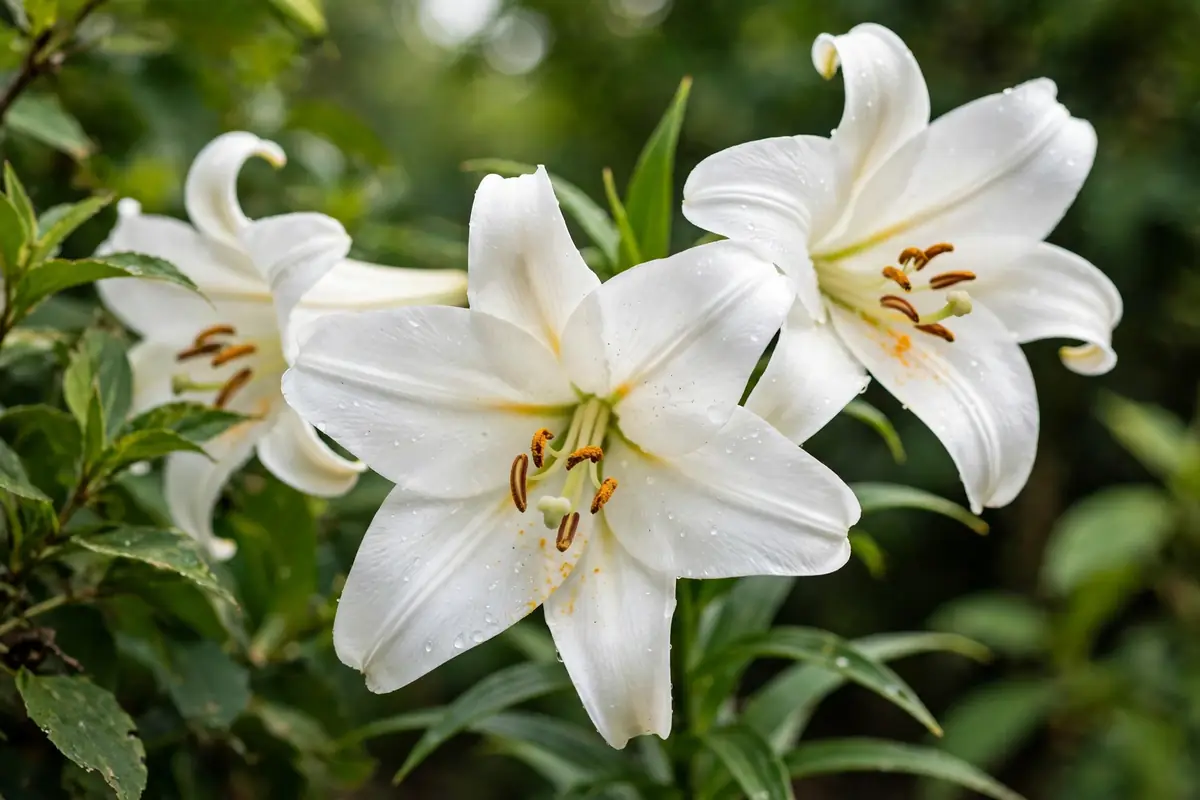
13. Madonna Lily (Lilium candidum)
Zones 5–8 · 3–4 ft · early summer · full sun. The lily of Renaissance paintings: pure white trumpets with golden pollen and a clean, sweet scent, grown since ancient times. It breaks the usual lily rules — plant the bulb shallow, with its nose barely covered, in late summer (not spring), and unlike other lilies it keeps a basal rosette of leaves through winter. It prefers alkaline soil and hates being moved once settled. Honest note: it is susceptible to virus, so buy certified stock and never plant it beside cheap, unnamed lily bulbs of unknown health.
14. Oriental Lily ‘Casa Blanca’ (Lilium ‘Casa Blanca’)
Zones 4–9 · 3–4 ft · mid to late summer · full sun to light shade. Huge, bowl-shaped white flowers with ruffled petal edges and the strongest perfume of any hardy lily — one stem scents a patio. Plant bulbs 6 inches deep in spring in acidic to neutral, sharply drained soil, and stake in windy sites because the flower heads are heavy. Honest note: the fragrance that delights you outdoors can overwhelm a small room, and the orange pollen stains fabric permanently — florists remove the anthers for arrangements, and you should too if you bring stems indoors.
15. Calla Lily (Zantedeschia aethiopica)
Zones 8–10 · 2–3 ft · summer · full sun to part shade. Not a true lily, but the white spathes are so sculptural that no white list is complete without it. Uniquely among this list it loves moisture, even a pond edge. In zones below 8, lift the rhizomes in fall or grow it in a pot. Honest note: in warm, wet climates it naturalises aggressively and is a weed in parts of Australia and California; keep it in beds you control, not beside waterways.
White Summer Border Flowers
These are the workers of the white garden: mostly easy perennials and annuals that flower for months, fill gaps and cool down the hot colours of midsummer. Several overlap with the toughest plants in our full-sun perennials guide, which is exactly where white earns its place — white reflects heat visually and makes a scorching border feel degrees cooler.
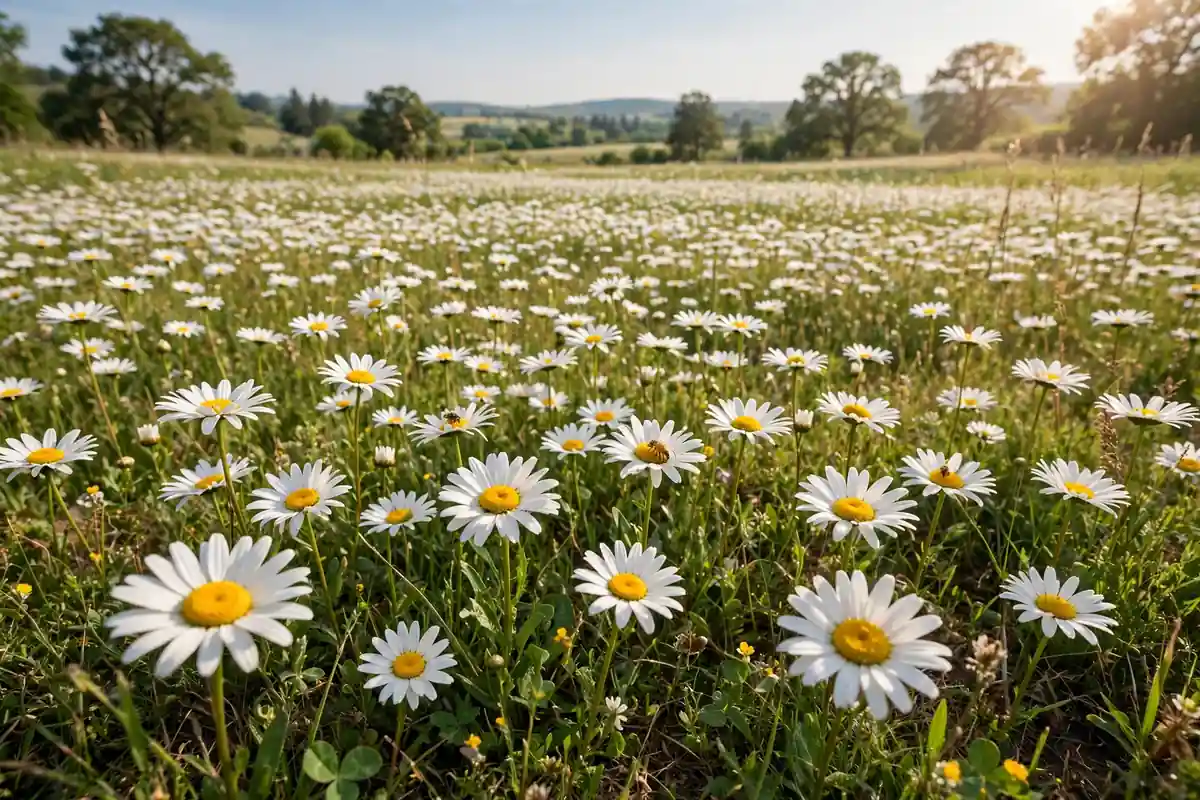
16. Shasta Daisy ‘Alaska’ (Leucanthemum × superbum ‘Alaska’)
Zones 5–9 · 2–3 ft · summer · full sun. The classic white daisy: clean white petals around a gold disc, on stiff stems that stand up without staking. Alaska is one of the hardiest and most uniform selections from seed. Deadhead to the next bud and you will get a second, smaller flush. Honest note: Shasta daisies are short-lived perennials, typically three to four years; divide clumps every other spring to keep them vigorous, and do not let them sit in wet winter soil, which is what actually kills them.
17. White Cosmos ‘Purity’ (Cosmos bipinnatus ‘Purity’)
Annual · 3–5 ft · summer to fall · full sun. Saucer-shaped pure white flowers over feathery, airy foliage, produced in astonishing quantities from July until frost. Cosmos thrives on neglect: poor soil and no feeding give you flowers, while rich soil gives you a tall green bush with hardly a bloom. Sow direct in late spring and pinch the tips once for bushier plants. Honest note: Purity grows taller than the packet suggests in sheltered gardens — put it mid-border, not at the front, and let neighbouring plants support it rather than staking every stem.
18. White Zinnia ‘Polar Bear’ (Zinnia elegans ‘Polar Bear’)
Annual · 2–3 ft · summer to fall · full sun. Big, fully double white dahlias-flowered blooms on strong cutting stems — cut them and more come, making this the best white annual for vases. Zinnias demand heat and air circulation: sow after the last frost, space plants a full 12 inches apart, and water at the base. Honest note: in humid summers powdery mildew arrives by August no matter what you do; accept it late in the season, or grow the narrower-leaved Zinnia angustifolia types for cleaner foliage with smaller flowers.
19. White Coneflower ‘White Swan’ (Echinacea purpurea ‘White Swan’)
Zones 3–9 · 2–3 ft · summer · full sun. White drooping petals around a green-gold cone, loved by bees while in flower and by goldfinches when the seed heads ripen. White Swan comes reasonably true from seed and is tougher than many modern coloured echinaceas, which can be short-lived. Leave the seed heads standing through winter — they look good frosted and feed birds. Honest note: first-year plants flower sparsely; the display peaks in years two and three.
20. White Lavender ‘Edelweiss’ (Lavandula angustifolia ‘Edelweiss’)
Zones 5–9 · 18–24 in · summer · full sun. A true white-flowered English lavender with the same resinous fragrance as the purple types and silvery foliage that makes it read as a white plant even out of flower. It wants the Mediterranean treatment: the poorest, driest, sunniest spot you have, ideally against a warm wall or in gravel. Prune after flowering, cutting into green growth but never into bare old wood, which rarely resprouts. Honest note: more lavenders die from wet winter soil and over-kind gardeners than from cold — if your soil is heavy clay, grow it in a raised gravel bed or a large pot.
21. Gaura ‘Whirling Butterflies’ (Gaura lindheimeri ‘Whirling Butterflies’)
Zones 5–9 · 2–3 ft · summer to fall · full sun. Wands of small white flowers that hover and tremble above the foliage like a cloud of moths, from early summer until the first frosts — one of the longest flowering seasons of any perennial. Its deep taproot makes it drought-tolerant but hard to move — plant it once, in its final place. Honest note: it self-seeds gently and the seedlings are usually pinker than the parent; weed out any that offend your colour scheme, and enjoy the free plants that do not.
22. White Dahlia ‘White Perfection’ (Dahlia ‘White Perfection’)
Zones 8–11 · 3–4 ft · summer to fall · full sun (lift tubers in cold zones). Large decorative blooms up to 6 inches across, in the cleanest white, produced relentlessly from midsummer until frost if you keep picking. Dahlias are hungry and thirsty: rich soil, regular water and a weekly feed once buds form. Stake at planting time, not after the stems are already bending. Honest note: the tuber-lifting ritual is real work below zone 8, but one tuber becomes a clump of five in a season — few plants repay a little autumn effort so generously.
Late-Season White Flowers
By late summer most gardens are heavy with golds and rusts, and white becomes the colour that refreshes the whole picture. These carry the display into fall and pair beautifully with red flowers — white anemones in front of dark red dahlias is a classic late-season pairing.
23. Japanese Anemone ‘Honorine Jobert’ (Anemone ‘Honorine Jobert’)
Zones 4–8 · 3–4 ft · late summer to fall · sun to part shade. Single white flowers with a boss of golden stamens, carried on wiry stems above the foliage so they seem to float. Discovered in a French garden in the 1850s, it remains the finest white fall perennial. Plant in spring in rich, moist soil and give it a year to settle — it sulks in year one and romps from year two. Honest note: in moist, fertile soil it spreads assertively by runners. Plant it where it can colonise a generous drift, not in a small bed of slow neighbours.
24. Rose of Sharon ‘White Chiffon’ (Hibiscus syriacus ‘White Chiffon’)
Zones 5–9 · 8–12 ft · late summer · full sun. A hardy hibiscus shrub with large, semi-double white flowers with a lacy centre, blooming when most shrubs are long finished. White Chiffon is from the Chiffon series bred for fuller flowers and far fewer self-sown seedlings than the old species types. It leafs out fashionably late in spring — do not declare it dead in April; scratch the bark and wait until May. Honest note: aphids love the new growth; a firm jet of water twice a week controls them better than sprays.
Fall Bonus: Hydrangea Heads That Last
Two shrubs from earlier in this list deserve a second mention for autumn. Annabelle’s flower heads dry to a soft parchment white and stand through winter if you resist deadheading, while Limelight’s cones age from white through pink to russet. Grow the pair together, as in the plantings around chrysanthemums and mum care, where white hydrangea heads back the fall mum display.
White Climbing Flowers
White climbers do a job no other colour manages: they light up a shaded wall or pergola post without fighting with whatever grows beneath them, and the evening-flowering ones are the heart of a moon garden.
25. Sweet Pea ‘White Supreme’ (Lathyrus odoratus ‘White Supreme’)
Annual · 5–6 ft vine · spring to summer · full sun. A Spencer-type sweet pea with large, frilled, pure white flowers and a strong, honest perfume. Sweet peas are cool-season plants: sow in fall in mild zones or very early spring elsewhere, and expect them to fade when nights turn hot — that is their nature, not your failure. Pick every flower every two days; the moment pods set, flowering stops. Honest note: white sweet peas show every blemish, so cut them young in the cool of the morning for the vase.
26. Clematis ‘Henryi’ (Clematis ‘Henryi’)
Zones 4–9 · 8–12 ft vine · late spring and again in fall · sun, roots shaded. One of the oldest hybrid clematis (1870) and still one of the best: 6–8 inch white flowers with chocolate anthers, in a big late-spring flush and a lighter repeat in early fall. Henryi is a group 2 clematis — prune lightly in late winter, removing only dead and weak stems, because the first flowers come on last year’s wood. Keep the roots cool under flat stones or a low shrub. Honest note: if you hard-prune it in spring like a group 3 type, you lose the main display; check the group before you cut any clematis.
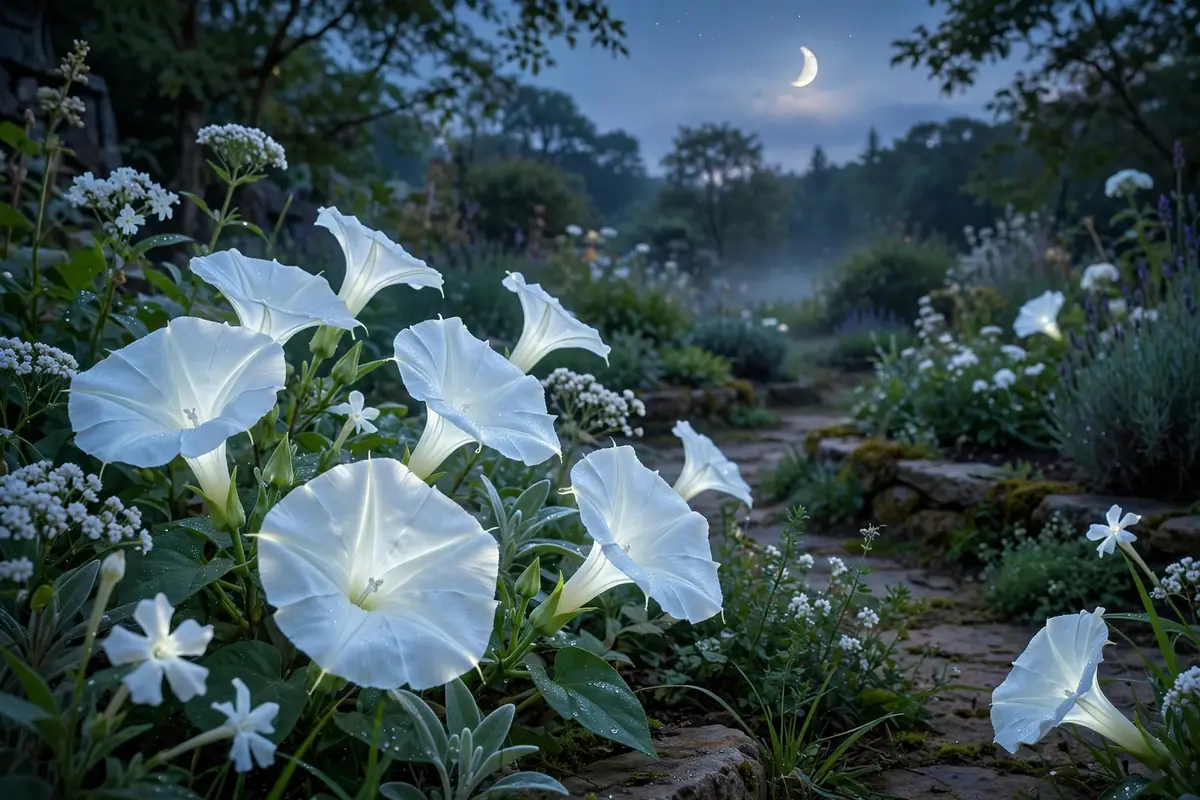
27. Moonflower (Ipomoea alba)
Annual vine (perennial zones 9–11) · 10–15 ft · summer nights · full sun. Saucer-sized white trumpets that unfurl at dusk — fast enough to watch — and pour out a sweet, heavy perfume for night-flying moths. Soak the hard seeds overnight and nick them with a file before sowing after the last frost; give the vine a fence or trellis and it will cover it in weeks. Honest note: moonflower is a warm-season sprinter that sulks in cool weather, so in short-summer zones start it indoors and do not plant out until nights are reliably above 50°F.
White Flowers for Shade
Shade is where white is not just pretty but practical: it is the only colour that visibly brightens a gloomy corner instead of disappearing into it. If your shady bed leans purple, mix these with the varieties in our purple annual flowers guide for a cool, restful scheme that still reads clearly in low light.
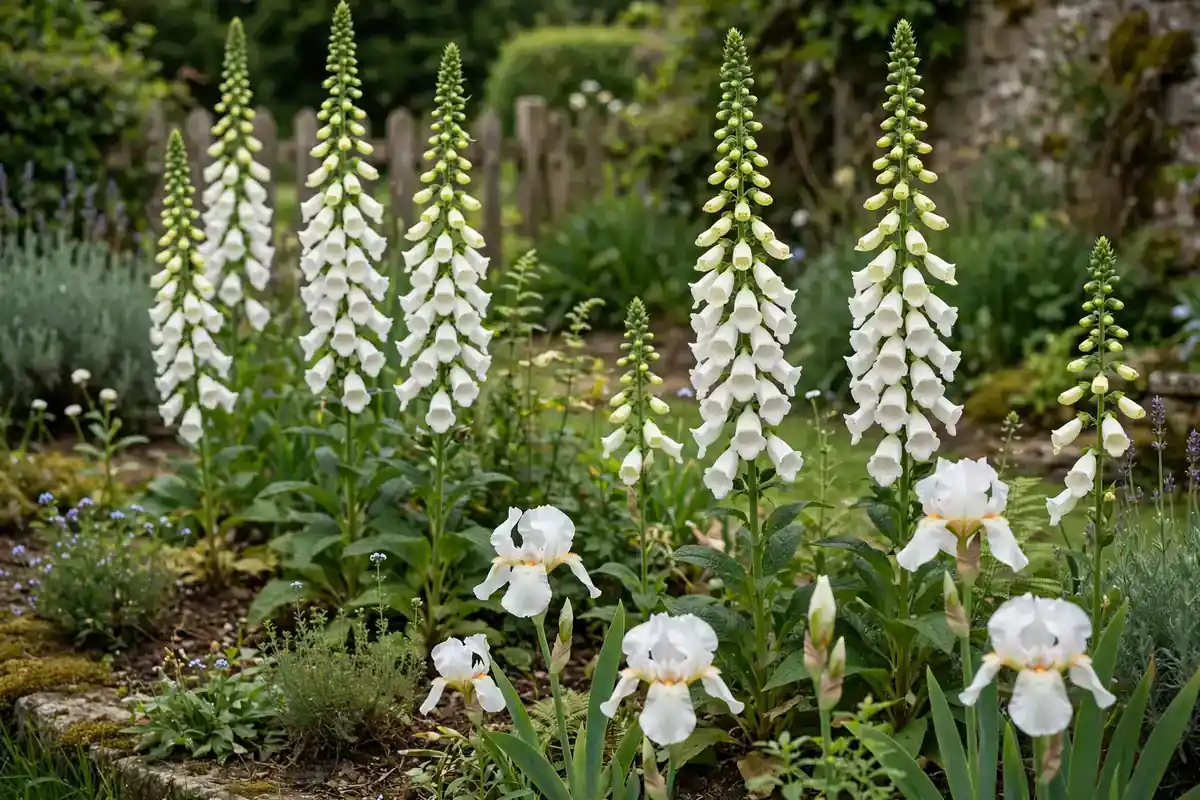
28. White Foxglove ‘Snow Thimble’ (Digitalis purpurea ‘Snow Thimble’)
Zones 4–9 · 3–4 ft · late spring to summer · part shade (biennial). Spires of pure white bells — unlike most white foxglove strains, Snow Thimble has unspotted throats, so the effect is completely clean. Sow seed in late spring, plant out in fall, and it flowers the following summer, then self-seeds to continue the colony. Honest note: every part of foxglove is toxic, so wear gloves when handling it and think twice about planting it where toddlers graze unsupervised. Bees, for the record, adore it.
29. Astilbe ‘Bridal Veil’ (Astilbe × arendsii ‘Bridal Veil’)
Zones 4–9 · 2–3 ft · early summer · part to full shade. Feathery white plumes over ferny foliage, lighting up damp shade for weeks. Astilbe is genuinely thirsty — in dry shade it scorches and dwindles, so mulch heavily and water in drought, or plant it where soil stays moist, beside a pond or downspout. It is far more forgiving than the exotic specimens in our unusual and beautiful flowers collection, and a settled clump will perform for a decade.
30. White Bleeding Heart ‘Alba’ (Dicentra spectabilis ‘Alba’)
Zones 3–9 · 2–3 ft · spring · part shade. Rows of pure white hearts hang along arching stems in spring, above fresh ferny foliage. Bleeding heart goes dormant in summer heat — that is normal, not death. Mark its place when you plant it and overplant with hostas or ferns, which expand to fill the gap by July. Honest note: it resents disturbance and alkaline soil makes it sulk; give it rich, moist, slightly acidic ground and leave it alone.
Designing With White: The Moon Garden Effect
White is the only flower colour that gains drama after sunset. Under moonlight and garden lighting, whites reflect what little light there is, while reds go black and blues vanish. Gardeners have built whole “moon gardens” around this — white roses, moonflowers, cosmos, Casa Blanca lilies and night-scented companions planted beside a bench or path where people actually sit in the evening. You do not need a whole garden: one 6-foot bed of white cosmos, Nicotiana and a single moonflower vine beside a patio delivers the effect for the price of three seed packets. In the daytime, use white as a mediator: it separates clashing colours, so a row of white Shasta daisies between orange marigolds and pink roses lets all three coexist. Finally, remember texture. An all-white border of identical daisy shapes reads flat; mix spires (foxglove), globes (Annabelle), trumpets (lilies) and airy wands (gaura) and the same single colour becomes the most sophisticated planting in the garden. Seasonal white for colder months is covered in our companion piece on winter flowers, where hellebores and snowdrops carry the scheme through frost.
How to Choose the Right White Flowers
Start with season, not flower. Decide which month your garden looks emptiest and buy for that gap: hellebores and snowdrops for winter, tulips and Thalia for spring, roses and lilies for summer, Japanese anemones for fall. Match the plant’s lifespan to your patience. Annuals like cosmos and zinnia give a full display in ten weeks but must be resown; shrubs like camellia take three years to impress and then perform for thirty. Check the white is really white — many varieties open cream or fade pink; those here hold a clean white. Think about scent. A white garden for evening sitting should lean on Casa Blanca lilies, gardenia, moonflower and hyacinth; a front-path garden can skip scent entirely. Be honest about water. Astilbe, calla and Annabelle want moisture; lavender, gaura and cosmos want drainage and drought. Planting either group in the other’s conditions is the fastest way to lose them. When in doubt, verify a specific plant’s needs in a reference like the Missouri Botanical Garden Plant Finder before you buy — two minutes of checking beats a season of disappointment.
Common Mistakes With White Flowers
Expecting white flowers to hide dirt. White shows every blemish — rain-spattered peonies, slug-chewed petals, spent blooms browning on the plant. Deadhead white flowers more faithfully than any other colour; a white rose bush carrying brown spent blooms looks worse than no plant at all. Planting whites in a dust zone. Beside a gravel drive or a busy road, white blooms grey within days. Give whites a clean-air spot or choose self-cleaning types like Iceberg and cosmos. Putting shade whites in sun. Bleeding heart, lily of the valley and hellebores scorch and yellow in hot sun; their labels mean what they say. Ignoring spread. Lily of the valley and Japanese anemone are thugs in good soil — plant them in contained places from day one. Forgetting foliage contrast. White flowers against pale variegated leaves or a white-painted fence disappear. Plant whites against dark green, yew or a brick wall and they will glow; the Royal Horticultural Society’s design guidance at rhs.org.uk makes the same point about pale planting needing a dark backdrop.
Frequently Asked Questions
What is the most popular white flower?
The white rose is the most widely grown and requested, with Iceberg the most planted garden variety worldwide. For weddings and bouquets, white peonies and Casa Blanca lilies follow closely, and the Shasta daisy is probably the most common white flower in ordinary home borders.
Which white flowers bloom all summer?
White cosmos, zinnia ‘Polar Bear’, gaura and Iceberg rose flower continuously or in strong repeats from early summer to frost. Among shrubs, Annabelle hydrangea holds its heads for months, and dahlias picked daily will out-flower almost everything else in the garden.
What white flowers grow best in full shade?
Lily of the valley, white bleeding heart, hellebores and astilbe (with moisture) are the reliable choices. Foxgloves take dappled shade well. Avoid putting true sun-lovers like lavender or cosmos in shade — they will lean, flop and barely flower.
Which white flowers are fragrant?
Hyacinth, gardenia, Casa Blanca lily, moonflower, sweet pea and lily of the valley are the scented stars of this list. If fragrance is your main goal, see our dedicated ranking of the most fragrant flowers, which scores 25 varieties by scent strength.
Are any white flowers dangerous for pets or children?
Yes — lily of the valley, foxglove and all true lilies (Madonna and Casa Blanca) are toxic if eaten, and true lilies are especially dangerous to cats, for whom even licking pollen can be fatal. Site them thoughtfully and check a toxicity list before planting in a pet-heavy garden.
References
Plant hardiness, nomenclature and cultural details cross-checked against the Missouri Botanical Garden Plant Finder and Royal Horticultural Society plant profiles.
11 Comments