
Winter Flowers: 25 Beautiful Blooms for Cold-Weather Color
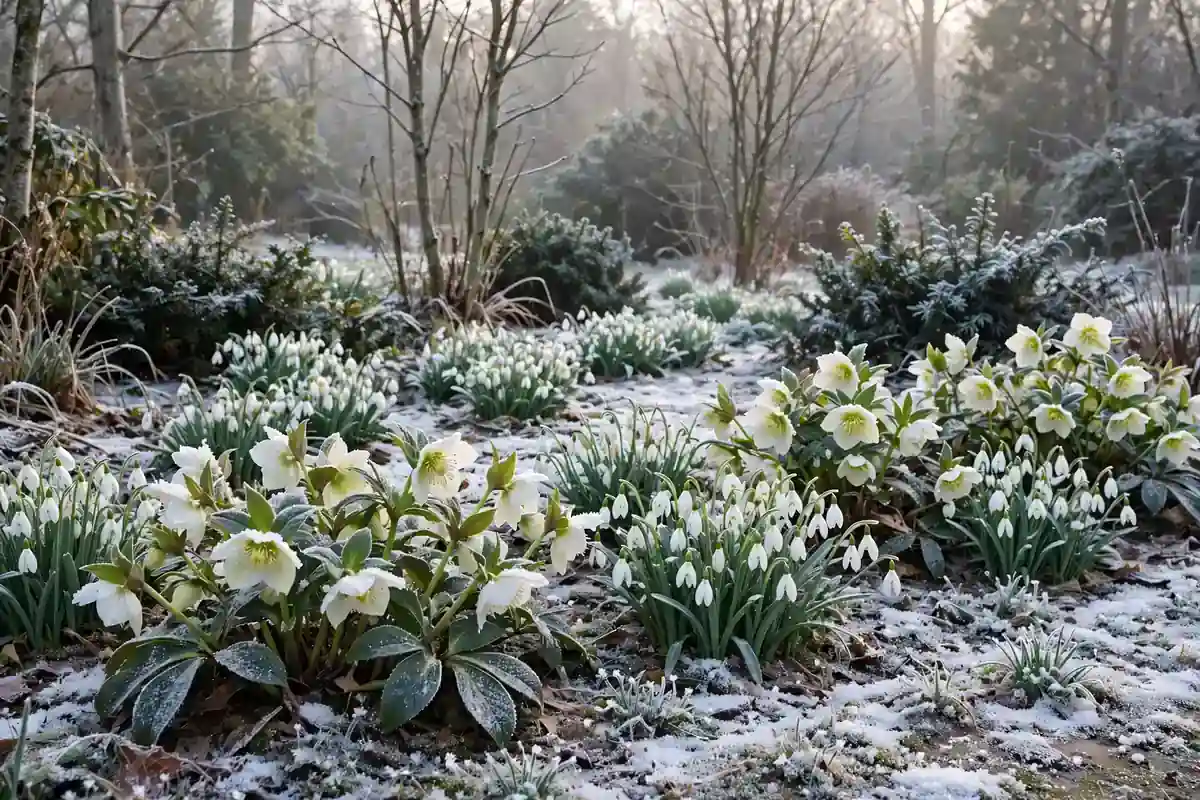
Most gardens go quiet in December. The borders are cut back, the pots are emptied, and the view from the kitchen window turns to stems, seed heads, and mud. It does not have to stay that way. A real group of plants flowers in the coldest months — not in spite of the cold, but because of it. Snowdrops push through frozen ground, witch hazel opens scented ribbons on bare branches in January, and hellebores hold their flowers for weeks when almost nothing else dares to bloom.
This guide lists 25 winter flowers that genuinely flower between December and March in at least part of the United States. Each entry gives you the botanical name, USDA zones, size, bloom time, and the sun and soil it actually needs — plus one honest care note, because winter bloomers have quirks. Some need planting in fall, some resent being moved, and a few are poisonous enough that placement matters. If you timed your fall flowers well last season, these are the plants that pick up the show when those fade.
One reality check before the list: “winter flower” means something different in zone 5 than it does in zone 9. In Minnesota, your winter display comes from hardy bulbs, hellebores, and flowering shrubs that bloom on the edge of spring. In Georgia or coastal California, you can add pansies, calendula, and snapdragons that flower straight through the mild months. Every entry below states its zones plainly, so read for your climate first and your wish list second.
Quick Answer
The most reliable winter flowers are snowdrops, hellebores, winter aconite, witch hazel, and winter jasmine — all hardy to zone 5 or colder, all flowering between December and March outdoors. Snowdrops (Galanthus nivalis) and winter aconite are small fall-planted bulbs that bloom through snow. Hellebores (Christmas rose and Lenten rose) flower for 6–10 weeks in shade. Witch hazel and winter jasmine are shrubs that bloom on bare wood in midwinter. In zones 7–10, add camellia sasanqua, pansies, and cyclamen. Indoors anywhere, paperwhites and amaryllis give you winter blooms in 4–8 weeks from planting.
Table of Contents
Winter Flowers at a Glance
Use this table to shortlist plants for your zone, then read the full entries below for planting and care details. Bloom times are for the middle of each plant’s hardiness range — expect flowers two to four weeks earlier in the warm end of the range and later in the cold end.
| Flower | Botanical Name | USDA Zones | Height | Bloom Time |
|---|---|---|---|---|
| Winter Jasmine | Jasminum nudiflorum | 6–10 | 3–5 ft (to 10 ft trained) | Dec–Mar |
| Witch Hazel | Hamamelis × intermedia | 5–8 | 12–15 ft | Jan–Mar |
| Camellia Sasanqua | Camellia sasanqua | 7–9 | 6–14 ft | Oct–Jan |
| Winter Honeysuckle | Lonicera fragrantissima | 4–8 | 6–10 ft | Dec–Mar |
| Mahonia | Mahonia × media | 7–9 | 5–10 ft | Nov–Feb |
| Winter Daphne | Daphne odora | 7–9 | 3–4 ft | Jan–Mar |
| Wintersweet | Chimonanthus praecox | 7–9 | 10–15 ft | Dec–Feb |
| Snowdrop | Galanthus nivalis | 3–8 | 6–10 in | Jan–Mar |
| Winter Aconite | Eranthis hyemalis | 3–8 | 3–6 in | Jan–Mar |
| Crocus | Crocus tommasinianus | 3–8 | 4–6 in | Feb–Mar |
| Dwarf Iris | Iris reticulata | 5–8 | 6–8 in | Feb–Mar |
| Hardy Cyclamen | Cyclamen coum | 5–9 | 4–6 in | Jan–Mar |
| Christmas Rose | Helleborus niger | 3–8 | 12 in | Dec–Mar |
| Lenten Rose | Helleborus × hybridus | 4–9 | 18–24 in | Feb–Apr |
| Bergenia | Bergenia cordifolia | 3–8 | 12–18 in | Mar–Apr |
| Common Primrose | Primula vulgaris | 3–8 | 6–12 in | Feb–Apr |
| Pansy | Viola × wittrockiana | 6–10 (winter annual) | 6–9 in | Oct–Apr in mild zones |
| Horned Violet | Viola cornuta | 6–9 | 6–8 in | Oct–Apr in mild zones |
| Snapdragon | Antirrhinum majus | 7–10 (winter annual) | 1–3 ft | Nov–Apr in mild zones |
| Calendula | Calendula officinalis | 8–10 (winter annual) | 1–2 ft | Nov–Apr in mild zones |
| Sweet Alyssum | Lobularia maritima | 9–11 (annual elsewhere) | 4–10 in | Winter in frost-free zones |
| Stock | Matthiola incana | 7–10 | 1–3 ft | Dec–Apr |
| Paperwhite Narcissus | Narcissus tazetta ‘Paperwhite’ | 8–11 outdoors; forced indoors | 12–18 in | Dec–Jan forced |
| Amaryllis | Hippeastrum hybrids | 9–11 outdoors; houseplant | 18–24 in | Dec–Feb forced |
| Florist Cyclamen | Cyclamen persicum | 9–11 outdoors; houseplant | 6–12 in | Dec–Mar indoors |
Early-Winter Shrubs and Small Trees
Shrubs carry the winter garden. They bloom on bare branches, many of them are strongly scented — winter flowers use fragrance to reach the few pollinators active on mild days — and they ask for almost no work once established. Plant them near a path, door, or window you pass daily, because you will smell several of these before you see them. Together with snowdrops and witch hazel, they anchor any list of flowers that start with W.
1. Winter Jasmine (Jasminum nudiflorum)
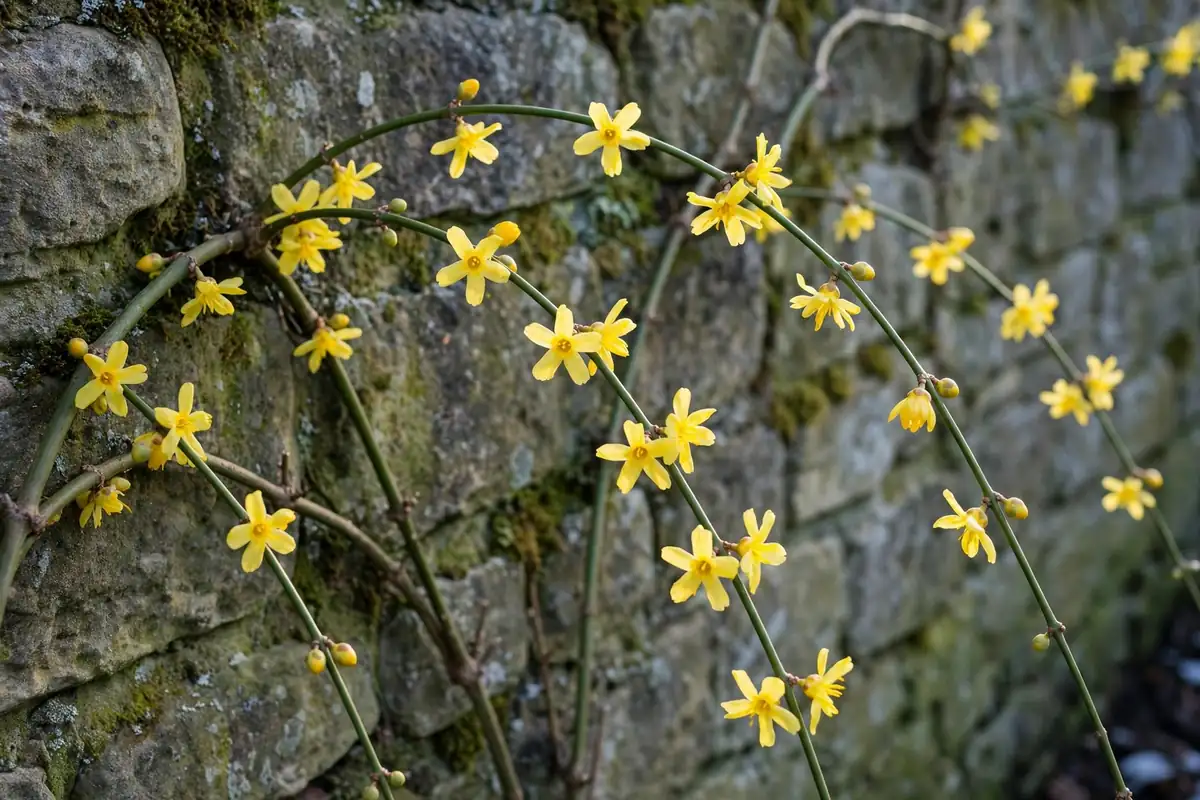
Zones 6–10 · 3–5 ft sprawling, to 10 ft trained · Blooms Dec–Mar · Full sun to part shade, any well-drained soil. Cheerful yellow flowers open on leafless green stems from December onward, a few at a time, for months. It is not a true climber — it sprawls — so tie it to a wall, fence, or bank and let the stems arch. Care note: prune immediately after flowering finishes in spring. The flowers form on the previous summer’s growth, so a tidy-up in fall or a hedge-trimmer pass in summer removes next winter’s display entirely.
2. Witch Hazel (Hamamelis × intermedia)
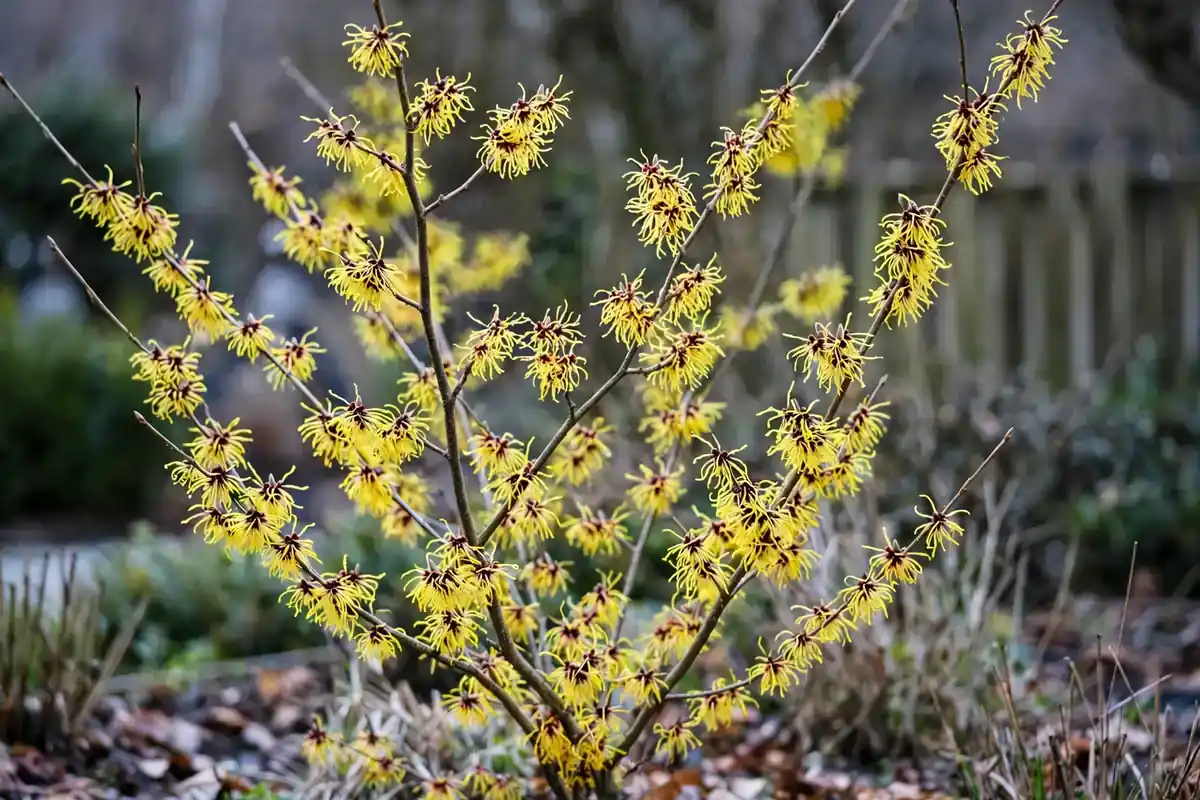
Zones 5–8 · 12–15 ft tall and wide · Blooms Jan–Mar · Full sun to part shade, moist, slightly acidic soil. Spidery ribbon petals in yellow (‘Arnold Promise’), orange (‘Jelena’), or red (‘Diane’) unfurl on mild winter days and curl back up when frost bites — a built-in freeze defense that lets one shrub flower for six weeks or more. Most cultivars are sweetly scented. Care note: witch hazel resents transplanting and grows slowly for its first years. Buy the biggest plant you can afford, water it through its first two summers, then leave it alone; pruning is rarely needed beyond removing crossed wood.
3. Camellia Sasanqua (Camellia sasanqua)
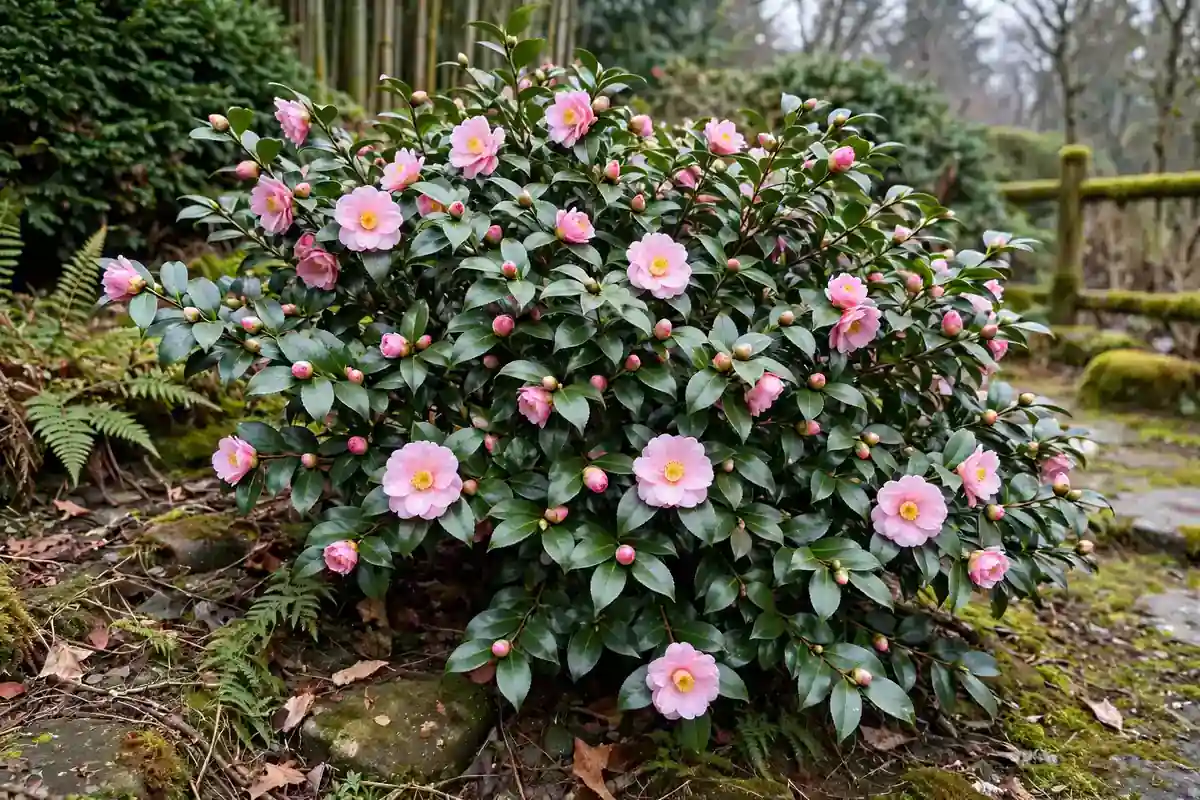
Zones 7–9 · 6–14 ft · Blooms Oct–Jan · Part shade, acidic, well-drained soil. The fall-to-early-winter camellia. Sasanquas open smaller, often single flowers — white, pink, or red, many scented — from autumn into the new year, a full season before their japonica cousins. Cultivars like ‘Yuletide’ (red, timed for the holidays) and ‘Bonanza’ are garden-center staples in the South and on the West Coast. Care note: individual blooms shatter after a hard freeze, but buds keep opening in waves, so a cold snap spoils a week, not the season. Mulch the shallow roots and water in dry autumn weather, when buds are forming.
4. Winter Honeysuckle (Lonicera fragrantissima)
Zones 4–8 · 6–10 ft · Blooms Dec–Mar · Full sun to part shade, average soil. The flowers are small, creamy, and easy to walk past — until the scent stops you. On a still January day the lemon-sweet perfume carries across a whole garden from a handful of blooms on bare stems. It leafs out early in spring and makes a plain green backdrop shrub the rest of the year. Care note: this is a bush honeysuckle, not a vine, and it can self-seed in some eastern and central states. Check your state’s guidance before planting, deadhead if seedlings appear, and prune right after flowering to keep it in bounds.
5. Mahonia (Mahonia × media)
Zones 7–9 · 5–10 ft · Blooms Nov–Feb · Part shade, well-drained soil. Upright spikes of bright yellow, lightly scented flowers rise above bold, spiny evergreen leaves just when the garden is at its drabbest. ‘Charity’ and ‘Winter Sun’ are the proven cultivars. Blue-black berries follow in spring and birds take them quickly. Care note: the foliage is genuinely sharp — plant it back from paths and where you reach to weed. In colder zones 5–6, grow the hardier Oregon grape, Mahonia aquifolium, instead; it flowers in early spring rather than midwinter but takes far more cold.
6. Winter Daphne (Daphne odora)
Zones 7–9 · 3–4 ft · Blooms Jan–Mar · Part shade, sharply drained soil. Clusters of pink buds open to white, intensely fragrant flowers on a neat evergreen mound. One plant by a front door perfumes the whole entryway in February. Care note: daphnes are famous for two things — the scent, and dying suddenly for no obvious reason. The usual culprit is wet soil rotting the roots. Plant high in gritty, free-draining soil, never move it once planted, prune almost never, and accept that even a happy plant often lives only 8–10 years. All parts are poisonous, so site it away from curious toddlers and grazing pets.
7. Wintersweet (Chimonanthus praecox)
Zones 7–9 · 10–15 ft · Blooms Dec–Feb · Full sun, sheltered spot, well-drained soil. Waxy, translucent yellow flowers with purple-stained centers hang from bare branches and produce what many gardeners call the finest scent of any winter shrub — sweet, spicy, and strong enough to scent cut sprigs indoors for days. It is one of those unusual and beautiful flowers most visitors will ask about by name. Care note: patience is mandatory. Seed-grown plants can take seven years or more to flower; buy a named, grafted cultivar such as ‘Grandiflorus’ or ‘Luteus’ and expect a wait of two to three seasons before the first real show.
Bulbs That Bloom Through Snow
Small bulbs are the cheapest winter color you can buy and the most forgiving — plant them in fall, and they handle the rest themselves, often pushing flowers up through light snow. The trick is quantity and placement: singly they are invisible, so plant in drifts of 25 or more under deciduous shrubs, along a front path, or in lawn you can leave unmown until the leaves fade. All five below are planted in autumn, roughly September to November depending on your zone.
8. Snowdrop (Galanthus nivalis)
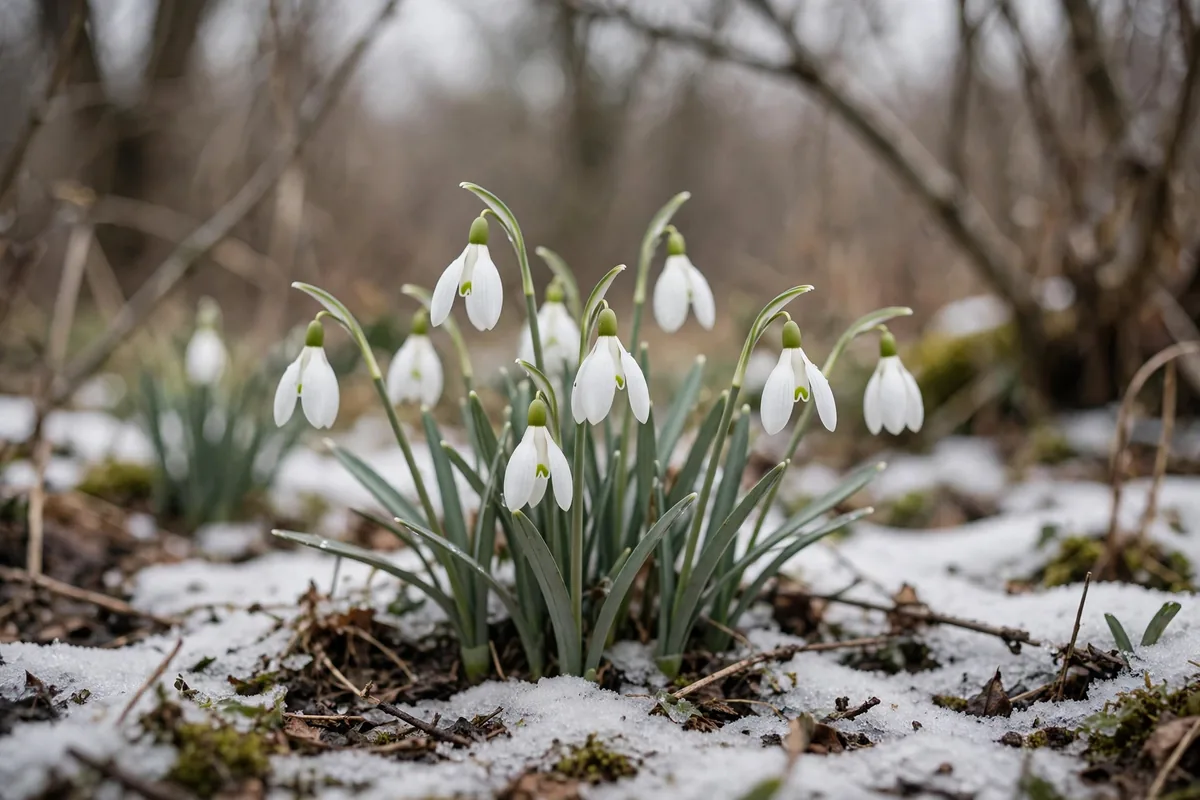
Zones 3–8 · 6–10 in · Blooms Jan–Mar · Part shade, moist but drained soil. The classic first flower of the year: nodding white bells with a green mark on the inner petals, held above narrow grey-green leaves. Clumps bulk up steadily and can live undisturbed for decades under trees and shrubs. Care note: snowdrop bulbs dry out fast and often fail if they sit in a paper bag all fall. Buy early, plant promptly about 3 inches deep and 3 inches apart — or buy plants “in the green,” just after flowering, which is the most reliable way to establish them. Let the foliage die back naturally; cutting it early starves next year’s bulbs.
9. Winter Aconite (Eranthis hyemalis)
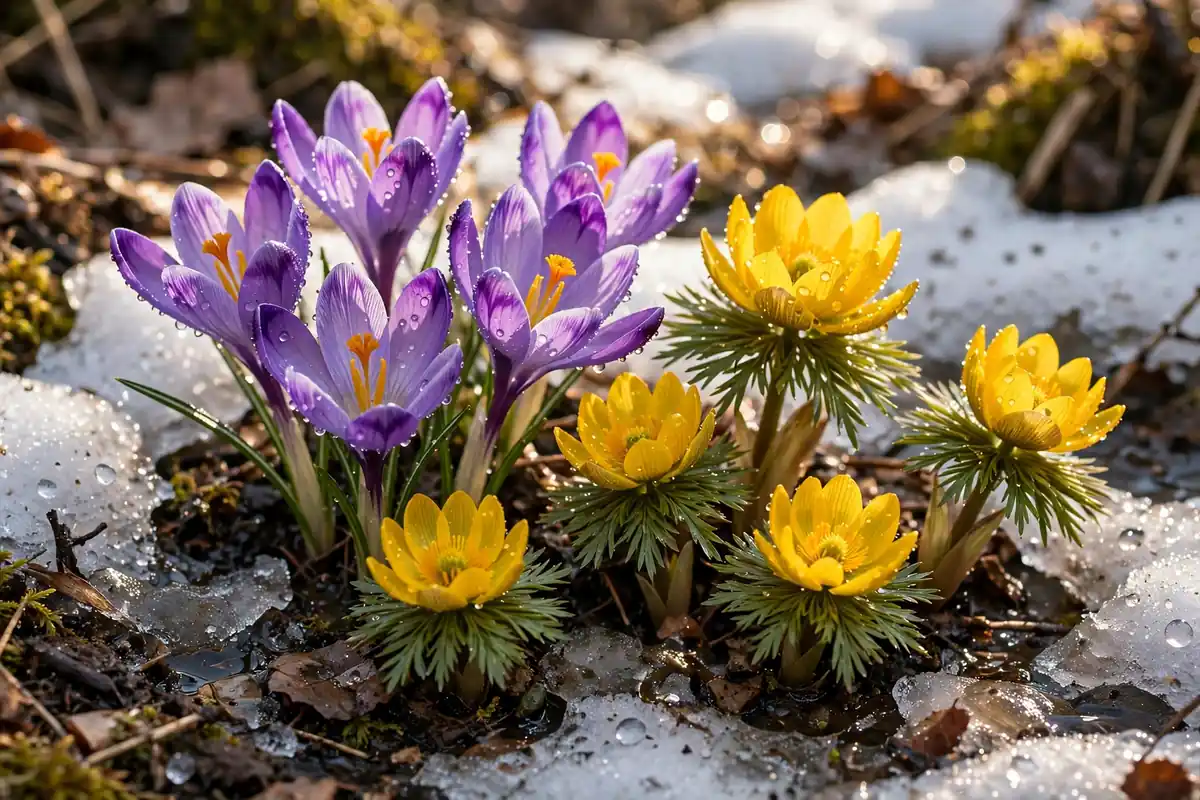
Zones 3–8 · 3–6 in · Blooms Jan–Mar · Part shade, humus-rich soil. Butter-yellow, cup-shaped flowers sit in a green ruff of leaves and open in the same weeks as snowdrops — the white-and-gold combination under bare trees is one of the best sights in the late-winter garden. Plants spread by seed into golden carpets where they are happy. Care note: the knobbly tubers are sold dry and are often half-dead on arrival. Soak them in tepid water overnight before planting, set them 2–3 inches deep, and expect patchy results the first year; established colonies are the reward from year two on.
10. Crocus (Crocus tommasinianus)
Zones 3–8 · 4–6 in · Blooms Feb–Mar · Full sun to light shade, well-drained soil. ‘Tommie’ crocuses open lilac-purple goblets that glow in low February sun and close tight on dull days. This species is the right choice where squirrels and mice dig up the big Dutch crocus — its corms are noticeably less attractive to them, and it self-seeds freely into lawns and borders. Care note: plant corms 3–4 inches deep in fall. If crocus leaves appear but flowers vanish year after year, something is eating the corms or the planting is too shaded; move a test clump to your sunniest, driest spot and compare.
11. Dwarf Iris (Iris reticulata)
Zones 5–8 · 6–8 in · Blooms Feb–Mar · Full sun, very well-drained soil. Perfect miniature iris flowers — deep violet-blue with gold and white markings, many of them violet-scented — on plants small enough for a teacup. Superb in pots, rock gardens, and the front of a sunny border where you can get close enough to smell them. Care note: the bulbs tend to split into small bulblets that take a year or two to flower again, so displays thin out. Feed with a bulb fertilizer as the flowers fade, leave the leaves until they yellow, and top up with fresh bulbs every couple of falls for a reliable show.
12. Hardy Cyclamen (Cyclamen coum)
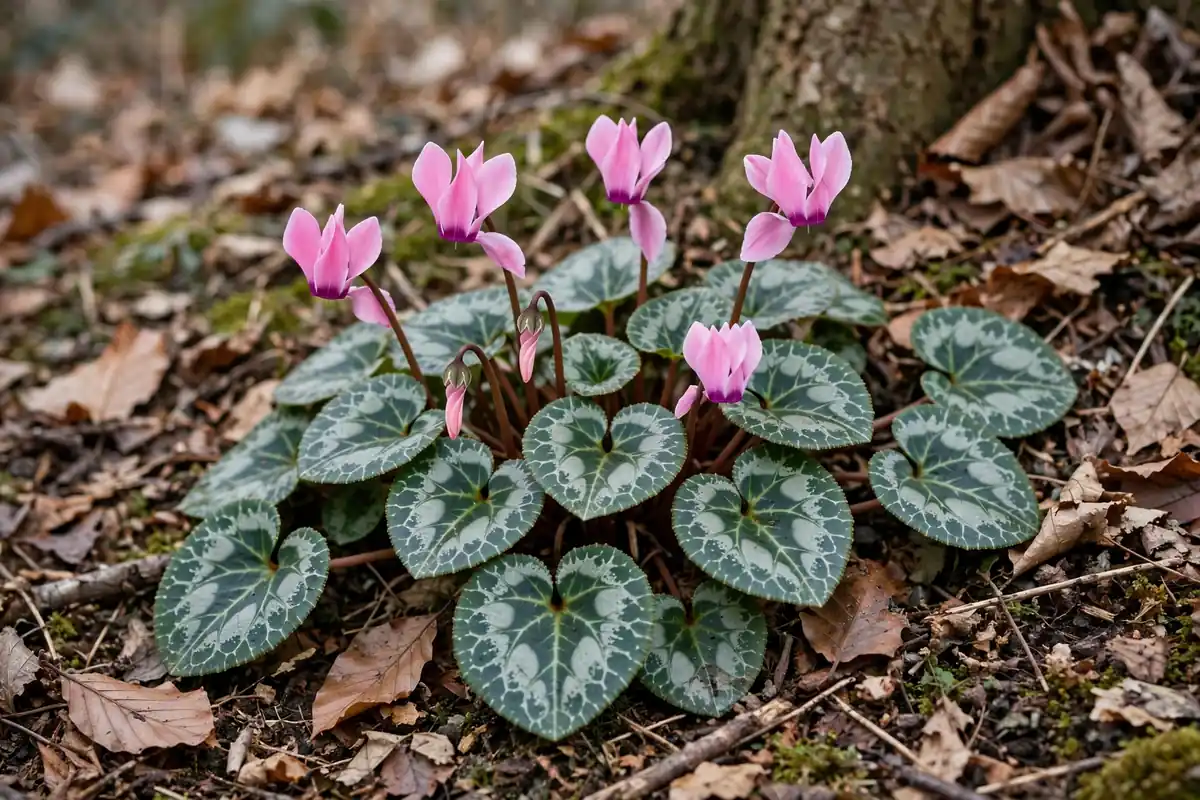
Zones 5–9 · 4–6 in · Blooms Jan–Mar · Part shade, drained soil. Dainty pink, magenta, or white flowers with swept-back petals hover over round, often silver-patterned leaves. It thrives in the awkward dry shade under trees where most bulbs refuse, and self-seeds politely into drifts. Care note: plant the tubers almost at the surface, just under the soil with the rounded side down, in late summer. The commonest failure is planting them deep in wet winter soil, where they rot before they ever leaf out.
Perennials for Winter Flowers
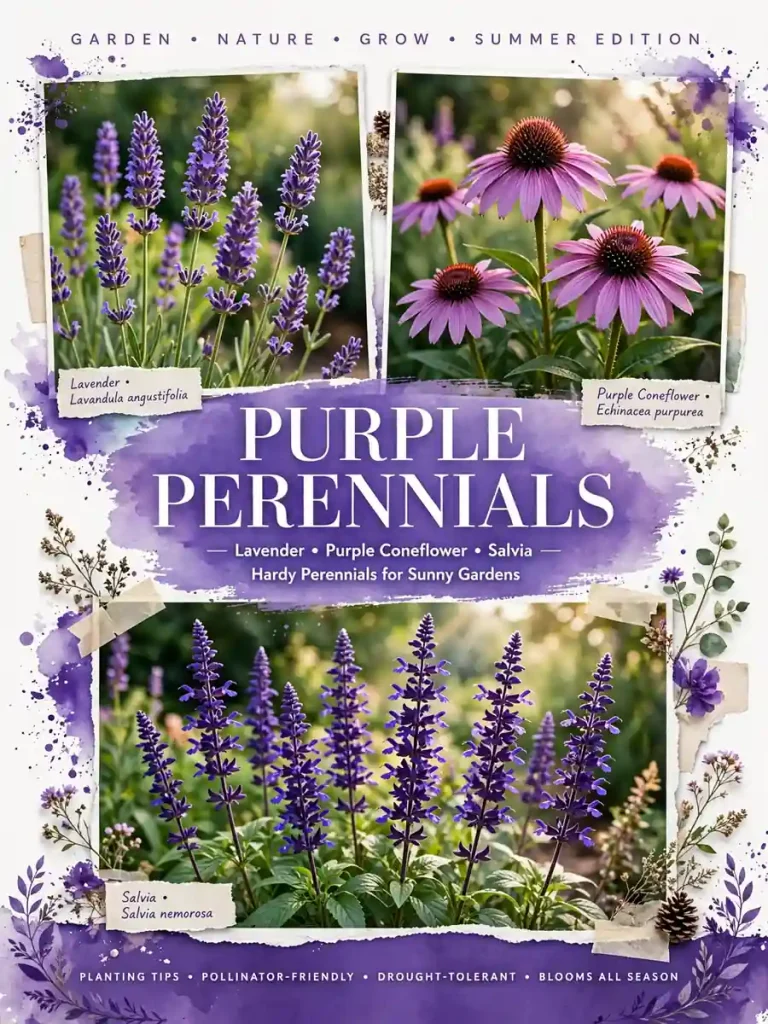
Perennials bridge the gap between the last bulbs and the first spring border. Hellebores in particular are the backbone of the winter garden — long-lived, shade-tolerant, deer-resistant, and in flower for months rather than weeks. Their flowers pair well with the soft colors in our guide to purple perennial flowers, and because they are permanent plantings, their position deserves a minute’s thought before the trowel comes out.
13. Christmas Rose (Helleborus niger)
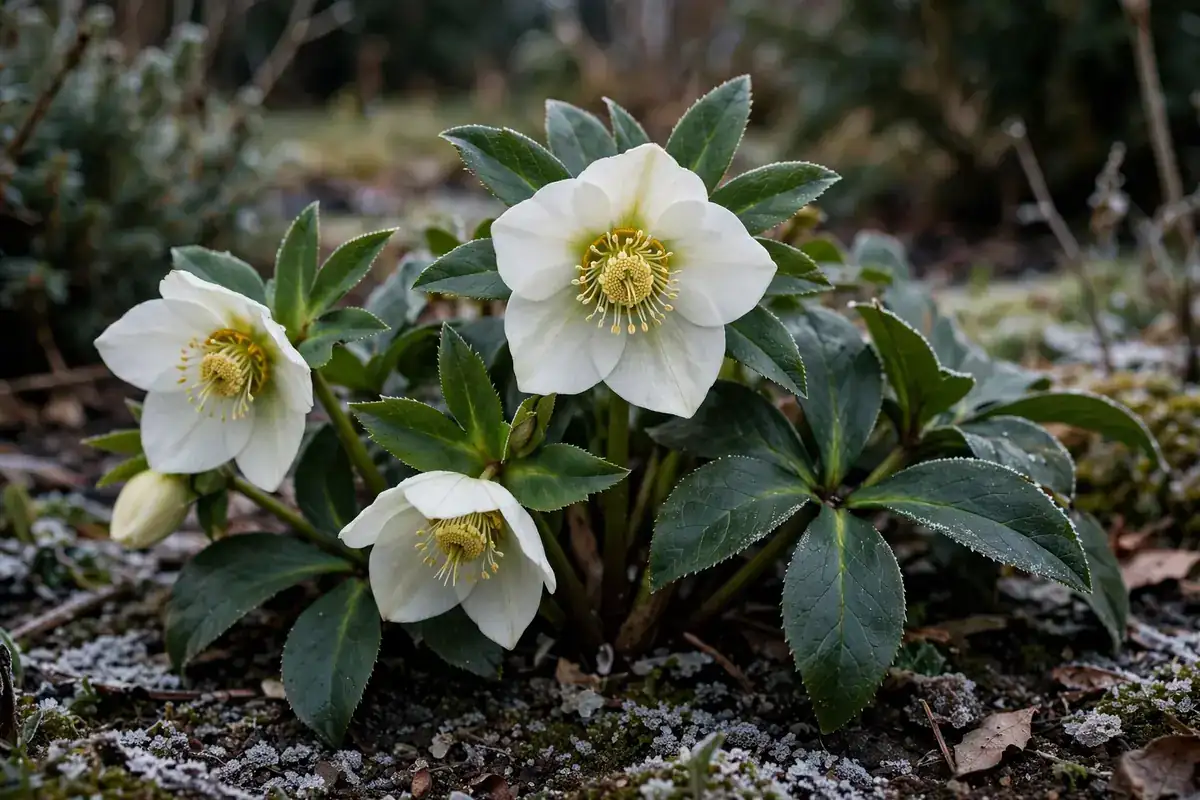
Zones 3–8 · 12 in tall, 12–18 in spread · Blooms Dec–Mar · Part shade, rich, alkaline-leaning soil. Pure white, gold-centered flowers open from fat buds around Christmas in mild winters and in January–February in cold ones, aging to soft green. It is the earliest hellebore and still one of the most beautiful plants in this entire list. Care note: all hellebores are poisonous — roots and leaves contain compounds that irritate skin and are harmful if eaten. Wear gloves when dividing or cutting back foliage, and site plants away from play areas. H. niger also dislikes being moved and sulks in acid, waterlogged soil; add garden lime and compost at planting and then leave it alone.
14. Lenten Rose (Helleborus × hybridus)
Zones 4–9 · 18–24 in · Blooms Feb–Apr · Part to full shade, rich soil. The most varied hellebore: single, double, and anemone-form flowers in white, plum, near-black, pink, apricot, and speckled picotee, held on strong stems above leathery evergreen leaves. A mature clump carries dozens of flowers for eight weeks or longer — the best value-per-plant of any winter flower here. Despite the name, they are not true roses; our rose types and names guide covers the real thing. Care note: cut off all last year’s leaves in late fall or early winter, before the buds rise. It tidies the plant, shows the flowers off, and removes the foliage where hellebore leaf-spot fungus overwinters.
15. Bergenia (Bergenia cordifolia)
Zones 3–8 · 12–18 in · Blooms Mar–Apr · Full sun to part shade, almost any soil. Bergenia earns its place twice: the big, leathery evergreen leaves turn bronze-red in cold weather, and as winter loosens its grip, sturdy stems of magenta-pink bells rise above them. In zone 7–8 gardens the first flowers often open in late February. Cultivar ‘Winterglut’ is bred for both redder winter leaves and early bloom. Care note: slugs and snails shred the leaves and vine weevils notch them; tidy away dead foliage in spring and check pot-grown plants for weevil grubs in the roots. Otherwise this is close to indestructible — it tolerates dry shade, poor soil, and neglect.
16. Common Primrose (Primula vulgaris)
Zones 3–8 · 6–12 in · Blooms Feb–Apr · Part shade, moist, humus-rich soil. Pale yellow wild primroses — and their hundreds of colored garden forms — open in late winter wherever summers are not brutally hot. They naturalize along stream banks, under hedges, and in damp woodland edges, and a single plant in a mild February looks like spring arriving early. Care note: moisture is the whole secret. Primroses collapse in dry soil and in hot, humid summers (which is why southern gardeners treat the colored bedding types as winter annuals instead). Divide crowded clumps right after flowering, while the soil is still cool and damp.
Annuals for Mild Winters
From zone 8 southward — and in sheltered zone 7 gardens — a whole group of cool-season annuals flowers straight through winter. These are the same plants northern gardeners use in spring; in a mild winter they are planted in fall, establish roots in the cool months, and bloom for half the year. Gardeners who follow our mum care routine will recognize the rhythm: plant as the fall display fades, and the bed never sits empty. The bargain is real, but so is the limit — a hard freeze into the teens will finish most of these, so treat them as winter flowers only where your winters are genuinely mild.
17. Pansy (Viola × wittrockiana)
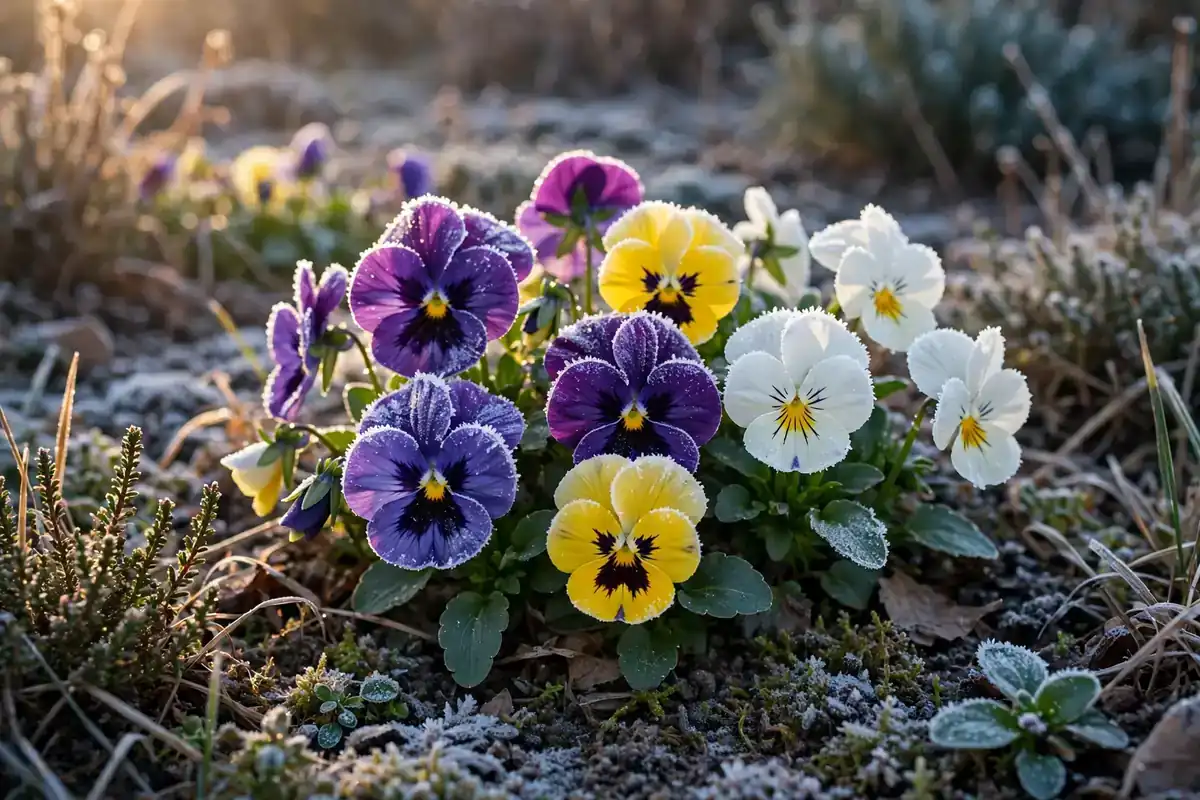
Zones 6–10 as a winter annual · 6–9 in · Blooms Oct–Apr in mild zones · Full sun to part shade, rich, drained soil. The workhorse of the southern winter garden. Planted in October, pansies flower within weeks, shrug off light frosts that turn the blooms limp in the morning and perk them up by noon, and keep going until spring heat shuts them down. Modern series come in every color except true green, with or without the classic blotched “face.” Care note: pansies planted too early, into still-hot fall soil, stretch and flop. Wait until night temperatures drop consistently into the 50s°F, plant slightly deeper than the pot line, and feed lightly every few weeks — hungry pansies flower on short, weak stems.
18. Horned Violet (Viola cornuta)
Zones 6–9 · 6–8 in · Blooms Oct–Apr in mild zones · Full sun to part shade. Pansies’ smaller, tougher cousins — sold as Sorbet and Penny series violas. The individual flowers are half the size of a pansy’s, but a plant carries far more of them, sheds hard frosts better, and is less likely to stretch in a warm spell. They self-seed gently, so a fall planting often reappears the following year. Care note: violas are the better choice for containers and exposed sites, where their compact roots and smaller leaves handle freeze–thaw cycles that split pansy crowns. Deadheading is unnecessary on modern series.
19. Snapdragon (Antirrhinum majus)
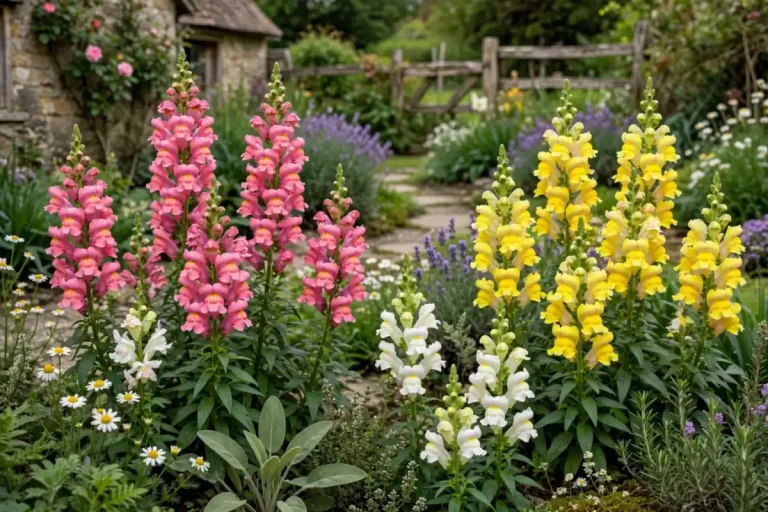
Zones 7–10 as a winter annual · 1–3 ft by type · Blooms Nov–Apr in mild zones · Full sun, well-drained soil. Snapdragons love cool weather and sulk in heat, which makes them natural winter flowers where frosts are light. Planted in fall, dwarf and intermediate types flower from late fall, pause in the coldest weeks, then surge again in late winter with their biggest spikes. Care note: rust is their historic weakness — choose rust-resistant series, space for airflow, and water at the base. In zone 7, a thick mulch after the ground cools protects the crowns through cold snaps and improves the spring encore.
20. Calendula (Calendula officinalis)
Zones 8–10 as a winter annual · 1–2 ft · Blooms Nov–Apr in mild zones · Full sun, average soil. Sunny orange and yellow daisies that open on every mild winter day and close at night and in dull weather. Calendula is edible (petals go into salads), self-seeds freely, and asks for almost nothing — poor soil actually keeps plants compact and floriferous. Care note: deadhead or shear plants when seed heads build up; left alone, flowering pauses while the plant pours energy into seed. Powdery mildew appears in humid spells — thin plants for airflow rather than spraying.
21. Sweet Alyssum (Lobularia maritima)
Zones 9–11; winter annual in zone 8 · 4–10 in · Blooms through winter in frost-free areas · Full sun, drained soil. Low mounds of tiny white, pink, or purple flowers with a honey scent that is strongest on warm winter afternoons. It is the standard edging and container spiller of mild-climate winter gardens, and it feeds the small beneficial insects that stay active year-round in the South and Southwest. Care note: a single hard freeze kills it outright, so in borderline zone 8 treat it as a gamble plant for sheltered beds only. If plants go lanky and sparse, shear them back by half and water — they usually rebloom within three weeks.
22. Stock (Matthiola incana)
Zones 7–10 · 1–3 ft · Blooms Dec–Apr · Full sun, rich, alkaline-leaning soil. Grown for one thing: perfume. Spikes of clove-scented flowers in white, cream, pink, and purple open through the cool months, and a few stems scent a whole room when cut. Double-flowered forms are the showiest, and breeders select seedlings so most plants in a modern series come double. Care note: stock insists on cool roots and hates heat even more than snapdragons — in warm-winter areas, plant it where it gets morning sun and afternoon shade, and accept a shorter season. Never let seedlings dry out in the first weeks after transplanting.
Indoor and Forced Winter Flowers
Zone is no excuse indoors. Forcing — giving bulbs their cold treatment in advance, then bringing them into warmth — puts flowers on a December or January windowsill in any climate. Gardeners who enjoy container displays such as the plants in our best terrarium plants guide will find forced bulbs just as easy, with the bonus of real winter scent. Stagger plantings every two weeks from October on, and you can have something in flower from Christmas to March.
23. Paperwhite Narcissus (Narcissus tazetta ‘Paperwhite’)
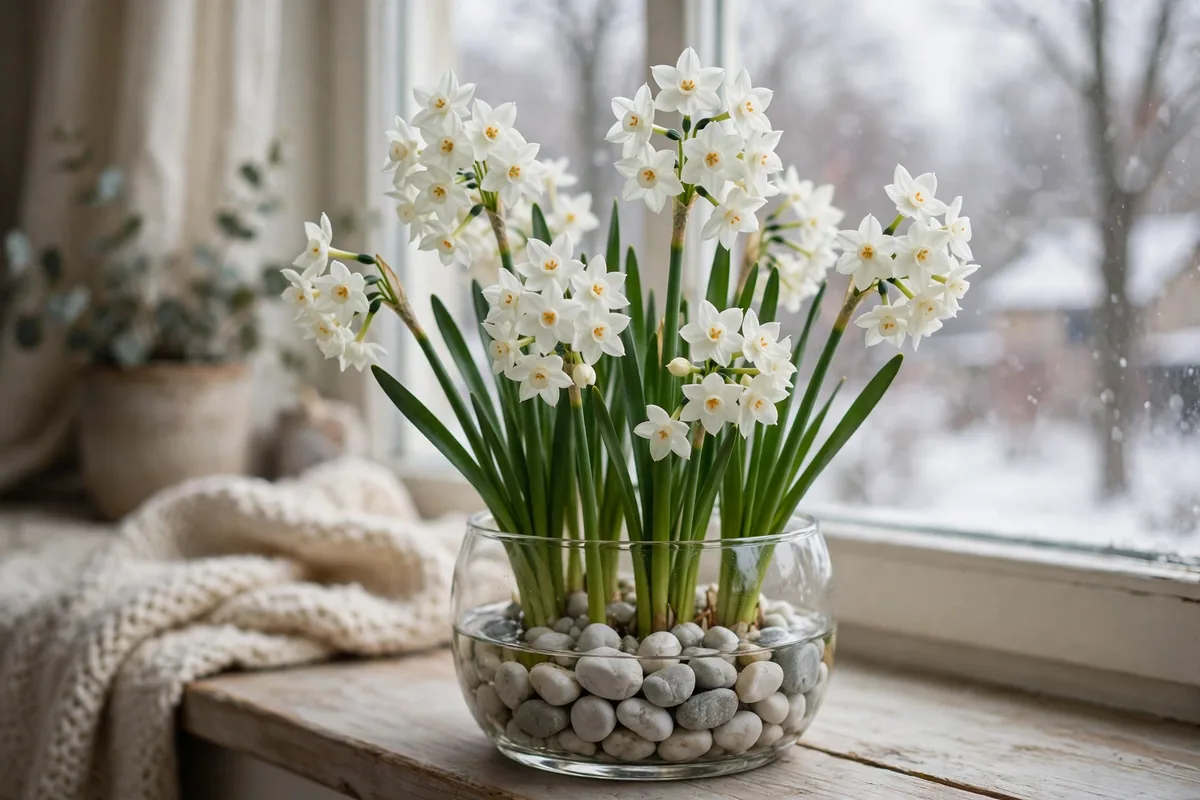
Zones 8–11 outdoors; forced indoors anywhere · 12–18 in · Blooms 4–6 weeks after planting · Bright light indoors. The easiest winter flower on this list: set the bulbs on pebbles and water, or in a pot of compost, and clusters of white, powerfully scented flowers follow in about a month — no cold treatment needed, which is exactly why they are forced commercially. ‘Ziva’ is the classic Christmas cultivar. Care note: paperwhites famously flop as the stems stretch in warm, dim rooms. Grow them cool and in the brightest light you have, stake early, and note that the scent is strong — some households love it, others find it overpowering at the dinner table. Plant a test pot first.
24. Amaryllis (Hippeastrum hybrids)
Zones 9–11 outdoors; houseplant elsewhere · 18–24 in · Blooms 6–8 weeks after potting · Bright light. The biggest winter flowers you can grow indoors: trumpets up to 8 inches across in red, white, pink, striped, and double forms, two or three stems from a single large bulb. Potted in early November, they time themselves neatly for the holidays. Care note: use a pot only 1–2 inches wider than the bulb, set a third of the bulb above the soil, and water sparingly until the shoot is several inches tall — soggy compost before roots form is the main cause of rot. After flowering, keep the plant growing in good light, feed it, and move it outdoors for summer; a well-fed bulb reblooms for years.
25. Florist Cyclamen (Cyclamen persicum)
Zones 9–11 outdoors; houseplant elsewhere · 6–12 in · Blooms Dec–Mar indoors · Bright, cool conditions. The florist’s winter standby: swept-back flowers in white, pink, red, and bicolors over heart-shaped, silver-marbled leaves. A healthy plant in a cool room flowers for two to three months — far better value than a cut bouquet. It is the tender cousin of the hardy Cyclamen coum listed with the bulbs above. Care note: heat and wet crowns kill more florist cyclamen than anything else. Keep it on a cool (50–65°F / 10–18°C) windowsill, water from the bottom, never pour water into the center of the tuber, and pick off faded flowers and yellowing leaves with a sharp twist at the base so no stub is left to rot.
How to Choose Winter Flowers for Your Zone
Start with your USDA zone — if you are unsure of it, the USDA Plant Hardiness Zone Map will settle it from your ZIP code. Then work down this list:
- Zones 3–5 (cold winters): Build around the hardiest outdoor bloomers — snowdrops, winter aconite, crocus, hardy cyclamen, hellebores, witch hazel, and winter honeysuckle. Expect most flowers from late January onward rather than December, and lean on forced paperwhites and amaryllis for true midwinter color indoors. South-facing walls and the shelter of evergreens can buy you two extra weeks of bloom.
- Zones 6–7 (moderate winters): You get nearly the full list. Add winter jasmine, camellia sasanqua in sheltered sites, dwarf iris, primroses, and pansies as a winter annual in zone 7. This is the sweet spot for a winter border that runs from December to April without a gap.
- Zones 8–10 (mild winters): Add the fall-planted annuals — pansies, violas, snapdragons, calendula, and stock — plus mahonia, daphne, and wintersweet shrubs. Your problem is the opposite of the northern gardener’s: plants that need real winter chill (some crocus and hellebore varieties) may flower weakly, so choose low-chill cultivars and plant bulbs late.
- Any zone, no garden: Forced paperwhites, amaryllis, and a florist cyclamen give a full winter of flowers on one windowsill. Pots of hardy bulbs and hellebores also work on a balcony in zones 6 and up — containers freeze harder than soil, so group pots together against a wall in cold snaps.
Next, layer by bloom time so something is always open: mahonia and camellia sasanqua start in fall, winter jasmine, daphne, and wintersweet carry December and January, the small bulbs and witch hazel peak in February, and hellebores, primroses, and bergenia close the season into spring. Finally, plant for scent near the house and color farther out. Three of the best winter shrubs — daphne, wintersweet, and winter honeysuckle — look unremarkable at ten paces but are unforgettable at arm’s length from the front door. The RHS guide to snowdrops and early winter bulbs is a good next read for planning bulb drifts that flower in the same weeks.
Common Mistakes With Winter Flowers
- Planting spring bulbs and expecting winter flowers. Tulips and daffodils are spring plants no matter when you buy them. The bulbs that genuinely bloom in winter are the small ones listed here — snowdrops, winter aconite, crocus, dwarf iris, and hardy cyclamen — and they are planted in fall, not spring.
- Buying one of everything. Winter flowers are mostly small or bloom on bare stems; single specimens vanish. Plant bulbs by the dozen, hellebores in threes, and shrubs where their silhouette and scent carry. A drift of 50 snowdrops costs little and looks like a snowdrift; three look like a mistake.
- Pruning winter shrubs at the wrong time. Winter jasmine, witch hazel, winter honeysuckle, and wintersweet all flower on wood grown the previous year. Prune them, if at all, immediately after flowering. The standard “prune everything in fall” cleanup quietly deletes a whole winter of blooms.
- Ignoring drainage in winter. More winter bulbs and cyclamen tubers rot in cold, wet soil than ever freeze. If your soil stays soggy in January, plant in raised beds, gritty pockets, or pots — and set cyclamen and iris in your driest, sunniest ground.
- Cutting back bulb and hellebore foliage too early. The leaves that look untidy in March are building next winter’s flowers. Leave bulb foliage until it yellows, and remove hellebore leaves in late fall — on the plant’s schedule, not yours.
- Keeping indoor winter flowers too warm and dark. Forced paperwhites stretch and flop, florist cyclamen fade in a fortnight, and amaryllis stems lean in a warm, dim room. Cool temperatures (below 65°F / 18°C at night) and the brightest light available keep all three compact and long-lasting.
- Forgetting that some winter favorites are poisonous. Hellebores, daphne, and snowdrop bulbs are all harmful if eaten, and daphne berries are a real hazard to small children. Enjoy them — just place them with the same care you would any other toxic plant, out of toddler and livestock reach.
Frequently Asked Questions
What flowers bloom in the middle of winter?
In December and January, the true midwinter bloomers are winter jasmine, camellia sasanqua, mahonia, wintersweet, and Christmas rose in mild gardens, plus pansies and violas in zones 8–10. From late January, snowdrops, winter aconite, witch hazel, winter honeysuckle, and daphne join in. Indoors, paperwhites and amaryllis can be timed to flower in any winter week you choose.
What is the hardiest winter flower?
Snowdrops and winter aconite, both hardy to zone 3, are the toughest small flowers — they routinely bloom through snow and hard frosts. Among shrubs, winter honeysuckle (zone 4) and witch hazel (zone 5) take the most cold, and the Christmas rose hellebore is hardy to zone 3 provided the soil drains in winter.
Can I plant winter flowers in fall, or is spring better?
Fall is the correct planting time for almost everything on this list. Small bulbs must go in during fall to receive the winter chill they need to flower, cool-season annuals are planted in fall in mild zones, and shrubs and hellebores planted in early fall root in while the soil is still warm, then flower on schedule their first winter in mild climates.
Which winter flowers are best for shade?
Hellebores are the standouts — both Christmas rose and Lenten rose flower well in part to full shade. Hardy cyclamen, snowdrops, winter aconite, and primroses all bloom happily under deciduous trees, where they receive light in winter before the canopy leafs out. Mahonia and daphne also prefer part shade, making shade one of the easier places to build a winter display.
Are winter flowers good for bees?
Yes — on mild winter days, honeybees and early bumblebee queens actively forage, and winter flowers are often the only nectar and pollen available. Mahonia, witch hazel, winter honeysuckle, crocus, snowdrops, and hellebores are all visited. Planting them in sunny, sheltered clumps makes the forage usable, because bees can only fly when temperatures climb above roughly 50°F (10°C).

One Comment