Veronica Flower: Meaning, Types and How to Grow It
Some flowers shout for a fortnight and vanish. Veronica does something rarer: it opens slender blue candles in early summer, and when you cut them back, it simply lights them again — and again — into autumn. The speedwells are fidelity written as a habit: always there, always blue, always returning. That the plant shares its name with the saint of the true image is fitting; few borders flowers are as truthful about what they will do, or as loyal in doing it.
This guide covers the six veronicas worth knowing (the great spike speedwells, the gentian-leaved spring one, the creeping groundcovers, the lakeside longifolia and the shrubby hebes), its meanings — fidelity, loyalty and devotion — and the late-summer haircut that manufactures the second and third flowering.
Quick Answer
The veronica flower is the spiked bloom of Veronica, the speedwells — one of the largest genera in the plantain family Plantaginaceae, with some 450 species, from cushion alpines to 4-foot border spikes and the shrubby hebes of New Zealand. Garden veronicas grow in USDA zones 3 to 9, flower from late spring through autumn (longer with a mid-season cutback), and thrive in full sun with ordinary drained soil. The veronica flower means fidelity, loyalty and devotion — Saint Veronica’s flower, named for the vera icon, the true image.
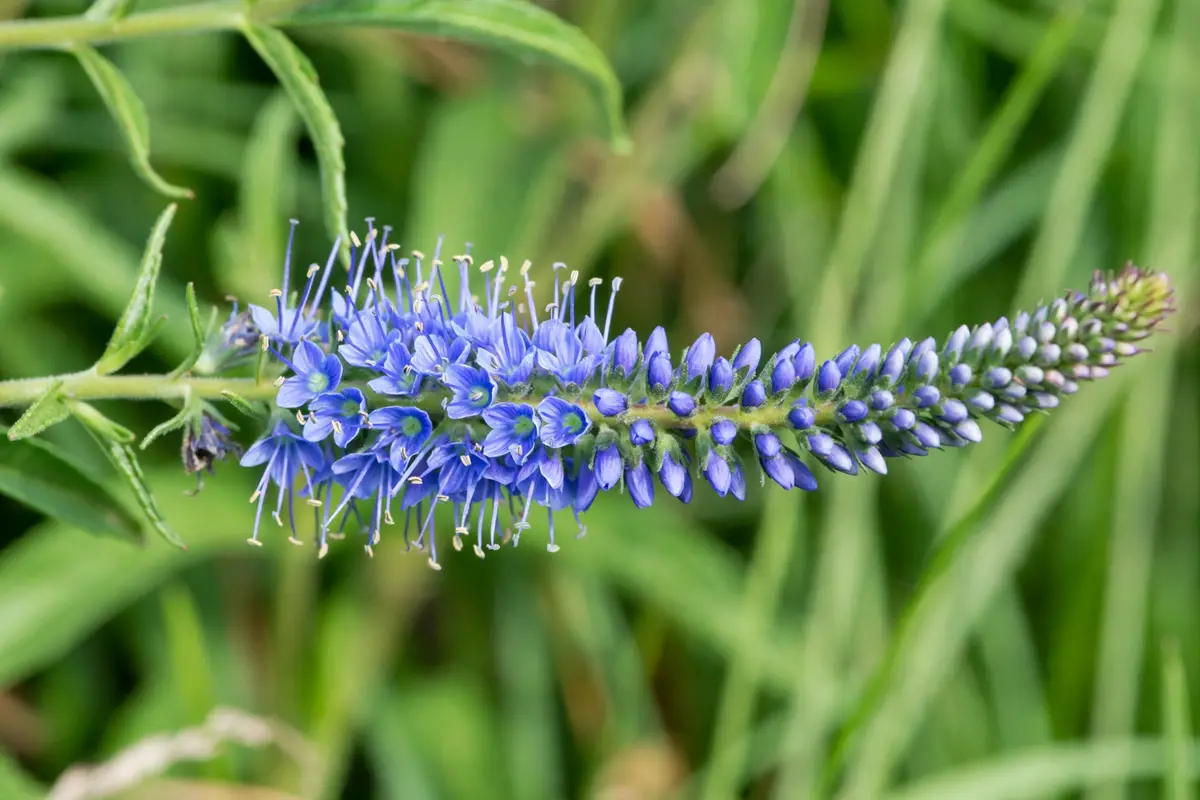
Table of Contents
- What Is a Veronica Flower?
- Types of Veronica and 6 Kinds Worth Knowing
- Veronica Flower Meaning and Symbolism
- Veronica Flower Colours and Their Meanings
- How to Grow Veronica
- Common Mistakes When Growing Veronica
- Veronica vs Salvia: The Two Blue Spikes
- Frequently Asked Questions
What Is a Veronica Flower?
A veronica flower is small — four petals, two proud stamens — but it arrives by the hundred, packed into tapering spikes that open from the base upward over weeks, giving the plant its long season and its candle-like silhouette. The genus is a traveller: brooklime in the streams, birds-eye speedwell starring every lawn in spring, thyme-leaved speedwell in the paths, and at the grand end the spiked speedwells of Asian and European meadows. Taxonomists have lately folded the New Zealand hebes into Veronica too, making the genus a family reunion of spikes, cushions and shrubs. The English name “speedwell” is usually explained as a blessing — speed you well — given to travellers who carried it for luck and for its old herbal uses. You can read more on the Veronica page on Wikipedia.
For gardeners the genus divides into three working groups: the border spikes (V. spicata, V. longifolia), grown for cutting and for bees; the spring aristocrats (V. gentianoides and kin) with pale ice-blue flowers over glossy rosettes; and the creepers (V. peduncularis, V. umbrosa, the lawn speedwells) that carpet paths and rock gardens. Hebes, the fourth group, are shrubs for mild climates and containers. All of them share the family’s virtues: hardiness, drought tolerance once rooted, and a work ethic that puts fussier perennials to shame.
Veronica Flower Quick Facts
- Botanical name: Veronica spp. (chief garden species: V. spicata, V. longifolia, V. gentianoides, V. peduncularis; hebes formerly Hebe).
- Family: Plantaginaceae, the plantain family.
- Hardiness: zones 3 to 9 for the herbaceous kinds; hebes zones 7 to 10.
- Height: 4 inches (creepers) to 4 feet (V. longifolia); spikes typically 1½–2½ feet.
- Bloom time: late spring to autumn with cutbacks; gentianoides in spring; hebes summer.
- Sun and soil: full sun (light shade tolerated); average, well-drained soil; dislikes winter wet.
- Good to know: shearing after the first flush triggers repeat blooming; elite bee plant; the wild bird’s-eye speedwell is the same genus in your lawn.
Types of Veronica and 6 Kinds Worth Knowing
Three spikes, a spring aristocrat, a creeper and a shrub. The table separates them; the profiles follow. For the full list of flower names, see our flower names A to Z guide.
| Type | Flowers | Height | Season | Best use |
|---|---|---|---|---|
| V. spicata ‘Royal Candles’ | Deep violet-blue spikes | 1–1½ ft | Summer, repeats | Front/mid border staple |
| V. longifolia | Blue/lilac/white spikes | 3–4 ft | Mid-late summer | Back border, cutting |
| V. gentianoides | Ice-blue over glossy leaves | 1½ ft | Spring | Spring borders, rock gardens |
| ‘Georgia Blue’ (V. peduncularis) | Sky-blue carpets | 4–6 in | Early spring | Groundcover, paths, walls |
| ‘Good Blue’ and pink spicata forms | Clear blue / rose spikes | 1½–2 ft | Summer, repeats | Cottage borders |
| Hebes (Veronica sect. Hebe) | White/lilac bottlebrush spikes | 1–4 ft shrubs | Summer | Mild gardens, containers |
1. ‘Royal Candles’ — the Border Standard
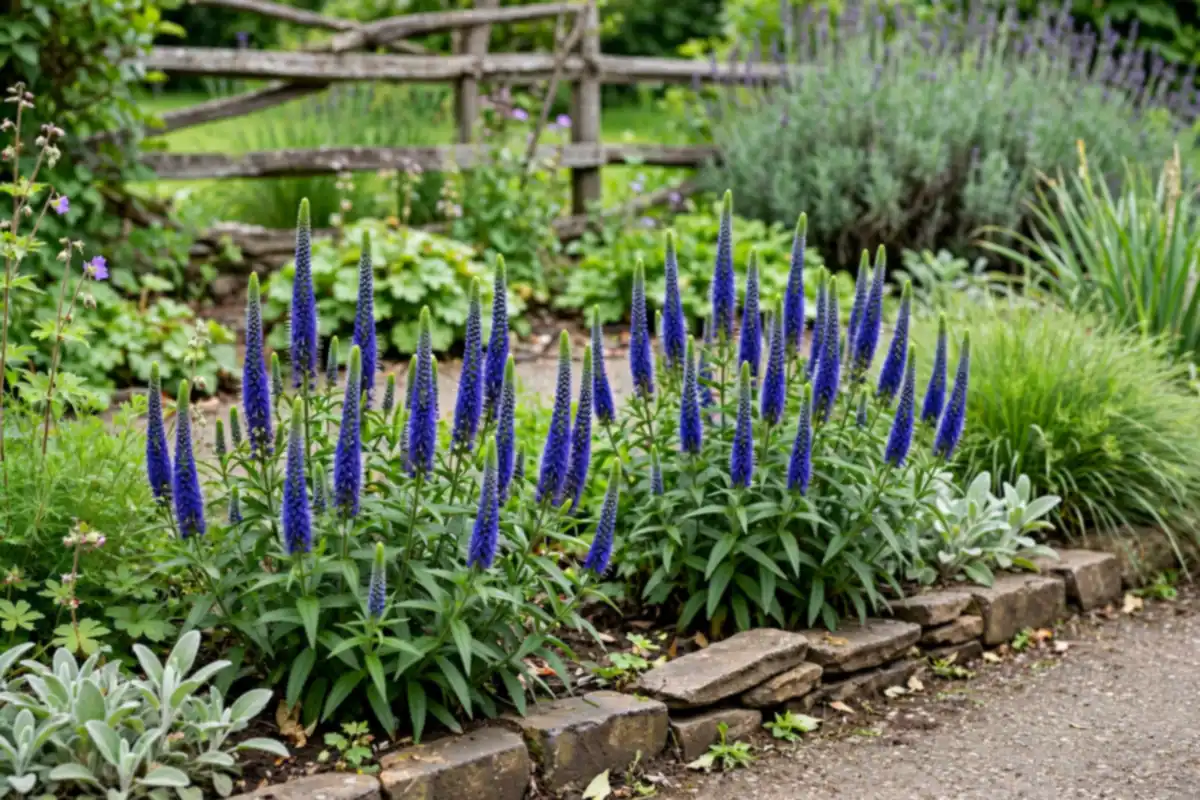
The spicata cultivar that defines the modern veronica: compact mounds carrying dense, deep violet-blue candles from early summer, deadheading or shearing into repeat bloom until autumn. Royal Candles is the tidy answer at the front of the border — dark green, mildew-resistant foliage, no staking, no drama — and the veronica most nurseries mean when they say the name. If you grow one spike speedwell, this is the benchmark.
2. Veronica longifolia — the Tall One
The lakeside speedwell, built at the other scale: 3-to-4-foot plants with long, elegant spikes in blue, lilac and white through mid and late summer, when the border runs short of vertical accents. Longifolia is the cutting-garden veronica (the stems last well in water) and a bee thoroughfare in August. It appreciates moisture more than its cousins — its wild home is damp meadows — and rewards a rich spot with genuine stature.
3. Veronica gentianoides — the Spring Aristocrat
The connoisseur’s speedwell: mats of glossy, gentian-like evergreen leaves and, in late spring, spikes of the palest ice-blue flowers veined in deeper blue — a colour of real refinement beside spring bulbs. It spreads politely to make groundcover with manners, sulks only in winter wet, and asks to be photographed in May light. The cultivar ‘Tissington White’ does the same in white.
4. ‘Georgia Blue’ — the Carpet
A creeping speedwell that solves the February garden: evergreen mats (bronze-flushed in winter) that cover themselves in sky-blue, white-eyed flowers from late winter into spring — among the earliest blues of the year, arriving with the snowdrops. Plant it to spill over walls, thread through stepping stones and underplant spring bulbs; it knits everything together and then politely greens over for summer.
5. Pink and Blue Spicata Forms — the Cottage Colours
Beyond Royal Candles, spicata runs a palette: clear mid-blues (‘Good Blue’), rose-pinks (‘Red Fox’, ‘Pink Goblin’) and whites (‘Icicle’), all on the same 1½-to-2-foot frame with the same shear-and-repeat habit. The pinks are softer than the plant’s loyal-blue reputation suggests and mix beautifully with the pincushion flower‘s lavender heads in a mid-summer border — two long-season workers on the same shift.
6. Hebes — the Shrubby Cousins
New Zealand’s contribution, now officially Veronica: evergreen shrubs from cushions to small hedges, with bottlebrush spikes in white, lilac and purple through summer and foliage (some variegated, some wine-flushed) that works all year. Hebes are for mild climates and big containers elsewhere — a hard winter sorts the hardy from the tender — but in coastal and zone 8–10 gardens they are backbone plants, and a flowering hebe hedge is a bee motorway.
Veronica Flower Meaning and Symbolism
Veronica means fidelity — loyalty, devotion and faithfulness kept. The name carries the legend of Saint Veronica, who wiped Christ’s face on the road to Calvary and found his image (vera icona, the true image) imprinted on her cloth; the flower took her name in the old herbals, and its meanings followed her story: devotion in suffering, loyalty without show. The speedwell name adds the traveller’s blessing — a flower carried for a safe journey and a faithful return. In the modern language of flowers, veronica is the anniversary and long-friendship bloom: not the fire of first love but the candle relit, year after year.
Send veronica for loyalty honoured: long marriages, old friends, promises kept. Its blue does the same fidelity work as the classics in our blue flowers guide — with a season twice as long as most of them.
Veronica Flower Colours and Their Meanings
- Deep blue-violet — fidelity in full strength: ‘Royal Candles’ and the classic spikes.
- Ice blue — devotion, refined: gentianoides in spring light.
- Sky blue — the traveller’s blessing: ‘Georgia Blue’ and the lawn speedwells.
- Pink — loyalty with tenderness: the rose spicata forms.
- White — pure devotion: ‘Icicle’ spikes and white hebes.
How to Grow Veronica
Sun, drainage, and the famous haircut: that is most of the craft. Gardeners on r/gardening on Reddit repeat it as a slogan: “when the first spikes fade, shear the whole plant by a third — you’ll get a second summer out of it.”
Planting and Position
Set border veronicas in full sun (they will take a little shade at a cost in flowers) in average soil with decent drainage — rich feeding is wasted on them and winter wet is their one real enemy. Space spicata kinds a foot apart, longifolia 18 inches, and water to establish; once rooted, they shrug off dry spells that wilt showier perennials. The creepers want the opposite scale: gritty soil, sun, and edges to spill over. Hebes go into the mildest, most sheltered spot you have, or into pots you can move.
The Shear-and-Repeat Method
Deadhead the first spikes as they fade — or shear the whole plant by a third in one pass, the production method — and sideshoots will carry fresh candles within weeks. A plant sheared in July commonly flowers into October. Cut all growth to the base in late autumn or early spring, divide clumps every three or four years in spring to keep them vigorous, and mulch lightly: the crowns prefer to breathe. Longifolia, the moisture-lover, is the exception to the lean rules — feed and water it like the meadow plant it is.
Common Mistakes When Growing Veronica
Mistake one is skipping the midsummer shear: an unsheared spicata finishes its first flush and coasts, looking done by August, when ten minutes with the shears would have bought two more months. Mistake two is winter wet — heavy, soggy soil rots the crowns of spicata and gentianoides silently; both would rather be dry in winter than fed in summer.
Mistake three is shade creep: a border that fills in around a veronica shades it year by year, and the spikes thin and lean toward the light until the plant is blamed for its neighbours. Mistake four is treating hebes as hardy everywhere: one severe winter in zone 6 ends them — know your zone, or grow them in pots. And mistake five is eradicating the wild cousins: bird’s-eye speedwell in the lawn is this same clan at ankle height, a spring star for early bees — many gardeners now mow around it and call it a feature.
Veronica vs Salvia: The Two Blue Spikes
The mid-border’s two blue candle-makers, confused on every nursery bench. Veronica (plantain family): four-petalled flowers with two long stamens (“eyes”) in dense tapering spikes; uncrushed foliage unscented; season built on the shear-and-repeat system; extremely hardy (zones 3–9). Salvia (mint family): tubular two-lipped flowers on square stems, foliage often aromatic when brushed; the perennial kinds (nemorosa and kin) rebloom on the same deadheading principle; hardiness similar but the shrubby kinds are tender. The field tests: square stem and scent say salvia; two-stamen eyes and round stems say veronica. Plant both and the border gets blue candles from May to frost either way — fidelity twice over.
Frequently Asked Questions
Is veronica a perennial?
Yes — the border speedwells (spicata, longifolia, gentianoides) are hardy perennials for zones 3–9, returning for years with an annual spring tidy and division every few years. The hebes are evergreen shrubs for milder zones (7–10) or containers. If your question is not answered here, the questions about the veronica flower on Quora cover most of the rest.
How long does veronica bloom?
With the midsummer shear, from early summer into autumn — individual plants commonly give three flushes. Unsheared, expect one long first flush of four to six weeks. The creeping kinds flower in spring instead, gentianoides likewise; plant across the groups and the genus covers spring to frost.
Does veronica attract bees?
Enthusiastically — the open, nectar-rich little flowers are sized for bees of every kind, and a flowering spike on a warm day hums. Longifolia in August is one of the border’s busiest bee plants, and hebe hedges are famous pollinator draws in mild climates.
Is veronica the same as speedwell?
Yes — speedwell is the English common name for the whole Veronica genus, from the lawn’s bird’s-eye speedwell to the border spikes. “Veronica” is the Latin, kept as a garden name for the showier kinds; gardeners use the two interchangeably.
Why is my veronica not reblooming?
Almost always the missing haircut: spent spikes left standing tell the plant its season is done. Shear by a third as the first flush fades, water once deeply, and new candles follow. Shade and exhausted, undivided old clumps are the other usual causes.
Is veronica deer resistant?
Generally yes — the border speedwells sit on most deer-resistant lists and are rarely more than nibbled where pressure is extreme; rabbits likewise leave them mostly alone. For more flowers under the same letter, see our guide to flowers that start with V.