Baby’s Breath Flower: Meaning, Types and How to Grow Gypsophila
It is the most famous supporting act in floristry: the cloud of tiny white stars that makes roses look rosier, bouquets look airier, and wedding arches look like weather. Baby’s breath has been “the filler” for two centuries — and quietly, in the last decade, it has become the bride who carries whole bouquets, crowns and centrepieces alone.
The plant behind the cloud is tougher than it looks: a steppe perennial from the chalk hills of Europe and Asia that shrugs off drought, poor soil and neglect, then returns for decades. This guide covers what baby’s breath flower is, the types worth knowing, what it means (purity and everlasting love — plus one honest warning), and how to grow your own cloud.
Quick Answer
Baby’s breath flower is Gypsophila paniculata, a hardy perennial in the carnation family grown for its airy clouds of tiny white or pink flowers. It grows 2 to 4 feet tall in full sun and well-drained, neutral-to-alkaline soil in USDA zones 3 to 9, flowering in early to mid summer, and dries beautifully. An annual cousin, G. elegans, grows fast from seed for cutting gardens. Note the honest cautions: the plant contains saponins (mildly irritating), and it is invasive in parts of North America, so check local rules before planting.
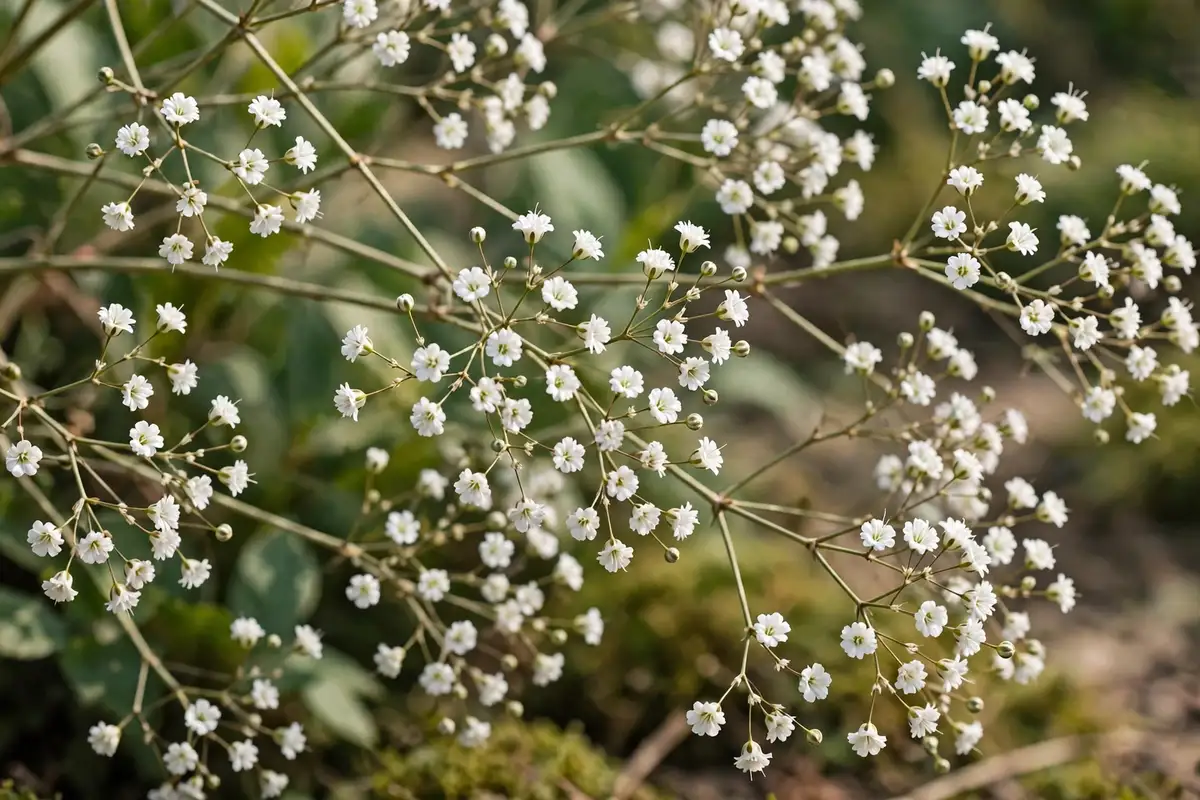
Table of Contents
- What Is a Baby’s Breath Flower?
- Types of Baby’s Breath and 6 Kinds Worth Knowing
- Baby’s Breath Flower Meaning and Symbolism
- Baby’s Breath Flower Colours and Their Meanings
- How to Grow Baby’s Breath
- Common Mistakes When Growing Baby’s Breath
- Using Baby’s Breath: Fresh, Dried and Weddings
- Frequently Asked Questions
What Is a Baby’s Breath Flower?
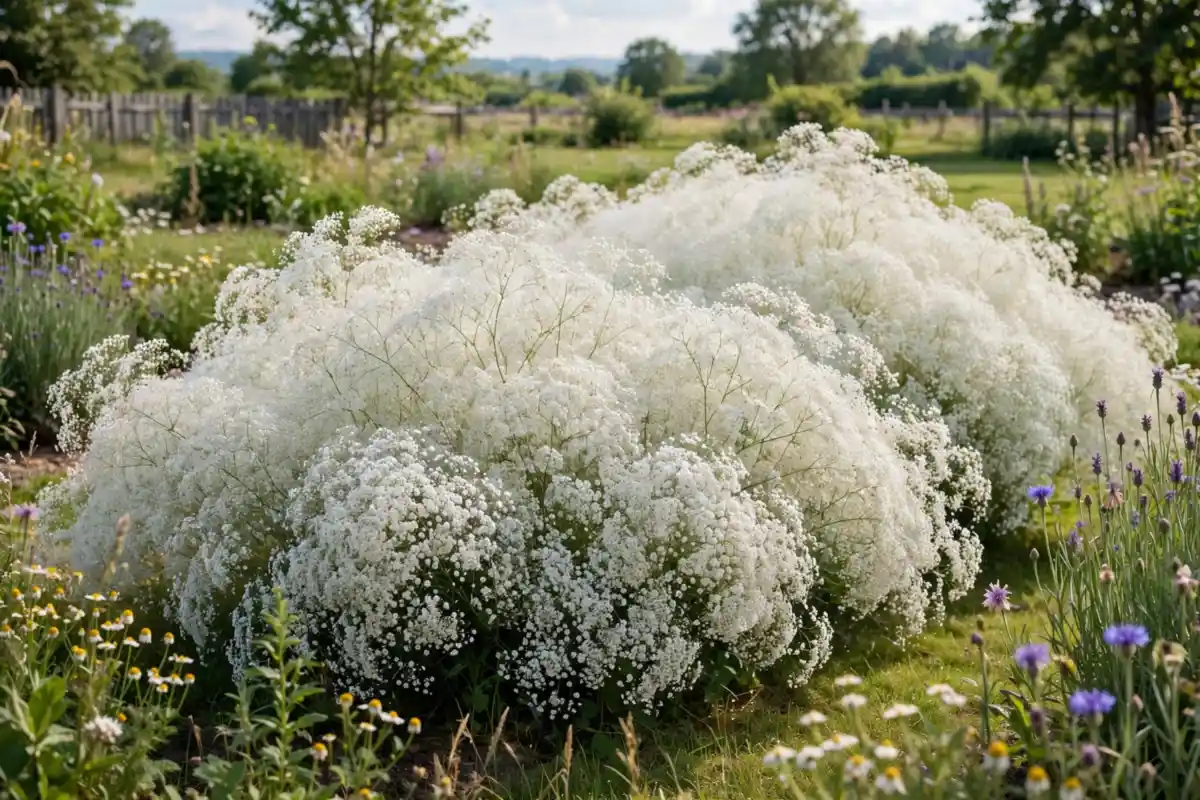
Baby’s breath is the genus Gypsophila — around 150 species in the carnation family, Caryophyllaceae. The name is Greek for “gypsum-loving”, a direct instruction: these are plants of chalk and limestone ground. The florist’s perennial, Gypsophila paniculata, comes from the steppes of central and eastern Europe across to Central Asia, where it forms wide, airy mounds on dry, stony slopes — in Russian steppe country its relatives roll as tumbleweeds. Each flower is tiny (a quarter-inch), five-petalled and star-shaped, but a plant carries thousands on a scaffolding of wiry, branching stems, and the effect is not the flower but the cloud. You can read more on the Gypsophila paniculata page on Wikipedia.
The Victorians made it the florist’s filler — the breath of white behind every serious rose — and the name itself is Victorian sentiment: the delicate, sweet, slightly milky-scented cloud suggested a baby’s innocence, and the flower became the emblem of christenings and newborns as well as brides. The modern twist is scale: florists now use baby’s breath en masse — full clouds as the main event — and dyed in rainbow colours for festivals. The plant itself has not changed; it has simply been promoted.
Baby’s Breath Flower Quick Facts
- Botanical name: Gypsophila paniculata (perennial); G. elegans (annual).
- Family: Caryophyllaceae, the carnation family.
- Hardiness: perennial, USDA zones 3 to 9.
- Height: 2 to 4 feet, as wide — a cloud, not a spike.
- Bloom time: early to mid summer; shear for a second flush.
- Sun and soil: full sun; well-drained, neutral to alkaline soil; drought-tolerant once settled.
- Good to know: contains saponins — mildly irritating if eaten; invasive in parts of North America (check locally).
Types of Baby’s Breath and 6 Kinds Worth Knowing
Two species and a handful of cultivars cover the whole story. The table separates them; the profiles follow. For the full list of flower names, see our flower names A to Z guide.
| Type | Life cycle | Flowers | Height | Best use |
|---|---|---|---|---|
| ‘Bristol Fairy’ | Perennial (grafted) | Double, pure white | 3–4 ft | The florist standard |
| G. paniculata species | Perennial | Single white clouds | 3–4 ft | Borders, drying |
| ‘Perfecta’ | Perennial (grafted) | Double white, larger | 3–4 ft | Cutting, show clouds |
| Pink forms (‘Pink Fairy’) | Perennial | Double blush pink | 2–3 ft | Soft colour schemes |
| G. elegans (annual) | Annual | Single, larger, white/pink | 1½–2 ft | Fast seed crops, cutting |
| Creeping baby’s breath | Perennial | White/pink mats | 4–6 in | Rock gardens, walls |
1. ‘Bristol Fairy’ — the Florist Standard
The baby’s breath of a million bouquets: fully double, pure-white flowers in generous clouds on a 3- to 4-foot plant. ‘Bristol Fairy’ cannot be grown true from seed — double flowers are sterile — so it is grafted onto vigorous species rootstock, which is why plants cost more and why the crown must be planted with the graft union protected. In return you get the exact cloud the wedding industry is built on, year after year.
2. The Species — Gypsophila paniculata
The wild steppe plant: single white flowers by the thousand, the airiest and most natural of all the forms, and the hardiest. Seed-grown species plants are the ones for borders, gravel gardens and dried-flower crops — cheaper, tougher, and in many eyes prettier than the doubles, the way a field is prettier than a arrangement. This is also the form behind the plant’s white flowers fame: nothing else whites so much air.
3. ‘Perfecta’ — the Bigger Double
Like ‘Bristol Fairy’ but more so: larger double flowers in denser clouds, the premium cutting grade. Also grafted, also sterile, also long-lived. Grow both and you can grade your own harvest; grow one and you will not feel deprived. In the border, ‘Perfecta’ reads as a white cumulus parked among the roses from June to August.
4. Pink Baby’s Breath — ‘Pink Fairy’ and Friends
The same clouds in blush: double ‘Pink Fairy’ and single pink seedlings bring the colour of spring blossom to the summer border. Pink forms are slightly smaller plants and pair exactly as the white does — with everything — while changing the mood from bridal to romantic. Modern florists also dye white baby’s breath any colour; the pinks worth growing are the honest ones.
5. Annual Baby’s Breath — Gypsophila elegans
The fast lane: a hardy annual from the Caucasus and Iran with larger single flowers (white, pink, carmine in seed strains like ‘Covent Garden’), sown direct where it will flower and blooming in as little as ten weeks. Succession-sow every three weeks from spring to midsummer and a cutting patch produces cloud after cloud all season. It is the species of market gardens and impatient beginners — and the best way to test whether you like growing the plant before buying the grafted perennials.
6. Creeping Baby’s Breath — Gypsophila repens
The alpine cousin: a mat-forming perennial from Europe’s mountains, four to six inches tall, spilling white or pink miniature clouds over rocks and wall tops in early summer. Same gypsum-loving constitution in miniature. For rock gardens and dry stone walls it is the baby’s breath of choice — and the safest ecologically, staying exactly where it is put.
Baby’s Breath Flower Meaning and Symbolism
Baby’s breath means purity of heart, innocence and everlasting love — the triple message that made it the wedding flower above all others and the christening flower that gave it its name. In the Victorian language of flowers it signified purity and love that endures, and the Victorians used it exactly as we do: woven through bouquets of heavier blooms, most classically with roses, to say the love is both passionate and pure. It remains the traditional filler for the bridal bouquet and the modern star of flower crowns, baby-shower arrangements and newborn photography (as a prop around, never on, the baby — see the safety note in the FAQ).
The everlasting part is literal: baby’s breath dries so perfectly that a wedding bouquet’s cloud can be kept for years, which is why the flower also appears at anniversaries and in memorial arrangements — love preserved. Give baby’s breath to say: pure, innocent, and not going anywhere.
Baby’s Breath Flower Colours and Their Meanings
The natural palette is small, and florists extend it with dye (the meanings below are for the grown colours):
- White baby’s breath — purity, innocence and everlasting love: the classic, and still ninety percent of all baby’s breath grown.
- Pink baby’s breath — gentle love and romance: the blush forms for softer messages and baby girls’ celebrations.
- Dyed baby’s breath — celebration in your chosen colour: rainbow-dyed clouds are the festival and party standard; the meaning is the colour you choose.
How to Grow Baby’s Breath
The recipe is the steppe’s: sun, drainage, lime, and being left alone. Gardeners on r/gardening on Reddit call it “the plant that rewards neglect and punishes kindness” — rich, wet kindness, specifically.
Planting and Position
Plant in spring in full sun, in a spot it can keep for decades: the perennial forms grow from a deep, fleshy rootstock crowned at the surface, and like their neighbour the balloon flower, they resent disturbance. Space plants a full 3 feet apart — each becomes a wide mound — and for grafted doubles (‘Bristol Fairy’, ‘Perfecta’), set the graft union about an inch below the soil to protect it. Annual G. elegans is direct-sown in shallow drills from spring onward, in succession.
Soil: Drainage and Lime
Two requirements, both absolute: sharp drainage and neutral-to-alkaline pH. In acid soil the plants yellow and dwindle — add garden lime or grow in a raised bed of alkaline rubble soil. Wet winter soil is the only reliable killer. In return, baby’s breath tolerates poor, stony, dry ground that starves fussier plants, and once established it barely notices drought. It is the perfect citizen for the gravel garden and the dry bank, alongside other white classics like the peony’s wedding companions — though the peony wants the richer corner.
Support, Shearing and Renewing
The cloud is top-heavy: a few twiggy sticks or a discreet ring support pushed in early keeps the mound from splitting open in summer rain. After the first flowering, shear the whole plant back by a third and water once — most plants answer with a second, smaller cloud in late summer. Old crowns eventually hollow in the centre; replace grafted cultivars with new plants rather than dividing (the graft and the taproot both object).
The Invasive Warning
Honesty requires this: G. paniculata has escaped gardens and naturalised aggressively in parts of North America — around the Great Lakes dunes and in several western states and Canadian provinces it is a listed invasive, forming monocultures from its thousands of wind-blown seeds. If you garden in an affected region, grow it in pots, deadhead before seeding, or choose the annual species and the creeping alpine instead — and never dump garden waste where it can seed into wild ground.
Common Mistakes When Growing Baby’s Breath
The most common mistake is acid, rich, wet soil — the plant’s three dislikes in one bed. Lime it, drain it, lean it out. The second is crowding: one plant needs its 3 feet, and two planted close become one tangled thicket. The third is buying grafted doubles and planting the graft union exposed to frost.
The fourth mistake is ordering seed of ‘Bristol Fairy’ and waiting for doubles: the cultivar is sterile and grafted; seed sold under fancy names gives single species flowers — lovely, but not the florist cloud. And the fifth is cutting the whole crop at full bloom for drying; cut when about three-quarters of the buds are open, or the cloud shatters as it dries (next section).
Using Baby’s Breath: Fresh, Dried and Weddings
Fresh, cut baby’s breath when most buds on the stem have opened, condition in water overnight, and expect a week of vase life; the slight sweet smell is part of its charm — a few people find it musty, and a drop of bleach in the vase water is the florist’s fix. It is the eternal partner of roses and camellias in arrangements, and stands alone in massed clouds for weddings: bouquets, crowns, aisle jars, arch swags.
Dried, it is among the easiest of all flowers: gather stems at three-quarter bloom, hang small bunches upside down in a dark, airy place for two weeks, and the cloud keeps its shape for years — the basis of its everlasting-love symbolism. Handle dried bunches gently; they are crisp. And a modern note: dyed and glittered baby’s breath is a party industry of its own — buy it coloured rather than spraying at home near anything white you love.
Frequently Asked Questions
Is baby’s breath a perennial or an annual?
Both exist. The florist’s standard, Gypsophila paniculata and its grafted doubles, is a hardy perennial living for decades in zones 3 to 9. Gypsophila elegans is a hardy annual, grown from seed in ten weeks for cutting gardens. Check which you are buying — the seed packets and the grafted plants behave very differently. If your question is not answered here, the questions about the baby’s breath flower on Quora cover most of the rest.
Is baby’s breath toxic?
Mildly: the plant contains saponins (gyposenin) that can irritate skin and, if eaten, upset stomachs in people and pets — florists who handle it daily sometimes develop dermatitis and sneezing fits. It is a low-level caution, not a dangerous poison: keep it as decoration, wash hands after long handling, and don’t let pets graze it.
Why is it called baby’s breath?
For its delicate, soft, slightly sweet cloud — Victorian sentiment named the flower for a baby’s innocence and breath, and it became the christening and newborn flower. The botanical name tells the other half of its story: Gypsophila, the gypsum-lover, is about chalk soil, not babies.
When does baby’s breath bloom?
The perennial forms flower in early to mid summer — roughly June to August — with a second smaller flush after shearing. Annual G. elegans blooms about ten weeks after each sowing, so succession sowing stretches its season from June to autumn.
Can baby’s breath grow in pots?
Yes — the annual species and young perennials do well in large pots of gritty, alkaline compost, and pot culture is the recommended route where the perennial is invasive locally. Keep the drainage fierce, the watering lean, and give the cloud support as it builds.
How do you dry baby’s breath?
Cut stems when about three-quarters of the flowers are open, strip the lower leaves, tie small bunches and hang them upside down somewhere dark and airy for about two weeks. The cloud holds its shape and colour for years. Cut fully open, the flowers shatter; cut in bud, they never open. For more flowers under the same letter, see our guide to flowers that start with B.