
April Birth Flower: Daisy and Sweet Pea Meaning, Symbolism and Facts
April is the month of soft rain and fast growth. The grass turns deep green and the trees open their first leaves.
April has two birth flowers. The daisy is the main one. The sweet pea is the second. Most April birthdays are Aries. The last part of the month moves into Taurus.
Quick Answer
The April birth flowers are the daisy and the sweet pea. The daisy means innocence, purity, and cheerfulness. The sweet pea means blissful pleasure and a warm thank-you. Together, they bring soft colour and spring’s sweetest scent to an April birthday.
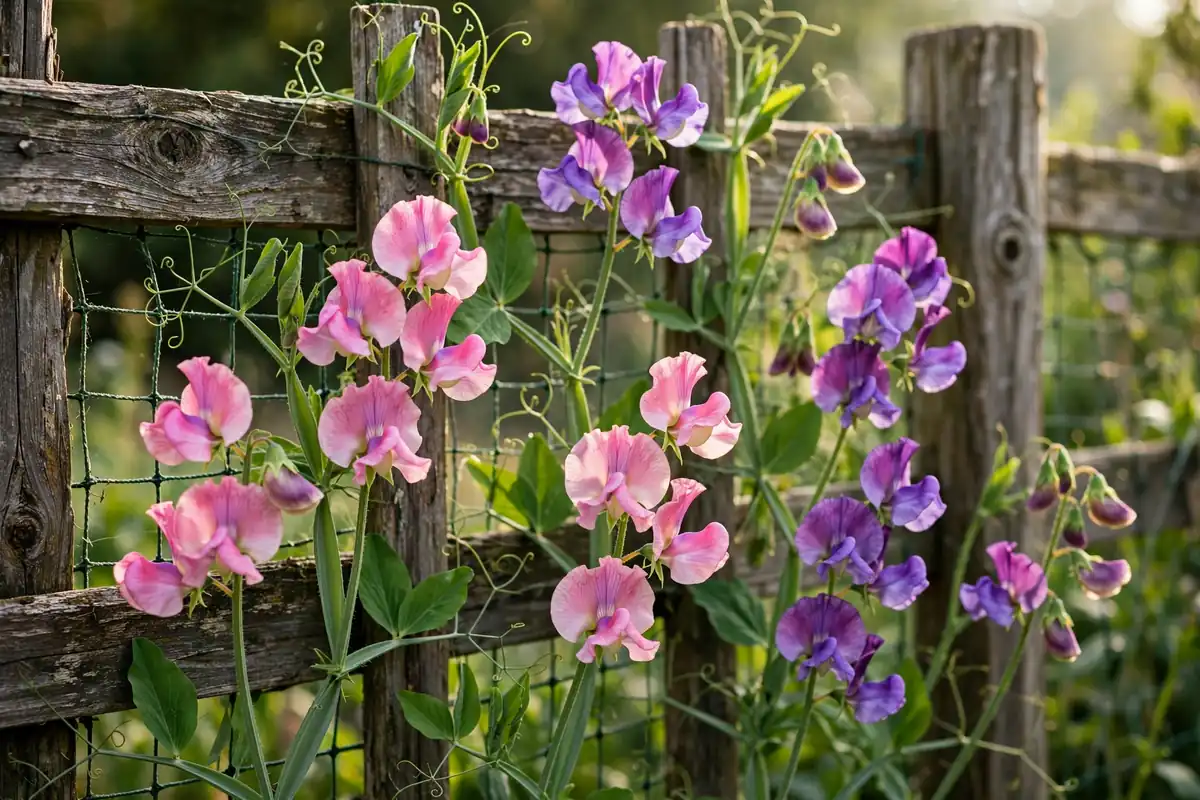
Table of Contents
- Daisy: The Primary April Birth Flower
- Sweet Pea: April’s Second Birth Flower
- Daisy vs Sweet Pea
- Birth Flowers by Month
- How to Grow April Birth Flowers
- Gift Ideas for an April Birthday
- Frequently Asked Questions
Daisy: The Primary April Birth Flower
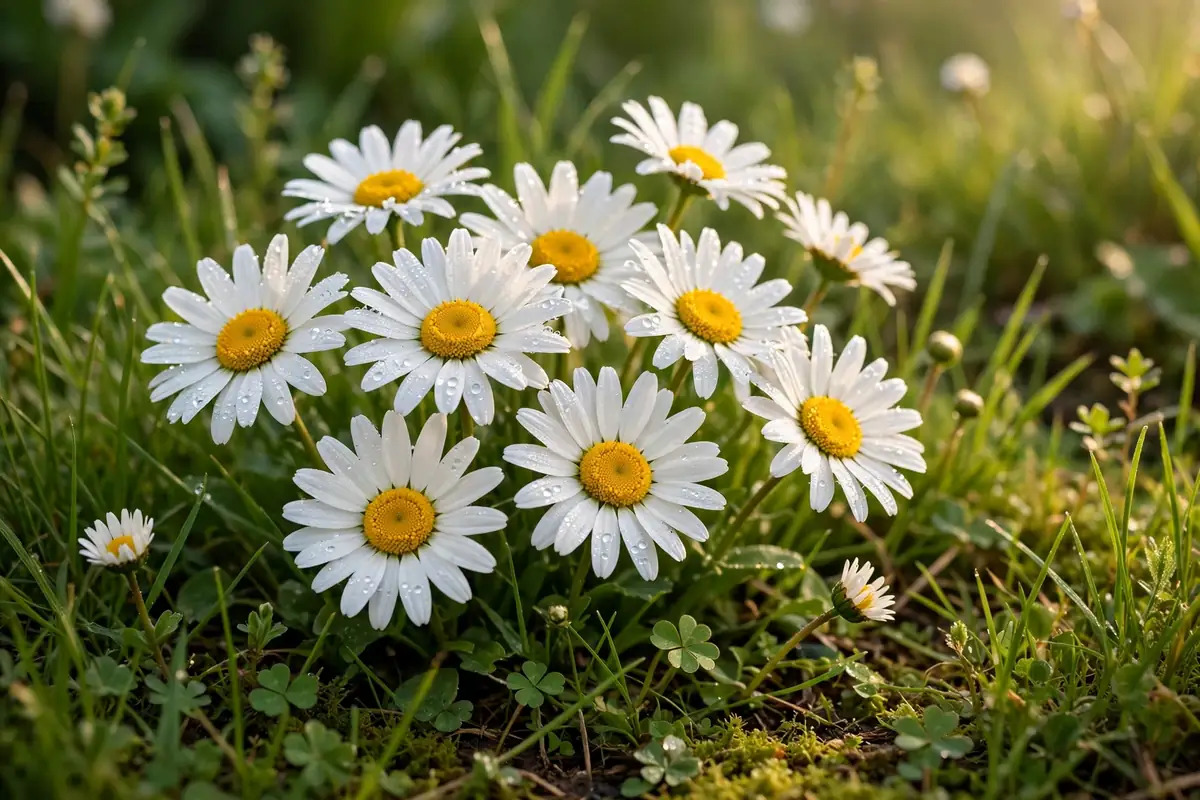
The daisy is the friendliest flower in the garden. White petals open around a golden centre — simple and bright. It asks for almost nothing and blooms anywhere.
The daisy stands for innocence, purity, true love, and cheerfulness. Read more about the plant on the common daisy page on Wikipedia, or explore flowers that start with D.
The “Day’s Eye” Story
The name daisy has a lovely story. It comes from the Old English “dægeseage,” meaning “day’s eye.” It opens its eye when the sun comes up, and folds closed at night to sleep.
Children have loved daisies for hundreds of years, linking the stems into daisy chains — crowns, necklaces, and bracelets made of flowers.
In Norse myth, the daisy was sacred to Freya, goddess of love and beauty. Daisies also belong to a big family — their cousins include sunflowers, asters, and chrysanthemums. The classic white kinds shine among other white flowers in a spring border.
Daisy Quick Facts
- Type: perennial. It comes back every year.
- Bloom time: spring through fall, best in spring.
- Colours: classic white with a golden centre; pink and red kinds too.
- Light: full sun or part shade.
- Habit: easy and tough; seeds itself into cheerful drifts.
- Edible note: young petals and leaves are edible and can top a spring salad.
Sweet Pea: April’s Second Birth Flower
The sweet pea is the perfumed climber of spring. Its soft, ruffled blooms open in pink, purple, white, red, and blue — and the scent can stop you mid-step on the path.
The sweet pea stands for blissful pleasure and gratitude. Its classic message is “thank you for a lovely time.” That is why it is also the traditional goodbye flower: a sweet farewell and thank-you in one bunch.
Its perfume is its true star. The sweet pea is one of the most fragrant flowers in the garden, with a proud place on any list of fragrant flowers. You can also browse flowers that start with S for more spring favourites.
The Man Who Made It Famous
The sweet peas we grow today owe a lot to one man. Henry Eckford, a plant breeder in Victorian England, crossed the small old kinds and raised big, colourful new ones — the famous “grandiflora” sweet peas that gardeners still grow today.
Sweet peas climb. Thin, curling tendrils pull the vines up a fence, a net, or a wigwam of sticks. And here is the grower’s secret: the more flowers you pick, the more blooms the plant makes — pick every few days, and it flowers for weeks.
One safety note: the seeds look just like pea seeds, but they are not food. They are poisonous if eaten — enjoy the flowers, never the seeds.
Sweet Pea Quick Facts
- Type: climbing annual, grown fresh from seed each year.
- Bloom time: spring into early summer.
- Support: needs a fence, net, or sticks to climb.
- Light: full sun, but keep the roots cool and shaded.
- Scent: very strong and sweet — among the best in the garden.
Daisy vs Sweet Pea
One hugs the ground in the lawn. The other climbs high into the sun.
| Flower | Type | Where It Grows | Scent | Meaning | Best For |
|---|---|---|---|---|---|
| Daisy | Perennial | Lawns and borders | Mild, fresh | Innocence, purity, cheerfulness | Drifts, daisy chains, easy colour |
| Sweet Pea | Climbing annual | Fences, nets, and supports | Very strong, sweet | Blissful pleasure, gratitude, goodbye | Cut posies, scent, climbing colour |
Birth Flowers by Month
Want the full year at a glance? Here is the birth flower chart for all twelve months.
| Month | Birth Flower(s) |
|---|---|
| January | Carnation & Snowdrop |
| February | Violet & Primrose |
| March | Daffodil & Jonquil |
| April | Daisy & Sweet Pea |
| May | Lily of the Valley & Hawthorn |
| June | Rose & Honeysuckle |
| July | Larkspur & Water Lily |
| August | Gladiolus & Poppy |
| September | Aster & Morning Glory |
| October | Marigold & Cosmos |
| November | Chrysanthemum & Peony |
| December | Narcissus & Holly |
For the full chart with every month in one place, see our birth flowers chart and guide.
How to Grow April Birth Flowers
Daisies almost look after themselves. Sweet peas need a little help — and pay you back in armfuls of scent.
Growing Daisies
- Sow seed in spring, or split clumps of an older plant.
- Almost any soil works if it drains well.
- Give them sun for the most flowers.
- Pick off dead blooms to keep new ones coming.
- Let a few flowers drop their seed, and daisies will return on their own.
Growing Sweet Peas
- Soak seeds in water overnight before sowing — it helps them sprout faster.
- In mild climates, sow in fall for early flowers. In cold climates, sow in early spring.
- Set up the net or fence at planting time — the vines climb fast.
- Mulch well to keep the roots cool and moist.
- Pick blooms every few days — picking keeps new flowers coming.
Growers in r/gardening on Reddit swap sweet pea tips every spring — the best kinds and supports, and how to get the strongest scent.
Gift Ideas for an April Birthday
A bunch of fresh daisies is the happiest April gift. It says innocence, purity, and pure cheer — a safe, sweet choice for a friend, a child, or a new baby, and a natural pick for an Easter basket.
A posy of sweet peas says thank you. Give one after a visit or a favour — the old message, “thank you for a lovely time,” does the talking while the perfume fills the room.
April’s birthstone is the diamond, the hardest gem. That makes a sweet contrast: the softest spring flowers with the strongest stone. A diamond gift beside a bunch of daisies feels soft and grand at once.
Frequently Asked Questions
What is the April birth flower?
April has two birth flowers. The daisy is the main one, and the sweet pea is the second. The daisy stands for innocence and purity. The sweet pea stands for blissful pleasure and gratitude.
What does the daisy symbolise?
The daisy symbolises innocence, purity, true love, and cheerfulness. Its name means “day’s eye,” because the flower opens with the sun. In Norse myth, it was sacred to Freya, goddess of love.
Why is the sweet pea a goodbye flower?
Its classic message is “thank you for a lovely time.” People gave them when a guest left or a happy visit ended — a goodbye and a thank-you in one small bunch.
What is April’s birthstone?
April’s birthstone is the diamond, the hardest natural gem in the world — a lovely contrast with the month’s soft flowers.
Are sweet pea seeds edible?
No. Sweet pea seeds look like garden pea seeds, but they are poisonous if eaten. Grow them for flowers and scent only, and keep seeds away from children. For more views, see questions about the April birth flower on Quora.


One Comment