Peony Flower: Types, Meaning, Symbolism and How to Grow Peonies
A peony is the flower gardeners plan their spring around. Its buds open into huge, layered blooms, some as wide as a dinner plate, in pink, white, red, coral and yellow. The flowers last only a week or two each year, and somehow that is exactly why people treasure them.
Peonies are also some of the longest-lived plants you can grow. A peony planted in a sunny spot with its roots at the right depth can flower for fifty years or more, and old plants in old gardens are still blooming after a century. Few perennials ask for so little and give back so much.
Quick Answer
A peony flower is a large, many-petalled bloom from the genus Paeonia, the only genus in the peony family. There are about 33 species, plus thousands of named garden varieties in three groups: herbaceous peonies, tree peonies and Itoh hybrids. Most garden peonies grow 2 to 3 feet tall, bloom in late spring to early summer, and do best in full sun and well-drained soil in USDA zones 3 to 8. Peony is also November’s second birth flower, after the chrysanthemum.
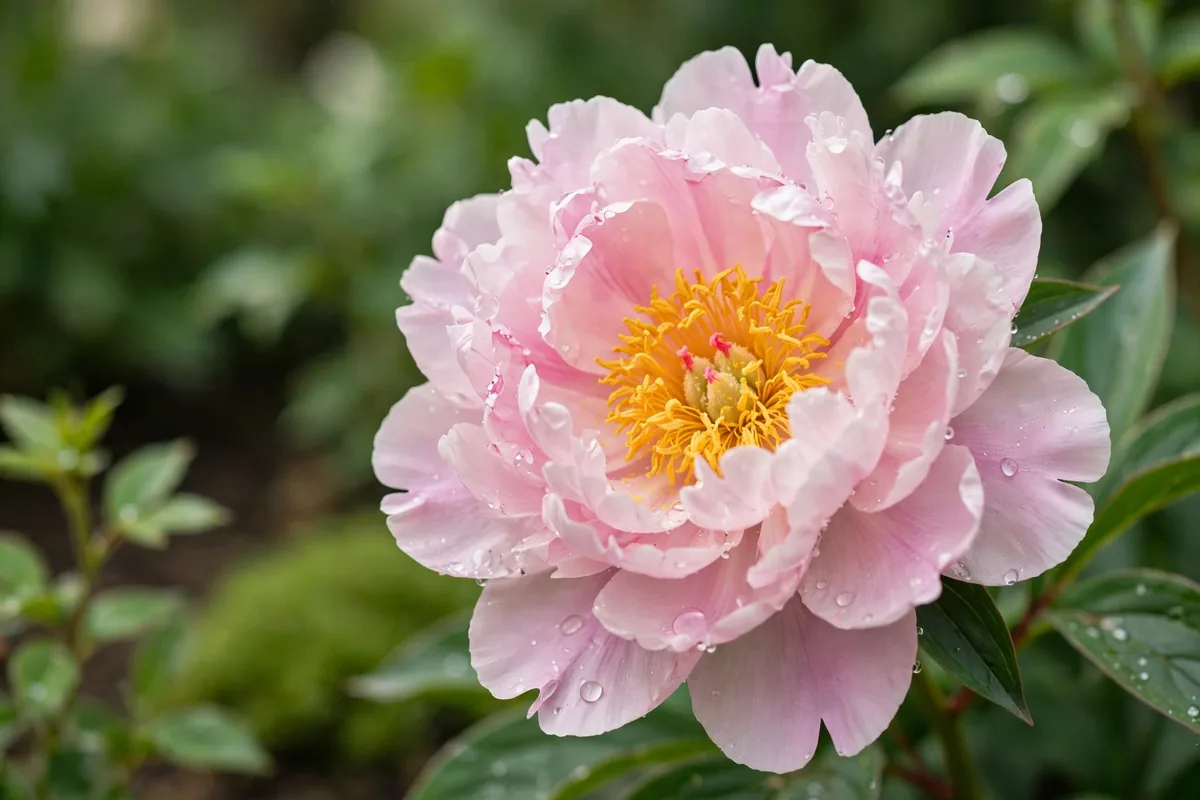
Table of Contents
- What Is a Peony Flower?
- Types of Peony and 6 Popular Varieties
- Peony Flower Meaning and Symbolism
- What Each Peony Colour Means
- How to Grow Peonies
- Common Mistakes When Growing Peonies
- Peonies in Bouquets and Cut Flowers
- Frequently Asked Questions
What Is a Peony Flower?
Peony belongs to the genus Paeonia, in its own family, Paeoniaceae. Peonies grow wild across Asia, southern Europe and western North America, and they have been grown in Chinese gardens for well over a thousand years. The name comes from Paeon, physician to the Greek gods, who is said to have healed wounds with the plant’s roots. You can read more on the peony page on Wikipedia.
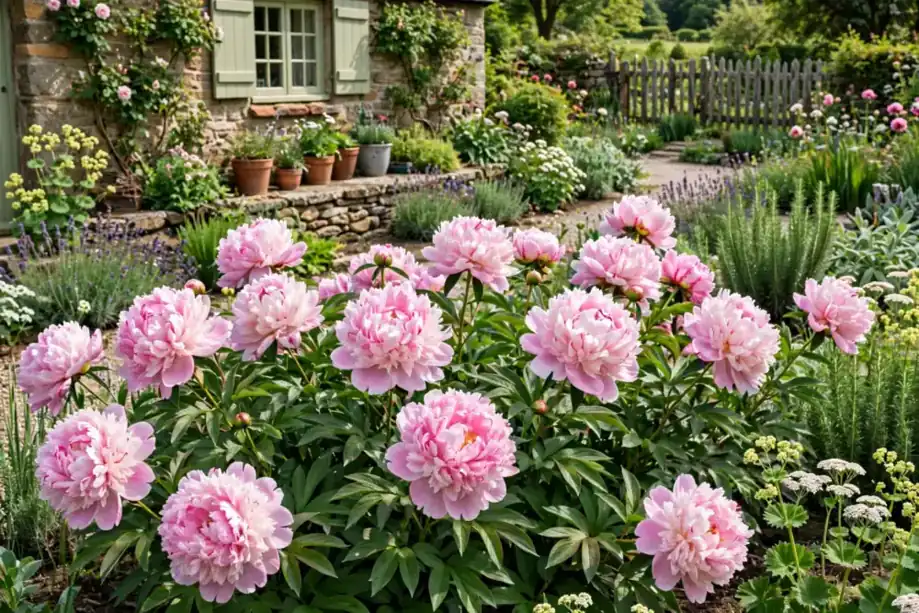
A peony flower is built from layer upon layer of petals around a heart of golden stamens. Single forms have one open ring of petals, Japanese and anemone forms have a cushion of narrow petals in the middle, and the famous double forms are so full they hide the centre completely. Each plant flowers for only about a week to ten days, but early, mid-season and late varieties planted together can stretch the peony season to six weeks.
If you notice ants on peony buds, do not panic and do not spray them. The buds release a sweet nectar that ants love, and the ants do the plant no harm at all. They leave as soon as the flowers open.
Peony Quick Facts
- Family: Paeoniaceae, the peony family.
- Genus: Paeonia, with about 33 species.
- Life cycle: very long-lived perennial; plants can bloom for 50 to 100 years.
- Height: 2 to 3 feet for herbaceous peonies; tree peonies reach 4 to 5 feet.
- Bloom time: late spring to early summer, about 7 to 10 days per plant.
- Sun: full sun, at least 6 hours a day.
- Zones: USDA 3 to 8; peonies need winter cold to bloom well.
- Good to know: peony is the floral emblem of China, the state flower of Indiana, and the traditional flower for a 12th wedding anniversary.
Types of Peony and 6 Popular Varieties
Every garden peony belongs to one of three groups. Herbaceous peonies die back to the ground each winter and return in spring; they are the classic cottage-garden kind. Tree peonies are small woody shrubs that keep their stems all year and carry the biggest flowers of all. Itoh peonies, also called intersectional peonies, are crosses between the two groups, bred first by Toichi Itoh in Japan in 1948; they combine huge tree-peony flowers with herbaceous stems that die back in winter.
| Variety | Group | Colour | Bloom Time | Height |
|---|---|---|---|---|
| Sarah Bernhardt | Herbaceous | Soft pink | Late | 3 feet |
| Coral Charm | Herbaceous | Coral fading to ivory | Early | 3 feet |
| Festiva Maxima | Herbaceous | White with crimson flecks | Early to mid | 3 feet |
| Karl Rosenfield | Herbaceous | Crimson red | Mid | 3 feet |
| Bowl of Beauty | Japanese form | Pink with a cream centre | Mid to late | 3 feet |
| Bartzella | Itoh | Lemon yellow | Mid to late | 3 feet |
1. Sarah Bernhardt
The most famous peony in the world. Sarah Bernhardt, introduced in 1906, carries huge, fragrant, rose-pink double flowers in early summer. If a florist sells you a pink peony, it is very often this one. It is tall and generous, and it needs a support ring, because the heavy blooms nod after rain.
2. Coral Charm
Coral Charm opens a deep coral-pink and then fades day by day through apricot to soft ivory, so one plant can hold several colours at once. It is a semi-double herbaceous peony, an early bloomer, and one of the best peonies for cutting.
3. Festiva Maxima
Grown since 1851 and still unbeatable, Festiva Maxima has enormous white double flowers with a few crimson flecks near the centre and a rich perfume. White peonies like this one glow in evening light; our guide to white flowers has more blooms that do the same.
4. Karl Rosenfield
A classic crimson-red double with strong stems and a long vase life. Red peonies are symbols of honour and respect in China, and this is the red most gardeners start with. For more bold red blooms, see our guide to red flowers.
5. Bowl of Beauty
A Japanese-form peony with a ring of pink outer petals around a frothy cream centre. It is lighter and airier than the big doubles, so it stands up better in wind and rain, and bees can reach its centre, which they cannot do in a full double.
6. Bartzella (Itoh)
Bartzella is the yellow peony that changed gardens: an Itoh hybrid with enormous lemon-yellow, lightly scented flowers, up to 50 blooms on one established plant. It costs more than a herbaceous peony, but it flowers for longer and never needs staking.
Peony Flower Meaning and Symbolism
The peony is one of the most loved flowers in the world, and its meanings are almost all happy ones: romance, a happy marriage, prosperity, good fortune and honour. In China the peony is called the king of flowers and has stood for wealth and honour for centuries; it appears on paintings, porcelain and wedding decorations all over Asia.
There is a shy side to the peony too. In a Greek myth, Paeonia was a nymph who was turned into a flower when she blushed at the wrong moment, which is why the peony also carries a meaning of bashfulness and modesty. Put together, the peony says: may your life be rich, honoured and full of love.
Peony is November’s second birth flower, sharing the month with the chrysanthemum. Our November birth flower guide tells the full story of the pairing. And for more blooms beginning with the same letter, browse our list of flowers that start with P.
What Each Peony Colour Means
Peonies come in every shade except true blue, and each colour carries its own message in the language of flowers.
- Pink peonies mean romance and love. Pink is the classic peony colour and the most given, for weddings, anniversaries and apologies alike.
- White peonies mean purity and innocence, and in Japan they are also used to say sorry, which makes them the peony of a graceful apology.
- Red peonies mean passion, honour and respect. In China, deep red peonies are the most prized of all.
- Coral peonies mean gratitude and appreciation, and their warm colour makes them a joyful thank-you flower.
- Yellow peonies mean friendship, joy and new beginnings. They were rare until Itoh hybrids made yellow common in gardens.
- Purple peonies mean royalty and admiration, and they are the least common colour in the garden.
How to Grow Peonies
Peonies are easy plants with one golden rule, and that rule explains most peony problems. Get the planting depth right, give them sun, and then leave them alone for decades.
Sun and Soil
Plant peonies in full sun, at least 6 hours a day, in soil that drains well. They like a rich, neutral to slightly alkaline soil, and they hate sitting in winter wet. Space plants about 3 feet apart: peonies grow into wide clumps and need air moving around them to stay free of fungal disease.
Planting: The Golden Rule
Plant bare-root peonies in autumn, with the pink buds on the roots, called eyes, only 1 to 2 inches (3 to 5 cm) below the soil surface. This is the golden rule. Planted deeper than that, a peony will grow handsome leaves for years and never flower. Set the plant in its hole, water it in well, and mark the spot, because the shoots are late to appear in spring.
Watering and Aftercare
Water in dry spells during the first two years while the roots settle. After that, peonies are deep-rooted and largely look after themselves. Push a support ring over the clump in spring, before the stems get tall, so heavy double flowers stay upright in rain. Deadhead spent blooms, but leave the leaves alone all summer: they are busy feeding next year’s flowers. Gardeners on r/gardening on Reddit swap peony photos and rescue stories every spring, and the advice is nearly always the same: check the planting depth.
Cutting Back
Herbaceous and Itoh peonies should be cut down to the ground in autumn, after the leaves have yellowed or been blackened by frost, and the cuttings binned rather than composted, to keep fungal spores away. Tree peonies are different: never cut them back. Just remove dead wood in spring and let the shrub keep its woody frame.
Common Mistakes When Growing Peonies
- Planting too deep. The number one reason peonies refuse to bloom. If your plant has leaves but no flowers, dig it up in autumn and replant it with the eyes 1 to 2 inches below the surface.
- Too much shade. In shade, peonies stretch, flop and flower poorly. They need full sun to set buds.
- Moving them too often. Peonies dislike being disturbed and may sulk for a year or two after a move. Choose the spot once, and choose it well.
- Cutting the leaves off too early. The foliage feeds the roots after flowering. Leave it until autumn, even if it looks plain.
- Watering over the leaves. Wet foliage invites botrytis, the grey mould that spots peony leaves and rots buds. Water at the base instead.
- Expecting flowers in the first year. Peonies are slow to settle. A new plant may give a flower or two in year two and reach its best from year three onward.
Peonies in Bouquets and Cut Flowers
Peonies are among the most loved cut flowers in the world, and there is a trick to cutting them: pick them in bud, when the bud feels soft like a marshmallow when you squeeze it gently. Buds cut at this stage open indoors over two or three days and last 5 to 7 days in a vase. Buds cut too hard and green may never open.
Rinse the buds briefly before arranging to wash off the sugary nectar and any travelling ants, and refresh the water every two days. Florists even store dry peony buds wrapped in newspaper in a fridge for weeks and bring them out for weddings out of season. Our guide on how to make cut flowers last longer covers the same tricks for other short-lived blooms.
Frequently Asked Questions
Why is my peony not blooming?
Almost always, it is planted too deep. The buds (eyes) on the roots must sit only 1 to 2 inches below the soil. Too much shade, a very young plant, or cutting the leaves down too early the year before can also stop flowering. Fix the depth first; it solves most cases.
Do ants harm peony buds?
No. Peony buds release sweet nectar, and ants come to drink it. They do not damage the buds, and the flowers open perfectly well without them. Just shake or rinse cut stems before bringing them indoors.
How long do peonies live?
A very long time. Peonies regularly bloom for 50 years, and plants over 100 years old are known in old gardens. This is why gardeners say: plant a peony for your grandchildren.
When do peonies bloom?
In late spring to early summer, usually May and June in most gardens. Each plant flowers for about 7 to 10 days, but planting early, mid-season and late varieties together stretches the show to about six weeks.
Are peonies poisonous?
Peonies are mildly poisonous if eaten, for people and for pets, and can upset the stomach. They are safe to grow and to handle, but keep bouquets and fallen petals away from cats, dogs and small children who might chew them. For more grower views, see questions about the peony flower on Quora.