25 Purple Annual Flowers: Names, Pictures & Growing Tips
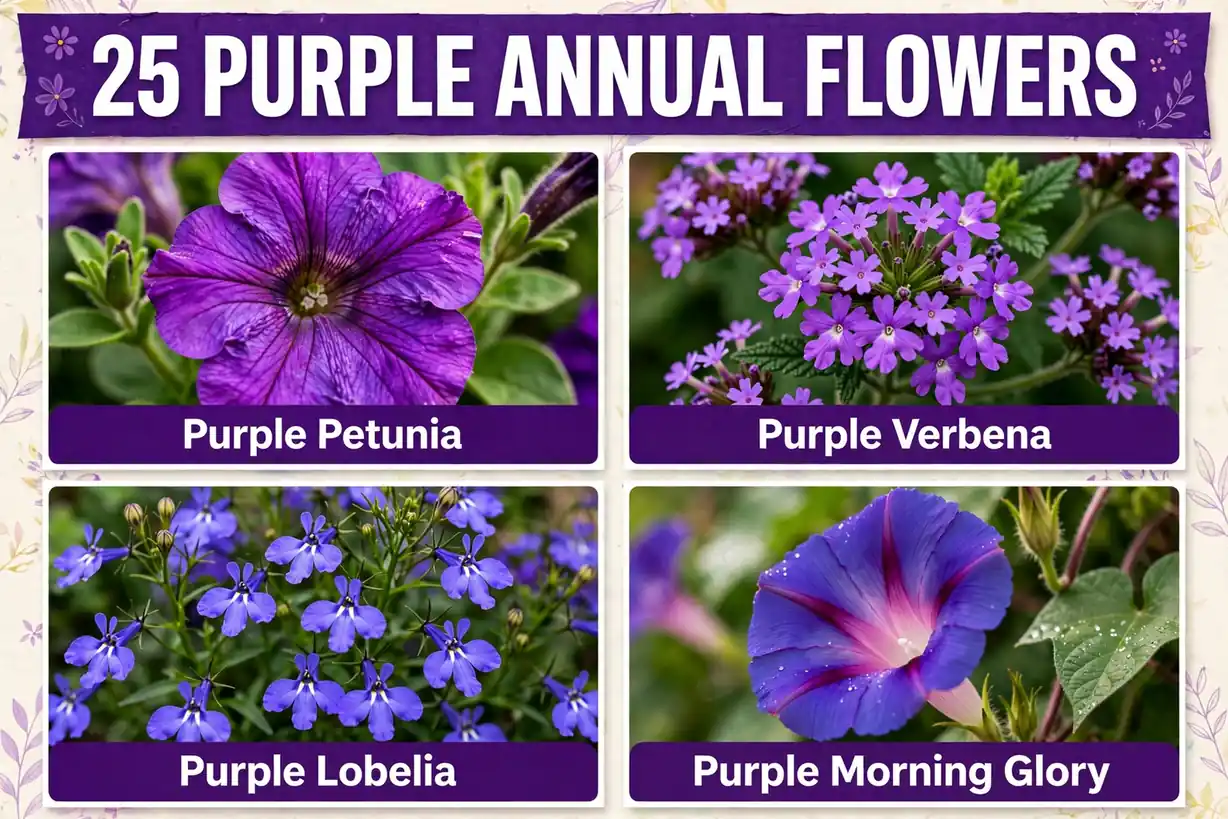
Purple annual flowers are the fastest way to add rich, jewel-toned color to a garden. Unlike perennials that take a season or two to settle in, annuals germinate, bloom, and finish their whole life cycle in a single growing season — which means you get armloads of purple flowers the very first summer you plant them. From the velvety trumpets of petunias to the airy spires of larkspur and the fragrant clusters of heliotrope, purple annuals work in beds, borders, hanging baskets, and containers of every size.
This guide covers 25 real purple annual flowers, each one verified as a true annual (or grown as an annual in most climates) with genuinely purple blooms — not pink, not blue, but purple. Every entry includes the flower’s scientific name, a description, and practical growing tips on sowing, sun, soil, and deadheading. You will also find two comparison tables, sowing and succession-planting advice, and answers to the questions gardeners ask most about purple annuals. Let’s plant.
Quick Answer
The best purple annual flowers include Purple Petunia, Garden Verbena, Lobelia, Ageratum, Heliotrope, Flowering Tobacco, Mealy-Cup Sage, Cosmos, Purple Zinnia, Morning Glory, Cineraria, Nemesia, Diascia, Browallia, Torenia, Cleome, Larkspur, Stock, Sweet Pea, Bachelor’s Button, Statice, Globe Amaranth, Celosia, and Madagascar Periwinkle. All 25 are true annuals (or grown as annuals), bloom from spring or summer until frost, and range from 4-inch edging plants to 5-foot background giants.
Table of Contents
Purple Annual Flowers at a Glance
Use this table to compare all 25 purple annual flowers side by side — botanical names, exact shades of purple, and mature heights.
| Flower name | Scientific name | Shade of purple | Height |
|---|---|---|---|
| Purple Petunia | Petunia × hybrida | Deep violet to lavender | 6–12 in |
| Garden Verbena | Verbena × hybrida | Violet-purple | 6–18 in |
| Sweet Alyssum | Lobularia maritima | Deep purple | 4–8 in |
| Lobelia | Lobelia erinus | Electric purple-blue | 4–8 in |
| Ageratum | Ageratum houstonianum | Lavender-purple | 6–30 in |
| Heliotrope | Heliotropium arborescens | Deep violet-purple | 12–24 in |
| Flowering Tobacco | Nicotiana alata | Purple | 12–36 in |
| Mealy-Cup Sage | Salvia farinacea | Violet-blue | 18–24 in |
| Cosmos | Cosmos bipinnatus | Purple & magenta | 3–4 ft |
| Purple Zinnia | Zinnia elegans | Purple & lilac | 1–4 ft |
| Morning Glory | Ipomoea purpurea | Deep purple | 8–10 ft vine |
| Cineraria | Pericallis × hybrida | Rich purple | 8–18 in |
| Nemesia | Nemesia strumosa | Violet-purple | 6–12 in |
| Diascia | Diascia barberae | Violet | 6–12 in |
| Browallia | Browallia speciosa | Violet-blue | 8–18 in |
| Torenia | Torenia fournieri | Purple-violet | 6–12 in |
| Cleome | Cleome hassleriana | Purple | 3–5 ft |
| Larkspur | Consolida ajacis | Purple & lavender | 2–4 ft |
| Stock | Matthiola incana | Violet-purple | 12–30 in |
| Sweet Pea | Lathyrus odoratus | Purple & bicolor | 6–8 ft vine |
| Bachelor’s Button | Centaurea cyanus | Deep purple-violet | 1–3 ft |
| Statice | Limonium sinuatum | Purple | 18–30 in |
| Globe Amaranth | Gomphrena globosa | Magenta-purple | 12–24 in |
| Celosia | Celosia argentea | Magenta-purple | 8–36 in |
| Madagascar Periwinkle | Catharanthus roseus | Purple-magenta | 10–18 in |
Bloom Season, Sun, Soil & Containers
Planning your planting calendar? This second table shows when each purple annual blooms, how much sun it needs, what soil it prefers, and whether it works in containers.
| Flower name | Bloom season | Sun needs | Soil | Good for containers? |
|---|---|---|---|---|
| Purple Petunia | Summer to frost | Full sun | Average, well-drained | Yes — excellent |
| Garden Verbena | Spring to frost | Full sun | Well-drained | Yes |
| Sweet Alyssum | Spring to fall | Full sun to part shade | Average, well-drained | Yes — great edging |
| Lobelia | Summer to frost | Full sun to part shade | Moist, rich | Yes — trailing types |
| Ageratum | Summer to frost | Full sun to part shade | Average, moist | Yes |
| Heliotrope | Summer to frost | Full sun | Rich, moist | Yes — fragrant pots |
| Flowering Tobacco | Summer to fall | Full sun to part shade | Rich, moist | Yes |
| Mealy-Cup Sage | Summer to frost | Full sun | Well-drained | Yes |
| Cosmos | Summer to frost | Full sun | Poor to average, well-drained | Yes — dwarf types |
| Purple Zinnia | Summer to frost | Full sun | Average, well-drained | Yes — dwarf types |
| Morning Glory | Summer to frost | Full sun | Average, well-drained | Yes — with trellis |
| Cineraria | Winter to spring (cool season) | Part shade | Rich, moist | Yes — ideal |
| Nemesia | Spring to early summer | Full sun to part shade | Rich, moist | Yes |
| Diascia | Spring to fall | Full sun to part shade | Moist, well-drained | Yes — baskets |
| Browallia | Summer to frost | Part shade to shade | Rich, moist | Yes — shade pots |
| Torenia | Summer to frost | Part shade | Rich, moist | Yes — shade star |
| Cleome | Summer to frost | Full sun | Average, well-drained | No — too tall |
| Larkspur | Spring to early summer | Full sun | Rich, well-drained | No — tall spires |
| Stock | Spring to early summer | Full sun to part shade | Rich, moist | Yes |
| Sweet Pea | Spring to early summer | Full sun | Rich, deep | Yes — with support |
| Bachelor’s Button | Spring to summer | Full sun | Average, well-drained | Yes |
| Statice | Summer to frost | Full sun | Average, well-drained | Yes |
| Globe Amaranth | Summer to frost | Full sun | Average, well-drained | Yes |
| Celosia | Summer to frost | Full sun | Well-drained | Yes |
| Madagascar Periwinkle | Summer to frost | Full sun | Well-drained | Yes — heat champion |
25 Purple Annual Flowers: The Complete List
Here they are — 25 verified purple annual flowers, each with a description and growing tips so you can choose the right ones for your garden.
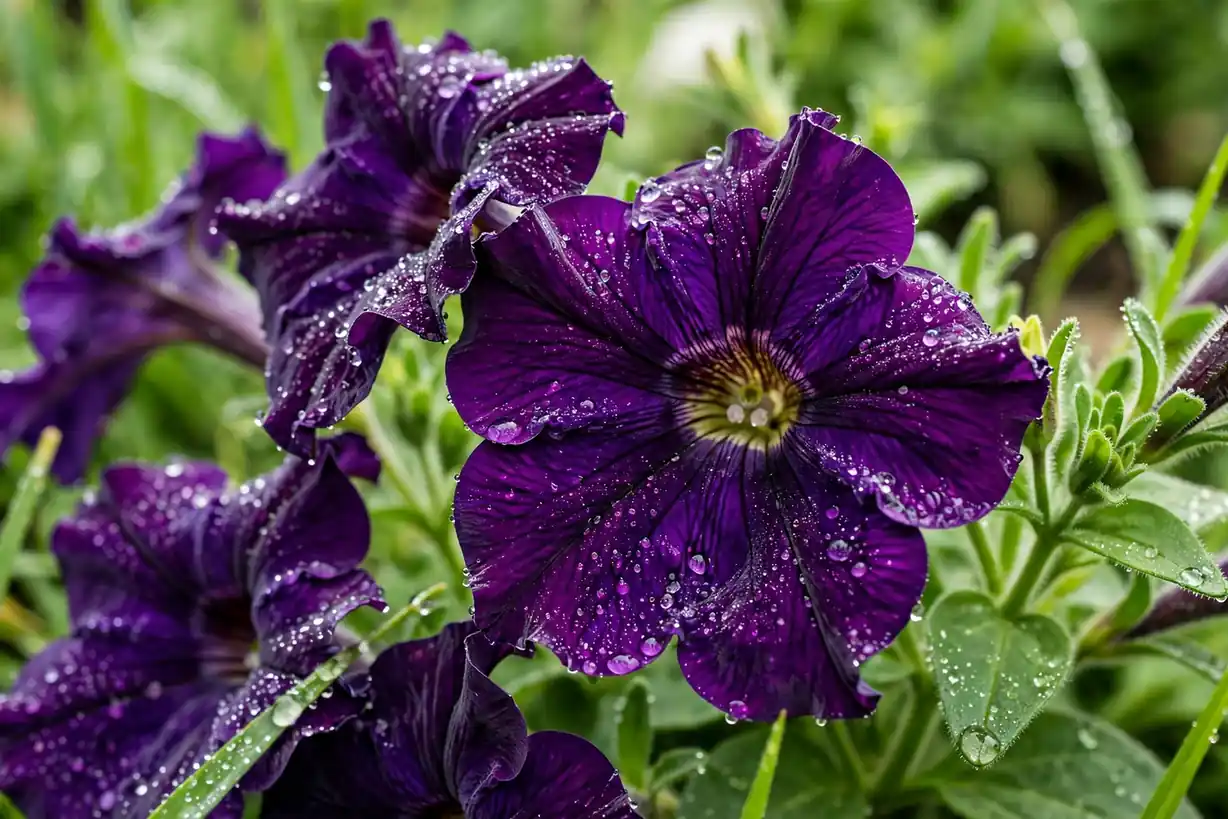
1. Purple Petunia (Petunia × hybrida)
Purple petunia is the undisputed queen of annual bedding, producing velvety trumpet blooms in every shade from deep midnight violet to soft lavender. Standout purple varieties include ‘Dreams Midnight’, ‘Easy Wave Violet’, and ‘Supertunia Royal Velvet’ — the Wave and Supertunia types spread up to 3 feet and bloom without deadheading, while grandiflora types like ‘Dreams’ offer the biggest individual flowers. Few annuals deliver this much continuous color for this little money.
Petunia seeds are dust-like and need light to germinate, so start them indoors 8–10 weeks before your last frost, pressing seeds onto the soil surface without covering. Transplant after all frost danger in full sun and average, well-drained soil, spacing plants about a foot apart. Water at the base, fertilize monthly, and shear back leggy grandifloras by half in midsummer for a fresh flush. Botanically a tender perennial, petunia is grown as an annual everywhere frost occurs.
Bloom: Summer to frost | Sun: Full sun | Height: 6–12 in | Best for: Containers, hanging baskets, bedding
2. Garden Verbena (Verbena × hybrida)
Garden verbena covers itself in dense, flat-topped clusters of tiny purple flowers from spring until frost, forming tidy mounds or trailing mats depending on the series. Look for purple varieties such as ‘Quartz XP Violet’, ‘Obsession Lilac’, and the ‘Tuscany’ series for rich violet tones. Butterflies adore verbena, and the flowers hold up well in heat — a combination that makes it one of the most reliable purple annuals for sunny borders and window boxes.
Verbena is slow from seed and needs warmth to germinate, so start seeds indoors 8–10 weeks before the last frost at 75°F, or buy bedding plants for instant results. Plant in full sun with excellent drainage — verbena hates wet feet and is prone to mildew in soggy soil. Deadhead or shear lightly to keep new buds coming, and let the soil dry slightly between waterings. A tender perennial in zones 8–11, it is grown as an annual everywhere else.
Bloom: Spring to frost | Sun: Full sun | Height: 6–18 in | Best for: Borders, window boxes, butterfly gardens
3. Sweet Alyssum (Lobularia maritima)
Sweet alyssum is a low, honey-scented carpet of tiny four-petaled flowers, and its purple varieties — ‘Royal Carpet’, ‘Oriental Night’, and ‘Violet Queen’ — bring deep violet drifts to the front of borders. Each miniature bloom is small, but thousands of them open at once, creating a frothy purple haze that bees and hoverflies find irresistible. It is one of the few purple annuals that actually prefers cool weather.
Direct-sow sweet alyssum in early spring as soon as the soil can be worked, barely covering the seeds, or start indoors 4–6 weeks before the last frost. It germinates fast and blooms within 6–8 weeks of sowing. When summer heat stalls blooming, shear plants back by half, water well, and they will rebound with fresh flowers for fall. It self-sows gently, so you may get free seedlings next year. Full sun to light shade and average soil are all it asks.
Bloom: Spring to fall | Sun: Full sun to part shade | Height: 4–8 in | Best for: Edging, rock gardens, underplanting roses
4. Lobelia (Lobelia erinus)
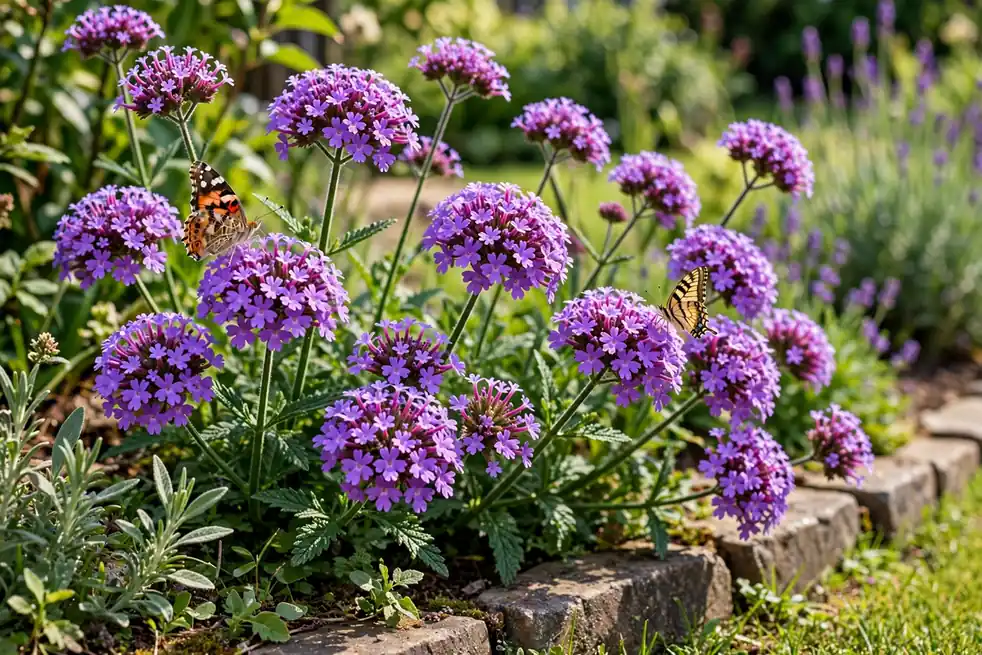
Edging lobelia produces masses of tiny, intensely purple-blue flowers that read as true purple in the garden, especially varieties like ‘Crystal Palace’ (deep violet with bronze foliage), ‘Sapphire’, and ‘Riviera Midnight Blue’. The compact mounding types form neat 4- to 8-inch domes, while trailing varieties cascade beautifully from baskets. It blooms most heavily in cool weather and keeps flowering through summer if kept moist.
Lobelia seed is nearly dust and needs light to sprout — sow indoors 8–10 weeks before the last frost on the soil surface, keeping it consistently moist. Transplant into rich, moisture-retentive soil in full sun to part shade; in hot climates, afternoon shade keeps it blooming. Shear plants back by half when flowering slows in midsummer heat, and they will flush again for fall. It pairs beautifully with purple alyssum for a tonal purple edge.
Bloom: Summer to frost | Sun: Full sun to part shade | Height: 4–8 in | Best for: Edging, hanging baskets, containers
5. Ageratum (Ageratum houstonianum)
Ageratum, or flossflower, is grown for its fluffy, powder-puff clusters of lavender-purple flowers that sit like tiny clouds above the foliage. ‘Blue Horizon’ is the classic tall purple variety at 24–30 inches — superb for cutting — while dwarf ‘Hawaii’ and ‘Artist’ series stay under a foot for edging. The blooms are unusual in texture, look great with silver foliage, and butterflies visit them constantly.
Start seeds indoors 6–8 weeks before the last frost; like petunia and lobelia, ageratum seeds need light to germinate, so press them into the soil surface. Transplant after frost into full sun to part shade with average, evenly moist soil. Pinch young plants once to encourage branching, and deadhead regularly to keep the powderpuffs coming until frost. Note: all parts of ageratum are toxic if eaten, so site it away from vegetable beds grazed by pets.
Bloom: Summer to frost | Sun: Full sun to part shade | Height: 6–30 in | Best for: Edging, cut flowers (‘Blue Horizon’), pollinators
6. Heliotrope (Heliotropium arborescens)
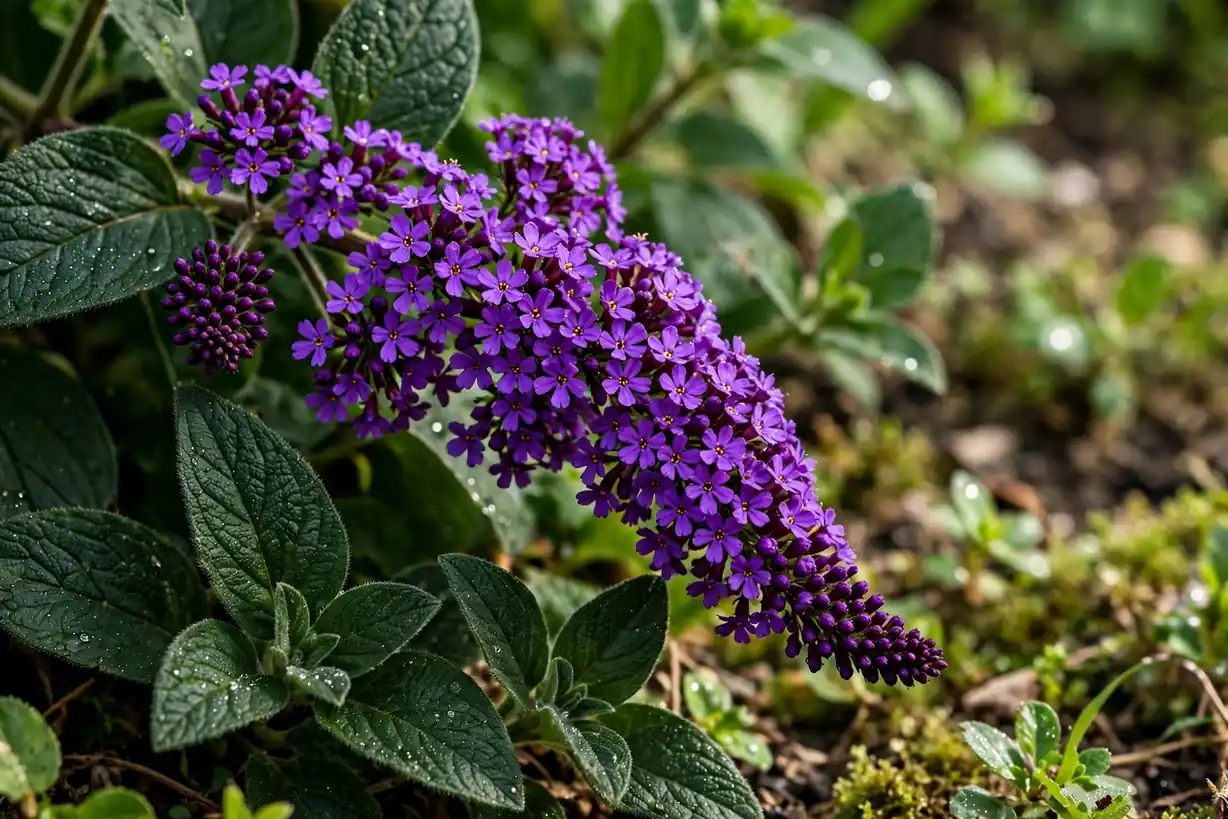
Heliotrope is famous for two things: rich purple flower clusters and an intoxicating vanilla-cherry fragrance that perfumes the whole garden on warm evenings. ‘Marine’ is the standard deep-purple variety with large flower heads, while ‘Fragrant Delight’ and ‘Iowa’ offer slightly different heights and scents. The dark green, wrinkled foliage makes a handsome backdrop, and the flowers are magnets for butterflies.
Heliotrope is a tender perennial usually grown as an annual; it is slow from seed, so most gardeners buy bedding plants in spring. If sowing, start indoors 10–12 weeks before the last frost with bottom heat. Plant out after frost in full sun and rich, consistently moist soil, and feed every two weeks — heliotrope is a hungry plant. It makes a superb fragrant container specimen for patios and doorways. Bring a pot indoors before frost and it may overwinter on a sunny windowsill.
Bloom: Summer to frost | Sun: Full sun | Height: 12–24 in | Best for: Fragrance gardens, patio containers, butterfly borders
7. Flowering Tobacco (Nicotiana alata)
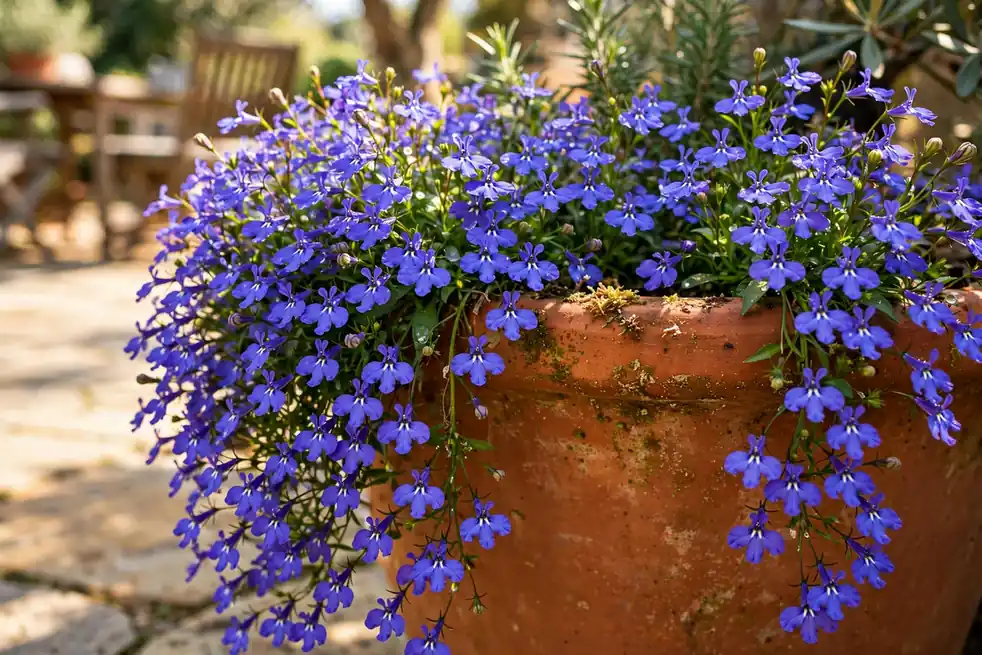
Flowering tobacco opens starry, tubular purple trumpets that release their sweetest perfume in the evening — plant it near a patio or bedroom window and the night garden comes alive. ‘Perfume Deep Purple’ stays compact at about 20 inches and blooms in the daytime too, while taller ‘Sensation Mixed’ strains include purple shades on 3-foot stems. Hummingbird moths visit the flowers at dusk, adding to the show.
Sow nicotiana indoors 6–8 weeks before the last frost, barely covering the fine seeds, and transplant after frost into rich, moist soil in full sun to part shade — it actually prefers a little afternoon shade in hot climates. Keep plants well-watered and deadhead for continuous bloom; many varieties self-sow, returning as welcome volunteers. All nicotianas are related to tobacco and are toxic if ingested, so keep them away from curious pets and children.
Bloom: Summer to fall | Sun: Full sun to part shade | Height: 12–36 in | Best for: Evening fragrance, moon gardens, cottage borders
8. Mealy-Cup Sage (Salvia farinacea)
Mealy-cup sage sends up stiff spikes of violet-purple flowers above silvery-green foliage, giving the border a strong vertical accent from midsummer to frost. ‘Victoria Blue’ is the classic variety (more violet-purple than blue), growing 18–24 inches tall, while ‘Rhea’ and the ‘Fairy Queen’ series offer slightly different tones. The spikes are excellent cut flowers, drying well, and bees work them all day.
Start seeds indoors 6–8 weeks before the last frost and transplant into full sun after frost danger passes — mealy-cup sage demands sun and sharp drainage to perform. It is notably heat- and drought-tolerant once established, making it a great purple annual for hot climates where fussier flowers fade. Deadhead spent spikes to encourage side shoots, or leave some for seed. Though perennial in zones 8–10, it is grown as an annual everywhere else.
Bloom: Summer to frost | Sun: Full sun | Height: 18–24 in | Best for: Hot climates, cut flowers, bee gardens
9. Cosmos (Cosmos bipinnatus)
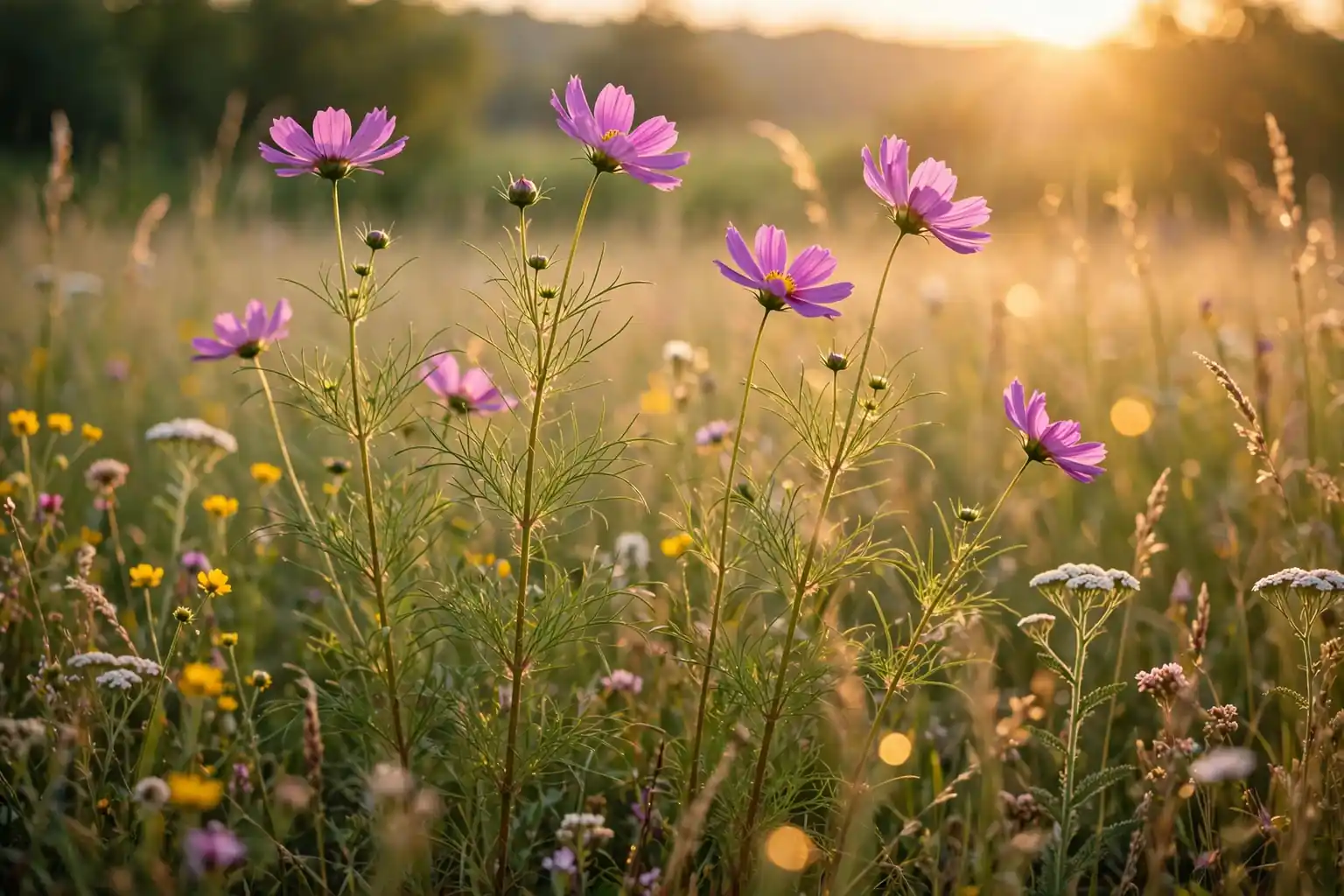
Cosmos is the carefree giant of purple annuals — feathery foliage topped with wide, satiny daisies in purple and magenta from midsummer until frost. The ‘Sensation’ mix includes rich purple shades on 3- to 4-foot stems, while ‘Versailles’ offers a deeper, more uniform purple for cutting. Cosmos blooms just 8–10 weeks from sowing and attracts clouds of butterflies, bees, and goldfinches that feast on the seeds.
Direct-sow cosmos after the last frost where it is to grow — it resents transplanting and germinates in under a week in warm soil. Here is the secret most gardeners miss: cosmos blooms best in poor soil. Rich soil and fertilizer produce giant leafy plants with few flowers, so skip the amendments. Space plants 12 inches apart in full sun, water until established, then leave them alone. Cut flowers often (or deadhead) to keep new buds coming; left alone, it self-sows freely.
Bloom: Summer to frost | Sun: Full sun | Height: 3–4 ft | Best for: Cutting gardens, butterfly meadows, beginner gardeners
10. Purple Zinnia (Zinnia elegans)
Purple zinnias bring bold, dahlia-like blooms in shades from soft lilac to deep grape-purple, on sturdy plants that flower nonstop from summer to frost. ‘Purple Prince’ is the standout heirloom with large, fully double purple blooms; ‘Benary’s Giant Purple’ offers professional-grade 4- to 6-inch flowers on long cutting stems; and ‘Zinderella Lilac’ adds a ruffled, scabiosa-like form. The more you cut, the more they bloom.
Sow zinnia seeds directly in the garden after the last frost, ¼ inch deep — they germinate in days in warm soil and dislike root disturbance, so direct sowing beats transplanting. Give them full sun, average soil, and 9–12 inches of space for air circulation, which prevents powdery mildew. Water at the base rather than overhead, and cut deeply and often for bouquets; every cut stem branches into two more. One of the easiest and most rewarding purple annuals for beginners.
Bloom: Summer to frost | Sun: Full sun | Height: 1–4 ft | Best for: Cut flowers, pollinator gardens, children’s gardens
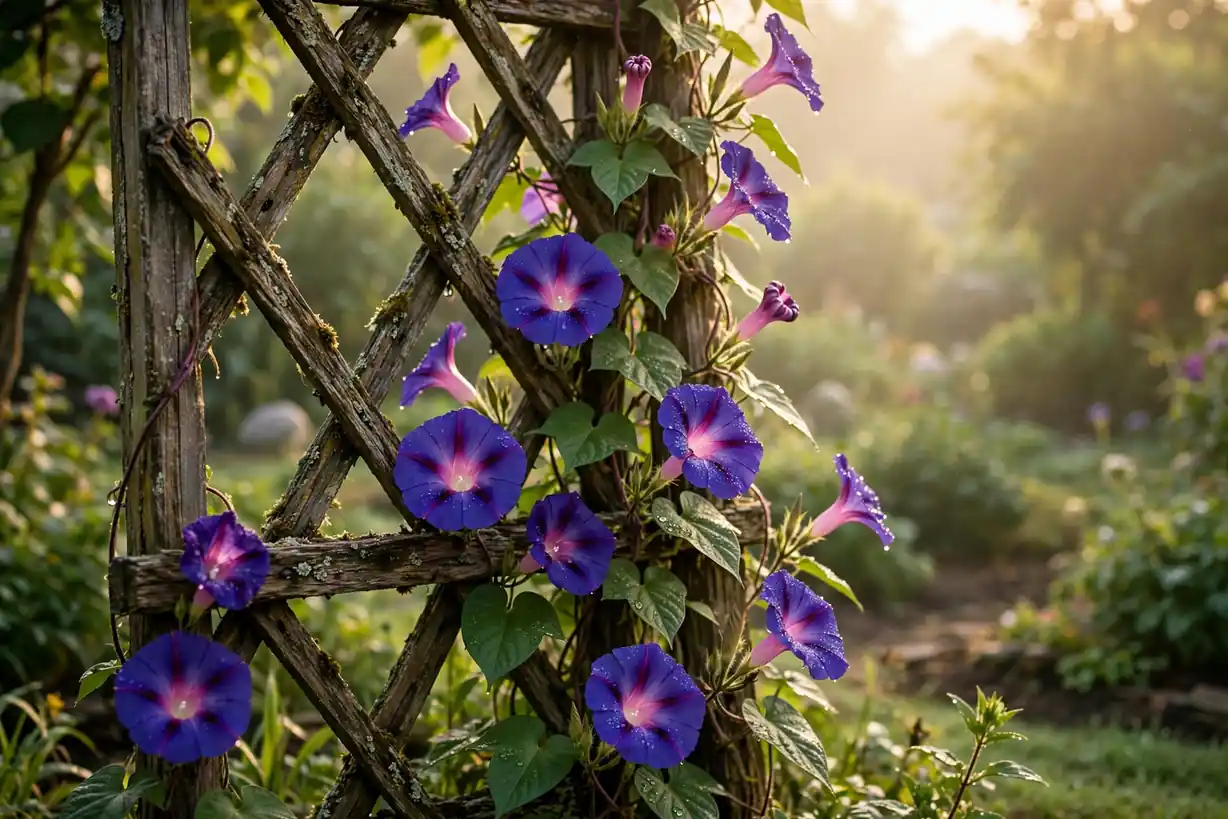
11. Morning Glory (Ipomoea purpurea)
Morning glory is the purple annual vine — heart-shaped leaves and big funnel flowers in deep, saturated purple that open with the sun and close by afternoon. ‘Grandpa Ott’ is the legendary variety: velvety reddish-purple petals with a ruby star, growing 8–10 feet in a single season. Each flower lasts one day, but dozens open every morning from midsummer to frost, covering trellises, fences, and arbors.
The hard seed coat needs help: nick each seed with a file and soak overnight before sowing directly after the last frost, ¼ inch deep, at the base of its support. Morning glories climb by twining, so give them string, netting, or a trellis from day one. Full sun and average soil are ideal — like cosmos, too-rich soil means leaves at the expense of flowers. Be aware it self-sows enthusiastically; deadhead if you want to limit volunteers. Fast, cheap, dramatic vertical purple.
Bloom: Summer to frost | Sun: Full sun | Height: 8–10 ft vine | Best for: Trellises, fences, quick privacy screens
12. Cineraria (Pericallis × hybrida)
Cineraria produces spectacular mounds of daisy-like flowers in the richest purples of any annual — saturated violet, plum, and bicolor rings with white eyes. The ‘Jester’ and ‘Senetti’ series bloom in dense, almost solid domes of color. Unlike most annuals on this list, cineraria is a cool-season star: it blooms in late winter and spring, filling the gap when little else flowers.
Grow cineraria where summers are cool, or as a container plant for spring display — it sulks in heat. It is most often bought as a blooming plant from nurseries in late winter; to grow from seed, sow in late summer and overwinter young plants in a cool, bright spot (50–60°F). Give it part shade, rich, evenly moist soil, and cool temperatures for the longest bloom. Deadhead spent flowers to extend the show. In mild climates it can behave as a short-lived perennial.
Bloom: Winter to spring (cool season) | Sun: Part shade | Height: 8–18 in | Best for: Spring containers, cool-climate beds
13. Nemesia (Nemesia strumosa)
Nemesia is a cool-season charmer with snapdragon-like flowers in violet-purple shades, often with contrasting yellow throats, on compact 6- to 12-inch plants. The ‘Sundae’ and ‘Sundrops’ series include purple tones, and many varieties carry a sweet, light fragrance. It blooms most heavily in the cool of spring and fall, making it a perfect purple annual for shoulder seasons.
Sow nemesia early — it germinates best in cool soil, so direct-sow as soon as the ground can be worked or start indoors 6–8 weeks before the last frost. Plant in full sun to part shade with rich, moisture-retentive soil; in hot-summer regions, give it afternoon shade. When heat slows blooming in midsummer, shear plants back by a third and keep them watered — they will flush again when temperatures drop. Excellent in containers and window boxes.
Bloom: Spring to early summer | Sun: Full sun to part shade | Height: 6–12 in | Best for: Spring containers, cool climates, fragrant edges
14. Diascia (Diascia barberae)
Diascia, or twinspur, dangles delicate sprays of violet-purple flowers with two little spurs at the back of each bloom — a detail you will notice up close in baskets and containers. The ‘Flying Colors’ series includes rich violet shades on trailing stems perfect for the edges of pots. It flowers most generously in cool weather, spring and fall, with a breather during peak summer heat.
Like nemesia, diascia is a cool-season annual: sow indoors 6–8 weeks before the last frost or direct-sow early, and plant out in full sun to part shade with consistently moist, well-drained soil. Do not let it dry out — drought triggers dormancy. Shear back spent flower stems by half to stimulate rebloom, and feed lightly every two weeks in containers. In mild climates it may overwinter as a short-lived perennial.
Bloom: Spring to fall | Sun: Full sun to part shade | Height: 6–12 in | Best for: Hanging baskets, container edges, cool-season color
15. Browallia (Browallia speciosa)
Browallia, the amethyst flower, is one of the few purple annuals that genuinely thrives in shade. Its starry, violet-blue flowers — deepest purple in varieties like ‘Blue Bells’ — open continuously from summer to frost on bushy 8- to 18-inch plants. The blooms have a distinctive white eye and look jewel-like in dim corners where sun-lovers refuse to flower.
Start seeds indoors 8–10 weeks before the last frost; browallia needs warmth (70–75°F) and light to germinate, taking up to three weeks. Transplant into part to full shade with rich, moisture-retentive soil — this is its superpower spot. Keep it evenly watered and pinch young plants to encourage bushiness. It also grows well as a winter houseplant in a bright window, extending your purple season indoors.
Bloom: Summer to frost | Sun: Part shade to shade | Height: 8–18 in | Best for: Shade gardens, north-facing containers, houseplants
16. Torenia (Torenia fournieri)
Torenia, the wishbone flower (named for the wishbone-shaped stamens inside each bloom), is the shade container champion among purple annuals. ‘Summer Wave Large Violet’ and ‘Kauai Deep Blue’ produce masses of purple-violet trumpets with contrasting yellow throats on trailing 6- to 12-inch plants that cascade beautifully. Where impatiens once ruled shady pots, torenia now offers purple with better heat tolerance.
Sow torenia indoors 6–8 weeks before the last frost — the tiny seeds need light and warmth to germinate. Plant out after frost in part shade with rich, consistently moist soil; torenia wilts fast if it dries out, so mulch containers well. No deadheading needed — the flowers are self-cleaning. Feed container plants every two weeks. It blooms from early summer straight through to frost, asking only for shade and water.
Bloom: Summer to frost | Sun: Part shade | Height: 6–12 in | Best for: Shady containers, hanging baskets, north-facing beds
17. Cleome (Cleome hassleriana)
Cleome, the spider flower, is pure garden drama: 3- to 5-foot stems topped with airy, spidery clusters of purple flowers with long, protruding stamens. ‘Violet Queen’ and ‘Purple Queen’ are the classic purple varieties, blooming from midsummer to frost. The flowers open from the bottom of each cluster upward over weeks, and hummingbirds, bees, and butterflies all visit. Plant it at the back of the border and it creates a see-through purple haze.
Direct-sow cleome after the last frost — it germinates best with a chill, so many gardeners sow in fall or very early spring for the strongest plants. Give it full sun and average, well-drained soil; it tolerates heat and drought once established. Space plants 18 inches apart and stake in windy sites. Cleome self-sows generously, so expect volunteers next year (deadhead if you want to prevent this). Note the foliage has a musky scent some gardeners love and others do not.
Bloom: Summer to frost | Sun: Full sun | Height: 3–5 ft | Best for: Back of borders, hummingbird gardens, cottage style
18. Larkspur (Consolida ajacis)
Larkspur is the annual answer to delphiniums — tall, elegant spires of purple and lavender flowers on 2- to 4-foot stems in early summer. The ‘Giant Imperial’ mix includes rich purple shades, and the blooms make superb cut flowers with a good vase life. As a cool-season annual, it flowers in late spring and early summer, bridging the gap between spring bulbs and summer annuals.
Larkspur must be sown in cool soil: direct-sow in fall in mild climates or as early as possible in spring elsewhere, barely covering the seeds — it needs darkness to germinate, so cover seed trays if starting indoors. Thin or space seedlings 9–12 inches apart in full sun and rich, well-drained soil. Stake tall varieties, and sow every two weeks for a longer cutting season. It self-sows readily, often returning on its own. All parts are toxic if eaten.
Bloom: Spring to early summer | Sun: Full sun | Height: 2–4 ft | Best for: Cut flowers, cottage gardens, early summer color
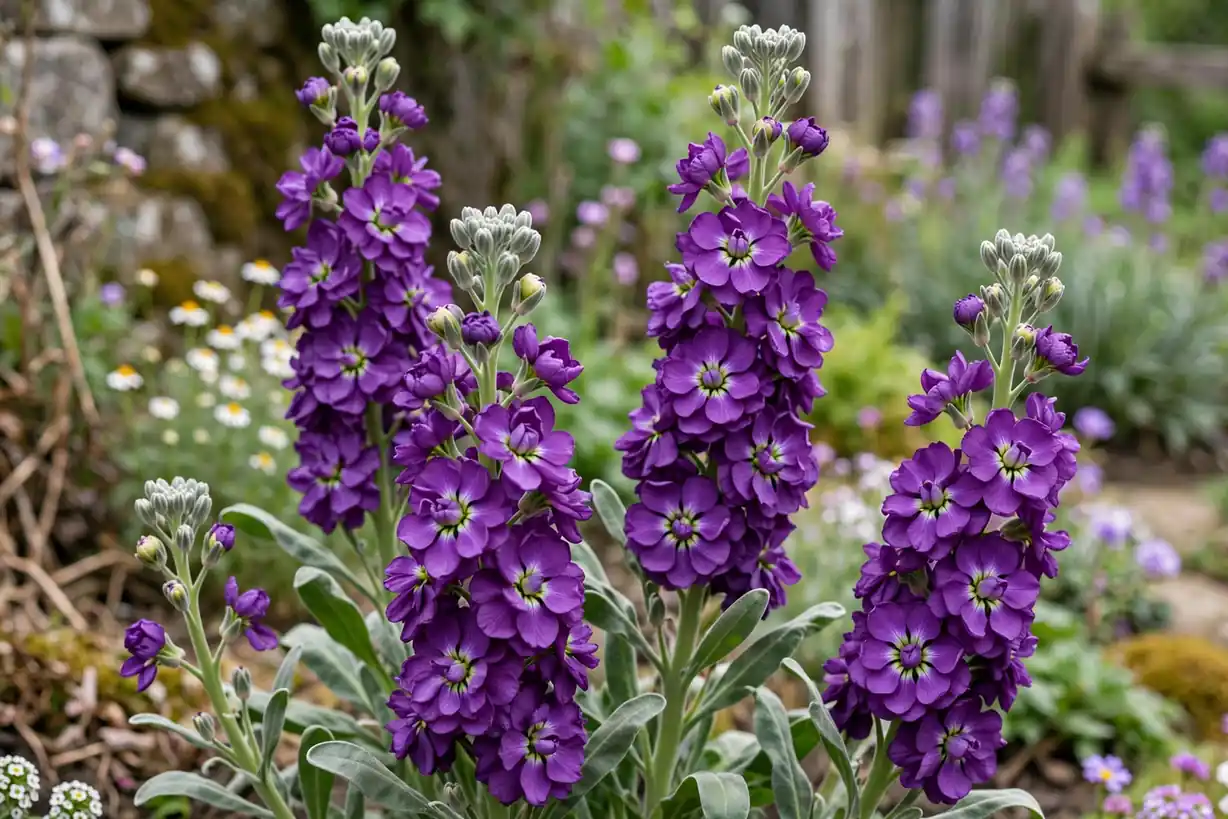
19. Stock (Matthiola incana)
Stock is grown as much for its perfume as its looks — dense spikes of violet-purple flowers with a rich clove scent that carries across the garden. The ‘Katz’ series is the modern standard, bred for heat tolerance and strong stems in purple shades, flowering on 12- to 30-inch plants. It is one of the finest purple annuals for cutting; a single stem perfumes a whole room.
Stock is a cool-season annual: sow indoors 6–8 weeks before the last frost and transplant early, or direct-sow as soon as soil can be worked. It blooms best in cool spring weather and fades in summer heat, so in warm climates grow it for spring, then replace it. Give it full sun to light afternoon shade and rich, moist, well-drained soil. Keep cutting the spikes — regular harvesting keeps new ones coming.
Bloom: Spring to early summer | Sun: Full sun to part shade | Height: 12–30 in | Best for: Fragrance, cut flowers, spring borders
20. Sweet Pea (Lathyrus odoratus)
Sweet peas combine some of the most beautiful purple flowers in the annual world with arguably the finest fragrance — honey, orange blossom, and rose in one bloom. ‘Matucana’ is the iconic purple bicolor (deep purple and magenta), intensely scented; the ‘Spencer’ types offer large, ruffled purple blooms on long cutting stems. Vines climb 6–8 feet, covering trellises in waves of scented purple.
Sweet pea seeds have hard coats: nick each seed and soak overnight, then sow in deep pots or directly in early spring while the soil is still cool — sweet peas are cool-season growers that fade in heat. Plant in full sun with deep, rich, moisture-retentive soil (dig in compost generously) and provide a sturdy trellis from day one. The golden rule: pick flowers constantly. Every faded bloom left on the vine signals the plant to stop producing.
Bloom: Spring to early summer | Sun: Full sun | Height: 6–8 ft vine | Best for: Fragrance, cut flowers, trellises and arches
21. Bachelor’s Button (Centaurea cyanus)
Bachelor’s button, or cornflower, is an old-fashioned cottage garden favorite with frilly, thistle-like flowers — and its purple varieties like ‘Black Ball’ (a stunning deep purple-black) are among the most striking annuals you can grow. Plants reach 1–3 feet and bloom in late spring and early summer, feeding bees at a time when little else flowers. The blooms also dry beautifully for everlasting arrangements.
Direct-sow bachelor’s button in early spring as soon as the soil can be worked — it germinates in cool soil within a week and dislikes transplanting. Give it full sun and average, well-drained soil; it tolerates poor soil and drought. Sow every two to three weeks through early summer for continuous bloom, and deadhead or cut often. Allow the last flowers to set seed and it will self-sow, returning reliably year after year.
Bloom: Spring to summer | Sun: Full sun | Height: 1–3 ft | Best for: Cottage gardens, dried flowers, bee forage
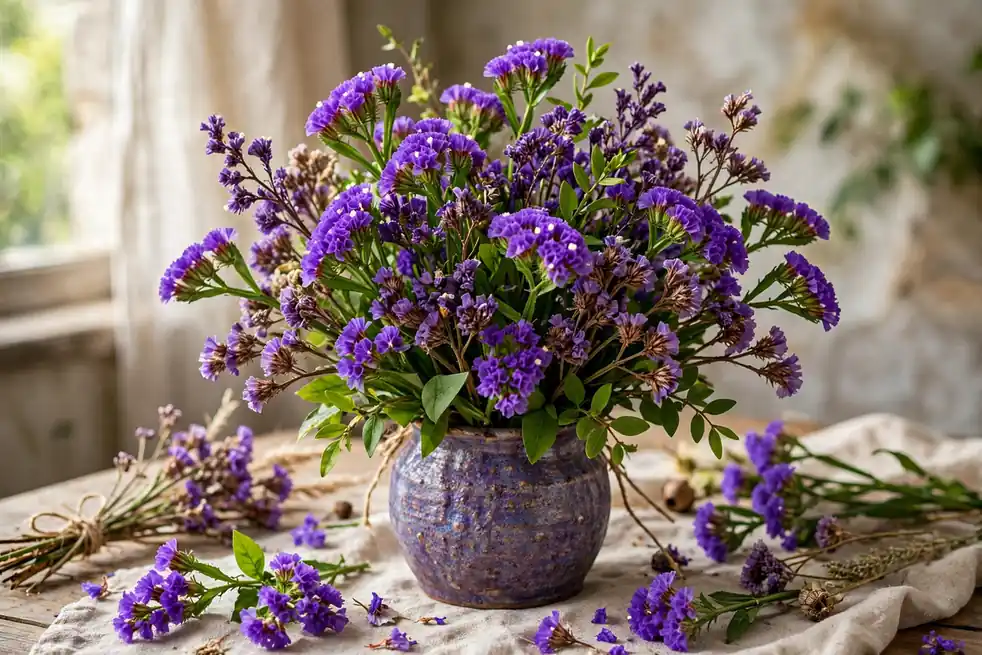
22. Statice (Limonium sinuatum)
Statice produces clouds of tiny, papery purple flowers on stiff, winged stems — and its superpower is that the colorful “petals” are actually papery calyces that never wilt, making it the premier purple annual for dried arrangements. ‘Forever’ mix and ‘QIS Purple’ offer intense violet-purple shades on 18- to 30-inch plants. Fresh or dried, the color holds for months.
Sow statice indoors 6–8 weeks before the last frost or direct-sow after frost; the seeds germinate best with light and warmth. Transplant into full sun and average, well-drained soil — statice tolerates heat, drought, and even salty coastal air. Cut stems for drying just as the flowers fully open, and hang them upside down in a dark, airy spot to preserve the deepest purple color. Deadhead garden plants to keep fresh blooms coming until frost.
Bloom: Summer to frost | Sun: Full sun | Height: 18–30 in | Best for: Dried arrangements, everlasting bouquets, coastal gardens
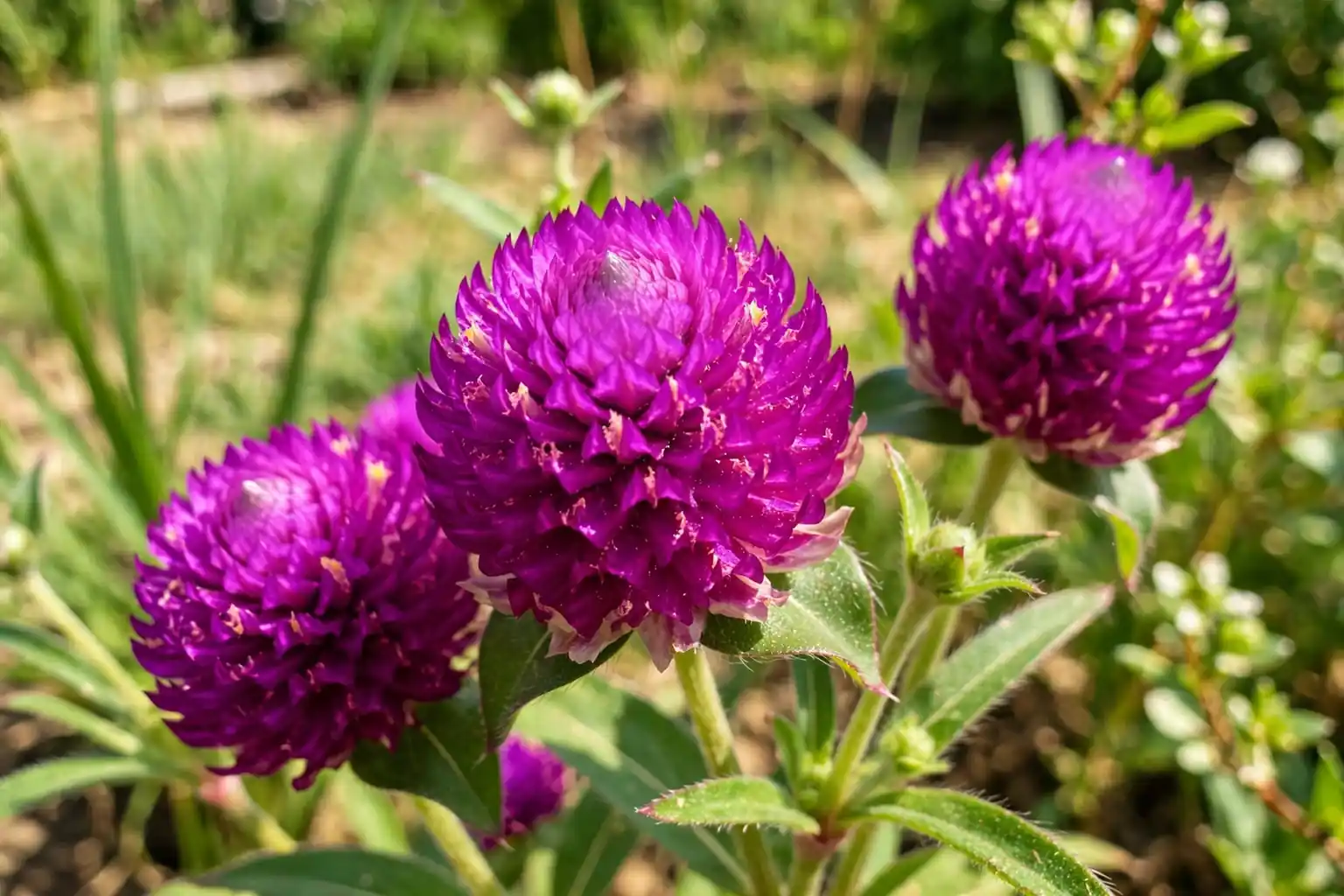
23. Globe Amaranth (Gomphrena globosa)
Globe amaranth covers itself in round, clover-like pom-poms of intense magenta-purple that look almost artificial in their perfection. ‘Purple’ (sometimes sold as ‘Buddy Purple’) stays compact at 12 inches for edging, while ‘Fireworks’ reaches 3–4 feet with hot-pink-and-purple blooms tipped in yellow. The flowers are beloved by butterflies, hold up in brutal heat, and dry perfectly for crafts.
Start seeds indoors 6–8 weeks before the last frost with bottom heat — gomphrena germinates slowly and needs warmth (75°F+). Transplant after all frost danger into full sun and average, well-drained soil. This is a true heat lover: it thrives in the hottest part of summer when other annuals stall, and needs little water once established. Deadhead for more blooms, or cut pom-poms for drying at any stage — they keep their color indefinitely.
Bloom: Summer to frost | Sun: Full sun | Height: 12–24 in | Best for: Hot climates, dried flowers, butterfly gardens
24. Celosia (Celosia argentea)
Celosia brings purple in a completely different texture — feathery plumes or brain-like crested cockscombs in magenta-purple shades. The plumosa types like ‘Fresh Look’ and ‘Intenz Dark Purple’ produce flame-shaped plumes in deep purple-pink on 8- to 36-inch plants (dwarf to tall series available). Few purple annuals are this heat-tolerant or this long-lasting in the vase.
Sow celosia indoors 4–6 weeks before the last frost — it needs warmth to germinate and grow, and hates cold, wet soil. The critical tip: do not overwater seedlings, which are prone to damping off; use a sterile seed mix and water from below. Transplant into full sun and well-drained soil after nights stay above 55°F. Deadhead to keep plumes coming, and cut freely — celosia also dries beautifully, holding its purple color for months.
Bloom: Summer to frost | Sun: Full sun | Height: 8–36 in | Best for: Hot climates, cut and dried flowers, bold texture
25. Madagascar Periwinkle (Catharanthus roseus)
Madagascar periwinkle rounds out our list as the toughest purple annual of all — glossy dark-green foliage studded with purple-magenta, phlox-like flowers that bloom relentlessly through the worst summer heat. The ‘Cora’ series offers purple shades with outstanding disease resistance, while ‘Titan’ types produce extra-large blooms. It asks for almost nothing and flowers until frost.
This one is slow: start seeds indoors 10–12 weeks before the last frost with warmth (75–80°F), as germination takes 2–3 weeks. Transplant into full sun and well-drained soil after the weather is truly warm — periwinkle sulks in cold soil. Once established it is remarkably drought-tolerant; in fact, overwatering causes more problems than underwatering. Perfect for hot, dry spots where petunias give up. Note: all parts are toxic if eaten.
Bloom: Summer to frost | Sun: Full sun | Height: 10–18 in | Best for: Hot dry sites, low-maintenance beds, heat-proof containers
Growing Tips: Sowing & Succession Planting
Direct sow vs. starting indoors. Fast, tough annuals — cosmos, zinnia, morning glory, bachelor’s button, cleome, larkspur — do best sown directly where they will grow, since they germinate quickly and dislike root disturbance. Slow or tiny-seeded types — petunia, verbena, lobelia, ageratum, heliotrope, browallia, torenia, periwinkle — earn their keep started indoors 6–12 weeks before the last frost under lights or in a bright window. Match the method to the plant and you will get stronger plants with earlier blooms.
Succession planting for non-stop purple. Instead of sowing everything once, sow fast annuals in small batches every 2–3 weeks from spring into midsummer. A second sowing of zinnias, cosmos, and bachelor’s buttons in June means fresh, vigorous plants hitting peak bloom just as the first sowing tires in August. Cool-season annuals like stock, larkspur, and sweet peas can be sown again in late summer for fall bloom in mild climates.
Deadhead relentlessly. Nearly every flower on this list blooms longer when spent flowers are removed, because the plant keeps trying to set seed. For cut-flower types (zinnia, cosmos, stock, sweet pea, bachelor’s button), cutting bouquets is deadheading. For bedding types, a weekly pass with scissors — or shearing whole plants back by a third in midsummer — triggers a fresh flush.
Know your cool-season and warm-season annuals. Sweet alyssum, lobelia, nemesia, diascia, cineraria, larkspur, stock, and sweet peas prefer cool weather and bloom best in spring and fall. Petunia, zinnia, cosmos, celosia, gomphrena, periwinkle, and morning glory want heat and peak in summer. Planting both groups is the secret to purple flowers from spring to frost rather than just one season.
Which Purple Annuals Will You Grow?
From the velvety trumpets of petunias to the evening perfume of heliotrope and flowering tobacco, these 25 purple annual flowers prove you do not need to wait years for a purple garden — one packet of seeds and a single season is enough. Start with easy winners like zinnia, cosmos, and sweet alyssum if you are new, then add fragrance with stock and sweet peas, drama with cleome and morning glory, and shade solutions with torenia and browallia. Pick your favorites, check the tables for sun and timing, and get sowing — purple is waiting.
Frequently Asked Questions
What are the easiest purple annual flowers for beginners?
Purple zinnia, cosmos, sweet alyssum, and bachelor’s button are the most forgiving — sow them directly in the garden after the last frost and they practically grow themselves. Petunia and verbena bedding plants from a nursery are equally easy if you would rather skip seed-starting.
Do purple annual flowers come back every year?
True annuals die with frost and do not return from the roots. However, several purple annuals self-sow generously — cosmos, larkspur, bachelor’s button, cleome, morning glory, and flowering tobacco often return as volunteer seedlings, giving the effect of a perennial display without any replanting.
Which purple annuals are best for containers?
Petunia, lobelia, sweet alyssum, torenia, and browallia are container stars, especially in hanging baskets and window boxes. Heliotrope and flowering tobacco make wonderfully fragrant patio pots, while dwarf zinnias and Madagascar periwinkle handle hot, sunny containers with ease.
Which purple annual flowers are fragrant?
Heliotrope (vanilla-cherry), stock (clove), sweet pea (honey-orange blossom), flowering tobacco (sweet evening perfume), and sweet alyssum (honey) are the most fragrant purple annuals. Plant them near seating areas, paths, and windows where you will actually smell them.
Which purple annuals tolerate shade?
Torenia and browallia are the best true shade-tolerant purple annuals, blooming in part to full shade. Lobelia, flowering tobacco, nemesia, and cineraria handle part shade, especially afternoon shade in hot climates — which often extends their bloom season.
When should I sow purple annual flower seeds?
Cool-season annuals (sweet pea, larkspur, stock, bachelor’s button, sweet alyssum) go in as early as the soil can be worked in spring. Warm-season annuals (zinnia, cosmos, morning glory, celosia, gomphrena) wait until after the last frost when soil is warm. Slow growers (petunia, verbena, heliotrope, periwinkle) start indoors 8–12 weeks before the last frost.
References
- Sweet Pea Flowers: Planting, Growing, and Caring for Sweet Peas — The Old Farmer’s Almanac
- How To Grow Zinnias For Long-Lasting Blooms — Gardening Know How
- Understanding Verbena Differences: A Guide To Different Types Of Verbena — Gardening Know How
- When to Plant Flowers: Perennial, Annual, and Bulb Planting Guide — The Old Farmer’s Almanac
- Garden Verbena (Verbena x hybrida) Plant Database — Garden.org (National Gardening Association)