
25 Unusual and Beautiful Flowers (With Pictures)
Some flowers are simply pretty. Then there are the ones that make you stop, stare, and ask: is that even real? The plant world is full of blooms that look like dancing girls, swaddled babies, monkeys, bats, bleeding hearts, and even pairs of bright red lips. This guide rounds up 25 of the most unusual and beautiful flowers on Earth — real species, all of them — with vivid descriptions, honest growing advice, and pictures to prove they exist.
Here is the honest part first: not every flower on this list can live in your garden. Some are cloud-forest orchids that refuse to grow anywhere but their native mountains, and a couple are parasites you could never cultivate even if you tried. For each flower you will find exactly what makes it strange and stunning, where it grows in the wild, and a straight answer on whether a home gardener can grow it — plus practical tips where the answer is yes. Let’s meet them.
Quick Answer
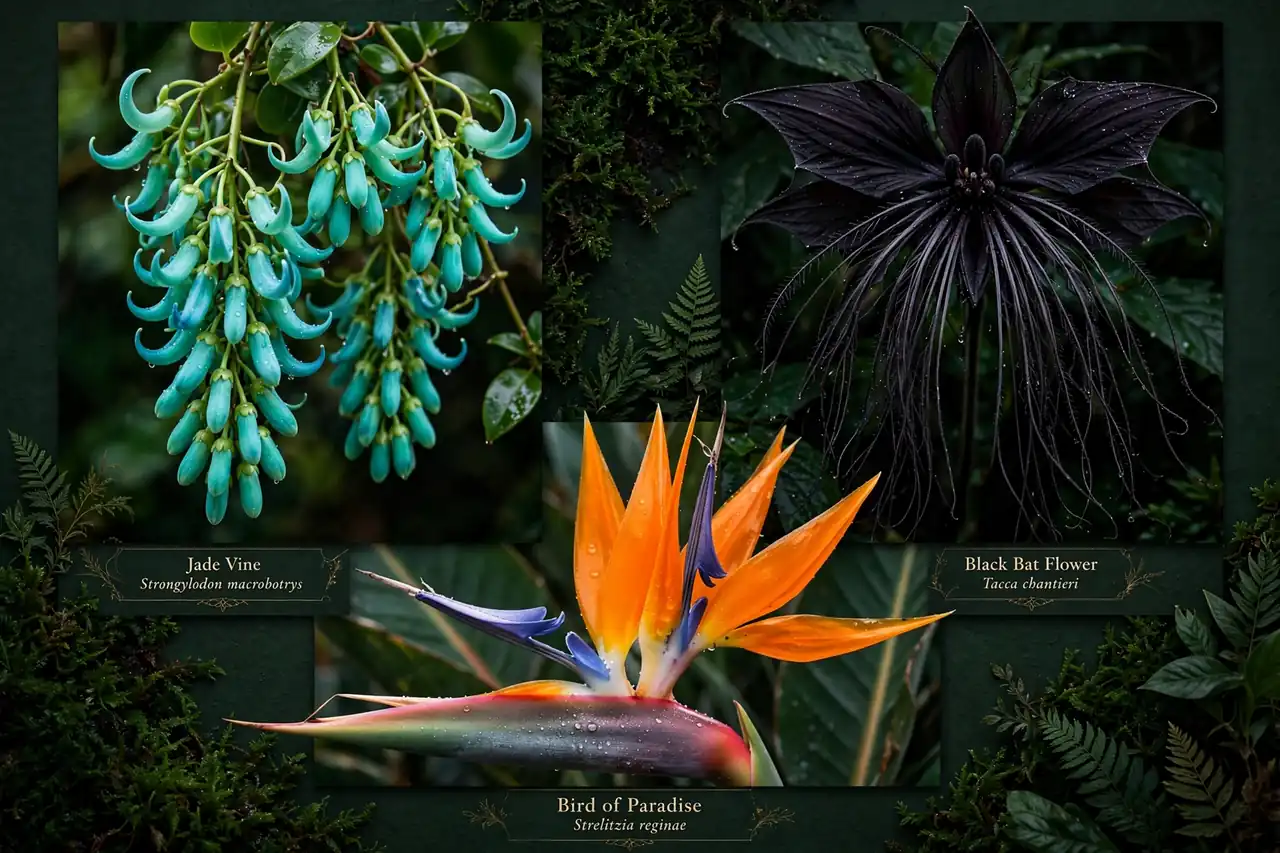
The world’s most unusual and beautiful flowers include the Jade Vine (turquoise claw-like blooms), Black Bat Flower (bat-shaped with long whiskers), Chocolate Cosmos (smells of chocolate), Corpse Flower (world’s largest unbranched bloom, smells of rotting flesh), Hooker’s Lips (bright red lip-shaped bracts), Monkey Orchid (flowers that look like monkey faces), and Bird of Paradise (bird-shaped tropical blooms). Of the 25 listed here, about a dozen can be grown at home — the rest are botanical-garden or wild-only wonders.
Table of Contents
Unusual Flowers at a Glance
Scan this table to compare all 25 flowers side by side — their scientific names, the trait that makes each one strange, and where each grows wild.
| Flower name | Scientific name | What makes it unusual | Native region |
|---|---|---|---|
| Corpse Flower | Amorphophallus titanum | Up to 10 ft tall; smells of rotting flesh | Sumatra, Indonesia |
| Jade Vine | Strongylodon macrobotrys | Glowing turquoise claw-shaped blooms | Philippines |
| Chocolate Cosmos | Cosmos atrosanguineus | Velvety maroon flowers that smell of chocolate | Mexico (extinct in the wild) |
| Black Bat Flower | Tacca chantrieri | Bat-shaped black blooms with 28-inch whiskers | Southeast Asia |
| Bird of Paradise | Strelitzia reginae | Blooms shaped like a bird in flight | South Africa |
| King Protea | Protea cynaroides | Dinner-plate pink cup; South Africa’s national flower | South Africa |
| Passionflower | Passiflora incarnata | Alien-looking fringed bloom; hardy native vine | Southeastern USA |
| Dutchman’s Pipe | Aristolochia macrophylla | Flowers shaped like a curved smoking pipe | Eastern North America |
| Parrot’s Beak | Lotus berthelotii | Flowers shaped exactly like a parrot’s beak | Canary Islands |
| Sea Holly | Eryngium planum | Metallic-blue thistle-like cones | Europe, western Asia |
| Monkey Orchid | Dracula simia | Each bloom looks like a tiny monkey’s face | Ecuador, Peru |
| Bee Orchid | Ophrys apifera | Velvety bloom mimics a female bee | Europe, Mediterranean |
| Dancing Girls | Impatiens bequaertii | Tiny blooms shaped like dancing girls in dresses | Kenya, Uganda |
| Swaddled Babies Orchid | Anguloa uniflora | Tulip-shaped bloom hides a baby-like form inside | Colombia, Venezuela |
| Hooker’s Lips | Psychotria elata | Waxy bright-red bracts shaped like lips | Central and South America |
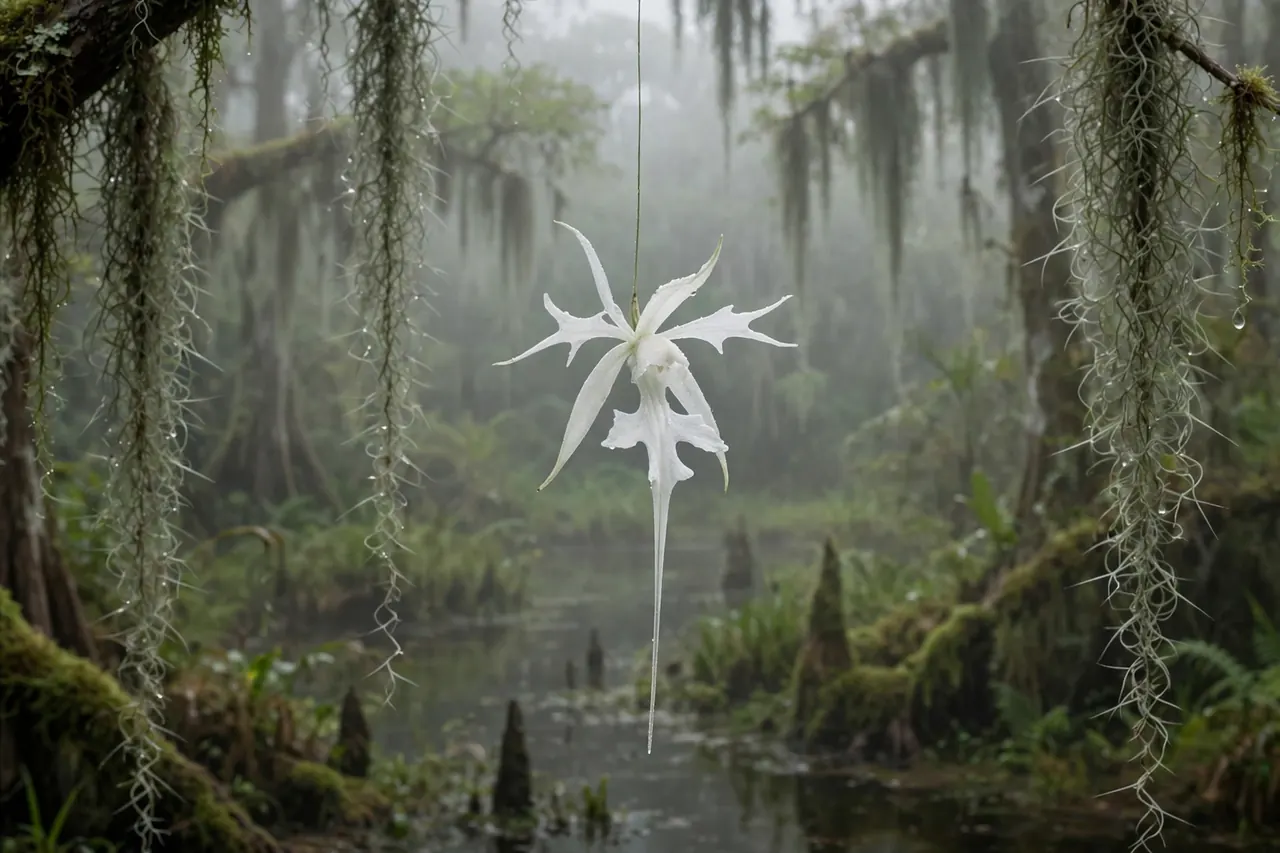
| Ghost Orchid | Dendrophylax lindenii | Leafless white bloom floats in midair | Florida, Cuba |
| Corpse Lily | Rafflesia arnoldii | World’s largest single flower; smells of carrion | Sumatra, Borneo |
| Love-Lies-Bleeding | Amaranthus caudatus | Two-foot crimson tassels that dangle like ropes | Andes, South America |
| Globe Thistle | Echinops ritro | Perfect steel-blue spheres on spiky stems | Europe, western Asia |
| Pincushion Protea | Leucospermum spp. | Blooms look like pincushions full of pins | South Africa |
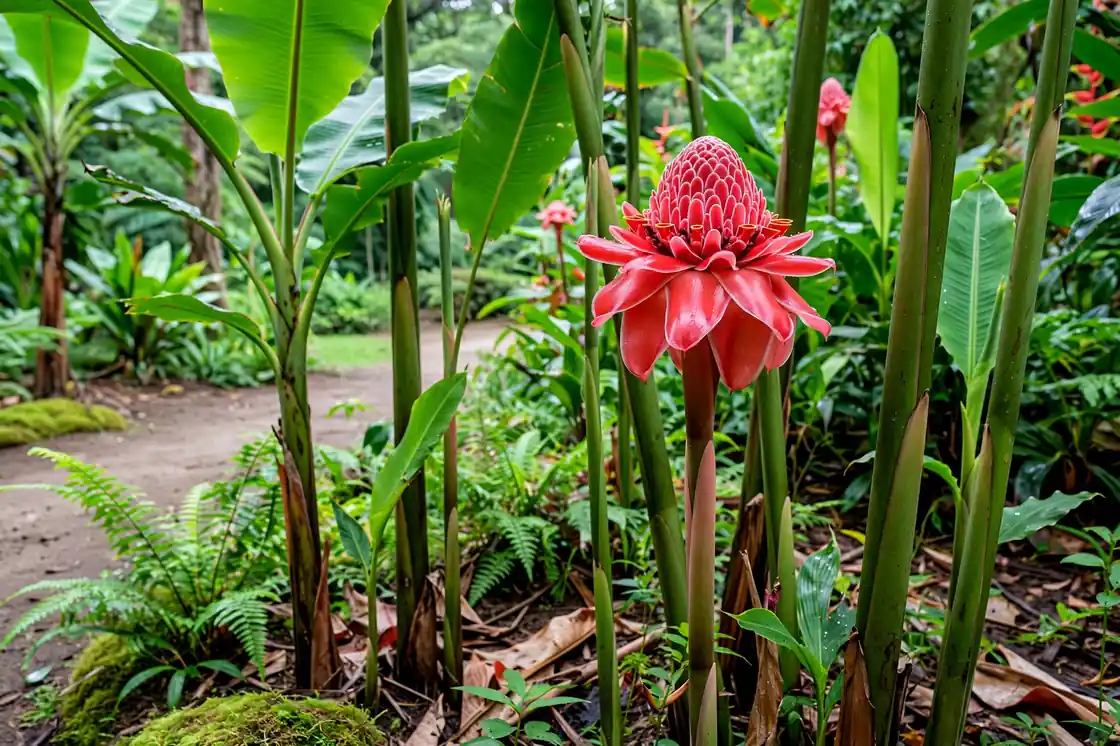
| Torch Ginger | Etlingera elatior | Flaming red torch-like inflorescence | Indonesia, Malaysia |
| Bleeding Heart | Lamprocapnos spectabilis | Pink heart-shaped blooms with a dangling drop | East Asia |
| Bat-Head Lily | Tacca integrifolia | White version of the bat flower with purple whiskers | Southeast Asia |
| Naked Man Orchid | Orchis italica | Each floret looks like a tiny naked man | Mediterranean |
| Fly Orchid | Ophrys insectifera | Bloom mimics a fly to trick male wasps | Europe |
Where They Grow & Can You Grow Them?
This is the question every gardener asks about these wonders — so here is the honest answer for each one. Some are easy garden plants; others need a greenhouse, a tropical climate, or simply cannot be grown at home at all.
| Flower name | Native habitat | Growable at home? | Hardiness / climate |
|---|---|---|---|
| Corpse Flower | Sumatran rainforest floor | No — botanical gardens only | Tropical greenhouse; years to bloom |
| Jade Vine | Philippine rainforest canopy | Tropical climates only | Zones 10–11; needs a large support |
| Chocolate Cosmos | Mexico (extinct in the wild) | Yes — easy from tubers | Zones 7–10; lift tubers in cold areas |
| Black Bat Flower | SE Asian forest understory | Yes — as a houseplant | Zones 10–11 outdoors; houseplant elsewhere |
| Bird of Paradise | South African coastal bush | Yes — popular houseplant | Zones 9–11 outdoors; houseplant elsewhere |
| King Protea | South African fynbos | Mediterranean climates only | Zones 9–11; needs acidic, fast-draining soil |
| Passionflower | SE US woodlands and fields | Yes — very easy native vine | Zones 5–9 |
| Dutchman’s Pipe | Eastern US forest edges | Yes — hardy native vine | Zones 4–8 |
| Parrot’s Beak | Canary Island cliffs | Yes — in containers | Zones 9–11; bring indoors in winter |
| Sea Holly | European meadows and coasts | Yes — tough and easy | Zones 4–9 |
| Monkey Orchid | Andean cloud forest | Expert greenhouse only | Cool, humid, high-altitude conditions |
| Bee Orchid | European chalk grassland | No — protected wild orchid | Wild only; needs fungal partners in soil |
| Dancing Girls | East African highlands | Tropical greenhouse only | Zones 10–11; high humidity |
| Swaddled Babies Orchid | Andean cloud forest | Expert greenhouse only | Cool-intermediate orchid conditions |
| Hooker’s Lips | Central American rainforest | Tropical climates only | Zones 11–12; hot and humid |
| Ghost Orchid | Florida and Cuban swamps | No — endangered specialist | Requires exact swamp conditions |
| Corpse Lily | Sumatran/Bornean rainforest | No — parasitic plant | Impossible in cultivation; needs host vine |
| Love-Lies-Bleeding | Andean highlands | Yes — easy annual | Grows as an annual everywhere |
| Globe Thistle | European and Asian steppes | Yes — very hardy | Zones 3–8 |
| Pincushion Protea | South African fynbos | Mediterranean climates only | Zones 9–11; acidic, fast-draining soil |
| Torch Ginger | Indonesian/Malaysian rainforest | Tropical climates only | Zones 10–11; rich moist soil |
| Bleeding Heart | East Asian woodlands | Yes — classic shade perennial | Zones 3–9 |
| Bat-Head Lily | SE Asian forest understory | Yes — as a houseplant | Zones 10–11 outdoors; houseplant elsewhere |
| Naked Man Orchid | Mediterranean grassland | No — protected wild orchid | Wild only; needs fungal partners in soil |
| Fly Orchid | European chalk grassland | No — protected wild orchid | Wild only; needs fungal partners in soil |
25 Unusual and Beautiful Flowers: The Complete List
Here they are — the weird, the wonderful, and the downright unbelievable, one by one.
1. Corpse Flower (Amorphophallus titanum)
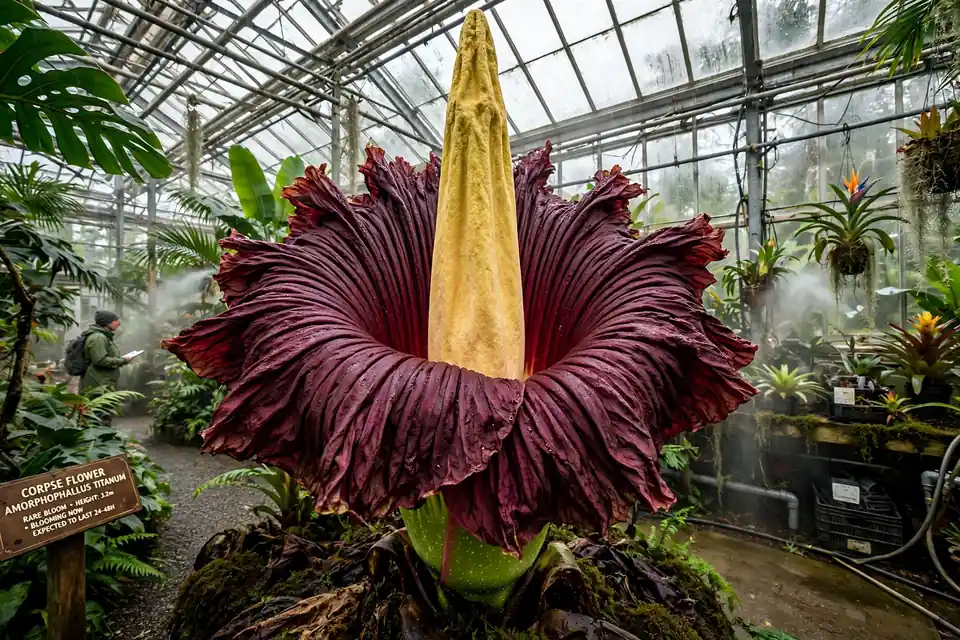
The corpse flower is famous for two things: it produces the largest unbranched flower structure in the world — up to 10 feet tall — and it smells like rotting flesh. The stench is deliberate: it attracts carrion beetles and flesh flies that pollinate it. When a botanical garden specimen blooms (which happens only once every several years, for just 24 to 48 hours), crowds line up to see and smell it. Technically the giant “flower” is an inflorescence: a tall central spike (spadix) wrapped in a pleated burgundy collar (spathe). Native to the rainforests of Sumatra, it is endangered in the wild due to deforestation. Can you grow it? Realistically, no. It needs a tropical greenhouse, a corm the size of a boulder, and a decade of patience — admire it at a botanical garden instead.
2. Jade Vine (Strongylodon macrobotrys)
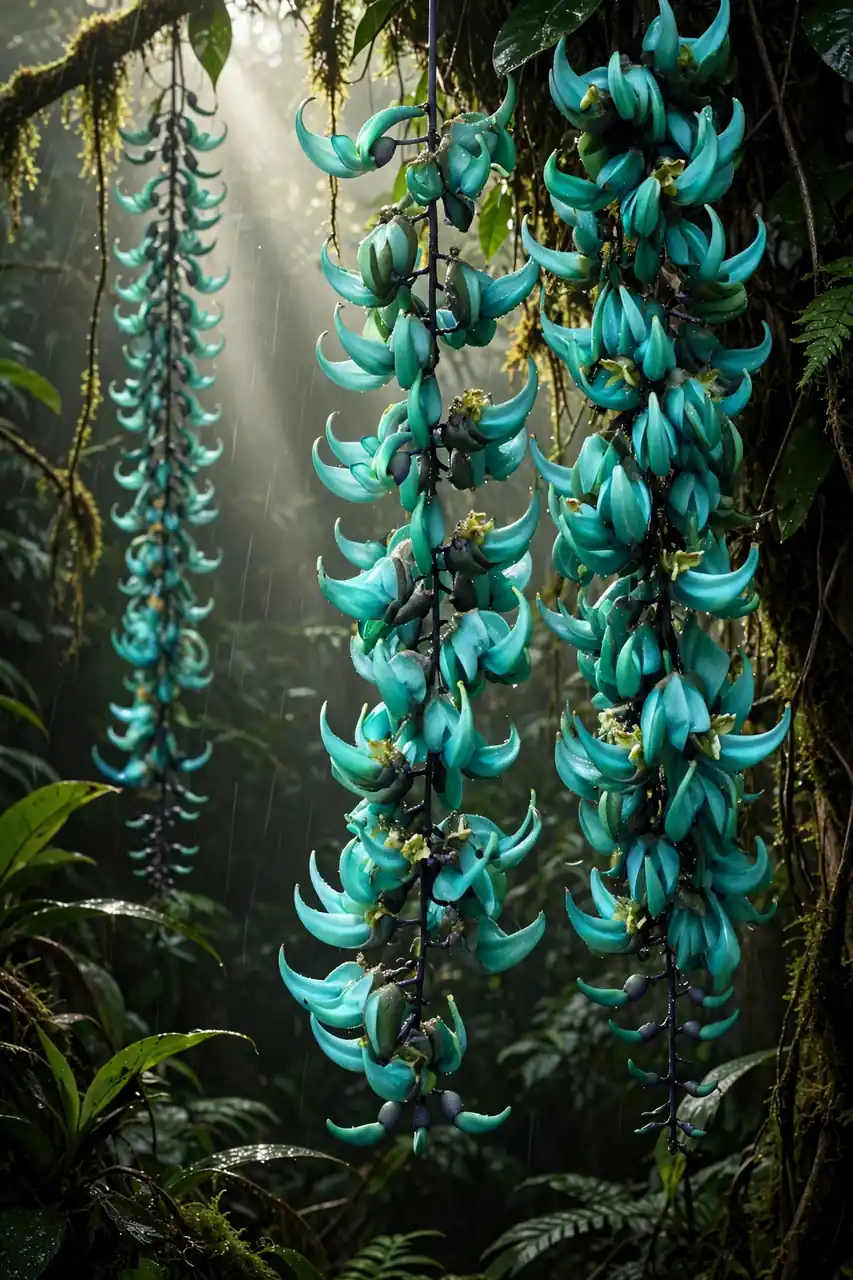
If flowers had a glow-in-the-dark setting, the jade vine would own it. Its foot-long hanging clusters are packed with claw-shaped blooms in an almost unreal turquoise-green — a color so rare in nature that botanists call it one of the most striking flowers on Earth. Native to the rainforests of the Philippines, it is a vigorous woody vine pollinated by bats, which hang from the flower clusters at night. The turquoise color may help it stand out in the dim forest light where bats forage. In cultivation it needs serious space: a strong pergola or greenhouse frame, year-round warmth (USDA zones 10–11), and high humidity. Where the climate allows, it is surprisingly fast-growing and can bloom within a couple of years from a cutting.
3. Chocolate Cosmos (Cosmos atrosanguineus)
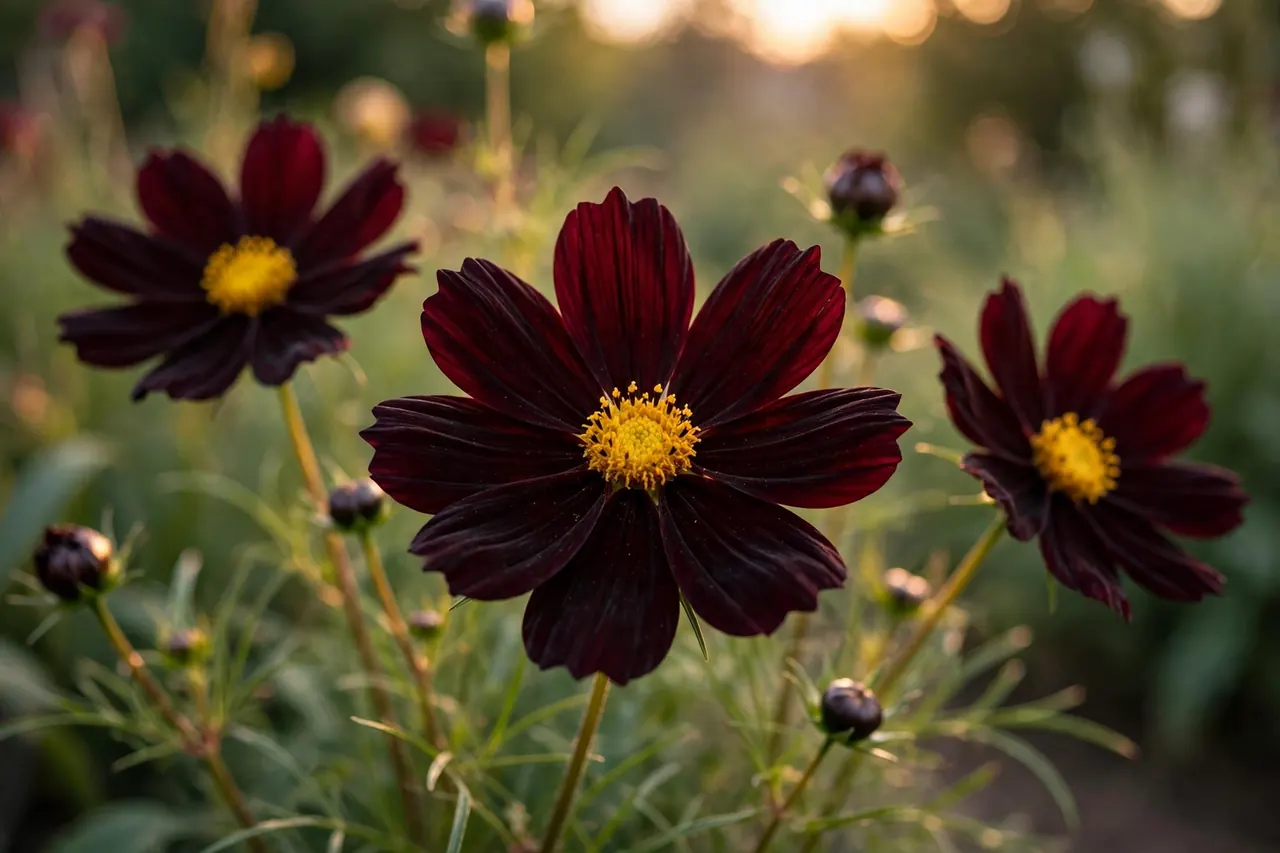
A flower that smells like chocolate — yes, really. The chocolate cosmos produces velvety, deep-maroon blooms that release a rich vanilla-chocolate fragrance, strongest on warm evenings. It is also a botanical tragedy: the species is extinct in the wild, surviving only in cultivation from a single clone, which means every chocolate cosmos plant on Earth is genetically identical and the flowers are sterile. That has not stopped gardeners from loving it. It grows easily from tubers like a dahlia — plant in full sun, deadhead for continuous bloom from summer to frost, and lift the tubers in zones below 7. In zones 7–10 it can overwinter in the ground with mulch.
4. Black Bat Flower (Tacca chantrieri)
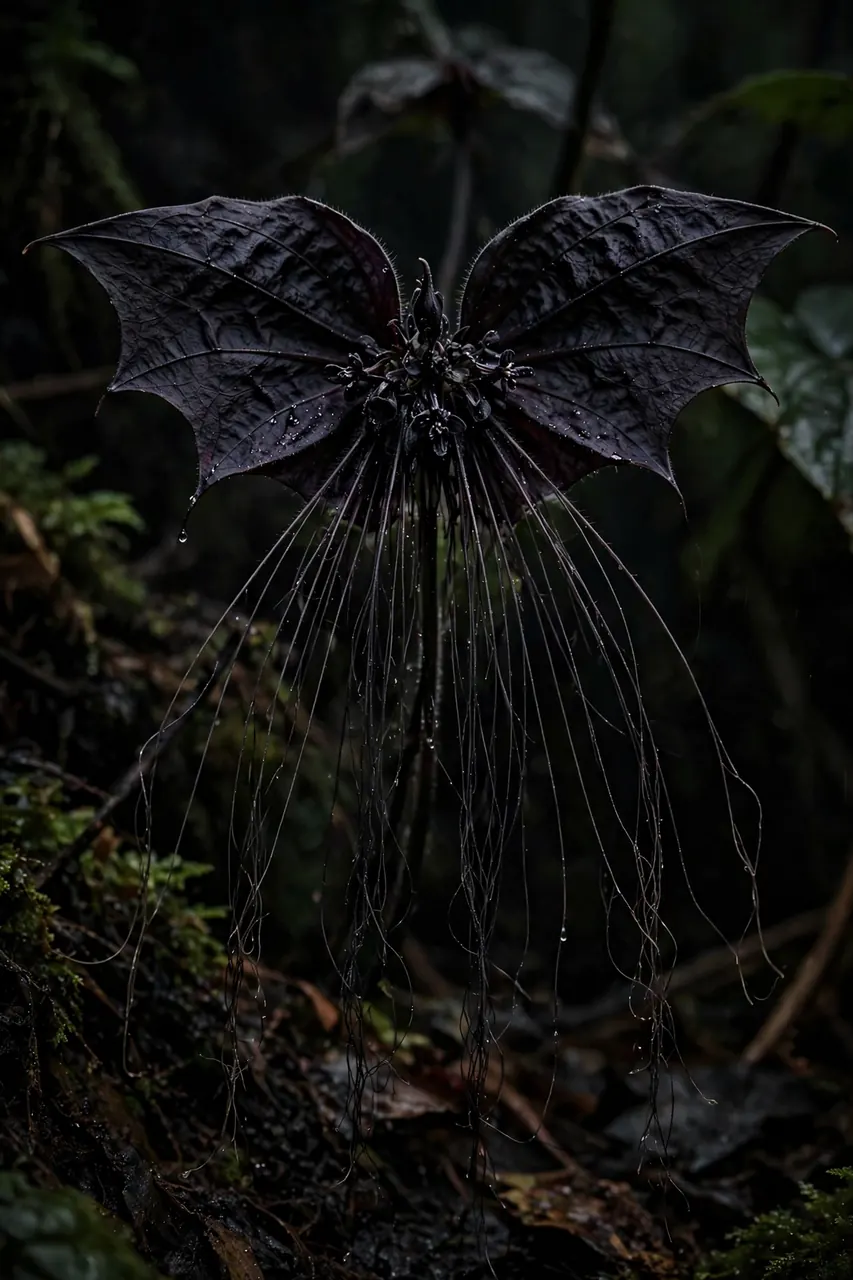
With wide black bracts spread like bat wings and whisker-like filaments dangling up to two feet, the black bat flower looks like a prop from a fantasy film. It grows wild in the shaded understory of Southeast Asian rainforests, where its dark coloring and whiskers may help it stand out to pollinators in the gloom. Despite its gothic looks, it makes a rewarding houseplant: give it bright indirect light, consistently moist (never soggy) soil rich in organic matter, and high humidity — a bathroom window or a pebble tray works wonders. It dislikes cold below about 55°F and needs two to three years from seed to bloom, so buy a mature plant if you are impatient. Outdoors it is hardy only in zones 10–11.
5. Bird of Paradise (Strelitzia reginae)
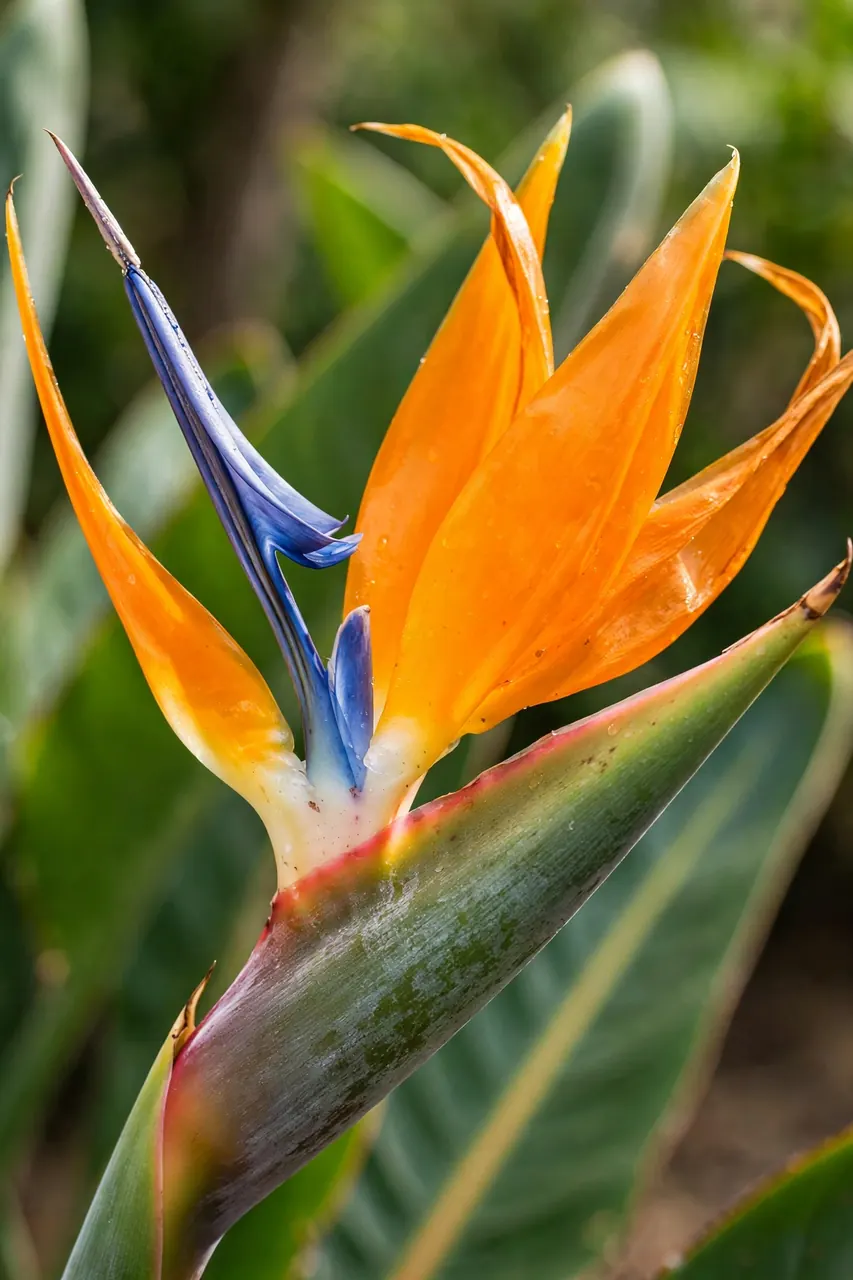
Each bird of paradise bloom looks like a tropical bird frozen mid-flight — a beak-like green bract from which orange sepals and electric-blue petals emerge one at a time, like feathers. Native to coastal South Africa, it is pollinated by sunbirds that perch on the bract and trigger the pollen mechanism with their feet. It is also one of the easiest “unusual” flowers on this list to grow: it thrives as a houseplant in bright light, tolerates some neglect, and can live for decades in a pot. Outdoors it is hardy in zones 9–11. The one catch is patience — seed-grown plants can take five to seven years to flower, so buy a mature division for faster blooms.
6. King Protea (Protea cynaroides)
The national flower of South Africa is impossible to miss: a huge, artichoke-like bloom up to a foot across, with silky pink petal-like bracts arranged around a silvery central dome. Each “flower” is actually a dense head of hundreds of tiny florets. King proteas evolved in the nutrient-poor, fire-prone fynbos shrubland, which makes them glorious but fussy in gardens. They demand extremely well-drained, acidic soil, hate phosphorus-rich fertilizers, and resent having their roots disturbed. In Mediterranean climates (zones 9–11, think coastal California) they thrive outdoors; elsewhere, grow them in large pots with protea-specific potting mix and bring them under cover in winter.
7. Passionflower (Passiflora incarnata)
The maypop passionflower looks like something designed by an alien botanist: a fringe of wavy purple-and-white filaments (the corona) radiating around a three-parted stigma and five stamens, all held above pale lavender petals. Spanish missionaries saw the instruments of Christ’s passion in its parts — hence the name. Unlike most of its tropical cousins, Passiflora incarnata is a hardy North American native (zones 5–9) that dies back in winter and roars back each spring, sometimes too enthusiastically — give it a sturdy trellis and be ready to pull suckers. Its fruit, the maypop, is edible and tangy, and the flowers are a magnet for Gulf fritillary butterflies, whose caterpillars feed on the leaves.
8. Dutchman’s Pipe (Aristolochia macrophylla)
The flowers of Dutchman’s pipe are curved, mottled brown-and-yellow tubes that look exactly like an old-fashioned smoking pipe — a shape evolved to trap the tiny flies that pollinate it, releasing them the next day dusted with pollen. It is a vigorous deciduous vine native to the eastern United States, with huge heart-shaped leaves that make it valuable even when not in bloom. It is fully hardy in zones 4–8, tolerates shade, and once established needs almost no care — just a strong support and room to climb, since it can reach 20 to 30 feet. Gardeners plant it as the essential host plant for pipevine swallowtail butterflies, whose caterpillars feed exclusively on Aristolochia leaves.
9. Parrot’s Beak (Lotus berthelotii)
Each flower of this Canary Islands native is a perfect, tiny parrot’s beak — a curved, pointed keel in flaming orange-red (or yellow in the cultivar ‘Gold Flash’), tipped with silver-furred foliage that looks dipped in frost. In the wild it scrambles over volcanic cliffs; in gardens it is a show-stopping spiller for hanging baskets and container edges. It is not frost-hardy, so in zones below 9 treat it as an annual or overwinter cuttings indoors. Give it full sun, lean well-drained soil, and go easy on the water — like many island plants, it rots in soggy compost. Shear it back after the first flush and it will bloom again.
10. Sea Holly (Eryngium planum)
Sea holly looks like a thistle that went to art school: cone-shaped flower heads in an intense metallic blue, ringed by spiny silvery-blue bracts, all on stiff branching stems. Despite the name it is not a true holly, and despite the thistle looks it is easy to grow and never weedy. Native to meadows and coastal areas of Europe and western Asia, it is bone-hardy (zones 4–9), drought-tolerant once established, and thrives in poor soil where fussier perennials fail. Bees and butterflies adore it, and the dried heads hold their blue color for months — cut them for everlasting arrangements. Plant it where its spines will not ambush passersby.
11. Monkey Orchid (Dracula simia)
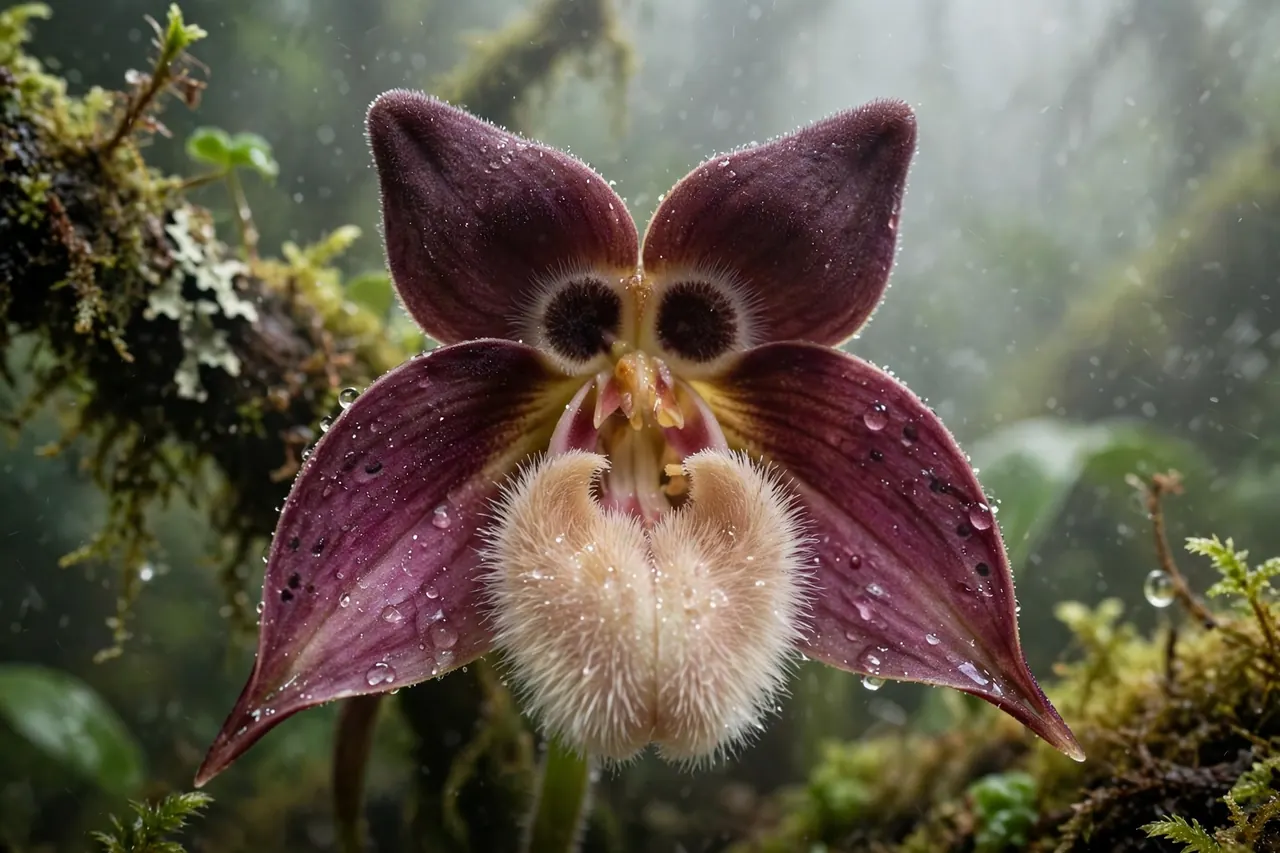
Look closely at a monkey orchid bloom and a tiny monkey’s face stares back — two dark “eyes,” a furry “muzzle,” and a little nose, framed by long tail-like sepals. Found in the cloud forests of Ecuador and Peru at elevations around 3,000 to 6,500 feet, it blooms in cool, misty air and even smells faintly of oranges when in flower. The resemblance is a coincidence of petal arrangement, not mimicry — but it has made this one of the most photographed orchids on Earth. Growing it at home is a job for specialists: it needs constantly cool temperatures (it sulks above about 80°F), near-100% humidity, and moving air — essentially a refrigerated cloud in a greenhouse.
12. Bee Orchid (Ophrys apifera)
The bee orchid’s velvety brown-and-gold lip is a near-perfect replica of a female bee — fuzzy body, folded wings, and all. Male bees, fooled by the look and by pheromone-mimicking scent, attempt to mate with the flower and carry pollen away. Here is the twist: in northern parts of its range the bee that pollinates it does not even occur, so the flower has evolved to pollinate itself, swinging its own pollen onto its stigma. Found in chalk grasslands across Europe and the Mediterranean, it is a protected wildflower in many countries. You cannot buy it or grow it — its seeds germinate only with the help of specific soil fungi, so admire it on a summer walk and leave it exactly where it is.
13. Dancing Girls (Impatiens bequaertii)
Each tiny bloom of this rare African impatiens looks like a little girl in a flowing white dress, arms outstretched mid-twirl. Native to the highlands of Kenya and Uganda, it grows as a small succulent-stemmed plant with these whimsical flowers nodding on delicate stalks. Photos of it go viral every few years, often mislabeled — but the real plant is genuinely as charming as the pictures. It is a tropical plant that needs warmth, humidity, and bright indirect light, so outside zones 10–11 it belongs in a greenhouse or a bright humid sunroom. Plants are hard to find commercially; most growers obtain them through specialist collectors and propagate from cuttings.
14. Swaddled Babies Orchid (Anguloa uniflora)
Peer inside the creamy, tulip-shaped bloom of Anguloa uniflora and you will see it: a tiny form that looks uncannily like a swaddled newborn, complete with a little “head” and folded “blanket” of petals. Native to the cloud forests of the Colombian and Venezuelan Andes, it grows as a terrestrial orchid with large pleated leaves and waxy, cinnamon-scented flowers. It is a cool-to-intermediate grower that wants bright indirect light, a distinct drier rest in winter, and a coarse bark-based mix — conditions a dedicated orchid grower with a greenhouse can provide, but not a typical windowsill. Buy from reputable orchid nurseries, never wild-collected plants.
15. Hooker’s Lips (Psychotria elata)
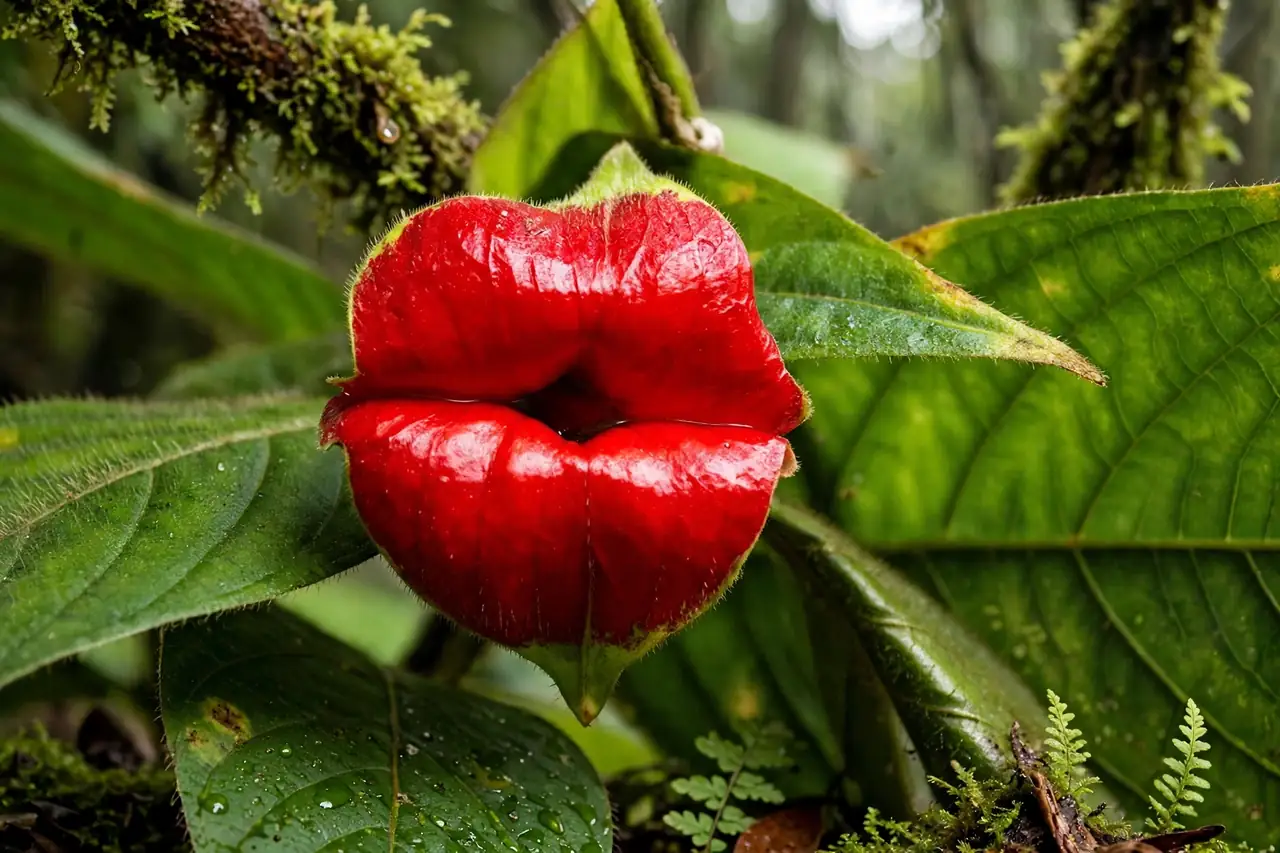
Few plants stop a scrolling thumb like this one: a pair of plump, waxy, bright-red lips, puckered as if for a kiss. What looks like lips is actually a pair of bracts; the true flowers are small and white and emerge from between them later. Native to the rainforests of Central and South America, it grows as an understory shrub where its bold red “lips” advertise to hummingbirds and butterflies. It needs genuine tropical conditions — heat, humidity, and shade — so it is growable outdoors only in zones 11–12 (think Hawaii or southern Florida). Elsewhere it is strictly a heated-greenhouse curiosity, and plants are scarce in the trade.
16. Ghost Orchid (Dendrophylax lindenii)
The ghost orchid has no leaves at all — just a tangle of greenish roots clinging to a tree trunk, from which a pristine white flower dangles on a thread-thin stem, appearing to float in midair. It haunts the swamps of southern Florida and Cuba, blooming unpredictably in summer, pollinated at night by the giant sphinx moth, whose tongue is the only one long enough to reach its nectar spur. It is endangered, protected by law, and famously ungrowable: it needs living tree bark, exact swamp humidity, and specific fungi. Poaching has pushed it to the brink — if you ever see one in the wild, photograph it and tell no one the location.
17. Corpse Lily (Rafflesia arnoldii)
Not to be confused with the corpse flower: the corpse lily is the world’s largest single flower — one bloom, up to three feet across, weighing up to 15 pounds. It has no stem, no leaves, and no roots; it lives entirely inside a host vine (Tetrastigma), erupting through the bark only to bloom. The mottled red-and-cream bloom smells of rotting meat to attract carrion flies. Found in the rainforests of Sumatra and Borneo, it is vanishingly rare and effectively impossible to cultivate — you would need to infect a living host vine and wait years for a bloom that lasts less than a week. See it on an eco-tour in its native forest, and consider yourself extraordinarily lucky.
18. Love-Lies-Bleeding (Amaranthus caudatus)
From the same genus as nutritious grain amaranth comes one of the most dramatic annuals you can grow: long, rope-like tassels of tiny crimson flowers that pour two feet or more from the plant like a bleeding waterfall. Native to the Andes, where it was cultivated as a grain crop, it has been grown ornamentally for centuries — Victorian gardeners adored it. Unlike most entries on this list, it is ridiculously easy: sow seeds directly after the last frost in full sun, and it will grow six feet tall in poor soil with almost no care. The tassels dry beautifully for arrangements, and the young leaves are edible. Self-sows freely, so deadhead if you do not want volunteers.
19. Globe Thistle (Echinops ritro)
Perfect spheres of steel-blue on stiff, silvery stems — globe thistle looks like a botanical illustration of geometry. Each “ball” is a dense cluster of tiny florets that opens from the top down, shifting from silvery buds to deep blue. Native to the steppes of Europe and western Asia, it is one of the toughest perennials in this list: hardy to zone 3, drought-tolerant, deer-resistant, and happy in poor soil. Bees go wild for it, and the dried seed heads stand through winter for architectural interest. Cut the faded heads before they seed if you want to limit self-sowing, or leave them for the goldfinches.
20. Pincushion Protea (Leucospermum)
If the king protea is a crown, the pincushion protea is a firework: a dome of needle-like styles tipped with pollen, sticking out in every direction exactly like pins in a pincushion, in shades of orange, red, and yellow. Native to South Africa’s fynbos, these are long-lived shrubs that make spectacular cut flowers — a single stem can last three weeks in a vase. Like all proteas they demand perfect drainage, acidic soil, and zero phosphorus fertilizer. In zones 9–11 with a Mediterranean climate they are superb landscape shrubs; elsewhere, try them in large terracotta pots with protea mix, moved under cover for winter.
21. Torch Ginger (Etlingera elatior)
Rising on a leafless stalk from a clump of banana-like leaves, the torch ginger’s inflorescence is a flaming cone of waxy red and pink bracts — like an Olympic torch carved from wax. Native to Indonesia and Malaysia, it is both an ornamental showpiece and a culinary plant: the flower buds are sliced into salads and curries across Southeast Asia. It needs true tropical conditions — zones 10–11, rich moist soil, and plenty of water — and it is a big plant, reaching 10 to 15 feet. In frost-free climates it is surprisingly low-maintenance; in cooler zones, admire it in botanical garden conservatories.
22. Bleeding Heart (Lamprocapnos spectabilis)
Every spring, arching stems of the bleeding heart dangle rows of pink heart-shaped blooms, each with a white teardrop “bleeding” from its tip — a flower so perfectly heart-like it seems designed for Valentine’s Day. Native to the woodlands of Siberia, China, and Korea, it is a classic shade perennial, hardy in zones 3–9. Plant it in rich, moist soil in partial shade, and it will return bigger every year with almost no care. One honest caveat: the foliage dies back and disappears by midsummer, leaving a gap — so pair it with ferns or hostas that fill in later. All parts are mildly toxic if eaten, so it is not for the vegetable patch.
23. Bat-Head Lily (Tacca integrifolia)
The black bat flower’s paler cousin is arguably even more beautiful: broad white bracts veined in purple, spread like a bat’s wings, with long purple whiskers trailing below and a cluster of dark purple-black buds at the center like a face. Native to the forest understory of Southeast Asia, it wants the same conditions as its black sibling — warm, humid, shaded, and never waterlogged — and makes an equally striking houseplant. It is slightly larger-growing and, some collectors say, slightly easier to bloom. Outdoors it is hardy only in zones 10–11; everyone else should grow it in a bright bathroom or humid sunroom.
24. Naked Man Orchid (Orchis italica)
Each tiny floret of this Mediterranean orchid looks like a little naked man — complete with head, arms, legs, and everything in between — clustered by the dozens into a pinkish-white cone. It is one of nature’s best sight gags, and it is completely real, blooming in grasslands and olive groves around the Mediterranean each spring. Like the bee orchid, it is a wild terrestrial orchid whose seeds need specific soil fungi to germinate, and it is protected in much of its range. There is no legitimate commercial source and no way to grow it at home — which makes stumbling across one on a spring hike in southern Europe all the more magical.
25. Fly Orchid (Ophrys insectifera)
The fly orchid takes mimicry to the extreme: its small dark bloom looks exactly like a fly perched on a green stem — slender “body,” folded “wings,” even fake eyes. Male digger wasps, fooled by the disguise and a matching scent, attempt to carry the “fly” away and pollinate the flower instead. Found in chalk grasslands and open woods across Europe, it is a subtle, easy-to-miss marvel — most people walk right past it. Like its Ophrys cousins it depends on soil fungi and is protected where it grows, so it can never be a garden plant. It earns its place here as proof that the strangest flowers are sometimes the smallest.
Tips for Growing the Growable Ones
About half the flowers on this list can realistically be grown by a home gardener. Here is how to succeed with them, grouped by how you will grow them.
Easy outdoor perennials and annuals (zones 3–9): Bleeding heart, sea holly, globe thistle, Dutchman’s pipe, passionflower, and love-lies-bleeding ask for almost nothing. Plant bleeding heart in rich, moist shade; give sea holly and globe thistle lean, well-drained soil in full sun and never overwater; let Dutchman’s pipe and passionflower climb a sturdy trellis and cut back suckers yearly; sow love-lies-bleeding directly in the ground after frost. These six alone will make your garden the talk of the neighborhood.
Tender showstoppers for pots: Bird of paradise, black bat flower, bat-head lily, and parrot’s beak all thrive in containers. Use a chunky, fast-draining potting mix (add bark or perlite), water when the top inch dries, and feed lightly through the growing season. Move them indoors before the first frost — a bright window is enough for bird of paradise and parrot’s beak, while the bat flowers want humidity, so group them with other plants or use a pebble tray.
Mediterranean-climate specialties: King protea and pincushion protea are for gardeners in zones 9–11 with dry summers. The rules are strict: acidic, sharply drained soil, no phosphorus fertilizer, no root disturbance, and no summer overwatering once established. Get these right and proteas are among the most spectacular — and longest-lived — shrubs you can grow.
Tropical-climate and greenhouse plants: Jade vine, torch ginger, Hooker’s lips, and dancing girls need genuine heat and humidity. In zones 10–12, plant jade vine against a massive pergola and torch ginger in rich, moist ground. Anywhere colder, they are conservatory plants — worth it if you have the space, but be honest about your conditions before buying.
Chocolate cosmos, the sweet exception: Grow it like a dahlia — full sun, rich soil, regular deadheading, and lifted tubers where winters drop below zone 7. Plant it near a patio or path where you will catch its chocolate scent on warm evenings.
Which Unusual Flower Amazed You Most?
From the towering corpse flower to the fly-mimicking fly orchid, these 25 blooms prove that nature is the most inventive designer of all. Some, like bleeding heart, sea holly, and bird of paradise, can be in your garden by next season; others, like the ghost orchid and corpse lily, will remain once-in-a-lifetime sights in the wild or at a botanical garden — and that rarity is part of their magic. If this list sent you down a rabbit hole, start with one growable favorite, give it the conditions it asks for, and enjoy owning a little piece of the strange. Then tell a fellow gardener about the flower that looks like a monkey — everyone deserves to know about that one.
Frequently Asked Questions
Can I grow a corpse flower at home?
Realistically, no. Amorphophallus titanum needs a tropical greenhouse, a corm that can weigh over 100 pounds, and seven to ten years of growth before its first bloom — which then lasts only a day or two. It is a botanical garden plant. If you love the look of arums, try the much smaller (and far less smelly) voodoo lily, Amorphophallus konjac, which can be grown in a pot.
Why does the corpse flower smell like rotting flesh?
The stench is a pollination strategy. In the Sumatran rainforest, the smell of carrion attracts flesh flies and carrion beetles, which crawl into the bloom, pick up pollen, and carry it to the next flower. The plant even heats up during blooming to help vaporize the odor compounds and broadcast the smell farther.
What is the rarest flower on this list?
The corpse lily (Rafflesia arnoldii) and ghost orchid (Dendrophylax lindenii) are the rarest in practical terms. The corpse lily blooms unpredictably for less than a week deep in Sumatran and Bornean rainforest, while the ghost orchid is endangered and found only in a few Florida and Cuban swamps. The chocolate cosmos is extinct in the wild entirely, surviving only in gardens.
Which unusual flowers are easiest for beginners?
Start with love-lies-bleeding (sow and forget), bleeding heart (plant in shade and ignore), sea holly and globe thistle (thrive on neglect in sun), or bird of paradise as a houseplant. All are widely available, forgiving, and deliver maximum weirdness per unit of effort.
Do black bat flowers really have whiskers?
Yes — the long, thread-like filaments dangling from the bloom are real. Called bracteoles, they can reach two feet long and may help the flower stand out to pollinators in the dark forest understory. They are delicate, so handle the plant gently and keep it out of strong drafts.
Is the jade vine’s turquoise color real or edited?
It is completely real. The turquoise-green color of Strongylodon macrobotrys blooms is one of the rarest colors in the plant kingdom, produced by a unique combination of pigments. Photos barely do it justice — in person the hanging clusters seem to glow.
One Comment