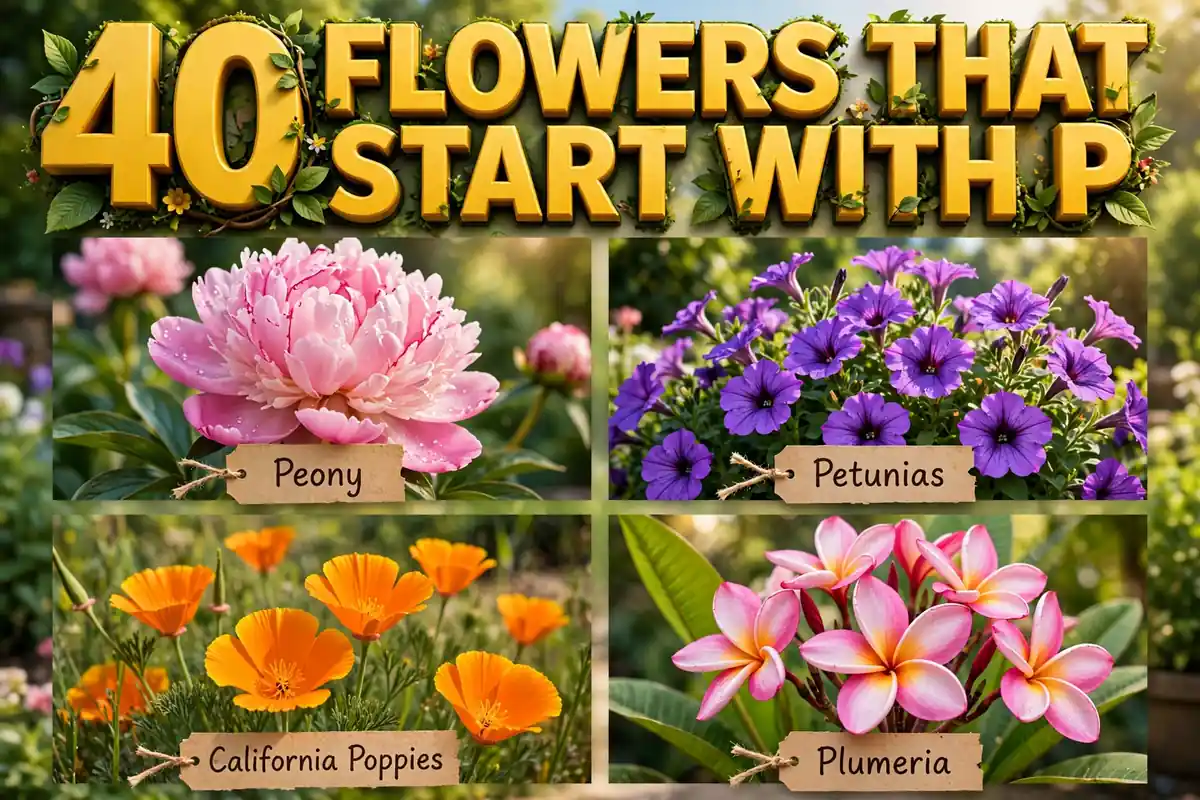
80 Flowers That Start With P: Names, Pictures & Growing Tips
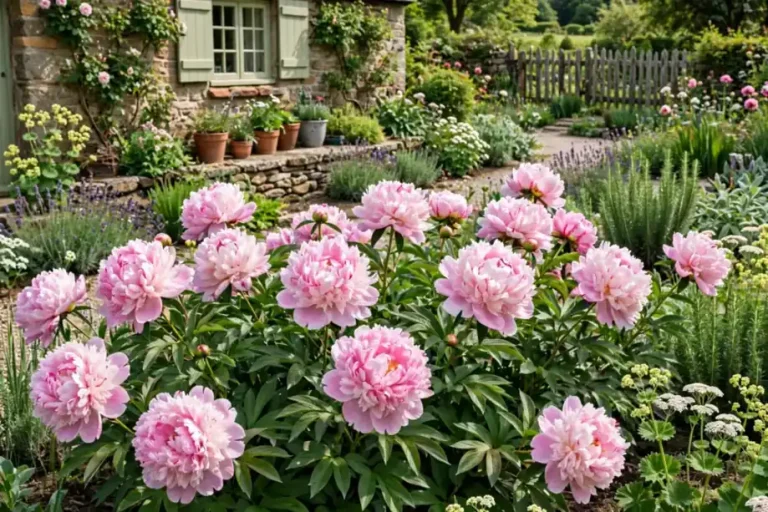
Looking for flower names that start with P? You have come to the right place. This guide now covers 80 flowers that start with P, from peony and petunia to primrose, poppy, plumeria and prairie gentian, each with its scientific name, bloom season, sun needs, and USDA hardiness zone.
Every entry below includes the flower’s scientific name, bloom season, sun needs, and USDA hardiness zone, so you can tell at a glance which P-flowers will thrive in your yard.
Quick Answer
Yes – this page lists 80 flowers that start with P, from peony and petunia to primrose, poppy, plumeria and prairie gentian. Use the at-a-glance table to filter by your USDA zone, sun and bloom season before you buy.
Table of Contents
- P-Flowers at a Glance
- 80 Flowers That Start With P: The Complete List
- P flowers by colour
- Best P flowers by season
- Indoor and container-friendly P flowers
- Beginner-friendly P flowers
- Rare and unusual P flowers
- P flowers with full guides
- Growing Tips for P-Flowers
- Which P-Flowers Will You Grow?
- Frequently Asked Questions
- References

P-Flowers at a Glance
Use this table to compare all 80 flowers that start with P side by side.
| # | Name | Scientific | Bloom | Sun | Zone | Best for |
|---|---|---|---|---|---|---|
| 1 | Peony | Paeonia lactiflora | Late spring to early summer | Full sun | 3-8 | Long-lived borders, cut flowers |
| 2 | Garden Phlox | Phlox paniculata | Summer | Full sun to part shade | 4-8 | Fragrant summer borders, cottage gardens |
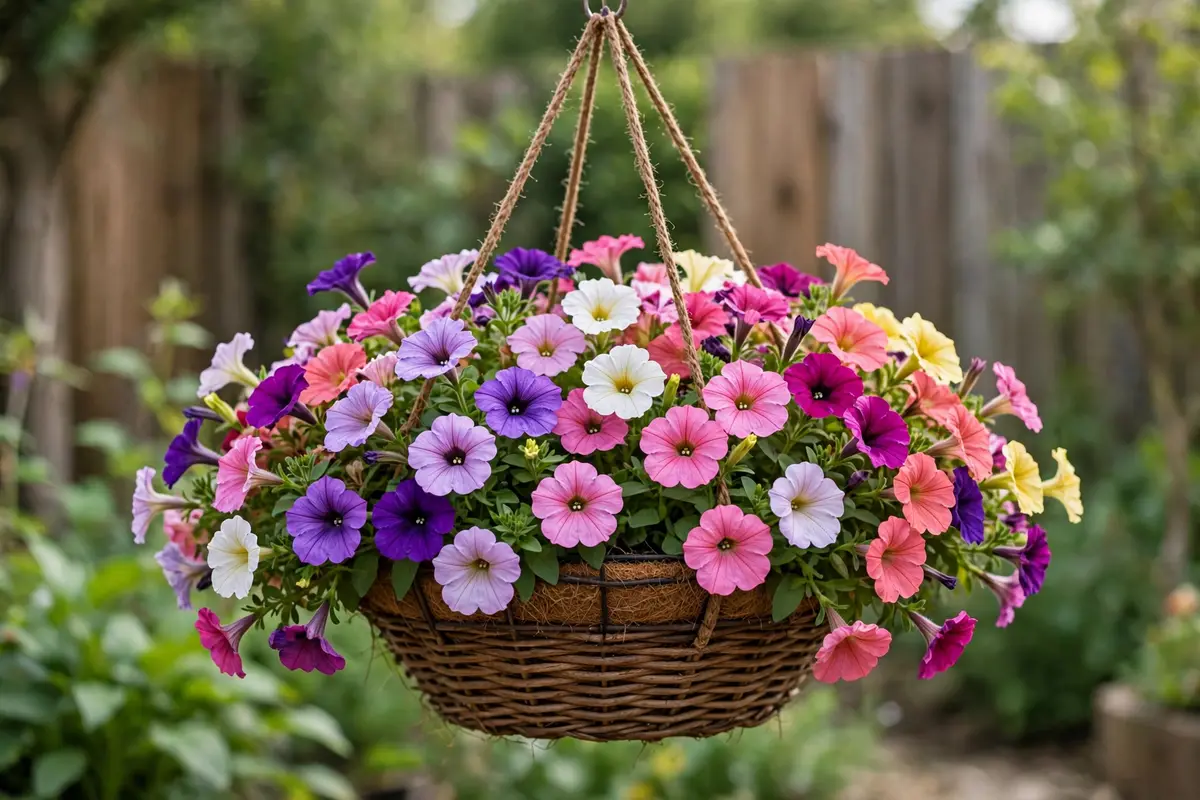
| 3 | Petunia | Petunia x hybrida | Summer to fall | Full sun | Grown as annual | Containers, hanging baskets, bedding |
| 4 | Pansy | Viola x wittrockiana | Spring and fall (cool seasons) | Full sun to part shade | Grown as cool-season annual | Spring and fall color, edging |
| 5 | Primrose | Primula vulgaris | Spring | Part shade | 4-8 | Woodland edges, shady spring color |
| 6 | Oriental Poppy | Papaver orientale | Late spring to early summer | Full sun | 3-7 | Bold spring statements |
| 7 | California Poppy | Eschscholzia californica | Spring to summer | Full sun | 6-10; self-sows freely | Wildflower meadows, low-water gardens |
| 8 | Plumeria (Frangipani) | Plumeria rubra | Summer to fall | Full sun | 10-12; container elsewhere | Fragrance, tropical patios |
| 9 | Moss Rose | Portulaca grandiflora | Summer to fall | Full sun | Grown as annual | Hot dry spots, rock gardens |
| 10 | Poinsettia | Euphorbia pulcherrima | Winter (colorful bracts) | Bright indirect light | 9-11; houseplant elsewhere | Holiday displays, indoor color |
| 11 | Purple Coneflower | Echinacea purpurea | Summer | Full sun | 3-8 | Pollinator gardens, easy perennials |
| 12 | Penstemon (Beardtongue) | Penstemon spp. | Late spring to summer | Full sun | 3-9 (varies by species) | Hummingbirds, native gardens |
| 13 | Pincushion Flower | Scabiosa columbaria | Summer to fall | Full sun | 3-7 | Cut flowers, cottage borders |
| 14 | Peace Lily | Spathiphyllum wallisii | Year-round indoors | Bright indirect light | Houseplant (11-12 outdoors) | Indoor plants, offices |
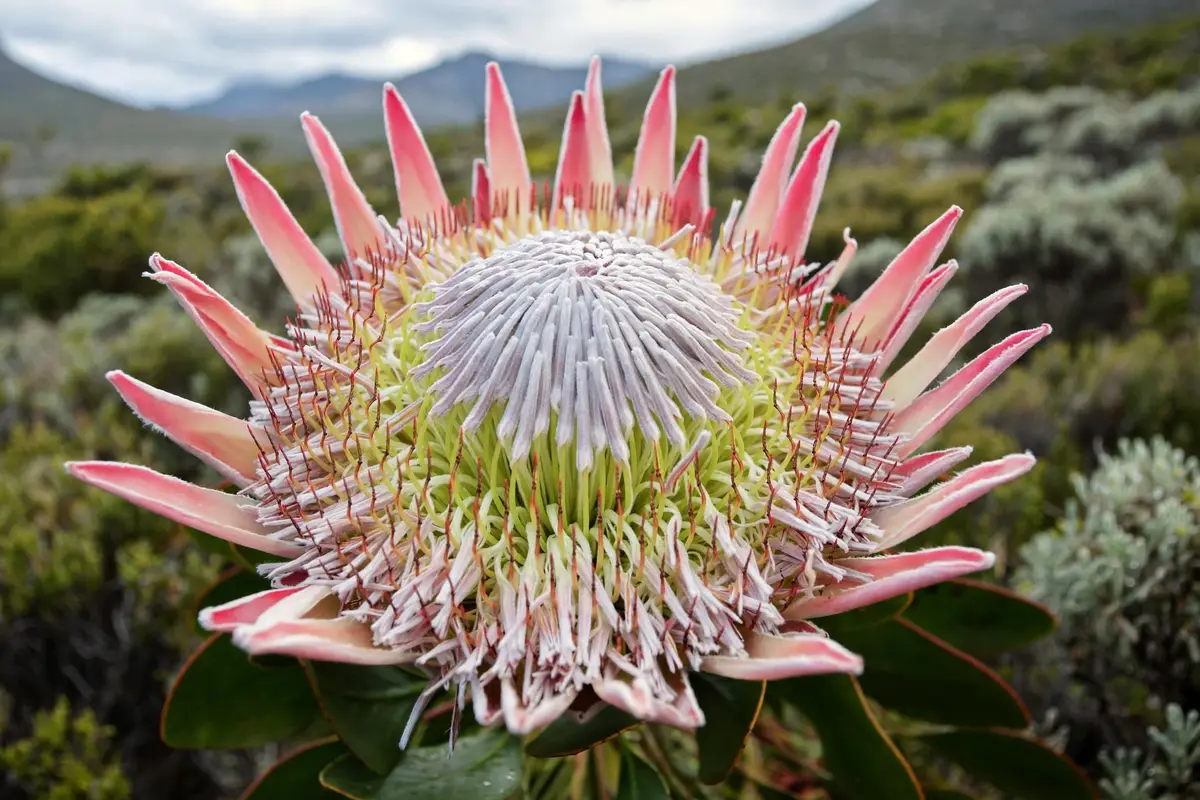
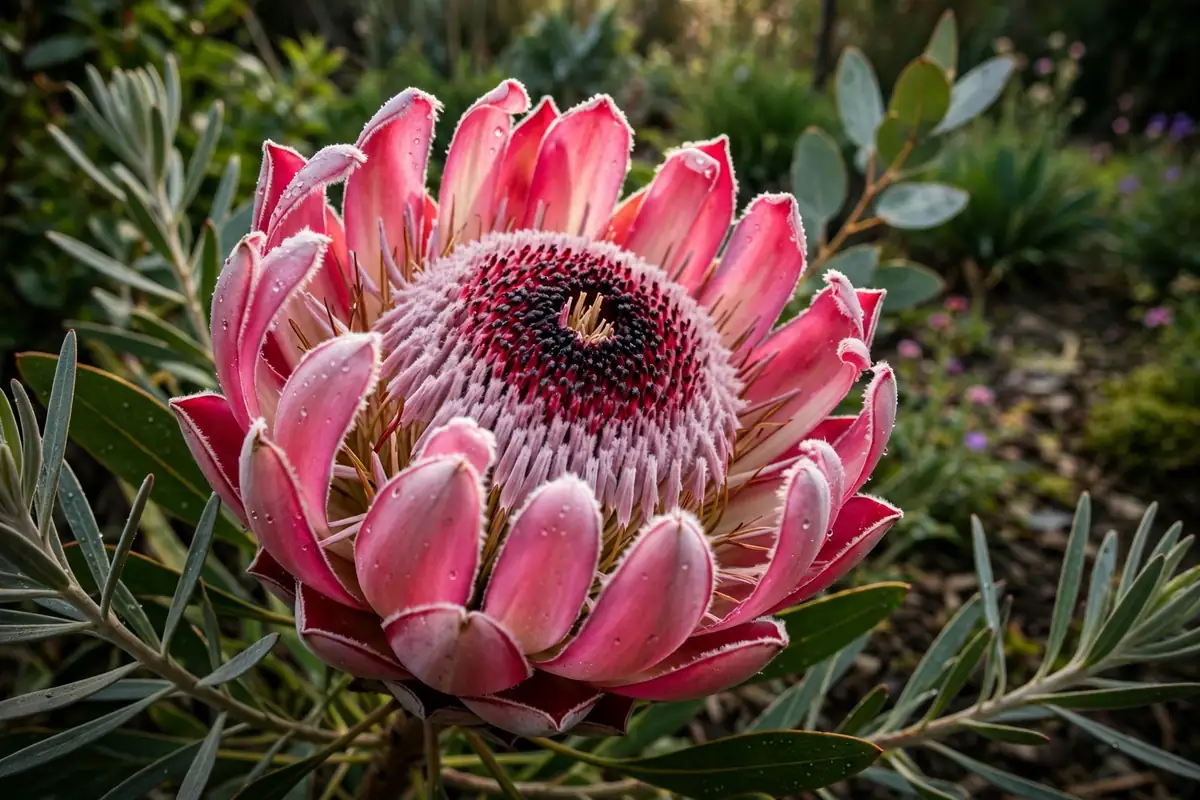
| 15 | King Protea | Protea cynaroides | Spring to summer | Full sun | 9-11 | Exotic focal points, cut flowers |
| 16 | Pasque Flower | Pulsatilla vulgaris | Early spring | Full sun | 4-8 | Early spring color, rock gardens |
| 17 | Persian Buttercup | Ranunculus asiaticus | Spring | Full sun | 8-10; annual elsewhere | Cut flowers, spring containers |
| 18 | Garden Pinks | Dianthus plumarius | Late spring to early summer | Full sun | 3-9 | Fragrance, edging, rock gardens |
| 19 | Madagascar Periwinkle | Catharanthus roseus | Summer to fall | Full sun | 9-11; annual elsewhere | Hot humid climates, bedding |
| 20 | Passionflower | Passiflora incarnata | Summer to fall | Full sun | 6-9 | Trellises, exotic flowers, native vines |
| 21 | Pear Blossom | Pyrus communis | Spring | Full sun | 4-8 | Orchards, spring landscape impact |
| 22 | Prickly Pear | Opuntia humifusa | Early summer | Full sun | 4-9 | Xeriscaping, native cactus gardens |
| 23 | Prairie Coneflower | Ratibida pinnata | Summer | Full sun | 3-8 | Prairies, meadows, native plantings |
| 24 | Parrot’s Beak | Lotus berthelotii | Spring to summer | Full sun | 9-11; annual elsewhere | Hanging baskets, containers |
| 25 | Pearly Everlasting | Anaphalis margaritacea | Summer to fall | Full sun to part shade | 3-8 | Dried arrangements, native borders |
| 26 | Cape Plumbago | Plumbago auriculata | Summer to fall | Full sun | 8-11 | Blue flowers, butterfly gardens |
| 27 | Pentas (Egyptian Starcluster) | Pentas lanceolata | Summer to fall | Full sun | 9-11; annual elsewhere | Butterflies, Southern gardens |
| 28 | Pot Marigold | Calendula officinalis | Spring to fall | Full sun to part shade | Grown as annual | Edible flowers, cool-season color |
| 29 | Pink Jasmine | Jasminum polyanthum | Late winter to spring | Full sun to part shade | 8-11 | Fragrance, climbing vines |
| 30 | Polyantha Rose | Rosa (Polyantha Group) | Summer to fall | Full sun | 5-9 | Rose hedges, easy-care roses |
| 31 | Tree Peony | Paeonia suffruticosa | Spring | Full sun to part shade | 4-8 | Specimen shrubs, luxury spring blooms |
| 32 | Persian Violet | Exacum affine | Summer to fall | Bright indirect light | 9-11; houseplant elsewhere | Windowsills, indoor gifts |
| 33 | Pride of Madeira | Echium candicans | Spring to early summer | Full sun | 9-11 | Bee gardens, coastal California gardens |
| 34 | Prairie Blazing Star | Liatris pycnostachya | Summer | Full sun | 3-8 | Monarchs, prairie gardens |
| 35 | Pussy Willow | Salix discolor | Late winter to early spring | Full sun | 4-8 | Early pollinators, cut branches |
| 36 | Prairie Smoke | Geum triflorum | Spring | Full sun | 3-7 | Rock gardens, native wildflower beds |
| 37 | Pickerelweed | Pontederia cordata | Summer to fall | Full sun | 3-10 | Ponds, rain gardens |
| 38 | Evening Primrose | Oenothera biennis | Summer | Full sun | 4-9 | Evening gardens, naturalizing |
| 39 | Princess Flower | Tibouchina urvilleana | Summer to fall | Full sun | 9-11 | Bold purple color, tropical gardens |
| 40 | Paper Daisy | Xerochrysum bracteatum | Summer to fall | Full sun | 9-11; annual elsewhere | Dried flowers, everlasting bouquets |
| 41 | Peruvian Lily | Alstroemeria spp. | Summer to fall | Full sun to part shade | 7-10; annual elsewhere | Cut flowers, borders |
| 42 | Painted Daisy | Tanacetum coccineum | Late spring to summer | Full sun | 3-7 | Cut flowers, cottage borders |
| 43 | Plume Poppy | Macleaya cordata | Summer | Full sun to part shade | 3-8 | Tall borders, dramatic foliage |
| 44 | Peacock Orchid | Gladiolus murielae | Summer to fall | Full sun | 7-10; lift corms elsewhere | Cut flowers, fragrance |
| 45 | Prairie Gentian (Lisianthus) | Eustoma grandiflorum | Summer | Full sun | Grown as annual | Cut flowers, containers |
| 46 | Pink Lady’s Slipper | Cypripedium acaule | Spring | Part shade | 3-7 | Woodland gardens, native (do not wild-collect) |
| 47 | Purple Loosestrife | Lythrum salicaria | Summer | Full sun | 3-9 | Wet gardens – check local invasiveness first |
| 48 | Pink Evening Primrose | Oenothera speciosa | Spring to fall | Full sun | 5-9 | Groundcover, evening gardens |
| 49 | Pineleaf Penstemon | Penstemon pinifolius | Summer | Full sun | 4-9 | Rock gardens, hummingbirds |
| 50 | Pink Turtlehead | Chelone lyonii | Late summer to fall | Full sun to part shade | 3-8 | Wet borders, late colour |
| 51 | Poppy Anemone | Anemone coronaria | Spring | Full sun | 7-10; annual elsewhere | Cut flowers, spring containers |
| 52 | Pineapple Sage | Salvia elegans | Late summer to fall | Full sun | 8-11; annual elsewhere | Hummingbirds, herb gardens |
| 53 | Pink Trumpet Vine | Podranea ricasoliana | Summer to fall | Full sun | 9-11 | Tropical vines, fences |
| 54 | Pride of Barbados | Caesalpinia pulcherrima | Summer to fall | Full sun | 9-12 | Tropical shrubs, butterflies |
| 55 | Persian Shield | Strobilanthes dyerianus | Summer to fall (foliage) | Part shade | 10-11; houseplant elsewhere | Foliage, containers |
| 56 | Painted Tongue | Salpiglossis sinuata | Summer | Full sun | Annual | Containers, cutting, cool-season colour |
| 57 | Pampas Grass | Cortaderia selloana | Late summer to fall (plumes) | Full sun | 7-11 | Screens, dried plumes |
| 58 | Paperflower | Bougainvillea glabra | Spring to fall | Full sun | 9-11; container elsewhere | Walls, trellis, containers |
| 59 | Pagoda Flower | Clerodendrum paniculatum | Summer | Full sun to part shade | 9-11; container elsewhere | Tropical borders, butterfly gardens |
| 60 | Pelargonium | Pelargonium × hortorum | Spring to fall | Full sun | Annual; perennial 9-11 | Pots, window boxes, bedding |
| 61 | Pennyroyal | Mentha pulegium | Summer | Full sun to part shade | 6-9 | Ground cover, herb gardens |
| 62 | Perennial Pea | Lathyrus latifolius | Summer | Full sun | 5-9 | Fences, trellis, banks (seeds poisonous) |
| 63 | Periwinkle | Vinca minor | Spring | Part shade to shade | 4-8 | Ground cover, banks, under trees |
| 64 | Pheasant’s Eye | Adonis annua | Late spring to summer | Full sun | Annual | Meadows, cottage beds |
| 65 | Mock Orange | Philadelphus coronarius | Late spring | Full sun to part shade | 4-8 | Shrub borders, scented hedges |
| 66 | Jerusalem Sage | Phlomis fruticosa | Early summer | Full sun | 7-10 | Dry borders, Mediterranean gardens |
| 67 | Prairie Phlox | Phlox pilosa | Late spring | Full sun | 4-8 | Prairies, cottage borders |
| 68 | Obedient Plant | Physostegia virginiana | Late summer to fall | Full sun | 3-9 | Borders, damp soil |
| 69 | Pieris | Pieris japonica | Early spring | Part shade | 5-8 | Woodland borders (leaves toxic) |
| 70 | Pigsqueak | Bergenia cordifolia | Spring | Full sun to part shade | 3-8 | Edging, ground cover |
| 71 | Pineapple Lily | Eucomis comosa | Summer | Full sun | 7-10; lift bulbs in colder zones | Containers, border accents |
| 72 | Pink Muhly Grass | Muhlenbergia capillaris | Fall (pink plumes) | Full sun | 6-9 | Mass planting, soft texture |
| 73 | Pitcher Plant | Sarracenia purpurea | Spring | Full sun | 3-8 | Bog gardens, wet spots |
| 74 | Plantain Lily | Hosta spp. | Summer | Part shade to shade | 3-9 | Shade borders, ground cover |
| 75 | Pocketbook Plant | Calceolaria herbeohybrida | Spring | Part shade | Annual; houseplant | Pots, cool bright rooms |
| 76 | Pond Lily | Nymphaea spp. | Summer | Full sun | 4-10 by type | Ponds, large water tubs |
| 77 | Poor Man’s Orchid | Schizanthus × wisetonensis | Spring to summer | Full sun to part shade | Annual | Containers, cool-season bedding |
| 78 | Powder Puff Plant | Calliandra haematocephala | Winter to spring in subtropics | Full sun | 9-11 | Shrubs, containers |
| 79 | Prince’s Feather | Amaranthus hypochondriacus | Summer to fall | Full sun | Annual | Back of border, cut and dried flowers |
| 80 | Self-Heal | Prunella vulgaris | Late spring to summer | Full sun to part shade | 4-9 | Lawn and meadow ground cover |
80 Flowers That Start With P: The Complete List
Here they are – 80 flowers that start with P, each with growing notes so you can pick the right ones for your garden. Grow in the sun and zone shown in the table; check the plant label for the exact cultivar, as ranges vary by type.
1. Peony (Paeonia lactiflora)
Grow in the sun and zone shown in the table; check the plant label for the exact cultivar, as ranges vary by type.
Bloom: Late spring to early summer | Sun: Full sun | Zone: 3-8 | Best for: Long-lived borders, cut flowers
2. Garden Phlox (Phlox paniculata)
Grow in the sun and zone shown in the table; check the plant label for the exact cultivar, as ranges vary by type.
Bloom: Summer | Sun: Full sun to part shade | Zone: 4-8 | Best for: Fragrant summer borders, cottage gardens
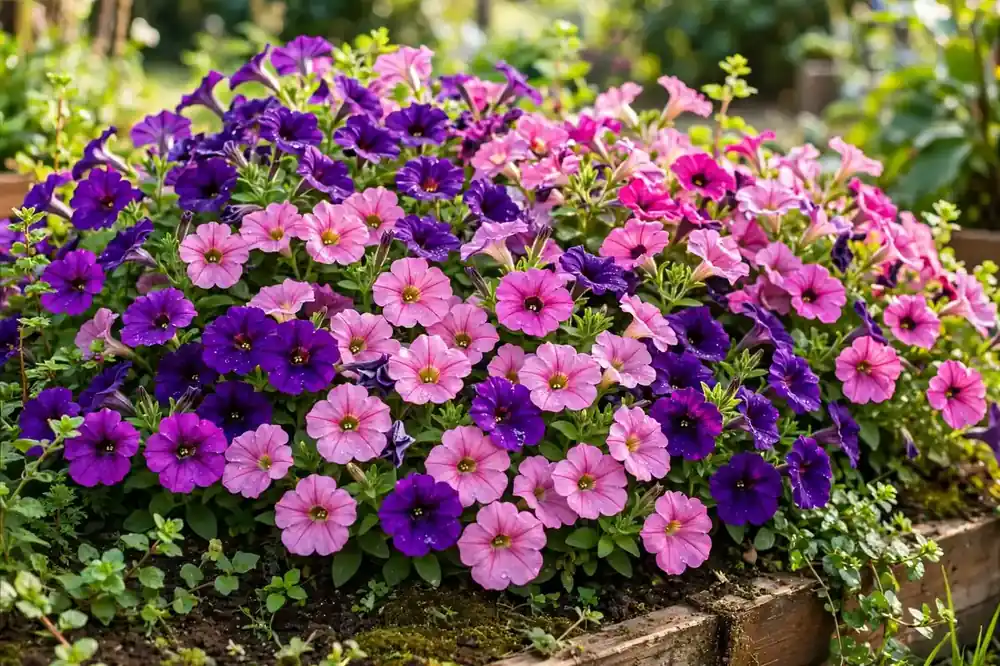
3. Petunia (Petunia x hybrida)
Grow in the sun and zone shown in the table; check the plant label for the exact cultivar, as ranges vary by type.
Bloom: Summer to fall | Sun: Full sun | Zone: Grown as annual | Best for: Containers, hanging baskets, bedding
4. Pansy (Viola x wittrockiana)
Grow in the sun and zone shown in the table; check the plant label for the exact cultivar, as ranges vary by type.
Bloom: Spring and fall (cool seasons) | Sun: Full sun to part shade | Zone: Grown as cool-season annual | Best for: Spring and fall color, edging
5. Primrose (Primula vulgaris)
Grow in the sun and zone shown in the table; check the plant label for the exact cultivar, as ranges vary by type.
Bloom: Spring | Sun: Part shade | Zone: 4-8 | Best for: Woodland edges, shady spring color
6. Oriental Poppy (Papaver orientale)
Grow in the sun and zone shown in the table; check the plant label for the exact cultivar, as ranges vary by type.
Bloom: Late spring to early summer | Sun: Full sun | Zone: 3-7 | Best for: Bold spring statements
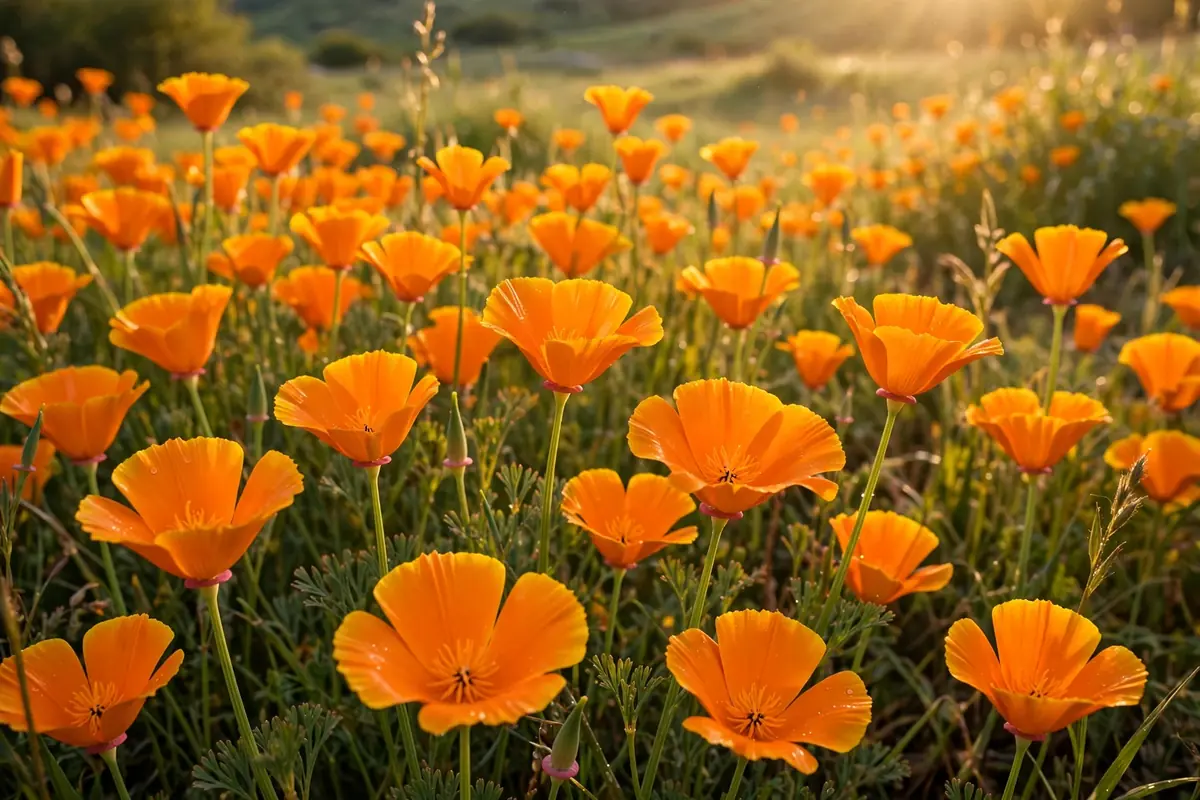
7. California Poppy (Eschscholzia californica)
Grow in the sun and zone shown in the table; check the plant label for the exact cultivar, as ranges vary by type.
Bloom: Spring to summer | Sun: Full sun | Zone: 6-10; self-sows freely | Best for: Wildflower meadows, low-water gardens
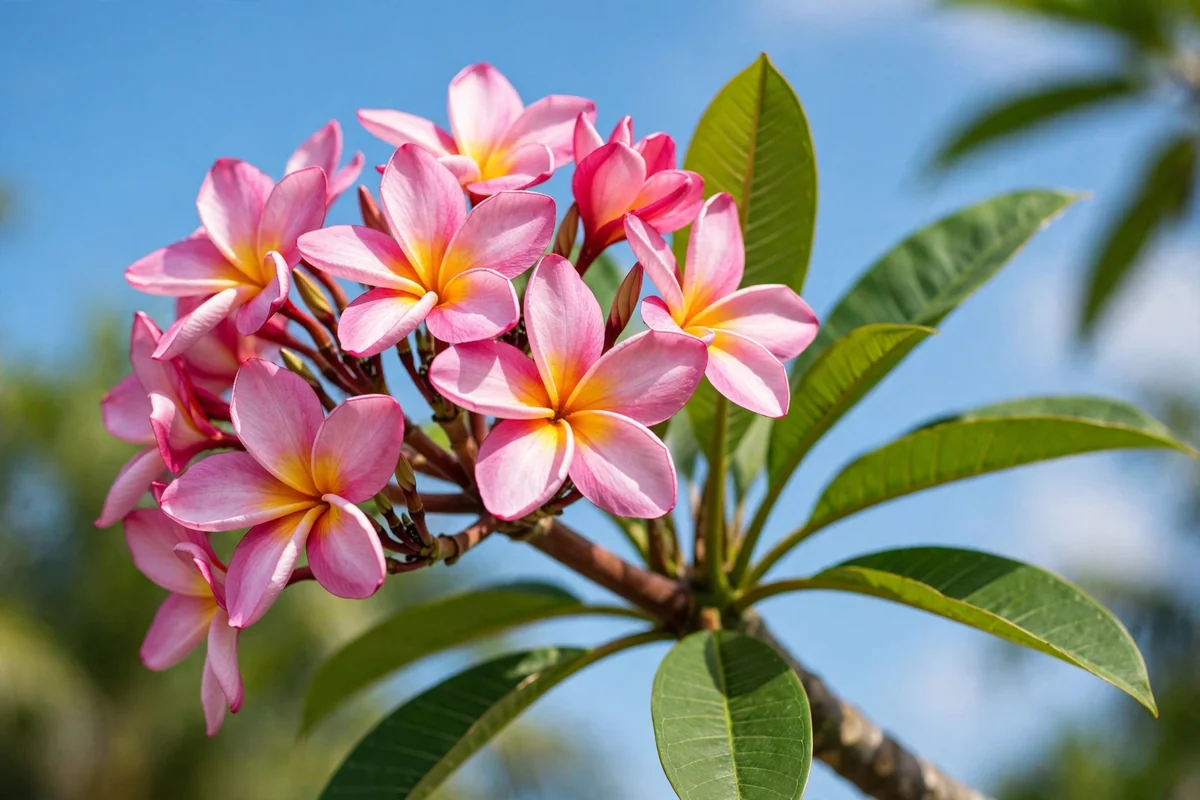
8. Plumeria – Frangipani (Plumeria rubra)
Grow in the sun and zone shown in the table; check the plant label for the exact cultivar, as ranges vary by type.
Bloom: Summer to fall | Sun: Full sun | Zone: 10-12; container elsewhere | Best for: Fragrance, tropical patios
9. Moss Rose (Portulaca grandiflora)
Grow in the sun and zone shown in the table; check the plant label for the exact cultivar, as ranges vary by type.
Bloom: Summer to fall | Sun: Full sun | Zone: Grown as annual | Best for: Hot dry spots, rock gardens
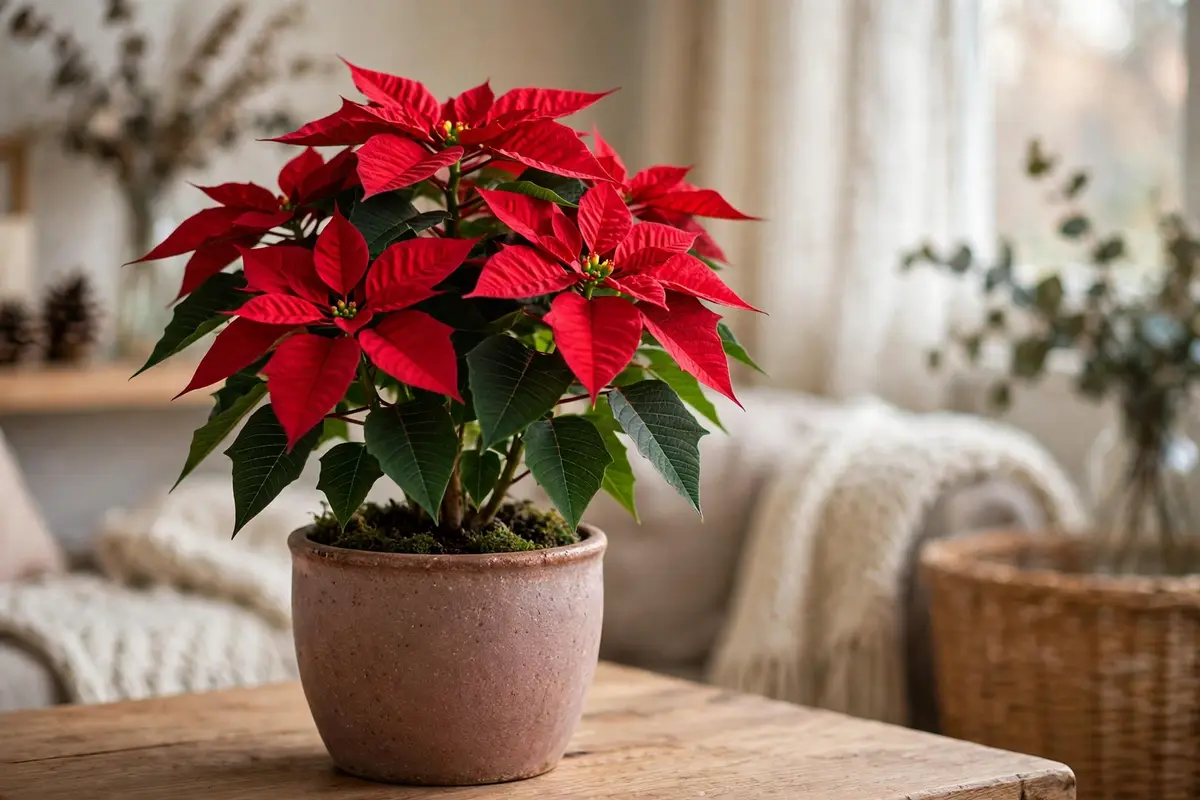
10. Poinsettia (Euphorbia pulcherrima)
Grow in the sun and zone shown in the table; check the plant label for the exact cultivar, as ranges vary by type.
Bloom: Winter (colorful bracts) | Sun: Bright indirect light | Zone: 9-11; houseplant elsewhere | Best for: Holiday displays, indoor color
11. Purple Coneflower (Echinacea purpurea)
Grow in the sun and zone shown in the table; check the plant label for the exact cultivar, as ranges vary by type.
Bloom: Summer | Sun: Full sun | Zone: 3-8 | Best for: Pollinator gardens, easy perennials
12. Penstemon – Beardtongue (Penstemon spp.)
Grow in the sun and zone shown in the table; check the plant label for the exact cultivar, as ranges vary by type.
Bloom: Late spring to summer | Sun: Full sun | Zone: 3-9 (varies by species) | Best for: Hummingbirds, native gardens
13. Pincushion Flower (Scabiosa columbaria)
Grow in the sun and zone shown in the table; check the plant label for the exact cultivar, as ranges vary by type.
Bloom: Summer to fall | Sun: Full sun | Zone: 3-7 | Best for: Cut flowers, cottage borders
14. Peace Lily (Spathiphyllum wallisii)
Grow in the sun and zone shown in the table; check the plant label for the exact cultivar, as ranges vary by type.
Bloom: Year-round indoors | Sun: Bright indirect light | Zone: Houseplant (11-12 outdoors) | Best for: Indoor plants, offices
15. King Protea (Protea cynaroides)
Grow in the sun and zone shown in the table; check the plant label for the exact cultivar, as ranges vary by type.
Bloom: Spring to summer | Sun: Full sun | Zone: 9-11 | Best for: Exotic focal points, cut flowers
16. Pasque Flower (Pulsatilla vulgaris)
Grow in the sun and zone shown in the table; check the plant label for the exact cultivar, as ranges vary by type.
Bloom: Early spring | Sun: Full sun | Zone: 4-8 | Best for: Early spring color, rock gardens
17. Persian Buttercup (Ranunculus asiaticus)
Grow in the sun and zone shown in the table; check the plant label for the exact cultivar, as ranges vary by type.
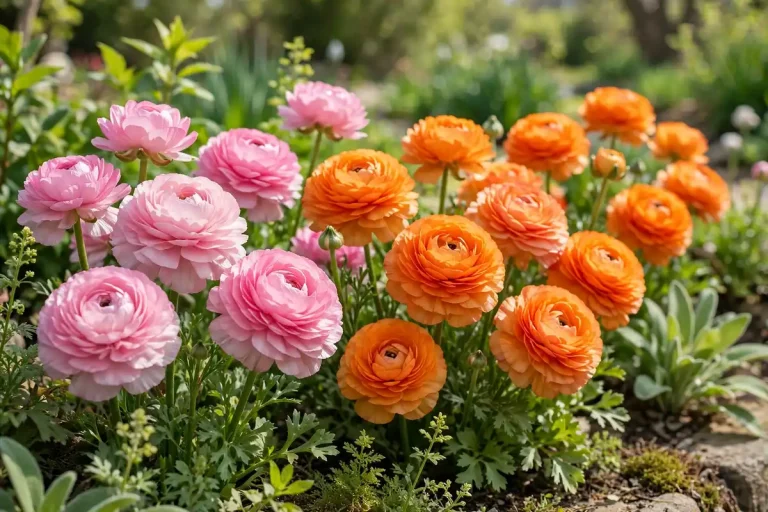
Bloom: Spring | Sun: Full sun | Zone: 8-10; annual elsewhere | Best for: Cut flowers, spring containers
18. Garden Pinks (Dianthus plumarius)
Grow in the sun and zone shown in the table; check the plant label for the exact cultivar, as ranges vary by type.
Bloom: Late spring to early summer | Sun: Full sun | Zone: 3-9 | Best for: Fragrance, edging, rock gardens
19. Madagascar Periwinkle (Catharanthus roseus)
Grow in the sun and zone shown in the table; check the plant label for the exact cultivar, as ranges vary by type. Note: all parts are toxic if eaten.
Bloom: Summer to fall | Sun: Full sun | Zone: 9-11; annual elsewhere | Best for: Hot humid climates, bedding
20. Passionflower (Passiflora incarnata)
Grow in the sun and zone shown in the table; check the plant label for the exact cultivar, as ranges vary by type.
Bloom: Summer to fall | Sun: Full sun | Zone: 6-9 | Best for: Trellises, exotic flowers, native vines
21. Pear Blossom (Pyrus communis)
Grow in the sun and zone shown in the table; check the plant label for the exact cultivar, as ranges vary by type.
Bloom: Summer | Sun: Full sun | Zone: 4-8 | Best for: Orchards, spring landscape impact
22. Prickly Pear (Opuntia humifusa)
Grow in the sun and zone shown in the table; check the plant label for the exact cultivar, as ranges vary by type.
Bloom: Early summer | Sun: Full sun | Zone: 4-8 | Best for: Xeriscaping, native cactus gardens
23. Prairie Coneflower (Ratibida pinnata)
Grow in the sun and zone shown in the table; check the plant label for the exact cultivar, as ranges vary by type.
Bloom: Summer to fall | Sun: Full sun | Zone: 3-8 | Best for: Prairies, meadows, native plantings
24. Parrot’s Beak (Lotus berthelotii)
Grow in the sun and zone shown in the table; check the plant label for the exact cultivar, as ranges vary by type.
Bloom: Spring to summer | Sun: Full sun | Zone: 9-11; annual elsewhere | Best for: Hanging baskets, containers
25. Pearly Everlasting (Anaphalis margaritacea)
Grow in the sun and zone shown in the table; check the plant label for the exact cultivar, as ranges vary by type.
Bloom: Summer to fall | Sun: Full sun to part shade | Zone: 3-8 | Best for: Dried arrangements, native borders
26. Cape Plumbago (Plumbago auriculata)
Grow in the sun and zone shown in the table; check the plant label for the exact cultivar, as ranges vary by type.
Bloom: Summer to fall | Sun: Full sun | Zone: 8-11 | Best for: Blue flowers, butterfly gardens
27. Pentas – Egyptian Starcluster (Pentas lanceolata)
Grow in the sun and zone shown in the table; check the plant label for the exact cultivar, as ranges vary by type.
Bloom: Summer to fall | Sun: Full sun | Zone: 9-11; annual elsewhere | Best for: Butterflies, Southern gardens
28. Pot Marigold (Calendula officinalis)
Grow in the sun and zone shown in the table; check the plant label for the exact cultivar, as ranges vary by type.
Bloom: Spring to fall | Sun: Full sun to part shade | Zone: Grown as annual | Best for: Edible flowers, cool-season color
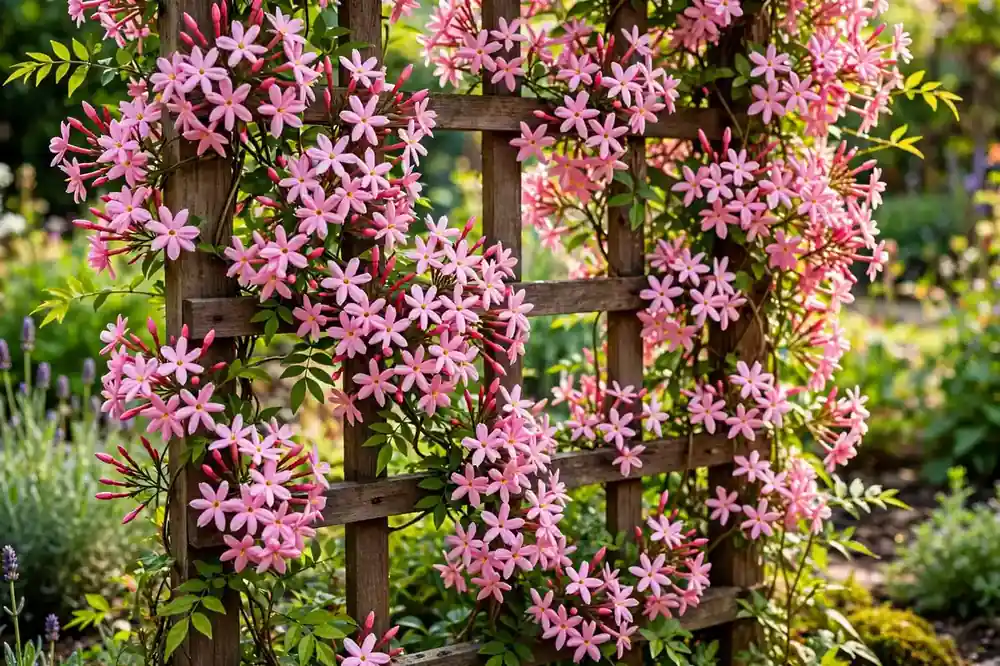
29. Pink Jasmine (Jasminum polyanthum)
Grow in the sun and zone shown in the table; check the plant label for the exact cultivar, as ranges vary by type.
Bloom: Summer | Sun: Full sun | Zone: 8-11 | Best for: Fragrance, climbing vines
30. Polyantha Rose (Rosa, Polyantha Group)
Grow in the sun and zone shown in the table; check the plant label for the exact cultivar, as ranges vary by type.
Bloom: Summer to fall | Sun: Full sun | Zone: 5-9 | Best for: Rose hedges, easy-care roses

31. Tree Peony (Paeonia suffruticosa)
Grow in the sun and zone shown in the table; check the plant label for the exact cultivar, as ranges vary by type.
Bloom: Summer | Sun: Full sun | Zone: 4-8 | Best for: Specimen shrubs, luxury spring blooms
32. Persian Violet (Exacum affine)
Grow in the sun and zone shown in the table; check the plant label for the exact cultivar, as ranges vary by type.
Bloom: Summer to fall | Sun: Bright indirect light | Zone: 9-11; houseplant elsewhere | Best for: Windowsills, indoor gifts
33. Pride of Madeira (Echium candicans)
Grow in the sun and zone shown in the table; check the plant label for the exact cultivar, as ranges vary by type.
Bloom: Spring to early summer | Sun: Full sun | Zone: 9-11 | Best for: Bee gardens, coastal California gardens
34. Prairie Blazing Star (Liatris pycnostachya)
Grow in the sun and zone shown in the table; check the plant label for the exact cultivar, as ranges vary by type.
Bloom: Summer | Sun: Full sun | Zone: 3-8 | Best for: Monarchs, prairie gardens
35. Pussy Willow (Salix discolor)
Grow in the sun and zone shown in the table; check the plant label for the exact cultivar, as ranges vary by type.
Bloom: Late winter to early spring | Sun: Full sun to part shade | Zone: 4-8 | Best for: Early pollinators, cut branches
36. Prairie Smoke (Geum triflorum)
Grow in the sun and zone shown in the table; check the plant label for the exact cultivar, as ranges vary by type.
Bloom: Spring | Sun: Full sun | Zone: 3-7 | Best for: Rock gardens, native wildflower beds
37. Pickerelweed (Pontederia cordata)
Grow in the sun and zone shown in the table; check the plant label for the exact cultivar, as ranges vary by type.
Bloom: Summer to fall | Sun: Full sun | Zone: 3-10 | Best for: Ponds, rain gardens
38. Evening Primrose (Oenothera biennis)
Grow in the sun and zone shown in the table; check the plant label for the exact cultivar, as ranges vary by type.
Bloom: Summer | Sun: Full sun | Zone: 4-9 | Best for: Evening gardens, naturalizing
39. Princess Flower (Tibouchina urvilleana)
Grow in the sun and zone shown in the table; check the plant label for the exact cultivar, as ranges vary by type.
Bloom: Summer to fall | Sun: Full sun | Zone: 4-8 | Best for: Bold purple color, tropical gardens
40. Paper Daisy (Xerochrysum bracteatum)
Paper daisy is the same species as strawflower (Xerochrysum bracteatum) — see the full growing guide in entry 54 on our flowers that start with S page.
41. Peruvian Lily (Alstroemeria spp.)
Grow in the sun and zone shown in the table; check the plant label for the exact cultivar, as ranges vary by type.
Bloom: Summer to fall | Sun: Full sun to part shade | Zone: 7-10; annual elsewhere | Best for: Cut flowers, borders
42. Painted Daisy (Tanacetum coccineum)
Grow in the sun and zone shown in the table; check the plant label for the exact cultivar, as ranges vary by type.
Bloom: Late spring to summer | Sun: Full sun | Zone: 3-7 | Best for: Cut flowers, cottage borders
43. Plume Poppy (Macleaya cordata)
Grow in the sun and zone shown in the table; check the plant label for the exact cultivar, as ranges vary by type.
Bloom: Summer | Sun: Full sun to part shade | Zone: 3-8 | Best for: Tall borders, dramatic foliage
44. Peacock Orchid (Gladiolus murielae)
Grow in the sun and zone shown in the table; check the plant label for the exact cultivar, as ranges vary by type.
Bloom: Summer to fall | Sun: Full sun | Zone: 7-10; lift corms elsewhere | Best for: Cut flowers, fragrance
45. Prairie Gentian (Lisianthus) (Eustoma grandiflorum)
Grow in the sun and zone shown in the table; check the plant label for the exact cultivar, as ranges vary by type.
Bloom: Summer | Sun: Full sun | Zone: Grown as annual | Best for: Cut flowers, containers
46. Pink Lady’s Slipper (Cypripedium acaule)
Grow in the sun and zone shown in the table; check the plant label for the exact cultivar, as ranges vary by type. Do not wild-collect this native woodland plant.
Bloom: Spring | Sun: Part shade | Zone: 3-7 | Best for: Woodland gardens, native (do not wild-collect)
47. Purple Loosestrife (Lythrum salicaria)
Warning: Purple loosestrife is invasive in many US regions and banned or restricted in some states. Check your state and local rules before planting it, and be ready to swap it for a non-invasive wet-garden plant if it is restricted where you live. Grow in the sun and zone shown in the table; check the plant label for the exact cultivar, as ranges vary by type.
Bloom: Summer | Sun: Full sun | Zone: 3-9 | Best for: Wet gardens – check local invasiveness first
48. Pink Evening Primrose (Oenothera speciosa)
Grow in the sun and zone shown in the table; check the plant label for the exact cultivar, as ranges vary by type.
Bloom: Spring to fall | Sun: Full sun | Zone: 5-9 | Best for: Groundcover, evening gardens
49. Pineleaf Penstemon (Penstemon pinifolius)
Grow in the sun and zone shown in the table; check the plant label for the exact cultivar, as ranges vary by type.
Bloom: Summer | Sun: Full sun | Zone: 4-9 | Best for: Rock gardens, hummingbirds
50. Pink Turtlehead (Chelone lyonii)
Grow in the sun and zone shown in the table; check the plant label for the exact cultivar, as ranges vary by type.
Bloom: Summer to fall | Sun: Full sun | Zone: 3-8 | Best for: Wet borders, late colour
51. Poppy Anemone (Anemone coronaria)
Grow in the sun and zone shown in the table; check the plant label for the exact cultivar, as ranges vary by type.
Bloom: Summer to fall | Sun: Full sun | Zone: 4-8 | Best for: Cut flowers, spring containers
52. Pineapple Sage (Salvia elegans)
Grow in the sun and zone shown in the table; check the plant label for the exact cultivar, as ranges vary by type.
Bloom: Summer to fall | Sun: Full sun | Zone: 8-11; annual elsewhere | Best for: Hummingbirds, herb gardens
53. Pink Trumpet Vine (Podranea ricasoliana)
Grow in the sun and zone shown in the table; check the plant label for the exact cultivar, as ranges vary by type.
Bloom: Summer to fall | Sun: Full sun | Zone: 9-11 | Best for: Tropical vines, fences
54. Pride of Barbados (Caesalpinia pulcherrima)
Grow in the sun and zone shown in the table; check the plant label for the exact cultivar, as ranges vary by type.
Bloom: Summer to fall | Sun: Full sun | Zone: 9-12 | Best for: Tropical shrubs, butterflies
55. Persian Shield (Strobilanthes dyerianus)
Grow in the sun and zone shown in the table; check the plant label for the exact cultivar, as ranges vary by type.
Bloom: Summer to fall (foliage) | Sun: Part shade | Zone: 10-11; houseplant elsewhere | Best for: Foliage, containers
56. Painted Tongue (Salpiglossis sinuata)
Start seed indoors 8–10 weeks before the last frost; the velvet trumpets hate hot nights, so give it your coolest sunny spot.
Bloom: Summer | Sun: Full sun | Zone: Annual | Best for: Containers, cutting, cool-season colour
57. Pampas Grass (Cortaderia selloana)
Give it a big, sunny space of its own and cut the old plumes down in late winter wearing gloves — the leaf edges are sharp.
Bloom: Late summer to fall (plumes) | Sun: Full sun | Zone: 7-11 | Best for: Screens, dried plumes
58. Paperflower (Bougainvillea glabra)
The colour comes from papery bracts, not petals; it blooms best slightly pot-bound and on the dry side.
Bloom: Spring to fall | Sun: Full sun | Zone: 9-11; container elsewhere | Best for: Walls, trellis, containers
59. Pagoda Flower (Clerodendrum paniculatum)
A tropical shrub with tiered orange-red flower towers; butterflies love it, and it needs winter protection outside the tropics.
Bloom: Summer | Sun: Full sun to part shade | Zone: 9-11; container elsewhere | Best for: Tropical borders, butterfly gardens
60. Pelargonium (Pelargonium × hortorum)
The classic window-box ‘geranium’ — deadhead weekly and let the compost dry a little between waterings.
Bloom: Spring to fall | Sun: Full sun | Zone: Annual; perennial 9-11 | Best for: Pots, window boxes, bedding
61. Pennyroyal (Mentha pulegium)
A low mint with lilac summer whorls; plant it where it can creep, and never use it as a herbal remedy — it is toxic in quantity.
Bloom: Summer | Sun: Full sun to part shade | Zone: 6-9 | Best for: Ground cover, herb gardens
62. Perennial Pea (Lathyrus latifolius)
The everlasting sweet pea: tougher and longer-lived than the annual kind, with scentless pink or white blooms all summer.
Bloom: Summer | Sun: Full sun | Zone: 5-9 | Best for: Fences, trellis, banks (seeds poisonous)
63. Periwinkle (Vinca minor)
Evergreen ground cover that flowers under trees where grass fails; clip it back in spring to keep it tidy.
Bloom: Spring | Sun: Part shade to shade | Zone: 4-8 | Best for: Ground cover, banks, under trees
64. Pheasant’s Eye (Adonis annua)
Sow it in autumn or early spring where it is to flower — the red blooms with dark eyes dislike transplanting.
Bloom: Late spring to summer | Sun: Full sun | Zone: Annual | Best for: Meadows, cottage beds
65. Mock Orange (Philadelphus coronarius)
Plant it near a path or window: the white late-spring flowers smell strongly of orange blossom.
Bloom: Late spring | Sun: Full sun to part shade | Zone: 4-8 | Best for: Shrub borders, scented hedges
66. Jerusalem Sage (Phlomis fruticosa)
A felt-leaved Mediterranean shrub with whorls of yellow hooded flowers; it thrives on poor, dry soil.
Bloom: Early summer | Sun: Full sun | Zone: 7-10 | Best for: Dry borders, Mediterranean gardens
67. Prairie Phlox (Phlox pilosa)
A loose, airy prairie phlox for naturalistic plantings; it self-seeds gently among grasses.
Bloom: Late spring | Sun: Full sun | Zone: 4-8 | Best for: Prairies, cottage borders
68. Obedient Plant (Physostegia virginiana)
The flower spikes can be twisted and stay put — but the plant itself is not obedient and spreads fast, so give it room.
Bloom: Late summer to fall | Sun: Full sun | Zone: 3-9 | Best for: Borders, damp soil
69. Pieris (Pieris japonica)
Chains of white lily-of-the-valley bells in early spring; it needs acid soil and shelter from cold winds.
Bloom: Early spring | Sun: Part shade | Zone: 5-8 | Best for: Woodland borders (leaves toxic)
70. Pigsqueak (Bergenia cordifolia)
Leathery evergreen leaves that turn bronze in winter, with pink spring bells; nearly indestructible edging.
Bloom: Spring | Sun: Full sun to part shade | Zone: 3-8 | Best for: Edging, ground cover
71. Pineapple Lily (Eucomis comosa)
A bulb topped with a tuft like a pineapple; in cold areas lift it in autumn and store it dry.
Bloom: Summer | Sun: Full sun | Zone: 7-10; lift bulbs in colder zones | Best for: Containers, border accents
72. Pink Muhly Grass (Muhlenbergia capillaris)
In fall the whole plant turns into a pink cloud; plant it in drifts and leave the foliage standing over winter.
Bloom: Fall (pink plumes) | Sun: Full sun | Zone: 6-9 | Best for: Mass planting, soft texture
73. Pitcher Plant (Sarracenia purpurea)
A carnivorous bog plant with nodding spring flowers; grow it in peat and rainwater, never in fertilised soil.
Bloom: Spring | Sun: Full sun | Zone: 3-8 | Best for: Bog gardens, wet spots
74. Plantain Lily (Hosta spp.)
Grown for its leaves, but the lavender summer flower spikes are worth keeping for the bees; slugs are the main enemy.
Bloom: Summer | Sun: Part shade to shade | Zone: 3-9 | Best for: Shade borders, ground cover
75. Pocketbook Plant (Calceolaria herbeohybrida)
Pouch-shaped spotted flowers for cool, bright rooms; treat it as a short-lived pot plant and keep it evenly moist.
Bloom: Spring | Sun: Part shade | Zone: Annual; houseplant | Best for: Pots, cool bright rooms
76. Pond Lily (Nymphaea spp.)
Plant hardy types in baskets of heavy loam under still water; the flowers open with the sun.
Bloom: Summer | Sun: Full sun | Zone: 4-10 by type | Best for: Ponds, large water tubs
77. Poor Man’s Orchid (Schizanthus × wisetonensis)
Orchid-like flowers in jewel colours for cool weather; pinch the tips once for a bushier plant.
Bloom: Spring to summer | Sun: Full sun to part shade | Zone: Annual | Best for: Containers, cool-season bedding
78. Powder Puff Plant (Calliandra haematocephala)
Red powder-puff flowers open through the warm season in frost-free gardens; elsewhere it makes a bright conservatory shrub.
Bloom: Winter to spring in subtropics | Sun: Full sun | Zone: 9-11 | Best for: Shrubs, containers
79. Prince’s Feather (Amaranthus hypochondriacus)
Tall crimson plumes for the back of the border; the young leaves and seeds are eaten in many cuisines.
Bloom: Summer to fall | Sun: Full sun | Zone: Annual | Best for: Back of border, cut and dried flowers
80. Self-Heal (Prunella vulgaris)
A tough little purple flower that threads through lawns and meadow edges and feeds bees for months.
Bloom: Late spring to summer | Sun: Full sun to part shade | Zone: 4-9 | Best for: Lawn and meadow ground cover

P flowers by colour
Planning a colour scheme? Here are the 80 P flowers above, grouped by their main flower colour. Several appear in more than one group — peonies, poppies and primroses all span two or more colours — so check the numbered entry for the full range.
| Colour | P flowers to try |
|---|---|
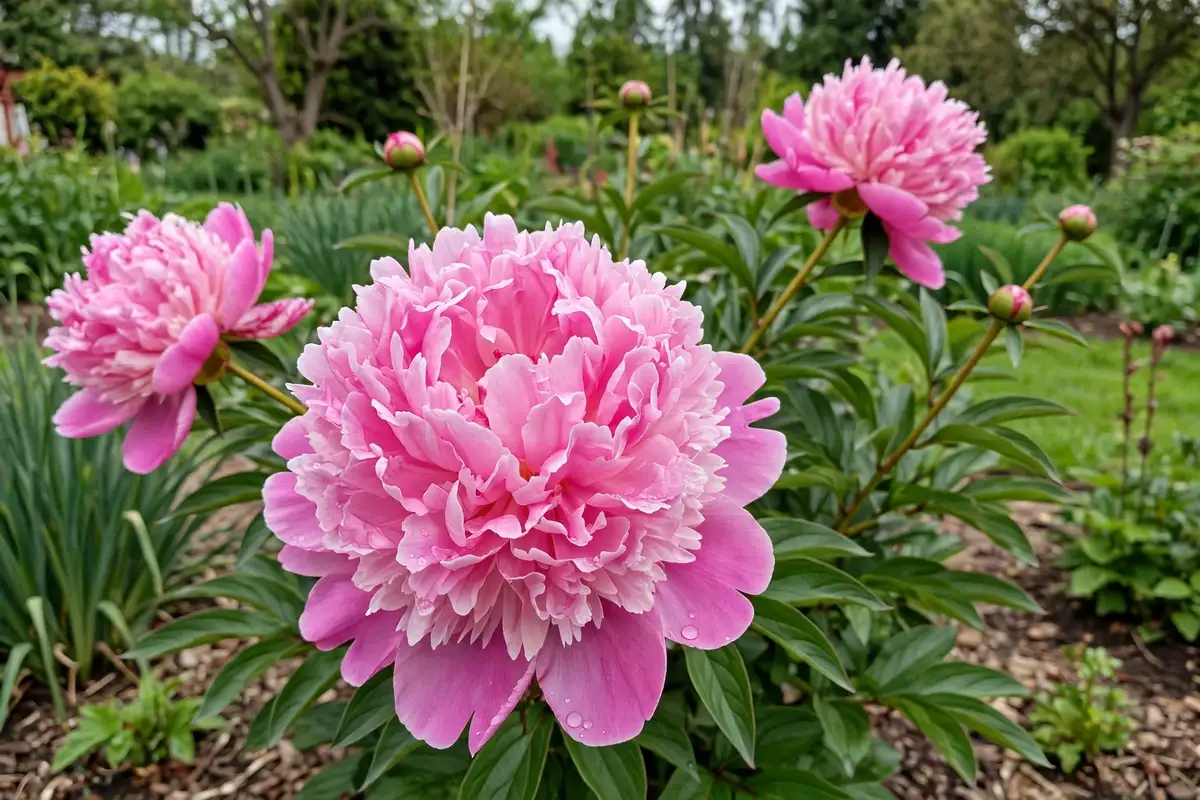
| Pink | Peony, Garden Phlox, Pink Jasmine, Polyantha Rose, Persian Buttercup, Pink Evening Primrose, Pink Turtlehead, Pink Lady’s Slipper |
| Purple and blue | Purple Coneflower, Pincushion Flower, Prairie Blazing Star, Pride of Madeira, Persian Violet, Prairie Gentian, Purple Loosestrife |
| White | Peace Lily, Pear Blossom, Pearly Everlasting, Paper Daisy, Pussy Willow, Prairie Smoke |
| Yellow and orange | California Poppy, Pot Marigold, Prairie Coneflower, Pineapple Sage, Pride of Barbados, Evening Primrose |
| Red | Oriental Poppy, Poinsettia, Plume Poppy, Poppy Anemone, Parrot’s Beak, Princess Flower |
Best P flowers by season
A good P border never has an empty month. These are the strongest picks from the list for each season — combine two or three per season and something is always in flower.
Spring: Pansy, Primrose, Peony, Pasque Flower, Persian Buttercup, Pear Blossom and Pussy Willow open the year — pussy willow is one of the first flowers bees visit. Summer: the long-season workers take over — Petunia, Garden Phlox, Penstemon, Pincushion Flower, Plumeria and Pentas, most of them in full sun. Fall: Petunia, Pincushion Flower, Pot Marigold, Polyantha Rose, Prairie Blazing Star and Paper Daisy run into fall, joined by Peruvian Lily, Peacock Orchid, Pink Evening Primrose, Pink Turtlehead, Pineapple Sage and Pink Trumpet Vine. Winter: Poinsettia is the headline winter flower, with Persian Violet and Peace Lily flowering indoors through the cold months.
Indoor and container-friendly P flowers
No garden required: several P flowers are natural houseplants or container naturals. Petunia, Pansy and Moss Rose are the classic container trio — bedding, hanging baskets and window boxes — with Parrot’s Beak as a trailing spiller and Persian Violet for a bright windowsill. Prairie Gentian and Persian Shield also suit pots. Peace Lily is the shade-tolerant houseplant of the list. The tropical entries — Plumeria, King Protea, Princess Flower and Poinsettia — need indoor overwintering outside zones 9–11.
Beginner-friendly P flowers
New to gardening? Start with the P flowers that practically grow themselves. Petunia, Pansy, Moss Rose, Purple Coneflower, Pot Marigold and California Poppy are the page’s beginner picks — they bloom for months and forgive missed waterings. For perennials, try Penstemon, Garden Pinks or Pearly Everlasting. In dry, poor soil, California Poppy, Moss Rose, Prickly Pear and Prairie Coneflower thrive where fussier flowers fail — just give Penstemon, Pasque Flower and Pride of Madeira sharp drainage.
Rare and unusual P flowers
Beyond the classics, the P list hides some genuine curiosities. King Protea is the famous one — a huge, crown-like bloom from South Africa that dries beautifully. Parrot’s Beak trails scarlet, beak-shaped flowers over a wall or basket. Prairie Smoke follows its nodding pink flowers with feathery, smoke-like seed heads. Pink Lady’s Slipper is a specialist woodland native — beautiful, fussy, and never to be wild-collected. Peacock Orchid hides a purple-stained centre in a white star, Pride of Barbados brings tropical orange-red to hot gardens, and Persian Shield is grown as much for its iridescent purple leaves as for its flowers. And the family split worth knowing: herbaceous Peony dies back to the ground each winter, while Tree Peony keeps a woody framework and bears larger blooms on a shrub.
P flowers with full guides on HomeYorva
Several flowers in this list have their own complete growing and care guides elsewhere on HomeYorva. If one of these is your flower, start there:
- Peony Flower guide — varieties, planting depth and bloom
- Poppy Flower guide — the full poppy family, including Oriental poppy
- Poinsettia guide — care, reblooming and the toxicity facts
- Coneflower guide — echinacea varieties and care, including Purple Coneflower
- California Poppy — the California state flower, in full
- Alstroemeria guide — Peruvian lily varieties and cut-flower care
- Primrose Flower guide — shade-tolerant spring colour
- Protea guide — growing the king protea and its kin
- Pincushion Flower guide — scabiosa, the pollinator magnet
- Blue Flowers — the full colour guide for blue and purple blooms
Browse the rest of the letter: Flowers That Start With C · Flowers That Start With D · or see all 26 letters in the Flower Names A–Z hub.
Growing Tips for P-Flowers
- Match zone first. Start with the zone column in the at-a-glance table, then filter by sun and bloom season.
- Give full-sun plants real sun. Shade is a common reason sun-lovers bloom poorly.
- Improve drainage for rock-garden and dry-border plants; give moist-border and pond plants consistent water. Penstemon, pasque flower, pride of Madeira, and prickly pear demand sharp drainage, while pickerelweed and pink turtlehead need moist conditions.
- Deadhead repeat-flowering annuals and perennials unless you want seed for birds or self-sowing.
- Check local invasiveness before planting vigorous spreaders, especially near wetlands. This applies in particular to purple loosestrife (entry 47).
- Feed lightly, mulch well. A 2- to 3-inch layer of mulch keeps roots cool, holds moisture, and suppresses weeds.
Explore More Flowers
Plants That Start With T was checked at publish time for the D page and was not live, so it is omitted here rather than linking to a 404.
Which P-Flowers Will You Grow?
From the spring trumpets of tree peonies to the fall spikes of prairie blazing star, flowers that start with P cover every season, every sun level, and every USDA zone from 3 to 12. Start with easy winners matched to your conditions – perhaps purple coneflower and penstemon for a sunny border, primroses for shade, or a peace lily for the windowsill. Pick three or four favorites from this list, give them the right spot, and you will be amazed how quickly the letter P fills your garden with color.

Frequently Asked Questions
How many flowers that start with P are on this page?
This page lists 80 flowers that start with P.
What is the easiest P flower for beginners?
Petunia, pansy, moss rose, purple coneflower, pot marigold and California poppy are the live page’s beginner picks – they bloom for months and forgive missed waterings. For perennials, try penstemon, garden pinks or pearly everlasting.
Which P flowers are best for shade?
Primrose, peace lily and Persian violet are the shade-tolerant live-page picks, with tree peony appreciating afternoon shade in hot climates. Pink Lady’s Slipper (new entry 46) also wants part shade, but it is a specialist woodland native – do not wild-collect it.
Which P flowers attract pollinators?
Purple coneflower, penstemon, pentas, prairie blazing star, prairie coneflower, pride of Madeira and Cape Plumbago are pollinator magnets on the live page; pussy willow feeds early bees and evening primrose draws night-flying moths. New entries pineleaf penstemon, pineapple sage and pride of Barbados also attract hummingbirds and butterflies.
Are any P flowers toxic?
Yes – handle with care: poinsettia, Madagascar periwinkle (all parts toxic if eaten) and peace lily are the live-page cautions. Check each plant before planting where children or pets play.
What P flowers bloom in fall?
Petunia, pincushion flower, pot marigold, polyantha rose, prairie blazing star and paper daisy run into fall on the live page, joined by new entries Peruvian lily, peacock orchid, pink evening primrose, pink turtlehead, pineapple sage and pink trumpet vine.
Can I grow P flowers in containers?
Yes: petunia, pansy, moss rose, parrot’s beak (as a spiller) and Persian violet are container-friendly on the live page, and new entries prairie gentian and Persian shield also suit pots. Tropical entries (plumeria, king protea, princess flower, poinsettia) need indoor overwintering outside zones 9-11.
What is the difference between peony and tree peony?
Peony (Paeonia lactiflora) is herbaceous – it dies back to the ground each winter and returns in spring. Tree peony (Paeonia suffruticosa) keeps a woody framework year after year and bears larger blooms on a shrub.
Why is Paper Daisy also sold as strawflower?
Paper daisy (Xerochrysum bracteatum) is sold as strawflower because its papery bracts dry without wilting. That is why the Flowers S page’s Strawflower entry is the same species – this page cross-links to Strawflower on Flowers That Start With S rather than duplicating it silently.
Can P flowers grow in dry soil?
Yes: California poppy, moss rose, prickly pear and prairie coneflower thrive in dry, poor soil on the live page. Give penstemon, pasque flower and pride of Madeira sharp drainage; do not treat pond plants like pickerelweed the same way.
Is Purple Loosestrife safe to plant?
Purple loosestrife (new entry 47) is invasive in many US regions and banned or restricted in some states. Check your state and local rules before planting it, and be ready to swap it for a non-invasive wet-garden plant if it is restricted where you live.
How do I choose a P flower for my zone?
Start with the zone column in the at-a-glance table, then filter by sun and bloom season. If your exact cultivar differs from the species range given here, follow the plant label for that cultivar.
References
- Missouri Botanical Garden – Plant Finder
- The Old Farmer’s Almanac – Gardening Guides
- Royal Horticultural Society – Plant Database
- Lady Bird Johnson Wildflower Center – Native Plants
- USDA PLANTS Database
- Wikipedia – species articles for the scientific names used
Per-entry Wikipedia, Quora and Reddit links were not added as filler: no verified on-topic Quora or Reddit thread was added, and no new images were hotlinked. Images reused here are already-uploaded HomeYorva images (body1-body9 and the featured collage).
8 Comments