
Ranunculus Flower: Types, Meaning, Symbolism and How to Grow Ranunculus
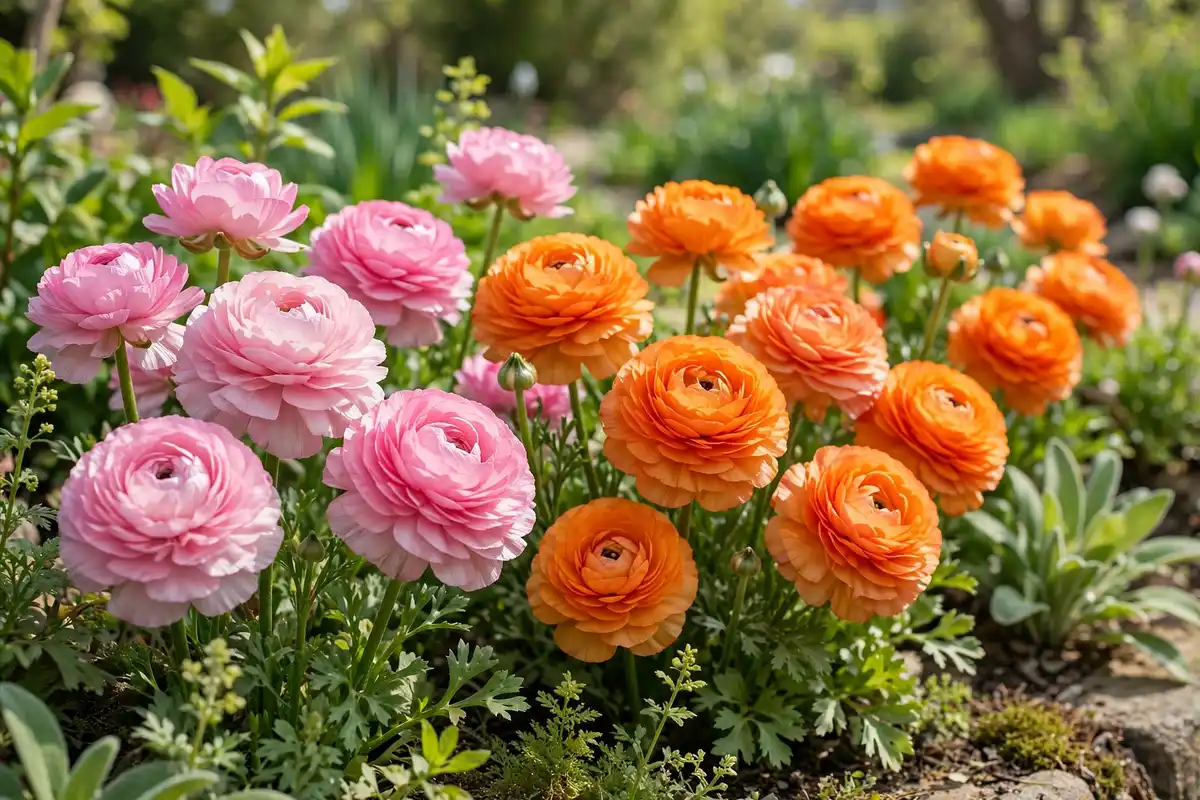
A ranunculus looks like a flower that cannot decide whether it wants to be a rose or a peony, so it became something better than both: layer upon layer of thin, tissue-paper petals wound into a tight, glowing rosette. Florists love it, brides carry it, and gardeners plant it for the weeks in spring when almost nothing else offers that much colour in such a small space.
The ranunculus flower is also a practical garden plant, not just a pretty one. It grows from a small, claw-shaped corm, flowers heavily for several weeks, and makes one of the longest-lasting cut flowers you can grow at home. This guide covers the main types of ranunculus flower, what each colour means, and how to grow them from corms, with the common mistakes cleared up first.
Quick Answer
A ranunculus flower is a layered, rose-like bloom from the genus Ranunculus, in the buttercup family Ranunculaceae. The garden kind is the Persian ranunculus (Ranunculus asiaticus), a spring flower with paper-thin petals in white, pink, red, orange, yellow and purple. It grows 12 to 18 inches tall from claw-shaped corms, needs full sun and well-drained soil, and blooms for 4 to 6 weeks in spring. In warm climates (USDA zones 8 to 11) it is a perennial; in colder climates it is grown as an annual, or the corms are lifted and stored over winter. Ranunculus flowers are not edible — all parts are mildly toxic if eaten, and the sap can irritate skin.
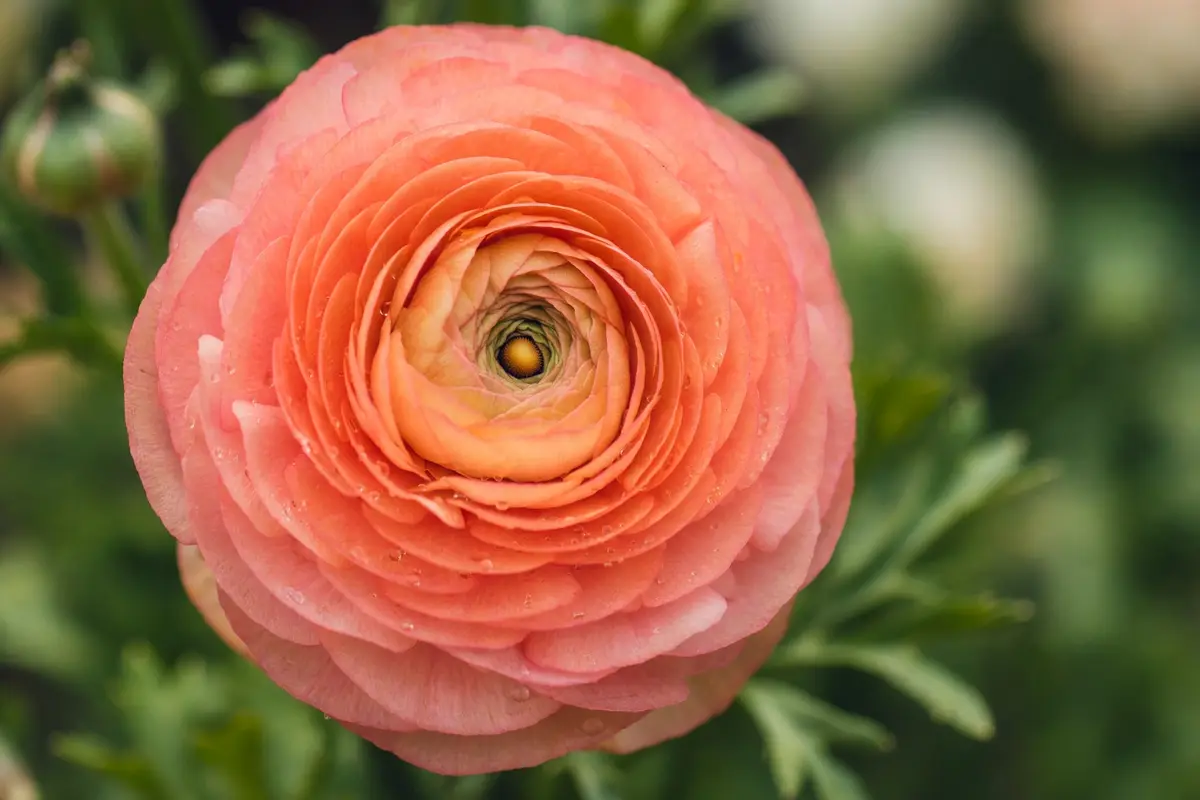
Table of Contents
- What Is a Ranunculus Flower?
- Types of Ranunculus and 6 Popular Varieties
- Ranunculus Flower Meaning and Symbolism
- What Each Ranunculus Colour Means
- How to Grow Ranunculus
- Common Mistakes When Growing Ranunculus
- Ranunculus in Bouquets and Weddings
- Frequently Asked Questions
What Is a Ranunculus Flower?
A ranunculus belongs to the genus Ranunculus, in the family Ranunculaceae — the buttercup family. The genus is huge, with more than 600 species, including the wild buttercups that grow in meadows and along streams. The garden flower is a very different plant from those wild cousins: it has been bred for centuries into a flower with dozens of overlapping petals and almost no visible centre. You can read more on the Ranunculus asiaticus page on Wikipedia.
The Persian ranunculus, Ranunculus asiaticus, comes from the eastern Mediterranean and south-west Asia, where it grows wild in meadows and on rocky hillsides. It was brought into European gardens in the 16th century, and by the 18th century Dutch and English growers had bred hundreds of named kinds. The modern flower is the result of that long breeding work: a compact plant with finely cut, parsley-like leaves and flowers 2 to 3 inches across, each one made of many thin petals arranged in perfect, concentric rings.
Do not confuse a garden ranunculus with a wild buttercup. Wild buttercups such as creeping buttercup (Ranunculus repens) have simple, five-petalled yellow flowers and spread aggressively by runners. Garden ranunculus has many-petalled flowers in many colours, grows from a corm rather than spreading by runners, and stays where you plant it. The two share a family, but they behave like different plants in the garden.
Another common mix-up is with the anemone. Anemones and ranunculus are cousins in the same family, both grow from corms, and both are popular spring cut flowers. The difference is in the flower: an anemone has a single ring of petals around a dark, open centre, while a ranunculus hides its centre completely under layers of petals. If you can see the middle of the flower, it is probably an anemone; if it looks like a tightly wound rose, it is a ranunculus.
Ranunculus Quick Facts
- Family: Ranunculaceae, the buttercup family.
- Genus: Ranunculus, with more than 600 species.
- Best-known garden species: Persian ranunculus, Ranunculus asiaticus.
- Life cycle: perennial in USDA zones 8 to 11; grown as an annual, or lifted for winter, in colder zones.
- Height: 12 to 18 inches for most garden kinds; compact pot kinds reach about 8 to 10 inches.
- Bloom time: spring, for 4 to 6 weeks; autumn-planted corms flower earliest.
- Sun: full sun — at least 6 hours a day — in cool spring weather.
- Soil: rich, well-drained soil; wet soil rots the corms.
- Good to know: ranunculus is one of the longest-lasting cut flowers, with a vase life of 7 to 10 days, and it is a favourite wedding flower.
Types of Ranunculus and 6 Popular Varieties
Almost every garden ranunculus is a form of Ranunculus asiaticus, but the breeding groups behave differently. Some are tall and built for cutting, some are compact and built for pots, and some are bred for huge, peony-like flowers. The table below compares six kinds worth knowing, and each one is described in detail underneath. Our flower names A to Z guide lists the ranunculus alongside every other flower name if you want to compare it with the rest of the alphabet.
| Variety | Group | Colour | Height | Best For |
|---|---|---|---|---|
| Tecolote | Tall cutting strain | White, pink, red, orange, yellow, purple | 16 to 18 inches | Cut flowers, tall borders |
| Bloomingdale | Compact pot strain | White, pink, red, yellow, orange | 8 to 10 inches | Pots, window boxes, edging |
| Amadine | Large-flowered strain | Pink, red, white, orange, yellow | 14 to 16 inches | Cut flowers, show blooms |
| La Belle | Large double strain | White, pink, red, purple | 14 to 18 inches | Bouquets, wedding flowers |
| Persian Ranunculus (species type) | Species form | Red, orange, pink, white | 12 to 18 inches | Naturalistic spring beds |
| Aviv | Early-flowering strain | White, pink, red, yellow, orange | 12 to 15 inches | Early spring colour |
1. Tecolote Ranunculus
Tecolote is the tall, strong-stemmed strain that cut-flower growers plant by the thousand. The name comes from the Tecolote Ranunculus fields of California, where it was bred for long stems and large, fully double flowers. Plants reach 16 to 18 inches, with flowers up to 3 inches across in almost every colour except blue. If you want ranunculus for the vase, Tecolote is the first choice: the stems are straight, the flowers open slowly, and they last well after cutting.
2. Bloomingdale Ranunculus
Bloomingdale is the compact strain, bred for pots and small gardens. Plants stay 8 to 10 inches tall and flower a little earlier than the tall kinds, with the same layered flowers in a slightly smaller size. It is the best ranunculus for a window box, a patio pot, or the front edge of a spring border, where a tall plant would flop. Give it a pot with drainage holes and keep it in full sun, and it will flower for weeks.
3. Amadine Ranunculus
Amadine is bred for very large flowers — some blooms reach 4 inches across, with even more petals than the usual garden kind. The plants are sturdy, about 14 to 16 inches tall, and the flowers are heavy enough to need shelter from strong wind. Amadine is the show flower of the group: plant it where you will see it up close, in a bed near a path or in a cutting patch, and cut the blooms just as the outer petals start to open.
4. La Belle Ranunculus
La Belle is a large, fully double strain in soft, romantic colours — white, blush pink, deep red and purple — and it is one of the kinds florists reach for first in wedding work. The flowers look like small peonies, which is why brides who want a peony look in spring often choose ranunculus instead. Like the peony, it has that lush, layered shape; our guide to the peony flower explains the other half of that pairing. La Belle stems are 14 to 18 inches, strong enough for bouquets but best cut early in the day.
5. Persian Ranunculus (Species Type)
The species form of Ranunculus asiaticus is simpler than the bred strains: fewer petals, a more open flower, and a wilder look, in red, orange, pink and white. It is the kind to plant in a naturalistic spring bed or a Mediterranean-style garden, where it looks at home among grasses and other Mediterranean plants. It is also the hardiest of the group in warm climates, where it can naturalise and return year after year without lifting.
6. Aviv Ranunculus
Aviv is an early-flowering strain, bred to bloom a week or two before the other tall kinds. That early start matters in warm climates, where the flowering season is short and heat ends it quickly. Aviv plants are 12 to 15 inches tall, with the full colour range, and they are a good choice if your springs turn hot fast. Plant Aviv corms at the same time as the rest, and they will be the first ranunculus to open.
Ranunculus Flower Meaning and Symbolism
The ranunculus means radiant charm. In the Victorian language of flowers, giving someone a ranunculus said “you are radiant with charms” — a compliment about a bright, attractive personality rather than about romance alone. It is a cheerful, flattering flower, and that is why it turns up so often in gifts for friends, in thank-you bouquets, and in arrangements meant to lift someone’s mood.
The meaning fits the flower’s history. In Persian poetry the ranunculus was linked to charm and attraction, and in European flower language it kept that same idea: a small flower with an outsized glow. It has no sad or mournful meaning, unlike some spring flowers, so it is safe for almost any happy occasion — a birthday, a new job, a housewarming, or a simple “thinking of you” bouquet.
Ranunculus is also one of the flowers most associated with spring weddings, and the meaning helps there too: charm, attraction and a bright beginning. A white ranunculus in a bridal bouquet carries the same clean, fresh message as a white rose, but with a softer, more layered shape. It is a flower that says something warm without saying anything grand.
What Each Ranunculus Colour Means
Ranunculus colour carries its own messages, and the range is wide enough to choose one for almost any occasion. White ranunculus means purity, innocence and a fresh start, and it is the colour most often chosen for weddings. White flowers like this glow in a bouquet, and our guide to white flowers has more blooms that do the same. Pink ranunculus means gentle affection, admiration and grace — the colour for a friend or a new romance. Red ranunculus means deep love and passion, like a red rose in a smaller package. Orange ranunculus means energy, enthusiasm and warmth, and it is the brightest, cheeriest colour in the group. Yellow ranunculus means happiness, friendship and sunshine, and it suits a thank-you or a get-well bouquet. Purple ranunculus means royalty, elegance and admiration, and it is the colour for a formal gift.
How to Grow Ranunculus
Ranunculus is easy to grow once you understand one thing: it is a cool-weather flower that hates wet feet and hot sun. Plant the corms at the right time, give them sun and drainage, and they will flower heavily. Gardeners on r/gardening on Reddit often recommend ranunculus as one of the best spring cut flowers for a small garden, and the advice below matches what works in real gardens.
When to Plant
Timing depends on your climate. In warm climates (zones 8 to 11), plant corms in autumn, about 6 weeks before the first frost, and they will flower in spring. In cold climates (zones 7 and below), plant corms in early spring, as soon as the soil can be worked, and they will flower in late spring to early summer. Starting corms indoors in pots 4 to 6 weeks before the last frost gives cold-climate gardeners a head start. Our guide to when to plant tulip and daffodil bulbs covers the same cool-season timing idea for other spring bulbs and corms.
Soaking and Planting the Corms
Ranunculus corms look like small, dry claws or tiny octopuses, and they need soaking before planting. Soak them in room-temperature water for 3 to 4 hours — no longer, or they can rot — until they swell and feel plump. Then plant them with the claws pointing down, about 2 inches deep and 6 to 8 inches apart, in soil that drains freely. If you are not sure which way is down, plant them sideways: the shoots will find their way up. Water them in lightly after planting, then do not water again until you see shoots.
Light
Give ranunculus full sun — at least 6 hours a day — while the weather is cool. In spring this is easy, because the sun is gentle. As the weather warms, a little afternoon shade helps the flowers last longer, but too much shade makes the stems weak and the flowers small. In hot climates, morning sun with afternoon shade is the best compromise.
Soil
Ranunculus needs soil that is rich and free-draining. Dig in compost before planting, and if your soil is heavy clay, add grit or coarse sand, or grow ranunculus in raised beds or pots. The corms rot quickly in soil that stays wet, so drainage matters more than fertility. They prefer neutral to slightly acidic soil, but they are not fussy about exact pH.
Watering and Feeding
Water regularly while the plants are growing and flowering, keeping the soil moist but never soggy. Once the flowers fade and the leaves start to yellow, stop watering: the corms need a dry rest. Feed lightly — a balanced liquid feed every two weeks while the plants are in flower is enough. Overfeeding produces soft, leafy growth that flops over.
Growing Ranunculus in Pots
Ranunculus does very well in pots, which is handy if your garden soil is heavy or you want the flowers near a door. Use a pot at least 8 inches deep with drainage holes, ordinary potting compost mixed with a little grit, and plant 3 to 5 corms per 10-inch pot. Keep the pot in full sun, water when the top inch of compost dries out, and move the pot into shade on very hot days so the flowers last longer.
Overwintering and Lifting Corms
In zones 8 to 11, leave the corms in the ground: they will go dormant in summer and return the next spring. In colder zones, lift the corms after the leaves have yellowed, brush off the soil, and store them in a paper bag in a cool, dry, frost-free place until next spring. Some gardeners in cold zones simply treat ranunculus as an annual and buy fresh corms each year, which is the easiest option if storage space is short.
Common Mistakes When Growing Ranunculus
The most common mistake is planting the corms upside down or too deep. Claws down, 2 inches deep, is the rule — planted upside down, the shoots struggle, and planted deeper than 3 inches, they may never emerge. The second mistake is overwatering before the shoots appear: soaked corms rot in cold, wet soil, so water lightly at planting and then wait. The third is planting in heavy, wet soil with no drainage, which rots the corms in a week. The fourth is planting too late in a hot climate — ranunculus needs cool weather to flower, and corms planted after spring has warmed up will produce leaves and no flowers. Finally, do not expect ranunculus to survive a hot summer in flower. It is a spring flower: when the heat arrives, the plant goes dormant, and that is normal, not a failure.
Ranunculus in Bouquets and Weddings
Ranunculus is one of the best cut flowers you can grow, and it is a favourite with florists for a simple reason: it looks expensive, lasts well, and comes in every colour a bouquet needs. Cut the stems when the buds are coloured but still closed, or just as the outer petals start to open — cut too late, and the flowers open fully in a day and drop petals. Cut early in the morning, strip the lower leaves, and stand the stems in cool water straight away.
In the vase, ranunculus lasts 7 to 10 days if you change the water every two days and keep the vase out of direct sun and away from ripening fruit. The flowers keep opening in the vase, so a tight bud on Monday can be a full rosette by Wednesday. In weddings, ranunculus is used in bridal bouquets, buttonholes and table arrangements, often mixed with roses, peonies and anemones. It gives the lush, layered look of a peony at a lower cost and in a season when peonies are not yet in flower.
Frequently Asked Questions
Are ranunculus flowers edible?
No. All parts of the ranunculus plant are mildly toxic if eaten, because they contain a compound called ranunculin, which turns into the irritant protoanemonin when the plant is chewed. Eating it causes mouth and stomach pain, and the sap can irritate skin. Do not use ranunculus in food or drinks, and keep it away from pets and small children who might chew the leaves. If you have questions about the ranunculus flower and its safety, you will find plenty of discussion in the questions about the ranunculus flower on Quora.
Do ranunculus come back every year?
Yes, in warm climates (USDA zones 8 to 11), where the corms survive winter in the ground and return each spring. In colder zones they are grown as annuals, or the corms are lifted in summer and stored dry over winter, then replanted in spring.
When do ranunculus bloom?
Autumn-planted corms in warm climates bloom in spring, for 4 to 6 weeks. Spring-planted corms in cold climates bloom in late spring to early summer. Heat ends the flowering season quickly, so in warm areas the bloom is shorter than in cool ones.
How long do ranunculus last in a vase?
About 7 to 10 days, if you cut them when the buds are just opening, change the water every two days, and keep the vase cool and out of direct sun. They keep opening in the vase, so cut them earlier than you think you need to.
Are ranunculus and peonies the same?
No, but they look alike. Both have large, layered, rose-like flowers, and both are popular wedding flowers. Peonies are much larger plants with woody or herbaceous stems that live for decades, while ranunculus is a small corm-grown spring flower that is usually replanted each year. Ranunculus blooms in spring, often before peonies, which is why florists use it as a peony substitute.
Can I grow ranunculus indoors?
Ranunculus can be grown in pots indoors for a short time, in a cool, bright room, but it does best outdoors, where it gets full sun and cool nights. For a permanent indoor display, grow it in a pot on a sunny windowsill in spring and move it outside once the flowers fade. For more flowers whose names begin with the same letter, see our guide to flowers that start with R.
One Comment