Alstroemeria Flower: Types, Meaning and How to Grow It
Every flower shop knows this one’s secret, even if half its customers cannot pronounce its name: the alstroemeria is the bouquet that refuses to die. Two weeks in a vase is normal, three is not a record, and the blooms keep opening bud after bud while costlier flowers fold in days. Gardeners know it by its other names — Peruvian lily, lily of the Incas — and by its party trick: leaves that grow upside down, twisting on their stalks so the underside faces the sky, as if the plant were doing everything its own way on purpose.
This guide covers the six alstroemerias worth knowing (the tall cut-flower hybrids, bronze-leaved Indian Summer, the Brazilian parrot flower and the golden Chilean), what it means — togetherness, loyalty and friendship — and how to grow it, with brittle tubers, the pull-don’t-cut trick, and the cool-roots rule that decides whether it settles or sulks.
Quick Answer
The alstroemeria is Alstroemeria, the Peruvian lily or lily of the Incas, a tuberous perennial in the family Alstroemeriaceae from the mountains of South America, grown for lily-like, streaked flowers in almost every colour and a vase life of up to two weeks or more. Garden hybrids are hardy in zones 7 to 10 (zone 6 with mulch) for sun to part shade and well-drained soil; they want cool roots and warm tops, resent disturbance, and flower from early summer into autumn. The alstroemeria means togetherness, loyalty and friendship.
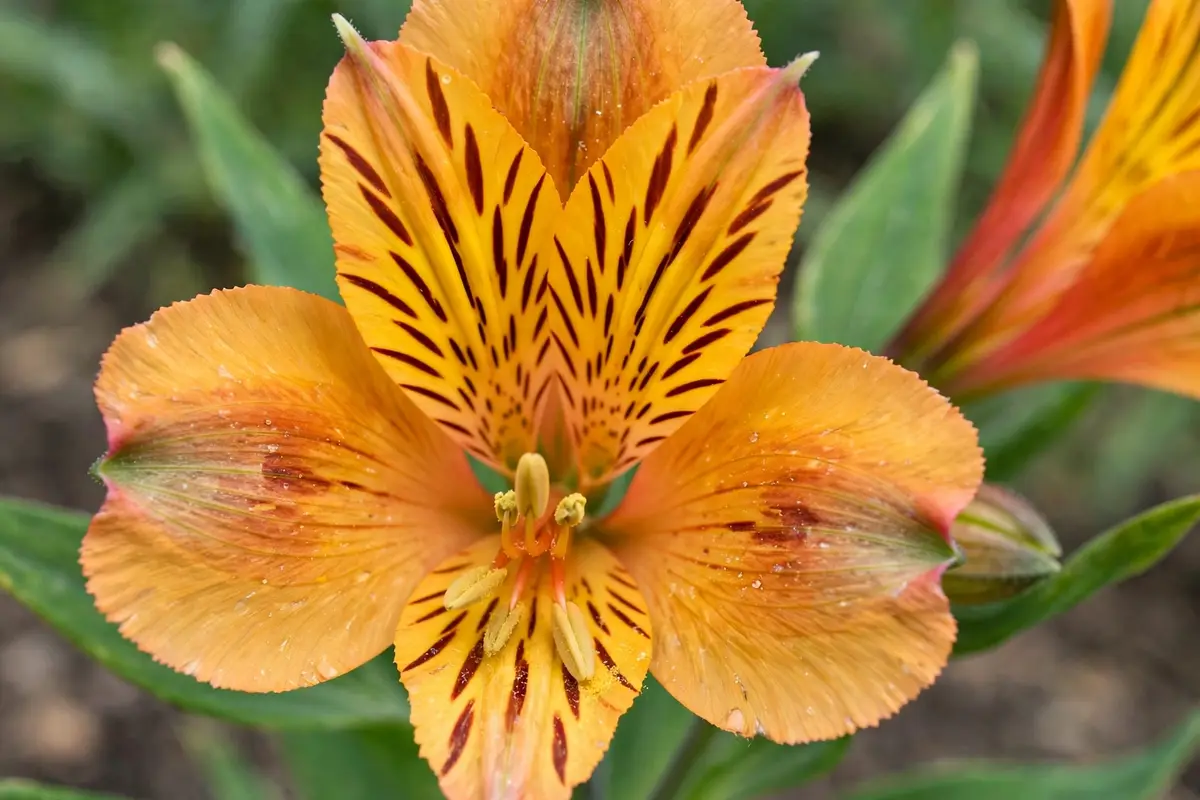
Table of Contents
- What Is an Alstroemeria?
- Types of Alstroemeria and 6 Kinds Worth Knowing
- Alstroemeria Flower Meaning and Symbolism
- Alstroemeria Flower Colours and Their Meanings
- How to Grow Alstroemerias
- Common Mistakes When Growing Alstroemerias
- Alstroemeria in the Vase: The Two-Week Bouquet
- Frequently Asked Questions
What Is an Alstroemeria?
Say it al-stro-MEER-ee-uh, and know who you are thanking: Linnaeus named the genus for his friend and student Baron Clas Alströmer, the Swedish botanist who sent him the seeds from Spain in 1753 — a friendship preserved in a flower that now means friendship, which is the neatest naming story in the garden. The plant itself is a tuberous perennial from South America: some 60 species scattered from Venezuela to Tierra del Fuego, with the great garden kinds descending from Chilean and Brazilian mountain species. You can read more on the Alstroemeria page on Wikipedia.
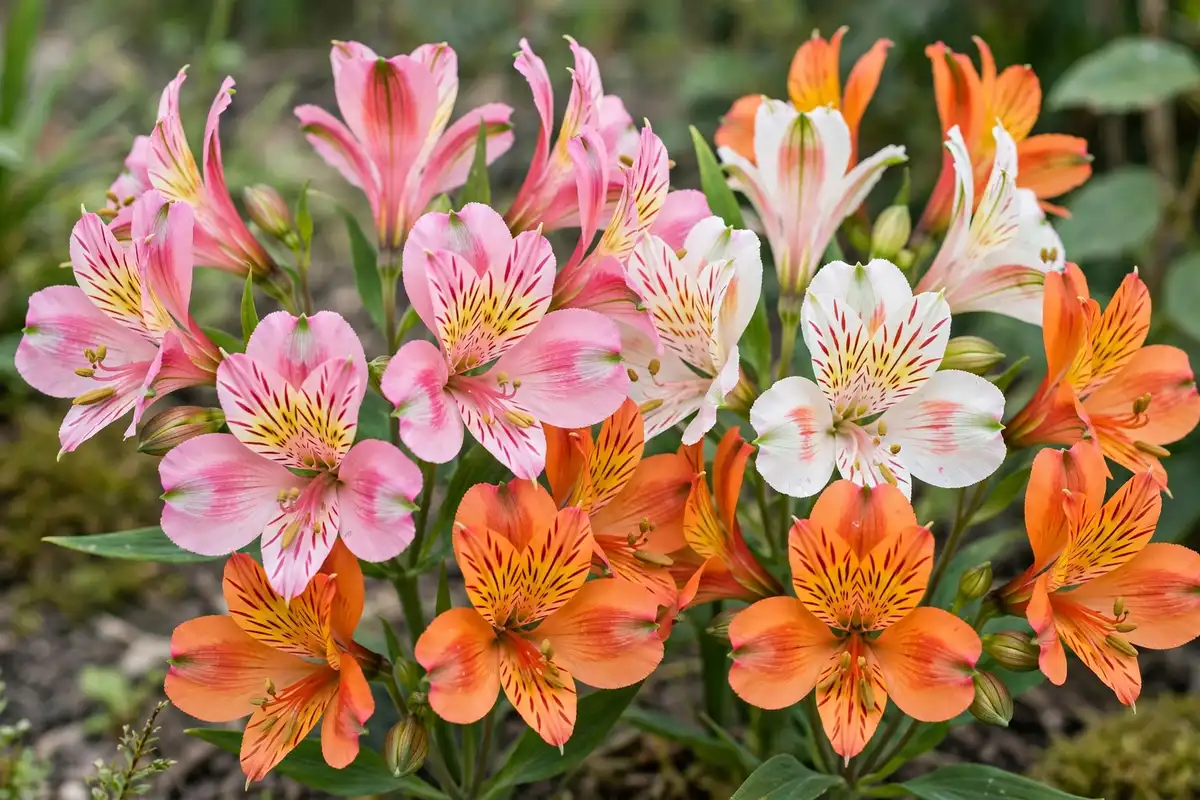
Three quirks define it. First, the leaves: an alstroemeria leaf twists a half-turn as it grows, so what looks like the top is botanically the underside — a trait called resupination, shared by almost nothing else in the border. Second, the flowers: six tepals in two rings, the inner ones usually streaked and spotted with darker guide-lines for pollinators, in colours from white through sunset orange to deep purple — and, famously, almost no scent at all. Third, the roots: brittle, finger-like tubers that snap if handled roughly and sulk if moved, which is why the plant’s first rule is to plant it once and leave it alone.
Alstroemeria Quick Facts
- Botanical name: Alstroemeria (garden hybrids mostly A. × hybrida); named for Baron Clas Alströmer.
- Family: Alstroemeriaceae (its own family; once lumped with the lilies and amaryllis).
- Native range: South America — the Andes of Chile and Peru, and Brazil; about 60 species.
- Hardiness: zones 7 to 10 for most hybrids; the hardiest kinds take zone 6 with a mulch.
- Height: 1 to 4 feet by kind — dwarf patio kinds at 8–14 inches, tall cut-flower kinds to 4 feet.
- Bloom time: early summer into autumn; peak June to August, repeating in flushes.
- Vase life: up to 2 weeks or more — among the longest of any cut flower.
- Good to know: leaves grow upside down (resupinate); sap can irritate skin (tulipalin A) — wear gloves when dividing; mildly toxic to pets if eaten.
Types of Alstroemeria and 6 Kinds Worth Knowing
The tall florist kinds, the patio dwarfs, and the two wild species behind them all. The table separates them; the profiles follow. For the full list of flower names, see our flower names A to Z guide.
| Type | Flowers | Height | Season | Best use |
|---|---|---|---|---|
| Tall cut-flower hybrids | All colours, streaked | 3–4 ft | Summer–autumn | Cutting garden, borders |
| ‘Indian Summer’ | Sunset orange, bronze leaves | 2–2.5 ft | Summer–autumn | Borders, pots |
| ‘Sweet Laura’ | Yellow, lightly fragrant | 2.5–3 ft | Summer | Borders, cutting |
| Princess / Colorita dwarfs | Many colours, compact | 8–14 in | Summer–autumn | Pots, edging |
| Parrot flower (A. psittacina) | Red and green, parrot-like | 2–3 ft | Summer | Exotic borders |
| Golden (A. aurea) | Golden yellow-orange | 3–4 ft | Early summer | Wild borders, banks |
1. Tall Cut-Flower Hybrids — the Florist’s Backbone
The alstroemerias of the bouquet trade: waist-high plants bred for long straight stems, huge colour range (white, pink, red, orange, yellow, purple, and streaked bicolours) and that famous vase life. In the garden they are the cutting-bed kind — plant a row, harvest by the armful from June onward, and the plant answers with more stems. They need staking in rich soil and wind, and they are the least hardy of the list in cold gardens, which is why florists grow them under glass.
2. ‘Indian Summer’ — the Bronze One
The garden-designer’s alstroemeria: sunset-orange flowers over foliage that opens bronze-purple and holds its dark tint all season, so the plant earns its place before and after flowering. ‘Indian Summer’ is compact (about 2 feet), hardy for a hybrid, and endlessly photographed in autumn borders, where the bronze leaves pick up grasses and dahlias. If one alstroemeria converts a sceptic, it is this one.
3. ‘Sweet Laura’ — the Fragrant Exception
Almost every alstroemeria is scentless — except ‘Sweet Laura’, a yellow hybrid with a light, sweet fragrance inherited from the Chilean species A. aurea in its parentage. It is also one of the hardiest garden kinds, flowering in early summer with golden, red-streaked blooms. Grow it where the exception can be appreciated: near a path, where a scentless family surprises you once.
4. Princess and Colorita Dwarfs — the Patio Kinds
Modern breeding shrank the plant without shrinking the flower: the Princess and Colorita series stand 8–14 inches tall, flower all summer in pots, and come in the full colour range (pinks, whites, purples, bicolours) on plants bred for containers and edging. They are the balcony alstroemeria — less hardy than the border kinds, so treat them as summer pot plants in cold zones, or lift and shelter the tubers.
5. Parrot Flower — the Brazilian
Alstroemeria psittacina, the parrot flower: red tepals tipped and streaked with green, like a parrot’s plumage, from a Brazilian species that revels in heat and humidity where the Chilean kinds sulk. It spreads eagerly by rhizome in warm gardens (give it a boundary or a big pot) and flowers in summer bursts. The most exotic-looking alstroemeria, and the one hummingbirds find first.
6. Golden Alstroemeria — the Hardy Chilean
Alstroemeria aurea (older books say A. aurantiaca), the golden alstroemeria of the Chilean Andes: golden-yellow to orange flowers in early summer on 3–4 foot plants, and the hardiest species of all — the one behind the border hybrids’ toughness. It self-seeds freely and can romp in mild gardens, so plant it where a golden drift is welcome (banks, wild borders) rather than in a polite bed.
Alstroemeria Flower Meaning and Symbolism
The alstroemeria’s meaning grows out of its own leaves: because they twist and turn as they grow — literally turning over, supporting each other through every change of direction — the flower came to mean togetherness and loyalty, the friendship that survives the twists. Its formal flower-language meaning is friendship and devotion, and its naming story doubles it: a genus named by Linnaeus for the friend who sent the seeds. It is the bouquet for the friend, not the lover — the flowers you send for a long friendship, a loyal colleague, or the person who has turned every corner with you.
Among the A’s it leads our flowers that start with A guide in spirit as well as alphabet — the friendship flower at the head of the list.
Alstroemeria Flower Colours and Their Meanings
- Pink — gentle friendship and affection: the classic gift colour.
- White — purity and loyalty: weddings and sympathies alike.
- Orange — warmth and enthusiasm: ‘Indian Summer’ at sunset.
- Yellow — joy and celebration: ‘Sweet Laura’, the fragrant one.
- Purple — devotion and admiration: the deepest of the range.
- Red — strong friendship: love’s loyal cousin, not its rival.
How to Grow Alstroemerias
Cool roots, warm tops, and a permanent address: that is the whole contract. Gardeners on r/gardening on Reddit pass on the harvest rule as the plant’s signature trick: “pull the stem, don’t cut it — the tug wakes the rhizome and you get more flowers.”
Planting and Position
Plant young plants (not bare tubers, if you can avoid them — the brittle roots snap in transit) in spring, in full sun to part shade and rich, well-drained soil, setting the crown about an inch below the surface. Mulch deeply: the plant wants its roots cool and moist while its tops bask, and a thick mulch is how a sunny border delivers both. Water through the first season, and then leave the plant alone — an established clump flowers for years from the same spot, and every move costs a season.
Care, Harvesting and Division
Feed lightly in spring, water in drought (the plant wilts visibly when thirsty and recovers just as fast), and harvest or deadhead by pulling stems cleanly from the base rather than cutting them — the pull stimulates the rhizome to send up new flowering stems, while cut stubs just sit there. Divide only in early spring, only when a clump truly needs it, and wear gloves: the sap carries tulipalin A, which irritates sensitive skin (florists know it as alstroemeria dermatitis). In zone 6 and colder borders, a deep winter mulch is the difference between a perennial and a memory.
Common Mistakes When Growing Alstroemerias
Mistake one is rough planting — snapped tubers make weak plants, and bare-root bargains fail for exactly this reason. Mistake two is a hot, dry root run: unmulched crowns in baking soil sulk and stop flowering, and the fix is mulch and water, not feed. Mistake three is cutting the stems: scissors leave stubs and slow the plant; pulling is the technique the whole genus prefers.
Mistake four is moving or dividing too often — the plant resents disturbance more than almost any border perennial, and a clump left alone for five years out-flowers one divided annually. Mistake five is a wet winter: tubers rot in cold, soggy soil, so drainage at planting (and a raised bed on clay) matters more than cold protection. And mistake six is expecting scent — the family is famously fragrance-free, ‘Sweet Laura’ excepted; buy it for the two-week vase life instead.
Alstroemeria in the Vase: The Two-Week Bouquet
No cut flower earns its shelf like this one, and three habits stretch it further. First, buy or cut stems with the first buds just cracking colour — alstroemeria buds open in sequence in the vase, so a tight stem is a fortnight of flowers, not a compromise. Second, strip any foliage that would sit below the waterline (the leaves foul water faster than the stems drink it) and re-cut the stems under water. Third, keep the vase cool and out of direct sun, and top it up rather than changing it — the stems resent disturbance in a vase exactly as the plant does in the ground. Do those three and the bouquet that arrived for a birthday is still flowering at the next one.
Frequently Asked Questions
Is alstroemeria a lily?
No — despite “Peruvian lily”, it is not a true lily. It sits in its own family, Alstroemeriaceae, and differs from lilies in its twisted (upside-down) leaves, its tuberous roots, and its six-tepalled flowers with streaked inner segments. The name is a resemblance, not a relationship. If your question is not answered here, the questions about the alstroemeria flower on Quora cover most of the rest.
How long do alstroemerias last in a vase?
Up to two weeks, often longer — among the longest vase lives of any cut flower. Buds open in sequence, so buy stems with the first buds just showing colour, strip leaves below the waterline, and keep the vase cool and topped up.
Are alstroemerias poisonous?
Mildly: the sap contains tulipalin A, which can irritate skin (wear gloves when dividing or handling many stems) and the plant is mildly toxic to cats and dogs if eaten in quantity. It is a handle-with-gloves plant, not a dangerous one — florists work with it daily.
Do alstroemerias come back every year?
Yes, where they are hardy — zones 7 to 10 for most hybrids, zone 6 with a deep mulch; the Chilean species A. aurea and ‘Sweet Laura’ are among the hardiest. In colder zones, grow the dwarf kinds in pots and shelter them frost-free over winter.
Why is my alstroemeria not flowering?
The usual suspects, in order: hot, dry roots (mulch and water); disturbance — a recently moved or divided plant sits out a season; deep shade (it wants sun to part shade); or cut-stem deadheading, which fails to stimulate new flowering stems the way pulling does. Fix the roots and the technique first.
What does the alstroemeria flower mean?
Friendship, loyalty and togetherness — from its leaves, which twist and turn as they grow, supporting the plant through every change of direction. It is the friendship bouquet: for long friendships, loyal colleagues, and anyone who has turned the corners with you. Linnaeus named it for his friend Clas Alströmer, so the meaning was there from the first seed packet.