Lupine Flower: Meaning, Types and How to Grow Russell Spikes
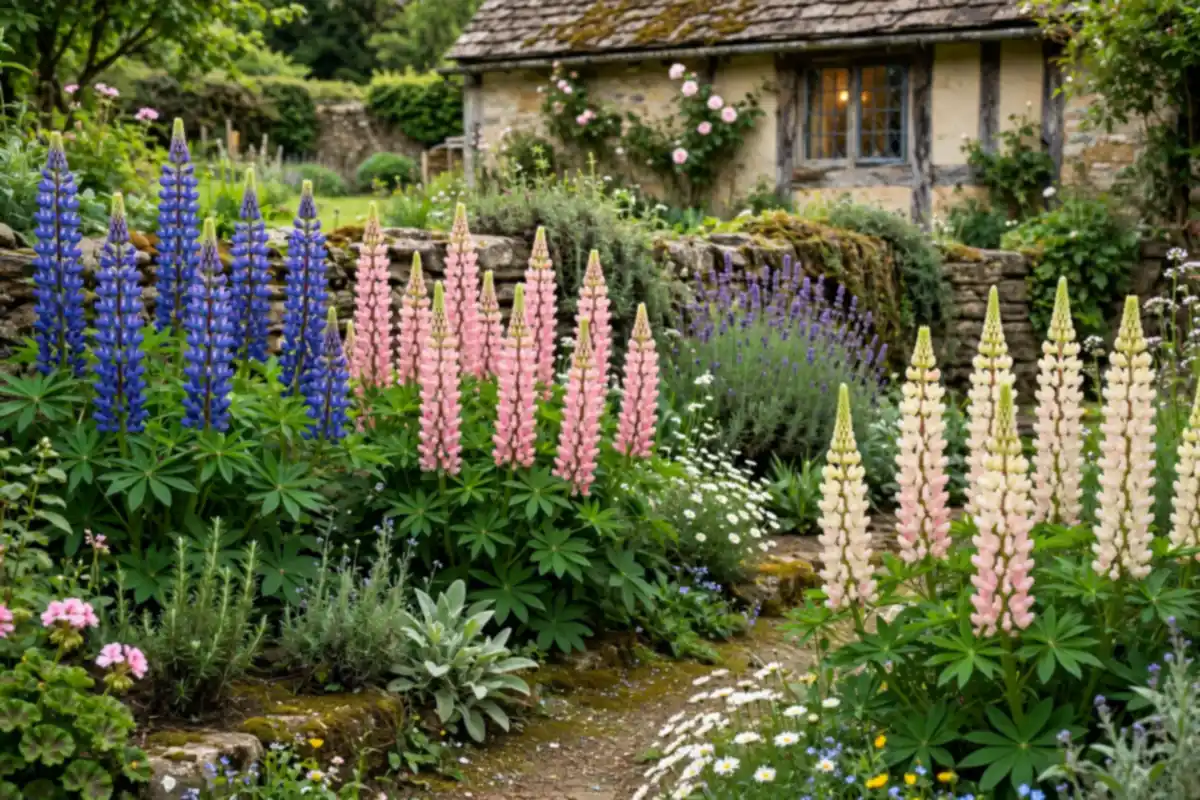
Spires of peas in every colour a cottage garden dreams in — blue, pink, cream, sunset-orange, and two tones stacked on a single spike: the lupine is the flower that taught poor soil to behave like a feast. As a legume it pulls its own nitrogen from the air, feeds the ground it stands in, and then repays the favour with the most architectural flower spike in the early-summer border.
It is also a plant with range: the same genus shelters North America’s wildflower highways, an endangered butterfly that eats nothing else, Iceland’s ground-repair crews, and the Mediterranean’s ancient bean pots. This guide covers the six kinds worth knowing, what the lupine means (imagination), and the two rules of growing it — sow in place, and never let it sit wet in winter.
Quick Answer
A lupine flower is the tall, densely packed spike of pea-flowers of the genus Lupinus (300+ species), in the legume family, Fabaceae. Garden lupines — mostly Russell hybrids of Lupinus polyphyllus — grow 2 to 4 feet tall, flowering in late spring and early summer in USDA zones 4 to 8. Lupines fix nitrogen, prefer lean, well-drained, slightly acid soil, grow a deep taproot (so they resent transplanting — sow where they will flower), and dislike hot humid summers and wet winter crowns. Deadhead spent spikes before seed sets for a second, smaller flush.
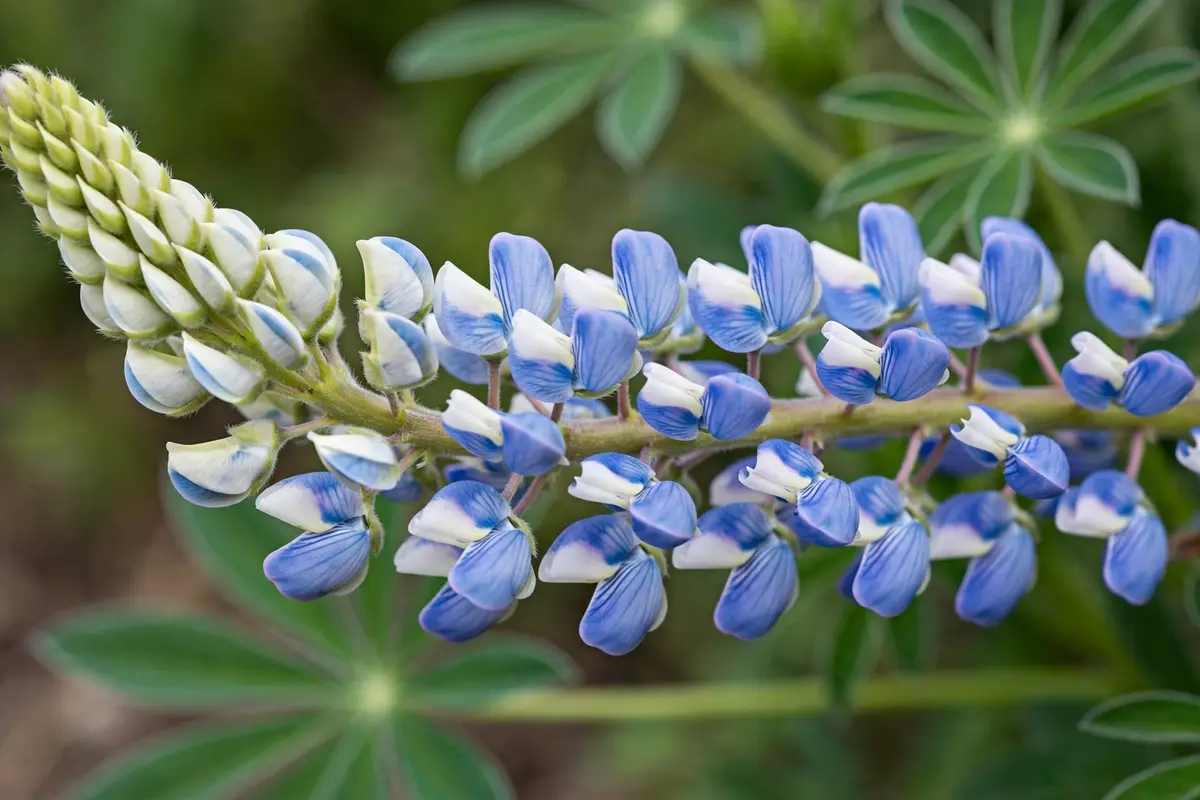
Table of Contents
- What Is a Lupine Flower?
- Types of Lupine and 6 Kinds Worth Knowing
- Lupine Flower Meaning and Symbolism
- Lupine Flower Colours and Their Meanings
- How to Grow Lupines
- Common Mistakes When Growing Lupines
- Lupine vs Delphinium: Telling the Spires Apart
- Frequently Asked Questions
What Is a Lupine Flower?
Lupinus is a large genus of the pea family, Fabaceae, centred on the Americas — from the Andes to Alaska — with a smaller outpost around the Mediterranean. The name comes from Latin lupus, wolf: the ancients believed (quite wrongly) that lupines “wolfed” the goodness from the soil. The truth is the opposite: like all legumes, lupines host nitrogen-fixing bacteria in root nodules and leave ground richer than they found it — which is why farmers have grown white lupin as green manure since Roman times. The flower spike is a tower of individual pea-flowers opening from the bottom up over several weeks, over a rosette of unmistakable palmate leaves: leaflets radiating like the fingers of a hand, which catch raindrops in beads of mercury. You can read more on the Lupinus page on Wikipedia.
The garden story belongs to one stubborn Yorkshireman: George Russell, a railwayman-gardener who from 1911 spent over two decades cross-pollinating L. polyphyllus and ruthlessly burning every plant that displeased him, until the Russell hybrids emerged in the 1930s with dense spikes in colours wild lupines never made — the lupine of every cottage border since. In the wild the genus keeps stranger company: the eastern American wild lupine is the only food of the Karner blue butterfly’s caterpillars, and Iceland sows Alaskan lupine by the tonne to rebuild eroded volcanic soils — where it now spreads so happily that Icelanders argue about it the way New Zealanders argue about their escaped Russell lupins colouring the Mackenzie Country riverbeds each November.
Lupine Flower Quick Facts
- Botanical name: Lupinus species (garden forms mostly L. polyphyllus hybrids).
- Family: Fabaceae, the pea and bean family.
- Hardiness: USDA zones 4 to 8.
- Height: 2 to 4 feet (dwarfs 1 foot; tree lupin to 5 feet).
- Bloom time: late spring to early summer.
- Sun and soil: full sun; lean, well-drained, slightly acid soil; deep taproot.
- Good to know: fixes nitrogen; seeds are toxic unless properly prepared (the lupini-bean species are the exception, after soaking).
Types of Lupine and 6 Kinds Worth Knowing
Border hybrids, wild species with jobs to do, and the bean. The table separates them; the profiles follow. For the full list of flower names, see our flower names A to Z guide.
| Type | What it is | Flowers | Height | Best use |
|---|---|---|---|---|
| Russell hybrids | L. polyphyllus crosses | Full rainbow incl. bicolours | 3–4 ft | Cottage borders |
| L. polyphyllus (species) | Bigleaf lupine | Blue, purple, white | 3–5 ft | Wild gardens, highways |
| L. perennis | Wild / sundial lupine | Blue-purple spikes | 1–2 ft | Native plantings, butterflies |
| Texas bluebonnet (L. texensis) | Annual wildflower | Deep blue, white tip | 1 ft | Meadows, state flower of Texas |
| Tree lupin (L. arboreus) | Evergreen shrub (mild zones) | Yellow, scented | 4–5 ft | Coastal, poor soils |
| White lupin (L. albus) | The lupini-bean crop | White spikes | 2–3 ft | Green manure, food crop |
1. Russell Hybrids — the Cottage-Garden Rainbow
The border lupine as the world grows it: spikes like coloured barley-sugar in blue, pink, red, yellow, cream, orange — and the famous bicolours with a contrasting flag petal. Series like Gallery (dwarf, for pots) and Westcountry (named clones in jewel tones) refine the range. Russell hybrids are short-lived perennials (three to five good years), and they do not come true from garden seed — seedlings drift back toward blue — so deadhead if you want the planting to keep its colours, or enjoy the evolution.
2. Bigleaf Lupine — Lupinus polyphyllus
The wild parent of the hybrids, from the mountain streamsides of western North America: robust clumps, large leaves, and spikes in blue, purple and white. It seeds along highways from British Columbia to California and has naturalised across northern Europe (and New Zealand, where it is both beloved and a listed invader of braided rivers). In the wild garden it is magnificent and self-sufficient; near fragile native habitats outside its range, plant it with the escape risk in mind — as the anchor of our blue flowers list it is lovely, and honesty about its wanderlust belongs in any profile of it.
3. Wild Lupine — Lupinus perennis
The eastern North American species of sandy prairies and pine barrens — and one of the most consequential wildflowers on the continent: it is the sole larval food plant of the endangered Karner blue butterfly, whose caterpillars eat nothing else. Where wild lupine vanished under development and fire suppression, the butterfly went with it; where prairie is restored and lupine returns, Karner blues follow. Modest spikes, immense meaning: this is the lupine to plant in native gardens within its range.
4. Texas Bluebonnet — Lupinus texensis
The state flower of Texas, an annual lupine bred by its homeland’s roadsides into seas of deep blue each spring, each floret tipped with a white “bonnet” spot that turns wine-red after pollination — a signal flag to bees that the flower is finished. Texensis is sown in autumn in its home state (the seed needs winter’s weathering) and treated as a spring annual elsewhere. It is the same genus wearing a completely different life strategy: fast, annual, and unforgettable in mass.
5. Tree Lupin — Lupinus arboreus
A soft evergreen shrub for mild climates (zones 8–10), carrying scented yellow spikes (lilac forms exist) through late spring, and fixing nitrogen on sand dunes and cliff soils where little else holds the ground. Short-lived but generous with seedlings. In frost-free coastal gardens it is the lupine that becomes landscape; in cold zones it is a beautiful annual experiment from spring-sown seed.
6. White Lupin — Lupinus albus
The agricultural lupine, grown since antiquity around the Mediterranean for its protein-rich seeds — the lupini beans of Italian and Spanish bars, made edible by long soaking and brining that removes the bitter alkaloids (never eat lupin seeds raw or unprepared: most lupines are toxic, and the bean species are only food after correct processing). As a garden plant its white spikes are handsome and its green-manure value real; as a crop it is quietly resurgent worldwide as a local, nitrogen-fixing protein source.
Lupine Flower Meaning and Symbolism
The lupine means imagination — the Victorian language of flowers assigns it fancy and creativity, which suits a flower that packs a hundred pea-blossoms into coloured towers. Around it cluster the allied meanings the plant’s behaviour earns: happiness and renewal (the nitrogen-fixer that heals tired soil and reseeds itself without being asked), and — from its wild American heartland — survival and restoration, the flower conservationists plant to bring a butterfly back from the edge.
Give lupines to the imaginative: artists beginning a project, writers, anyone whose life’s next chapter is under construction. And plant them where the soil is poor and the plans are large — few flowers say “watch what grows here” so precisely.
Lupine Flower Colours and Their Meanings
The spike is a gradient; the colours carry these messages:
- Blue lupine — calm strength and imagination: the wild colour, bluebonnets to bigleaf.
- Pink lupine — admiration and gentle happiness: the Russell pinks for cottage charm.
- White lupine — purity and new growth: ‘Noble Maiden’ whites join our white flowers ranks each June.
- Yellow and bicolour lupine — joy and creativity: the flag-petalled bicolours say celebration outright.
How to Grow Lupines
Two rules — sow in place, keep the crown dry — and one preference: cool summers. Gardeners on r/gardening on Reddit in prairie and maritime climates rave about lupines; gardeners in humid heat describe the same plants as annuals, and both are telling the truth.
Sowing and the Taproot Rule
Lupines grow a long taproot and sulk badly when it is disturbed, so sow seed where the plants will flower: outdoors in autumn (for strongest plants) or early spring, nicking or soaking the hard seed overnight first. Nursery plants in deep pots are the compromise — plant out young, without root disturbance, and water in well. Space border hybrids 18 inches apart; they bulk fast. In the June border they flower alongside our larkspur flower spires — the two great cottage towers in season together.
Site, Soil and Care
Full sun, and soil that is lean, sharply drained and neutral to slightly acid — rich soil and manure make soft, floppy, short-lived plants, so lupines are one flower you genuinely must not feed kindly. Water in dry spells the first year; established plants are drought-tough on their taproots. Deadhead the main spike as soon as it fades (before the pods fatten) and side spikes give a second act in late summer — and the hybrid’s colours stay pure, since self-sown seedlings revert toward blue. Guard the crown in winter: a gravel mulch, not compost, and no wet feet; crown rot in a sodden January is the border lupine’s usual exit. The true pests are few but theatrical: giant lupin aphids can coat a spike in a week (blast off with water, encourage ladybirds), and slugs adore the spring rosettes.
Climate Honesty
Lupines are cool-summer plants: in zones 4–7 with real winters they are easy perennials; in hot humid summers (much of zone 8 and beyond) they dwindle — treat them as glorious annuals from autumn sowing, or give them afternoon shade and perfect drainage and accept shorter lives. Iceland and the maritime Pacific grow them to perfection for a reason.
Common Mistakes When Growing Lupines
The classic mistake is transplanting: seedlings or divisions moved at the wrong size sulk or die on their broken taproots — sow in place or move only small, deep-potted plants. The second is kindness: feeding and rich soil, which produce leaves, mildew and collapse instead of spikes. The third is wet crowns in winter (drainage and gravel, always).
The fourth is letting a prized hybrid set seed and expecting the children to match — they revert toward blue and purple within a generation, which is its own pleasure if you know it is coming, and a disappointment if you do not. And the fifth is eating the seeds: lupin seeds across the genus carry bitter alkaloids and are toxic unprepared; the lupini bean is food only after traditional soaking and brining of the right species.
Lupine vs Delphinium: Telling the Spires Apart
The two blue towers of the cottage border are confused constantly. Lupine: pea-family flowers (a banner, wings and keel — snap one open and it is a tiny sweet pea), each spike over a rosette of palmate leaves like open hands; the whole plant is a legume and fixes nitrogen. Delphinium: buttercup-family flowers with a distinctive backward spur and deeply cut, maple-like divided leaves; no pea structure, no nitrogen. Delphiniums stand taller and bluer; lupines stand stockier, in more colours, with those unmistakable hand-leaves. (The delphinium’s annual cousin, larkspur, carries the same spurred flower in miniature.) Both are toxic if eaten; lupine seeds are the more agricultural hazard, delphinium the more ornamental one — admire both, snack on neither.
Frequently Asked Questions
Are lupines perennials?
The border hybrids and most species are short-lived perennials — three to five strong years is a fair expectation — offset by easy reseeding (in species and blue forms) and cheap seed. Texas bluebonnet and some Mediterranean species are true annuals. Cool summers lengthen perennial life considerably. If your question is not answered here, the questions about the lupine flower on Quora cover most of the rest.
When do lupines bloom?
Late spring into early summer — May and June in most northern gardens — with spikes opening from the bottom up over three to four weeks. Deadheaded plants throw smaller side spikes into late summer. Texas bluebonnets flower earlier, in their spring (March–April).
Are lupines toxic?
The seeds and pods carry alkaloids and should not be eaten — grazing animals are the usual victims, and unprepared seeds are unsafe for people. The lupini bean (L. albus) becomes food only after soaking/brining removes the alkaloids. Garden handling of the plants is safe; admire the pods, compost them, do not shell them into salads.
Why did my lupines die after one year?
Usually one of three: a wet winter crown (rot), a hot humid summer (their known limit), or the natural short life of a Russell hybrid arriving early. Improve drainage with grit and a gravel crown mulch, and always let one spike’s seedlings (or a packet of seed) be the insurance policy.
Can lupines grow in pots?
Dwarf series (Gallery, Mini Gallery) do well in deep pots of gritty, lean compost — depth matters for the taproot. Water in growth, keep the pot on the dry side in winter, and do not feed beyond a whisper of balanced fertiliser in spring.
Do lupines really fix nitrogen?
Yes — root nodules housing Rhizobium bacteria convert air nitrogen into plant food, lupines feed themselves on poor soil, and their roots and residues enrich the bed for whatever follows. It is why farmers sow white lupin as green manure — and why the “wolf” name is exactly backwards. For more flowers under the same letter, see our guide to flowers that start with L.