Bluebell Flower: Meaning, Types and How to Tell English from Spanish
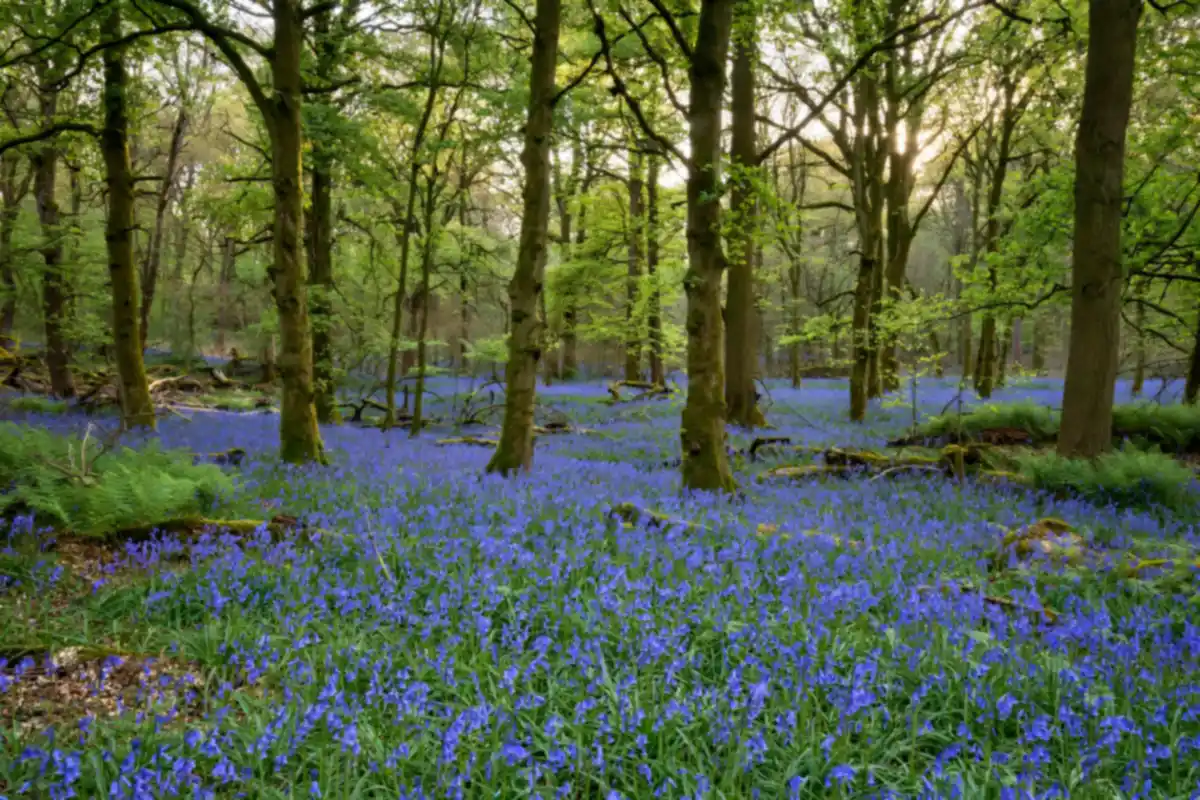
For three weeks each spring, ancient woods in Britain and Ireland turn the colour of deep water: millions of nodding violet bells, a scent you can smell before you see them, on stems that arch like fishing rods. The English bluebell is half the world’s bluebells in one archipelago — and a protected wild plant, which makes growing your own from nursery bulbs an act of conservation as much as gardening.
This guide separates the true English bluebell from the Spanish garden species and the vigorous hybrid between them, explains the American namesake that is not a bluebell at all, covers what the bluebell means (humility and constancy), and shows how to build a bluebell patch the legal way.
Quick Answer
A bluebell flower is the spring bell of Hyacinthoides bulbs — above all the English bluebell, Hyacinthoides non-scripta: deep violet-blue, sweetly scented bells hanging from one side of an arching stem. English bluebells flower in April and May in USDA zones 4 to 8, in shade and woodland soil, and are legally protected in the wild in the UK (never pick them or dig wild bulbs). The paler, unscented Spanish bluebell and the hybrid between them are the common garden plants. Plant certified nursery bulbs in autumn, ideally “in the green” just after flowering, and never buy wild-collected stock.
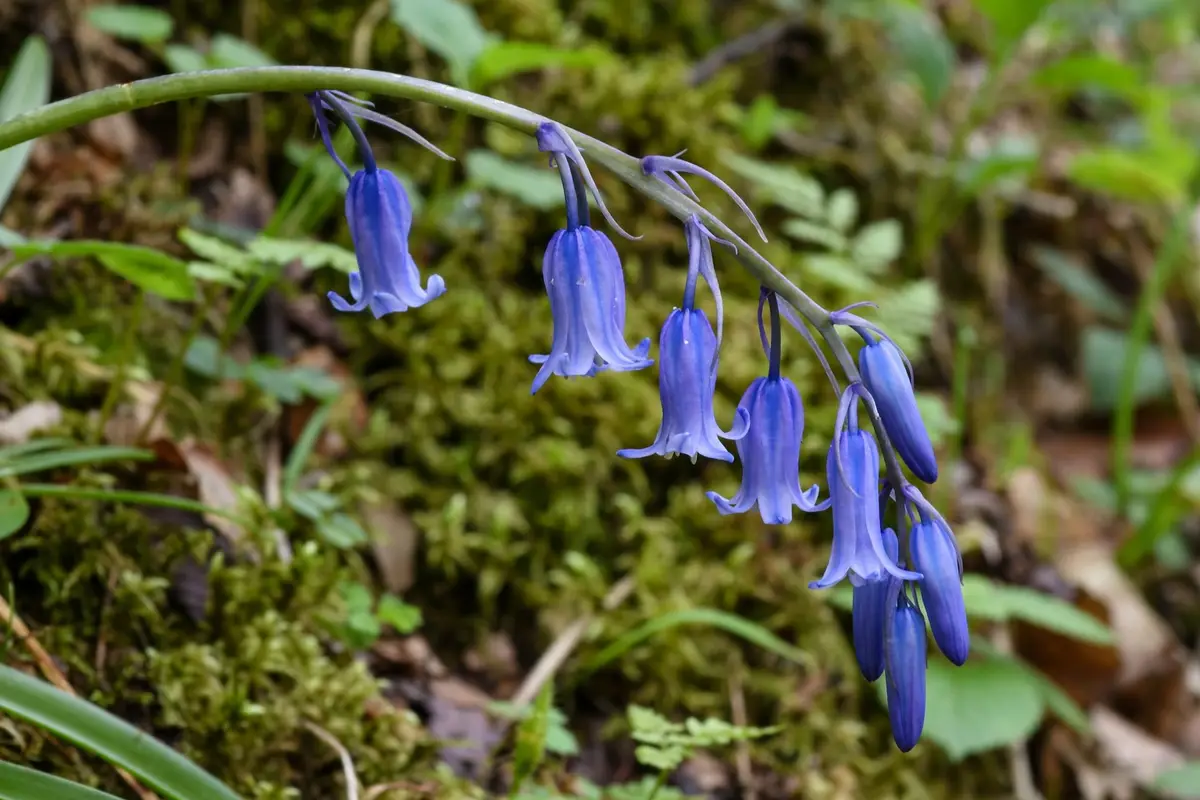
Table of Contents
- What Is a Bluebell Flower?
- Types of Bluebell and 6 Kinds Worth Knowing
- Bluebell Flower Meaning and Symbolism
- Bluebell Flower Colours and Their Meanings
- How to Grow Bluebells
- Common Mistakes When Growing Bluebells
- English vs Spanish vs Virginia Bluebells: the ID Guide
- Frequently Asked Questions
What Is a Bluebell Flower?
The bluebell is Hyacinthoides non-scripta, a bulb in the asparagus family, Asparagaceae, native to the Atlantic fringe of Europe — and overwhelmingly concentrated in the British Isles, where an estimated half of the entire world population carpets ancient woodland. The botanical name carries a Greek tragedy: Hyacinthus, the youth loved by Apollo, killed by a discus and turned into a flower marked with grief — and non-scripta, “unlettered”, because unlike the hyacinth of the myth, this flower’s bells bear no written marks. The bells themselves are models of precision: narrow tubes of deep violet-blue with rolled-back tips, hanging — all of them — from one side of a stem that nods at the top like a shepherd’s crook, anthers the colour of cream. You can read more on the Hyacinthoides non-scripta page on Wikipedia.
Everything about the flower is built for the woodland floor in the weeks before the canopy closes: it flowers April to May off last year’s stored sunlight, sets seed, and vanishes underground by midsummer. Its folklore is proportionate to its magic: bluebell woods were fairy territory — ring a bluebell, the old warning went, and you would summon the fairies, not always kindly; the bells were fairy thimbles, the patch under enchantment. Modern law is fairy folklore with teeth: in the UK the species is protected — picking wild flowers for sale, digging wild bulbs, and trading wild-collected bulbs are offences — and the charity Plantlife campaigns for the woods where it anchors the spring.
Bluebell Flower Quick Facts
- Botanical name: Hyacinthoides non-scripta (English); H. hispanica (Spanish).
- Family: Asparagaceae, the asparagus family.
- Hardiness: USDA zones 4 to 8.
- Height: 10 to 18 inches.
- Bloom time: April to May.
- Sun and soil: deciduous shade; moist, humus-rich woodland soil.
- Good to know: protected in the wild in the UK; all parts are poisonous if eaten; buy only certified nursery bulbs.
Types of Bluebell and 6 Kinds Worth Knowing
Two species, their hybrid, the colour forms, and two famous namesakes flagged honestly. The table separates them; the profiles follow. For the full list of flower names, see our flower names A to Z guide.
| Type | Flowers | Scent | Stem | Best use |
|---|---|---|---|---|
| English bluebell (H. non-scripta) | Deep violet-blue, narrow bells | Sweet, strong | Arching, one-sided | Woodland, conservation gardens |
| Spanish bluebell (H. hispanica) | Paler lilac-blue, open bells | Little or none | Upright, all-round | Tough garden groundcover |
| Hybrid bluebell (H. × massartiana) | Between the two, variable | Faint | Semi-arching | Where it already grows |
| White and pink forms | ‘Alba’ whites, rare pinks | As species | As species | Highlights in the drift |
| Virginia bluebells (Mertensia virginica) | Pink buds opening sky-blue | Light | Leafy clumps, upright | US native woodland gardens |
| Scottish harebell (Campanula rotundifolia) | Pale violet bells, summer | None | Wiry, upright | The Scottish “bluebell” namesake |
1. English Bluebell — the Protected Original
The deepest blue and the only scented one: bells of saturated violet hanging in a one-sided row from a stem that bends under their weight, leaves narrow as grass. This is the flower of the great spring woods — and the one to buy only as certified nursery-propagated bulbs, planted near (but never collected from) its wild strongholds. As a cornerstone of our blue flowers, it is the benchmark against which every other blue bell is judged.
2. Spanish Bluebell — the Garden Workhorse
The plant in most gardens and most bulb catalogues: paler, tougher, more upright, happy in sun and dry shade where the English species would sulk. Its bells open wider, sit all around a straight stem, and carry little scent. It is a good garden plant with one conservation caveat — planted near native woods, its pollen reaches wild bluebells and the hybrid takes hold (profile 3), so responsible gardeners near ancient woodland plant the certified English species instead, or keep Spanish plants in contained urban ground.
3. The Hybrid — Hyacinthoides × massartiana
Where the two species meet, this vigorous hybrid follows: bells between the parents in colour and shape, stems half-arching, anthers often blue-tinged, scent faint. It now dominates many town populations and spreads into woods from garden escapes. You do not need to wage war on it in an ordinary garden — but do not plant it (or Spanish stock) beside native bluebell woods, and never dump its bulbs in the countryside: garden waste is how it travels.
4. White and Pink Forms — ‘Alba’ and Friends
Both species throw white forms (sold as ‘Alba’), and pale pinks appear in Spanish and hybrid stock (‘Dainty Maid’, ‘Rosabella’ types). A few whites scattered through a blue drift read as light on water — plant them at the same ratio nature does, a handful per hundred, rather than in blocks. The whites make the white flowers list by acclamation each May.
5. Virginia Bluebells — the American Namesake
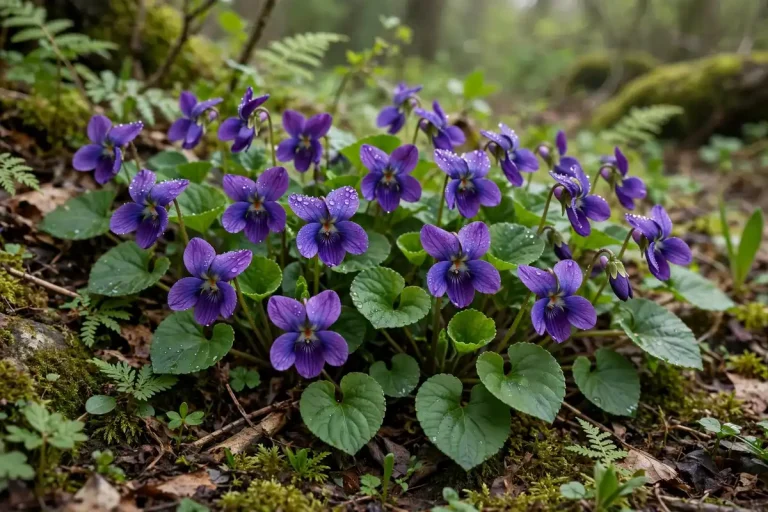
Not a Hyacinthoides at all: Mertensia virginica, a borage-family wildflower of eastern North American floodplain woods, whose clusters of pink buds open into sky-blue trumpets in spring over smooth grey-green leaves, then go dormant by summer. North American gardeners asking for “bluebells” usually mean this plant — equally lovely, equally shade-loving, and the right choice for US native plantings (where planting English bluebells is pointless and potentially invasive).
6. The Scottish Harebell — the Other “Bluebell”
In Scotland the word bluebell means Campanula rotundifolia, the harebell: wiry stems with pale violet bells dancing over summer grassland and cliffs. An entirely different genus and season — included here because Scottish readers (and Scots worldwide, for whom it is a nostalgic emblem) use the name differently, and any honest bluebell guide should flag the dialect. English or Scottish: both are protected by the same regard, and both repay it.
Bluebell Flower Meaning and Symbolism
The bluebell means humility, constancy and gratitude — the bowed head of the wild flower does the talking: humility in the nod, constancy in its faithfulness to the same woods for centuries, gratitude in the bluebell-carpets that return thanks to any wood left in peace. In the language of flowers it is also everlasting love’s quieter cousin: not the rose’s declaration, but devotion that shows up every spring without being asked. The fairy folklore adds the shadow side — bluebells were the fairies’ flower, and to pick them was to invite enchantment and ill luck — a superstition that protected the species for centuries before the statutes did.
Give bluebells (as plants, never wild-picked) for steadfast affection, humble thanks, or remembrance of a woodland spring. They pair naturally with their season-mates in the May birth flower story — the same weeks that belong to lily of the valley in the birthday calendar belong to bluebells in the wild wood.
Bluebell Flower Colours and Their Meanings
A short palette, deeply felt:
- Violet-blue — humility, constancy and devotion: the true English colour, spring’s deep water.
- Lilac-blue — gentleness and good nature: the Spanish and hybrid shades in everyday gardens.
- White — purity and remembrance: ‘Alba’ forms gleaming in shade.
- Pink — tender affection: the rare pink forms and Virginia’s opening buds.
How to Grow Bluebells
Grow them like a wood, buy them like a conservationist. Gardeners on r/gardening on Reddit pass on the old advice verbatim: “plant in the green, plant deep, plant many — then leave them alone for five years.”
Buying and Planting — the Legal Way
Buy only nursery-propagated bulbs from suppliers who state the species and its cultivated origin — wild-collected bluebell bulbs are illegal to trade in the UK, and cheap “bargain” bulbs are where they hide. The best planting method is “in the green”: bulbs lifted and replanted with their leaves on, just after flowering (late spring), which establishes far faster than dry autumn bulbs; dry bulbs in autumn are the second-best route. Plant 4 inches deep (deeper than most bulbs — bluebells pull themselves down to depth with contractile roots over time) and 4 inches apart, in drifts under deciduous trees, along shady fences, in any spot that mimics a wood edge: shade at least half the day, soil that stays moist and humusy, summer rest under leaf litter.
Care and Patience
Bluebells are a five-year project: bulbs take years to reach flowering size from seed (four to five), and a new planting builds slowly then suddenly becomes a carpet. Leave the leaves to die back naturally after flowering, never mow or tidy a bluebell patch before midsummer, and mulch with leaf mould in autumn. Do not feed, do not divide in a hurry, and keep Spanish/hybrid plants away from any planting meant to be true English stock — the species cross readily, and purity once lost is not regained.
Common Mistakes When Growing Bluebells
The first mistake is buying the wrong species unknowingly: most generic “bluebell” bulbs are Spanish or hybrid — read the Latin name, and if the catalogue will not give one, walk away. The second is planting too shallow, in full sun and dry borders: woodland plants sulk there for years. The third is impatience — digging up a year-two planting that “did nothing” just as it was settling in.
The fourth mistake is moral as much as horticultural: digging bulbs from the wild, or buying suspiciously cheap ones. And the fifth is mowing the patch in May to make the lawn tidy: the leaves are the bulb’s only income, and a bluebell patch mown early starves in plain sight.
English vs Spanish vs Virginia Bluebells: the ID Guide
Three plants, one name. English (Hyacinthoides non-scripta): deep violet-blue narrow bells, ALL hanging from one side of a stem that arches and nods; strong sweet scent; narrow leaves; cream anthers. Spanish (H. hispanica): paler, wider bells arranged all around an upright stem that barely bends; little scent; broad leaves; blue anthers. Hybrid: anything in between — half-arching stems, mid-blue bells, faint scent, blue-tinted anthers. Virginia (Mertensia virginica): no arching stem at all — leafy clumps with clusters of pink buds opening to sky-blue trumpets; if your “bluebell” has fat smooth leaves and pink buds, it is Mertensia, and it is in a different family on a different continent. The scent test settles most garden arguments: close your eyes — only the English bluebell perfumes the wood.
Frequently Asked Questions
Is it illegal to pick bluebells?
In the UK, the English bluebell is a protected species: it is an offence to pick wild bluebells for commercial purposes and to dig up or trade wild bulbs; landowners picking a few stems on their own land is a grey area, but the conservation advice is simple everywhere — admire them, photograph them, leave them. Garden-grown flowers from your own plants are, of course, yours. If your question is not answered here, the questions about the bluebell flower on Quora cover most of the rest.
When do bluebells bloom?
April into May, for about three weeks per wood — earlier in mild southern springs, later in the north. The exact week varies by year and is a national spring sport in Britain: bluebell forecasts are issued like cherry-blossom forecasts in Japan.
Are bluebells poisonous?
Yes — all parts, especially the bulbs, contain glycosides and are poisonous if eaten (to people and livestock), and the sap can irritate skin. Plant them as ornamentals, and take care that bulbs are never stored where they could be mistaken for onions — a real and recurring household accident.
Can bluebells grow in pots?
They tolerate deep pots of humusy compost in shade for a few seasons, but they are woodland plants that want garden soil and time; pots are a staging post, not a home. Virginia bluebells are the more willing container subject of the namesakes.
Why are my bluebells not flowering?
Usually youth (seedlings take four to five years; small dry bulbs two to three), or leaves cut too early in previous years, or a site too sunny and dry. Feed the patch with leaf mould, protect the foliage until it yellows, and wait — bluebells operate on woodland time.
Do bluebells spread?
Yes — by seed and bulb offsets, slowly at first and then into genuine carpets, which is the point. Spanish and hybrid types spread faster and seed more aggressively; near native woods, that vigour is exactly why the certified English species is the responsible choice. For more flowers under the same letter, see our guide to flowers that start with B.