Buttercup Flower: Meaning, Types and the Chin Test Explained
Hold a buttercup under a child’s chin, the playground ritual goes, and if the skin glows yellow, the child likes butter. It is one of the oldest pieces of garden magic in the world — and unusually for playground magic, it is real science: the buttercup’s petals are among the shiniest surfaces in nature, polished mirrors that bounce yellow light onto chins and, more importantly, into the eyes of passing bees.
The buttercup is also a plant of contradictions: the emblem of childhood innocence that is quietly poisonous, the meadow glory that lawn owners declare war on, and the wild ancestor of the florist’s ranunculus. This guide covers what a buttercup flower is, the six kinds you are most likely to meet, what the buttercup means, and how to live with it — whether that means encouraging it in a meadow corner or evicting it from a lawn.
Quick Answer
A buttercup flower is a wild member of the genus Ranunculus — the same genus as the florist’s ranunculus — recognised by its glossy, cup-shaped yellow petals. Common kinds include the meadow buttercup (R. acris), creeping buttercup (R. repens) and bulbous buttercup (R. bulbosus). They flower from spring into summer in meadows, lawns and damp ground across the temperate world. Fresh buttercups are poisonous to people and livestock (the toxin fades when the plant is dried in hay), so admire them, do not eat them, and keep grazing animals off buttercup-heavy fresh pasture.
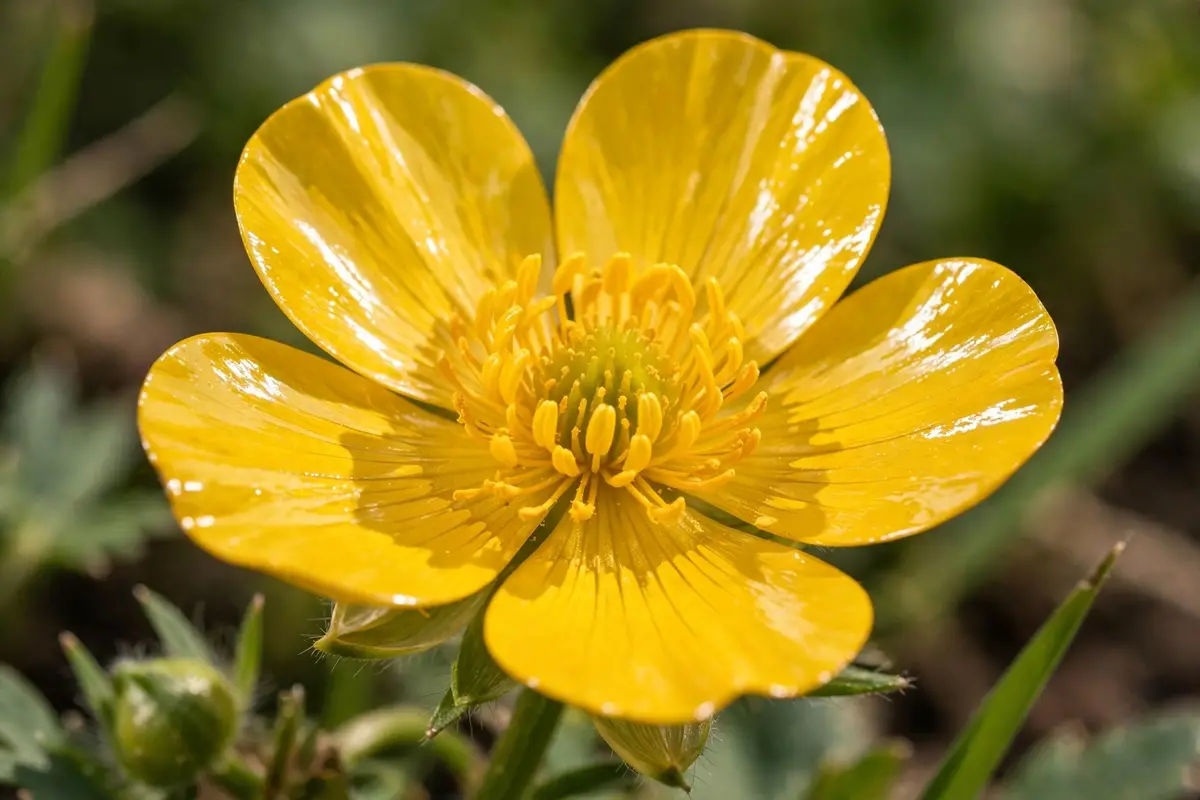
Table of Contents
- What Is a Buttercup Flower?
- Types of Buttercup and 6 Kinds Worth Knowing
- Buttercup Flower Meaning and Symbolism
- Why Buttercups Shine: the Chin Test Explained
- Growing Buttercups — or Controlling Them
- Common Mistakes With Buttercups
- Buttercups and Wildlife
- Frequently Asked Questions
What Is a Buttercup Flower?
Buttercups are the wild, yellow faces of the genus Ranunculus, a large family of around 600 species in the buttercup family, Ranunculaceae. The genus name comes from the Latin rana, frog — “little frog” — because so many ranunculus species, like frogs, live in damp places. The garden connection surprises people: the florist’s ranunculus, Ranunculus asiaticus, is a buttercup bred into ruffles, and the wild species in this guide are its country cousins. You can read more on the Ranunculus page on Wikipedia.
The flower itself is a small masterpiece of optics. Each of the five (sometimes more) petals is cupped, with a tiny nectar scale at its base, and the yellow deepens toward the centre around a green boss of carpels ringed with stamens. But the famous feature is the gloss: the petal’s upper layer of cells is exceptionally flat and smooth, so it reflects light like a mirror — one of the strongest petal reflections measured in any flower — while a deeper layer scatters yellow light back through it. The result is a flower that does not merely look yellow but gleams, visible to bees from far off and warm at the centre, where the reflected light gently heats the flower’s reproductive parts. The whole buttercup effect, aimable at chins and pollinators alike, is covered in its own section below.
Buttercup Flower Quick Facts
- Botanical name: Ranunculus species (about 600 in the genus).
- Family: Ranunculaceae, the buttercup family.
- Hardiness: perennial, USDA zones 3 to 9 for the common meadow species.
- Height: 2 inches (lesser celandine) to 3 feet (meadow buttercup).
- Bloom time: March to August by species — celandines open the season in spring.
- Habitat: meadows, pastures, lawns, damp ground, stream edges.
- Good to know: fresh plants are toxic (protoanemonin); the toxin disappears in dried hay.
Types of Buttercup and 6 Kinds Worth Knowing
Six buttercups account for nearly every yellow flower you will be asked to name in a field. The table separates them; the profiles follow. For the full list of flower names, see our flower names A to Z guide.
| Type | Botanical name | Height | Habitat | Tell it apart by |
|---|---|---|---|---|
| Meadow buttercup | R. acris | 2–3 ft | Meadows, pastures | Tall, branched, smooth round stems |
| Creeping buttercup | R. repens | 8–20 in | Lawns, damp ground | Creeping runners that root as they go |
| Bulbous buttercup | R. bulbosus | 8–16 in | Dry, chalky grassland | Swollen bulb-like base; sepals bent back |
| Lesser celandine | Ficaria verna | 2–6 in | Woods, gardens, banks | Early spring; glossy heart-shaped leaves |
| Goldilocks buttercup | R. auricomus | 12–18 in | Woodland edges | Often missing petals; spring flowering |
| Persian buttercup | R. asiaticus | 12–18 in | Gardens, florists | The ranunculus of bouquets — layered petals |
1. Meadow Buttercup (Ranunculus acris)
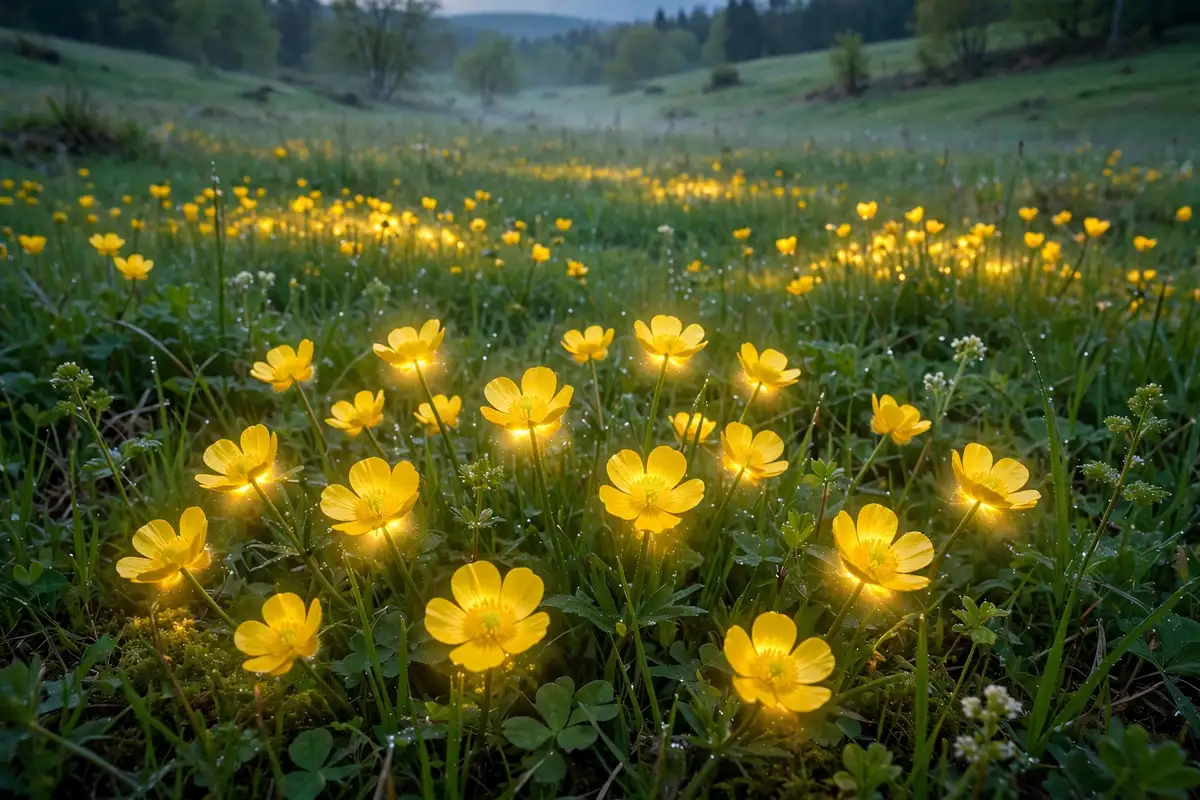
The buttercup of the classic summer meadow: tall, branched stems carrying glossy five-petalled flowers above deeply cut leaves, turning old pastures gold from May to August. Acris means acrid, and it is the tasting note that protects the plant — grazing animals learn to leave it standing, which is why buttercups often dominate a grazed field while everything around them is eaten. In a wildlife garden it is a treasure; in a hay meadow it is safe enough, because the toxin vanishes in the drying.
2. Creeping Buttercup (Ranunculus repens)
The lawn owner’s nemesis: a buttercup that travels, sending out runners that root at every node until a damp lawn is more buttercup than grass. Its leaves carry three leaflets, often pale-blotched, and its flowers are the same cheerful gloss. Creeping buttercup is a reliable diagnosis of your soil — it colonises compacted, wet ground that grass hates — and the control section below deals with it honestly: fix the drainage and it retreats; fight only the plant and it wins.
3. Bulbous Buttercup (Ranunculus bulbosus)
The buttercup of dry, chalky grassland and downland, recognised by the swollen, corm-like swelling at the stem base and by sepals that fold sharply back against the stem — the easiest field identification in the family. It flowers earlier than the meadow buttercup, often from April, and prefers the ground its cousins avoid: thin, dry, lime-rich soil where it dots the turf with stars. On old chalk grassland it is a sign of a rich, unimproved sward.
4. Lesser Celandine (Ficaria verna)
The spring opener: a low carpet of glossy, heart-shaped leaves and starry yellow flowers with eight to twelve narrow petals, weeks before the true buttercups begin. Wordsworth wrote three poems to it — more than to the daffodil, which has better publicity. It vanishes underground by early summer, which makes it perfect under shrubs and awkward in tidy beds, and its roots carry clusters of tiny tubers (the “pilewort” of old herbalists). Taxonomists have moved it from Ranunculus ficaria to Ficaria; gardeners may keep calling it a buttercup with a clear conscience.
5. Goldilocks Buttercup (Ranunculus auricomus)
The imperfect one, and proud of it: a woodland-edge buttercup whose flowers routinely drop petals — three, two, one, or none at all — on the same plant. It sets seed without fertilisation, so every plant is a clone fine-tuning the oddity. Look for it on spring walks along hedge banks and wood margins, the family’s quiet eccentric, flowering when the bluebells do.
6. Persian Buttercup (Ranunculus asiaticus)
The buttercup that went to finishing school — the florist’s ranunculus, with tissue-layered double flowers in every colour the wild species never dreamed of. It earns its place in this list as the proof of the family’s potential, and because buyers of “buttercup bouquets” are usually holding it. Its full growing story is told in our ranunculus guide; here it stands as the bridge between the meadow and the vase.
Buttercup Flower Meaning and Symbolism
The buttercup’s meaning is sunshine in flower form: childlike joy, cheerfulness, charm and radiant happiness. It is the flower of the playground test and the May meadow, and its associations run young — in the language of flowers, buttercups say “you are radiant with charms” and stand for the innocence and delight of childhood. A meadow of them in May is the backdrop of the May birth flower season, all hawthorn blossom and first warmth.
Victorian floriography, true to form, found a thorn: buttercups could also signify ingratitude and childishness — the dark twin of innocence, perhaps earned by the plant’s acrid secret. And folklore added a fairy-tale of its own: in one old story, a miser carrying a bag of gold coins was tripped by fairies, spilling his fortune across a field, where the coins turned into buttercups — which is why the flowers are richest in gold. Modern meaning keeps the sunshine and drops the scolding: give buttercups (or their florist cousin) for joy, for charm, and for the friend who still believes in holding flowers under chins.
Why Buttercups Shine: the Chin Test Explained
The chin test works because a buttercup petal is, physically, a yellow mirror. Research on the flower’s optics showed the petal has an unusually smooth, flat top layer of cells that reflects light specularly — like a polished surface rather than a matt one — layered over yellow pigment cells that scatter the rest. The petal also curves into a shallow cup, so the flower gathers the reflected light and throws it outward in a beam: onto a chin held above it, or onto the flower’s own centre, which measurably warms in the sun and repays pollinating insects with a heated landing pad.
That is why the reflection really does appear on skin — any flower will cast a little colour, but only the buttercup casts a shine. The same optics explain the plant’s field presence: a meadow of buttercups at noon has a distinct glinting quality, almost metallic, that no other common flower matches. Children discovered an optical instrument in a wildflower; scientists merely confirmed the patent.
Growing Buttercups — or Controlling Them
Buttercups need two opposite kinds of advice, because half the readers of this page want more of them and half want fewer. Gardeners on r/gardening on Reddit ask both questions every spring, and the honest answers follow.
Encouraging Buttercups in a Meadow Corner
If you are making a meadow or a wildlife patch, buttercups are the easiest gold you will ever grow: they want unfertilised ground, summer sun, and grass that is cut late, not often. Sow meadow buttercup seed in autumn or spring into scarified soil, or simply stop feeding and close-mowing a patch of lawn and let the buttercups already hiding in it stand up and flower. Mow once, late in summer, after seed has fallen, and remove the cuttings so the soil stays lean — leanness is the whole meadow secret, because fertiliser feeds the grass that swamps the flowers.
Buttercups as Cut Flowers
Wild buttercups cut prettily for jam-jar posies and last a few days; for serious vase work the family offers the Persian buttercup (ranunculus), grown from corms as our ranunculus guide describes. Handle fresh wild stems with the plant’s reputation in mind: the sap is an irritant, so gloves and a hand-wash after picking are sensible, and buttercup posies belong on the table, not in it.
Controlling Creeping Buttercup in Lawns
Creeping buttercup in a lawn is a symptom before it is a problem: it means the ground is wet, compacted and hungry. The lasting cure is environmental — aerate the lawn, improve drainage, feed the grass so it can compete, and mow regularly at a height that shades the soil (buttercup runners hate shade from above). Dig out individual crowns and the runner nets by hand in autumn when the soil is soft; a single pass rarely clears it, but drainage plus competition turns the tide within a season or two. Reserve any lawn weedkiller for hopeless cases, follow the label exactly, and keep it away from the meadow corner where you want the flowers.
Buttercups and Grazing Animals
On pasture, the rule is simple and reassuring: animals mostly avoid the fresh, acrid plants, poisonings happen mainly when overgrazed land leaves them nothing else, and hay cut from a buttercup meadow is safe because drying destroys the toxin. Keep fresh pasture varied and not overstocked, and buttercups and livestock coexist as they have for centuries.
Common Mistakes With Buttercups
The first mistake is eating them, or letting a toddler do so: the cheerful look hides a genuinely acrid, blistering chemistry, and buttercups belong in the vase and the meadow, not the salad. The second is planting lesser celandine in a small formal bed and being surprised when its spring carpet swallows the plan — glorious under shrubs, a takeover in a border.
The third mistake is fighting creeping buttercup with mowing alone: the mower trims the flowers and the runners root on, delighted. Drainage and grass competition are the fix. The fourth is fertilising a meadow patch to “help the flowers” — you help only the grass, and the buttercups thin within two years. And the fifth is assuming every yellow five-petalled flower is a buttercup: cinquefoils and tormentil wear the same colour with different leaves — check the glossy petals and the leaves before you name it.
Buttercups and Wildlife
For insects, the buttercup’s shiny bowl is a heated, nectar-serving beacon early in the season: bees, hoverflies and small beetles all work the flowers, and the cup’s warmth is part of the reward. The plants feed specialist insects too — the caterpillars of several micromoths mine the leaves — and in a meadow, buttercups knit into the whole community: finches take the seeds, and the unpalatable leaves shelter ground insects from grazing mouths. A patch of buttercups is never just a patch of buttercups. Even in a garden, letting one damp corner go golden for six weeks of spring is among the cheapest wildlife decisions going — cheaper, certainly, than any bird table, as the readers of our guide to poppy flowers and other meadow companions will recognise.
Frequently Asked Questions
Are buttercups poisonous?
Fresh buttercups, yes — all the common species contain a compound that becomes protoanemonin when the plant is crushed or chewed, blistering skin and mouths and upsetting stomachs in people and livestock. The acrid taste means serious poisoning is rare, and the toxin disappears completely when the plant is dried, which is why buttercup hay is safe. Admire them; do not eat them. If your question is not answered here, the questions about the buttercup flower on Quora cover most of the rest.
What does a buttercup symbolise?
Childlike joy, cheerfulness, charm and radiant happiness — the flower of childhood games and May meadows. Victorian flower language added a shadow meaning of ingratitude and childishness, but the modern reading keeps the sunshine: buttercups are given for joy and for someone whose charm lights a room, chin test optional.
Why do buttercups reflect on your chin?
Because their petals are mirrors: an exceptionally flat, smooth layer of cells reflects light directly, like a polished surface, over yellow pigment beneath. The cupped flower beams that reflection outward — onto skin held above it, or onto the flower’s own centre to warm it for pollinators. It is real optics, not folklore, though the folklore got there first.
How do I get rid of creeping buttercup in my lawn?
Change the conditions it loves: aerate, improve drainage, feed and thicken the grass, and mow high enough to shade the soil. Dig out crowns and runners by hand in soft autumn ground. Creeping buttercup signals wet, compacted, hungry soil — cure the soil and the buttercup retreats; attack only the plant and it returns.
Is a buttercup the same as a ranunculus?
Yes and no: buttercups are wild species of the genus Ranunculus, and “ranunculus” in a florist usually means one bred species of the same genus, R. asiaticus. Same family, same shiny chemistry — one is the meadow original, the other its cultivated descendant.
When do buttercups flower?
From March to August across the species: lesser celandine opens in early spring, bulbous buttercup follows in April and May, and meadow and creeping buttercups carry the show through summer. A mixed meadow can hold buttercup gold for nearly half the year. For more flowers under the same letter, see our guide to flowers that start with B.