Purple Perennials for Shade: Best Picks for Shady Gardens
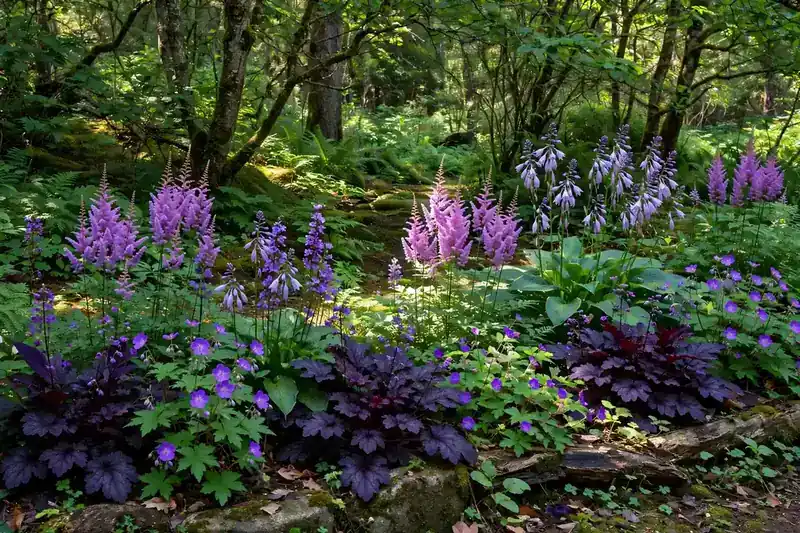
Purple is the color gardeners want most in shade and the color shade is least generous with. Most purple-flowered perennials are sun plants wearing their color as a signal to pollinators, and planted under a maple they respond with leaves, height, and no flowers at all. But a real group of purple perennials evolved exactly for woodland light — forest-floor astilbes, hostas under high canopy, toad lilies in Japanese mountain shade — and they flower reliably where the sun plants sulk.
This guide is that group, chosen strictly: every plant here carries purple, violet, or lavender flowers (or, in heuchera’s case, purple foliage that outperforms flowers) and will bloom in partial to full shade, not merely survive there. If you are still identifying a purple flower already growing in a shady corner, start with our purple perennial flower identification guide, then come back here to add companions for it.
Quick Answer
The best purple perennials for shade are astilbe, hosta, heuchera, hardy geranium (Geranium phaeum), ajuga, toad lily, columbine, monkshood, hellebore, and lungwort. For moist shade, plant astilbe and hosta — nothing matches their flower-and-foliage combination under trees. For dry shade, the hardest condition in gardening, choose Geranium phaeum, ajuga, and hellebores, which tolerate root competition once established. Expect flowers in spring and early summer from most of the list; for late-season purple, toad lily and monkshood flower in fall when the shade garden is otherwise finished. All ten are hardy perennials — plant once, and they return for years with a spring tidy as their main care.
Table of Contents
First, Know Your Shade: Light and Moisture
“Shade” on a plant label covers four different gardens. Partial shade is 3–6 hours of sun, ideally in the morning — almost everything on this list flowers well here. Dappled shade is sunlight filtering through high tree canopy all day; hostas and astilbe treat it as home. Full shade gets under 3 hours of direct sun but bright indirect light — flowers thin out for some plants (columbine, monkshood) while foliage plants stay strong. Deep shade, under evergreens or between buildings, grows ferns, ajuga, and hellebores, and very little that flowers purple.
Moisture divides the list just as sharply. The soil under established trees is usually dry shade — roots take the water before your plants see it — and no amount of label-reading changes that. Astilbe in dry shade is a promise broken by July; Geranium phaeum in the same spot flowers and self-seeds happily. Know which shade you have before you buy, and check our full purple perennial flowers guide if your border turns out sunnier than you thought — several sun-side purples can move across the line.
Purple Shade Perennials at a Glance
| Plant | Zones | Height | Purple Bloom | Shade / Moisture |
|---|---|---|---|---|
| Astilbe | 3–8 | 18–36 in. | June–August plumes | Partial–full / moist |
| Hosta | 3–9 | 8 in.–3 ft (flower stalks taller) | July–September spikes | Partial–deep / average–moist |
| Heuchera | 4–9 | 12–18 in. (flowers to 24 in.) | Purple foliage all season; small blooms | Partial / average, good drainage |
| Geranium phaeum | 5–8 | 18–30 in. | May–June | Partial–full / dry tolerant |
| Ajuga | 3–10 | 4–6 in. (spikes to 9 in.) | April–May spikes | Partial–full / average–dry |
| Toad lily | 4–9 | 24–36 in. | September–October | Partial–full / moist |
| Columbine | 3–8 | 12–24 in. | May–June | Partial / average |
| Monkshood | 3–7 | 36–48 in. | September–October | Partial / moist, cool |
| Hellebore | 4–9 | 12–18 in. | February–April | Partial–full / average–dry |
| Lungwort | 3–8 | 9–12 in. | April–May (pink opening to violet-blue) | Partial–full / moist |
The 10 Best Purple Perennials for Shade
1. Astilbe (Astilbe × arendsii and A. chinensis types). Feathery plumes in violet, lavender, and deep purple-pink over ferny foliage — the most generous flower display on this list. The catch is water: astilbe wants consistent moisture and fades fast in dry soil. For dry-ish shade, choose the chinensis group (‘Visions’ is a true violet-purple), which tolerates drought better than the arendsii hybrids and blooms later, into August. Astilbe leads our index of flowers that start with A for good reason — nothing else gives this much color under trees.

2. Hosta (Hosta spp.). Gardeners plant hostas for leaves and then act surprised by the flowers — tall stalks of lavender to deep violet trumpets in mid-to-late summer, fragrant in the large white-flowered species and some cultivars. For the strongest purple, look for ‘Krossa Regal’ and the plantaginea hybrids’ seedlings; in truth the flower color deepens when plants get a few hours of morning sun. The slugs are the honest downside: thick-leaved blue and heavily corrugated varieties (‘Halcyon’, ‘Abiqua Drinking Gourd’) resist them noticeably better than thin green types. Hostas headline our plants that start with H list alongside the next two entries.
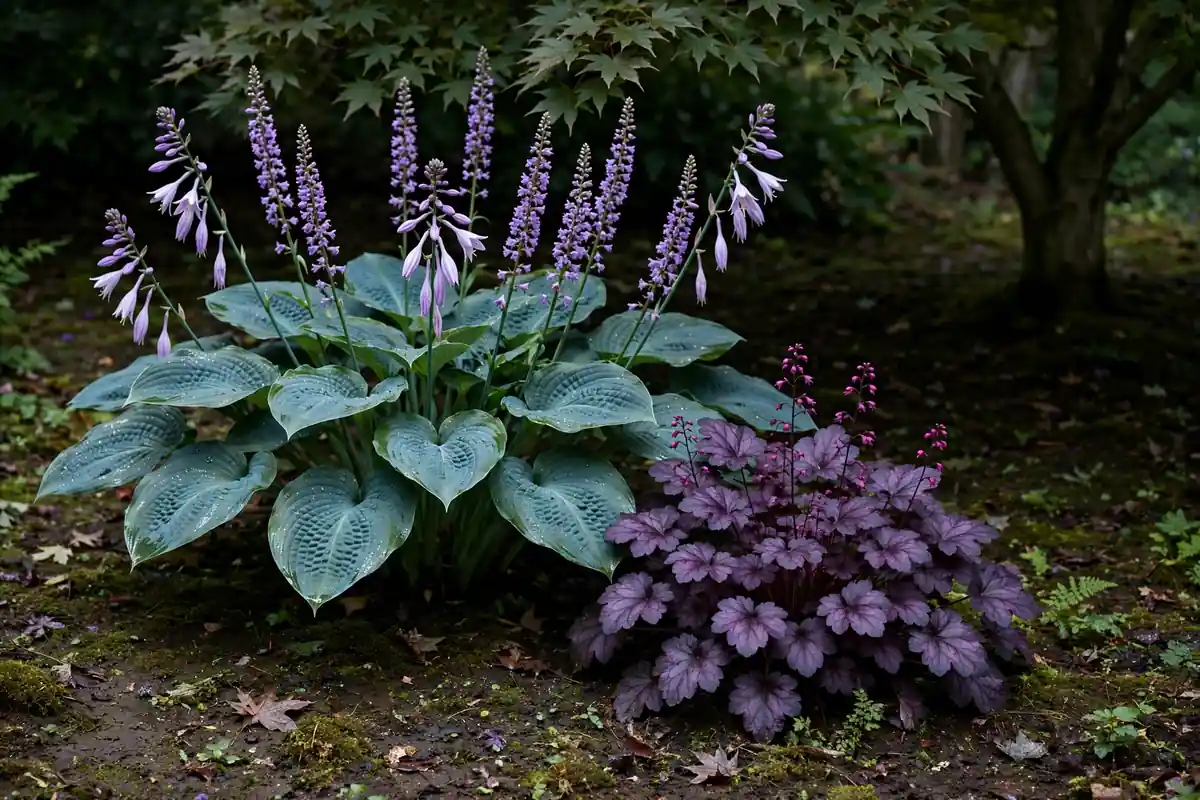
3. Heuchera (coral bells, Heuchera × villosa hybrids). The purple is in the leaves: ‘Plum Pudding’, ‘Blackout’, and ‘Obsidian’ hold deep plum-to-near-black foliage from spring to frost, a longer season than any flower on this page. The bell flowers themselves are small and usually pale — treat them as a bonus. Heuchera demands drainage; crowns rot in wet winter soil, so plant slightly high and skip heavy mulch against the crown. In shade terms it is a foliage anchor first, and the darkest leaves color best with a little morning sun.
4. Hardy geranium (Geranium phaeum). The dry-shade specialist most gardeners have never tried. Dusky purple-brown flowers with swept-back petals (‘Samobor’ adds chocolate-marked leaves) in May and June, in the root zone of trees where astilbe quits. It self-seeds politely — pull the extras, keep the best. This is a different plant from the sun-loving ‘Rozanne’; phaeum is the one that means it about shade.
5. Ajuga (bugleweed, Ajuga reptans). A groundcover that carpets the floor of the shade garden and then covers itself in 6-inch spikes of violet-blue in spring. ‘Black Scallop’ and ‘Burgundy Glow’ add purple-bronze foliage the rest of the year. It spreads, which is the point under trees and a problem at a tidy bed edge — plant it where it has room to run, or keep it behind edging.
6. Toad lily (Tricyrtis hirta and T. formosana). Orchid-like white flowers speckled and edged in purple, arriving in September and October when the shade garden has nothing left to say. Arching stems 2–3 ft tall along a path edge show the speckled blooms at the right height — they reward close inspection, so plant them where people walk slowly. Needs moisture; in dry shade it flowers sparsely.
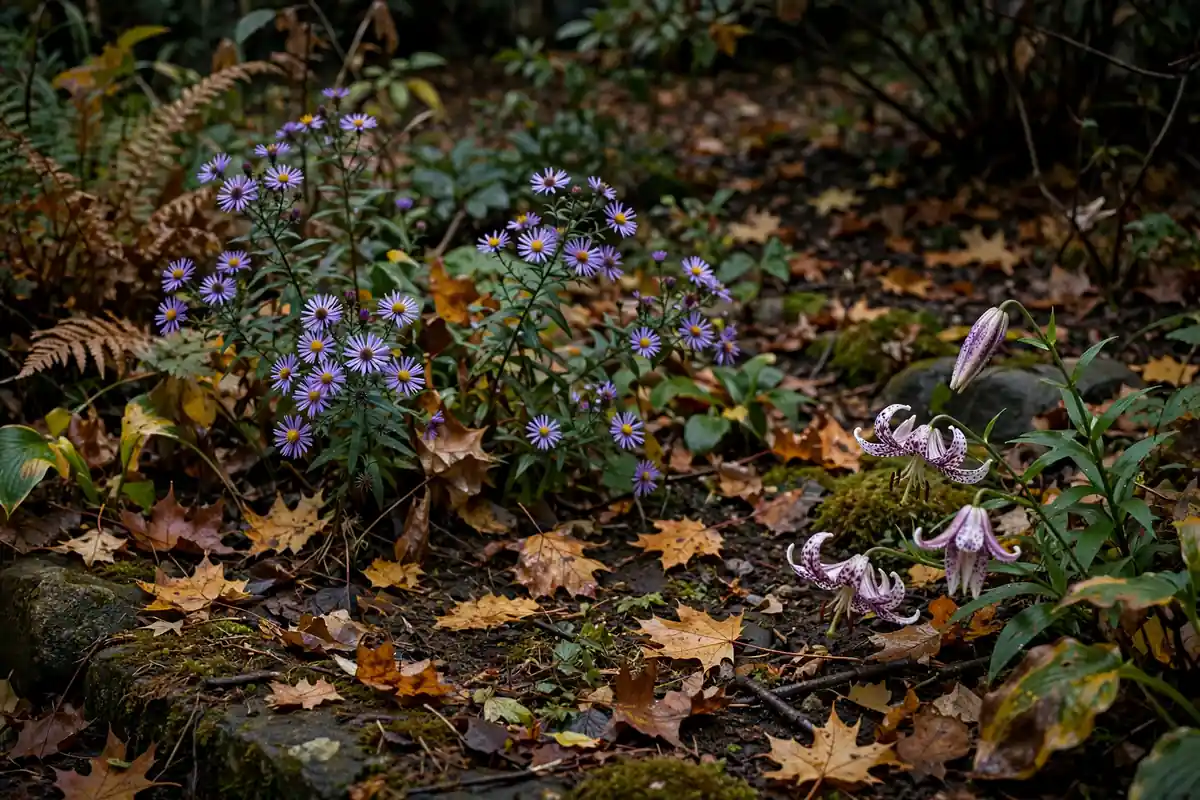
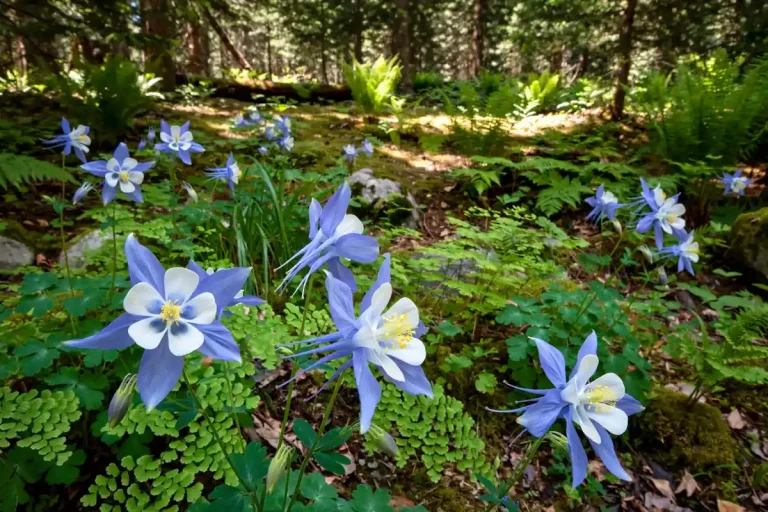
7. Columbine (Aquilegia vulgaris purple forms and hybrids). Spurred violet and purple flowers in late spring over blue-green foliage, for partial shade and woodland edges. Columbines are short-lived perennials — three to four years — that keep themselves going by self-seeding, so let some seedheads stand. Leaf miner trails on the foliage are cosmetic; cut marked leaves and the plant refoliates.
8. Monkshood (Aconitum carmichaelii ‘Arendsii’, A. napellus). The deepest true purple on this list: hooded spires 3–4 ft tall in early fall, for cool, moist partial shade. Two honest warnings. It is slow to establish and resents transplanting — plant it and leave it. And all parts are seriously poisonous, the aconite of old herbals; wear gloves when dividing and keep it out of gardens where toddlers graze. Gardeners who prefer their purple without the caution label can find safer oddities in our unusual and beautiful flowers collection.
9. Hellebore (Lenten rose, Helleborus × hybridus purple strains). Flowers from February to April — plum, violet, and near-black single and double forms — above evergreen leaves, in the dry shade under shrubs and trees where little else flowers at all. Buy hellebores in flower, because seedling color varies; a named double purple in bloom is worth its price. Cut the old leaves in late winter, before flowering, to show the blooms and remove leaf-spot fungus.
10. Lungwort (Pulmonaria spp.). Flowers open pink and age through violet to blue on the same cluster — a two-tone effect no other plant here offers — over silver-spotted leaves that keep the ground covered after flowering. It wants moisture and mildew is its weakness in still, humid air; the newer cultivars (‘Trevi Fountain’, ‘Raspberry Splash’) resist it well. Cut the foliage to the ground after flowering in humid climates and it regrows clean.
A Planting Recipe for a Purple Shade Border
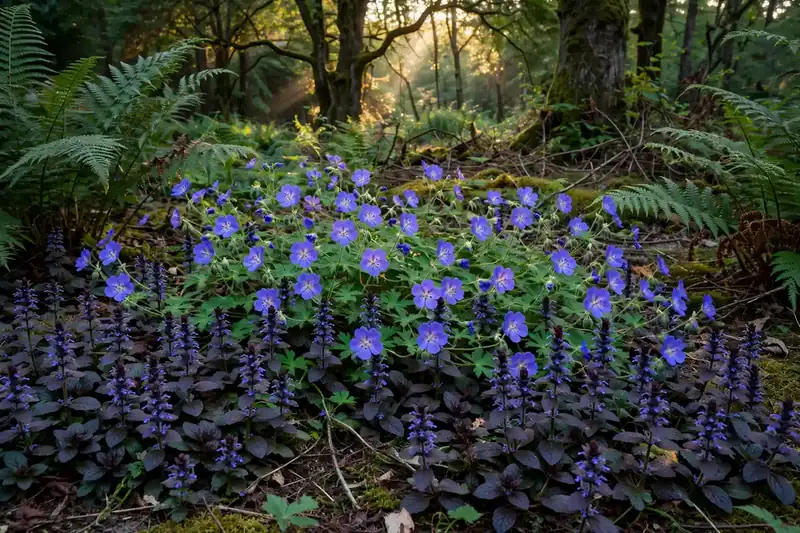
For a border roughly 10 ft long by 3 ft deep in partial, average-to-moist shade, plant back to front: three monkshood or tall astilbe (‘Purple Candles’) at the back, five hostas in the middle layer mixed with three heuchera ‘Plum Pudding’ for the dark leaf contrast, and a front edge of ajuga ‘Black Scallop’ with three lungwort threaded through it. Add two toad lilies at the path end for fall. While the perennials size up in year one, tuck in a few purple annual flowers — wishbone flower (Torenia) is one of the few annuals that genuinely blooms in shade — and pull them out as the perennials close ranks.
Planting and Care in Shade
Feed the soil, not just the plant. Shade perennials compete with tree roots for everything. Dig in 2–3 inches of compost at planting and renew it as a mulch each spring; it is both food and the moisture buffer that decides whether astilbe and toad lily thrive or merely persist.
Water through the first two seasons. Even the dry-shade specialists need regular water while their roots learn to compete. After year two, Geranium phaeum, ajuga, and hellebores are on their own; astilbe, hosta, and lungwort will still ask for a deep drink in any rainless month.
Divide on the plant’s clock. Hostas and heuchera divide in spring just as growth starts; astilbe every 3–4 years when the center of the clump thins; monkshood, ideally, never.
Manage slugs honestly. Beer traps, copper tape on containers, gritty mulch, and thick-leaved hosta varieties all reduce damage; no method eliminates it. Check under hosta leaves on damp evenings in spring, when the year’s chewing is decided.
Common Mistakes With Shade Perennials
Planting sun purple in shade. Lavender, catmint, salvias, and most purple echinacea planted under trees will grow leaves and skip flowering. If you love them, they belong in the sun border — this list exists because shade needs its own palette.
Ignoring the dry-shade problem. “Shade-tolerant” does not mean “tree-root-tolerant.” Match astilbe to moist shade and phaeum/hellebore/ajuga to dry shade, or plan on watering the dry corner forever.
Judging by midsummer alone. A shade border planted only for July misses hellebores in March, ajuga and lungwort in April, and toad lily in October. The recipe above sequences something purple from late winter to frost.
Deep mulch against crowns. Heuchera and hellebore crowns rot when mulch is piled over them in wet winters. Mulch the soil between plants, keep crowns visible.
Expecting flowers in deep shade. Under dense evergreens, even this list mostly offers foliage. Lean on heuchera and ajuga leaf color there, and put the flowering plants where a shaft of morning light reaches.
Frequently Asked Questions
Which purple perennial flowers bloom longest in shade?
Astilbe gives the longest single display — four to six weeks of plumes, extended by mixing early and late varieties — while heuchera’s purple foliage runs spring to frost without a break. For flowers alone across the season, sequence the border: hellebore and lungwort in spring, astilbe and geranium in summer, toad lily and monkshood in fall.
What purple perennials work in dry shade under trees?
Geranium phaeum is the first choice, with ajuga and hellebores close behind — all three tolerate root competition once established. Epimedium, though usually sold for its spring flowers and foliage, also handles dry shade well in soft violet forms. Water all of them through their first two seasons; “dry shade tolerant” starts in year three.
Do hostas really have purple flowers?
Yes. Most hosta flowers are lavender to violet on tall stalks in summer, and varieties grown from Hosta plantaginea have large, fragrant blooms. Flower color deepens with a few hours of morning sun; in deep shade the stalks are paler and the show is mostly the foliage, which is why hostas are planted first as leaf plants.
Can I grow purple perennials in full, deep shade?
Foliage, yes — heuchera, ajuga, and hellebores hold their purple leaves in deep shade. Flowers, mostly no: below about three hours of light, bloom counts fall sharply for everything on this list. If the spot is deep shade, plant for leaves and put one flowering pot by the path where light leaks in.
Are purple shade perennials safe around pets and children?
Most are, with two exceptions to manage: monkshood is seriously poisonous in all parts and should be sited away from play areas (or skipped), and hellebores are toxic if eaten, though their bitter taste deters most nibbling. Astilbe, hosta, heuchera, geranium, ajuga, columbine, and lungwort are the standard, widely planted choices for family gardens.
References
- Hosta — NC State Extension Gardener Plant Toolbox (zones, shade tolerance, and slug-resistant leaf types)
- Plant Finder — Missouri Botanical Garden (care profiles for astilbe, toad lily, monkshood, and hellebore)