Allium Flower: Meaning, Types and How to Grow Ornamental Onions
Fireworks that never fall: an allium globe hangs over the late-spring border for weeks — hundreds of tiny star-flowers packed into one perfect sphere, on a stem bare as a drumstick. Then it dries, standing, into a sculpture that lasts the rest of the year. All this from the onion family, which is why deer and rabbits will not touch it.
This guide covers the six ornamental alliums worth growing — from the five-foot giants to the July drumsticks — what the allium means (unity and good fortune, naturally: look at the shape), when and how to plant the bulbs, and how to tell an allium from the agapanthus it imitates.
Quick Answer
An allium flower is the spherical (or firework-shaped) flower head of ornamental species of the genus Allium — the onion family, Amaryllidaceae — grown from bulbs planted in autumn. Ornamental alliums flower from late spring into summer in USDA zones 4 to 8, on stems from 8 inches to 5 feet, in purple, violet, white, pink and yellow. Each globe is dozens to hundreds of tiny star-shaped florets. Plant bulbs three times their depth in autumn, in full sun and well-drained soil; foliage yellows before the flowers peak, so plant through grasses and perennials that hide the leaves.
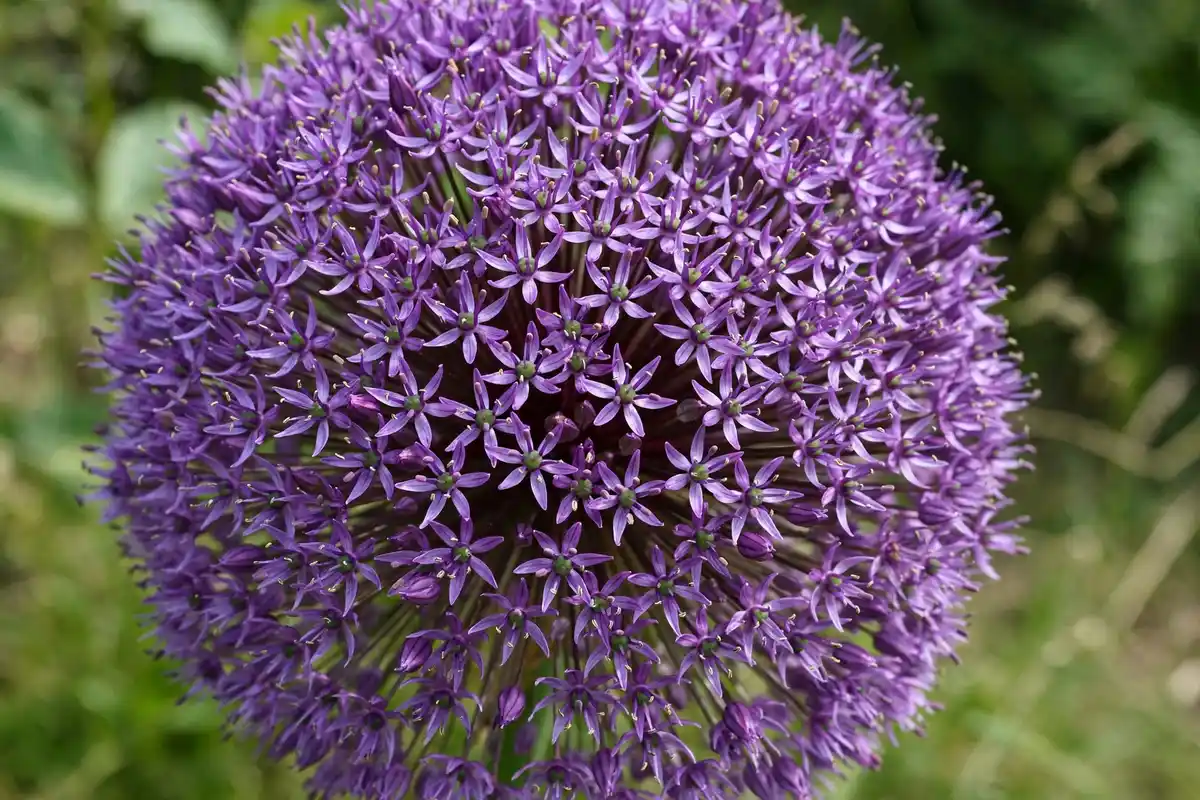
Table of Contents
- What Is an Allium Flower?
- Types of Allium and 6 Kinds Worth Growing
- Allium Flower Meaning and Symbolism
- Allium Flower Colours and Their Meanings
- How to Grow Alliums
- Common Mistakes When Growing Alliums
- Allium vs Agapanthus: Telling the Globes Apart
- Frequently Asked Questions
What Is an Allium Flower?
Allium is one of the largest plant genera on earth (900+ species) in the amaryllis family — all of them bulbous plants with the family signature: the mild-to-strong scent of onion or garlic when the leaves are bruised. The household members are onion, garlic, leek and chive; the ornamental members are grown for flower heads engineered like geometry. What looks like one flower is an umbel: dozens or hundreds of six-tepalled star florets, each on its own mini-stalk, radiating from one point on a leafless stem — a dandelion clock rebuilt in purple. You can read more on the Allium page on Wikipedia.
Ornamental alliums earn their keep at the exact moment the spring garden stalls: after the tulips, before the summer perennials crest — “the May gap”. They are structural plants: the stems rise through emerging border growth, the globes float at every height from knee to head, bees work them for weeks, and when the petals fall, the seedheads hold the same architecture in parchment — standing into autumn, drying perfectly for vases. And because the whole plant smells of the kitchen, deer, rabbits and most rodents leave alliums strictly alone, a superpower no other spring bulb except the daffodil shares.
Allium Flower Quick Facts
- Botanical name: Allium species (ornamental types).
- Family: Amaryllidaceae, the amaryllis family.
- Hardiness: USDA zones 4 to 8 (varies by species).
- Height: 8 inches to 5 feet, by type.
- Bloom time: late spring to midsummer, by type.
- Sun and soil: full sun; well-drained soil; plant bulbs in autumn.
- Good to know: deer- and rabbit-proof; seedheads are ornamental for months after flowering.
Types of Allium and 6 Kinds Worth Growing
The giants, the stars, the drumsticks and the kitchen cousin. The table separates them; the profiles follow. For the full list of flower names, see our flower names A to Z guide.
| Type | Flowers | Season | Height | Best use |
|---|---|---|---|---|
| A. giganteum | Dense purple globes, 5–6 in across | Late spring | 4–5 ft | Back-of-border drama |
| A. christophii (Star of Persia) | Airy metallic lilac star-globes, 8–10 in | Early summer | 1–2 ft | Front of border, dried heads |
| A. schubertii | Firework explosion of uneven stalks | Early summer | 1–2 ft | Statement pots, tumbleweed heads |
| ‘Mount Everest’ | White globes | Late spring | 3 ft | Evening gardens, weddings |
| A. sphaerocephalon (drumsticks) | Small oval maroon heads | Midsummer (July) | 2–3 ft | Prairie drifts, bees |
| Chives (A. schoenoprasum) | Lilac pompons, edible herb | Late spring | 1 ft | Herb gardens, edging |
1. Allium giganteum — the Giant
The name understates nothing: stems to five feet carrying dense violet-purple globes the size of grapefruit, from the mountains of Central Asia. Giganteum is a back-of-border plant sold singly and priced accordingly — plant in odd-numbered groups through grasses or behind delphiniums, where its dying leaves hide and the globes float. (The widely sold ‘Globemaster’ is a hybrid in the same role, slightly shorter and longer-flowering.)
2. Star of Persia — Allium christophii
The connoisseur’s allium: loose, airy globes up to ten inches wide made of metallic, silvery-lilac stars, each floret on a visible stalk, so the head is a constellation rather than a ball. Shorter than the giants (a foot or two), so it belongs at the front — and its dried heads are the best of the genus, holding their starbursts for months in the border or a vase.
3. Allium schubertii — the Firework
The surrealist: florets on stalks of wildly unequal length explode into a pink-lilac firework a foot across, like a frozen Catherine wheel. After flowering the whole head detaches and rolls as a tumbleweed in its native Middle Eastern steppe, scattering seed. In gardens it is the allium children remember; spray the dried heads silver or gold and florists fight over them.
4. ‘Mount Everest’ — the White Giant
A white schubertii-album hybrid reaching about three feet, with dense snowball heads that light up evening borders and cut superbly for weddings and white schemes. White alliums read as moonlight in the May border, and ‘Mount Everest’ is the standard-bearer of our white flowers for the gap between spring and summer.
5. Drumstick Allium — Allium sphaerocephalon
The season-extender: small, dense, egg-shaped heads in deep wine-maroon that flower in July — a month after the others finish — on wiry two-foot stems that thread beautifully through grasses and prairie plantings. Bees and butterflies crowd them; the heads dry in place to drumsticks indeed. Cheap in bulk, so plant them by the hundred.
6. Chives — the Kitchen Cousin
Allium schoenoprasum wears both hats: a kitchen herb whose lilac pompon flowers are as pretty as any ornamental (and edible — scatter the florets on salads). In herb gardens and potager edging, flowering chives prove the ornamental alliums’ point — the family beauty is not an accident of breeding. Let a clump or two bloom for the bees and snip the rest.
Allium Flower Meaning and Symbolism
The allium means unity, prosperity and good fortune — the globe says it without words: hundreds of small flowers, one perfect whole. Floriographers read the sphere as togetherness and humility-with-strength (the mightiest head in the border belongs to the humble onion’s family), and in folk tradition onions hung at doors were protection — Victorian gardeners accordingly planted alliums at garden gates as good-luck sentries. The prosperity thread is older still: the onion was sacred in ancient Egypt, its concentric rings a symbol of eternity, and buried with pharaohs as provision for the afterlife.
Give alliums for teamwork, housewarmings (unity for a new home), and ventures that need many small efforts to become one big sphere. In the garden, their own message is thrift and timing: no plant gives three seasons of structure — spring leaves, early-summer globes, autumn seedheads — from one autumn-planted bulb for so little money.
Allium Flower Colours and Their Meanings
The palette is narrow and the meanings strong:
- Purple allium — unity and dignity: the classic globe, power in numbers.
- White allium — purity and peace: ‘Mount Everest’ for weddings and moon gardens.
- Pink and lilac allium — grace and good fortune: christophii’s metallic stars, schubertii’s fireworks.
- Yellow allium — cheerfulness and prosperity: golden garlic (A. moly) is the small sun of the genus.
How to Grow Alliums
Autumn bulbs with a single design flaw (their foliage) that companion planting solves. Gardeners on r/gardening on Reddit give the whole doctrine in one line: “plant them through something — the leaves are the price, the globes are the prize.”
Planting Bulbs
Plant in autumn alongside crocus flower corms and every other spring bulb — our fall flowers planting season — at a depth of roughly three times the bulb’s height (giants: 6–8 inches deep), point up, in groups. Spacing: three bulb-widths apart for the big types, closer for drumsticks, which are a drift plant. In heavy soil, set each bulb on a handful of grit; in pots, use gritty compost and plant the tall kinds deep for stability.
Site, Soil and Foliage Management
Full sun and real drainage: alliums are steppe and mountain plants and rot in winter wet. The foliage emerges early, feeds the bulb, and is already yellowing as the flowers peak — never cut it green (that is next year’s globe), so camouflage is the art: plant alliums up through hostas, hardy geraniums, grasses, lady’s mantle or low roses, whose leaves take the stage exactly as the allium leaves retire. After flowering, leave the stems standing — the seedheads earn their place until autumn tidying — unless you are preventing self-seeding in the promiscuous species (drumsticks seed modestly; A. karataviense freely).
Years After
Most ornamental alliums perennialise well — clumps thicken, and the giants naturalise where winters are cold and summers dry. Divide crowded clumps after the leaves die down in summer, replanting immediately. Container globes come indoors for a second career: cut seedheads just as they dry, hang them upside down, and they keep their architecture for a year.
Common Mistakes When Growing Alliums
The biggest mistake is planting alliums alone in a bare bed: the ragged yellowing foliage becomes the whole show just as the globes open — always plant through companions. The second is cutting the leaves down at flowering to tidy up, starving the bulb; the display fades within two seasons. The third is shallow planting of the giants, whose heavy heads lever loose bulbs out of light soil in wind.
The fourth is a waterlogged winter: on clay, raise the bed or grow the steppe species in gravel. And the fifth is expecting the big hybrids to multiply like daffodils — they are slow; buy the display you want rather than waiting for it.
Allium vs Agapanthus: Telling the Globes Apart
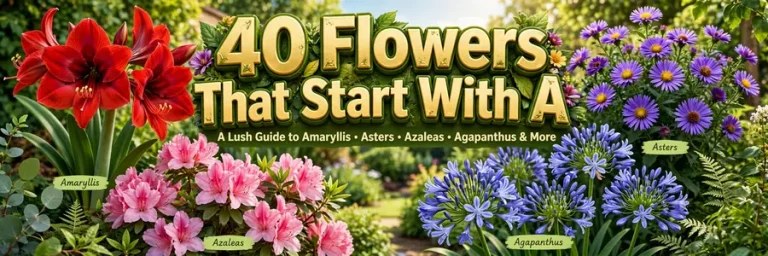
Two plants make violet globes on bare stems, and they are constantly mistaken. Allium: a hardy bulb planted in autumn, flowering late spring to early summer; brush the leaves and they smell of onion; the leaves wither as the globe opens; the seedhead that follows keeps the globe’s shape for months. Agapanthus (African lily): a tender clump of evergreen strap-leaves (it keeps its foliage proudly all season), flowering in mid-to-late summer, from fleshy roots rather than bulbs, needing frost protection or containers in zones below 8. Timing is the instant field mark: globe in May or June, it is an allium; globe in August over glossy straps, it is agapanthus. Both are magnificent; they just keep opposite calendars and opposite winter tolerances.
Frequently Asked Questions
When do alliums bloom?
By type: the giants and ‘Mount Everest’ in late spring (May into June), christophii and schubertii in early summer, and drumsticks in July. A mixed planting covers six to eight weeks of globe season, bridging the tulips and the summer border. If your question is not answered here, the questions about the allium flower on Quora cover most of the rest.
Are alliums perennials?
Yes — hardy bulbs that return and slowly multiply for years in drained soil and full sun. The very large hybrids are the least persistent in wet climates; the species types (christophii, drumsticks, karataviense) are the great naturalisers.
Do deer eat alliums?
No — the onion chemistry that scents the whole plant makes alliums deer-, rabbit- and rodent-resistant, one of very few spring bulbs with that guarantee. Interplanting them among tulips is an old trick to share the protection (it helps the tulips somewhat, though determined deer still learn).
Can alliums grow in pots?
Yes — deep pots of gritty compost suit them, and portability helps hide the fading foliage (just move the pot behind the bench at flowering time). Pot the giants singly per large container for stability; drumsticks and christophii in cheerful groups.
Should I deadhead alliums?
Only where self-seeding is unwanted — the seedheads are a feature, standing in the border into autumn and drying perfectly. If you do deadhead, wait until the head is fully dry and ornamental value spent; the stem must stay while the leaves finish feeding the bulb.
Are ornamental alliums edible?
The ornamental species are not grown as food and some are unpalatable to mildly toxic in quantity — the edible alliums are the named kitchen species (onion, garlic, chive, leek). Admire the globes; eat the chives’ flowers if anything, which are genuinely culinary. For more flowers under the same letter, see our guide to flowers that start with A.