Cardinal Flower: Meaning, Types and How to Grow Lobelia cardinalis
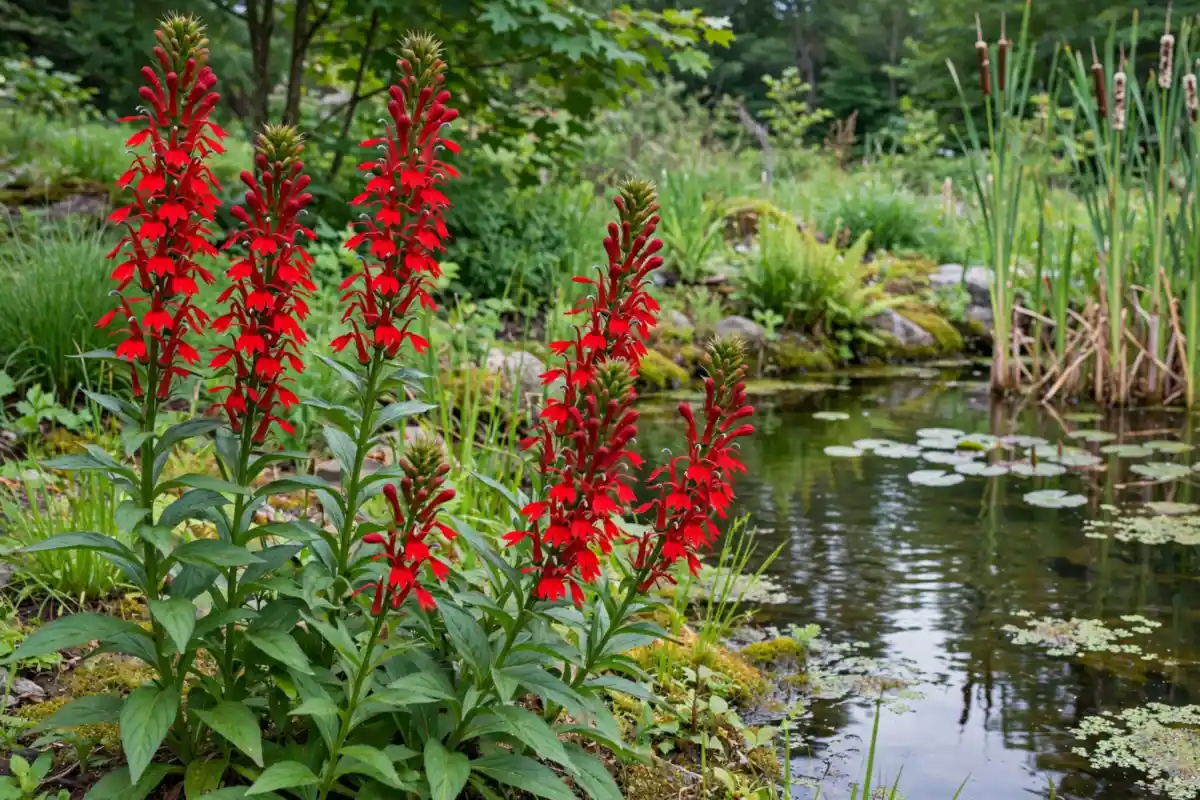
Most red flowers are merely red. The cardinal flower is the red of a traffic light, a fire engine, a cardinal bird’s wing — a scarlet so saturated it seems to vibrate against green leaves, and so exactly tuned to a hummingbird’s eye that the birds find it from a remarkable distance. Plant a clump beside a pond in July, and by August you will not be asking whether hummingbirds like it. You will be watching them queue.
The cardinal flower is also a plant with one non-negotiable demand — wet feet — and one charming weakness: it lives fast and dies young, persisting by seed rather than by age. Get those two things right and it is one of the easiest glories in the summer garden. This guide covers what the cardinal flower is, its types and relatives, what it means, and how to grow it where it will thrive.
Quick Answer
Cardinal flower is Lobelia cardinalis, a North American native perennial famous for spikes of intense scarlet-red tubular flowers that hummingbirds pollinate. It grows 2 to 4 feet tall in USDA zones 3 to 9, blooms from July into September, and needs constantly moist to wet, rich soil in full sun or part shade — stream banks, pond edges and rain gardens are its natural home. It is a short-lived perennial that offsets and self-seeds to persist. All lobelias contain alkaloids, so treat the plant as poisonous and do not eat any part of it.
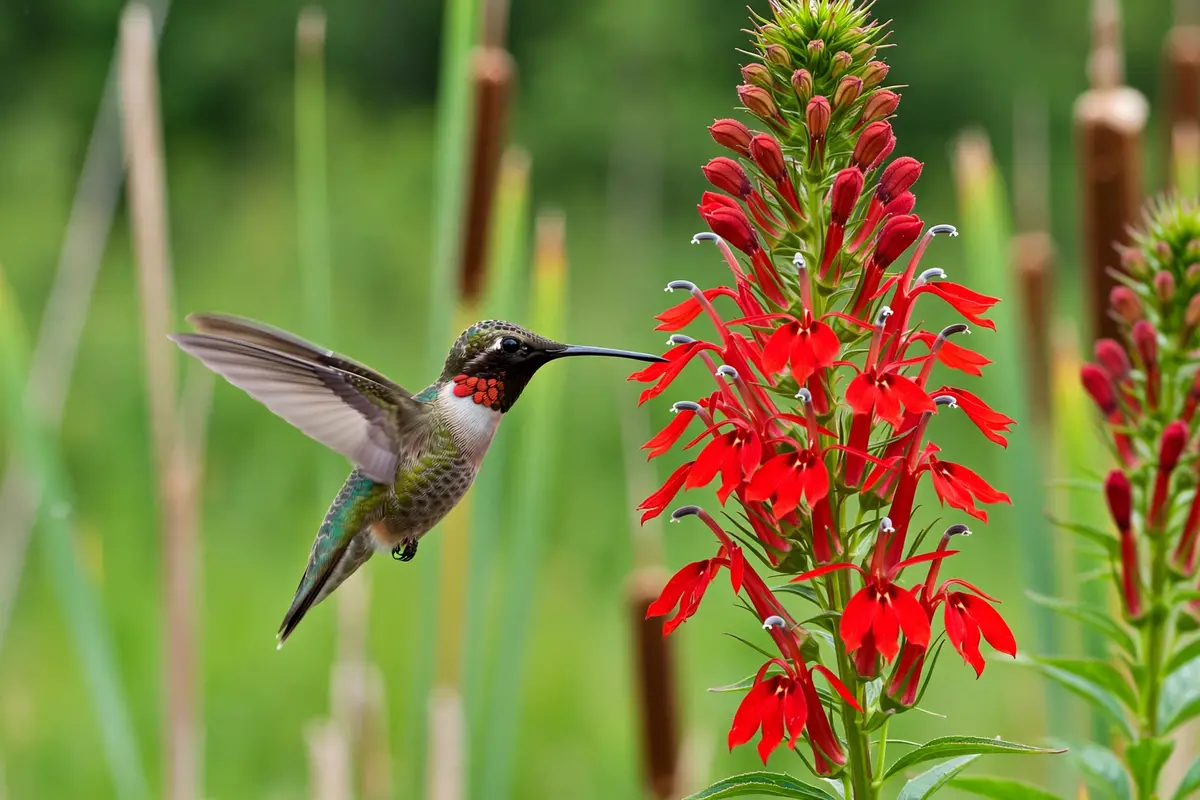
Table of Contents
- What Is a Cardinal Flower?
- Types of Cardinal Flower and 6 Relatives Worth Growing
- Cardinal Flower Meaning and Symbolism
- Cardinal Flower Colours and Their Meanings
- How to Grow Cardinal Flowers
- Common Mistakes When Growing Cardinal Flowers
- Cardinal Flowers and Hummingbirds
- Frequently Asked Questions
What Is a Cardinal Flower?
The cardinal flower, Lobelia cardinalis, belongs to the bellflower family, Campanulaceae, and is native to the Americas — from southeastern Canada through the eastern and central United States and Mexico down to Colombia — almost always in wet places: stream banks, marshes, swamps, spring seeps and the muddy edges of ponds. Its name honours two things at once: the scarlet robes of Roman Catholic cardinals, and the northern cardinal bird, whose plumage its flower spikes match almost exactly. You can read more on the Lobelia cardinalis page on Wikipedia.
The flower itself is a small masterpiece of specialisation. Each bloom is a narrow tube that splits at the top into two lips — three lobes spreading below, two standing upright — with the stamens fused into a single red column that pokes out like a tiny flag. That shape is a hummingbird lock with a hummingbird key: the tube is too long and narrow for most bees, hangs its nectar deep, and offers no landing platform, so only a hovering bird with a long bill (or a large butterfly) can work it. As the bird feeds, the stamen column dusts its forehead with pollen. In bloom, a plant carries its flowers on a spike that opens from the bottom up over several weeks, which is why the show lasts from high summer into early autumn.
Cardinal Flower Quick Facts
- Botanical name: Lobelia cardinalis.
- Family: Campanulaceae, the bellflower family.
- Hardiness: USDA zones 3 to 9.
- Height: 2 to 4 feet (occasionally 6 in perfect wet spots), spread 1 to 2 feet.
- Bloom time: July to September — peak hummingbird season.
- Sun and soil: full sun to part shade; soil must stay constantly moist to wet.
- Good to know: short-lived (2–3 years per crown) but offsets freely and self-seeds in moist soil; all parts poisonous if eaten.
Types of Cardinal Flower and 6 Relatives Worth Growing
The cardinal flower has a small family of garden forms and some famous cousins. The table compares six worth knowing; the profiles follow. For the full list of flower names, see our flower names A to Z guide.
| Type | Botanical name | Height | Flower colour | Best use |
|---|---|---|---|---|
| Cardinal flower (wild type) | L. cardinalis | 2–4 ft | Scarlet red | Ponds, rain gardens, hummingbirds |
| ‘Queen Victoria’ | L. cardinalis cultivar | 3 ft | Scarlet over bronze-purple foliage | Moist borders, dramatic foliage |
| Rose and white forms | L. cardinalis f. rosea / alba | 2–3 ft | Pink or white | Shadier, gentler plantings |
| Great blue lobelia | L. siphilitica | 2–3 ft | Blue-violet | The blue partner for wet soil |
| Hybrid lobelia | L. × speciosa | 2–3 ft | Red, pink, burgundy, purple | Longer bloom in moist borders |
| Edging lobelia | L. erinus | 4–9 in | Blue, white, violet | Baskets, edging, window boxes |
1. Cardinal Flower, the Wild Type (Lobelia cardinalis)
The straight species is the plant hummingbirds evolved with, and it remains the benchmark: pure scarlet spikes, honest green foliage, and the strongest nectar pull of the group. It is also the hardiest and the best self-seeder. If your goal is wildlife — hummingbirds first, then swallowtail butterflies — plant the wild type in groups of five or more, because a single stem is a snack while a drift is a destination.
2. ‘Queen Victoria’ (Lobelia cardinalis cultivar)
‘Queen Victoria’ dresses the same scarlet flowers over leaves of dark bronze-purple, so the plant earns its place in the border for months before it blooms — the foliage alone reads as a deliberate design choice. It is slightly less vigorous than the wild type and appreciates the richest, wettest soil you have, but for a moist border that needs colour architecture, it is one of the great foliage-plus-flower combinations of summer.
3. Rose and White Forms (Lobelia cardinalis f. rosea and f. alba)
Nature occasionally produces pink and white cardinal flowers, and named forms of both are in the trade. They keep the wild plant’s shape, moisture needs and hummingbird appeal — birds visit the pale forms too, though red still wins — and they let the cardinal flower into colour schemes where scarlet would shout. They can throw red-flowered seedlings, which most gardeners quietly enjoy as volunteers.
4. Great Blue Lobelia (Lobelia siphilitica)
The cardinal flower’s sister species swaps scarlet for rich blue-violet and everything else stays familiar: wet soil, late-summer spikes, hardiness to zone 4. Great blue lobelia is bee-pollinated rather than hummingbird-pollinated (its flowers offer a landing lip), which makes the pair a perfect planting partnership — plant red and blue together beside the water and you have catered for every pollinator in the neighbourhood. It self-seeds even more freely than its sister.
5. Hybrid Lobelia (Lobelia × speciosa)
Crosses between the cardinal flower and its relatives — sold in the ‘Fan’, ‘Starship’ and similar series — stretch the colour range to burgundy, rose and purple, tidy the habit, and often bloom longer than the species. They want the same moist soil, though many tolerate ordinary border conditions better than the pure species. Treat them as shorter-lived still: propagate from their offsets every couple of years to keep the show going.
6. Edging Lobelia (Lobelia erinus)
Every gardener knows this cousin without knowing the family connection: the little blue annual lobelia that spills from a million hanging baskets. Lobelia erinus is a South African species grown as bedding, nothing like its tall American relatives in habit — but the five-lobed, two-lipped flower gives the family away. It is the answer when someone says “lobelia” and means a basket plant, and a useful reminder that common names need botanical backup.
Cardinal Flower Meaning and Symbolism
The cardinal flower’s meaning grows out of its colour and its name. Red, everywhere in the language of flowers, speaks of passion, deep love, courage and distinction — and the cardinal flower wears the most commanding red in the late-summer garden, so it carries those meanings at full volume. Its double namesake adds two layers: the cardinal bird, a symbol of vitality, devotion and a loved one’s presence in North American folklore; and the church cardinals whose scarlet robes the flower was said to match, lending it an old association with distinction and high office.
In its native land the plant also has a medicinal and mythic past. Several Indigenous peoples used cardinal flower preparations — cautiously, since the plant is potent — and a persistent piece of folklore held it an ingredient in love medicines, which fits the red symbolism neatly. The modern, practical meaning is the one gardeners trade now: a cardinal flower in the garden says you planted for the wild things. It is the emblem of the hummingbird garden, and giving the plant is a wish for a lively, well-visited home.
Cardinal Flower Colours and Their Meanings
Scarlet defines the cardinal flower, but the family around it covers more of the spectrum than most people expect:
- Red cardinal flower — passion, courage, vitality and distinction: the wild colour, the hummingbird colour, and the one that built the plant’s reputation. It leads our collection of red flowers for late summer.
- Pink cardinal flower — gentler affection and admiration: the rose-coloured wild forms and hybrid pinks keep the shape and lose the shout.
- White cardinal flower — purity and quiet grace: the rare alba form, lovely in a shady wet corner where white reads as light itself.
- Blue lobelia — calm, trust and loyalty: the great blue lobelia’s colour, the yin to the cardinal’s yang in a wet border, and a reminder that the same genus dresses for bees as smartly as for birds.
How to Grow Cardinal Flowers
Cardinal flowers are not difficult — they are specific. Meet the moisture requirement and almost everything else follows. Gardeners on r/gardening on Reddit repeat the same summary: “plant it where the hose reaches, or where the rain collects, and it will do the rest.”
Choosing the Spot: Water First
Start with the wettest sunny place you own: the pond margin, the low end of the garden where puddles linger, a rain garden, a boggy corner, even a large pot standing in a saucer of water. In the wild this plant grows with wet feet year-round, and garden plants that dry out in July simply collapse. Full sun gives the strongest spikes in cool climates; in hot southern gardens, afternoon shade plus constant moisture is the winning combination.
Soil and Planting
Cardinal flowers like rich, humusy soil that holds water — work compost in generously, and mulch thickly to keep the moisture in. Plant in spring or early autumn, setting the crown at soil level and never burying the leaf rosette; buried crowns rot. Space plants about a foot apart in groups. A cardinal flower planted at a pond edge with its roots at the waterline will often grow taller and flower longer than any border plant, which tells you everything about what it wants.
Watering, Feeding and the Winter Rosette
Water so the soil never dries out — in a dry summer that can mean a thorough soak twice a week, or a permanent home in the shallows. Feeding needs are modest: the compost and mulch do most of it. The plant’s winter secret is its evergreen rosette of leaves, which sits at ground level all winter and must not be smothered: clear heavy leaf litter off the crowns in autumn, mark the spot, and keep mulch loose and away from the rosette itself.
Keeping the Colony Going
Plan for succession, because individual cardinal flower crowns live only two to three years. The good news is the plant replaces itself two ways: it forms offsets — small side rosettes you can tease away and replant each spring — and it self-seeds lavishly wherever bare, moist soil is available. Leave some seed heads standing, keep the soil surface damp and clear beneath them, and seedlings will appear like a green rash in spring. That self-replacement, plus dividing offsets every couple of years, keeps a planting permanent even though no single plant is.
Common Mistakes When Growing Cardinal Flowers
The fatal mistake, repeated every summer, is planting a cardinal flower in ordinary dry border soil and watering it “like everything else”. It is a wetland plant; in dry ground it wilts, sulks and dies, usually blamed on the plant rather than the address. Give it the bog, the pond edge or the rain garden, or grow it in a pot that never dries.
The second mistake is burying the crown or mulching the winter rosette flat — both invite the rot that kills more cardinal flowers in winter than cold ever does. The third is expecting permanence from a single crown and planting just one: plant a group, let it offset and seed, and the colony persists. And the fourth is cutting all the spikes for the vase or deadheading every stem: charming in the house, but every seed head you remove is next year’s colony you have cancelled.
Cardinal Flowers and Hummingbirds
The cardinal flower is one of the top hummingbird plants in North America, and the relationship is a true partnership: the flower’s long, nectar-rich tube fits the ruby-throated hummingbird’s bill and tongue precisely, and the bird is the flower’s main pollinator across most of its range. The timing is equally exact — cardinal flowers peak in late summer, just as hummingbirds are feeding heavily and beginning to move south, so the plant functions as a service station on the migration route.
To make the most of it, plant in groups (birds prefer a patch worth defending), site the clumps where you can watch from a window or bench, and keep the succession planting going so the show never has an off year. Pair the cardinal flower with other tall late spikes such as gladiolus for structure, and let the planting run into the fall flowers season — the last cardinal blooms of September often fuel the last hummingbirds of the year. Large butterflies, especially swallowtails, work the flowers too, stretching their tongues down the tubes the bees cannot use.
Frequently Asked Questions
Is the cardinal flower a perennial?
Yes, but a short-lived one: each crown typically lives two to three years in USDA zones 3 to 9. The planting persists much longer than the plant because cardinal flowers produce offsets and self-seed freely in moist soil. Gardeners who divide offsets every couple of years and let some seed fall keep colonies going indefinitely.
Do hummingbirds really prefer cardinal flowers?
Yes — the cardinal flower is one of the ruby-throated hummingbird’s most important wild nectar sources, and the flower is shaped for it: a long tube, deep nectar, no landing platform, and a scarlet colour hummingbirds see especially well. If your question is not covered here, the questions about the cardinal flower on Quora answer most of the rest.
Is the cardinal flower poisonous?
Treat it as poisonous. Lobelias contain lobeline and related alkaloids in all parts of the plant; eating them causes nausea and worse, and livestock have been poisoned by lobelia species. It is perfectly safe to grow and handle in the garden — just do not eat it, and site it sensibly where grazing animals cannot reach it.
Why did my cardinal flower disappear over winter?
Usually the crown rotted or the rosette was smothered: buried crowns, heavy wet mulch or leaf litter packed over the evergreen rosette are the common causes, ahead of cold itself. Plant with the crown at soil level, keep winter cover loose and off the leaves, and let the plant offset and self-seed so a lost crown is replaced automatically.
Can cardinal flowers grow in pots?
Yes — in a large pot of rich, moisture-retentive compost stood in a deep saucer of water, or grouped with other moisture lovers in a bog planter. Pots dry fast, so the saucer is not optional in summer. Bring the pot’s crown through winter as you would a garden plant: cool, uncovered rosette, soil never bone dry.
When do cardinal flowers bloom?
From July into September, with the spike opening from the bottom upward over several weeks. Deadheading the finished lower part of a spike does not extend it much; the better strategy is a group of plants of slightly different ages, which staggers the show. For more flowers filed under the same letter, see our guide to flowers that start with C.