23 Plants That Start With V: Names, Pictures and Growing Tips
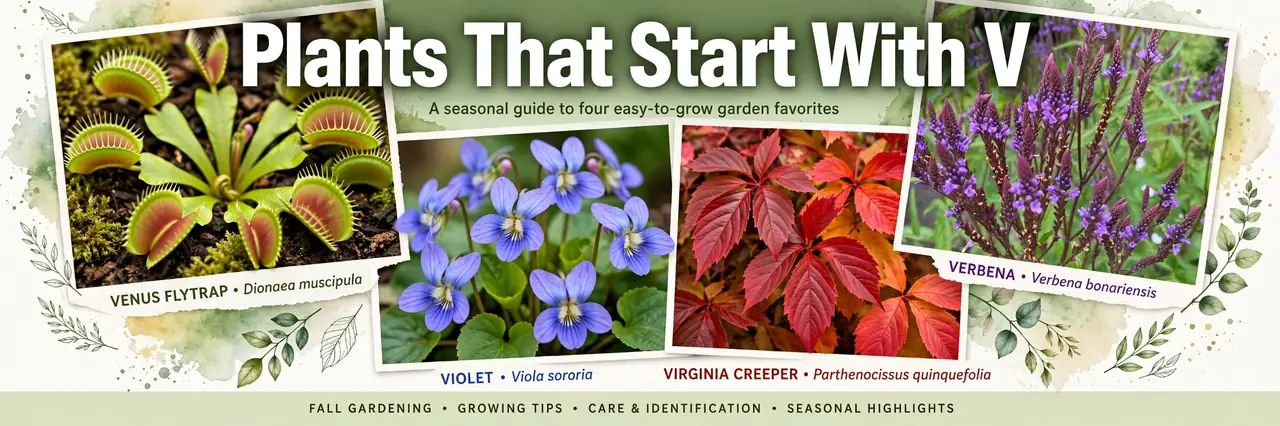
Looking for plants that start with V? It is one of the most generous letters in the gardening alphabet: the Venus flytrap snapping shut on insects, tall verbena feeding clouds of butterflies, violets carpeting spring lawns, Virginia creeper setting walls ablaze in fall, valerian perfuming the evening air, and the vanilla orchid — the plant behind the world’s favorite flavor. This guide covers 23 real plants that start with V — every entry verified against botanical references — with scientific names, native regions, bloom seasons, hardiness zones, and practical growing advice. If flowers are your main interest, see also our companion guide to flowers that start with V.
Every entry below lists light and water needs plus the USDA hardiness zone, so you can tell at a glance which V-plants suit your windowsill or garden. You will also find two comparison tables, hands-on growing tips, and answers to the questions gardeners ask most about plants starting with V.
Quick Answer
Popular plants that start with V include Venus Flytrap, Verbena, Violet, Virginia Creeper, Valerian, Viburnum, Veronica (Speedwell), Virginia Bluebell, Vinca (Periwinkle), Velvet Plant, Vanilla Orchid, Virginia Sweetspire, Voodoo Lily, Chaste Tree (Vitex), Virginia Spiderwort, Valley Oak, Vine Maple, Culver’s Root, Vanda Orchid, Flaming Sword (Vriesea), Mullein, and Highbush Blueberry (Vaccinium). They span carnivorous curiosities, pollinator perennials, native vines and trees, fragrant herbs, tropical orchids, and fruiting shrubs — covering USDA zones 3–11, so there is a V-plant for nearly every garden and windowsill.
Table of Contents
V-Plants at a Glance
Use this table to compare all 23 plants that start with V side by side, from botanical names to native regions.
| Plant name | Scientific name | Type | Light | Native region |
|---|---|---|---|---|
| Venus Flytrap | Dionaea muscipula | Carnivorous perennial | Full sun | Coastal North & South Carolina, USA |
| Verbena (Tall Verbena) | Verbena bonariensis | Herbaceous perennial | Full sun | South America (Brazil, Argentina) |
| Common Blue Violet | Viola sororia | Wildflower / groundcover | Part shade to full sun | Eastern North America |
| Virginia Creeper | Parthenocissus quinquefolia | Deciduous climbing vine | Full sun to part shade | Eastern North America |
| Valerian | Valeriana officinalis | Herbaceous perennial (herb) | Full sun to part shade | Europe, Asia |
| Viburnum (Guelder Rose) | Viburnum opulus | Deciduous shrub | Full sun to part shade | Europe, Asia, North Africa |
| Veronica (Speedwell) | Veronica spicata | Herbaceous perennial | Full sun | Europe, Asia |
| Virginia Bluebell | Mertensia virginica | Spring ephemeral perennial | Part to full shade | Eastern North America |
| Vinca (Periwinkle) | Vinca minor | Evergreen groundcover | Part to full shade | Europe |
| Velvet Plant | Gynura aurantiaca | Tropical houseplant | Bright indirect | Java, Southeast Asia |
| Vanilla Orchid | Vanilla planifolia | Tropical climbing orchid | Bright indirect | Mexico, Central America |
| Virginia Sweetspire | Itea virginica | Deciduous native shrub | Full sun to part shade | Southeastern USA |
| Voodoo Lily | Amorphophallus konjac | Tropical corm / bulb | Part shade | Southeast Asia |
| Chaste Tree (Vitex) | Vitex agnus-castus | Deciduous shrub / small tree | Full sun | Mediterranean region |
| Venus’s Looking Glass | Triodanis perfoliata | Native annual wildflower | Full sun to part shade | North America |
| Virginia Spiderwort | Tradescantia virginiana | Herbaceous native perennial | Part shade | Eastern USA |
| Valley Oak | Quercus lobata | Deciduous shade tree | Full sun | California, USA |
| Vine Maple | Acer circinatum | Deciduous small tree | Part shade | Pacific Northwest, USA/Canada |
| Culver’s Root (Veronicastrum) | Veronicastrum virginicum | Tall native perennial | Full sun to part shade | Eastern & Central North America |
| Vanda Orchid (Blue Vanda) | Vanda coerulea | Tropical epiphytic orchid | Bright indirect to part sun | Himalayas, Southeast Asia |
| Flaming Sword (Vriesea) | Vriesea splendens | Bromeliad houseplant | Bright indirect | Venezuela, Guyana |
| Mullein (Verbascum) | Verbascum thapsus | Biennial wildflower | Full sun | Europe, Asia (naturalized worldwide) |
| Highbush Blueberry (Vaccinium) | Vaccinium corymbosum | Deciduous fruiting shrub | Full sun | Eastern North America |
Bloom Season, Water Needs & Hardiness Zones
This second table focuses on practical care: when each V-plant blooms, how much water it wants, and the USDA zones where it survives winter outdoors.
| Plant name | Bloom season | Water needs | USDA hardiness |
|---|---|---|---|
| Venus Flytrap | Late spring (white flowers) | High — constantly moist, distilled water only | 8–10 |
| Verbena (Tall Verbena) | Summer to fall | Medium — drought tolerant once established | 7–10 |
| Common Blue Violet | Spring | Medium — adaptable | 3–9 |
| Virginia Creeper | Early summer (inconspicuous), fall berries | Medium — drought tolerant | 3–9 |
| Valerian | Early to midsummer | Medium-high — prefers moist soil | 4–9 |
| Viburnum (Guelder Rose) | Late spring | Medium — moisture-loving | 3–8 |
| Veronica (Speedwell) | Summer | Medium | 3–8 |
| Virginia Bluebell | Spring (ephemeral) | Medium-high — moist woodland soil | 3–8 |
| Vinca (Periwinkle) | Spring | Medium — adaptable | 4–9 |
| Velvet Plant | Sporadic (pinch flowers off) | Medium — evenly moist | 10–11 (houseplant) |
| Vanilla Orchid | Spring (in cultivation, rarely) | Medium-high — humid, moist | 10–12 (houseplant) |
| Virginia Sweetspire | Late spring to early summer | Medium-high — tolerates wet soil | 5–9 |
| Voodoo Lily | Late spring (before foliage) | Medium — dry dormancy in winter | 6–10 |
| Chaste Tree (Vitex) | Summer to early fall | Low-medium — drought tolerant | 6–9 |
| Venus’s Looking Glass | Late spring to summer | Low-medium — adaptable | Grown as annual |
| Virginia Spiderwort | Late spring to early summer | Medium — prefers moist soil | 4–9 |
| Valley Oak | Spring (inconspicuous catkins) | Low once established | 7–10 |
| Vine Maple | Spring (inconspicuous) | Medium — prefers moist soil | 6–9 |
| Culver’s Root (Veronicastrum) | Midsummer | Medium-high — moist soil | 3–8 |
| Vanda Orchid (Blue Vanda) | Sporadic, mainly fall–winter | High — daily misting/soaking | 10–11 (greenhouse) |
| Flaming Sword (Vriesea) | Once at maturity, long-lasting | Medium — keep central cup filled | 10–11 (houseplant) |
| Mullein (Verbascum) | Summer of second year | Low — very drought tolerant | 3–9 |
| Highbush Blueberry (Vaccinium) | Spring (flowers), summer (fruit) | Medium-high — acidic, moist soil | 3–8 |
23 Plants That Start With V: The Complete List
Below is the full rundown — carnivorous curiosities, pollinator perennials, native vines and trees, fragrant herbs, tropical orchids, and fruiting shrubs — with the growing details that matter for each one. If you are working through the whole alphabet, our guide to plants that start with U covers another story-rich letter.
1. Venus Flytrap (Dionaea muscipula)
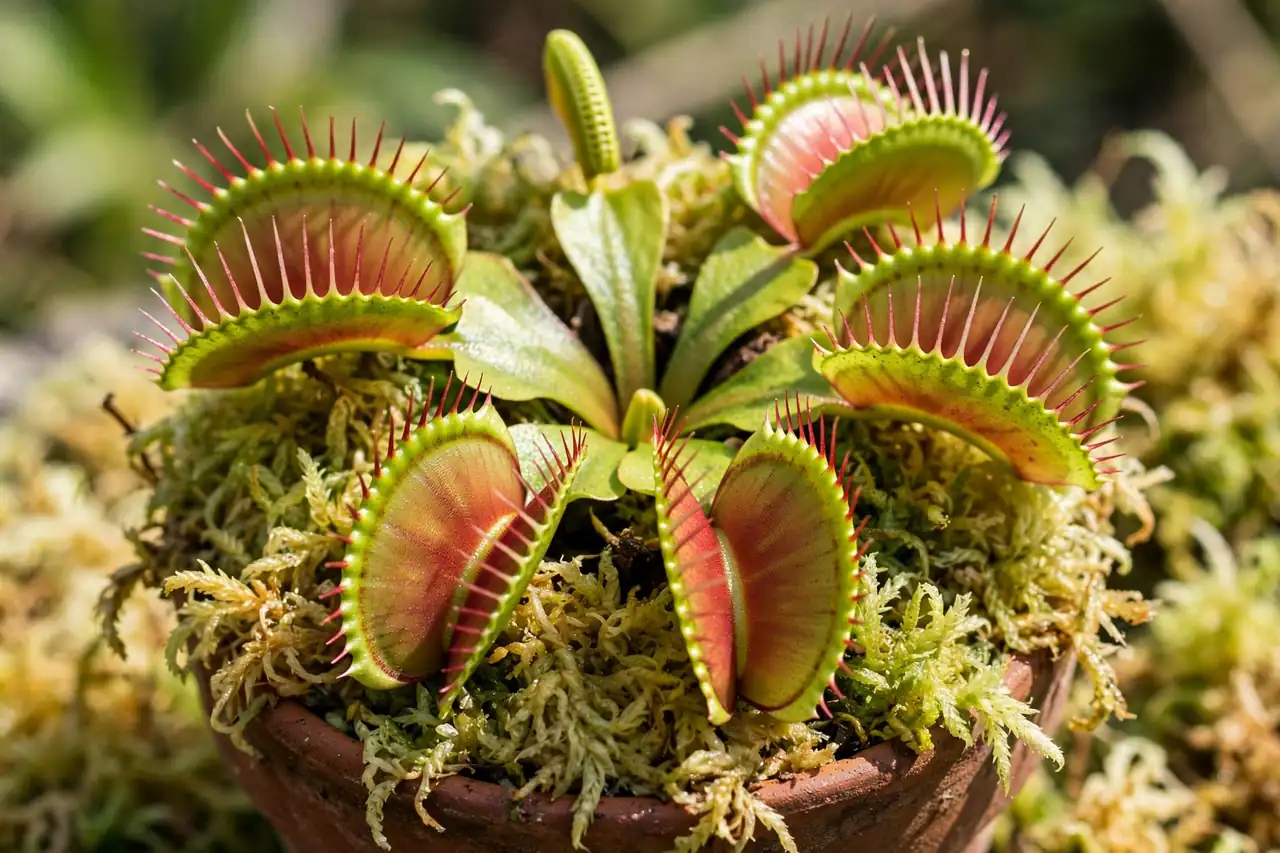
The Venus flytrap is the most famous carnivorous plant on earth — and it grows wild in only one place: the boggy coastal plains within about a hundred miles of Wilmington, North Carolina. Each “trap” is a modified leaf folded into two hinged lobes edged with bristles; three trigger hairs on each lobe detect struggling insects, and when two are touched in quick succession the trap snaps shut in a fraction of a second. Digestion takes 4 to 10 days, then the trap reopens. In late spring it sends up tall stalks of small white flowers — held high above the traps so pollinators don’t get eaten. Hardy outdoors in zones 8–10; everywhere else it is a container plant.
Success comes down to mimicking a bog: plant it in a 50/50 mix of sphagnum peat moss and perlite (never regular potting soil or fertilizer), keep the pot sitting in a shallow tray of distilled or rainwater, and give it as much sun as possible — 4 to 6 hours of direct sun daily. It needs a winter dormancy of 3 to 5 months with cooler temperatures and reduced water; skipping dormancy exhausts the plant. Never trigger traps for fun — each trap only closes a few times before dying. The Missouri Botanical Garden Plant Finder confirms the full culture, and notes the species is endangered in the wild — always buy nursery-propagated plants. For other humidity-loving curiosities, see our best terrarium plants guide.
2. Verbena (Verbena bonariensis)
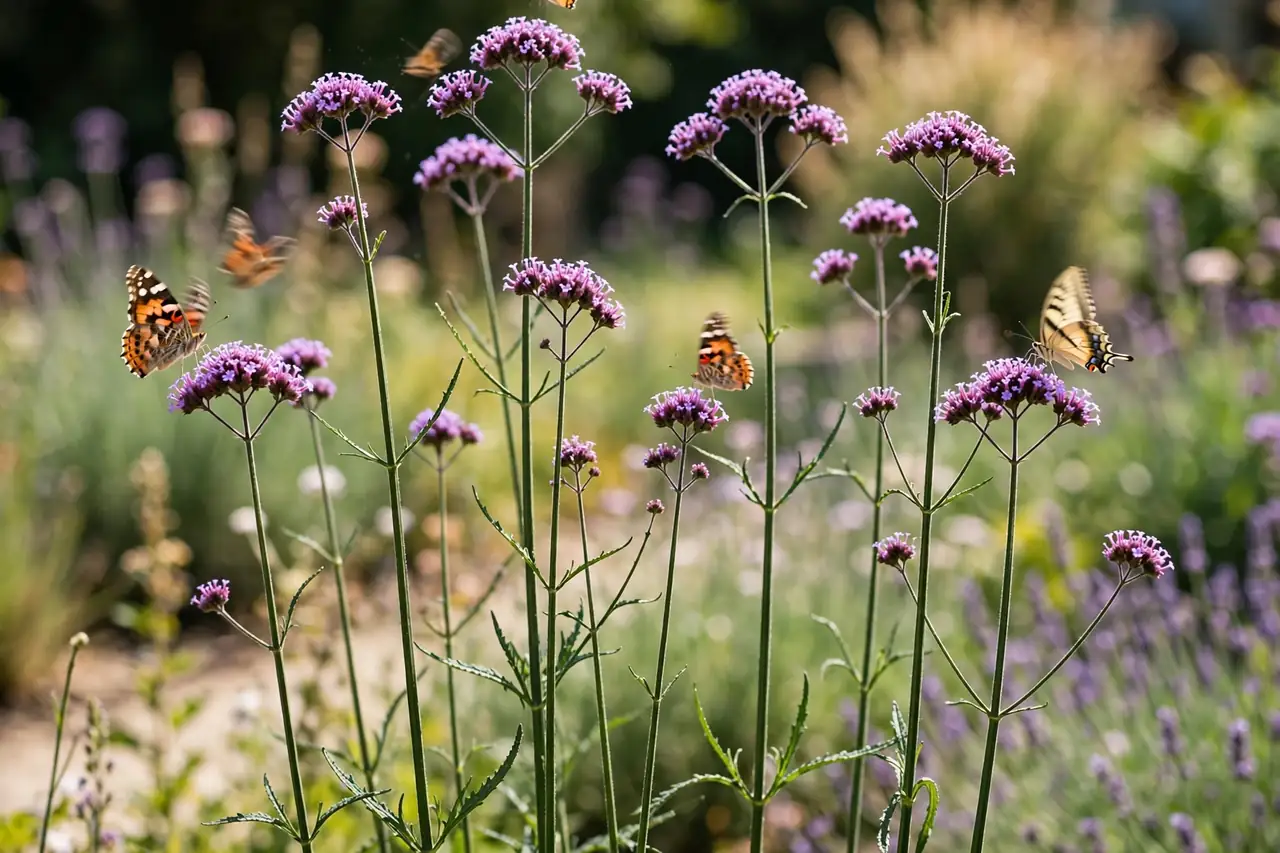
Tall verbena is the see-through plant of prairie-style borders: wiry, nearly leafless stems rise 3 to 6 feet and float clusters of tiny lilac-purple flowers at eye level from summer to fall, weaving through neighboring plants without shading them. Butterflies, bees, and hummingbirds mob it, and the blooms keep coming until frost. Native to South America, it is a short-lived perennial hardy in zones 7–10 — but it self-seeds so freely that northern gardeners often treat it as an annual that returns on its own. The RHS profile of Verbena bonariensis lists it as a top plant for pollinators.
Give it full sun and well-drained soil — it actually flowers better in lean, sandy soil than in rich ground, which makes it flop. Water sparingly once established; drought tolerance is excellent. Sow seeds indoors 8 to 10 weeks before the last frost, or let volunteers do the work: leave seed heads standing in fall and seedlings appear each spring. Deadheading extends bloom but sacrifices the self-sown replacements, so many gardeners do a little of both. The Old Farmer’s Almanac verbena guide adds that it is Latin for “sacred plant” — the Romans carried it as a symbol of peace.
3. Violet (Viola sororia)
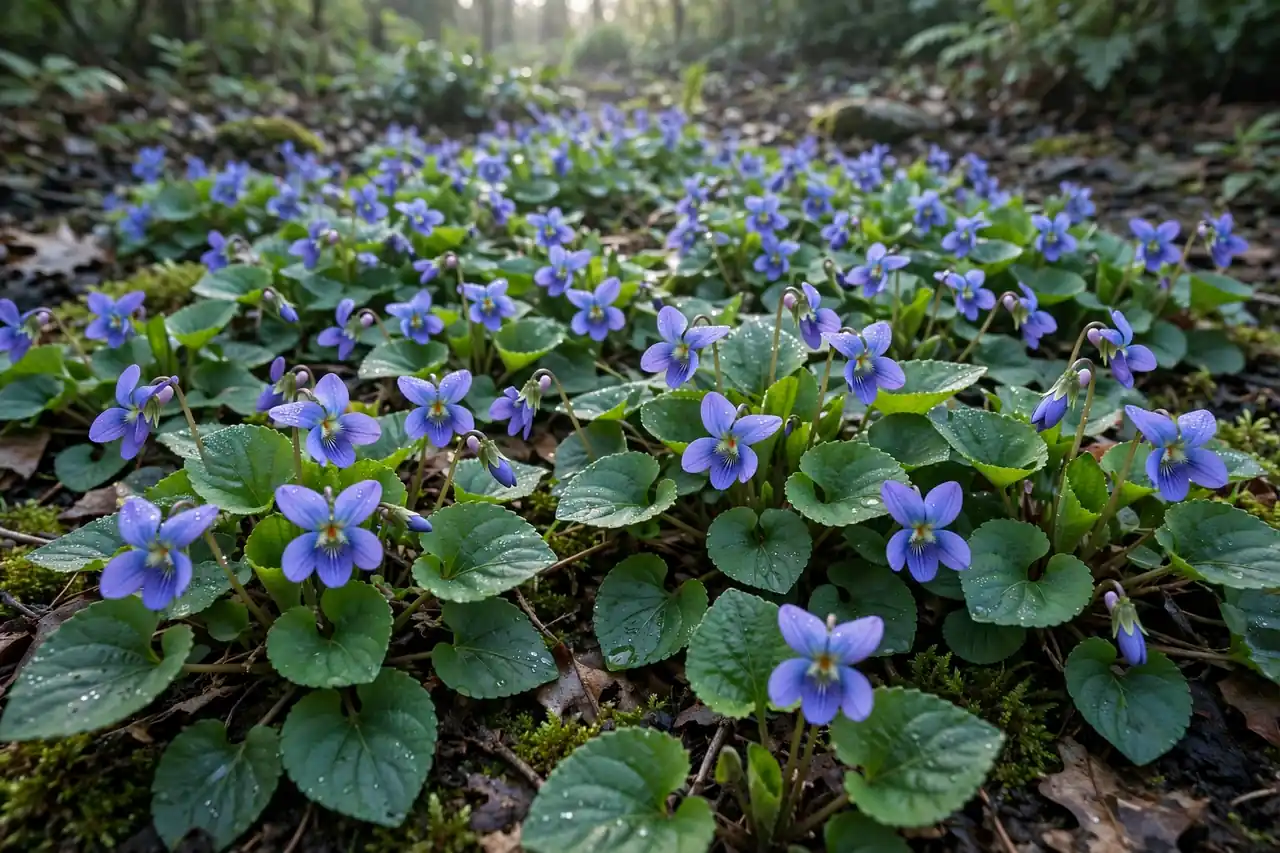
The common blue violet is the cheerful weed of eastern North American lawns: heart-shaped leaves and purple, blue, or white five-petaled flowers that appear in drifts each spring, followed by cleistogamous (never-opening) flowers that quietly set seed all summer. Children love them, bees work them, and fritillary butterfly caterpillars depend on violet foliage as their host plant. Hardy in zones 3–9, violets spread by seed and short rhizomes into charming colonies — or, in a formal lawn, into a plant some gardeners battle.
They thrive in part shade to full sun in average, moist soil and need essentially no care once established. The flowers and leaves are edible with a mild, sweet flavor — classic in salads, crystallized for cakes, and brewed into violet syrup. If you want them as a groundcover, stop deadheading and let them seed; if you want them out of the lawn, dig the whole crown (fragments resprout) and accept that violets are persistent. For a native shade garden, they pair beautifully with ferns and wild ginger, filling gaps between larger perennials.
4. Virginia Creeper (Parthenocissus quinquefolia)
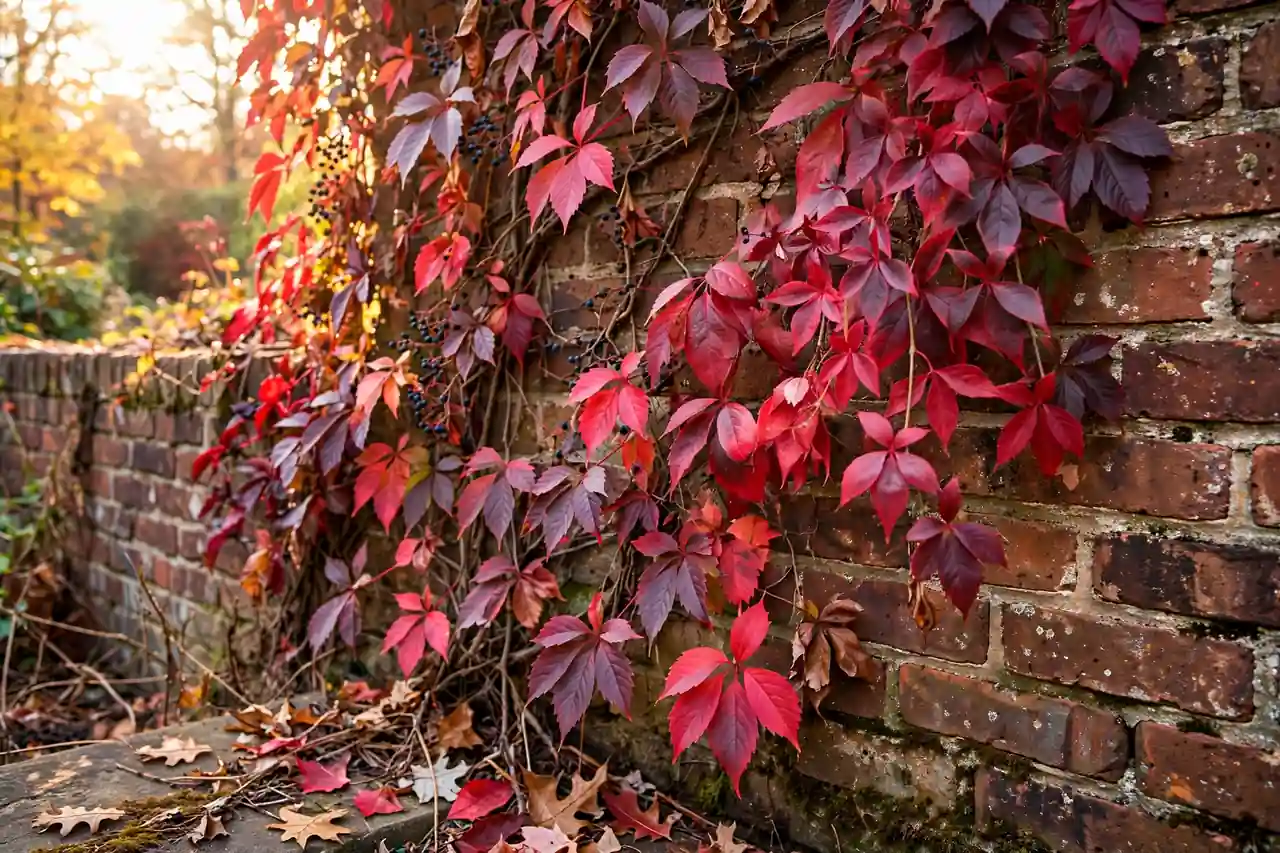
Virginia creeper is eastern North America’s great native wall-cover: a vigorous deciduous vine that climbs 30 to 50 feet using adhesive tendril discs, turning the most spectacular crimson, scarlet, and burgundy in fall. Its five-leaflet compound leaves distinguish it from poison ivy (three leaflets) — the classic field ID is “leaves of five, let it thrive.” Inconspicuous summer flowers become blue-black berries relished by birds and small mammals. Hardy in zones 3–9 and tolerant of shade, drought, salt, and pollution, it is nearly indestructible.
Plant it where it has room — it will happily swallow fences, arbors, and large walls, and needs annual pruning to stay in bounds. Keep it off wood siding and gutters, where the adhesive discs damage surfaces and trap moisture; masonry walls are the safe choice. It roots readily from cuttings or by layering stems on the ground. Note the oxalic acid in the berries and sap can irritate skin and stomachs, so it is a look-but-don’t-eat vine. The Gardening Know How groundcover guide confirms its toughness and wildlife value.
5. Valerian (Valeriana officinalis)
Valerian is the old-world herb of quiet nerves: a tall perennial (3 to 5 feet) with pinnate leaves and dense heads of sweetly fragrant pinkish-white flowers in early summer that perfume the whole garden — cats, incidentally, find the roots as intoxicating as catnip. Native to Europe and Asia, it has been cultivated since ancient Greece and Rome for its sedative root preparations. Hardy in zones 4–9, it is easy to grow but comes with an honest caveat: it self-seeds vigorously and has escaped cultivation across the northern United States, where it is listed as a noxious weed in a few states.
Grow it in full sun to part shade in rich, consistently moist soil — dry, shady spots make it flop. Deadhead before seed sets to prevent unwanted spread, or grow it in a large container. Harvest roots in fall of the second year for herbal use (dried roots develop the characteristic pungent “dirty socks” aroma that signals potency). The NC State Extension profile confirms the weedy tendency and gives the full culture — worth reading before you plant.
6. Viburnum (Viburnum opulus)
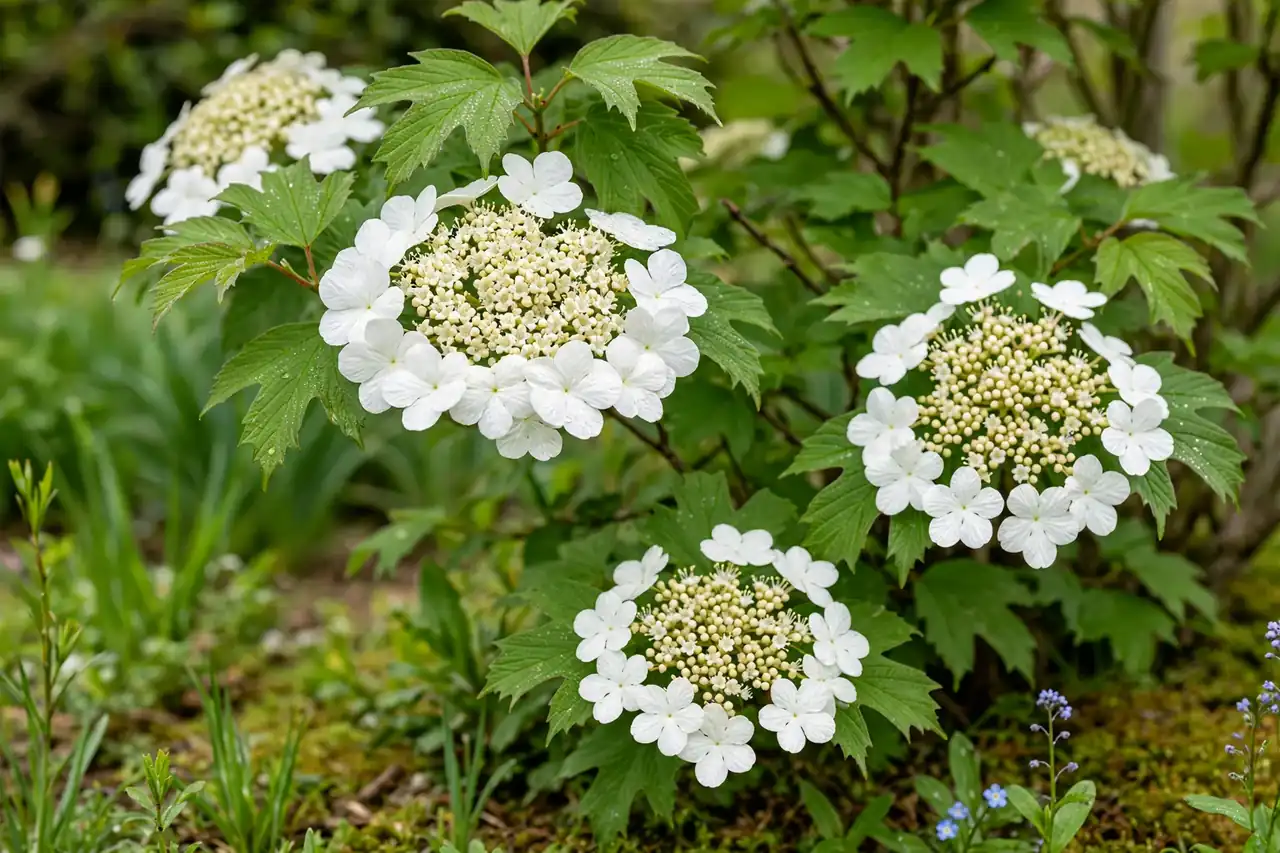
The guelder rose — sold as European cranberrybush — is a classic four-season shrub: maple-like leaves, flat-topped lacecap clusters of white flowers in late spring, translucent red berries that glow against the foliage, and rich burgundy fall color. It grows 8 to 12 feet into a rounded, arching shrub, and the sterile snowball form (‘Roseum’, with pom-pom flower heads) is one of the most planted ornamental shrubs in history. Hardy in zones 3–8 and native to Europe, Asia, and North Africa, it adapts to most soils as long as they stay reasonably moist.
Honest caveat: Viburnum opulus has invasive tendencies in parts of North America, escaping into wetlands from New England to the Pacific Northwest — and nursery plants are sometimes mislabeled as the native American highbush cranberry (V. opulus var. americanum). If you want the native, verify the leaf-stalk glands with a reputable native nursery. Otherwise, plant in full sun to part shade, prune oldest stems to the ground every few years to renew, and watch for aphids and viburnum crown borer. The NC State Extension profile documents the invasiveness concern and full pest list.
7. Veronica (Veronica spicata)
Spike speedwell is the cottage garden’s exclamation point: dense, upright spikes of tiny blue, pink, purple, or white flowers rising 1 to 2 feet above tidy mounds of toothed foliage all summer. Native to Europe and Asia and hardy in zones 3–8, it is one of the longest-blooming perennials for sunny borders, and the flowers are excellent for cutting. Modern cultivars like ‘Royal Candles’ (deep blue) and ‘Red Fox’ (rosy pink) bloom for months with deadheading.
Plant in full sun with average, well-drained soil — speedwell dislikes winter-wet ground and rich soil that makes it floppy. Shear spent spikes back to basal foliage and most varieties rebloom within weeks. Divide congested clumps every 3 to 4 years in spring. It is generally pest-free and deer tend to leave it alone, which makes it a reliable filler between roses, salvias, and ornamental grasses in a sunny mixed border.
8. Virginia Bluebell (Mertensia virginica)
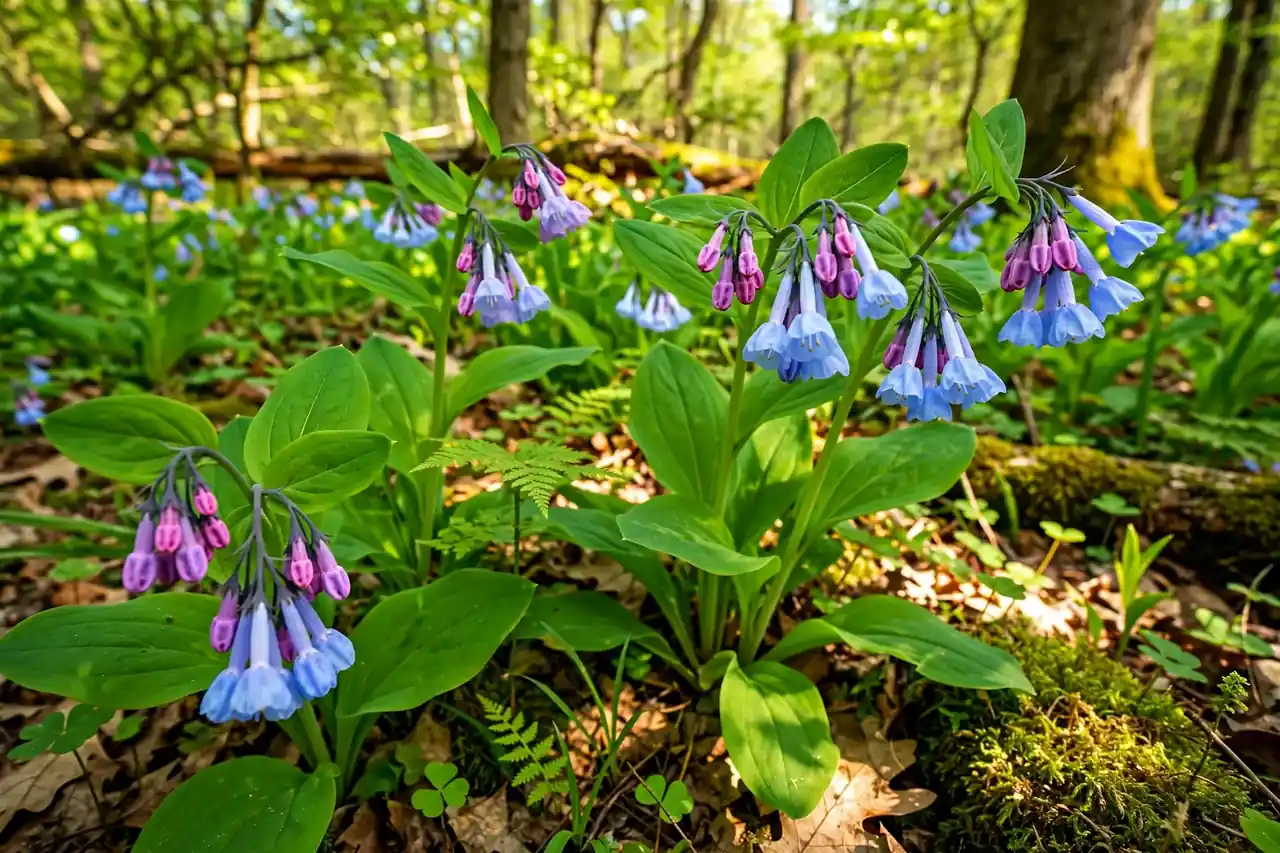
Virginia bluebell is the crown jewel of eastern spring woodlands: nodding, trumpet-shaped flowers that open pink and mature to a luminous sky blue, floating above smooth green foliage in drifts that can carpet entire forest floors. A true spring ephemeral, it emerges in March, blooms for a few glorious weeks, then goes completely dormant by midsummer, vanishing without a trace. Hardy in zones 3–8 and native from New York to Alabama, it is a must for shade gardeners.
Grow it in part to full shade in humus-rich, consistently moist soil — think woodland floor. Never dig plants from the wild; buy nursery-propagated stock. Mark the spot and interplant with ferns, hostas, and astilbe, which fill the summer gap after the bluebells sleep. It self-seeds gently into colonies over the years, so plant in drifts of a dozen or more for the full effect. Once established, it needs no care at all — the ultimate plant-it-and-forget-it native.
9. Vinca (Vinca minor)
The V-name here does the work: Vinca — periwinkle, or myrtle — the evergreen groundcover that carpets shady banks and under trees with glossy dark leaves and periwinkle-blue, pinwheel flowers each spring. Native to Europe and hardy in zones 4–9, it thrives in dry shade where little else grows, rooting as it spreads into a dense, weed-smothering mat. The variegated forms (‘Variegata’ with cream edges) brighten dark corners, and it flowers reliably even in deep shade.
Honest caveat: lesser periwinkle is genuinely invasive in eastern North American woodlands, escaping gardens to smother native wildflowers — many states list it as an invasive species. Plant it only in contained beds, walled gardens, or urban sites with no adjacent natural areas, and never dump clippings in the woods. Where it is appropriate, grow it in part to full shade in any well-drained soil, shear the top growth in spring to encourage fresh foliage, and water only until established — it is remarkably drought-tolerant for an evergreen.
10. Velvet Plant (Gynura aurantiaca)
The velvet plant looks like it was dusted with crushed purple velvet: soft, serrated leaves covered in fine iridescent purple hairs that glow under good light, on sprawling stems that cascade beautifully from hanging baskets. Native to Java and hardy outdoors only in zones 10–11, it is grown everywhere else as a houseplant — and one of the most tactile plants you can own. In bright light the purple deepens to an almost neon intensity.
Give it bright indirect light (too little sun fades the purple; harsh direct sun scorches it) and water when the top inch of soil dries. It likes humidity but adapts to average homes, and pinching stem tips keeps it bushy rather than leggy. One quirk: the small orange flowers smell distinctly unpleasant — most growers pinch every bud off on sight, and the plant blooms more readily when pot-bound. Propagate from stem cuttings in water in days; it is nearly foolproof.
11. Vanilla Orchid (Vanilla planifolia)
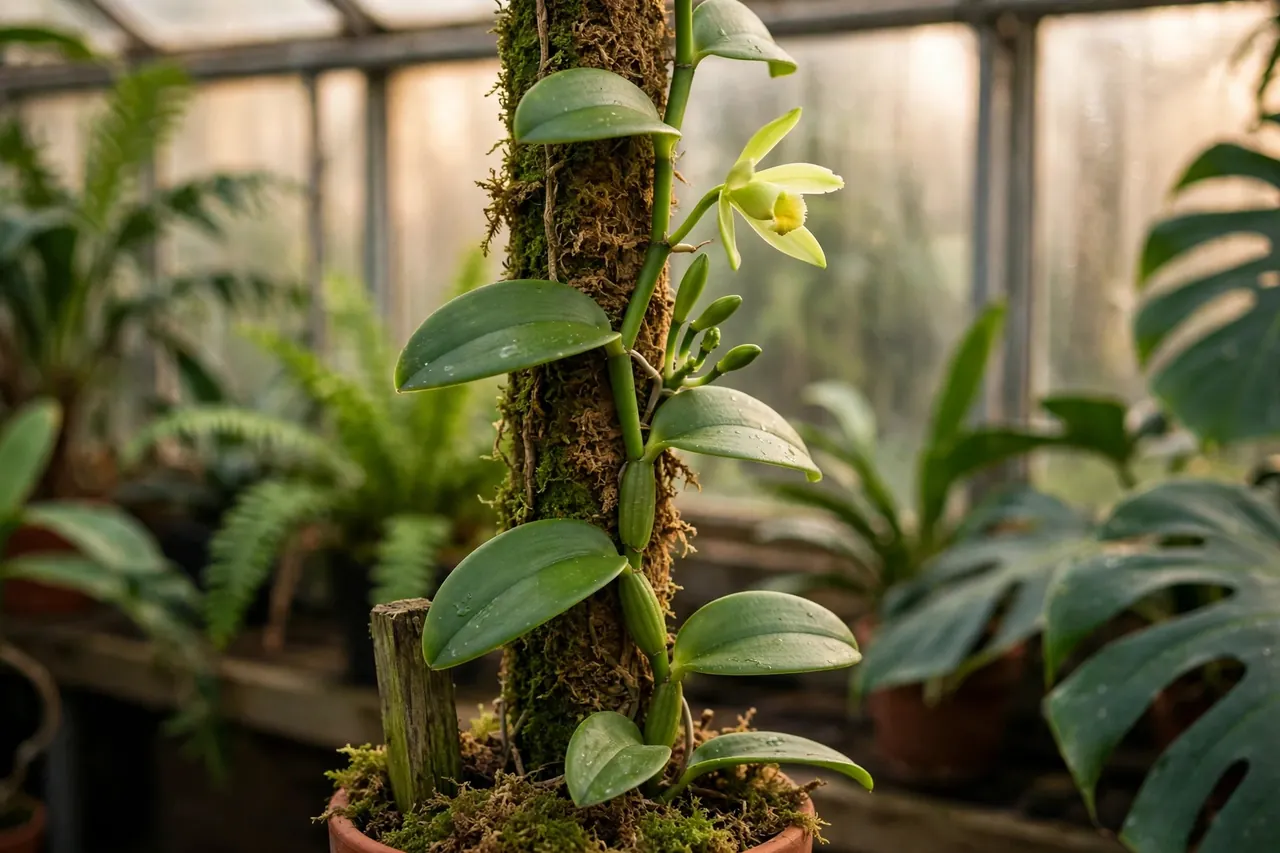
Yes — that vanilla is a V-plant: Vanilla planifolia, a climbing orchid native to Mexico and Central America, is the source of true vanilla. The vine produces fleshy green stems and large, waxy, pale yellow-green flowers that last a single day; each successfully pollinated flower becomes a long green pod that, after months of curing, turns into the fragrant vanilla bean. In cultivation, every flower is hand-pollinated with a toothpick — which is why real vanilla is the world’s second-most expensive spice.
As a houseplant it is a vigorous, attractive vine rather than a reliable bean producer: give it bright indirect light, warmth (65–85°F), high humidity, and a moss pole or trellis to climb, in a coarse orchid-bark mix. Water when the top of the mix dries and mist regularly. It is hardy only in zones 10–12, so in most climates it lives indoors year-round. Growing your own beans requires a mature vine, a steady hand, and patience — but the glossy foliage alone earns it a place.
12. Virginia Sweetspire (Itea virginica)
Virginia sweetspire is the native shrub that does everything: arching stems dripping with fragrant white bottlebrush flowers in late spring, glossy green summer foliage, and fall color so intensely crimson it rivals burning bush — on a plant that also tolerates wet feet. Native to swampy woods of the southeastern United States and hardy in zones 5–9, it grows 3 to 5 feet tall and suckers gently into handsome colonies. The cultivar ‘Henry’s Garnet’ (6 to 8 feet, larger flowers, even better fall color) is the garden standard.
Plant in full sun to part shade; flowering is heaviest in sun, but it blooms respectably in shade too. It accepts everything from average garden soil to seasonally flooded ground, making it ideal for rain gardens and pond edges. Water consistently the first year, then leave it alone. Prune lightly after flowering if needed — it blooms on old wood. Few native shrubs offer fragrant flowers, multi-season interest, and such easy culture in one package.
13. Voodoo Lily (Amorphophallus konjac)
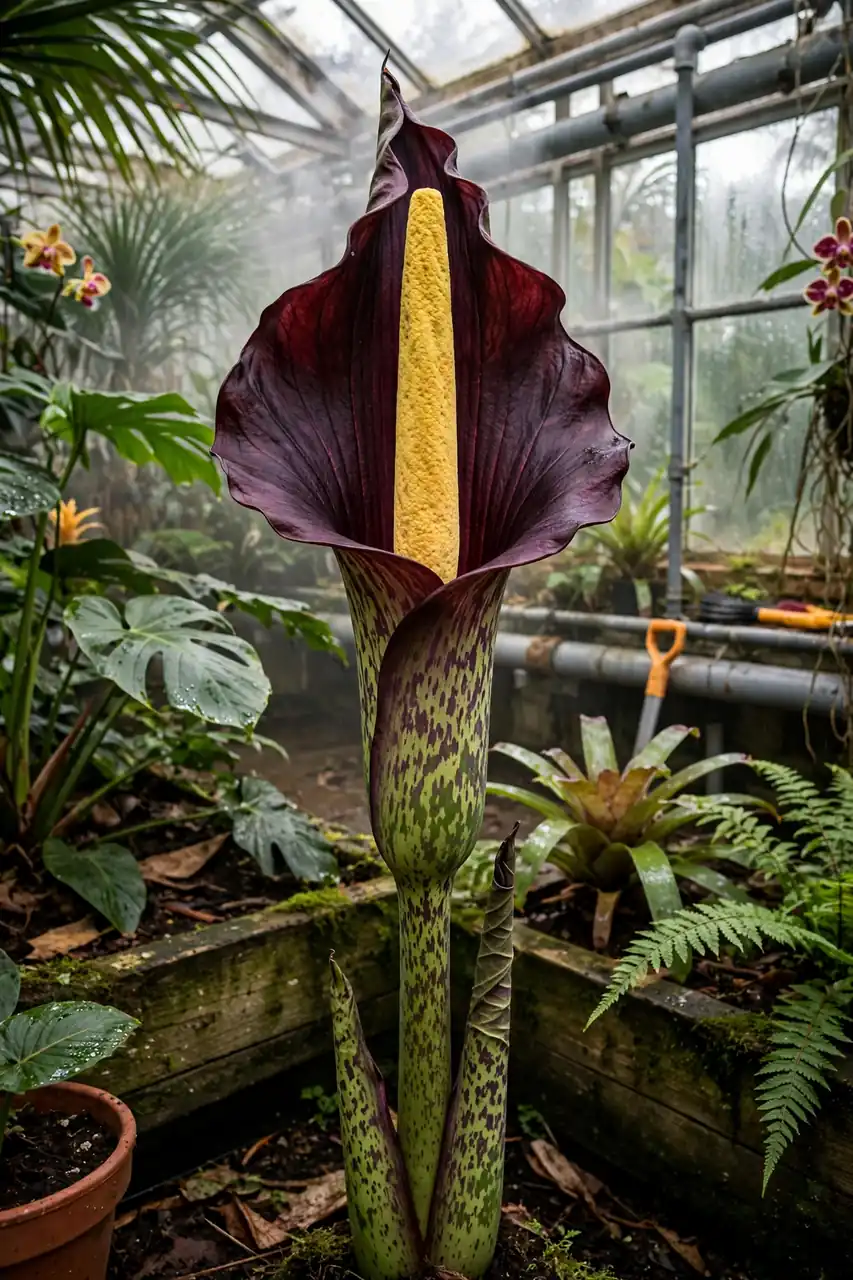
The voodoo lily is horticulture’s great show-off: from a dinner-plate-sized corm rises a tall, snakeskin-mottled stalk topped by a huge, dark maroon-purple spathe wrapped around a fleshy yellow spadix — and a smell of rotting meat so potent it attracts carrion flies from blocks away. After blooming, a single enormous umbrella-like leaf (often mistaken for a small tree) unfurls for the summer. Hardy in zones 6–10 with mulch, A. konjac is the most cold-tolerant voodoo lily.
Plant the corm 4 to 6 inches deep in part shade with rich, well-drained soil in spring, after frost danger. Water through summer, then let it go completely dry in winter dormancy — lift corms in zone 6 or mulch heavily. Site the bloom where the smell is a curiosity, not a nuisance (downwind of the patio, not beside it). The corm is the source of konjac flour and shirataki noodles — but ornamental growers should simply enjoy the theater and leave the cooking to the farmers.
14. Chaste Tree (Vitex agnus-castus)
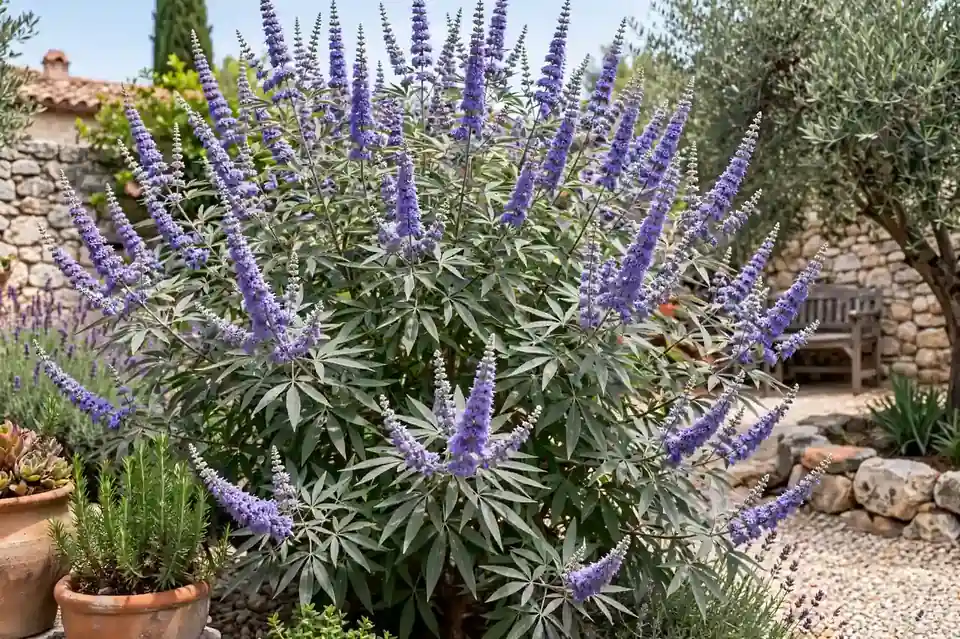
The chaste tree brings a Mediterranean mood to American gardens: a large deciduous shrub or small multi-stemmed tree (10 to 20 feet) with aromatic, palmate gray-green leaves and long spikes of fragrant lavender-blue flowers from summer into fall — a dead ringer for butterfly bush, but tougher, longer-lived, and not invasive. Native to the Mediterranean and hardy in zones 6–9, it shrugs off heat, drought, poor soil, and deer, and the blooms keep pollinators busy for months.
Plant in full sun with well-drained soil; it tolerates clay and alkalinity that defeat fussier shrubs. Water deeply the first season, then rarely — established plants are genuinely drought-tolerant. Prune hard in late winter to control size and encourage the current season’s bloom (it flowers on new wood), or train a single trunk for a small-tree form. Deadhead spent spikes for rebloom. The peppery seeds were historically used as a spice and herbal remedy, hence the “chaste” name — modern gardeners grow it purely for the flowers.
15. Venus’s Looking Glass (Triodanis perfoliata)
Venus’s looking glass is a native annual with a poet’s name: slender stems clasped by round, perfoliate leaves (the stem pierces each leaf like a skewer), studded with small violet-blue, five-petaled flowers from late spring into summer. The “looking glass” is the flower’s glossy seed capsule, which supposedly resembles a tiny mirror. Native across most of North America, it pops up in meadows, roadsides, and garden edges wherever soil has been disturbed — a wildflower most gardeners meet by accident and then deliberately keep.
Grow it as an annual from seed: sow directly in fall or early spring in full sun to part shade in average, well-drained soil. It needs no feeding, no watering once established, and no care beyond admiration. Let plants self-seed and they return yearly in casual drifts. It is a lovely filler for cottage gardens, meadow plantings, and children’s wildflower patches — proof that some of the best garden plants cost nothing and arrive uninvited.
16. Virginia Spiderwort (Tradescantia virginiana)
Virginia spiderwort is the native perennial that blooms its heart out in spring and then takes a nap: clumps of grassy, arching foliage topped with clusters of three-petaled flowers in blue, purple, pink, or white, each blossom lasting a single day but replaced by new buds for weeks. Native to the eastern United States and hardy in zones 4–9, it is a workhorse of native shade and rain gardens — and the flowers close by afternoon, a charming quirk once you know to look in the morning.
Plant in part shade with moist, humus-rich soil; it tolerates full sun if the soil stays damp. After the spring bloom flush, the foliage often flops and yellows in summer heat — shear it to the ground and fresh foliage (plus a fall rebloom) follows. It self-seeds politely and hybridizes freely, so deadhead if you want to keep cultivars true. Divide congested clumps every few years in spring or fall. Few natives give so much spring color for so little effort.
17. Valley Oak (Quercus lobata)
The valley oak is California’s grandest native tree — and the largest oak in North America, with ancient specimens reaching 100 feet tall and spreading wider than they are tall, draped in deeply lobed leaves and long, slender acorns. Native to California’s Central Valley and coastal valleys and hardy in zones 7–10, it is a keystone species: its acorns feed deer, jays, woodpeckers, and squirrels, and its canopy shelters entire ecosystems. A mature valley oak is a landscape-defining presence that can live 500 years or more.
Plant young trees in full sun with plenty of room — this is not a small-yard tree. Water deeply and regularly the first 2 to 3 years, then taper off; established valley oaks are deeply drought-tolerant and resent summer irrigation, which encourages oak root fungus. Never grade, pave, or plant thirsty lawns under the drip line. Buy from native nurseries growing local-provenance stock, and be patient: like all great oaks, it is slow for a decade, then magnificent for centuries.
18. Vine Maple (Acer circinatum)
Vine maple is the Pacific Northwest’s perfect small tree: a multi-stemmed, often sprawling maple (15 to 25 feet) with nearly circular, deeply lobed leaves that turn brilliant scarlet, orange, and gold in fall. Native from British Columbia to northern California and hardy in zones 6–9, it grows naturally in the dappled understory of Douglas-fir forests — which tells you exactly how to grow it. Its twisted, mossy trunks are beautiful in winter, and it takes pruning and shaping gracefully.
Plant in part shade with moist, acidic, humus-rich soil; it scorches in hot, dry, full-sun sites. Water consistently the first two years and mulch to keep roots cool. It accepts pruning well — thin for a small-tree form or leave the natural multi-stemmed fountain shape. Excellent beside streams, in woodland gardens, and as an understory specimen under taller trees. For fall color in a small shady yard, few trees beat it.
19. Culver’s Root (Veronicastrum virginicum)
The genus name starts with V, so Culver’s root earns its place: Veronicastrum virginicum is one of the great architectural perennials of the tallgrass prairie — 4 to 6 foot stems whorled with lance-shaped leaves, each stem crowned with multiple tapering spikes of tiny white (sometimes pink) flowers like a candelabra, blooming for a month in midsummer. Native to moist meadows of eastern and central North America and hardy in zones 3–8, it is a magnet for bees, butterflies, and hummingbirds.
Grow it in full sun to part shade in consistently moist, rich soil — it sulks in dry ground and is a natural for rain gardens and pond margins. Stake is rarely needed; the stems are sturdy. Leave the dark seed heads standing for winter interest and cut back in early spring. It spreads slowly by rhizomes into stately clumps; divide every 4 to 5 years if the center thins. Combine with Joe Pye weed, ironweed, and switchgrass for a prairie planting with real vertical drama.
20. Vanda Orchid (Vanda coerulea)
The blue vanda is the orchid world’s impossible color made real: Vanda coerulea, native to the cool Himalayan foothills, produces large, flat, tessellated flowers in shades of true sky blue to violet-blue — a color almost no other orchid achieves. Unlike most orchids it grows as an epiphyte with thick aerial roots and no potting medium at all, typically suspended in a slatted wooden basket. Hardy only in zones 10–11, it is a greenhouse or bright-sunroom plant for most growers.
Give it very bright indirect light to some direct morning sun, warm days with cooler nights (it likes a 10–15°F day-night difference to trigger blooming), and daily watering — dunk or thoroughly mist the roots every morning, more in heat. Feed weekly with dilute orchid fertilizer during growth. It blooms mainly in fall and winter on mature plants. Demanding, yes — but the blue flowers are worth every bit of effort.
21. Flaming Sword (Vriesea splendens)
Flaming sword is the bromeliad for foliage lovers who also want flowers: a rosette of broad, arching leaves banded in dark maroon-brown stripes, from whose center rises a flattened, brilliant red-orange flower spike like a sword blade, lasting for months. Native to the rainforests of Venezuela and Guyana and hardy outdoors only in zones 10–11, it is one of the most reliable flowering bromeliads for indoor culture.
Grow it in bright indirect light in a coarse, fast-draining mix (orchid bark and peat works well). Keep about an inch of water in the central leaf cup, flushing it monthly to prevent stagnation; water the soil lightly. Like the urn plant, each rosette blooms once, then produces offsets (“pups”) at the base — separate them at about a third of the parent’s size for the next generation. Warmth, humidity, and patience are rewarded with a spike that outlasts most cut flowers.
22. Mullein (Verbascum thapsus)
Common mullein is the biennial that thinks it is a sculpture: the first year a low rosette of huge, soft, silvery-felted leaves; the second year a stout spike 5 to 8 feet tall studded with small yellow flowers opening a few at a time all summer. Native to Europe and Asia and naturalized across North America, hardy in zones 3–9, it thrives in the poorest, driest soils — gravel pits, roadsides, and neglected corners — asking nothing and giving striking vertical architecture. Historically the felted leaves were used as lamp wicks and wound dressings.
Honest caveat: a single plant produces up to 200,000 seeds, and mullein self-seeds enthusiastically — deadhead the spike before seeds ripen if you want one plant, not one hundred. Sow seeds on the soil surface in full sun (they need light to germinate); it tolerates drought, poor soil, and neglect once going. As a biennial it dies after flowering, so let a few seedlings establish each year for continuity. Superb in cottage gardens, gravel gardens, and wildlife plantings where its flowers feed bees for months.
23. Highbush Blueberry (Vaccinium corymbosum)
The V here is the genus Vaccinium — and highbush blueberry is the most rewarding V-plant you can grow: a deciduous shrub (4 to 8 feet) with dainty white-pink bell flowers in spring, sweet dusty-blue berries in summer, and scarlet fall foliage that rivals any ornamental. Native to eastern North America and hardy in zones 3–8, modern cultivars like ‘Bluecrop’, ‘Jersey’, and ‘Patriot’ bear heavily for decades. Two different varieties planted together cross-pollinate for bigger harvests.
Acidic soil is non-negotiable: blueberries need pH 4.5 to 5.5, so test your soil and amend with peat moss and sulfur before planting — alkaline soil causes yellow, stunted plants. Give them full sun, consistent moisture (mulch heavily with pine needles or wood chips), and netting at harvest time unless you enjoy feeding the birds. Prune in late winter, removing the oldest canes to keep new fruiting wood coming. Few plants work as hard: fruit, flowers, fall color, and wildlife value in one shrub.
Growing Tips for V-Plants
Match the zone before you fall in love. The V-list spans zones 3 to 11, and the tropical stars — vanilla orchid, velvet plant, vanda, flaming sword — will not survive a frost. In cold climates, grow them as houseplants or in a greenhouse. Conversely, valley oak, vine maple, and verbena sulk in steamy zone 10 heat, while the Venus flytrap’s dormancy requirement makes it tricky in the tropics.
Acid lovers need acid soil. Highbush blueberry is the poster child: without pH 4.5–5.5 soil it simply fails, no matter how good the care. The Venus flytrap is equally strict — peat-based, nutrient-free, mineral-free mix and distilled water only. Test before you plant: a $15 soil test saves a $50 shrub.
Read the weedy warnings. Valerian, mullein, vinca, and European viburnum all carry honest caveats on this list — they escape, self-seed by the hundred-thousand, or smother woodlands. Enjoy them, but deadhead before seed, plant in contained beds, and choose the native alternative (American highbush cranberry over European guelder rose) where one exists.
Water the bog plants like bog plants. The Venus flytrap and vanda orchid want constant moisture and humidity; valley oak, chaste tree, and mullein want to dry out between waterings. Grouping plants with similar water needs — hydrozoning — is the single easiest way to keep a mixed V-collection happy.
Plan for all four seasons. V-plants make this easy: violets and Virginia bluebells open spring, verbena and chaste tree carry summer, Virginia creeper and viburnum set fall ablaze, and vinca’s evergreen leaves plus the voodoo lily’s corm (sleeping underground) hold winter structure. For autumn container color after the summer perennials fade, our mum care guide pairs well with this list.
Which V-Plants Will You Grow?
Twenty-three plants, one versatile letter — and the range is remarkable. Start indoors with a Venus flytrap or velvet plant if you are new to houseplants; plant tall verbena or Culver’s root for a pollinator border that hums all summer; grow highbush blueberries if you want fruit with your flowers; try Virginia creeper or Virginia sweetspire for native structure with knockout fall color. Even the oddballs earn their keep: the voodoo lily’s stench is a story you will tell for years.
Keep exploring the alphabet with our guides to plants that start with A, plants that start with N, and plants that start with R — or browse flowers that start with V if blooms are your main pursuit. Pick three V-plants that fit your light and zone, get them in the ground this season, and watch the letter V earn its keep. Happy planting!
Frequently Asked Questions
What are the most popular plants that start with V?
The most popular V-plants are the Venus flytrap, verbena (especially tall verbena), common blue violet, Virginia creeper, valerian, viburnum (guelder rose), speedwell (Veronica), Virginia bluebell, periwinkle (Vinca), vanilla orchid, Virginia sweetspire, voodoo lily, chaste tree (Vitex), Virginia spiderwort, Culver’s root, blue vanda orchid, flaming sword bromeliad, mullein, and highbush blueberry. Together they cover houseplants, perennials, vines, shrubs, trees, orchids, and fruiting plants, and most are available at nurseries or native-plant specialists.
Which plants starting with V are good houseplants?
The Venus flytrap is the classic V houseplant — fascinating and easy if you give it sun, distilled water, and winter dormancy. The velvet plant offers unbeatable purple foliage, the flaming sword bromeliad blooms for months indoors, and the vanilla orchid makes a vigorous climbing vine. All need bright indirect light and none tolerates frost, so they stay indoors year-round in most climates.
Which V-plants are cold hardy?
Common blue violet, Virginia creeper, viburnum, speedwell, Virginia bluebell, Culver’s root, mullein, and highbush blueberry are all hardy to zone 3 — genuinely tough northern plants. Valerian, vinca, and Virginia spiderwort handle zone 4, while Virginia sweetspire and vine maple are safe to zone 5–6. If you garden in zone 5 or colder, start with these — the tropical V-plants must come indoors for winter.
Is the Venus flytrap hard to keep alive?
Not if you respect three rules: only distilled or rainwater (tap water minerals kill it), a nutrient-free peat-and-perlite mix with no fertilizer, and a cool winter dormancy of 3–5 months. Most flytraps die from tap water, rich soil, or being kept warm year-round — not from neglect. Given full sun and a tray of rainwater, it largely takes care of itself and catches its own food outdoors.
Which plants that start with V have edible parts?
Several: highbush blueberry produces the familiar sweet berries, violet flowers and leaves are edible in salads and desserts, valerian root is used as a sleep herb, and vanilla orchid pods become vanilla beans (though home pollination is expert-level). Note that Virginia creeper berries and viburnum (European) berries are not for eating, and voodoo lily should be left to ornamental growers — always confirm identification before eating any plant.
What is the difference between Vinca and vinca vine?
“Vinca” usually means Vinca minor (lesser periwinkle), the hardy evergreen groundcover on this list, or its larger cousin Vinca major. “Vinca vine” in hanging baskets is typically variegated Vinca major grown as a trailing annual accent. Both are sometimes confused with annual vinca — Catharanthus roseus (Madagascar periwinkle) — a completely different tender bedding plant. Check the Latin name on the tag to know which one you are buying.
References
- Missouri Botanical Garden — Plant Finder
- Royal Horticultural Society — Verbena bonariensis
- The Old Farmer’s Almanac — How to Grow Verbena
- NC State Extension — Valeriana officinalis (Valerian)
- NC State Extension — Viburnum opulus (European Cranberry)
- Gardening Know How — Fast-Growing Ground Cover Plants (Virginia Creeper)