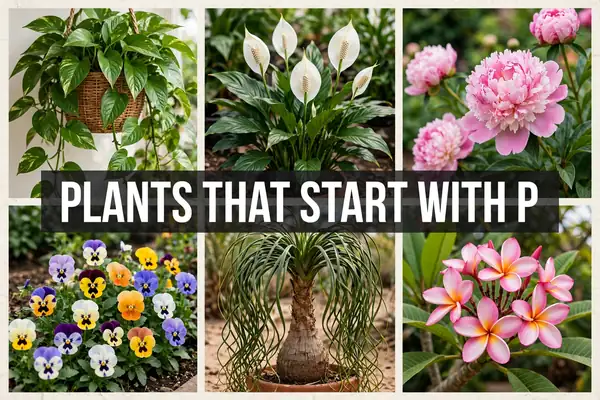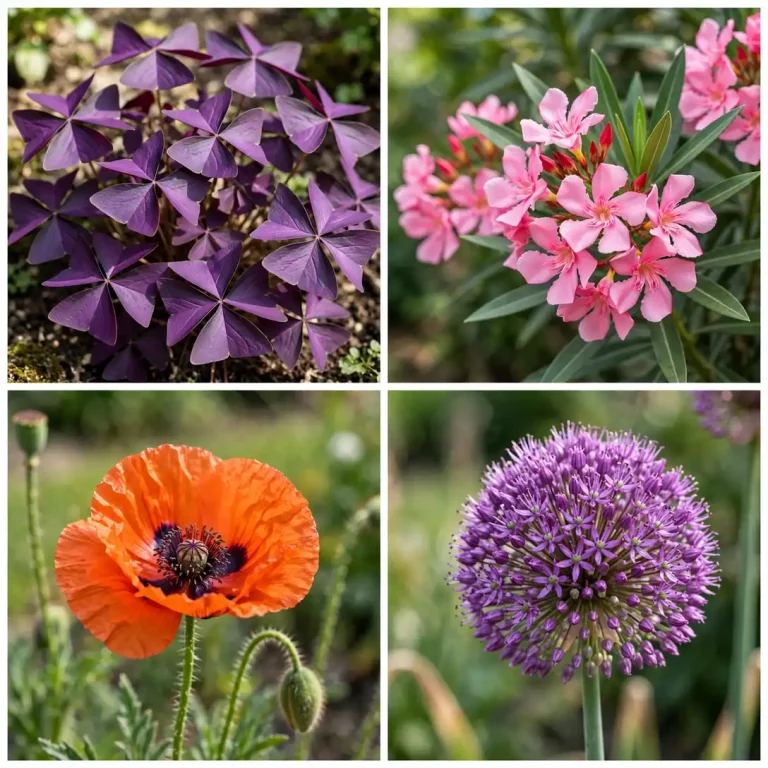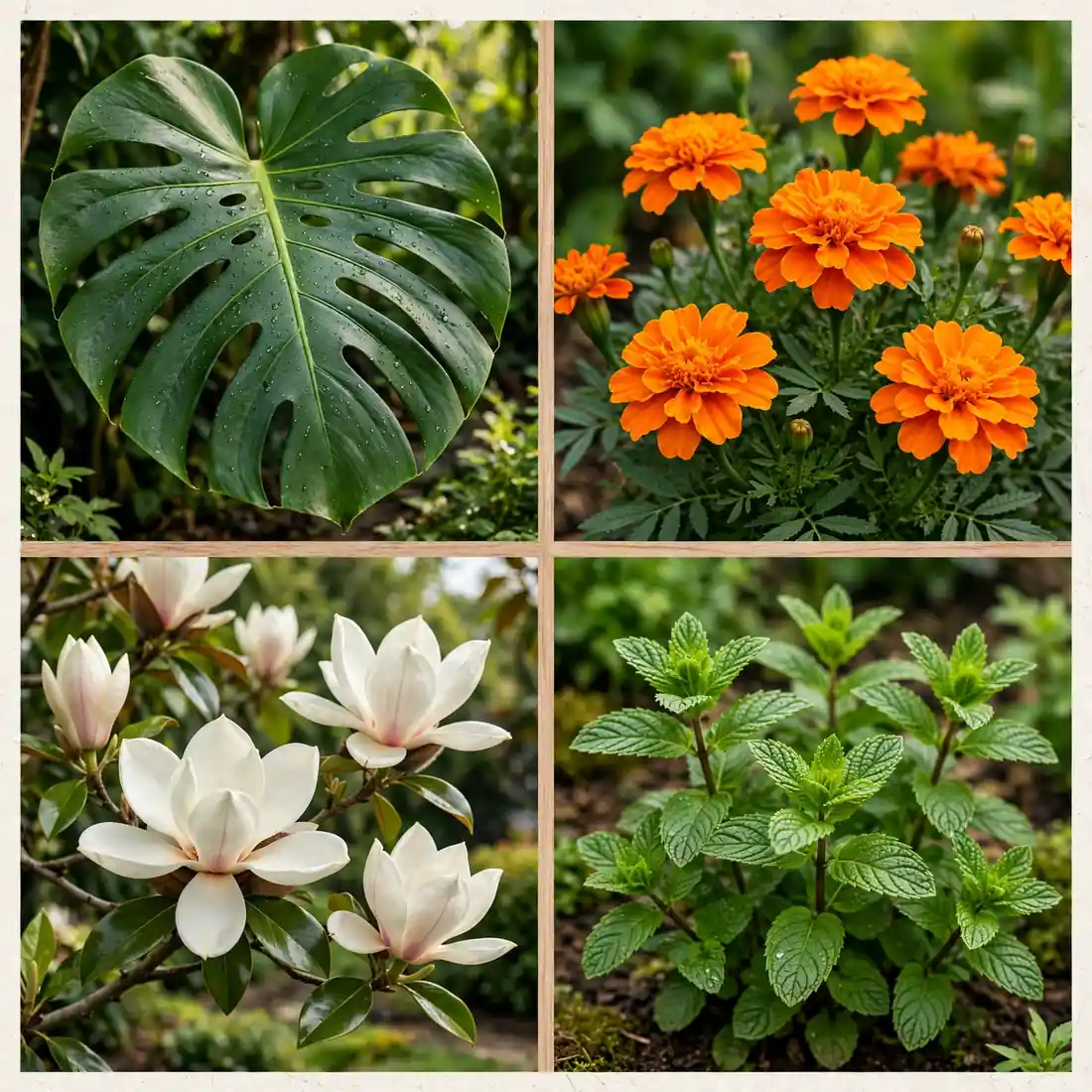
Plants that start with M: Names, Pictures and Useful Facts
Looking for plants that start with M? The letter M is one of the richest in the gardening alphabet, running from the monstera splitting its dramatic leaves in your living room to the magnolias perfuming a spring garden, from the marigolds edging a vegetable bed to the mint quietly plotting to take over that same bed. Whether you grow houseplants, herbs, flowering shrubs, or full-sun annuals, this guide covers 32 real plants that start with M — each with its scientific name, a clear description, and practical growing advice. For blooms specifically, see our companion guide to flowers that start with M.
Every entry below lists the plant’s botanical name, bloom season, light needs, water needs, and USDA hardiness zone, so you can tell at a glance which M-plants suit your windowsill or your garden. You will also find two comparison tables, hands-on growing tips, and answers to the questions gardeners ask most about plants starting with M.
Quick Answer
Popular plants that start with M include Monstera, Money Tree, Majesty Palm, Marigold, Mint, Moth Orchid, Magnolia, Mandevilla, Morning Glory, Moonflower, Milkweed, Mums, Moss Rose, Madagascar Jasmine, Mock Orange, Mountain Laurel, and Moses-in-the-Cradle. They span tropical houseplants, fragrant vines, flowering shrubs and trees, culinary herbs, native perennials, and heat-proof annuals — covering USDA zones 3–12, so there is an M-plant for nearly every garden and every room in the house.
Table of Contents
M-Plants at a Glance
Use this table to compare all 32 plants that start with M side by side, from botanical names to native regions.
| Plant name | Scientific name | Type | Light | Native region |
|---|---|---|---|---|
| Monstera | Monstera deliciosa | Tropical houseplant | Bright indirect | Southern Mexico to Panama |
| Money Tree | Pachira aquatica | Tropical houseplant | Bright indirect | Central & South America |
| Majesty Palm | Ravenea rivularis | Tropical palm | Bright indirect to partial sun | Madagascar |
| Mint | Mentha spicata | Culinary herb | Full sun to part shade | Europe & Asia |
| Marigold | Tagetes erecta | Annual flower | Full sun | Mexico & Central America |
| Moth Orchid | Phalaenopsis spp. | Tropical houseplant | Bright indirect | Southeast Asia |
| Magnolia | Magnolia grandiflora | Evergreen tree | Full sun to part shade | Southeastern United States |
| Mandevilla | Mandevilla sanderi | Tropical vine | Full sun | Brazil |
| Morning Glory | Ipomoea purpurea | Annual vine | Full sun | Mexico & Central America |
| Moonflower | Ipomoea alba | Annual vine | Full sun to part shade | Tropical Americas |
| Madagascar Jasmine | Stephanotis floribunda | Tropical vine | Bright indirect to part sun | Madagascar |
| Mexican Petunia | Ruellia simplex | Perennial | Full sun to part shade | Mexico & South America |
| Mexican Sunflower | Tithonia rotundifolia | Annual flower | Full sun | Mexico & Central America |
| Mock Orange | Philadelphus coronarius | Flowering shrub | Full sun to part shade | Southern Europe & Asia Minor |
| Mountain Laurel | Kalmia latifolia | Evergreen shrub | Part shade | Eastern North America |
| Milkweed | Asclepias syriaca | Native perennial | Full sun | Eastern North America |
| Myrtle | Myrtus communis | Evergreen shrub | Full sun | Mediterranean basin |
| Mums | Chrysanthemum × morifolium | Fall perennial | Full sun | China & Japan (hybrid origin) |
| Moss Rose | Portulaca grandiflora | Annual succulent | Full sun | South America |
| Moon Cactus | Gymnocalycium mihanovichii | Grafted cactus | Bright indirect | Paraguay & Argentina |
| Mistletoe Cactus | Rhipsalis baccifera | Epiphytic cactus | Bright indirect to part shade | Tropical Americas & Africa |
| Madagascar Palm | Pachypodium lamerei | Succulent tree | Full sun to bright light | Madagascar |
| Mini Monstera | Rhaphidophora tetrasperma | Tropical houseplant | Bright indirect | Thailand & Malaysia |
| Ming Aralia | Polyscias fruticosa | Tropical houseplant | Bright indirect | India & Southeast Asia |
| Maidenhair Fern | Adiantum raddianum | Tropical fern | Bright indirect / shade | Tropical Americas |
| Moses-in-the-Cradle | Tradescantia spathacea | Tropical houseplant | Bright indirect | Mexico & Central America |
| Mosaic Plant | Fittonia albivenis | Tropical houseplant | Bright indirect | Peru & Colombia |
| Monkey Grass | Liriope muscari | Evergreen groundcover | Part shade to shade | China & Japan |
| Mayapple | Podophyllum peltatum | Woodland perennial | Part to full shade | Eastern North America |
| Mullein | Verbascum thapsus | Biennial | Full sun | Europe & Asia |
| Mahonia | Mahonia aquifolium | Evergreen shrub | Part shade | Western North America |
| Mealy Cup Sage | Salvia farinacea | Annual / tender perennial | Full sun | Texas & Mexico |
Bloom Season, Water Needs & Hardiness Zones
This table sorts the same 32 M-plants by bloom season, water needs, and USDA hardiness zone — the three facts that decide whether a plant survives in your space.
| Plant name | Bloom season | Water needs | Hardiness zones |
|---|---|---|---|
| Monstera | Rarely indoors (summer outdoors) | Moderate | 10–12 |
| Money Tree | Rarely indoors | Moderate | 10–12 |
| Majesty Palm | Non-showy | High | 9–11 |
| Mint | Summer (insignificant) | High | 3–8 |
| Marigold | Summer to frost | Moderate | Annual |
| Moth Orchid | Winter to spring | Moderate | 10–12 |
| Magnolia | Late spring to summer | Moderate | 7–9 |
| Mandevilla | Summer to fall | Moderate | 9–11 |
| Morning Glory | Summer to fall | Moderate | Annual |
| Moonflower | Summer to fall (night) | Moderate | Annual (10–11 perennial) |
| Madagascar Jasmine | Spring to summer | Moderate | 10–11 |
| Mexican Petunia | Summer to fall | Moderate to high | 8–11 |
| Mexican Sunflower | Summer to fall | Low to moderate | Annual |
| Mock Orange | Late spring to early summer | Moderate | 4–8 |
| Mountain Laurel | Late spring to early summer | Moderate | 4–9 |
| Milkweed | Summer | Low to moderate | 3–9 |
| Myrtle | Summer | Moderate | 8–11 |
| Mums | Fall | Moderate | 5–9 |
| Moss Rose | Summer to frost | Low | Annual |
| Moon Cactus | Rare | Low | 9–11 |
| Mistletoe Cactus | Spring (small blooms) | Low to moderate | 9–11 |
| Madagascar Palm | Rare (mature plants) | Low | 9–11 |
| Mini Monstera | Rarely indoors | Moderate | 10–11 |
| Ming Aralia | Rarely indoors | Moderate | 10–11 |
| Maidenhair Fern | Non-flowering | High | 10–11 |
| Moses-in-the-Cradle | Spring | Moderate | 9–11 |
| Mosaic Plant | Rarely indoors | High | 11–12 |
| Monkey Grass | Late summer | Moderate | 5–10 |
| Mayapple | Spring | Moderate | 3–8 |
| Mullein | Summer (year two) | Low | 3–9 |
| Mahonia | Early spring | Moderate | 5–9 |
| Mealy Cup Sage | Summer to fall | Low to moderate | 8–10 (annual elsewhere) |
32 Plants That Start With M: The Complete List
Here is the full rundown of M-plants, from living-room icons to garden workhorses, with real growing advice for each one.
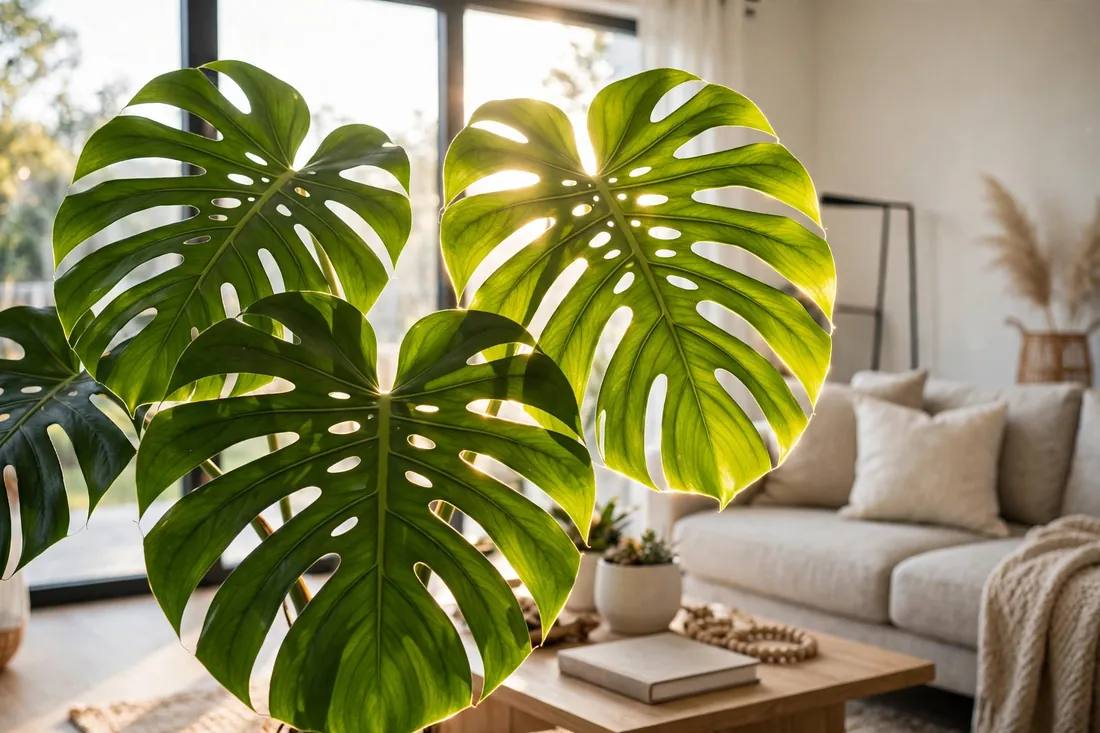
1. Monstera (Monstera deliciosa)
The monstera is the defining houseplant of the modern era — huge, glossy, heart-shaped leaves that develop dramatic splits and holes (fenestrations) as the plant matures. Native to the rainforests of southern Mexico and Central America, where it climbs trees with thick aerial roots, it has become the single most recognizable tropical houseplant in the world, equally at home in a bright apartment or a shaded Florida patio.
Give monstera bright indirect light; too little light produces small, solid leaves with no splits, while direct hot sun scorches them. Water when the top 2 inches of soil dry out, and provide a moss pole or trellis — it climbs far better than it trails. Mature plants occasionally produce an edible fruit (the “deliciosa” part), but unripe fruit irritates the mouth, so leave tasting to the experts. It is toxic to pets if chewed, so keep it out of reach. If you like bold tropical foliage, our guide to plants that start with P covers its cousins pothos and philodendron.
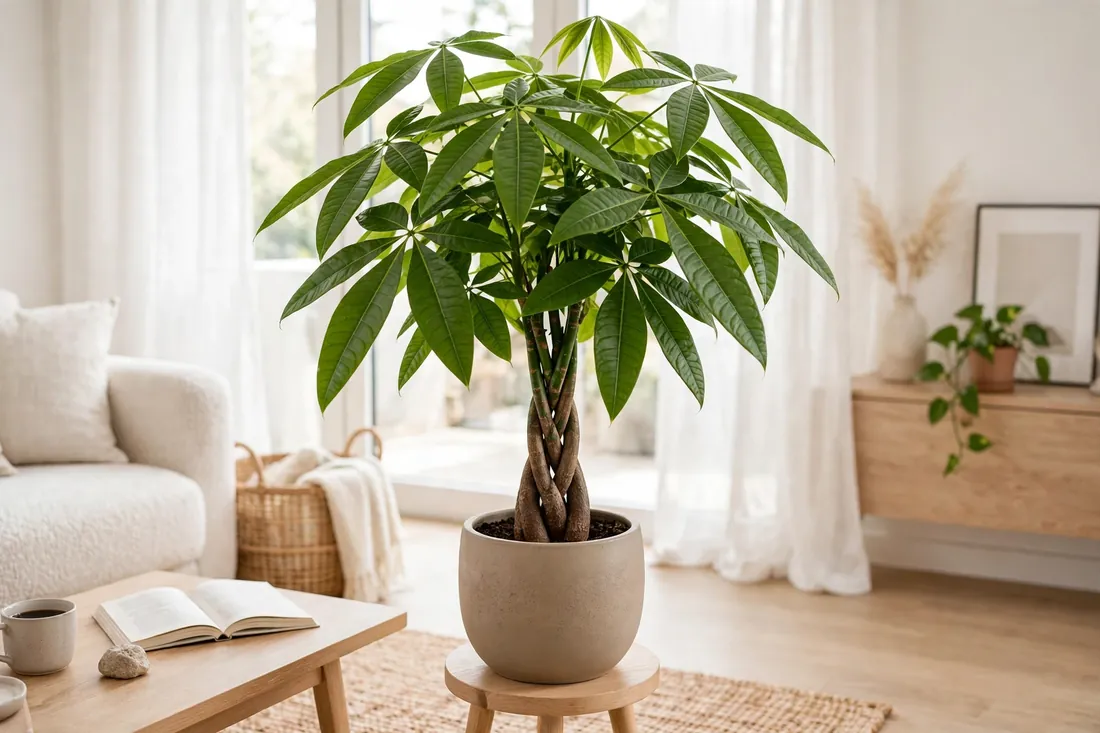
2. Money Tree (Pachira aquatica)
The money tree is the braided-trunk good-luck plant found in offices and entryways everywhere: a tropical tree from Central and South American wetlands, usually sold with five stems braided together and topped with hand-shaped clusters of bright green leaflets. According to feng shui tradition, its five-lobed leaves represent the five elements and bring prosperity — which explains why it is the most gifted houseplant on earth.
Money trees want bright indirect light and consistent, moderate watering — let the top inch or two of soil dry between waterings, and never let the pot sit in water, or the braided trunks rot from the base. They dislike cold drafts and sudden moves; leaf drop after relocation is normal and temporary. Feed monthly in spring and summer. Outdoors it is hardy only in zones 10–12, where it can reach 60 feet. Keep it away from curious pets, as it is mildly toxic if ingested in quantity.
3. Majesty Palm (Ravenea rivularis)
The majesty palm is the feathery, fast-growing palm that gives living rooms an instant resort feel. Unlike the slow parlor palm, it is a vigorous grower from Madagascar’s riverbanks, pushing up graceful arching fronds quickly — which is why big-box stores sell it as a statement plant. Indoors it typically reaches 6–10 feet, but in its native habitat it is a true tree.
Majesty palms are thirstier and hungrier than most houseplants: keep the soil evenly moist (not soggy), feed regularly in the growing season, and give bright indirect light — direct sun scorches fronds, but dim corners make it lanky and sad. Low humidity browns the frond tips, so mist or run a humidifier. It is hardy outdoors in zones 9–11. Good news for pet owners: it is non-toxic to cats and dogs.
4. Mint (Mentha spicata)
Mint — spearmint, the classic garden mint — is the most useful herb you can grow and the most dangerous to plant carelessly. Its serrated, intensely fragrant leaves flavor teas, salads, desserts, and cocktails, and it is nearly indestructible: it survives cold winters (zones 3–8), neglect, and poor soil. But it spreads by underground runners with imperial ambition, and a single plant can colonize a whole bed in one season.
Always grow mint in containers — a 10-inch pot sunk into the ground or kept on a patio works perfectly. It tolerates full sun to part shade and wants consistently moist soil; dry conditions make the flavor harsh and the leaves small. Harvest aggressively and often: pinching the tops keeps plants bushy and delays flowering, which turns leaves bitter. For detailed planting schedules and harvest technique, see the Old Farmer’s Almanac’s guide to growing mint.
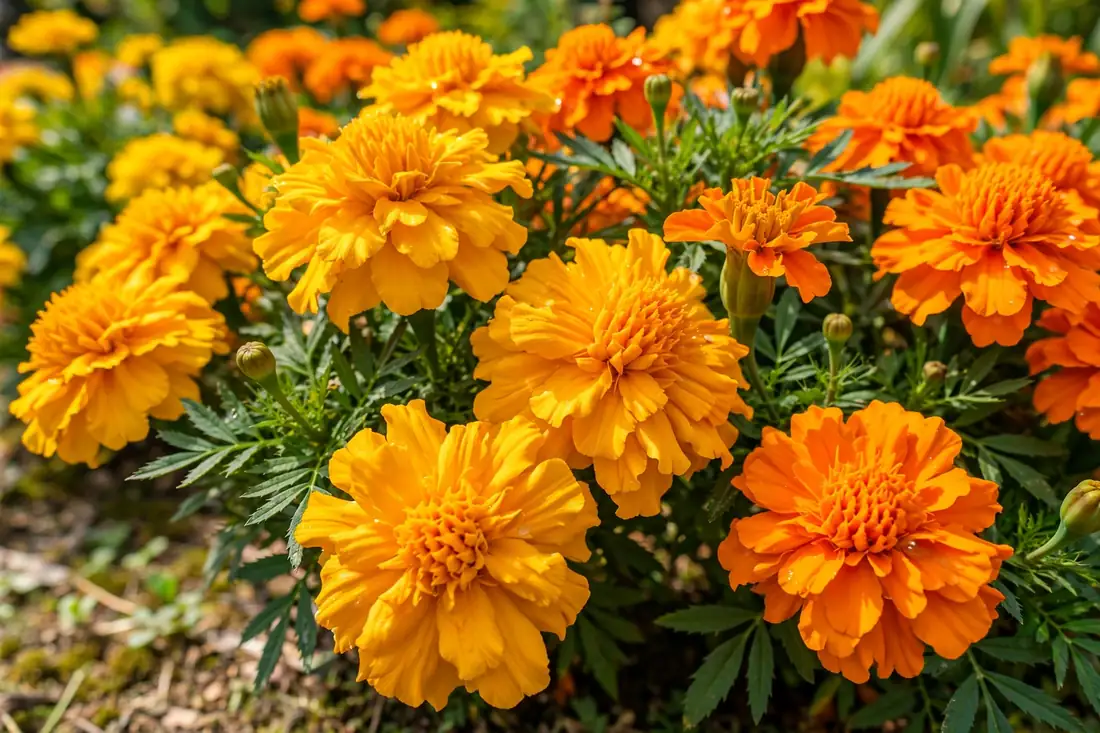
5. Marigold (Tagetes erecta)
Marigolds are the workhorses of the summer garden — the African (Aztec) marigold, Tagetes erecta, produces big, ruffled pom-pom blooms in gold, orange, and yellow on sturdy 1–3 foot stems. Native to Mexico and Central America (despite the “African” name), marigolds bloom relentlessly from early summer until frost, shrug off heat and drought, and double as companion plants: their roots release compounds that suppress nematodes, and their scent confuses many vegetable pests.
Plant marigolds in full sun after all frost danger has passed; shade and excess nitrogen both reduce flowering. Deadhead spent blooms regularly to keep new flowers coming, and do not overwater — established plants prefer to dry slightly between waterings. They grow as annuals in all zones but reseed freely. Tall African types make excellent cut flowers; compact French types (Tagetes patula) edge beds and containers. See the Old Farmer’s Almanac for full marigold growing instructions.
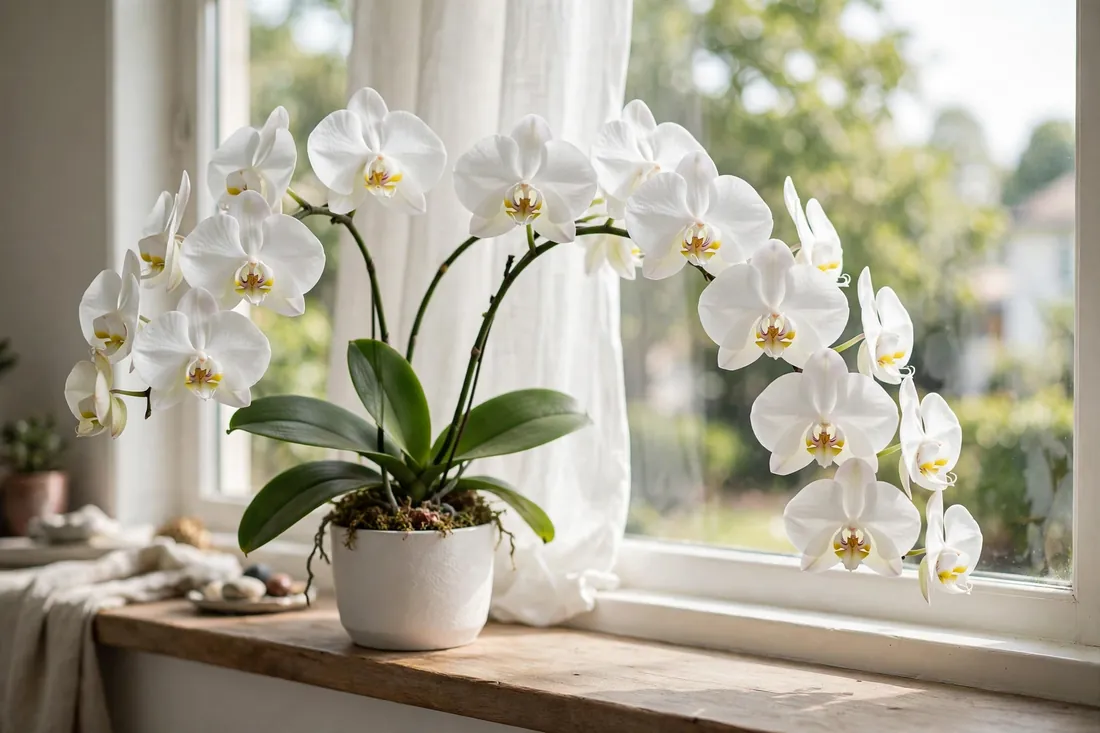
6. Moth Orchid (Phalaenopsis spp.)
The moth orchid is the orchid most people actually own — elegant arching sprays of butterfly-like blooms in white, pink, purple, and yellow that can last three months or more. Native to the humid forests of Southeast Asia, where they grow on tree bark rather than in soil, modern hybrids are bred for toughness and reblooming, making them the most forgiving orchids for beginners.
Grow moth orchids in bright indirect light — an east window is ideal; direct sun burns the leaves. Plant in bark chips, not potting soil, and water by soaking the bark and letting it drain fully; the thick silvery roots should turn green when wet and silver again before the next watering. After blooms fade, cut the spike above a node and a second flush often follows. A 10–15°F night temperature drop in fall triggers reblooming. Hardy outdoors only in zones 10–12, but nearly everyone grows them as indoor treasures.
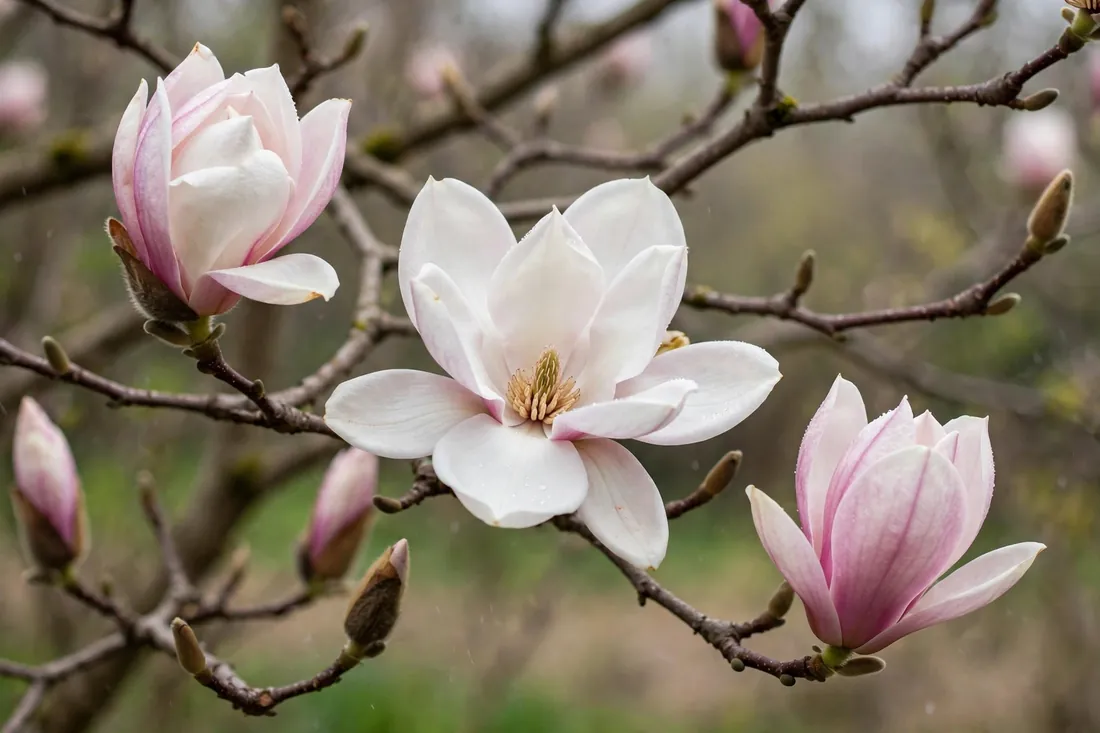
7. Magnolia (Magnolia grandiflora)
The southern magnolia is the grand dame of the American South — a massive evergreen tree with leathery, glossy leaves (rusty-brown beneath) and enormous creamy-white, lemon-scented flowers up to a foot across in late spring and summer. It is one of the most primitive flowering plants on earth, blooming before bees existed; beetles still do the pollinating. A mature tree can reach 60–80 feet and live for over a century.
Plant southern magnolias in full sun to part shade with plenty of room — roots and canopy both spread wide, and the dense shade plus evergreen leaf litter suppresses grass beneath. Water deeply during the first two years; established trees are drought-tolerant. Choose your cultivar by size: ‘Little Gem’ stays 20–25 feet for smaller yards. Hardy in zones 7–9. Search magnolia varieties and growing advice on the RHS plant finder.
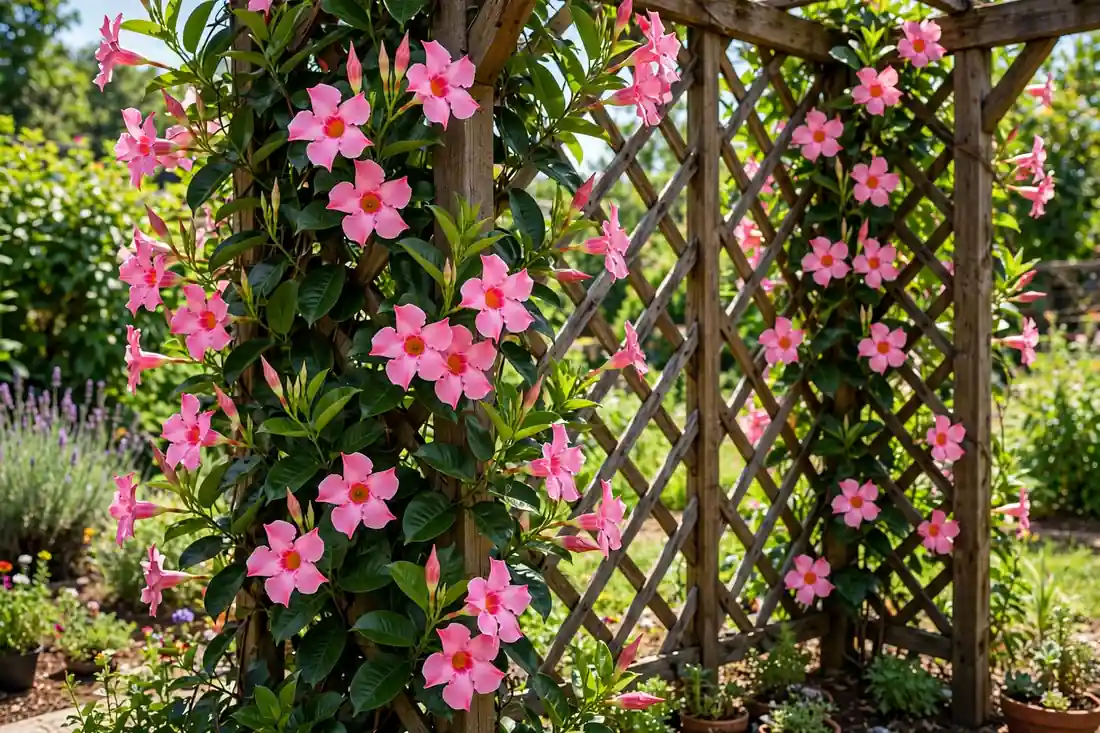
8. Mandevilla (Mandevilla sanderi)
Mandevilla is the tropical vine that turns patios into postcards: glossy green foliage and huge trumpet-shaped flowers in pink, red, white, or yellow, blooming nonstop from summer into fall. Native to Brazil, it climbs by twining and can cover a 6-foot trellis in a single season. It is the classic thriller for large containers, hanging baskets, and mailbox posts in warm climates.
Give mandevilla full sun — at least 6 hours — for heavy flowering, rich well-draining soil, and regular water; it wilts dramatically when dry but recovers fast. Feed every two weeks in summer for maximum bloom. It is hardy only in zones 9–11, so in colder climates overwinter it indoors in a bright spot, cutting it back hard first. Prune in early spring to shape, and provide a trellis from day one — once it starts twining, it does not stop. All parts are mildly toxic if ingested.
9. Morning Glory (Ipomoea purpurea)
Morning glories are the sprinters of the flower world: heart-shaped leaves and trumpet blooms in blue, purple, pink, and white that open at dawn and close by afternoon, on vines that can grow 10–15 feet in a single summer. Native to Mexico and Central America, they are one of the easiest annuals to grow from seed and one of the fastest ways to cover an ugly fence.
Sow morning glory seeds directly outdoors after the last frost — they dislike transplanting. Nick the hard seed coat and soak overnight for faster germination. Give them full sun and a trellis, fence, or string to climb; in rich soil they produce more leaves than flowers, so lean soil actually blooms better. They self-seed vigorously, so deadhead if you do not want volunteers next year. Note: seeds are toxic if eaten, so keep them away from small children and pets.
10. Moonflower (Ipomoea alba)
Moonflower is morning glory’s nocturnal twin: huge, fragrant white trumpets up to 6 inches across that unfurl at dusk and glow in the moonlight, filling the evening garden with perfume. A tropical American native, it is the star plant of the moon garden — plant it where you sit on summer evenings and you will understand why gardeners are obsessed with it.
Grow moonflower exactly like morning glory — full sun to part shade, direct-sown seed (nicked and soaked), and a sturdy support, since vines reach 10–20 feet. In zones 10–11 it is perennial; everywhere else grow it as an annual. The flowers open in real time around sunset, which makes it a magical plant to grow with children. Like morning glory, the seeds are toxic if ingested. Pair it with evening primrose and white nicotiana for a full night-blooming border.
11. Madagascar Jasmine (Stephanotis floribunda)
Madagascar jasmine is the bridal vine — waxy, star-shaped white flowers of legendary fragrance borne on a twining evergreen vine with thick, leathery, dark-green leaves. Despite the name it is not a true jasmine, but its scent is arguably better: rich, sweet, and powerful enough to perfume a whole room from a single blooming stem. It is a staple of wedding bouquets and conservatories.
Grow it in bright indirect light to part sun — it blooms best with strong light but burns in harsh afternoon sun. Keep soil evenly moist and humidity high; dry air drops the buds before they open. It needs a trellis or hoop to climb and dislikes being moved once buds form. Hardy outdoors only in zones 10–11, so most gardeners grow it in a pot and bring it in for winter. Feed monthly in spring and summer, and prune after flowering to keep it shapely.
12. Mexican Petunia (Ruellia simplex)
Mexican petunia is the toughest purple flower in warm-climate gardening: tall stems topped with vivid violet-blue trumpet blooms from summer until frost, on a plant that tolerates heat, humidity, drought, flooding, and total neglect. Native to Mexico and South America, it is a workhorse perennial for zones 8–11 — and one to choose carefully, because in Florida and parts of Texas the straight species self-seeds aggressively and is listed as invasive.
If you garden in the Southeast, plant only the sterile cultivars (‘Purple Showers’, ‘Mayan Purple’, ‘Mayan White’), which bloom just as heavily without spreading. Give it full sun to part shade and almost any soil; it even tolerates standing water. Cut it to the ground in late winter and it rebounds fast. Hummingbirds visit the flowers constantly. In zones below 8, grow it as an annual or in containers.
13. Mexican Sunflower (Tithonia rotundifolia)
Mexican sunflower is a butterfly magnet disguised as a flower: blazing orange-red daisies up to 3 inches across on towering 4–6 foot stems, blooming from midsummer to frost. Native to Mexico and Central America, it is one of the single best annuals for attracting monarchs, swallowtails, and hummingbirds — a patch of tithonia in August is never without wings.
Sow directly in full sun after frost; it thrives in poor soil and heat that kills fussier annuals. Stake or plant in groups — the tall stems snap in wind when grown alone. Deadhead for continuous bloom, or leave seed heads for goldfinches in fall. It resents transplanting, so direct sowing is best. Give it room: one packet of seeds becomes a hedge by September.
14. Mock Orange (Philadelphus coronarius)
Mock orange is the shrub that stops foot traffic in June: arching branches loaded with white, four-petaled blossoms that smell unmistakably of orange blossom, despite being no relation to citrus. The sweet mock orange (Philadelphus coronarius), from southern Europe and Asia Minor, is the most fragrant of the group, and a single shrub can perfume an entire yard on a still evening.
Plant mock orange in full sun to part shade in zones 4–8; it is fully hardy and nearly indestructible once established. Prune right after flowering, cutting a third of the oldest stems to the ground — it blooms on the previous year’s wood, so late pruning removes next year’s flowers. It tolerates poor soil and drought. For smaller gardens, compact cultivars like ‘Snowbelle’ stay under 4 feet. Few shrubs give this much fragrance for this little work.
15. Mountain Laurel (Kalmia latifolia)
Mountain laurel is eastern North America’s great native flowering shrub: broadleaf evergreen foliage and spectacular late-spring clusters of pink buds that open into intricate, cup-shaped white-to-pink flowers with a geometric star pattern inside. It grows wild along Appalachian ridges and woodland edges, where whole hillsides turn pink in June.
Mountain laurel demands what its woodland home provides: part shade, acidic soil (pH 5.0–5.5), and excellent drainage — it hates wet feet and alkaline soil. Mulch with pine needles and never cultivate deeply around the shallow roots. It is slow-growing but very long-lived; plant nursery-grown specimens rather than digging wild ones. Hardy in zones 4–9. Note: all parts are toxic if ingested, including to livestock, so site it away from pastures.
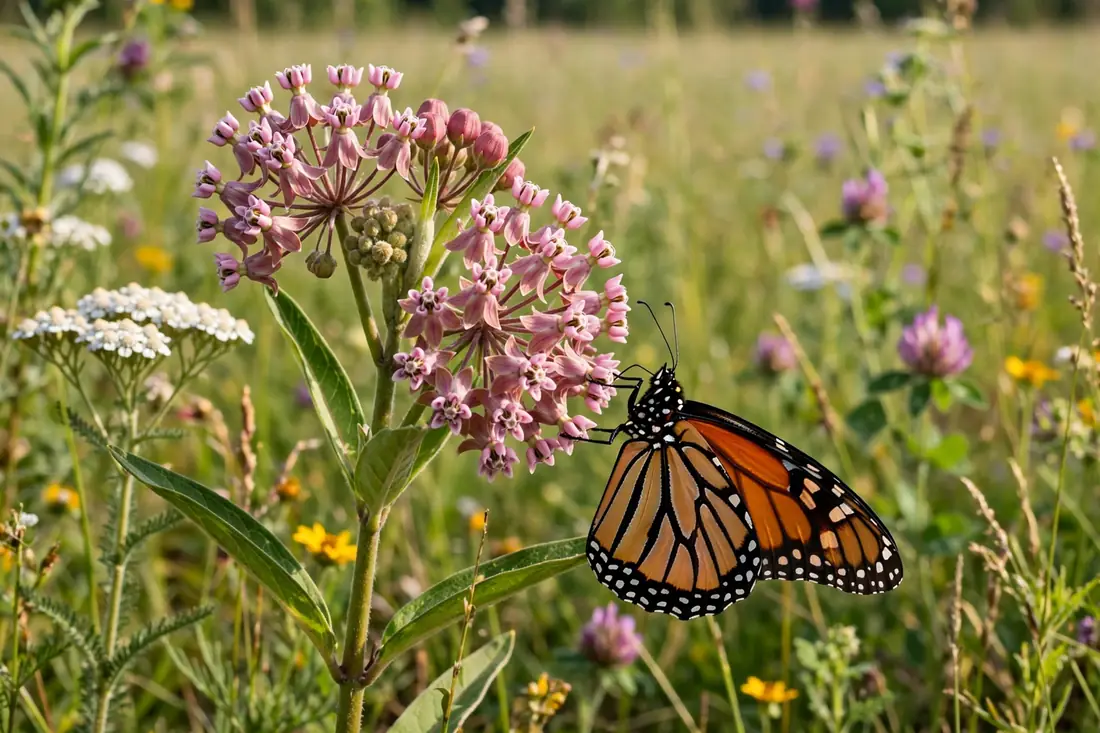
16. Milkweed (Asclepias syriaca)
Common milkweed is the most ecologically important plant on this list: the sole host plant for monarch butterfly caterpillars, which eat nothing else. Beyond its wildlife value, it is a handsome native perennial — sturdy stems, broad leaves, and domed clusters of dusty-pink, vanilla-scented flowers in summer, followed by the iconic spiky pods that split to release silken parachute seeds. It spreads by rhizomes and seeds with pioneer enthusiasm.
Plant milkweed in full sun in zones 3–9 and then leave it alone: it thrives in poor soil, tolerates drought, and needs no fertilizer or pampering. Give it room to spread, or choose the better-behaved butterfly weed (Asclepias tuberosa) for tidy beds. Never spray it with insecticides — the whole point is the insects. Cut stems back in late fall after the pods have scattered, or leave them standing for winter interest and insect habitat.
17. Myrtle (Myrtus communis)
Myrtle is the Mediterranean classic — a dense evergreen shrub with small, glossy, intensely aromatic leaves, white starry flowers in summer, and dark blue-black berries in fall. Sacred to Aphrodite and a symbol of love and marriage since antiquity, it has perfumed bridal bouquets for thousands of years. It also clips beautifully into hedges and topiary.
Grow myrtle in full sun in zones 8–11 with sharp drainage; it tolerates drought, salt spray, and poor soil once established. In colder zones, grow it in a pot and overwinter indoors — it makes an excellent conservatory plant. Shear after flowering to keep hedges dense, but leave some berries for the birds. The leaves and berries are edible and used in Mediterranean cooking and liqueurs. Dwarf cultivars like ‘Compacta’ suit containers.
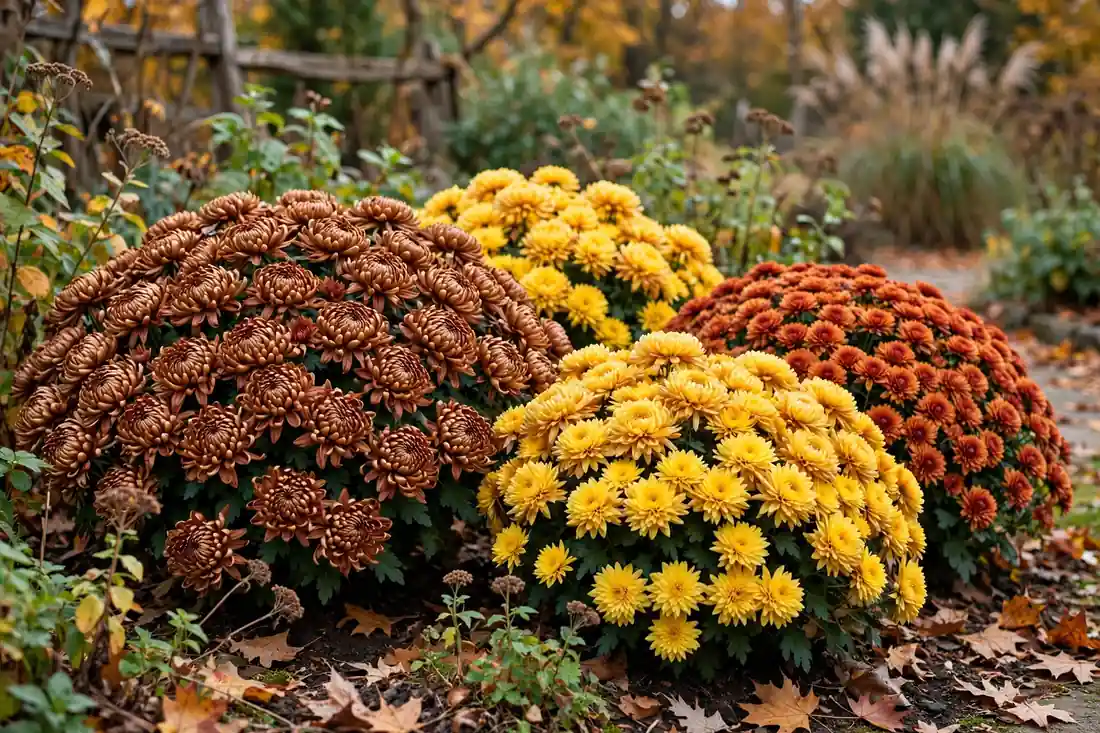
18. Mums (Chrysanthemum × morifolium)
Garden mums are the undisputed flowers of fall — mounds of daisy-like blooms in bronze, gold, rust, purple, and white that peak exactly when everything else is fading. Modern hybrids descend from Chinese and Japanese species refined over centuries of breeding. They are the best-selling potted plant in America for a reason: nothing else delivers that much color in October.
For mums that return yearly (zones 5–9), plant them in spring — not fall — in full sun with rich, well-draining soil, so roots establish before winter. Pinch the growing tips back until early July for bushy plants loaded with buds, then stop: pinching later delays or ruins the fall bloom. Mulch after the first hard freeze. Most “fall mums” sold in bud in September are treated as annuals, but with spring planting they are genuinely hardy. See our full mum care guide for the complete seasonal routine.
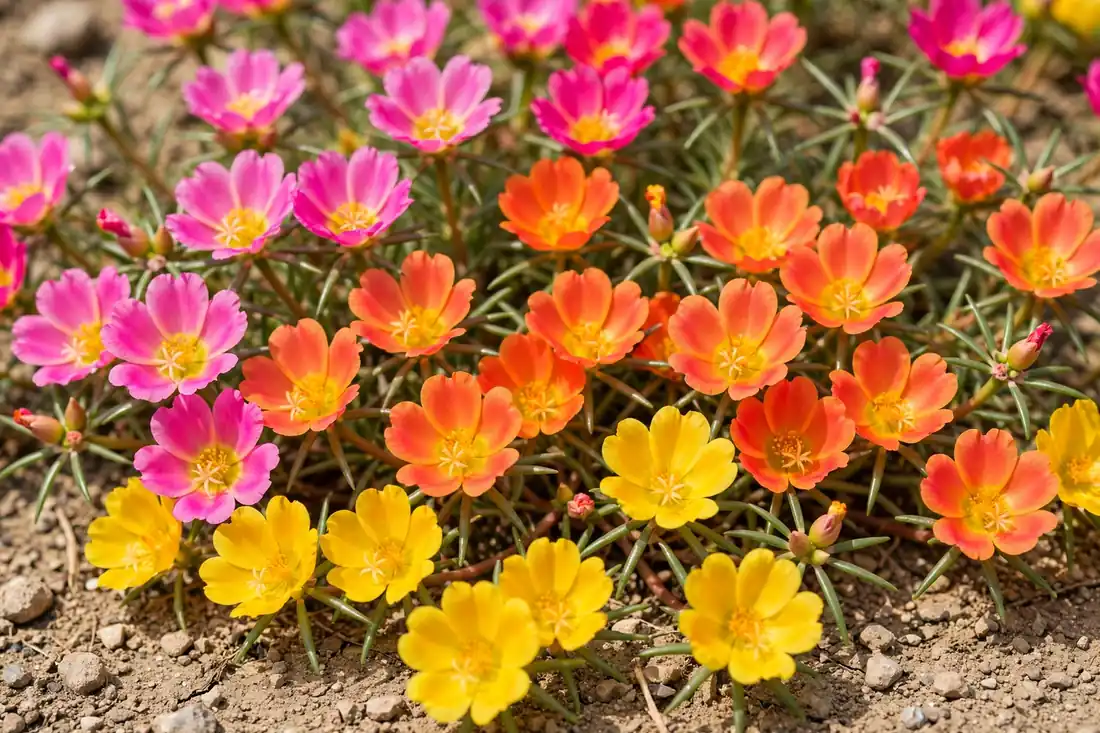
19. Moss Rose (Portulaca grandiflora)
Moss rose is the flower for the spots where nothing else survives: a low, succulent-leaved annual that carpets hot, dry, poor soil with neon-bright blooms in pink, orange, yellow, red, and white. Native to the arid plains of South America, it laughs at drought, reflected heat, and neglect — the flowers even close on cloudy days and reopen in sun, like tiny solar panels.
Plant moss rose in the hottest, sunniest, best-drained spot you have; rich soil and frequent watering produce lush leaves and few flowers. It needs no deadheading — the spent blooms simply vanish — and it self-seeds politely. Perfect for rock gardens, wall crevices, sidewalk strips, and containers. Sow directly after frost or buy bedding plants. It will not tolerate soggy soil or shade, so when in doubt, plant it drier and sunnier.
20. Moon Cactus (Gymnocalycium mihanovichii)
The moon cactus is the neon sign of the succulent world: a bright red, orange, pink, or yellow ball grafted onto a green rootstock cactus, creating a two-tone plant that looks almost artificial. The colorful top is a mutant Gymnocalycium that cannot make chlorophyll, so it survives only grafted onto a photosynthesizing host. It is a novelty plant, but a genuinely long-lived one with proper care.
Give moon cactus bright indirect light — full sun scorches the colorful top — and water like any cactus: deeply, then not again until the soil is fully dry. The graft union is the weak point; if the top starts to soften or lean, the graft is failing and cannot be saved, but healthy grafts last for years. Feed lightly in summer. Hardy outdoors only in zones 9–11. Its small size and jewel colors make it a natural for miniature gardens — see our picks for the best terrarium plants.
21. Mistletoe Cactus (Rhipsalis baccifera)
Mistletoe cactus breaks every cactus stereotype: a spineless, shade-loving epiphyte with long, cylindrical green stems that cascade like a living waterfall, occasionally dotted with tiny white flowers and mistletoe-like berries. It grows on tree branches in tropical forests — and remarkably, it is the only cactus species native outside the Americas, occurring naturally in tropical Africa and Sri Lanka as well.
Treat it like a tropical, not a desert cactus: bright indirect light, regular watering when the top inch of soil dries, and humidity. It thrives in hanging baskets where the stems can trail 3–6 feet. Use a light, bark-based mix rather than heavy cactus soil. It is hardy outdoors in zones 9–11 but happiest as a houseplant. Non-toxic to pets, which makes it one of the safest “cacti” for homes with cats.
22. Madagascar Palm (Pachypodium lamerei)
The Madagascar palm is not a palm at all — it is a succulent tree from Madagascar with a thick, silver-gray, spine-covered trunk topped by a crown of long, strappy green leaves. Young plants look like something from a Dr. Seuss book; mature specimens (after many years) can produce fragrant white flowers. It is the architectural statement plant for bright, modern interiors.
Give it the brightest light you have — a south window or full sun — and water deeply but infrequently, letting the soil dry completely between waterings. In winter it may drop its leaves; this is normal dormancy, not death, so reduce watering until spring growth resumes. The spines are sharp, so handle with gloves and site it away from walkways. Hardy outdoors in zones 9–11. For more botanical oddities in this spirit, browse our roundup of unusual and beautiful flowers.
23. Mini Monstera (Rhaphidophora tetrasperma)
The mini monstera looks like a monstera shrunk in the wash: small, fenestrated leaves on a fast-climbing vine, from the rainforests of Thailand and Malaysia. Despite the nickname and the resemblance, it is not a true monstera — but it climbs faster, stays smaller, and splits its leaves at a younger age, which is why it became a houseplant sensation. A moss pole turns it into a living green column within a year.
Care mirrors the big monstera: bright indirect light for the best splits, water when the top 2 inches dry out, and provide something to climb — without support it trails messily and the leaves stay small. It roots easily from stem cuttings in water. Like monstera, it is toxic to pets if chewed. Hardy outdoors in zones 10–11, where it can climb trees. Prune the top to encourage branching lower down.
24. Ming Aralia (Polyscias fruticosa)
Ming aralia is the bonsai-lover’s houseplant: a slow-growing tropical shrub with finely divided, lacy, fern-like foliage on gnarled stems that develop real character with age. Native to India and Southeast Asia, it has been trained as bonsai for generations and brings an elegant, miniature-tree presence to desks and shelves that no philodendron can match.
Ming aralia wants bright indirect light and consistency — it drops leaves dramatically when moved, overwatered, or chilled, then regrows once it settles. Water when the top inch of soil dries, keep it above 60°F, and avoid drafts. It is slow, so buy the size you want. Prune to shape in spring; the cuttings root, though slowly. Hardy outdoors only in zones 10–11. Patience is the entire care routine — this plant rewards the steady-handed.
25. Maidenhair Fern (Adiantum raddianum)
The maidenhair fern is the most delicate-looking fern you can grow: triangular fronds of tiny, fan-shaped leaflets on wiry black stems, light as lace. Native to tropical American forests, it has a reputation for fussiness that is half deserved — it will not forgive drought — but in the right spot it is lush, fast-growing, and endlessly graceful.
The secret is constant moisture and humidity: water before the soil ever dries out, mist daily or run a humidifier, and keep it in bright indirect light (never direct sun). A bathroom with a window is the classic perfect spot. It dislikes fluoride and hard water; rainwater or distilled water prevents brown edges. Cut brown fronds to the base and new ones unfurl quickly. Hardy outdoors in zones 10–11; hardier maidenhair species exist for temperate shade gardens.
26. Moses-in-the-Cradle (Tradescantia spathacea)
Moses-in-the-cradle is the two-tone rosette plant: stiff, sword-shaped leaves, dark green on top and vivid purple beneath, arranged in a tight spiral. In spring it produces tiny white flowers tucked into purple boat-shaped bracts — the “cradle” of the common name. Native to Mexico, Central America, and the Caribbean, it is nearly indestructible as a houseplant and a popular groundcover in frost-free climates.
Give it bright indirect light for the strongest purple color; in dim light the undersides fade to dull green. Water when the top inch dries out and avoid wetting the leaf rosette, which can rot. It tolerates missed waterings far better than most tropicals. Hardy outdoors in zones 9–11, where it spreads into a handsome groundcover — contain it if you do not want a carpet. The sap can irritate skin, so wear gloves when pruning heavily.
27. Mosaic Plant (Fittonia albivenis)
The mosaic plant — better known as the nerve plant — is a tiny tropical with oval leaves veined in white, pink, or red like stained glass. From the rainforest floors of Peru and Colombia, it is one of the most dramatic communicators in the houseplant world: it faints completely flat when thirsty and perks back up within hours of watering, making it the perfect plant for learning to read watering cues.
Fittonia needs what the rainforest floor provides: bright indirect light, constant light moisture, and high humidity. Never let it dry out fully, and grow it in a terrarium or cloche if your air is dry — it thrives under glass. Pinch the tips to keep it bushy; it roots readily from cuttings. Hardy outdoors only in zones 11–12, so it is a houseplant almost everywhere. Non-toxic to pets.
28. Monkey Grass (Liriope muscari)
Monkey grass is the evergreen groundcover that solves the problem spots: dense tufts of arching, grass-like leaves that stay green all year, topped with spikes of violet-purple flowers in late summer followed by black berries. From China and Japan, it edges paths, fills tree pits, and holds slopes where turf grass gives up — especially in shade.
Plant monkey grass in part shade to shade (it tolerates sun with enough water) in zones 5–10; it is adaptable to almost any soil and quite drought-tolerant once established. In late winter, mow or shear the foliage to the ground before new growth emerges — this single annual haircut keeps it looking fresh. Divide congested clumps every few years. Do not confuse it with mondo grass (Ophiopogon), its finer-textured lookalike; liriope is the tougher, more vigorous of the two.
29. Mayapple (Podophyllum peltatum)
Mayapple is the woodland colony plant: big, umbrella-like leaves on 12–18 inch stems that carpet eastern North American forests each spring, hiding a single waxy white flower beneath each leaf pair, followed by a lemon-yellow fruit. Colonies spread by rhizomes into drifts that can cover hundreds of square feet — one of the most magical sights in a spring woods.
Grow mayapple in part to full shade in rich, humusy, moist soil in zones 3–8; it is made for the shade garden under deciduous trees. Plant rhizomes in fall about 2 inches deep and be patient — colonies take a few years to knit together. The foliage goes dormant by midsummer, so pair it with ferns and hostas that fill the gap. Note: all parts except the fully ripe fruit are toxic if ingested, so admire it rather than tasting it.
30. Mullein (Verbascum thapsus)
Mullein is the woolly giant of the wildflower world: a first-year rosette of huge, soft, silver-felted leaves, then a soaring 5–8 foot spike of yellow flowers in its second summer. Native to Europe and Asia and naturalized across North America, it is a biennial with real presence — part medicinal herb with a long folk history, part architectural exclamation point for the back of a sunny border.
Grow mullein in full sun in the poorest, best-drained soil you have; rich soil makes it floppy. Sow seeds on the surface in zones 3–9 — they need light to germinate. It self-seeds freely, so one planting becomes a permanent, wandering presence. Let a few spikes stand for goldfinches, which prize the seeds. Cut spent spikes before seed scatter if you want to limit volunteers. Few plants ask for less and give more vertical drama.
31. Mahonia (Mahonia aquifolium)
Mahonia — Oregon grape, the state flower of Oregon — is the evergreen shrub that earns its keep in all four seasons: holly-like glossy leaves that turn bronze-purple in winter, fragrant yellow flower clusters in early spring, dusty-blue berries in summer, and year-round structure. Native to western North America, it is one of the best native shrubs for part-shade gardens.
Plant mahonia in part shade with moist, well-draining, acidic soil in zones 5–9; it tolerates full shade but flowers less. It spreads by suckers into handsome thickets — site it where it has room or remove suckers yearly. The berries are edible (tart) and beloved by birds; the roots yield a yellow dye. Prune lightly after flowering if needed, but it rarely needs shaping. Drought-tolerant once established, and deer tend to leave it alone.
32. Mealy Cup Sage (Salvia farinacea)
Mealy cup sage is the blue spike that never quits: slender wands of violet-blue flowers dusted with a silvery-white “meal” on the stems, blooming from early summer until hard frost. Native to Texas and Mexico, it is one of the most heat-proof, low-maintenance sages — a magnet for bees, butterflies, and hummingbirds that asks for almost nothing in return.
Plant it in full sun with good drainage; it is perennial in zones 8–10 and grown as an annual elsewhere (it often self-seeds). Shear it back by a third in midsummer for a fresh fall flush. It needs no deadheading to keep blooming and tolerates drought once established. Compact cultivars like ‘Victoria Blue’ suit containers and edging. For more violet-blue summer color in the same spirit, see our guide to purple annual flowers.
Growing Tips for M-Plants
Match the plant to your zone first. M-plants span zones 3–12 — from the ultra-hardy mint, milkweed, mayapple, and mullein (zone 3) to tropical monstera, moth orchid, and mosaic plant (zones 10–12). Check the tables above before buying; half this list is happiest as houseplants, and a magnolia will not thank you for a zone-5 winter.
Contain mint — no exceptions. Mint’s underground runners conquer beds, lawns, and neighboring plots within a season. A pot — sunk into the ground or standing on the patio — is the only safe way to grow it. This single rule prevents the most common M-plant regret.
Water succulents and tropicals differently. The M-list splits cleanly: moon cactus, Madagascar palm, moss rose, and mullein want to dry out between waterings, while maidenhair fern, mosaic plant, moth orchid, majesty palm, and mint want consistent moisture and humidity. Grouping plants by water need is the single easiest way to keep them all alive.
Give humidity lovers real humidity. Maidenhair fern, mosaic plant, moth orchid, and Madagascar jasmine come from humid forests and show crispy brown edges in dry indoor air. A small humidifier or a pebble tray beats misting, which evaporates in minutes. Terrariums are ideal for fittonia and small ferns.
Watch the enthusiastic spreaders. Beyond mint, Mexican petunia self-seeds aggressively in warm climates (plant only sterile cultivars in the Southeast), morning glories reseed freely, and mahonia suckers into thickets. A minute of research on each plant’s habits saves hours of removal later.
Deadhead for more flowers. Marigolds, moss rose, Mexican sunflower, mealy cup sage, and mums all bloom far longer when spent flowers are removed regularly. A five-minute deadheading walk every few days keeps the color coming from summer into fall.
Which M-Plants Will You Grow?
From the monstera on your bookshelf to the magnolias on your street, plants that start with M cover every corner of the gardening world — tropical houseplants, fragrant vines, flowering shrubs and trees, culinary herbs, native perennials, and heat-proof annuals, across nearly every hardiness zone. If you are just starting out, you cannot go wrong with the forgiving trio of monstera, money tree, and Moses-in-the-cradle indoors, or marigolds, milkweed, and moss rose outdoors.
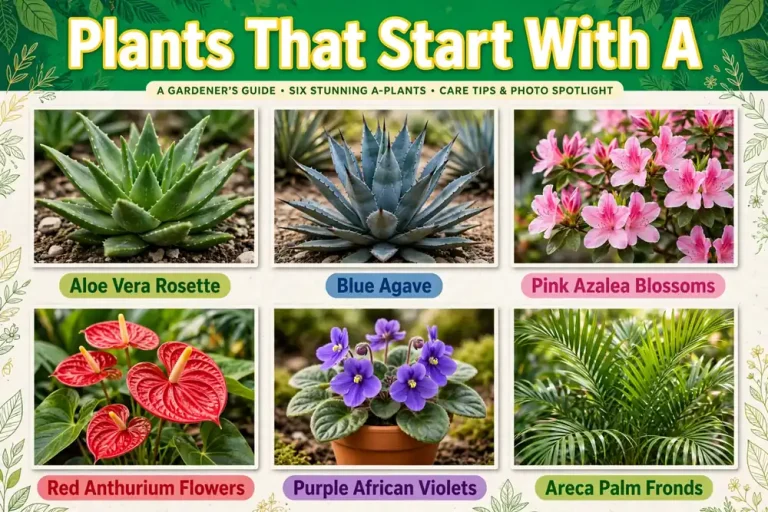
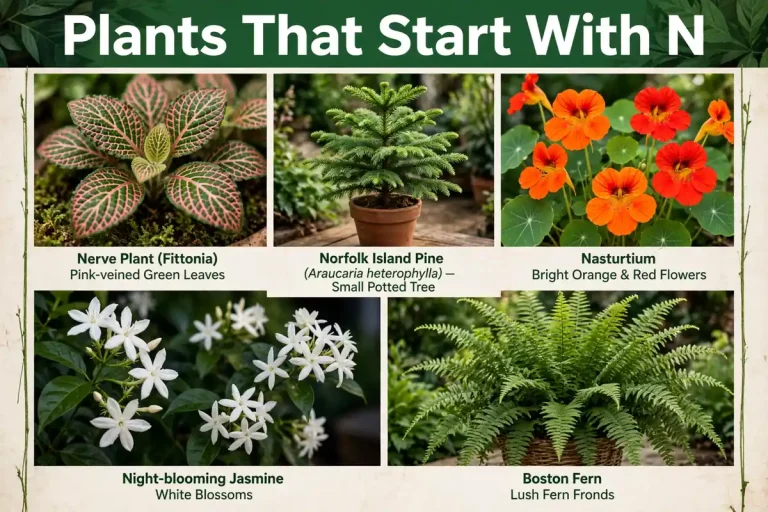
And the alphabet does not stop here — continue the series with our guides to plants that start with A and plants that start with N.
Pick three M-plants that suit your light and zone, plant them this season, and watch the letter M become the hardest-working letter in your garden. Happy planting!
Frequently Asked Questions
What are the most popular plants that start with M?
The most popular M-plants are monstera, money tree, majesty palm, marigold, mint, moth orchid, magnolia, mandevilla, morning glory, moonflower, milkweed, mums, moss rose, and Madagascar jasmine. These cover houseplants, vines, shrubs, trees, herbs, and annuals, and all are widely available at garden centers and nurseries.
Which M-plants are good for beginners?
Monstera, money tree, Moses-in-the-cradle, and mistletoe cactus are forgiving houseplants for beginners, while marigolds, moss rose, Mexican sunflower, mealy cup sage, and mint (in a pot!) are nearly indestructible outdoors. All tolerate imperfect conditions — just match each plant’s light and water needs and they will thrive.
Which plants starting with M grow well in low light indoors?
Moses-in-the-cradle, mistletoe cactus, and majesty palm tolerate lower indoor light better than most tropicals, and monstera, money tree, and mini monstera adapt to medium light (though their growth slows and variegation fades). No plant truly thrives in a dark corner — even “low light” plants do best a few feet from a window.
Are monstera and money tree toxic to cats and dogs?
Monstera is toxic to pets — its leaves contain calcium oxalate crystals that irritate the mouth and stomach if chewed. Money tree is generally considered non-toxic to cats and dogs, making it the safer choice for pet owners. Other pet-safe M-plants include majesty palm, mistletoe cactus, mosaic plant, and moth orchid.
Which M-plants attract butterflies and pollinators?
Milkweed is the essential one — it is the only host plant for monarch caterpillars. Mexican sunflower, mealy cup sage, marigolds, mountain laurel blooms, and mahonia flowers all draw butterflies, bees, and hummingbirds. Plant a cluster of these together for a pollinator patch that buzzes from spring through fall.
How do I stop mint from taking over my garden?
Grow mint only in containers — a 10-inch pot with drainage holes, either standing on the patio or sunk into the ground with the rim above soil level. Harvest and pinch it often to keep it bushy, and never plant it directly in open beds unless you want a mint lawn. The runners spread underground, so even a buried bottomless barrier often fails; a pot is the reliable answer.